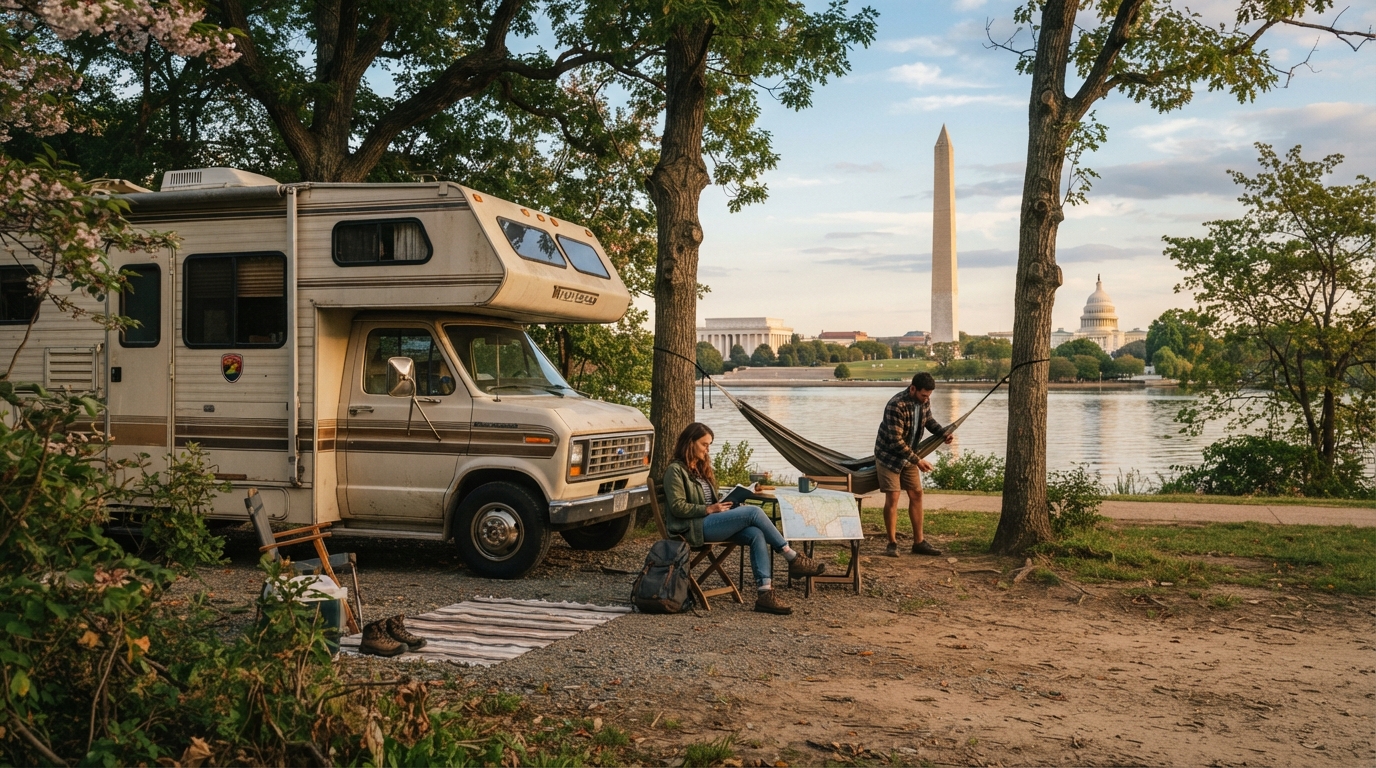
Days 1-5 — The Blue Ridge & Appalachians
~400–500 mi across this legEase into the journey with a relaxed pace through misty mountain ranges, scenic parkways, and magnificent underground caverns.
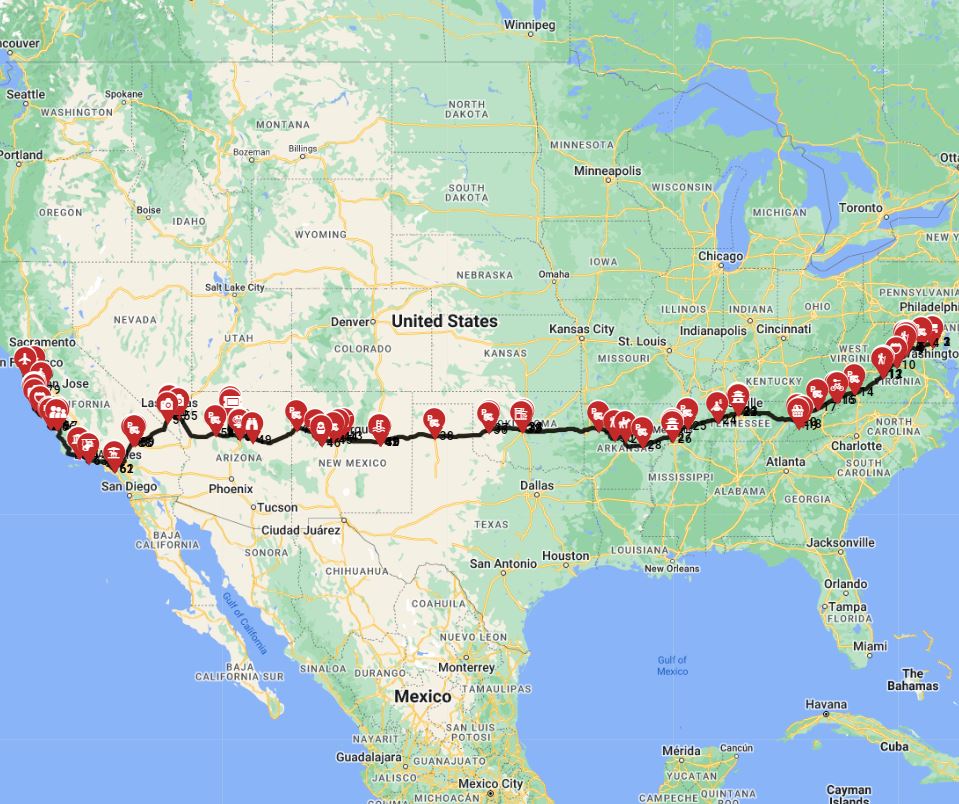 26-day route · Washington DC → San Francisco (SFO area)
This 26-day drive links 57 stops across 30 kinds of experience along the way.
Embarking on a cross-country RV journey is a quintessential American travel experience. This 26-day route takes you from the historic capital to the vibrant California coast, weaving through diverse landscapes and cultural landmarks.
| Total Distance | 3,893 mi |
| Duration | 26 Days |
| Start / End | Washington DC to San Francisco |
| States Crossed | Virginia, Tennessee, Arkansas, Oklahoma, Texas, New Mexico, Arizona, Nevada, California |
| Best Season | Spring or Autumn (avoids extreme summer heat and winter snow) |
| Ideal For | Families, history buffs, music lovers, and slow-travel enthusiasts |
Driving from Washington DC to San Francisco is the ultimate cross-country achievement. This specific 3,893 mi route is masterfully designed for the RV lifestyle, taking 26 days to ensure you experience the shifting landscapes rather than just driving past them. Instead of rushing down interstate highways, this itinerary weaves through the Appalachian Mountains, dives into the musical heartland of the South, traces the legendary path of Route 66, and crosses the vast Desert Southwest before concluding at the Pacific Ocean.
Because the journey spans nine states—Virginia, Tennessee, Arkansas, Oklahoma, Texas, New Mexico, Arizona, Nevada, and California—traveling by motorhome provides the perfect basecamp. You can wake up near the misty peaks of the Blue Ridge Mountains one week, and step out into the arid beauty of the Southwest a couple of weeks later, all without ever changing your room.
To truly appreciate this monumental journey, we recommend breaking the trip into distinct regional stages. This allows for an immersive, slow-travel approach.
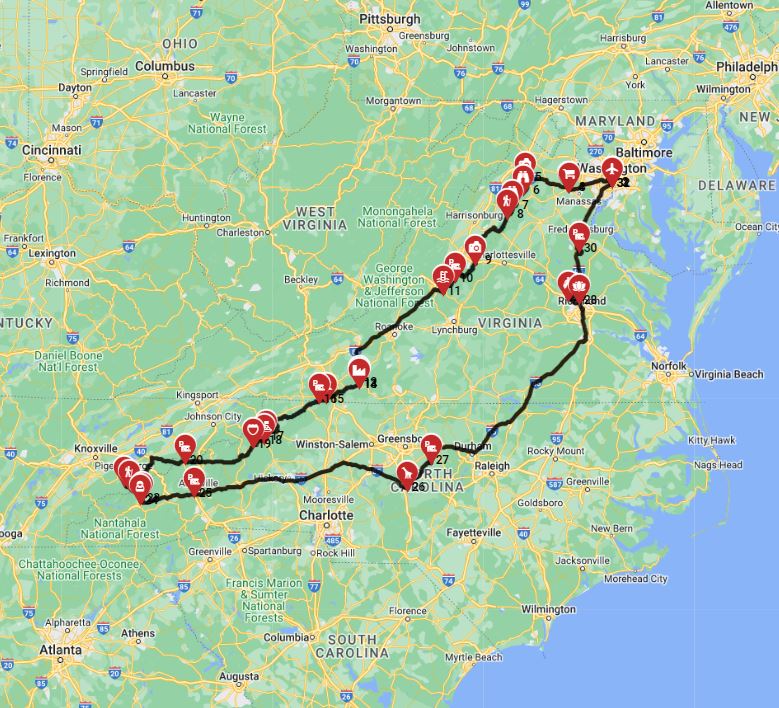
Leaving the East Coast, the initial stage of your trip gently eases you into nature. You will navigate the winding, scenic byways of the Blue Ridge Mountains and Shenandoah National Park. The pacing here is relaxed, focusing on scenic drives, hiking, and exploring underground geological wonders.
As you descend from the mountains into Tennessee and Arkansas, the rhythm shifts from natural wonders to cultural heritage. This leg involves shorter driving days between major cities, allowing ample time to explore museums, historic mansions, and the mighty Mississippi River.
Moving into Oklahoma and Texas, the horizon widens. The driving distances increase slightly as you cross the Great Plains, but the route is punctuated by classic Americana, western heritage sites, and family-friendly attractions that perfectly break up the drive.
Entering New Mexico, Arizona, and Nevada, the landscape transforms dramatically into vast deserts and striking rock formations. This stage requires steady driving across wide-open highways, offering some of the most iconic and uninterrupted scenic views of the entire trip.
The final push brings you into California, transitioning from arid deserts to coastal climates. The pacing slows down once again as you approach San Francisco, allowing you to reflect on the incredible breadth of the country you have just traversed.
This route is packed with diverse experiences, from natural features to rich cultural history.
We strongly recommend 26 days for this 3,893 mi journey. This timeframe allows you to drive safely, set up camp without rushing, and dedicate full days to exploring major national parks and cultural hubs.
Absolutely. If you want to understand the sheer scale and diversity of the United States, this is the definitive route. It seamlessly blends mountain ecology, southern culture, western history, and desert landscapes into one epic road trip.
This itinerary is highly versatile. Families will love the mix of educational historic sites and active outdoor days. Couples and retirees will appreciate the scenic routes, slow pace, and deep dives into American musical and architectural heritage.
Spring (April to early June) and Autumn (September to October) are the ideal times for this cross-country trip. Traveling during these shoulder seasons helps you avoid the intense summer heat of the Southwest and the unpredictable winter snows in the Appalachian and Sierra Nevada mountain ranges.
A coast-to-coast journey requires careful logistical planning. Because you are starting in Washington DC and ending in San Francisco, you will need to book a one-way RV rental. Keep in mind that one-way rentals typically incur a drop fee, which covers the cost of returning the vehicle to its origin.
Additionally, with a total distance of 3,893 mi, you must pay close attention to mileage packages. Many rentals include a base number of miles per day, but for a trip of this magnitude, purchasing an unlimited mileage package or pre-buying large blocks of miles is highly recommended to avoid unexpected costs at drop-off.
Your campground budget will vary depending on your travel style. Mixing affordable state park campgrounds with full-hookup private RV resorts is the best way to balance comfort and cost. For specific details on campgrounds, permits, and current availability, always consult the comprehensive tools on RV PLANET.
Ready to turn this cross-country dream into a reality? Review the full, detailed itinerary and secure your motorhome by visiting the official route page on RV PLANET: Book your Washington DC to San Francisco RV Trip today.
See the full polyline, drag stops to customize, and get live pricing in one click.
Open this route in RV PLAN →| Nearby RV rental stations | Cruise America- 26-E (Washington DC) |
|---|---|
| Sample RV cost — 4 travelers (Class A / B / C) | Check live prices for your dates |
| Estimated fuel cost (total) | $1,300–$1,650 |
| Estimated campground cost (total) | $1,150–$1,950 |
| Estimated attractions & entrance fees — family of 4 | $600–$950 |
| Estimated groceries / self-catered food — family of 4 | $1,100–$1,600 |
| Live availability & pricing | Check live availability & pricing on Rent Motorhome → |
Estimate assumptions: Estimates assume a Class C motorhome averaging 10 mpg, a mix of state park and private campground rates, and standard seasonal pricing. All figures are estimates — verify on Rent Motorhome and RV PLAN for your travel dates.
A high-level look at how the route flows in stages. The exact daily stops, overnight picks, and detour options are built for you inside RV PLAN — open the route to see the full plan.
Ease into the journey with a relaxed pace through misty mountain ranges, scenic parkways, and magnificent underground caverns.

Transition from nature to culture as you immerse yourself in the rich musical history and riverboat heritage of the American South.
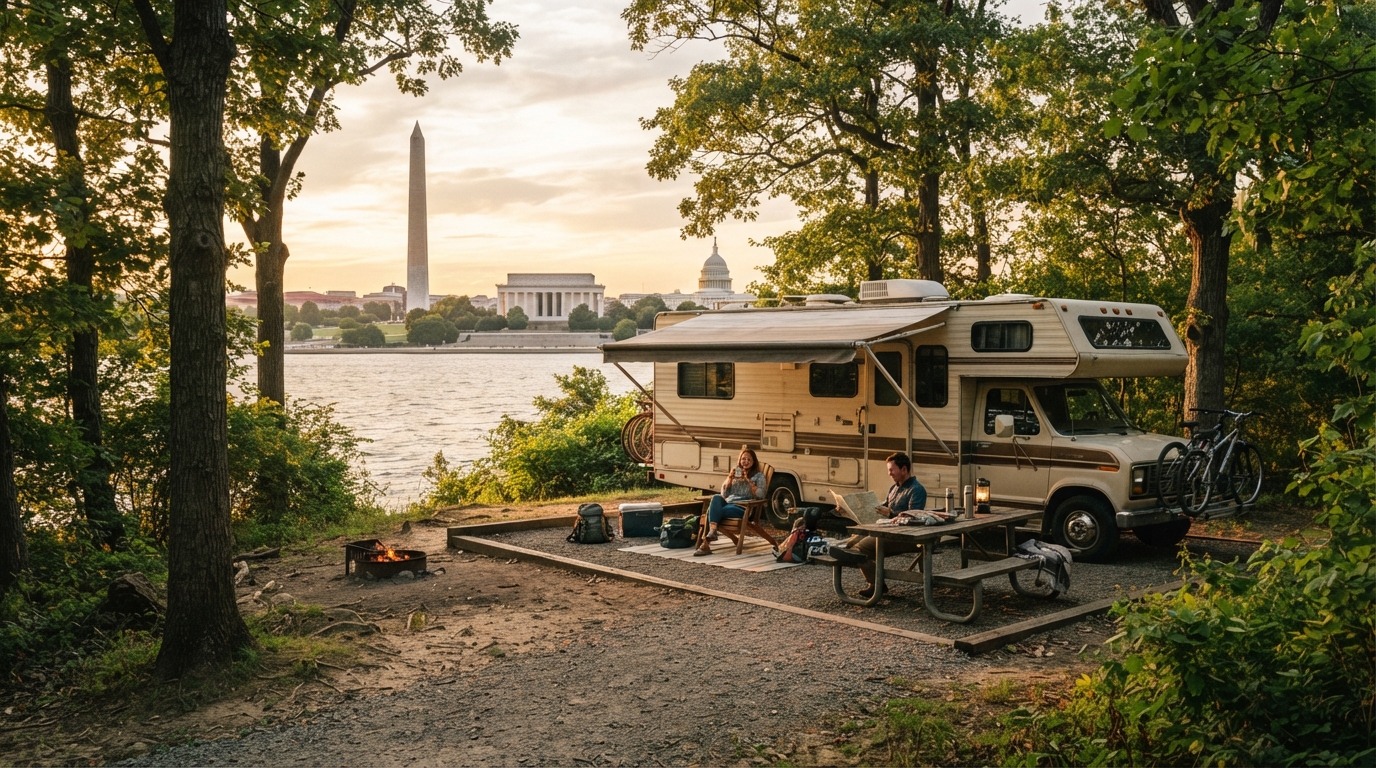
Enjoy wide-open skies and longer driving stretches punctuated by classic Americana, western history, and roadside nostalgia.
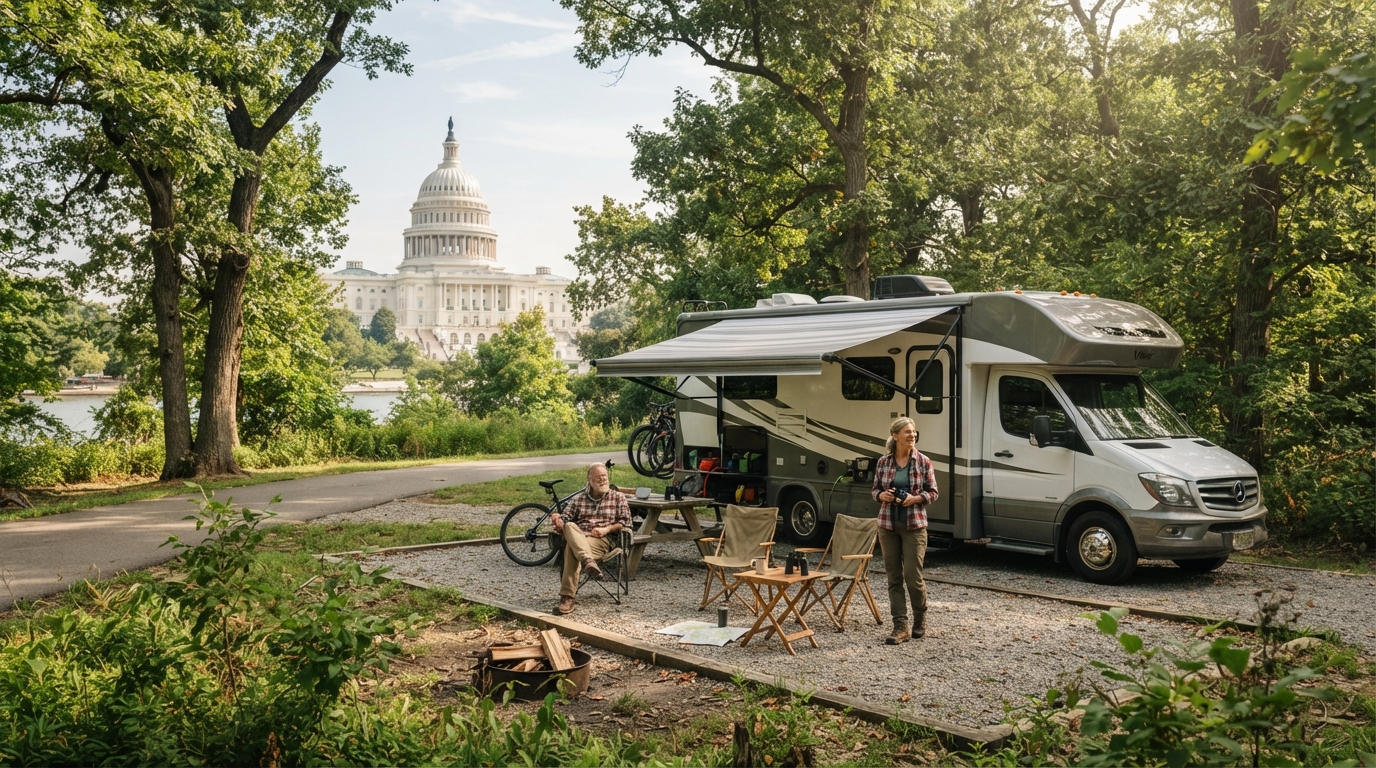
Navigate through vast, arid landscapes and striking geological formations in a region that demands steady highway cruising.

Descend from the high deserts into the diverse climates of California, slowing down as you approach the final coastal destination.
Total cost for this 26-day itinerary depends on the rig you pick, the pickup season, mileage add-ons, and any one-way drop-off fee across the 3,893 mi route. Check live availability and a real quote for the Washington DC → San Francisco pickup window on Rent Motorhome.
Live availability & pricing for this exact route
Prices update daily. See the full breakdown — nightly rate, taxes, one-way fee, mileage package — for your travel dates.
These are real vehicles in our Washington DC pickup fleet that fit a multi-week western U.S. itinerary. Configure dates on rvplan.net to see live availability and the total trip cost for the exact rig you want.
| Motorhome | Class | Sleeps | Length | Transmission |
|---|---|---|---|---|
| C-30 Cruise America- 26-E |
Class C - Alcove | 7 | 29.9 ft | Auto Transmission |
| CA-25 Cruise America- 26-E |
Class C - Alcove | 5 | 24.9 ft | Auto Transmission |
| C-21 Compact Plus Cruise America- 26-E |
Class C - Alcove | 4 | 21.0 ft | Auto Transmission |
| Ultra Compact C18 Cruise America- 26-E |
Class TC - Truck Camper | 2 | 19.5 ft | Auto Transmission |
Pick your dates below and we'll open the live RV PLANET booking flow for the Washington DC → San Francisco route.
Picking up in Washington DC but want a shorter loop or a different destination? Compare these RV PLANET itineraries that depart from the same depot:
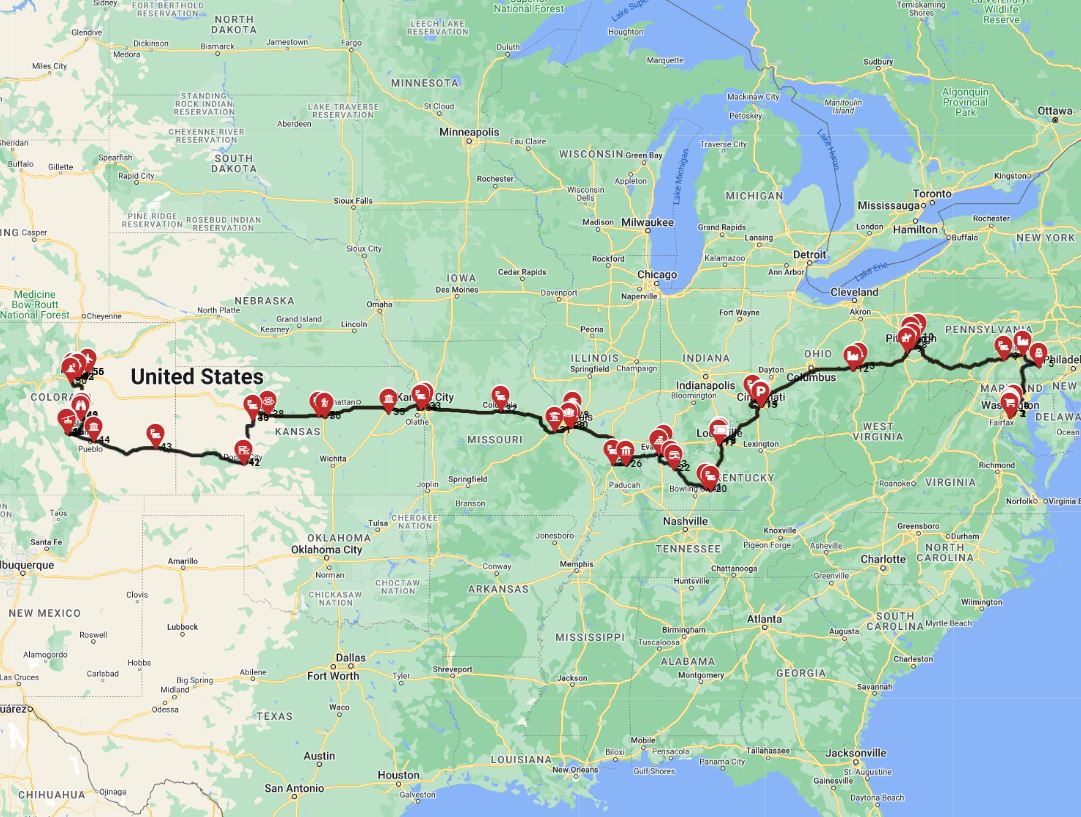
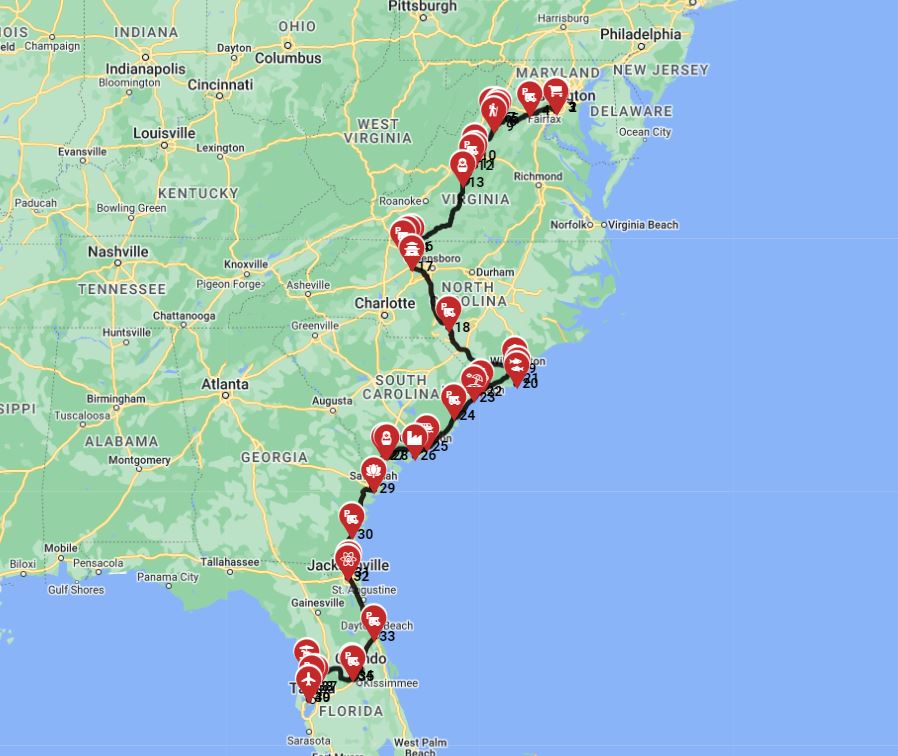
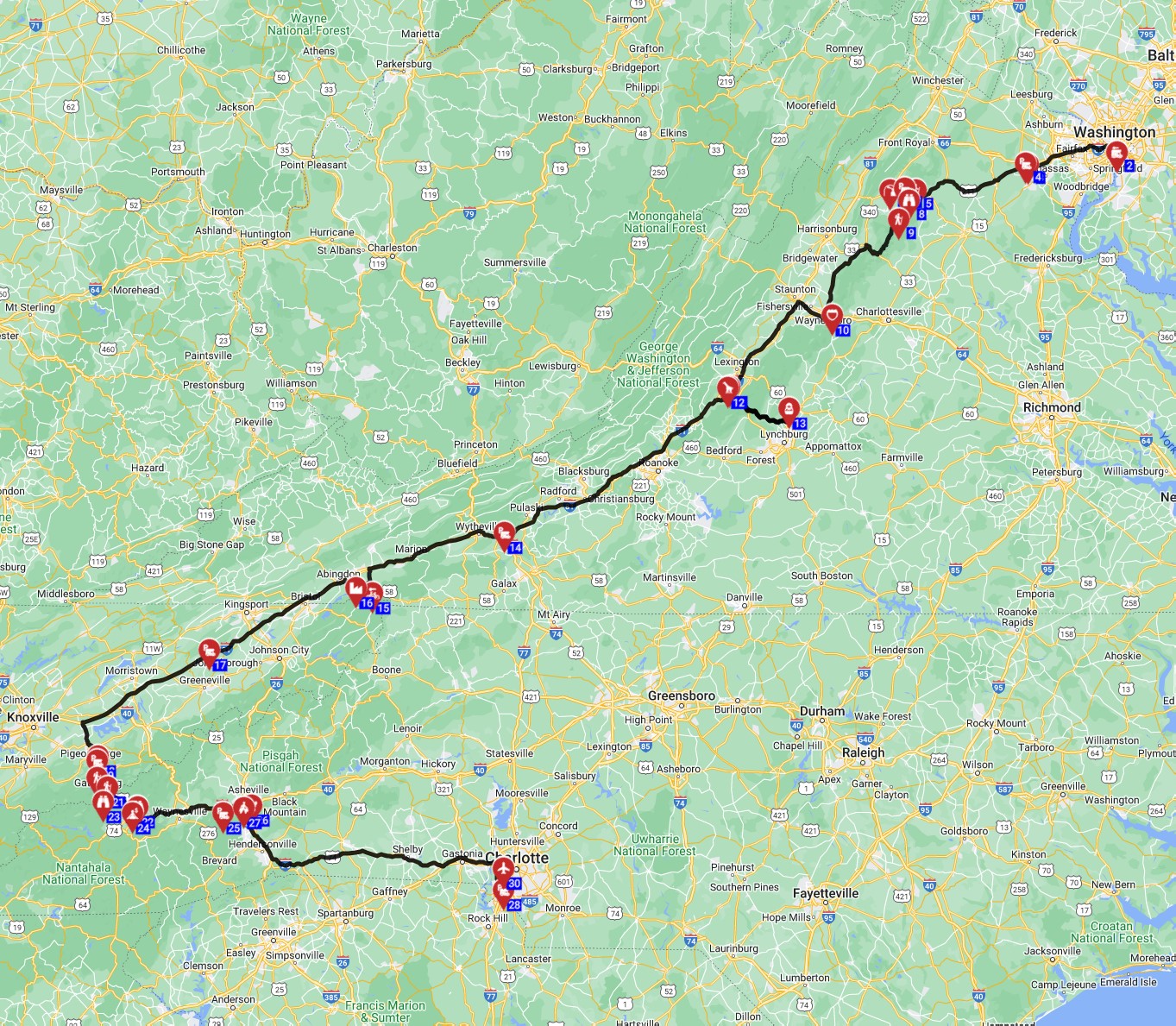
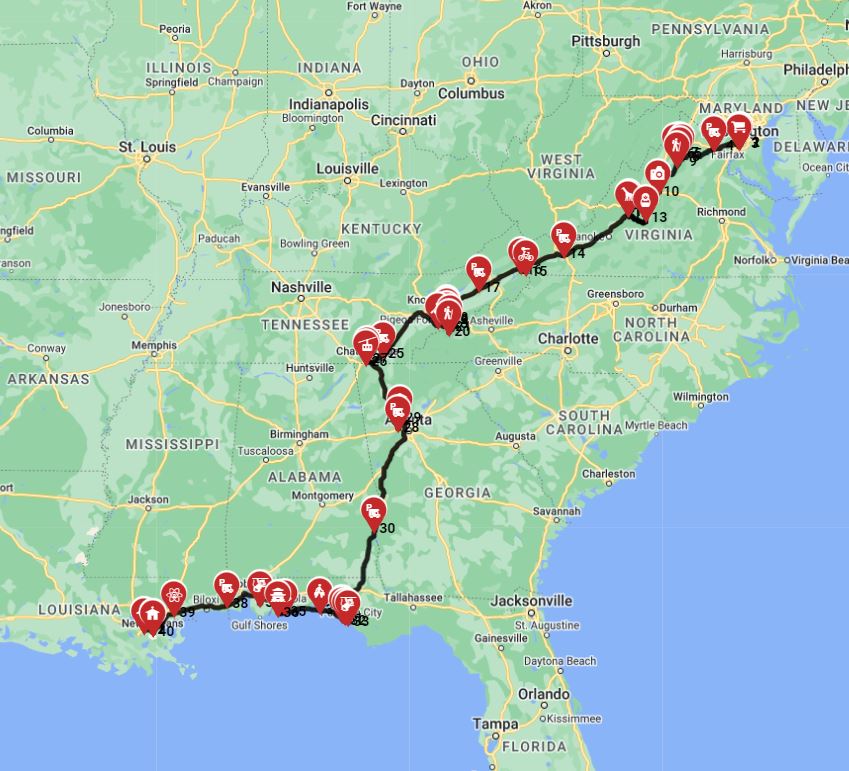
Ready-made multi-day routes — pair a trip with any RV above.
Practical guides for planning your Washington DC to San Francisco - East coast to West coast road trip.
The cost varies widely based on the size of the RV, the season, and how far in advance you book. For a 26-day trip, expect to factor in the base daily rate, a one-way drop fee, and a comprehensive mileage package. Check the live pricing tool below for exact figures.
A Class C motorhome or a mid-sized campervan is ideal. They offer enough living space for a nearly month-long trip while remaining maneuverable on the winding roads of the Blue Ridge Mountains and easier to park in cities like Nashville and Memphis.
Yes, this itinerary is designed as a one-way trip from Washington DC to San Francisco. Most major RV suppliers on RV PLANET offer one-way options between these major hubs.
One-way drop fees are generally charged in addition to the standard nightly rental rate. When you request a quote on RV PLANET, the one-way fee will be clearly outlined in your pricing breakdown.
Given the total distance is 3,893 mi, an unlimited mileage package is highly recommended. If unlimited is not available, you should pre-purchase enough mileage blocks to cover at least 4,200 miles to account for scenic detours and campground commutes.
For a long-duration, one-way rental, you should book at least 6 to 9 months in advance. One-way availability is limited, especially during the peak Spring and Autumn travel seasons.
Prices depend on the season, the RV class and how long you rent. Enter your travel dates in the search above for a live quote across our suppliers.
We suggest about 26 days to cover 3,894 miles at a comfortable pace. That works out to roughly 150 miles a day, with the longest single day around 258 miles.
The route runs one-way from Washington DC to San Francisco (SFO area), passing through Arizona, Arkansas, California, Nevada, New Mexico, Oklahoma, Tennessee, Texas, Virginia.
Any RV class can drive this route. Compact campervans are easier to handle on mountain and canyon roads and to park in towns, while larger motorhomes give families more living and sleeping space. Compare classes in the search to find the right fit.
Yes — this is a one-way trip, picking up in Washington DC and dropping off in San Francisco (SFO area). One-way fees vary by supplier, and several nearby cities also work as starting points (see the route overview above).
Planning an RV trip? Add Bandana as a preferred source.
 Please wait...