In This Guide
- Best Washington DC RV Itinerary for rv rental — Overview
- 7-Day Classic Route in Washington DC
- 14-Day Extended Journey in Washington DC
- Recommended RVPlan Trip for Washington DC
- Must-See Stops Along the Way (Avi Bandana Picks)
- Daily Driving Distances & Drive Times in Washington DC
- Best RV Class for This Itinerary — Couple & Family Picks
- Is Washington DC. RV friendly?
- Is there RV parking in Washington DC.?
- What is the best RV route?
Best Washington DC RV Itinerary for rv rental — Overview
An RV trip to Washington DC offers a unique way to explore the nation's capital and surrounding historical areas, which is best enjoyed with strategic planning for parking and navigation. While many travelers search for a "Weekend RV Itinerary in Washington DC", we at Bandana RV recommend a minimum duration of 7 days to fully immerse yourself in the experience and truly connect with the culture and history without rushing. This extended timeframe allows for a blend of urban exploration, utilizing convenient public transit from outer campgrounds, and regional historical and natural sites. The ideal seasons to visit are spring, from late March to mid-April, for the iconic cherry blossoms, and fall, from September to October, for mild weather and fewer crowds, expertly avoiding the peak summer heat, heavy traffic, and major federal holidays. For live availability and current prices, start with our RV Rental Washington DC - Complete Guide 2024 guide, which offers comprehensive insights into planning your journey.7-Day Classic Route in Washington DC
This 7-day itinerary focuses on establishing a strategic base camp outside Washington DC and utilizing public transport for city exploration, adhering to Avi Bandana's recommendation of a maximum of 100-150 km per day on average for a relaxing trip. On **Day 1: Arrival & Setup**, arrive at a suburban RV-friendly campground in Maryland or Virginia, such as Cherry Hill Park (Maryland) or Lake Fairfax Park (Virginia), both offering excellent Metro access into DC. Set up your rented motorhome and explore campground amenities, preparing for city excursions. On **Day 2: Iconic DC Day 1**, utilize public transit (Metro) from your campground into Washington DC. Explore the National Mall, visiting iconic Smithsonian Museums like the National Air and Space Museum and the National Museum of Natural History, focusing on proximity and accessibility from the Smithsonian Metro station. For families, these museums offer engaging, free experiences. On **Day 3: Iconic DC Day 2**, continue your DC exploration by focusing on Capitol Hill, including the U.S. Capitol Building, the Library of Congress, and the Supreme Court, all easily accessible via public transport. Afterward, visit significant memorials like the Lincoln Memorial and Reflecting Pool, allowing ample time for reflection. Remember that direct RV driving and parking are impractical in these dense urban areas. **Day 4: Mount Vernon History** involves driving your rented RV to Mount Vernon (approximately 30-50 km south of DC suburbs) to explore George Washington's historic estate, which offers specific RV parking. Return to your base campground. On **Day 5: Annapolis Charm**, drive about 50-65 km to Annapolis, MD, to explore the historic U.S. Naval Academy, Maryland State House, and the vibrant waterfront. Consider a campground near Annapolis or return to your DC area base. For delicious meal ideas on the road, check out our RV-friendly recipes playlist. **Day 6: Old Town Alexandria** offers a short drive or public transit option to Old Town Alexandria, VA (about 10-15 km from central DC suburbs), where you can walk along King Street, visit historical sites like the George Washington Masonic National Memorial, and enjoy the Potomac River waterfront. Finally, on **Day 7: Departure/Leisure**, enjoy a final morning at your campground, perhaps with a short hike or bike ride, before preparing for departure or your next destination. This slower pace allows for genuine connection with each location. For travelers interested in longer trips, exploring options like a Long-Term RV Rental in Washington DC - Monthly Rates 2024 can provide even more flexibility.14-Day Extended Journey in Washington DC
This extended 14-day journey builds upon the classic route, allowing for deeper exploration of Washington DC and the surrounding Mid-Atlantic region, while strictly adhering to daily driving limits of 100-150 km for a truly relaxing pace. **Days 1-7** follow the established Washington DC & Immediate Surroundings itinerary, utilizing a suburban campground as a convenient base for city access and local historical sites like Mount Vernon and Annapolis. This initial week establishes a comfortable rhythm for your rented mobile home adventure. **Days 8-9: Gettysburg & Civil War History** involve driving your RV to Gettysburg, PA (approximately 110-130 km from DC suburbs). Here, you can immerse yourselves in the profound history of Gettysburg National Military Park, exploring the battlefield and museum. Stay at a local RV park such as Artillery Ridge Campground, which offers full hookups and easy access to the historical sites. **Days 10-11: Shenandoah National Park** is next, a scenic drive of about 110-145 km from Gettysburg, or roughly 130 km from DC suburbs. Enjoy breathtaking drives along Skyline Drive, explore numerous hiking trails, and spot local wildlife from your rented campervan. Camp within or just outside the park at a site like Loft Mountain Campground or Big Meadows Campground, both offering stunning natural beauty. For a broader context of RVing in the area, consult our RV Rental Virginia - Complete Guide 2024. **Days 12-13: Harpers Ferry Exploration** involves a shorter drive to Harpers Ferry, WV (approximately 50-65 km from Shenandoah). Discover this historic town, its pivotal role in the Civil War, and the scenic confluence of the Potomac and Shenandoah rivers. Stay at a nearby campground such as Harpers Ferry Campground. On **Day 14: Return & Departure**, drive back to a Washington DC suburb campground for final amenities, or prepare for your journey home, having experienced the rich tapestry of the Mid-Atlantic region. This extended trip allows for a more relaxed and fulfilling adventure.Recommended RVPlan Trip for Washington DC
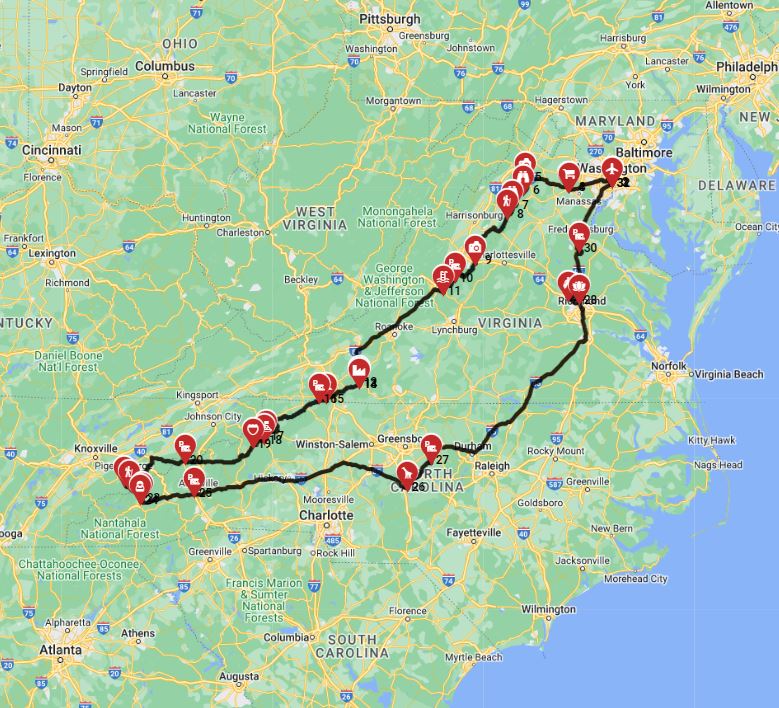
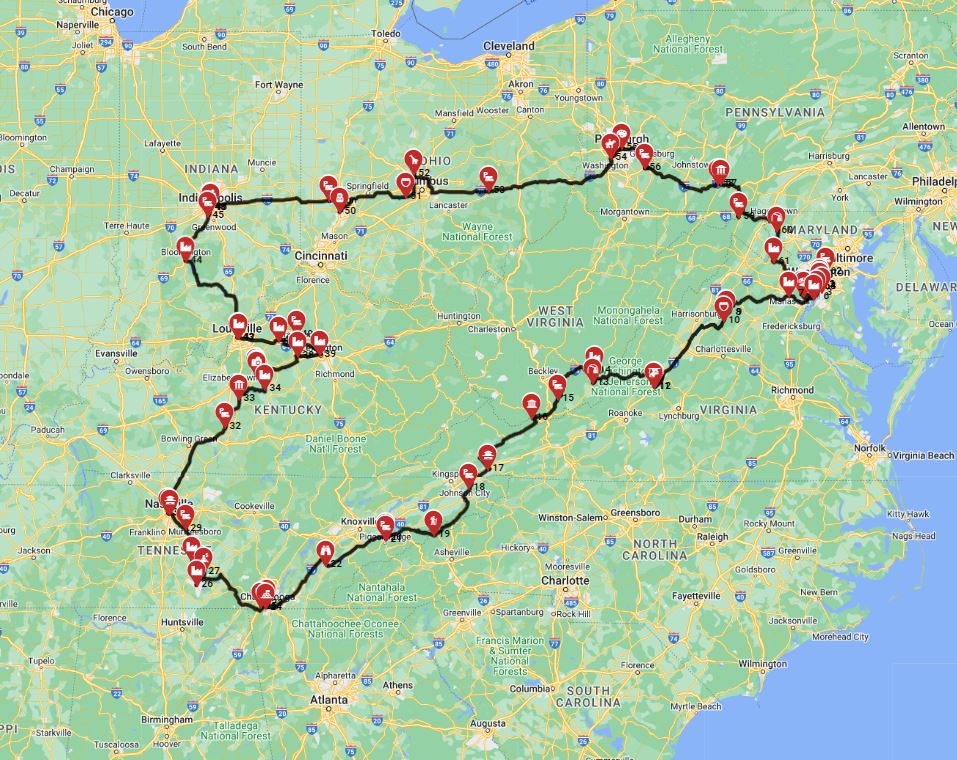
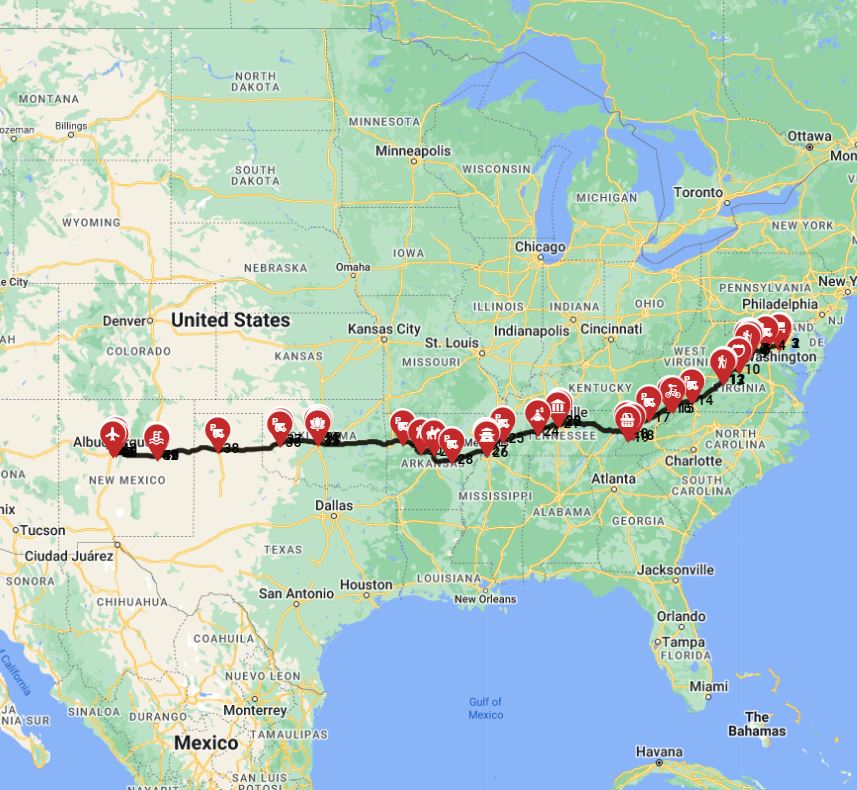
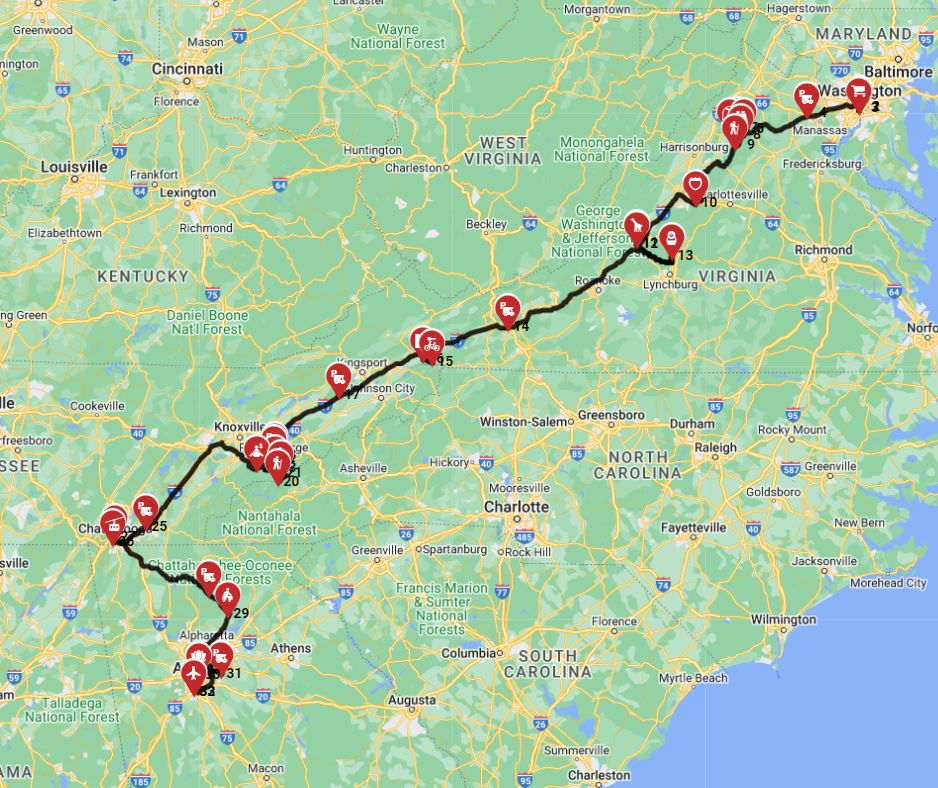
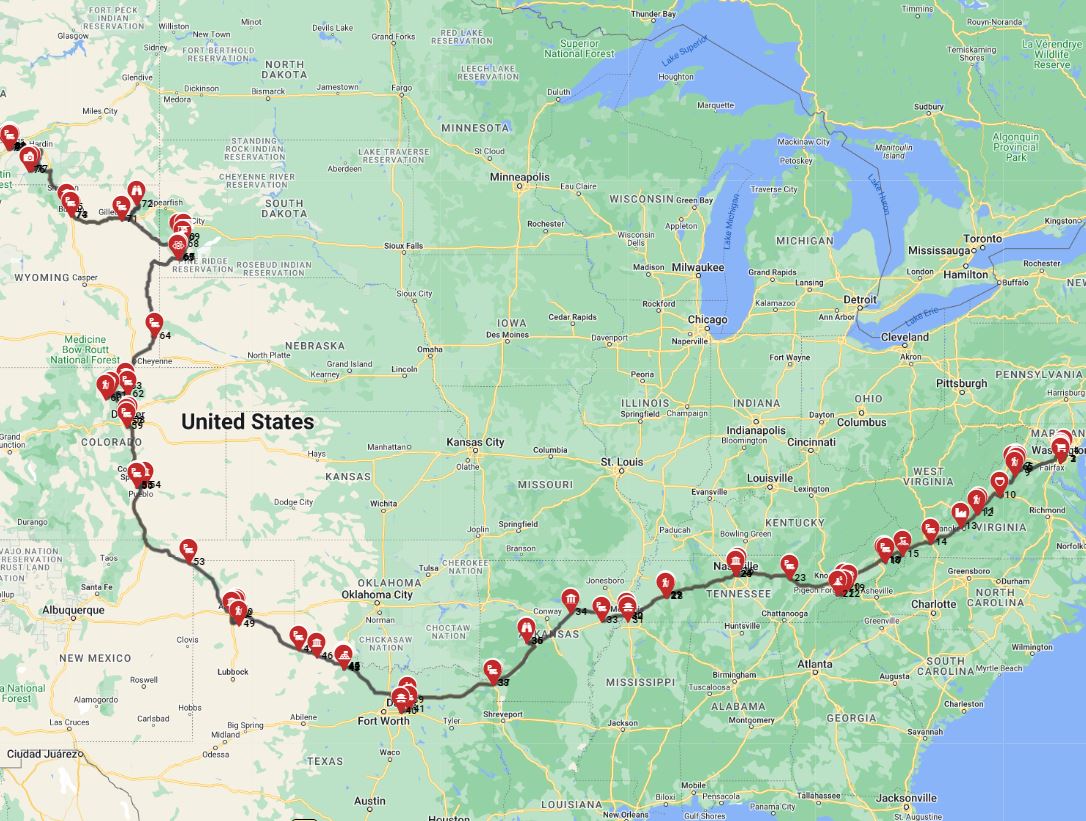
For an extended adventure originating in Washington DC, Bandana highly recommends exploring the '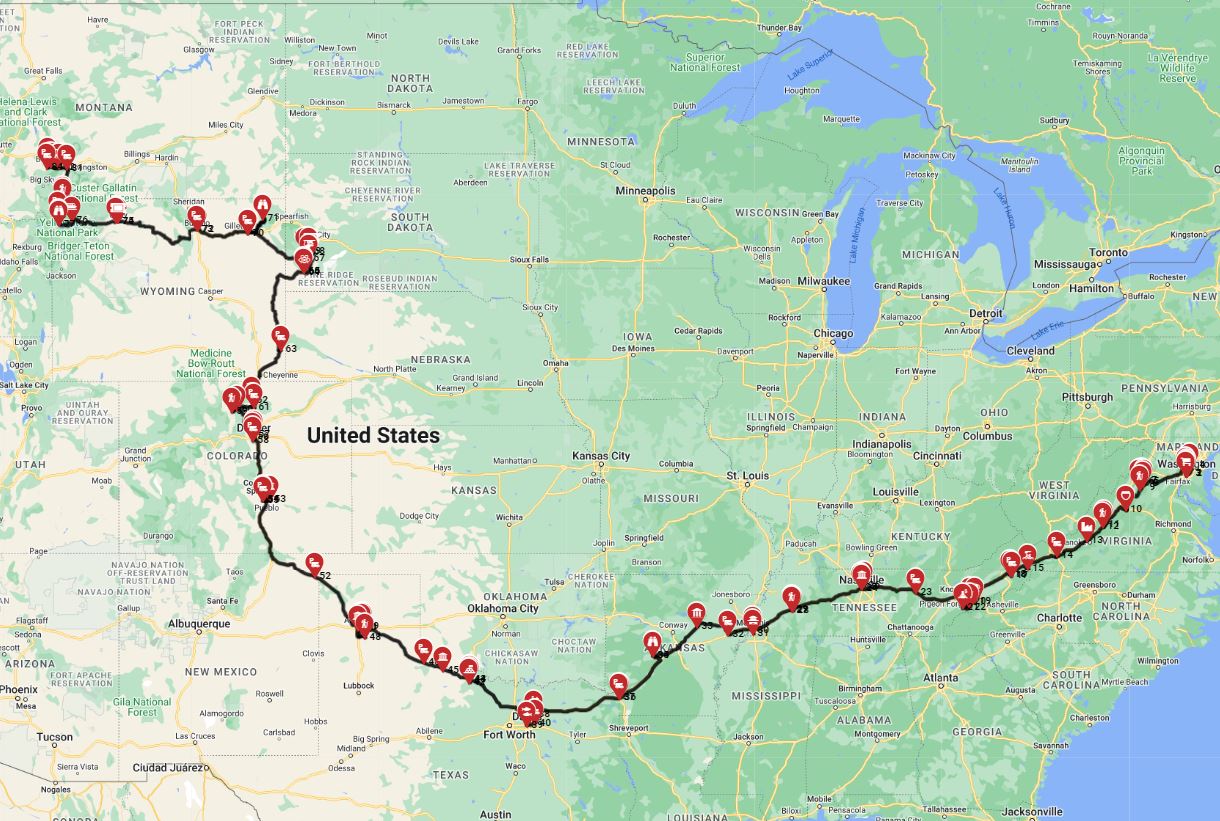
Washington DC to Bozeman - Including the Yellowstone
Explore this route
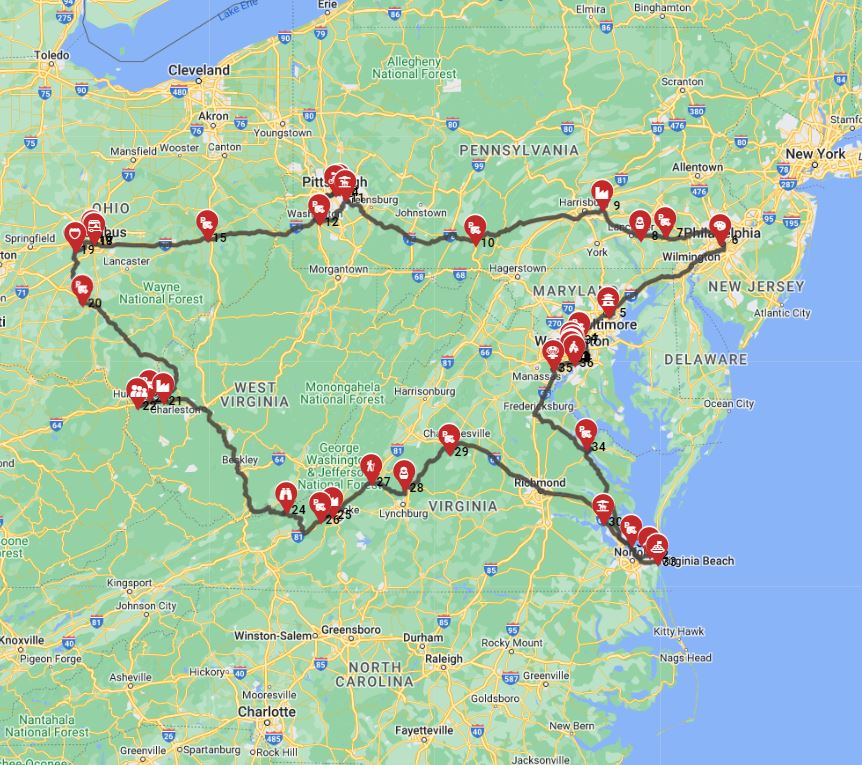
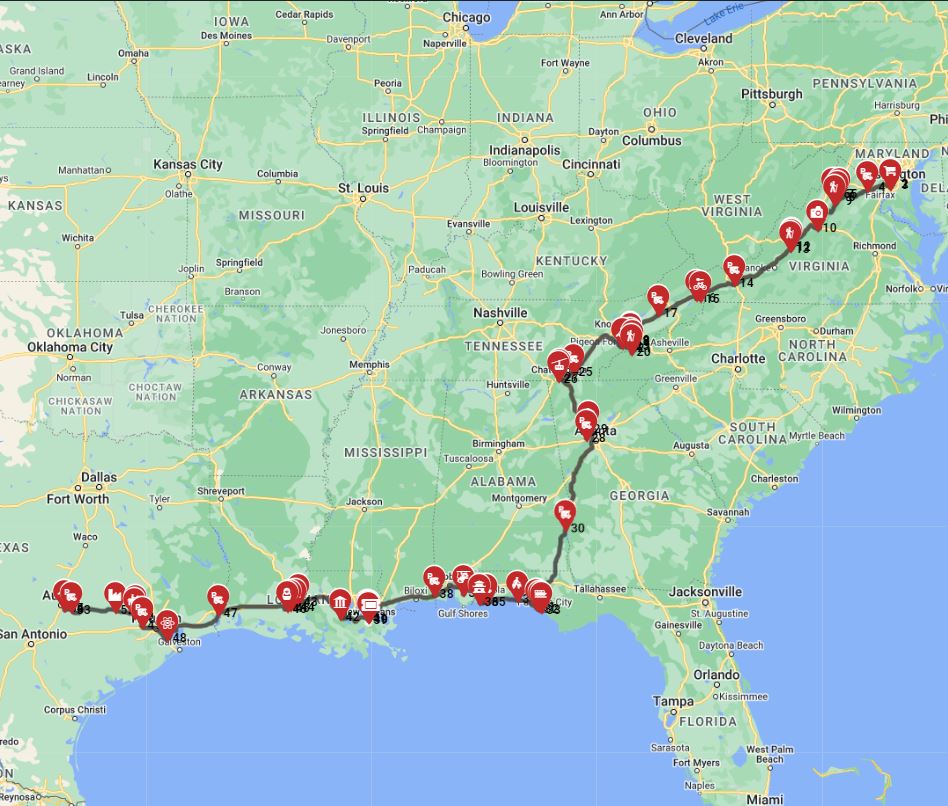
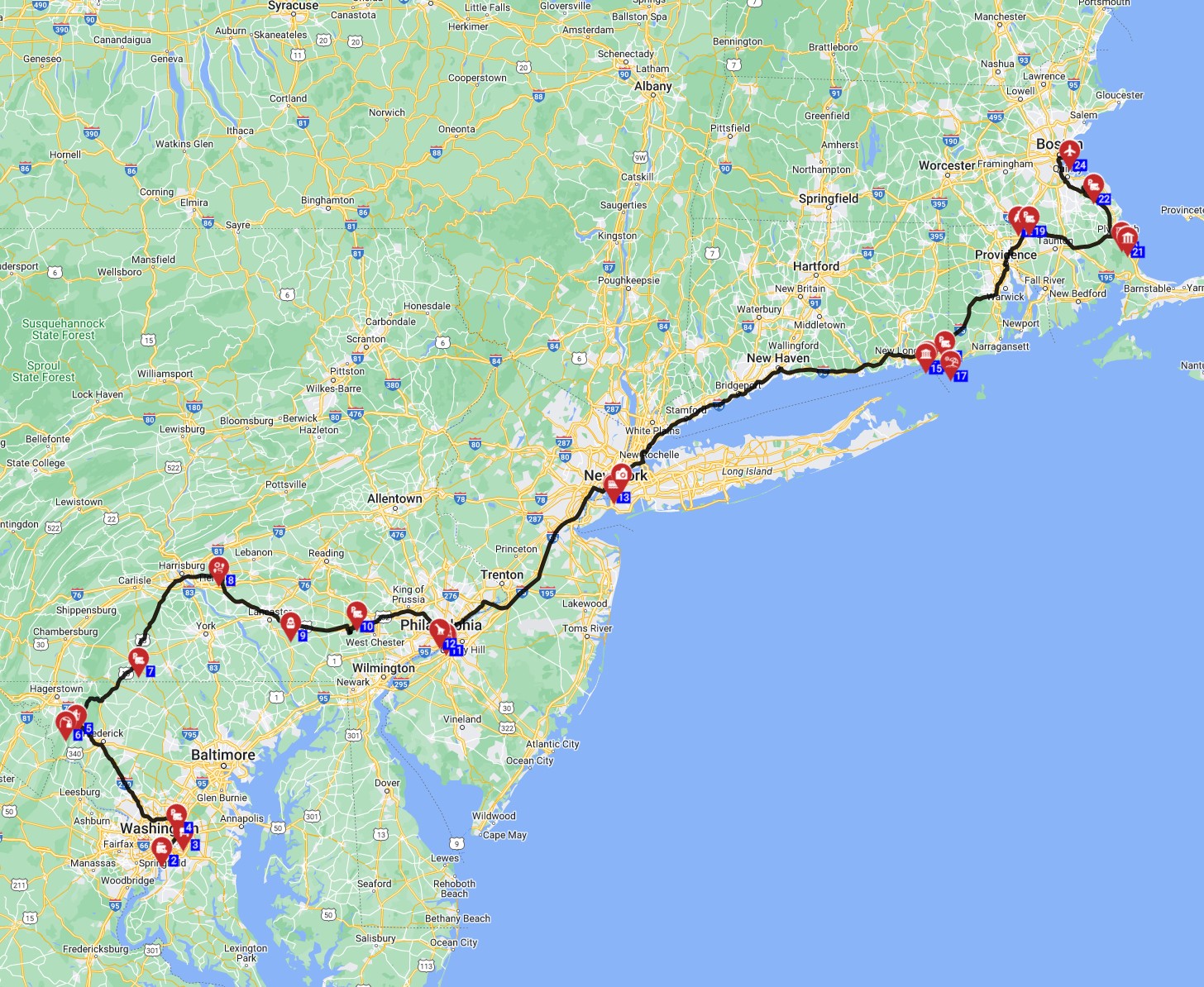
Another fantastic option is the "Washington DC to Orlando" route, a 13-day adventure covering 2470.5 km. This itinerary includes diverse stops such as amusement parks, aquariums, beaches, historical sites, and local industries, concluding in the theme park capital of Florida. It's a great example of how our RV PLANET routes ensure you experience a wide range of attractions. For finding campsites and campgrounds during your trip, we recommend using RV PLANET (rvplan.net) - a great resource for locating available spots along your route, especially useful for such diverse trips.
Explore this route
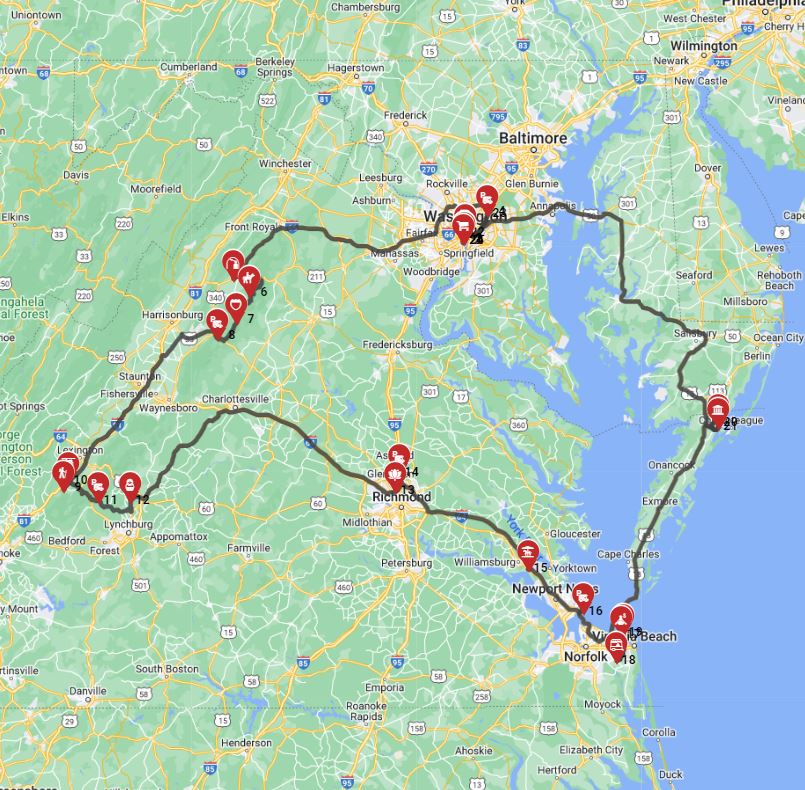
If you prefer to stay closer to home, the "
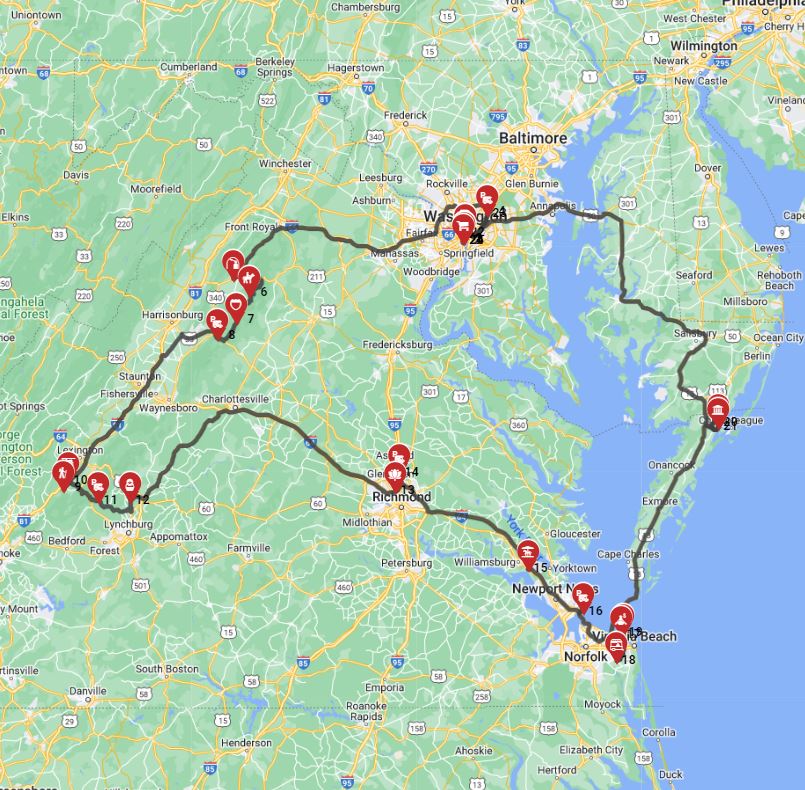
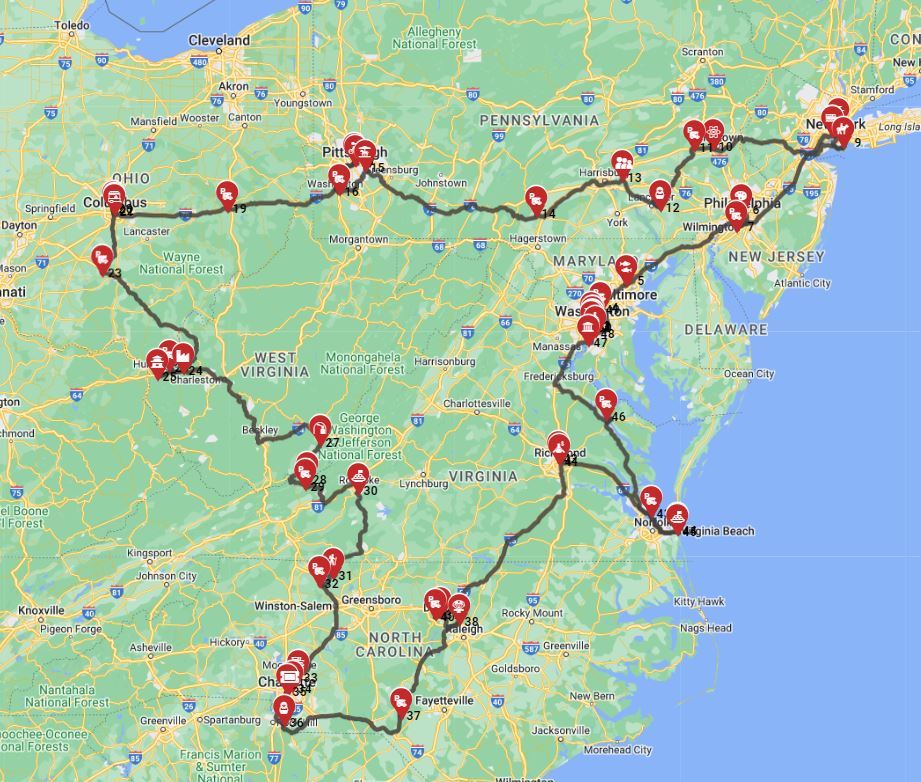
Washington DC Roundtrip - South
Explore this route
Must-See Stops Along the Way (Avi Bandana Picks)
Avi Bandana's top picks for an RV adventure starting near Washington DC emphasize cultural immersion and unique experiences found along the broader routes, drawing from our carefully curated RVPlan trips. A **Traditional Visit** to a significant historical site like Gettysburg National Military Park offers a deep dive into American history, bringing the past to life with its 1,000+ monuments and markers. For unique experiences, explore a **Local Industry** such as a craft brewery or artisanal food producer in Loudoun County, VA, showcasing regional ingenuity and craftsmanship. Imagine sampling local wines after a scenic drive in your rented RV. Discover authentic regional specialties at a **Traditional Restaurant / Fine Dining** establishment, savoring classic American comfort food or innovative local cuisine. For example, Old Ebbitt Grill in DC offers historical ambiance with traditional fare, while the restaurants in Old Town Alexandria provide diverse culinary options. Lastly, experiencing a **Traditional Market** is crucial to connect with local culture. Visit Eastern Market on Capitol Hill for fresh produce, artisanal goods, and unique souvenirs, providing an immersive experience for families. These stops enhance your RV rental journey, offering memorable insights into the Mid-Atlantic region.Daily Driving Distances & Drive Times in Washington DC
Avi Bandana recommends a maximum of 100-150 km (approximately 60-90 miles) per day on average for a truly relaxing RV trip, particularly when navigating around a dense metropolitan area like Washington DC. Adhering to this guideline prevents driver fatigue, allows for spontaneous stops, and buffers against unexpected traffic delays, which are common in the DC region, especially on arteries like I-95 and I-495. For example, a drive from a campground near Annapolis, MD, to Washington DC (approximately 50 km or 30 miles) can take anywhere from 45 minutes to 1.5 hours, depending heavily on rush hour traffic. Traveling from Leesburg, VA (a western suburb) to Washington DC (about 65 km or 40 miles) typically ranges from 1 hour 15 minutes to 2 hours. Beyond campground fees (typically $40-$70 per night), carefully budget for RV fuel costs; Bandana's fleet, such as a Class C Alcove motorhome like the 'Cruise America RV Rental Example Explorer' with a 75-liter fuel tank, typically consumes 10-12 Liters/100 km. Additionally, be prepared for tolls, which are frequent on DC area highways and bridges, potentially adding $5-$20 to a single trip depending on the route and express lane usage. Public transportation expenses are also a factor; a reusable SmarTrip card for Metro/bus fares can cost $10-$20 for a day pass, providing a convenient way to navigate the city. On the routes offered through RV PLANET routes, travelers can itemize and track every expense along the way for easy budgeting, ensuring full transparency in your trip costs. For precise pricing for your dates, check our RV Rental Deals in Washington DC - Latest Offers 2024.Best RV Class for This Itinerary — Couple & Family Picks
Choosing the right RV class significantly enhances your Washington DC area adventure, with specific models from Bandana's diverse fleet being ideal for both couples and families. For couples seeking a flexible and maneuverable option, a Class B Camper Van, averaging 5.8 meters in length and comfortably accommodating 2 adults (with 3.2 sleeping places total), is ideal. These compact campervans, like the 'V3' model, are exceptionally easy to navigate through suburban areas and park at campgrounds, while offering good maneuverability and a typical fuel consumption of 8-10 Liters/100 km. For families exploring Washington DC and its surroundings, Bandana's Class C Alcove RVs are highly recommended. Units such as the '24' Class C Motorhome' average 7.5 meters in length and are designed to comfortably accommodate 4-6 people, with an average of 5.8 sleeping places. The increased living space and dedicated sleeping areas make them perfect for families, balancing comfort with reasonable manageability, and typically consume 10-12 Liters/100 km. Drive slowly and carefully, and you can drive almost anywhere without issues. No need to stress - just use common sense and pay attention. To simplify your RV journey, consider Bandana's 'Rent&Plan' service, which combines your RV rental with a professionally designed itinerary by travel experts. This service provides full access to trip-planning software, removing the headache of detailed logistics and allowing you to focus on enjoying your Washington DC adventure.Is Washington DC. RV friendly?
Washington DC itself is generally not RV-friendly for direct driving or parking within the dense city core, but the surrounding metropolitan area offers numerous RV parks and robust public transportation options for easy city access. The challenges for RVs in the city include narrow streets, strict parking regulations (often with fines of $50-$250 for oversized vehicles), low bridges, heavy traffic, and extremely limited oversized vehicle parking, making direct navigation impractical and often forbidden in specific zones, especially around the National Mall. The most effective strategy for RVers is to park at a suburban campground in Maryland or Virginia and utilize the excellent public transit system, primarily the Metro and local buses, to access city attractions. For instance, Cherry Hill Park in College Park, MD, offers direct bus service to the Green Line Metro station, with a 30-45 minute commute to central DC. Lake Fairfax Park in Reston, VA, provides shuttle service to the Silver Line Metro, approximately 45-60 minutes to downtown. This approach avoids urban driving stress and parking difficulties. During peak seasons like the Cherry Blossom Festival (late March to mid-April) or major federal holidays, traffic and crowds are significantly higher, making RV travel and even public transit more challenging, so seasonality should be a key planning factor. While many suburban campgrounds are pet-friendly, strict restrictions exist within Washington DC (e.g., no pets allowed in Smithsonian museums); research local pet-sitting services or limited pet-friendly outdoor activities within the city. For specific pricing on different RV types, explore our Weekly RV Rental in Washington DC - Pricing 2024.Is there RV parking in Washington DC.?
RV parking directly within Washington DC is extremely limited and largely discouraged, with many areas having strict restrictions against oversized vehicles, particularly near federal buildings and residential zones. RVs are absolutely forbidden to drive or park on many streets within the National Mall perimeter, around the U.S. Capitol, and in most residential areas due to size restrictions, security concerns, and the lack of appropriate spaces, often resulting in hefty fines or towing. Very few, if any, street parking spots exist that can accommodate a motorhome for an extended period, and relying on commercial zones for transient parking is unreliable and often expensive. The most practical and recommended approach is to utilize Park & Ride lots located outside the city center, typically near Metro stations in the surrounding suburbs of Maryland and Virginia. These suburban Park & Ride lots are designed for commuters, and while some may accommodate larger vehicles, it is crucial to check specific lot regulations for oversized vehicles prior to arrival. For example, the Branch Avenue Metro station (Green Line in Maryland) and Franconia-Springfield Metro station (Blue/Yellow Line in Virginia) offer large parking garages, but RV-specific parking is not guaranteed and requires checking their current oversized vehicle policies and potential parking fees (often higher than standard car parking, $10-$20 per day). It’s essential to call ahead or check the Washington Metropolitan Area Transit Authority (WMATA) website for the latest information on RV parking availability at these sites.What is the best RV route?
The best RV route for visiting Washington DC prioritizes regional exploration and strategic positioning in suburban campgrounds, rather than direct city driving, enabling easy access to the capital's attractions via public transit while providing opportunities to explore historical and natural sites beyond the city. For shorter trips, an ideal route involves establishing a single base camp in an RV-friendly suburb of Maryland or Virginia, strategically located near the Metro system. This base facilitates multiple day trips into DC, interspersed with visits to nearby historical sites like George Washington's Mount Vernon or the charming waterfront city of Annapolis. An extended journey, such as a 14-day adventure or longer, allows the route to expand significantly, incorporating additional substantial attractions. This could include a drive of about 120 km northwest to Gettysburg National Military Park in Pennsylvania for Civil War history, followed by a scenic drive to Shenandoah National Park in Virginia for breathtaking natural beauty, roughly 130 km southwest. The journey could then continue 60 km north to Harpers Ferry, West Virginia, before looping back towards Washington DC. This creates a comprehensive circuit that offers a diverse blend of history, nature, and culture. The optimal RV route always aims to minimize the stress of urban RV navigation by leveraging excellent public transportation, maximizing the enjoyment of both Washington DC's iconic landmarks and the picturesque Mid-Atlantic region's natural beauty. Consider checking our RV Travel Guide to Washington DC - Tips and Top Spots 2024 for more detailed route suggestions.What You Shouldn't Miss
- **Explore the Smithsonian Museums**: Dedicate at least two full days to the free-entry Smithsonian museums on the National Mall. The National Air and Space Museum and the National Museum of Natural History are perennial favorites for families.
- **Visit Mount Vernon Estate**: Drive your rented motorhome to George Washington's historic estate, located just 25 km south of Washington DC, and allow 4-6 hours to explore the mansion, gardens, and museum.
- **Discover Old Town Alexandria**: Spend a day exploring the charming, historic streets of Old Town Alexandria, Virginia, with its colonial architecture, boutique shops, and waterfront dining. It's only 10 km from downtown DC.
- **Stroll through Rock Creek Park**: Escape the urban bustle with a visit to Rock Creek Park, a large urban national park offering 50 km of hiking trails, bike paths, and serene natural beauty right within the city.
- **Experience Annapolis, Maryland**: Take a scenic 50 km drive east to Annapolis, the capital of Maryland, to visit the U.S. Naval Academy and the historic State House, enjoying the maritime atmosphere.
- **Wander Capitol Hill**: Explore the iconic buildings of Capitol Hill, including the U.S. Capitol Building (book tours in advance), the Library of Congress, and the Supreme Court, all accessible via the Metro.
Looking for expert insights from Avi Bandana? Top 5 Adventures - recommendations from Avi Bandana