In This Guide
- Where to Camp in USA - Top Options
- Campground Types in USA (National, Private, Wild)
- Featured RV Park or Campground in USA
- Hookups & Amenities - What to Expect
- Booking Windows & Reservations in USA
- Nearby Supermarkets & Resupply Points
- Best RV Class for Camping in USA
- How to Save on Campgrounds in USA
- What is the 3-3-3 rule for RVs?
- Where can you park RV for free in the US?
- Can I park my RV anywhere in the USA?
- What is the 4-4-4 rule for RV travel?
- What is the nicest RV park in the United States?
- What does FF mean in camping?
- What is the 3-3-3 rule for RV camping?
- What is the 4-4-4 rule for RV camping?
- What is the 200 rule for camping?
- What is the campsite app for USA?
The USA offers unparalleled opportunities for unforgettable RV adventures, even for quick stays and shorter trips. Imagine waking up to a breathtaking sunrise over a national park or enjoying a cozy campfire under a canopy of stars. With a rented motorhome or campervan, this freedom is yours to grasp. For live availability and current prices, start with our RV Rental USA - Complete Guide 2026 guide, offering all the essentials for your journey.
Where to Camp in USA - Top Options
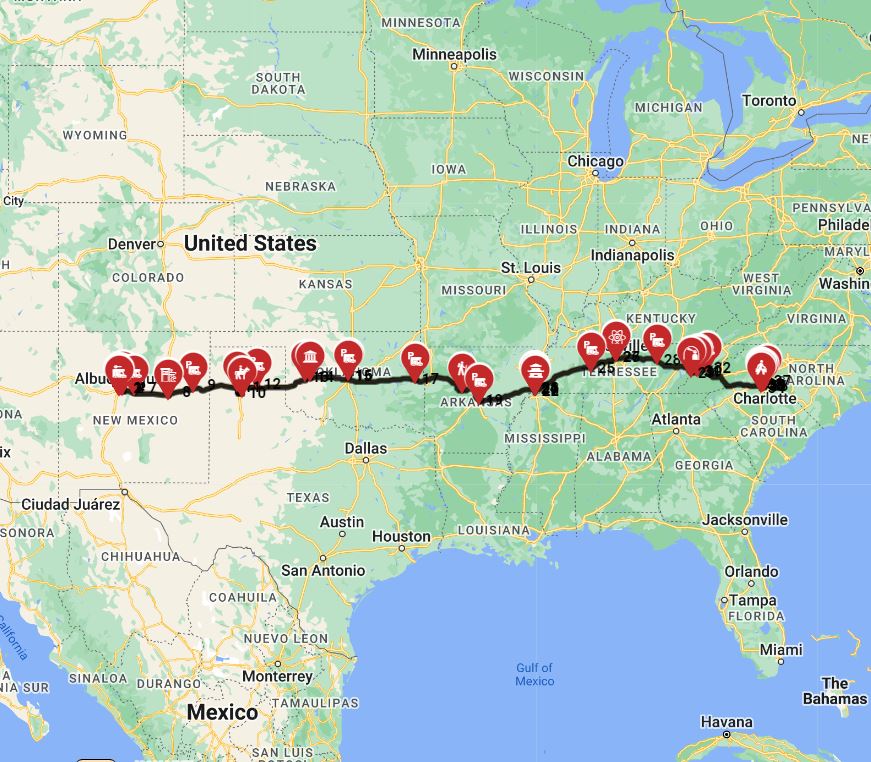
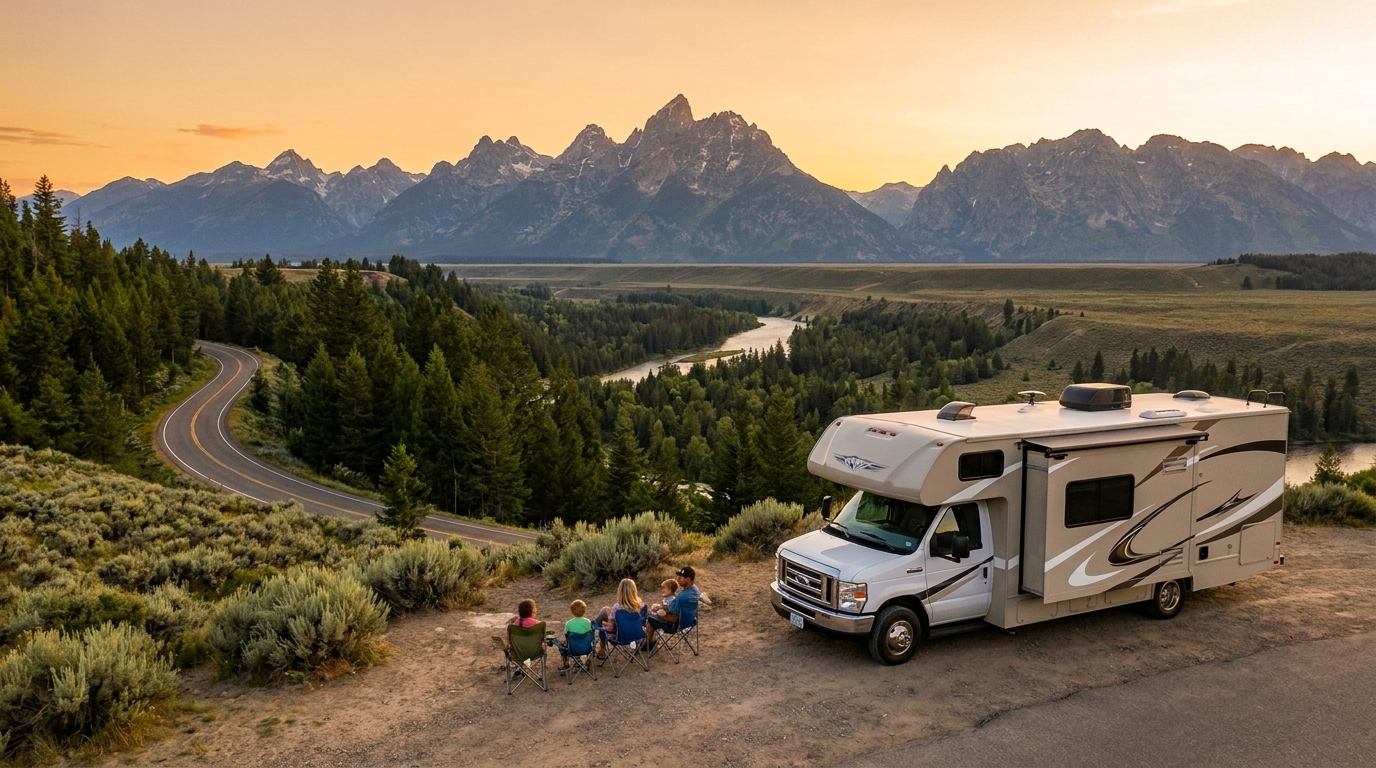
The USA offers diverse RV camping experiences from scenic national parks to private resorts and vast public lands, providing ample choices for a quick RV rental. Popular regions for RV camping include the iconic national parks of the American West, the serene landscapes of the Pacific Northwest, and the vibrant coastal campgrounds of Florida. For instance, a quick getaway to California allows you to explore stunning coastlines or majestic redwood forests. Consider national parks for unparalleled natural beauty, state parks for a balance of amenities and nature, or private campgrounds for a more amenity-rich, resort-style experience. Exploring various regions can be easily facilitated with platforms like RV PLANET (rvplan.net), which offers pre-planned routes for states like California.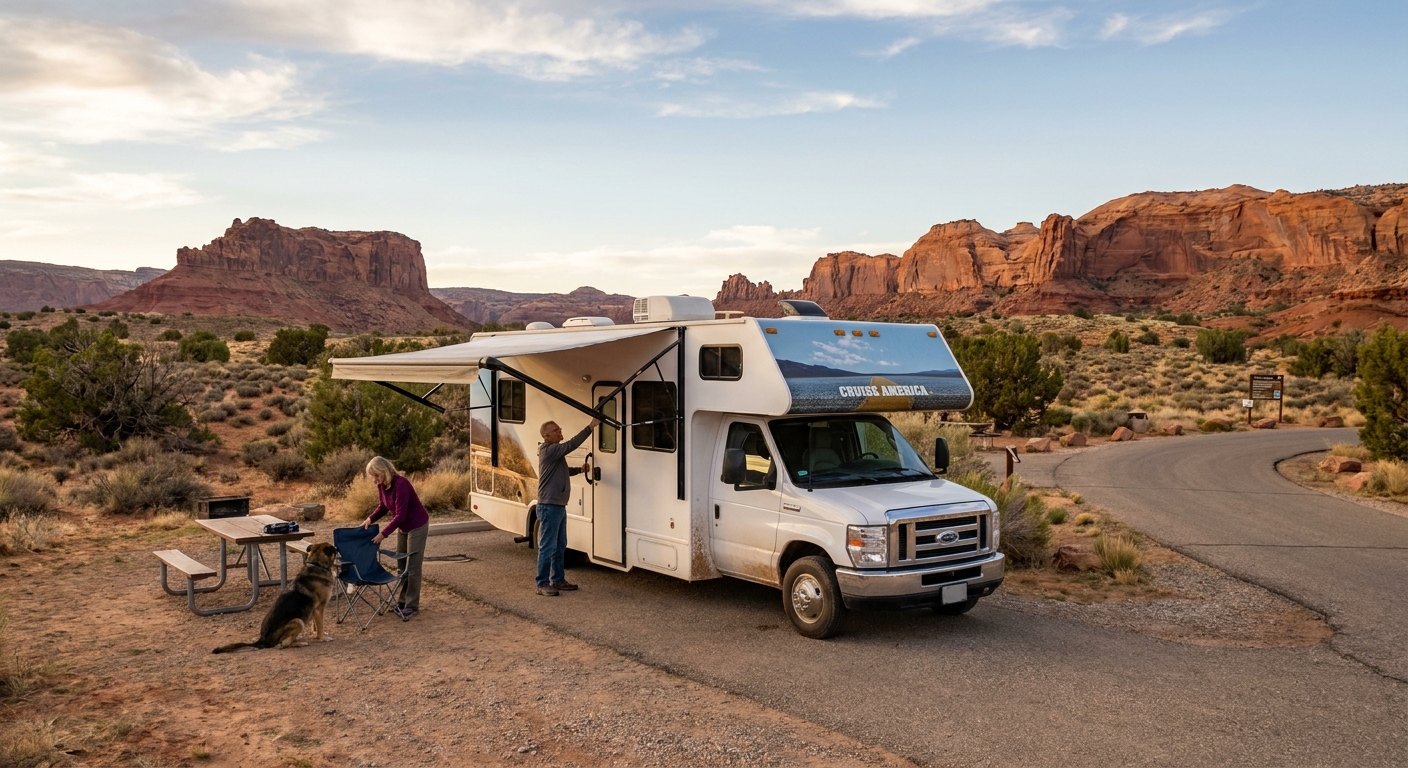
Campground Types in USA (National, Private, Wild)
National Park Service campgrounds provide access to America's iconic natural wonders, typically offering basic amenities like restrooms and fire rings, but often requiring competitive advance reservations for their 25-30% reservable sites. Private campgrounds, such as those operated by KOA or Jellystone, offer a wide range of amenities including full hookups (electric, water, sewer), pools, Wi-Fi, and organized activities, ideal for families or those seeking comfort on a shorter trip. Wild camping, also known as boondocking or dispersed camping, is permissible on many Bureau of Land Management (BLM) and National Forest lands, offering free, primitive stays without amenities for self-sufficient RVers, often for up to 14 days within a 28-day period in states like Arizona. Our partners, such as El Monte and Cruise America, can equip you with the right rented motorhome for any camping style.Featured RV Park or Campground in USA
When selecting a featured RV park for your quick getaway in USA, prioritize locations that align with your desired experience, whether it's proximity to national parks, coastal access, or a specific family-friendly theme. For example, Zion River Resort in Utah is highly regarded for its excellent amenities and scenic access to Zion National Park, consistently receiving high ratings for its clean facilities and family offerings. Look for parks that boast excellent reviews, offer a variety of site types (pull-through, back-in), and provide amenities such as full hookups, clean bathhouses, and recreational facilities. A truly standout RV park might also offer unique features like guided tours, on-site dining, or pet-friendly areas, enhancing the overall comfort and enjoyment of your rented RV stay.Hookups & Amenities - What to Expect
Most RV campgrounds in the USA offer 'full hookups,' which typically include a 30-amp or 50-amp electrical connection, a fresh water supply, and a sewer dump connection, ensuring a comfortable stay in your rented RV. Beyond essential hookups, common amenities can range from Wi-Fi (though often unreliable), laundry facilities, private showers, and clean restrooms to recreational features like swimming pools, playgrounds, and communal fire pits. For a quick RV stay, assess which amenities are critical for your trip style-whether it's the convenience of full hookups for comfort or a more basic setup for a rustic experience. When planning your route, be sure to note down spots where you can resupply water or empty waste tanks.Booking Windows & Reservations in USA
For RV camping in the USA, especially in popular national parks or during peak season (like summer or major holidays), many planners aim to book campground reservations several months in advance to secure a spot. Remember, prices are dynamic and subject to change daily based on availability, seasonality, and supplier marketing decisions, so booking ahead can sometimes secure better rates. Many national park campgrounds only release 25%-30% of their sites for advance reservations, with the remaining spots often available on a first-come, first-served (FF) basis, offering options for spontaneous travelers. While popular spots fill quickly, you will almost certainly find a place-if not at the first campground, then the next one-by remaining flexible, using camping apps, or calling ahead before driving there, particularly for shorter trips. For comprehensive route plans, consider the offerings from RV PLANET (rvplan.net).Nearby Supermarkets & Resupply Points
Major supermarket chains like Walmart, Kroger, Safeway, and Publix are readily available across the USA and serve as excellent resupply points for groceries, fresh water, and other camping essentials during your RV trip. Planning your rented RV route to include stops near these large retailers ensures convenient access to everything you need, especially when extending your stay or camping in more remote areas in states like Alaska or Arizona. Additionally, many smaller towns near popular camping destinations feature local markets or convenience stores that can provide last-minute necessities, though often at a higher price. For managing all your trip expenses, from groceries to campsite fees, RV PLANET routes allow you to itemize and track every cost for easy budgeting. Cooking meals in your RV is also a fantastic way to save money and enjoy fresh food; for inspiration, check out our RV-friendly recipes playlist.Best RV Class for Camping in USA
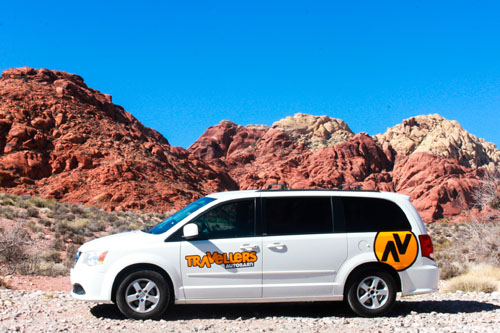
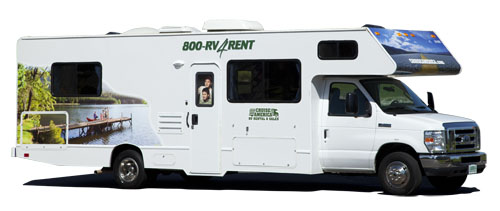
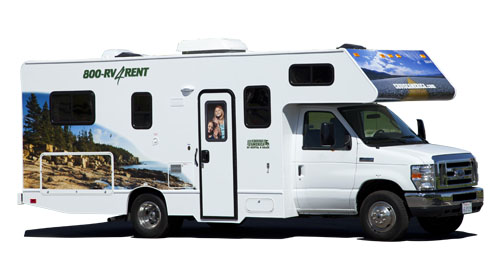
For shorter RV camping trips in the USA, Class B Camper Vans are highly recommended for couples or small families due to their maneuverability. These campervans, like the "rv rental denver example Category Van", average around 5.8 meters in length and comfortably sleep about 2-3 people, offering features like a shower and toilet. Class C Alcove RVs, typically averaging 7.5 meters and accommodating 4-6 people, offer more living space and amenities, making them ideal for families or those prioritizing comfort for a quick stay. Consider a Class B for easy driving and accessing smaller, more remote campsites, while a Class C provides a home-away-from-home feel perfect for traditional campgrounds with full hookups. Drive slowly and carefully, and you can drive almost anywhere without issues, regardless of RV size. No need to stress - just use common sense and pay attention.How to Save on Campgrounds in USA
Utilizing campground discount cards, such as those often provided by RV rental companies like Bandana, is a primary way to achieve significant savings on daily rates at participating parks across the USA. To reduce costs, consider booking during shoulder seasons (spring and fall), choosing municipal or regional campgrounds over pricier private resorts, and opting for sites with fewer hookups if your rented RV is self-sufficient. Staying for more than two nights can often unlock weekly rates, and sharing hookups or splitting costs with other RVers in a group can also lead to considerable savings on a quick trip. Our expertise as true RV specialists means we understand the nuances of budgeting for your adventure.What is the 3-3-3 rule for RVs?
The 3-3-3 rule for RVs is a popular guideline suggesting you drive no more than 300 miles a day, arrive by 3 PM, and stay for at least 3 nights at each location in USA. This rule is designed to promote a more relaxed and enjoyable RV travel pace, significantly reducing driver fatigue and allowing ample time to fully set up camp and explore your chosen destination. Adhering to the 3-3-3 rule is particularly beneficial for those taking shorter RV trips, ensuring you spend less time on the road and more time experiencing the joys of your trip. We always recommend slow travel - max 100-150 km (approximately 60-90 miles) per day on average - to truly feel the place, connect to the culture, the food, and the scenery.Where can you park RV for free in the US?
In the US, you can often park your RV for free on Bureau of Land Management (BLM) land, in designated dispersed camping areas within National Forests, and at certain retail parking lots like Walmart, Cabela's, and Cracker Barrel with prior permission. These free options, often referred to as boondocking or dispersed camping, typically offer no amenities, requiring your rented RV to be entirely self-sufficient in terms of water, power, and waste management. Always verify local regulations and secure explicit permission from business managers before parking overnight to avoid potential fines or unwanted towing in USA. For comprehensive routes with camping options, consult our "Cheap RV Rental in USA - Budget Guide 2026" itinerary.Can I park my RV anywhere in the USA?
No, you cannot park your RV anywhere in the USA; parking regulations vary significantly by state, county, city, and even private property, with many areas prohibiting overnight RV parking outside designated campgrounds. While public lands like BLM and National Forests permit dispersed camping in specific zones, urban and residential areas typically have strict ordinances against parking RVs on streets, in vacant lots, or at rest stops overnight. It is crucial to research local laws and planned destination rules thoroughly to ensure legal and safe overnight parking for your rented RV in USA. Resources like RV PLANET are invaluable for researching suitable overnight stops.🎬 Video coming soon
What is the 4-4-4 rule for RV travel?
The 4-4-4 rule for RV travel in USA is a variation of the popular 3-3-3 guideline, suggesting you drive no more than 400 miles a day, arrive at your destination by 4 PM, and stay for at least 4 nights. This rule offers a slightly more flexible pace for travelers who prefer to cover a bit more ground between stops or extend their stay by an extra day to fully immerse themselves in a location. Like its counterpart, the 4-4-4 rule aims to prevent over-scheduling and enhance the overall enjoyment and safety of your RV trip, promoting ample time for exploration and relaxation, even on extended road trips.What is the nicest RV park in the United States?
Identifying the 'nicest' RV park in the United States is subjective, as preferences range from luxury resorts with extensive amenities to pristine natural retreats offering unparalleled scenic beauty. Highly-rated RV parks often feature resort-style amenities such as swimming pools, spas, golf courses, planned activities, and gourmet dining, while others are cherished for their direct access to national parks or unique natural landscapes. For a quick rental, consider parks like Zion River Resort in Utah for scenic access or luxury resorts in Florida that provide a comprehensive, amenity-rich experience rather than just a basic overnight stop. Our "Luxury RV Rental in USA - Premium Prices 2026" offers top-tier vehicles to match such destinations.What does FF mean in camping?
In camping across the USA, 'FF' stands for 'First-Come, First-Served,' meaning that campsites are assigned to arrivals in the order they appear until all available sites are taken, without prior reservations. This system is common in many national and state parks, particularly for a portion of their campsites (often 25-30%), offering valuable opportunities for spontaneous RV trips when advance bookings are full. To secure a First-Come, First-Served site, it is often most effective to arrive early in the day, especially during peak seasons or on busy periods, as sites fill up quickly. This is particularly relevant for quick stays, where flexibility is key.What is the 3-3-3 rule for RV camping?
The 3-3-3 rule for RV camping in USA recommends driving no more than 300 miles in a day, arriving at your campsite by 3 PM, and staying for a minimum of 3 nights. This guideline is specifically designed to optimize the camping experience by minimizing travel-related stress, allowing ample time for campsite setup and enjoyment, and encouraging deeper immersion in your chosen destination. For quick RV renters, adhering to this rule helps maximize your trip by prioritizing relaxation and exploration over constant driving, ensuring a more fulfilling adventure. This approach aligns perfectly with our philosophy: Travel slowly - max 100-150 km per day on average.What is the 4 4 4 rule for RV camping?
The 4-4-4 rule for RV camping in USA, similar to the 3-3-3 rule, suggests limiting daily travel to 400 miles, arriving at your destination by 4 PM, and extending your stay for at least 4 nights. This guideline is particularly useful for those who wish to cover slightly more ground between locations or desire a longer stay at each camping spot to fully unwind and explore. Following such rules helps ensure a balanced RV experience, preventing burnout from excessive driving and fostering deeper engagement with your chosen camping spots on your USA adventure.What is the 200 rule for camping?
The '200 rule' for camping in USA, though less universally recognized than the 3-3-3 or 4-4-4 rules, generally refers to an informal guideline about selecting a destination within 200 miles of your home or starting point for short RV trips. This rule's primary benefit is minimizing travel time, allowing you to spend the majority of your limited quick stay actually camping and enjoying your destination rather than enduring long drives. For a rented RV, planning a route within a 200-mile radius ensures a relaxed return journey and makes the most efficient use of your rental period, reducing fuel costs and travel fatigue. Our "One-Way RV Rental in USA - Price Guide 2026" can help if your 200-mile destination is not a roundtrip.What is the campsite app for USA?
For finding and booking campsites across the USA, highly-rated and widely used apps include Campendium, The Dyrt, iOverlander, and Recreation.gov, each catering to different camping preferences. Campendium and The Dyrt are excellent for discovering private, public, and free campsites with user reviews and photos, while iOverlander specializes in dispersed camping locations and vital amenity information for overlanders. Recreation.gov is the official government platform for booking campsites within national parks, national forests, and other federal lands, making it essential for planning ahead for popular destinations. Many of these apps provide real-time availability, crucial for securing first-come, first-served spots on your quick USA RV trip.What You Shouldn't Miss
- **Explore Grand Canyon National Park, Arizona:** Witness the immense scale and vibrant colors of this natural wonder. Many RV-friendly campgrounds are available, offering unparalleled access to hiking and scenic drives.
- **Drive the Pacific Coast Highway (Highway 1) in California:** Experience breathtaking ocean views, charming coastal towns, and redwood forests. Our guide "Rent a Motorhome in California - Prices, Routes & Tips 2026" can assist with planning.
- **Discover Yellowstone National Park, Wyoming:** Home to Old Faithful and abundant wildlife, Yellowstone offers numerous RV camping options for an immersive nature experience.
- **Visit Niagara Falls in New York (and Ontario, Canada):** Marvel at the power of these iconic waterfalls. Consider extending your trip with a "Toronto Roundtrip - facing northת Incl. Niagara Falls & thousand island" route plan.
- **Experience the Alaskan Wilderness:** For the truly adventurous, an RV trip through Alaska provides unmatched opportunities for wildlife viewing, glacier tours, and remote camping. Our "RV Rental in Alaska - Prices & Itineraries 2026" guide has details.
- **Stroll through Historic Charleston, South Carolina:** Explore cobblestone streets, antebellum architecture, and world-class dining. RV parks nearby offer convenient access to this charming city.
Looking for expert insights from Avi Bandana? Top 5 Adventures - recommendations from Avi Bandana
Final Thoughts
Embarking on a quick RV adventure in USA is an unparalleled way to experience its vast and varied landscapes. Whether you dream of mountain vistas, coastal drives, or serene forest retreats, a rented motorhome offers the flexibility and comfort to create lasting memories. Remember, thoughtful planning, even for shorter trips, can make all the difference, from securing the best campsites to ensuring you have all the amenities you need. Don't let the details overwhelm you. We're here to support you before, during, and after your booking, ensuring a smooth and enjoyable experience. So, gather your loved ones, choose your ideal RV, and set out to explore the incredible natural beauty and cultural richness that awaits you across the USA.On the routes offered through RV PLANET routes, you can itemize and track every expense along the way for easy budgeting.