In This Guide
- Can You Drive an RV in USA? License & Age Rules
- Road Conditions & Terrain in USA
- RV Size Limits, Bridges & Restricted Zones
- Fuel: Diesel vs. Petrol & Cost per 100 km
- Tolls, Vignettes & Border Rules
- Driving Tips for last minute rv rental Travelers
- Recommended RV Class for USA Roads
- Should I Choose a Compact Van Instead of a Large RV in USA?
- Can I Park Anywhere? Free & Wild Camping Rules in USA
- Can I Drive an RV Into the City Center? Heights, Tunnels & Local Signage
- What is the 3 3 3 rule for RV driving?
- What size RV can you drive without a special license?
- What is the new RV law in Florida?
- Can you sleep in an RV while driving in the USA?
- Is it cheaper to RV or stay in hotels?
- How long can you drive an RV in one day?
- Can you get temporary RV insurance?
Starting your adventure straight from the airport with a last minute RV rental in USA offers unparalleled freedom and a seamless transition into your road trip. Imagine picking up your home-on-wheels just moments after landing, ready to hit the open road and explore the vast, diverse landscapes of America. For comprehensive details on planning your perfect trip, begin with our RV Rental USA - Complete Guide 2026.
Driving an RV from a USA airport means you're quickly on your way to iconic national parks, bustling cities, or serene coastlines. With Bandana RV, we ensure your journey begins with full transparency and no hidden fees, giving you peace of mind from the moment you book. We're here to support you with expert advice before, during, and after your booking, making your RV travel dreams a reality.
Can You Drive an RV in USA? License & Age Rules
Most RVs in the USA, particularly Class B campervans, Class C alcove models, and many Class SI semi-integrated motorhomes, can be driven with a standard Class D driver's license, making RV travel accessible to a wide range of travelers. A special commercial driver's license (CDL) is typically only required for RVs exceeding 26,000 pounds (approx. 11,793 kg) Gross Vehicle Weight Rating (GVWR) or those towing heavy trailers, which is a rare requirement for rental RVs. The minimum age to rent and drive an RV in the USA through Bandana partners is generally 21 years old, with no young driver surcharges or vehicle class restrictions based on age. Foreign drivers can typically operate an RV in the USA with their valid foreign driver's license, and an International Driving Permit (IDP) is highly recommended as a translation, though not always legally required in most cases.
Road Conditions & Terrain in USA
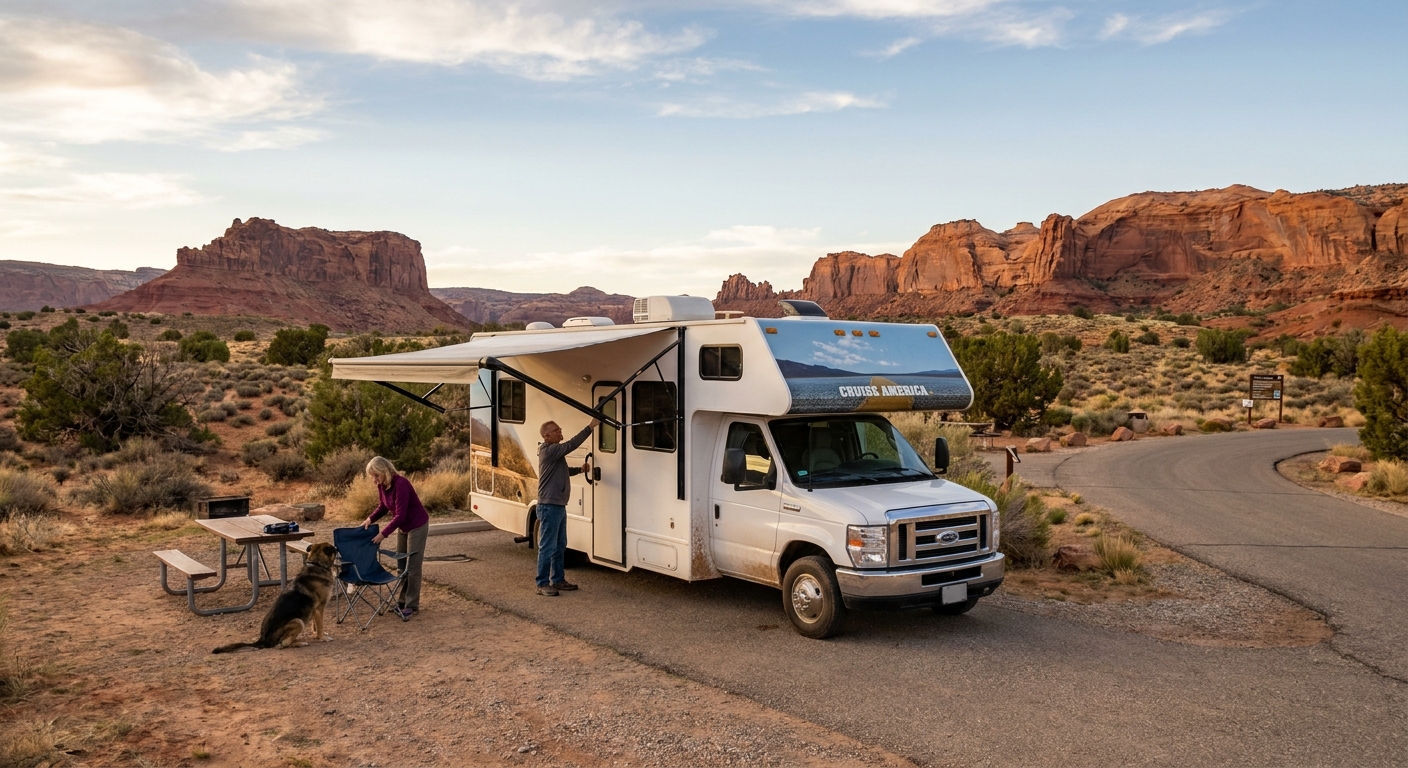
USA roads feature a vast network of well-maintained interstate highways and scenic state routes, but terrain varies significantly from flat plains to steep mountain passes and unpaved national park roads. Travelers in a last minute RV rental should anticipate diverse driving conditions, including bustling urban environments, wide-open rural stretches, and potentially winding mountain roads in regions like the Rockies or Appalachians. Driving a rented RV, especially for last-minute trips, encourages slower travel to fully appreciate the diverse landscapes, with ample opportunities for scenic detours. Remember our advice: travel slowly, max 100-150 km per day on average, taking time to feel the place, connect to the culture, the food, and the scenery. Be prepared for potential gravel roads when accessing certain campgrounds or dispersed camping areas, particularly in national forests or Bureau of Land Management (BLM) lands.
🎬 Video coming soon
RV Size Limits, Bridges & Restricted Zones
RV drivers in the USA must be mindful of state-specific length, width, and height restrictions, as well as clearance limits for low bridges, tunnels, and certain city underpasses. Typical maximum RV lengths in the USA range from 40 to 45 feet (approximately 12.2 to 13.7 meters), though local restrictions may apply in urban areas or national parks. For instance, a Class C Alcove motorhome from our fleet typically averages 7.5 meters (about 24.6 feet), making it very manageable. Always pay close attention to posted signage for bridge clearances and weight limits, especially on secondary roads or in older town centers, to avoid costly damage or fines. Some cities may have environmental zones or restrictions on oversized vehicles in historic districts; always check local regulations for your specific destination.
Fuel: Diesel vs. Petrol & Cost per 100 km
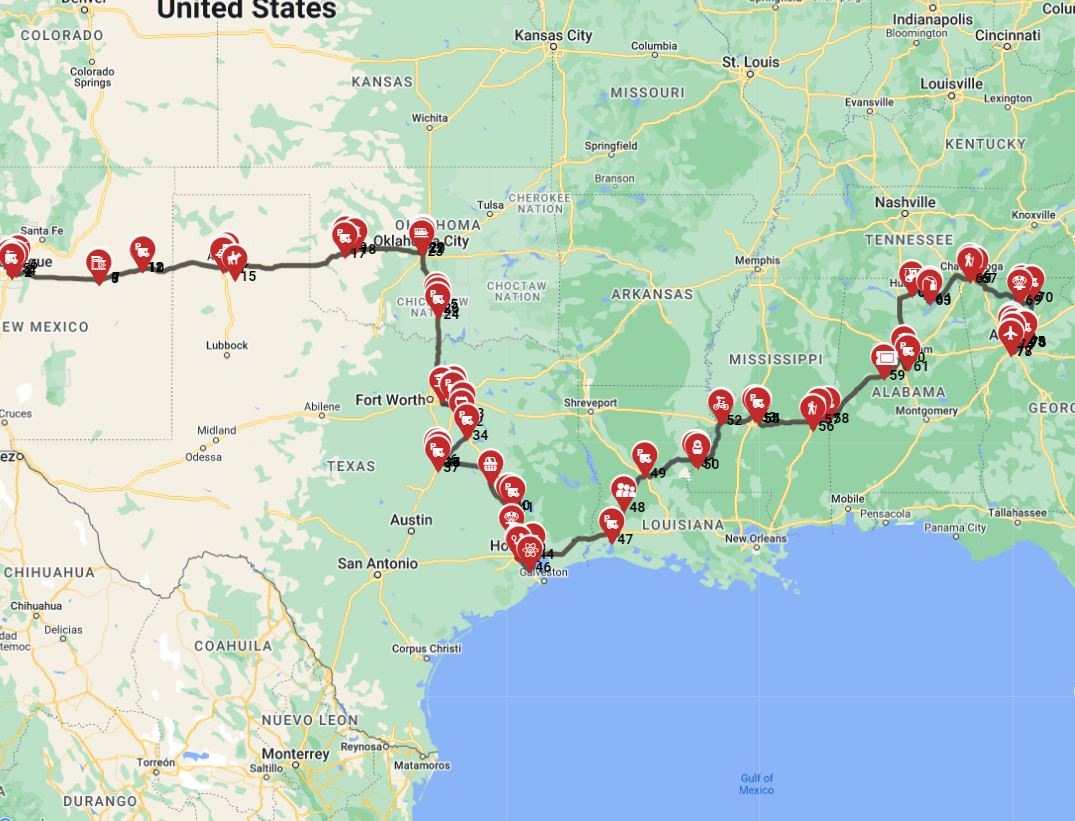
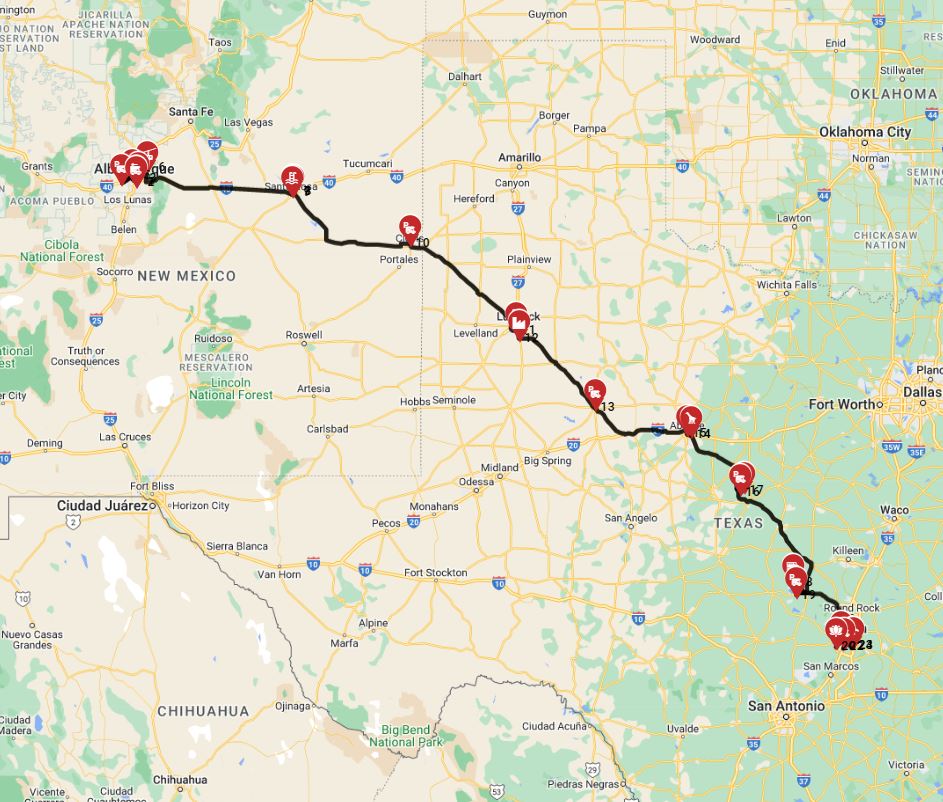
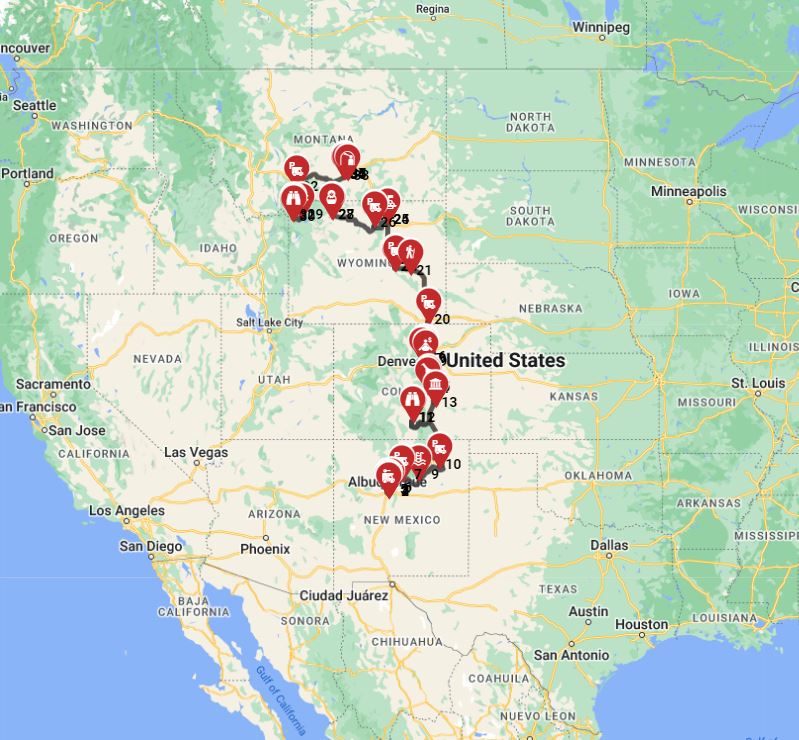
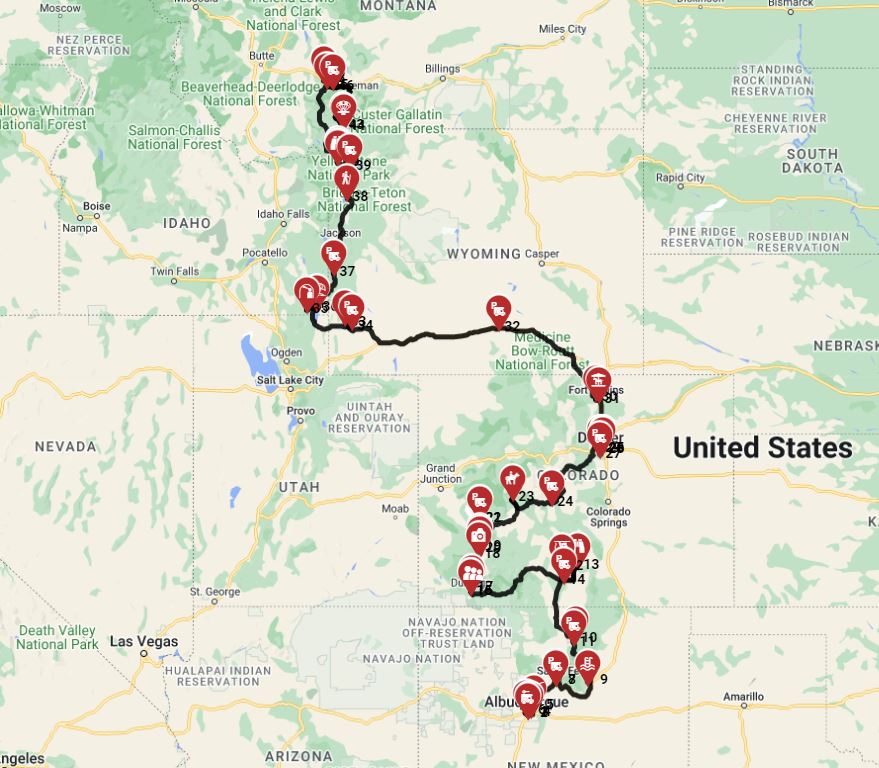
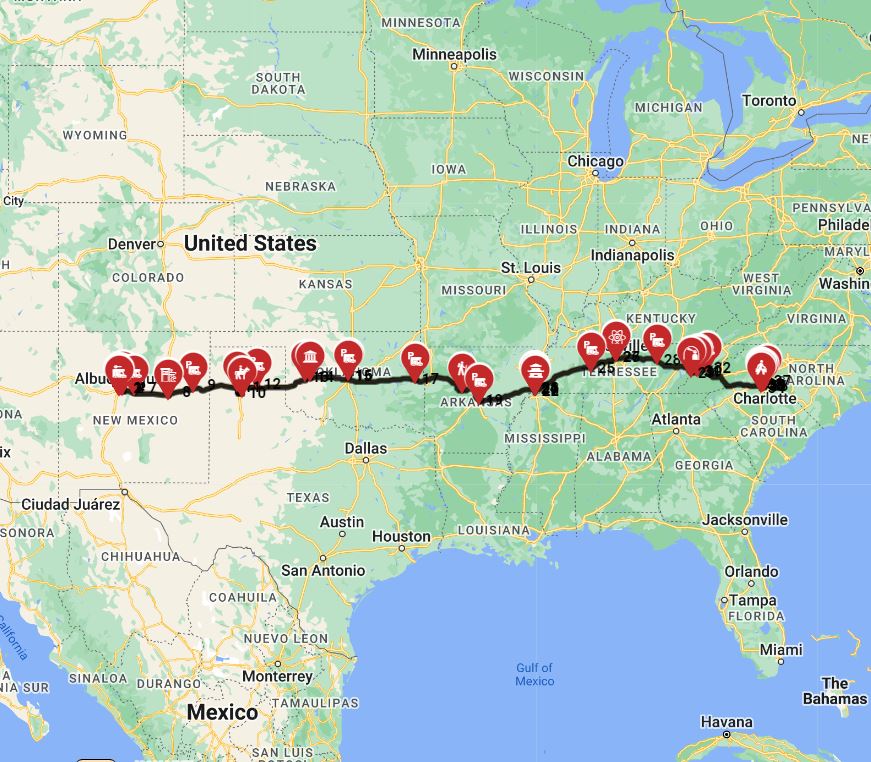
In the USA, most smaller to mid-sized RVs (like Class B campervans and many Class C models) run on petrol (gasoline), while larger Class A motorhomes and some truck campers typically use diesel. Petrol stations are widely available across the USA, but diesel pumps may be less frequent outside of major highways and truck stops, so planning ahead is smart. Based on Bandana's global fleet averages, a Class SI Semi-integrated RV typically consumes 10-11 Liters/100 km, a Class C Alcove 10-12 Liters/100 km, and a Class B Camper Van 8-10 Liters/100 km. Calculating current fuel costs (e.g., average $1.00-$1.20 per liter for petrol, $1.10-$1.30 per liter for diesel) and average consumption suggests a fuel cost of approximately $10-$13 per 100 km. Some last minute RV rental providers may offer fuel discount cards or programs to help manage fuel expenses during your trip, and for broader budgeting, remember that on RV PLANET routes, travelers can itemize and track every expense along the way for easy budgeting. On the routes offered through RV PLANET routes, you can itemize and track every expense along the way for easy budgeting.
Tolls, Vignettes & Border Rules
The USA does not use a vignette system; instead, many states have toll roads, bridges, and tunnels, particularly in the Northeast, Midwest, and Florida. Toll payment methods vary by state, from cash booths and electronic transponders (like E-ZPass or SunPass) to 'Toll-by-Plate' systems that mail bills to the vehicle's registered owner. Travelers should research specific toll routes for their last minute RV rental itinerary, as some areas offer multiple payment options while others are fully electronic. Some Bandana RV rentals may offer the option to pre-purchase or rent electronic toll passes, which can save time and prevent potential fines from missed toll payments. When considering a one-way RV rental in USA, factor in any tolls along your route. When traveling to neighboring countries like Canada or Mexico, specific border crossing procedures, vehicle insurance requirements, and potential import duties for your RV rental apply, so plan accordingly.
Driving Tips for last minute rv rental Travelers
Planning your routes carefully, especially for last minute RV rentals, is essential, and using RV-specific GPS apps can help avoid low bridges, weight-restricted roads, and tight turns. Always allow extra stopping and braking distance, as RVs are heavier and longer than passenger vehicles, requiring more time to slow down safely. Take wide turns at intersections, keeping in mind the RV's rear swing and length to avoid curb-crawling or hitting other vehicles. Prioritize safety and enjoyment by taking regular breaks, ideally every 2-3 hours, to combat driver fatigue and allow passengers to stretch and enjoy the view. Practice backing up and maneuvering in an empty parking lot before embarking on your trip, as a last minute RV rental often means less familiarity with the vehicle.
Recommended RV Class for USA Roads
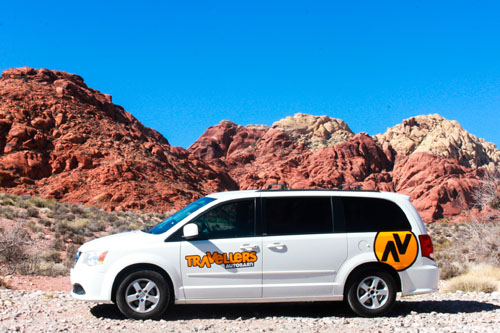
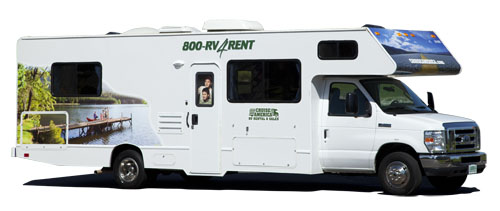
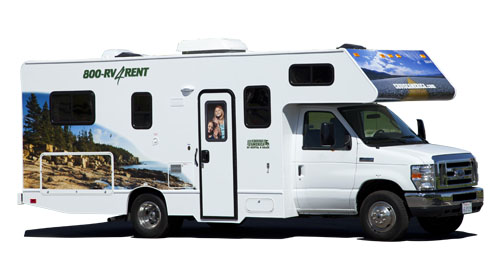
For last minute RV rental adventures across diverse USA roads, Class C Alcove and Class SI Semi-integrated motorhomes are highly recommended due to their versatility and balance of space and maneuverability. Class C Alcove RVs, like the 'cruise america rv rental example Explorer' from Bandana's fleet, typically have an average length of 7.1 meters (approx. 23 feet) and can comfortably sleep 4 people, offering ample living space for families while remaining manageable on most highways and campgrounds. Class SI Semi-integrated RVs, such as the '2 Berth Tamar', with an average length of 6.9 meters (approx. 22 feet), provide a more streamlined driving experience, better fuel efficiency, and comfortable accommodation for smaller groups (avg. 3.8 sleeping places). Both classes offer a good balance for navigating national parks, major interstates, and even many smaller towns, without the bulk of larger Class A RVs or the limited space of compact campervans. Class B Camper Vans, like the 'Combi Van' (avg. 5 meters), are excellent for urban exploration and fitting into regular parking spots, offering agility for those prioritizing city access.
Should I Choose a Compact Van Instead of a Large RV in USA?
While a compact campervan (like Bandana's Class B Camper Van, averaging 5.8 meters) offers superior maneuverability and easier parking, larger RVs (such as a Class C or Class SI, averaging 6.9-7.5 meters) are generally well-suited for USA roads. For most major highways, state roads, and national park access in the USA, there are typically no issues driving a standard-sized Class C or SI RV; comfort and indoor amenities often outweigh minor maneuverability gains for a weekly RV rental in USA. A compact van genuinely helps in specific scenarios like navigating tight historic city centers, very narrow mountain passes with sharp turns, or finding parking in congested urban areas. However, for longer last minute RV rental trips, families, or those seeking more indoor living space, a larger RV like a Class C or Semi-integrated often provides a better trade-off for comfort, storage, and amenities, allowing you to easily prepare meals with your RV-friendly recipes playlist. The choice ultimately depends on your itinerary: prioritize a compact van for urban-heavy trips or extreme off-the-beaten-path exploration, but opt for a larger RV for a more comfortable and spacious journey across typical American landscapes.
Can I Park Anywhere? Free & Wild Camping Rules in USA
In the USA, 'wild camping' or 'boondocking' (free overnight parking without hookups) is permissible on many public lands managed by the Bureau of Land Management (BLM) and in most National Forests, often for up to 14 days in stunning, remote wilderness areas. Many businesses, such as Walmart stores, Cracker Barrel restaurants, and certain truck stops, often allow RVers to park overnight for free, though policies vary by location and should always be confirmed with management. Designated rest areas along interstates typically allow short-term parking, but overnight stays may be prohibited or limited in duration by state law. Private property parking is generally allowed with the owner's permission; otherwise, unauthorized parking can lead to fines or towing. Rules vary significantly by region and specific jurisdiction, so always check local regulations and follow local law before parking overnight to avoid issues. When exploring diverse regions like Alabama, Arizona, or California, consider using pre-planned route plans from RV PLANET, which often include suggestions for suitable overnight spots.
Can I Drive an RV Into the City Center? Heights, Tunnels & Local Signage
You can almost always drive an RV into a city center in the USA, but it requires careful attention to local signage regarding height, weight, and parking restrictions. Drive slowly and carefully, and you can drive almost anywhere without issues. No need to stress - just use common sense and pay attention to avoid unexpected complications. Major cities often have specific routes for commercial and large vehicles; research these in advance for your last minute RV rental, especially for downtown areas with older infrastructure. Pay particular attention to posted height limits for tunnels, low bridges, and parking garages, as these can easily damage an RV or lead to dangerous situations. Be aware of local environmental zones or areas designated for residents-only parking, which may restrict RV access or require special permits. Finding suitable parking for an RV in a city center can be challenging; consider utilizing park-and-ride options on the outskirts or parking at designated RV-friendly lots if available.
What is the 3 3 3 rule for RV driving?
The 3-3-3 rule for RV driving is a popular guideline recommending that RVers drive no more than 300 miles (approx. 480 km) a day, arrive at their destination by 3 PM, and ideally stay for at least 3 nights. This rule is designed to promote a relaxed and enjoyable RV experience, preventing driver fatigue and allowing ample time for setup, breakdown, and exploring the surroundings, connecting to the culture, the food, and the scenery. Driving over 300 miles can be exhausting in a large vehicle, increasing the risk of accidents, especially for last minute RV rental drivers who may be less accustomed to RV handling. Arriving by 3 PM provides sufficient daylight to navigate campgrounds, back into a site, and get set up before dusk, which is crucial for safety and reducing stress. Staying for at least 3 nights at each location helps avoid 'RV burnout' and allows travelers to truly immerse themselves in the destination rather than constantly being on the move. Planning your journeys with this rule in mind can truly enhance your adventure, whether you're exploring the majestic landscapes of Alaska or the sunny coasts of California.
What size RV can you drive without a special license?
In the USA, most recreational vehicles, including Class B campervans, Class C alcove RVs, and many Class A and Class SI semi-integrated models under 26,000 pounds (approx. 11,793 kg) Gross Vehicle Weight Rating (GVWR), can be driven with a standard Class D driver's license. A special Commercial Driver's License (CDL) is typically only required for very large or heavy RVs that exceed federal or state-specific weight thresholds, which are rare for rental units available through Bandana. The vast majority of last minute RV rental options fall within the regular license requirements, making RV travel accessible to most drivers aged 21 and above. State laws can vary, so it's always prudent to confirm specific licensing requirements for the state your RV is registered in and the states you plan to travel through, especially if considering a particularly large or heavy private RV. For foreign drivers, a valid driver's license from their home country combined with an International Driving Permit (IDP) is usually sufficient to drive most RV sizes in the USA.
What is the new RV law in Florida?
RV laws are dynamic and can vary significantly by state and municipality in the USA, with recent legislative changes in Florida often focusing on issues such as overnight parking restrictions, residency requirements, and campground regulations. While specific 'new RV laws' in Florida can encompass various topics from vehicle registration to camping on public lands, it is essential for last minute RV rental travelers to check current Florida Statutes and local county ordinances before their trip to ensure compliance. Recent discussions and changes have sometimes addressed topics like the legality of living in an RV on private property or the expansion/restriction of dispersed camping opportunities, particularly near sensitive ecosystems. Travelers should consult official Florida Department of Highway Safety and Motor Vehicles (FLHSMV) resources and specific county government websites for the most up-to-date and accurate information regarding RV laws. Always be aware that local municipalities often have stricter rules regarding RV parking and overnight stays than state-level laws, particularly in popular tourist areas.
Can you sleep in an RV while driving in the USA?
No, it is illegal and highly unsafe for passengers to sleep in an RV while it is in motion in the USA, as all occupants must be properly secured with seatbelts. Federal and state laws require all passengers to wear seatbelts whenever the vehicle is operating, and this includes RVs of all classes. Sleeping in beds, on couches, or in other unsecured areas while the RV is driving poses extreme danger in the event of a sudden stop, swerve, or collision. Only the designated driver should be awake and focused on operating the vehicle, with all other passengers seated and belted in approved seating positions. Ensure everyone understands and adheres to seatbelt laws for a safe and lawful last minute RV rental journey across any part of the USA, from the scenic routes of British Columbia to the deserts of Arizona.
Is it cheaper to RV or stay in hotels?
Whether RV travel is cheaper than staying in hotels largely depends on factors such as the length of your trip, the number of travelers, and your travel style, but RVs can often be more cost-effective for families or longer journeys in the USA. RV travel typically involves significant upfront costs like rental fees (explore our "RV Rental in USA - Prices and Best Deals 2026") and fuel, but offers substantial savings on accommodation and dining out, especially if you cook most meals in the RV. For longer trips or groups (e.g., a family of four or more), the cost per person per night for an RV, including campground fees, can often be less than booking multiple hotel rooms and eating every meal at restaurants. Conversely, for solo travelers or short, week-long trips, the cumulative costs of a last minute RV rental, fuel (e.g., Bandana's Class C at 10-12 L/100km), and campground fees might sometimes exceed a budget hotel stay. Hidden costs of RV travel can include propane, dumping fees, national park entrance fees, and tolls, which should be factored into a comprehensive budget comparison. For more ways to save, check out our "Cheap RV Rental in USA - Budget Guide 2026".
How long can you drive an RV in one day?
While there's no strict legal limit for personal RV driving hours in the USA (unlike commercial drivers), most experts recommend driving an RV for no more than 6-8 hours or around 300 miles (approx. 480 km) in a single day. Adhering to guidelines like the '3-3-3 rule' (drive no more than 300 miles a day, arrive by 3 PM, stay 3 nights) helps prevent driver fatigue and ensures a more enjoyable and safer RV experience. Driving a rented RV is more demanding than driving a passenger car due to its size, weight, and handling characteristics, making fatigue a significant safety concern. Taking frequent breaks, staying hydrated, and switching drivers if possible can help extend your comfortable driving time, but prioritizing rest is crucial. For last minute RV rental trips, especially if unfamiliar with the vehicle, conservative daily driving limits are advisable to reduce stress and allow for unexpected delays or scenic detours.
Can you get temporary RV insurance?
Yes, temporary RV insurance is readily available in the USA, often included as part of your last minute RV rental agreement or offered as an optional add-on. Many RV rental companies, including Bandana partners like El Monte and Cruise America, provide basic liability and collision coverage as part of the rental package, with options to purchase additional coverage for increased protection. Specialized insurance providers also offer short-term or temporary RV insurance policies for privately owned RVs, which can be useful for those lending or borrowing an RV for a trip. It is crucial to fully understand the scope of coverage provided by your rental agreement or any temporary policy, including deductibles, liability limits, and what types of incidents are covered. Through Bandana, you can upgrade to a top-level deductible for extra peace of mind, traveling with confidence. Always verify your insurance coverage before embarking on your last minute RV rental journey to ensure you are adequately protected against potential accidents or damages.
What You Shouldn't Miss
- **The Grand Canyon's South Rim:** Experience breathtaking views and accessible campgrounds, a perfect stop for any Class C or Class A motorhome.
- **California's Pacific Coast Highway (Highway 1):** Drive this iconic route with stunning ocean vistas, ideally suited for a compact campervan or a mid-sized RV.
- **The Rocky Mountain National Park in Colorado:** Discover alpine lakes and majestic peaks, with many RV-friendly campgrounds (remember to check vehicle length restrictions).
- **The Historic Route 66:** Journey through Americana, stopping at quirky roadside attractions from Chicago to Santa Monica, perfect for a slow-paced RV adventure.
- **Florida's Scenic Keys:** Explore the unique island chain down to Key West, enjoying the coastal beauty and numerous RV parks.
Looking for expert insights from Avi Bandana? Top 5 Adventures - recommendations from Avi Bandana
Final Thoughts
Embarking on a last minute RV rental in USA is an extraordinary way to discover the country's diverse landscapes and vibrant culture. With the right preparation and a bit of common sense, navigating the roads, from bustling cities to serene national parks, is a manageable and incredibly rewarding experience. Remember, Bandana RV is dedicated to providing you with a seamless and transparent booking process, offering the support and resources you need to feel confident and excited about your journey.
Whether you dream of a sweeping cross-country epic or a tranquil week-long escape to the wilderness, a rented motorhome offers the flexibility and comfort to make it unforgettable. So, go ahead and explore the possibilities; your perfect USA RV adventure awaits!
Discover top destinations, planning tips, all in one place! Find last minute rv Rentals in USA to start your journey today.