In This Guide
- Can You Drive an RV in Washington DC? License & Age Rules
- Road Conditions & Terrain in Washington DC
- RV Size Limits, Bridges & Restricted Zones
- Fuel: Diesel vs. Petrol & Cost per 100 km
- Tolls, Vignettes & Border Rules
- Driving Tips for RV Rental Travelers
- Recommended RV Class for Washington DC Roads
- Should I Choose a Compact Van Instead of a Large RV in Washington DC?
- Can I Park Anywhere? Free & Wild Camping Rules in Washington DC
- Can I Drive an RV Into the City Center? Heights, Tunnels & Local Signage
- Do you need a special license to drive an RV in Washington?
- Is Washington, D.C. RV friendly?
- Are RVs allowed in DC?
- How much does it typically cost to insure an RV?
- Who is the best insurance company for RV?
- How much is insurance on a $200,000 RV?
Washington DC, the vibrant heart of the United States, offers an inspiring backdrop for a motorhome adventure. While navigating a rental motorhome through a bustling city might seem daunting at first glance, it's entirely manageable with a bit of savvy planning. Imagine the freedom of having your mobile home base just a short Metro ride from iconic landmarks, allowing you to explore at your own pace. At Bandana RV, we specialize in making these unique travel dreams a reality, offering full transparency with no hidden fees and 24/7 support before and after your booking.
For live availability and current prices, start with our RV Rental Washington DC - Complete Guide 2026 guide. Whether you're a seasoned RVer or a first-timer, this guide will provide practical insights for your last-minute RV driving adventure in Washington DC and its surrounding areas. We empower you to rent an RV confidently, knowing you have true RV specialists on your side.
Can You Drive an RV in Washington DC? License & Age Rules
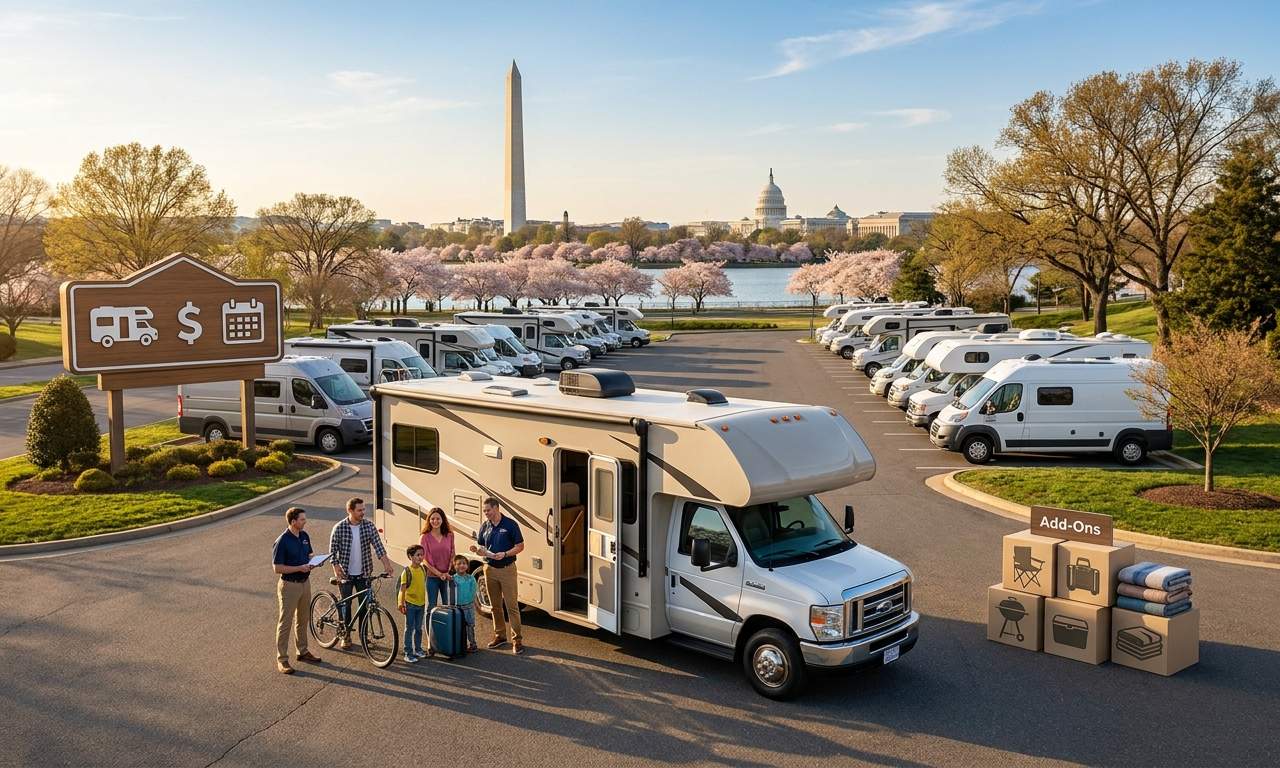
Most rental motorhomes under 26,001 pounds Gross Vehicle Weight Rating (GVWR) can be driven in Washington DC with a standard Class D driver's license. This applies to all Class B campervans, Class C alcove RVs, and most Class A motorhomes we offer. No special commercial driver's license (CDL) is required for these leisure vehicles. For visitors from non-English speaking countries, an International Driving Permit (IDP) is recommended to supplement your valid foreign license, though it's often not strictly mandatory in many cases.
The minimum age to rent an RV in the DC area is 21 years old. Unlike some rental sectors, Bandana RV does not impose young driver surcharges or vehicle class restrictions based on age, making it accessible for a wider range of adventurers. Always carry your valid driver's license, and if applicable, your IDP, as you explore the nation's capital.
Road Conditions & Terrain in Washington DC
Washington DC's roads are primarily urban, characterized by dense traffic, numerous traffic circles, and multi-lane boulevards, with generally well-maintained surfaces. While the immediate DC area is relatively flat, surrounding regions in Maryland and Virginia feature varied terrain, including gentle hills and more winding suburban roads. Navigating the city in a rented RV requires careful attention to signage, especially regarding one-way streets and restricted turns, due to the intricate urban grid. Rush hour traffic in and around Washington DC is notoriously heavy; planning travel outside peak times is highly recommended for RV drivers. Drive slowly and carefully, and you can drive almost anywhere without issues. No need to stress - just use common sense and pay attention.
When you venture beyond the city, into Maryland's rolling hills or Virginia's Blue Ridge Mountains, road conditions may change, but they remain generally excellent. Planning your routes, possibly with the help of RV PLANET routes, can help you anticipate these changes and ensure a smooth drive. Even if you choose a larger Class A motorhome like the 'cruise america rv rental example Explorer', which is 7.1 meters long, you’ll find that careful driving and awareness of your surroundings will make urban navigation straightforward.
RV Size Limits, Bridges & Restricted Zones
While there are no blanket RV bans in Washington DC, drivers must be aware of specific height and weight restrictions on certain bridges and tunnels. Many city tunnels and underpasses have clearance limits, typically posted, and low-hanging tree limbs can also be a concern on older streets. For instance, sections of the George Washington Memorial Parkway prohibit commercial vehicles, which, depending on the interpretation, might apply to some larger rental RVs, though generally, private-use motorhomes are not considered commercial. Always consult local signage for explicit restrictions.
Certain historical or residential areas may have restrictions on large vehicle access or parking, so checking local regulations is crucial. It is generally advisable to avoid taking large RVs directly into the core monumental areas where streets are narrow and parking is virtually non-existent for oversized vehicles. Instead, consider parking your rental motorhome at a nearby campground and utilizing public transportation or rideshares for city exploration.
Fuel: Diesel vs. Petrol & Cost per 100 km
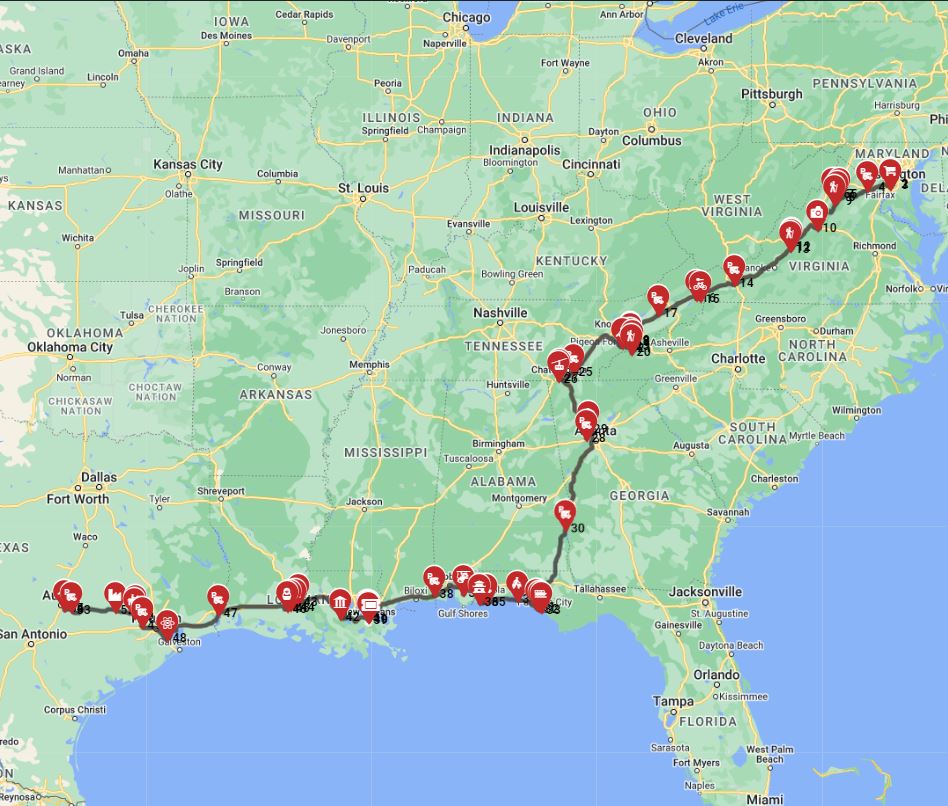
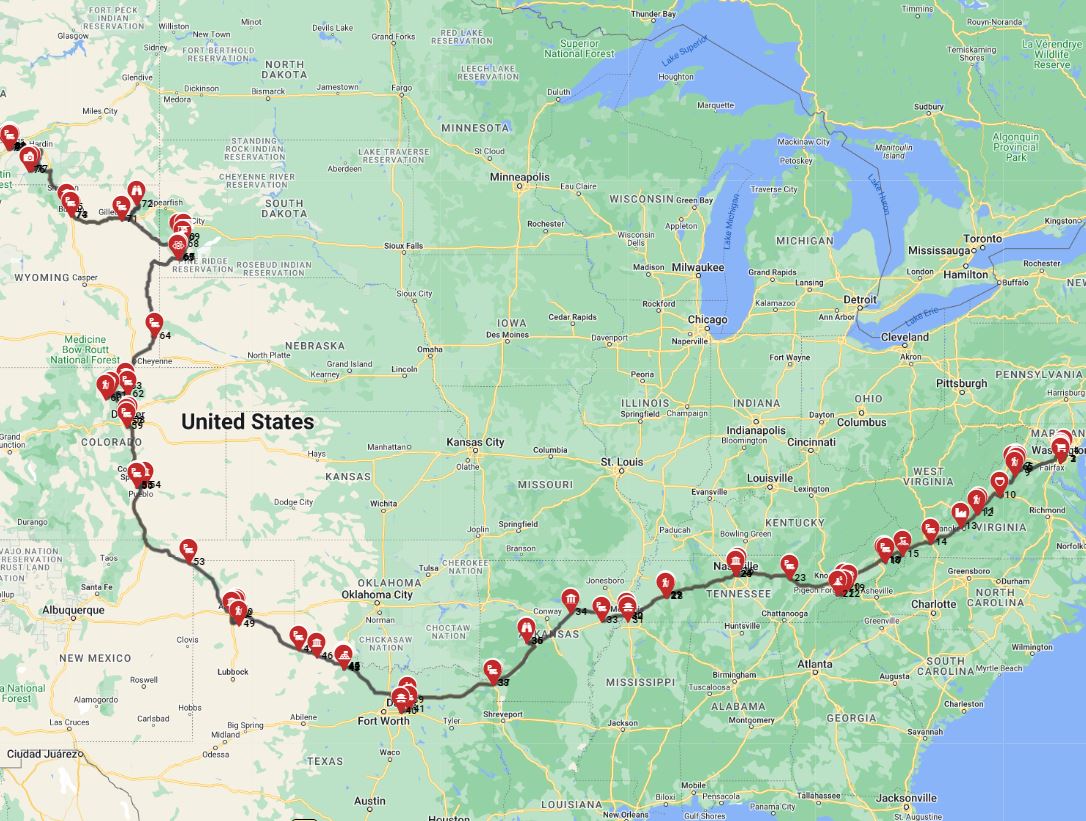
Both petrol (gasoline) and diesel are widely available at gas stations in and around Washington DC, with diesel typically found at larger stations and truck stops, especially along major interstate routes like I-95 and I-270. Bandana's fleet includes diverse motorhome rentals, for example, Class B Camper Vans like the 'V3' which typically consumes 11-13 Liters/100 km, while Class C Alcove RVs, such as a 24' Class C Motorhome (approx. 7.46 meters long, with a 208L fuel tank), average 20-25 Liters/100 km. These figures are important when budgeting for your trip, particularly for longer journeys like the "Portland to Washington DC - From Pacific Trails to the Nation's Capital" route, which covers over 6,361 km. On the routes offered through RV PLANET routes, you can itemize and track every expense along the way for easy budgeting.
Based on these averages and current 2026 fuel prices, the cost per 100 km can range from approximately $10-$20 USD, depending on fuel type and vehicle efficiency. Larger Class A motorhomes, like a 'Class A - Thor ACE 30' (9.37 meters long), tend to have higher fuel consumption, impacting overall ancillary trip costs. For managing these expenses, remember that RV PLANET routes allow travelers to itemize and track every expense along the way for easy budgeting. Some rental motorhomes may also offer fuel discount cards, which can help offset costs over longer trips.
Tolls, Vignettes & Border Rules
Washington DC itself does not have toll roads within its city limits, but travelers entering or exiting the district from neighboring Maryland and Virginia will encounter cashless toll roads. Major toll facilities include the I-95 Express Lanes and Dulles Greenway in Virginia, and the Intercounty Connector (ICC)/MD-200 in Maryland. These cashless systems, like EZ-Pass, mean physical toll booths for cash payments are rare or non-existent; instead, cameras read your license plate.
To avoid unexpected fines, it's important to understand how to handle these tolls. Many rental motorhomes may come equipped with a toll transponder or offer options to pre-purchase toll passes. Always clarify this with your rental provider, such as El Monte or Cruise America, before starting your extended road trip. There are no special vignettes or border rules when driving your rental RV between DC, Maryland, and Virginia.
Driving Tips for RV Rental Travelers
For families enjoying a Washington DC motorhome adventure, plan frequent stops every 2-3 hours to allow children to stretch and explore, making the journey more enjoyable and less fatiguing. Driving slowly, averaging max 100-150 km per day, allows you to truly feel the place, connect to the culture, the food, and the scenery. Budget-conscious travelers should research and potentially pre-pay tolls to avoid higher administrative fees associated with pay-by-plate systems. If you prefer an automatic transmission, confirm availability with your rental provider as most larger RVs typically come with them, but smaller campervans might vary.
Navigate Washington DC's notorious traffic circles (roundabouts) by yielding to traffic already in the circle and selecting the correct lane early for your exit. Consider parking your rental RV at a campground outside the city, such as Cherry Hill Park in College Park, MD, or Pohick Bay Regional Park in Lorton, VA, and utilizing DC's extensive Metro public transportation system for efficient sightseeing. These campgrounds are often within a short drive of Metro stations, offering a convenient park-and-ride solution. You can even plan out meals with our RV-friendly recipes playlist to enhance your journey.
Recommended RV Class for Washington DC Roads
For navigating the Washington DC metropolitan area, a Class B Camper Van or a smaller Class C Alcove RV is often recommended for their balance of comfort and maneuverability. Bandana's Class B Camper Vans, averaging 5.8 meters in length, offer easier parking and better fuel efficiency, making them ideal for urban exploration and tighter suburban roads. A 'Patagonia Camper 4x4 double cab' is a small RV, ideal for a couple, offering agility even in urban settings. Similarly, a 'hire campervan example Paradise S/T', suitable for 2 couples, offers both shower and toilet facilities in a small, manageable size.
Class C Alcove RVs, with an average length of 6.5-8 meters, provide more living space and amenities (like a full shower and toilet) while still being more manageable than larger Class A models for city fringes and nearby campgrounds. These classes offer sufficient ground clearance for standard roads and can generally fit into standard parking spots at many campgrounds further from the city center, making them versatile for exploring both the city and the broader Virginia region. For a full breakdown of options, including "Luxury RV Rental in Washington DC - Premium Prices 2026" and "Cheap RV Rental in Washington DC - Budget Guide 2026", compare available models on our platform.
Should I Choose a Compact Van Instead of a Large RV in Washington DC?
Choosing a compact campervan for a Washington DC trip often offers significant advantages in maneuverability, easier parking, and better fuel economy within the dense urban environment. Vehicles such as the 'rv rental denver example Category Van' are perfect for couples, offering front air conditioning, a shower, and a toilet in a small RV size. While a larger motorhome like a Class C 'rv rentals example Comfort Class' provides more indoor space and amenities (such as 3 double beds, ideal for a big family), the benefits of extra comfort often outweigh the challenges of navigating narrow city streets, finding parking, and dealing with traffic in DC. Drive slowly and carefully, and you can drive almost anywhere without issues.
A compact van genuinely helps when exploring historic centers, which might have tight turns and limited access for larger vehicles, or for quick trips into town from a perimeter campground. However, if your primary goal is to stay at a dedicated RV park outside the city and use public transport, a larger RV might still be preferred for its living space, like a 'campervan hire new zealand example Euro Deluxe' which is a large RV with exclusive features including a roof air condition and TV. For different trip durations, you might want to review "Family RV Rental in Washington DC - Pricing Guide 2026" to see how vehicle size affects costs.
Can I Park Anywhere? Free & Wild Camping Rules in Washington DC
No, free or 'wild' camping is generally prohibited within Washington DC city limits, and overnight parking of RVs on public streets is strictly enforced. RV travelers must utilize designated RV parks or campgrounds, which are primarily located in the surrounding areas of Maryland and Virginia. Finding suitable overnight parking for an RV directly within DC is extremely difficult and usually illegal outside of private, paid facilities. Public parking garages in the city often have height restrictions, making them unsuitable for motorhomes.
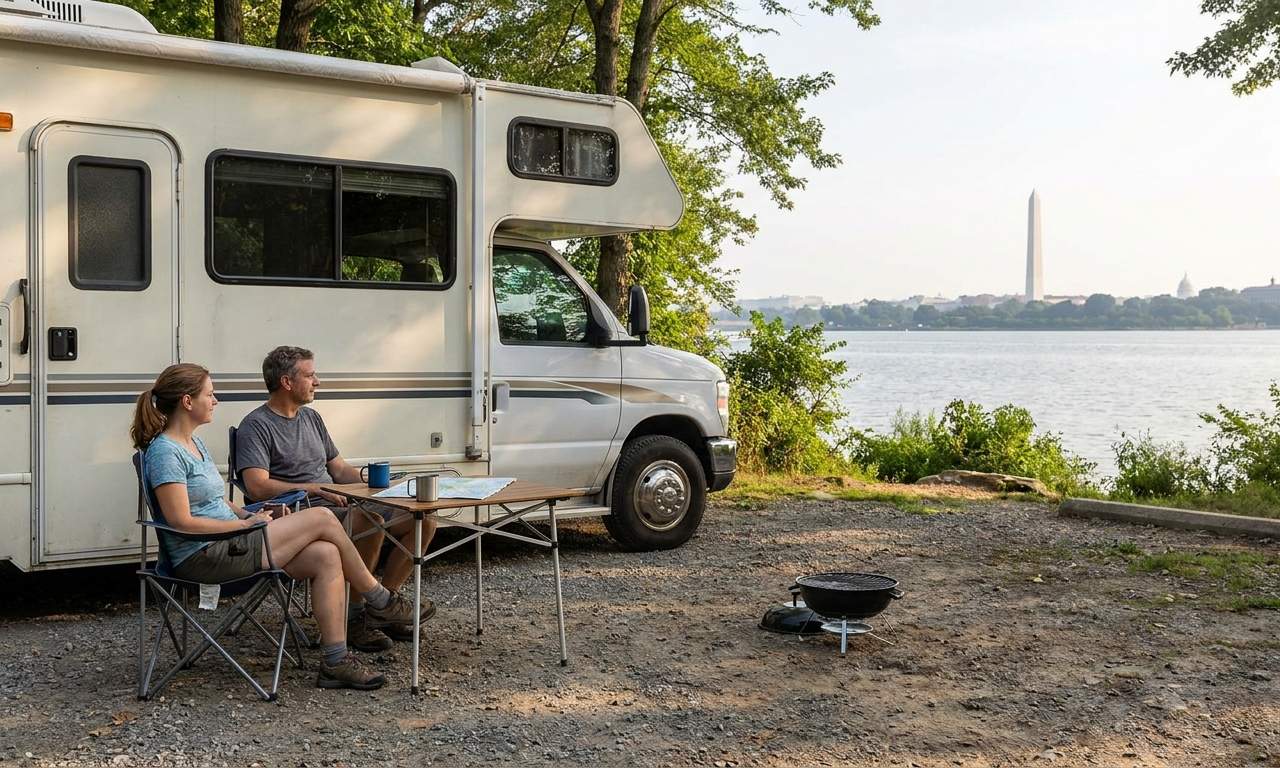
Rules and reservation policies vary by region and campground; always check local regulations and call ahead before driving. For example, Greenbelt Park (National Park Service) in Maryland is just 12 miles from downtown DC, offering a convenient, albeit rustic, option. Further out, areas like Pohick Bay Regional Park in Lorton, Virginia, provide more spacious sites and shuttle services to Metro stations. Using RV PLANET (rvplan.net) is a great resource for locating available spots along your route and understanding local amenities. Our Rent&Plan service can also help you with pre-planned routes that include suitable campgrounds.
Can I Drive an RV Into the City Center? Heights, Tunnels & Local Signage
Yes, you can technically drive a rental motorhome into Washington DC's city center, but it is strongly discouraged due to significant logistical challenges. Drivers must pay close attention to numerous local signage indicating height limits (especially for tunnels and older underpasses), one-way streets, and prohibited zones for large vehicles. Parking for RVs in the city center is virtually non-existent, and many public parking garages have severe height restrictions unsuitable for any RV. Drive slowly and carefully, and you can drive almost anywhere without issues. No need to stress - just use common sense and pay attention.
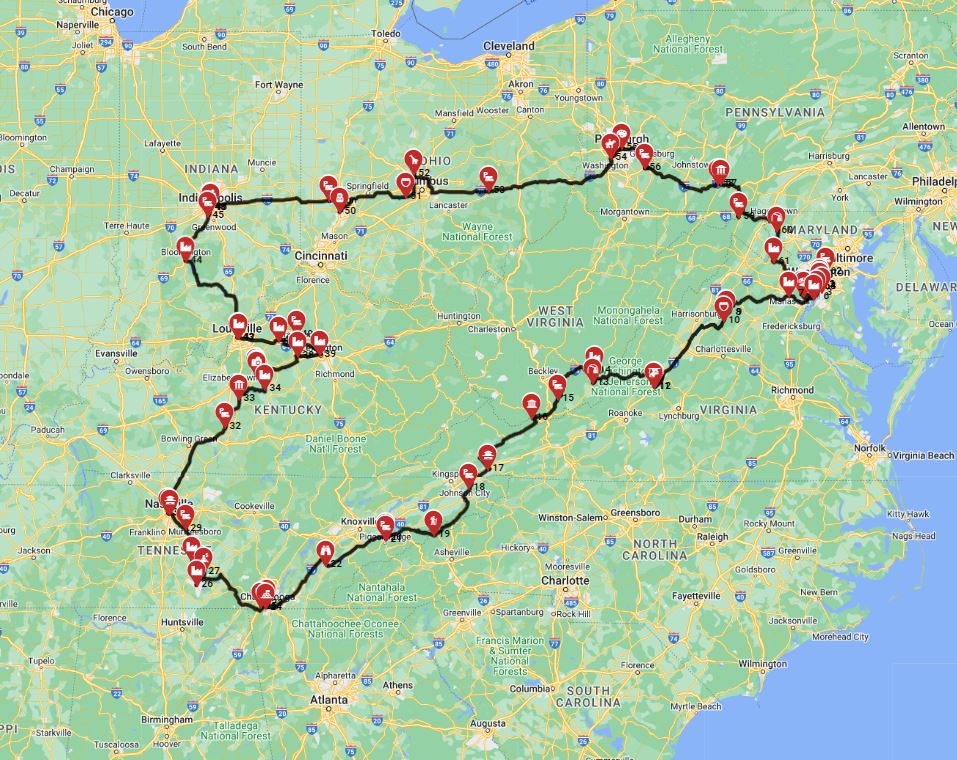
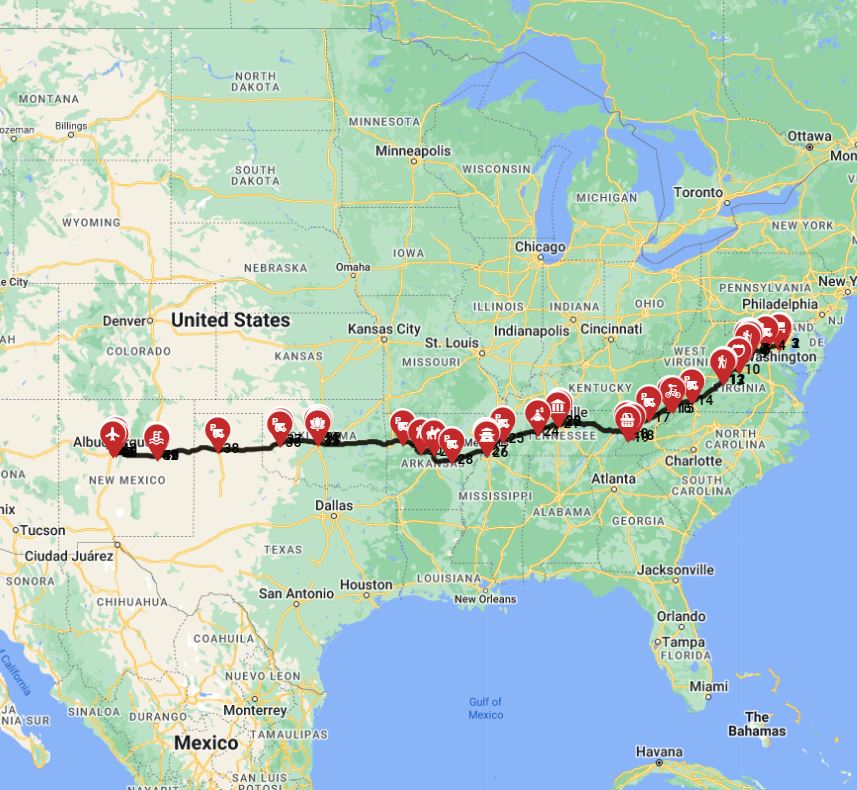
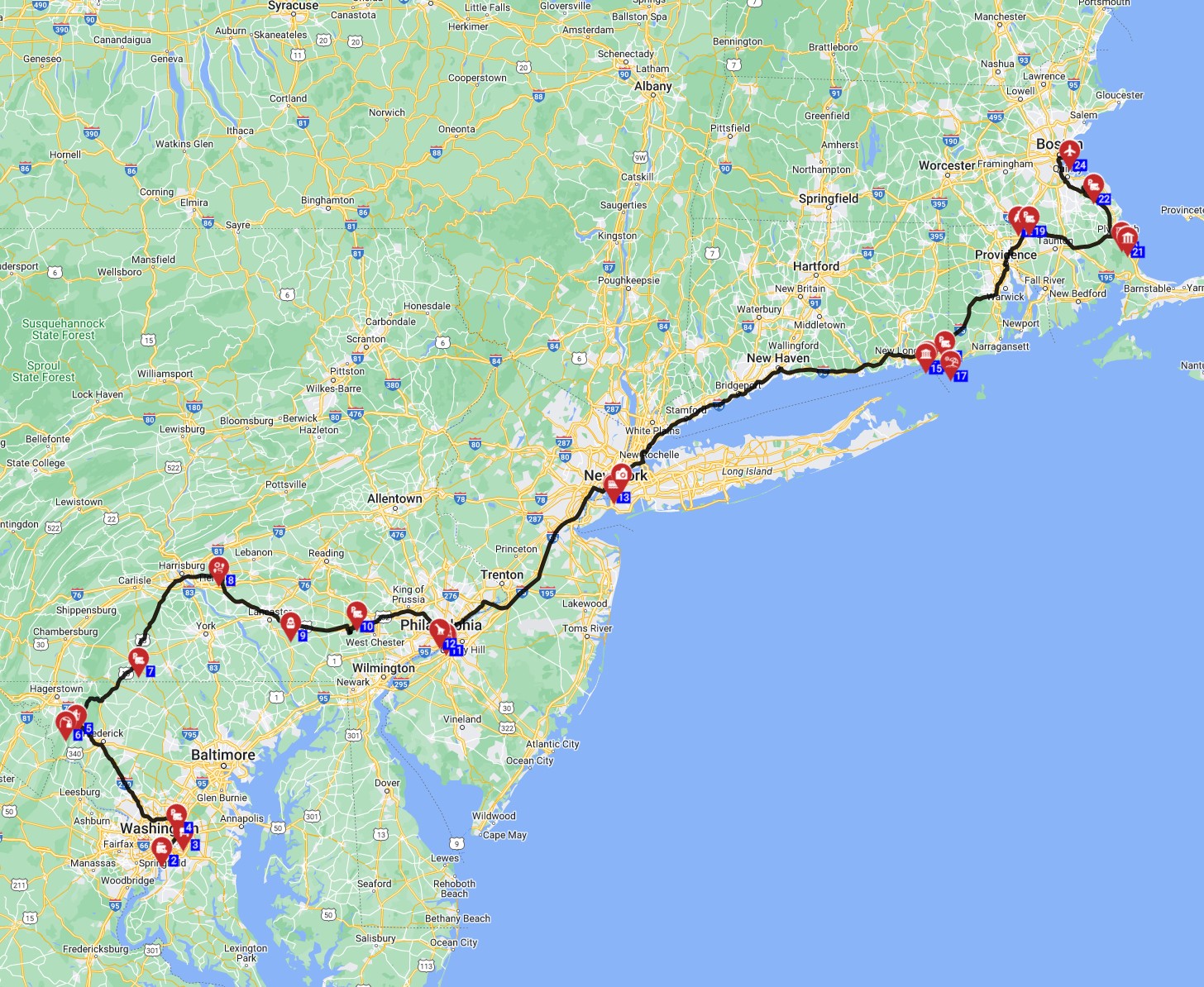
Using public transportation (Metro or bus) from an RV-friendly campground outside the city is by far the most practical and stress-free way to explore DC's attractions. For example, from Cherry Hill Park in College Park, Maryland, you can easily access the College Park-U of Md Metro station. This strategy not only saves you the headache of urban RV driving and parking but also allows you to enjoy the city's landmarks, like the National Mall and the Smithsonian museums, without concern for vehicle dimensions. For inspiration on planning, explore the "Washington DC to Seattle - Midwest Coast to Coast" itinerary, a 24-day journey covering 5,506 km that begins right from the capital's periphery.
Do you need a special license to drive an RV in Washington?
No, most recreational vehicles (RVs) rented in Washington DC do not require a special license beyond a standard Class D driver's license. This means that if you're comfortable driving a regular car, you're generally good to go for a rented motorhome like a Class C 'cruise america rv rental example Explorer' or a Class A. A special Commercial Driver's License (CDL) is generally only mandated for RVs exceeding a Gross Vehicle Weight Rating (GVWR) of 26,001 pounds, which most rental vacation motorhomes do not reach. Always confirm the specific licensing requirements for your chosen RV class with your rental provider, as regulations can vary slightly by vehicle weight and state, but rest assured that Bandana's partners adhere to these standard requirements.
Is Washington, D.C. RV friendly?
Washington DC presents challenges for motorhome rentals within its immediate city limits due to heavy traffic, narrow streets, and extremely limited parking, making it less 'RV friendly' for direct city exploration. However, this doesn't mean you can't have an incredible RV trip. The most practical way to experience DC in a rented RV is to stay at one of the many RV-friendly campgrounds located in the surrounding suburbs of Maryland or Virginia. From these perimeter campgrounds, visitors can seamlessly utilize the efficient Metro public transportation system, rideshares, or even bike rentals to access city attractions.
Consider factors like securing your rental RV when parked, planning alternate transportation, and anticipating urban-specific costs like public transport fares or potential parking fines when assessing RV friendliness. Campgrounds such as Cherry Hill Park offer direct bus service to the Metro, providing easy access to downtown DC. For those interested in longer trips that include DC, review routes like "

Are RVs allowed in DC?
Yes, Recreational Vehicles (RVs) are generally allowed on the roads in Washington DC, but specific regulations and practical challenges exist. While you can drive a rental RV on most major roads, parking overnight on city streets is typically prohibited and strictly enforced, sometimes with fines. Large RVs face restrictions such as height limits in tunnels and garages, and navigating dense traffic and tight spaces can be difficult, especially for Class A motorhomes. The traffic circles like Dupont Circle require extra caution with a larger vehicle.
It's highly recommended to use designated RV parks outside the city and commute via public transport for sightseeing. This allows you to explore iconic sites like the Lincoln Memorial, the Smithsonian National Museum of Natural History, or the United States Botanic Garden without the stress of urban RV parking. There are numerous dump stations available in the extended Washington DC area, typically at campgrounds or dedicated service centers, making waste management during your trip straightforward.
How much does it typically cost to insure an RV?
The typical cost to insure an RV can vary significantly, ranging from approximately $800 to over $3,000 per year for personal ownership, depending on the RV type, value, usage, and coverage chosen. For rental motorhomes, basic liability insurance is often included by the rental company, but comprehensive coverage for collision, theft, and damage may be an additional cost. Factors influencing rental insurance costs include the vehicle's class (e.g., Class A vs. Class B), the duration of the rental, the driver's record, and the chosen deductible. Many personal auto insurance policies offer riders for rental vehicles; it's advisable to check with your existing provider before purchasing additional rental insurance. At Bandana RV, you can upgrade to a top-level deductible for extra peace of mind, ensuring you travel with confidence.
Who is the best insurance company for RV?
When renting an RV through Bandana RV, the 'best' insurance coverage is often determined by the options offered directly through your chosen rental supplier (such as El Monte or Cruise America) or by leveraging your existing personal auto insurance policy. For personal RV ownership, major providers like Progressive, GEICO, National General, and Good Sam Insurance are popular due to their specialized coverage options. However, for a rental, the most straightforward approach is usually to ensure you understand what base coverage is included by your supplier and to consider supplemental options like collision damage waivers or extended liability offered at the time of rental.
It's always recommended to review your existing personal auto insurance policy to see if it extends coverage to rental RVs before purchasing additional policies. Our team of true RV specialists can help clarify these options during your pre-booking comparison, ensuring full transparency with no hidden fees or surprises.
How much is insurance on a $200,000 RV?
Insurance on a $200,000 RV can typically range from $1,500 to $4,000+ annually for personal ownership, depending on numerous factors such as the RV's class, age, driver's history, and chosen coverage limits. For a rental RV of comparable value, the insurance cost is usually bundled into the rental agreement, with options for additional coverage often presented at pick-up. For example, a large Class A motorhome like the 'Class A - Thor ACE 30' with a 302L fuel tank and 189L fresh water tank would fall into this higher value category.
Comprehensive coverage for higher-value rental motorhomes ($200,000+) is essential and typically includes protection against collision, theft, and liability. Rental insurance specific to high-value RVs should be thoroughly reviewed to understand deductibles, exclusions, and what is covered in the event of an accident or damage. At Bandana RV, we provide clear information on insurance options, including the ability to upgrade to a top-level deductible for extra peace of mind.
What You Shouldn't Miss
- Explore the National Mall: Spend a day walking among the iconic monuments and memorials, from the Lincoln Memorial to the U.S. Capitol. Park your RV at a campground outside the city and take the Metro in for stress-free access.
- Visit the Smithsonian Museums: Discover world-class collections at institutions like the National Air and Space Museum or the National Museum of Natural History. Many are free to enter and offer fascinating insights into American culture and history.
- Wander Through Georgetown: Explore the charming historic streets of Georgetown, known for its beautiful architecture, boutique shops, and diverse dining options.
- Discover Old Town Alexandria: Just a short drive or Metro ride from Washington DC, Old Town Alexandria offers cobblestone streets, colonial-era buildings, and waterfront views, perfect for a slow travel pace.
- Enjoy Cherry Blossoms in Spring: If your trip aligns with early spring, witnessing the breathtaking cherry blossoms around the Tidal Basin is an unforgettable experience.
- Kayak on the Potomac River: Rent a kayak or canoe and paddle along the Potomac River for unique views of the city skyline and monuments.
🎬 Video coming soon
Final Thoughts
Exploring Washington DC in a rental motorhome offers an unparalleled blend of convenience and adventure, even for a last-minute trip. While the city center presents unique driving and parking considerations, strategic planning and utilizing excellent public transport from nearby RV-friendly campgrounds will make your experience seamless and enjoyable. Remember, the journey is just as important as the destination, so embrace slow travel and soak in every moment.
Whether you opt for a nimble campervan or a spacious Class C motorhome for your two-week adventure, Bandana RV is here to support you every step of the way. Our full transparency, expert knowledge, and comprehensive support ensure you get the best deal with complete peace of mind. Get ready to discover the rich history and vibrant culture of Washington DC and beyond!
Find Motorhome Rentals in Washington DCIn This Guide
- Can You Drive an RV in Washington DC? License & Age Rules
- Road Conditions & Terrain in Washington DC
- RV Size Limits, Bridges & Restricted Zones
- Fuel: Diesel vs. Petrol & Cost per 100 km
- Tolls, Vignettes & Border Rules
- Driving Tips for RV Rental Travelers
- Recommended RV Class for Washington DC Roads
- Should I Choose a Compact Van Instead of a Large RV in Washington DC?
- Can I Park Anywhere? Free & Wild Camping Rules in Washington DC
- Can I Drive an RV Into the City Center? Heights, Tunnels & Local Signage
- Do you need a special license to drive an RV in Washington?
- Is Washington, D.C. RV friendly?
- Are RVs allowed in DC?
- How much does it typically cost to insure an RV?
- Who is the best insurance company for RV?
- How much is insurance on a $200,000 RV?
Washington DC, the vibrant heart of the United States, offers an inspiring backdrop for a motorhome adventure. While navigating a rental motorhome through a bustling city might seem daunting at first glance, it's entirely manageable with a bit of savvy planning. Imagine the freedom of having your mobile home base just a short Metro ride from iconic landmarks, allowing you to explore at your own pace. At Bandana RV, we specialize in making these unique travel dreams a reality, offering full transparency with no hidden fees and 24/7 support before and after your booking.
For live availability and current prices, start with our RV Rental Washington DC - Complete Guide 2026 guide. Whether you're a seasoned RVer or a first-timer, this guide will provide practical insights for your last-minute RV driving adventure in Washington DC and its surrounding areas. We empower you to rent an RV confidently, knowing you have true RV specialists on your side.
Can You Drive an RV in Washington DC? License & Age Rules
Most rental motorhomes under 26,001 pounds Gross Vehicle Weight Rating (GVWR) can be driven in Washington DC with a standard Class D driver's license. This applies to all Class B campervans, Class C alcove RVs, and most Class A motorhomes we offer. No special commercial driver's license (CDL) is required for these leisure vehicles. For visitors from non-English speaking countries, an International Driving Permit (IDP) is recommended to supplement your valid foreign license, though it's often not strictly mandatory in many cases.
The minimum age to rent an RV in the DC area is 21 years old. Unlike some rental sectors, Bandana RV does not impose young driver surcharges or vehicle class restrictions based on age, making it accessible for a wider range of adventurers. Always carry your valid driver's license, and if applicable, your IDP, as you explore the nation's capital.
Road Conditions & Terrain in Washington DC
Washington DC's roads are primarily urban, characterized by dense traffic, numerous traffic circles, and multi-lane boulevards, with generally well-maintained surfaces. While the immediate DC area is relatively flat, surrounding regions in Maryland and Virginia feature varied terrain, including gentle hills and more winding suburban roads. Navigating the city in a rented RV requires careful attention to signage, especially regarding one-way streets and restricted turns, due to the intricate urban grid. Rush hour traffic in and around Washington DC is notoriously heavy; planning travel outside peak times is highly recommended for RV drivers. Drive slowly and carefully, and you can drive almost anywhere without issues. No need to stress - just use common sense and pay attention.
When you venture beyond the city, into Maryland's rolling hills or Virginia's Blue Ridge Mountains, road conditions may change, but they remain generally excellent. Planning your routes, possibly with the help of RV PLANET routes, can help you anticipate these changes and ensure a smooth drive. Even if you choose a larger Class A motorhome like the 'cruise america rv rental example Explorer', which is 7.1 meters long, you’ll find that careful driving and awareness of your surroundings will make urban navigation straightforward.
RV Size Limits, Bridges & Restricted Zones
While there are no blanket RV bans in Washington DC, drivers must be aware of specific height and weight restrictions on certain bridges and tunnels. Many city tunnels and underpasses have clearance limits, typically posted, and low-hanging tree limbs can also be a concern on older streets. For instance, sections of the George Washington Memorial Parkway prohibit commercial vehicles, which, depending on the interpretation, might apply to some larger rental RVs, though generally, private-use motorhomes are not considered commercial. Always consult local signage for explicit restrictions.
Certain historical or residential areas may have restrictions on large vehicle access or parking, so checking local regulations is crucial. It is generally advisable to avoid taking large RVs directly into the core monumental areas where streets are narrow and parking is virtually non-existent for oversized vehicles. Instead, consider parking your rental motorhome at a nearby campground and utilizing public transportation or rideshares for city exploration.
Fuel: Diesel vs. Petrol & Cost per 100 km
Both petrol (gasoline) and diesel are widely available at gas stations in and around Washington DC, with diesel typically found at larger stations and truck stops, especially along major interstate routes like I-95 and I-270. Bandana's fleet includes diverse motorhome rentals, for example, Class B Camper Vans like the 'V3' which typically consumes 11-13 Liters/100 km, while Class C Alcove RVs, such as a 24' Class C Motorhome (approx. 7.46 meters long, with a 208L fuel tank), average 20-25 Liters/100 km. These figures are important when budgeting for your trip, particularly for longer journeys like the "Portland to Washington DC - From Pacific Trails to the Nation's Capital" route, which covers over 6,361 km.
Based on these averages and current 2026 fuel prices, the cost per 100 km can range from approximately $10-$20 USD, depending on fuel type and vehicle efficiency. Larger Class A motorhomes, like a 'Class A - Thor ACE 30' (9.37 meters long), tend to have higher fuel consumption, impacting overall ancillary trip costs. For managing these expenses, remember that RV PLANET routes allow travelers to itemize and track every expense along the way for easy budgeting. Some rental motorhomes may also offer fuel discount cards, which can help offset costs over longer trips.
Tolls, Vignettes & Border Rules
Washington DC itself does not have toll roads within its city limits, but travelers entering or exiting the district from neighboring Maryland and Virginia will encounter cashless toll roads. Major toll facilities include the I-95 Express Lanes and Dulles Greenway in Virginia, and the Intercounty Connector (ICC)/MD-200 in Maryland. These cashless systems, like EZ-Pass, mean physical toll booths for cash payments are rare or non-existent; instead, cameras read your license plate.
To avoid unexpected fines, it's important to understand how to handle these tolls. Many rental motorhomes may come equipped with a toll transponder or offer options to pre-purchase toll passes. Always clarify this with your rental provider, such as El Monte or Cruise America, before starting your extended road trip. There are no special vignettes or border rules when driving your rental RV between DC, Maryland, and Virginia.
Driving Tips for RV Rental Travelers
For families enjoying a Washington DC motorhome adventure, plan frequent stops every 2-3 hours to allow children to stretch and explore, making the journey more enjoyable and less fatiguing. Driving slowly, averaging max 100-150 km per day, allows you to truly feel the place, connect to the culture, the food, and the scenery. Budget-conscious travelers should research and potentially pre-pay tolls to avoid higher administrative fees associated with pay-by-plate systems. If you prefer an automatic transmission, confirm availability with your rental provider as most larger RVs typically come with them, but smaller campervans might vary.
Navigate Washington DC's notorious traffic circles (roundabouts) by yielding to traffic already in the circle and selecting the correct lane early for your exit. Consider parking your rental RV at a campground outside the city, such as Cherry Hill Park in College Park, MD, or Pohick Bay Regional Park in Lorton, VA, and utilizing DC's extensive Metro public transportation system for efficient sightseeing. These campgrounds are often within a short drive of Metro stations, offering a convenient park-and-ride solution. You can even plan out meals with our RV-friendly recipes playlist to enhance your journey.
Recommended RV Class for Washington DC Roads
For navigating the Washington DC metropolitan area, a Class B Camper Van or a smaller Class C Alcove RV is often recommended for their balance of comfort and maneuverability. Bandana's Class B Camper Vans, averaging 5.8 meters in length, offer easier parking and better fuel efficiency, making them ideal for urban exploration and tighter suburban roads. A 'Patagonia Camper 4x4 double cab' is a small RV, ideal for a couple, offering agility even in urban settings. Similarly, a 'hire campervan example Paradise S/T', suitable for 2 couples, offers both shower and toilet facilities in a small, manageable size.
Class C Alcove RVs, with an average length of 6.5-8 meters, provide more living space and amenities (like a full shower and toilet) while still being more manageable than larger Class A models for city fringes and nearby campgrounds. These classes offer sufficient ground clearance for standard roads and can generally fit into standard parking spots at many campgrounds further from the city center, making them versatile for exploring both the city and the broader Virginia region. For a full breakdown of options, including "Luxury RV Rental in Washington DC - Premium Prices 2026" and "Cheap RV Rental in Washington DC - Budget Guide 2026", compare available models on our platform.
Should I Choose a Compact Van Instead of a Large RV in Washington DC?
Choosing a compact campervan for a Washington DC trip often offers significant advantages in maneuverability, easier parking, and better fuel economy within the dense urban environment. Vehicles such as the 'rv rental denver example Category Van' are perfect for couples, offering front air conditioning, a shower, and a toilet in a small RV size. While a larger motorhome like a Class C 'rv rentals example Comfort Class' provides more indoor space and amenities (such as 3 double beds, ideal for a big family), the benefits of extra comfort often outweigh the challenges of navigating narrow city streets, finding parking, and dealing with traffic in DC. Drive slowly and carefully, and you can drive almost anywhere without issues.
A compact van genuinely helps when exploring historic centers, which might have tight turns and limited access for larger vehicles, or for quick trips into town from a perimeter campground. However, if your primary goal is to stay at a dedicated RV park outside the city and use public transport, a larger RV might still be preferred for its living space, like a 'campervan hire new zealand example Euro Deluxe' which is a large RV with exclusive features including a roof air condition and TV. For different trip durations, you might want to review "Family RV Rental in Washington DC - Pricing Guide 2026" to see how vehicle size affects costs.
Can I Park Anywhere? Free & Wild Camping Rules in Washington DC
No, free or 'wild' camping is generally prohibited within Washington DC city limits, and overnight parking of RVs on public streets is strictly enforced. RV travelers must utilize designated RV parks or campgrounds, which are primarily located in the surrounding areas of Maryland and Virginia. Finding suitable overnight parking for an RV directly within DC is extremely difficult and usually illegal outside of private, paid facilities. Public parking garages in the city often have height restrictions, making them unsuitable for motorhomes.
Rules and reservation policies vary by region and campground; always check local regulations and call ahead before driving. For example, Greenbelt Park (National Park Service) in Maryland is just 12 miles from downtown DC, offering a convenient, albeit rustic, option. Further out, areas like Pohick Bay Regional Park in Lorton, Virginia, provide more spacious sites and shuttle services to Metro stations. Using RV PLANET (rvplan.net) is a great resource for locating available spots along your route and understanding local amenities. Our Rent&Plan service can also help you with pre-planned routes that include suitable campgrounds.
Can I Drive an RV Into the City Center? Heights, Tunnels & Local Signage
Yes, you can technically drive a rental motorhome into Washington DC's city center, but it is strongly discouraged due to significant logistical challenges. Drivers must pay close attention to numerous local signage indicating height limits (especially for tunnels and older underpasses), one-way streets, and prohibited zones for large vehicles. Parking for RVs in the city center is virtually non-existent, and many public parking garages have severe height restrictions unsuitable for any RV. Drive slowly and carefully, and you can drive almost anywhere without issues. No need to stress - just use common sense and pay attention.
Using public transportation (Metro or bus) from an RV-friendly campground outside the city is by far the most practical and stress-free way to explore DC's attractions. For example, from Cherry Hill Park in College Park, Maryland, you can easily access the College Park-U of Md Metro station. This strategy not only saves you the headache of urban RV driving and parking but also allows you to enjoy the city's landmarks, like the National Mall and the Smithsonian museums, without concern for vehicle dimensions. For inspiration on planning, explore the "Washington DC to Seattle - Midwest Coast to Coast" itinerary, a 24-day journey covering 5,506 km, detailing numerous attractions, Animals Show / Wildlife watch experiences, and several Traditional Visits.
Do you need a special license to drive an RV in Washington?
No, most recreational vehicles (RVs) rented in Washington DC do not require a special license beyond a standard Class D driver's license. This means that if you're comfortable driving a regular car, you're generally good to go for a rented motorhome like a Class C 'cruise america rv rental example Explorer' or a Class A. A special Commercial Driver's License (CDL) is generally only mandated for RVs exceeding a Gross Vehicle Weight Rating (GVWR) of 26,001 pounds, which most rental vacation motorhomes do not reach. Always confirm the specific licensing requirements for your chosen RV class with your rental provider, as regulations can vary slightly by vehicle weight and state, but rest assured that Bandana's partners adhere to these standard requirements.
Is Washington, D.C. RV friendly?
Washington DC presents challenges for motorhome rentals within its immediate city limits due to heavy traffic, narrow streets, and extremely limited parking, making it less 'RV friendly' for direct city exploration. However, this doesn't mean you can't have an incredible RV trip. The most practical way to experience DC in a rented RV is to stay at one of the many RV-friendly campgrounds located in the surrounding suburbs of Maryland or Virginia. From these perimeter campgrounds, visitors can seamlessly utilize the efficient Metro public transportation system, rideshares, or even bike rentals to access city attractions.
Consider factors like securing your rental RV when parked, planning alternate transportation, and anticipating urban-specific costs like public transport fares or potential parking fines when assessing RV friendliness. Campgrounds such as Cherry Hill Park offer direct bus service to the Metro, providing easy access to downtown DC. For those interested in longer trips that include DC, review routes like "
Are RVs allowed in DC?
Yes, Recreational Vehicles (RVs) are generally allowed on the roads in Washington DC, but specific regulations and practical challenges exist. While you can drive a rental RV on most major roads, parking overnight on city streets is typically prohibited and strictly enforced, sometimes with fines. Large RVs face restrictions such as height limits in tunnels and garages, and navigating dense traffic and tight spaces can be difficult, especially for Class A motorhomes. The traffic circles like Dupont Circle require extra caution with a larger vehicle.
It's highly recommended to use designated RV parks outside the city and commute via public transport for sightseeing. This allows you to explore iconic sites like the Lincoln Memorial, the Smithsonian National Museum of Natural History, or the United States Botanic Garden without the stress of urban RV parking. There are numerous dump stations available in the extended Washington DC area, typically at campgrounds or dedicated service centers, making waste management during your trip straightforward.
How much does it typically cost to insure an RV?
The typical cost to insure an RV can vary significantly, ranging from approximately $800 to over $3,000 per year for personal ownership, depending on the RV type, value, usage, and coverage chosen. For rental motorhomes, basic liability insurance is often included by the rental company, but comprehensive coverage for collision, theft, and damage may be an additional cost. Factors influencing rental insurance costs include the vehicle's class (e.g., Class A vs. Class B), the duration of the rental, the driver's record, and the chosen deductible. Many personal auto insurance policies offer riders for rental vehicles; it's advisable to check with your existing provider before purchasing additional rental insurance. At Bandana RV, you can upgrade to a top-level deductible for extra peace of mind, ensuring you travel with confidence.
Who is the best insurance company for RV?
When renting an RV through Bandana RV, the 'best' insurance coverage is often determined by the options offered directly through your chosen rental supplier (such as El Monte or Cruise America) or by leveraging your existing personal auto insurance policy. For personal RV ownership, major providers like Progressive, GEICO, National General, and Good Sam Insurance are popular due to their specialized coverage options. However, for a rental, the most straightforward approach is usually to ensure you understand what base coverage is included by your supplier and to consider supplemental options like collision damage waivers or extended liability offered at the time of rental.
It's always recommended to review your existing personal auto insurance policy to see if it extends coverage to rental RVs before purchasing additional policies. Our team of true RV specialists can help clarify these options during your pre-booking comparison, ensuring full transparency with no hidden fees or surprises.
How much is insurance on a $200,000 RV?
Insurance on a $200,000 RV can typically range from $1,500 to $4,000+ annually for personal ownership, depending on numerous factors such as the RV's class, age, driver's history, and chosen coverage limits. For a rental RV of comparable value, the insurance cost is usually bundled into the rental agreement, with options for additional coverage often presented at pick-up. For example, a large Class A motorhome like the 'Class A - Thor ACE 30' with a 302L fuel tank and 189L fresh water tank would fall into this higher value category.
Comprehensive coverage for higher-value rental motorhomes ($200,000+) is essential and typically includes protection against collision, theft, and liability. Rental insurance specific to high-value RVs should be thoroughly reviewed to understand deductibles, exclusions, and what is covered in the event of an accident or damage. At Bandana RV, we provide clear information on insurance options, including the ability to upgrade to a top-level deductible for extra peace of mind.
What You Shouldn't Miss
- Explore the National Mall: Spend a day walking among the iconic monuments and memorials, from the Lincoln Memorial to the U.S. Capitol. Park your RV at a campground outside the city and take the Metro in for stress-free access.
- Visit the Smithsonian Museums: Discover world-class collections at institutions like the National Air and Space Museum or the National Museum of Natural History. Many are free to enter and offer fascinating insights into American culture and history.
- Wander Through Georgetown: Explore the charming historic streets of Georgetown, known for its beautiful architecture, boutique shops, and diverse dining options.
- Discover Old Town Alexandria: Just a short drive or Metro ride from Washington DC, Old Town Alexandria offers cobblestone streets, colonial-era buildings, and waterfront views, perfect for a slow travel pace.
- Enjoy Cherry Blossoms in Spring: If your trip aligns with early spring, witnessing the breathtaking cherry blossoms around the Tidal Basin is an unforgettable experience.
- Kayak on the Potomac River: Rent a kayak or canoe and paddle along the Potomac River for unique views of the city skyline and monuments.
🎬 Video coming soon
Final Thoughts
Exploring Washington DC in a rental motorhome offers an unparalleled blend of convenience and adventure, even for a last-minute trip. While the city center presents unique driving and parking considerations, strategic planning and utilizing excellent public transport from nearby RV-friendly campgrounds will make your experience seamless and enjoyable. Remember, the journey is just as important as the destination, so embrace slow travel and soak in every moment.
Whether you opt for a nimble campervan or a spacious Class C motorhome for your two-week adventure, Bandana RV is here to support you every step of the way. Our full transparency, expert knowledge, and comprehensive support ensure you get the best deal with complete peace of mind. Get ready to discover the rich history and vibrant culture of Washington DC and beyond!
Find Motorhome Rentals in Washington DC