In This Guide
- Can You Drive an RV in Washington DC? License & Age Rules
- Road Conditions & Terrain in Washington DC
- RV Size Limits, Bridges & Restricted Zones in Washington DC
- Fuel: Diesel vs. Petrol & Cost per 100 km in Washington DC
- Tolls, Vignettes & Border Rules for Washington DC
- Driving Tips for RV Rental Travelers in Washington DC
- Recommended RV Class for Washington DC Roads
- Should I Choose a Compact Van Instead of a Large RV in Washington DC?
- Can I Park Anywhere? Free & Wild Camping Rules in Washington DC
- Can I Drive an RV Into the City Center? Heights, Tunnels & Local Signage
- Is Washington, D.C. RV friendly?
- Are RVs allowed in DC?
- How much does it typically cost to insure an RV?
- Who is the best insurance company for RV?
- How much is insurance on a $200,000 RV?
- Visiting Washington DC with Pets in Your RV
- What You Shouldn't Miss
- Why Book with Bandana Caravan
- Final Thoughts
- Frequently Asked Questions
Exploring the nation's capital by rented RV offers a unique blend of historical immersion and outdoor adventure. Imagine the freedom of having your mobile home as you discover monuments, museums, and natural beauty. For live availability and current prices, start with our RV Rental Washington DC - Complete Guide 2026 guide.
Can You Drive an RV in Washington DC? License & Age Rules
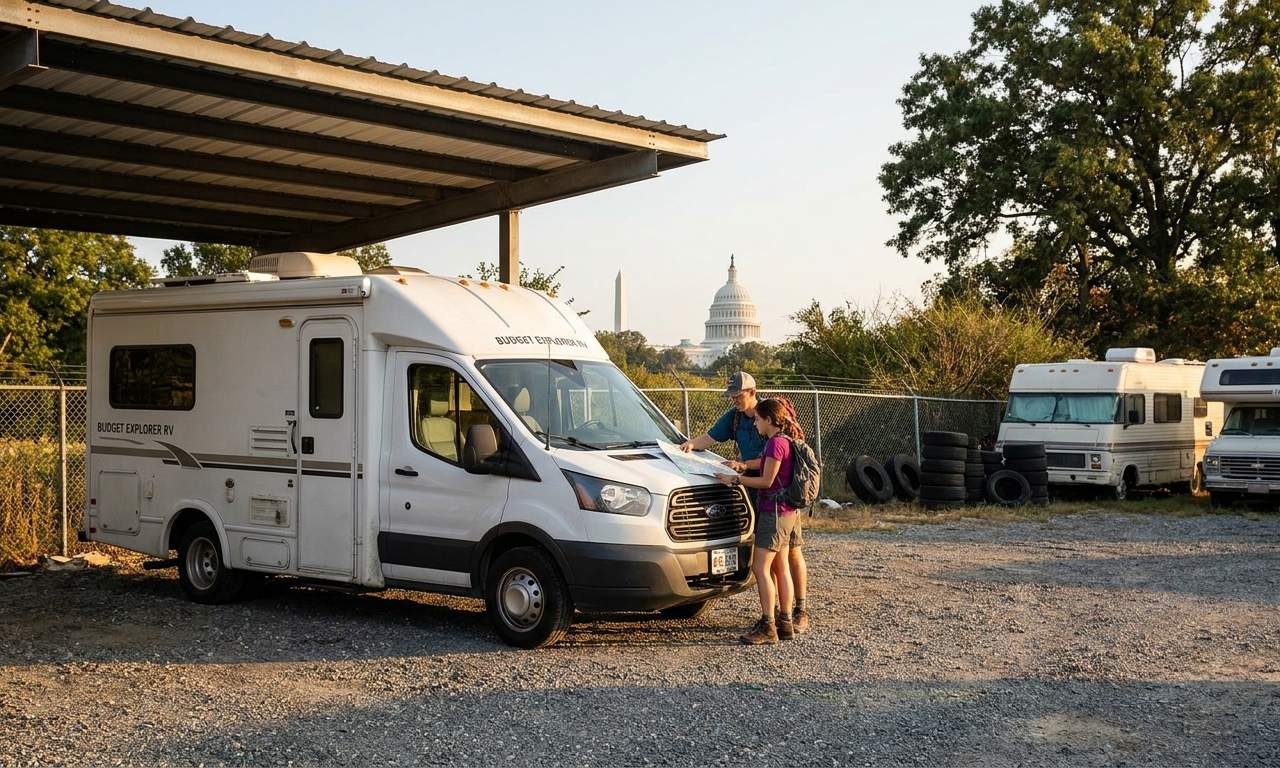
Most recreational vehicles (RVs) weighing up to 26,000 pounds Gross Vehicle Weight Rating (GVWR) can be driven in Washington DC with a standard Class D driver's license from any U.S. state. International visitors should carry their valid foreign license, and an International Driving Permit (IDP) is recommended, though not always mandatory.
A Commercial Driver's License (CDL) endorsement may be required for RVs exceeding 26,000 pounds GVWR, though most rental motorhomes, including Class A, B, and C, typically fall below this weight threshold. The minimum age to rent an RV in Washington DC is 21 years old across most Bandana partner suppliers, with no young driver surcharges or vehicle class restrictions based on age, ensuring accessibility for younger adventurers.
Always ensure your license is valid and corresponds to the specific weight and class of the rented motorhome to avoid any legal complications on your journey. We believe in full transparency, which means no hidden fees or surprises related to licensing or age requirements at pickup.
Road Conditions & Terrain in Washington DC
Washington DC's road conditions are primarily urban, characterized by a mix of well-maintained arterial roads, older stretches, and some historic cobblestone streets, all within a relatively flat geographical area.
RV drivers should be prepared for dense urban traffic, especially during peak hours (typically 6-9 AM and 3-6 PM on weekdays), frequent intersections, and a unique radial street grid that can present navigational challenges for larger vehicles. While there are no mountainous or gravel terrains within the immediate city limits, surrounding areas in Maryland and Virginia, such as the rolling hills around Great Falls Park, may feature varying road qualities and slight inclines.
It's always advisable to drive slowly and carefully in Washington DC, paying close attention to road signage and navigating the city's distinctive traffic patterns, particularly around its many traffic circles and one-way streets. Remember, you can drive almost anywhere without issues; just use common sense and pay attention.
RV Size Limits, Bridges & Restricted Zones in Washington DC
While Washington DC doesn't have blanket bans on RVs of specific lengths or widths, drivers must be exceptionally aware of numerous low bridges, tunnels, and narrow streets, especially for larger motorhomes.
Many underpasses, particularly on scenic parkways such as the George Washington Memorial Parkway, have height restrictions as low as 10 feet (3.05 meters), which can be problematic for most Class C and Class A RVs, often requiring careful route planning. Specific historical neighborhoods and residential streets may also have width restrictions or simply be unsuitable for larger campervans; always check local signage meticulously.
Environmental zones are not typically a concern for standard RVs in Washington DC, but restricted access zones for security reasons, particularly around government buildings like the U.S. Capitol or the White House, are common and must be avoided. When navigating, always use an RV-specific GPS or a current map that highlights height and weight restrictions to ensure a smooth journey.
Fuel: Diesel vs. Petrol & Cost per 100 km in Washington DC
Fuel availability in the Washington DC metropolitan area includes both petrol (gasoline) and diesel, with diesel being widely accessible at most larger gas stations and truck stops on the outskirts.
For Bandana's global fleet, a Class SI - Semi-integrated RV typically consumes 10-11 Liters/100 km (approximately 21-24 MPG), while a Class C - Alcove motorhome averages 10-12 Liters/100 km (19-23 MPG). More compact Class B - Camper Vans are notably more fuel-efficient, ranging from 8-10 Liters/100 km (24-29 MPG), and larger Class A - Integrated RVs consume around 8-12 Liters/100 km (19-29 MPG).
Urban driving in Washington DC, with its frequent stops, starts, and slower speeds, will generally result in higher fuel consumption compared to highway travel, significantly impacting your cost per 100 km. To help with budgeting for these ancillary costs, remember that RV PLANET routes allow you to itemize and track every expense along your trip. On the routes offered through RV PLANET routes, you can itemize and track every expense along the way for easy budgeting.
Tolls, Vignettes & Border Rules for Washington DC
Washington DC itself does not require vignettes or charge tolls for driving within the District; however, RV travelers will encounter tolls on numerous major highways and bridges in the surrounding Maryland and Virginia areas.
Notable toll routes include sections of I-95, I-495 (the Capital Beltway), and specific bridges, particularly when approaching or departing the city from the north or south. The E-ZPass system is the most common electronic toll collection method in the region, offering convenience and often lower rates compared to cash payments or the higher pay-by-mail options.
Many RV rental suppliers offer optional E-ZPass transponders with your booking, which can save time and help avoid potential fines from missed toll payments. There are no international border rules relevant to driving an RV within the Washington DC metropolitan area, as it is entirely within the United States, but understanding state lines (DC-Maryland-Virginia) is crucial for toll navigation.
Driving Tips for RV Rental Travelers in Washington DC
Driving a rented RV in Washington DC can be a rewarding experience with proper planning and awareness of local conditions.
- Plan Your Route Carefully: Utilize GPS with RV-specific settings to avoid low bridges, narrow streets, and security-restricted areas, especially given Washington DC's complex radial street grid and numerous one-way streets. This is key for a stress-free journey.
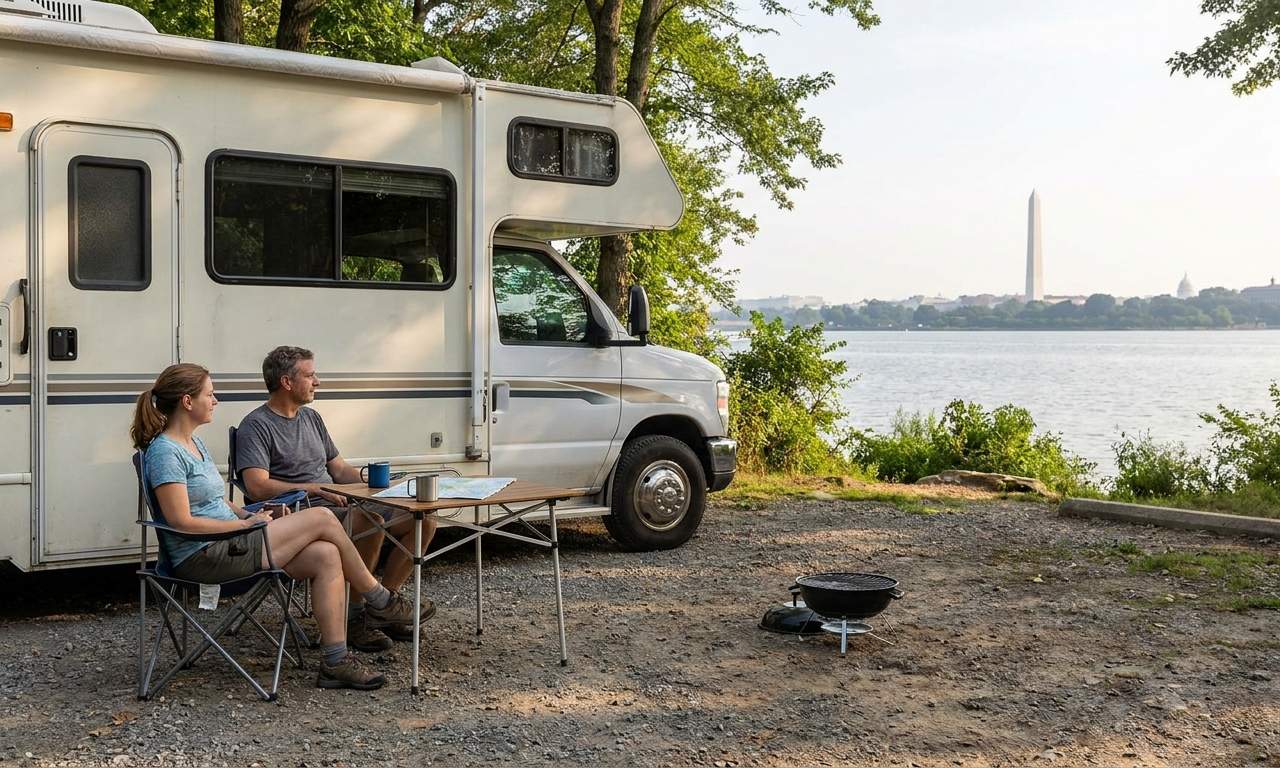
- Leverage Public Transit: The most effective strategy is to park your RV at a designated campground outside the immediate city center, such as Cherry Hill Park in College Park, MD, or Pohick Bay Regional Park in Fairfax Station, VA. From there, use Washington DC's extensive Metro system or ride-sharing services to access monuments and attractions like the National Mall and Smithsonian museums, especially during peak tourist seasons.
- Avoid Peak Hours: Driving a motorhome in Washington DC during weekday rush hours (typically 6-9 AM and 3-6 PM) can be extremely challenging due to heavy traffic on major arteries like I-395 and I-295; plan your movements for off-peak times, late evenings, or weekends.
- Pre-Book RV Parking: Secure parking or campground spots well in advance, as urban RV parking is scarce and often requires reservations, especially for larger vehicles. Remember, many national/state parks reserve only 25-30% of spots; the rest are first-come-first-serve. You'll find a spot, if not at the first campground, then the next one – just call ahead.
- Consider Off-Season Travel: Visiting Washington DC with an RV during the shoulder seasons (early spring before the cherry blossoms, late fall after peak foliage) or winter can mean fewer crowds and lighter traffic, offering a more relaxed experience of the city.
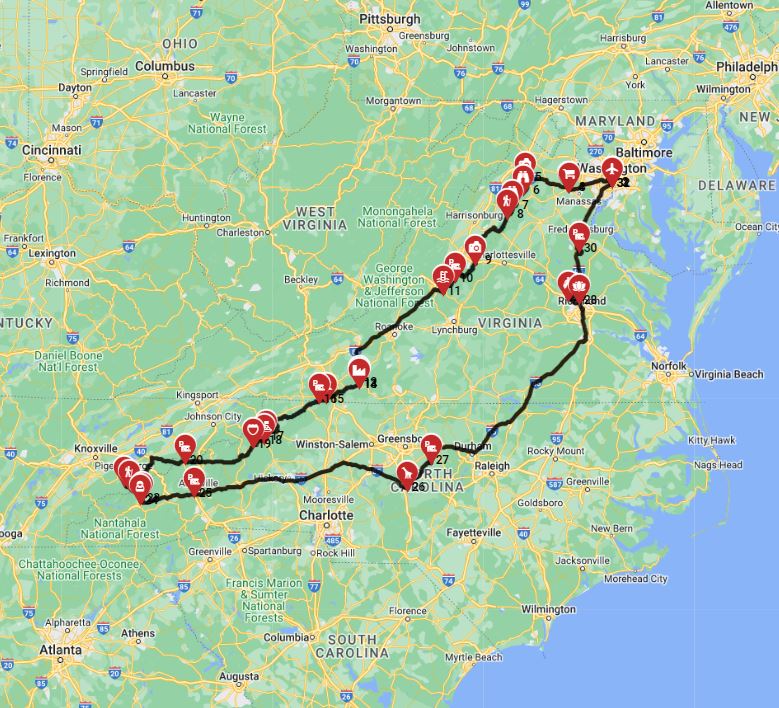
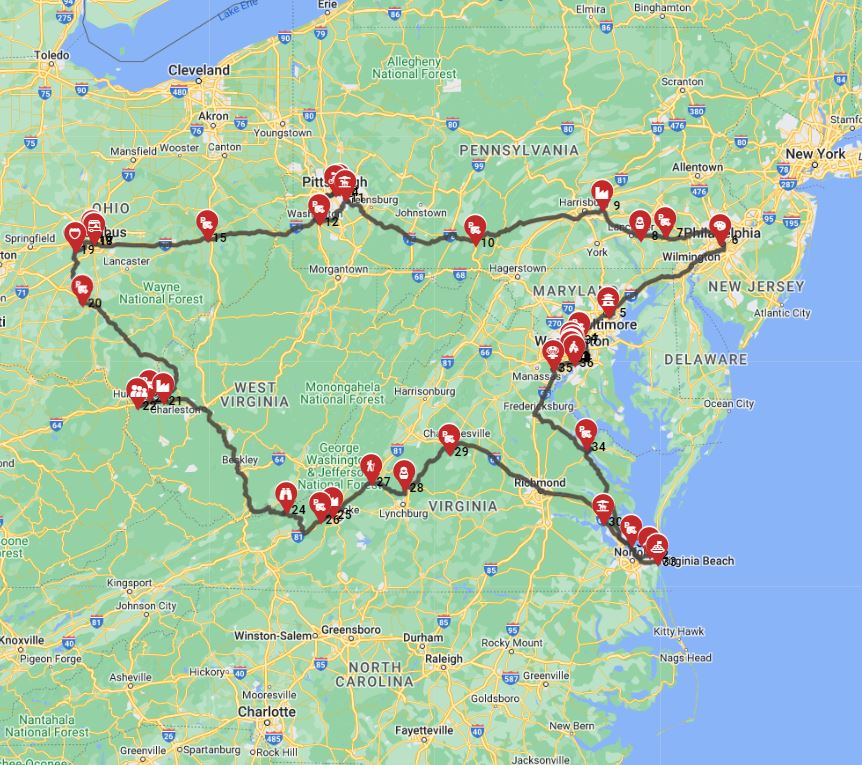
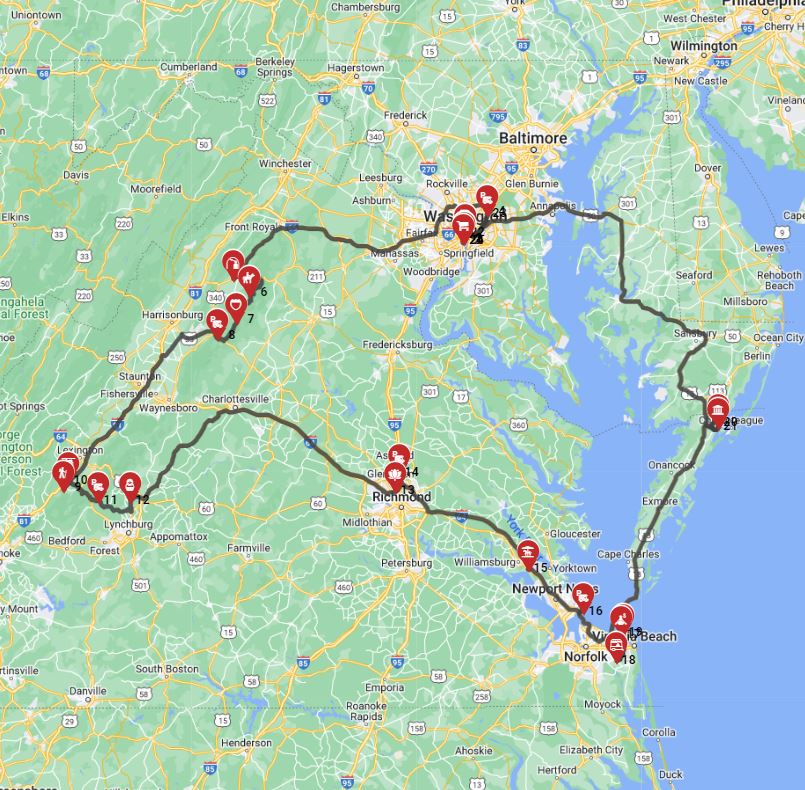
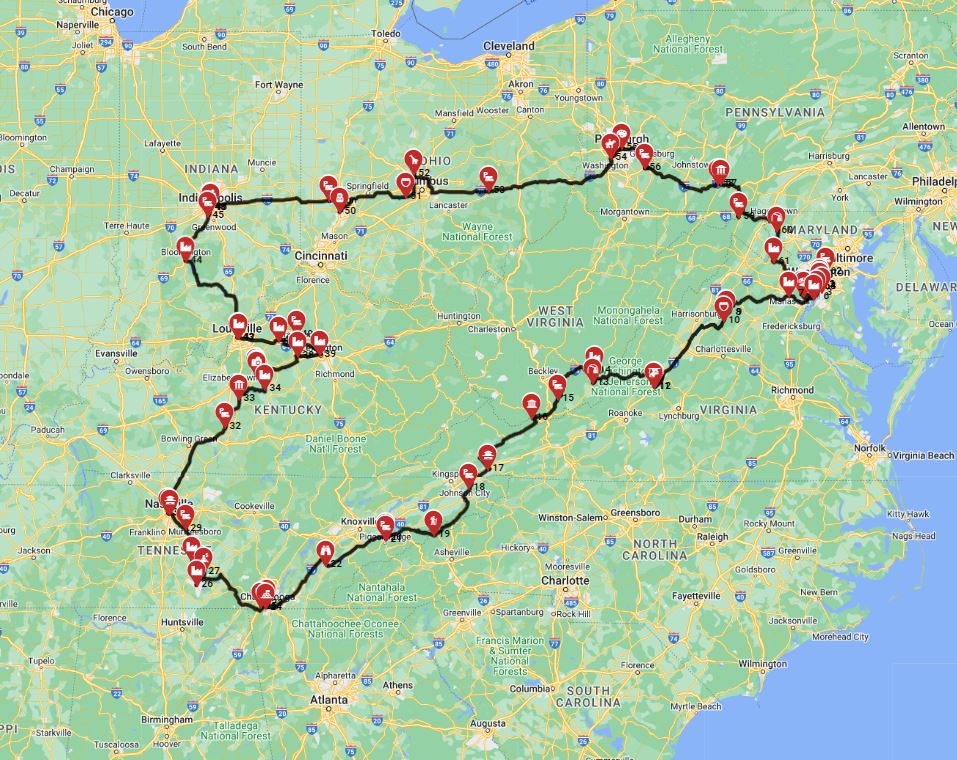
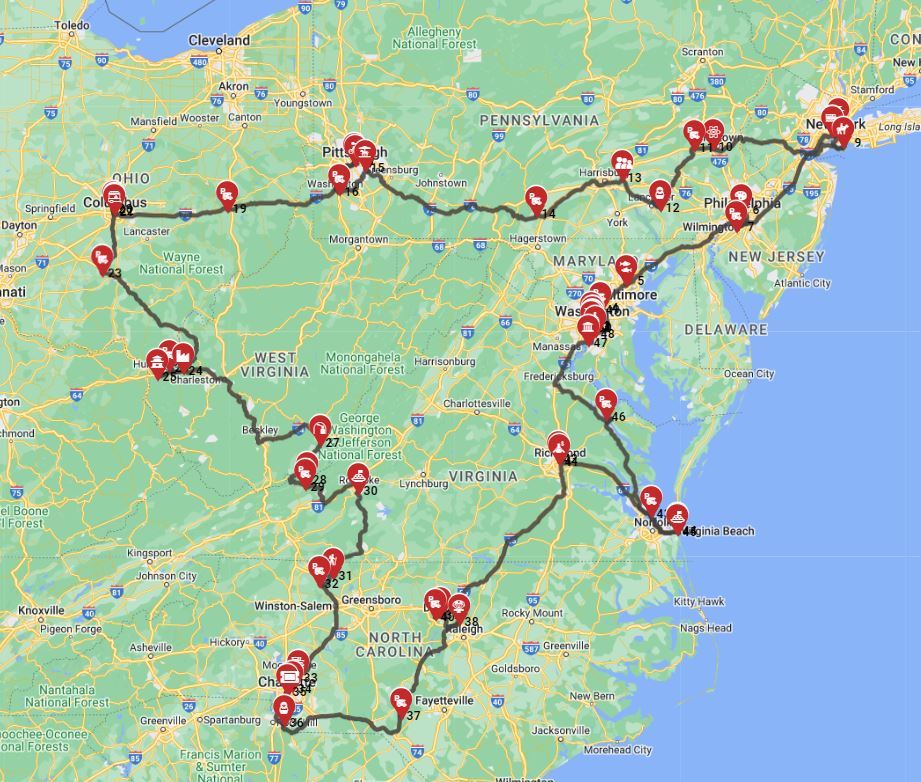
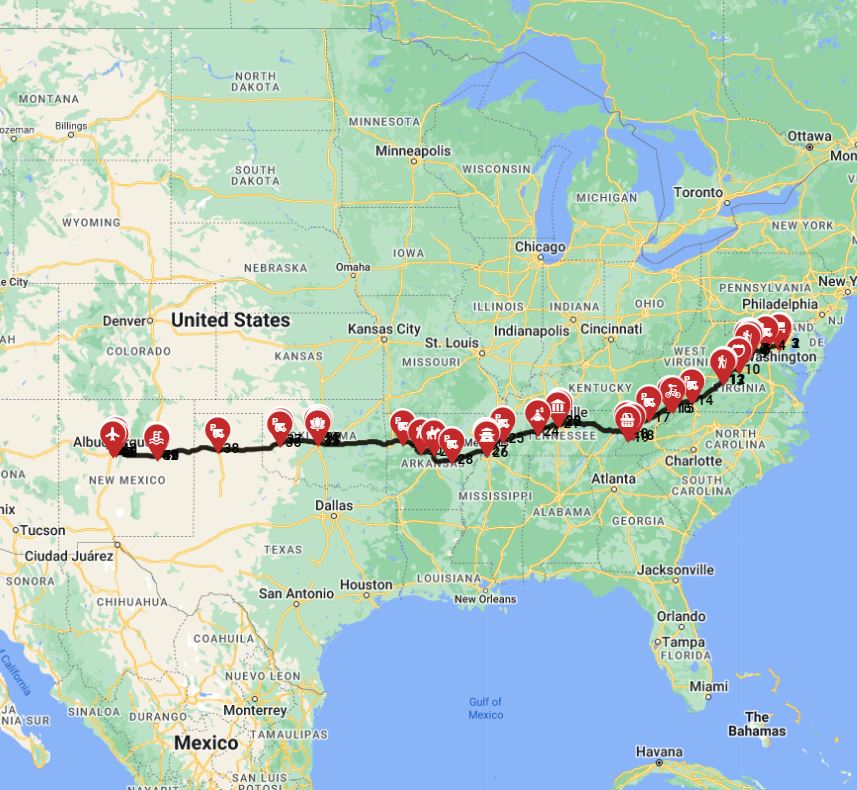
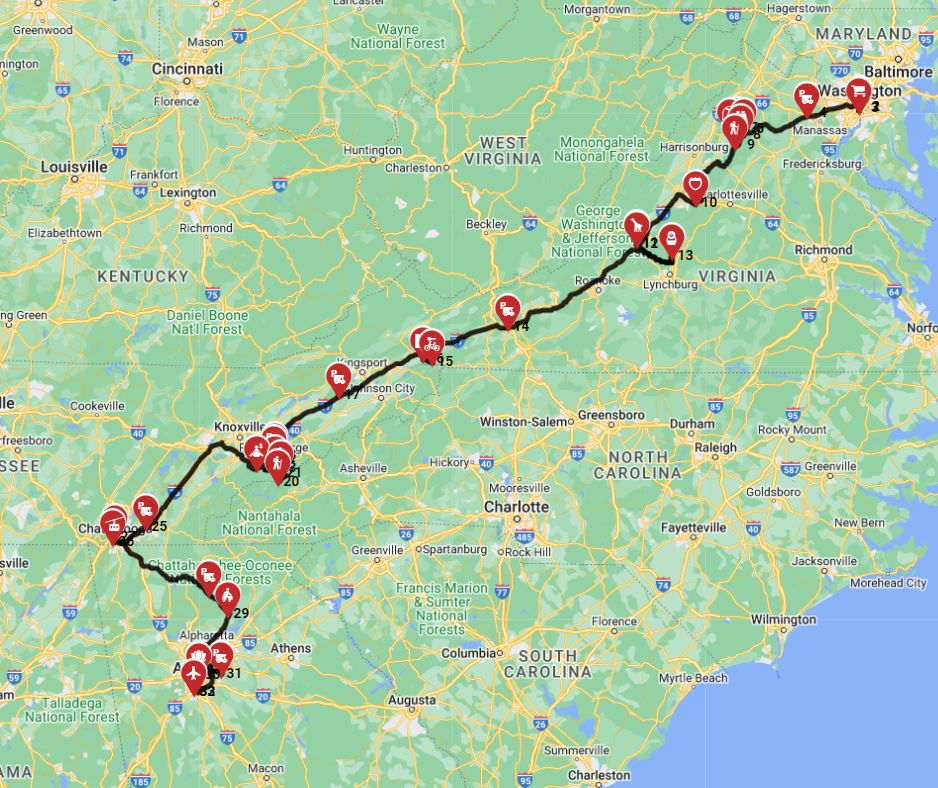
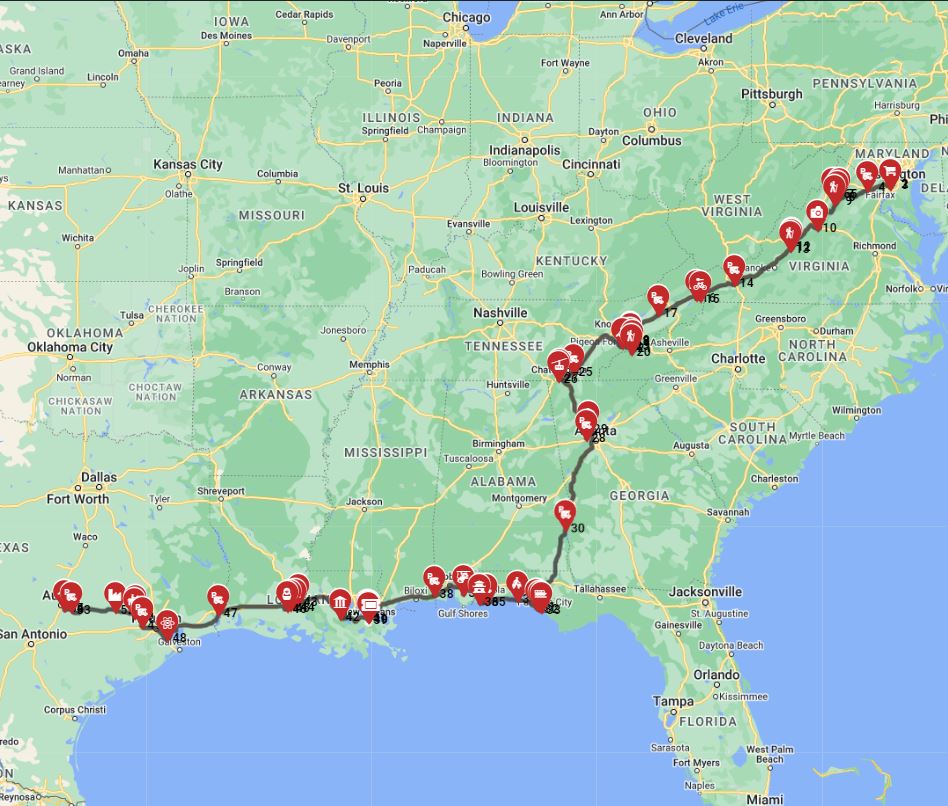
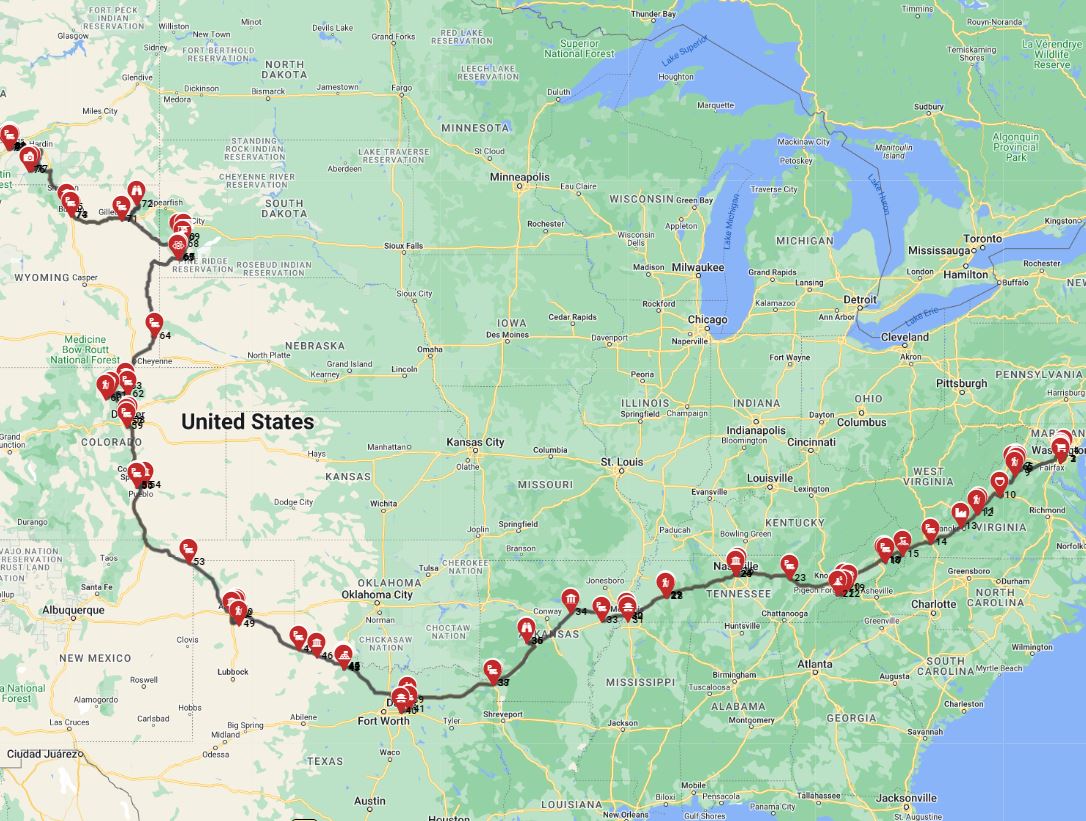
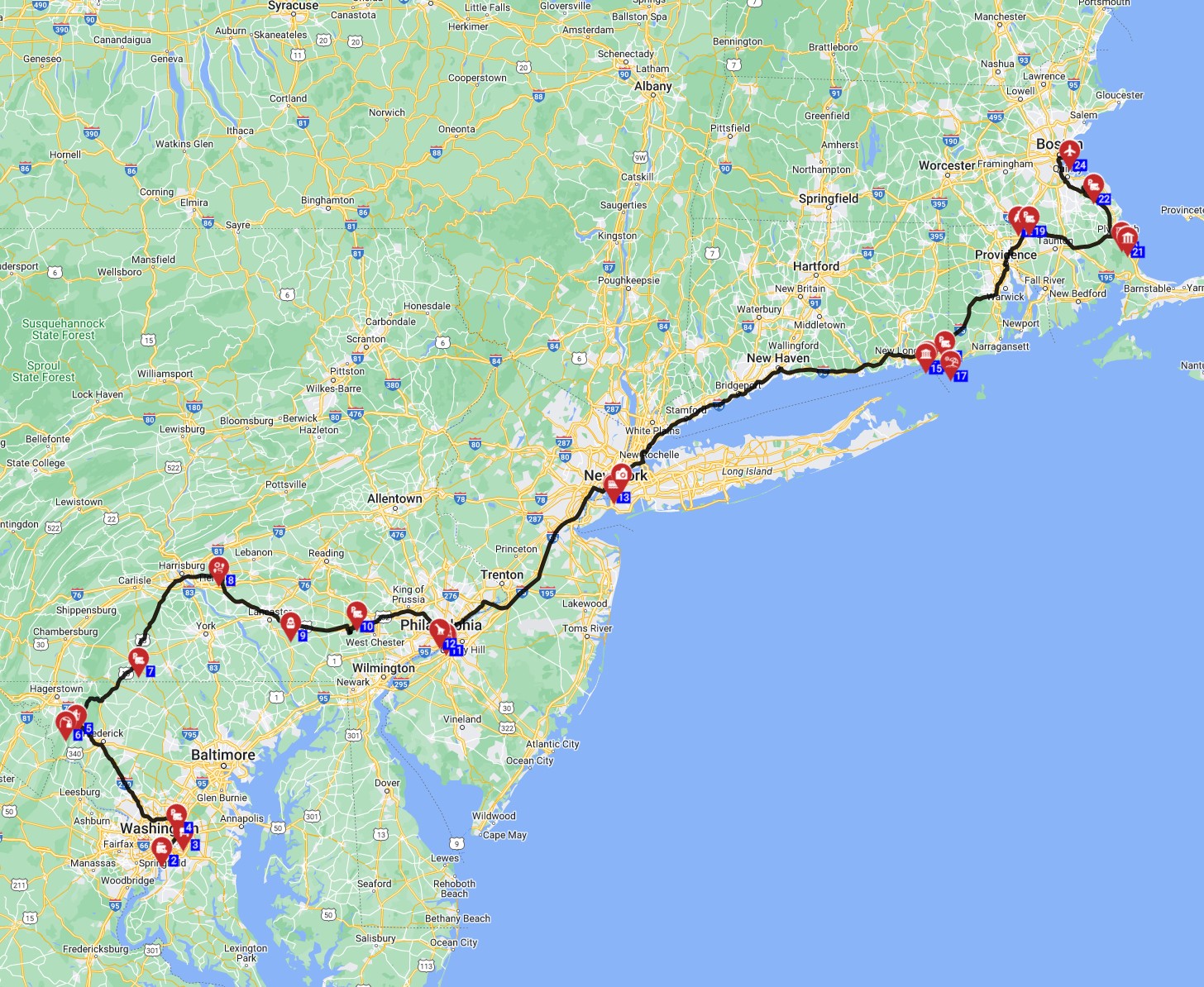
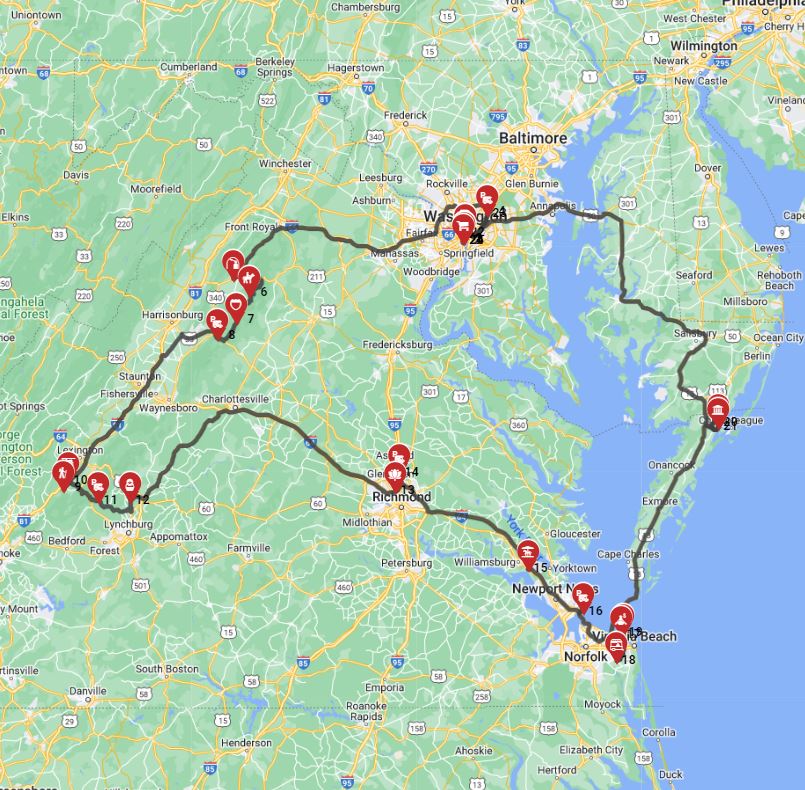
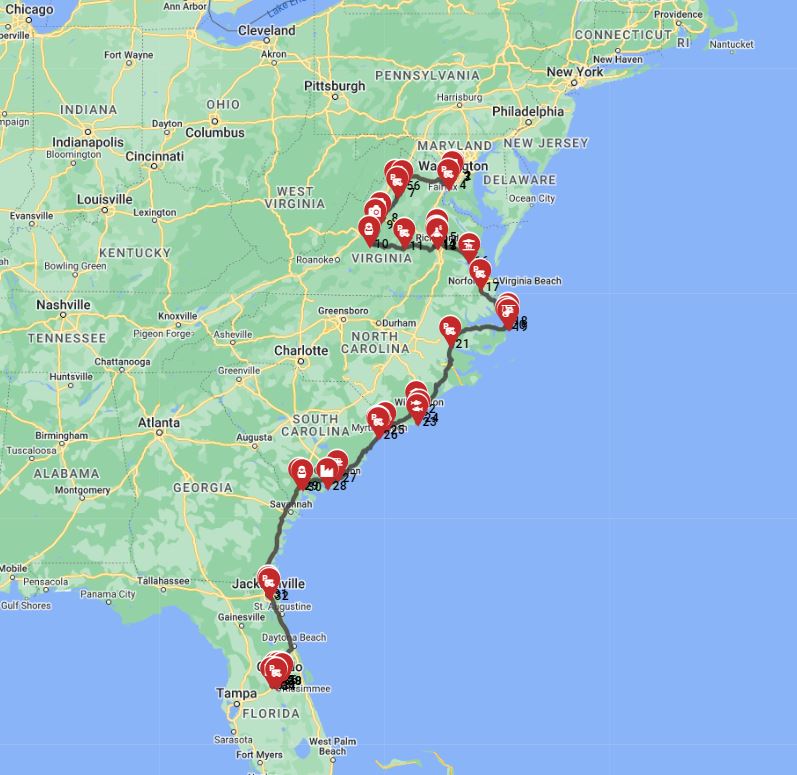
To help plan your itinerary, consider routes like "Chicago to Washington DC - Route of Roots: From the Rust Belt to the Founding Fathers", a 16-day, 2470.2 km adventure that can bring you into the heart of the capital region. For more route inspirations, explore our "RV Travel Guide to Washington DC - Tips and Top Spots 2026".
Recommended RV Class for Washington DC Roads
For navigating Washington DC's urban environment, a Class B - Camper Van is highly recommended due to its maneuverability, compact size, and ease of parking. These smaller motorhomes offer a nimble solution for city exploration.
Bandana's global fleet of Class B Camper Vans average approximately 5.8 meters (19 feet) in length, making them comparable to large vans or SUVs. This size simplifies driving through tight city streets, handling traffic circles, and finding suitable parking spots in areas outside the immediate downtown core. An example is the "2 Berth Hi Top" which offers front air conditioning and is ideal for a couple, perfect for city-focused trips.
Alternatively, a Class SI - Semi-integrated RV offers a good balance of interior comfort and a relatively manageable size for Washington DC, particularly if you plan to stay at campgrounds slightly further out and rely on public transportation for city access. These mid-sized motorhomes, like the "2 Berth Rover" with its automatic transmission and roof air conditioning, average around 6.9 meters (22.6 feet) in length, providing more living space than a Class B while still being more agile than larger Class C or A models.
When selecting your rental, remember Bandana RV works with over 50 leading RV suppliers worldwide, including trusted names like El Monte and Cruise America, ensuring you have a wide selection of vehicles to compare and find the perfect fit for your Washington DC adventure.
Should I Choose a Compact Van Instead of a Large RV in Washington DC?
Choosing a compact van, such as a Class B Camper Van, offers significant advantages for a Washington DC trip, including easier navigation, reduced fuel consumption in urban traffic, and more readily available parking compared to larger RVs.
While it is generally possible to drive any RV size in Washington DC, the practicalities of maneuvering a large RV (e.g., a Class C or Class A motorhome like the "MHC30" which is approximately 9.15 meters long with a 46 kg gas bottle) can be challenging. Concerns include low bridge clearances, tight turns around places like Dupont Circle, and severe parking limitations within the city proper. A compact van, like the "Category Van" or "Active Original", genuinely helps in dense historic centers and allows for quicker maneuvering.
However, choosing a smaller campervan means sacrificing indoor space, storage, and amenities. If comfort, extensive interior living space, and a full kitchen (for preparing RV-friendly recipes playlist on board) are primary concerns, sticking with a larger RV might be the better trade-off. In such cases, plan to park at an external RV park and utilize public transport or ride-shares for exploring Washington DC's attractions.
Can I Park Anywhere? Free & Wild Camping Rules in Washington DC
No, you cannot park an RV anywhere in Washington DC; free and wild camping are strictly prohibited within the city limits and its immediate surrounding urban areas.
Washington DC has stringent parking regulations, and overnight parking for RVs is generally not permitted on city streets or public lots. Attempting to do so can result in substantial fines and towing, so planning your overnight accommodations is crucial. Designated RV campgrounds, such as Cherry Hill Park in College Park, MD, or Burke Lake Park in Fairfax Station, VA, are the primary and legal options for overnight stays.
These campgrounds, typically located 10-20 miles from downtown Washington DC, offer essential amenities like electricity, water, and dump stations, and often provide convenient access to public transportation for visiting city attractions. Always check local regulations and follow local laws before parking overnight, as rules vary by region and campground.
Consider a pre-planned route like "
Can I Drive an RV Into the City Center? Heights, Tunnels & Local Signage
Yes, it is generally possible to drive an RV into the city center of Washington DC, but extreme caution and diligent attention to local signage are absolutely essential due to unique urban challenges.
RV drivers must pay close attention to numerous height limits on tunnels and low bridges; specific tunnels, underpasses, and historic district streets may have strict height, weight, or even width restrictions that can impede larger motorhomes. For example, some approaches to downtown via scenic parkways can have clearances as low as 10 feet (3.05 meters), which will block most RVs.
Be aware of local signage for residents-only parking, restricted turning movements, and security zones around federal buildings like the Lincoln Memorial, which can change quickly within the city. While driving into Washington DC is permissible, parking an RV in the city center is exceedingly difficult and often impractical, making external parking at dedicated RV parks and using public transit the highly recommended strategy for your visit.
Is Washington, D.C. RV friendly?
While RVs are allowed on Washington DC roads, the city presents unique challenges that make it less "RV friendly" for larger vehicles compared to more rural destinations, requiring careful planning for parking and navigation.
The dense urban environment, heavy traffic on key arteries like the Capital Beltway (I-495), limited and expensive parking options, and numerous low bridge clearances create significant practical hurdles for RV travelers. Most RVers find the experience more manageable by staying at well-equipped campgrounds outside the city, typically in Maryland or Virginia, and commuting into Washington DC via public transportation (Metro) or ride-sharing services.
Careful pre-planning of routes to avoid height restrictions and designated parking strategies are crucial for a successful and less frustrating visit. Our "RV Rental Virginia - Complete Guide 2026" offers a broader perspective on the region.
🎬 Video coming soon
Are RVs allowed in DC?
Yes, RVs are generally allowed to drive in Washington DC, but drivers must adhere strictly to local traffic laws, posted height restrictions, and stringent parking regulations throughout the District.
There are no blanket prohibitions against RVs entering the city, but the practicalities of maneuvering and parking large vehicles within the dense urban core can be challenging. Drivers must be especially vigilant for signs indicating low bridges or restricted vehicle types on certain roads, such as some parkways, and be aware that overnight parking is not permitted on most city streets.
While driving through Washington DC is permitted, extended stays or parking near attractions will almost certainly require utilizing designated RV parks located in the surrounding metropolitan area. We recommend searching for campsites and campgrounds during your trip using RV PLANET (rvplan.net) — a great resource for locating available spots along your route.
For those interested in longer trips connecting Washington DC to other major cities, consider the "
How much does it typically cost to insure an RV?
The typical cost to insure an RV can vary significantly, generally ranging from $500 to over $2,500 annually in the USA, depending on factors like the RV's class, value, coverage type, and the driver's profile.
Key factors influencing the premium include the specific make, model, age, and replacement cost of the rented motorhome, as well as the driver's age, driving record, and the geographic location where the vehicle is primarily used or parked. Comprehensive coverage, collision, liability, roadside assistance, and personal effects coverage all play a major role in the overall cost.
For rental purposes, many suppliers include basic insurance in the daily rate, but you can upgrade to a top-level deductible for extra peace of mind. Bandana RV offers full transparency with pricing, so what you see is what you pay, with no surprise fees at pickup regarding insurance or other costs.
Who is the best insurance company for RV?
Identifying the 'best' RV insurance company depends heavily on individual needs, desired coverage, and budget, but top-rated providers often include Progressive, GEICO, National General, and Foremost, recognized for their specialized RV coverage options.
These companies offer a range of policies tailored specifically to motorhomes, including options like personal effects coverage, vacation liability, and roadside assistance specialized for large vehicles. The 'best' company for you will offer competitive rates for your specific RV class and usage, provide excellent customer service, and have a robust and straightforward claims process.
It is always recommended to obtain quotes from multiple providers and thoroughly compare their coverage options, deductibles, and customer reviews before making a decision. Bandana RV's platform allows you to compare different suppliers and their offerings, giving you a clear picture of what's included.
How much is insurance on a $200,000 RV?
Insuring a $200,000 RV can typically cost between $1,000 and $3,000 annually for recreational use, though this range can fluctuate significantly based on various factors.
High-value motorhomes, especially larger Class A models, will incur higher premiums due to their greater replacement cost and the potential for more extensive damage in an accident. Additional factors like the driver's claims history, the state where the RV is primarily garaged (e.g., Virginia or Maryland if near Washington DC), and the chosen deductible will also heavily influence the final premium.
Opting for higher deductibles can lower the annual premium, but it also means higher out-of-pocket costs in the event of a claim. When renting through Bandana, we aim for full transparency, so you'll clearly understand the insurance options and costs before you finalize your booking.
Visiting Washington DC with Pets in Your RV
Bringing pets in your rented RV to Washington DC requires careful planning, as many indoor attractions are not pet-friendly, but several outdoor spaces warmly welcome furry companions.
It's best to choose pet-friendly RV campgrounds located just outside Washington DC, such as the aforementioned Cherry Hill Park or Pohick Bay Regional Park, which often provide excellent amenities like dog parks, pet-washing stations, and walking trails. While exploring the National Mall, leashed pets are generally allowed on the expansive grounds, offering opportunities for walks around the monuments, but they are strictly prohibited inside museums or federal buildings.
Always clean up after your pet and respect local leash laws. Be mindful of Washington DC's climate, especially during hot summer months (June-August), to prevent heatstroke; never leave pets unattended in an RV, even with windows open. Research local pet ordinances for Washington DC and surrounding counties in advance, and identify nearby pet-friendly parks or veterinary services for emergencies.
What You Shouldn't Miss
- The National Mall and Smithsonian Museums: Dedicate at least a full day, if not more, to explore the iconic monuments like the Lincoln Memorial and Washington Monument, and take advantage of the free Smithsonian museums. Park your RV at a nearby campground and use the Metro.
- Georgetown's Historic Charm: Stroll along the picturesque streets of Georgetown, known for its historic architecture, charming boutiques, and diverse dining options. Parking for large RVs is challenging, so consider public transport.
- A Potomac River Cruise: See Washington DC from a different perspective with a scenic cruise on the Potomac River, offering stunning views of key landmarks. Many cruises depart from the Wharf or Alexandria, VA.
- Arlington National Cemetery: Pay your respects at this solemn and historic site, home to the Tomb of the Unknown Soldier and the Kennedy gravesites. Allow several hours for a meaningful visit.
- Mount Vernon, Virginia: Drive your RV south to George Washington's historic estate, approximately 16 miles from downtown DC. There is RV-friendly parking available, making it an excellent day trip from your Washington DC basecamp.
- Dining in Columbia Heights: Explore the vibrant culinary scene in neighborhoods like Columbia Heights, where you can find diverse international cuisine and local eateries. Consider parking on the outskirts and taking a ride-share for easier access.
Looking for expert insights from Avi Bandana? Top 5 Adventures — recommendations from Avi Bandana (learn more)
Final Thoughts
Renting an RV for your Washington DC adventure opens up a world of possibilities, offering the freedom to explore at your own pace and comfort. While navigating the city with a larger vehicle requires some thoughtful planning, particularly regarding parking and low clearances, the ability to retreat to a peaceful campground in the surrounding area offers the best of both worlds.
Remember to embrace slow travel, averaging 100-150 km per day, allowing yourself ample time to connect with Washington DC's rich history, diverse culture, and impressive scenery. With Bandana RV's full transparency, 24/7 support, and expert route plans from RV PLANET, you have all the tools to make your trip truly unforgettable.
Start envisioning your journey through the nation's capital today, from the grandeur of the National Mall to the tranquility of nearby state parks. The perfect motorhome is waiting to be discovered.
Find Motorhome Rentals in Washington DC