In This Guide
- Can You Drive an RV in Washington DC? License & Age Rules
- Road Conditions & Terrain in Washington DC
- RV Size Limits, Bridges & Restricted Zones
- Fuel: Diesel vs. Petrol & Cost per 100 km
- Tolls, Vignettes & Border Rules
- Driving Tips for RV Rental Travelers
- Recommended RV Class for Washington DC Roads
- Should I Choose a Compact Van Instead of a Large RV in Washington DC?
- Can I Park Anywhere? Free & Wild Camping Rules in Washington DC
- Can I Drive an RV Into the City Center? Heights, Tunnels & Local Signage
- Is Washington, D.C. RV friendly?
- Are RVs allowed in DC?
- How much does it typically cost to insure an RV?
- Who is the best insurance company for RV?
- How much is insurance on a $200,000 RV?
- Do you need a special license to drive an RV in Washington?
Washington DC, the nation's capital, offers a captivating blend of history, culture, and monumental sights that beckon travelers. For those looking to explore this iconic city and its broader region, considering an RV rental for a one-way trip provides an incredible sense of freedom and flexibility. Imagine yourself driving past national landmarks, then settling into a cozy campground just outside the bustling city, ready for your next adventure.
At Bandana Caravan, we are true RV specialists, helping tens of thousands of travelers explore the world by RV since our founding in 2001. We partner with over 50 leading RV suppliers worldwide, including trusted names like El Monte and Cruise America, to bring you full transparency in pricing. For live availability and current prices, start with our RV Rental Washington DC - Complete Guide 2026 guide. We make sure there are no hidden fees or surprises.
Can You Drive an RV in Washington DC? License & Age Rules
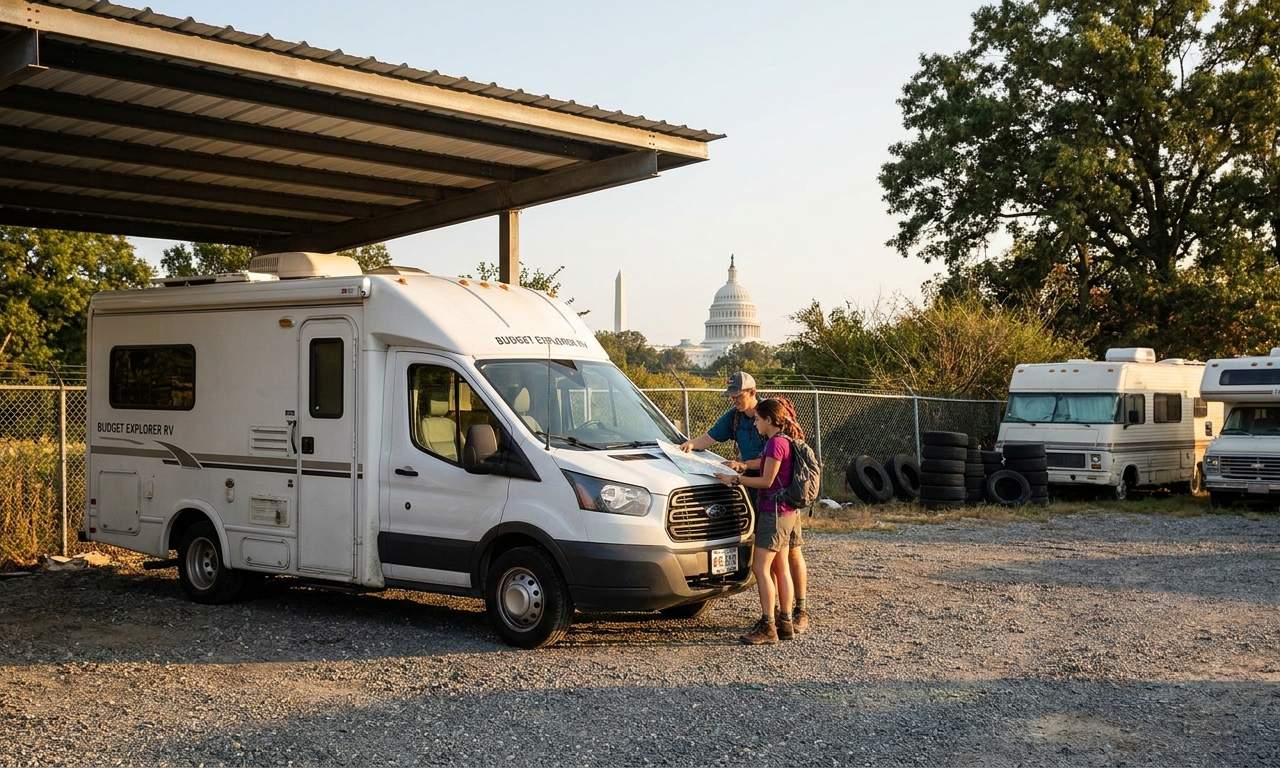
Most RVs under 26,000 pounds Gross Vehicle Weight Rating (GVWR) can be driven in Washington D.C. with a standard Class D driver's license. A special Commercial Driver's License (CDL) is typically only required for RVs exceeding 26,000 pounds GVWR or those designed to carry 16 or more passengers, though such vehicles are uncommon for rental purposes. Drivers must generally be at least 21 years old to rent an RV in Washington D.C. from most providers, regardless of the vehicle class, and there are no young driver surcharges at Bandana. Foreign drivers can typically operate a rented motorhome with a valid driver's license from their home country for up to six months; an International Driving Permit (IDP) is recommended for easier understanding by authorities but is not mandatory in most cases. This straightforward licensing ensures that exploring Washington DC by RV is accessible to a wide range of travelers.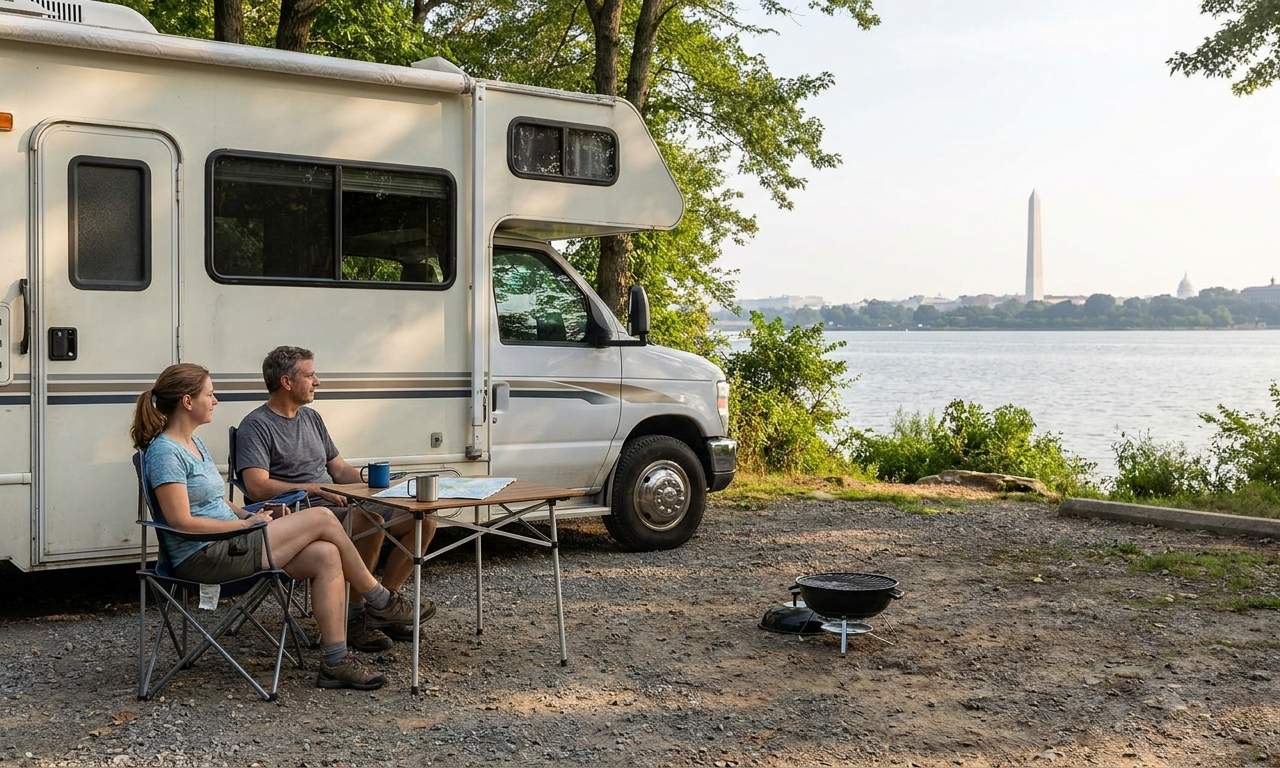
Road Conditions & Terrain in Washington DC
Washington D.C. features generally well-maintained urban roads and highways, but also includes cobblestone streets in historic areas and dense traffic conditions, especially during peak hours. The terrain around D.C. is relatively flat, making ascents and descents manageable for all RV classes, though navigating the city itself involves numerous one-way streets, roundabouts, and complex intersections. Expect significant urban density and potential for potholes or uneven surfaces, particularly on older city streets, which necessitates slower speeds and careful driving. We encourage slow, scenic driving around monuments, but be prepared for bustling multi-lane highways on approach and departure. Remember, drive slowly and carefully, and you can drive almost anywhere without issues. No need to stress - just use common sense and pay attention.RV Size Limits, Bridges & Restricted Zones
While specific RV length and height limits for general travel are rare in Washington D.C., drivers must be highly aware of bridge clearances, particularly underpasses, which can be restrictive in older parts of the city and surrounding areas. For instance, the scenic George Washington Memorial Parkway has several tunnels, especially near Reagan National Airport (DCA), with clearances as low as 3 meters (10 feet), making it impassable for many taller RVs. No specific environmental zones typically restrict RV access in D.C. based on emissions, but heavy vehicles may face routing restrictions on certain streets or in historical districts. Always pay close attention to posted signage for height clearances (especially for Class C Alcoves, which average 7.5 meters in length and often 3.2-3.4 meters in height), weight limits on smaller bridges, and designated no-truck or restricted vehicle zones to ensure a smooth journey.Fuel: Diesel vs. Petrol & Cost per 100 km
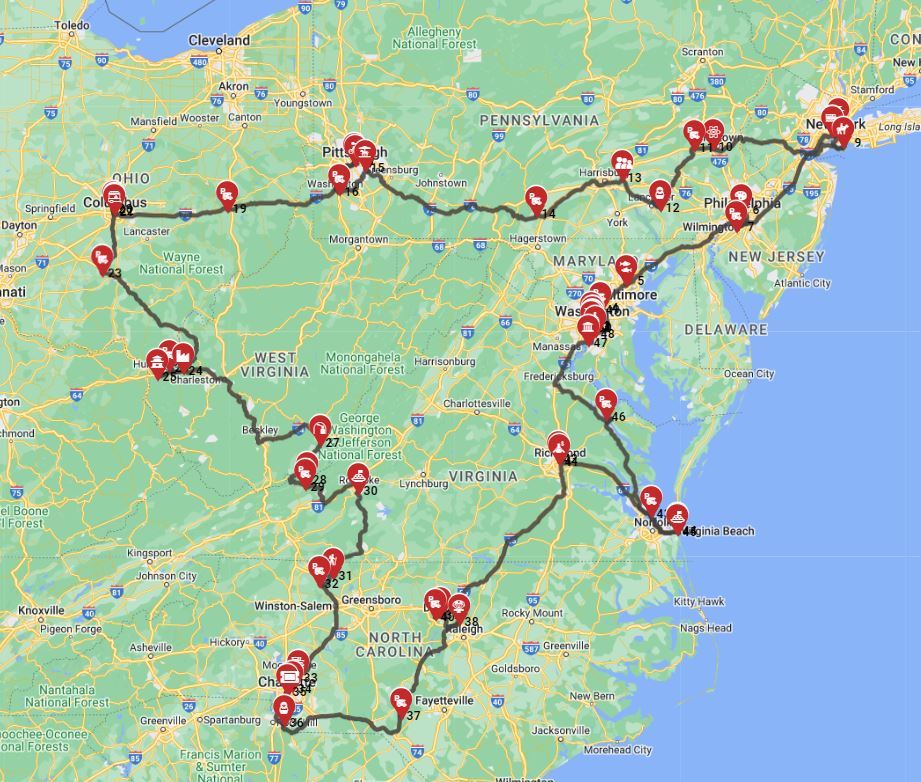
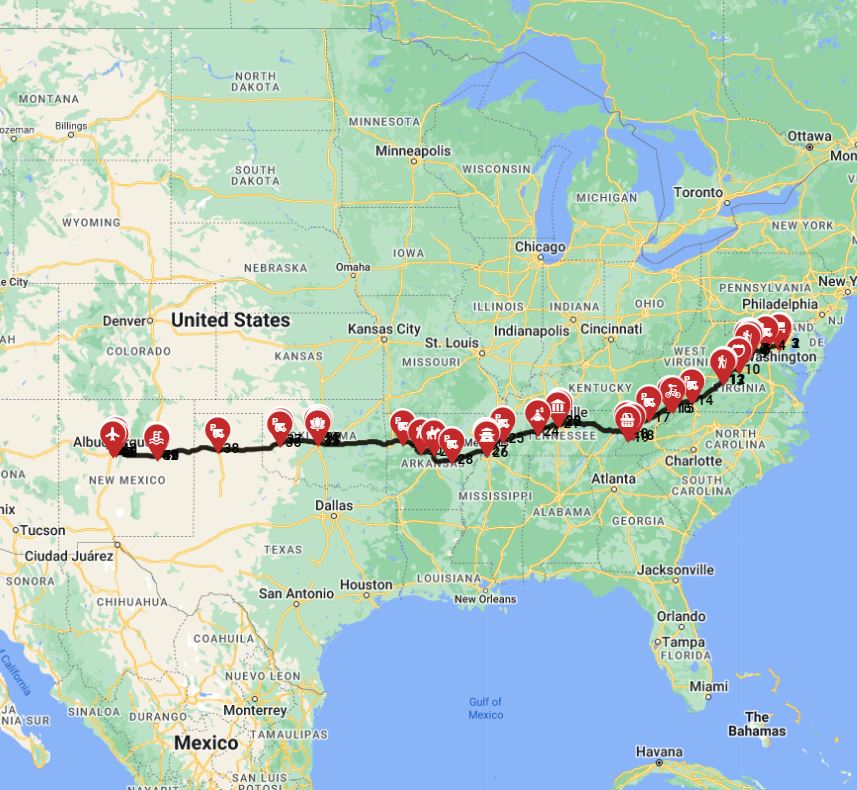
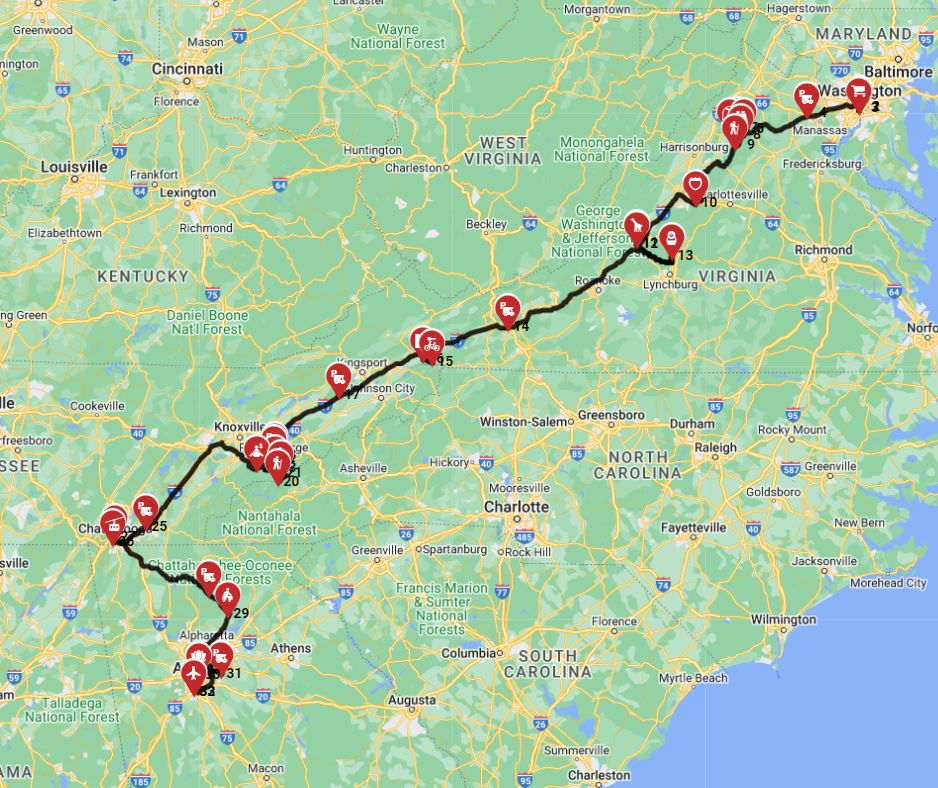
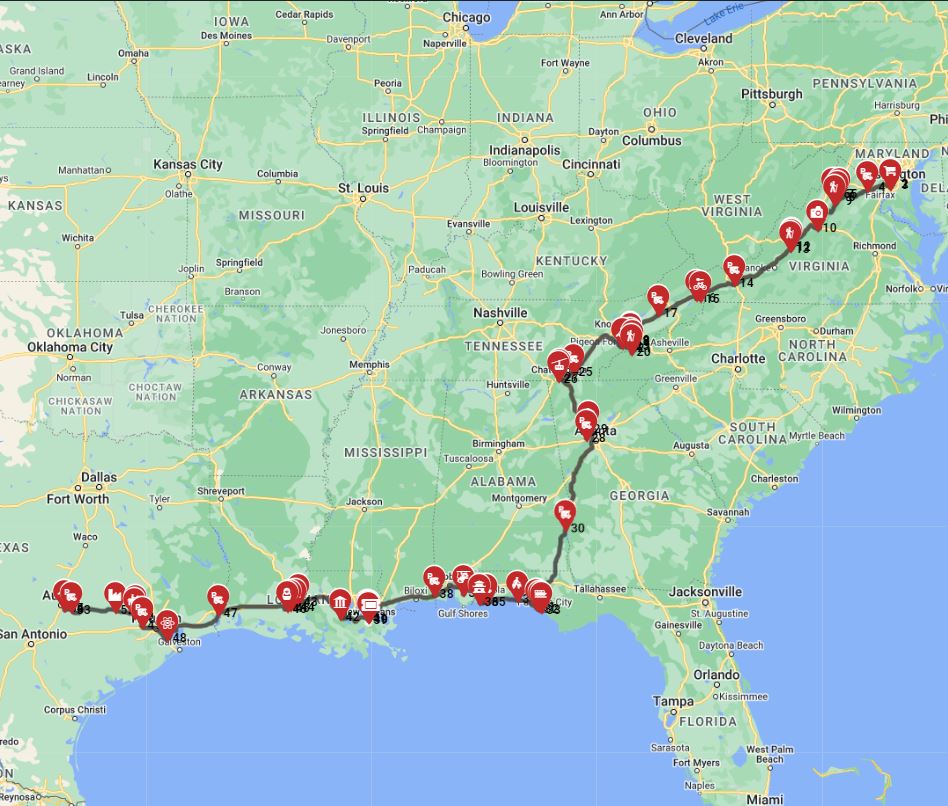
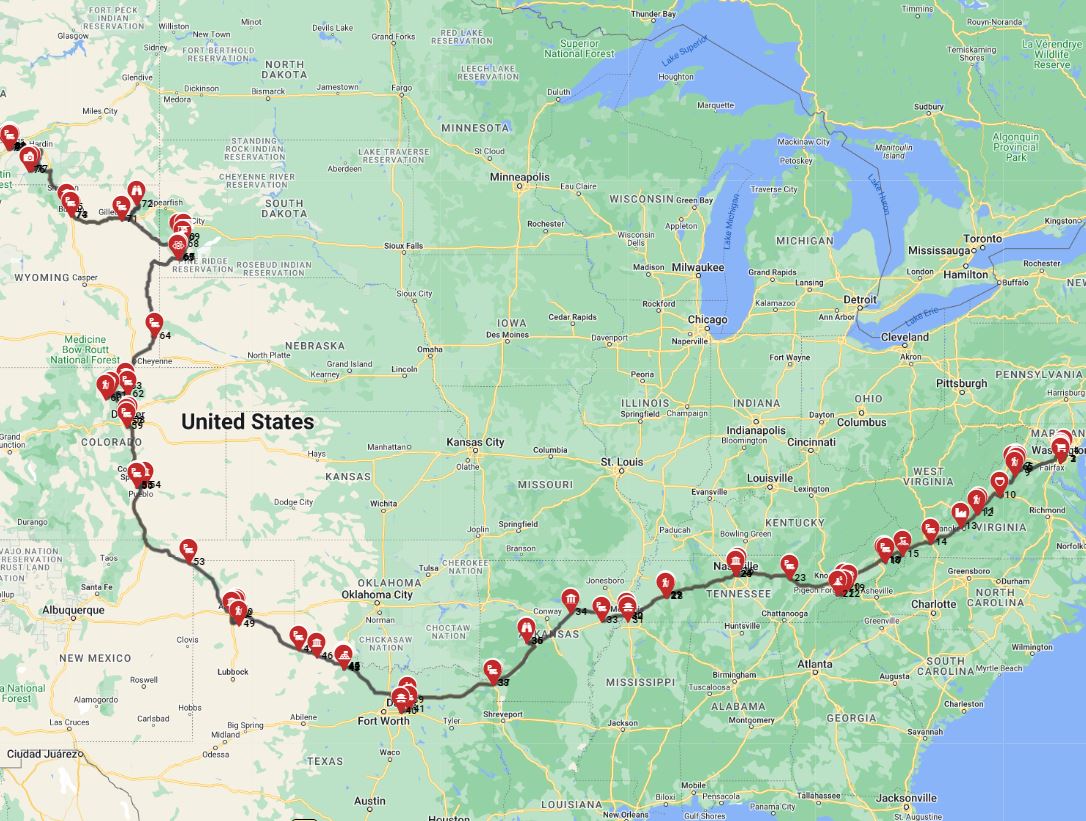
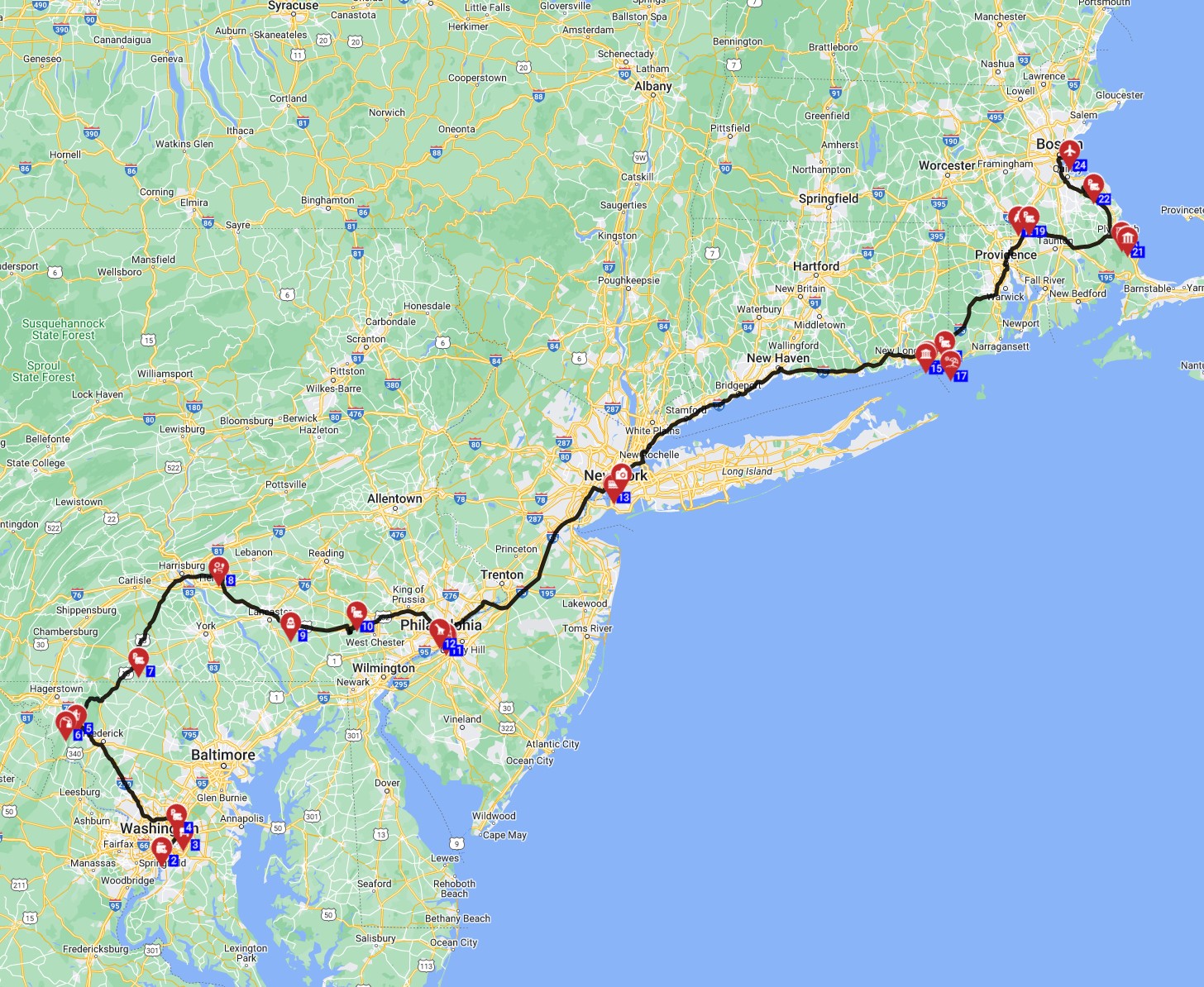
Most motorhomes and campervans in Bandana's global fleet run on either petrol (gasoline) or diesel, including popular models like the "cruise america rv rental example Explorer" with a 75 Liter fuel tank or the "rv rentals utah example Sunrise Escape" with a 208 Liter fuel tank. Both diesel and petrol are widely available at fuel stations in and around Washington D.C., though diesel pumps are less common at smaller, urban stations. Average fuel cost per 100 km will vary daily based on market fluctuations, but expect around $15-25 (USD) for petrol/diesel, depending on current fuel prices and the RV's specific consumption rate. For example, a Class B Camper Van averages 8-10 Liters/100 km, while a larger Class C Alcove might consume 10-12 Liters/100 km. Some rented RV vehicles may come with fuel discount cards or loyalty program perks, which can help manage costs. When planning your route, keep in mind that on RV PLANET routes, travelers can itemize and track every expense along the way for easy budgeting. RV PLANET routes are a great way to stay on top of your ancillary trip costs.Tolls, Vignettes & Border Rules
Washington D.C. itself does not have tolls for entering the city, but surrounding areas in Virginia and Maryland (e.g., portions of I-95, I-495, Dulles Greenway) feature electronic tolls, often cashless. Travelers should consider obtaining an EZ-Pass transponder, which is widely available for purchase or sometimes included with rental RVs from suppliers like Cruise America, to streamline toll payments and avoid mailed violation notices and fees. This is crucial for avoiding unexpected charges. Vignettes, common in some European countries, are not applicable in Washington D.C. or the broader United States. Furthermore, no border rules are relevant for travel within Washington D.C. or between adjacent US states, allowing for seamless travel from Virginia or Maryland. For more information on one-way costs, consult our One-Way RV Rental in Washington DC - Price Guide 2026.Driving Tips for RV Rental Travelers
**Plan Your Route Carefully:** Using RV-specific GPS navigation apps that account for vehicle height and weight is essential when approaching D.C. to avoid low bridges and restricted zones, especially around landmarks like the Washington Monument or the Capitol Building. **Master Urban Maneuvering:** D.C. has many one-way streets, busy intersections like Dupont Circle, and tight turns; practice wide turns and use a spotter when backing up, particularly with larger RVs like Class C Alcoves (average 7.5 meters). For finding campsites and campgrounds during your trip, we recommend using RV PLANET (rvplan.net) - a great resource for locating available spots along your route.🎬 Video coming soon
Recommended RV Class for Washington DC Roads
For navigating Washington D.C. and its surrounding areas, a Class B Camper Van or Class SI Semi-integrated RV is often recommended due to their optimal balance of maneuverability and comfort. Class B Camper Vans, averaging 5.8 meters in length, are highly agile and easier to park, offering good urban mobility with fuel consumption around 8-10 Liters/100 km. For example, a "rv rental denver example Category Van" provides essential amenities in a compact form. Class SI Semi-integrated RVs, at an average length of 6.9 meters, provide more living space and amenities while still being manageable on D.C.'s streets, with fuel consumption typically 10-11 Liters/100 km. While larger Class C Alcoves (avg. 7.5 meters) offer more sleeping capacity (avg. 5.8 places), their greater length and height demand more cautious driving in the city center.Should I Choose a Compact Van Instead of a Large RV in Washington DC?
Choosing a compact van, like a Class B Camper Van (averaging 5.8 meters in length, such as the "Active Bunk Auto"), can offer genuine advantages when navigating the tight, historic streets and dense traffic of Washington D.C. A compact van simplifies parking, potentially allowing access to more parking garages (if height permits) and making street parking easier to find compared to a Class C Alcove (avg. 7.5 meters). However, for longer week-long trips or larger families (Class C Alcoves average 5.8 sleeping places), the increased indoor space, dedicated amenities like a stove (check out our RV-friendly recipes playlist for meal ideas), and greater load capacity (a Class SI averages 72.2 kg vs. a Class B's 37 kg) of a larger RV might outweigh the maneuverability benefits. Often, the comfort and living space of a larger RV are preferred, with travelers opting to park outside the city at facilities like Capitol KOA in Millersville, Maryland, and using public transport to explore D.C., mitigating the urban driving challenge.Can I Park Anywhere? Free & Wild Camping Rules in Washington DC
Free camping, often referred to as wild camping or boondocking, is generally not permitted within the city limits of Washington D.C. or in most developed urban areas, including popular spots like the National Mall. Overnight parking restrictions are common on D.C. streets, especially for oversized vehicles like RVs, and fines for violations can be significant, ranging from $50-$250. Travelers should plan to stay at designated RV campgrounds located in the surrounding areas of Maryland or Virginia, such as Cherry Hill Park (closest full-service park, 10 miles from downtown) or Greenbelt Park (National Park Service campground). These campgrounds offer essential amenities and secure parking. For day use, some Metro stations or commercial parking lots outside the immediate city center may accommodate RVs, but always check posted signs for vehicle size and time limits. Rules vary by region - always check local regulations and follow local law before parking overnight or for extended periods.Can I Drive an RV Into the City Center? Heights, Tunnels & Local Signage
Yes, you can generally drive an RV into the city center of Washington D.C., but extreme caution and diligent attention to local signage are paramount. Be highly vigilant for height limits on tunnels, underpasses (such as those along the George Washington Memorial Parkway, some as low as 3 meters or 10 feet), and parking garages, as some areas may not accommodate taller RVs like Class C Alcoves (average height around 3.2-3.4 meters). Pay close attention to one-way streets, no-turn restrictions around Lafayette Square, and environmental zones or residents-only streets that might not be suitable or legal for large vehicles. Many popular attractions, including the Smithsonian museums, are best accessed by parking your RV at an outlying campground or Metro station and utilizing D.C.'s extensive public transportation system, specifically the Metro or bus routes, which offer direct lines from areas like Silver Spring (Red Line) or Franconia-Springfield (Blue Line). Always follow posted local signage diligently, as ignoring restrictions can lead to fines, vehicle damage, or traffic citations.Is Washington, D.C. RV friendly?
Washington D.C. presents a mixed experience for RV travelers; while the region boasts excellent campgrounds just outside the city, navigating the urban core requires careful planning. **Pros:** Surrounding areas in Maryland and Virginia offer numerous RV parks with amenities, and D.C.'s robust public transport (Metro and buses) provides excellent access from these campgrounds into the city. Many attractions are walkable once you're in the city, especially around the National Mall and Federal Triangle. **Cons:** Driving and parking a large RV directly in D.C. can be challenging due to dense traffic, limited oversized parking, numerous one-way streets, and height restrictions on some bridges/tunnels. Budgeting for a D.C. RV trip involves campground fees (expect $50-100+ per night), public transport fares (Metro fares vary by distance/time, typically $2-6 per ride), attraction entry, and dining, which can add up but often remains more flexible than hotel stays. For safety and convenience, it's often recommended to park your rented motorhome at a campground like Burke Lake Park in Fairfax Station, Virginia, and use public transit for sightseeing, effectively managing expectations for RVing to D.C. You can upgrade to a top-level deductible for extra peace of mind.Are RVs allowed in DC?
Yes, RVs are generally allowed to drive on major roads and highways within Washington D.C., but direct access to specific areas or parking can be highly restricted due to city planning and historic infrastructure. While there are no blanket prohibitions against RVs entering the city, drivers must adhere to standard traffic laws, size restrictions (e.g., bridge clearances, as discussed in "RV Size Limits, Bridges & Restricted Zones"), and parking regulations. Many Class A motorhomes, while spacious (like the "Class A - Thor ACE 30"), might find city navigation more challenging. For a broader understanding of the overall RV friendliness, including parking and public transport strategies from nearby RV Rental Near Washington DC Airport - Pickup Pricing 2026 locations, consult the 'Is Washington, D.C. RV friendly?' section.How much does it typically cost to insure an RV?
The cost of RV insurance varies widely based on factors such as the RV's value, class, age, usage (recreational for rentals), the driver's history, and the coverage selected, typically ranging from a few hundred to several thousand dollars annually for owners. For renters, the RV rental often includes basic liability insurance, but additional coverage options, such as collision damage waivers or supplemental liability insurance, are usually available for purchase to reduce personal financial risk. The type of RV significantly impacts cost; for instance, a Class B Camper Van generally costs less to insure than a larger Class A Integrated RV. Bandana Caravan ensures full transparency on these options, so you know exactly what you're paying for. For more detailed insights on rental costs, refer to our RV Rental in Washington DC - Prices and Best Deals 2026 guide.Who is the best insurance company for RV?
Identifying the 'best' insurance company for an RV is subjective, as it depends on individual needs, budget, and specific RV type, but top-rated providers for personal RV insurance often include Progressive, National General, Geico, and Safeco. When renting an RV, the rental company typically partners with specific insurance providers or offers their own in-house coverage options, simplifying the process for renters. Bandana Caravan works with 50+ leading RV suppliers worldwide, ensuring you have access to reputable choices. Renters should review the insurance terms provided by their rv rental thoroughly, understand what is included, and consider purchasing additional coverage for peace of mind. It's advisable to compare quotes from multiple providers if buying personal RV insurance, looking for comprehensive coverage, roadside assistance, and strong customer service.How much is insurance on a $200,000 RV?
Insurance for a $200,000 RV typically costs significantly more than for lower-value vehicles, often ranging from $1,500 to $4,000 or more per year for owners, depending on the specific coverage and other factors. Factors like the RV's class (e.g., a high-end "MHLUX" Class A Integrated RV vs. a custom Class C Alcove), your driving record, the deductible chosen, and whether it's used full-time or seasonally will heavily influence the premium. Comprehensive and collision coverage for a high-value RV will be a major component of the cost, as it protects against damage to the vehicle itself. For renters through Bandana Caravan, insurance costs are integrated into the rental fee, and optional waivers are available to reduce your personal liability, ensuring full transparency in your total trip cost, aligning with our commitment to being true RV specialists. Our Rent&Plan service can also help you budget for such trips, and using rvplan.net for itinerary creation can provide a 25% planning discount.Do you need a special license to drive an RV in Washington?
No, for most recreational vehicles (RVs) typically available for rent in Washington D.C., a standard Class D driver's license is sufficient to operate a rented motorhome. This applies to all Class A, Class B, and Class C motorhomes. A special Commercial Driver's License (CDL) is only required for very large RVs exceeding 26,000 pounds GVWR, which are not common in the rental market. For a comprehensive explanation of licensing rules, minimum age requirements (21 years old), and considerations for foreign drivers, please refer to the 'Can You Drive an RV in Washington DC? License & Age Rules' section at the beginning of this guide. No additional permits are required for any rental motorhome.What You Shouldn't Miss
- Explore the National Mall: Park your RV at a nearby campground and take the Metro into the city to walk amongst the iconic monuments like the Lincoln Memorial, Washington Monument, and U.S. Capitol Building.
- Visit Smithsonian Museums: Spend days exploring the world-class, free museums along the National Mall, from the National Air and Space Museum to the National Museum of Natural History.
- Georgetown Charm: Wander through the historic, cobblestone streets of Georgetown, known for its elegant architecture, boutique shops, and diverse dining options. Remember to research parking for your RV before heading into this dense area.
- Arlington National Cemetery: Just across the Potomac River from D.C., this solemn and beautiful site is easily accessible via public transport from many RV-friendly campgrounds in Northern Virginia.
- Old Town Alexandria: A short distance from D.C. in Virginia, this charming historic district offers colonial architecture, waterfront views, and delightful dining. It's an excellent stop on a one-way trip from Washington DC.
- Looking for expert insights from Avi Bandana? Top 5 Adventures - recommendations from Avi Bandana
Final Thoughts
An RV adventure through Washington DC offers a unique way to experience American history and culture, whether you're planning a one-way trip or a roundtrip adventure. While navigating the urban core requires careful planning regarding size restrictions and parking, the unparalleled freedom of a rented motorhome makes it all worthwhile. Remember to travel slowly, max 100-150 km per day on average, to truly take time to feel the place, connect to the culture, the food, and the scenery. With Bandana Caravan, you have a trusted partner committed to full transparency, comprehensive support, and expert knowledge. We're here to help you every step of the way, ensuring your RV rental experience in Washington DC is as smooth and enjoyable as possible. Get inspired for your next trip and discover why so many travelers choose Bandana for their motorhome adventures! Find Motorhome Rentals in Washington DCOn the routes offered through RV PLANET routes, you can itemize and track every expense along the way for easy budgeting.