In This Guide
- The 5 RV Families Compared for Washington DC
- Class A (Integrated) — Best For
- Price Comparison by RV Class in Washington DC
- Class SI (Semi-Integrated) — Best For
- Class C (Alcove) — Best For
- Class B (Campervan) — Best For
- Class TC (Truck Camper) — Best For
- Side-by-Side Comparison Table
- Our Recommendation for rv rental Travelers in Washington DC
- Which RV rental platform is the best?
- What is the 3 3 3 rule for RVs and campers?
- Is it cheaper to rent an RV or stay in a hotel?
- Is Washington, DC. RV friendly?
- What is the most affordable area to live near DC?
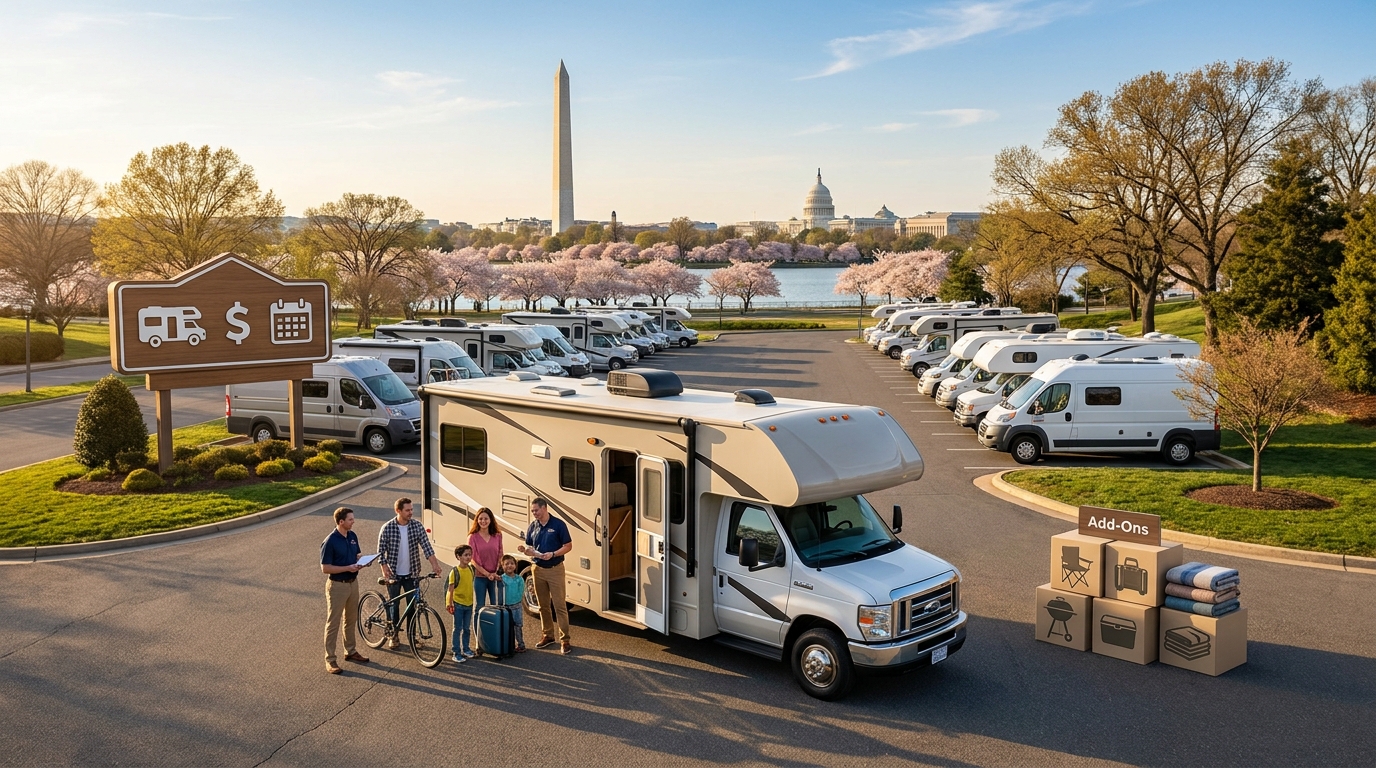
Embarking on an RV adventure allows you to explore the vibrant history and culture of Washington DC at your own pace, with the freedom to move from iconic monuments to tranquil parklands. Renting a motorhome near Washington DC offers unparalleled flexibility, whether you're planning a week-long trip with family or a spontaneous journey through the Mid-Atlantic. To help you find the ideal home-on-wheels for your journey, we're diving deep into the different RV classes available for rent from suppliers near the Washington DC area.
For live availability and current prices, start with our RV Rental Washington DC - Complete Guide 2026 guide.
The 5 RV Families Compared for Washington DC
Choosing the right RV family is crucial for a Washington DC trip, directly impacting maneuverability, comfort, and overall cost. When selecting your perfect RV rental, consider factors like your desired trip length, the size of your travel group (couples, families, or friends), the amenities you prioritize, and how you plan to navigate urban environments like DC's bustling streets. Smaller RVs generally offer better maneuverability for city driving and parking, while larger options provide more comfort for extended stays. Understanding the nuances of each class will help you make an informed decision and ensure your Washington DC adventure is as smooth as possible. We work with over 50 leading RV suppliers worldwide, including trusted names like El Monte, Cruise America, Apollo, and Britz, ensuring you have a wide range of choices for your motorhome rental.Class A (Integrated) — Best For
Class A motorhomes, averaging 7.5 meters in length and typically sleeping around 4 to 6 people, are ideal for larger groups or families seeking maximum comfort and amenities on an RV rental trip to Washington DC. These spacious vehicles often feature full kitchens, private bathrooms, and ample living areas, making them suitable for longer stays where luxury and self-sufficiency are priorities. With an average load capacity of 209.5 kg and typical fuel consumption of 8-12 Liter/100 km (based on Bandana's global fleet data), Class A RVs provide a comfortable traveling experience, though their considerable size can present challenges for parking and navigating tight city streets in Washington DC. Trade-offs include higher fuel costs and potentially limited access to some urban areas or smaller campgrounds compared to more compact Class B or Class C motorhomes.Price Comparison by RV Class in Washington DC
RV rental prices in Washington DC vary significantly by vehicle class, trip duration, and booking season, with smaller, more fuel-efficient models generally offering lower daily rates. Our platform ensures full transparency with no hidden fees, showing you the complete cost upfront. Prices are dynamic, similar to flight tickets, changing daily based on availability, seasonality, and supplier marketing decisions. The final price is always set at the actual booking time. For instance, a Class B Campervan could start from $80-$120 per day during off-peak season, while a larger Class A motorhome might range from $250-$400+ per day, especially during the spring cherry blossom season. For the most accurate and current rates for your specific dates, use the search box at the top of the page.Live April Price Comparison — RV Class × Trip Length
| Trip length | Class A | Class B | Class C | Class SI | Class TC |
|---|---|---|---|---|---|
| 1 week 15/04 → 22/04 | [Price_ClassType-A_PickupID-235_DropoffID-235_PickupDate-15/04_DropoffDate-22/04] | [Price_ClassType-B_PickupID-235_DropoffID-235_PickupDate-15/04_DropoffDate-22/04] | [Price_ClassType-C_PickupID-235_DropoffID-235_PickupDate-15/04_DropoffDate-22/04] | [Price_ClassType-SI_PickupID-235_DropoffID-235_PickupDate-15/04_DropoffDate-22/04] | [Price_ClassType-TC_PickupID-235_DropoffID-235_PickupDate-15/04_DropoffDate-22/04] |
| 2 weeks 15/04 → 29/04 | [Price_ClassType-A_PickupID-235_DropoffID-235_PickupDate-15/04_DropoffDate-29/04] | [Price_ClassType-B_PickupID-235_DropoffID-235_PickupDate-15/04_DropoffDate-29/04] | [Price_ClassType-C_PickupID-235_DropoffID-235_PickupDate-15/04_DropoffDate-29/04] | [Price_ClassType-SI_PickupID-235_DropoffID-235_PickupDate-15/04_DropoffDate-29/04] | [Price_ClassType-TC_PickupID-235_DropoffID-235_PickupDate-15/04_DropoffDate-29/04] |
| 1 month 01/04 → 30/04 | [Price_ClassType-A_PickupID-235_DropoffID-235_PickupDate-01/04_DropoffDate-30/04] | [Price_ClassType-B_PickupID-235_DropoffID-235_PickupDate-01/04_DropoffDate-30/04] | [Price_ClassType-C_PickupID-235_DropoffID-235_PickupDate-01/04_DropoffDate-30/04] | [Price_ClassType-SI_PickupID-235_DropoffID-235_PickupDate-01/04_DropoffDate-30/04] | [Price_ClassType-TC_PickupID-235_DropoffID-235_PickupDate-01/04_DropoffDate-30/04] |
Estimates only — flex-rate prices change daily based on availability and season.
Class SI (Semi-Integrated) — Best For
Class SI (Semi-integrated) motorhomes, averaging 6.9 meters in length and typically sleeping around 3 to 4 people, strike an excellent balance between spaciousness and maneuverability for Washington DC RV rental travelers. Based on Bandana's global fleet data, these RVs usually consume 10-11 Liter/100 km and offer an average load capacity of 72.2 kg, making them a fuel-efficient option for couples or small families. They are well-suited for navigating suburban routes around DC and finding parking in slightly less congested areas, offering more comfort than a campervan but less bulk than a Class A motorhome. Class SI RVs are a versatile choice for those seeking a comfortable base camp while exploring the greater Washington DC area, providing essential amenities like a kitchen and bathroom without the driving complexity of larger vehicles.Class C (Alcove) — Best For
Class C (Alcove) motorhomes, typically 7.5 meters long and sleeping an average of 5 to 7 people, are highly recommended for families or larger groups renting an RV for a Washington DC adventure. Their distinctive over-cab sleeping area provides extra berths, making them very cost-efficient per person, with an average load capacity of 42.4 kg and typical fuel consumption of 10-12 Liter/100 km (based on Bandana's global fleet). While their length is comparable to Class A motorhomes, the Class C's truck-like chassis can feel more familiar to drive, offering a good compromise for navigating the roads around Washington DC. These camper rentals provide ample living space and amenities suitable for family travel, balancing comfort with a more manageable driving experience than the largest motorhomes. For families interested in exploring the region, our Family RV Driving in Washington DC - Safe Routes 2026 provides excellent tips.Class B (Campervan) — Best For
Class B (Campervan) models, averaging 5.8 meters in length and sleeping around 2 to 4 people, are the ultimate choice for maneuverability and fuel efficiency when renting an RV for Washington DC. Ideal for solo travelers, couples, or small groups, these compact vehicles typically consume 8-10 Liter/100 km (based on Bandana's global fleet data) and have an average load capacity of 37 kg, allowing for easier navigation of city streets and parking. Campervans are perfect for travelers who prioritize flexibility, want to blend in more easily, and plan to utilize public transport frequently to explore DC's core attractions, offering a minimalist yet comfortable base. Their smaller footprint means less hassle finding parking outside the immediate downtown area and greater accessibility to smaller campgrounds or scenic drives around the capital region. For quick trips, consider our Weekend RV Driving in Washington DC - Quick Routes 2026.Class TC (Truck Camper) — Best For
Class TC (Truck Camper) units, averaging 5.5 meters in length and sleeping around 2 to 3 people, are best suited for adventurous RV renters looking for maximum flexibility and off-grid capability near Washington DC. These detachable units, built onto pickup trucks, typically consume 12-17 Liter/100 km (based on Bandana's global fleet data) and offer the unique advantage of being able to separate the camper from the truck, allowing for versatile day trips. While less common for urban exploration, truck campers are excellent for those planning to combine a visit to DC with outdoor activities in nearby state parks or less developed areas of Maryland and Virginia. Their compact nature and robust build make them ideal for navigating varied terrain and accessing remote campsites, though their amenities are generally more basic than integrated motorhomes.Side-by-Side Comparison Table
This table provides a quick overview of key specifications for different RV families available for rent, helping you compare options at a glance for your Washington DC trip. All data represents global fleet averages from Bandana's extensive network of 50+ leading RV suppliers worldwide and serves as a general guide.| Family | Avg Length (m) | Sleeps | Fuel Use (L/100km) | Best Use Case in Washington DC |
|---|---|---|---|---|
| Class A (Integrated) | 7.5 | 4.4 | 8-12 | Large groups, luxury, extended stays, but challenging for city navigation |
| Class SI (Semi-integrated) | 6.9 | 3.8 | 10-11 | Couples/small families, balanced comfort and maneuverability for suburban stays |
| Class C (Alcove) | 7.5 | 5.8 | 10-12 | Families, cost-effective per person, good amenities, familiar driving feel |
| Class B (Campervan) | 5.8 | 3.2 | 8-10 | Solo/couples, urban maneuverability, fuel-efficient, ideal for city-focused trips |
| Class TC (Truck Camper) | 5.5 | 2.4 | 12-17 | Adventurers, off-grid exploration, flexible day trips, less urban-focused |
Our Recommendation for rv rental Travelers in Washington DC
For most RV rental travelers visiting Washington DC, a Class B Campervan is our primary recommendation due to its unparalleled maneuverability, fuel efficiency, and ease of parking near public transit hubs. Its compact size (avg. 5.8m, like a 'Active Pop Top' or '2 Berth Hi Top') makes navigating DC's congested streets and finding suitable parking significantly less stressful than with larger RVs, allowing for a more focused exploration of the city's core attractions. As a strong runner-up, a Class SI (Semi-integrated) motorhome, such as a '2 Berth Tamar', is recommended for couples or small families seeking a balance of comfort and manageability. With an average length of 6.9m, it offers more living space and amenities than a campervan while still being more manageable than a full-sized Class A or C motorhome, making it suitable for staying at campgrounds slightly outside the city and commuting in.Which RV rental platform is the best?
The "best" RV rental platform ultimately depends on individual traveler needs and preferences, but platforms like Bandana excel by offering a wide selection of RV types, transparent pricing, and robust support, catering to diverse travel preferences for Washington DC and beyond. Bandana provides a comprehensive marketplace where travelers can compare various RV families (Class A, B, C, SI, TC) from professional and private owners, ensuring competitive pricing and broad availability. Key features to look for in an RV rental platform include comprehensive insurance options, responsive customer support for pre-booking comparison and post-booking coordination, flexible booking policies, and user reviews to ensure a reliable experience. For Washington DC, a platform with a good variety of smaller, maneuverable RVs (like a Class B or SI) is advantageous, as it aligns with the urban travel challenges.What is the 3 3 3 rule for RVs and campers?
The '3-3-3 rule' for RVing is a popular guideline designed to promote a relaxed and safe travel pace: drive no more than 300 miles (approximately 480 km) a day, arrive at your destination by 3 PM, and stay for at least 3 nights. This rule is particularly beneficial for RV trips to Washington DC, as it encourages travelers to take their time, avoid driver fatigue, and fully explore each location without feeling rushed. Adhering to the 3-3-3 rule allows ample time to set up camp, investigate local attractions (including those beyond the immediate city core), and enjoy the campground amenities, rather than constantly being on the road. For DC, applying this rule means you can plan to stay at a campground outside the city for several nights, taking public transit into the capital for day trips, which also helps manage parking challenges. Remember, we always recommend slow travel, aiming for max 100-150 km per day on average to truly feel the place.Is it cheaper to rent an RV or stay in a hotel?
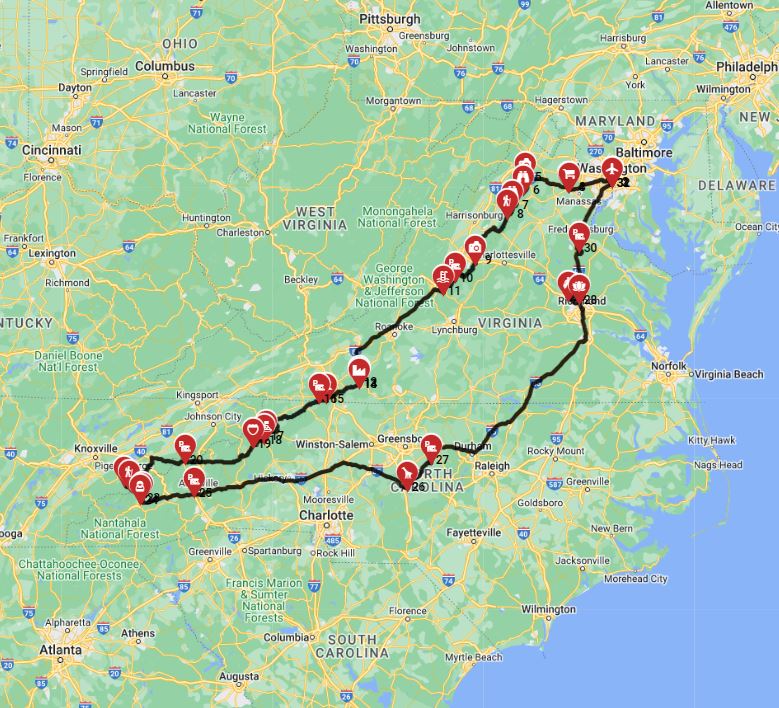
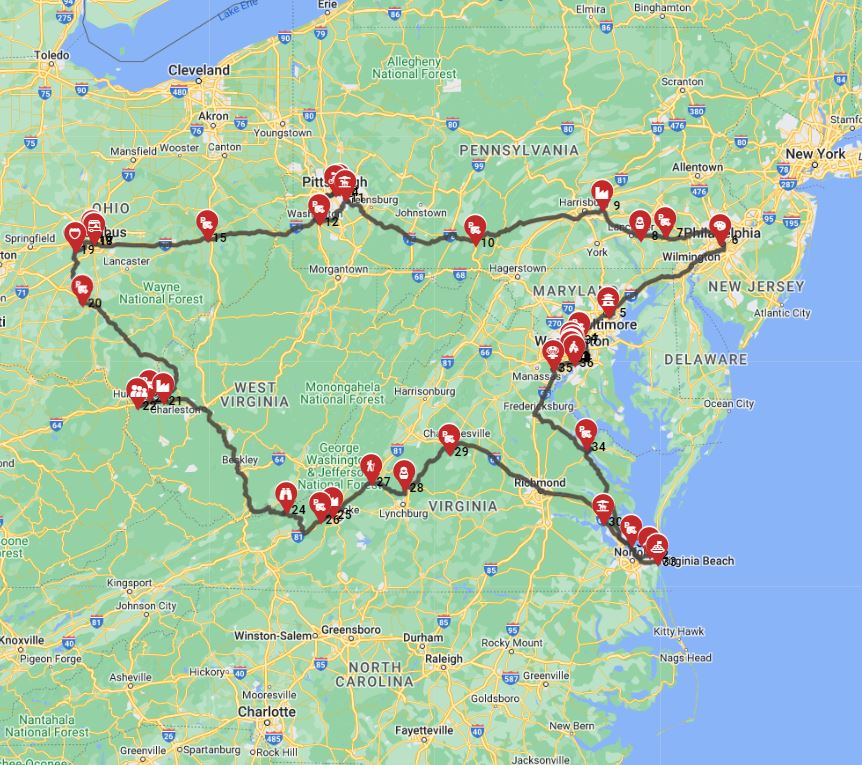
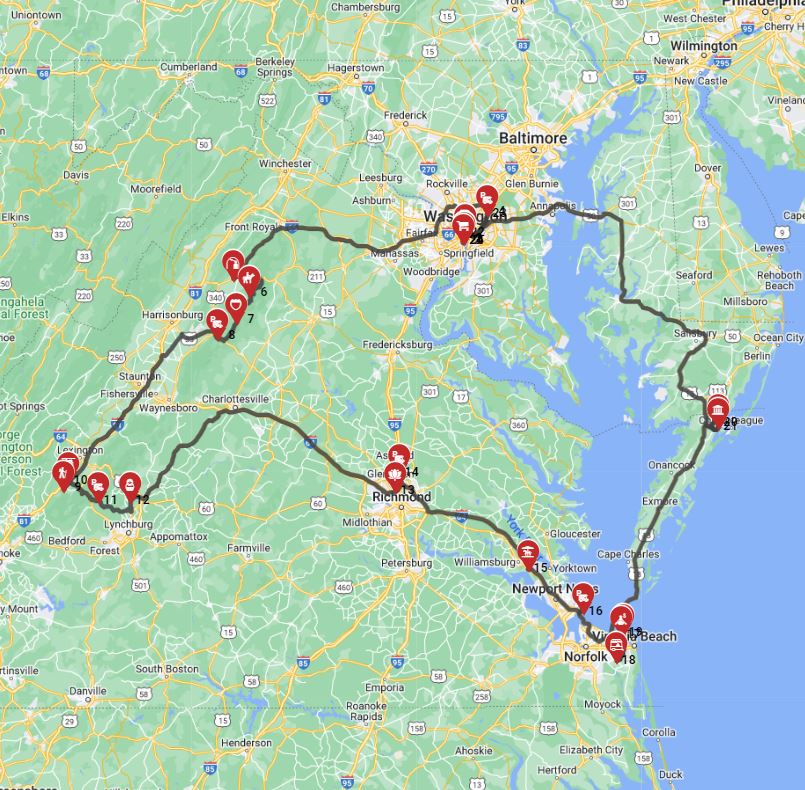
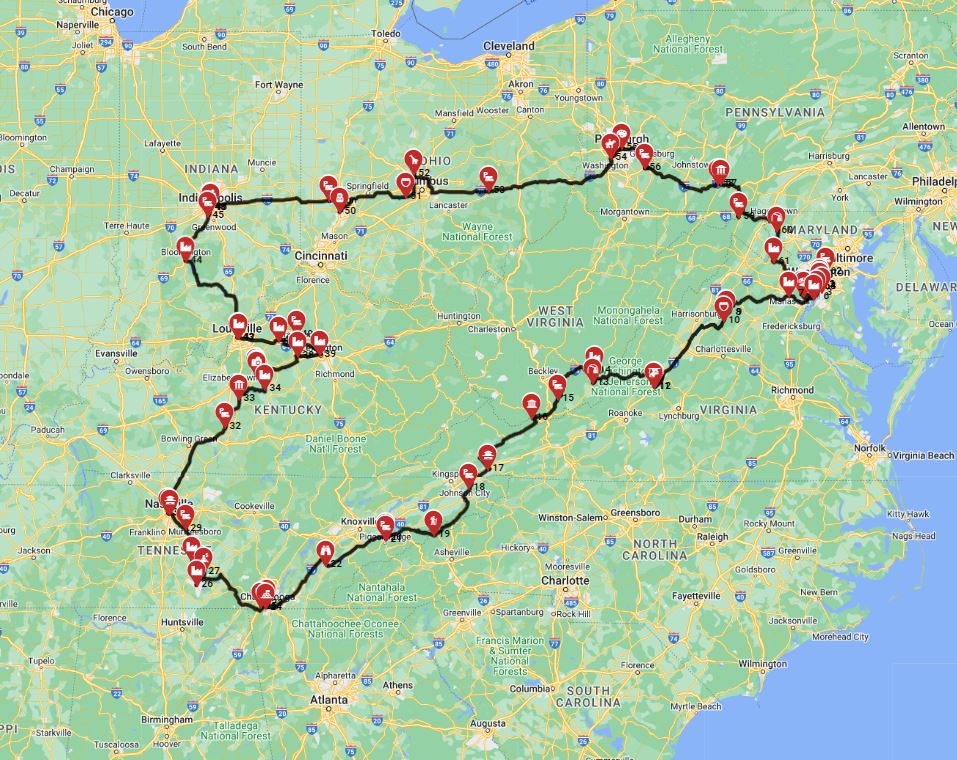
Renting an RV can be a more affordable option than staying in a hotel for a Washington DC trip, especially for families or longer durations, but it requires careful budgeting of all associated costs to see true savings. A true cost comparison must factor in RV rental fees, fuel expenses (which can be significant for larger RVs averaging 8-17 Liter/100 km), campground fees (ranging from $30-$70+ per night for full hookups), public transit passes for city exploration, and potential parking fees for day trips. Conversely, hotel costs typically include nightly rates, and often lead to higher spending on restaurant meals and separate transportation. RV travel offers significant savings on dining through in-RV cooking using your mobile kitchen's stove and refrigerator; imagine preparing breakfast inside your rented motorhome! For an extensive RV-friendly recipes playlist, check out our YouTube channel. Additionally, an RV provides accommodation for an entire group at one fixed nightly campground rate. For a detailed breakdown of all ancillary trip costs and to itemize every expense, refer to RV PLANET routes.Is Washington, DC. RV friendly?
Washington, DC, is generally not RV-friendly within its immediate urban core due to strict parking regulations, high traffic density, and limited oversized vehicle access, making it more practical to stay outside the city and use public transportation to visit. Drive slowly and carefully, and you can drive almost anywhere without issues. No need to stress - just use common sense and pay attention. **RV Parking Solutions:** Dedicated oversized vehicle lots are scarce directly downtown; consider parking your RV rental at Metro stations with large lots (e.g., Greenbelt, Franconia-Springfield) if allowed, or secure parking at campgrounds in nearby Maryland or Virginia and commuting in. Parking at federal facilities often has height restrictions, so always check signs. **Navigation Strategies:** Avoid driving your RV into the DC core; radial street plans, numerous traffic circles (like Dupont Circle near Embassy Row), and tight streets are challenging for large vehicles. Use GPS systems that allow for RV-specific routing (avoiding low clearances or weight limits) and plan travel during off-peak hours, ideally before 7 AM or after 7 PM. Our "Driving an RV in Washington DC - Complete Guide 2026" offers more detailed navigation advice. **Public Transportation:** Most RV travelers park at well-equipped campgrounds like Cherry Hill Park (MD) or Pohick Bay Regional Park (VA) and utilize their shuttle services or drive to accessible Metro stations (e.g., Branch Avenue or Largo Town Center) to reach DC's attractions without the hassle of city driving. **RV Security:** When exploring DC on foot or via Metro, ensure your RV is securely locked at the campground or parking lot. Use motion-sensor lights if available, wheel locks, and ensure valuables are out of sight or secured inside a locked compartment. Many reputable campgrounds offer gated access and surveillance for added peace of mind. **Seasonal Considerations:** DC experiences peak crowds during spring (Cherry Blossoms in March/April, attracting over 1.5 million visitors) and summer; booking campgrounds far in advance is crucial during these times, and be prepared for hot, humid weather (July/August can see temperatures over 30°C). Autumn offers crisp air and beautiful foliage, while winter is quieter with fewer crowds. For comprehensive planning, our "RV Travel Guide to Washington DC - Tips and Top Spots 2026" can be very helpful. **Local Regulations:** Be aware of no-idling laws in many areas of DC to reduce emissions, and specific road restrictions for large vehicles, especially on historic parkways like Rock Creek Parkway or certain tunnels. Always look for signage. **Beyond the National Mall:** RV-friendly activities slightly outside DC include visiting George Washington's Mount Vernon in Virginia (about 25 km south), exploring Great Falls Park (MD & VA sides), or enjoying state parks in nearby Maryland and Virginia, which offer both natural beauty and easier RV access. For a broader exploration of the state, our RV Rental Virginia - Complete Guide 2026 offers more context.What is the most affordable area to live near DC?
For RVers looking for an affordable base to have an extended stay near Washington DC, areas in suburban Maryland (e.g., around Greenbelt or College Park, with campground fees potentially starting at $40/night) and Northern Virginia (e.g., Woodbridge or Lorton) offer more budget-friendly campground options compared to direct city living. These regions provide access to campgrounds that accommodate longer stays, often at lower weekly or monthly rates (e.g., $250-$400+ per week), and are typically well-connected to DC via the Metro system or commuter routes. Campgrounds like Cherry Hill Park (MD), Pohick Bay Regional Park (VA), or various state parks further out in Maryland and Virginia can serve as a cost-effective alternative to high DC rent, enabling remote work or extended tourism. Consider the cost of commuting (fuel or public transit passes, e.g., a 7-day unlimited Metro pass is $58) when evaluating overall affordability, as well as the availability of amenities like laundry, Wi-Fi, and dump stations at your chosen RV park. Our Long-Term RV Driving in Washington DC - Monthly Routes 2026 provides ideas for extended trips.What You Shouldn't Miss
- **Explore the National Mall and Monuments:** Dedicate at least two days to explore the iconic National Mall, visiting the Lincoln Memorial, Washington Monument, and the Smithsonian museums. Parking your rented RV outside the city and taking the Metro in is the most practical way to experience this.
- **Mount Vernon Estate and Gardens:** Drive your motorhome south to George Washington's historic estate, Mount Vernon, located along the Potomac River in Virginia. It’s a beautiful day trip offering rich history and stunning views, and has RV-friendly parking available.
- **Great Falls Park:** Discover the raw power of the Potomac River at Great Falls Park, accessible from both Maryland and Virginia. This natural wonder offers challenging hiking trails and spectacular waterfall views, a perfect escape from the urban hustle.
- **The Capital Crescent Trail:** For a unique perspective, rent bicycles and cycle a portion of the 11-mile Capital Crescent Trail, which runs from Georgetown into Maryland. It’s a scenic way to experience the area and bypass traffic, ideal after parking your campervan at a nearby campground.
- **Top 5 Adventures - recommendations from Avi Bandana:** Looking for expert insights from Avi Bandana? Check out his personal picks for unforgettable RV adventures.
- **Food Truck Culture:** Indulge in Washington DC's diverse food truck scene, especially around the National Mall and K Street. It’s an authentic culinary experience that complements RV travel perfectly, offering a taste of local flavors on the go.
Final Thoughts
Exploring Washington DC in a rented RV offers a unique blend of adventure and convenience, allowing you to create unforgettable memories with your family or friends. While the city center requires some strategic planning for parking and navigation, the surrounding areas offer numerous RV-friendly campgrounds and easy access to public transport, ensuring you don't miss out on any of the capital's incredible sights. With Bandana, you get the benefit of full price transparency and dedicated support, helping you compare options from top suppliers like Cruise America and El Monte. Our goal is to make your motorhome rental experience seamless and enjoyable from start to finish. Don't let the details overwhelm you; choose the right RV for your group and embark on an amazing journey through history, culture, and nature. Get inspired for your next trip! Find Motorhome Rentals in Washington DCOn the routes offered through RV PLANET routes, you can itemize and track every expense along the way for easy budgeting.