In This Guide
- Can You Drive an RV in Washington DC? License & Age Rules
- Road Conditions & Terrain in Washington DC
- RV Size Limits, Bridges & Restricted Zones
- Fuel: Diesel vs. Petrol & Cost per 100 km
- Tolls, Vignettes & Border Rules
- Driving Tips for rv rental Travelers
- Recommended RV Class for Washington DC Roads
- Should I Choose a Compact Van Instead of a Large RV in Washington DC?
- Can I Park Anywhere? Free & Wild Camping Rules in Washington DC
- Can I Drive an RV Into the City Center? Heights, Tunnels & Local Signage
- Is Washington, D.C. RV Friendly?
- Are RVs allowed in DC?
- How much does it typically cost to insure an RV?
- Who is the best insurance company for RV?
- How much is insurance on a $200,000 RV?
Imagine embarking on a remarkable journey through America's historic heartland, with the freedom of a rented motorhome. Washington DC, our nation's capital, offers a unique blend of iconic landmarks, vibrant culture, and surprisingly accessible nature. While navigating a recreational vehicle in a bustling city might seem daunting, with the right preparation and knowledge, your Washington DC RV adventure can be both memorable and stress-free. At Bandana RV, we're true RV specialists, with over 23 years of experience helping tens of thousands of travelers explore the world by RV, and we're here to share all the insider tips for your trip to Washington DC.
For live availability and current prices, start with our RV Rental Washington DC - Complete Guide 2026. We believe in full transparency: no hidden fees, no surprises – what you see is what you get, just as our founder, Avi Bandana, intended.
Can You Drive an RV in Washington DC? License & Age Rules
A standard Class D driver's license is typically sufficient to drive most rented RVs in Washington D.C. and across the United States, as long as its Gross Vehicle Weight Rating (GVWR) is under 26,001 pounds. For the vast majority of rental motorhomes and campervans, including Class B, Class C, and even many Class A models, no special license, Commercial Driver's License (CDL), or additional permits are required. The minimum driver age for renting an RV in Washington D.C. through Bandana is 21 years old, with no young driver surcharges or vehicle class restrictions based on age, ensuring accessibility for a wider range of travelers.
Foreign drivers planning to rent an RV in Washington D.C. can generally do so with a valid driver's license from their home country. While an International Driving Permit (IDP) is not mandatory in most cases, it is highly recommended for visitors from non-English speaking countries, as it provides a translation of your license, facilitating smoother interactions with law enforcement and rental agencies. Always verify the specific license requirements with your chosen rental provider to ensure full compliance before your trip. For broader context on RV travel regulations, our RV Rental Virginia - Complete Guide 2026 offers additional insights relevant to the surrounding state.
🎬 Video coming soon
Road Conditions & Terrain in Washington DC
Road conditions in Washington D.C. generally consist of well-maintained major thoroughfares, though drivers should be prepared for older, often congested urban streets. These city streets can present challenges such as potholes, narrow lanes, and busy intersections, requiring a cautious approach from RV drivers. The terrain within Washington D.C. is predominantly flat, making for relatively easy driving in terms of inclines or declines. However, venturing into the surrounding metropolitan areas of Maryland and Virginia will introduce rolling hills and more varied topography, which can slightly impact fuel consumption and the overall driving experience for larger rented motorhomes, like a Class C that might average 7.5 meters in length.
Urban density is a significant factor in D.C., leading to heavy traffic and frequent stop-and-go conditions, especially during peak hours. Complex interchanges and numerous one-way streets are common in the capital, so careful navigation and reduced speeds are essential for safely maneuvering any rented RV. While you won't encounter mountainous or extensive gravel roads directly within D.C., being aware of potential construction zones and planning your route to avoid peak traffic times can significantly enhance your RV driving experience. Remember, drive slowly and carefully, and you can drive almost anywhere without issues. No need to stress - just use common sense and pay attention.
RV Size Limits, Bridges & Restricted Zones
RV drivers in Washington D.C. must pay close attention to posted height and weight restrictions, particularly under historic bridges, overpasses, and in tunnels. These clearances can be significantly lower than standard highway limits, with some parkways like the George Washington Memorial Parkway or Rock Creek Parkway having height restrictions as low as 10-12 feet (3.0-3.7 meters), making them impassable for many Class C or Class A motorhomes. While Washington D.C. doesn't have "environmental zones" in the European style, certain areas might have temporary restrictions on large vehicles during special events or security alerts near key landmarks like the White House or Capitol Building.
Always pre-plan your route using an RV-specific GPS or navigation app that allows you to input your rented vehicle's dimensions to avoid low clearances and restricted areas, especially within the dense urban core and historic districts. Ferries are not typically used for transport directly within Washington D.C.; however, if your extended road trip takes you to coastal areas in Maryland or Virginia via ferry, always check their specific length, height, and weight limitations for RVs in advance. Full transparency is key when planning your route, ensuring no surprises on the road.
Fuel: Diesel vs. Petrol & Cost per 100 km
Both diesel and petrol (gasoline) are widely available at service stations throughout the Washington D.C. area and the wider Mid-Atlantic region. While petrol stations are ubiquitous, diesel pumps for larger rented motorhomes may be more frequently found at dedicated truck stops or larger travel centers located slightly outside the immediate city. For Bandana's diverse global fleet, fuel efficiency varies by vehicle class: a Class SI - Semi-integrated RV typically consumes 10-11 Liters/100 km, while Class C - Alcove RVs average 10-12 Liters/100 km.
More compact Class B - Camper Vans generally achieve 8-10 Liters/100 km, and Class A - Integrated RVs usually consume 8-12 Liters/100 km. Based on these averages and current 2026 fuel prices in the Washington D.C. area (which are dynamic and fluctuate daily), the average cost per 100 km can be estimated by multiplying the liter consumption by the prevailing fuel price per liter. To manage your total trip cost, including fuel and other expenses, remember that RV PLANET routes allow you to itemize and track every expense along the way for easy budgeting. This helps you travel economically and enjoy every mile without financial surprises. On the routes offered through RV PLANET routes, you can itemize and track every expense along the way for easy budgeting.
Tolls, Vignettes & Border Rules
Washington D.C. itself does not employ a 'vignette' system, but numerous toll roads, bridges, and tunnels are present on major routes when traveling into and out of the D.C. metropolitan area, especially in Maryland and Virginia. Key toll facilities include sections of I-95, the I-495 (Capital Beltway) Express Lanes, I-395 Express Lanes, and various bridges leading into D.C., such as the Woodrow Wilson Memorial Bridge or the Harry W. Nice Memorial Bridge. Many tolls in this region are electronic-only (EZ-Pass compatible), meaning cash is often not accepted. Drivers without a transponder will be billed by mail, usually at a higher rate, and may incur additional administrative fees.
For rv rental travelers, it is highly recommended to acquire an EZ-Pass transponder or ensure your rented RV is equipped with one, which many rental companies offer as an optional add-on. This proactive step helps avoid fines and higher pay-by-mail rates, ensuring a smoother journey. There are no international border crossings directly from Washington D.C.; however, travel between states (Maryland, Virginia) is common and seamless, although state-specific traffic laws and tolls will apply as you cross borders. This network of roads and tolls is critical to understand for anyone planning an extended road trip from
Driving Tips for rv rental Travelers
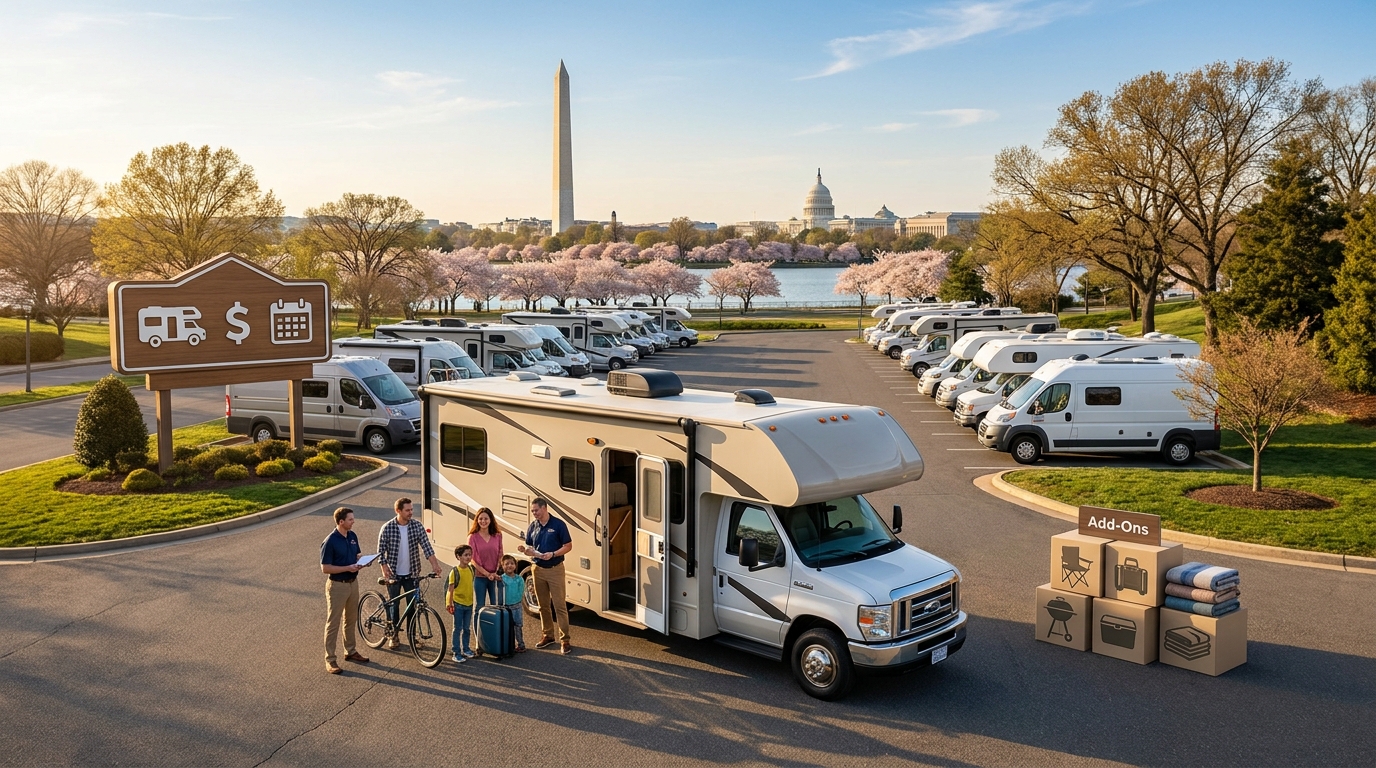
Navigating a rented RV in Washington D.C. requires strategic planning and awareness. Firstly, always plan your route meticulously using an RV-specific GPS or app to steer clear of low bridges, narrow streets, and restricted zones within D.C., particularly around popular tourist attractions. Secondly, avoid peak hours - Washington D.C. experiences heavy rush hour traffic, typically from 6-9 AM and 3-6 PM on weekdays, so schedule your driving for off-peak times to minimize stress and travel delays. Thirdly, utilize D.C.'s excellent public transport for city exploration; park your RV at a nearby campground in Maryland or Virginia, such as Cherry Hill Park or Pohick Bay Regional Park, and use the efficient Metro system or buses to access D.C.'s attractions, which saves significantly on parking hassles and navigating city driving.
Furthermore, secure overnight RV parking at campgrounds well in advance, especially during peak travel seasons like spring and fall, as options near D.C. are limited and fill up quickly. Finally, stay alert for cyclists and pedestrians, as D.C. is a highly walkable and bike-friendly city; exercise extra caution when turning, changing lanes, and navigating urban streets to ensure everyone's safety. Remember to travel slowly, averaging a maximum of 100-150 km per day, allowing yourself ample time to absorb the rich history, diverse culture, and impressive scenery of the area.
Recommended RV Class for Washington DC Roads
For navigating the Washington D.C. area, a Class B - Camper Van or a Class SI - Semi-integrated RV is generally recommended due to their more manageable sizes and enhanced maneuverability in dense urban environments. Class B - Camper Vans, typically averaging 5.8 meters in length, offer superior agility for city streets and parking, while still providing essential amenities, making them an excellent choice for couples or solo travelers prioritizing ease of driving. For example, Bandana offers "hire campervan example Paradise S/T" a compact option for easy city navigation. Class SI - Semi-integrated RVs, averaging 6.9 meters in length, strike a good balance between interior space and relative maneuverability, suitable for small families or those seeking more comfort than a camper van without the bulkier dimensions of larger Class C or Class A models.
While Class C - Alcove (average 7.5 meters) and Class A - Integrated (average 7.5 meters) RVs offer considerably more living space, their increased length and height can make navigating D.C.'s heavy traffic, tight parking spaces, and numerous low bridges significantly more challenging. The smaller ground clearance and overall dimensions of a more compact rented RV class reduce the risk of scrapes and provide greater flexibility when encountering varied road conditions or limited access points. Ultimately, your choice depends on your comfort level with city driving and your priorities for space versus agility for your Washington DC adventure.
Should I Choose a Compact Van Instead of a Large RV in Washington DC?
Choosing a compact campervan (like a Class B model) instead of a large RV offers distinct advantages for navigating Washington D.C., primarily in maneuverability and ease of parking. A compact van's smaller footprint, with Bandana's Class B Camper Vans averaging 5.8 meters in length, makes it considerably easier to fit into standard parking spots outside the city core and less stressful to drive in heavy D.C. traffic compared to a Class C (average 7.5 meters) or Class A (average 7.5 meters) rented motorhome. This ease of movement is a major factor when you consider D.C.'s dense urban layout and limited oversized parking options.
While larger RVs provide amenities like separate sleeping areas, more spacious kitchens, and full bathrooms, these conveniences might be outweighed by the logistical challenges and stress of driving and finding suitable parking within the D.C. metropolitan area. However, if your primary goal is to use the RV as a comfortable mobile base camp at a campground outside the city and rely on public transport for D.C. exploration, then the expanded facilities of a larger RV might be a worthwhile trade-off for an extended week-long trip. The decision ultimately hinges on your travel style: a compact van suits those prioritizing efficiency and quick city access, while a larger RV provides a more luxurious "home away from home" for longer, less city-focused explorations. For those considering costs, our guides like "RV Rental in Washington DC - Prices and Best Deals 2026" or "Cheap RV Rental in Washington DC - Budget Guide 2026" can offer more detailed budget insights based on vehicle size.
Can I Park Anywhere? Free & Wild Camping Rules in Washington DC
No, free and wild camping are generally not permitted within Washington D.C. city limits; overnight parking for RVs is strictly regulated and largely restricted to designated RV parks and campgrounds located outside the immediate urban core. Attempting to wild camp or park overnight on city streets or in undesignated lots in D.C. will likely result in fines, towing, or other legal consequences, as local ordinances prioritize public safety and traffic flow. Designated RV campgrounds offering facilities for overnight stays are typically found in neighboring Maryland and Virginia, such as the popular Cherry Hill Park in College Park, MD, or Pohick Bay Regional Park in Lorton, VA, which provide essential amenities and public transport access to D.C.
While day parking for RVs in D.C. is extremely challenging and limited, some larger attractions or national parks on the outskirts, like those along the C&O Canal National Historical Park, may offer oversized vehicle parking for a fee during daytime hours, but these spots are rare and fill quickly. Rules vary by region, so always check local regulations and follow local law before parking overnight. It is highly recommended to secure reservations at established campgrounds well in advance when planning your RV trip to Washington D.C. to ensure a hassle-free and enjoyable visit. For finding campsites and campgrounds during your trip, we recommend using RV PLANET (rvplan.net) - a great resource for locating available spots along your route.
Can I Drive an RV Into the City Center? Heights, Tunnels & Local Signage
Yes, you can generally drive a rented RV into Washington D.C.'s city center, but extreme caution and meticulous route planning are crucial due to specific height and weight restrictions, heavy traffic, and extremely limited parking. RV drivers must pay close attention to local signage, particularly for low bridge clearances and tunnel height restrictions, which are especially prevalent on historic parkways like Rock Creek Parkway and the Clara Barton Parkway. These routes often have clearances as low as 3.0-3.7 meters, making them impassable for many larger motorhomes.
Many historic areas and smaller streets in D.C., such as those in Georgetown or Capitol Hill, have narrow lanes and tight turns that can be challenging for even medium-sized RVs, while underground parking garages are almost universally inaccessible due to height limits. While D.C. doesn't have explicit 'environmental zones' preventing RV entry, idling laws are enforced, and certain streets or areas may have temporary restrictions for special events or security purposes, especially around the National Mall. For sightseeing, it is highly advisable to park your RV at an approved campground outside the city and utilize Washington D.C.'s excellent public transportation (Metro and buses) to reach attractions, avoiding the stress of city driving and the near impossibility of finding RV-appropriate day parking downtown. Our "RV Travel Guide to Washington DC - Tips and Top Spots 2026" offers video tips on this very topic.
Is Washington, D.C. RV Friendly?
Washington D.C. is moderately RV-friendly in terms of access, but navigating and parking a rented RV within the city center presents significant challenges due to dense traffic, limited oversized parking, and numerous low bridge clearances. The primary 'RV-friendliness' for travelers comes from the well-equipped RV campgrounds located in the surrounding Maryland and Virginia suburbs, which offer convenient access to D.C.'s Metro system. For example, staying at Cherry Hill Park allows for easy Metro access from College Park into the heart of the city.
The pros of RV travel to Washington D.C. include proximity to national treasures, the availability of suburban campgrounds offering full amenities, excellent public transport options into the city, and the flexibility to explore the wider Mid-Atlantic region, including nearby historical sites like Mount Vernon or scenic drives into Virginia's wine country. The cons, however, are noteworthy: extremely difficult day parking within D.C., heavy urban traffic (especially on routes like I-395 and I-495), numerous low bridges on scenic parkways, and strict no-overnight parking rules on city streets. For a stress-free visit, the most effective strategy is to establish an RV 'base camp' outside the city and use public transportation to visit attractions, rather than attempting to drive and park your RV directly within downtown D.C. This approach allows you to enjoy the sights while managing the practicalities of RV travel.
Are RVs allowed in DC?
Yes, rented RVs are generally allowed to drive on most major roads and highways into and through Washington D.C., provided they adhere to all traffic laws, posted speed limits, and specific vehicle restrictions. However, while allowed, RVs must strictly observe height and weight restrictions, especially on parkways, bridges, and tunnels where clearances can be significantly lower than standard interstate highways, often requiring detours for larger Class C or Class A motorhomes. Driving a large RV in the dense urban core can be particularly challenging due to narrow streets, heavy traffic congestion, and numerous one-way systems, often making navigation difficult and slow.
Parking an RV within D.C. is exceptionally difficult; overnight parking is strictly prohibited on city streets, and dedicated RV day parking is virtually nonexistent in the downtown area, necessitating parking outside the city and using public transport. For example, finding a spot for a 7.1-meter "cruise america rv rental example Explorer" would be nearly impossible in downtown D.C. It's crucial for RV drivers to use an RV-specific GPS or consult maps detailing low clearances and restricted routes before entering the city to avoid potential hazards and legal issues. Exploring options like a One-Way RV Rental in Washington DC - Price Guide 2026 can help plan your trip logistics from the outset.
How much does it typically cost to insure an RV?
The typical cost to insure an RV varies significantly based on factors such as the rented RV's class, age, value, intended use, your driving record, and the chosen coverage levels and deductible. On average, recreational RV insurance can range from approximately $500 to $3,000 per year, with smaller, older campervans usually at the lower end and large, new motorhomes (Class A) at the higher end. For a rented motorhome from Bandana RV, basic liability insurance is typically included in the rental cost, providing fundamental protection during your trip.
Key factors influencing premiums for personal RVs include liability coverage limits, collision and comprehensive coverage, uninsured/underinsured motorist protection, and specialized RV coverages like personal effects protection. Geographic location also plays a role, with insurance costs potentially higher in areas prone to severe weather, high theft rates, or dense populations like the Washington D.C. metropolitan area. Renters often have the option to purchase supplemental coverage directly from the rental company or explore coverage through their personal auto insurance or credit card provider for enhanced peace of mind. We recommend upgrading to a top-level deductible for extra peace of mind during your adventure.
Who is the best insurance company for RV?
Determining the 'best' insurance company for an RV is subjective and depends heavily on individual needs, budget, the type of RV (Class A, B, or C motorhome, or campervan), and desired coverage options. No single insurer universally outperforms others for every situation, as different companies may specialize or offer better rates for specific RV classes or driver profiles. Reputable insurance providers frequently praised for their comprehensive RV coverage in the US market include Progressive, National General, Geico, and Safeco, all offering a range of policies tailored to different RV classes and usage.
When choosing an insurer for a personal RV, consider factors such as policy customization options (e.g., roadside assistance, personal effects coverage, vacation liability), their customer service reputation, claims processing efficiency, and available discounts. It is advisable to obtain quotes from several top-rated RV insurance companies and compare not only premiums but also the depth of coverage, deductible options, and customer reviews. For Bandana's rv rental vehicles, insurance is typically included as basic liability, and renters can opt to purchase supplemental coverage from the rental company or through external providers for additional protection. This ensures you travel with confidence, knowing you're well supported.
How much is insurance on a $200,000 RV?
Insurance for a $200,000 RV typically ranges from approximately $1,000 to $4,000 or more per year, with the exact cost influenced by various factors beyond just the vehicle's high value. For a high-value motorhome, comprehensive and collision coverage will constitute a significant portion of the premium, protecting against damage, theft, and other losses up to the vehicle's market value. The class of RV also plays a crucial role; a $200,000 Class A motorhome, for instance, will likely have different insurance requirements and costs compared to a high-end Class B campervan of similar value.
Other key factors affecting the cost include the owner's driving history, the geographic location where the RV is primarily garaged (e.g., urban vs. rural areas), and estimated annual mileage. Adding specialized coverages like personal effects coverage for valuables, emergency expense coverage, and roadside assistance will also impact the total premium. To get an accurate estimate for your specific situation, it is essential to obtain detailed quotes from multiple RV insurance providers, specifying the RV's exact make, model, year, and your desired coverage limits and deductibles. Bandana RV offers full transparency in rental pricing, ensuring you understand all costs associated with your rv rental, including insurance options, upfront.
What You Shouldn't Miss
- Explore the National Mall by Foot or Bike: Park your rented motorhome outside the city and take the Metro to the National Mall. Spend a full day walking or biking between iconic monuments like the Lincoln Memorial, Washington Monument, and the Capitol Building.
- Visit the Smithsonian Museums: Washington D.C. boasts 19 Smithsonian museums and galleries, almost all with free admission. Don't miss the National Air and Space Museum or the National Museum of Natural History for an enriching experience, easily accessible via public transport from your suburban campground.
- Walk through Georgetown: Discover the historic charm of Georgetown with its cobblestone streets, vibrant shops, and delicious dining options. Find a delicious meal and don't miss out on local cuisine.
- Discover Arlington National Cemetery: Pay your respects at this solemn and beautiful national shrine, easily accessible by Metro. The Changing of the Guard at the Tomb of the Unknown Soldier is a moving experience.
- Hike in Rock Creek Park: Escape the urban bustle in Rock Creek Park, a sprawling urban oasis larger than NYC's Central Park. Enjoy hiking trails, scenic drives (some car-free on weekends), or a picnic from your RV kitchen (for RV-friendly recipes playlist).
- Experience the Tidal Basin Cherry Blossoms: If traveling in spring, witness the breathtaking cherry blossoms around the Tidal Basin, a truly iconic Washington D.C. experience.
Looking for expert insights from Avi Bandana? Top 5 Adventures - recommendations from Avi Bandana
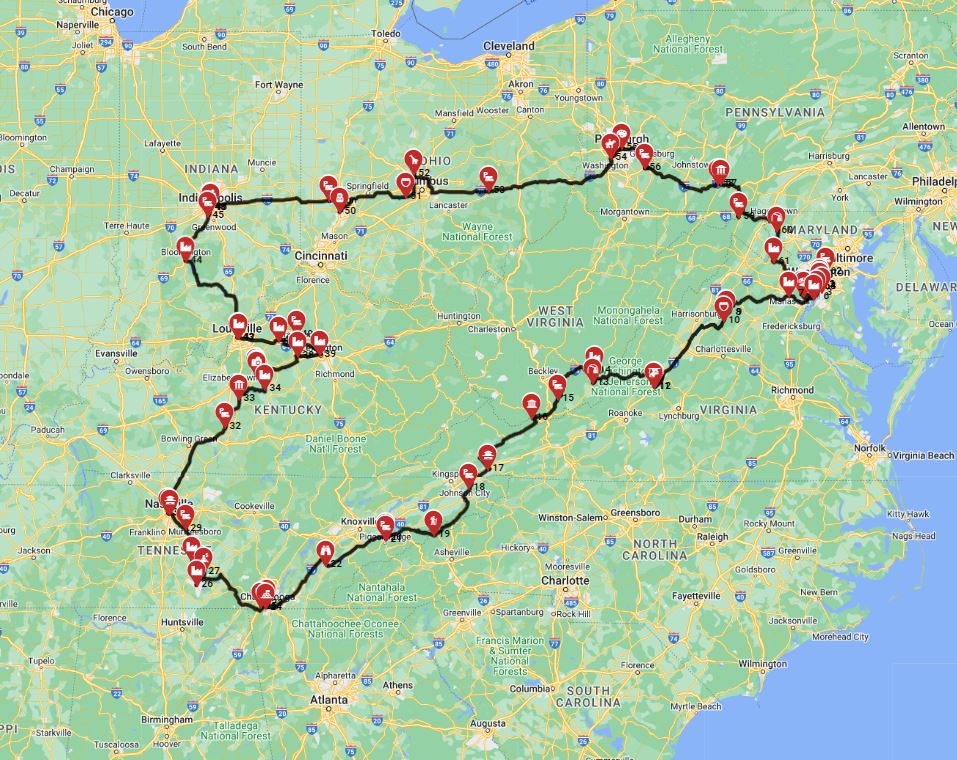
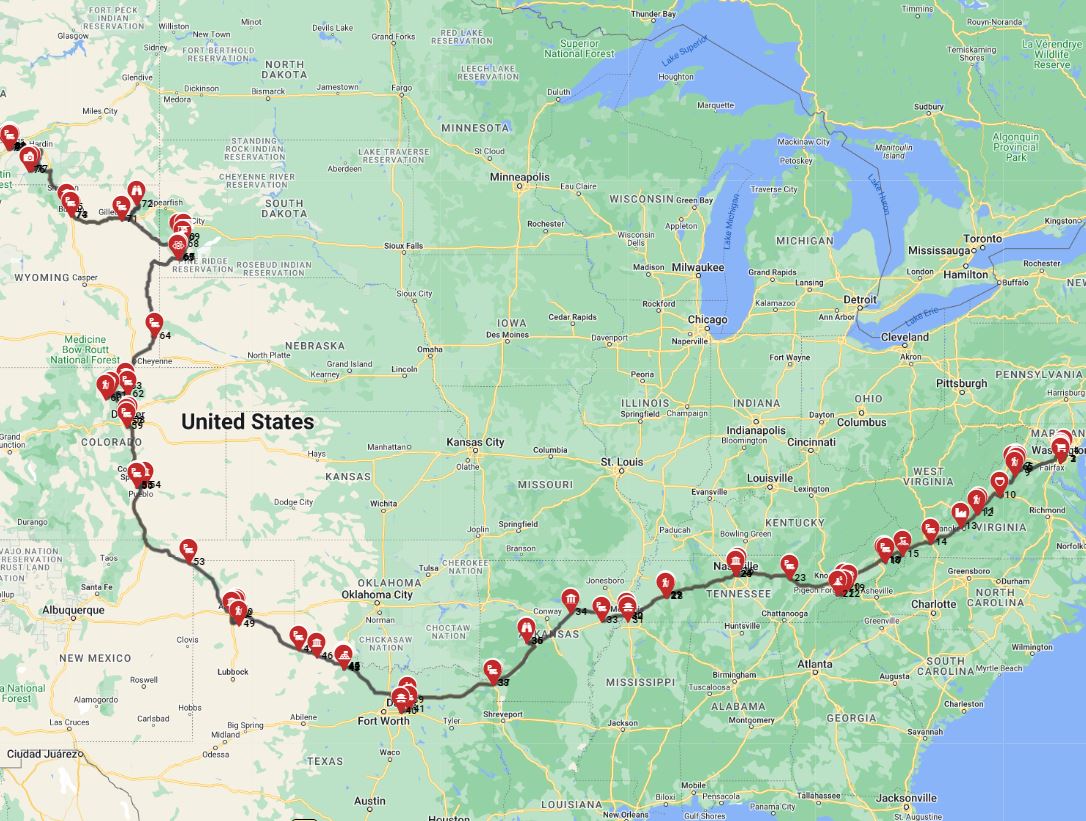
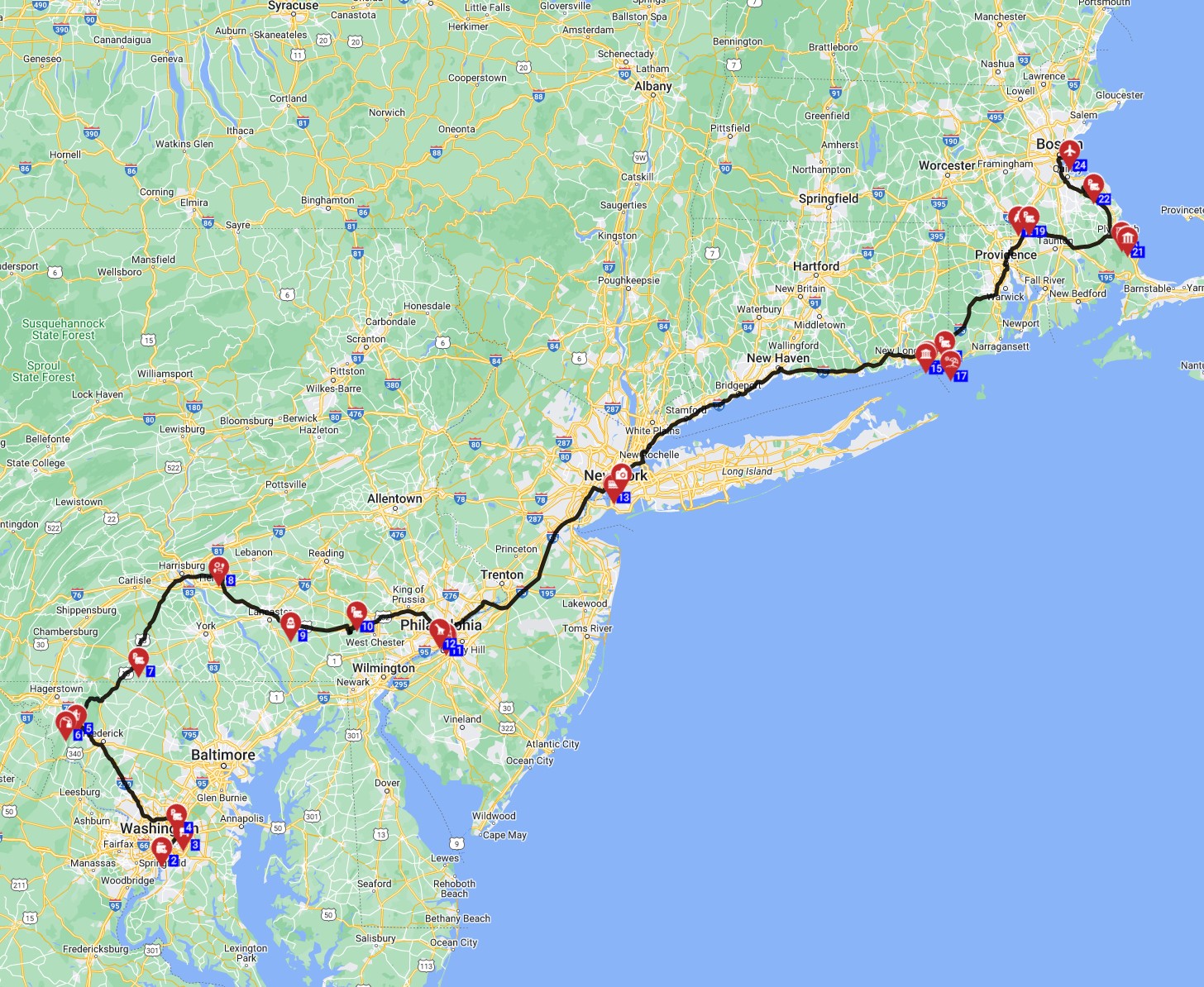
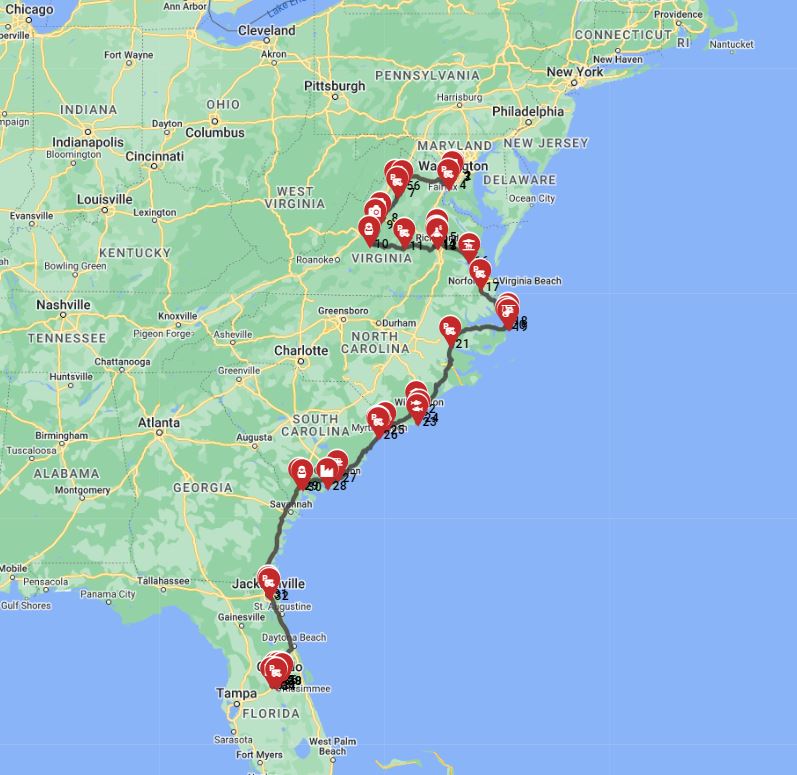
As the founder of Bandana RV, I've personally explored countless destinations. Washington D.C. is an incredible city that offers so much more than just monuments. My top adventures for RV travelers here involve a strategic balance of city exploration and natural retreats. Start by picking a fantastic campground just outside the city, like Cherry Hill Park, which has excellent Metro access. This allows you to dive into the city's heart stress-free. From there, immerse yourself in the Smithsonian museums – my favorite is the Air and Space Museum. But don't forget to take a break from the history and hit Rock Creek Park for a refreshing hike or bike ride. And for an extended adventure, consider our Chicago to Washington DC - Route of Roots trip, a 16-day journey spanning 2470.2 km, perfect for families and culture enthusiasts. Remember, "Life is now!" so get out there and explore!
Final Thoughts
Embarking on an RV adventure to Washington DC is an experience rich with history and discovery. While the city presents unique driving and parking challenges, these are easily managed with proper planning and by utilizing the excellent public transport from suburban campgrounds. Choosing the right size rented motorhome, such as a nimble Class B campervan, will enhance your ability to navigate the region and maximize your enjoyment.
At Bandana RV, we are committed to making your journey seamless, offering full transparency and unwavering support from the moment you start planning until your booking is complete. We handle the details so you can truly live the journey, creating unforgettable memories in the nation's capital. Get inspired for your next trip, and let us help you find the perfect mobile home for your Washington DC exploration!
Find Motorhome Rentals in Washington DC