In This Guide
- Top 5 Tips for RV Rental in Washington DC
- Before You Book - Class, Dates, Insurance
- Pre-Trip Prep - Packing Checklist for Washington DC
- On the Road - Driving, Fueling, Navigation
- At the Campground - Setup, Hookups & Etiquette
- RV Rental-Specific Tips for Washington DC
- Common Mistakes to Avoid in Washington DC
- Is Washington DC RV friendly?
- What is the 3-3-3 rule for RV travel?
- What is the 444 rule for RVs?
- What is the rule of 3 with an RV?
Embarking on a motorhome adventure in Washington DC offers a unique way to explore America's capital and its surrounding historical treasures. This guide provides essential budget-friendly tips for renting an RV in Washington DC, helping you maximize your savings while experiencing the best the region has to offer. With a rented RV, you have a mobile headquarters to venture out to iconic national parks, historical sites, and vibrant city centers at your own pace.
Top 5 Tips for RV Rental in Washington DC
Budgeting is key for a Washington DC RV rental, covering fuel, campground fees, and urban transit costs, which can average $100-$150 per day for a Class C motorhome. Opting for a smaller Class B campervan, like a `rv rental denver example Category Van` with `Front Air condition` and an 80-liter refrigerator, helps significantly with city navigation and parking. Booking your desired motorhome, whether a compact campervan or a family-friendly Class C, early for your trip to Washington DC (especially 3-4 months in advance) can often secure better rates, potentially saving 15-20% during peak seasons like cherry blossom time. On the routes offered through RV PLANET routes, you can itemize and track every expense along the way for easy budgeting.
Drive slowly and carefully, and you can drive almost anywhere without issues. No need to stress - just use common sense and pay attention to signage, especially around the traffic circles and monuments. For live availability and current prices, start with our RV Rental Washington DC - Complete Guide 2026 guide. We at Bandana RV believe in full transparency, so you'll never encounter hidden fees, and our dedicated team offers 24/7 support for all your pre-booking inquiries.
🎬 Video coming soon
Before You Book - Class, Dates, Insurance
When planning your RV adventure in Washington DC, selecting the right motorhome class is crucial for navigating urban and suburban environments efficiently. A Class B campervan or a compact Class C motorhome (like the `cruise america rv rental example Explorer`, which is 7.1m long and features an 82-liter fresh water tank) generally provides easier maneuverability on Washington DC's busy streets and in the campgrounds surrounding the city. Larger Class A motorhomes, while luxurious, may find more restrictive parking and driving conditions.
Booking your rental dates should be secured well in advance, particularly for popular times like the spring cherry blossom festival (late March-early April) or summer, when demand for RV rentals in Washington DC is very high. This proactive approach ensures availability and can prevent last-minute price surges. Remember, prices are dynamic, much like flight tickets, changing daily based on availability and seasonality. For more detailed pricing insights, refer to our "RV Rental Deals in Washington DC - Latest Offers 2026" and "Weekly RV Rental in Washington DC - Pricing 2026" articles.
Every Bandana RV rental includes basic insurance, but for enhanced security and peace of mind, you can upgrade to a top-level deductible for extra protection against unexpected events. Our platform clearly shows you all relevant insurance options during your search for a Washington DC RV rental, ensuring full transparency with no surprises. We are true RV specialists, dedicated solely to RV travel, offering unmatched personal experience and attention to the smallest details.
Pre-Trip Prep - Packing Checklist for Washington DC
Packing smart for a Washington DC RV trip minimizes stress and maximizes enjoyment, especially considering the region's diverse climate. Versatile clothing layers are essential for DC's weather, which can range from humid summer days with temperatures reaching 30°C (86°F) to cooler shoulder seasons. Don't forget comfortable walking shoes for exploring the city's numerous attractions like the National Mall, and light rain gear for unexpected showers.
A well-stocked RV kitchen, complete with essential cooking tools, non-perishable staples, and reusable water bottles, significantly cuts down on dining costs. Consider bringing along ingredients for simple breakfasts or picnic lunches to prepare in your rented `rent motorhome example E3` kitchen, which features a 3-burner gas stove and a refrigerator. For more RV-friendly recipes playlist, check out our YouTube channel for inspiration. This allows you to enjoy meals on board, saving both time and money.
Finally, prepare a safety and navigation kit. Include a robust first-aid kit, a bright flashlight for evening campground walks, and portable chargers for all your devices. Even with modern GPS, having local maps as a backup is a prudent measure, particularly when navigating unfamiliar streets around the Washington DC metropolitan area.
On the Road - Driving, Fueling, Navigation
Driving a rented RV in Washington DC requires careful planning, as city traffic can be dense, particularly on Interstate 395 and the Capital Beltway (I-495) during rush hour (typically 7-9 AM and 4-6 PM weekdays). Drive slowly and carefully, and you can drive almost anywhere without issues. No need to stress - just use common sense and pay attention to road signs, especially around complex intersections like Dupont Circle, Thomas Circle, and Logan Circle.
Locating RV-friendly fuel stations is generally easier on the outskirts of Washington DC, such as along Route 50 in Virginia or in nearby areas of Maryland, where stations typically offer larger clearances and more space for maneuvering a motorhome. Avoid smaller, cramped urban gas stations in the heart of the city if you are in a larger Class C motorhome like the `24' Class C Motorhome`. For route planning, including fuel stops and scenic detours, our `RV Travel Guide to Washington DC - Tips and Top Spots 2026` provides valuable insights.
Utilizing GPS apps with RV-specific routing capabilities is invaluable for avoiding low bridges (e.g., some underpasses on Rock Creek Parkway) and weight-restricted roads that can challenge a larger motorhome. Travel slowly, max 100-150 km per day on average, to truly feel the place, connect to the culture, the food, and the scenery of the Mid-Atlantic region. As true RV specialists, we understand these nuances and are here to support your journey from day one until your booking is confirmed.
At the Campground - Setup, Hookups & Etiquette
Upon arrival at a Washington DC area campground, such as Cherry Hill Park in College Park, Maryland, or Greenbelt Park in Greenbelt, Maryland, following a systematic setup procedure is essential for a smooth stay. First, ensure your rented motorhome is level; then connect your utilities: sewer first for hygiene, followed by water (ensuring your fresh water tank, which holds up to 100 liters in a `K4` campervan, is full or connected to a water source), and finally, electric hookups.
Adhering to campground quiet hours, typically from 10 PM to 7 AM, is standard etiquette and ensures a peaceful environment for all campers. Minimize noise from generators, music, and conversations during these times. Respecting fellow campers contributes to a harmonious atmosphere in shared spaces. Many campgrounds like Pohick Bay Regional Park in Lorton, Virginia, emphasize community and quiet enjoyment.
Practicing good neighbor etiquette also includes keeping your campsite tidy and disposing of all waste properly at designated receptacles and dump stations. For finding campsites and campgrounds during your trip around Washington DC, we recommend using RV PLANET (rvplan.net) - a great resource for locating available spots along your route and identifying nearby dump stations.
RV Rental-Specific Tips for Washington DC
Families traveling to Washington DC can benefit greatly from Class C motorhomes with features like bunk beds (e.g., a `rent rv example D2` offers two bunk beds), providing distinct sleeping areas for up to 6-7 people and more space for family activities. Consider campgrounds like Pohick Bay Regional Park in Lorton, Virginia, which often features playgrounds and waterfront access, balancing city exploration with relaxation. Opting for a `29′ Class C Motorhome` (7.1m length) offers ample space for a family of four to six.
Couples or solo travelers often find smaller, more agile Class B campervans, such as the compact `rv rental denver example Category Van`, perfect for easy navigation and finding a cozy spot at a campground or near local attractions. These vehicles are ideal for exploring sites like Old Town Alexandria, just south of Washington DC, which has charming streets best accessed by a smaller vehicle or on foot.
Budget-conscious travelers can maximize savings by planning meals in their RV's kitchen, utilizing the included refrigerator and stove, and focusing on Washington DC's numerous free museums and monuments, including the 11 Smithsonian institutions. For tracking all trip expenses, from campground fees to tolls and groceries, remember that RV PLANET routes allow you to itemize and track every expense along the way for easy budgeting.
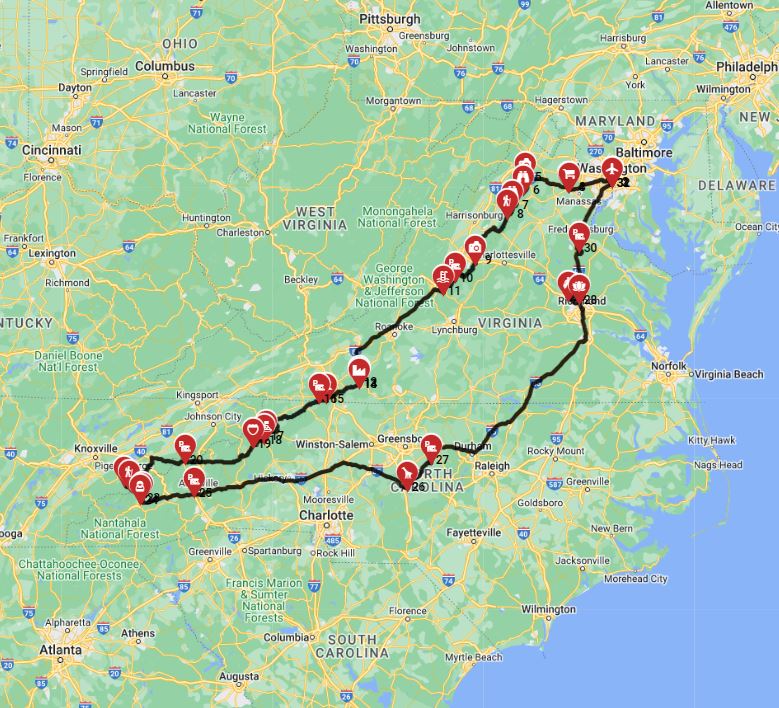
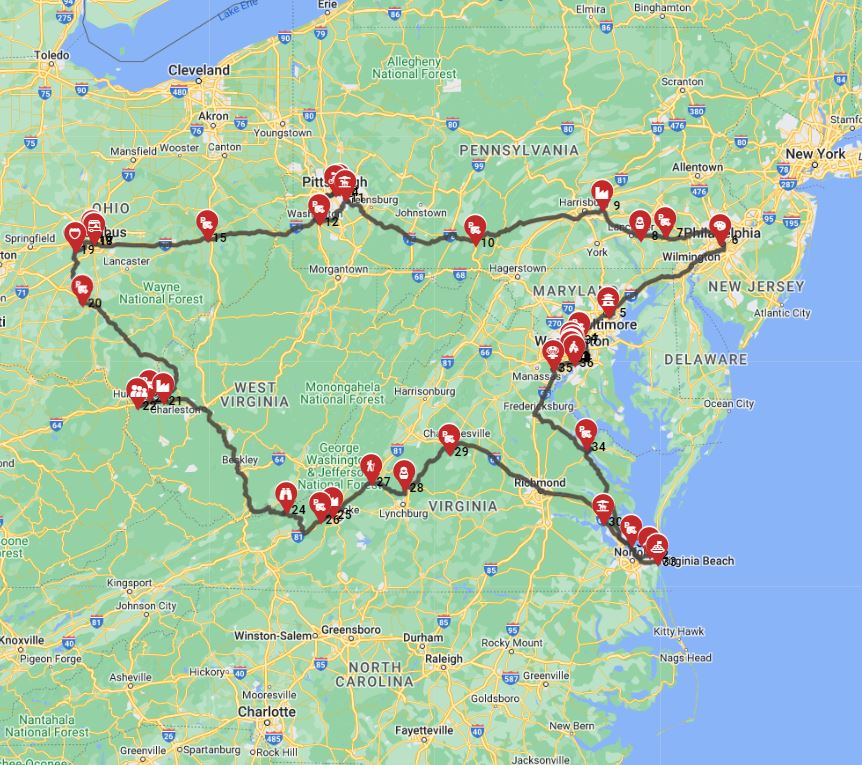
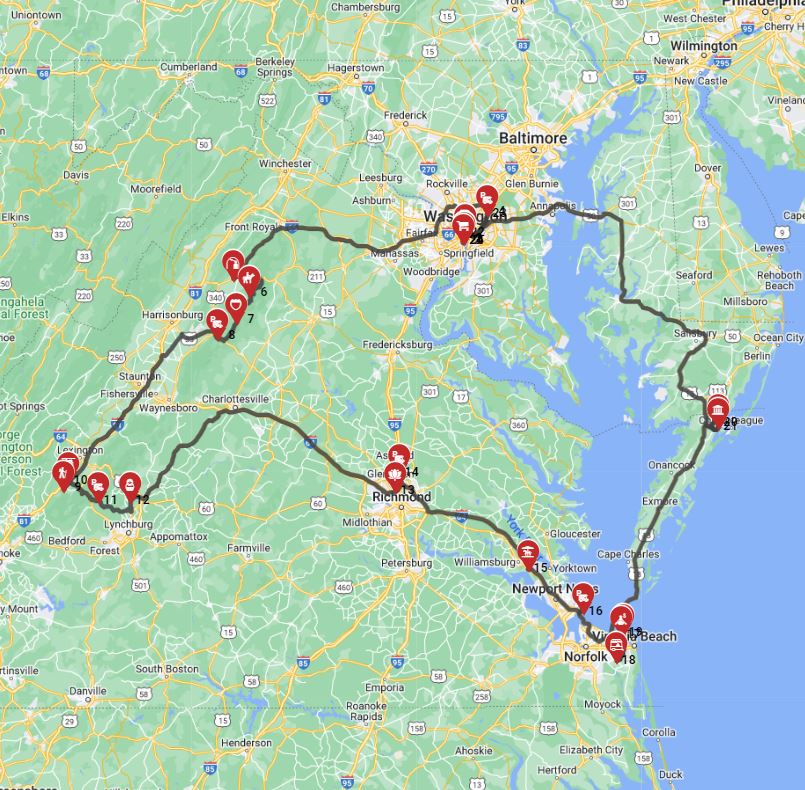
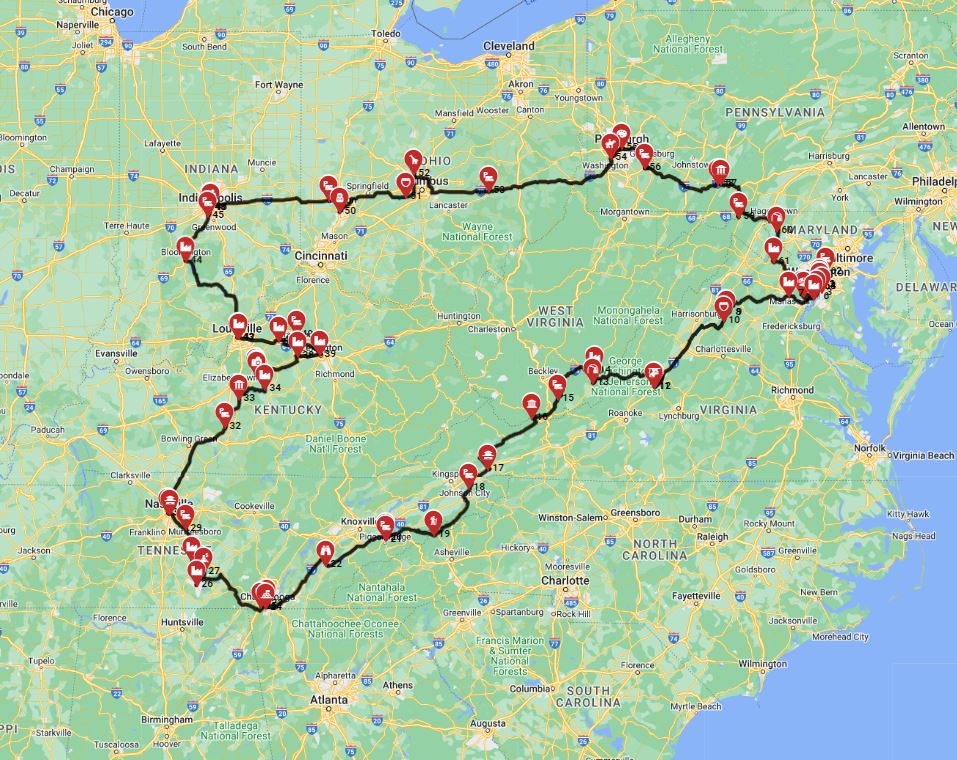
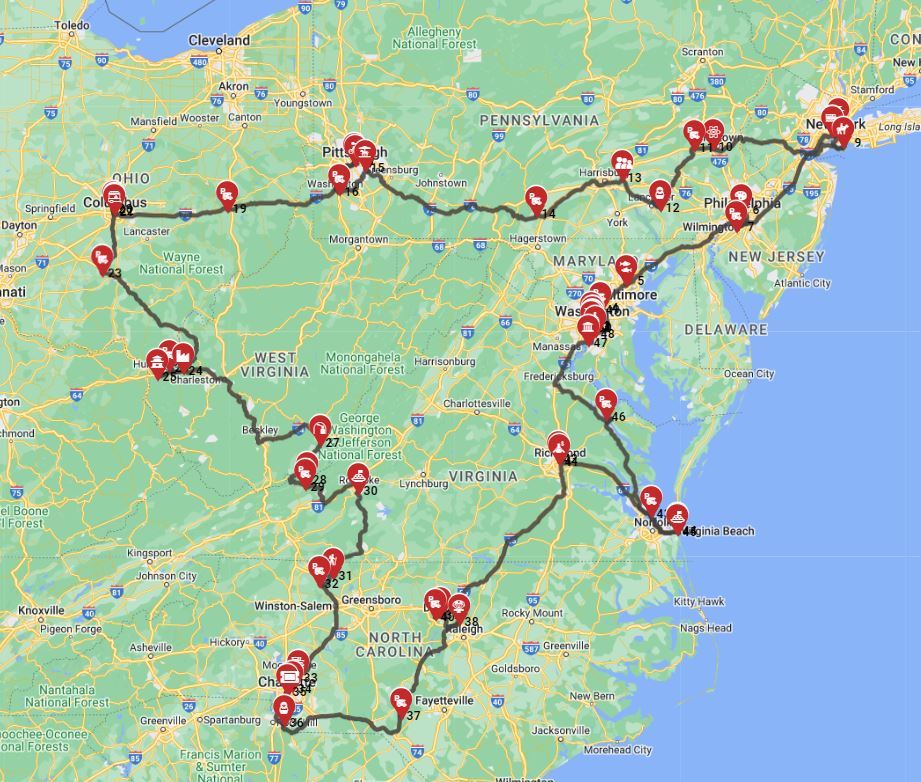
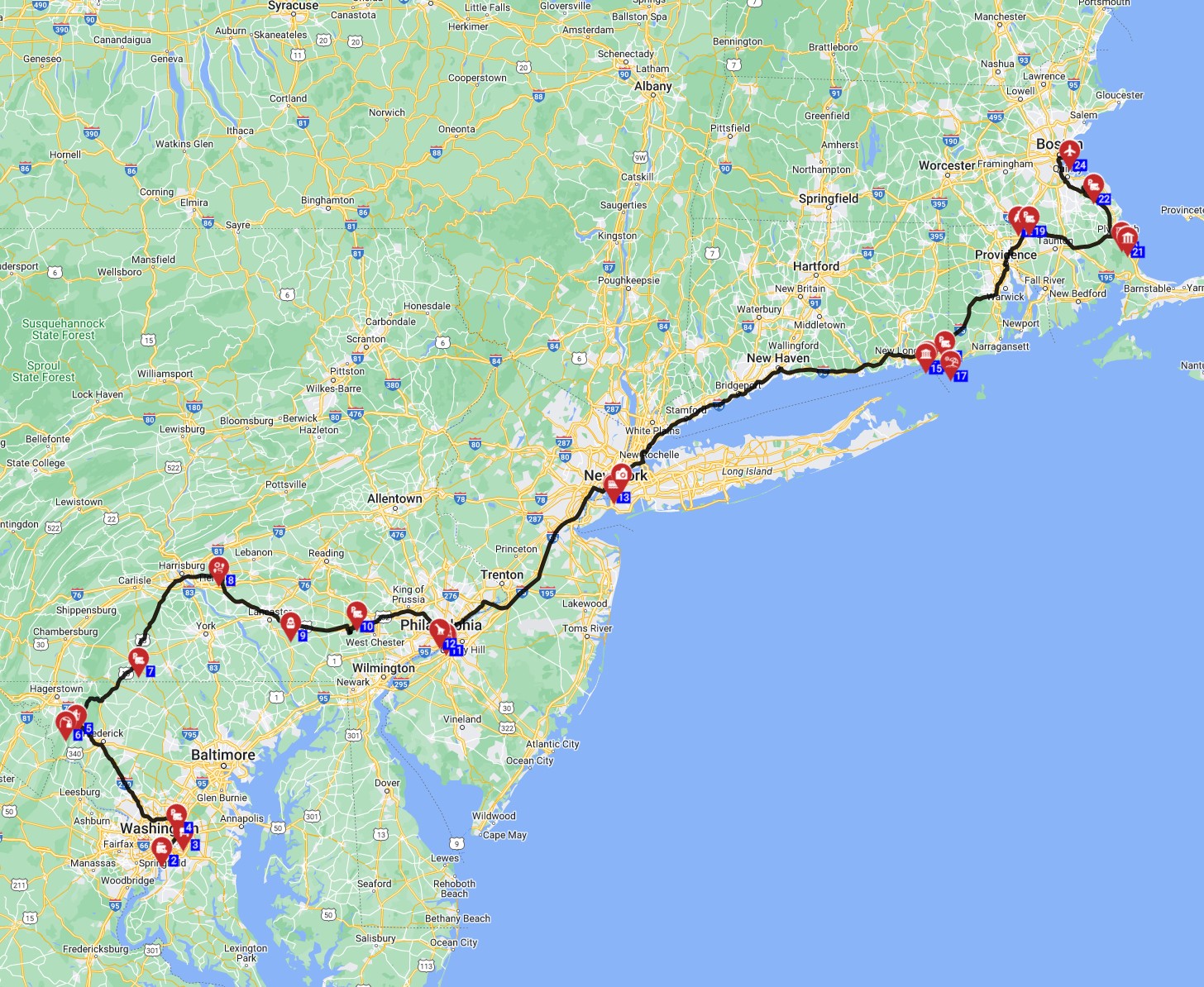
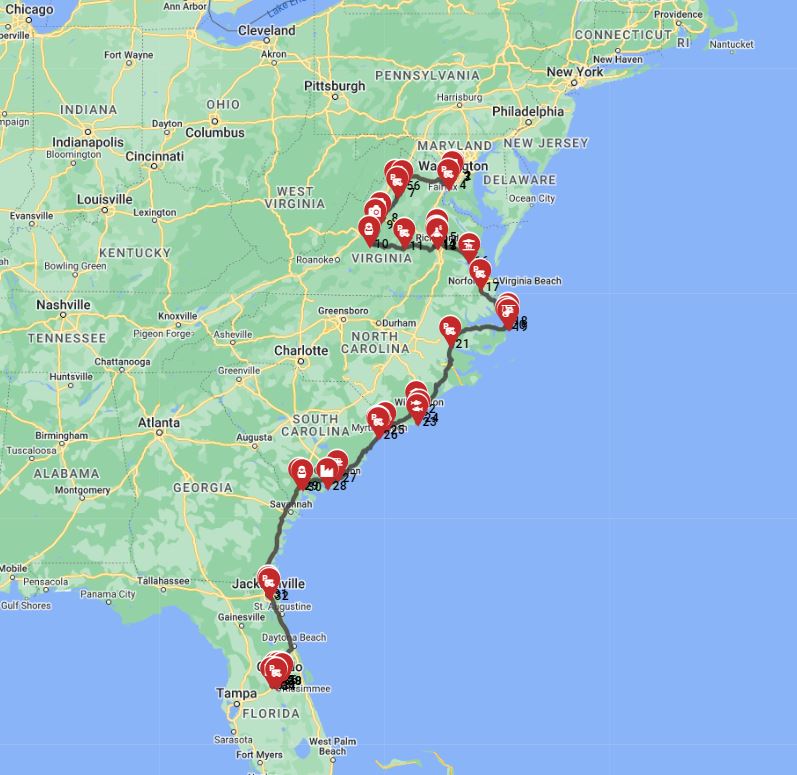
Consider specific Washington DC route plans, like the "
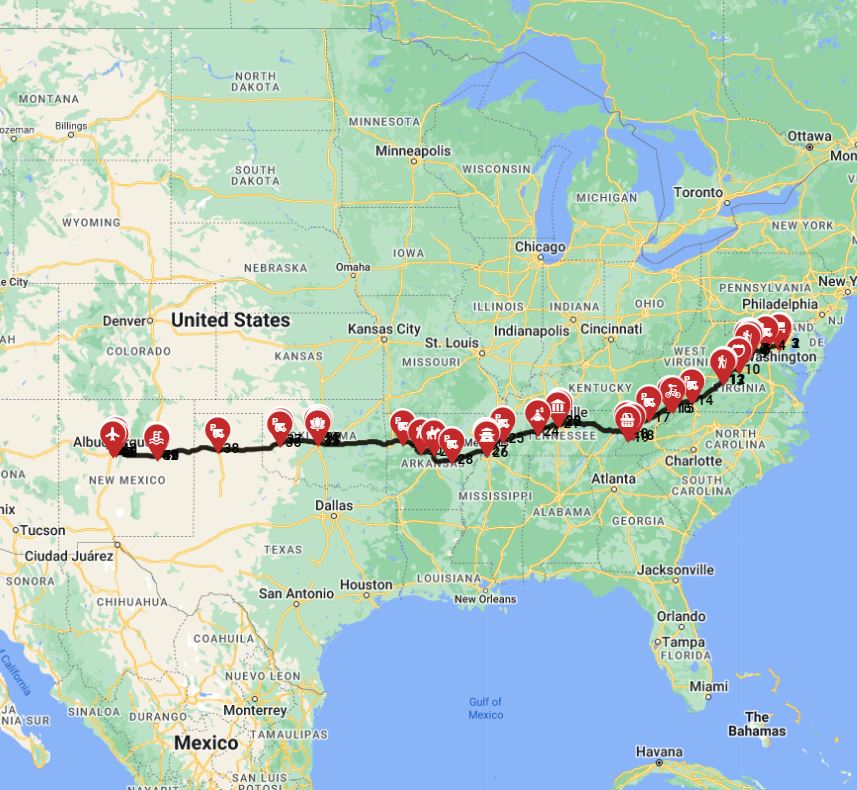
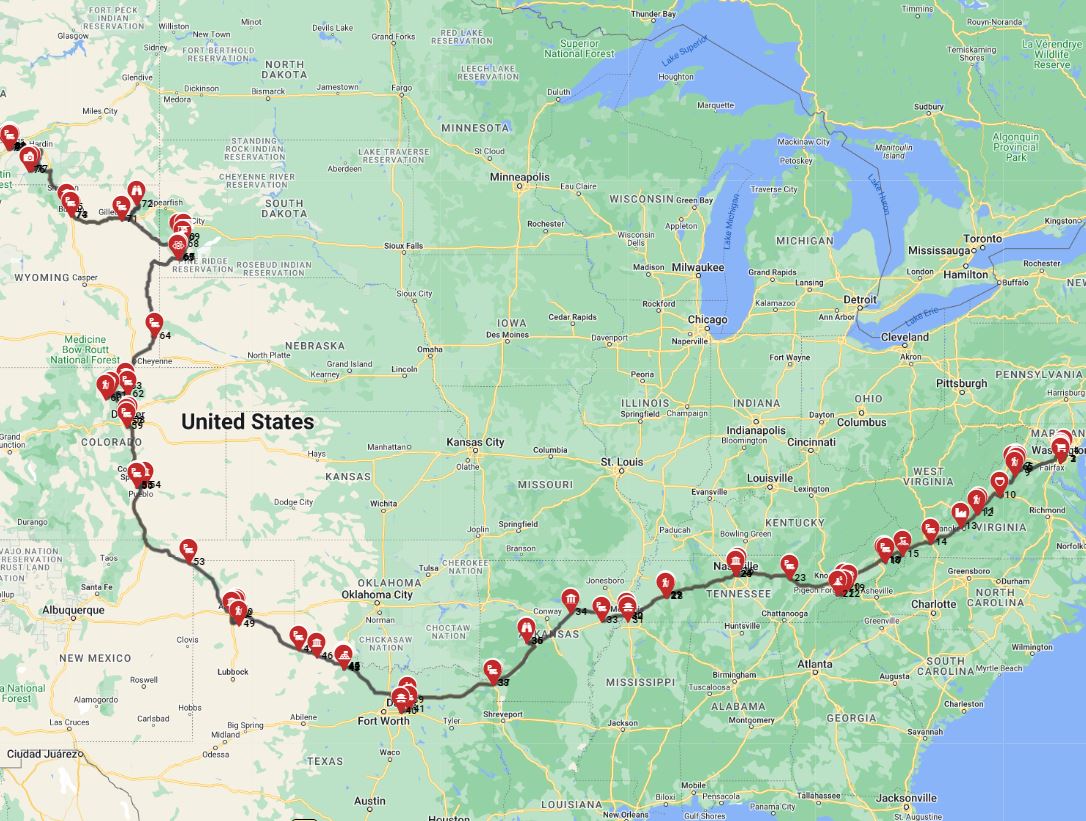
For a longer adventure, the "Chicago to Washington DC - Route of Roots" route plan (16 days, 2470.2 km) includes 2 museums and 2 historical sites along the way, perfect for a deeper dive into American history.
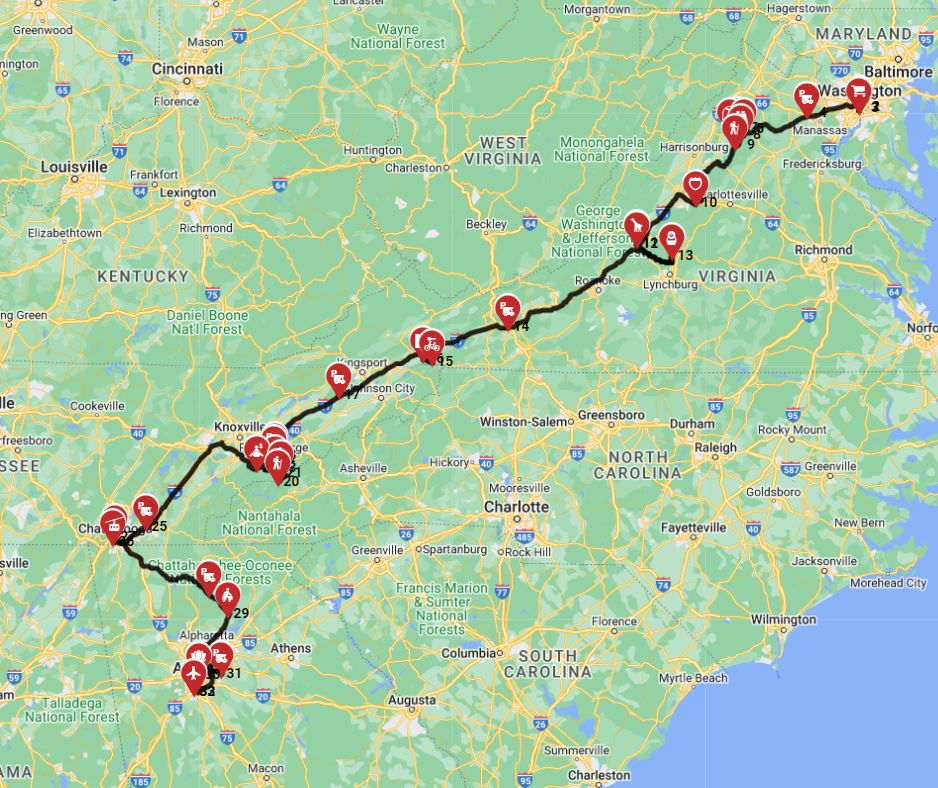
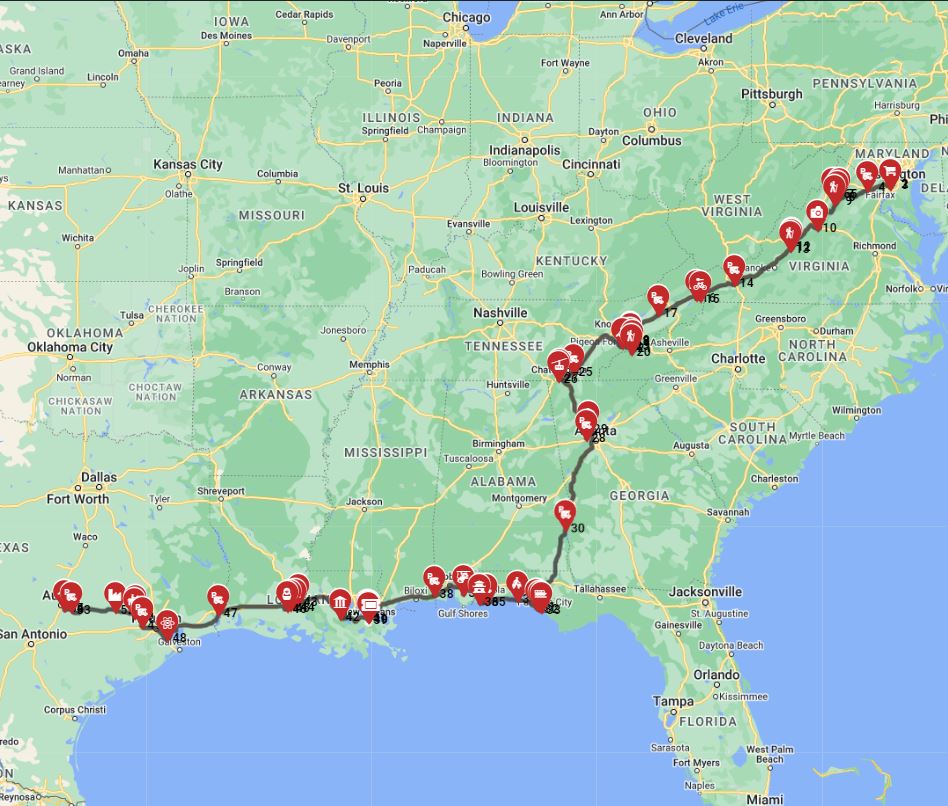
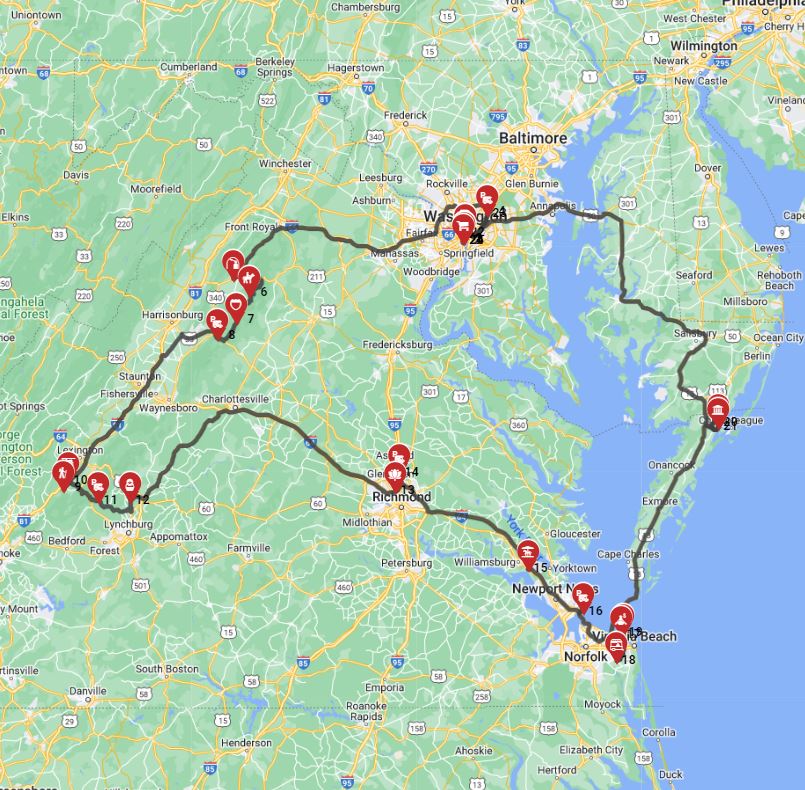
Another popular option for those heading south is the "
Common Mistakes to Avoid in Washington DC
A common mistake for first-time RV renters in Washington DC is attempting to drive a large Class A or even a larger Class C motorhome directly into the bustling downtown area for parking, which is generally not practical due to limited space and strict regulations. Instead, park your rental motorhome at a well-connected campground, like Cherry Hill Park or Greenbelt Park, and utilize Washington DC's efficient public transit system (the Metro) or ride-sharing services for city access.
Underestimating Washington DC traffic, especially on major routes like the George Washington Memorial Parkway or I-66, can lead to significant delays and frustration; planning travel for early mornings (before 7 AM) or late evenings (after 6 PM) can help avoid peak congestion. Always remember that driving slowly and carefully, and using common sense and paying attention, will allow you to drive almost anywhere without issues. You can find more specific advice in our "RV Rental Near Washington DC Airport - Pickup Pricing 2026" guide.
Failing to budget for all ancillary costs, such as tolls on bridges and highways around Washington DC (e.g., portions of I-95 or I-495), public transport fares (typically $2.00-$6.00 per ride on the Metro), and unexpected incidentals, can quickly inflate your trip expenses. For comprehensive budgeting assistance, remember that RV PLANET routes allow you to itemize and track every expense along the way. Neglecting to research local RV repair services or supply stores, such as Camping World in Ashland, VA (about 1.5 hours south), before your trip can leave you scrambling in an emergency.
Overlooking seasonal challenges, like extreme summer humidity reaching 90% or the massive crowds during the iconic cherry blossom season, can significantly impact your comfort and travel experience. Booking your RV rental in Washington DC well in advance is essential during these times to secure both your vehicle and preferred campsites. Our "Last-Minute RV Rental in Washington DC - What to Expect 2026" article explains that while last-minute availability can exist, prices are dynamic and often higher.
Is Washington DC RV friendly?
Washington DC is RV-friendly primarily for those who plan to stay in nearby campgrounds and use public transportation to access the city's main attractions. Directly navigating and parking a large rented motorhome in downtown DC is extremely challenging due to size restrictions, limited parking availability, and heavy traffic, particularly around historic sites like the National Mall and Federal Triangle.
Visitors should rely on the extensive Metro system (subway) or ride-sharing services from their campground located outside the city. For example, many RVers stay at Cherry Hill Park in College Park, Maryland, which offers convenient shuttle service directly to the Metro station, making city exploration stress-free. For a broader overview, check out our "RV Rental Virginia - Complete Guide 2026" as many nearby RV parks are in Northern Virginia.
Smaller RVs, like a 6.36-meter-long Class B campervan (`V3` with a 100-liter fresh water tank) or a compact Class C motorhome, offer greater flexibility for local driving and finding parking in less congested areas outside the immediate city core. While you can drive almost anywhere slowly and carefully, comprehensive in-city parking for any RV size is scarce and generally not recommended for day trips. For more tips on selecting the right vehicle, refer to our "RV Rental in Washington DC for Beginners - Pricing 2026" guide.
What is the 3-3-3 rule for RV travel?
The 3-3-3 rule for RV travel is a widely adopted guideline encouraging safe and enjoyable trips by recommending drivers adhere to three key principles. Firstly, travel no more than 300 miles (approximately 480 km) in a single day, preventing driver fatigue and allowing ample time for unexpected stops, which is especially important when driving a Class C motorhome like the `24' Class C Motorhome` with a 166-liter fresh water tank.
Secondly, arrive at your destination campground by 3 PM, which provides ample daylight for setting up your rented RV, connecting utilities, exploring the immediate area, and addressing any unforeseen issues before dark. This is particularly helpful when finding your way around a new campground near Washington DC, such as Greenbelt Park.
Thirdly, stay at least 3 nights in each location, allowing for a more relaxed experience, deeper exploration of the surrounding area (e.g., the museums and monuments of Washington DC), and reduced frequency of packing and unpacking your mobile home. This approach supports slow travel, letting you truly connect with the culture and scenery.
What is the 444 rule for RVs?
The 444 rule for RVs, similar to the 3-3-3 rule, is another helpful guideline focused on safety and reducing travel stress, recommending specific parameters for daily travel. It suggests driving no more than 400 miles (approximately 640 km) per day, preventing driver fatigue and allowing for a more leisurely pace in your rented motorhome, particularly relevant when covering longer distances to or from Washington DC.
Additionally, it advises stopping by 4 PM to ensure you arrive at your campground with sufficient daylight for setup and relaxation, which is especially useful when navigating unfamiliar areas near a major metropolitan hub like Washington DC. This allows time to settle into your `MH-A` motorhome (6-berth, 8.8m length) and prepare dinner on its 3-burner gas stove.
Lastly, it recommends staying at least 4 nights at each location, offering a more immersive experience and minimizing the repetitive tasks of packing and unpacking. This extended stay allows for thorough exploration of nearby attractions such as Great Falls Park or historic Annapolis, both within a short drive of Washington DC.
What is the rule of 3 with an RV?
The rule of 3 with an RV typically refers to the "3-3-3 rule," a popular guideline designed to enhance safety and enjoyment on motorhome trips. This principle recommends limiting daily travel to no more than 300 miles (about 480 km), arriving at your campground by 3 PM, and staying at least 3 nights at each destination. This is particularly valuable when visiting a destination with as much to see and do as Washington DC.
Adhering to this principle helps prevent driver exhaustion, especially when driving a larger rented motorhome like a Class C, and allows for easy campground setup in daylight, reducing potential stress. For example, arriving at Prince William Forest Park in Triangle, Virginia, by 3 PM gives you ample time to set up your 7.1m `cruise america rv rental example Explorer` before sunset.
Moreover, staying for at least 3 nights provides sufficient time to explore the local area without feeling rushed, making your Washington DC adventure more pleasant and enriching. This slow travel approach encourages deeper engagement with the city's rich history, diverse culture, and impressive monuments, rather than a frantic dash from one sight to the next.
What You Shouldn't Miss
Looking for expert insights from Avi Bandana? Top 5 Adventures - recommendations from Avi Bandana:
- Explore the Smithsonian Museums: Dedicate at least two full days to Washington DC's free Smithsonian museums along the National Mall. From the National Air and Space Museum to the National Museum of Natural History, there's something for everyone, making it incredibly budget-friendly.
- Walk the National Mall: Experience the grandeur of the Lincoln Memorial, Washington Monument, and U.S. Capitol Building. Early mornings are best to avoid crowds and capture stunning photos. Consider parking your RV at Cherry Hill Park and taking their shuttle to the Metro for easy access.
- Visit Arlington National Cemetery: Just across the Potomac River, this solemn and historically significant site is a powerful experience. Take public transport from your campground; parking for RVs nearby is extremely limited.
- Discover Old Town Alexandria: A charming historic district in Virginia, easily accessible from Washington DC area campgrounds. Enjoy cobblestone streets, unique boutiques, and waterfront dining. It's a perfect spot for a leisurely afternoon outside the immediate city bustle.
- Hike in Rock Creek Park: Escape the urban landscape without leaving DC. This vast urban oasis offers miles of trails for hiking and biking, providing a refreshing natural contrast to the city's monuments.
Final Thoughts
Exploring Washington DC in a rented RV is an unforgettable experience, offering the freedom to discover historical landmarks and natural beauty at your own pace. By applying these budget-savvy tips and planning ahead, you can significantly reduce costs without compromising on adventure. Remember to embrace the flexibility that RV travel provides, allowing you to adapt your plans and truly savor every moment.
Whether you're a family looking for an educational getaway or a couple seeking a unique historical journey, a motorhome rental in Washington DC opens up a world of possibilities. With Bandana Caravan, you get not just a vehicle, but a supportive partner committed to making your travel dreams a reality, with full transparency and dedicated assistance.
So, get ready to hit the road and create lasting memories in the nation's capital. Your budget-friendly Washington DC RV adventure awaits!
Find Motorhome Rentals in Washington DC