In This Guide
- Do you need a special license to drive an RV in Washington?
- Road Conditions & Terrain in Washington DC
- RV Size Limits, Bridges & Restricted Zones
- Fuel: Diesel vs. Petrol & Cost per 100 km
- Tolls, Vignettes & Border Rules
- Driving Tips for rv rental Travelers
- Recommended RV Class for Washington DC Roads
- Should I Choose a Compact Van Instead of a Large RV in Washington DC?
- Can I Park Anywhere? Free & Wild Camping Rules in Washington DC
- Can I Drive an RV Into the City Center? Heights, Tunnels & Local Signage
- Is Washington, D.C. RV friendly?
- Are RVs allowed in DC?
- How much does it typically cost to insure an RV?
- Who is the best insurance company for RV?
- How much is insurance on a $200,000 RV?
- What You Shouldn't Miss
- Why Book with Bandana Caravan
- Final Thoughts
- Frequently Asked Questions
Do you need a special license to drive an RV in Washington?
Most rental RVs in Washington DC require only a standard Class C driver's license. This means that if you possess a valid driver's license from your home country, you are generally all set to operate most campervans and motorhomes available for rent. For visitors from non-English speaking countries, an International Driving Permit (IDP) is recommended to accompany your home country's license, though it is not mandatory in all cases. A Commercial Driver's License (CDL) is typically only required for very large RVs exceeding 26,000 pounds, which are rarely found in standard rental fleets. We make sure that our booking process is clear and honest, so you'll know exactly what’s needed, long before you arrive to pick up your vehicle.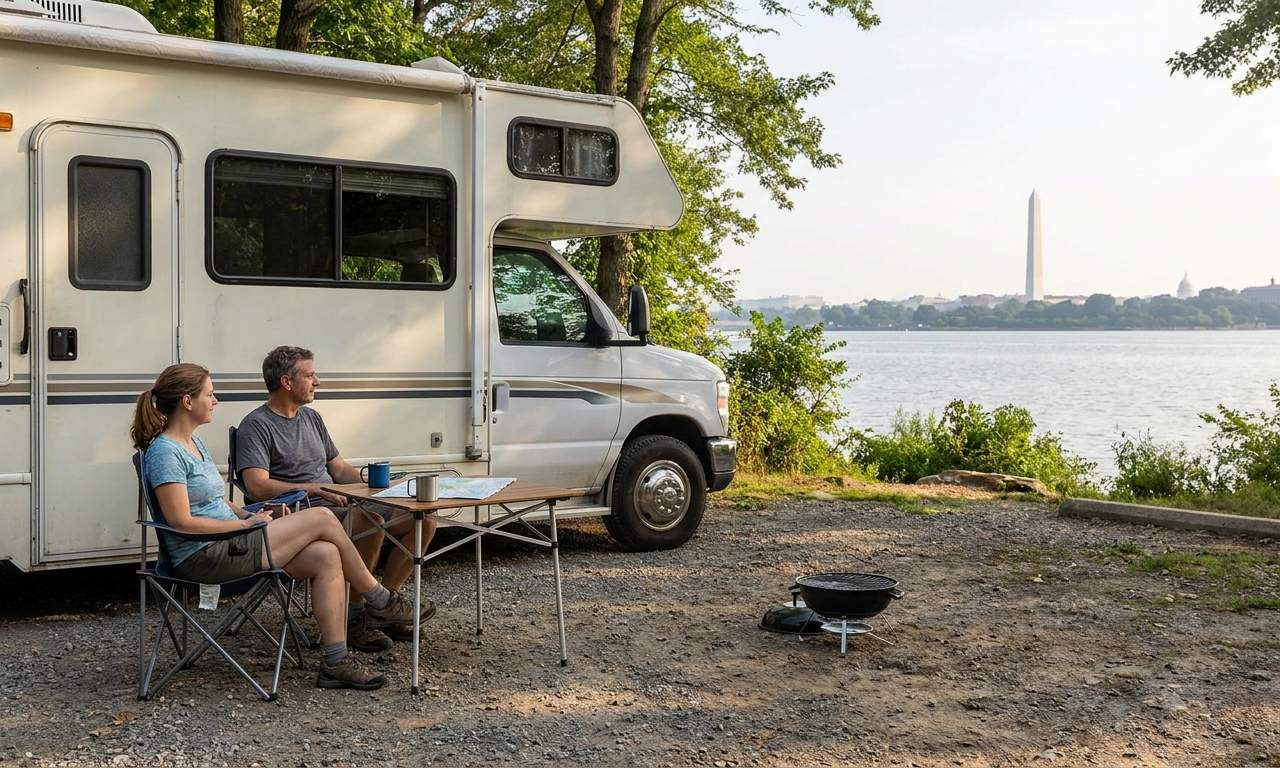
Road Conditions & Terrain in Washington DC
Washington DC primarily features urban roads, which are generally well-maintained but can be narrow and prone to heavy congestion, especially during peak hours. The terrain within the city itself is largely flat, presenting no significant challenges related to steep inclines or declines for your rented motorhome. Drivers should anticipate frequent stops and starts, particularly when navigating around popular landmarks like the National Mall or Georgetown's bustling streets. Outside the immediate urban core, routes into neighboring Maryland and Virginia, such as parts of the George Washington Memorial Parkway, transition to more scenic, winding roads. Remember to drive slowly and carefully, and you can drive almost anywhere without issues. No need to stress - just use common sense and pay attention.RV Size Limits, Bridges & Restricted Zones
Washington DC has specific height restrictions, particularly for older tunnels and underpasses, making careful route planning essential for RV travelers. For instance, some historic parkways, like sections of the George Washington Memorial Parkway, feature bridges as low as 10-12 feet. Always pay close attention to posted signage for height and weight limits on your route, and consider using an RV-specific GPS that accounts for these dimensions. While there are no environmental zones strictly restricting RVs by emissions in Washington DC, larger vehicles should plan routes carefully to avoid narrow streets and dense residential areas, especially around Capitol Hill and Embassy Row, where maneuverability can be challenging.Fuel: Diesel vs. Petrol & Cost per 100 km
Most rented motorhomes and campervans available for Washington DC trips run on petrol (gasoline), with diesel options more common for larger Class A motorhomes or some heavier-duty Class C models. For example, a typical Bandana Class C - Alcove RV, like a "cruise america rv rental example Explorer" (7.1m length, 82-liter fresh water tank), consumes around 7-10 Miles/Gallon, which equates to approximately 23 Liters per 100 Km. Fuel availability is widespread across the DC metropolitan area, but prices can fluctuate significantly, so budgeting for fuel is a substantial component of your overall trip cost. You can easily track these expenses with RV PLANET routes, where travelers can itemize and track every expense along the way for easy budgeting. Preparing meals in your RV is also a great way to save on food costs, and for inspiration, check out our RV-friendly recipes playlist.Tolls, Vignettes & Border Rules
Washington DC itself does not have tolls for most of its city streets, but surrounding highways in Maryland and Virginia frequently utilize electronic tolls, particularly on express lanes, bridges, and tunnels, such as those on I-95 or the Capital Beltway. An EZ-Pass transponder is highly recommended for RV travelers in the Washington DC area to avoid higher 'toll by plate' fees or potential fines, as many toll roads are cashless. Some rv rental vehicles may offer pre-purchased toll passes for convenience and to mitigate unexpected charges, so it's always worth checking with your supplier. Since you'll likely be crossing state lines regularly to access campgrounds or points of interest, understanding the toll system is critical for smooth travel.Driving Tips for rv rental Travelers
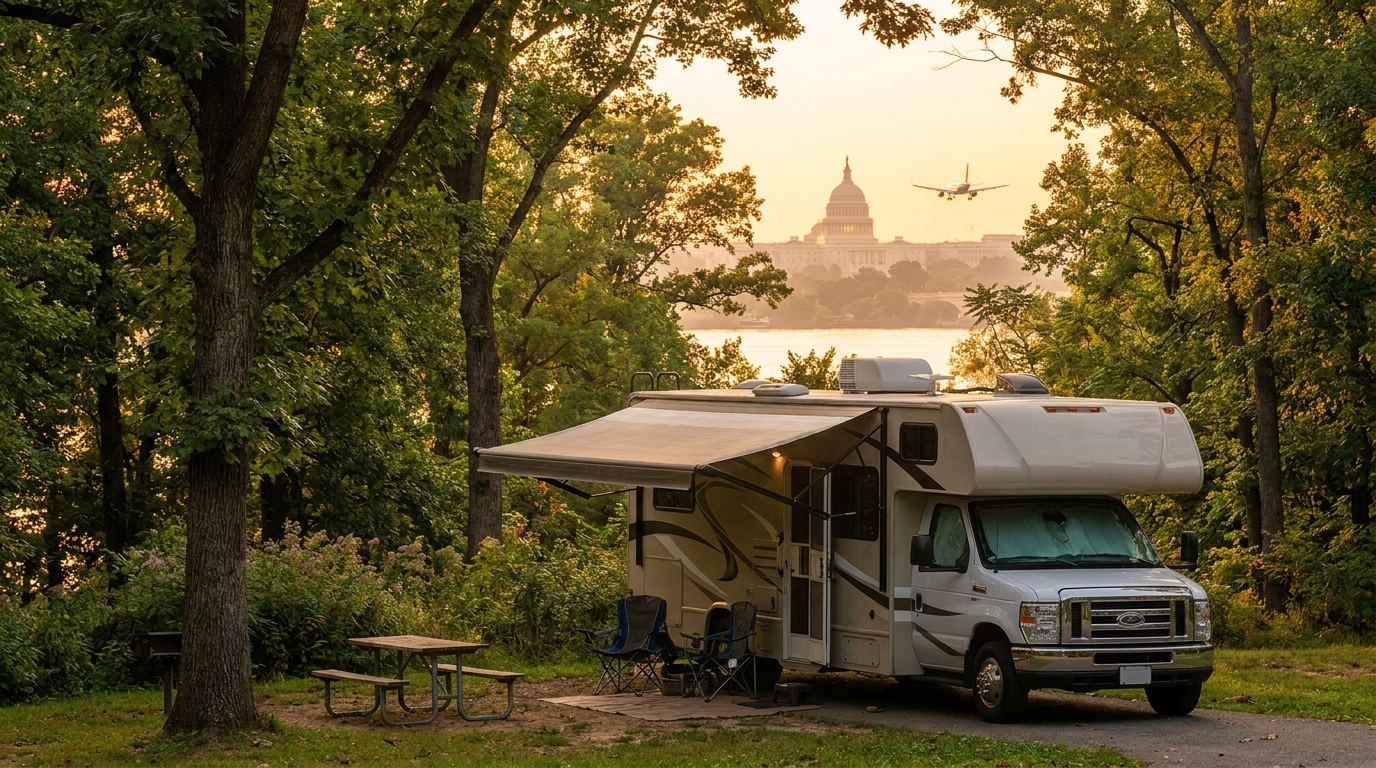
To navigate Washington DC effectively in a rented motorhome, prioritize utilizing RV-specific GPS navigation to avoid low bridges, narrow streets, and challenging turns within the urban environment. Pre-plan your parking strategy by identifying RV-friendly campgrounds outside the city, such as Cherry Hill Park in Maryland, or Greenbelt Park, and researching convenient public transportation routes into DC's attractions. Perform a thorough pre-trip vehicle maintenance checklist, focusing on tire pressure, fluid levels, and lighting, especially for urban driving. Stay vigilant for pedestrians, cyclists, and tight turns; use mirrors frequently and allow ample braking distance. Ensure RV security by parking in well-lit, reputable areas, and using locking mechanisms for doors and valuables. We encourage slow travel, averaging max 100-150 km per day, allowing you to truly connect with the culture, food, and scenery of the Washington DC area.Recommended RV Class for Washington DC Roads
A Class C - Alcove RV offers a practical balance of comfort and maneuverability for Washington DC travel, with Bandana's fleet averaging around 7.7 meters (25 feet) in length. This size provides ample living space for families or groups, typically sleeping 4-6 people, like the "24' Class C Motorhome" with a fresh water tank of 166 liters and a fuel tank of 208 liters. For maximum ease of navigation and parking in dense urban settings, a Class B Campervan, or a Class TC - Truck Camper, averaging 5.9 meters (19 feet), is highly suitable for smaller groups or couples. A "Patagonia Camper 4x4 double cab" is a Class TC - Truck Camper ideal for a couple, offering the flexibility to explore tighter spots. Remember that you can drive slowly and carefully, and almost any size RV can be managed in the city. Your choice between a compact van, like an "rv rental denver example Category Van" (ideal for a couple with shower and toilet), and a larger motorhome largely depends on your group size and desired amenities.Should I Choose a Compact Van Instead of a Large RV in Washington DC?
Choosing a compact van over a larger motorhome in Washington DC depends on your priorities for maneuverability versus onboard amenities. Compact campervans, like those sleeping 2-4 people with a rear double bed of 127/183cm, offer superior maneuverability and easier parking in DC's dense urban core. They are generally shorter and narrower, making navigation simpler on busy streets. Larger RVs, while more challenging to park directly in tourist areas, provide significantly more interior space, a larger refrigerator, full kitchens, and greater comfort for longer trips or families. Even with a large RV, most travelers opt to park at campgrounds outside the city and use public transportation for sightseeing. So, while a compact van eases urban driving, the decision ultimately balances convenience with comfort and features.Can I Park Anywhere? Free & Wild Camping Rules in Washington DC
Free or wild camping is generally not permitted within Washington DC or its immediate surrounding areas, as local ordinances strictly regulate overnight RV parking. Overnight RV parking is typically restricted to designated RV campgrounds located outside the city limits, predominantly in nearby Maryland or Virginia. Within DC itself, RVs are subject to standard parking regulations, including size and time limits, making day parking for larger vehicles extremely challenging and often impossible in popular tourist areas like near the Smithsonian museums or the White House. Planning ahead to secure a spot at a reputable campground, like Pohick Bay Regional Park in Lorton, VA, and relying on public transport to enter the city, is the most practical strategy.Can I Drive an RV Into the City Center? Heights, Tunnels & Local Signage
Yes, you can generally drive an RV into the city center of Washington DC, but drivers must exercise extreme caution regarding specific urban challenges. Pay close attention to local signage for height limits, particularly in tunnels and underpasses. Many bridges, especially along historic routes such as the George Washington Memorial Parkway, have height restrictions that may be as low as 10-12 feet. It's crucial to be aware of your rented motorhome's exact height and plan your route accordingly. The primary difficulty lies not in driving into the city, but in finding suitable and legal parking for larger RVs, which is virtually non-existent in core tourist areas like near the Capitol Building or the Lincoln Memorial. Always verify your route with an up-to-date RV-specific GPS.Is Washington, D.C. RV friendly?
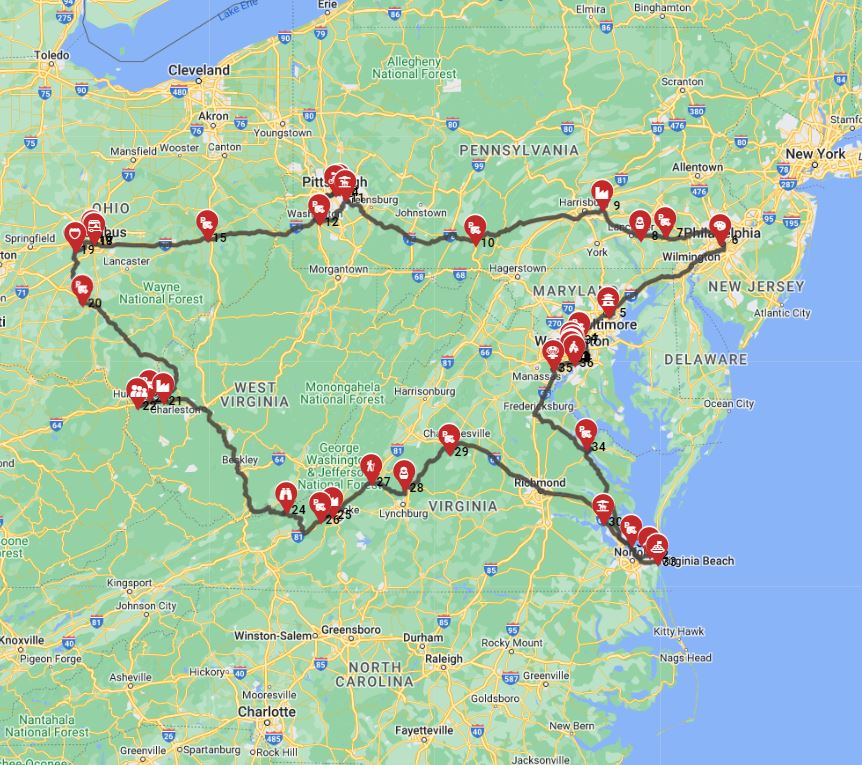
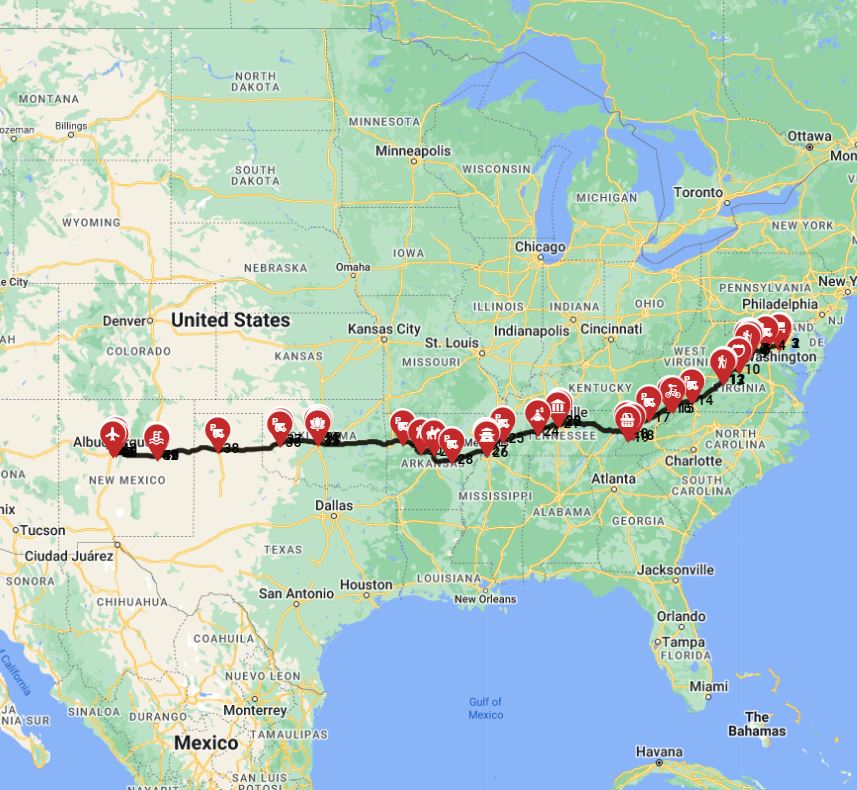
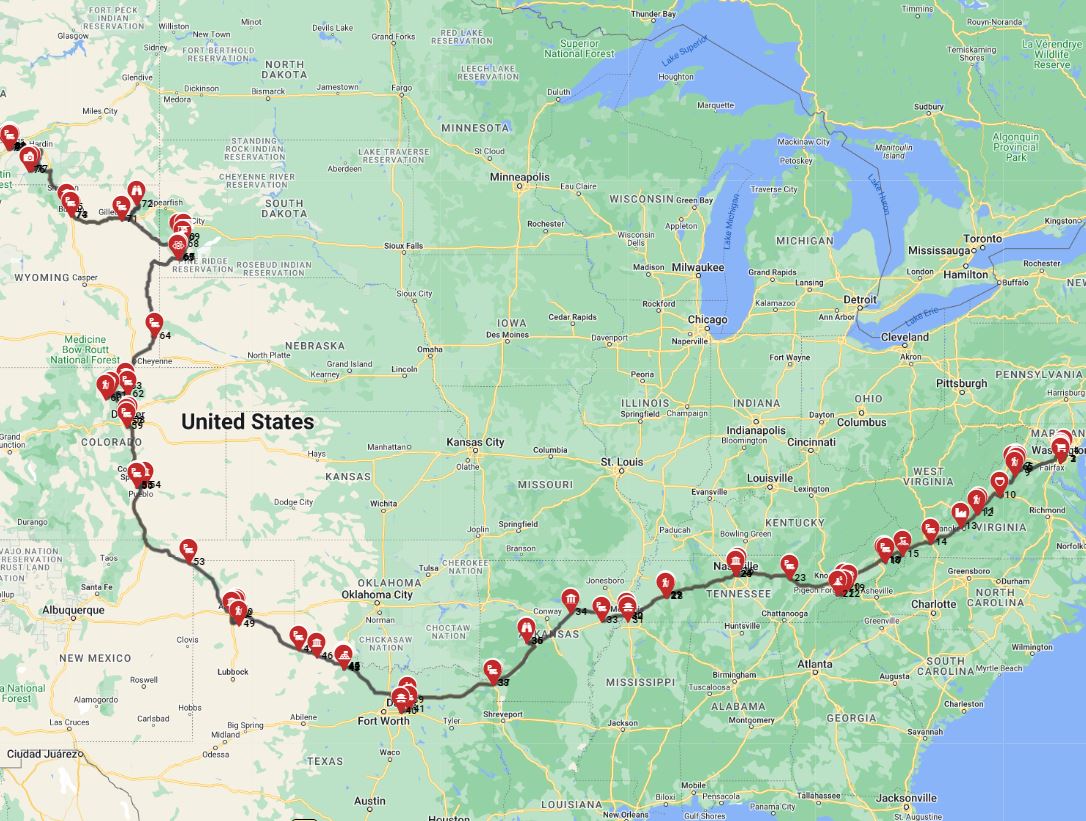
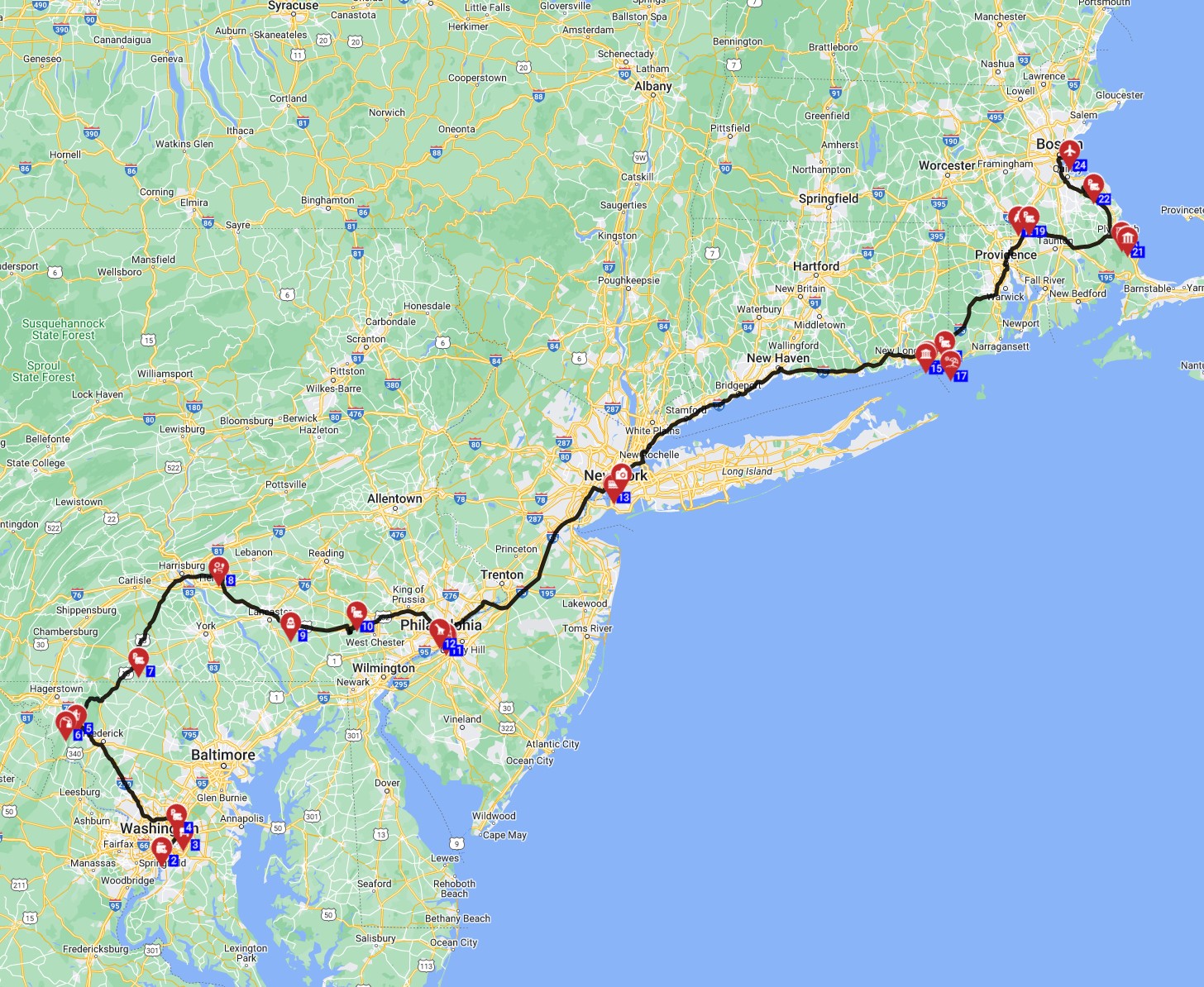
Washington DC presents a mixed experience for RV travelers; urban driving and parking challenges are contrasted by excellent surrounding RV campgrounds with convenient access to the city. While navigating the dense traffic and finding large RV parking within the District can be difficult, numerous RV-friendly campgrounds in nearby Maryland and Virginia offer direct public transportation links into the city. For example, Cherry Hill Park in College Park, MD, provides shuttle service to the Metro. Other popular options include Greenbelt Park (MD) and Pohick Bay Regional Park (VA). Strategic planning, including leveraging public transit and considering seasonal crowds (like the busy Cherry Blossom season in spring or the summer tourist rush), makes an RV trip to DC feasible and enjoyable, despite urban navigation difficulties. For route plans that seamlessly integrate city visits with comfortable RV stays, explore RV PLANET's curated itineraries. This 16-day, 2470.2 km route, "Chicago to Washington DC - Route of Roots: From the Rust Belt to the Founding Fathers," offers a diverse experience including 2 museums and 2 historical sites around DC, showing how a rented RV can connect you to varied interests.Are RVs allowed in DC?
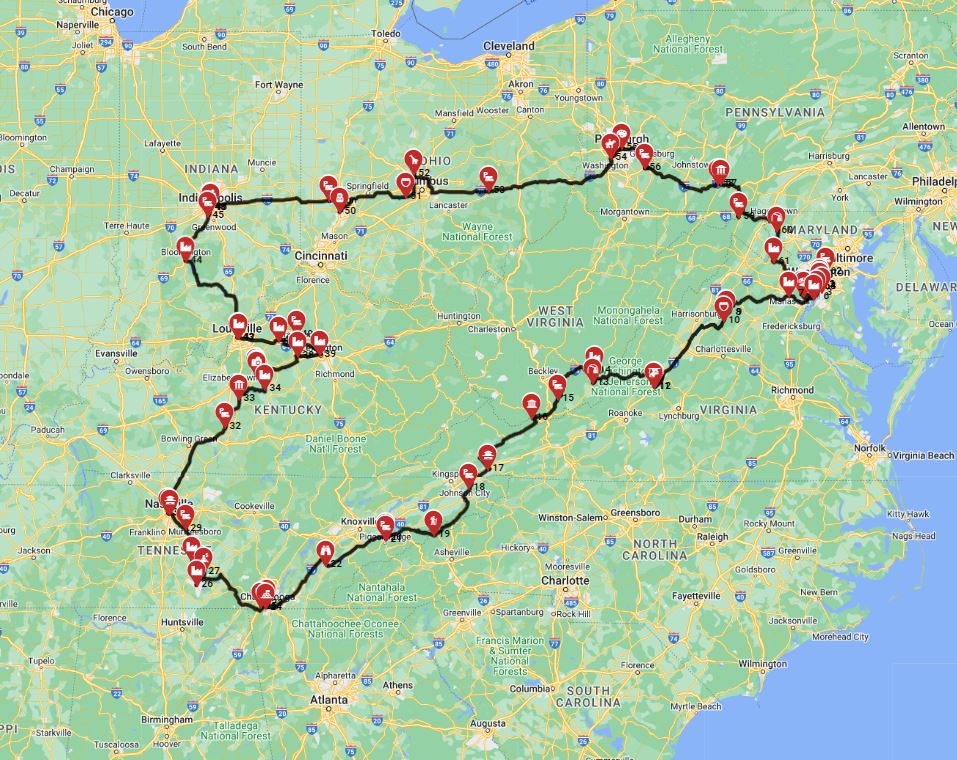
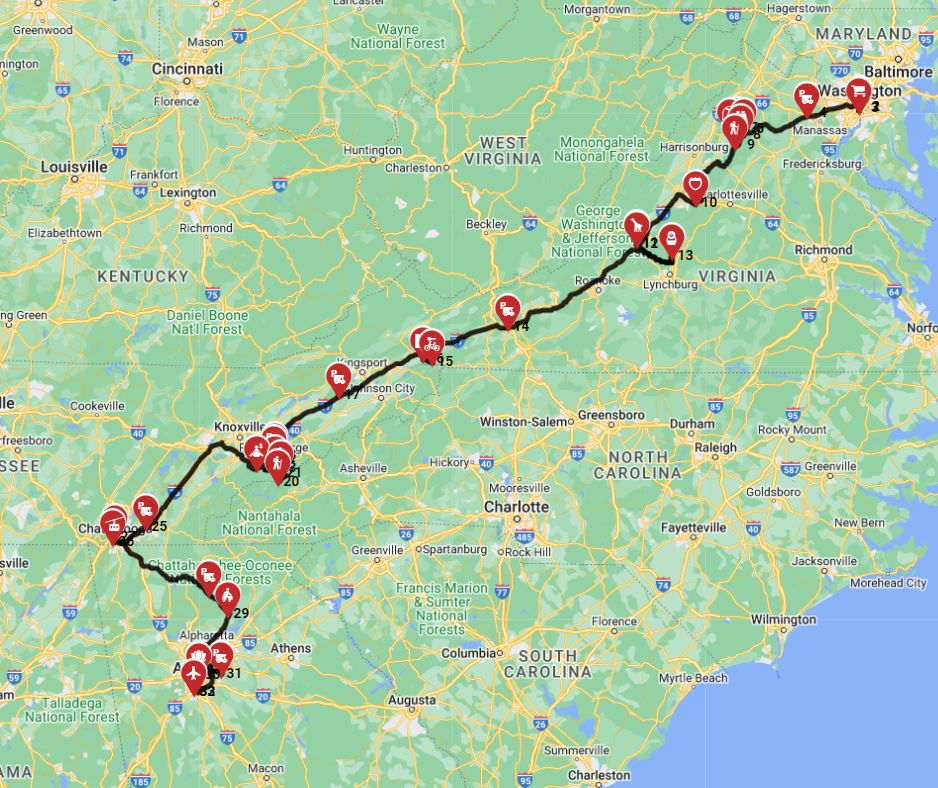
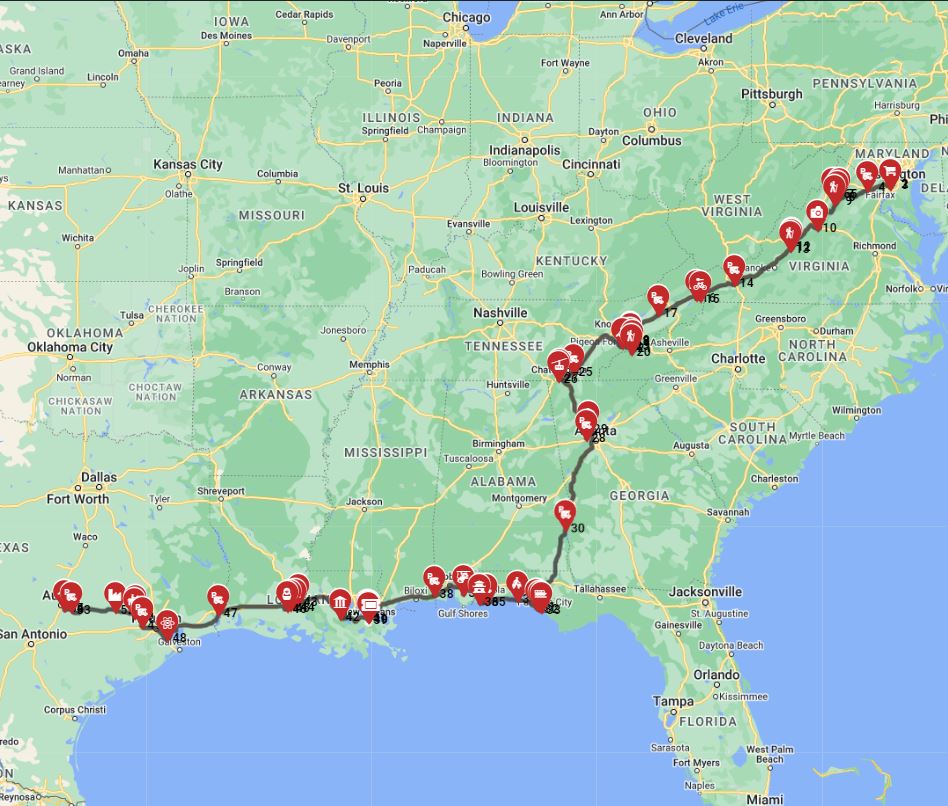
Yes, RVs are generally allowed on public roads in Washington DC, provided they comply with all standard traffic laws and posted restrictions, just like any other vehicle. The main challenge for RVs in DC is not legal access but rather the practical difficulty of navigating dense traffic and finding appropriate, legal parking for sightseeing, particularly for larger motorhomes. Many RV travelers wisely opt to park their rented motorhome at campgrounds outside the city and utilize DC's extensive public transportation system, including the Metro rail and bus services, to access attractions like the Smithsonian museums or the National Archives. This strategy allows you to enjoy the convenience of your RV for accommodation while simplifying urban exploration. For those planning a longer journey, the "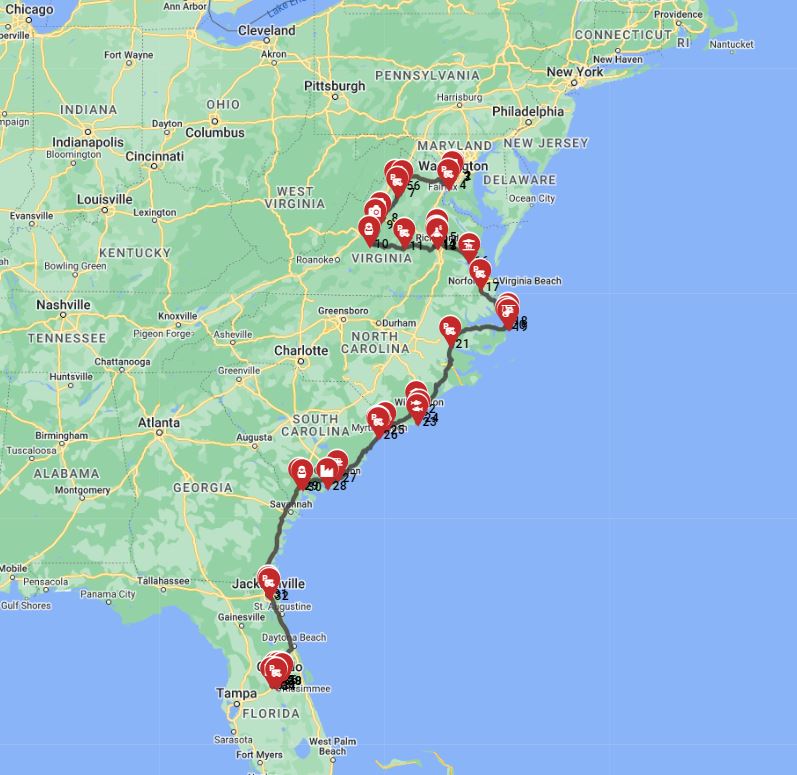
Washington DC to Orlando
How much does it typically cost to insure an RV?
The typical cost to insure an RV can range broadly from $800 to over $3,000 per year, influenced by factors such as the RV class, its value, and the driver's profile. For rental RVs, basic insurance coverage is often included in the rental agreement or offered as an optional add-on, typically covering liability and comprehensive/collision. Bandana Caravan offers full transparency on these costs, so there are no surprises. You can upgrade to a top-level deductible for extra peace of mind, providing enhanced protection for your rented motorhome. Before your trip, it is always advisable to review your personal auto insurance policy for any existing coverage that may extend to rental RVs, which could help you decide on additional insurance options.Who is the best insurance company for RV?
There is no single 'best' RV insurance company, as the optimal choice depends heavily on individual needs, the specific type of RV being rented, and budget considerations. Leading RV insurance providers in the US often include Progressive, National General, Geico, and Safeco, recognized for their specialized coverage options and customer service. However, for rented motorhomes or campervans booked through Bandana Caravan, the rental company or our platform typically dictates or provides the necessary insurance. We partner with over 50 leading RV suppliers worldwide, including trusted names like El Monte and Cruise America, all of whom ensure comprehensive options. Always confirm these details directly with your Bandana booking agent, who is a true RV specialist.How much is insurance on a $200,000 RV?
Insurance for a high-value RV, such as a Class A motorhome valued at $200,000, typically ranges from $1,500 to over $4,000 annually. This higher premium reflects the increased vehicle value and potential replacement cost compared to smaller RVs like a Class B campervan. Premiums are significantly influenced by factors such as the RV's class, the driver's history, chosen deductibles, geographic location for usage (e.g., urban Washington DC versus rural Maryland), and the extent of coverage desired. For rental purposes, while Bandana Caravan facilitates a seamless booking experience and offers the option to upgrade to a top-level deductible for extra peace of mind, the base insurance costs are usually integrated into your rental package. To secure the best rates and comprehensive coverage for a rented RV, it's recommended to consult with your Bandana representative during the booking process.What You Shouldn't Miss
- **Explore the National Mall:** Wander among iconic monuments like the Lincoln Memorial and Washington Monument, and visit the Smithsonian museums (many offering free admission). Parking your RV at a nearby campground and taking the Metro into the city is the best strategy.
- **Visit Arlington National Cemetery:** Just across the Potomac River in Virginia, this solemn site offers a powerful historical experience, including the Tomb of the Unknown Soldier and the Kennedy gravesites.
- **Discover Old Town Alexandria:** Park your motorhome at a campground in southern Virginia, like Pohick Bay Regional Park, then use public transport or a short drive to explore the charming cobblestone streets, historic architecture, and vibrant dining scene of this historic waterfront city.
- **Hike and Bike in Great Falls Park:** On the border of Maryland and Virginia, this stunning natural park provides breathtaking views of the Potomac River rapids and offers excellent hiking and biking trails, a perfect natural escape from city life.
- **Cherry Blossom Festival (Spring):** If traveling in early spring, experience the magical bloom of cherry trees around the Tidal Basin. Plan well in advance, as this is a peak season for visitors and RV campground reservations fill quickly.
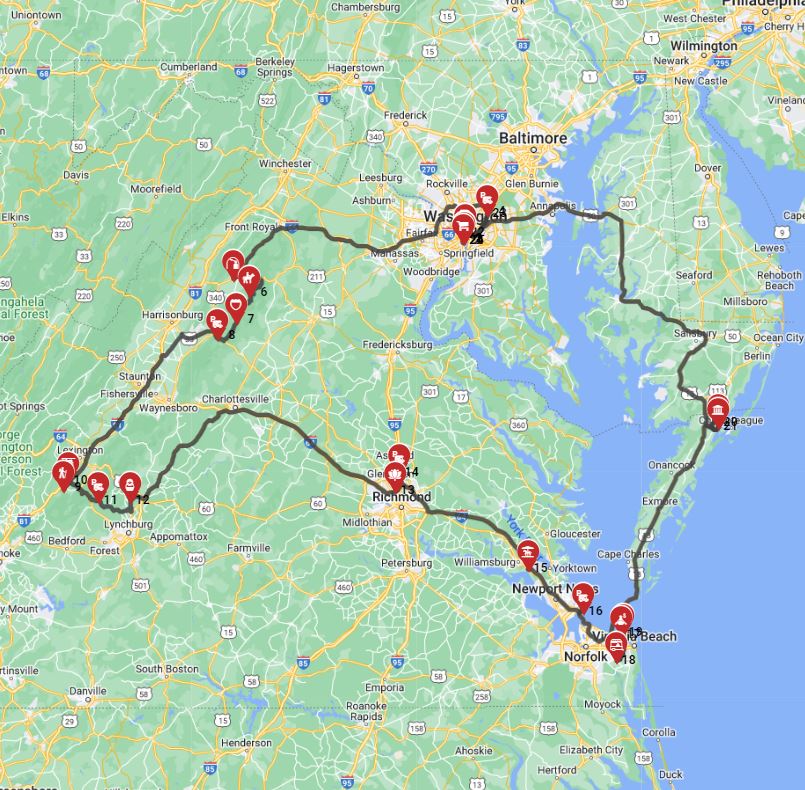
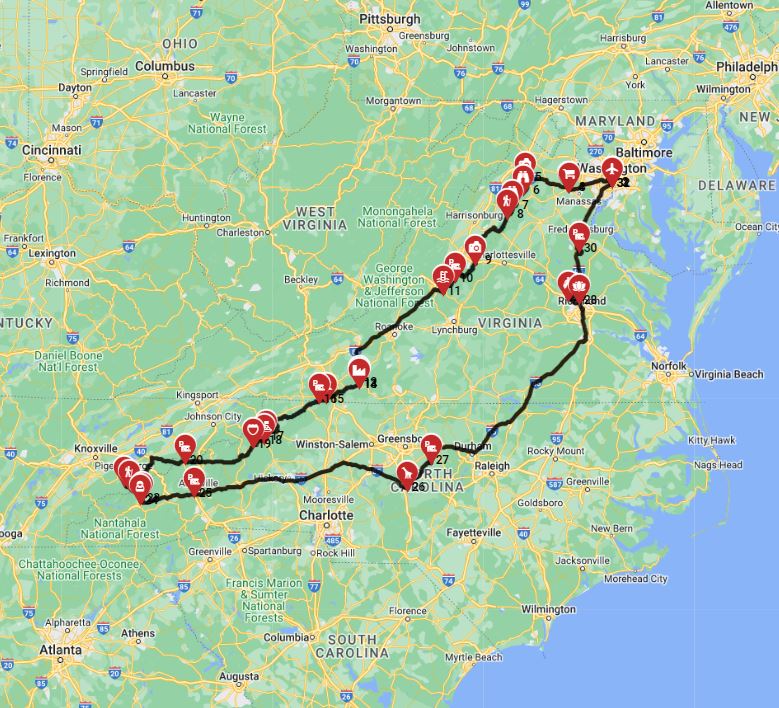
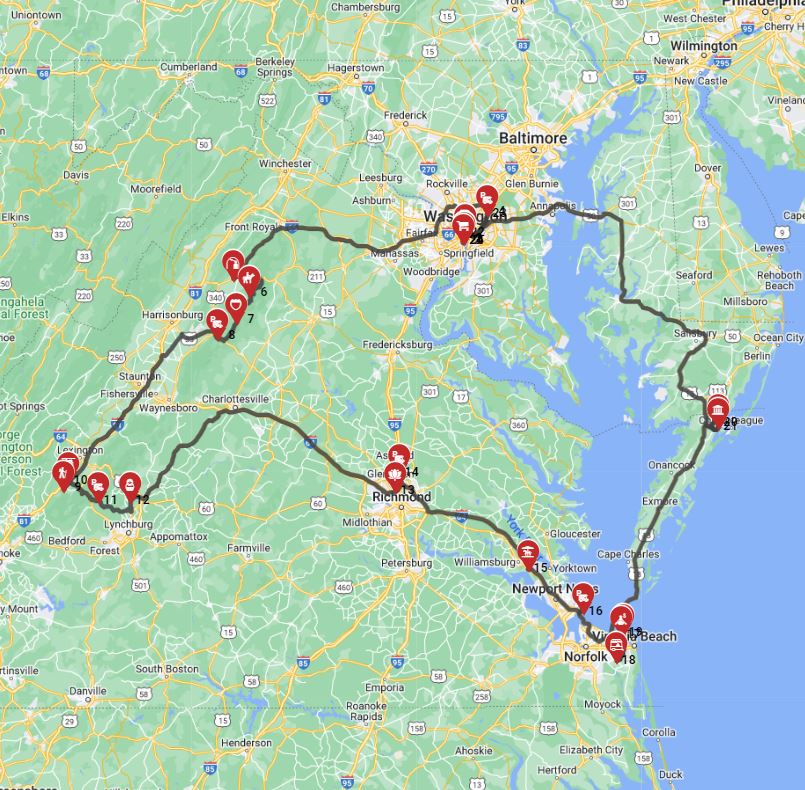
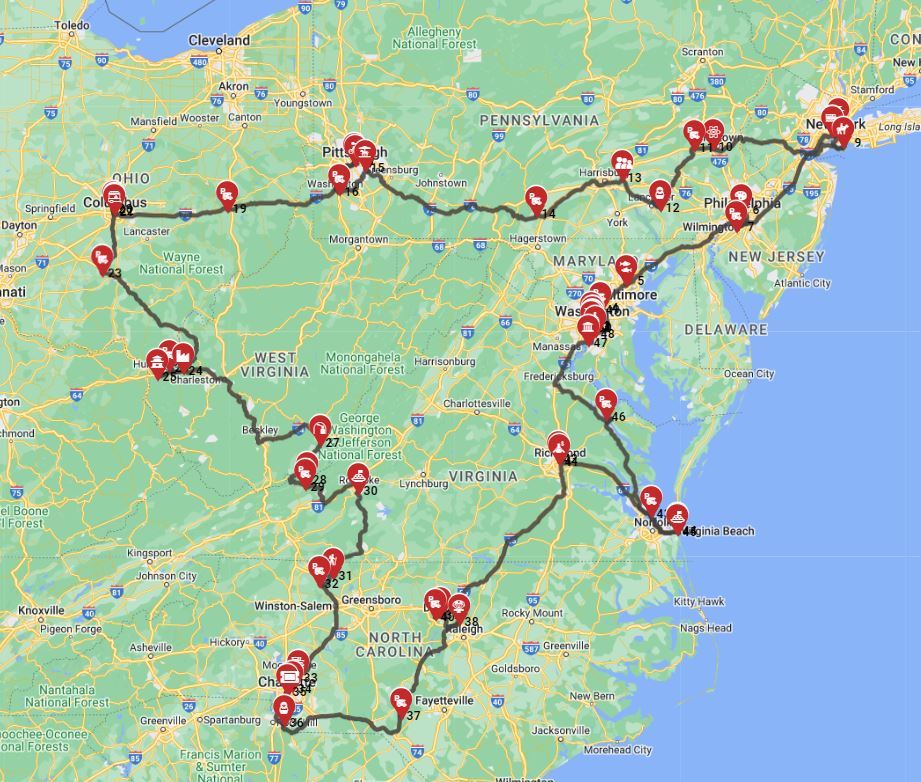
Washington DC Roundtrip - South
🎬 Video coming soon
Final Thoughts
Traveling by rented RV from Washington DC Airport opens up a world of possibilities, offering the perfect blend of city exploration and natural escape. While navigating the capital requires a bit of foresight, especially concerning parking and local traffic patterns like those on Rock Creek Parkway, the rewards of having your mobile home base are immense. You'll have the flexibility to explore at your own pace, connect deeply with the rich history and vibrant culture of Washington DC, and easily venture into the scenic surrounding areas of Maryland and Virginia. At Bandana Caravan, we are committed to making your RV rental journey smooth and memorable. From providing clear information about licensing and road conditions to offering comprehensive support, we take care of the small details that make a big difference. Embrace the freedom of the open road and discover Washington DC in a truly unique way. Find Motorhome Rentals in Washington DCOn the routes offered through RV PLANET routes, you can itemize and track every expense along the way for easy budgeting.