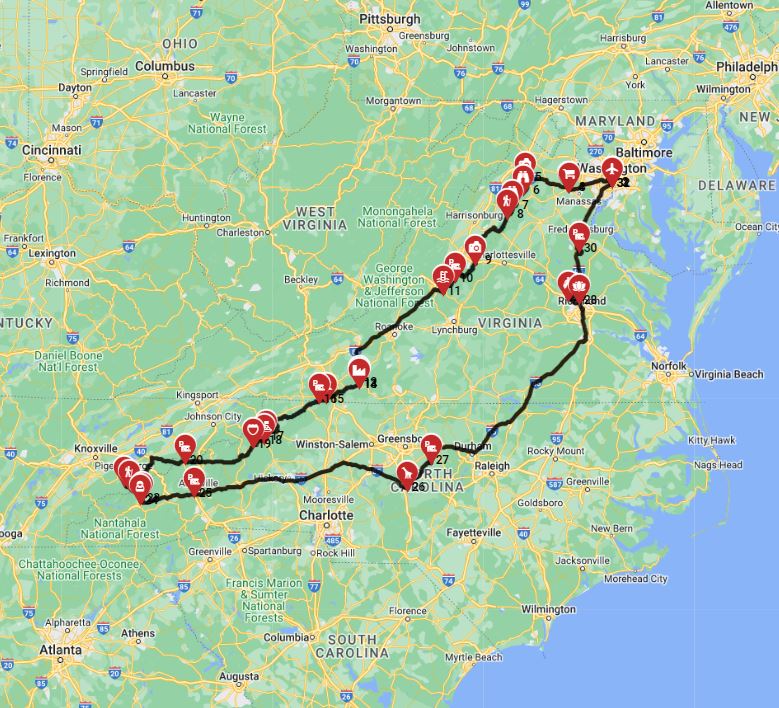
Days 1-4 — The Blue Ridge and Shenandoah Valleys
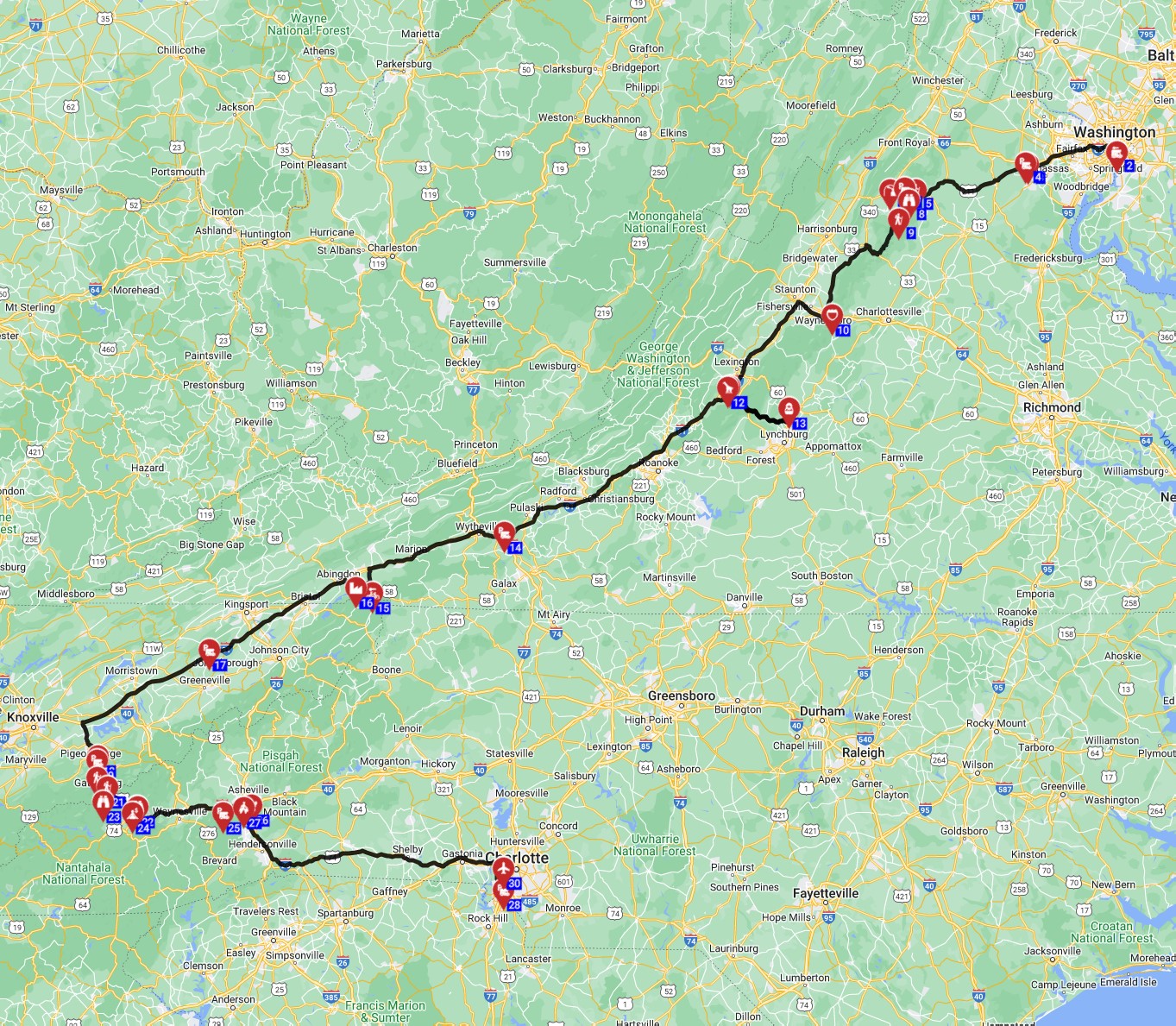
~250–350 mi across this legTransition from the capital into the rolling hills, elevated scenic byways, and deep caverns of Virginia at a steady, nature-focused pace.
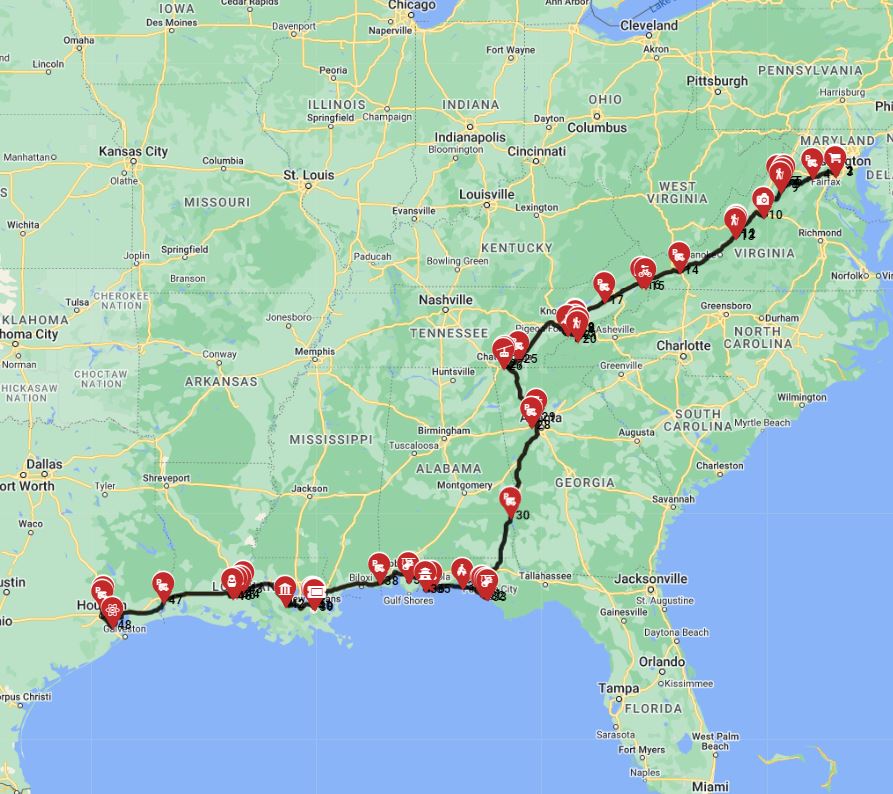
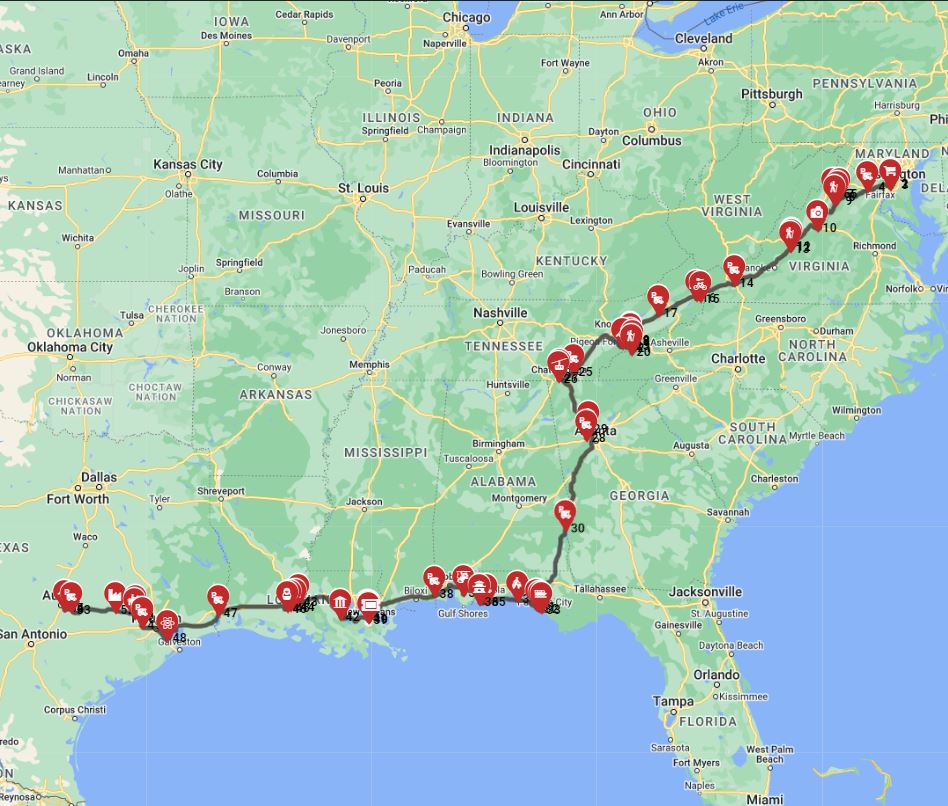
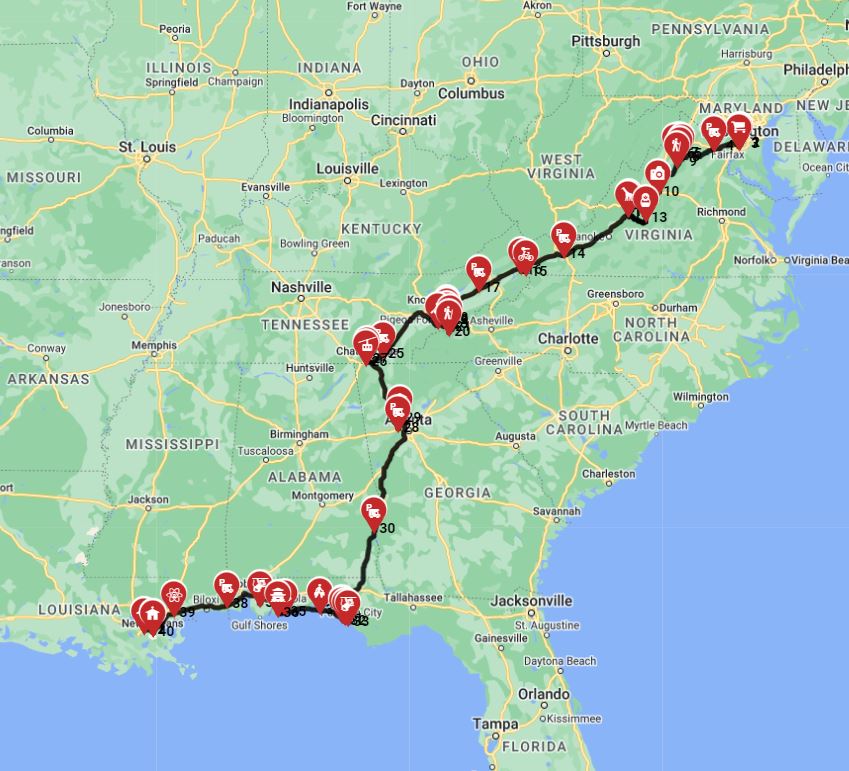 15-day route · Washington DC → New Orleans
This 15-day drive links 25 stops across 18 kinds of experience along the way.
Embark on an unforgettable 15-day motorhome road trip from the historic monuments of Washington DC to the vibrant, jazz-filled streets of New Orleans. Spanning 1,675 mi, this journey weaves through the heart of the American South, offering an incredible blend of mountain landscapes, deep-rooted heritage, and coastal beauty. Whether you are seeking high-elevation hikes or relaxing beachside sunsets, this route delivers a perfectly paced adventure.
| Start / End | Washington DC to New Orleans |
|---|---|
| Duration | 15 Days |
| Distance | 1,675 mi |
| States Crossed | Alabama, Florida, Georgia, Louisiana, Mississippi, North Carolina, Tennessee, Virginia |
| Ideal For | Families, Nature Enthusiasts, History Buffs |
| Best Season | Spring (April-May) and Autumn (September-October) |
This 1,675 mi journey is a masterclass in varied landscapes, making it ideal for the slow-travel lifestyle an RV provides. You will transition seamlessly from the rolling, forested peaks of the Appalachian Mountains down to the subtropical environments of the Gulf Coast. Traveling by motorhome allows you to wake up to misty mountain sunrises in national parks and fall asleep to the sound of ocean waves a week later. With ample state parks, wide highways, and RV-friendly infrastructure across Virginia, the Carolinas, and the Deep South, you can immerse yourself in the natural features and local heritage without feeling rushed.
To truly appreciate this route, we recommend breaking the 15 days into four distinct regional stages. This prevents driving fatigue and allows you to savor the cultural shifts from the Mid-Atlantic to the Deep South.
Leaving the capital behind, your first few days are defined by sweeping mountain vistas, subterranean wonders, and historic sites. The driving here is scenic and winding, encouraging a slower pace as you navigate the elevated roadways of Virginia. Expect a mix of hiking, wildlife viewing, and heritage stops.
As you cross into North Carolina and Tennessee, the elevation increases and the forests dense up. This stage is dedicated to outdoor adventure. From river tubing to summit hikes, the focus is on natural features. The pacing here should be relaxed, allowing for full days spent outside the RV exploring the trails and local industry of the Appalachian region.
Descending from the mountains, the route pushes through Georgia and Alabama. The landscape flattens into lush, green expanses, and the driving becomes straightforward. This leg offers a mix of amusement parks, aquariums, and historical points of interest, making it highly engaging for families.
The final stretch brings you to the waters of Florida, Mississippi, and Louisiana. Here, the rhythm shifts to coastal relaxation and scientific discovery. You will trade mountain trails for beaches, catamarans, and space centers before culminating in the historic, architectural splendor of New Orleans.
While the full day-by-day itinerary is available inside RV PLAN, here is a taste of the experiences that define this route:
We recommend 15 days for this 1,675 mi journey. This averages out to roughly 110-120 mi per day, which is the sweet spot for RV travel. It ensures you spend more time exploring trailheads, museums, and beaches than you do sitting behind the wheel.
Absolutely. It is one of the most diverse cross-country routes in the eastern United States. You get the perfect trifecta of RV travel: national parks, coastal beaches, and culturally rich cities, all in a single, cohesive trip.
This route is tailor-made for families and nature lovers. The abundance of zoos, aquariums, and amusement parks keeps younger travelers entertained, while the extensive hiking areas, canoe/kayak options, and natural features provide endless adventure for outdoor enthusiasts.
Spring (April to May) and Autumn (September to October) are ideal. Spring offers blooming mountain laurels and comfortable hiking weather, while Autumn provides spectacular fall foliage in the Shenandoah and Smoky Mountains. Summer is doable but brings high humidity in the Deep South and larger crowds in the national parks.
When planning your RV rental for a Washington DC to New Orleans trip, there are a few logistical elements to keep in mind. Because this is a point-to-point journey, you will likely incur a one-way drop fee. This fee varies by supplier but is a standard part of cross-country rentals. Additionally, review your mileage package; with a base distance of 1,675 mi, you will want a package that covers at least 1,900 mi to account for scenic detours, campground runs, and exploring national parks.
In terms of vehicle categories, a Class C motorhome is incredibly popular for families on this route, offering a great balance of living space and maneuverability on mountain roads. If you are traveling as a couple, a Class B campervan might be more fuel-efficient and easier to park in tighter coastal or historical areas. For missing campground specifics or detailed permit requirements for the national parks, always check the comprehensive guides on RV PLANET.
Ready to hit the road and experience the ultimate journey from the capital to the coast? View the full itinerary and book your RV on RV PLANET today.
See the full polyline, drag stops to customize, and get live pricing in one click.
Open this route in RV PLAN →| Nearby RV rental stations | Cruise America- 26-E (Washington DC) |
|---|---|
| Sample RV cost — 4 travelers (Class A / B / C) | Check live prices for your dates |
| Estimated fuel cost (total) | $550–$700 |
| Estimated campground cost (total) | $650–$950 |
| Estimated attractions & entrance fees — family of 4 | $300–$550 |
| Estimated groceries / self-catered food — family of 4 | $600–$850 |
| Live availability & pricing | Check live availability & pricing on Rent Motorhome → |
Estimate assumptions: Estimates assume a Class C motorhome averaging 10 mpg, a mix of state park and private campground stays, and travel during the shoulder season. All figures are estimates — verify on Rent Motorhome and RV PLAN for your travel dates.
A high-level look at how the route flows in stages. The exact daily stops, overnight picks, and detour options are built for you inside RV PLAN — open the route to see the full plan.
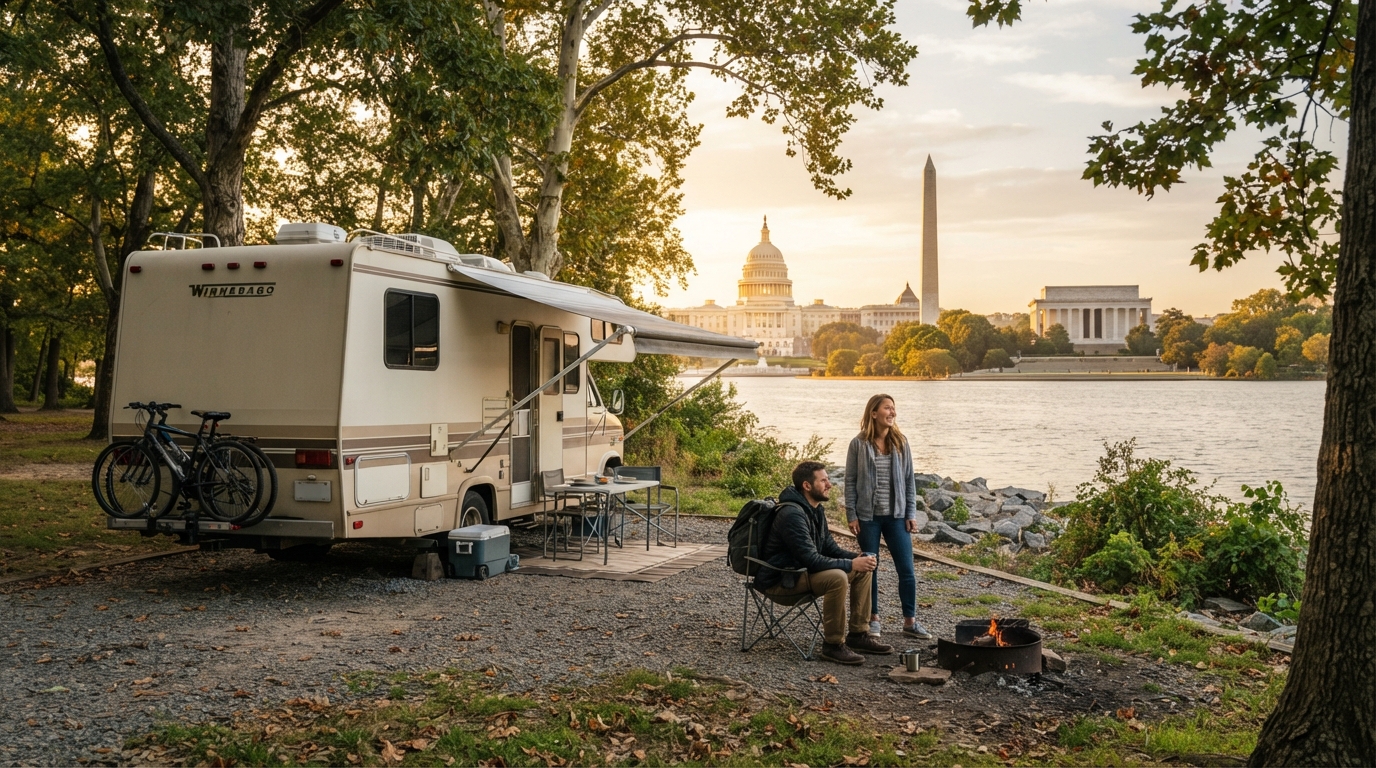
Transition from the capital into the rolling hills, elevated scenic byways, and deep caverns of Virginia at a steady, nature-focused pace.
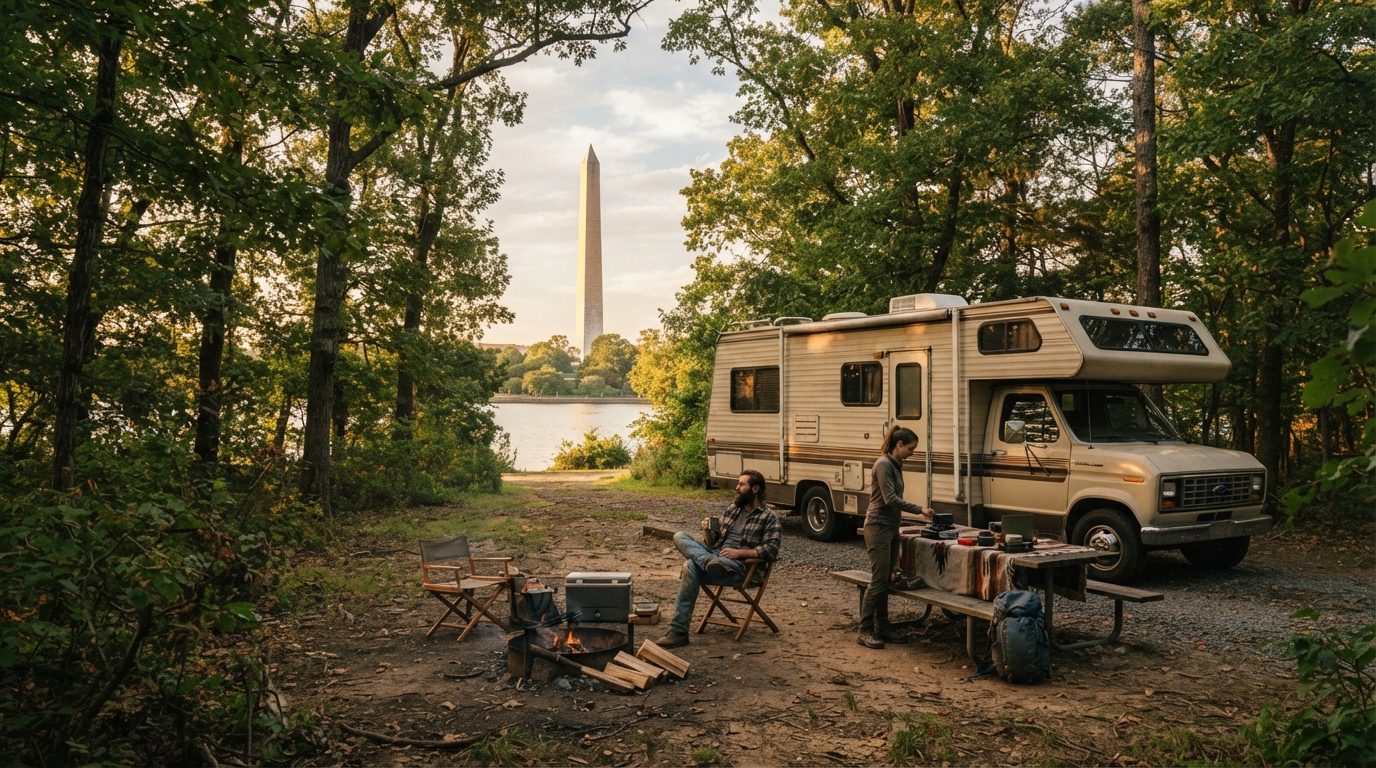
Navigate the high elevation trails and winding mountain rivers of the Carolinas and Tennessee, allowing plenty of time for slow outdoor exploration.
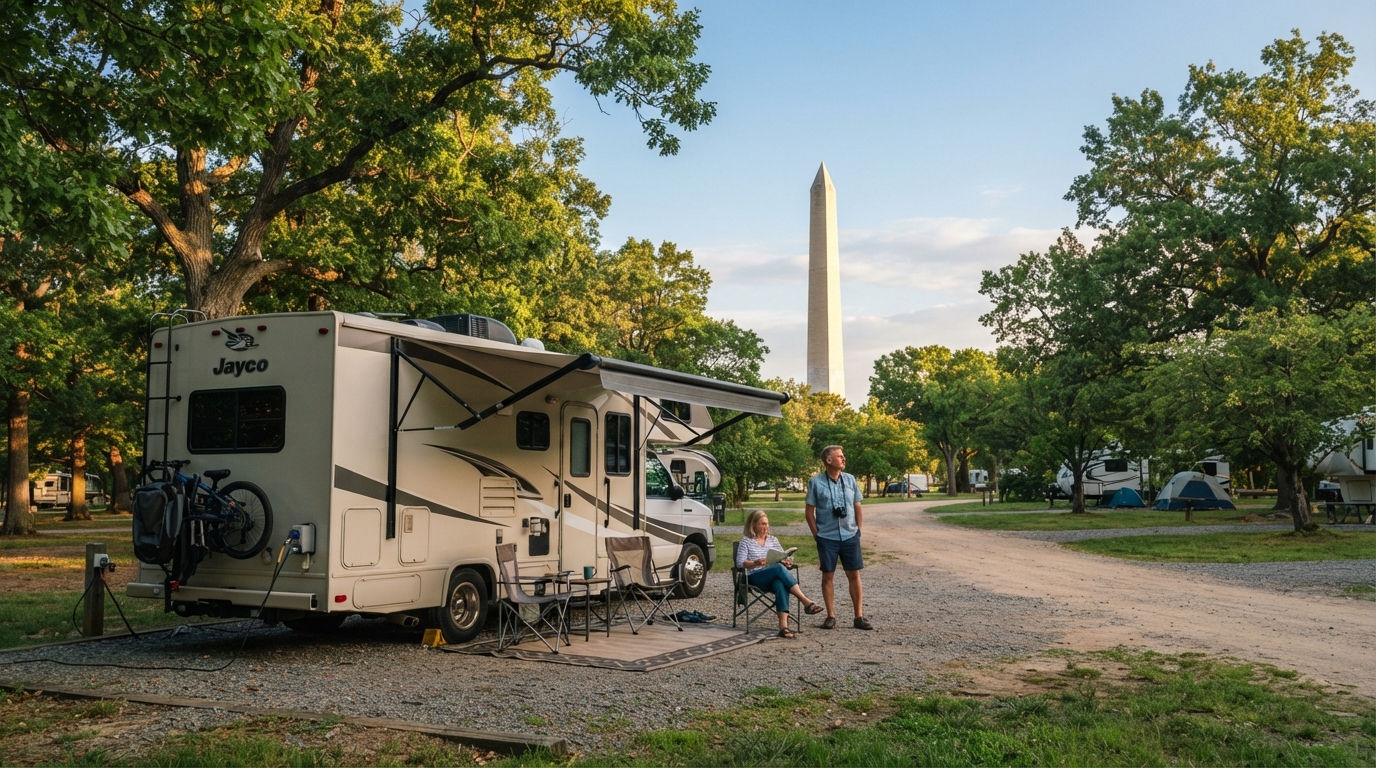
Descend from the mountains into the historic landscapes and wildlife-rich regions of Georgia and Alabama, enjoying flatter, easier driving.
Cruise along the southern coastline, experiencing beaches and science centers before arriving in the vibrant heart of Louisiana.
Total cost for this 15-day itinerary depends on the rig you pick, the pickup season, mileage add-ons, and any one-way drop-off fee across the 1,675 mi route. Check live availability and a real quote for the Washington DC → New Orleans pickup window on Rent Motorhome.
Live availability & pricing for this exact route
Prices update daily. See the full breakdown — nightly rate, taxes, one-way fee, mileage package — for your travel dates.
These are real vehicles in our Washington DC pickup fleet that fit a multi-week western U.S. itinerary. Configure dates on rvplan.net to see live availability and the total trip cost for the exact rig you want.
| Motorhome | Class | Sleeps | Length | Transmission |
|---|---|---|---|---|
| C-30 Cruise America- 26-E |
Class C - Alcove | 7 | 29.9 ft | Auto Transmission |
| CA-25 Cruise America- 26-E |
Class C - Alcove | 5 | 24.9 ft | Auto Transmission |
| C-21 Compact Plus Cruise America- 26-E |
Class C - Alcove | 4 | 21.0 ft | Auto Transmission |
| Ultra Compact C18 Cruise America- 26-E |
Class TC - Truck Camper | 2 | 19.5 ft | Auto Transmission |
Pick your dates below and we'll open the live RV PLANET booking flow for the Washington DC → New Orleans route.
Picking up in Washington DC but want a shorter loop or a different destination? Compare these RV PLANET itineraries that depart from the same depot:
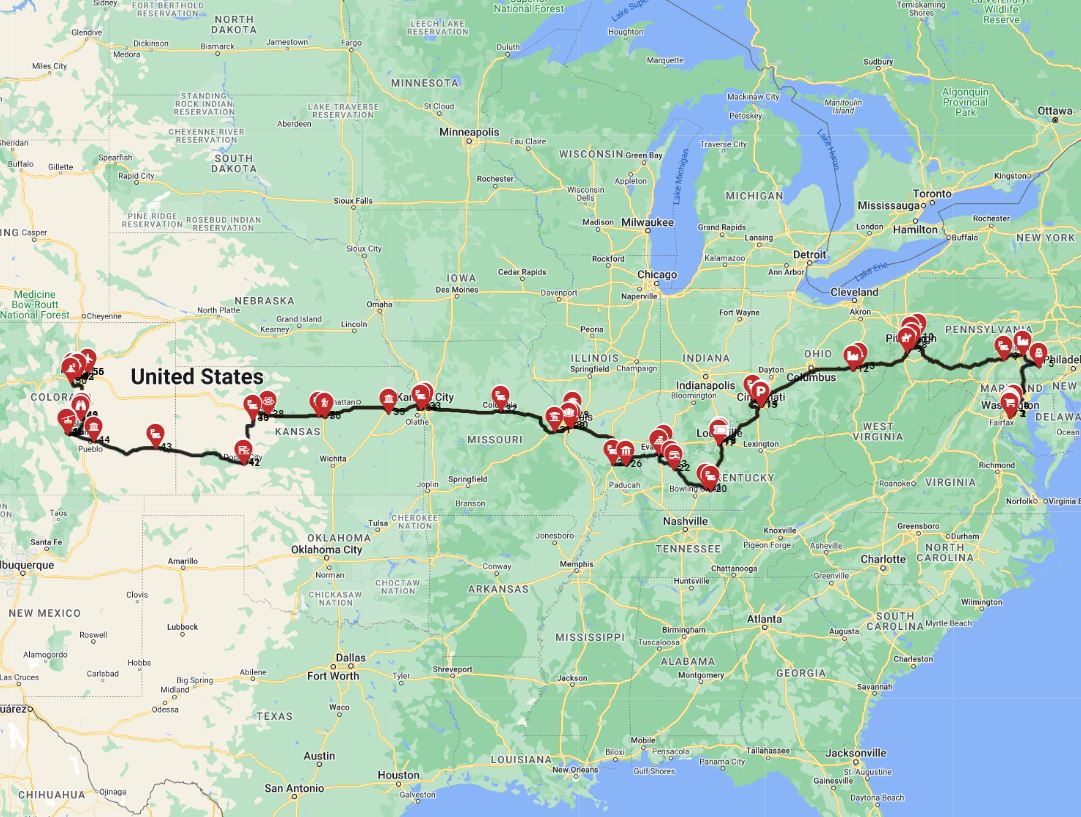
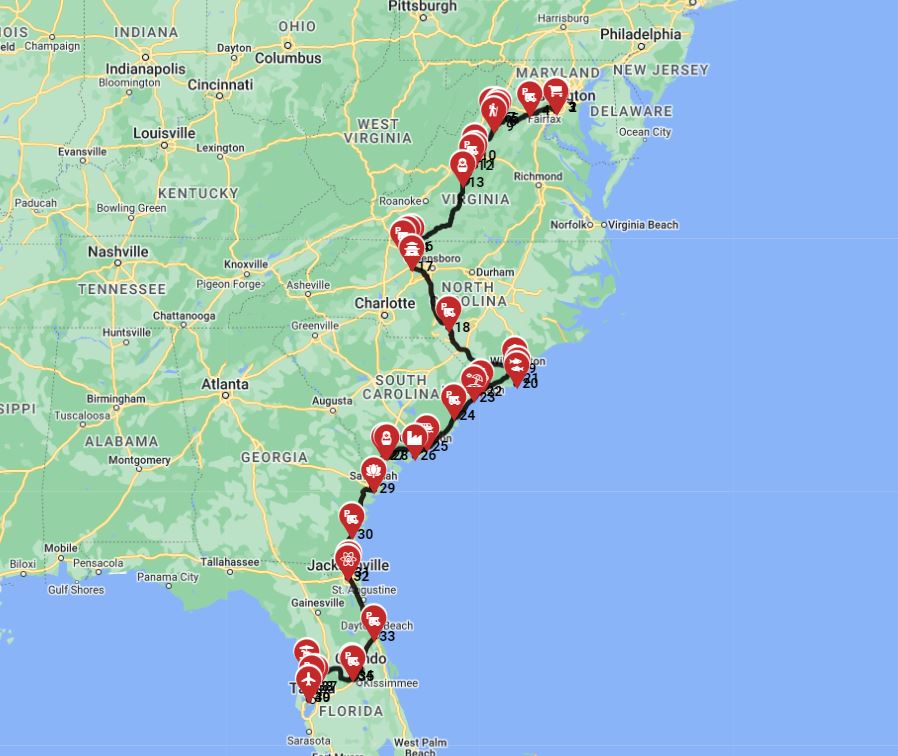
Ready-made multi-day routes — pair a trip with any RV above.
Practical guides for planning your Washington DC to New Orleans road trip.
The total cost depends on your chosen RV size, the season you travel, and fuel prices. Expect to budget for the nightly rental rate, campground fees, fuel for 1,675 mi, and a one-way drop fee. Check the live pricing widget below for current rental rates.
A Class C motorhome is ideal for families, offering enough space while still being manageable on the winding roads of the Appalachian Mountains. Couples might prefer a Class B campervan for easier parking in cities like New Orleans.
Yes, traveling from Washington DC to New Orleans is a classic one-way route. Most major RV rental suppliers allow one-way rentals between these locations, subject to availability.
For travel during the peak Spring or Autumn seasons, it is highly recommended to book your RV 4 to 6 months in advance to secure your preferred vehicle and lock in availability.
One-way fees are typically charged as a separate line item by the rental supplier. When you generate a quote on RV PLANET, the one-way fee will be clearly outlined in your pricing breakdown.
Prices depend on the season, the RV class and how long you rent. Enter your travel dates in the search above for a live quote across our suppliers.
We suggest about 15 days to cover 1,676 miles at a comfortable pace. That works out to roughly 112 miles a day, with the longest single day around 190 miles.
The route runs one-way from Washington DC to New Orleans, passing through Alabama, Florida, Georgia, Louisiana, Mississippi, North Carolina, Tennessee, Virginia.
Any RV class can drive this route. Compact campervans are easier to handle on mountain and canyon roads and to park in towns, while larger motorhomes give families more living and sleeping space. Compare classes in the search to find the right fit.
Yes — this is a one-way trip, picking up in Washington DC and dropping off in New Orleans. One-way fees vary by supplier, and several nearby cities also work as starting points (see the route overview above).
Planning an RV trip? Add Bandana as a preferred source.
 Please wait...