In This Guide
- Can You Drive an RV in Washington DC? License & Age Rules
- Road Conditions & Terrain in Washington DC
- RV Size Limits, Bridges & Restricted Zones
- Fuel: Diesel vs. Petrol & Cost per 100 km
- Tolls, Vignettes & Border Rules
- Driving Tips for RV Rental Travelers
- Recommended RV Class for Washington DC Roads
- Should I Choose a Compact Van Instead of a Large RV in Washington DC?
- Can I Park Anywhere? Free & Wild Camping Rules in Washington DC
- Can I Drive an RV Into the City Center? Heights, Tunnels & Local Signage
- Do you need a special license to drive an RV in Washington?
- Is Washington, D.C. RV friendly?
- Are RVs allowed in DC?
- How much does it typically cost to insure an RV?
- Who is the best insurance company for RV?
- How much is insurance on a $200,000 RV?
Embark on a unique romantic RV journey to Washington DC, where history and culture meet the open road. Imagine the freedom of exploring the nation's capital with your partner, having your cozy mobile home with you, ready for intimate evenings under the stars after a day of sightseeing. Our comprehensive guide provides everything you need for a memorable RV rental experience in Washington DC, from essential driving tips to recommended routes for couples. We believe in full transparency: no hidden fees or surprises, just clear information to help you plan the perfect escape. For live availability and current prices, start with our RV Rental Washington DC - Complete Guide 2026 guide.
Can You Drive an RV in Washington DC? License & Age Rules
A standard Class D driver's license is sufficient for operating most recreational vehicles for personal use in Washington D.C. or anywhere in the U.S. Most rented RVs, including Class A, B, and C motorhomes, fall under the 26,000 lbs weight limit and do not require a special commercial driver's license (CDL). The minimum age to rent an RV through Bandana is 21 years, and unlike some other rental services, we have no young driver surcharges or vehicle class restrictions based on age, ensuring your romantic RV trip to Washington DC is accessible. For visitors from non-English-speaking countries, an International Driving Permit (IDP) is recommended to accompany your valid home country license, though it is not mandatory in most cases.
Bandana RV is a true RV specialist, not just a travel agency side department. We genuinely know RV travel and love helping people discover it. We're with travelers before, during, and after their booking, offering expert advice and support every step of the way.
Road Conditions & Terrain in Washington DC
Washington D.C. features a dense urban environment with generally well-maintained roads, but heavy traffic is common, especially during peak tourist seasons and rush hours. The terrain within D.C. itself is relatively flat, making for smooth driving, though surrounding areas in Maryland and Virginia may present rolling hills. Expect some historic districts, such as Georgetown, to have cobblestone streets and varying road quality in older areas. Maneuvering larger RVs can be challenging due to narrow streets, frequent intersections, and high traffic volume, so driving slowly and carefully is always the best approach. Careful route planning is essential to avoid congestion and ensure a smooth RV journey, allowing you to focus on the romance of your trip rather than traffic stress.
🎬 Video coming soon
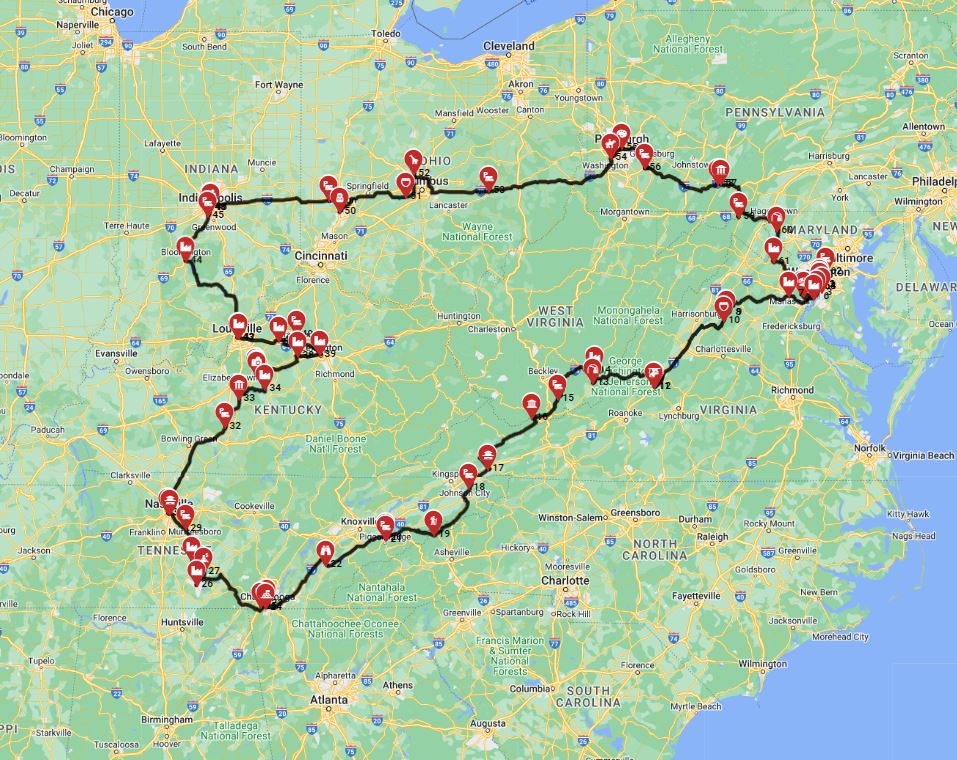
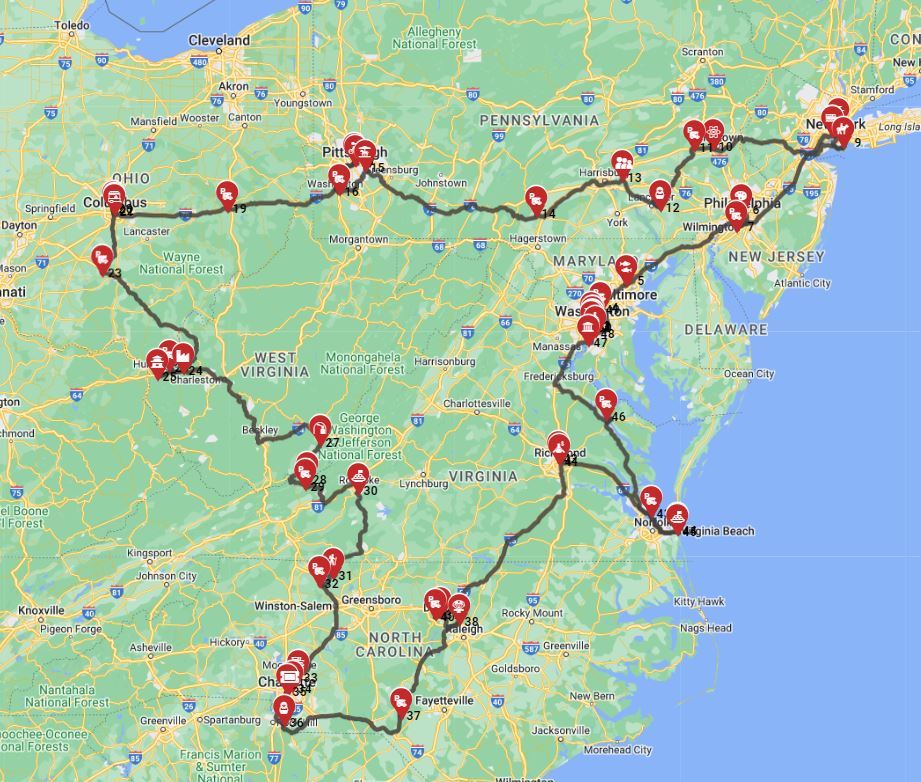
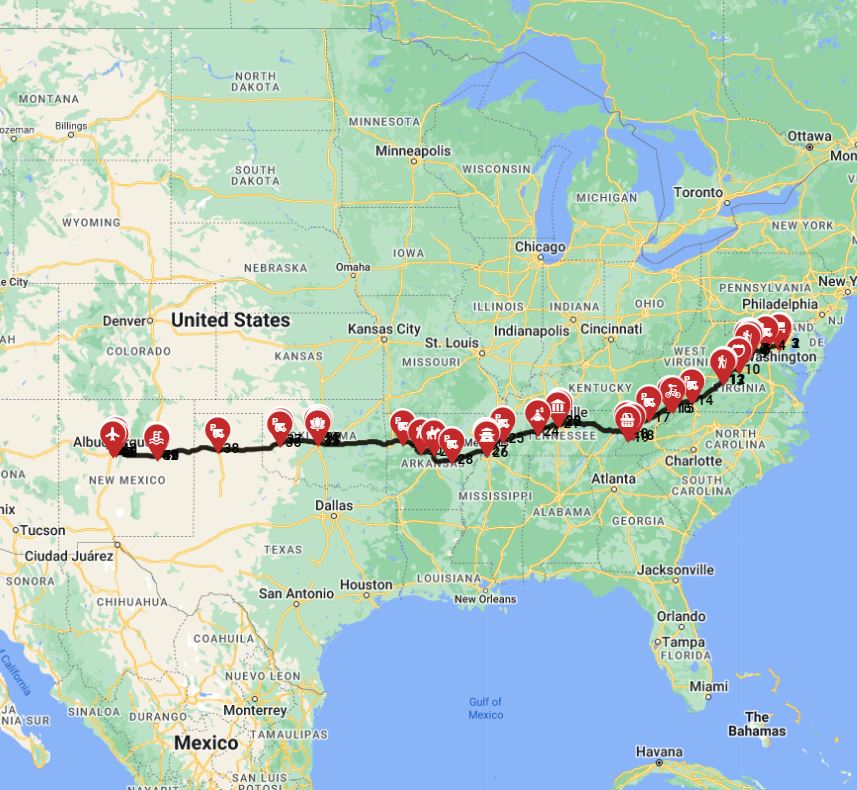
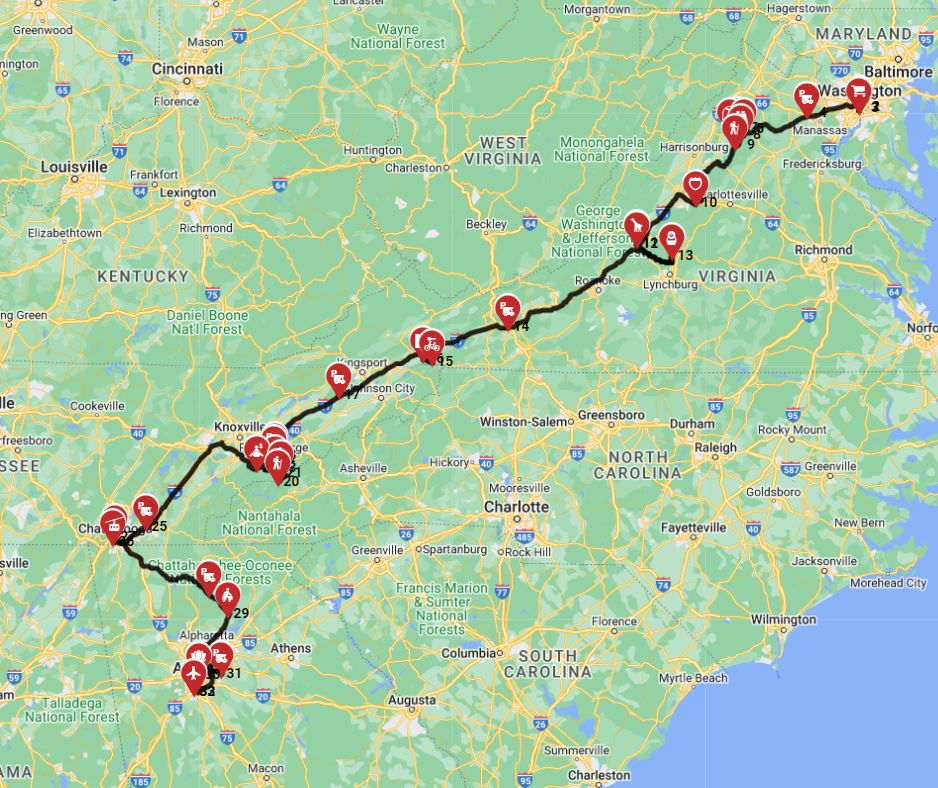
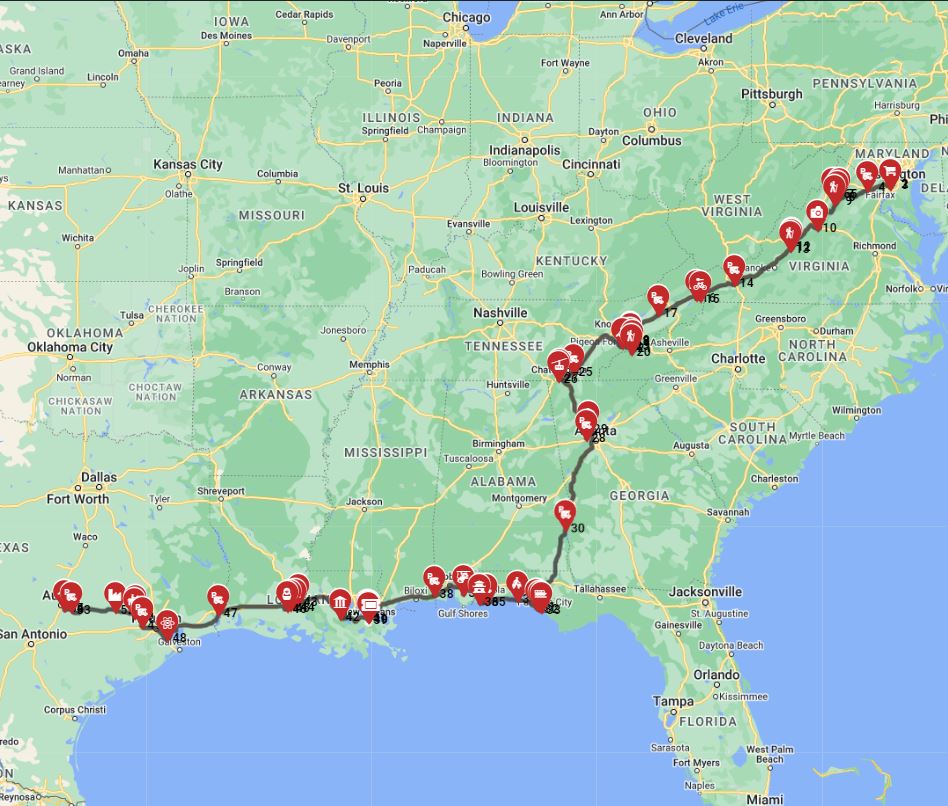
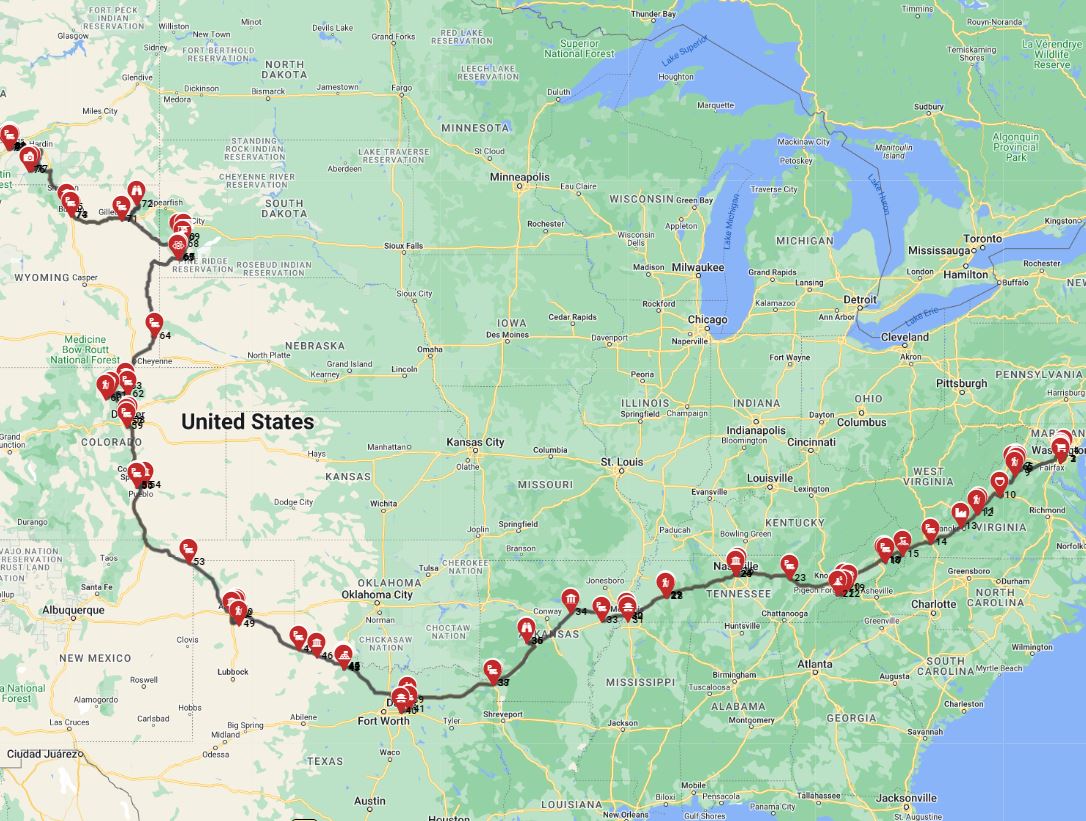
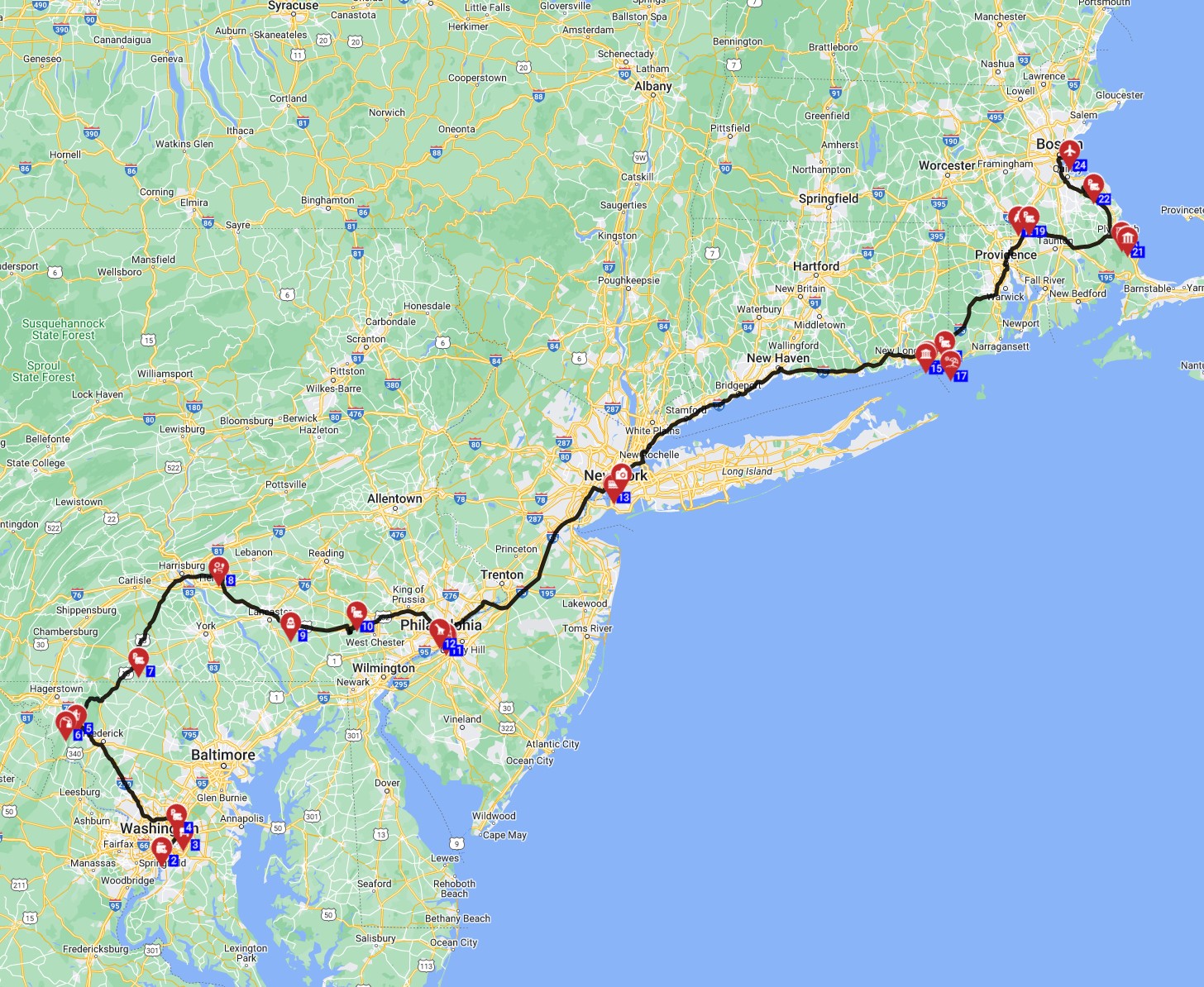
For finding campsites and campgrounds during your trip, we recommend using RV PLANET (rvplan.net) - a great resource for locating available spots along your route, ensuring you always have a comfortable place to stay. You can find detailed itineraries, like the "Chicago to Washington DC - Route of Roots" (16 days, 2470.2 km), which includes 2 Museum and 2 Historical Site stops, and helps you navigate from the Rust Belt right into the heart of the nation's founding.
RV Size Limits, Bridges & Restricted Zones
While there are no blanket RV size limits preventing entry into Washington D.C., low bridges and narrow streets pose challenges that require careful attention from RV drivers. Specifically, drivers must pay close attention to posted height and weight restrictions, particularly on older bridges and tunnels, such as those along the scenic Rock Creek and Potomac Parkway. No specific environmental zones currently restrict RVs in Washington D.C., but always check for updated local regulations before your trip. For larger Class A and C motorhomes, meticulous route planning is advisable, often opting for routes outside the immediate city center and utilizing public transportation for inner-city exploration. Drive slowly and carefully, and you can drive almost anywhere without issues. No need to stress - just use common sense and pay attention.
Our goal at Bandana RV is full transparency: no hidden fees, no surprises in your RV rental Washington DC. We provide all the information you need upfront to make your trip planning smooth and easy.
Fuel: Diesel vs. Petrol & Cost per 100 km
Most motorhomes in Bandana's global fleet use either petrol (gasoline) or diesel fuel, both widely available across the U.S. and Washington D.C. areas at various service stations along major interstates like I-95 and I-270. Class SI - Semi-integrated RVs typically consume 10-11 Liters/100 km, while Class C - Alcove RVs use 10-12 Liters/100 km. Class B - Camper Vans, such as the "rv rental denver example Category Van" or "hire campervan example Paradise S/T", are generally more fuel-efficient, averaging 8-10 Liters/100 km and are ideal for couples. Assuming an average fuel cost of $1.05 per liter (approximately $4.00/gallon) in the D.C. area, travelers should budget roughly $10.50-$12.60 per 100 km for larger RVs and $8.40-$10.50 per 100 km for campervans. For managing all your trip expenses, from fuel to campground fees, RV PLANET routes allow you to itemize and track every cost for easy budgeting, ensuring no surprises on your romantic escape. On the routes offered through RV PLANET routes, you can itemize and track every expense along the way for easy budgeting.
Bandana is a true RV specialist, offering unbiased information and a 25% planning discount when you use rvplan.net to craft your itinerary. This makes planning your RV trip to Washington DC both easy and affordable.
Tolls, Vignettes & Border Rules
Washington D.C. and its surrounding areas in Maryland and Virginia have various toll roads, bridges, and tunnels, so understanding these is key for RV travel. For example, parts of I-95, I-495 (Capital Beltway), and the Dulles Toll Road near Washington Dulles International Airport (IAD) are tolled. There are no 'vignettes' (time-based road tax stickers) required for RVs in the U.S. or D.C. Electronic toll collection systems like EZ-Pass are prevalent, and many toll booths no longer accept cash, making it highly recommended to obtain an EZ-Pass or check if your rental RV includes a transponder to avoid fines and streamline travel. Plan your route to anticipate tolls, especially when approaching D.C. from neighboring states, as crossing state lines into the metropolitan area is common. You can always check for detailed toll information on our "RV Rental Virginia - Complete Guide 2026" to plan your route through the wider region.
We believe in full transparency, providing all necessary information, so you experience no hidden fees or surprises when dealing with tolls.
Driving Tips for RV Rental Travelers
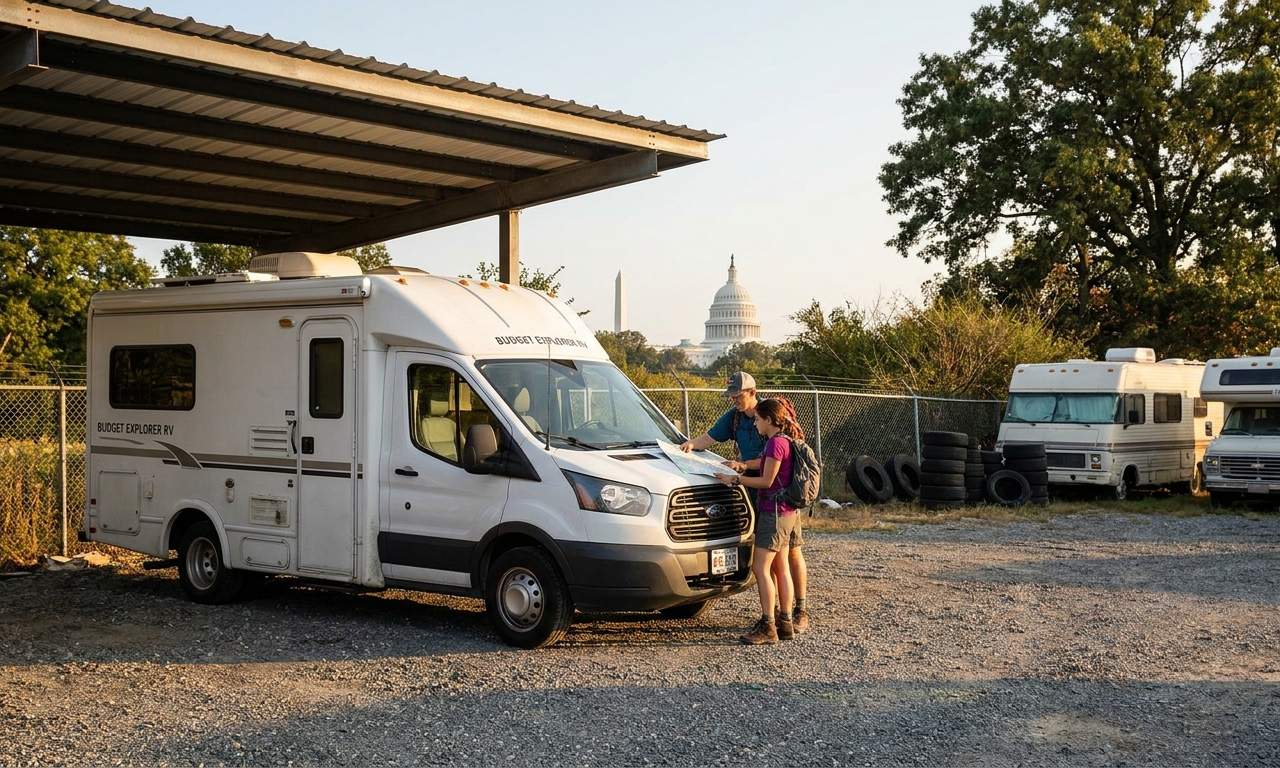
For a smooth RV rental trip to Washington DC, prioritize careful route planning, especially around landmarks like the National Mall and the White House. Utilize GPS with RV-specific settings to avoid low bridges (e.g., along Rock Creek Parkway), narrow streets, and heavy traffic congestion that are common in urban D.C. Consider parking your RV at a comfortable campground outside the city, such as Cherry Hill Park in College Park, MD, or Pohick Bay Regional Park in Lorton, VA, and use D.C.'s extensive Metro and bus system for sightseeing. D.C. traffic can be challenging; always drive defensively, be aware of pedestrians and cyclists, and allow extra travel time, especially during rush hours on major arteries like I-395 and I-66. No need to stress - just use common sense and pay attention when driving. For urban exploration, a Class B Camper Van, approximately 5.8 meters long, offers the best agility, or you might consider using a towed car for city exploration if your RV rental allows. Always lock your RV, secure valuables, and choose reputable campgrounds for overnight stays to ensure security and safety, especially in an urban environment like D.C.
Travel slowly, max 100-150 km per day on average, to fully immerse yourselves in the experience, connect to the culture, the food, and the scenery. For a tailored romantic getaway, explore our "RV Travel Guide to Washington DC - Tips and Top Spots 2026" for local insights.
Recommended RV Class for Washington DC Roads
For navigating the Washington D.C. area, a Class B - Camper Van or a Class SI - Semi-integrated RV is often recommended for a balance of comfort and maneuverability, particularly for couples. Class B Camper Vans, like the "rv rental denver example Category Van" with its features such as Front Air condition and ideal for a couple, or the "hire campervan example Paradise S/T" which also fits couples and is small in size, offer the best agility for urban driving and parking near public transit hubs like those connecting to the Metro. These vehicles typically average 5.8 meters in length. Class SI Semi-integrated RVs, averaging 6.9 meters, provide more living space while still being more manageable than larger Class A or C models, fitting well for a couple desiring a bit more room. These smaller classes offer better clearance and are less prone to issues with low bridges or tight turns common in urban settings, allowing you to confidently explore the romantic routes around Washington DC.
As true RV specialists, we help you find the ideal motorhome from our direct partnerships with 50+ leading RV suppliers worldwide, including El Monte and Cruise America, ensuring you get the perfect fit for your Washington DC adventure.
Should I Choose a Compact Van Instead of a Large RV in Washington DC?
Choosing a compact van (Class B Camper Van) over a larger RV for a Washington D.C. trip offers significant advantages in urban maneuverability and parking ease, especially for couples. While larger RVs (Class C or Class A) provide more indoor space and amenities, their length (average 7.5 meters for Class C/A) and height can make driving in D.C.'s dense traffic and navigating parking extremely challenging near sites like the Lincoln Memorial. A compact van, such as a "Category Van" or "Active Standard" (both ideal for a couple and RV size - Small), allows for easier access to areas closer to public transport and potentially allows for day parking in some commercial lots that might accommodate van-sized vehicles. However, if your primary goal is to relax at a distant campground like Prince William Forest RV Campground and commute into the city daily, the additional comfort and space of a larger RV might still be preferred for extended stays, especially for families. Remember to travel slowly, averaging 100-150 km per day, to enjoy your Washington DC RV rental experience fully.
Our 24/7 pre-booking support is here to help you weigh these options, offering personalized advice to choose the best RV for your specific Washington DC itinerary. We want you to live the journey, and we handle the details from day one until your booking is confirmed.
Can I Park Anywhere? Free & Wild Camping Rules in Washington DC
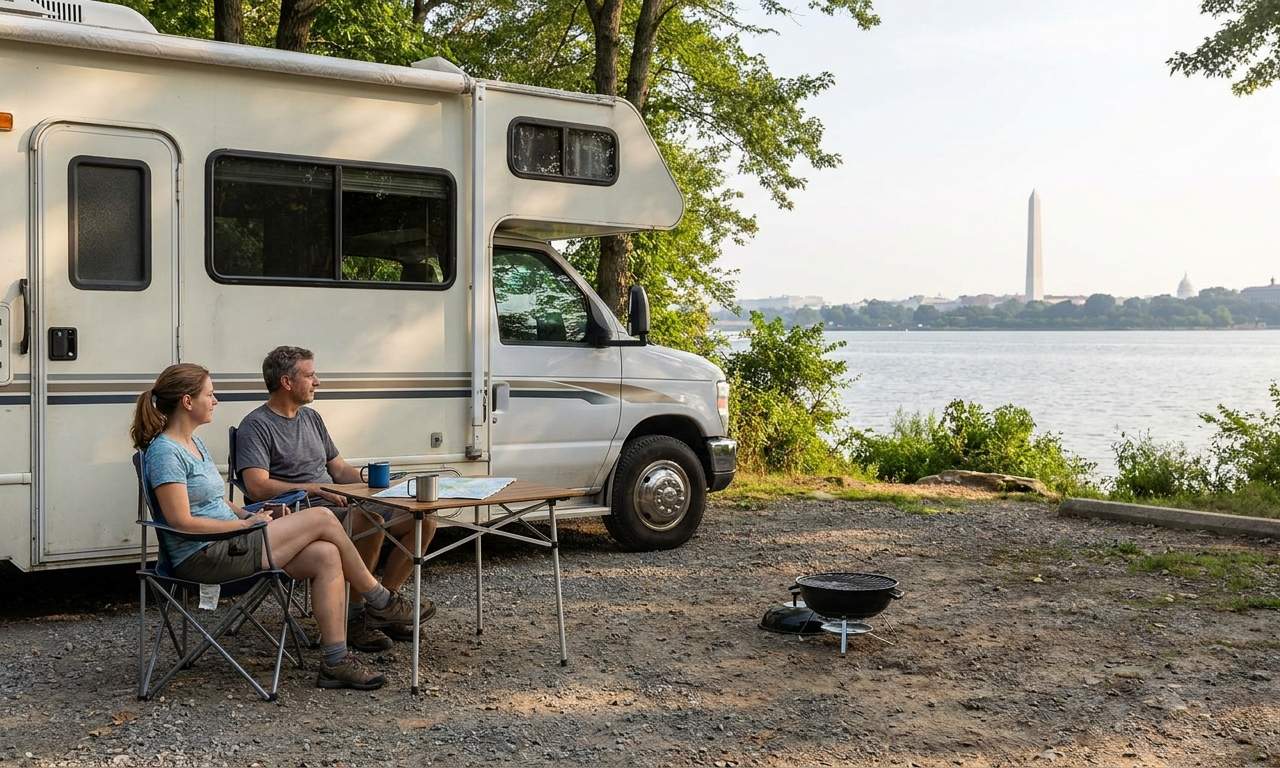
Free and wild camping (boondocking) is generally not permitted and is extremely difficult within Washington D.C. proper due to strict urban regulations and lack of suitable spaces. Overnight RV parking on city streets is typically illegal or heavily restricted and unsafe, with parking enforcement actively patrolling areas near the Capitol Building and Smithsonian museums. Designated RV campgrounds outside the city, in neighboring Maryland and Virginia, are the only legal and practical option for overnight stays. Popular choices include Cherry Hill Park in College Park, MD (about 10 miles from downtown DC), or Pohick Bay Regional Park in Lorton, VA (about 25 miles south of DC), both offering convenient public transport access. Always prioritize official campgrounds for security, amenities like fresh water and dump stations, and compliance with local laws. Rules vary by region, so always check local regulations and follow local law before parking overnight, especially in urban areas.
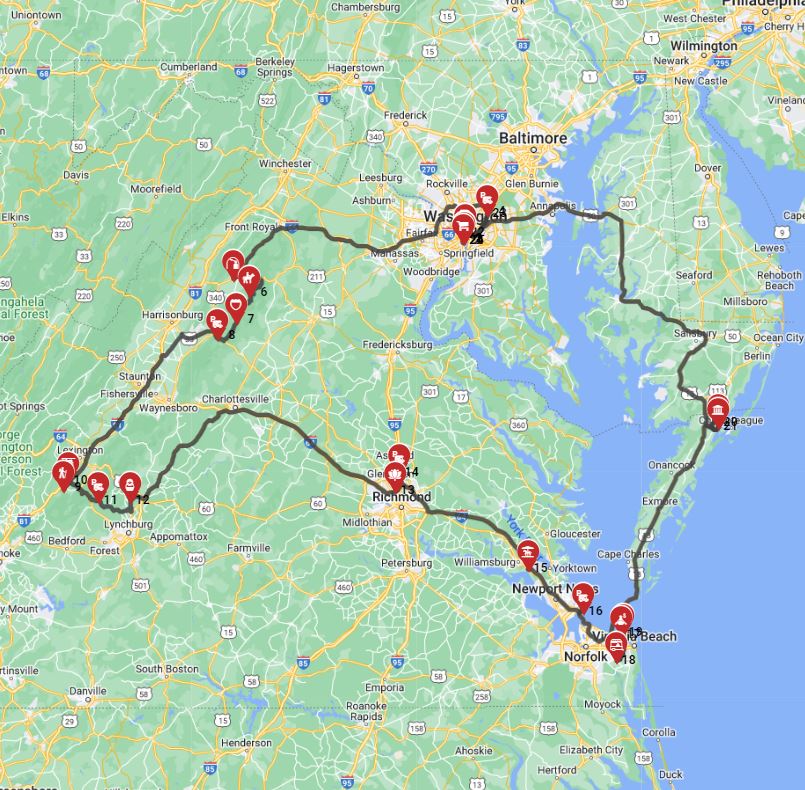
For finding the best campgrounds and detailed route plans, our sister company, RV PLANET (rvplan.net), offers 1,300+ pre-planned routes across 5 continents, including specific itineraries like the "
Can I Drive an RV Into the City Center? Heights, Tunnels & Local Signage
While generally possible to drive an RV into Washington D.C.'s city center, it is not recommended for larger vehicles due to significant challenges including heavy traffic and limited parking. Drivers must pay close attention to local signage, particularly for height limits on tunnels, such as those under the Rock Creek Parkway, and low bridges or underpasses that can catch taller RVs by surprise. Heavy traffic, narrow streets, and extremely limited parking make navigating a large RV extremely difficult and stressful around monuments like the Washington Monument. There are no specific environmental zones restricting RVs in D.C., but certain streets may be residents-only or have restricted access during special events. The most practical strategy is to park your RV at a campground outside the city and use D.C.'s efficient public transportation (Metro, bus) for inner-city exploration, offering routes from suburban areas directly to city attractions like the Smithsonian museums.
At Bandana RV, we compare final prices across 50+ suppliers, including El Monte and Cruise America, ensuring you find the easiest, safest, and most affordable way to rent an RV for your Washington DC adventure, complete with insights into local driving. Our expertise helps you understand all aspects, from vehicle specifications like a "cruise america rv rental example Explorer" with a 75 Liter fuel tank and 82 Liter fresh water tank to navigation strategies.
Do you need a special license to drive an RV in Washington?
For most recreational vehicles (RVs) under 26,000 pounds used for personal travel, a standard Class D driver's license is sufficient in Washington D.C. and across the United States. A special license is typically only required if the RV's Gross Vehicle Weight Rating (GVWR) exceeds 26,000 pounds, in which case a non-commercial Class B license may be necessary, but this is rare for rental motorhomes. The legal driving age in D.C. is 18, but RV rental companies, including those partnered with Bandana, often require drivers to be 21 years old, and there are no young driver surcharges. Foreign drivers should carry a valid license from their home country, often accompanied by an International Driving Permit (IDP), for smooth navigation through the capital region.
Is Washington, D.C. RV friendly?
Washington, D.C. is generally not considered RV-friendly for driving and parking within the immediate city limits due to heavy traffic, narrow streets, and extremely limited parking options, particularly around popular tourist areas like the National Mall. However, D.C. is RV-friendly as a destination, provided you plan to stay at one of the many well-equipped RV campgrounds located in the surrounding Maryland and Virginia suburbs, such as Capitol KOA or Adventurer Campground. These suburban campgrounds offer convenient access to the city via public transportation (Metro or bus), allowing visitors to explore D.C.'s attractions without the stress of urban RV navigation. Visitors with smaller Class B camper vans might find slightly more flexibility for day parking, but overnight street parking for any RV size is rarely legal or advisable within the city proper. For finding available spots and planning your romantic routes, RV PLANET (rvplan.net) is an excellent resource.
Are RVs allowed in DC?
RVs are generally allowed on public roads in Washington D.C., but their operation is subject to standard traffic laws and specific restrictions on vehicle size and parking. While you can drive an RV through D.C., maneuvering larger Class A or C vehicles can be extremely challenging due to congested streets, low bridges like those on the Rock Creek Parkway, and tight turns around many of the city's traffic circles. Overnight RV parking on city streets is typically prohibited or highly restricted, and there are virtually no legal boondocking options within D.C. proper. For practical and legal reasons, RVers are strongly advised to park at designated campgrounds outside the city, such as in nearby Fairfax County, Virginia, and use public transport to access D.C.'s attractions, ensuring a stress-free and enjoyable visit.
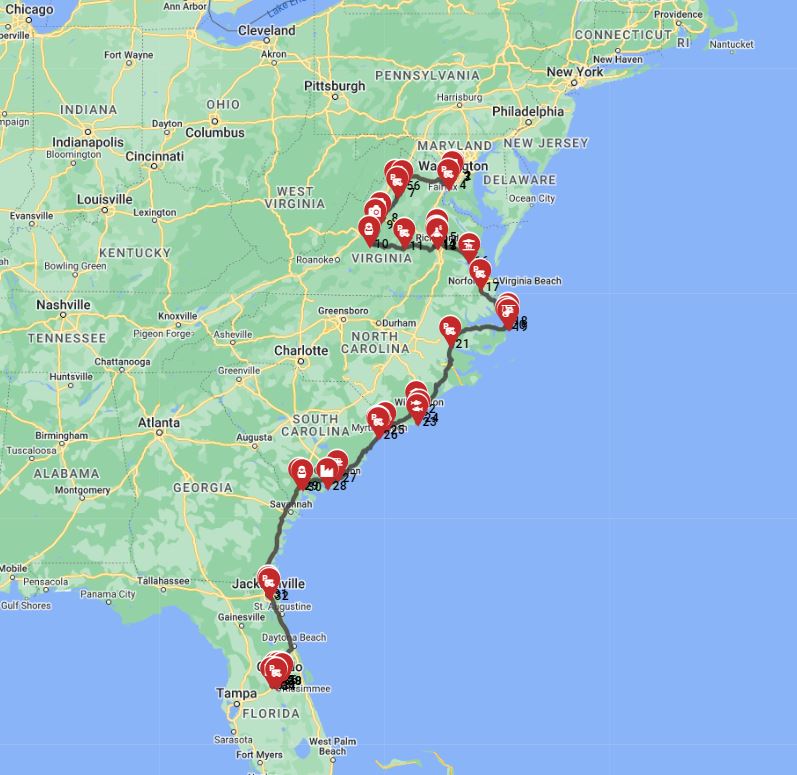
Imagine yourself on the route, perhaps traveling from
How much does it typically cost to insure an RV?
The typical cost to insure an RV varies significantly, ranging from approximately $1,000 to over $3,000 annually, depending on numerous factors such as the RV's class, value, and your driving record. Factors influencing insurance premiums include whether you rent a compact "Patagonia Camper 4x4 double cab" or a larger "rv rentals example Comfort Class", the amount of coverage (liability, collision, comprehensive), and the state where the vehicle is registered. Larger, more expensive RVs (like Class A) generally incur higher insurance costs compared to smaller Class B campervans. Many RV rental companies, including Bandana's partners, include basic liability insurance in their rental fees, but renters can often upgrade to a top-level deductible for extra peace of mind, protecting them against potential out-of-pocket expenses for vehicle damage. Bandana ensures full transparency in pricing, so you'll always know what's included and what's an optional extra.
Who is the best insurance company for RV?
Determining the 'best' insurance company for an RV is subjective and depends heavily on individual needs, preferred coverage, budget, and customer service expectations, making a personalized comparison essential. Leading RV insurance providers in the U.S. include specialized companies and major carriers like Progressive, Geico, and Nationwide, all offering various packages for your Washington DC RV rental. The best company offers comprehensive coverage options tailored specifically to RVs, competitive pricing, excellent claims service, and specific benefits like roadside assistance or personal effects coverage. It is recommended to obtain quotes from multiple providers and compare policies to find the one that best suits your specific RV type, usage, and desired level of protection. Bandana helps by having direct partnerships with 50+ leading RV suppliers worldwide, ensuring a wide range of options and expert advice for your trip.
How much is insurance on a $200,000 RV?
Insuring a $200,000 RV, typically a high-end Class A or larger Class C motorhome like a "cruise america rv rental example Explorer," will generally cost significantly more than average, potentially ranging from $2,000 to $4,000+ annually, reflecting the vehicle's higher replacement value. The higher valuation of the RV directly impacts comprehensive and collision coverage premiums, which protect against damage, theft, and other losses. Factors such as the driver's experience, claims history, chosen deductible, and the RV's usage (recreational vs. more frequent travel) will also heavily influence the final premium. Given the substantial investment, it is crucial to secure robust coverage, including liability, collision, comprehensive, and potentially specialized add-ons like uninsured motorist or personal effects coverage, for your RV rental Washington DC.
What You Shouldn't Miss
- A Stroll through the National Mall: Imagine walking hand-in-hand past iconic monuments like the Lincoln Memorial, Washington Monument, and the U.S. Capitol. Pack a picnic from your RV kitchen (check out our RV-friendly recipes playlist for ideas!) and enjoy a romantic meal on the expansive greens, a classic Washington DC experience.
- Georgetown's Charm: Explore the historic streets of Georgetown with its cobblestone pathways, boutique shops, and charming cafes. Consider an evening here for a romantic dinner at a local restaurant, easily accessible by public transport from your nearby RV campground.
- Museum Hopping (Smithsonian Institutions): Washington DC boasts a plethora of free museums. Spend a day delving into art, history, or science at institutions like the National Air and Space Museum or the National Museum of Natural History.
- Cherry Blossom Festival (Spring): If visiting in spring, witness the breathtaking beauty of the cherry blossoms around the Tidal Basin. It's a truly romantic backdrop for couples, best accessed via public transportation due to parking challenges for RVs.
- Mount Vernon Estate: Take a short drive (approximately 15 miles south) from Washington DC to George Washington's historic estate at Mount Vernon. Enjoy the scenic Potomac River views and explore the meticulously preserved mansion and gardens. Some RV campgrounds in nearby Virginia offer convenient access.
- Old Town Alexandria: Just across the Potomac River from Washington DC, Old Town Alexandria offers a charming historic waterfront, colonial architecture, and independent shops. It's an ideal spot for a leisurely afternoon, accessible via the Metro from many RV parks in the D.C. metro area.
Looking for expert insights from Avi Bandana? Top 5 Adventures - recommendations from Avi Bandana
Final Thoughts
A romantic RV adventure to Washington DC offers a unique blend of historical discovery and intimate moments. From navigating the city's iconic streets to relaxing at a serene campground just outside the hustle and bustle, you're in control of your journey. Remember, while the city center might be a challenge for larger motorhomes, planning ahead with a compact campervan and utilizing efficient public transport opens up a world of possibilities for couples.
At Bandana RV, we're dedicated to making your RV rental in Washington DC seamless and enjoyable. Our commitment to full transparency, 24/7 pre-booking support, and expert knowledge ensures you can confidently plan your trip without any hidden surprises. We handle the details, so you can truly live the journey.
Ready to create unforgettable memories with your loved one in the nation's capital? Discover top destinations, planning tips, all in one place!
Find Motorhome Rentals in Washington DC