In This Guide
- What weekly rv rental RV Rental Costs in Canada (2026)
- Seasonal Pricing - Peak vs. Shoulder vs. Off-Season in Canada
- What's Included vs. What's an Add-On
- Hidden Costs to Budget For in Canada
- How to Save on weekly rv rental RV Rental in Canada
- Is RVing in Canada expensive?
- How much does it cost to rent an RV for a week in Canada?
- How do I choose the right RV for my trip to Canada?
- What are the rules for driving an RV in Canada?
- Can I drive an RV from USA to Canada?
- How much does it cost to camp an RV in Canada?
- What documents do I need to rent an RV in Canada?
- How far in advance should I book an RV in Canada?
- What is the best time of year to RV in Canada?
- Top Cities for RV Rental in Canada
- What You Shouldn't Miss
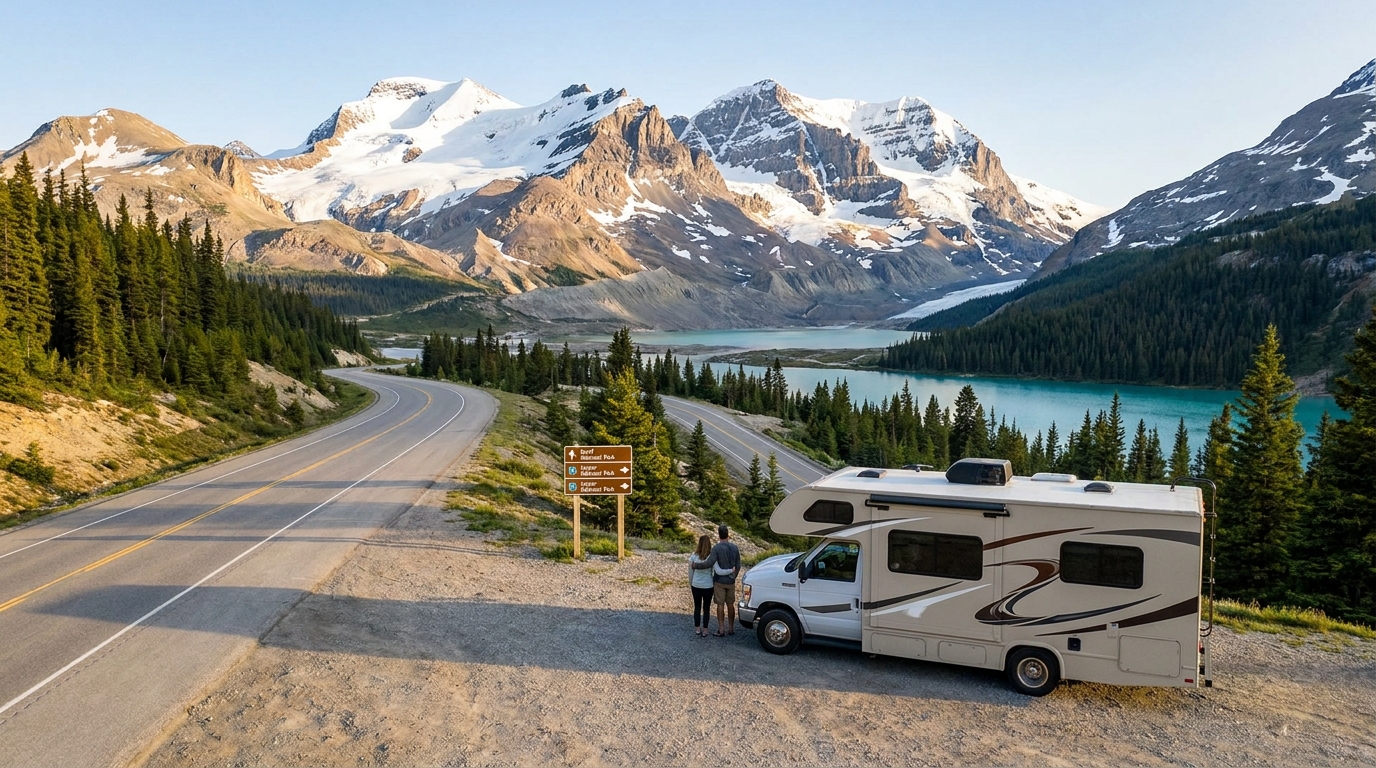
Canada, with its breathtaking landscapes and endless open roads, is an RV traveler's dream destination. Imagine waking up to mountain views, the scent of pine, and the freedom to chart your own course each day. Renting an RV in Canada offers unparalleled flexibility and a chance to truly immerse yourself in the country's vast natural beauty and vibrant culture. Whether you're planning a week-long escape or an extended adventure, understanding the costs and logistics is key to a smooth journey.
For live availability and current prices, start with our RV Rental Canada - Complete Guide 2026 guide. At Bandana Caravan, we pride ourselves on being true RV specialists, not just another travel agency side department. We offer full transparency, so you'll never encounter hidden fees or surprises, ensuring your planning process is as enjoyable as the trip itself.
What weekly rv rental RV Rental Costs in Canada (2026)
RV rental prices in Canada are dynamic, fluctuating daily based on demand, availability, and seasonality, much like airline tickets. April is typically the cheapest month for RV rental in Canada, offering potential savings of 20-30% compared to the peak summer season.
A 1-week weekly RV rental in Canada can range from approximately $700 CAD to $2,100 CAD or more, depending on the vehicle class and time of year. For a 2-week adventure, expect costs to typically fall between $1,200 CAD and $3,800 CAD. An extended 1-month RV trip might range from $2,500 CAD to $7,000 CAD, again influenced heavily by your chosen motorhome type and the season. These estimates generally cover the base rental fee, basic insurance, and a limited mileage package.
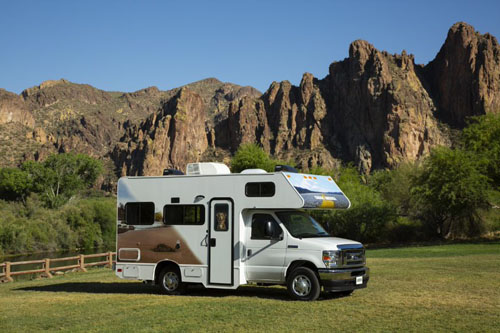
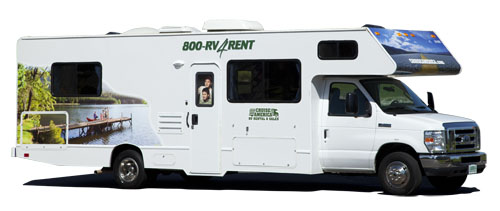
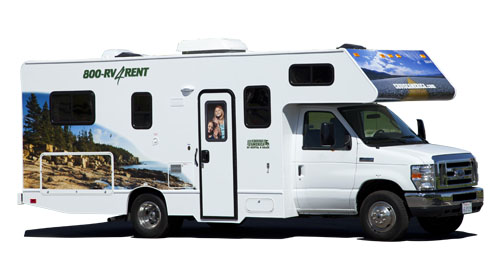
For instance, a compact campervan like the "hire campervan example Paradise S/T" or an "rv rental denver example Category Van" for a couple might fall on the lower end of these ranges, especially during shoulder seasons. Larger Class C motorhomes, such as a "24' Class C Motorhome" or a "camper for rent example Category B", offering more space for families of 2+2, would be at the higher end, particularly in peak season. To get precise, live pricing for 1 week, 2 weeks, and 1 month rentals across various RV classes, it's always best to use a comparison platform like Bandana Caravan. We provide full transparency with no hidden fees, helping you compare options from multiple suppliers like El Monte and Cruise America at a glance.
Seasonal Pricing - Peak vs. Shoulder vs. Off-Season in Canada
RV rental prices in Canada vary significantly by season, with peak season experiencing the highest demand and costs. July and August constitute the peak season, where you can expect to pay premium rates and should book 6-12 months in advance to secure your preferred motorhome and potentially save up to 25%.
Shoulder seasons, which include May-June and September-October, offer a wonderful balance of pleasant weather, fewer crowds, and noticeably lower prices. These months are often ideal for those with flexible schedules looking for a more serene travel experience without sacrificing comfort. The off-season, typically November through April, generally provides the lowest daily rates but comes with limited vehicle availability and restricted route options due to colder weather conditions and campground closures.
Prices can change significantly day-to-day, especially in peak season, due to dynamic pricing models. By leveraging our comparison platform and planning your trip during the shoulder seasons, you can take advantage of the 25% planning discount offered through rvplan.net routes, maximizing your budget for other exciting activities. Booking early, particularly for popular routes or specific RV models like a Class A "motorhome hire new zealand example Euro Deluxe" or a compact "Class B - Camper Van", is always a smart move. On the routes offered through RV PLANET routes, you can itemize and track every expense along the way for easy budgeting.
What's Included vs. What's an Add-On
Basic insurance is always included with RV rentals in Canada, providing a foundational level of protection for your journey. However, the exact extent of coverage and the deductible amount can vary greatly among suppliers. You can upgrade to a top-level deductible for extra peace of mind, an optional purchase that offers greater financial security on the road.
Common add-ons, which enhance your travel experience but incur additional costs, include unlimited mileage packages, generator usage, kitchen kits, and bedding or linen sets. While a standard rental typically provides the motorhome itself, these extras personalize your trip. For example, a kitchen kit with utensils and tableware is often an optional add-on, but it allows you to prepare delicious meals right inside your rented motorhome.
It's crucial to verify the inclusions and add-ons for each specific RV model and rental station during the booking process, as these can vary even within the same supplier fleet. Bandana's comparison platform allows you to easily compare these options, from the basics like kitchen utensils and tableware to comprehensive insurance packages, ensuring you know exactly what you're getting. Planning your meals ahead can be a fun part of the RV experience, and for some inspiration, check out our RV-friendly recipes playlist.
Hidden Costs to Budget For in Canada
Beyond the base rental fee, it's essential to budget for unforeseen costs such as road tolls, campsite fees, fuel price fluctuations, and dump-station charges when planning a weekly RV rental in Canada. While Canada generally has fewer toll roads than the USA, certain routes, especially around major cities or specific bridges, may incur fees. Some RVs offer options to pre-purchase toll-road usage to avoid fines, a convenient feature to consider.
Fuel is often the largest ancillary cost for RV travel, with prices in Canada measured per liter and varying significantly by province and time of year. A large Class C motorhome like an "MHC30" can have a fuel tank of 210 liters, consuming approximately 14-18 miles/gallon, illustrating why careful budgeting for this expense is crucial. Campground fees can range from $25 CAD for basic sites to over $100 CAD for premium, fully-serviced sites in popular national parks. Dump-station charges, typically $10-$25 CAD, are also a common expense for emptying waste tanks, although many campgrounds include this in their nightly rate.
To help manage your daily expenses and other ancillary costs, remember that RV PLANET routes offer the ability to itemize and track every expense along the way for easy budgeting. Considering an emergency fund for unexpected repairs or situations, especially when exploring remote areas, is always a wise decision. Budgeting for groceries, local attractions, and potential national or provincial park entry fees will also ensure your trip remains stress-free.
How to Save on weekly rv rental RV Rental in Canada
To significantly reduce the cost of your weekly RV rental in Canada, consider booking during shoulder seasons like late spring (May-June) or early fall (September-October) for better rates and fewer crowds. Flexible travel dates can unlock substantial savings, as prices are dynamic and vary daily based on availability and demand.
Pre-paying for tolls or utilizing available discount cards for fuel and campgrounds, if offered by your chosen supplier, can also trim expenses. Opting for a smaller RV class, such as a compact Class B campervan like the "Juliette 2-3" or a "Hi5 Camper", if it comfortably accommodates your group, will not only reduce the daily rental cost but also save significantly on fuel consumption. These smaller units are often more fuel-efficient, offering consumption rates of approximately 10-15 liters per 100 km compared to larger Class C motorhomes, which might consume 20-25 liters per 100 km.
Additionally, booking longer durations often results in lower daily rates, making a two-week adventure or a month-long road trip potentially more cost-effective per day than a shorter weekly rental. Monitoring flex-rate drops and booking early, especially for high-demand periods or unique vehicles like a "4x4 Camper B - TYR" which is winter-ready, can secure desired RVs at competitive prices. With Bandana Caravan, our full transparency means you see all costs upfront, empowering you to make informed decisions and save money effectively.
Is RVing in Canada expensive?
RVing in Canada can range from budget-friendly to luxurious, depending on your choices of RV class, season, duration, and amenities, with weekly rentals averaging between $700 CAD and $2,100 CAD for the base vehicle. While Canada is known for its stunning but vast landscapes, travel costs are manageable with proper planning.
The total cost is significantly influenced by rental rates, fuel consumption, campsite fees, and personal spending habits on food and activities. For instance, a basic campervan like the "Paradise Family 5" might offer 5 sleeping places but at a lower rental cost, ideal for budget-conscious families. Conversely, a luxurious Class A motorhome, such as the "Class A - Thor ACE 30", with capacity for 6 people and a 302-liter fuel tank, will naturally incur higher rental fees and fuel expenses.
Planning ahead and utilizing discounts, such as booking in shoulder seasons or taking advantage of early bird offers, can significantly mitigate expenses. Comparing prices across Bandana's 50+ leading RV suppliers worldwide, including El Monte and Cruise America, ensures you find the best value for your Canadian adventure. Our experts, with over 23 years of experience, are dedicated to helping tens of thousands of travelers discover the world by RV with unmatched personal service.
How much does it cost to rent an RV for a week in Canada?
The cost to rent an RV for a week in Canada varies significantly by RV class, rental season, and specific provider, typically ranging from $700 CAD in the off-season for a compact campervan to over $2,100 CAD during peak summer for a larger motorhome.
For precise, real-time pricing for a weekly RV rental, refer to the live comparison tools available on our platform. Factors like vehicle age, features such as a 120-liter fresh water tank or integrated heating, and the specific pickup location also influence the weekly rental price. For example, a smaller Class B "Van - Economy" might start from $26 CAD per day, making a week-long trip highly affordable, while a more spacious "24 Class C Motorhome" with sleeping places for 5 could be around $179 USD per day.
Our goal is to provide full transparency, ensuring no hidden fees or surprises so that what you see is what you get. This allows you to accurately budget for your dream Canadian road trip, from the vibrant coastal cities to the serene wilderness.
How do I choose the right RV for my trip to Canada?
Choosing the right RV for a Canadian trip involves considering factors such as your group size, desired comfort level, planned itinerary, and overall budget.
Class B campervans, like the "DVC" which offers sleeping for 2, are ideal for couples or small groups seeking maneuverability and fuel efficiency, especially on smaller roads or when navigating mountain passes. These vehicles often have a 75-liter waste water tank and consume around 11-15 liters per 100 km, making them economical for longer journeys. Class C motorhomes, such as a "MHC24" with sleeping for 6, offer a great balance of space and drivability, suitable for families, often including amenities like a microwave and a 150-liter fresh water tank. For those desiring ultimate luxury and ample living space for longer trips, Class A motorhomes like an "MHLUX" offer extensive features for up to 7 people.
Consider specific features like cold weather readiness if traveling in shoulder seasons and ensure essential recovery equipment is available for remote travel. Bandana Caravan offers a diverse fleet from over 50 leading RV suppliers worldwide, including El Monte and Cruise America, ensuring you find the perfect rented RV for your Canadian adventure.
What are the rules for driving an RV in Canada?
Driving a rented RV in Canada requires adhering to provincial road rules, which include specific speed limits, seatbelt laws, and potential restrictions on vehicle length or weight, always requiring a valid driver's license from your home country or an International Driving Permit (IDP).
A standard car driver's license is sufficient for driving all motorhome classes, whether it's a compact campervan or a large Class A motorhome. An IDP is recommended for visitors from non-English or non-French speaking countries, though it's not strictly mandatory in most cases. You'll observe Canadian traffic laws, including specific provincial speed limits typically posted in kilometers per hour (km/h) and strict regulations regarding alcohol consumption while operating a vehicle. Drive slowly and carefully, and you can drive almost anywhere without issues. No need to stress - just use common sense and pay attention.
Be particularly aware of wildlife on roads, especially at dawn and dusk, which is a common occurrence in many Canadian regions. Understanding specific protocols for bear country related to food storage and encounters is also crucial for safety. For more in-depth information, consult our comprehensive guide Driving an RV in Canada - Complete Guide 2026. Additionally, if you are looking to save on fuel, check our Budget RV Driving in Canada - Save on Fuel 2026 guide.
Can I drive an RV from USA to Canada?
Yes, it is generally possible to drive a rented RV from the USA to Canada, provided all occupants possess valid identification, and the vehicle meets Canadian import and safety requirements, with specific documentation required for both people and the vehicle.
Essential documents for cross-border RV travel include passports for all travelers, valid driver's licenses (and potentially an International Driving Permit), vehicle registration, and proof of insurance valid in Canada. It's crucial to be aware of specific Canadian customs regulations regarding prohibited items, such as firearms, certain food products, and cannabis; all goods must be declared upon entry to avoid issues. For RVing with pets, ensure you have up-to-date vaccination records (especially rabies certificates translated into English or French) and a health certificate, and be aware of any breed-specific restrictions or requirements.
Before planning your trans-border adventure, review our detailed guide RV Rental USA - Complete Guide 2026 for additional tips on cross-country RV travel. For routes offering unique experiences like "One-Way RV Driving in Canada - Route Planner 2026", proper documentation is key to a seamless border crossing.
How much does it cost to camp an RV in Canada?
The cost to camp an RV in Canada varies widely based on the campground type, location, amenities, and season, typically ranging from $25 CAD for basic sites to over $100 CAD for premium, fully-serviced sites in popular areas like Jasper National Park.
National and provincial park campgrounds often require reservations, especially in peak season, and may include additional park entry fees, such as an average of $20 CAD per day for a national park pass. Free camping, often referred to as boondocking or wild camping, on Crown Land is legal in many provinces for up to 21 days but requires thorough research on provincial regulations and access points. When engaging in free camping, essential gear for sustained off-grid living, like sufficient fresh water (e.g., a 100-liter fresh water tank in a "Group G" motorhome) and a robust waste water system, is necessary. Practicing Leave No Trace principles and being prepared for limited connectivity in remote camping areas, bringing satellite communication for emergencies if needed, is paramount.
For finding campsites and campgrounds during your trip, we recommend using RV PLANET, a great resource for locating available spots along your route. It allows you to search for various types of campgrounds, from rustic provincial parks to full-service private resorts, helping you budget your ancillary costs effectively.
What documents do I need to rent an RV in Canada?
To rent an RV in Canada, you typically need a valid driver's license from your home country, a major credit card for the security deposit, and proof of identity like a passport.
A standard car driver's license is sufficient for all motorhome classes in Canada, including large Class A or Class C units. An International Driving Permit (IDP) is recommended for visitors from non-English or non-French speaking countries but is not mandatory. Most rental companies require drivers to be at least 21 years old, and importantly, Bandana Caravan has no young driver surcharges and no vehicle class restrictions based on age, making RV travel accessible to a broader audience.
Ensure your credit card has a sufficient limit for the security deposit, which can range from a few hundred to several thousand dollars depending on the vehicle class and supplier. Having all these documents readily available will streamline your pickup process, allowing you to quickly embark on your Canadian adventure.
How far in advance should I book an RV in Canada?
For peak season travel in Canada (July-August), it is highly recommended to book an RV 6-12 months in advance, especially for popular models or specific destinations like national parks.
Shoulder seasons (May-June, September-early October) offer more flexibility, typically allowing bookings 2-4 months prior, but popular routes for fall foliage still warrant earlier booking. During the off-season, you might find last-minute deals, but availability of certain RV types or locations can be limited. Many national or state parks reserve only 25-30% of their spots for advance booking, with the rest available first-come-first-serve. Reassure yourself: you'll find a spot. If not at the first campground, then the next one. Call ahead before driving.
Booking early not only secures your preferred RV, whether it's a compact "Active Classic" or a family-friendly "C-30" with 7 seat belts, but often results in better rates due to flex-rate pricing. Bandana Caravan's platform, with its direct partnerships with over 50 leading RV suppliers worldwide, allows you to compare options and book well in advance, ensuring peace of mind.
What is the best time of year to RV in Canada?
The best time of year to RV in Canada largely depends on your desired activities and regions, but generally late spring (May-June) and early fall (September-early October) offer pleasant weather, fewer crowds, and often better rental rates compared to peak summer.
Summer (July-August) is ideal for warm weather activities, accessing all national parks, and experiencing the full range of Canadian landscapes, though prices and crowds are at their highest. Fall (September-early October) provides stunning foliage views, particularly in Eastern Canada, but requires preparedness for cooler temperatures and potentially earlier campground closures. Consider specific routes and regions, as coastal areas, mountains, and prairies each have optimal seasons.
While RVing in colder weather can be an incredible experience, such as exploring the Rockies with a "MH-A" motorhome designed to be winter-ready, it requires careful preparation for potential road closures and limited services. For inspiration on planning your trip during various seasons, explore our Week-Long RV Driving Tour in Canada 2026 guide. Remember to travel slowly, max 100-150 km per day on average. Take time to feel the place, connect to the culture, the food, and the scenery.
Top Cities for RV Rental in Canada
Canada offers numerous excellent starting points for your RV adventure, with rental stations conveniently located near major airports and popular tourist regions. Each city serves as a gateway to unique experiences, making your choice of pickup location important for your itinerary.
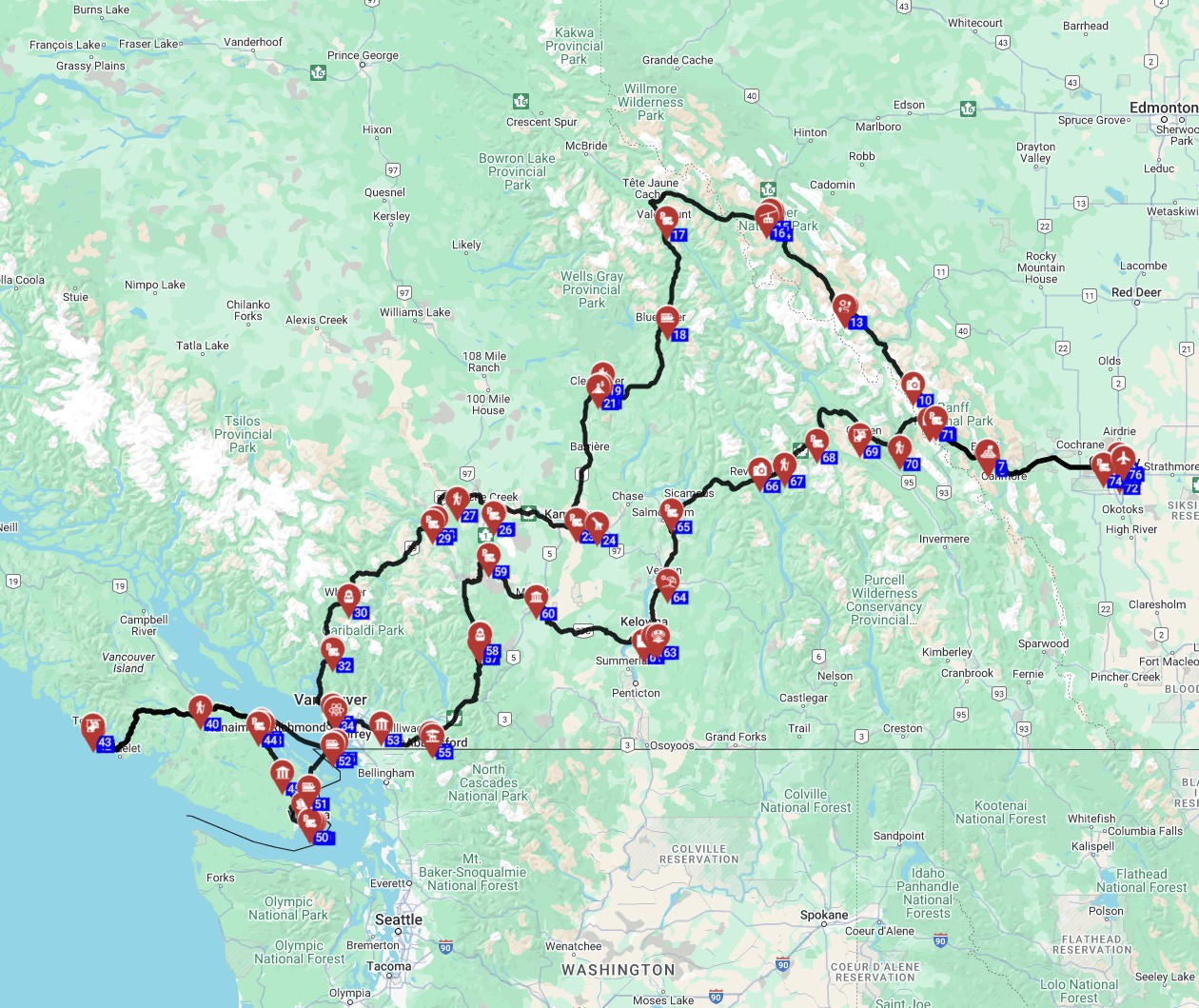
- Vancouver: Nestled between mountains and the Pacific Ocean, Vancouver is an ideal starting point for exploring British Columbia's stunning coastlines, the Rocky Mountains, and even embarking on a "
" covering 2659.3999999999996 km.
 Vancouver Round Trip - West Canada Cycling Adventure
 - Calgary: Gateway to the Canadian Rockies, Calgary provides easy access to Banff and Jasper National Parks, perfect for mountain adventures and wildlife viewing.
- Toronto: As Canada's largest city, Toronto is a hub for Eastern Canadian exploration, offering routes to Niagara Falls, the Great Lakes, and charming small towns. Consider a comprehensive journey like the "
" spanning 4886.2 km for a cross-country experience.
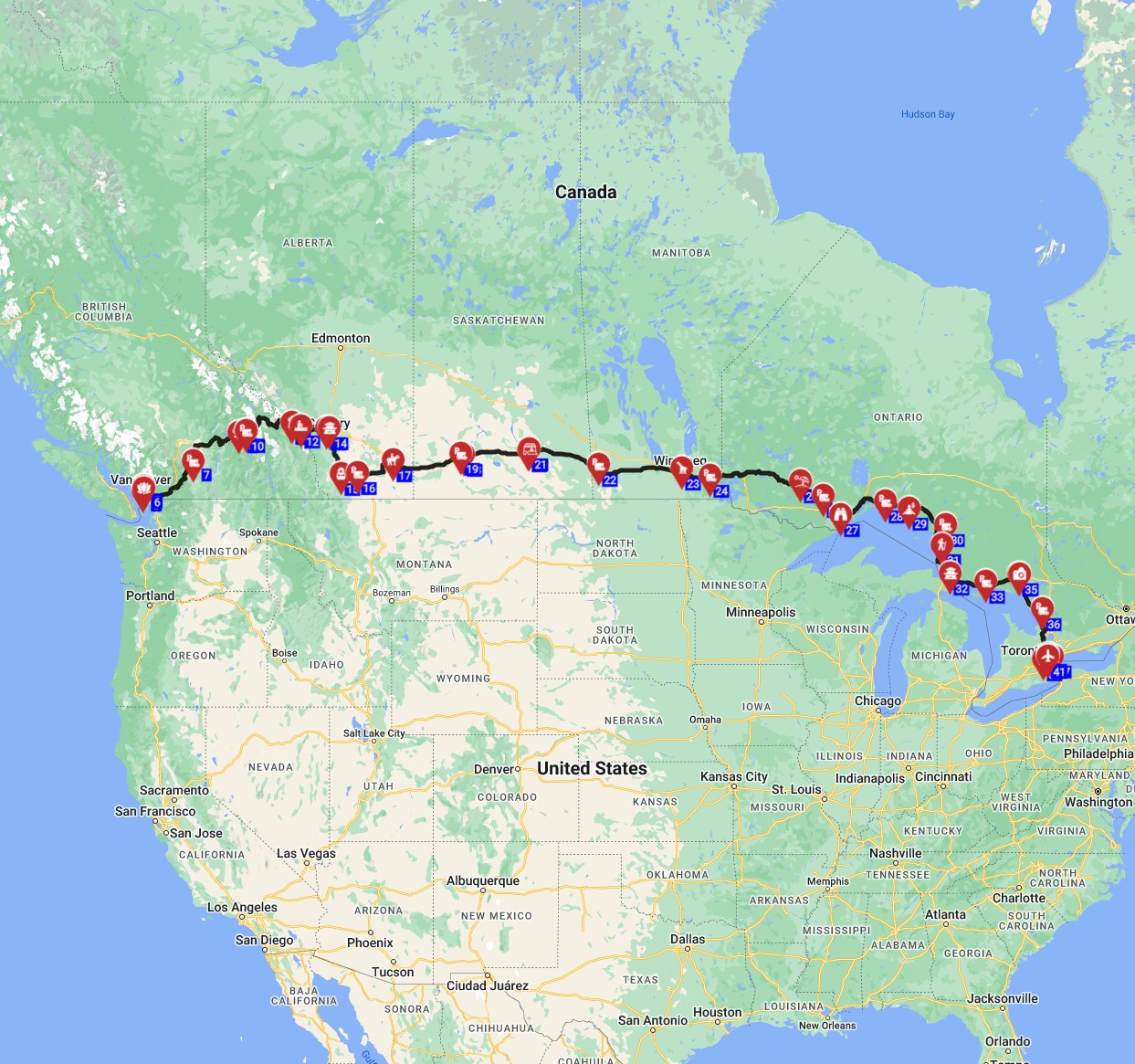 Vancouver to Toronto - Trans Canada West to East
 - Montreal: With its distinct European charm, Montreal is a fantastic base for discovering Quebec's rich history, beautiful countryside, and vibrant culture.
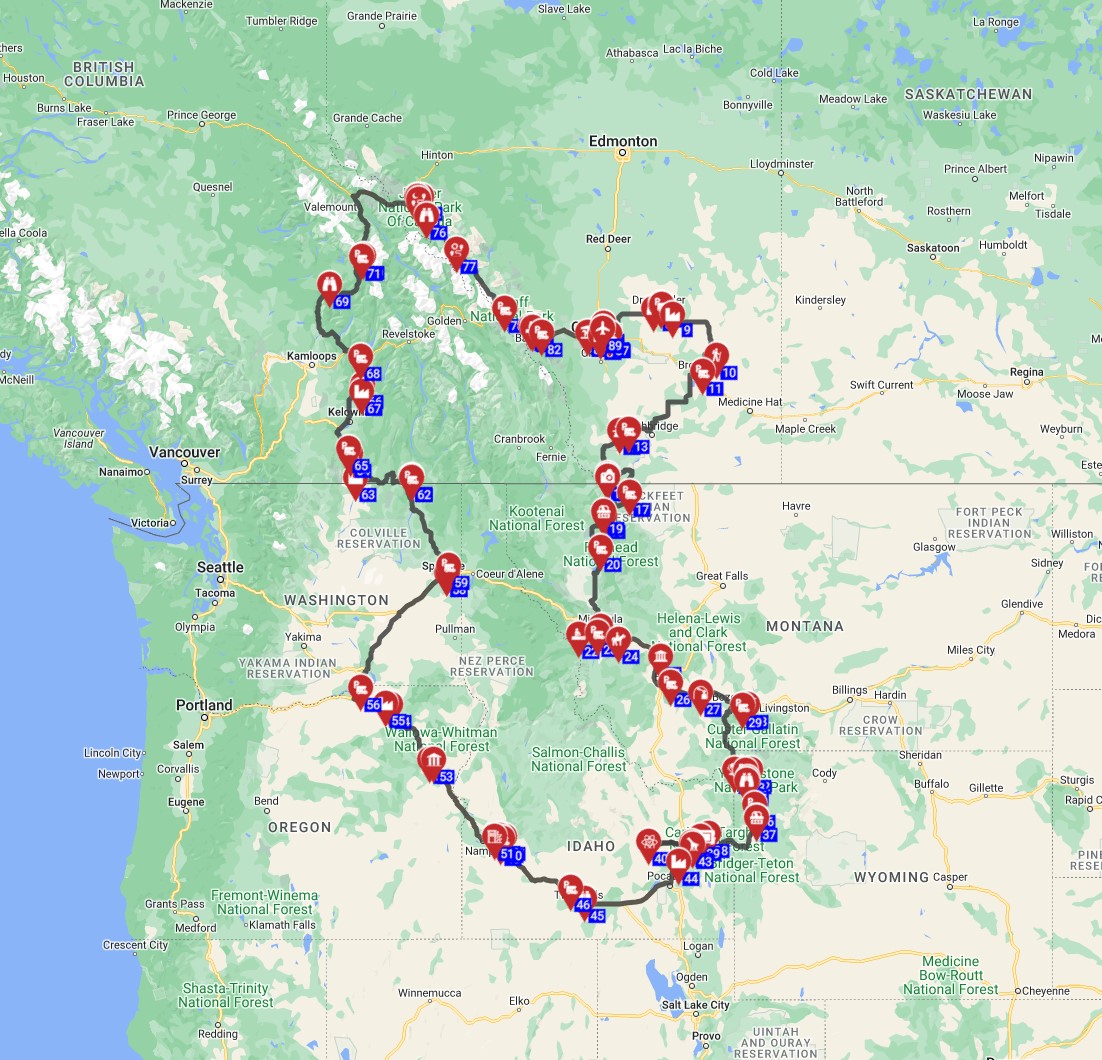
- Halifax: On the East Coast, Halifax opens up routes to the scenic Maritimes, including Nova Scotia's Cabot Trail, Prince Edward Island, and a sprawling "Halifax to Whitehorse - Exploring Canada’s Heartland in a Motorhome" trip covering 9199.1 km.
- Abbotsford: Located just east of Vancouver, Abbotsford is a practical pickup point for those looking to start their British Columbia road trip without the immediate city hustle.
- Bolton: Situated in Ontario, Bolton offers another convenient option for exploring the diverse landscapes and attractions of Central Canada.
- Dartmouth: Near Halifax, Dartmouth provides an alternative entry point for East Coast adventures, with easy access to coastal routes and provincial parks.
🎬 Video coming soon
What You Shouldn't Miss
Canada is a treasure trove of incredible experiences, and with a rented motorhome, you have the freedom to discover them all. Don't miss these unforgettable adventures:
- The Icefields Parkway, Alberta: Drive one of the world's most scenic routes, a 232 km stretch linking Banff and Jasper National Parks, featuring over 100 ancient glaciers, waterfalls, and turquoise lakes. Our "RV Driving Deals in Canada - Routes and Savings 2026" guide can help you plan this iconic drive.
- Pacific Rim National Park Reserve, British Columbia: Explore rugged coastlines, ancient rainforests, and vibrant marine life on Vancouver Island. The "Vancouver Round Trip - West Canada Cycling Adventure" includes 3 hiking areas and 2 parks to immerse yourself in nature.
- Cabot Trail, Nova Scotia: Circle Cape Breton Island on this legendary 298 km scenic drive, renowned for its dramatic ocean vistas and charming fishing villages. This route offers stunning coastal views and cultural experiences.
- Niagara Falls, Ontario: Witness the awe-inspiring power of these iconic waterfalls from various viewpoints, and explore the surrounding wine region. This area is often part of routes like the "Vancouver to Toronto - Trans Canada West to East," which covers 4886.2 km.
- Jasper National Park's Dark Sky Preserve: As the world's second-largest accessible Dark Sky Preserve, it offers unparalleled stargazing opportunities. The "Halifax to Whitehorse - Exploring Canada’s Heartland in a Motorhome" journey features 4 hiking areas and 6 museums, including some with celestial themes.
- Explore Avi Bandana's Top 5 Adventures: Looking for expert insights from Avi Bandana? For the most unique and personally recommended spots, check out his Top 5 Adventures for a true specialist's perspective.
Final Thoughts
Embarking on a weekly RV rental in Canada is more than just a trip; it's an invitation to experience freedom on an epic scale. With Canada's diverse landscapes, from the Pacific Coast to the Atlantic shores, and the majestic Rockies in between, a rented motorhome is your mobile headquarters for unforgettable memories.
Understanding the pricing dynamics, planning for ancillary costs, and knowing how to choose the right vehicle will set you up for success. Remember, we're here to help you every step of the way, from comparing options to ensuring full transparency in your booking. God is in the small details, and we take care of them. That's what makes the big difference.
So, get inspired for your next trip! Discover top destinations, planning tips, all in one place, and plan a trip itinerary in advance with minimal effort and maximum enjoyment. Your Canadian RV adventure awaits!