For live availability and current prices, start with our RV Rental Canada - Complete Guide 2026 guide.
In This Guide
- Can You Drive an RV in Canada? License & Age Rules
- Road Conditions & Terrain in Canada
- RV Size Limits, Bridges & Restricted Zones
- Fuel: Diesel vs. Petrol & Cost per 100 km
- Tolls, Vignettes & Border Rules
- Driving Tips for weekly rv rental Travelers
- Recommended RV Class for Canada Roads
- Should I Choose a Compact Van Instead of a Large RV in Canada?
- Can I Park Anywhere? Free & Wild Camping Rules in Canada
- Can I Drive an RV Into the City Center? Heights, Tunnels & Local Signage
- What is the average weekly cost of renting an RV in Canada?
- How much does RV camping cost in Canada?
- What is the best month to RV in Canada?
- How much does it cost to drive an RV from US to Canada?
- Is it hard to drive an RV in Canada?
- Do you need winter tires to drive in Canada?
- Can you get a one-way RV rental in Canada?
- What is the cheapest way to RV in Canada?
- What is the average gas mileage for an RV in Canada?
- What is the typical speed limit for RVs in Canada?
Can You Drive an RV in Canada? License & Age Rules
Most rental RVs, including Class B (Camper Vans), Class C (Alcove Motorhomes), and smaller Class SI (Semi-integrated) motorhomes weighing under 11,000 kg (24,250 lbs), can be driven in Canada with a standard provincial driver's license, such as a Class 5 in most provinces. For the vast majority of weekly rentals, this standard license is sufficient. If you're considering a larger Class A Integrated RV from Bandana's fleet, which might exceed 11,000 kg, check specific provincial regulations as a higher class commercial license could be required, though this is uncommon for typical rentals. The minimum age for renting an RV in Canada is generally 21, though some rental providers may have a higher minimum of 25 for larger or more complex vehicle classes. If you're an international visitor, ensure your home country's driver's license is valid. An International Driving Permit (IDP) is highly recommended, especially if your license isn't in English or French, as it facilitates communication with authorities, though it's not a standalone license and must be accompanied by your original driver's license.
Road Conditions & Terrain in Canada
Canada's vastness means diverse road conditions and terrain for your week-long RV adventure. Major highways, like the Trans-Canada Highway, are generally well-maintained, offering smooth travel. However, as you venture onto provincial roads or routes leading to more remote national and provincial parks, road quality can vary, with occasional potholes or rougher surfaces. Be prepared for significant mountain passes, especially in British Columbia and Alberta's Rocky Mountains. These routes often feature steep grades and winding paths, necessitating careful driving, use of lower gears for descents, and constant awareness of your RV's braking capabilities. Some desirable routes, particularly those accessing more remote natural attractions, may be unpaved gravel roads, requiring significantly slower speeds and increased caution. Wildlife hazards, such as moose, deer, and bears, are common, especially at dawn, dusk, and in forested or rural areas. Vigilance and reduced speed are crucial for your safety and that of the wildlife. Seasonal conditions also play a significant role; winter driving mandates snow tires in specific regions and requires preparedness for ice and reduced visibility, while summer can bring wildfire smoke, impacting air quality and visibility in certain western areas.
RV Size Limits, Bridges & Restricted Zones
Canada's infrastructure is generally accommodating for most RV sizes available through Bandana rentals, but awareness of specific height and weight restrictions is key, particularly on older bridges, within national parks, and when using ferry services. Common rental RVs, like Class C motorhomes averaging 7.5 meters (24.6 feet) or Class SI (Semi-integrated) at around 6.9 meters (22.6 feet), can navigate most Canadian roads. Larger Class A models are also generally manageable. Always pay close attention to posted signage for height restrictions on underpasses, tunnels, and older bridges, especially in smaller towns or historical areas. National Parks often have specific length restrictions for certain scenic routes or campgrounds; reviewing park regulations in advance via Parks Canada is advisable. If your itinerary includes ferry travel, such as with BC Ferries, remember that RVs are typically categorized and priced by length. Accurately measuring your rented RV before booking is essential to avoid surprises. While Canada doesn't typically enforce 'environmental zones' that restrict RVs in cities, as seen in some European countries, always be mindful of local bylaws concerning parking and access for oversized vehicles in urban cores.
Fuel: Diesel vs. Petrol & Cost per 100 km
Most Bandana RV rentals in Canada are diesel-powered, offering superior fuel efficiency compared to petrol alternatives. Expect your rented RV, whether a Class B Camper Van, Class SI, or Class C motorhome, to consume between 8 to 12 liters per 100 kilometers on average. Larger models might range slightly higher. Diesel fuel is readily available across Canada, though stations can be less frequent in very remote regions compared to major travel corridors. Bandana's Class B Camper Vans are typically the most fuel-efficient, averaging 8-10 L/100 km, while our Class C and SI models generally fall within the 10-12 L/100 km range. Fuel prices in Canada vary significantly by province due to differing tax structures. Alberta often has lower prices, while British Columbia and Quebec tend to be higher. It's wise to factor these provincial variations into your budget. While not universally included, some Bandana rentals may offer access to fuel discount programs, which can help mitigate costs during your weekly rental period.
Tolls, Vignettes & Border Rules
While many Canadian highways are toll-free, be aware of electronic tolls primarily in Ontario, such as Highway 407 ETR in the Greater Toronto Area, and potentially on certain bridges or tunnels in other provinces, like the Confederation Bridge to Prince Edward Island. Canada does not have a national vignette system for road access, unlike some European countries, simplifying your travel. When crossing the US-Canada border with your rented RV, ensure all occupants have valid passports. Be prepared for customs inspections; Canada has strict regulations on firearms, alcohol, tobacco, and agricultural products. Rental agreements should explicitly confirm permission for cross-border travel and ensure you have the appropriate insurance coverage for both countries. Some Bandana RV rentals can be equipped with pre-purchased toll passes or electronic transponders, which can help avoid fines and streamline your passage through toll zones. On the routes offered through RV PLANET routes, you can itemize and track every expense along the way for easy budgeting.
Driving Tips for weekly rv rental Travelers
For a smooth and enjoyable week-long RV rental experience in Canada, careful route planning, understanding local road etiquette, and being prepared for diverse conditions are key. Utilize RV-specific navigation apps that account for vehicle dimensions to avoid restricted roads, especially through national parks or busy urban centers. Remember to take frequent breaks every 2-3 hours to stretch, refuel, and allow everyone to appreciate the scenery. Budget appropriately for fuel, factoring in varying provincial prices and your chosen RV's consumption rate (e.g., 10-12 L/100 km for a Class C). If you're new to RV driving, practice essential maneuvers like wide turns and backing up in a safe, open area before hitting the road. Finally, stay vigilant for wildlife, especially during dawn and dusk, and adjust your speed accordingly in known wildlife corridors or remote regions.
Recommended RV Class for Canada Roads
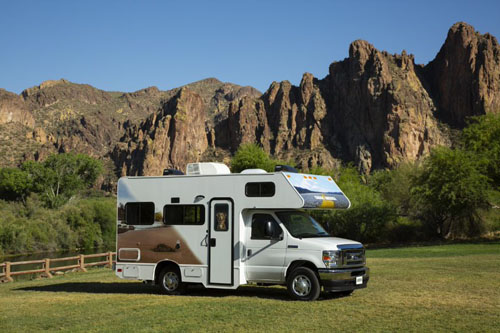
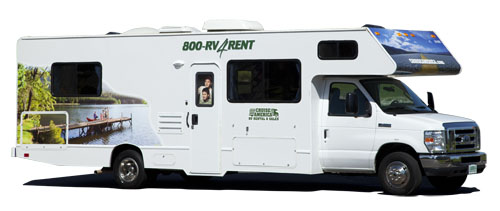
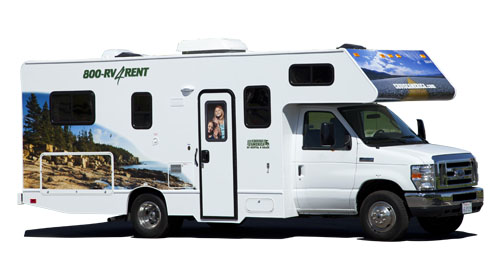
For weekly RV rentals in Canada, Class SI (Semi-integrated), Class C (Alcove), and Class B (Camper Van) motorhomes are highly recommended due to their balanced blend of living comfort, maneuverability on varied Canadian roads, and suitability for different group sizes. Class SI motorhomes, typically around 6.9 meters (22.6 ft) and sleeping 3-4 people, offer good fuel efficiency (around 10-11 L/100 km) and are agile enough for both highways and secondary roads. Class C motorhomes, averaging 7.5 meters (24.6 ft) and accommodating 5-6 sleepers, provide ample space for families, often featuring an over-cab bed, and handle Canadian highways well with typical fuel consumption of 10-12 L/100 km. The compact Class B Camper Vans are ideal for couples or solo travelers seeking maximum maneuverability and fuel efficiency (8-10 L/100 km), perfect for exploring tighter city streets or more remote access points. All these classes generally offer adequate ground clearance for most paved and well-maintained gravel roads commonly found in Canadian national and provincial parks.
Should I Choose a Compact Van Instead of a Large RV in Canada?
While a compact van (Class B Camper Van) is certainly more agile and easier to park, a larger RV like a Class C or Semi-integrated often provides superior comfort and interior living space for a week-long trip, without presenting significant driving challenges on Canada's generally accommodating roads. Canada's main highways and most tourist routes are well-suited for larger RVs, meaning maneuverability is rarely a prohibitive issue. The added amenities, living space, and storage in a larger RV significantly enhance comfort, particularly for families or groups. Compact vans, however, excel in urban centers, fitting into standard parking spots and navigating tighter city streets or specific ferry routes more easily. If your itinerary prioritizes frequent city exploration, very remote or narrow unpaved tracks, or if you simply prefer a more nimble, car-like driving experience, a compact van might be your ideal choice.
Can I Park Anywhere? Free & Wild Camping Rules in Canada
Truly 'wild' or free camping is restricted in many developed areas and most national and provincial parks in Canada; however, opportunities for boondocking or dispersed camping do exist on Crown land and in designated public spaces, with rules varying significantly by province. National and Provincial Parks strictly regulate camping to designated campgrounds, which almost always require reservations and fees, especially during peak season. Free camping, often termed 'boondocking' or 'dispersed camping,' is generally permitted on Crown land (publicly owned land) in many provinces, particularly in Western Canada. It's crucial to check specific provincial land use regulations, such as BC's Recreation Sites and Trails or Alberta's Public Land Use Zones, for duration limits, permit requirements, and any fire bans before parking overnight. Additionally, many businesses, like certain Walmart locations or Cabela's stores, may allow overnight RV parking in their lots; always ask for permission first, as policies vary by location. Remember to always practice 'Leave No Trace' principles, pack out all waste, respect private property, and adhere to local laws.
Can I Drive an RV Into the City Center? Heights, Tunnels & Local Signage
Yes, you can generally drive an RV into Canadian city centers, but it requires careful attention to local signage regarding height limits, tunnel restrictions, and specific parking regulations. Most major Canadian cities are accessible by RV, though navigating can be challenging due to narrow streets, heavy traffic, and often limited parking for oversized vehicles. Always observe height restriction signs on underpasses, parking garages, and tunnels, as these can vary significantly, especially in older downtown areas. Be aware of local parking bylaws; many cities have restricted zones, residents-only parking, or time limits that may not accommodate RVs. For a more convenient and less stressful experience, especially with a weekly rental, consider parking your RV on the outskirts of major cities and utilizing public transit to explore the downtown core.
What is the average weekly cost of renting an RV in Canada?
The average weekly cost for renting an RV in Canada typically ranges from CAD $1,200 to $3,000, encompassing the base rental fee, mandatory insurance, mileage allowances, and essential add-ons. This figure can fluctuate significantly based on the RV class, the time of year, and the rental duration. Base rental fees for a week-long Class C RV could range from CAD $800 to over $2,000 during peak season (June-August), dropping considerably in shoulder seasons like May, September, or October. Mandatory insurance and potential optional comprehensive protection can add another CAD $200-$500 weekly, depending on the deductible level chosen. Additional fees for mileage packages, preparation, cleaning, convenience kits, and propane refills can contribute an extra CAD $200-$400+ to your total weekly cost. Beyond the rental itself, remember to budget for variable expenses like fuel (refer to our section on fuel costs), campground fees, groceries, and activities, which can easily add another CAD $500-$1,000+ per week to your overall trip expenses. Be vigilant for potential hidden fees such as generator usage charges, roadside assistance upgrades, and provincial sales taxes, which vary by pickup location.
How much does RV camping cost in Canada?
RV camping costs in Canada vary widely, typically ranging from CAD $25 per night for basic unserviced provincial park sites to over CAD $80 per night for full-service private campgrounds, with boondocking often being free or very low-cost. National Parks generally charge between CAD $25-$40 per night for unserviced sites, up to CAD $60+ for sites with full hookups (electricity, water, sewer); reservations are highly recommended, especially during peak season. Provincial Parks tend to be more affordable, with unserviced sites typically costing CAD $20-$35 and serviced sites (electricity or water) usually ranging from CAD $35-$50. Private campgrounds offer more amenities like pools, enhanced Wi-Fi, and laundromats, with full hookup sites costing CAD $40-$80+, particularly in popular tourist areas. For the most budget-conscious, boondocking or dispersed camping on Crown land or approved public areas can be free, though typically without services. Always check provincial regulations for specific rules and potential permits. Additional costs might include park entrance fees, such as the Discovery Pass for National Parks, and firewood or fire permits.
What is the best month to RV in Canada?
The prime months for RV travel in Canada are typically June, July, and September, offering a sweet spot of pleasant weather, accessibility to most attractions, and manageable crowds and costs. July and August represent peak season, with the warmest weather, all attractions fully open, and complete road accessibility, but also the highest prices and largest crowds for rentals and campgrounds. June provides milder temperatures with significantly fewer crowds than peak summer, and most services and roads are open, making it an excellent shoulder-season option for starting a weekly rental. September is often favored by experienced RVers for its vibrant fall colors, crisp air, significantly reduced crowds, and many services still operating, though higher-elevation passes might see early snow. May and October can be good for budget-conscious travelers, but be prepared for cooler temperatures, potential road closures in mountainous regions, and some campgrounds or attractions operating on limited schedules or being closed for the season.
How much does it cost to drive an RV from US to Canada?
Driving an RV from the US to Canada primarily involves costs for fuel, potential additional insurance, and expenses related to border crossing declarations. Specific expenditures will depend on your RV's size, your travel distance, and what you declare at customs. Fuel will likely be your largest variable cost, as Canadian fuel prices are often higher than in the US due to provincial taxation, causing significant price variations across the country. Always check the current exchange rate. Most US RV insurance policies cover travel in Canada, but it's crucial to confirm this with your provider and ensure sufficient coverage; some may require a Canadian non-resident inter-province motor vehicle liability card. There are generally no direct fees for crossing the land border with a personal RV, but you must declare all goods, and duties or taxes may apply to items exceeding personal exemptions. Bringing pets requires specific documentation, including vaccination records, which may incur veterinary costs beforehand, and be aware of any breed-specific restrictions. If you plan on a one-way rental from the US to Canada (or vice versa), expect substantial one-way fees, potentially ranging from hundreds to thousands of dollars, based on the rental company and the specific route.
Is it hard to drive an RV in Canada?
Driving an RV in Canada is generally not considered difficult, as major roads are well-maintained and signage is clear. However, it does require heightened awareness of your vehicle's size, the diverse terrain, and specific seasonal challenges. Main highways offer excellent driving conditions, but smaller provincial roads, especially those leading to more remote areas or campgrounds, can be narrower, more winding, or even unpaved, demanding extra caution. Navigating the Canadian Rockies or other mountainous regions involves careful attention to steep grades, effective use of lower gears for descents, and mindful management of brake wear. Wildlife encounters, particularly with large animals like moose or bears, are possible outside urban areas, making vigilance, especially at dawn and dusk, crucial for safety. Ferry travel, common in coastal areas, requires pre-booking and precise maneuvering, but is generally well-organized. Winter driving presents its own challenges with snow, ice, and reduced visibility, potentially necessitating winter tires, which are mandated in some provinces. Always be prepared for these conditions.
Do you need winter tires to drive in Canada?
Yes, winter tires are legally mandatory in certain Canadian provinces and territories during specific periods, particularly in mountainous regions like British Columbia and Quebec. They are also highly recommended across the rest of the country during colder months for significantly improved traction and safety on icy and snowy roads. In British Columbia, winter tires (marked with M+S or the mountain snowflake symbol) are required on most highways outside the Lower Mainland and southeastern Vancouver Island from October 1st to April 30th. Quebec mandates winter tires on all vehicles, including RVs, from December 1st to March 15th. While not universally mandated in Ontario, they are strongly recommended, especially in northern or rural areas. Always verify specific provincial regulations for 2026 prior to your trip to ensure compliance for your weekly RV rental.
Can you get a one-way RV rental in Canada?
Yes, one-way RV rentals are a popular option in Canada, allowing travelers the flexibility to pick up a vehicle in one city and drop it off in another. This is ideal for exploring vast regions without backtracking, such as driving from

What is the cheapest way to RV in Canada?
The most economical way to RV in Canada involves strategic planning around rental timing, embracing free camping options, cooking your own meals, and maintaining flexibility with your itinerary. Renting an RV in shoulder seasons like May, early June, September, or October can drastically reduce rental costs compared to peak summer months due to lower demand. Utilize free camping opportunities on Crown land or in approved public areas (see our guide on dispersed camping rules) instead of paid campgrounds to save CAD $25-$80+ per night. RVs come equipped with kitchens; preparing your own meals significantly cuts down on expensive restaurant visits. Opt for more fuel-efficient RV models, like Class B Camper Vans, and practice conservative driving habits, such as avoiding high speeds and sudden acceleration, to minimize fuel consumption. Booking in advance can often secure better rates, and keep an eye out for special offers or repositioning deals from rental companies, especially for longer weekly rentals or during off-peak periods. For ideas you can prep on the road, watch our RV-friendly recipes playlist on YouTube.
What is the average gas mileage for an RV in Canada?
The average gas mileage for rental RVs in Canada typically ranges from 8 to 17 liters per 100 kilometers. Smaller Class B Camper Vans are generally the most fuel-efficient, averaging 8-10 L/100 km, making them ideal for budget-conscious travelers and city exploration. Our Class SI (Semi-integrated) and Class C (Alcove) motorhomes, popular for families, typically consume around 10-12 L/100 km. Larger Class A Integrated models might see consumption rates of 8-12 L/100 km, varying with engine type and build. Truck Campers (Class TC), due to their design and often robust capabilities, can have the highest fuel consumption, averaging 12-17 L/100 km. Actual mileage will always depend on driving style, terrain (e.g., navigating mountain passes), the vehicle's payload, and whether it's diesel or petrol-powered.
What is the typical speed limit for RVs in Canada?
In Canada, RVs generally follow the same speed limits as passenger vehicles, typically ranging from 50 km/h in urban areas to 100-120 km/h on highways. However, always adhere to posted signage and adjust your speed based on your RV's size and current road conditions. Urban speed limits usually range from 30 km/h in school zones to 50 km/h in residential and commercial areas. Provincial highways commonly have limits between 80 km/h and 100 km/h, while major multi-lane freeways in provinces like Ontario and British Columbia can reach 110 km/h or even 120 km/h on select sections. While RVs can legally travel at these posted limits, it's prudent to drive slightly below the maximum, especially with larger vehicles, to maintain better control on curves, inclines, or in adverse weather. Always watch for specific signage that might indicate lower speed limits for trucks or recreational vehicles, though these are less common for typical weekly rental RVs.
What You Shouldn't Miss
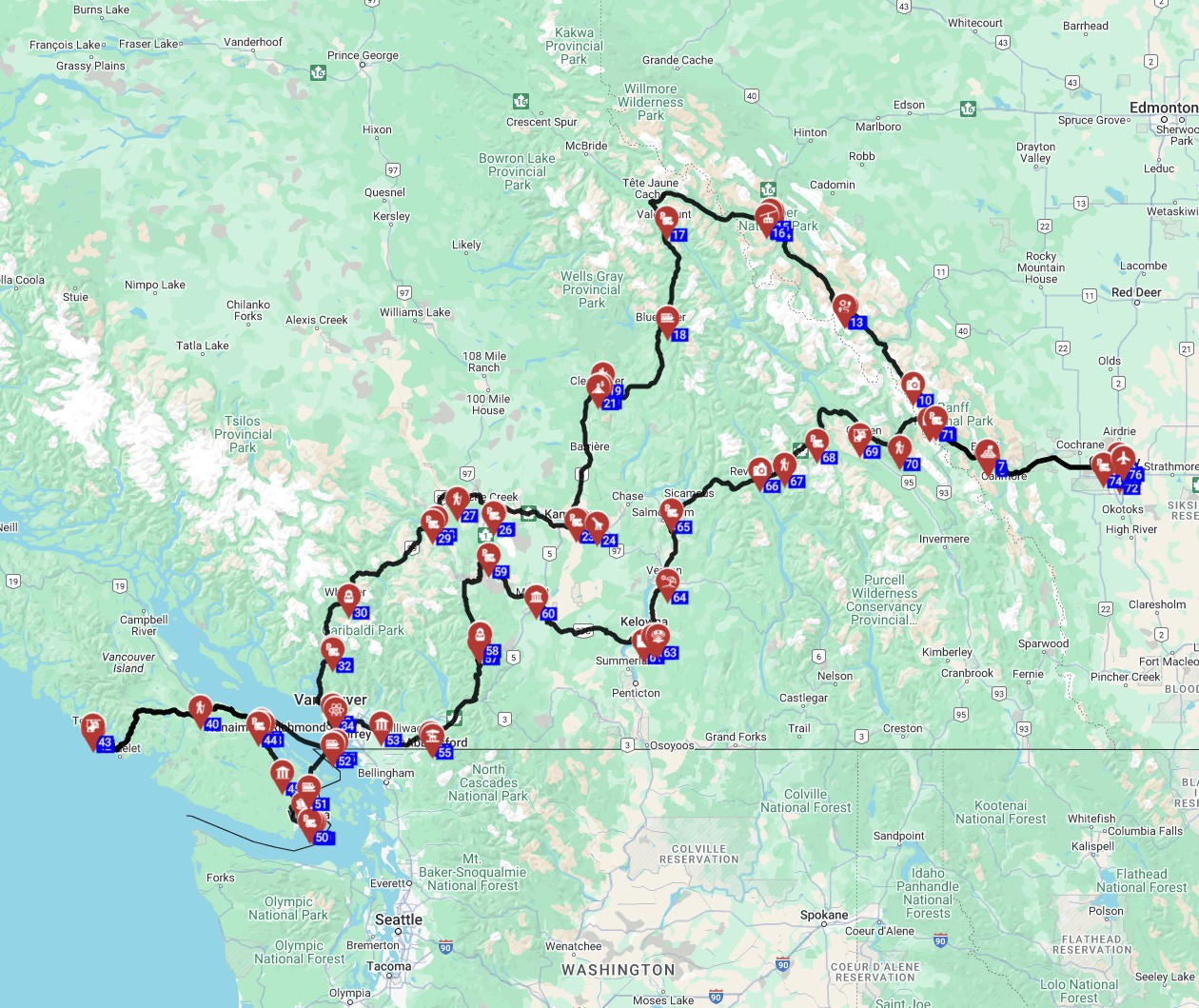
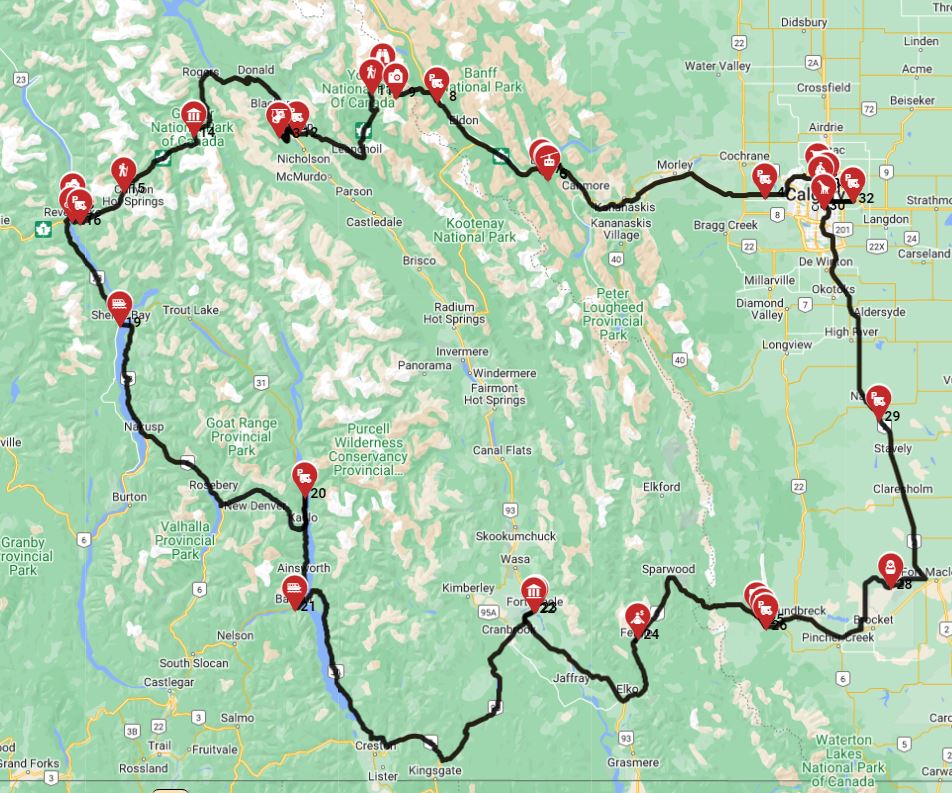
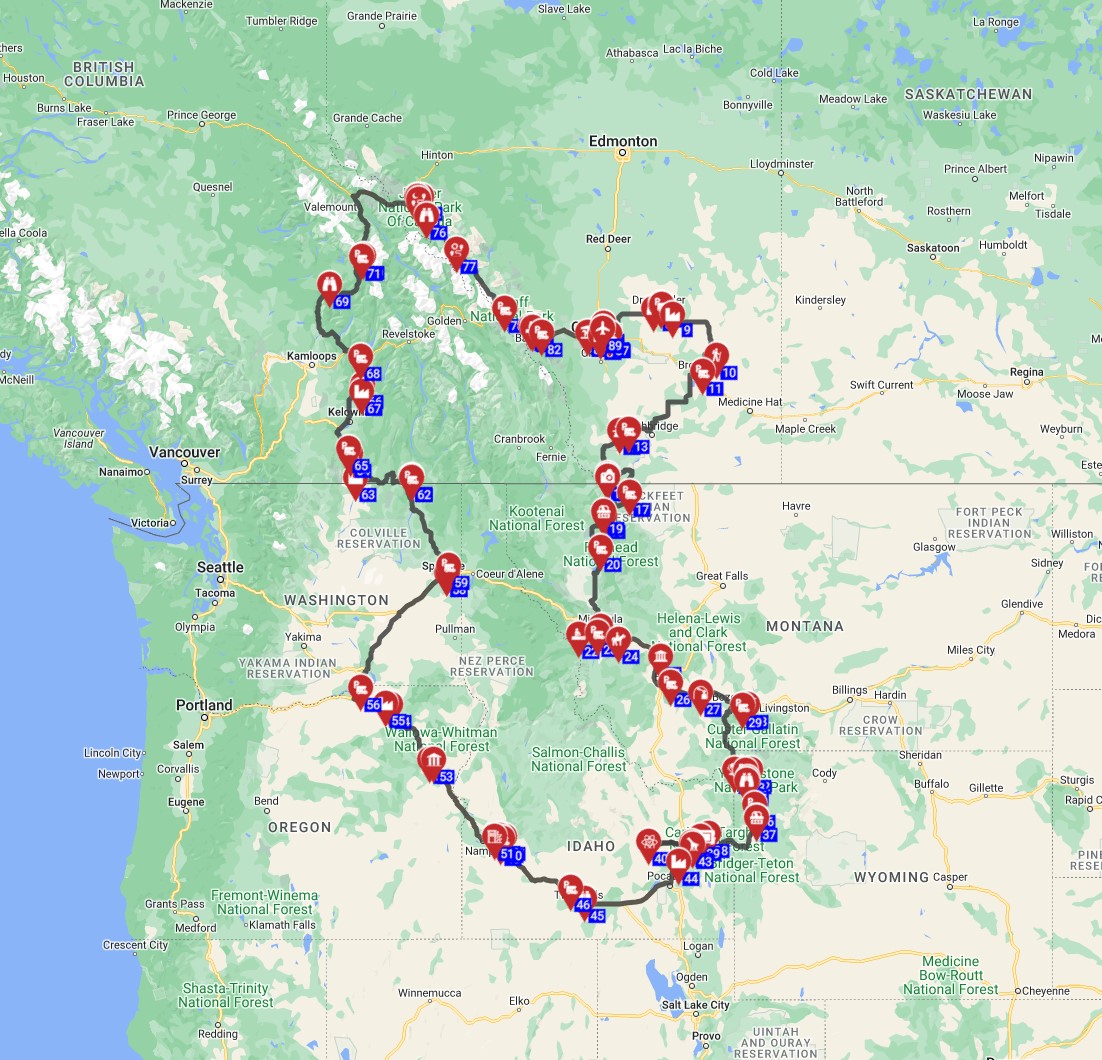
- Embark on the "Halifax to Whitehorse - Exploring Canada’s Heartland in a Motorhome" route: This 37-day, 9,199 km journey takes you through diverse Canadian landscapes, offering 4 hiking areas, 3 historical sites, and a chance for wildlife watching.
- Experience the "
": A 19-day, 2,659 km exploration that includes 3 bike rental opportunities, 2 parks, and a scenic route perfect for RV exploration.
 Vancouver Round Trip - West Canada Cycling Adventure
 - Drive the "
" route: This 15-day, 4,886 km trip covers vast stretches of Canada, featuring 2 hiking areas, 1 historical site, and a glimpse into 1 local industry.
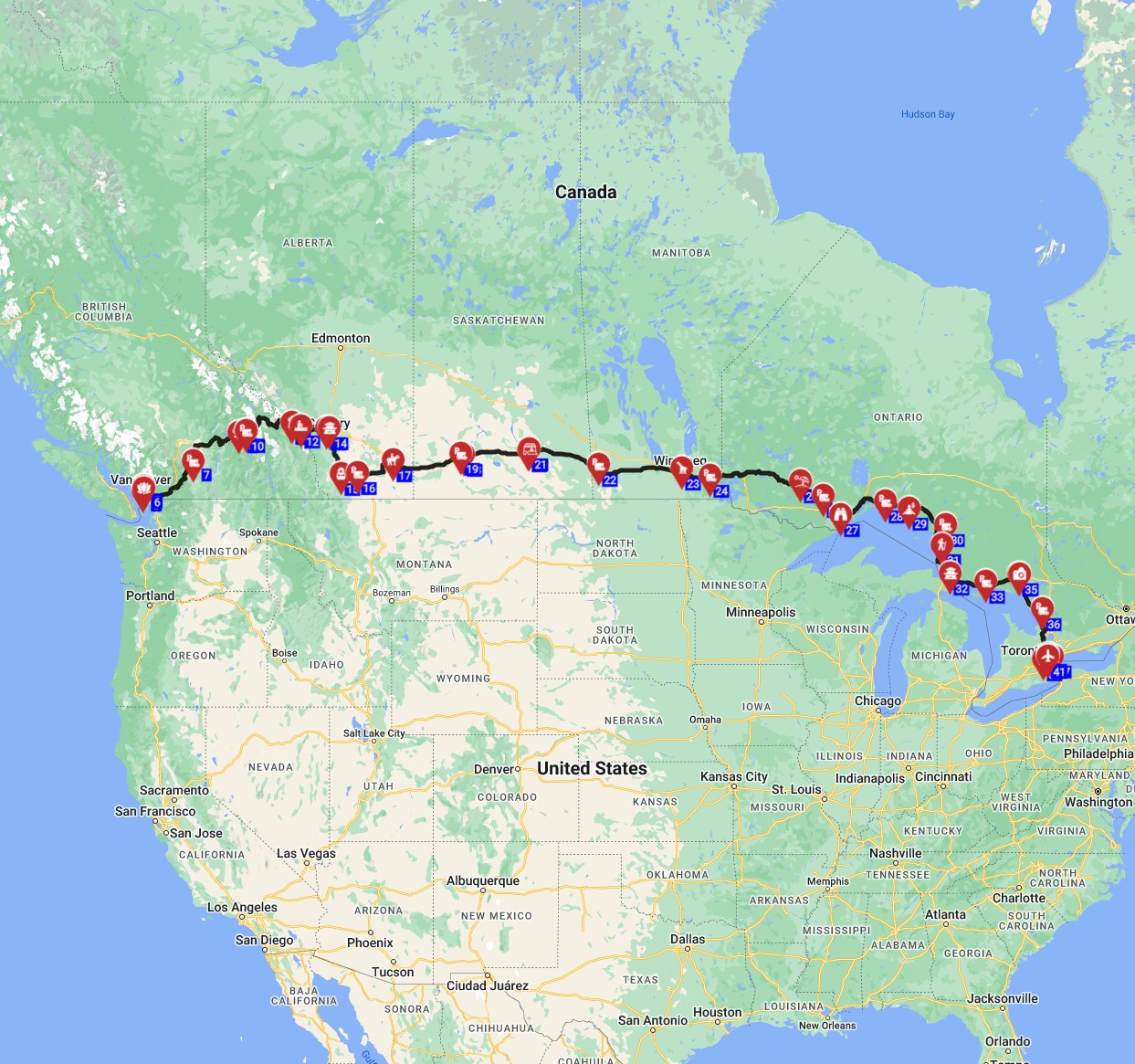 Vancouver to Toronto - Trans Canada West to East
 - Visit the iconic Banff National Park in Alberta, Canada, and explore its numerous campgrounds (reservations highly recommended) and stunning natural features.
- Drive a portion of the Dempster Highway in Yukon, Canada's only all-weather road crossing the Arctic Circle, for an epic RV adventure.
- Explore Manitoulin Island in Lake Huron, Ontario, the world's largest freshwater island, accessible by RV and boasting over 100 lakes of its own.
Final Thoughts
Renting an RV in Canada opens up a world of incredible scenery and unforgettable experiences. From the majestic Rockies to the stunning coastal drives, a motorhome adventure provides the freedom and flexibility to explore at your own pace. Remember to plan ahead, pack smart, and most importantly, savor the journey. The open road is calling, and Canada's vast landscapes are waiting to be discovered!
With Bandana Caravan, you gain access to a wide range of rental options, transparent pricing, and dedicated support, making your Canadian RV road trip planning straightforward and enjoyable. We're here to help you craft the perfect itinerary so you can focus on the adventure.
Ready to start planning your Canadian RV escape? Compare vehicles, explore routes, and book your dream motorhome today! For finding campsites and campgrounds during your trip, we recommend using RV PLANET (rvplan.net) — a great resource for locating available spots along your route.