In This Guide
- Can You Drive an RV in Orlando? License & Age Rules
- Road Conditions & Terrain in Orlando
- RV Size Limits, Bridges & Restricted Zones
- Fuel: Diesel vs. Petrol & Cost per 100 km
- Tolls, Vignettes & Border Rules
- Driving Tips for rv rental beginners Travelers
- Recommended RV Class for Orlando Roads
- Should I Choose a Compact Van Instead of a Large RV in Orlando?
- Can I Park Anywhere? Free & Wild Camping Rules in Orlando
- Can I Drive an RV Into the City Center? Heights, Tunnels & Local Signage
- What is the 3-3-3 rule for RVs and campers?
- Do you have to get a license for renting an RV?
- What is the new RV law in Florida?
- What is the 2-2-2 rule for RV?
- How much does it cost to insure a rental RV?
- Does my credit card cover RV rental insurance?
🎬 Video coming soon
Can You Drive an RV in Orlando? License & Age Rules
A standard Class D driver's license is generally sufficient for most rental motorhomes in Orlando, including popular Class B camper vans and Class C alcove models. A special license is typically only required if the RV's Gross Vehicle Weight Rating (GVWR) exceeds 26,001 pounds, which is rare for standard rental units. Bandana offers full transparency on licensing requirements, ensuring you know exactly what’s needed for your chosen rental motorhome. For live availability and current prices, start with our RV Rental Orlando - Complete Guide 2026 guide, where you'll find comprehensive details on vehicle categories. Most rental companies in Orlando require drivers to be at least 21 years old, and Bandana Caravan proudly offers rentals to drivers aged 21 and above without any young driver surcharges or vehicle class restrictions. If you are an international traveler, your valid home country license is usually accepted for up to one year, but an International Driving Permit (IDP) is highly recommended for clarity and ease of communication with local authorities, although it's not strictly mandatory in most cases. Understanding these rules is a critical first step in planning your Orlando RV adventure.Road Conditions & Terrain in Orlando
Orlando's road conditions are generally excellent, featuring well-maintained, flat, and paved surfaces that make it highly suitable for RV beginners. The terrain is predominantly flat, with no mountains or challenging inclines to navigate, simplifying driving a rented RV. Expect significant urban and suburban traffic, especially around popular theme parks like Walt Disney World and Universal Studios, as well as major arteries such as I-4 and International Drive. This calls for patience and careful maneuvering. We encourage travelers to drive slowly and carefully, using common sense and paying attention, as you can navigate almost anywhere without issues. Enjoy the journey, take time to appreciate the scenic Florida landscape, and prioritize safety on your adventure.RV Size Limits, Bridges & Restricted Zones
Orlando's main roadways and highways are designed to accommodate all standard RV sizes without specific length or height restrictions, unlike some older, more congested urban centers. While low bridges are uncommon on major routes, always pay close attention to signage, especially when exiting highways or entering smaller, less familiar roads in neighborhoods around attractions. Theme park parking lots and various recreational areas, such as those near Lake Eola Park in downtown Orlando, often provide designated oversized vehicle parking, typically with specific fees and entry procedures. Environmental zones are not a typical concern for motorhomes within Orlando or the broader Florida region, ensuring unrestricted exploration.Fuel: Diesel vs. Petrol & Cost per 100 km
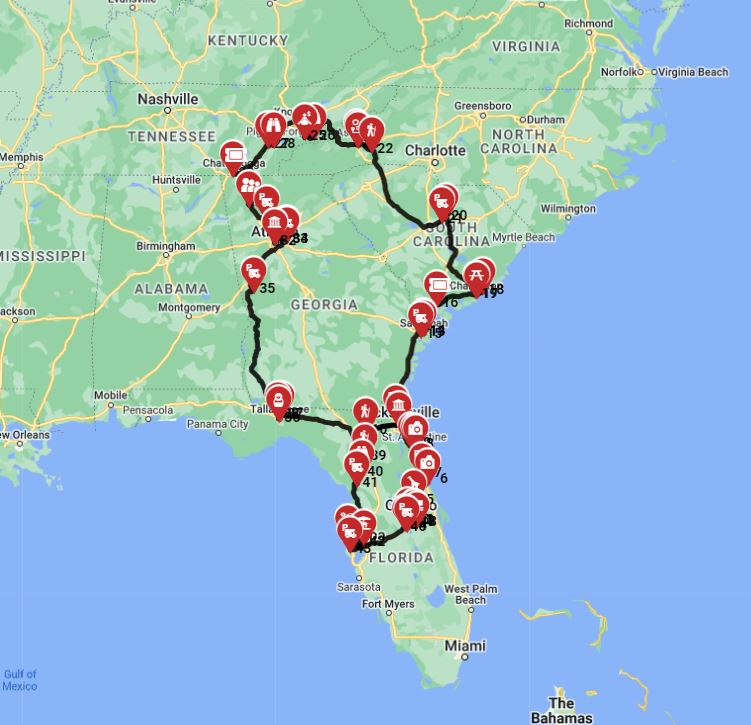
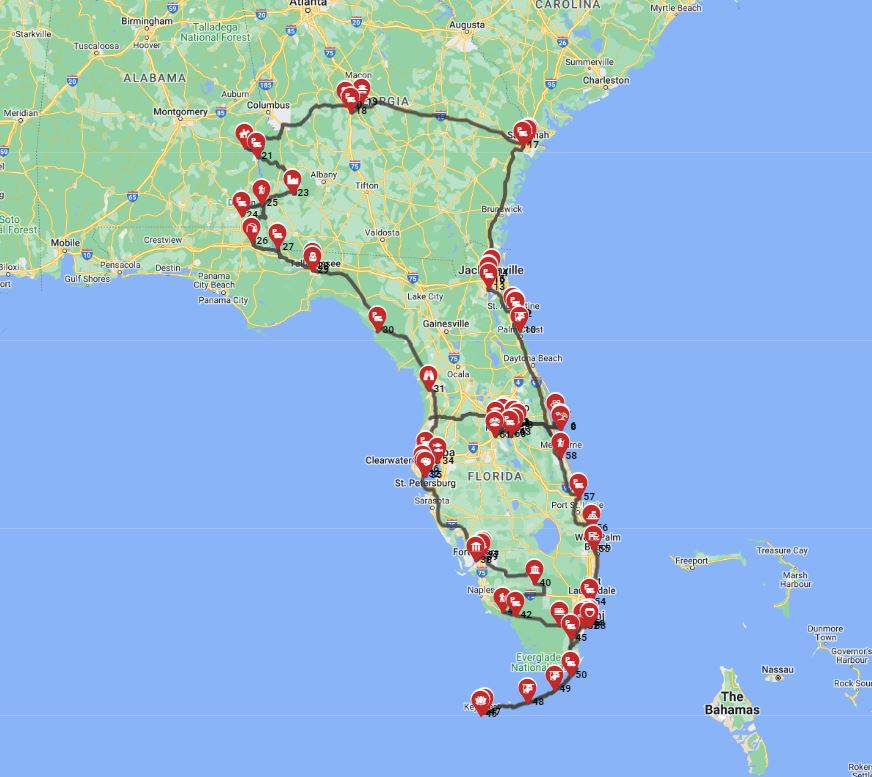
Most rental RVs available in Orlando, particularly Class C Alcove and Class A Integrated models from Bandana partners like Cruise America or El Monte, typically run on petrol, while some Class B Camper Vans may be diesel. Bandana's Class C - Alcove RVs in Orlando commonly have a fuel consumption range of 25 - 35 Liters/100km (approximately 7-10 MPG), reflecting their size and amenities. Larger Class A - Integrated RVs in Orlando commonly consume 30-45 Liters/100km (approximately 5-7 MPG), which is important to factor into your travel budget. Fuel costs can fluctuate daily; checking current Orlando petrol and diesel prices is essential to accurately estimate your expenses, as fuel can significantly impact your total trip cost. When planning your route and budgeting, remember that RV PLANET routes allow you to itemize and track every expense, including fuel, for easy budgeting throughout your journey.Tolls, Vignettes & Border Rules
Orlando and the surrounding central Florida area feature an extensive network of cashless toll roads, making a transponder or toll pass essential for convenient RV travel. Florida's primary toll system utilizes SunPass and E-Pass, and visitors should ensure their rental RV comes equipped with a transponder or opt-in for the rental company's toll program. Failure to use a transponder on Florida's cashless tolls can result in higher 'Toll-by-Plate' charges, which are mailed to the vehicle owner, and potential administrative fees from the rental company. Bandana often provides options to pre-purchase toll passes or includes transponders in rental packages to avoid unexpected fines and streamline your travel. Border rules are not applicable for RV travel within Florida, but drivers should be aware of state-to-state driving regulations if planning extended trips beyond Florida, such as those found in our "RV Rental Florida - Complete Guide 2026".Driving Tips for rv rental beginners Travelers
Careful route planning is crucial for RV rental beginners, and using an RV-specific GPS or mapping tool is highly recommended to avoid low clearances and narrow roads, especially around older parts of Orlando. RVs require significantly more space for turns than cars, so anticipate corners and swing wide safely to avoid curbing or hitting obstacles; this is especially vital in busy areas around the theme parks. Given their heavier weight, RVs take longer to stop, so increase your following distance, particularly in Orlando's often busy traffic, and always check mirrors frequently to be aware of your surroundings and blind spots, using spotters when backing up or maneuvering in tight spaces. It is always best to manage your speed by driving at or slightly below the posted speed limits, especially on highways, as RVs are more susceptible to crosswinds and can feel less stable at high speeds. Remember to travel slowly, averaging a maximum of 100-150 km per day, allowing ample time to enjoy the scenery and local attractions.Recommended RV Class for Orlando Roads
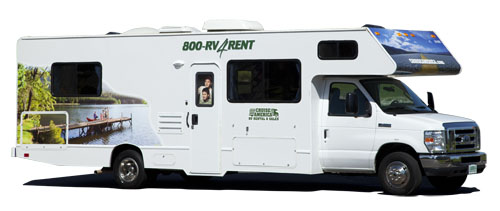
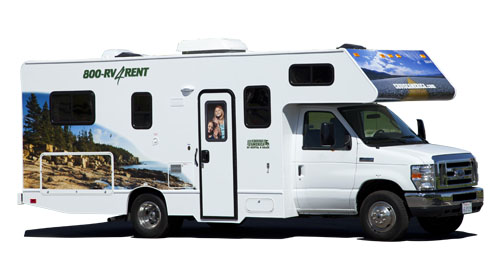
For RV rental beginners traveling in Orlando, Class C - Alcove and Class B - Camper Van models are highly recommended due to their excellent balance of maneuverability and comfort. Class C - Alcove RVs, like a "cruise america rv rental example Explorer" (7.1m long, sleeps 4), with an average length of 8.3m, provide ample space for families (typically accommodating 5.8 sleeping places for 3.9 adults) while remaining manageable for most roads and campgrounds. Class B - Camper Vans, averaging 6.1m in length, offer the easiest driving and parking experience, ideal for couples or smaller groups (with approximately 4 sleeping places for 4 adults) navigating urban Orlando and fitting into most theme park oversized vehicle parking spots without significant challenges. Both classes handle Orlando's flat, well-maintained roads with ease, making them excellent choices for a comfortable first-time RV experience.Should I Choose a Compact Van Instead of a Large RV in Orlando?
While Orlando's infrastructure readily accommodates larger RVs, choosing a compact van, specifically a Class B Camper Van, can offer significant advantages for beginners in terms of easier maneuverability and parking in crowded areas, as well as better fuel economy. A compact van, such as the "hire campervan example Paradise S/T" (small RV size, ideal for a couple, automatic transmission), with an average length of 6.1m, is almost as easy to drive and park as a large SUV, making it less intimidating for first-time RVers. However, larger motorhomes like Class C (averaging 8.3m in length) or Class A (averaging 9.6m) provide significantly more interior space, amenities, and comfort, which can be a better trade-off for families or extended week-long trips. For an Orlando adventure, a Class C often strikes an excellent balance, offering comfortable living space with ample room for the family without the parking challenges sometimes associated with very large Class A RVs. You can compare options and prices in our "Weekly RV Rental in Orlando - Pricing 2026" guide.Can I Park Anywhere? Free & Wild Camping Rules in Orlando
No, wild camping or free overnight parking on public streets is generally prohibited within Orlando city limits and most developed areas of Florida. RV travelers are expected to utilize designated campgrounds, RV parks, or private properties with explicit permission for overnight stays. While some big-box retailers, such as Walmart or Cracker Barrel, occasionally permit overnight RV parking, this is always at the discretion of individual store managers and should be confirmed directly with the store management first. Always adhere to posted signage, respect private property, and verify local ordinances before attempting to park overnight anywhere other than a registered campground. For finding campsites and campgrounds during your trip, we recommend using RV PLANET (rvplan.net) - a great resource for locating available spots along your route. Remember, while many national and state parks reserve only 25-30% of their spots in advance, the rest are first-come-first-serve, so you'll always find a spot, even if it's not at your first choice - just call ahead.Can I Drive an RV Into the City Center? Heights, Tunnels & Local Signage
Yes, you can drive an RV into Orlando's city center, as major roads and arteries, including downtown thoroughfares like Orange Avenue and Rosalind Avenue, are designed to accommodate large vehicles. It is crucial to pay close attention to local signage for specific height limits, particularly for parking garages and some older underpasses, though these are rare on main city routes. There are no significant tunnels in Orlando that pose height restrictions for RVs, and environmental zones are not a common concern for motorhomes. The primary challenge when driving an RV in Orlando's city center is often finding appropriate parking, as most multi-story garages will not accommodate RV heights, making street parking or designated oversized lots necessary. Drive slowly and carefully, and you can drive almost anywhere without issues. No need to stress - just use common sense and pay attention.What is the 3-3-3 rule for RVs and campers?
The 3-3-3 rule for RV travel is a widely recommended safety and enjoyment guideline suggesting driving no more than 300 miles a day, arriving at your campground by 3 PM, and staying for a minimum of 3 nights. This rule is designed to prevent driver fatigue, allowing ample time for setting up camp, relaxing, and connecting to the culture, the food, and the scenery of each destination. Following the 3-3-3 rule significantly enhances the overall RV experience by reducing stress and providing opportunities to explore the local area more thoroughly, making it especially beneficial for RV rental beginners in Orlando looking to enjoy the journey and attractions without rushing. It’s a smart approach to truly experience what Orlando and the wider Florida region have to offer.Do you have to get a license for renting an RV?
For most rental RVs in Orlando, including popular Class B camper vans and Class C alcove models, a standard Class D driver's license (the common type for passenger vehicles) is sufficient, as they typically do not exceed the 26,001-pound Gross Vehicle Weight Rating (GVWR) threshold requiring a commercial driver's license (CDL). Most rental companies require drivers to be at least 21 years old, with Bandana being one of them, without imposing additional young driver surcharges. It is always crucial to verify the specific license requirements with your chosen RV rental company and to check the GVWR of the particular RV you intend to rent to ensure compliance. Even if a CDL is not required, driving a larger rental motorhome demands more skill and awareness than driving a standard car. You can find more details in our "RV Rental Deals in Orlando - Latest Offers 2026" to compare options.What is the new RV law in Florida?
While there isn't a single comprehensive "new RV law" that drastically altered RV operation in Florida in 2026, ongoing legislation often refines areas such as roadside parking, campground regulations, and specific vehicle registration requirements. Florida frequently updates its traffic and vehicle codes, impacting aspects like vehicle length limits, safety inspection requirements (though typically not for privately owned RVs), and rules for staying in certain areas. RV rental beginners should consult the Florida Department of Highway Safety and Motor Vehicles (FLHSMV) website for the most current state statutes and local county ordinances, as these can vary significantly by county, for example, between Orange County (Orlando) and neighboring Osceola County. Recent legislative discussions often focus on public land use, waste disposal, and preventing prolonged parking in undesignated areas to maintain environmental standards.What is the 2-2-2 rule for RV?
The 2-2-2 rule for RV travel is a guideline recommending driving no more than 200 miles a day, arriving at your destination by 2 PM, and staying for at least 2 nights. This rule promotes an even more relaxed pace than the 3-3-3 rule, allowing for extensive relaxation and exploration at each stop, perfectly aligning with our philosophy of slow travel. It is particularly beneficial for RV rental beginners or those who prefer to minimize driving time and maximize time spent enjoying attractions and campgrounds in and around Orlando. Following the 2-2-2 rule helps prevent rushed travel, provides ample time for setting up camp and preparing meals in your RV kitchen, and allows for thorough sightseeing, which is ideal for an Orlando vacation. For culinary inspiration on the road, check out our RV-friendly recipes playlist.How much does it cost to insure a rental RV?
The cost to insure a rental RV in Orlando can vary significantly based on the rental company, the specific RV class (e.g., Class B vs. Class C), the duration of the rental, and the level of coverage chosen, typically ranging from $15 to $50 per day for basic liability and collision protection. Rental companies generally offer primary liability and collision damage waivers, which are highly recommended for comprehensive protection during your trip. Additional coverage options, such as roadside assistance, personal effects coverage, and supplemental liability, can increase the daily cost. Factors like your driving record, the deductible amount you select, and the value of the rented RV itself will also influence the final insurance premium. It's essential to get a detailed quote from your rental provider, such as Bandana, to understand all available insurance options and costs, and remember you can always upgrade to a top-level deductible for extra peace of mind. More pricing insights can be found in our "Cheap RV Rental in Orlando - Budget Guide 2026".Does my credit card cover RV rental insurance?
While some premium credit cards offer rental car insurance benefits, it is rare for these policies to extend coverage to recreational vehicles (RVs) in Orlando, which are often explicitly excluded from their terms and conditions. Most credit card rental insurance policies are designed for standard passenger vehicles and explicitly define motorhomes, campervans, trucks, and larger vans as non-covered vehicle types due to their higher value, different risk profile, and specialized usage. Before relying on credit card coverage, it is imperative to contact your credit card issuer directly to confirm whether RVs are included and what specific coverages apply. It is generally advisable for RV rental beginners in Orlando to purchase insurance directly through the rental company or a specialized third-party RV insurance provider for adequate protection and complete peace of mind. Bandana offers options for top-level deductible reimbursement, an optional upgrade, ensuring you travel with confidence.What You Shouldn't Miss
- **Explore Walt Disney World's Fort Wilderness:** This 750-acre resort offers dedicated RV spots, horse riding, and even segway tours, making it an immersive base for your theme park adventures.
- **Visit Wekiwa Springs State Park:** Just a short RV drive north of Orlando, this state park offers crystal-clear springs for swimming and canoeing, with RV campsites available for an authentic Florida nature experience.
- **Take an Airboat Tour on the St. Johns River:** Experience the "Real Florida" with a thrilling airboat ride to spot alligators and diverse wildlife, easily accessible from RV parks like those near Lake Jesup.
- **Stroll through Historic Downtown Sanford:** Park your RV in a designated area and explore this charming historic town on Lake Monroe, known for its craft breweries, local eateries, and vibrant art scene, offering a taste of authentic Central Florida.
- **Enjoy Fresh Citrus from a Roadside Stand:** Embrace Orlando's agricultural past by stopping at one of the many local citrus stands or U-pick farms just outside the city for fresh oranges, grapefruits, and more.