In This Guide
- Can You Drive an RV in Salt Lake City? License & Age Rules
- Road Conditions & Terrain in Salt Lake City
- RV Size Limits, Bridges & Restricted Zones
- Fuel: Diesel vs. Petrol & Cost per 100 km
- Tolls, Vignettes & Border Rules
- Driving Tips for winter rv rental Travelers
- Recommended RV Class for Salt Lake City Roads
- Should I Choose a Compact Van Instead of a Large RV in Salt Lake City?
- Can I Park Anywhere? Free & Wild Camping Rules in Salt Lake City
- Can I Drive an RV Into the City Center? Heights, Tunnels & Local Signage
- Do you need AWD in Salt Lake City, Utah?
- Can you drive an RV in the winter?
- Why is Salt Lake City proposing a ban on vehicle camping?
- What's the average price for RV insurance?
Imagine waking up in your cozy, warm motorhome, pulling back the curtain to see snow-dusted peaks glowing in the morning sun. You're just a short drive from some of the best ski slopes in the world, with the freedom to chase the powder wherever it falls. This is the magic of a winter RV trip in Salt Lake City, a unique adventure that combines the thrill of the open road with the unparalleled beauty of Utah's winter wonderland.
Renting a campervan here isn't just about getting from point A to B; it's about creating a mobile basecamp for epic skiing, serene snowshoeing, and unforgettable mountain vistas. With a rented mobile home, you have the flexibility to explore the Wasatch Front at your own pace, from the vibrant city center to the tranquil canyons. For a full overview of options and pricing, our RV Rental Salt Lake City - Complete Guide 2026 is the perfect place to start your planning.
Can You Drive an RV in Salt Lake City? License & Age Rules
Yes, you can absolutely drive a rented RV in Salt Lake City with a standard driver's license. For nearly all rental motorhomes, including Class A, B, and C models with a Gross Vehicle Weight Rating (GVWR) under 26,001 pounds, your regular car license (like a Class D in Utah) is all you need. No special permits or commercial driver's licenses (CDLs) are required, making it incredibly accessible for first-timers.
The minimum rental age is typically 21, and unlike many car rental companies, there are no young driver surcharges or vehicle class restrictions based on age. This means a 21-year-old has the same access to our fleet as any other driver. For international visitors from non-English-speaking countries, carrying an International Driving Permit (IDP) alongside your home country's license is recommended to simplify communication with authorities, but it is not mandatory in most cases. With Bandana Caravan, you can travel with confidence, knowing you have the right credentials to hit the road.
Road Conditions & Terrain in Salt Lake City
Salt Lake City's road conditions are a mix of well-maintained urban streets and challenging mountainous terrain, especially during winter. The city itself is laid out on a grid with wide, flat roads, making it surprisingly easy to navigate even a larger rented motorhome. However, the real adventure lies in the surrounding Wasatch Mountains, where you'll find steep grades, sharp turns, and the potential for snow and ice on the roads leading to world-famous ski resorts like Alta and Snowbird.
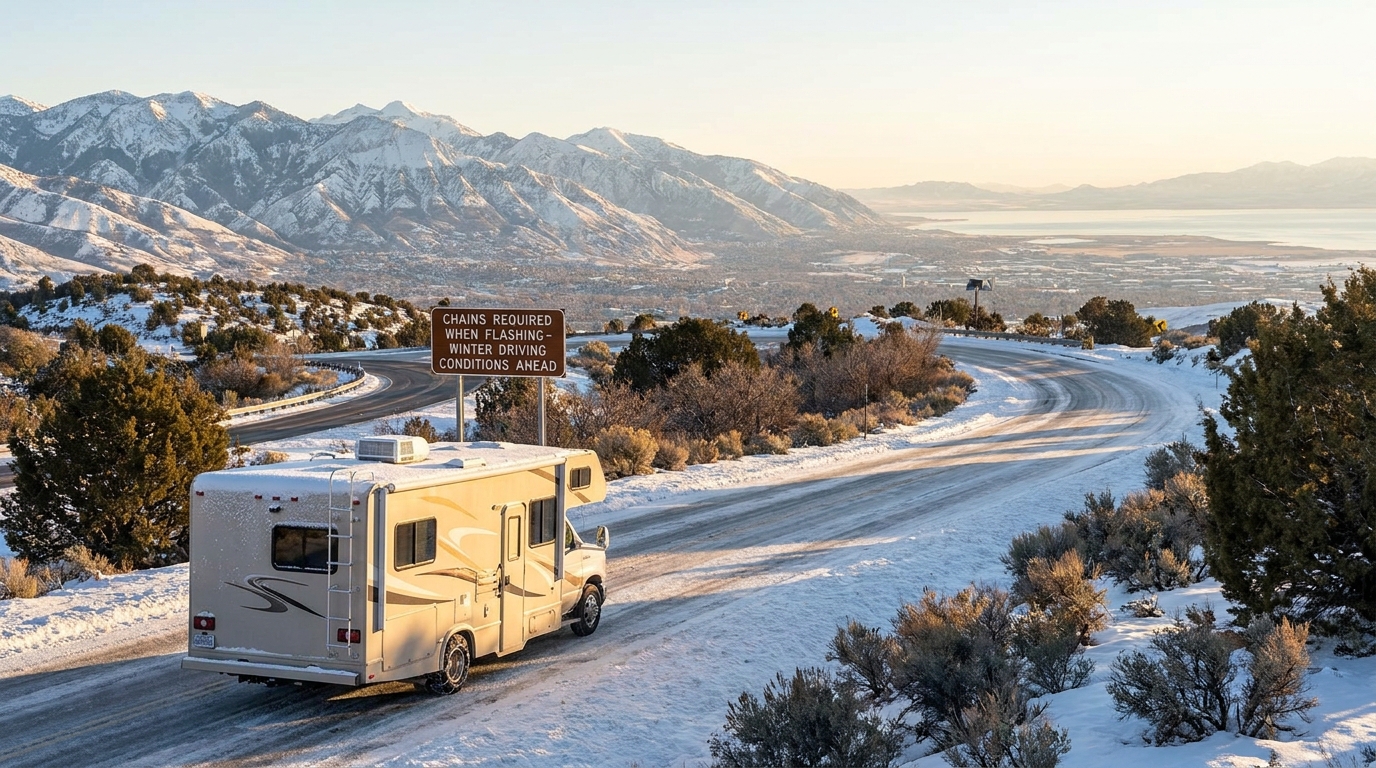
Winter brings the "Greatest Snow on Earth," but it also means you must be prepared. Roads in Big and Little Cottonwood Canyons often have traction laws in effect, requiring vehicles to have snow tires or carry chains. Don't let this deter you; it’s part of the experience! We always recommend the slow travel approach: drive at a comfortable pace, leave plenty of space between you and the vehicle ahead, and take your time to soak in the incredible scenery. A journey through this winter landscape is as much about the drive as the destination.
RV Size Limits, Bridges & Restricted Zones
Most rental motorhomes will face no general size restrictions on major roads in and around Salt Lake City. The city's founders designed the downtown streets to be exceptionally wide (132 feet) to allow a team of oxen to turn around, a historical quirk that modern RV drivers can appreciate. This makes maneuvering through the urban core less stressful than in many other cities. However, it's crucial to always be aware of your vehicle's specific height and length.
While major routes are clear, you must pay close attention to posted signs for low bridges, underpasses, or weight-limited roads, particularly in older neighborhoods or on smaller mountain roads. Unlike some European cities, Salt Lake City does not have environmental zones that restrict RV access. The biggest challenge with a larger Class A or Class C motorhome is not driving, but parking. Plan ahead: use satellite views to scout parking lots or consider parking at a TRAX light rail station on the outskirts and taking public transit downtown for a hassle-free day of exploring.
🎬 Video coming soon
Fuel: Diesel vs. Petrol & Cost per 100 km
Both diesel and petrol (gasoline) are readily available throughout the Salt Lake City area, ensuring you can easily refuel no matter which type of rented motorhome you choose. Most Class C and Class B rental RVs in the U.S. run on standard unleaded petrol, which is typically cheaper per gallon than diesel. You can expect a petrol-powered Class C motorhome to consume between 25 to 35 liters per 100 kilometers (about 7-10 miles per gallon), especially when navigating mountain roads.
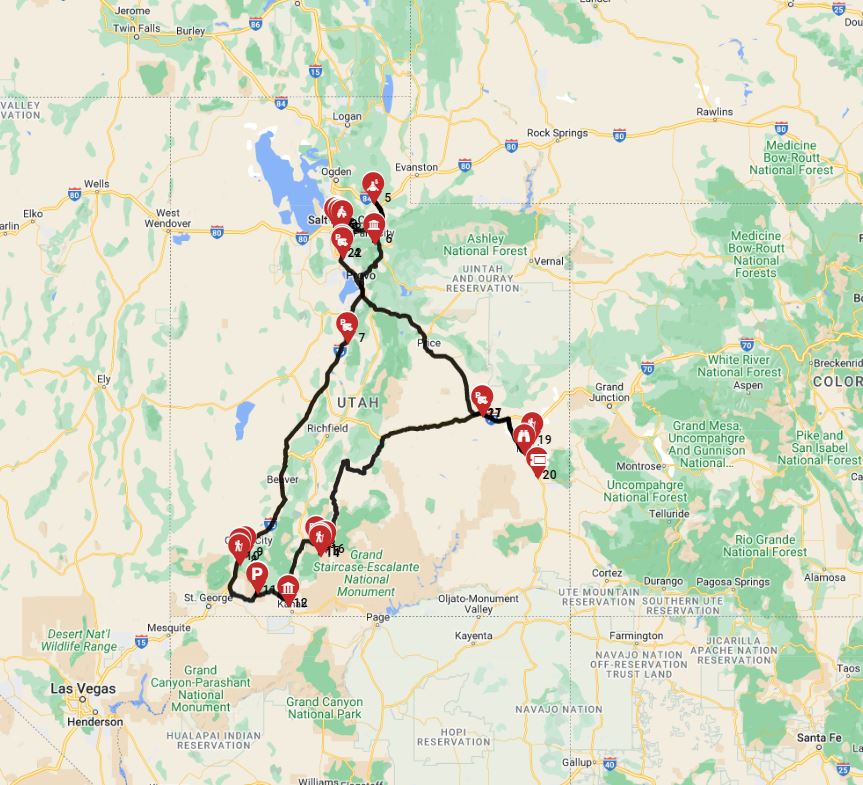
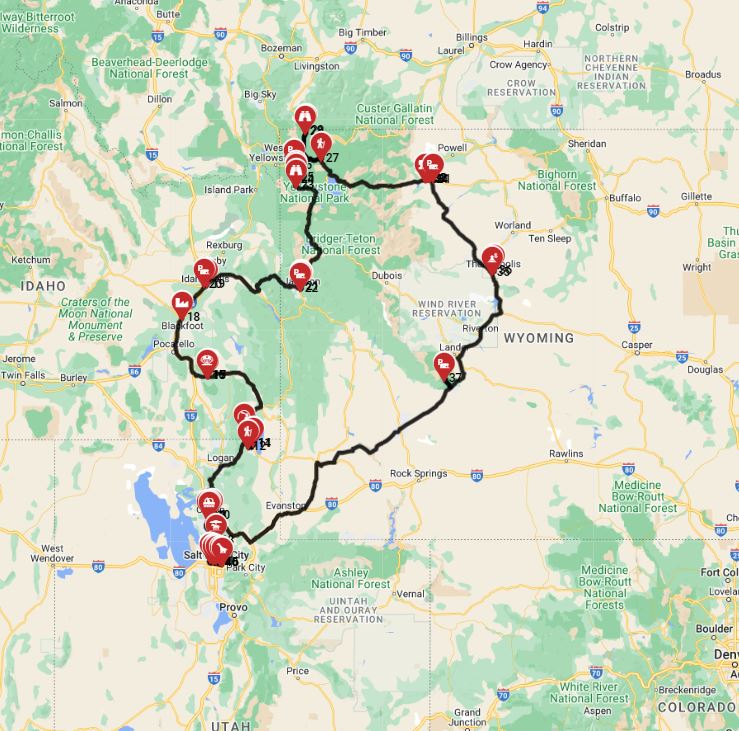
Larger Class A motorhomes and some truck campers may be equipped with diesel engines, which offer better torque for climbing hills and slightly better fuel efficiency. As fuel prices are dynamic, it's wise to budget for this key expense. For detailed expense tracking on your trip, the pre-planned RV PLANET routes allow you to itemize and monitor every cost, from fuel to campground fees, making budgeting simple and transparent. On the routes offered through RV PLANET routes, you can itemize and track every expense along the way for easy budgeting.
Tolls, Vignettes & Border Rules
When driving a rented RV around Salt Lake City, you won't need to worry about vignettes or border crossings. Utah, like most U.S. states, does not use a sticker-based road tax system. The primary area where you might encounter a toll is on the I-15 Express Lanes, which run through the Salt Lake Valley. These lanes use an electronic tolling system to manage traffic flow, with prices adjusting based on congestion.
Before you start your trip, it's a good idea to ask your rental supplier if the vehicle is equipped with a toll transponder. If not, be sure to note the signs for online or mail-in payment options to avoid any unexpected fines. For most travelers, sticking to the regular lanes is the simplest approach and won't add significant time to your journey, allowing you to focus on the beautiful scenery instead of tolls.
Driving Tips for winter rv rental Travelers
Embracing a winter RV trip in Salt Lake City means prioritizing safety and preparation. The key is to drive defensively, maintain at least double the normal following distance on snowy or icy roads, and be ready for weather that can change in an instant. Before heading into the mountains, always check the Utah Department of Transportation (UDOT) traffic website for the latest road conditions, closures, and traction law requirements.
Ensure your rented camper is winter-ready, meaning it has adequate insulation and a protected water system. Always carry tire chains if you plan to drive in the canyons during or after a snowstorm, and practice putting them on before you need them. Reduce your speed significantly, brake gently, and accelerate smoothly to maintain traction. After a day on the slopes, nothing beats returning to your warm RV to prepare a hearty meal. Our RV-friendly recipes playlist has great ideas for cozy dinners on the road. Remember, slow and steady is the secret to a successful and enjoyable winter adventure.
Recommended RV Class for Salt Lake City Roads
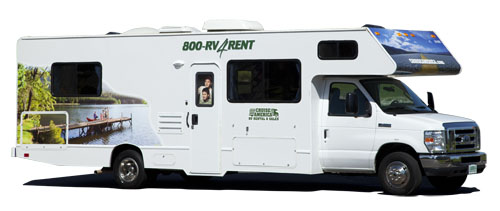
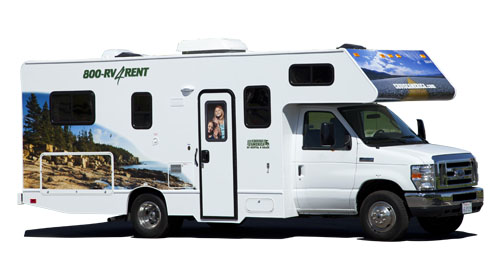
A Class C motorhome is an excellent and highly recommended choice for a winter RV rental in Salt Lake City. These vehicles, averaging around 8 meters (25-28 feet), strike the perfect balance between spacious living quarters for your family and winter gear, and manageable maneuverability for both city streets and mountain highways. They typically sleep 4-6 people comfortably, providing a warm and inviting haven after a day of winter activities.
For couples or smaller groups, a Class B campervan offers greater agility, making parking in downtown Salt Lake City or navigating tight canyon roads even easier. While a luxurious Class A motorhome provides ultimate comfort, its larger size can be less practical for steep, winding mountain passes in snowy conditions. Ultimately, the best choice depends on your group size and comfort level. Just remember: drive slowly and carefully, and you can drive almost anywhere without issues. No need to stress-just use common sense and pay attention.
Should I Choose a Compact Van Instead of a Large RV in Salt Lake City?
While a compact van offers better maneuverability, a larger Class C motorhome is generally the better choice for a winter trip in Salt Lake City because the added comfort and space far outweigh any minor driving challenges. Winter travel involves bulkier clothing, ski or snowboard gear, and more time spent indoors. A larger rented RV provides the necessary storage and living space to keep your crew comfortable and organized, turning your vehicle into a true home on wheels.
A compact van is great for navigating downtown and offers better fuel economy, making it a solid option for couples focused on urban exploration. However, for families or groups planning to visit multiple ski resorts or spend extended time in the mountains, the amenities of a larger RV-like a more robust heating system, larger water tanks, and a full kitchen-become invaluable. With Salt Lake City's wide streets, driving a larger RV is not the obstacle you might think; finding downtown parking is the main consideration, which can be easily solved with a little planning.
Can I Park Anywhere? Free & Wild Camping Rules in Salt Lake City
No, you cannot park your rented RV overnight just anywhere within Salt Lake City limits, as "wild camping" or "boondocking" on public streets, in city parks, or in most commercial parking lots is prohibited by local ordinances. For legal, safe, and comfortable overnight stays, you should plan to use one of the several established RV parks and campgrounds in the metro area, such as the Salt Lake City KOA Holiday, which offers year-round services including electric hookups essential for winter.
The real opportunity for free camping lies just outside the city. Utah is home to vast expanses of Bureau of Land Management (BLM) and National Forest lands that permit dispersed camping, often for up to 14 days in one spot. These areas are undeveloped, so your RV must be self-sufficient, especially in winter. Always check local regulations before settling in for the night. For finding both paid campgrounds and dispersed camping spots during your trip, we recommend using RV PLANET (rvplan.net)-a great resource for locating available spots along your route.
Can I Drive an RV Into the City Center? Heights, Tunnels & Local Signage
Yes, driving a rented RV into downtown Salt Lake City is entirely feasible, thanks to the city's uniquely wide streets and straightforward grid system. Most major thoroughfares leading to and through the city center, like State Street or 300 West, are free of low clearances that would hinder a standard motorhome. However, the golden rule is to always remain vigilant and pay close attention to all posted signage, especially for height restrictions on underpasses or specific parking garages.
The main challenge isn't driving-it's parking. Finding a spot for a 30-foot motorhome near popular attractions like Temple Square or the City Creek Center can be difficult. A great strategy is to park your RV at a peripheral lot or a designated park-and-ride for the TRAX light rail system. This allows you to explore the compact downtown area on foot or via public transit, giving you the best of both worlds: the freedom of your mobile home and the convenience of stress-free city exploration.
Do you need AWD in Salt Lake City, Utah?
All-Wheel Drive (AWD) is not an absolute requirement for driving a rented RV within Salt Lake City itself, but it is highly recommended for any winter trip that includes venturing into the nearby mountains and canyons. During and after snowstorms, Utah authorities often implement traction laws on canyon roads leading to ski resorts like Park City, Alta, and Snowbird. An AWD or 4WD vehicle equipped with appropriate snow-rated tires (M+S or 3-peak mountain snowflake symbol) can often satisfy these requirements without needing chains, offering significant peace of mind and better safety.
Even on city streets, which are regularly plowed, AWD provides superior traction for accelerating from a stop on icy intersections and navigating unplowed side streets. If your itinerary is focused on skiing or exploring scenic mountain byways, choosing a rental vehicle with AWD or 4WD, such as a capable truck camper or certain campervan models, is a wise investment in both safety and accessibility.
Can you drive an RV in the winter?
You can absolutely have an incredible experience driving a rented RV in the winter, especially in a world-class destination like Salt Lake City. The key to a successful winter journey is choosing a properly "winterized" or "four-season" motorhome and being a prepared driver. A winter-ready RV will have features like heated water tanks and enclosed plumbing to prevent freezing, along with a powerful furnace to keep the interior toasty warm, even when temperatures drop.
Driving in winter simply requires a more cautious approach. Slow down, increase your following distance, and avoid sudden movements. Equip your vehicle with proper tires and carry emergency supplies. Many travelers love winter RVing because campgrounds are less crowded, and the snowy landscapes are breathtakingly beautiful. It's a unique and rewarding way to travel, offering a cozy shelter right at the heart of the winter action. Whether you're a pre-planner who books everything in advance or a spontaneous traveler, you'll find a spot. Many parks only reserve 25-30% of their sites, leaving the rest for first-come, first-serve arrivals.
Why is Salt Lake City proposing a ban on vehicle camping?
Salt Lake City's proposed ban on vehicle camping is primarily a municipal response to address public health, safety, and sanitation issues related to the growing number of individuals living long-term in vehicles on city streets. This initiative is aimed at managing unregulated overnight parking associated with homelessness, not at discouraging tourism. The city's goal is to connect individuals in need with social services and safer housing alternatives.
For RV rental travelers, this means it is more important than ever to use designated campgrounds and RV parks for overnight stays within city limits. The ban reinforces existing rules against overnight parking on public property and is not intended to impact tourists staying in legal, designated areas. Legal alternatives are plentiful, including private RV parks in the city, state parks just outside of it, and beautiful dispersed camping on public lands a short drive away.
What's the average price for RV insurance?
The cost for rental RV insurance typically ranges from $15 to $40 per day and is influenced by the vehicle's value, your chosen coverage level, and the rental duration. When you book a motorhome with a reputable company like Bandana Caravan, basic liability insurance is generally included in your rental package, providing a foundational level of protection. You then have the option to add more comprehensive coverage for extra peace of mind.
We believe in full transparency, which is why all insurance costs are clearly detailed during the booking process. You can also choose to upgrade to a top-level deductible reimbursement, which significantly reduces your financial liability in the event of an accident. This allows you to relax and enjoy your trip, knowing you're well-protected against the unexpected without any surprise fees.
What You Shouldn't Miss
- Drive the Big Cottonwood Canyon Scenic Byway: A stunning 15-mile drive into the heart of the Wasatch Mountains, offering access to Solitude and Brighton ski resorts and numerous trailheads for snowshoeing.
- Camp on Antelope Island: Experience the unique landscape of the Great Salt Lake. Park your rented RV at a campsite, watch for free-roaming bison, and witness some of the most spectacular sunsets and starry nights imaginable.
- Explore Historic Park City: Park your motorhome at the designated lot at Park City High School (check for seasonal availability) and take the free bus up to Main Street. Explore the historic mining town's charming shops, art galleries, and world-class restaurants.
- Visit the Utah Olympic Park: See where athletes made history during the 2002 Winter Olympics. You can watch future Olympians train on the ski jumps and bobsled track, or even try the public bobsled ride for a real thrill.
- Stargaze at a Dark Sky Park: Drive your RV just outside the city's glow to a designated spot like the northern end of Antelope Island or East Canyon State Park for an awe-inspiring view of the Milky Way.
Final Thoughts
A winter RV trip in Salt Lake City is more than a vacation; it's an opportunity to connect with nature's grandeur on your own terms. It’s the freedom to chase the perfect powder day, the joy of waking up to a mountain sunrise from the comfort of your own space, and the memories you'll make sharing stories around the dinette after a day of adventure. The "Greatest Snow on Earth" is calling, and there’s no better way to answer than from the driver's seat of your own mobile mountain lodge.
From the wide, welcoming streets of the city to the majestic peaks of the Wasatch, your adventure awaits. Let us help you find the perfect vehicle for your journey. Get inspired for your next trip, and start planning an unforgettable winter escape today.
Find Winter Motorhome Rentals in Salt Lake City