In This Guide
- Is Texas good for RVing in the winter?
- What is the best month to RV in Texas?
- How cold does it get in Texas in winter?
- Where to Camp in Texas - Top Options
- Campground Types in Texas (National, Private, Wild)
- Featured RV Park or Campground in Texas
- Hookups & Amenities - What to Expect
- Booking Windows & Reservations in Texas
- Nearby Supermarkets & Resupply Points
- Best RV Class for Camping in Texas
- How to Save on Campgrounds in Texas
- What part of Texas is warm in winter?
- Where can you boondock for free in Texas?
- How much does it cost to RV in Texas?
- What are some scenic drives in Texas for RVs?
- What are the rules for camping in Texas?
- What is the prettiest part of Texas in winter?
- Top Cities for RV Rental in Texas
- Texas RV Road Rules & Practical Info
- Planning Your Texas Winter RV Trip: Itineraries & Routes
Is Texas good for RVing in the winter?
Texas is exceptionally good for RVing in the winter, providing a welcome escape from colder climates with its generally milder temperatures and fewer crowds. Imagine waking up to comfortable mornings and enjoying sunny afternoons in your rented RV, whether you're exploring coastal beaches or rugged desert landscapes. The lack of peak season crowds at many popular attractions and campgrounds allows for a more relaxed and accessible travel experience, making winter an ideal time for an extended road trip of a week or more. Throughout your planning and booking process, Bandana Caravan is with you every step of the way, offering pre-booking comparison and booking support to ensure your winter RV adventure is stress-free.What is the best month to RV in Texas?
For winter RVing in Texas, the best months are generally November through March, when temperatures across much of the state are pleasantly mild and ideal for outdoor activities. During these months, southern Texas, including regions like South Padre Island and Big Bend National Park, offers comfortably warm days, typically in the 60s°F (15-20°C), while central and eastern regions provide cool, crisp weather without extreme cold. This period is perfect for hiking, exploring cities like Austin or San Antonio, and enjoying natural parks without the intense summer heat or humidity.How cold does it get in Texas in winter?
Winter temperatures in Texas vary significantly by region; the southern areas, such as the Rio Grande Valley and Gulf Coast, typically experience average lows in the 40s°F (4-9°C) and highs in the 60s°F (15-20°C). Central Texas, including the Hill Country, sees average lows in the 30s°F (0-4°C) with occasional freezes, while the northern Panhandle can drop to freezing or below, with possibilities of snow. It's crucial for RVers to be prepared for potential cold fronts that can bring temporary dips in temperature across the state, even in traditionally warmer areas, so ensuring your rented motorhome has adequate heating is key for comfort.Where to Camp in Texas - Top Options
Texas offers a variety of fantastic camping options for your winter RV adventure, each providing a distinct experience. The South Padre Island area along the Gulf Coast is perfect for coastal relaxation and enjoying warmer temperatures, often with average highs in the 60s°F (15-20°C) even in January. For those seeking stunning desert landscapes and challenging hiking trails, Big Bend National Park provides unparalleled solitude and stargazing opportunities in West Texas. Alternatively, the Texas Hill Country, with its picturesque rolling hills and charming towns like Fredericksburg, offers moderate weather and a cozy atmosphere for exploring wineries and local culture.Campground Types in Texas (National, Private, Wild)
When planning your RV rental trip in Texas, you'll find diverse campground types to suit every preference, from full-service resorts to secluded boondocking spots. Private RV resorts, common along the Gulf Coast and in popular tourist areas, offer luxurious amenities like full hookups (electric, water, sewer), heated pools, and Wi-Fi, though they are often more expensive, with nightly rates typically ranging from $40-$80. State and National Parks, such as Big Bend or Garner State Park, provide scenic sites, usually with basic hookups and direct access to natural attractions; reservations are often necessary, especially for popular sites, but many also keep 25-30% of spots for first-come, first-served arrivals. Dispersed or boondocking is legal in specific public lands, including parts of the Sam Houston National Forest and some BLM land, offering free camping with no amenities and requiring self-sufficiency.Featured RV Park or Campground in Texas
For a truly comfortable winter RV camping experience in Texas, consider a premier destination like the South Padre Island KOA, which consistently receives high ratings for its winter readiness. This resort offers essential full hookups (30 or 50 amp electric, water, sewer) vital for maintaining comfort in cooler weather. Crucially, it provides heated facilities, such as clean restrooms and inviting community spaces, perfect for socializing or unwinding after a day of exploration. Its prime location also offers convenient access to local attractions like the South Padre Island Birding and Nature Center and tranquil beach access, ensuring a unique Texan coastal experience even in the cooler months.Hookups & Amenities - What to Expect
Modern RVs, including the motorhomes and campervans available through Bandana, are well-equipped for comfortable winter travel, and Texas campgrounds often provide a range of essential hookups and amenities. Most developed campgrounds offer electrical service, typically 30 or 50 amp, which is crucial for running your RV's heating system and appliances. Fresh water hookups are standard, but if temperatures are expected to drop below freezing, it's wise to ensure your rented RV is winterized, or take precautions like disconnecting hoses overnight. Sewer hookups or convenient dump stations are commonly available for waste disposal. Many private RV resorts also boast additional amenities such as Wi-Fi, on-site laundry facilities, heated showers, and inviting common areas, enhancing your overall comfort and convenience. When you plan your trip, consider what amenities are a must-have for you, then filter your campground search accordingly. Imagine enjoying a warm meal prepared in your RV kitchen, no matter the weather outside, thanks to these facilities. For more inspiration on cooking in your motorhome, check out our RV-friendly recipes playlist.Booking Windows & Reservations in Texas
For winter RV rentals in Texas, planning ahead can secure your preferred spots, especially at popular state parks and private campgrounds in warmer regions, which should be booked several months in advance for peak weekends or holidays. However, flexible travelers can often find same-day or next-day availability in less-demanded areas or by calling individual campgrounds directly. Many national park campgrounds, like those in Big Bend, release only 25-30% of their spots for reservations, with the remainder available on a first-come, first-served basis; it's always recommended to call ahead for current availability before driving long distances. Don't stress too much about booking far in advance for every night – with a little flexibility, you'll always find a spot, if not at the first campground, then at the next one.Nearby Supermarkets & Resupply Points
Texas offers widespread access to major supermarket chains, making resupply for your RV trip convenient across most routes. You'll reliably find stores like H-E-B, Kroger, and Walmart, which are excellent resupply points for groceries, propane refills, and other essentials. For fresh, local produce and specialty goods, look for Sprouts Farmers Market or charming local grocery stores in smaller towns near your camping destinations, especially when exploring areas like the Hill Country. Always plan your routes to pass through towns with these stores, particularly when heading to more remote areas like Big Bend National Park, where services are sparser and distances between towns can be significant. This ensures your rented motorhome's refrigerator stays stocked for delightful meals on the road.Best RV Class for Camping in Texas
Choosing the best RV class for your winter adventure in Texas depends on your travel style and group size. A Class B Campervan is ideal for nimble navigation and boondocking, with Bandana's fleet averaging 5.8 meters in length, sleeping 3.2 people, and offering fuel efficiency of 8-10 Liters/100 km. These are perfect for couples or solo travelers who prefer agility and accessing diverse locations, including city centers - drive slowly and carefully, and you can drive almost anywhere without issues. No need to stress, just use common sense and pay attention. For families or groups of 4-6, a Class C Alcove motorhome, averaging 7.5 meters and sleeping 5.8, provides more space and comfort with a typical fuel consumption of 10-12 Liters/100 km, excellent for developed campgrounds. A Class SI - Semi-integrated option offers a balanced choice, averaging 6.9 meters, sleeping 3.8, and consuming 10-11 Liters/100 km, blending comfort with moderate maneuverability. For maximum luxury and space for larger families, Class A - Integrated units, averaging 7.5 meters and sleeping 4.4, are best suited for established RV parks, typically consuming 8-11 Liters/100 km.🎬 Video coming soon
How to Save on Campgrounds in Texas
Saving on campground fees in Texas is achievable with a few smart strategies, ensuring your RV rental adventure remains budget-friendly. Firstly, leveraging Bandana's exclusive campground discount cards can significantly reduce nightly rates at participating parks across Texas, often providing 10-20% off. Secondly, opt for municipal or regional campgrounds, which are generally more affordable than private RV resorts, offering essential amenities without the premium price tag. Thirdly, consider booking longer stays, such as a week-long trip or more, to take advantage of weekly rates, which frequently provide significant per-night savings compared to daily rates. Lastly, if traveling with another RV or a larger group, sharing hookups where permitted can potentially split costs for a single site, further optimizing your budget. Remember, Bandana ensures full transparency with pricing, so you'll never face hidden fees for your rental. For budgeting your whole trip, including ancillary costs, remember that RV PLANET routes allow you to itemize and track every expense.What part of Texas is warm in winter?
The warmest parts of Texas in winter are predominantly the southern regions, including the Rio Grande Valley, Big Bend National Park area, and the Gulf Coast. These areas consistently maintain mild, comfortable temperatures, often with abundant sunshine, making them popular destinations for snowbirds and those escaping colder climates. For instance, cities like Brownsville and South Padre Island on the Gulf Coast rarely see frost, allowing for continuous enjoyment of outdoor activities such as birdwatching, fishing, and beach strolls throughout the winter months. This southern warmth makes them ideal for an extended road trip seeking sunshine.Where can you boondock for free in Texas?
Boondocking for free in Texas is primarily possible on designated public lands, offering a fantastic way to experience the state's natural beauty on a budget. This includes certain areas within the National Forests and Grasslands, such as Sam Houston National Forest, and select Wildlife Management Areas. RVers must conduct thorough research using resources like the iOverlander app or official government websites to identify specific locations that permit dispersed camping and understand any local regulations, length-of-stay limits, or permit requirements. Always practice Leave No Trace principles to preserve these beautiful spots for future travelers. While amenities will be minimal to non-existent, the solitude and natural immersion are truly priceless.How much does it cost to RV in Texas?
The overall cost to RV in Texas during winter ranges widely, with several factors influencing your total budget, but Bandana ensures full transparency in rental pricing. Campsite fees typically range from $20-$60 per night for full-hookup sites in state parks or private campgrounds, with free options available through boondocking on public lands if you prefer a more rugged experience. Fuel expenses for a rented RV, such as a Class C Alcove which averages around 10-12 Liters/100 km, are a significant factor given Texas's vast distances; a one-week trip covering 1000 km could easily incur $200-$300 in fuel. Additional costs include the RV rental fees themselves (dynamic based on vehicle, duration, and seasonality), food and groceries, activity admissions, and potential propane or dump fees. For those planning a longer trip, like a two-week adventure, a comprehensive budget is crucial for a successful and enjoyable experience, especially if you want to explore different parts of Texas.What are some scenic drives in Texas for RVs?
Texas offers several breathtaking scenic drives ideally suited for a rented RV, providing diverse vistas from rolling hills to vast deserts and serene coastlines. The famous 'Willow City Loop' in the Texas Hill Country, especially stunning during spring wildflowers, remains beautiful year-round with its picturesque winding roads and impressive vistas. Within Big Bend National Park, the 'Ross Maxwell Scenic Drive' provides unparalleled views of the Chihuahuan Desert, majestic mountains, and the Rio Grande, offering numerous pull-offs for panoramic photos and short hikes. Coastal routes along the Gulf of Mexico, such as portions of Highway 87 between Galveston and Port Arthur (always check local road conditions before driving), offer serene ocean vistas and access to tranquil beach parks. When driving these scenic routes, remember to travel slowly, averaging a maximum of 100-150 km per day, to truly feel the place, connect to the culture, the food, and the scenery.What are the rules for camping in Texas?
Camping rules in Texas generally mandate making advance reservations for state park campsites, adhering to posted quiet hours (typically 10 PM to 6 AM), and properly disposing of all waste. Specific regulations vary by park and type of campground, often including restrictions on open fires, especially during dry periods, pet policies, and maximum RV length limits. For example, some state park sites may only accommodate RVs up to 30 feet, while private resorts are more flexible. Always check the individual park's website or call ahead for the most current rules and any required permits, particularly for specific activities or primitive camping. A standard car driver's license is sufficient for driving all motorhome classes in Texas, so no special permits are needed for the vehicle itself.What is the prettiest part of Texas in winter?
During winter, some of the prettiest parts of Texas offer unique beauty, often enhanced by cooler temperatures and clearer skies. The dramatic, stark landscapes of the Chihuahuan Desert in Big Bend National Park provide an awe-inspiring backdrop for stargazing, with incredible clarity due to minimal light pollution. The Texas Hill Country remains picturesque with its rolling, often evergreen hills, ancient live oaks, and charming small towns like Fredericksburg and Wimberley, which are delightful to explore without the summer heat. The serene Gulf Coast, particularly around areas like Padre Island National Seashore, provides beautiful tranquil beaches, ideal for birdwatching and enjoying mild coastal breezes. Each of these regions offers distinct visual appeal, ensuring a memorable winter RV rental journey.Top Cities for RV Rental in Texas
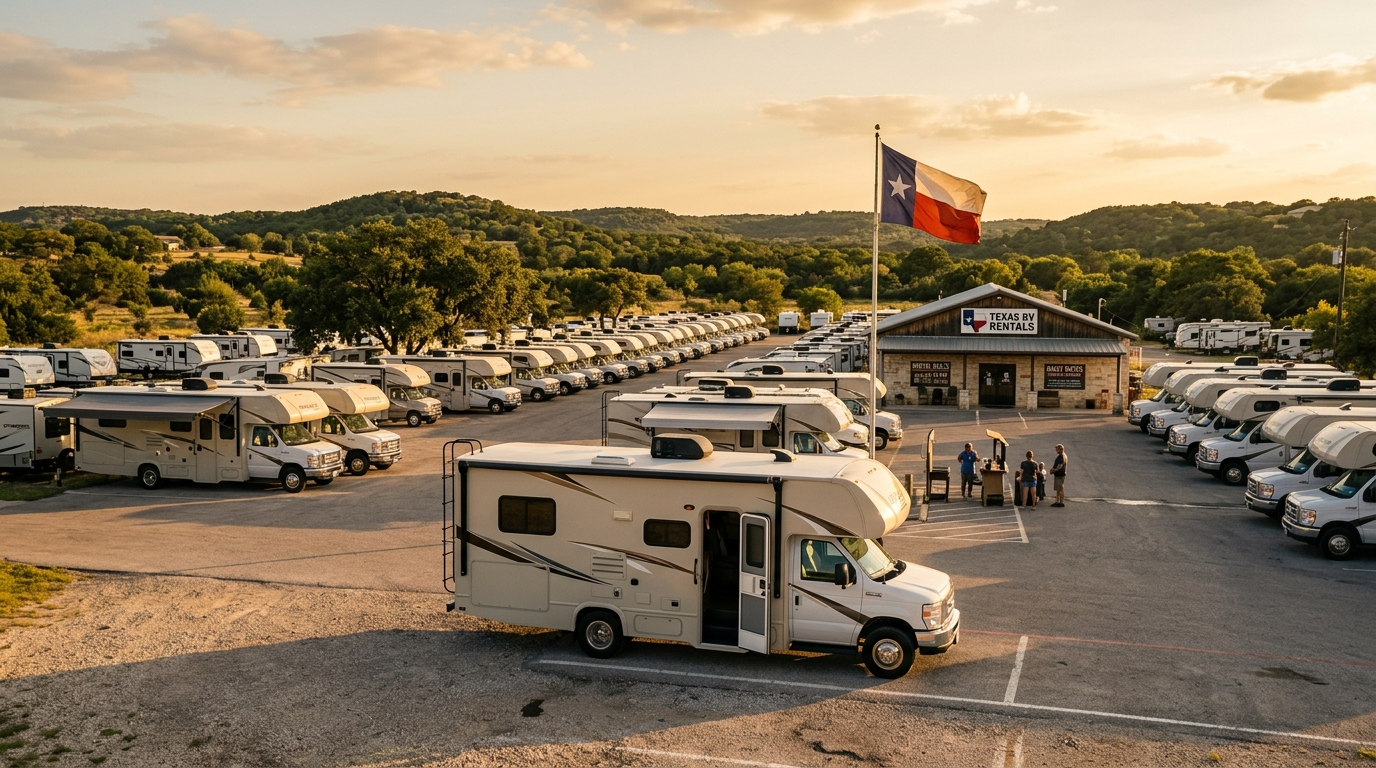
Texas is a vast state, and thankfully, it offers several excellent cities from which to begin your RV rental adventure, with various suppliers like El Monte, Cruise America, Apollo, and Britz.- **RV Rental in Austin:** Known as the "Live Music Capital of the World," Austin offers vibrant culture, delicious food, and easy access to the scenic Texas Hill Country.
- **RV Rental in Dallas:** A bustling metropolitan hub, Dallas provides a wide selection of motorhomes and campervans, serving as a gateway to North Texas attractions and beyond.
- **RV Rental in Denton:** This charming university town is a great starting point for exploring North Texas lakes and state parks, offering a quieter pick-up experience.
- **RV Rental in Houston:** As the largest city in Texas, Houston boasts a vast selection of RVs and is perfectly positioned for trips to the Gulf Coast or east to Louisiana.
- **RV Rental in Kingwood:** Located just north of Houston, Kingwood offers convenient access to rentals and is a peaceful starting point for exploring the East Texas Piney Woods.
- **RV Rental in McKinney:** A historic and charming city north of Dallas, McKinney provides a convenient RV pick-up location for journeys into rural Texas or across state lines.
- **RV Rental in San Antonio:** Rich in history with sites like the Alamo and the Riverwalk, San Antonio is an ideal base for exploring Central and South Texas, including warmer winter destinations.
Texas RV Road Rules & Practical Info
Navigating Texas in a rented motorhome is straightforward, but knowing a few key road rules and practical tips will enhance your journey. In Texas, you drive on the right side of the road, and seatbelt laws apply to all occupants, including those in the living area of an RV. Speed limits vary from 70-85 mph on interstates in rural areas, down to 30-55 mph in urban and residential zones; always observe posted signs. Texas has several toll roads, especially in major cities like Houston, Dallas, and Austin. Check your RV rental agreement for transponder options or toll payment solutions to avoid unexpected fees. Fuel is widely available, with both gasoline and diesel options at most major stations, but in remote regions of West Texas, plan your stops carefully as distances between services can be significant, sometimes over 100 miles. For emergencies, dial 911. Cellular connectivity is generally excellent in urban corridors, but coverage can be spotty in vast, rural areas like Big Bend National Park. For international visitors, while an International Driving Permit (IDP) is recommended for those from non-English speaking countries, it is not mandatory in most cases; a standard car driver's license (minimum age 21 for RV rental) is sufficient for all motorhome classes.Planning Your Texas Winter RV Trip: Itineraries & Routes
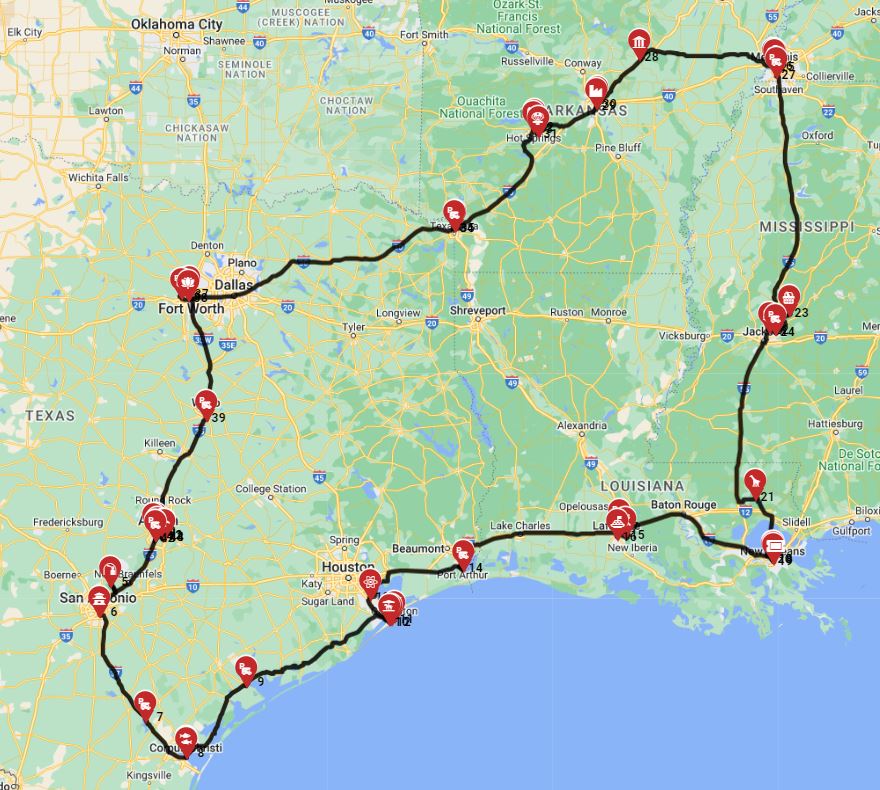
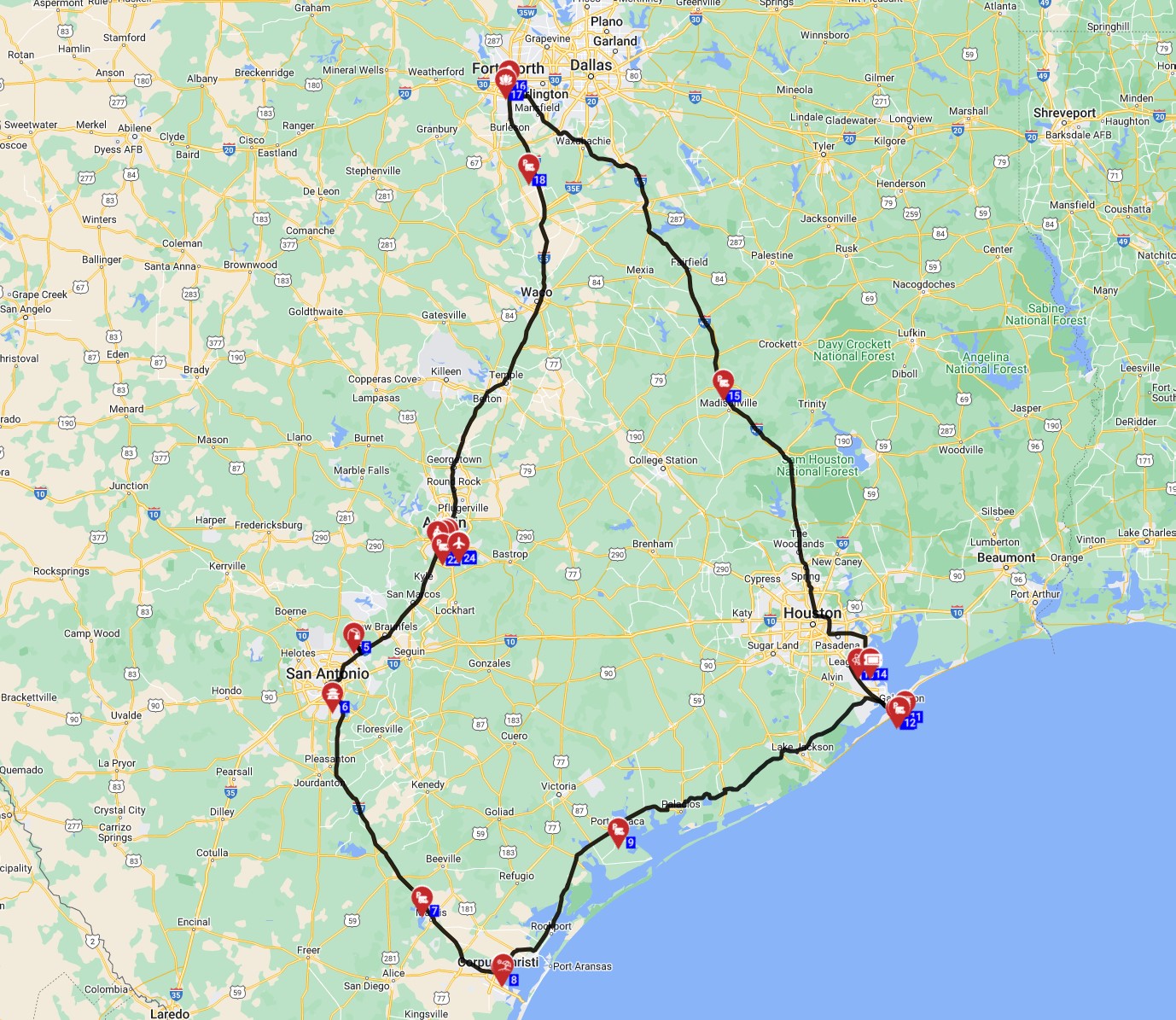
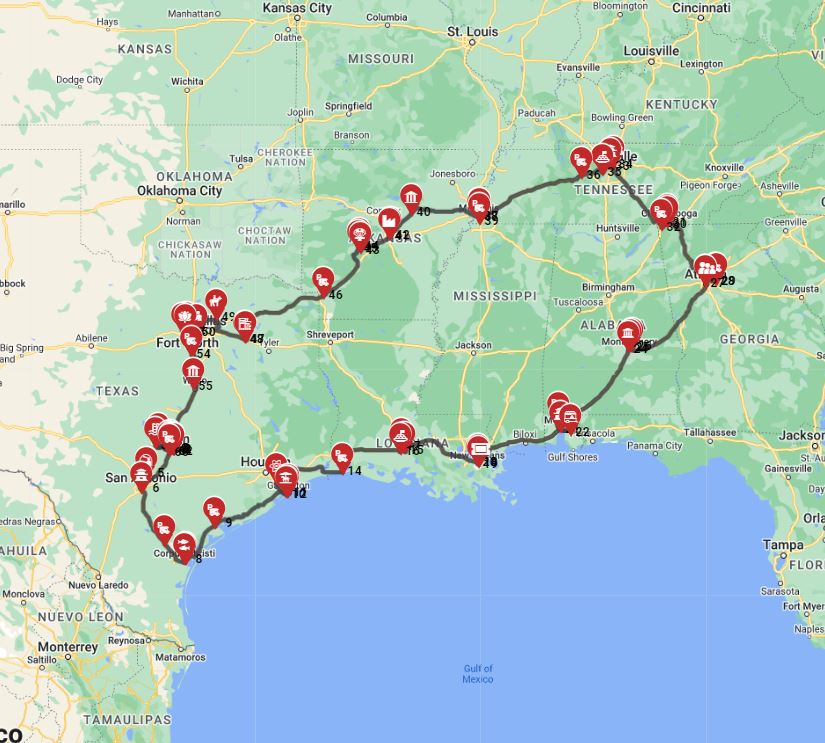
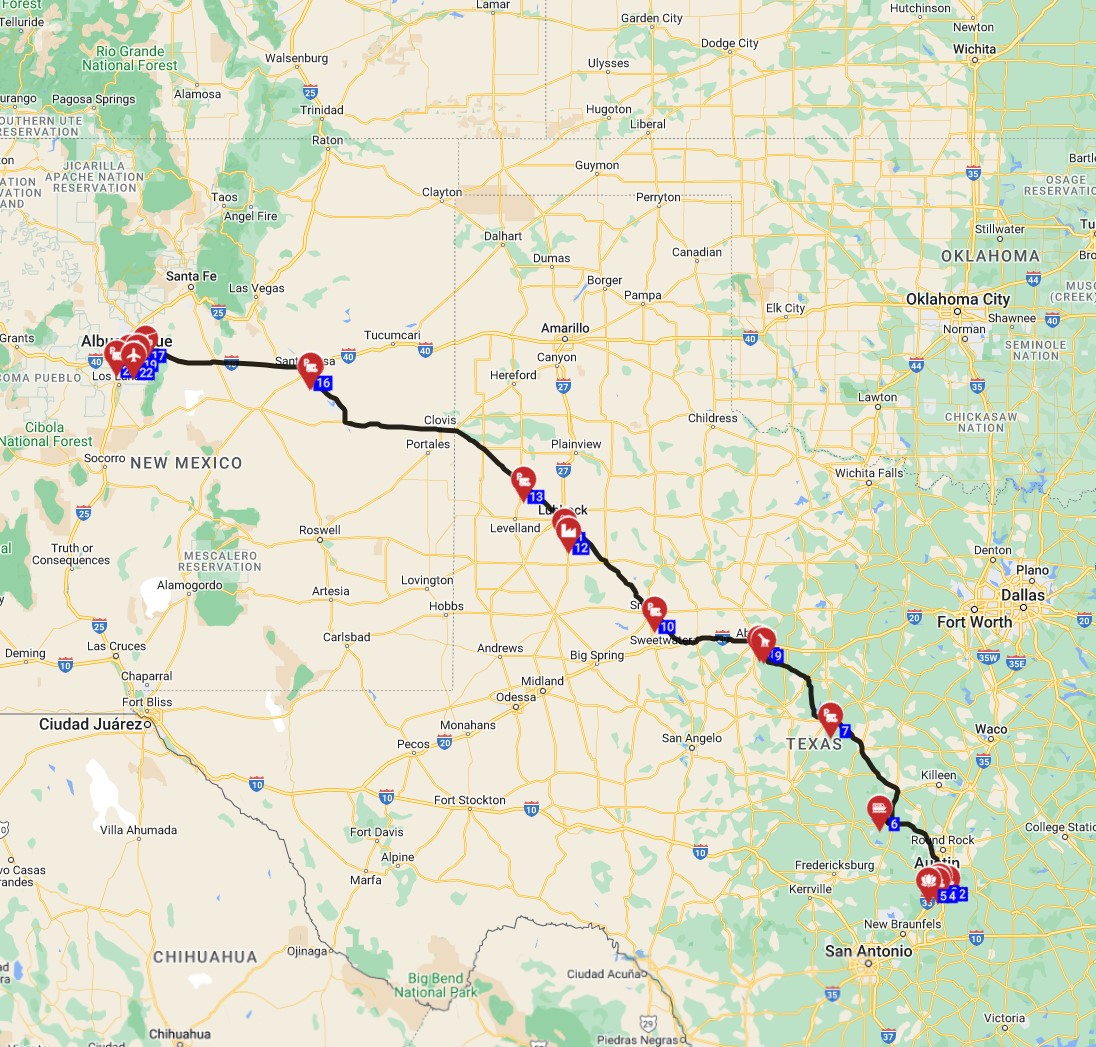
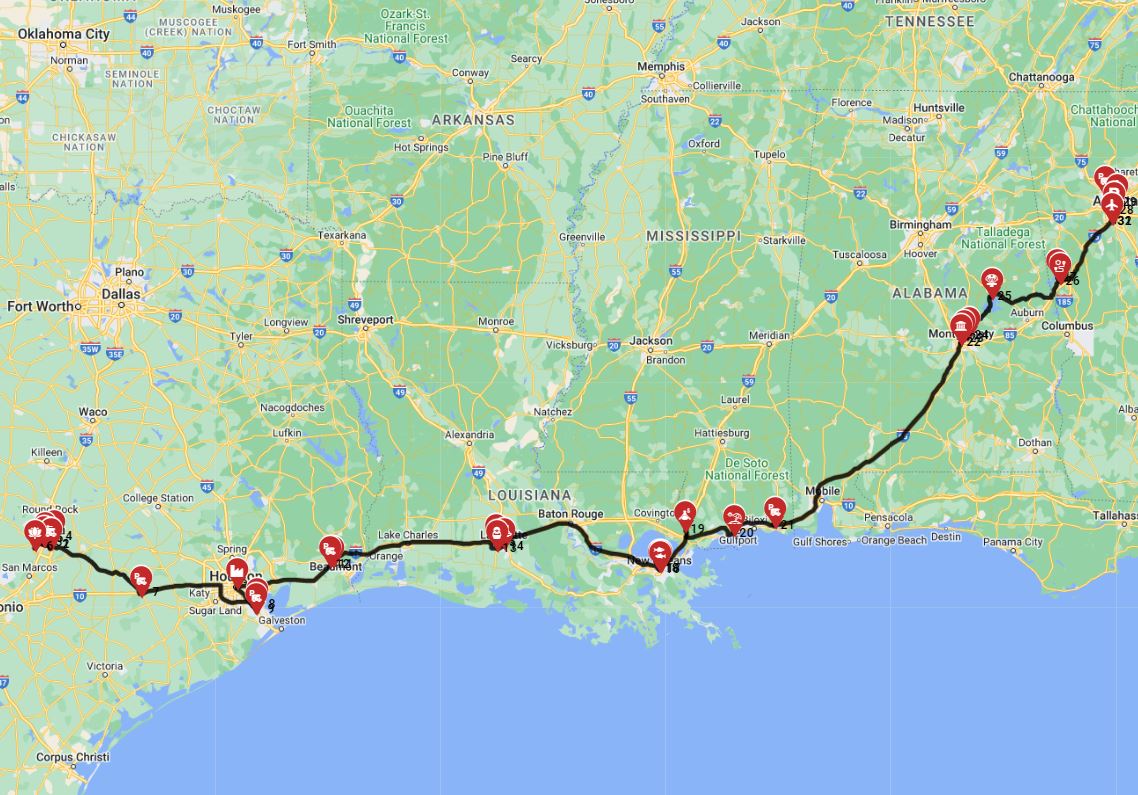
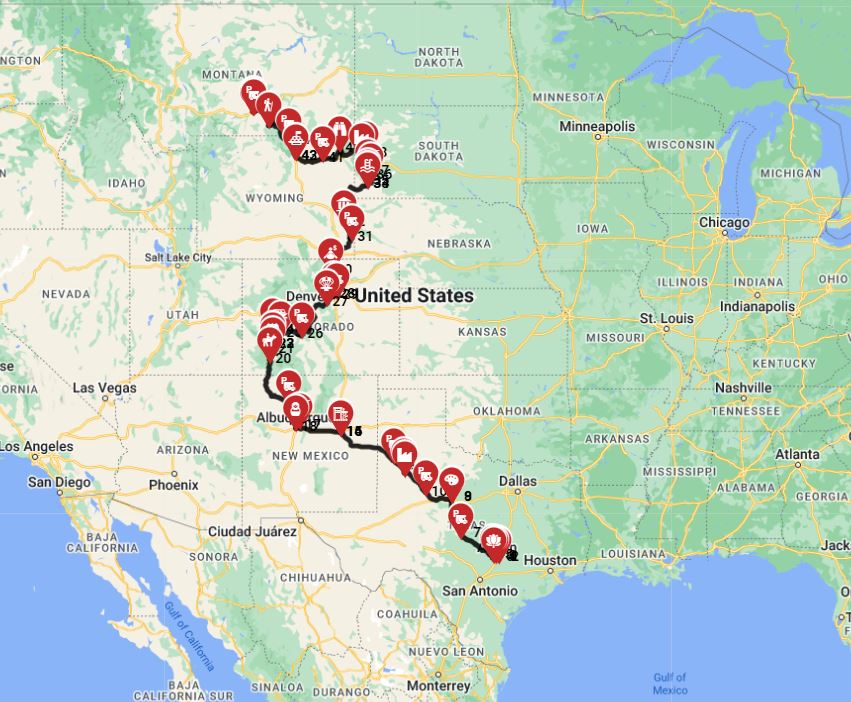
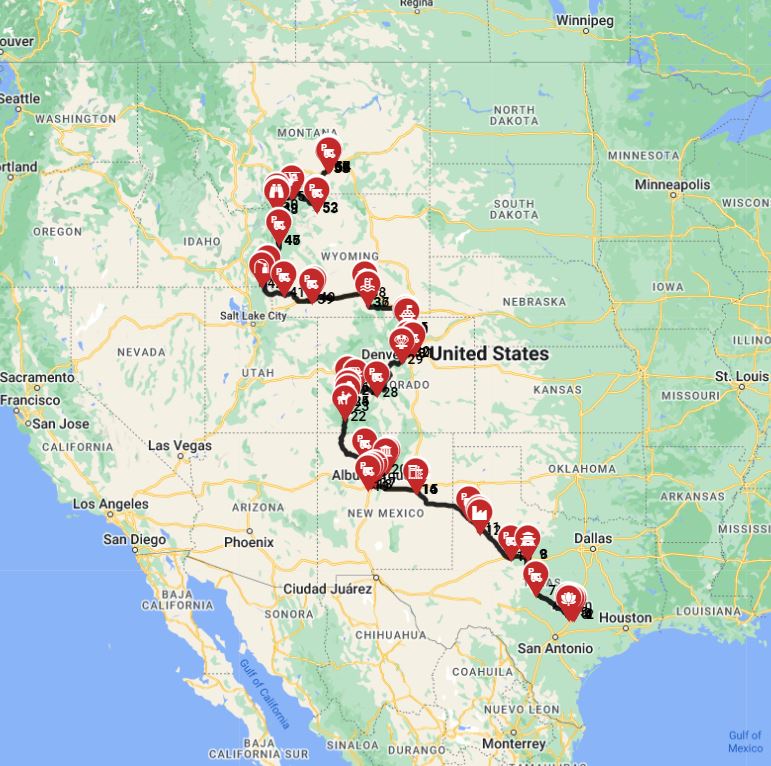
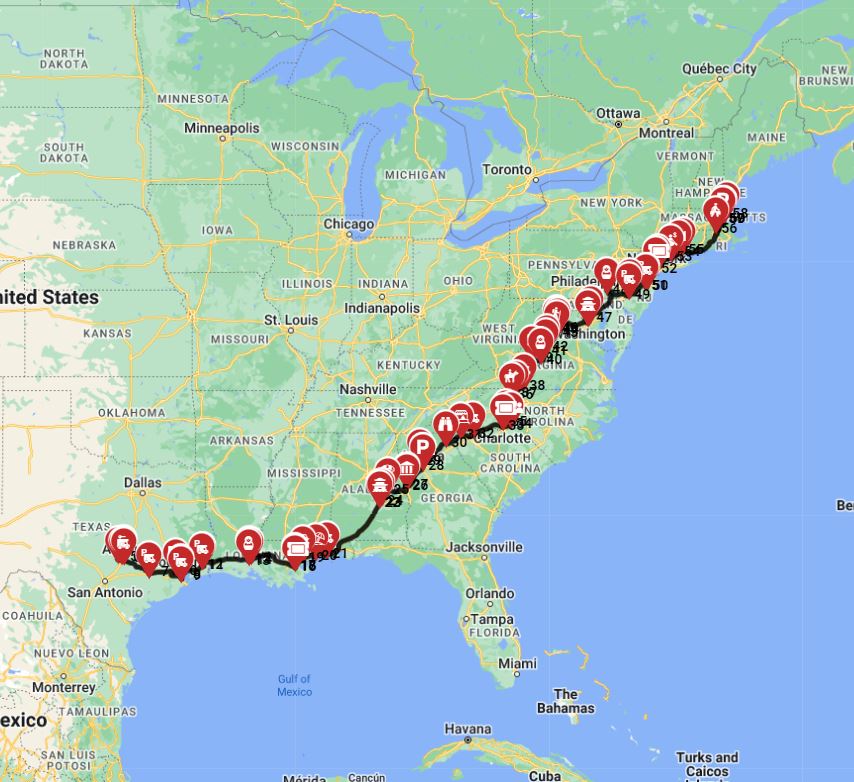
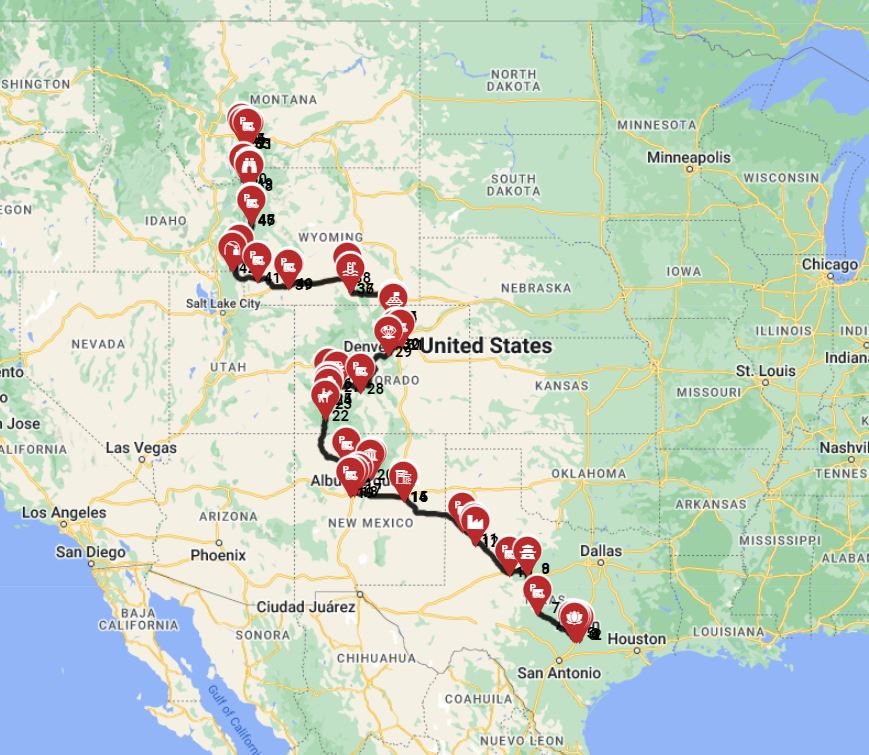
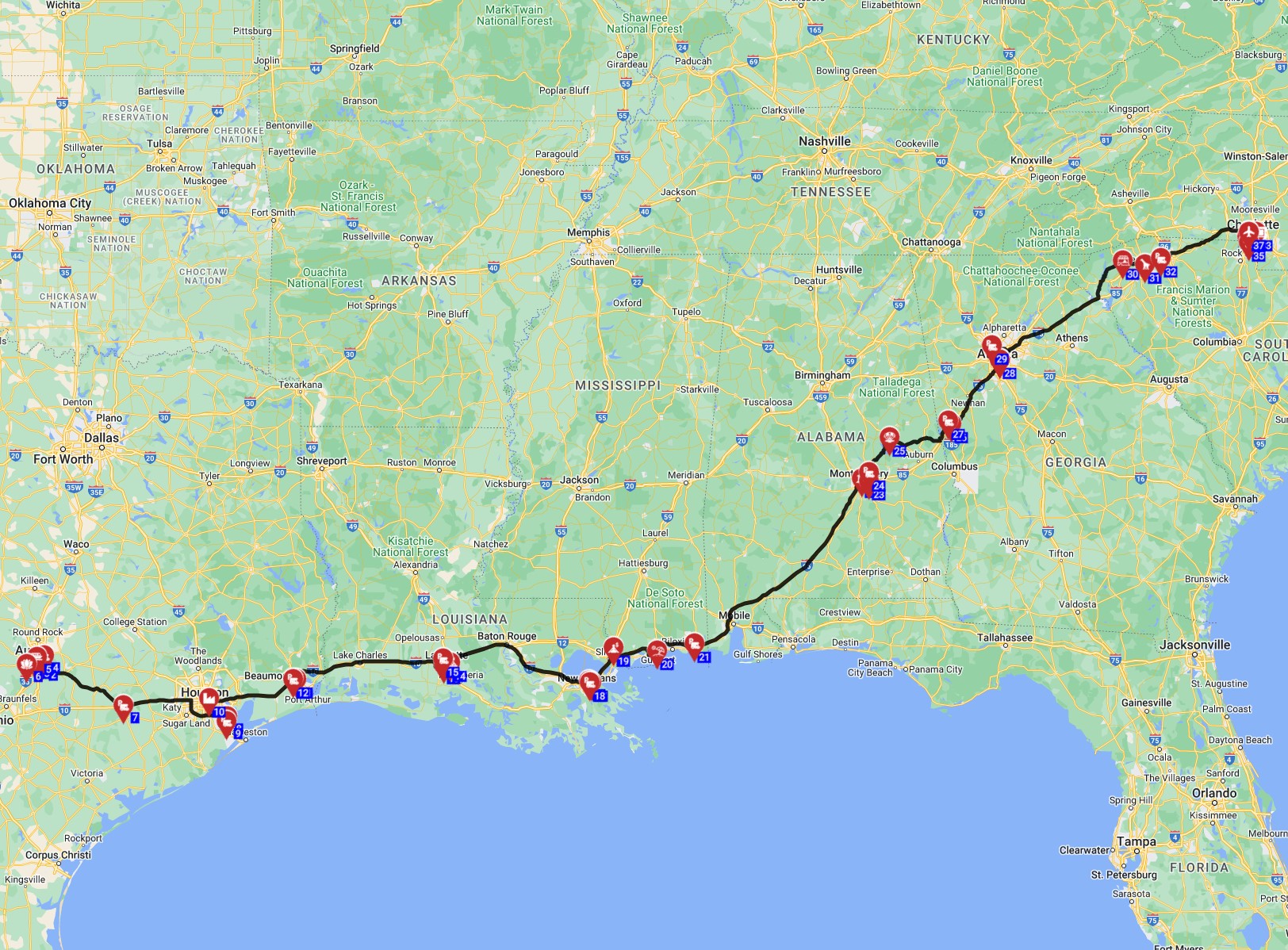
Planning an unforgettable winter RV trip in Texas is exciting, and with pre-planned routes from RV PLANET (rvplan.net), you can hit the road with confidence. Our sister company RV PLANET offers 1,300+ pre-planned routes across 5 continents, including fantastic options for Texas. Imagine embarking on a two-week adventure, expertly crafted to showcase the best of the state. One such route is the "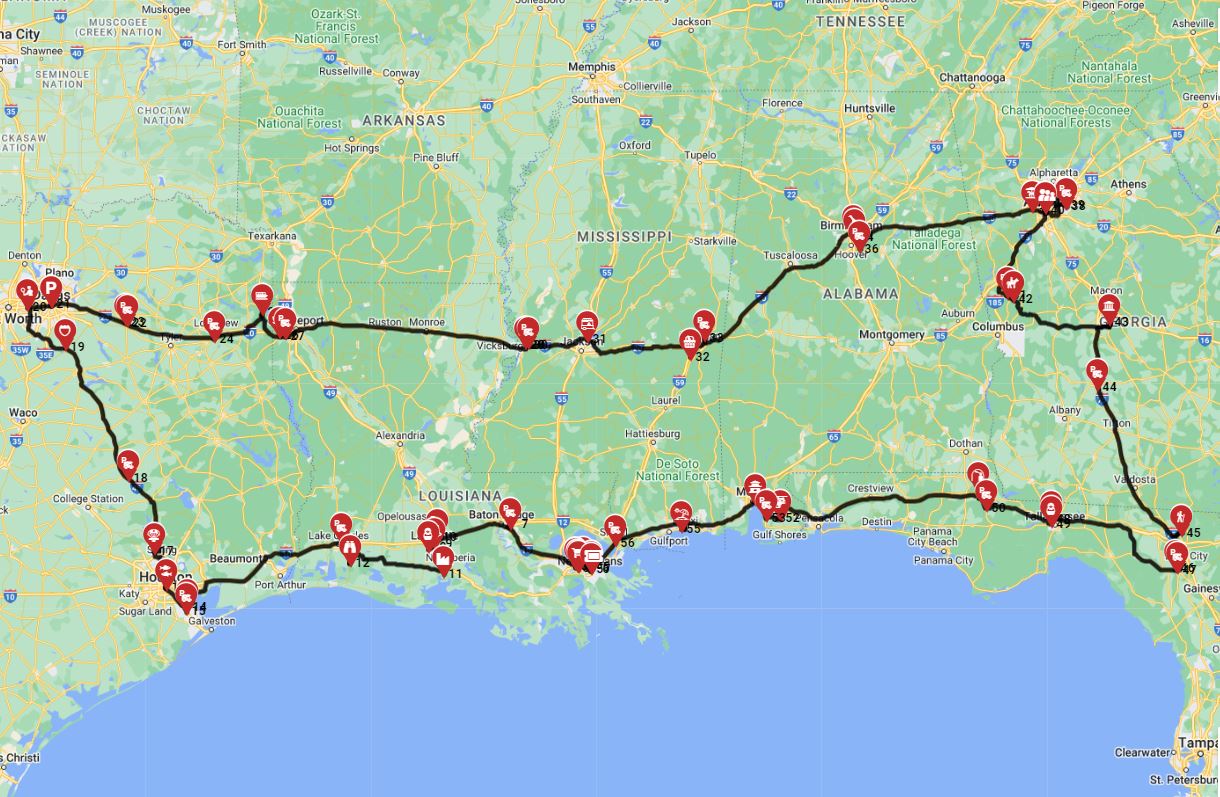
New Orleans roundtrip - New Orleans to the Heart of Texas and Beyond

Albuquerque Roundtrip - Epic New Mexico and Texas Loop
What You Shouldn't Miss
- Explore Big Bend National Park: Immerse yourself in the vast desert wilderness, hike diverse trails, and witness incredible stargazing, especially tranquil during winter months.
- Stroll the San Antonio Riverwalk: Enjoy the mild winter weather with a leisurely walk or boat ride along the iconic Riverwalk, bustling with shops, restaurants, and historical sites like the Alamo.
- Visit South Padre Island: Head to the Gulf Coast for warmer temperatures and enjoy birdwatching, beachcombing, or even dolphin watching tours without the summer crowds.
- Discover the Texas Hill Country: Drive the scenic 'Willow City Loop' (even outside wildflower season for beautiful views) and visit charming towns like Fredericksburg for German heritage, wineries, and unique boutiques.
- Experience the Quirky Culture of Austin: Indulge in Austin's renowned food truck scene, explore Zilker Park, and enjoy live music, which thrives year-round.
- Taste Authentic Texas BBQ: Embark on a personal BBQ trail, trying legendary smoked meats in places like Lockhart or Luling, a quintessential Texan experience.
Final Thoughts
Texas in winter is truly a traveler's delight, offering mild climates and diverse landscapes perfect for a rented motorhome adventure. Whether you dream of coastal relaxation, desert stargazing, or exploring charming Hill Country towns, the Lone Star State welcomes you with open roads and warm hospitality. With a variety of RV classes to choose from and plentiful camping options, your ideal winter escape is well within reach. At Bandana Caravan, we are passionate about making your RV rental experience as seamless and enjoyable as possible. Our commitment to full transparency, expert guidance, and supportive service means you can focus on making unforgettable memories. So, pack your bags, choose your perfect motorhome, and get ready to discover the beauty of Texas in winter.On the routes offered through RV PLANET routes, you can itemize and track every expense along the way for easy budgeting.