In This Guide
- Best France RV Itinerary for RV Rental for Seniors — Overview
- 7-Day Classic Route in France
- 14-Day Extended Journey in France
- Recommended RVPlan Trip for France
- Daily Driving Distances & Drive Times in France
- Best RV Class for This Itinerary — Couple & Family Picks
- What is the best month to RV in France?
- Are French campsites open all year round?
- How do I find a campsite in France?
- What apps do I need for RV travel in France?
- Can you wild camp in France with an RV?
- Is it legal to sleep in an RV in France?
- What side of the road do they drive on in France?
- What are the road rules for RVs in France?
- Is it easy to drive an RV in France?
- Are RV parks safe in France?
- How much does it cost to rent an RV in France?
- What documents do I need to rent an RV in France?
- Do you need a special license to drive an RV in France?
- Do I need an international driving permit for France?
- Can I bring my dog to France in an RV?
Best France RV Itinerary for RV Rental for Seniors — Overview
An RV road trip in France for seniors offers a relaxed way to explore charming villages, historical sites, and scenic landscapes, typically covering around 300-1000 km over 7-14 days. A recommended duration for seniors is a minimum of 7 days, ideally extending to 10-14 days for a more leisurely pace. The best season for senior RV travel in France is generally spring (April-June) and early autumn (September-October), offering pleasant weather, fewer crowds, and vibrant scenery. This guide provides detailed itineraries for 7-day and 14-day journeys, daily driving distances, RV class recommendations, and answers to common questions for a comfortable and memorable trip. Focus on regions like Provence, the Loire Valley, or the French Alps to minimize long driving days and maximize cultural immersion. For live availability and current prices, start with our RV Rental France - Complete Guide 2026 guide.
7-Day Classic Route in France
This 7-day itinerary focuses on the picturesque region of Provence, known for its gentle driving conditions and rich cultural offerings, ideal for seniors.
Day 1: Marseille (RV Pick Up) → Aix-en-Provence (approx. 30 km): Pick up your RV in Marseille and drive to Aix-en-Provence, exploring its elegant boulevards and fountains. Sleep at a local campsite near Aix.
Day 2: Aix-en-Provence → Lourmarin (approx. 50 km): Head into the Luberon, visiting the charming village of Lourmarin, one of France's 'Most Beautiful Villages'. Sleep at a campsite in the Luberon Valley.
Day 3: Lourmarin → Gordes & Roussillon (approx. 30 km): Explore the iconic hilltop villages of Gordes and Roussillon with its vibrant ochre cliffs and trails. Sleep at a campsite near Cavaillon.
Day 4: Gordes → Avignon (approx. 40 km): Drive to Avignon to discover the Palais des Papes and Pont d'Avignon. Enjoy the city's history and ambiance. Sleep at Camping Bagatelle, close to the city center.
Day 5: Avignon → Uzès & Pont du Gard (approx. 25 km): Visit the medieval town of Uzès and the magnificent Roman aqueduct, Pont du Gard. Sleep at a campsite near Uzès.
Day 6: Uzès → Arles (approx. 40 km): Travel to Arles, famed for its Roman amphitheater and connections to Van Gogh. Explore the historic center. Sleep at a campsite like Camping City Arles.
Day 7: Arles → Marseille (approx. 90 km): Enjoy a final Provençal breakfast before returning your RV in Marseille. For ideas you can prep on the road, watch our RV-friendly recipes playlist on YouTube.
Total estimated driving for this itinerary is approximately 305 km, ensuring a relaxed pace with ample time for exploration each day.
14-Day Extended Journey in France
This 14-day journey offers a more extensive exploration of the French Alps and the charming Burgundy region, providing a diverse experience at a comfortable pace for seniors.
Days 1-2: Lyon (RV Pick Up) → Annecy (approx. 150 km): Begin your adventure by picking up your RV in Lyon, then drive to Annecy, known as the 'Venice of the Alps,' with its stunning lake and picturesque old town. Spend two nights exploring the area, including a leisurely boat trip on Lake Annecy. Sleep at a campsite in Annecy.
Days 3-4: Annecy → Chamonix (approx. 100 km): Journey to Chamonix, nestled at the foot of Mont Blanc. Take the Aiguille du Midi cable car for breathtaking alpine views (weather permitting) or enjoy gentle walks. Stay two nights at a Chamonix campsite.
Days 5-6: Chamonix → Grenoble (approx. 100 km): Head south to Grenoble, a city surrounded by mountains. Ride the 'Bulls' cable car to the Bastille fortress for panoramic views. Explore the city's museums and parks. Sleep at a campsite near Grenoble.
Days 7-8: Grenoble → Valence (approx. 90 km): Drive to Valence, situated on the Rhône River, a gateway to the Drôme region. Enjoy local markets, explore the old town, and perhaps visit a vineyard. Spend two nights at a Valence area campsite.
Days 9-10: Valence → Mâcon (approx. 160 km): Travel north to Mâcon, in Southern Burgundy. This region is famous for its white wines. Enjoy tastings and scenic drives through vineyards. Stay two nights at a Mâcon campsite.
Days 11-12: Mâcon → Beaune (approx. 70 km): Continue through Burgundy to Beaune, the wine capital. Visit the historic Hospices de Beaune and explore the charming town center. Indulge in local cuisine. Sleep at a campsite in Beaune.
Days 13-14: Beaune → Lyon (approx. 150 km): Enjoy a final Burgundian breakfast before heading back to Lyon to return your RV. Explore Lyon's gastronomic scene if time permits.
The total estimated driving for this 14-day itinerary is approximately 1020 km, averaging about 73 km per day, allowing ample time for leisurely travel and sightseeing.
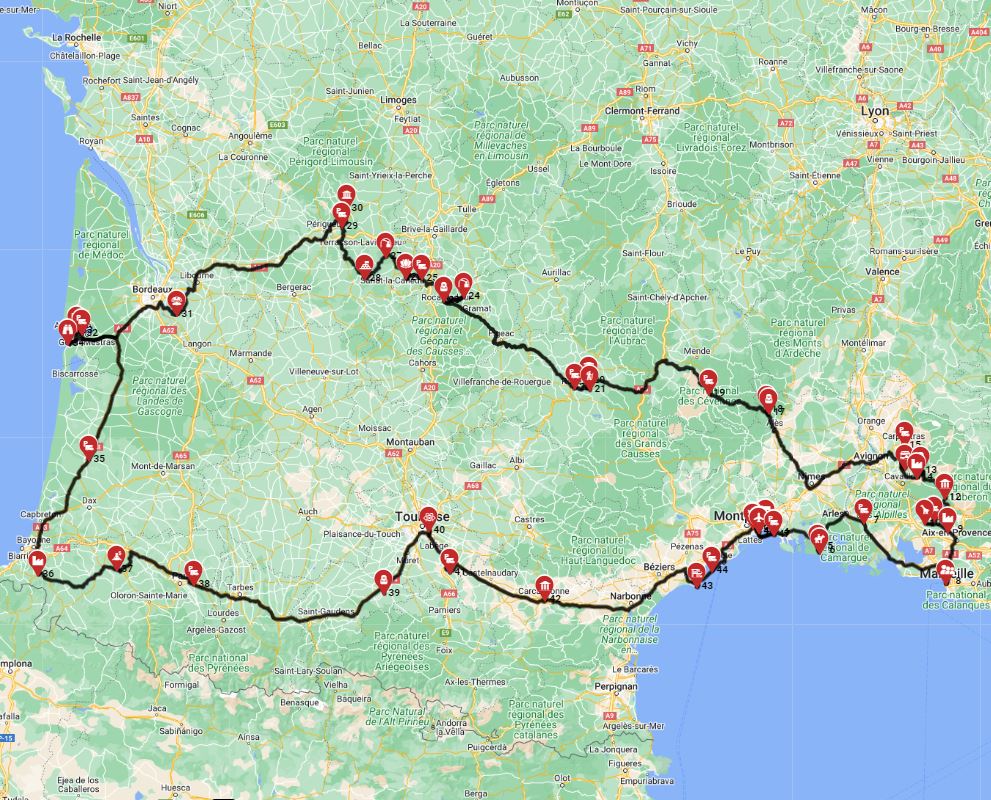
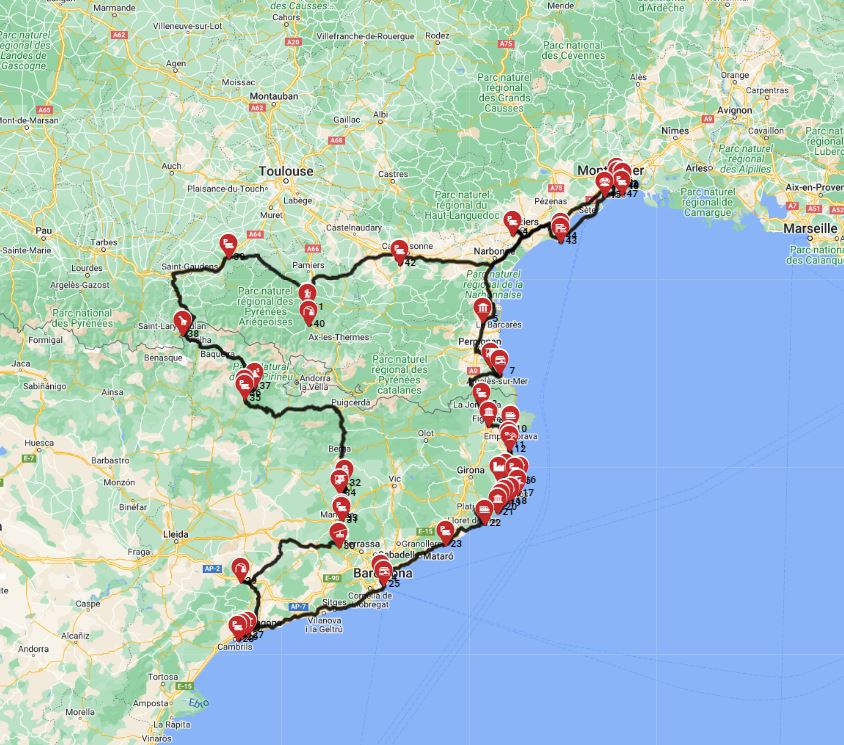
Recommended RVPlan Trip for France
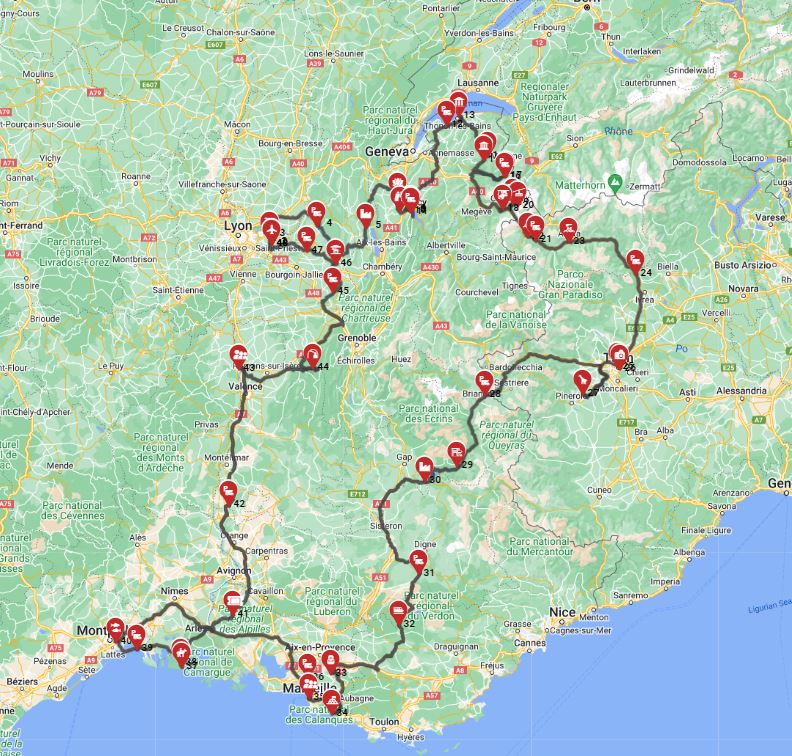
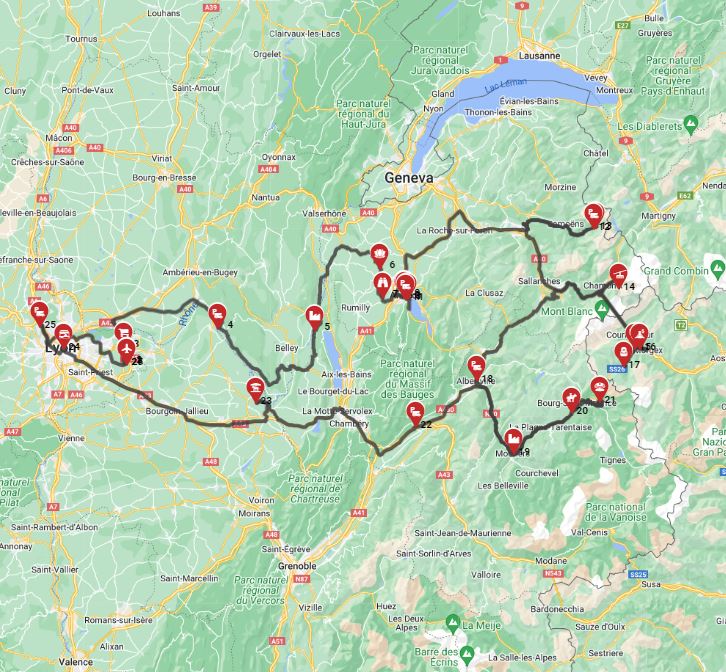
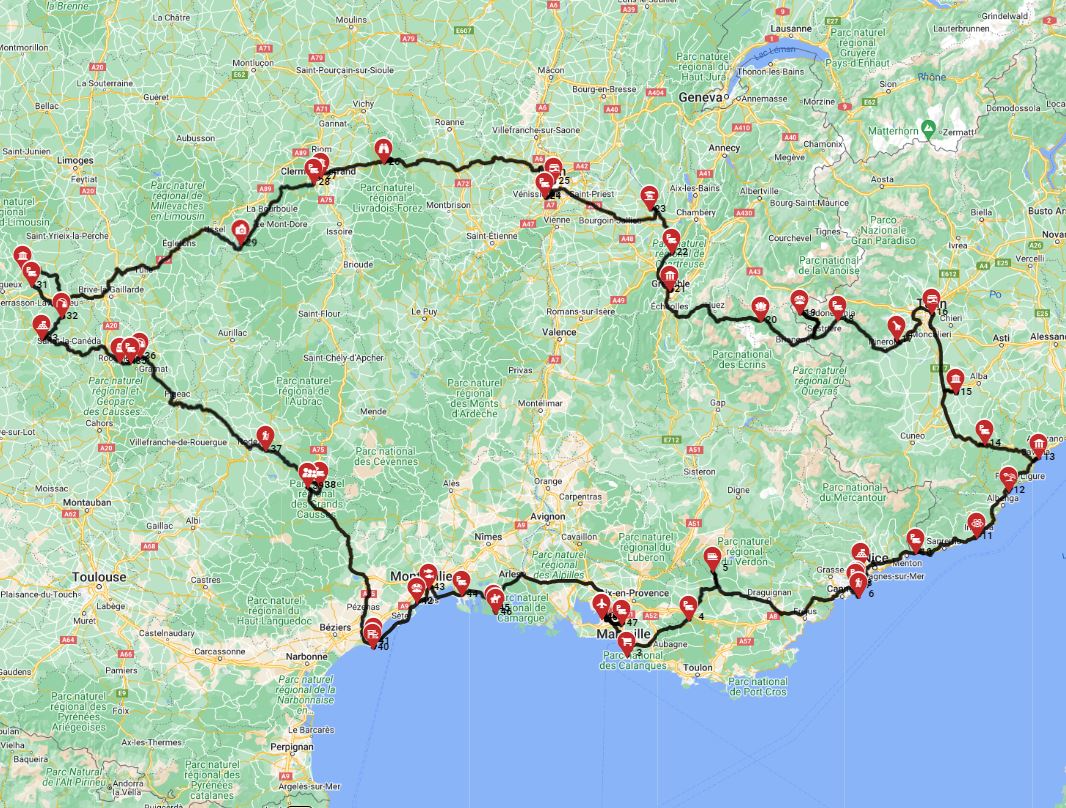
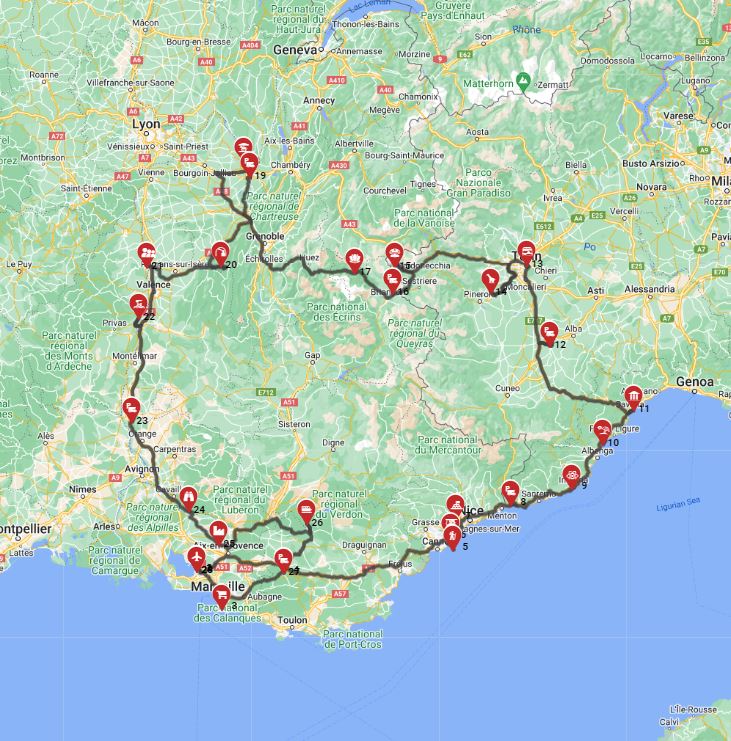
For those seeking a meticulously planned adventure that includes parts of France, Bandana's RVPlan service offers curated itineraries designed for ease and enjoyment. The `Milano Roundtrip - West - Italian alps, France alps` trip, available at
What You Shouldn't Miss (Avi Bandana Picks)
- Seek out Traditional Markets (like those in Aix-en-Provence or Arles) to experience local life, sample regional produce, and find unique souvenirs.
- Indulge in Traditional Restaurants / Fine Dining experiences to savor authentic French cuisine, from hearty regional dishes to exquisite gourmet meals.
- Explore Local Industries such as lavender distilleries in Provence, olive oil mills, or cheese makers to understand traditional crafts and taste artisan products.
- Visit Historical Sites like the Roman amphitheaters, medieval castles (e.g., in the Loire Valley), or prehistoric caves (like Lascaux IV) that offer a deep dive into France's rich past.
- Discover Natural Features such as the dramatic calanques near Cassis, the Gorges du Verdon (Europe's Grand Canyon), or the majestic peaks of the French Alps for stunning outdoor adventures and scenic drives.
Daily Driving Distances & Drive Times in France
Avi Bandana recommends a maximum of 100 miles or 150 km per day on average when RVing in France, especially for seniors, to ensure a relaxed pace and ample time for exploration. This slower travel philosophy allows travelers to fully immerse themselves in the local culture, discover hidden gems, and avoid rushing between destinations. Driving times in France can vary significantly based on road types (autoroutes vs. smaller departmental roads) and traffic conditions, particularly in and around major cities. For example, a drive from Avignon to Arles (approx. 30 km) might take around 30-45 minutes, allowing an entire day for sightseeing. Traveling from Nice to Cannes (approx. 35 km) on the scenic coastal roads could take 45-60 minutes, providing beautiful views and time for coastal exploration. A slightly longer stretch, such as Bordeaux to Saint-Émilion (approx. 40 km), is typically a 45-minute drive, perfect for a relaxed day trip into the wine country. For a broader trip, consider our RV Rental France - Complete Guide 2026 which provides more route planning insights.
Best RV Class for This Itinerary — Couple & Family Picks
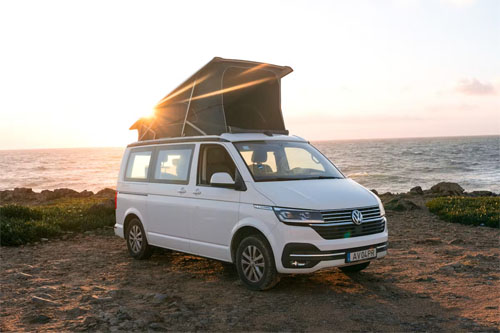
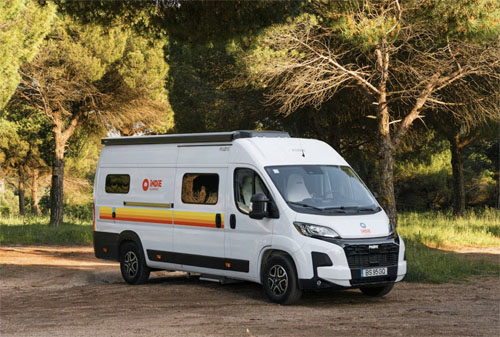
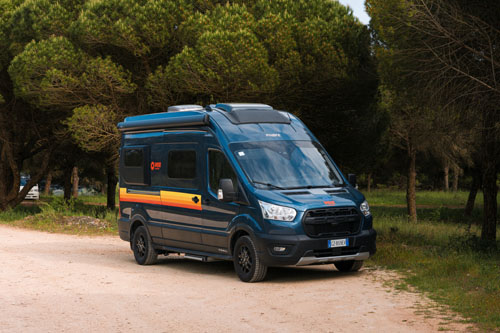
Choosing the right RV class significantly enhances comfort and ease of travel for seniors in France, balancing maneuverability with living space. For a couple, the Class B - Camper Van is often ideal due to its compact size, making it easier to navigate narrow French roads and park in smaller towns. Bandana's global fleet typically features Class B Camper Vans with an average length of 5.8 meters, offering sufficient sleeping places for 3.2 individuals and comfortably accommodating 2.7 adults, with an average load capacity of 37 kg. For a family (e.g., a couple with adult children or grandchildren), a Class SI - Semi-integrated RV provides more living and sleeping space while remaining relatively easy to drive. These Semi-integrated RVs in Bandana's global fleet average 6.9 meters in length, with an average of 3.8 sleeping places and capacity for 3.4 adults, alongside an average load capacity of 72.2 kg, making them comfortable for multiple travelers without being overly cumbersome. For a stress-free experience, consider Bandana's 'Rent & Plan' service, which combines your RV rental with a ready-made itinerary crafted by travel experts, providing full access to trip-planning software and removing the headache of organizing your route. Compare Motorhome Prices for France to find the perfect fit.
What is the best month to RV in France?
The best months to RV in France, particularly for seniors, are typically May, June, September, and early October, offering pleasant weather and fewer crowds than the peak summer season. During these periods, temperatures are comfortable for sightseeing and outdoor activities, and popular attractions are less congested. Traveling in the shoulder seasons (spring and autumn) allows for easier navigation, better availability at campsites, and a more authentic local experience without the summer rush. May and June showcase blooming landscapes and vibrant festivals, while September and October offer beautiful autumn foliage and the grape harvest season in wine regions. Check France RV Rental Prices Now for options across different seasons. If you're interested in a more budget-friendly trip, our Cheap RV Rental in France - Budget Guide 2026 offers valuable savings tips.
Are French campsites open all year round?
While many larger, year-round campsites in popular tourist areas of France, particularly in the south, remain open throughout the year, a significant number of smaller or seasonal campsites close from late September/October until spring (April/May). It is crucial to verify the opening dates of specific campsites, especially when planning an off-season RV trip, as amenities and services may also be reduced during quieter periods. Websites like ACSI, CampingFrance, or Park4night can provide up-to-date information on campsite availability and operating hours. Traveling during the off-season can offer benefits like lower prices and more peaceful settings, but requires careful planning regarding campsite access and local service availability. For specific seasonal offers, explore RV Rental Deals in France - Latest Offers 2026.
How do I find a campsite in France?
Finding a campsite in France is made easy with a variety of dedicated apps and websites designed for RVers, allowing you to filter by amenities, location, and reviews. Popular resources include: CampingFrance.com for a comprehensive directory, ACSI for discounted camping cards and extensive listings, and apps like Park4night, Campercontact, and iOverlander which provide user-generated reviews and real-time availability. These platforms allow you to search for specific services important for seniors, such as accessibility, on-site restaurants, laundry facilities, and proximity to towns or attractions. Booking campsites in advance is highly recommended, especially during peak seasons or for popular locations, to ensure availability and secure your preferred spot. For assistance with planning, consider utilizing RV PLANET routes available at
What apps do I need for RV travel in France?
For optimized RV travel in France, leveraging specific mobile applications can greatly enhance navigation, camping, and cultural immersion. Essential apps include: Park4night or Campercontact for finding campsites, wild camping spots, and service areas with user reviews. Use Google Maps or Waze for real-time navigation, with Google Maps offering satellite views to help assess road width; consider specifying 'avoid tolls' if preferred. Mappy is a good alternative navigation app, often providing detailed information on French tolls and routes. For language assistance, especially in rural areas where English may be less common, use DeepL Translate or Google Translate. The Fédération Française de Camping et de Caravaning (FFCC) is useful for general camping information and often offers discounts. Finally, consider apps like Fuelio to track fuel consumption and find the cheapest petrol stations, crucial for budgeting. Remember that on RV PLANET routes, travelers can itemize and track every expense along the way for easy budgeting, accessible via
Can you wild camp in France with an RV?
Wild camping (or 'camping sauvage') in France with an RV is generally prohibited in most areas, particularly along the coast, in protected natural parks, and within sight of historic monuments or residential zones. While outright wild camping is illegal in many places, 'free parking' for motorhomes is often tolerated in designated parking areas or quiet rural spots, especially if you arrive late and leave early, causing no disturbance. Many towns offer 'aires de camping-cars' – designated free or low-cost overnight parking areas with basic services (water, waste disposal) for RVs, which are a safer and legal alternative. Always look for 'Interdit de camper' or 'camping interdit' signs, which explicitly forbid camping, and respect local regulations to avoid fines and maintain good relations with local communities. For more on sustainable travel, explore our blog on eco-friendly RVing.
Is it legal to sleep in an RV in France?
Sleeping in an RV in France is legal when parked in an authorized location, such as a designated campsite, an 'aire de camping-cars', or a private property with the owner's permission. The distinction lies between simply parking your RV and 'camping,' which involves extending awnings, setting out chairs, or displaying other signs of an extended stay, which is often restricted. Generally, if your RV is parked discreetly within the bounds of its footprint and you are not 'camping,' you are usually allowed to sleep inside. Always be mindful of local signage and regulations; some municipalities have specific bylaws restricting overnight parking for RVs in certain areas, particularly in tourist hotspots. If you're planning a longer trip, consider our RV Rental in France for Couples - Pricing 2026 guide for budget-friendly options.
What side of the road do they drive on in France?
In France, like most of continental Europe, vehicles drive on the right-hand side of the road, and the steering wheel is on the left side of the car. This is an essential consideration for RV renters from countries that drive on the left, such as the UK or Australia, requiring careful adjustment to driving patterns and road awareness. Roundabouts are very common in France, and drivers must yield to traffic already in the roundabout, approaching from the left, unless otherwise signposted. When planning your route, remember that using the 'autoroutes' (motorways) is often the most efficient way to cover distances, though they are tolled. For those seeking budget-friendly options, consider exploring our Cheap RV Rental in France - Budget Guide 2026.
What are the road rules for RVs in France?
RV drivers in France must adhere to specific road rules, including speed limits, vehicle weight restrictions, and particular equipment requirements. General speed limits for RVs over 3.5 tonnes are typically 80 km/h on non-urban roads, 100 km/h on expressways, and 110 km/h on motorways (autoroutes), though these can vary by region and signage. Mandatory equipment includes a reflective safety vest (for each occupant) and a warning triangle, which must be accessible and used in case of a breakdown. Tolls are prevalent on French autoroutes (motorways), with RVs generally falling into Category 2 or 3 depending on height and weight, incurring higher charges than standard cars; plan your route using apps like Mappy to estimate costs. Be mindful of narrow roads, especially in older towns and rural villages, and pay attention to height and width restriction signs when navigating under bridges or through historic city gates. For more information on driving in France, our RV Rental France - Complete Guide 2026 offers additional insights.
Is it easy to drive an RV in France?
Driving an RV in France is generally manageable, especially on national roads and motorways, but can present challenges in urban centers and very old villages. French motorways (autoroutes) are well-maintained and offer a smooth driving experience, although tolls can be frequent and add up. Navigating smaller RVs, such as Class B Camper Vans, is easier on narrow rural roads and in historic towns compared to larger Class C or A motorhomes. Parking can be difficult in popular cities, often requiring dedicated RV parking areas on the outskirts with public transport connections to the center. Seniors typically find the relaxed pace of RV travel in France very enjoyable, as long as they choose appropriate vehicle sizes and plan routes that avoid overly congested or challenging areas. For couples, consider exploring our RV Rental in France for Couples - Pricing 2026 for suitable vehicle options.
Are RV parks safe in France?
RV parks and designated 'aires de camping-cars' in France are generally considered very safe, offering secure environments for overnight stays. Most commercial campsites are gated, often with evening patrols, and provide secure parking, reducing concerns about theft or vandalism. It is always advisable to use common-sense safety practices: lock your RV doors, do not leave valuables exposed, and be aware of your surroundings. Choosing well-lit and official campsites or aires, especially those with positive reviews on apps like Park4night, further enhances security and peace of mind. When planning your trip, you can discover top RV-friendly destinations by checking our RV Rental Europe - Complete Guide 2026.
How much does it cost to rent an RV in France?
The cost to rent an RV in France varies significantly based on factors like the RV class, rental duration, season, and lead time, typically ranging from €70 to €200+ per day. Smaller Camper Vans (Class B) are generally less expensive, while larger Alcove (Class C) or Integrated (Class A) motorhomes incur higher daily rates. Peak season (July-August) rentals are the most expensive, often 30-50% higher than off-peak rates, and demand early booking. Hidden costs can include insurance, extra mileage fees, cleaning fees, bedding kits, and additional equipment like bikes or GPS; always review the full rental agreement carefully. Budgeting should also account for campsite fees (€15-€40/night), fuel (diesel is common, around €1.80/liter), tolls, and food. To save money, consider renting during the shoulder seasons (spring/autumn), booking well in advance, and opting for an RV with good fuel efficiency (Bandana's fleet averages 10-12 Liters/100 km for most classes). For last-minute trips, you might find RV Rental Deals in France - Latest Offers 2026, but flexibility on dates and vehicle type is key to securing the best prices.
What documents do I need to rent an RV in France?
To rent an RV in France, you will typically need a valid driver's license, a credit card for the security deposit, and often an International Driving Permit (IDP). Your national driver's license must be valid for the entire rental period and typically needs to have been held for a minimum of 2-3 years, depending on the rental company. For non-EU citizens, an International Driving Permit (IDP) is usually required by French law and most rental companies; it serves as a translation of your domestic license. A major credit card in the main driver's name is essential for the security deposit, which can range from €1,008 to €3,024, and for processing the rental payment. It is also advisable to carry your passport or national ID card as proof of identity. For a comprehensive understanding of the booking process, explore our guides on renting an RV in France.
Do you need a special license to drive an RV in France?
Most standard RVs available for rental in France, especially those under 3.5 tonnes (3,500 kg) Maximum Authorized Mass (MAM), can be driven with a standard 'B' category driver's license (the same license required for a car). For larger RVs with an MAM exceeding 3.5 tonnes, a higher category license (e.g., 'C1' or 'C') may be required, depending on your home country's licensing laws and reciprocity agreements. Most rental RVs designed for typical family or couple travel fall below the 3.5-tonne threshold to ensure accessibility for standard license holders. Always confirm the specific MAM of your chosen RV with the rental company and verify it against your driver's license qualifications. If you are considering renting a larger vehicle, our RV Rental in France - Prices and Best Deals 2026 page can help you compare options.
Do I need an international driving permit for France?
Yes, if you hold a driver's license from a country outside the European Union (EU) or European Economic Area (EEA), you will generally need an International Driving Permit (IDP) to legally drive an RV in France. The IDP acts as an official translation of your domestic license and must always be carried alongside your original license. For drivers from EU/EEA countries, a valid national driver's license is sufficient. It is highly recommended to obtain an IDP before your trip if you are from a non-EU/EEA country, as rental companies and law enforcement may require it. For a smooth rental process, review our step-by-step guide to renting an RV in France.
Can I bring my dog to France in an RV?
Yes, you can generally bring your dog to France in an RV, provided you comply with specific pet travel regulations and choose a pet-friendly rental. All dogs entering France from another EU country or a listed third country must have a microchip, a valid EU Pet Passport or official veterinary certificate, and be vaccinated against rabies. Many RV rental companies offer pet-friendly vehicles, though there may be an additional cleaning fee or restrictions on certain breeds. It's crucial to research campsites in advance, as not all allow pets, and some may have restrictions on size or breed; dedicated apps can help filter for pet-friendly options. When traveling, ensure your dog has adequate ventilation, water, and rest stops, and always keep them leashed in public areas as per French regulations. For families planning a trip, our Pet-Friendly RV Rental in France - Pricing 2026 guide offers tailored advice.
Final Thoughts
Embarking on an RV adventure in France is a fantastic way to experience the country at your own pace, allowing for intimate encounters with its culture, landscapes, and culinary delights. Whether you choose the charming villages of Provence or the stunning vistas of the Alps, an RV provides the freedom and comfort to make your journey unforgettable.
Remember, the key to a successful trip is thoughtful planning. By considering the best time to travel, the most suitable RV for your needs, and leveraging helpful resources like RV PLANET, you can ensure a seamless and enjoyable experience. We are here to support you every step of the way, from comparing vehicle options to final booking coordination.
Get inspired for your next trip! Discover top destinations, planning tips, all in one place! Plan a trip itinerary in advance with minimal effort and maximum enjoyment. Compare RV Rental prices and find your perfect French adventure today!