In This Guide
- Best Australia RV Itinerary for RV rental - Overview
- Planning Your Australian RV Adventure: Legalities, Permits, and Road Rules
- 7-Day Classic Route in Australia: Great Ocean Road Highlights
- 14-Day Extended Journey in Australia: East Coast Wonders
- Recommended RV PLANET Trip for Australia: Cross-Country Adventures
- Must-See Stops Along the Way (Avi Bandana Picks)
- Daily Driving Distances & Drive Times in Australia: Embracing Slow Travel
- Choosing Your Perfect Rental RV in Australia: Sizes and Amenities
- Staying Connected and Safe: Tech & Emergency Preparedness for Australia RV Trips
- Seasonal RV Travel in Australia: Navigating Climates and Best Times to Visit
- Understanding Australian RV Rental Costs: Budgeting for Your Adventure
- What is the most beautiful road trip in Australia?
- Can you park an RV anywhere in Australia? Freedom Camping Explained
- How long does it take to travel around Australia in a campervan?
- What is the 333 rule for campervan in Australia?
- Essential Australian Travel Advice: What Not to Do for a Smooth Trip
- What are the top 3 tourist attractions in Australia?
- How many days are enough for an Australia RV trip?
- What is the best month to go to Australia for RV travel?
Best Australia RV Itinerary for RV rental - Overview
An RV rental in Australia offers unparalleled freedom to explore the country's breathtaking and diverse landscapes, from its sun-drenched coastlines to the rugged, ancient Outback. Recommended trip durations vary significantly, with a minimum of 7 days generally suitable for exploring a single region like the Great Ocean Road, while a cross-country epic can easily extend to 30 or more days, covering vast distances often exceeding 7,000 kilometers. The ideal seasons for your adventure depend on the specific regions you plan to visit; generally, April to October is perfect for southern routes, offering mild weather and fewer crowds, whereas May to September is optimal for exploring the tropical north, aligning with its dry season. Remember that driving slowly and carefully allows you to truly immerse yourself in the journey, connect with the local culture, savor delicious food, and appreciate the stunning scenery at a leisurely pace. For live availability and current prices, start with our RV Rental Australia - Complete Guide 2026 guide, which provides extensive resources to kickstart your planning.
Planning Your Australian RV Adventure: Legalities, Permits, and Road Rules
Navigating Australia by a rented motorhome requires understanding some country-specific legalities, permits, and road rules to ensure a smooth and enjoyable trip. Australia drives on the left-hand side of the road, and road signs often indicate distances in kilometers and speed limits in kilometers per hour, typically ranging from 50 km/h in urban areas to 110 km/h on major highways. While a standard car driver's license is sufficient for driving all motorhome classes, an International Driving Permit (IDP) is recommended for visitors from non-English-speaking countries. Always carry your physical license and IDP. Accessing national parks often requires permits and fees, which can usually be purchased online in advance or at park entrances; check the specific park's website for details. Certain Indigenous lands may also require special permits for entry, emphasizing the importance of planning ahead. For finding campsites and campgrounds during your trip, we recommend using RV PLANET (rvplan.net) - a great resource for locating available spots along your route and tracking your trip expenses. Remember, driving slowly and carefully, you can drive almost anywhere without issues. No need to stress - just use common sense and pay attention.7-Day Classic Route in Australia: Great Ocean Road Highlights
A fantastic week-long RV rental adventure in Australia can begin with the iconic Great Ocean Road in Victoria, a 7-day classic route filled with stunning coastal scenery and charming towns. Day 1 starts in Melbourne, driving approximately 190 km (118 mi) to Apollo Bay, featuring the famous Great Ocean Road drive and stops in scenic towns like Lorne. Spend the night at Apollo Bay Holiday Park. Day 2 covers a shorter 90 km (56 mi) stretch to Port Campbell, allowing ample time to explore the breathtaking Twelve Apostles, Loch Ard Gorge, and Gibsons Steps before camping at Port Campbell Recreation Reserve & Foreshore Camping. Day 3 turns inland, a 160 km (99 mi) journey to Halls Gap in Grampians National Park, where rugged mountains and abundant wildlife await. Halls Gap Lakeside Tourist Park provides a comfortable overnight stay. Day 4, a 150 km (93 mi) drive to Ballarat, transports you to the historical gold mining town of Sovereign Hill. Day 5, another 150 km (93 mi) brings you to Mornington Peninsula, known for hot springs and wineries, with camping at Big4 Mornington Peninsula Holiday Park. Day 6 is a short 70 km (43 mi) drive to Phillip Island to witness the famous Penguin Parade. Finally, Day 7, a 140 km (87 mi) return to Melbourne, allows for city exploration before departure. This itinerary exemplifies the slow travel approach, averaging 100-150 km per day.14-Day Extended Journey in Australia: East Coast Wonders
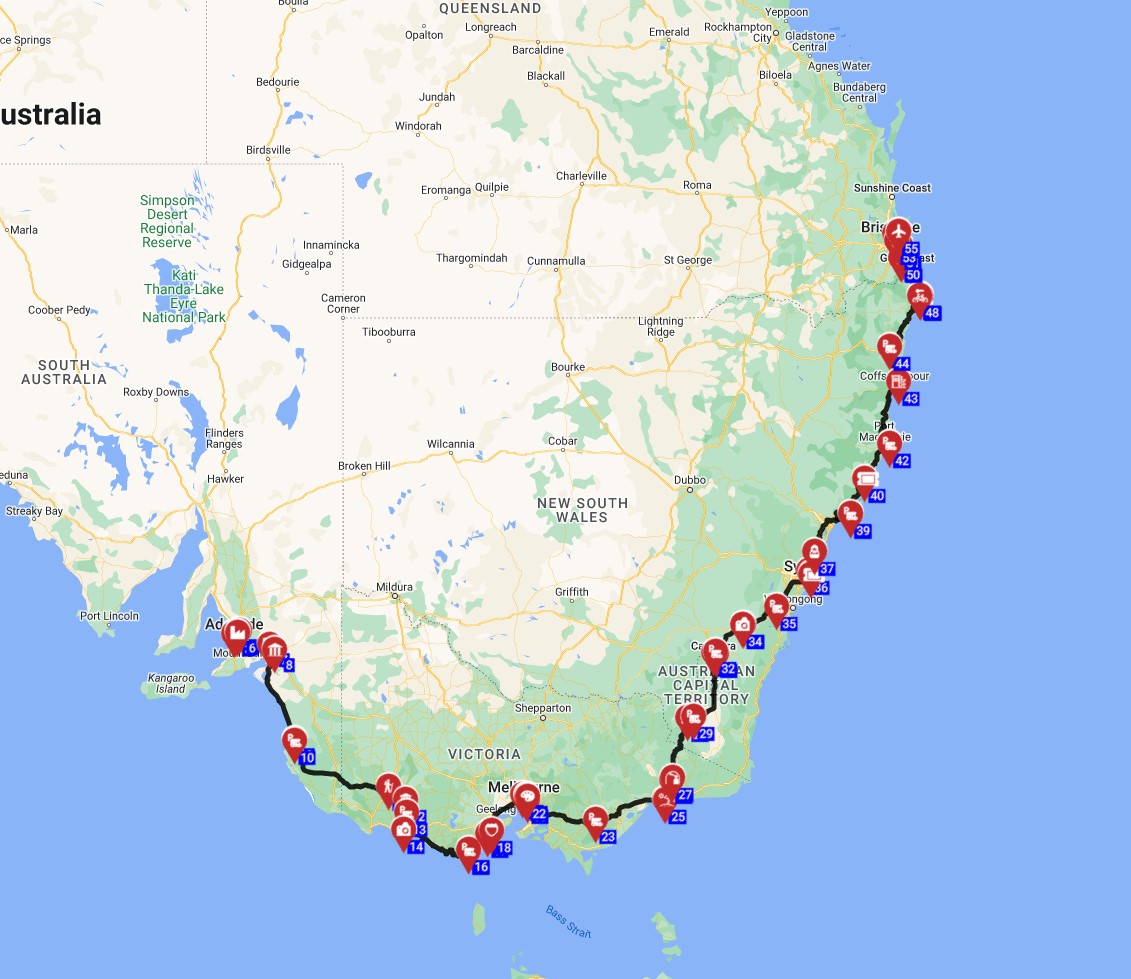
An extended two-week RV rental journey along Australia's East Coast offers a deeper dive into vibrant cities and stunning natural beauty. Days 1-3 can be based in Sydney, allowing exploration of the iconic Sydney Opera House, Harbour Bridge, and Bondi Beach, with a day trip to the magnificent Blue Mountains, home to the Three Sisters rock formation. NRMA Sydney Lakeside Holiday Park is a convenient base. Days 4-5 involve a 160 km (99 mi) drive north to Port Stephens (Nelson Bay), famous for dolphin watching cruises and sandboarding on Stockton Beach dunes. Halifax Holiday Park offers a great spot to stay. Days 6-7, a 190 km (118 mi) drive to Port Macquarie, features the Koala Hospital and picturesque coastal walks. Reflections Holiday Parks Port Macquarie is a good option. Days 8-9 involve a 280 km (174 mi) journey to the laid-back surf town of Byron Bay, where you can visit the iconic lighthouse and enjoy the alternative vibe. Byron Bay Tourist Park is recommended. Days 10-11 head 90 km (56 mi) north to the bustling Gold Coast (Surfers Paradise) for theme parks and beaches, staying at Broadwater Tourist Park. Days 12-13, a 180 km (112 mi) drive to Sunshine Coast (Noosa Heads), offers stunning Noosa National Park walks and the famous Eumundi Markets. Noosa Caravan Park provides a great spot to park your rented motorhome. The journey concludes on Day 14 with a 140 km (87 mi) drive to Brisbane, where you can explore the city's South Bank Parklands. This itinerary showcases the versatility of a rented RV for longer explorations.Recommended RV PLANET Trip for Australia: Cross-Country Adventures
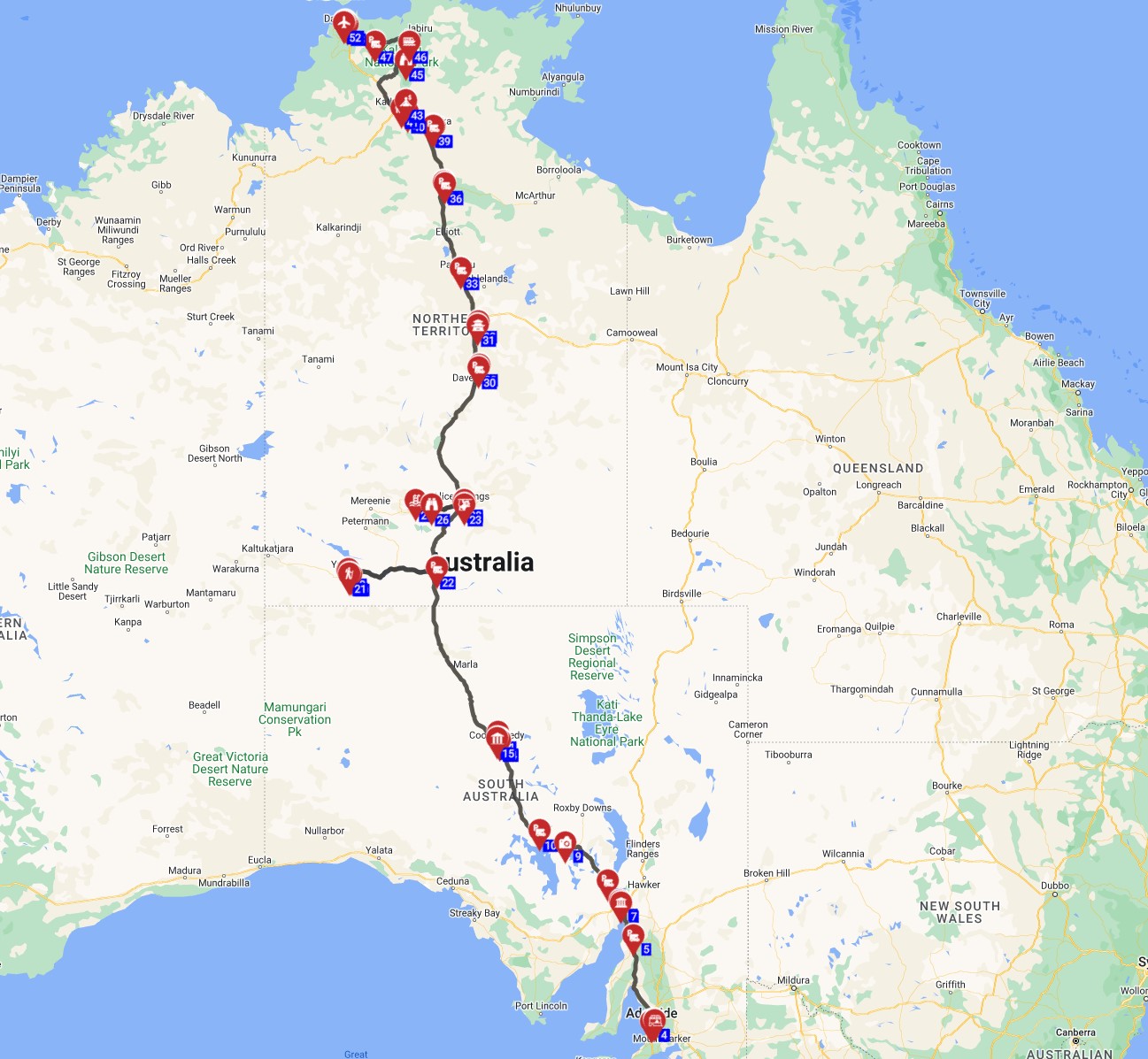
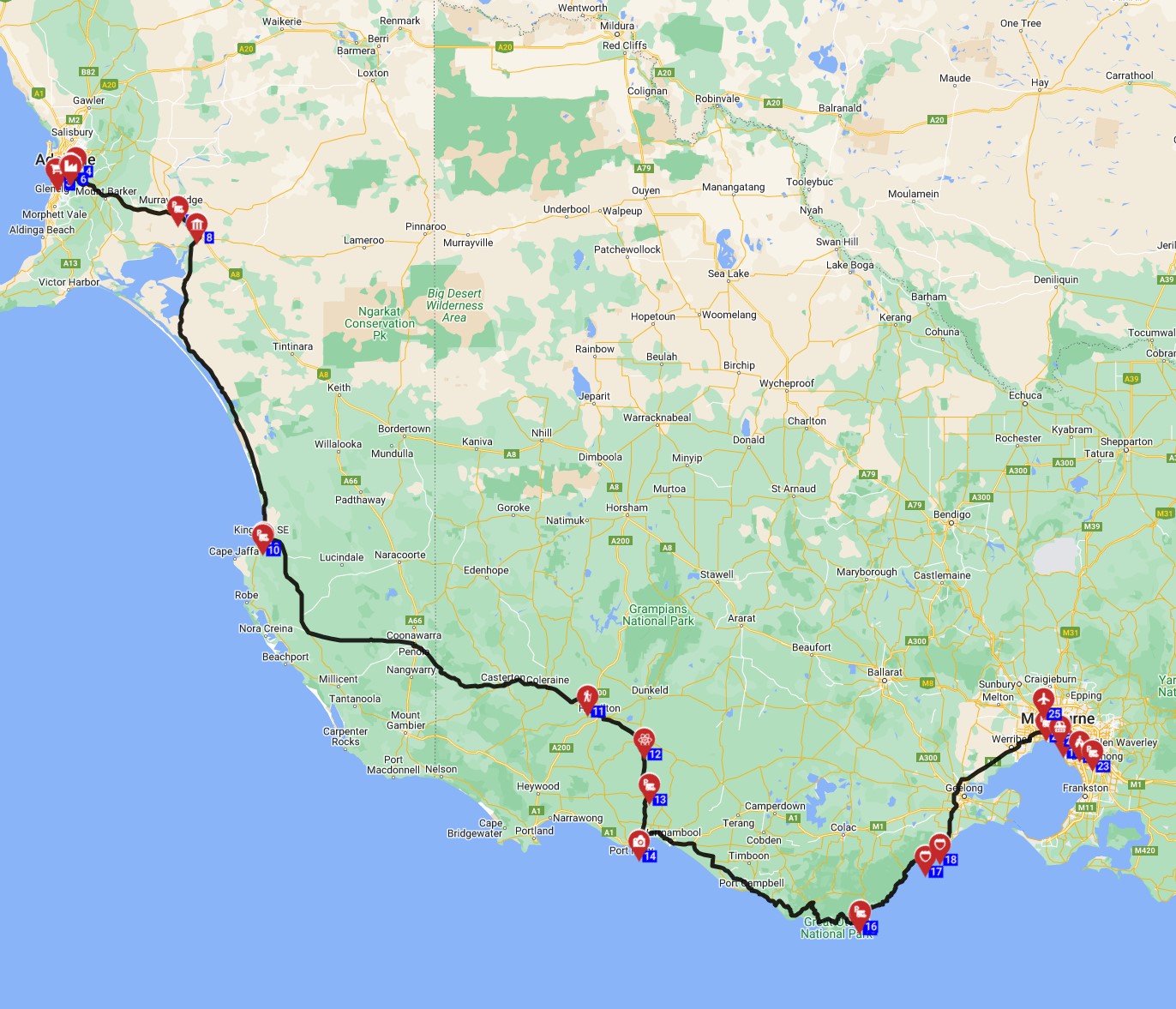
For those seeking an unforgettable, in-depth exploration of Australia by rented RV, RV PLANET (rvplan.net) offers professionally designed itineraries that span the continent. Consider an epic adventure like the "Melbourne to Darwin - Australia’s Heartline Road Trip," a comprehensive 26-day journey covering 5,622 km (3,493 miles) from south to north. This route includes 2 wildlife watch opportunities, 1 aquarium, 1 art gallery, 1 beach, 1 botanical garden, 1 canoeing/kayaking spot, 1 cave, 1 day tour, 1 extreme activity, 2 family activities, 2 heritage sites, 5 hiking areas, 2 historical sites, 1 horseback riding adventure, 1 local industry visit, 3 museums, 4 natural features, 1 park, 1 picnic area, 5 points of interest, 2 scenic routes, 1 spa, 1 swimming spot, 1 tourist attraction, 1 traditional market, 2 traditional restaurants, 3 traditional visits, and 1 zoo. This pre-planned route ensures you experience the best of Australia with minimal effort.
Explore this route
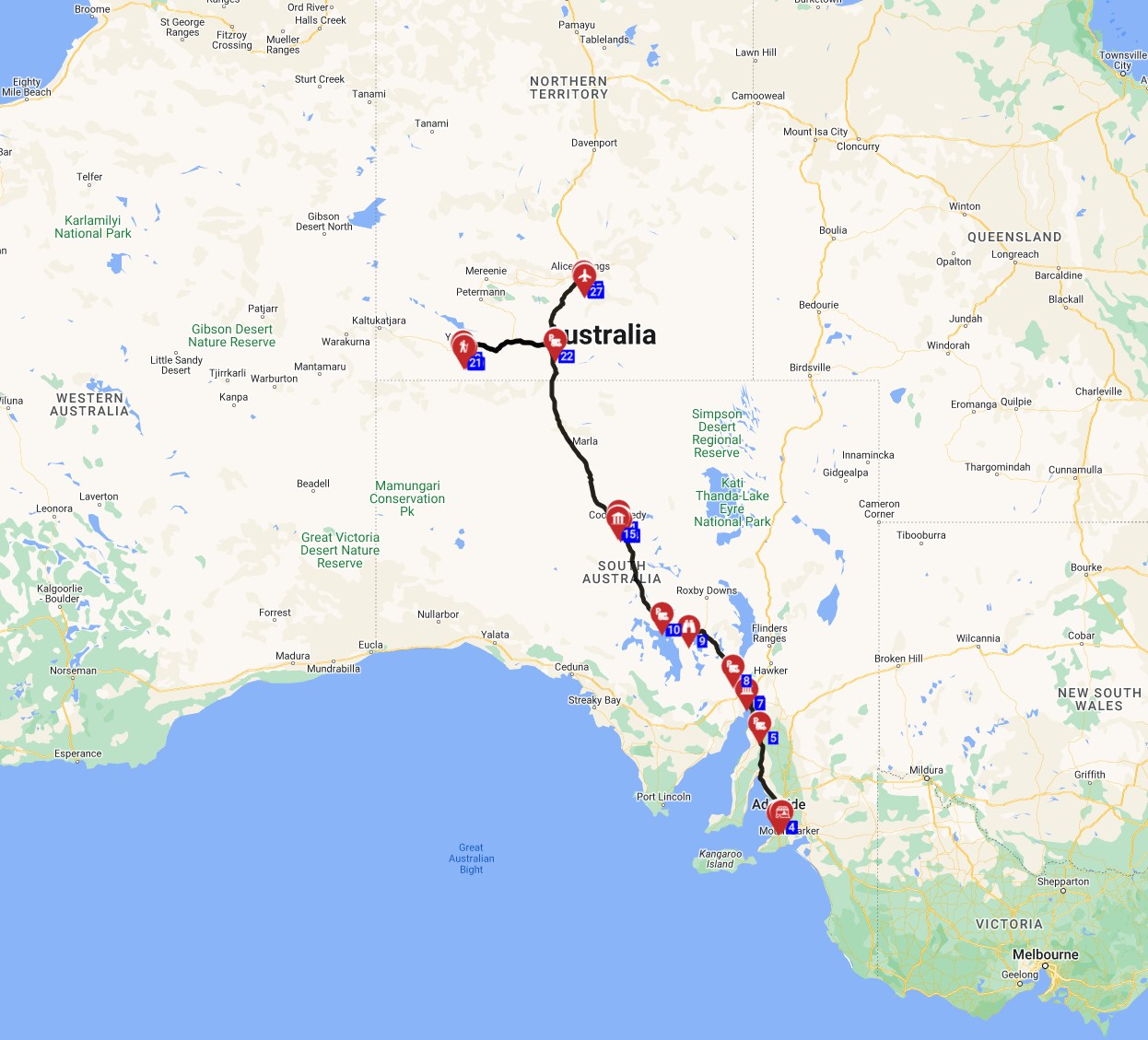
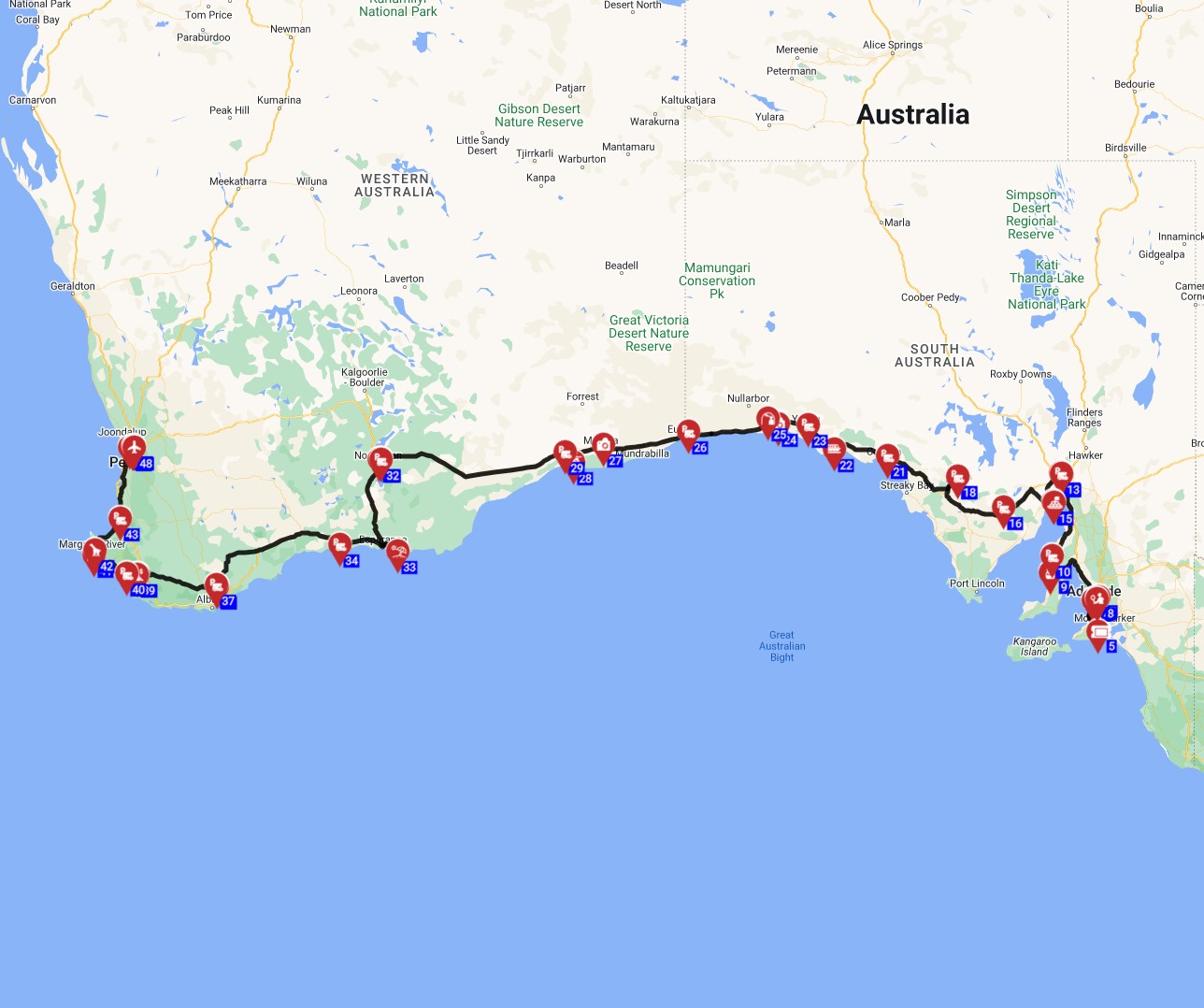
Another excellent option is the "Perth to Alice Springs - The Dreamtime Highway: A Journey Through Australia's Heart," a 21-day itinerary spanning 5,447 km (3,385 miles). This trip offers 2 wildlife watch spots, 1 beach, 1 botanical garden, 1 canoeing opportunity, 1 cave, 1 cruise terminal, 1 day tour, 1 family activity, 1 heritage site, 2 hiking areas, 1 historical site, 2 local industries, 3 museums, 4 natural features, 5 points of interest, 3 tourist attractions, 2 traditional restaurants, 2 traditional visits, and 1 zoo. These RV PLANET routes are meticulously crafted, allowing you to itemize and track every expense for easy budgeting, ensuring full transparency in your adventure.
Explore this route
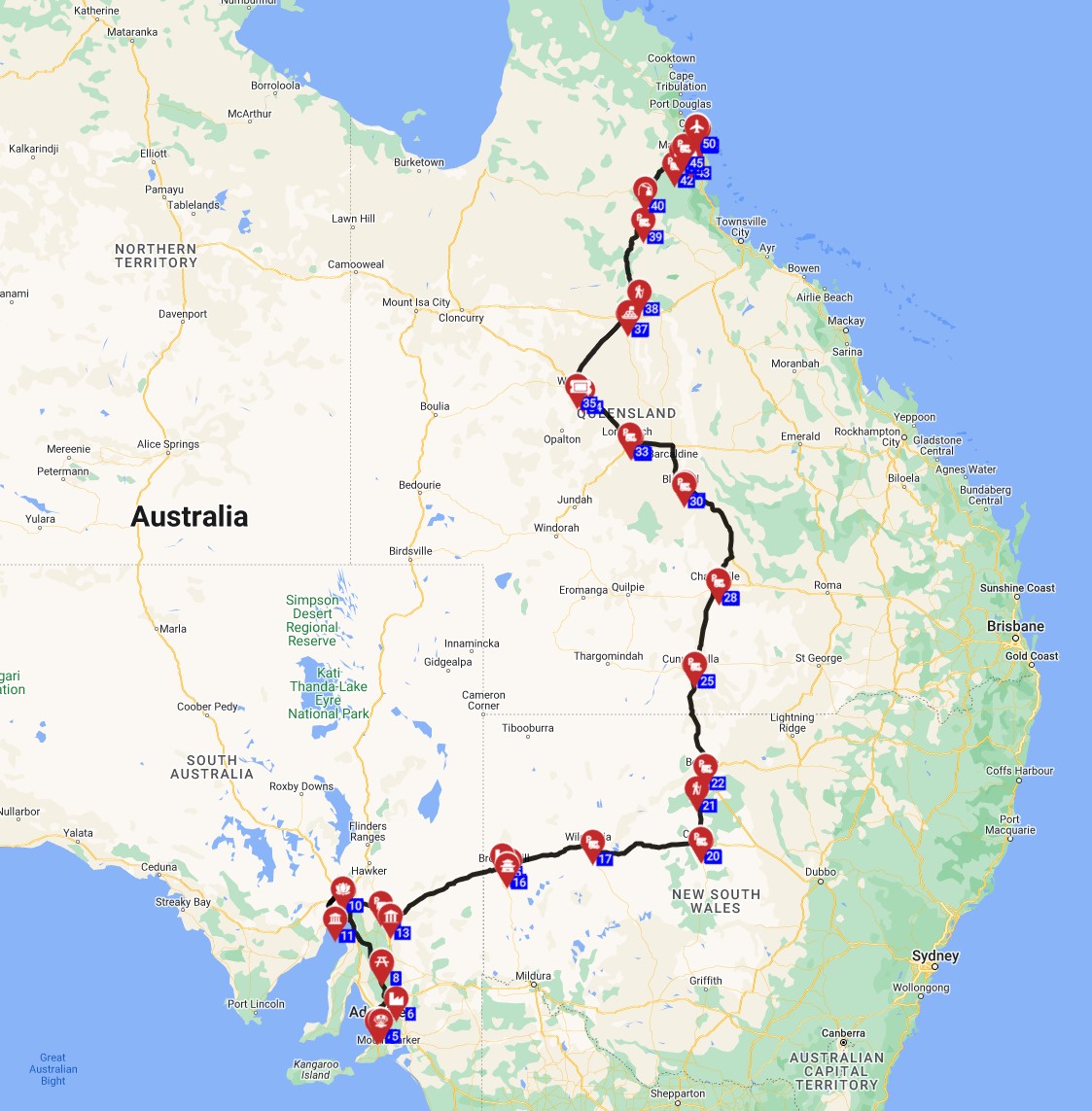
For those starting in the tropical north, the "Cairns to Alice Springs - Northern Horizons: A Journey Through Australia's Heartland" offers a 17-day, 4,003 km (2,488 miles) route. This journey includes 1 wildlife watch, 1 art gallery, 1 botanical garden, 2 caves, 1 cruise terminal, 1 day tour, 1 heritage site, 3 hiking areas, 1 museum, 2 natural features, 1 point of interest, 1 scenic route, 1 science site, 2 swimming spots, 2 tourist attractions, 1 traditional restaurant, 2 traditional visits, and 1 zoo. Rent&Plan itineraries, available through Bandana, combine your RV rental with a ready-made route crafted by travel professionals, offering full access to our trip-planning software for an organized and enjoyable vacation.
Explore this route
Must-See Stops Along the Way (Avi Bandana Picks)
Looking for expert insights from Avi Bandana? Top 5 Adventures - recommendations from Avi Bandana for an authentic Australian RV journey often involve delving into local culture, history, and unique natural experiences. One essential visit is to a significant Indigenous cultural center, such as the Warradjan Aboriginal Cultural Centre in Kakadu National Park, which offers deep insights into Australia's ancient heritage and traditional land management practices. For history enthusiasts, the Australian Stockman’s Hall of Fame & Outback Heritage Centre provides a captivating look into the pioneering spirit of the Outback. Exploring local industries is also a great way to connect with the country; destinations like the Riversleigh Fossil Centre offer a glimpse into Australia's prehistoric past with its rich paleontological discoveries. Don't miss the chance to experience traditional markets, often found in regional towns, where you can pick up fresh local produce and unique crafts. Finally, indulging in local flavors at traditional restaurants, such as the renowned Sydney Cove Oyster Bar for exquisite waterfront dining, or other eateries that celebrate Australian ingredients, is a must. Many rented RVs come equipped with cooking facilities, like a gas stove and refrigerator, allowing you to prepare fresh meals with market finds. You can find inspiration and ideas for delicious meals on our RV-friendly recipes playlist.Daily Driving Distances & Drive Times in Australia: Embracing Slow Travel
To truly savor your adventure and avoid driver fatigue, Avi Bandana recommends maintaining an average daily driving distance of no more than 100 miles or 150 km when planning an RV trip in Australia. This slower pace ensures you have ample time to explore destinations, relax, and appreciate the scenery, rather than simply rushing between locations. For instance, the scenic Melbourne to Apollo Bay stretch along the Great Ocean Road, though only approximately 190 km (118 mi), can take 3-4 hours due to winding roads and frequent photo stops. A shorter drive, such as Cairns to Port Douglas (about 70 km / 43 mi), takes approximately 1 hour of direct driving, leaving plenty of time for exploring the Daintree Rainforest. For longer segments like Perth to Margaret River, which is around 270 km (168 mi) and typically a 3-hour direct drive, it is best broken up with stops in charming towns like Busselton or Dunsborough. This commitment to slow travel allows you to connect more deeply with each place, discover hidden gems, and fully enjoy the freedom and flexibility that a rented motorhome offers, making for a more memorable and less stressful vacation.Choosing Your Perfect Rental RV in Australia: Sizes and Amenities
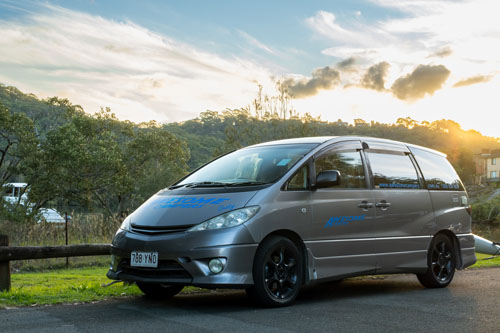
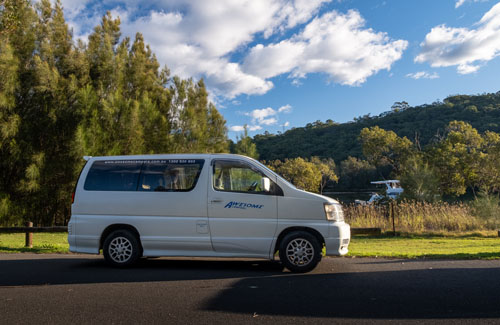
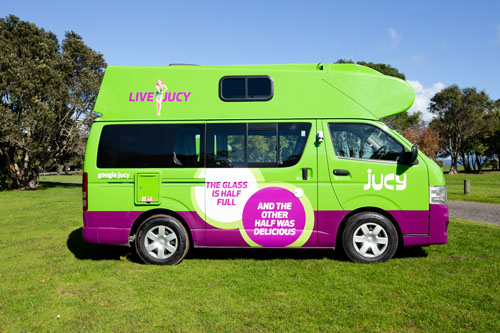
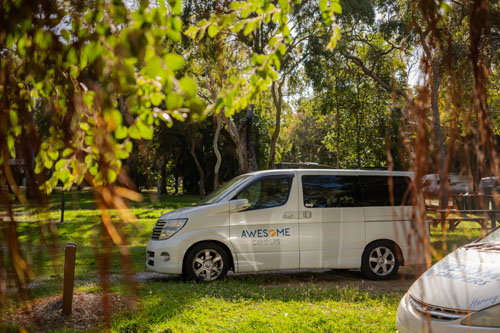
Selecting the ideal rented RV for your Australian adventure depends significantly on your travel party, desired comfort levels, and the specific regions you intend to explore. For solo travelers or couples primarily focusing on coastal routes and cities, a compact Class B Camper Van from Bandana's fleet is an excellent choice. These campervans, averaging 5.8 meters in length, offer superior agility and fuel efficiency, with an estimated consumption of 8-10 Liters/100 km, making them easy to maneuver and park. They typically provide space for up to 2.7 adults and 3.2 sleeping places. For families or those desiring more comfort and amenities on well-maintained roads, a Class C Alcove motorhome is often preferred. Averaging 7.5 meters in length, these RVs typically accommodate around 4.4 adults and offer up to 5.8 sleeping places, making them ideal for families with children. With a fuel consumption of 10-12 Liters/100 km and an average load capacity of 42.4 kg, they provide ample living space and facilities for longer journeys, ensuring a comfortable trip. Some popular options include the "4 Berth Adventurer" and the "6 Berth Discovery", both offering features like a refrigerator and shower. For a streamlined experience, Bandana's 'Rent&Plan' service combines your RV rental with a ready-made itinerary crafted by travel experts, providing full access to our trip-planning software.Staying Connected and Safe: Tech & Emergency Preparedness for Australia RV Trips
Preparing for an RV rental trip across Australia means prioritizing connectivity and safety, especially when venturing into remote regions where mobile service can be unreliable. Outside major towns and along the coast, mobile phone signal often drops, making satellite phones or UHF radios essential for emergency communication in the Outback. Always inform someone of your route and expected return time. For navigation, download offline maps to your smartphone or a dedicated GPS device, as internet access is not guaranteed everywhere. Several apps are invaluable for RV travelers, including those for locating campgrounds, monitoring road conditions, and identifying dump stations. Beyond communication, equip your rented motorhome with sufficient water, fuel, and supplies, particularly for longer stretches between services. Unique wildlife hazards, such as kangaroos and wombats, are prevalent at dawn and dusk, so exercise extreme caution when driving during these times. Wombats, due to their dense build, can cause significant vehicle damage upon impact. Also, be acutely aware of heatstroke risks in high temperatures by staying hydrated and avoiding strenuous activity during the hottest parts of the day. Bandana RV's 24/7 support covers pre-booking comparison, booking support, and post-booking coordination, ensuring you have assistance with your rental details before and after your trip. For during-trip logistical support, RV PLANET offers planning tools to help you stay organized.Seasonal RV Travel in Australia: Navigating Climates and Best Times to Visit
Australia's immense size results in diverse climates, making the timing of your RV rental trip crucial for an enjoyable experience. The country generally experiences a tropical climate in the north, characterized by wet (November-April) and dry (May-October) seasons, and a temperate climate in the south with four distinct seasons. For Southern Australia, including cities like Sydney, Melbourne, Adelaide, Perth, and Tasmania, spring (September-November) and autumn (March-May) are ideal, offering pleasant temperatures, fewer crowds, and lower risks of bushfires. Summer (December-February) in the south can be very hot, sometimes exceeding 40°C (104°F) in inland areas, making coastal regions more comfortable. In contrast, Northern Australia, encompassing Cairns, Darwin, Kakadu, and Uluru, is best visited during its dry season from May to September. This period provides cooler temperatures, reduced humidity, and minimal rainfall, perfect for exploring tropical rainforests, national parks, and the Outback without the challenges of intense heat and wet season closures, which can lead to flooded roads and impassable routes. Winter (June-August) is generally mild across much of the south, offering good conditions for city breaks and exploring alpine regions, while the north enjoys its best weather. Planning your RV itinerary according to these seasonal variations ensures a comfortable and accessible journey.Understanding Australian RV Rental Costs: Budgeting for Your Adventure
Estimating the total cost of your RV rental adventure in Australia requires considering several dynamic factors beyond the base rental price, which fluctuates daily based on availability, seasonality, and supplier decisions, much like flight tickets. A 1-week RV trip for a couple in a compact campervan might cost approximately $1,500-$2,500 AUD, covering the rental, basic fuel, and campground fees. For a two-week family adventure in a Class C motorhome, expect costs between $4,000-$7,000 AUD, factoring in more fuel, larger campground sites, and provisions for 4-6 people. A month-long cross-country expedition could range from $8,000-$15,000+ AUD, depending heavily on mileage and off-road excursions. Key ancillary costs include fuel (a significant expense given Australia's vast distances), campground fees (ranging from $30-$70 AUD per night for powered sites), propane, dump station fees, and potential tolls, especially around major cities. Groceries will vary with your cooking habits, but preparing meals in your rented RV's kitchen can offer substantial savings. For transparent planning, utilizing RV PLANET (rvplan.net) routes allows travelers to itemize and track every expense along the way for easy budgeting. Flexibility with travel dates and opting for off-peak seasons can also significantly reduce overall costs, with booking 3-6 months in advance often securing better rates. Bandana ensures full transparency, so what you see is what you pay, with no surprise fees at pickup. For information on "RV Rental in Australia - Prices and Best Deals 2026", check our dedicated guides.What is the most beautiful road trip in Australia?
Australia boasts numerous breathtaking road trips, but for sheer diversity and iconic scenery, the Great Ocean Road in Victoria is frequently cited as the most beautiful. This world-renowned coastal drive, spanning over 243 kilometers, showcases dramatic cliffs, pristine beaches, and the famous Twelve Apostles limestone stacks, offering stunning views around every bend of your rented motorhome. Beyond the Great Ocean Road, other top contenders for scenic beauty include the Pacific Coast Touring Route, a journey from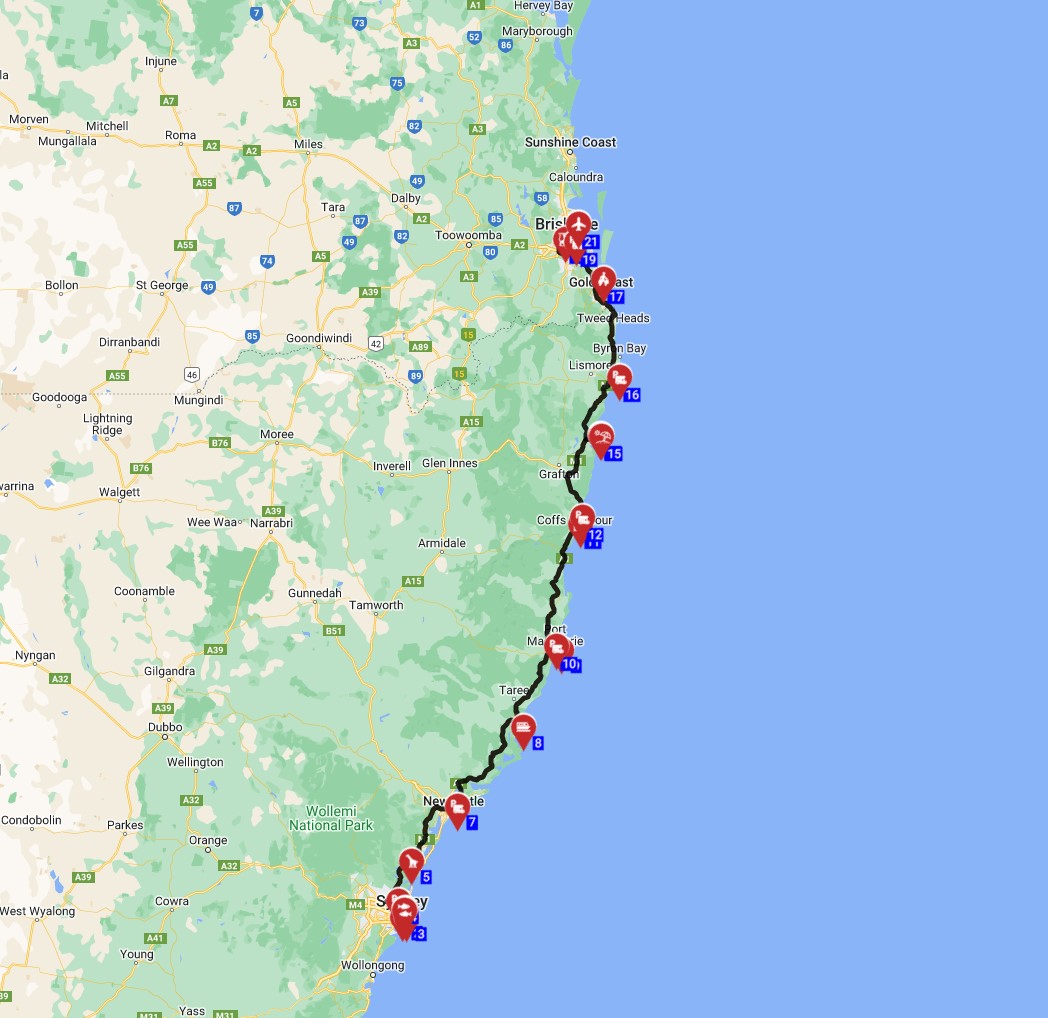
Sydney to Brisbane
Can you park an RV anywhere in Australia? Freedom Camping Explained
No, you cannot park an RV just anywhere in Australia; regulations for parking and overnight stays vary significantly by state, territory, and even local council areas. While the idea of "freedom camping" or wild camping might appeal to many, it is generally restricted in most populated areas and national parks. Travelers are typically required to stay in designated campgrounds, commercial caravan parks, or specified rest areas. Many of Australia's stunning national parks require permits and booking fees for camping, which should be arranged in advance, especially during peak seasons. Furthermore, some Indigenous lands have specific access requirements or are entirely off-limits to unauthorized visitors. It is crucial to always check local council websites, utilize reputable camping apps, or consult with visitor information centers to understand the specific rules for each region you plan to visit, particularly regarding "no overnight parking" signs, to avoid potential fines. Finding a spot is usually manageable; if not at the first campground, then the next one – just call ahead before driving to confirm availability. RV PLANET (rvplan.net) is an excellent resource for finding campsites and planning your journey.How long does it take to travel around Australia in a campervan?
To travel around the entire circumference of Australia in a rented campervan, a minimum of 3 to 6 months is generally recommended to allow for adequate exploration without excessive rushing. Australia is a massive continent, and covering its diverse landscapes requires significant time and a commitment to slow travel, averaging no more than 100-150 km per day. For more focused regional trips, such as traversing the East Coast from Sydney to Cairns, you might allocate 3-4 weeks to enjoy the beaches, cities, and national parks comfortably. A journey across the vast Nullarbor Plain, a famous stretch of highway, could take 5-7 days alone, depending on how many stops you make. Most visitors aiming to explore a specific state or territory comprehensively, like a full tour of Tasmania or the South West region of Western Australia, can plan for 2-4 weeks, balancing driving days with ample sightseeing. Remember that an RV adventure is about the journey as much as the destination, so embrace the open road and take your time.What is the 333 rule for campervan in Australia?
The '333 rule' for campervanning is a popular guideline designed to promote a safe, enjoyable, and sustainable road trip experience, particularly relevant given Australia's vast and often remote landscapes. This practical rule advises rented RV travelers to: **Drive no more than 300 km (186 miles) a day**, ensuring that you do not overexert yourself and have enough time to appreciate the scenery. **Arrive at your chosen destination or campground by 3 PM**, allowing sufficient daylight to set up camp, settle in, and explore your immediate surroundings without rushing. And **stay at least 3 nights every 3 days**, which encourages a slower pace of travel and deeper engagement with each location, reducing the constant packing and unpacking. Adhering to the 333 rule helps prevent driver fatigue, a critical safety consideration on Australia's long highways, and fosters a more relaxed and immersive travel experience. It embodies the essence of slow travel, maximizing enjoyment of your RV rental adventure.Essential Australian Travel Advice: What Not to Do for a Smooth Trip
For a smooth and respectful RV rental trip in Australia, several key points of advice are essential for travelers. Firstly, do not underestimate the sheer distances between towns and the potential harshness of the Outback; always carry sufficient water, fuel, and supplies when venturing into remote areas. Mobile signal is intermittent outside major population centers, so consider a satellite phone or UHF radio for emergencies. Secondly, it is critical to respect Indigenous culture and land; avoid entering Indigenous lands without proper permission or guidance, and be mindful of cultural sites. Thirdly, never ignore safety warnings, especially regarding wildlife and environmental conditions. Do not approach native animals like kangaroos, dingoes, snakes, or crocodiles, as they can be dangerous. Be aware of bushfire risks, particularly in hot, dry seasons, and always check local fire restrictions. Also, the intense summer heat in many regions can quickly lead to heatstroke, so stay hydrated and seek shade. Finally, always adhere to local driving and camping regulations; freedom camping is often prohibited, and fines can be substantial. Drive slowly and carefully, especially at dawn and dusk when wildlife is most active. For further safety insights, our "RV Travel Guide to Australia - Tips and Top Spots 2026" offers valuable information.What are the top 3 tourist attractions in Australia?
Australia boasts a wealth of iconic attractions, but the top three most recognized and celebrated tourist attractions are widely considered to be the Sydney Opera House, the Great Barrier Reef, and Uluru (Ayers Rock). The Sydney Opera House, a UNESCO World Heritage site, is an architectural marvel and a global symbol of Australia's vibrant cultural scene. Located on the stunning Sydney Harbour, it's a must-see for any visitor. The Great Barrier Reef, off the coast of Queensland, is the world's largest coral reef system, offering unparalleled opportunities for snorkeling, diving, and experiencing diverse marine life. This natural wonder stretches over 2,300 kilometers and is visible from space. Uluru, situated in the Red Centre of the Northern Territory, is a massive sandstone monolith deeply sacred to the Indigenous Anangu people. Famed for its spiritual significance and breathtaking color changes at sunrise and sunset, it offers a profound connection to Australia's ancient heritage. These three attractions showcase Australia's blend of natural splendor, cultural significance, and architectural brilliance, making them essential stops on any comprehensive RV itinerary.How many days are enough for an Australia RV trip?
The ideal duration for an Australia RV trip largely depends on how much of the country you wish to explore and the pace you prefer, but generally, 7-14 days is sufficient for discovering a specific region, while 3-4 weeks allows for a broader exploration of multiple states. For instance, a focused trip along the Great Ocean Road might take 7 days, providing ample time for scenic stops and local experiences. A more ambitious RV adventure targeting the East Coast from Sydney to Cairns could comfortably fill 14-21 days, allowing for a balanced mix of driving and sightseeing. Due to Australia's immense size, attempting to see "everything" in less than 3-4 weeks usually results in a rushed experience, spending more time driving than exploring. Longer trips, ranging from 1 to 3 months, are ideal for multi-region adventures or circumnavigation, truly embracing the slow travel philosophy of averaging 100-150 km per day. Factor in travel time between major hubs, even with one-way motorhome rentals, to ensure a relaxed and memorable journey. You can find "Weekly RV Rental in Australia - Pricing 2026" and "Long-Term RV Rental in Australia - Monthly Rates 2026" information on our platform to help you plan.What is the best month to go to Australia for RV travel?
The best month to visit Australia for an RV travel adventure depends heavily on the specific region you plan to explore, given the country's vast size and diverse climates. For Southern Australia, including major cities like Sydney, Melbourne, Adelaide, and Perth, along with Tasmania, Spring (September-November) and Autumn (March-May) are optimal. These months offer pleasant temperatures ranging from 15-25°C, fewer crowds compared to summer, and lower risks of extreme weather, making them perfect for coastal drives, winery tours, and exploring national parks like the Grampians. In contrast, Northern Australia, encompassing destinations like Cairns, Darwin, the Kimberley, and Uluru, is best visited during its dry season, from May to September. During this period, temperatures are cooler (20-30°C), humidity is low, and rainfall is minimal, making it ideal for exploring tropical rainforests, Kakadu National Park, and the desert landscapes of the Red Centre, avoiding the intense heat and potential flooding of the wet season. Winter (June-August) is generally mild and sunny in much of the south, suitable for city sightseeing, while the north experiences its most comfortable weather. Always check local forecasts and conditions relevant to your specific "RV Itinerary in Australia - Best Value Routes 2026" before you depart.Final Thoughts
Embarking on a rented RV journey through Australia is more than just a vacation; it's an opportunity to discover unparalleled natural beauty and vibrant culture at your own pace. With diverse itineraries spanning from a week-long coastal exploration to a month-long cross-country epic, there's an adventure perfectly suited for every traveler, be it a couple seeking a romantic escape or a family with kids ready for an unforgettable road trip. The key to a truly magical experience lies in thoughtful planning, embracing slow travel, and leveraging resources like RV PLANET for expertly crafted routes and transparent budgeting. At Bandana, we're dedicated to making your RV rental experience seamless and joyful, acting as your trusted partner from the moment you start comparing options until you return your motorhome. Our commitment to full transparency and 24/7 support (pre-booking and post-booking) means you can focus on the excitement of the open road, knowing you have professional specialists behind you every step of the way. So, why wait? Australia's vast and wonderful landscapes are calling.On the routes offered through RV PLANET routes, you can itemize and track every expense along the way for easy budgeting.