In This Guide
- Can You Drive an RV in New Zealand? License & Age Rules
- Road Conditions & Terrain in New Zealand
- RV Size Limits, Bridges & Restricted Zones
- Fuel: Diesel vs. Petrol & Cost per 100 km
- Tolls, Vignettes & Border Rules
- Driving Tips for RV Rental Travelers
- Recommended RV Class for New Zealand Roads
- Should I Choose a Compact Van Instead of a Large RV in New Zealand?
- Can I Park Anywhere? Free & Wild Camping Rules in New Zealand
- Can I Drive an RV Into the City Center? Heights, Tunnels & Local Signage
New Zealand offers an incredible landscape for RV travel, combining stunning scenery with comfortable touring. For seniors and travelers of all ages, navigating this beautiful country in a rented motorhome or campervan is a truly liberating experience, especially when focusing on comfort routes that allow for relaxed exploration. Our goal at Bandana RV is to make your adventure seamless, ensuring you have all the information you need before you even turn the ignition. For live availability and current prices for all vehicle types, start with our RV Rental New Zealand - Complete Guide 2026 guide.
Can You Drive an RV in New Zealand? License & Age Rules
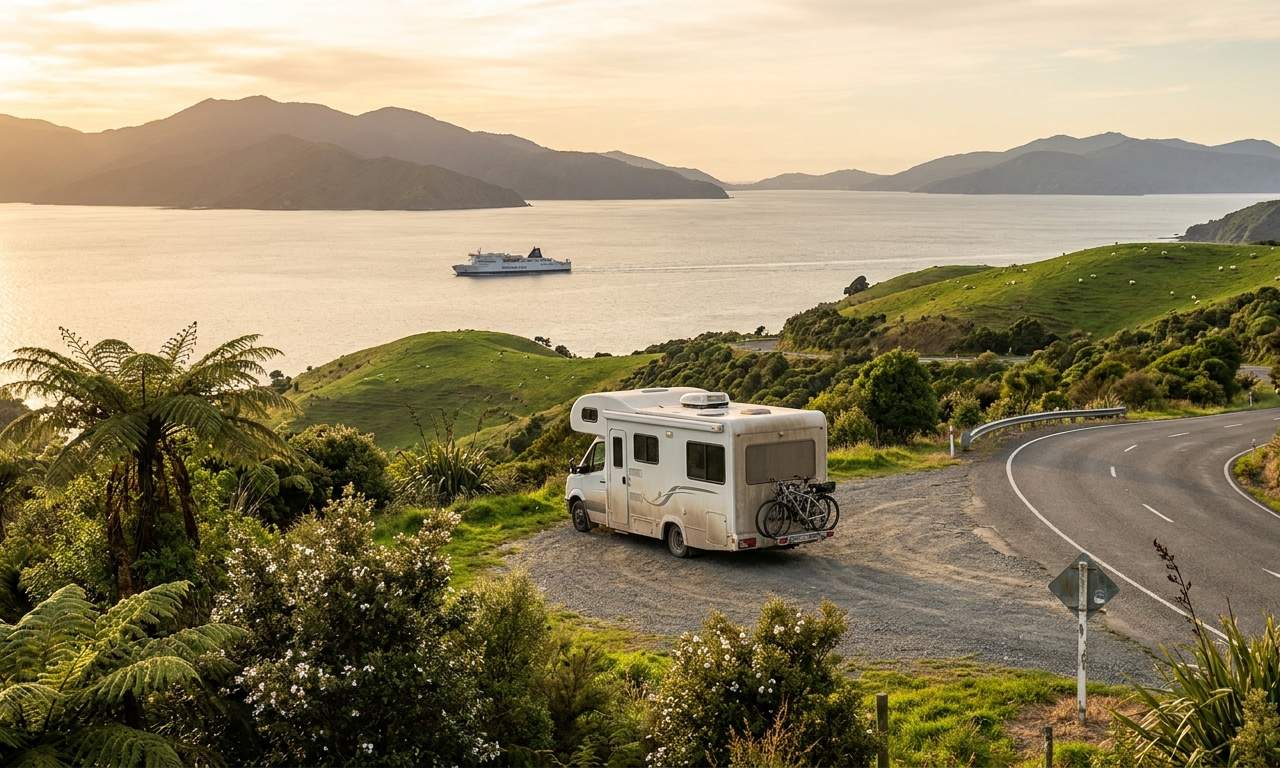
Yes, foreign visitors can generally drive most rental RVs in New Zealand for up to 12 months if they hold a valid, full driver's license from their home country, provided it is in English or accompanied by an accurate English translation or an International Driving Permit (IDP). Most motorhomes and campervans, including Class A, Class B, and Class C vehicles up to 6,000 kg Gross Laden Weight (GLW), can be driven on a standard car license (Class 1 in New Zealand), covering the vast majority of our rental fleet. The minimum driver age for RV rentals in New Zealand is typically 21 years old, with no young driver surcharges or vehicle class restrictions based on age across Bandana's partners, making it accessible for a wide range of travelers, including seniors.
While an International Driving Permit (IDP) is not mandatory for visitors from English-speaking countries with valid licenses, it is highly recommended for those whose licenses are not in English, as it provides a universally recognized translation. This ensures a smoother experience with local authorities and rental providers. Always carry your physical driver's license and any required translation or IDP with you while driving. Prioritize safety and comfort on your journey; with Bandana, you can travel slowly, exploring at a pace that allows you to fully connect with the stunning scenery, rich culture, and delicious food New Zealand has to offer, aiming for a maximum of 100-150 km per day on average.
Road Conditions & Terrain in New Zealand
New Zealand roads are generally well-maintained but vary significantly from wider state highways to narrow, winding coastal roads and occasional gravel sections, especially in rural and highly scenic areas like those found on the South Island. The terrain is incredibly diverse, featuring everything from steep mountain passes and dense native bush to volcanic plateaus and expansive farmland, often necessitating slower driving speeds and increased attentiveness. You should expect frequent curves, gradients, and single-lane bridges in many picturesque regions, making cautious, scenic driving paramount for RV travelers. For planning your New Zealand adventure, consider viewing our RV Travel Guide to New Zealand - Tips and Top Spots 2026 for expert insights.
Road quality can be affected by rapidly changing weather conditions; for instance, higher elevations may experience snow and ice in winter, while heavy rain can occur year-round in some regions. It's wise to check local weather and road conditions daily, particularly if you plan to venture into mountainous areas or less-traveled routes. The general advice for RV travelers in New Zealand, especially for first-timers or those seeking comfort, is to embrace slow travel, aiming for a maximum of 100-150 km per day on average. This allows ample time to navigate varying road conditions, pull over safely to enjoy breathtaking views, and explore local attractions without feeling rushed.
RV Size Limits, Bridges & Restricted Zones
RV travelers in New Zealand must always be aware of their vehicle's specific height, width, and weight to navigate safely, as while most rental RVs are designed for the country's roads, certain restrictions apply. Low bridges and rock arch tunnels, such as the famous Homer Tunnel leading to Milford Sound (a stunning route featuring natural features and hiking areas on our
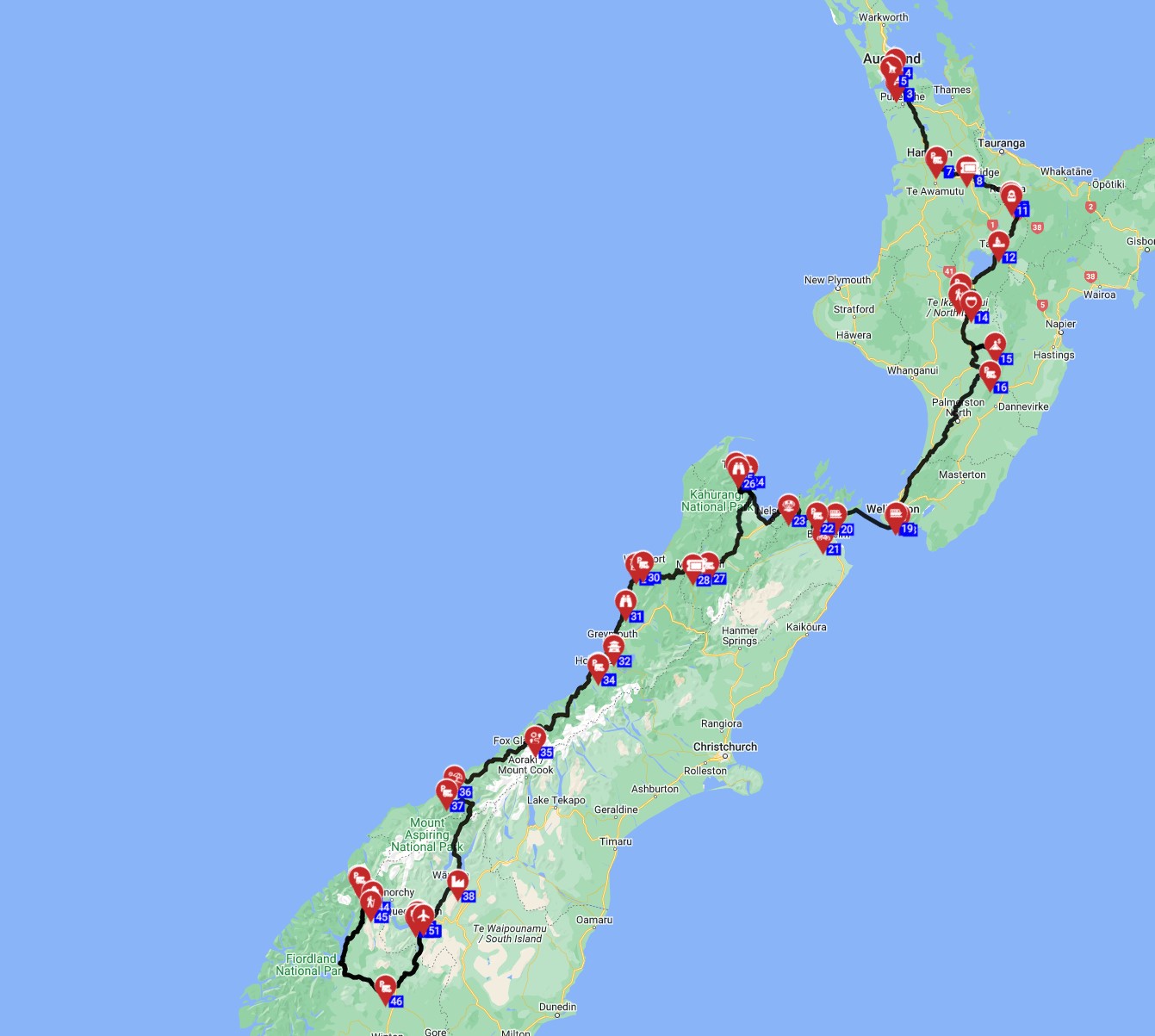
Additionally, some conservation areas, national parks, or unsealed (gravel) roads may have restrictions for larger or heavier vehicles due to road fragility or environmental protection. Always check local Department of Conservation (DOC) guidelines or road signage before proceeding into such areas. Our local partners, true RV specialists, ensure that rental motorhomes come with the necessary information to navigate these specific conditions, preventing any unexpected surprises. If you are considering one-way options, know that One-Way RV Rental in New Zealand - Price Guide 2026 offers details on potential drop-off fees, which vary based on distance and seasonality, like those for a Christchurch Roundtrip - Around the South Island adventure. For specific vehicle details, a "6 Berth Discovery" motorhome is 7.4m long and has automatic transmission, making handling smoother even on winding roads.
Fuel: Diesel vs. Petrol & Cost per 100 km
Both diesel and petrol (gasoline) are widely available across New Zealand, though diesel is typically more common for larger rental RVs due to better fuel efficiency. For instance, Bandana's Class SI - Semi-integrated motorhomes often achieve 10-11 Liters/100 km, while Class C - Alcove RVs average 10-12 Liters/100 km. Smaller Class B - Camper Vans typically consume around 10 Liters/100 km, and larger Class A - Integrated RVs average 11-12 Liters/100 km. Diesel vehicles in New Zealand are subject to Road User Charges (RUC), which are usually pre-purchased by rental companies and included in your rental cost; however, it's always wise to confirm this with your supplier for full transparency.
Fuel costs can fluctuate based on global prices and regional variations, but budgeting for approximately NZD $20-30 per 100 km for most RVs is a reasonable estimate for planning your trip expenses. Some rental motorhomes may include fuel discount cards as an added benefit. When considering your total trip cost, remember that on RV PLANET routes, travelers can itemize and track every expense along the way for easy budgeting. This helps avoid any hidden fees or surprises, ensuring you know exactly what you're paying for before, during, and after your booking, a core principle at Bandana RV. On the routes offered through RV PLANET routes, you can itemize and track every expense along the way for easy budgeting.
Tolls, Vignettes & Border Rules
New Zealand has a limited number of toll roads, primarily located on the North Island, which are clearly signposted to provide advance notice. These include the Northern Gateway Toll Road, Tauranga Eastern Link Toll Road, and Takitimu Drive Toll Road. Unlike some countries, there are no physical toll booths; tolls are paid electronically online, via phone, or at designated service stations. Many RV rental vehicles, including those from Bandana's direct partners like Apollo and Britz, offer the convenience of pre-purchased toll passes or allow the rental company to manage toll payments post-trip, helping renters avoid fines and streamline their journey.
New Zealand does not operate a vignette system for road usage, simplifying travel for international visitors. Furthermore, there are no "border rules" for driving between its two main islands; rather, travel between the North and South Islands requires booking a ferry crossing, which functions as a pre-booked transport service. It's advisable to book these ferry crossings well in advance, especially during peak seasons, and ensure your RV dimensions are accurately provided to avoid any issues or unexpected costs. This full transparency and upfront communication are part of how we handle the details, so you can focus on living the journey.
Driving Tips for RV Rental Travelers
Driving a rented RV in New Zealand is an incredibly rewarding experience, and with a few key tips, it can be smooth and stress-free. Always drive on the left side of the road, a critical rule that takes some adjustment for drivers from right-hand traffic countries like the USA. Be mindful of all road signs, which indicate distances and speed limits in kilometers per hour (km/h). For longer trips or with families onboard, planning regular stops every 2-3 hours is essential to prevent driver fatigue and allow everyone to stretch and enjoy the scenery, particularly on winding roads.
Be prepared for rapidly changing weather conditions, as New Zealand's climate can be quite dynamic; carry appropriate gear and check forecasts daily, especially when heading into mountainous regions. Allow ample travel time for your planned routes, as average speeds in New Zealand are generally lower than in many other countries due to the varied terrain and numerous winding roads. As a courtesy to local drivers, use passing lanes where available, and pull over safely at designated spots to let faster traffic pass if you are driving slowly. Practice the '4-second rule' for safe following distance: pick a fixed object, and when the vehicle in front passes it, count 'one thousand and one, one thousand and two, one thousand and three, one thousand and four.' If you reach the object before finishing the count, increase your distance. This is especially important for RVs, which require more braking distance. For broader travel insights, you might also find valuable information in our RV Rental Australia - Complete Guide 2026.
Recommended RV Class for New Zealand Roads
For navigating New Zealand's diverse and often winding roads with a balance of comfort and maneuverability, a Class B - Camper Van or a Class SI - Semi-integrated motorhome are highly recommended options. Class B Camper Vans, like the "Condo" which offers 2 double beds and is 4.7m in length, or Bandana's "V3" model with an average length of 6.36 meters, are agile enough for narrower routes and generally easier to park, while still providing essential amenities like a kitchen and sleeping area. For those seeking a bit more living space and comprehensive facilities, Class SI - Semi-integrated RVs, typically around 6.9 meters in length, offer a comfortable option for couples or small families without being overly cumbersome on the country's varied routes.
Larger Class C - Alcove models (averaging 7.5 meters) and Class A - Integrated models (also around 7.5 meters) are also suitable for New Zealand roads, offering superior comfort for longer trips and larger groups. Vehicles such as the "6 Berth Discovery" are 7.4m in length with automatic transmission, ensuring a smooth drive. While these larger vehicles provide spacious interiors with amenities like full kitchens, separate sleeping areas, and often generous storage for luggage, they do require more careful navigation on very tight roads or in busy urban areas. Ultimately, the best choice depends on your group size, desired comfort level, and confidence in driving a larger vehicle; however, with any rented motorhome, remember: drive slowly and carefully, and you can drive almost anywhere without issues. No need to stress - just use common sense and pay attention.
Should I Choose a Compact Van Instead of a Large RV in New Zealand?
While a compact campervan, such as Bandana's Class B - Camper Van with an average length of 5.8 meters ("Crib" is 4.6m, "Crib Plus" is 4.7m), certainly offers easier maneuverability and parking, particularly in tight spots or smaller towns, larger Class C and Class A RVs are generally well-suited for New Zealand roads and provide significantly more comfort and living space. The primary advantage of a compact van comes in specific situations, like navigating very tight historic town centers or extremely narrow mountain passes where a smaller footprint is genuinely beneficial. For most of New Zealand's scenic routes, national parks, and designated campgrounds, even longer RVs can navigate comfortably.
The trade-off often involves personal comfort: larger RVs provide built-in showers, toilets, full kitchens (with ample space for preparing meals, perhaps even some delicious fare from our RV-friendly recipes playlist), and greater interior space, which can significantly enhance the overall travel experience, especially on multi-week trips. For seniors valuing ease of movement within the vehicle and comprehensive amenities, a larger motorhome might be the preferred option. Remember, regardless of size, you can drive almost anywhere without issues in New Zealand; just drive slowly and carefully, use common sense, and pay attention to your surroundings.
Can I Park Anywhere? Free & Wild Camping Rules in New Zealand
No, you cannot park a motorhome just anywhere in New Zealand for overnight stays; strict freedom camping regulations are enforced to protect the country's pristine environment and local communities. To legally freedom camp, your rented RV must be certified as 'self-contained,' meaning it is equipped with a toilet, a wastewater tank, and a rubbish bin sufficient for at least three days for all occupants, and it must prominently display the official self-containment sticker. Even with a self-contained vehicle, you are only permitted to freedom camp in designated areas, which are typically clearly signposted. Overnight parking in non-designated areas is generally prohibited and can result in hefty fines, often up to NZD $400.
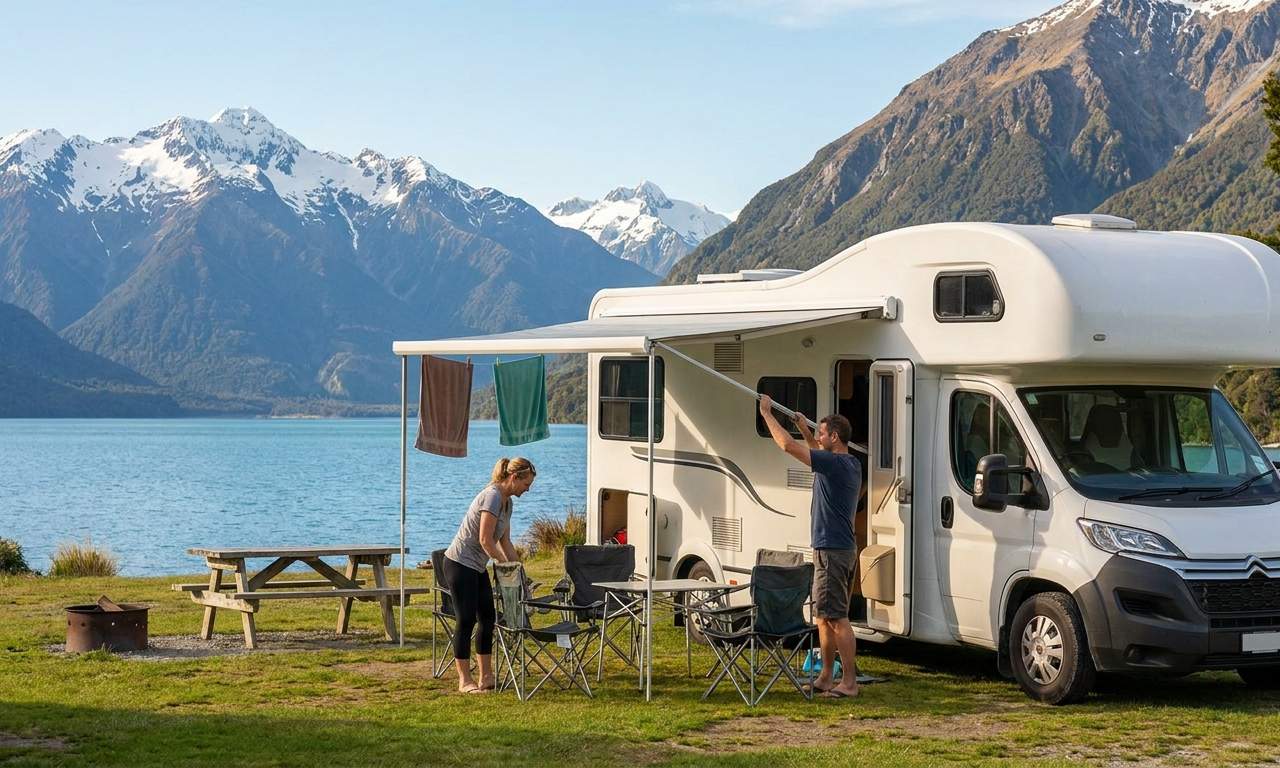
Many local councils throughout New Zealand have specific bylaws regarding freedom camping, and these regulations can vary significantly by region. Always check local regulations, easily found on council websites or via tourist information centers, and adhere to local law before parking overnight. Reputable rental suppliers, true RV specialists like those partnered with Bandana, ensure their self-contained vehicles meet these standards. While the unofficial '333 rule for campervans' (stay 3 nights in one spot, within 3 meters of a designated spot, and a 3 cubic meter wastewater tank) is a popular guideline for responsible camping, always prioritize official rules and signage. For finding campsites and campgrounds during your trip, we recommend using RV PLANET (rvplan.net) - a great resource for locating available spots along your route.
Can I Drive an RV Into the City Center? Heights, Tunnels & Local Signage
Yes, you can almost always drive an RV into New Zealand city centers, though careful planning of your route and keen awareness of local restrictions are essential for a stress-free experience. The most important consideration is to pay close attention to local signage, particularly for height limits in multi-story car parks, underpasses, or structures. For example, while the famous Homer Tunnel (outside city centers) has specific height constraints, within cities, it's more about infrastructure like parking garages. While Bandana RV does not promise to help find parking solutions, many larger cities like Auckland, Wellington, and Christchurch offer ample street parking or designated RV parking areas, though these may be slightly further from the very central business districts.
When navigating city streets, be aware of one-way streets, pedestrian zones, and areas with restricted access for larger vehicles, which are always indicated by clear signage. For instance, in cities you can often find dedicated parking for larger vehicles near main attractions or on the outskirts with easy public transport connections into the core. Remember our advice: Drive slowly and carefully, and you can drive almost anywhere without issues. No need to stress - just use common sense and pay attention. Planning your city stops in advance using resources like RV PLANET (rvplan.net) can help identify suitable parking and ensure a smooth visit, whether you're exploring the historic architecture or finding a traditional restaurant / fine dining experience.
What You Shouldn't Miss
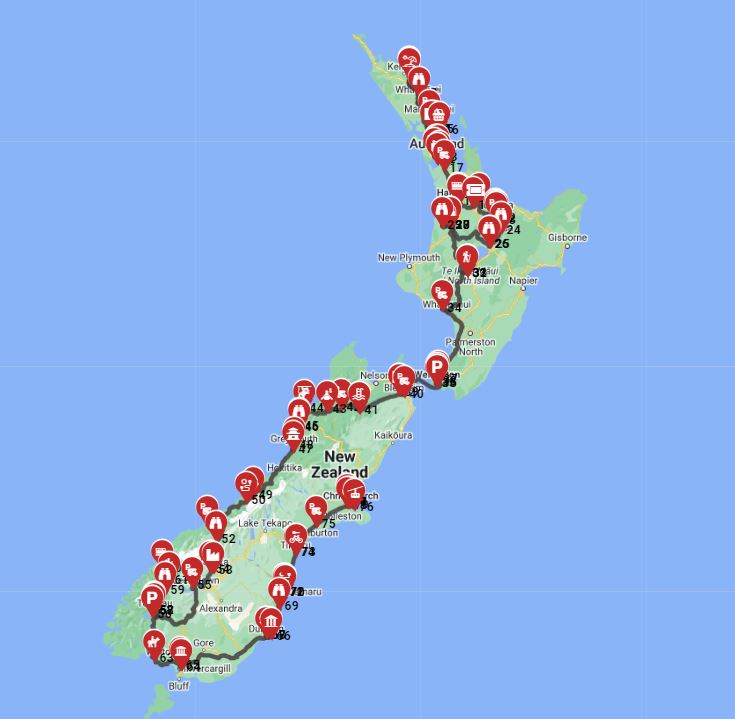
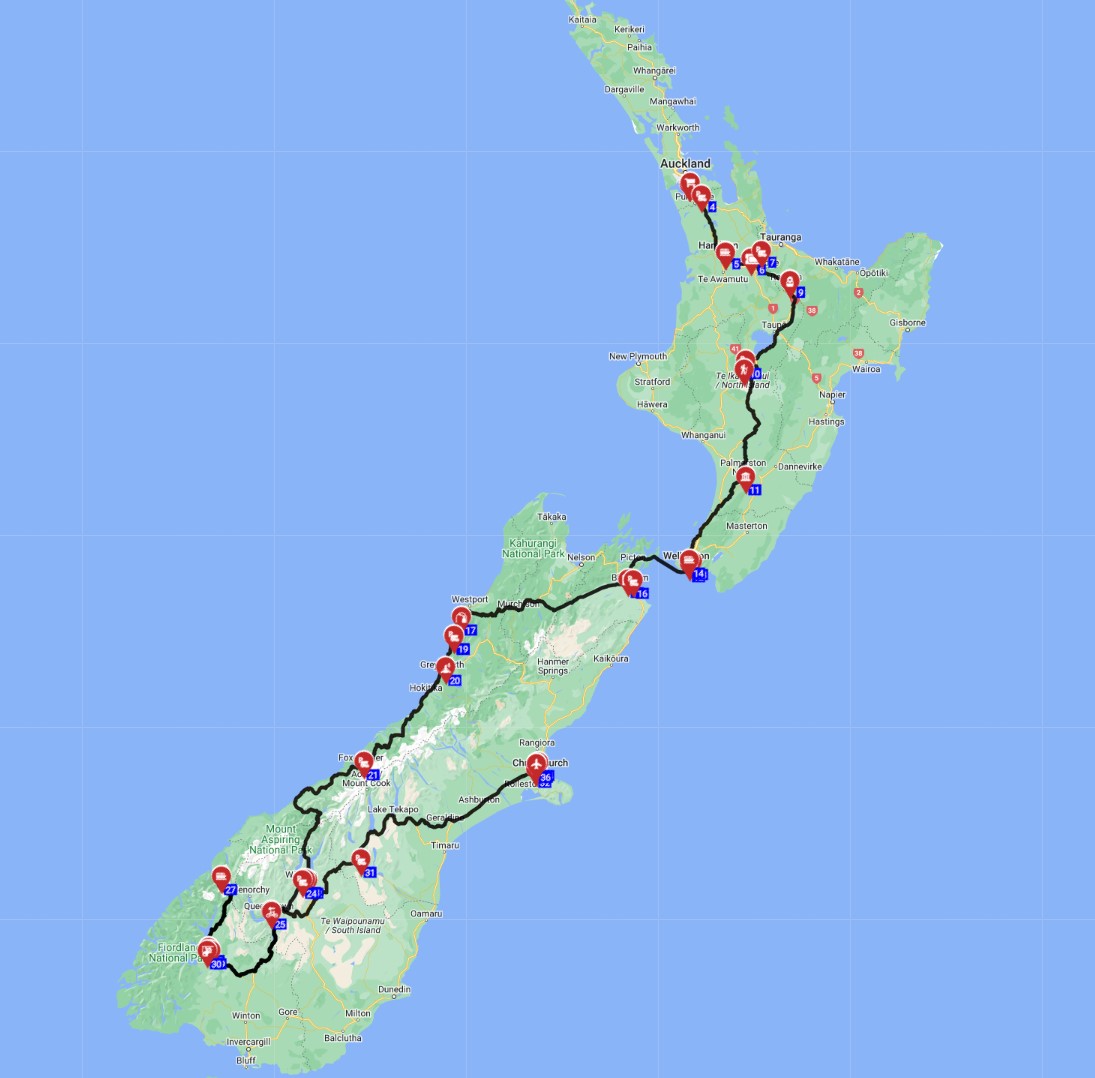
- **Explore Fiordland National Park**: Drive the scenic route to Milford Sound (mind the Homer Tunnel!), a majestic fiord with towering cliffs and waterfalls, often included in itineraries like the 18-day Explore the Christchurch Roundtrip - Around the South Island Route.
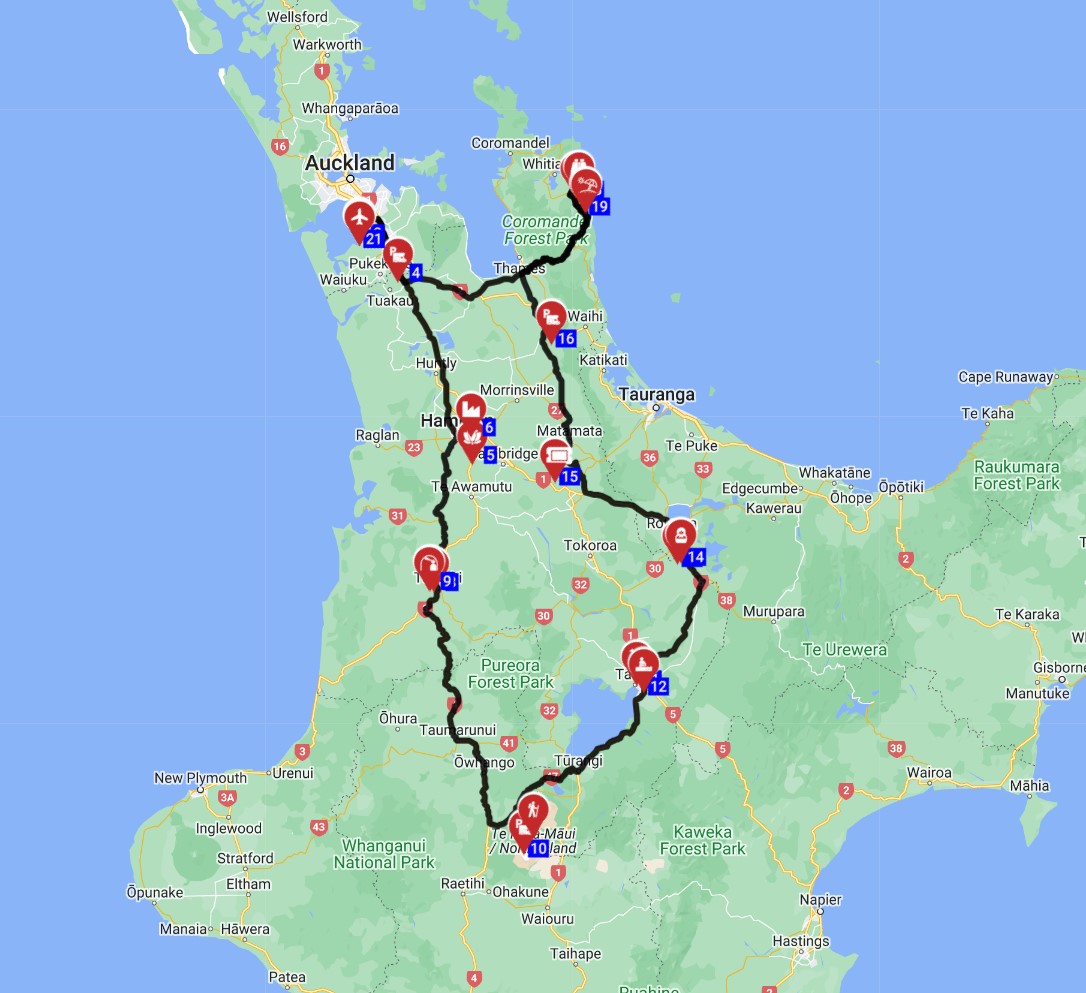
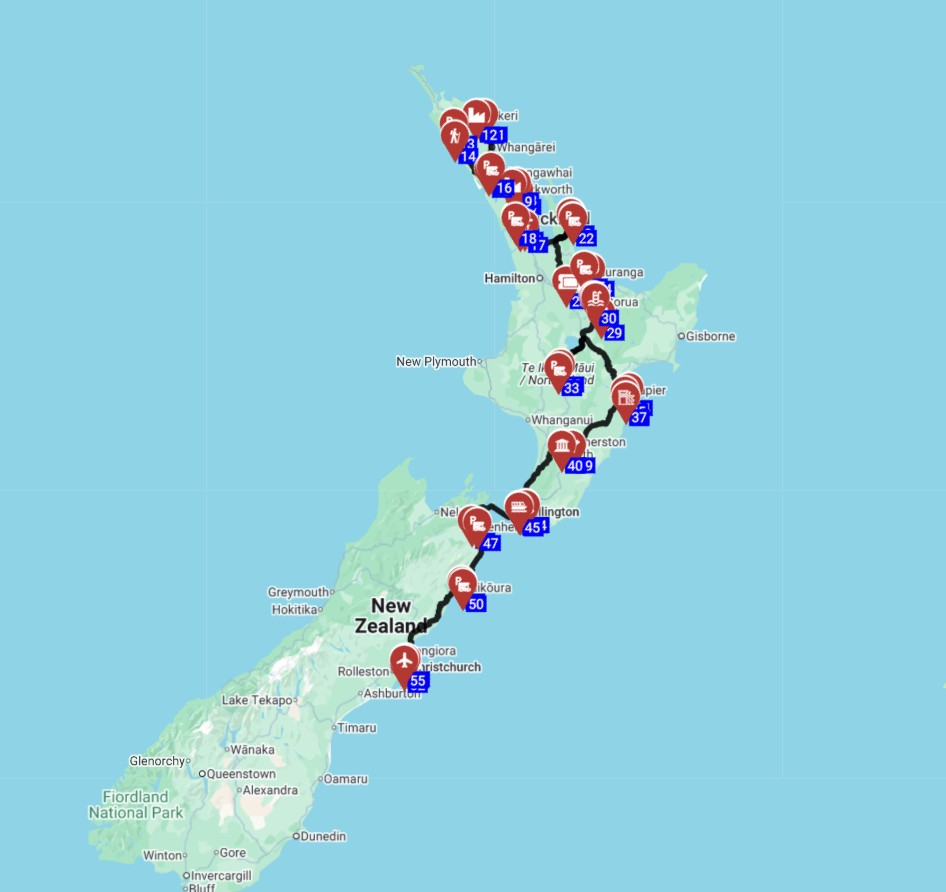
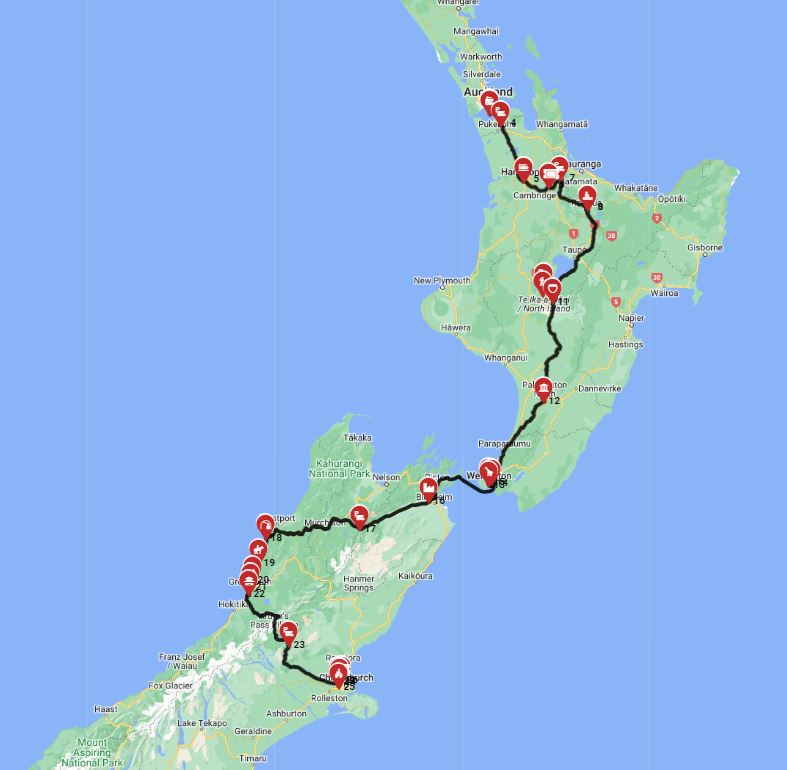
- **Discover Rotorua's Geothermal Wonders**: Immerse yourself in Māori culture and witness bubbling mud pools and geysers in this unique North Island destination, a highlight on the 25-day Explore the Auckland to Christchurch - Comprehensive New Zealand Route.
- **Cruise Through Marlborough Sounds**: Enjoy the serene beauty of the sounds with a ferry crossing or boat tour, a stunning natural feature often part of routes combining both islands.
- **Hike in Tongariro National Park**: Traverse diverse volcanic landscapes, offering incredible hiking opportunities, and a major natural feature on our Explore the Auckland to Queenstown - The Great Kiwi Road Trip Route.
- **Experience Queenstown, the Adventure Capital**: From scenic gondola rides to leisurely lakeside strolls or thrilling extreme activities, Queenstown offers something for every pace.
Looking for expert insights from Avi Bandana? Top 5 Adventures - recommendations from Avi Bandana
Avi Bandana's personal experiences, spanning 23 years of RV travel across five continents, offer unique perspectives on hidden gems and comfortable routes in New Zealand. Imagine waking up to the tranquil sounds of Lake Taupo or enjoying a freshly cooked meal from your RV's kitchen with a view of the Southern Alps. These are the moments Avi lives for and helps you discover. His top adventures often highlight regions that combine breathtaking natural beauty with accessible amenities and gentle roads, perfect for a relaxed pace. He advocates for experiences that truly connect you to the local culture, whether it's sampling fresh seafood on the coast or visiting a local winery.
He frequently points to the less-traveled routes that offer unexpected delights, such as the quiet beaches of the Coromandel Peninsula or the charming small towns of Central Otago. His recommendations are always grounded in practical advice, ensuring comfort and ease for all travelers. Avi emphasizes that the joy of RV travel lies not just in the destinations, but in the freedom of the journey itself, encouraging travelers to slow down and truly savor every moment New Zealand offers. Discover top destinations, planning tips, all in one place!
🎬 Video coming soon
Final Thoughts
Embarking on an RV adventure in New Zealand offers a unique blend of freedom, comfort, and breathtaking scenery, making it an ideal way to explore this incredible country, especially for those seeking a relaxed pace. With proper planning and an understanding of local driving customs and regulations, your trip in a rented motorhome will be filled with unforgettable moments. From navigating picturesque roads to discovering hidden gems, the journey itself becomes as enriching as the destinations you visit.
At Bandana RV, we're dedicated to supporting you every step of the way, from comparing final prices across a wide range of vehicles to ensuring you have transparent information and peace of mind. Our expertise, cultivated over more than two decades, ensures you receive personal service from day one until your booking is confirmed. So, imagine yourself on the open road, the stunning landscapes of New Zealand unfolding before you. It's time to make that dream a reality.
Plan a trip itinerary in advance with minimal effort and maximum enjoyment. Compare Motorhome Prices for New Zealand now and start your journey with confidence.