In This Guide
- What is the best Norway RV itinerary for couples?
- What is a 7-day classic route for couples in Norway?
- What is a 14-day extended RV journey for couples in Norway?
- Are there recommended RVPlan trips for Norway for couples?
- What must-see stops should couples include in their Norway RV trip?
- What are typical daily driving distances and drive times in Norway?
- What is the best RV class for a couple's itinerary in Norway?
- When is the best time of year for couples to RV in Norway?
- What RV type is best for navigating Norway's narrow roads and ferries?
- How much does an RV rental for couples in Norway cost, including hidden fees and tolls?
- How can couples experience local culture and food during an RV trip in Norway?
- What apps and tech are essential for RVing in Norway?
- What specific gear is recommended for RV travel in Norway?
- How can couples combine adventure activities with RV camping in Norway?
- What are sustainable RVing practices for couples in Norway?
What is the best Norway RV itinerary for couples?
A couples RV trip in Norway offers unparalleled freedom to explore stunning fjords, dramatic coastlines, and charming villages at your own pace. A typical RV route covering approximately 1000-1500 km (600-900 miles) over 7-14 days provides a balanced experience of driving and exploration, making it an unforgettable adventure for two. The recommended minimum duration for a satisfying Norwegian RV adventure is 7 days, ideally stretching to 14 days for a more comprehensive experience that allows for slow travel, averaging max 100-150 km per day. The best season for an RV trip is late spring to early autumn (May to September) for optimal weather and accessibility, with summer (June-August) offering the longest daylight hours for extended sightseeing. For more detailed insights, you can always refer to our RV Rental Norway - Complete Guide 2026.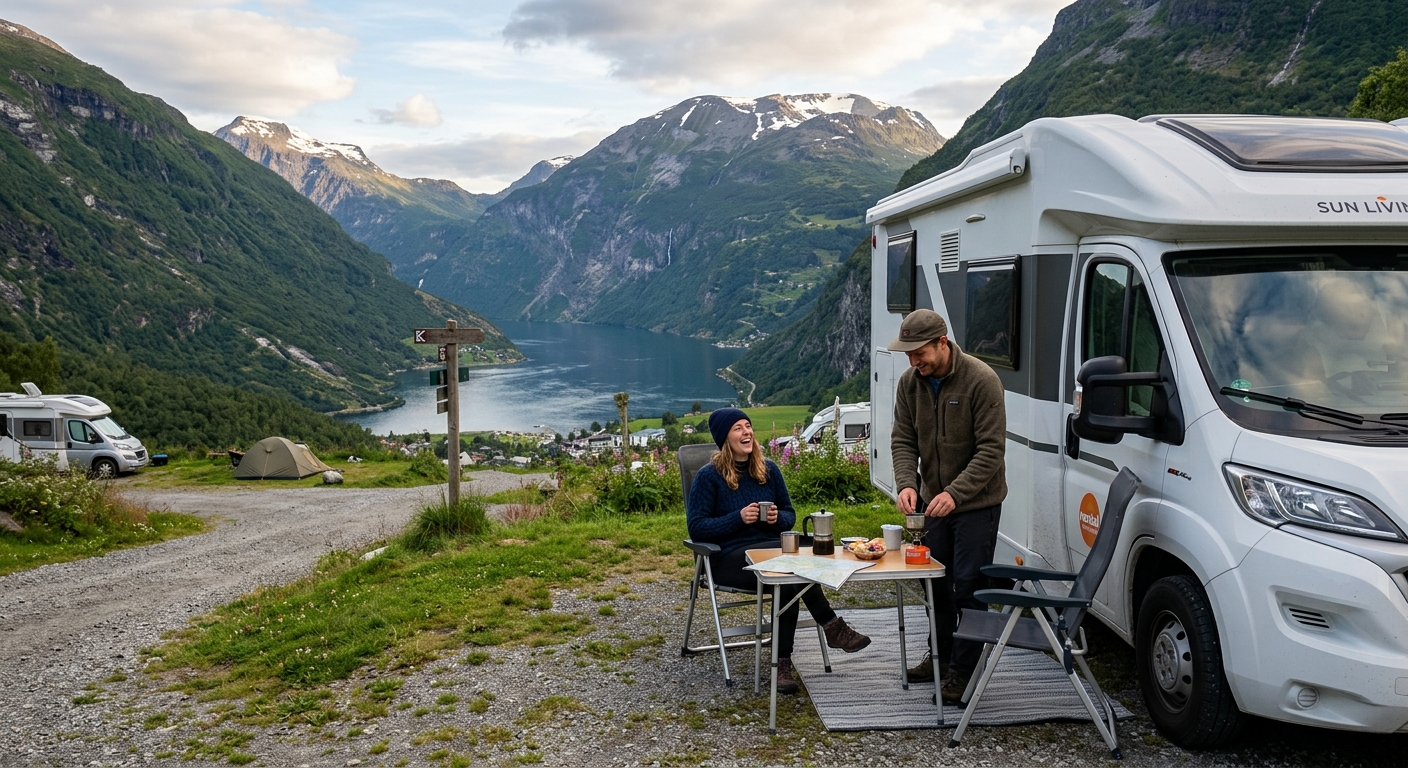
What is a 7-day classic route for couples in Norway?
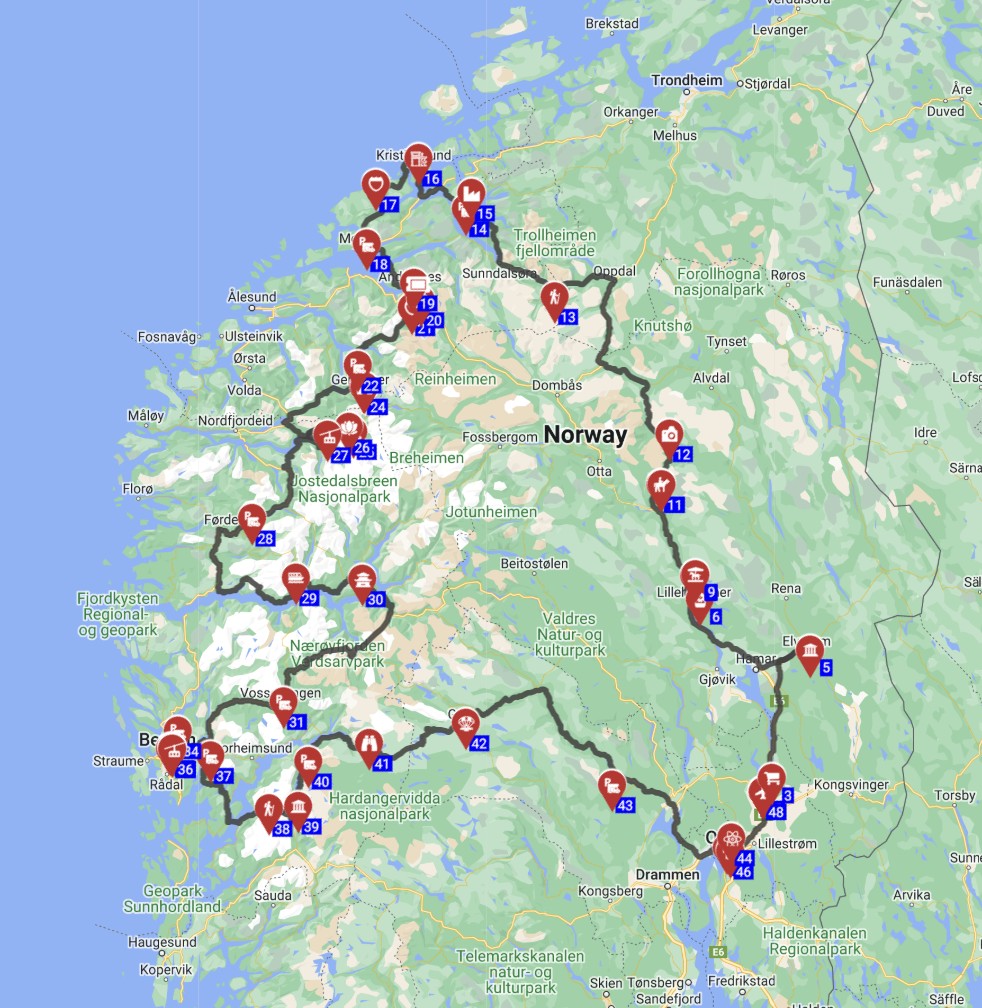
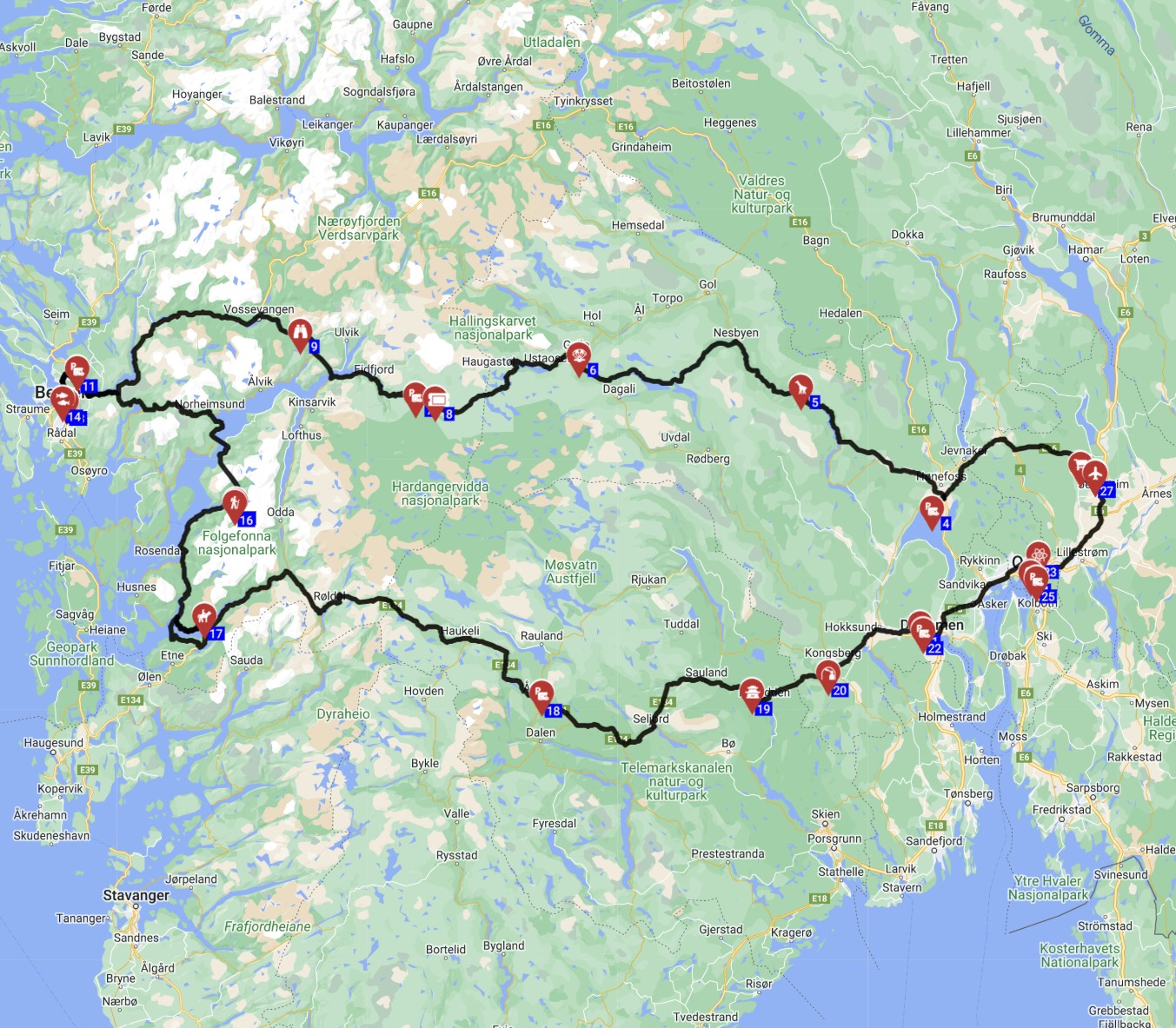
This 7-day itinerary focuses on Norway's iconic Western Fjords, perfect for couples seeking breathtaking scenery and manageable daily drives without feeling rushed. Day 1 begins in Bergen, where you pick up your rented RV, explore the historic Bryggen wharf, then drive approximately 100 km (62 miles) to Voss for outdoor activities, settling in at Voss Camping. On Day 2, travel approximately 70 km (43 miles) to Flåm, enjoy the scenic Flåm Railway, and explore the majestic Aurlandsfjord, spending the night at Flåm Camping & Youth Hostel. Day 3 involves a picturesque ferry across Sognefjord to Balestrand (about 70 km), where you can visit St. Olaf's Church before staying at Balestrand Camping. Day 4 takes you approximately 150 km (93 miles) through stunning landscapes, perhaps via the Gaularfjellet National Tourist Route, to Loen and Loen Camping. Day 5 is dedicated to the Geirangerfjord (about 70 km), with iconic viewpoints accessible via the Eagle Road, with an overnight stay at Geirangerfjorden Feriesenter. On Day 6, drive approximately 100 km (62 miles) along the famous Trollstigen road (seasonal access) to the Art Nouveau town of Ålesund, camping at Ålesund Camping. Day 7 involves a longer return drive of approximately 370 km (230 miles) to Bergen for drop-off, or consider a domestic flight or ferry for a shorter journey, depending on your rental arrangements. This route provides an excellent balance of driving and exploration, ideal for a memorable week-long trip for couples.What is a 14-day extended RV journey for couples in Norway?
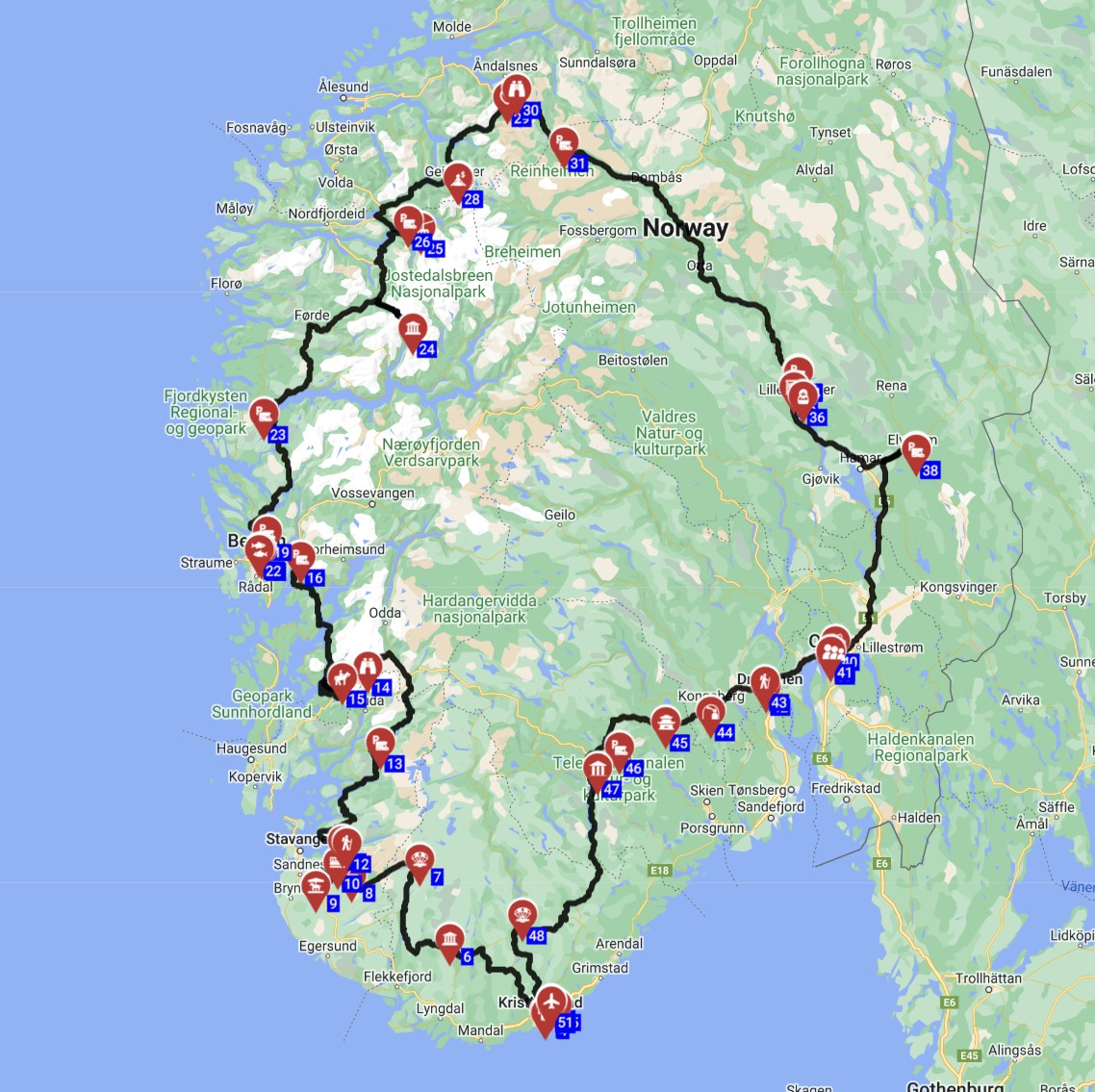
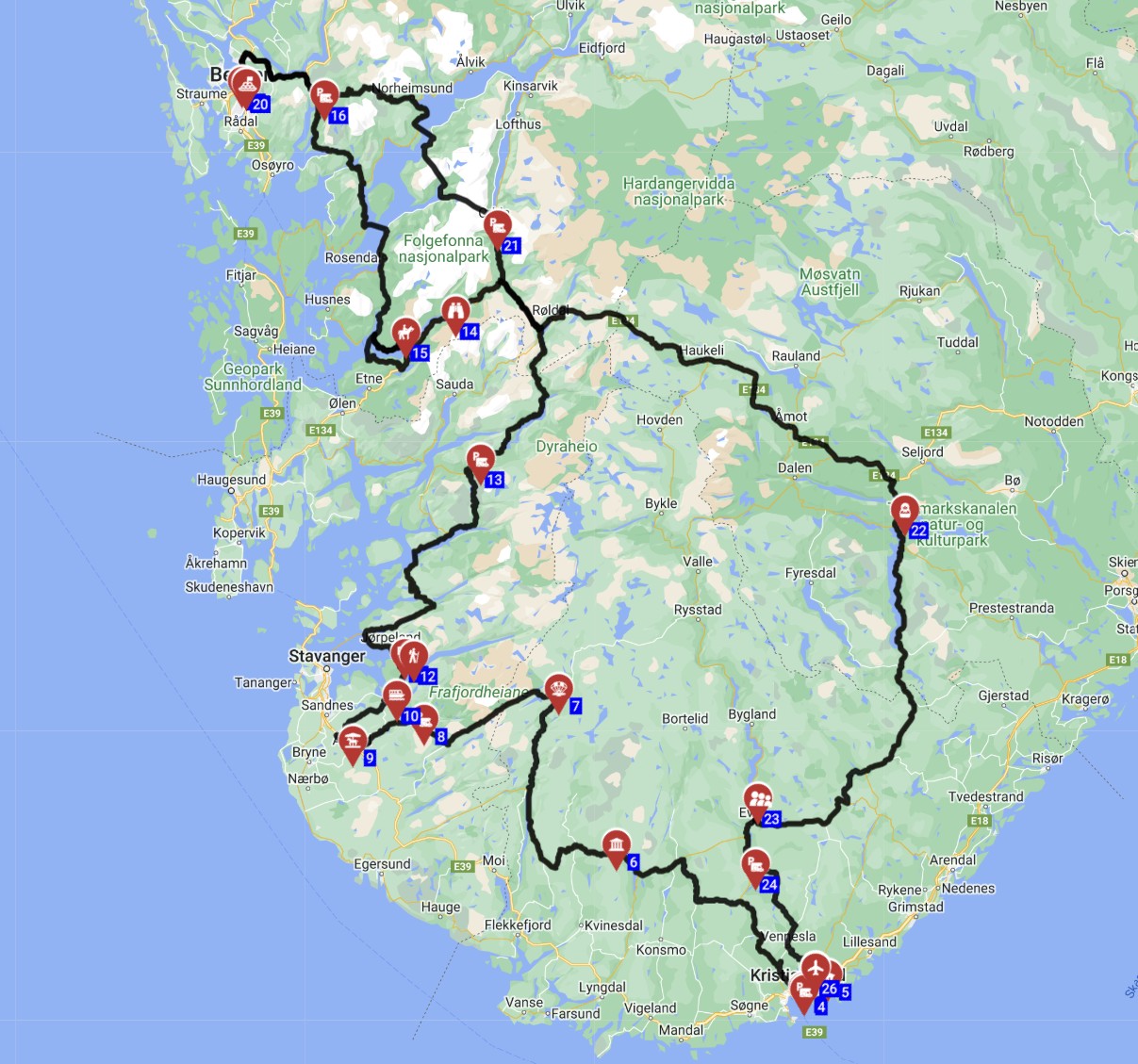
This 14-day RV route allows couples to delve deeper into Norway's diverse regions, offering a blend of fjords, cities, and coastal drives while respecting daily driving limits. Days 1-3 focus on Southern Norway, starting with arrival in Oslo to explore the city, followed by a drive south towards Kristiansand to enjoy coastal towns and initial fjords. Days 4-6 involve heading west to the Fjordland, specifically Stavanger, for a hike up Pulpit Rock and a scenic fjord cruise. Days 7-9 immerse you in the Heart of the Fjords, experiencing Bergen's charm, taking the Flåm Railway, and exploring the majestic Sognefjord region. Days 10-12 continue to Iconic Landscapes, driving to the world-heritage Geirangerfjord, navigating the famous Trollstigen road, and visiting the Art Nouveau town of Ålesund. Days 13-14 encompass Central Norway and your return, with a drive along the Atlantic Road, a visit to Trondheim, and then either flying out from there or beginning your journey back south. Remember, slow travel, averaging a maximum of 100-150 km per day, enhances the experience, allowing you to truly connect with Norway's culture, food, and scenery. Planning is key for an extended road trip of this nature, and resources like RV PLANET are invaluable.Are there recommended RVPlan trips for Norway for couples?
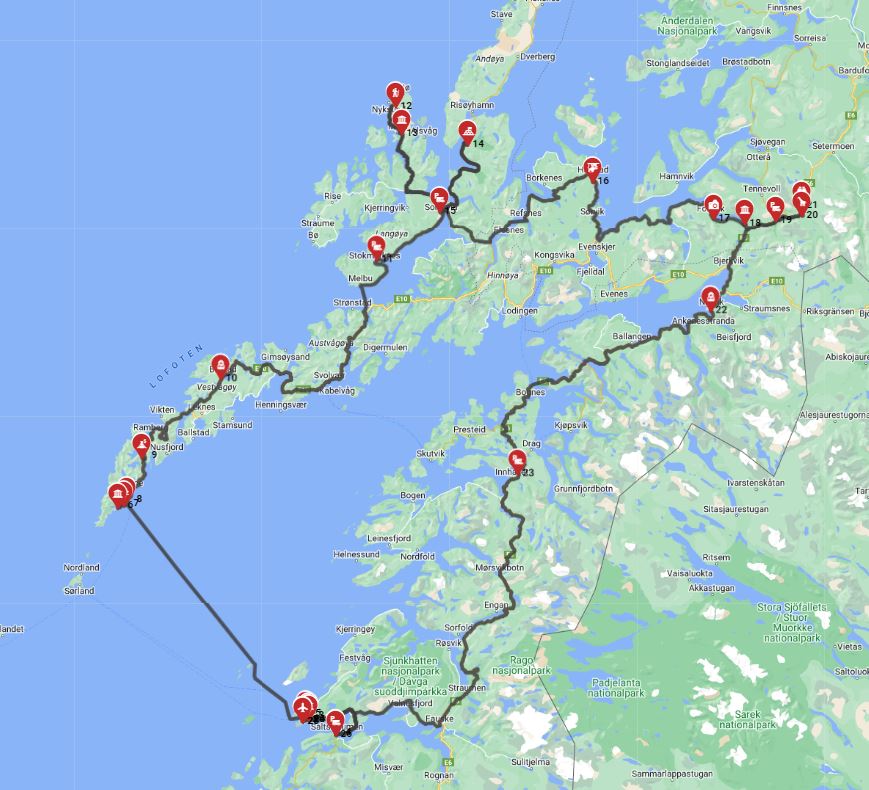
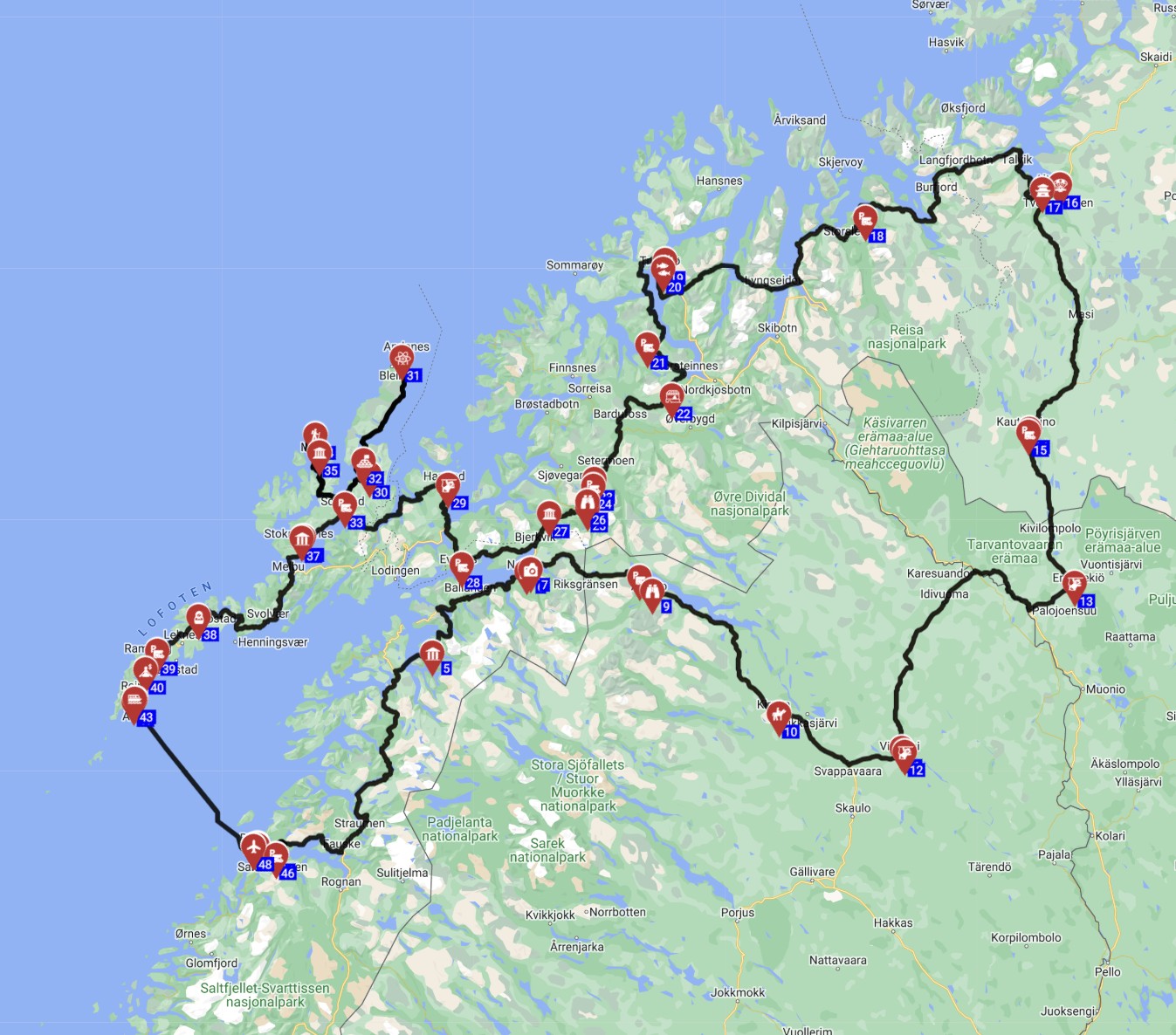
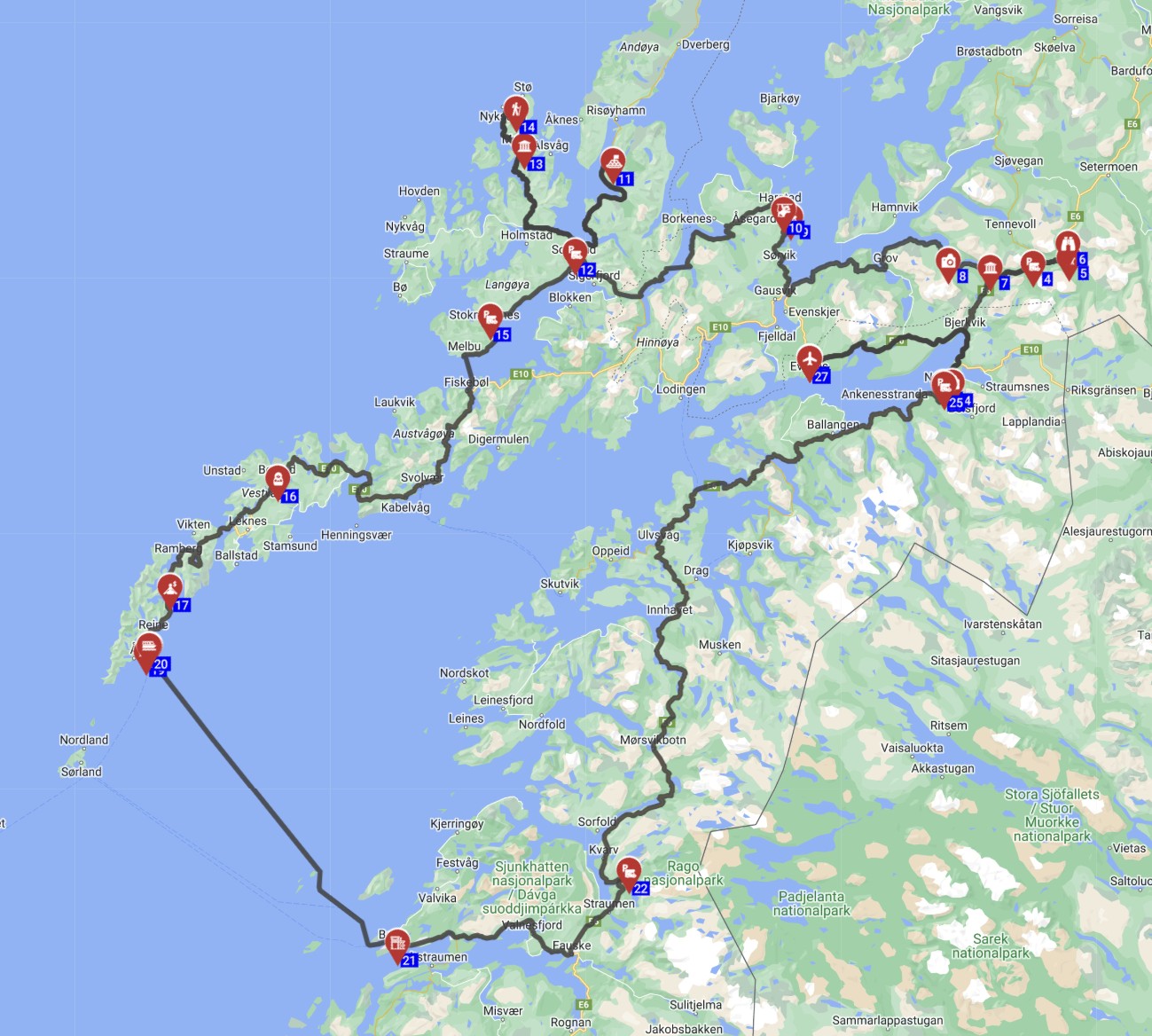
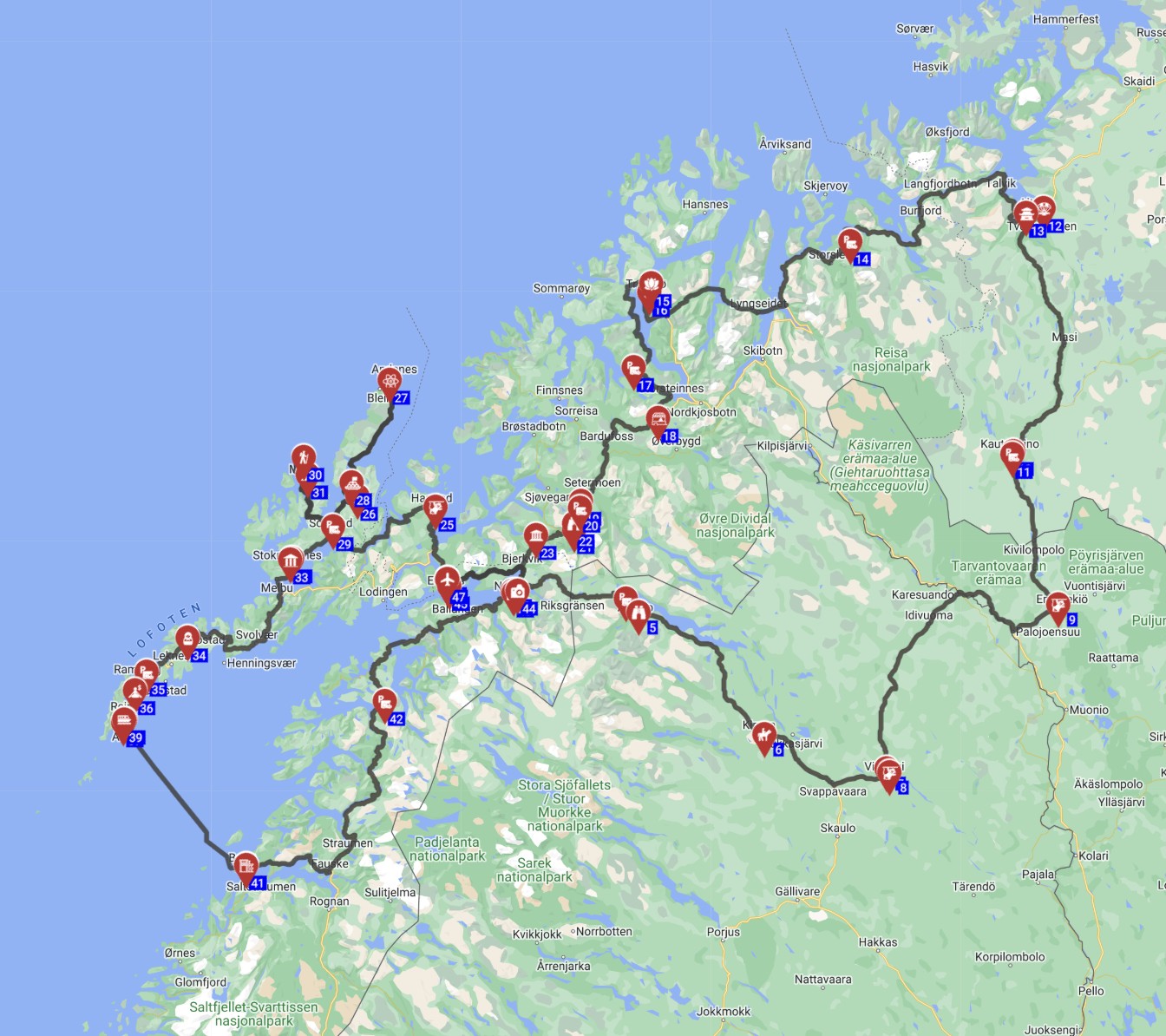
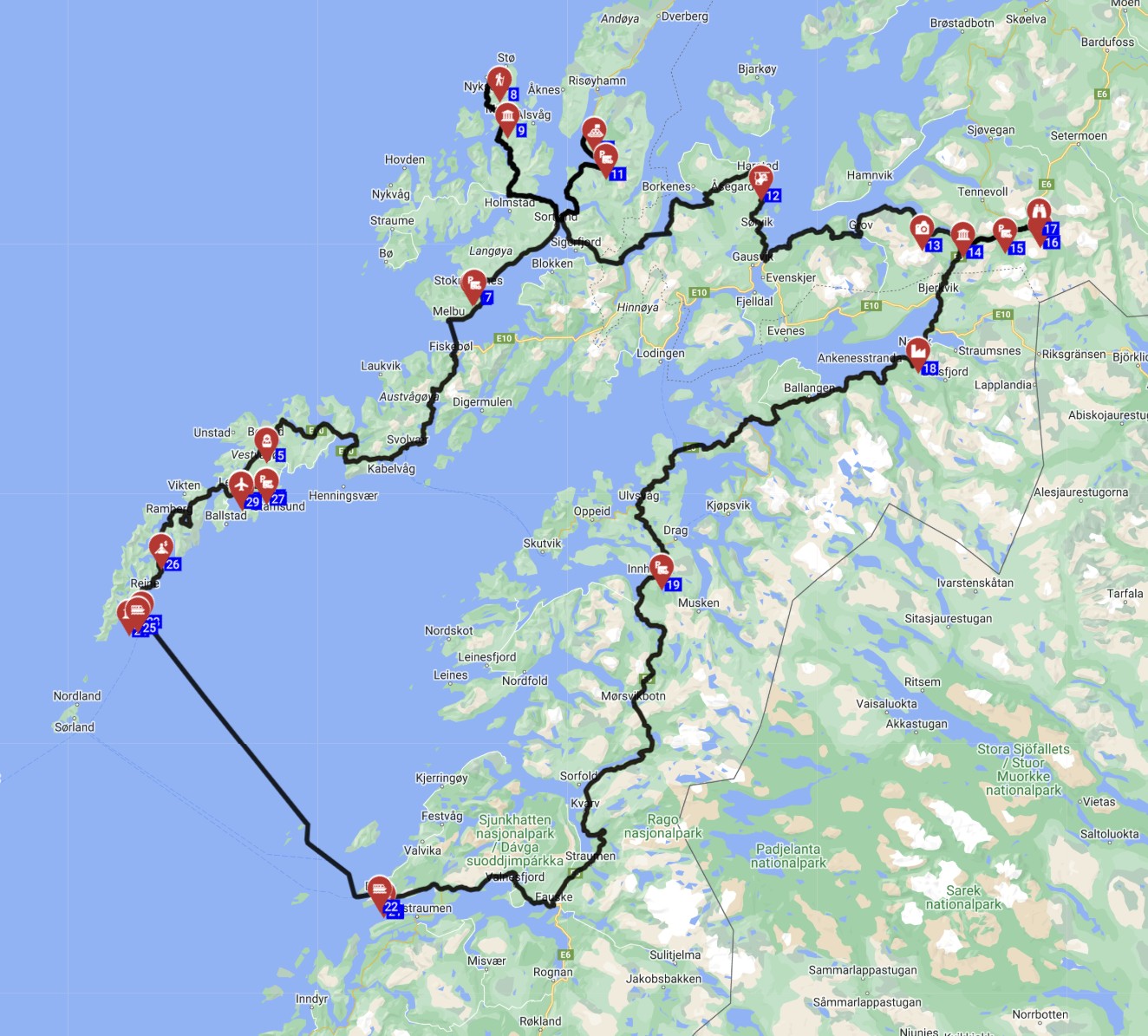
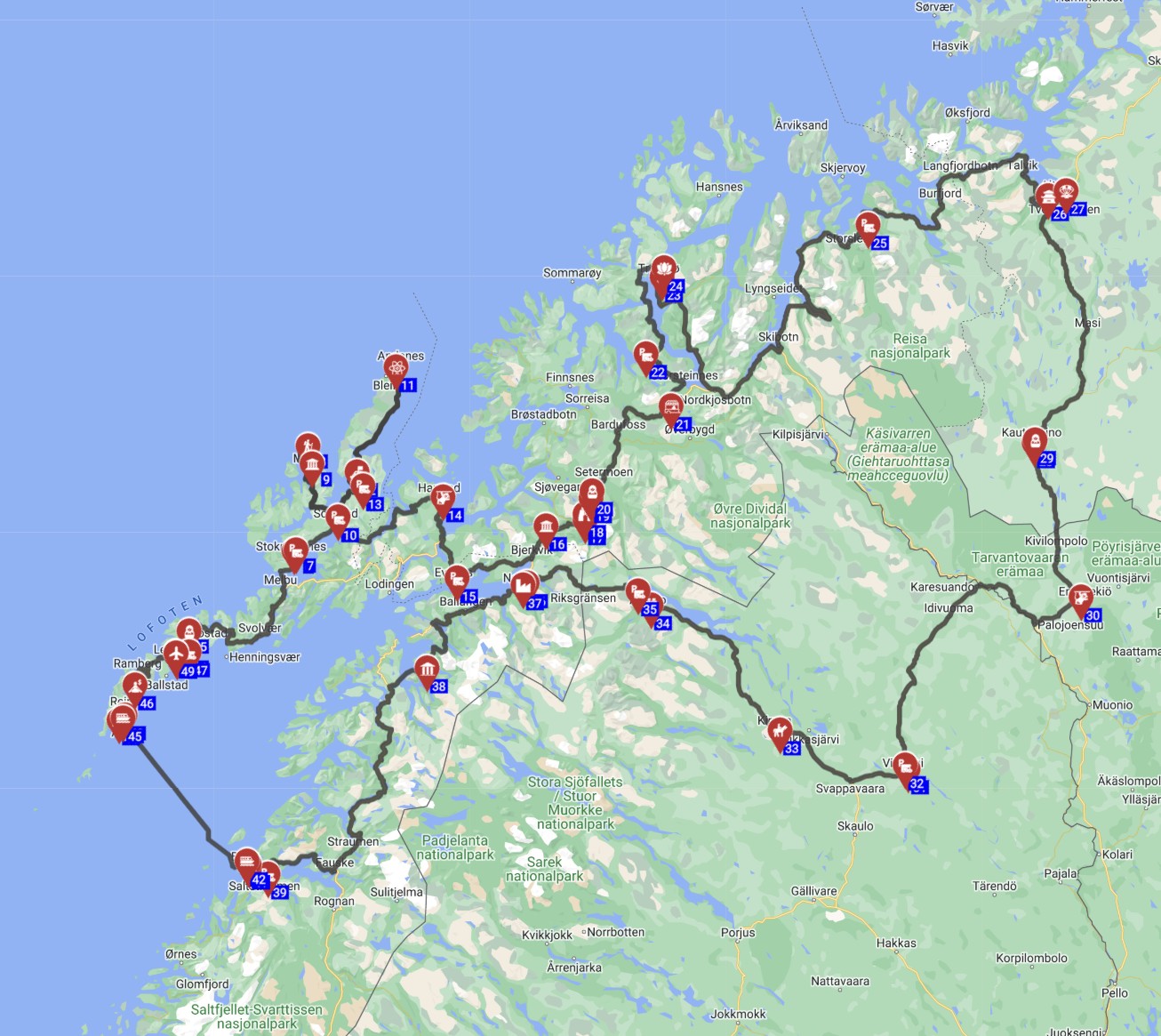
While a dedicated 'Norway for Couples' RVPlan trip is not specifically curated, Bandana's sister company, RV PLANET (rvplan.net), offers professionally designed itineraries that couples can easily adapt. For example, the "Bergen Round trip - Norway’s Coastal Wonders" is an 8-day, 782.9 km itinerary perfect for couples, including 2 scenic fjord cruises, 2 hiking areas, and 1 traditional market for local exploration. This provides a detailed, day-by-day route plan with points of interest and logistics handled. For couples desiring a grander European adventure that includes Norway, the "Hamburg Roundtrip - To Denmark & Norway" RVPlan offers an extensive 25-day, 3426.9 km itinerary. This comprehensive trip provides a structured guide for navigating through Germany, Denmark, and a significant portion of Norway, offering logistics for ferries and parking, ideal for extended road trips. Additionally, if you're looking for an Arctic experience, the "Tromsø Round Trip - Arctic Wonders: Northern Norway Family Road Trip" offers a 15-day, 2402.5 km journey focused on Northern Norway's unique beauty, including 3 wildlife watch opportunities and 4 museums. Couples can use this as a base, adapting the Norway-specific segments for a shorter, more focused trip or extending their travels to neighboring countries. For finding campsites and campgrounds during your trip, we recommend using rvplan.net - a great resource for locating available spots along your route and itemizing every expense along the way for easy budgeting through RV PLANET routes. For those interested in optimizing costs, consider reviewing our "RV Rental Deals in Norway - Latest Offers 2026" to potentially find excellent value on various itineraries.What You Shouldn't Miss
- **Fjord Cruises:** A fjord cruise on the UNESCO-listed Nærøyfjord or Geirangerfjord is an essential experience, offering unparalleled views of waterfalls and sheer cliffs from the water. Many departure points are accessible by a rented RV, providing breathtaking photo opportunities.
- **Stave Churches:** Visit iconic stave churches like Urnes Stave Church (a UNESCO World Heritage site) or Borgund Stave Church for a glimpse into Norway's ancient architectural heritage. These unique wooden churches are often nestled in picturesque landscapes, perfect for couples exploring historical sites.
- **Local Food Markets:** Seek out 'Bondens Marked' (Farmers' Market) in larger towns like Bergen or Oslo, or smaller fish markets in coastal villages. This allows couples to purchase fresh local produce, traditional crafts, and unique food experiences to enjoy cooking in their RV kitchen. If you're looking for inspiration, check out our RV-friendly recipes playlist.
- **Panoramic Scenic Routes:** Drive some of Norway's 18 National Tourist Routes, such as the Trollstigen, Gamle Strynefjellsvegen, or Atlantic Road. These routes are designed to offer stunning views and unique architectural elements, providing endless romantic stops for couples.
- **Bergen's Bryggen Wharf:** Explore the colorful, historic wooden buildings of Bryggen in Bergen, a UNESCO site. Wander through narrow alleyways, visit artisan shops, and soak in the charming atmosphere of this historic Hanseatic wharf.
- **Hiking in National Parks:** Norway offers countless hiking opportunities for all skill levels. From a gentle stroll to a challenging ascent, national parks like Jotunheimen or Hardangervidda provide breathtaking natural beauty for active couples.
Looking for expert insights from Avi Bandana? Top 5 Adventures - recommendations from Avi Bandana
Avi Bandana's personal picks for couples exploring Norway by RV emphasize cultural immersion and unique local experiences, going beyond typical tourist spots. He recommends:- **Local Industry Visit:** Look for local fishing villages or small-scale artisanal producers to witness traditional Norwegian livelihoods firsthand. Imagine sampling freshly made cheese or watching a craftsman at work.
- **Traditional Markets:** Seek out 'Bondens Marked' (Farmers' Market) in larger towns like Bergen or Oslo for fresh local produce, traditional crafts, and unique food experiences. These markets are perfect for gathering ingredients for a romantic RV dinner.
- **Traditional Visits:** Don't miss stave churches like Urnes Stave Church (a UNESCO site) or Borgund Stave Church for a glimpse into Norway's ancient architectural heritage. Their intricate details and serene surroundings are truly inspiring.
- **Cruise Terminal / Sailing:** A fjord cruise on Nærøyfjord or Geirangerfjord is an essential experience, offering unparalleled views of waterfalls and sheer cliffs from the water. It's a magical way to see the fjords.
- **Secluded Wild Camping Spots:** Utilize Norway's 'Allemannsretten' (right to roam) to find a peaceful, secluded spot for a night under the stars, away from crowded campgrounds. Just remember the 150-meter rule from inhabited buildings.
What are typical daily driving distances and drive times in Norway?
Avi Bandana recommends a maximum of 100 miles or 150 km per day on average when RVing in Norway to ensure ample time for sightseeing, hiking, and cultural stops. Norway's roads, particularly in fjord regions, are often winding, narrow, and include numerous ferries and tunnels, making average speeds lower than expected. For instance, driving between Bergen and Flåm, roughly 170 km, can take approximately 2.5-3 hours of pure driving time, not including ferry waits or scenic stops. A journey from Ålesund to Geiranger, about 100 km, could easily take 2-3 hours due to mountain passes like Trollstigen (seasonal) and the necessity of taking a ferry. Drive slowly and carefully, and you can drive almost anywhere without issues. No need to stress - just use common sense and pay attention.What is the best RV class for a couple's itinerary in Norway?
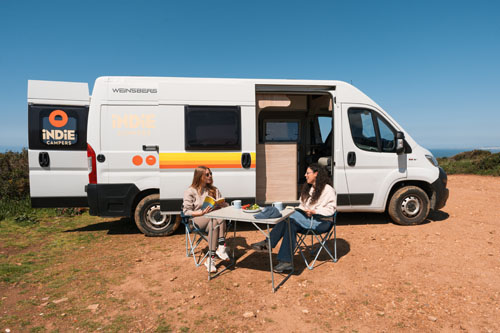
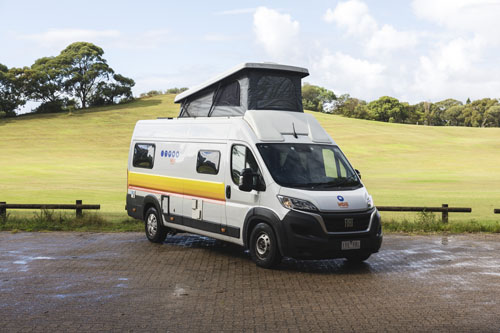
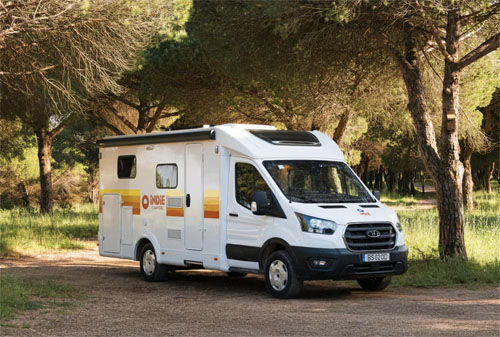
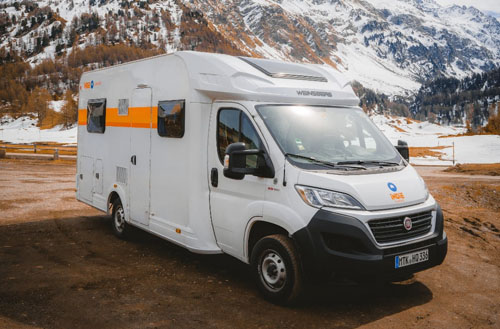
For couples exploring Norway, the Class B - Camper Van is an ideal choice, offering agility on narrow fjord roads and easier parking in charming villages. Bandana's fleet typically features Class B Camper Vans with an average length of 5.8 meters and sleeping capacity for around 3.2 people, with space for 2.7 adults, making them perfectly suited for two. These compact vans boast excellent fuel efficiency, commonly achieving 8-10 Liters/100 km, which is beneficial given Norwegian fuel costs. For a small family or couples desiring more space and amenities, the Class SI - Semi-integrated motorhome offers a comfortable upgrade. Bandana's Class SI units average 6.9 meters in length, providing more living and storage space, typically sleeping 3.8 people with room for 3.4 adults. With a common fuel consumption of 10-11 Liters/100 km, they balance comfort with reasonable operational costs for longer trips. Rent-motorhome offers a 'Rent&Plan' service, allowing you to rent your preferred RV class and receive a ready-made itinerary by travel experts, complete with access to trip-planning software, streamlining your Norwegian adventure. A model such as the "rv rental denver example Category Van" or "rent rv example A1" are designed to be ideal for a couple, offering essential amenities like a shower and toilet while maintaining a smaller footprint. Our true RV specialists can help you compare motorhome prices for Norway and select the perfect vehicle for your romantic adventure.When is the best time of year for couples to RV in Norway?
The best time for couples to RV in Norway is generally from May to September, with the shoulder seasons (May-June, September) offering fewer crowds and unique experiences compared to peak summer. During these shoulder seasons, weather can be variable but often pleasant, with May bringing blooming landscapes and September showcasing vibrant autumn colors, which can make for stunning romantic backdrops. Off-season travel (October-April) can provide opportunities to witness the Northern Lights and engage in winter sports, but requires specialized gear, preparation for snow and ice, and awareness of road closures on higher mountain passes. Be prepared for rapidly changing weather in any season, especially in the fjords, and always check local forecasts and road conditions before driving your rented RV. Our "Winter RV Rental in Norway - Pricing Guide 2026" offers more details for colder months.What RV type is best for navigating Norway's narrow roads and ferries?
For couples, a Class B Camper Van or a smaller Class SI Semi-integrated Motorhome is generally best for navigating Norway's challenging roads and numerous ferries, prioritizing maneuverability and ease of access. Smaller RVs, like Class B Camper Vans (averaging 5.8m in length in Bandana's fleet, such as the "2 Berth Hi Top" or "Active Classic"), offer distinct advantages on narrow, winding fjord roads and can fit into smaller parking spots in towns. These smaller campervans are also typically less expensive on ferries, as pricing is often based on vehicle length, providing significant savings on multi-ferry routes. Larger motorhomes, such as Class C Alcove or Class A Integrated units (averaging 7.5m in Bandana's fleet), offer more comfort and space but can be more challenging to maneuver and more costly on ferries, making them less ideal for couples focused on agile exploration.How much does an RV rental for couples in Norway cost, including hidden fees and tolls?
An RV rental for couples in Norway typically costs between €100-€250 per day, but budgeting must account for significant ancillary costs like tolls, varied ferry pricing, and fuel. Norway uses an automated toll system (AutoPASS), which can accrue substantial costs on popular routes; ensure your rental RV has a transponder or understand how to register your license plate for payment. Ferry prices vary greatly by route, length of vehicle, and number of passengers, and these can add up quickly when traversing fjords; factor in €30-€100+ per ferry crossing. Fuel costs in Norway are among the highest in Europe, so budget accordingly (e.g., Bandana's Class B Camper Vans typically consume 8-10 Liters/100 km, while Class SI are 10-11 Liters/100 km). Strategies for significant savings include pre-booking RVs for better rates, choosing smaller vehicles for lower ferry costs, cooking most meals in your RV, and opting for fewer paid campsites by utilizing 'allemannsretten' (right to roam) for responsible wild camping where permitted. Remember that prices are dynamic and change daily based on availability, seasonality, and supplier marketing decisions. The final price is set at actual booking time. For managing these costs, remember that RV PLANET routes allow travelers to itemize and track every expense. Check our "Cheap RV Rental in Norway - Budget Guide 2026" for more tips.How can couples experience local culture and food during an RV trip in Norway?
Couples can immerse themselves in Norwegian culture and food by actively seeking out local experiences beyond mainstream attractions, often facilitated by the flexibility of a rented RV. Visit local 'Bondens Marked' (Farmers' Markets) or fish markets in coastal towns to purchase fresh, regional ingredients for cooking in your RV, supporting local producers. Imagine preparing a fresh seafood dinner right outside your campervan with a stunning fjord view! Participate in local traditions by attending small-town festivals (check local tourism calendars), visiting historical stave churches, or exploring open-air museums like Maihaugen in Lillehammer. Engage with locals at smaller, family-run campsites or by frequenting local 'kaféer' (cafes) and 'bakerier' (bakeries) for traditional pastries and coffee. Look for opportunities to try traditional Norwegian dishes such as 'fårikål' (lamb and cabbage stew), 'raspeballer' (potato dumplings), or freshly caught seafood from local eateries off the main tourist routes. This direct engagement provides a deeper, more authentic experience than just passing through. Our "RV Driving Deals in Norway - Routes and Savings 2026" also highlight opportunities for cultural stops.What apps and tech are essential for RVing in Norway?
Essential apps and technology for RVing in Norway include tools for navigation, toll payments, ferry schedules, weather updates, and strategies for reliable internet access in remote areas. Navigation Apps like Google Maps or Sygic RV Navigation (for RV-specific routes) are crucial, alongside physical maps for areas with no signal; always download offline maps for remote regions. Familiarize yourself with the AutoPASS system for tolls, as many rental RVs come with transponders, and use apps like 'Ferryhopper' or local ferry operator apps (e.g., Color Line, Fjord Line) for schedules and bookings. 'Yr.no' (from the Norwegian Meteorological Institute) is a highly accurate weather app, essential for planning outdoor activities and anticipating road conditions. Campsite finder apps such as 'Campercontact' or 'Park4night' help locate both official campsites and legal wild camping spots. For internet access, while Wi-Fi is available at most campsites, consider purchasing a local Norwegian SIM card with a data plan for reliable connectivity in more remote areas, or use a portable Wi-Fi hotspot.What specific gear is recommended for RV travel in Norway?
Specific gear recommendations for RV travel in Norway should prioritize comfort, safety, and adaptability to varying weather and road conditions, especially for couples exploring diverse landscapes. Ensure your rented RV is equipped with suitable tires for the season; winter tires are mandatory during colder months (typically November-April), and studded tires may be needed in icy conditions. Verify your RV's heating system is robust and reliable, even in summer, as evenings can be cool, especially in the mountains. Always carry a comprehensive emergency kit including a first-aid kit, a high-visibility vest, a warning triangle, a fire extinguisher, jump cables, and extra warm clothing and blankets, particularly when traversing mountain passes. Beyond apps, a physical map and a fully charged power bank for devices are essential for navigation and communication. For outdoor activities, pack waterproof and windproof layers, sturdy hiking boots, and appropriate gear for any planned adventures like kayaking or fishing.How can couples combine adventure activities with RV camping in Norway?
Couples can seamlessly integrate adventure activities with RV camping in Norway by leveraging the mobility of their rented vehicle to access trailheads, fjords, and wild spaces directly from their campsite. For hiking, park your RV at designated trailheads for iconic hikes like Pulpit Rock (Preikestolen), Kjeragbolten, or countless trails in national parks; many campsites are situated near excellent hiking opportunities. Choose campsites located directly on fjords or lakes for kayaking or paddleboarding, allowing you to launch straight from your RV pitch and explore tranquil waters at your own pace. Norway's lakes and coastal areas offer fantastic fishing; with an RV, you can easily carry fishing gear and park near prime spots, requiring only a national fishing license for freshwater. Bring your own bikes or rent them locally to explore scenic cycling routes or mountain biking trails directly from your RV base. The flexibility of a rented RV allows for easy transport of gear and provides a comfortable 'base camp' for post-adventure relaxation and meal preparation, enhancing your adventure.What are sustainable RVing practices for couples in Norway?
Sustainable RVing practices in Norway extend beyond 'leave no trace' principles, requiring couples to actively minimize their environmental impact and respect local ecosystems and communities. Always use designated waste disposal and recycling facilities at campsites; never leave anything behind, and utilize sorted waste bins diligently. Conserve water and electricity in your RV, using resources mindfully given the pristine nature of Norway's environment. Dispose of grey and black water only at authorized stations found at most campsites, avoiding discharge into natural waterways. While Norway's 'right to roam' (allemannsretten) allows wild camping, always respect private property, ensure your spot is at least 150 meters (490 feet) from inhabited houses, and leave no trace whatsoever. Support local businesses, buy local produce, and minimize noise pollution to maintain the tranquility of natural areas and respect local residents. These practices ensure Norway's beauty can be enjoyed for generations to come.Final Thoughts
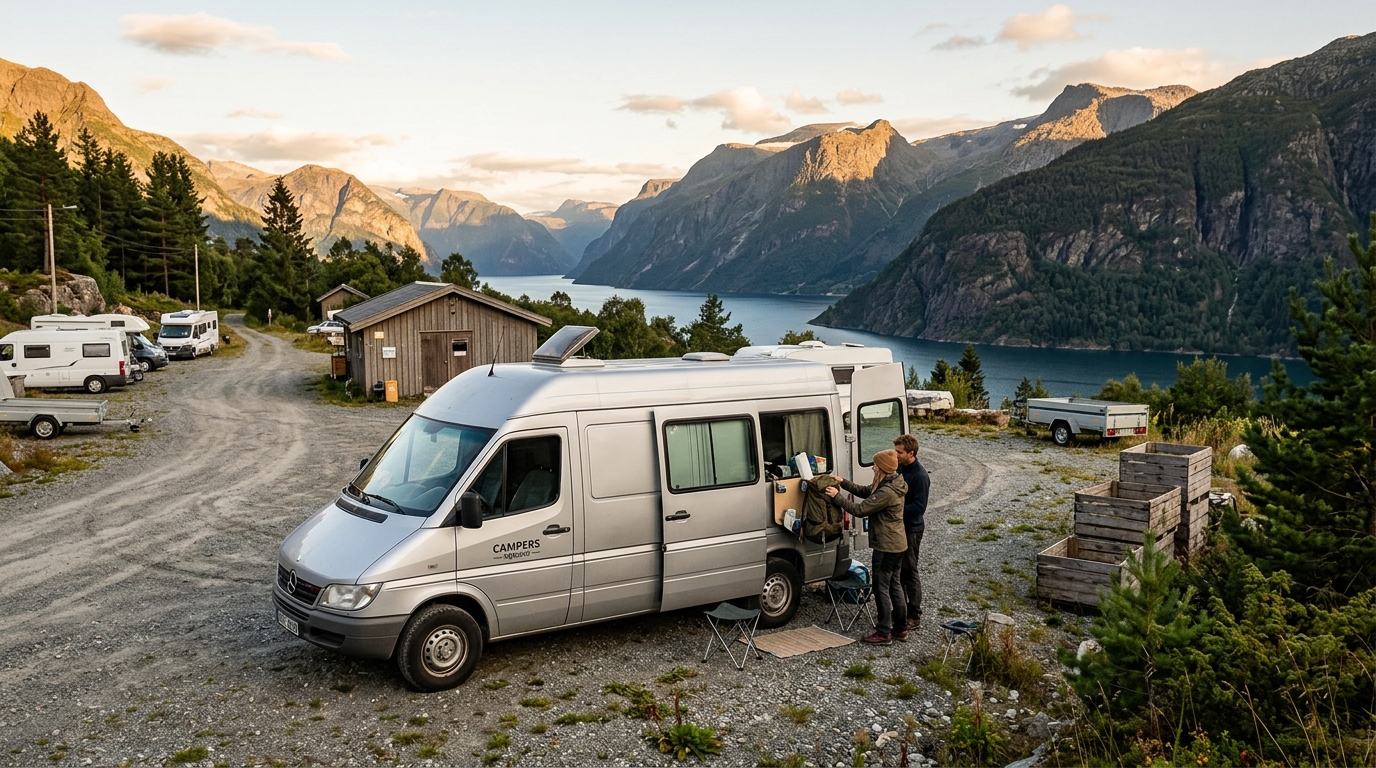
Embarking on a romantic RV trip through Norway as a couple is an incredible way to create lasting memories. Imagine waking up to breathtaking fjord views, enjoying a leisurely breakfast prepared in your cozy campervan kitchen, and then hitting the road for another day of adventure, just the two of you. Norway’s stunning landscapes, from dramatic cliffs to charming coastal towns, provide the perfect backdrop for a couples' escape, and a rented RV gives you the freedom to explore it all on your terms. Whether you choose a week-long immersion into the Western Fjords or an extended two-week journey through diverse regions, the key is to embrace slow travel. Take your time, savor the moments, and let the beauty of Norway unfold around you. At Bandana Caravan, we are true RV specialists, dedicated to making your planning and booking process as enjoyable as the trip itself. God is in the small details, and we take care of them. That's what makes the big difference. So, are you ready to plan an unforgettable couples' adventure? Start exploring your options and find the perfect RV for your romantic getaway.🎬 Video coming soon
On the routes offered through RV PLANET routes, you can itemize and track every expense along the way for easy budgeting.