In This Guide
- Top 5 Tips for one way rv rental RV Rental in Norway
- Before You Book - Class, Dates, Insurance
- Pre-Trip Prep - Packing Checklist for Norway
- On the Road - Driving, Fueling, Navigation
- At the Campground - Setup, Hookups and Etiquette
- one way rv rental-Specific Tips for Norway
- Common Mistakes to Avoid in Norway
- Is one way rv rental in Norway worth it
- How much is a one way RV rental in Norway
- Is it easy to drive an RV in Norway
- What is the best time to rent an RV in Norway
- Is it worth driving an RV through Norway
- Can you wild camp in Norway with an RV
- Where can I fill water in an RV in Norway
- What are the rules for driving an RV in Norway
- How many days do you need for an RV trip in Norway
- Do you need a special license to drive an RV in Norway
- What You Shouldn't Miss
- Why Book with Bandana Caravan
- Final Thoughts
- Frequently Asked Questions
Embarking on a one-way RV adventure in Norway offers unparalleled freedom to traverse its majestic fjords, vibrant cities, and serene landscapes without retracing your steps. Imagine waking up to a new, breathtaking view each morning, with the flexibility to explore at your own pace from Kristiansand in the south to the Arctic reaches of Tromsø. For live availability and current prices, start with our RV Rental Norway - Complete Guide 2026 guide.
Top 5 Tips for one way rv rental RV Rental in Norway
Securing your ideal one-way RV rental in Norway starts with strategic planning. First, book your campervan or motorhome well in advance, especially for summer travel between June and August, to ensure you get your preferred RV class and one-way route, potentially saving 15-20% on daily rates.
Second, budget for potential one-way fees, which can range from €500 to €1500 between rental companies and routes, but these fees often save considerable time and fuel costs from backtracking. Third, meticulously plan your route with both your pick-up and drop-off locations in mind, focusing on a linear journey to maximize exploration of areas like the stunning Norwegian fjords. On the routes offered through RV PLANET routes, you can itemize and track every expense along the way for easy budgeting.
Fourth, be flexible with your travel dates to potentially find better deals on one-way rentals during shoulder seasons like May or September, which often offer more availability and value. Lastly, thoroughly review all available insurance options, including the ability to upgrade to a top-level deductible for extra peace of mind, ensuring comprehensive coverage for your journey through Norway's diverse terrain.
Before You Book - Class, Dates, Insurance
Choosing the right RV class for a one-way rental in Norway is crucial for a comfortable and enjoyable trip. Compact models, such as a "Category Van" or "Active Pop Top Select", offer easier navigation on Norway's often narrow and winding roads, while larger motorhomes like an "Explorer" or "Motorhome MC6 Gold" provide more comfort and space for longer journeys or families of 2+2, sleeping up to 6 people. Consider the size of your travel party, the amount of gear you plan to bring, and your comfort level driving a larger vehicle when making your selection.
Locking in your rental dates early, particularly for peak season (June-August), ensures availability and potentially better rates, while shoulder seasons (May, September) might offer more flexibility and value. Regarding insurance, basic coverage is always included with rental RVs in Norway; however, to see prices including the most comprehensive options, select that feature during your initial search on Bandana RV. We believe in full transparency: what you see is what you get, with no hidden fees or surprises in your booking.
Understand the specific terms and conditions for one-way rentals in Norway, including any mileage limits and additional fees, before finalizing your booking. Our expert team is here to support you before, during, and after your booking, ensuring you have all the information needed for a smooth experience.
Pre-Trip Prep - Packing Checklist for Norway
Packing for a motorhome trip in Norway requires careful consideration for its famously variable weather. Essential items include layered clothing suitable for temperatures ranging from cool mornings to sunny afternoons, waterproof outerwear for unexpected rain showers, and sturdy hiking shoes for exploring trails in national parks.
Remember European power adapters (Type F) for connecting to campsite electricity and a long extension cord if possible, as power posts might not always be directly beside your pitch. Don't forget specialty items like leveling blocks for uneven campsites and insect repellent for summer evenings, especially near lakes and fjords. Always carry physical copies of important documents, including your passport, driver's license (a standard car driver's license is sufficient for all motorhome classes), and rental agreement, and ensure your digital backups are accessible offline.
Consider bringing reusable bags for groceries and a water bottle, as Norway places a high value on sustainability. For cooking delicious meals in your rented campervan, remember that most RVs come with a stove and refrigerator, perfect for utilizing fresh local produce. Need some inspiration? Check out our RV-friendly recipes playlist for tasty ideas!
On the Road - Driving, Fueling, Navigation
Driving a rented RV in Norway necessitates careful attention due to narrow, winding roads, frequent tunnels, and numerous ferry crossings, particularly in the scenic fjord regions. While many roads are well-maintained, some, especially along the National Scenic Routes, feature tight turns and steep gradients, which can be challenging for larger vehicles like a "cruise america rv rental example Explorer", which has a length of 7.1 meters. Drive slowly and carefully, and you can drive almost anywhere without issues. No need to stress - just use common sense and pay attention.
Norway utilizes an automated toll system (AutoPASS); most rental RVs will come equipped with a transponder, with tolls charged automatically and billed post-rental. Fueling stations are generally well-distributed, but it's always advisable to fill up your diesel tank (the most common fuel for RVs) when opportunities arise, especially in more remote areas. For detailed routes and potential savings on your journey, consider exploring the "RV Driving Deals in Norway - Routes and Savings 2026" itinerary.
Utilize offline maps or a dedicated GPS with RV-specific routing to navigate effectively, as mobile data coverage can be spotty in certain scenic stretches. Ferry travel is integral to many Norwegian routes; for larger RVs, consider booking popular ferry routes in advance, especially during peak season, to secure a spot and avoid long waits.
At the Campground - Setup, Hookups and Etiquette
Setting up your rented motorhome at a Norwegian campground typically begins with finding a level spot, often aided by leveling blocks, before connecting to utilities. The standard hookup order involves connecting electricity first, followed by fresh water, and then properly positioning your grey and black water hoses for discharge into designated facilities when full.
When managing waste, utilize specific dumping stations (tømmestasjon for gråvann/svartvann) found at campgrounds and some service areas, ensuring responsible disposal and adherence to local environmental standards. Campground etiquette in Norway emphasizes quiet hours, typically from 11 PM to 7 AM, and respecting fellow campers' privacy and the pristine natural environment. Always check with campground reception for specific rules regarding waste separation, fire pits, and any local regulations upon arrival.
For finding campsites and campgrounds during your trip, we recommend using RV PLANET (rvplan.net) - a great resource for locating available spots along your route.
one way rv rental-Specific Tips for Norway
Maximize the value of your one-way RV rental in Norway by selecting a route that flows naturally from your pick-up to drop-off point, minimizing redundant driving and maximizing exploration. Be prepared for potential one-way fees by budgeting for them upfront; these costs can be a significant component of your overall rental expense, as detailed in our "One-Way RV Rental in Norway - Price Guide 2026".
Consider off-peak or shoulder season travel for one-way rentals to potentially reduce both the daily rental rate and the one-way fee, often saving up to 10-15%. Pack efficiently and lightly, as a one-way trip means less opportunity to return to a base, and managing luggage across diverse landscapes, from Alesund to Bodo, is easier with less bulk.
Confirm all pick-up and drop-off procedures and timings with the rental company in advance, especially if locations are in different cities or regions like Bergen or Evenes. Bandana RV's partnerships with over 50 leading RV suppliers worldwide, including Apollo and Britz, ensure seamless coordination and transparent communication regarding your one-way arrangements.
Common Mistakes to Avoid in Norway
Instead of underestimating travel times in Norway, always allow ample buffer for scenic stops, narrower roads, and frequent ferry crossings to enjoy your journey without rush. Driving 100-150 km per day on average allows you to truly feel the place, connect to the culture, the food, and the scenery.
Instead of overlooking ferry bookings, especially for larger RVs on popular routes, book critical segments in advance during peak season to avoid delays. Many popular routes through the fjords require ferry travel, and booking ahead can save significant waiting time. Instead of ignoring local waste disposal guidelines, diligently use designated facilities for grey and black water to preserve Norway's pristine environment, a critical aspect of responsible travel.
Instead of relying solely on online maps, download offline maps or use a dedicated GPS, as mobile signal can be intermittent in remote Norwegian areas. Instead of neglecting the 'Allemannsretten' rules, familiarize yourself with wild camping etiquette to ensure respectful and sustainable overnight stays. Lastly, instead of forgetting about tolls, confirm your RV's AutoPASS registration and understand how charges will be applied post-rental, ensuring no surprises after your trip.
Is one way rv rental in Norway worth it
Yes, a one-way RV rental in Norway can be a highly rewarding and efficient way to explore diverse landscapes without backtracking, especially for those with limited time or specific route preferences. It offers unparalleled flexibility to experience the vast geographical spread of Norway, from southern fjords to the Arctic north, allowing for a continuous journey that covers more ground.
While one-way fees are an additional cost, they often save valuable travel time and fuel expenses that would otherwise be spent returning the vehicle to its origin, making the overall experience more streamlined. The convenience of not having to retrace your steps means more time for exploring attractions, hiking, or simply enjoying the scenic routes. For those with a defined itinerary, a one-way rental streamlines logistics, making the most of a multi-region Norwegian adventure.
How much is a one way RV rental in Norway
The cost of a one-way RV rental in Norway varies significantly based on factors such as the RV class, rental duration (e.g., a week-long trip versus a two-week adventure), pick-up/drop-off locations, season, and the specific one-way fee charged by the rental company, which can range from a few hundred to over a thousand Euros. A typical one-way RV rental will include the daily rental rate, a substantial one-way relocation fee (often €500-€1500), and comprehensive insurance.
Additional expenses to budget for include fuel (Norway has high fuel prices, generally around €2/liter for diesel), tolls (managed via AutoPASS), ferry charges (which can be considerable for RVs, especially larger ones), and campground fees averaging €30-€60 per night. To save money, consider cooking most meals in your RV kitchen, seeking out budget-friendly campgrounds or practicing responsible wild camping, and optimizing your driving for fuel efficiency.
Renting during the shoulder seasons (May, September) can sometimes reduce daily rental rates by up to 10-15%, although one-way fees may remain consistent. For a full breakdown of potential costs, check out our "Cheap RV Rental in Norway - Budget Guide 2026". When planning your budget, remember that RV PLANET routes allow you to itemize and track every expense along the way for easy budgeting, ensuring full transparency in your trip's ancillary costs.
Is it easy to drive an RV in Norway
Driving an RV in Norway is generally manageable for experienced drivers, but it requires careful attention due to narrow, winding roads, numerous tunnels, and frequent ferry crossings, particularly in fjord regions like those around Bergen and Geirangerfjord. Many roads, especially along the National Scenic Routes, feature tight turns, steep gradients, and limited passing opportunities, which can be challenging for larger Class C motorhomes with dimensions similar to an "MHC28" (7.3m length).
However, Norway's infrastructure is generally excellent, and road signs are clear, making navigation straightforward. Norwegian drivers are also generally courteous and patient. Consider opting for a more compact campervan model if you are less comfortable with larger vehicles, as this can significantly enhance your driving experience on Norway's often-intimate roads, allowing you to easily explore charming cities like Alesund. Remember to drive slowly and carefully, and you can drive almost anywhere without issues. No need to stress - just use common sense and pay attention.
What is the best time to rent an RV in Norway
The best time to rent an RV in Norway for pleasant weather and full accessibility is typically during the summer months from June to August. Summer provides the longest daylight hours, warmest temperatures (averaging 15-20°C in the south), and full access to all roads and attractions, including high mountain passes and Arctic regions like those near Tromsø.
Shoulder seasons, particularly late May/early June and September, offer a quieter travel experience with beautiful autumn colors or spring blossoms, and usually more competitive rental rates. Traveling in shoulder seasons may mean some services, such as smaller campgrounds or specific mountain roads (e.g., Trollstigen might be closed until late May), might have reduced hours or be closed, so checking ahead is vital. Renting an RV in early winter (late October-November) is a specialized experience, offering unique opportunities like northern lights viewing, but demands specific cold-weather preparations and a Winter RV Rental in Norway - Pricing Guide 2026 capable of handling snowy conditions.
Is it worth driving an RV through Norway
Driving an RV through Norway is widely considered a highly rewarding experience, offering unparalleled freedom to explore the country's stunning natural landscapes at your own pace, creating a truly memorable journey. The flexibility of a rented motorhome or campervan allows you to wake up to a new, breathtaking view each day, spontaneously extending stays in places you love or venturing to off-the-beaten-path locations like the smaller villages along the fjords.
RV travel facilitates a deeper connection with Norway's nature, enabling you to access remote hiking trails, hidden fjords, and picturesque villages beyond typical tourist routes. It provides the convenience of carrying all your gear, food, and amenities with you, enhancing comfort and independence during your exploration. Beyond popular routes like the Atlantic Road or Lofoten, RV travel allows discovery of lesser-known gems, local markets in cities like Bodo and Haugesund, and unique cultural interactions that deepen the travel experience. For broader European RV travel insights, our "RV Rental Europe - Complete Guide 2026" provides a fantastic overview.
Can you wild camp in Norway with an RV
Yes, wild camping with an RV in Norway is largely permitted under "Allemannsretten" (the everyman's right to roam), provided you follow specific rules regarding distance from dwellings, duration, waste disposal, and respect for nature and private property. Allemannsretten allows you to camp for up to two nights in uncultivated land, as long as you are at least 150 meters away from the nearest inhabited house or cabin.
When wild camping with an RV, it's crucial to leave no trace: take all rubbish with you, do not empty grey or black water tanks in nature, and minimize your environmental impact. Finding suitable spots involves looking for designated parking areas or quiet, secluded pull-offs that are clearly not private property or cultivated land; apps like Park4Night can be helpful for locating these. While Allemannsretten covers basic overnight stays, using a full RV setup (awning, tables, chairs) for extended periods might be better suited for official campgrounds to avoid any ambiguity or inconvenience to locals.
Where can I fill water in an RV in Norway
In Norway, RVers can typically fill fresh water tanks at most campgrounds, designated service stations ('bobilservice'), some gas stations with specific RV facilities, and occasionally at public water taps in towns or rest areas, though availability varies. Campgrounds are the most reliable locations for both fresh water refills and the responsible disposal of grey and black water (tømmestasjon for gråvann/svartvann).
Look for 'Bobilparkering' signs or specific RV service points at larger gas stations or rest areas, which often provide facilities for water, waste, and sometimes propane (LPG) exchanges. Public water taps in towns or harbors can often be used for potable water, but always confirm potability if there's no clear signage, and use your own hose and adapters to prevent contamination. Propane refills or exchanges can be found at specialized gas stations or some larger hardware stores, but it's less common than in some other European countries, so plan ahead for your specific route.
What are the rules for driving an RV in Norway
Driving an RV in Norway adheres to standard Norwegian road rules, with additional considerations for vehicle size including specific speed limits for heavier vehicles, awareness of road width, and adherence to traffic signs for tunnels, bridges, and ferries. Standard speed limits are 80 km/h on rural roads and 90-110 km/h on motorways, but RVs over 3,500 kg may have lower limits, typically 80 km/h, even on motorways.
All vehicles must drive with headlights on at all times, regardless of weather or time of day, a crucial safety regulation. Tolls are prevalent, and the AutoPASS system automatically registers vehicles; ensure your rental RV is properly equipped, and charges will be processed post-rental. Be vigilant for specific traffic signs indicating height, width, and weight restrictions, particularly before entering tunnels or crossing older bridges in areas like Hylkje, and always carry essential emergency equipment like a high-visibility vest and warning triangle in your motorhome.
How many days do you need for an RV trip in Norway
The ideal duration for an RV trip in Norway varies significantly based on your desired route and pace, but a minimum of 7-10 days is recommended for a concentrated regional exploration, while 14-21 days allows for a more comprehensive experience covering multiple major attractions with a one-way rental. For a single region like the Norwegian fjords or a dedicated Lofoten Islands trip starting from Harstad/Narvik Airport (Evenes), 7-10 days provides a good balance of driving and exploration without feeling rushed.
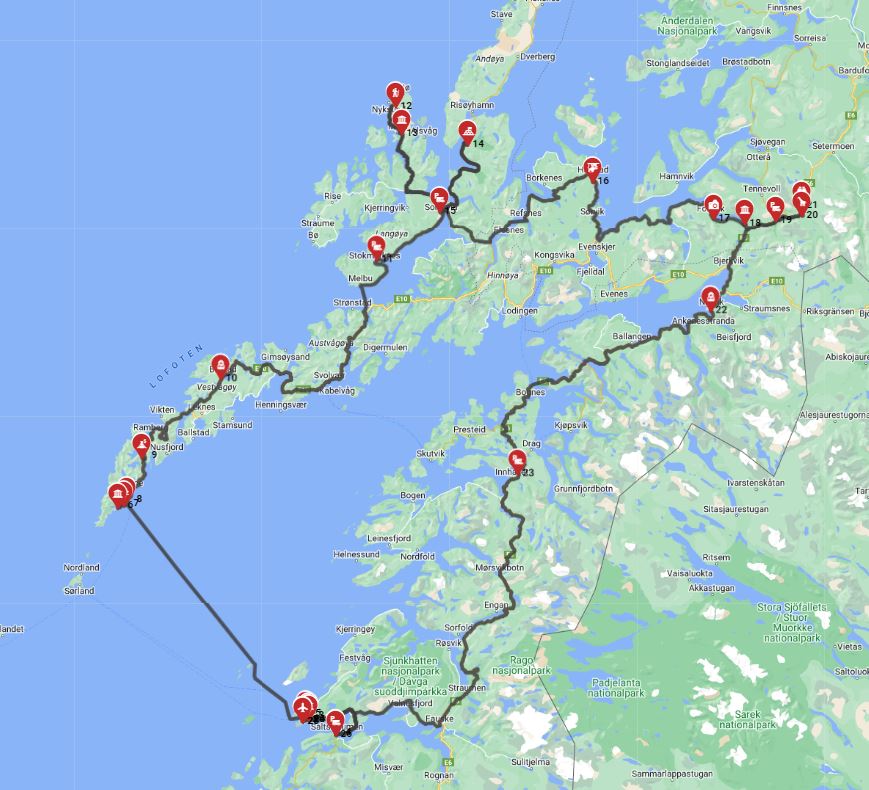
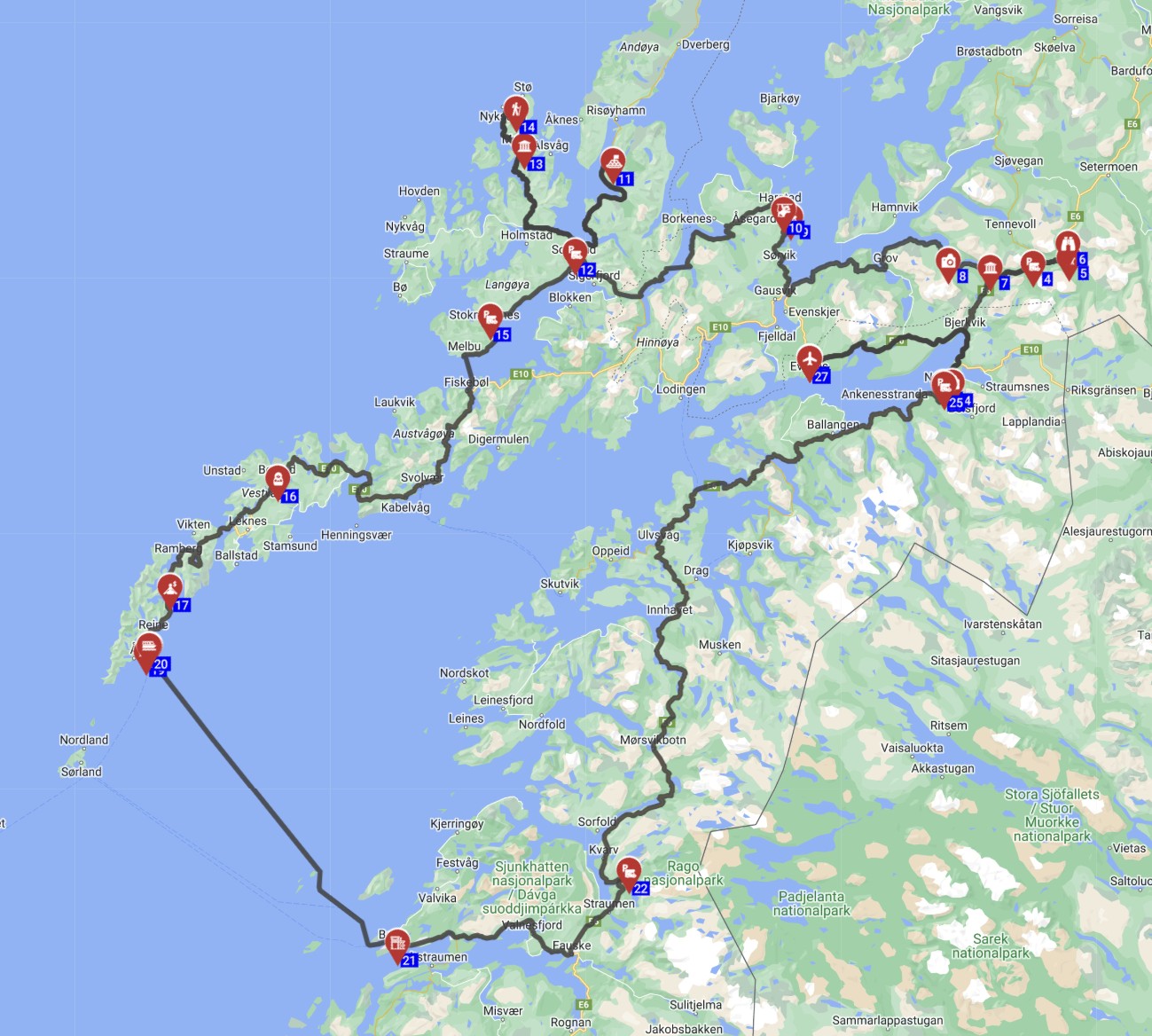
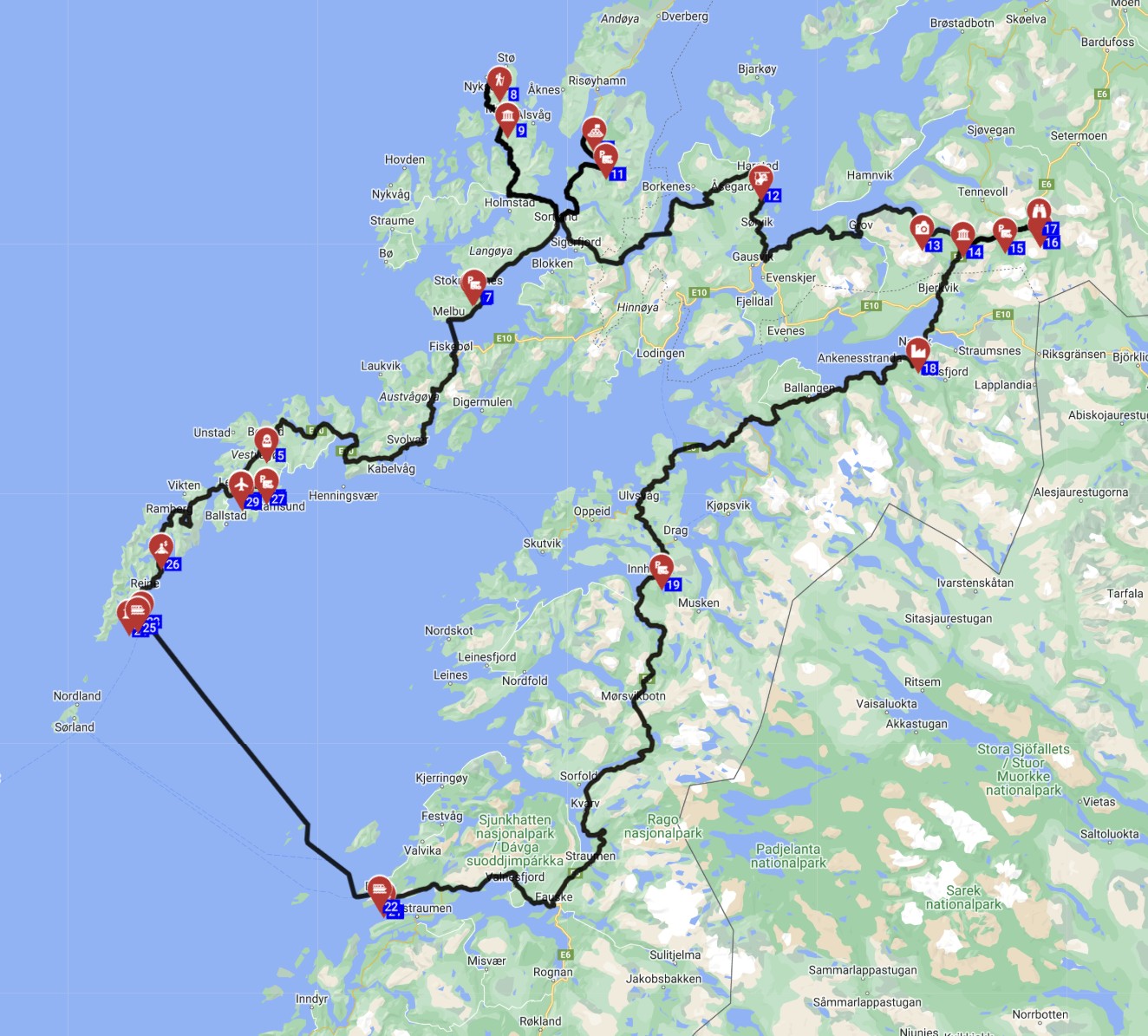
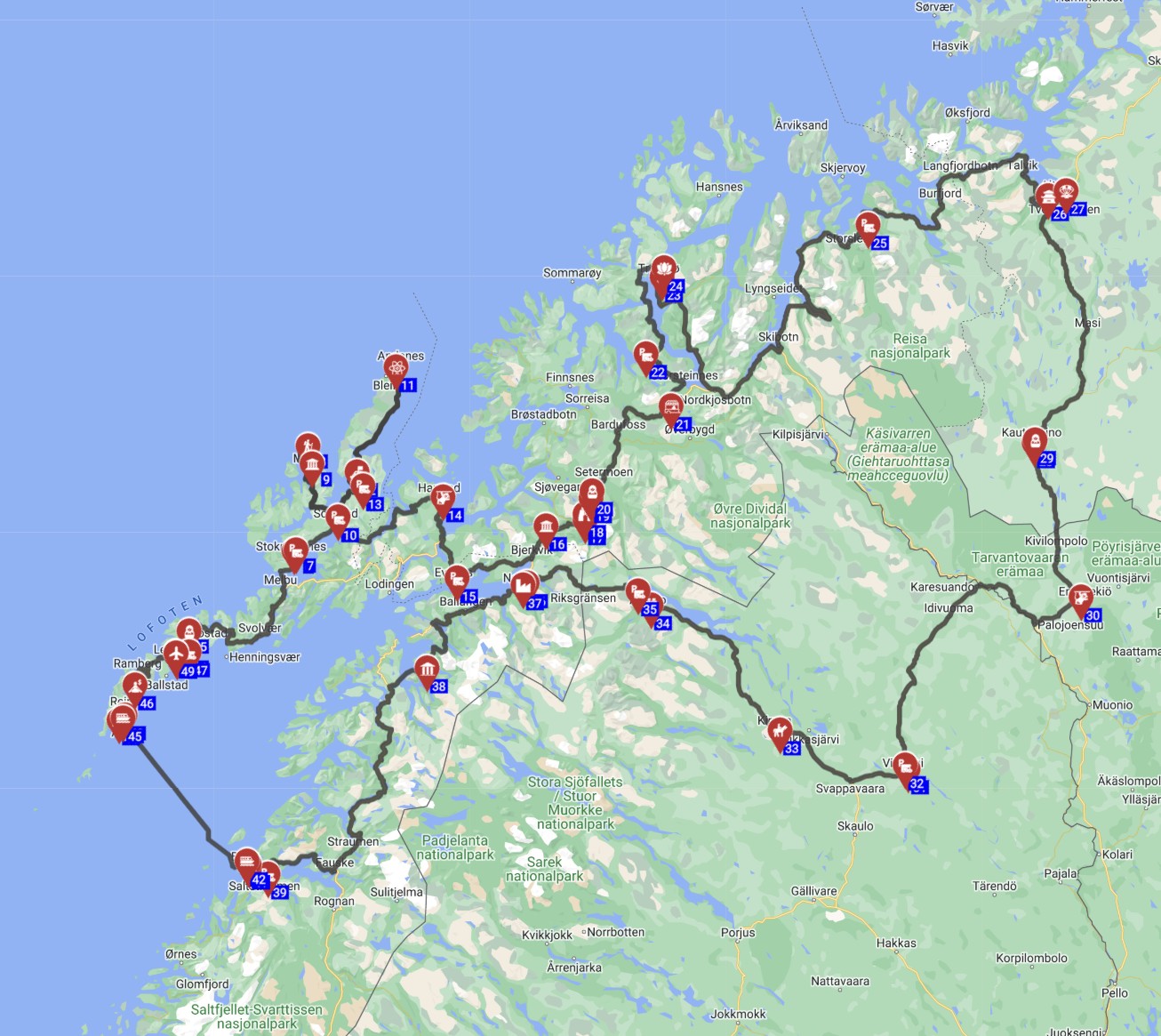
A 14-day trip with a one-way rental allows for a more extensive journey, perhaps covering the southern fjords up to the Atlantic Road, with time for hiking and scenic stops. For a truly immersive and comprehensive one-way experience, including potential excursions to the Arctic Circle or Nordkapp, 3 weeks (21 days) or more is advisable to account for vast distances and diverse activities. Always build in buffer days for unexpected delays, spontaneous detours to beautiful spots, or adverse weather conditions, ensuring a more relaxed and enjoyable trip. Consider this 8-day itinerary that offers a taste of coastal wonders:
Do you need a special license to drive an RV in Norway
For most rental RVs in Norway (typically under 3,500 kg), a standard Class B (or equivalent EU/international) driver's license is sufficient, but for larger RVs exceeding 3,500 kg, a Class C1 or equivalent may be required, so always check the specific Gross Vehicle Weight Rating (GVWR) of your chosen model. The minimum driver age for a one way rv rental in Norway is 21, and there are no young driver surcharges or vehicle class restrictions based on age, making RV travel accessible to a wider audience.
Check the Gross Vehicle Weight Rating (GVWR) of your chosen RV model; if it's 3,500 kg or less, a standard car license (B category in Europe) is usually enough. If the RV's GVWR exceeds 3,500 kg but is under 7,500 kg, you will typically need a C1 license (or equivalent in your home country) to legally drive it in Norway. Always confirm the specific license requirements with your rental company at the time of booking, as policies can vary, and bring your valid driver's license along with an International Driving Permit if required by your country of origin.
What You Shouldn't Miss
Looking for expert insights from Avi Bandana? Top 5 Adventures - recommendations from Avi Bandana:
- **Explore the Geirangerfjord and Trollstigen:** Drive the legendary Trollstigen, famous for its 11 hairpin bends and a bridge crossing the Stigfossen waterfall, then marvel at the UNESCO-listed Geirangerfjord. Consider an RV like the "F2" which offers 3 sleeping places, a 140 Liter fresh water tank, and has a sun canopy to enjoy views.
- **Discover the Lofoten Islands:** Head north to the stunning Lofoten Islands, where dramatic peaks meet white sand beaches. This area is perfect for hiking, kayaking, and experiencing picturesque fishing villages, with plenty of designated campsites.
- **Visit Bergen's Bryggen Wharf:** Immerse yourself in the colorful history of Bergen by exploring its iconic Bryggen Wharf, a UNESCO World Heritage site, and take the Fløibanen Funicular for panoramic city views.
- **Experience the Atlantic Road:** Drive one of the world's most scenic roads, the Atlantic Road (Atlanterhavsveien), an 8.3-kilometer stretch connecting islands with incredible bridges, ideal for a memorable coastal drive.
- **Chase the Northern Lights (seasonal):** In the autumn and winter months, venture north to destinations like Tromsø or Alta for the best chances to witness the magical Aurora Borealis dancing across the Arctic sky.
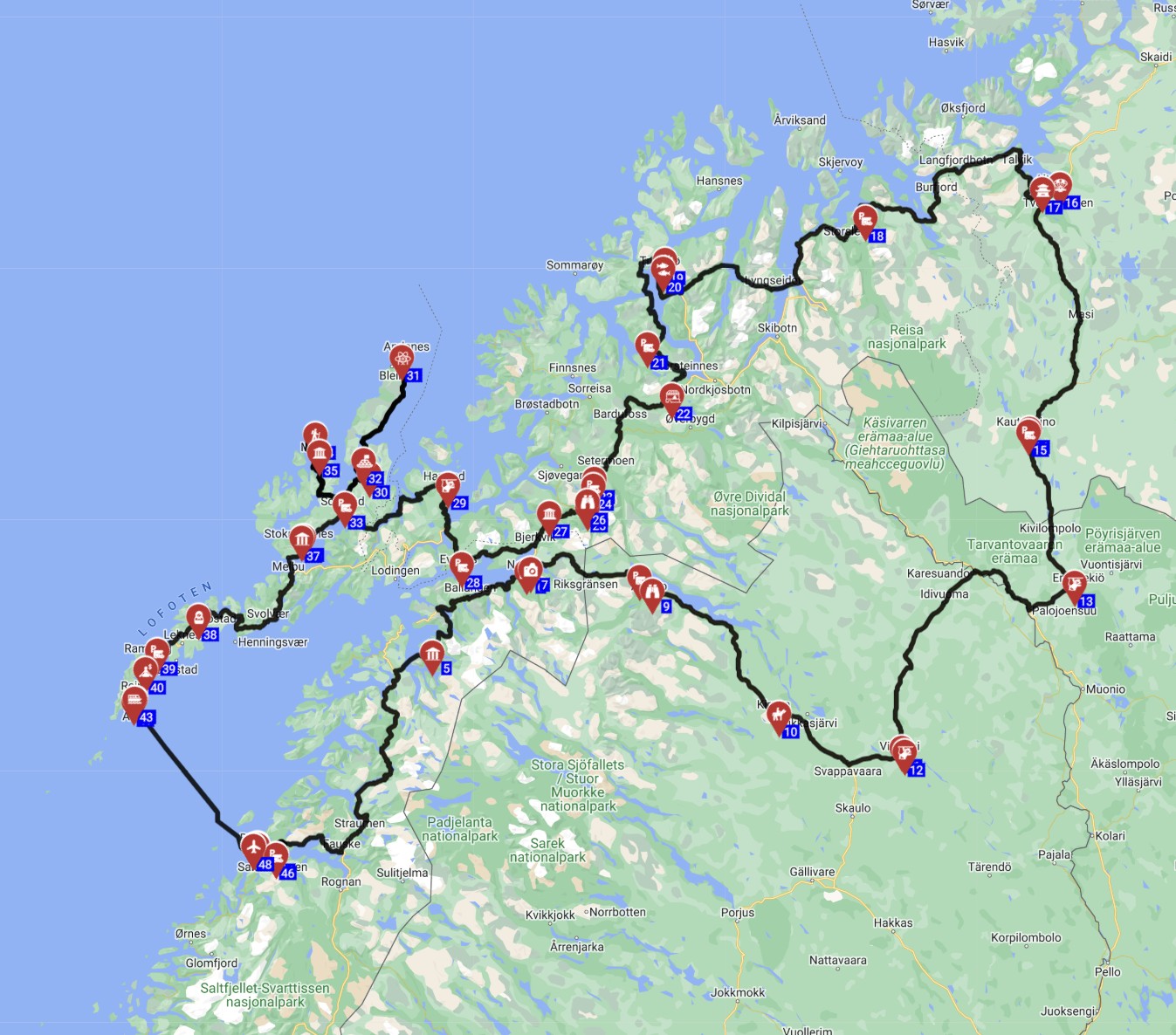
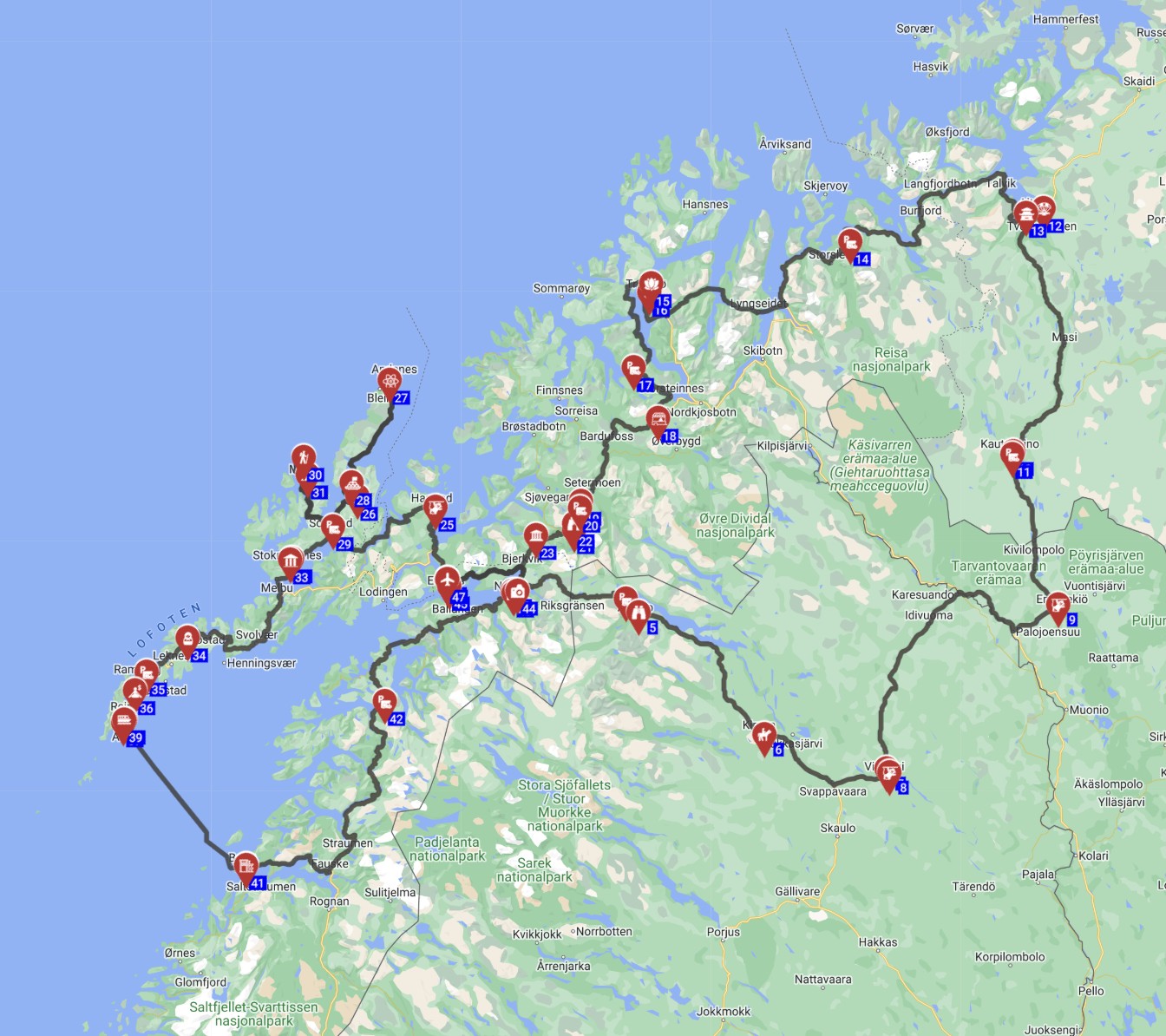
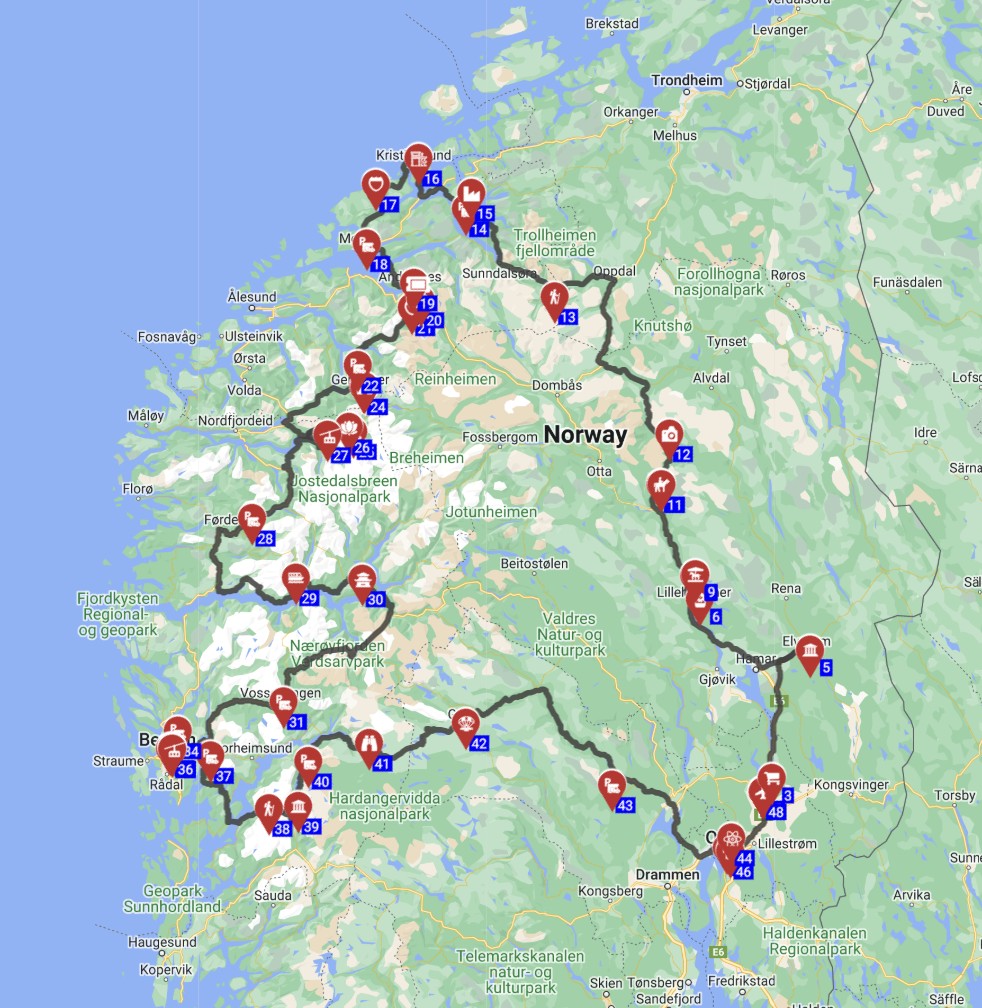
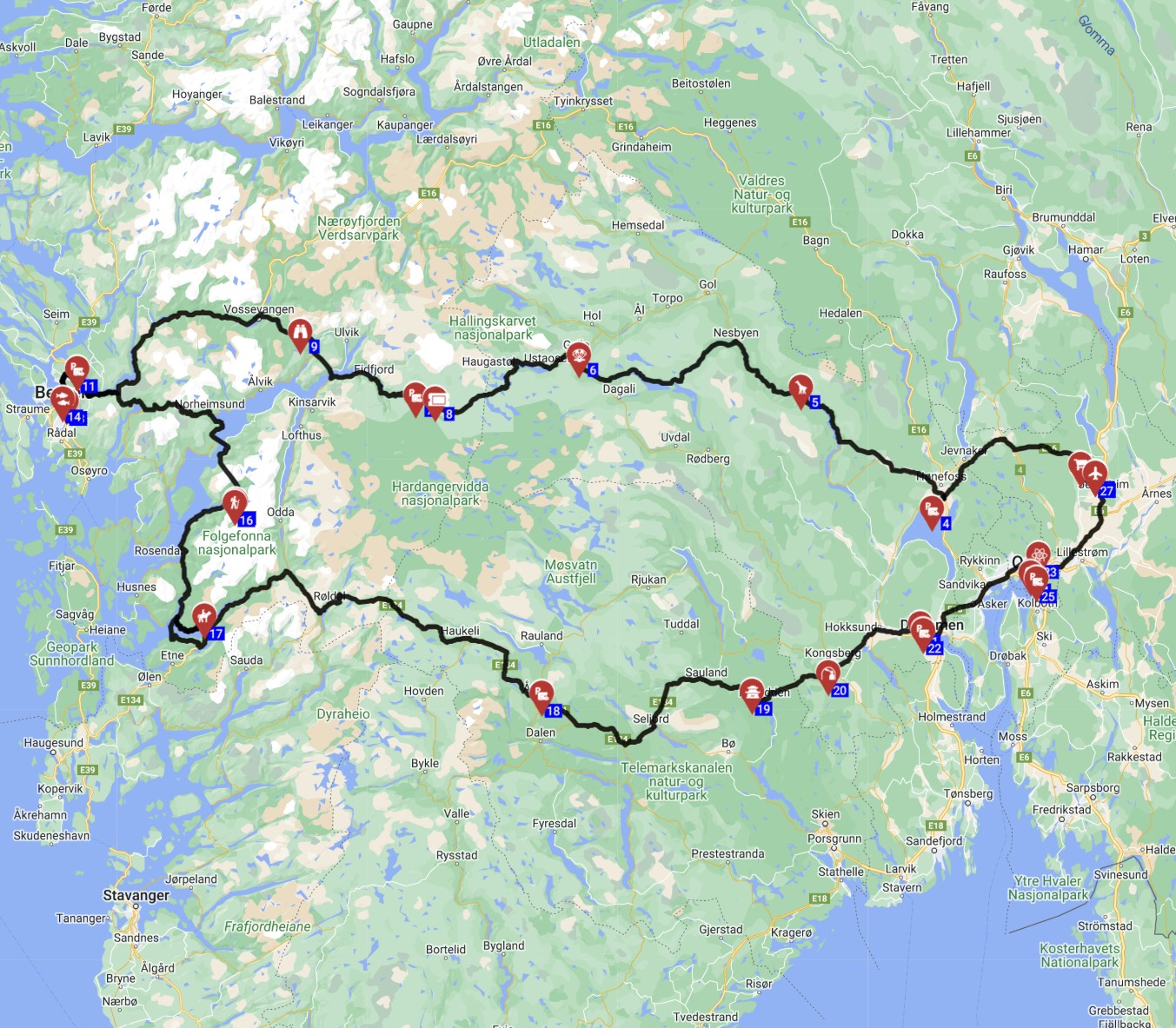
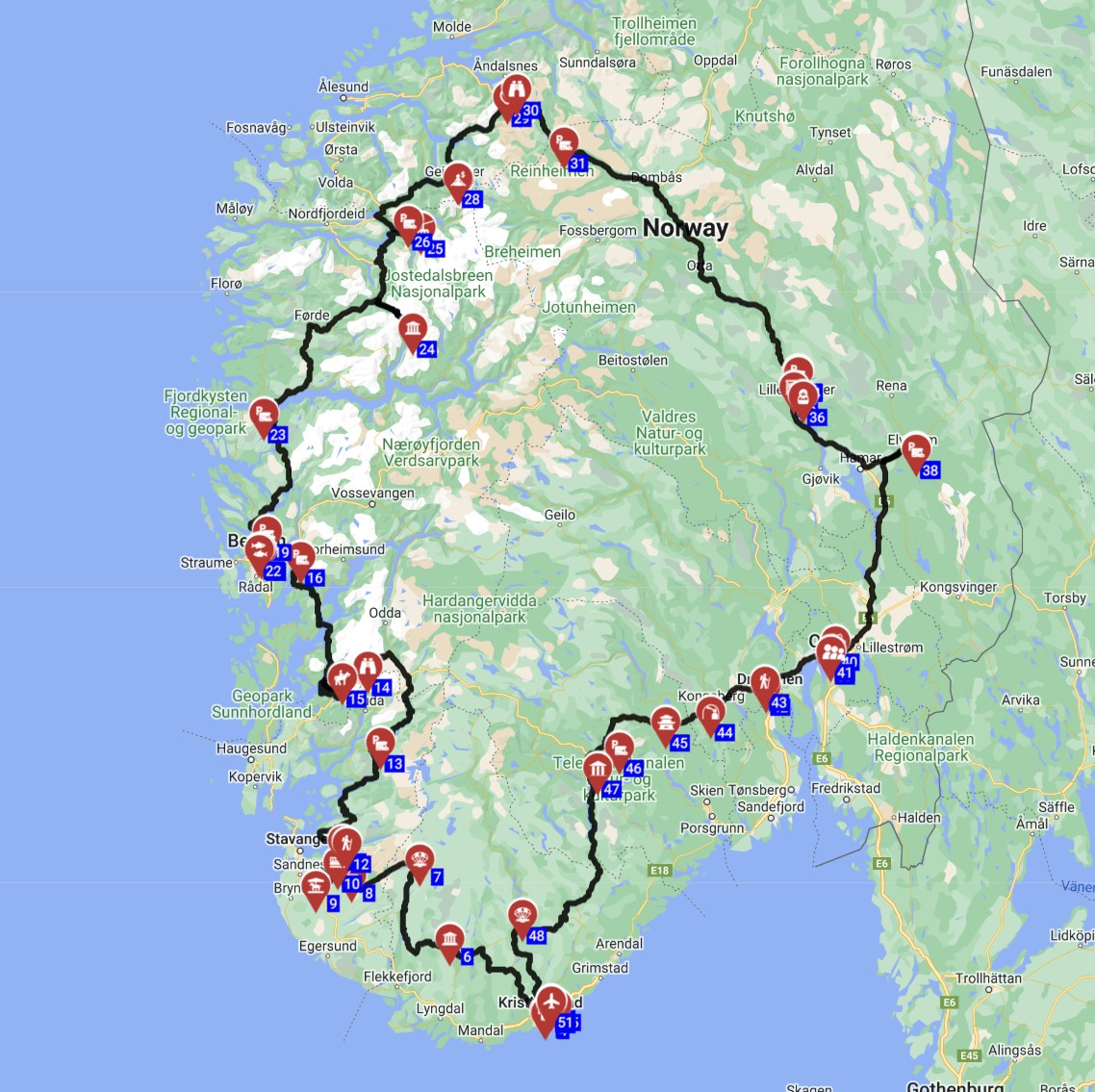
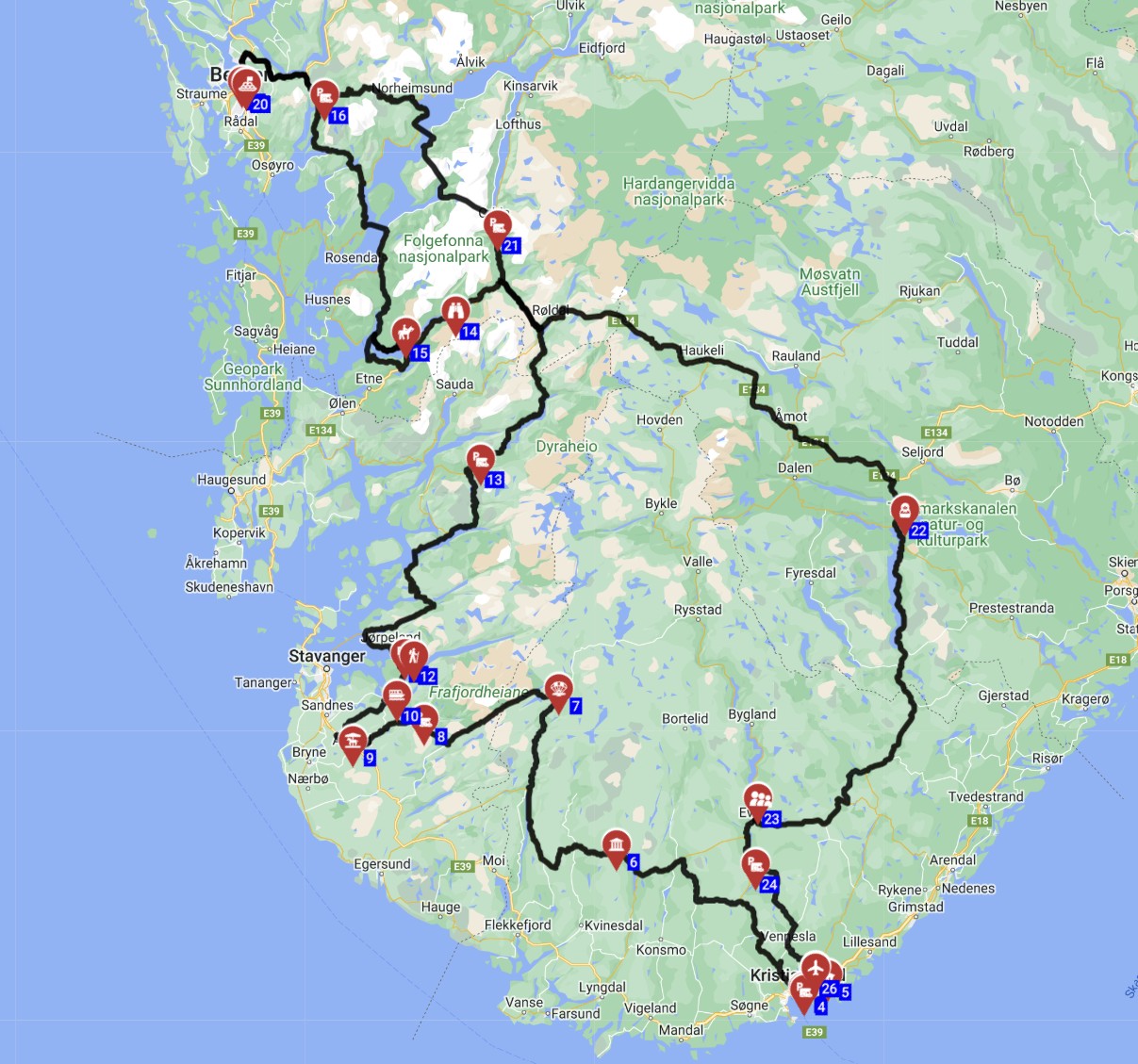
Consider these two fantastic itineraries crafted by professionals to immerse yourself in Norway's diverse beauty:
🎬 Video coming soon
Final Thoughts
Embarking on a one-way RV rental adventure through Norway is more than just a trip; it's an opportunity to create lasting memories amidst some of the world's most spectacular scenery. With our expert tips on planning, driving, and making the most of your time on the road, you're well-equipped to navigate this stunning country with ease and confidence. Remember to embrace slow travel, savoring each moment and allowing Norway's magic to unfold around you.
At Bandana RV, we're passionate about helping you discover the joy of RV travel. From transparent pricing to comprehensive support before and after your booking, we're dedicated to making your one-way journey in Norway seamless and unforgettable. So, go ahead, imagine yourself on the route, breathe in the fresh Scandinavian air, and let the adventure begin!
Get inspired for your next trip! Discover top destinations, planning tips, all in one place!
Check One Way RV Rental Prices for Norway