In This Guide
- Where to Camp in Norway — Top Options
- Campground Types in Norway (National, Private, Wild)
- Featured RV Park or Campground in Norway
- Hookups & Amenities — What to Expect
- Booking Windows & Reservations in Norway
- Nearby Supermarkets & Resupply Points
- Best RV Class for Camping in Norway
- How to Save on Campgrounds in Norway
- What are the typical costs for an RV trip in Norway, including fuel, tolls, and ferries?
- What is Norway's Allemannsretten and how does it apply to RVs?
- How do I navigate Norwegian tolls, ferries, and specific road conditions?
- What essential gear should I pack for an RV trip in Norway?
- What unique cultural experiences and local foods can I find on an RV trip in Norway?
- How reliable is mobile data and what are the best connectivity options for RV travel in Norway?
- What safety precautions and emergency procedures should I know for RVing in Norway?
- How can I practice sustainable and eco-friendly RV travel in Norway?
- What license and vehicle requirements apply to RV rental in Norway?
Norway is an unparalleled destination for a rented RV adventure, offering breathtaking fjords, dramatic mountains, and a unique freedom to explore at your own pace. For first-time RV campers in Norway, the journey is as rewarding as the destination, providing a mobile home base to immerse yourself in stunning nature and vibrant culture. Whether you're planning a week-long trip or a more extended road trip, navigating Norway in a motorhome is an unforgettable experience, especially when you have full transparency and support from your rental partner.
For live availability and current prices, start with our RV Rental Norway - Complete Guide 2026 guide. We’re here to ensure your Norwegian RV rental is as smooth and enjoyable as possible, offering expert advice and dependable service every step of the way. You might also want to explore "RV Rental Europe - Complete Guide 2026" for a broader perspective on continental RV travel.
Where to Camp in Norway — Top Options
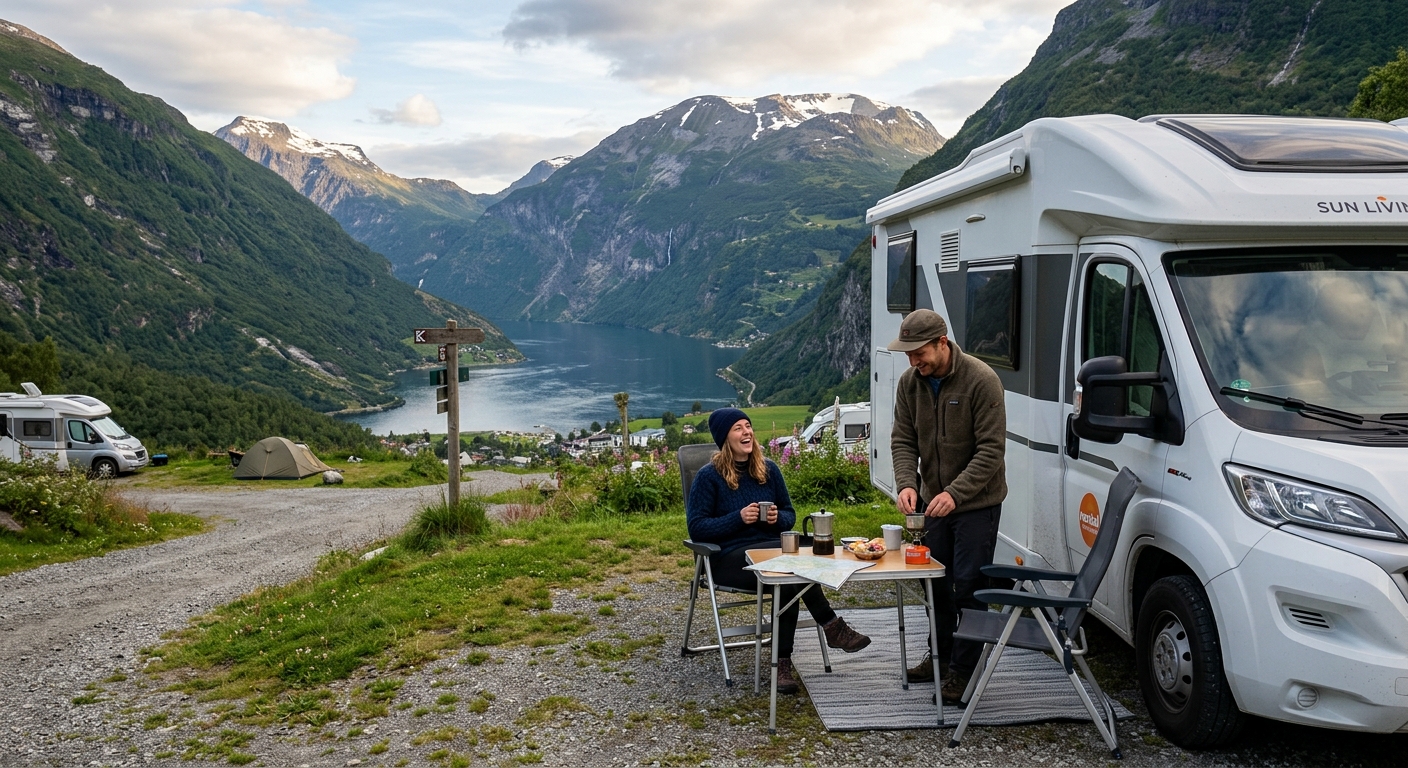
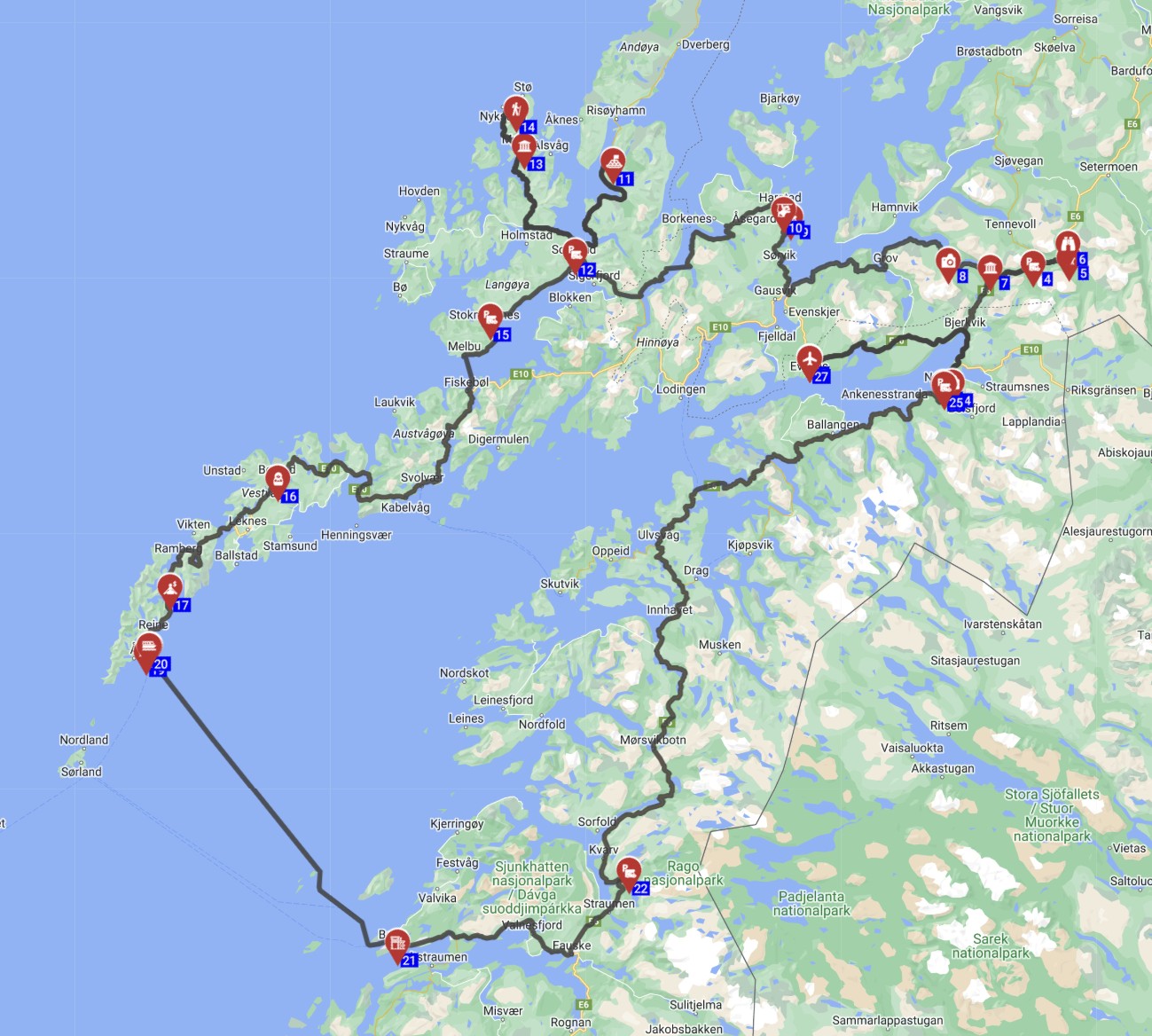
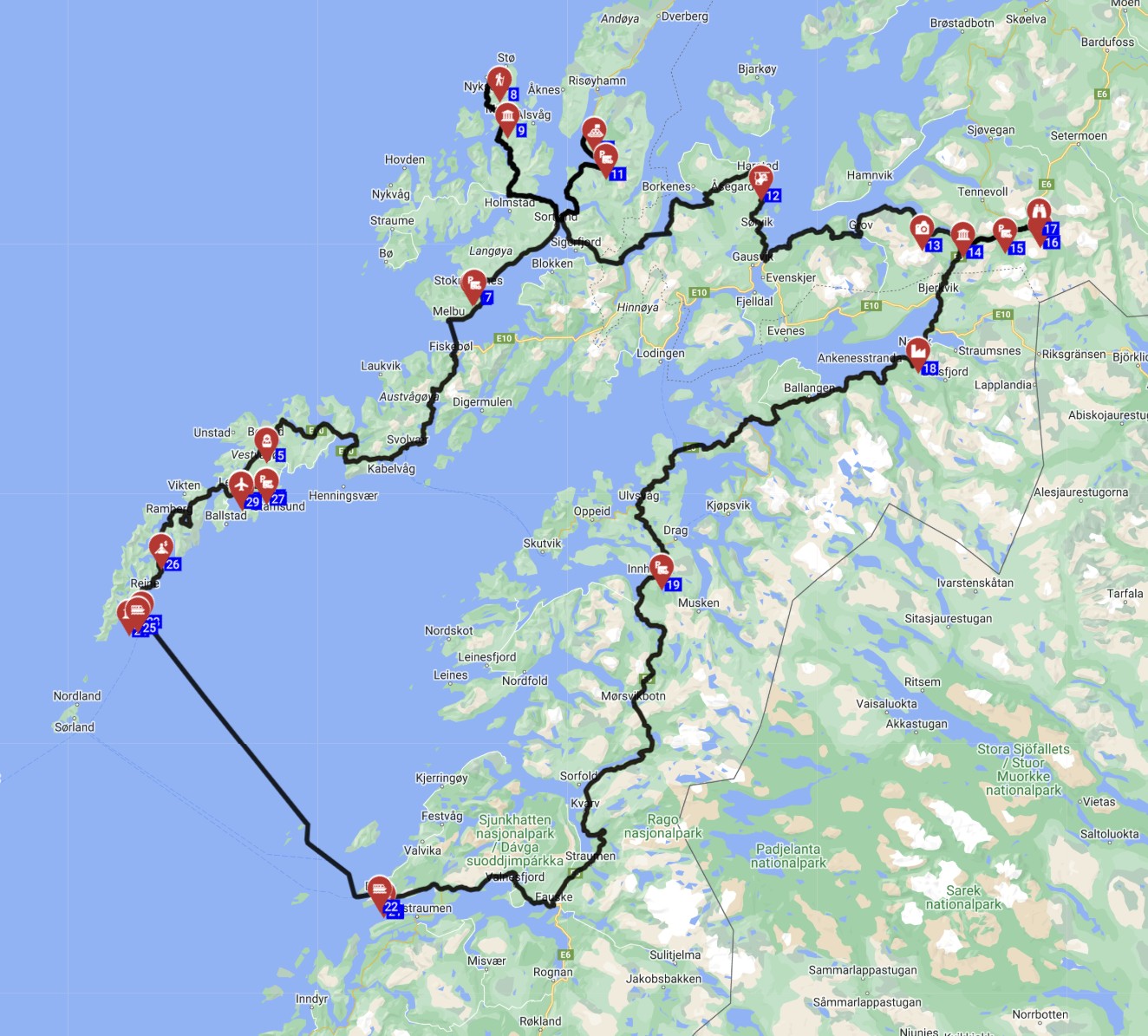
For beginners, popular and well-equipped campsites around the Lofoten Islands, Geirangerfjord, or near Oslo offer excellent starting points for RV camping in Norway, balancing accessibility with stunning Norwegian scenery. The Lofoten Islands are renowned for their stunning scenery, charming fishing villages, and easily accessible campsites, many offering direct fjord or mountain views. Geirangerfjord, a UNESCO World Heritage site, provides breathtaking fjord views with several nearby camping options that cater to motorhomes of all sizes. For those flying into the country, the Oslo region is convenient for arrival, with numerous campsites offering good access to city amenities and surrounding nature, allowing for a gentle introduction to RV life. Consider planning a route like the "Bergen Round trip - Norway’s Coastal Wonders" for an 8-day, 782.9 km journey that includes 2 hiking areas and 2 cruise terminals, perfect for experiencing Norway's stunning coastline and securing comfortable camping spots.
Campground Types in Norway (National, Private, Wild)
Norway offers a mix of national park campsites, private campgrounds with amenities, and extensive opportunities for legal wild camping under Allemannsretten, each with distinct rules and facilities. National park sites are often more rustic, providing limited facilities like basic toilets and water, and many operate on a first-come, first-served basis, reserving 25-30% of spots for spontaneous arrivals. Private campgrounds are common across the country, particularly in popular tourist regions, offering full amenities such as electricity, fresh water, grey/black water dump stations, showers, and laundry, and are generally easier to book in advance. Wild camping, or "Allemannsretten" (the everyman's right), allows rented RVs to camp for up to two nights in uncultivated land, provided you are at least 150 meters (490 feet) from any occupied dwelling and adhere strictly to responsible practices for waste and ground impact. On the routes offered through RV PLANET routes, you can itemize and track every expense along the way for easy budgeting.
Featured RV Park or Campground in Norway
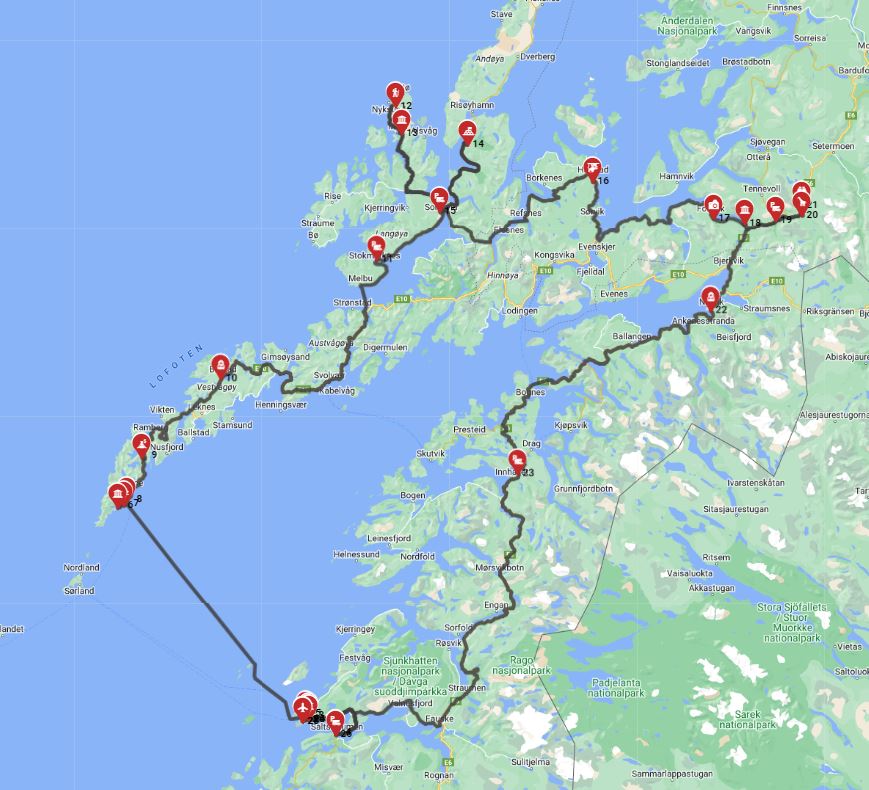
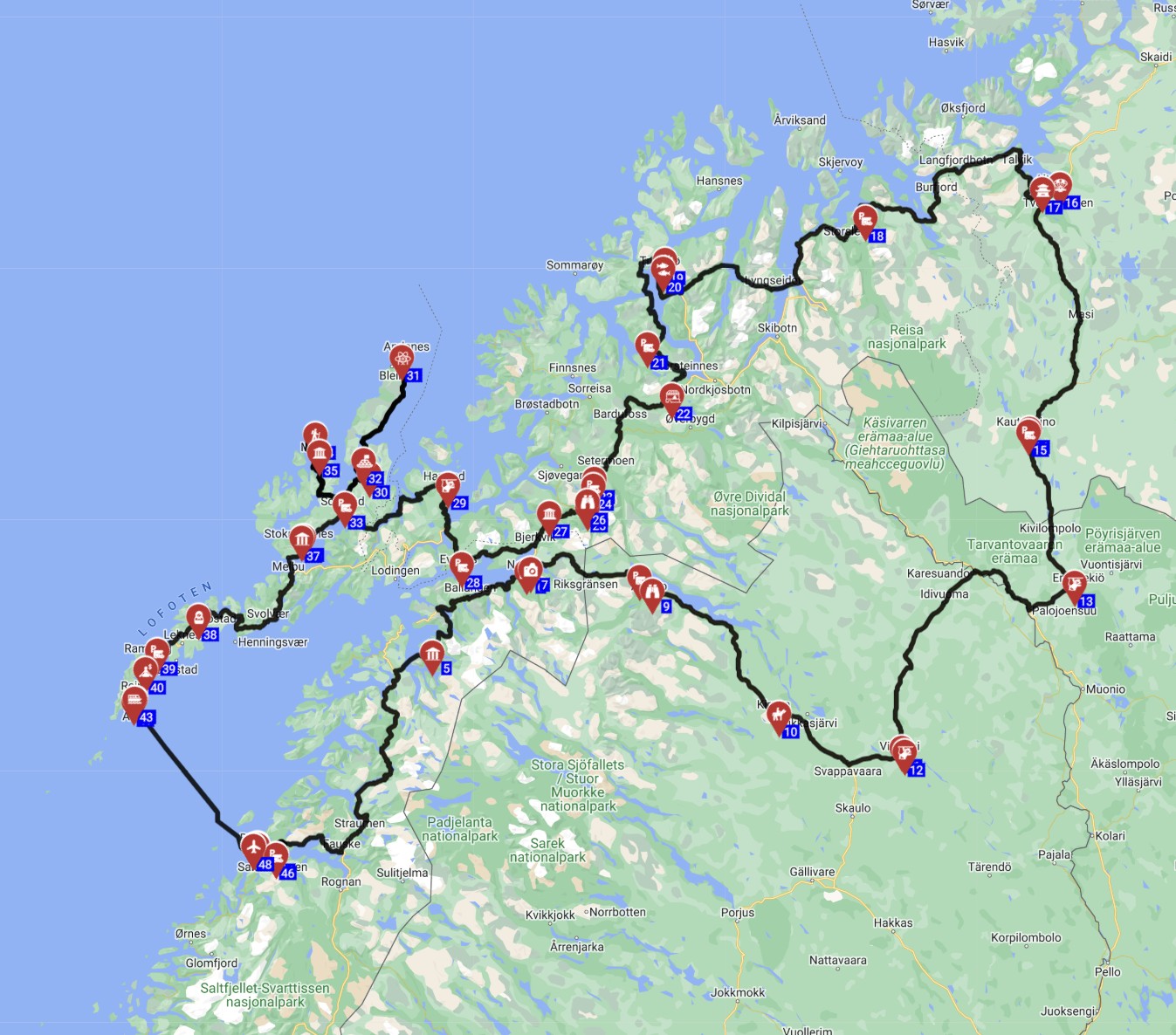
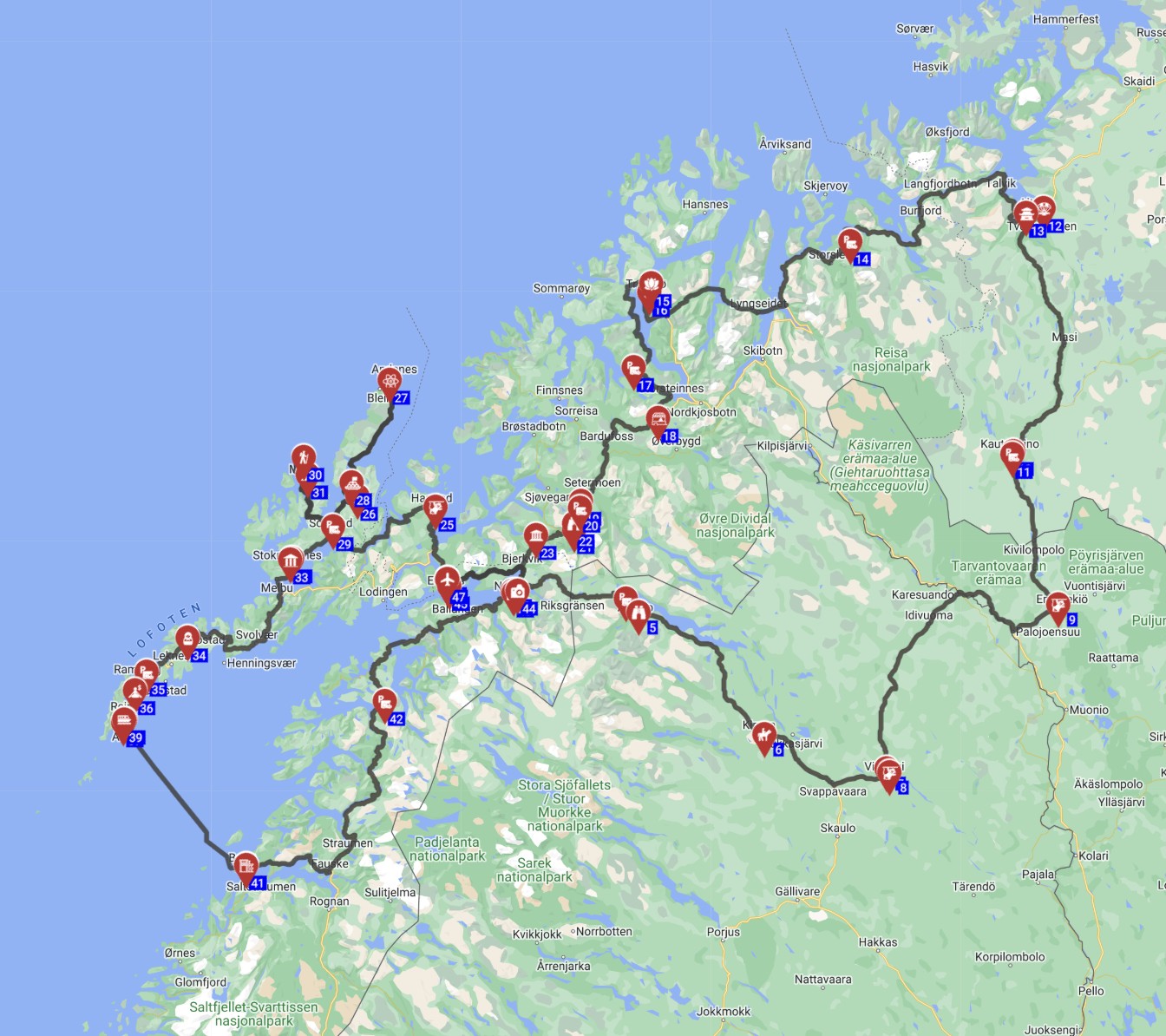
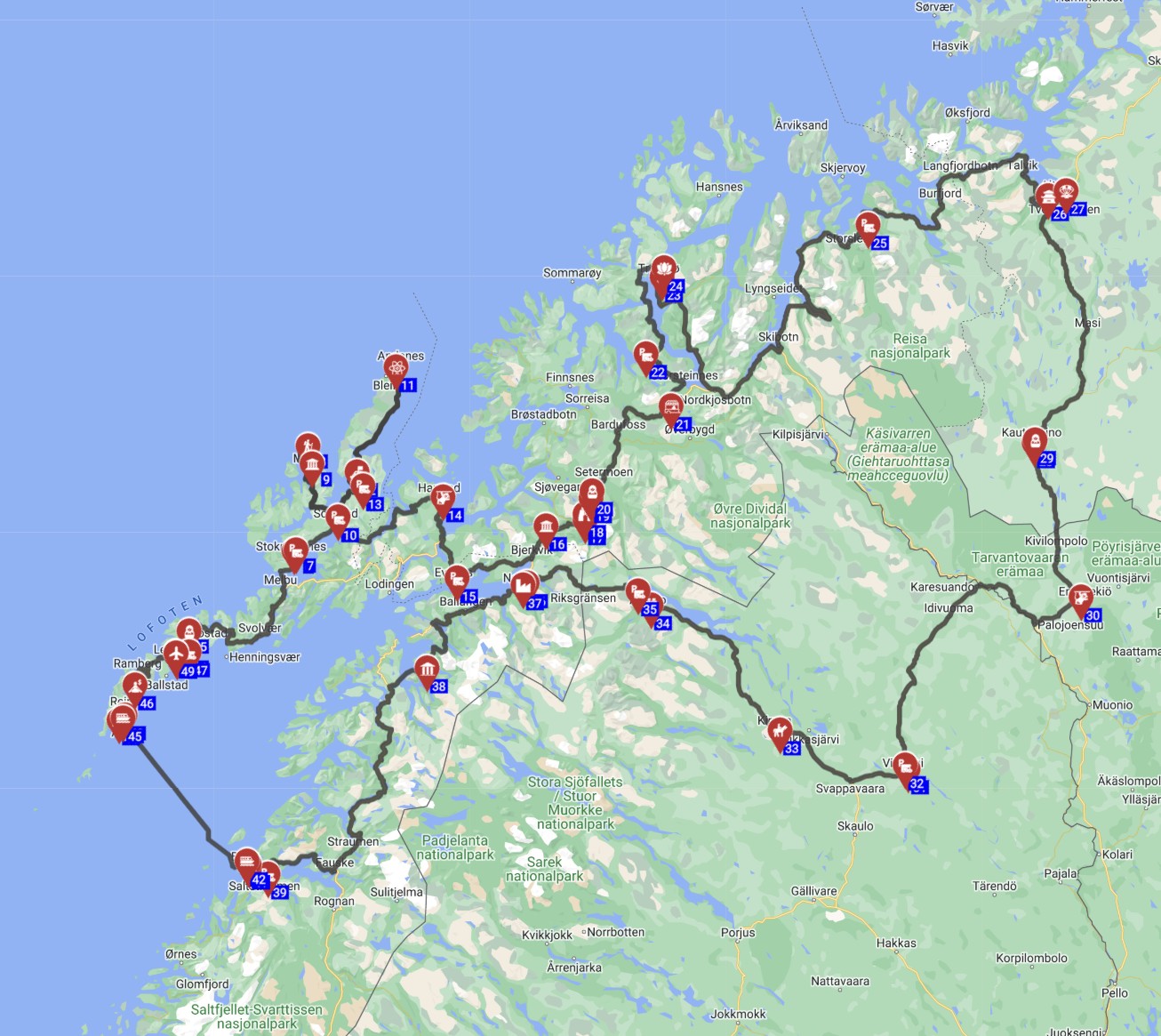
For beginners, an RV park that offers essential hookups, clean facilities, and a convenient location near points of interest, such as a campground with good access to a local village or natural attraction, is ideal. Prioritize parks that offer full hookups (electricity, water, and waste disposal) to simplify your first-time RV experience, ensuring comfort and convenience. Clean showers and laundry facilities are invaluable, especially during longer trips. Look for campgrounds situated near scenic routes, popular hiking trails, or charming towns like those along the "Tromsø Round Trip - Arctic Wonders: Northern Norway Family Road Trip," a 15-day, 2402.5 km itinerary that features 2 hiking areas and 4 museums. Many private campgrounds in Norway are very beginner-friendly, often staffed with English-speaking personnel and featuring clear signage and guidance on local practices.
Hookups & Amenities — What to Expect
Most private campgrounds in Norway provide electrical hookups (typically 230V, requiring a European CEE 7/4 "Schuko" adapter for standard RV plugs), fresh water access, and grey/black water dump stations, with additional amenities like Wi-Fi, laundry, and showers often available for a fee. Electricity is universally 230V, 50Hz, so ensure your rented motorhome is compatible or you have the correct adapter for charging and running appliances. Fresh water fill-up points and waste disposal points for grey and black water tanks are standard facilities at private sites, crucial for maintaining your comfort during an extended road trip. While Wi-Fi is often available, it can be spotty or an extra charge, especially in more remote areas, making a local SIM card a good backup. Laundry and showers typically operate on a coin or token system; plan for these small costs, and consider portable power banks for charging smaller devices on the go.
Booking Windows & Reservations in Norway
For popular destinations and peak season in Norway (June-August), it is advisable for beginners to book private campgrounds several months in advance, though many national park campgrounds reserve a percentage of spots for first-come, first-served arrivals, providing flexibility. Booking 2-6 months ahead is ideal for securing your preferred spot, especially in the popular fjord regions and on weekends. However, even if you are a spontaneous traveler, don’t fret-many national park sites, as well as some private campgrounds, retain 25-30% of their spots for same-day arrivals. This means you will very likely find a spot; if not at the first campground, then at the next one. Always call ahead before driving a long distance to confirm availability. For more insights on securing your rental, check out "RV Rental in Norway - Prices and Best Deals 2026".
Nearby Supermarkets & Resupply Points
For RVers in Norway, supermarkets like REMA 1000, Kiwi, and Coop are widely available in towns and cities for resupply, offering a range of groceries, including fresh produce and local specialties. Common chains such as REMA 1000, Kiwi, Coop, and Spar are excellent for stocking up your rented campervan with everything you need for delightful meals on board, from fresh fruits and vegetables to local Norwegian delicacies. Supermarkets generally operate late on weekdays and have shorter hours on Saturdays, with many being closed on Sundays outside of major cities, so plan your shopping accordingly. Use navigation apps to easily find the nearest store; larger towns will offer more extensive selections, and don’t miss the chance to seek out local markets for unique Norwegian produce and culinary experiences. Making meals in your RV is a fantastic way to save money and enjoy local flavors; check out our RV-friendly recipes playlist for inspiration.
Best RV Class for Camping in Norway
For beginners RVing in Norway, a Class B Camper Van or a Class SI - Semi-integrated motorhome often provides the best balance of maneuverability on narrow roads and comfortable living, suitable for both wild camping and equipped campsites. Class B Camper Vans, like the 'rv rental denver example Category Van' which features a shower and toilet, averaging a length of 5.8m and consuming 8-10 Liters/100 Km of fuel, are excellent for navigating Norway's narrow and winding roads, especially in fjord country, and for easier parking. Class SI Semi-integrated models, such as a '2 Berth Tamar' with automatic transmission, averaging a length of 6.9m and consuming 10-11 Liters/100 km, offer a good balance of spaciousness for 3-4 people and improved maneuverability compared to larger models. While larger Class C Alcove motorhomes (average length 7.5m, 10-12 Liters/100 km) and Class A Integrated RVs (average length 7.5m, 8-12 Liters/100 km) provide more living space, they can be more challenging to drive and park on Norway's smaller and steeper roads. Drive slowly and carefully, and you can drive almost anywhere without issues. No need to stress - just use common sense and pay attention.
How to Save on Campgrounds in Norway
Using campground discount cards is a primary way to save on campground fees in Norway, alongside strategic booking and choosing economical campsite types. Inquire with your rental provider about whether they offer or recommend discount cards, such as Camping Key Europe (CKE), which can provide significant savings of 10-20% on nightly rates at participating campgrounds across Norway. Traveling during the shoulder seasons (May, September) typically offers lower rates and fewer crowds compared to peak summer. Opt for municipal or regional campgrounds over larger private resorts, as they often provide more affordable options while still offering essential services. Many campgrounds also offer discounted weekly rates, making longer stays more economical per night. Additionally, responsibly utilizing Norway's Allemannsretten for free wild camping, strictly adhering to its regulations for motorhomes, can significantly reduce your accommodation costs.
What are the typical costs for an RV trip in Norway, including fuel, tolls, and ferries?
An RV trip to Norway involves costs for rental, fuel, the AutoPASS toll system, and ferries, which can add up, making detailed budgeting crucial beyond just the initial rental fee. Fuel prices in Norway are among the highest in Europe; budget for 10-12 Liters/100 km for most rented RVs, such as Bandana's Class SI models, converting to approximately €1.90-€2.20 per liter for diesel. Norway's automated AutoPASS toll system typically bills your rental RV retrospectively; ensure you understand your rental provider's billing process, which might include an administration fee on top of the actual toll costs. Ferry costs depend on vehicle length and passengers, ranging from NOK 150-500+ (approximately €15-€50+) for short crossings; while most domestic ferries don't require advance booking, checking schedules and payment methods (often card or AutoPASS linked) is wise. Private campsites usually cost NOK 200-500+ per night (approximately €20-€50+), whereas wild camping under Allemannsretten is free but requires strict adherence to its rules. For an even clearer picture of expenses, RV PLANET routes allow travelers to itemize and track every expense, like fuel, campground fees, and groceries, for easy budgeting.
When planning your budget, remember that prices are dynamic like flight tickets and change daily based on availability, seasonality, and supplier marketing decisions. The final price for your "Cheap RV Rental in Norway - Budget Guide 2026" is set at the actual booking time. For more specific cost estimations, you might find our "RV Rental Deals in Norway - Latest Offers 2026" and "Winter RV Rental in Norway - Pricing Guide 2026" helpful.
🎬 Video coming soon
What is Norway's Allemannsretten and how does it apply to RVs?
Allemannsretten, Norway's "right to roam," grants public access to uncultivated land for recreational purposes, allowing RVs to wild camp for up to two nights given strict adherence to environmental protection and distance from dwellings. This fundamental right permits parking and sleeping overnight in uncultivated land for up to two nights, provided you are at least 150 meters (490 feet) from an occupied dwelling. Strict limitations for motorhomes include: never discharging grey or black water onto the ground, packing out all trash, parking on durable surfaces to prevent damage, and respecting private or cultivated land. Adhering to 'Leave No Trace' principles is paramount, ensuring minimal environmental impact and leaving natural areas as found. This means utilizing designated dump stations at campgrounds or service points for all waste disposal and taking all rubbish with you. Embrace the freedom, but always with respect for nature and local communities.
What essential gear should I pack for an RV trip in Norway?
Packing essential gear for an RV trip in Norway requires considering its diverse climate, which ranges from mild coastal weather to colder mountain conditions, meaning layers, specific adapters, and navigation tools are crucial. Pack versatile layers of clothing, including waterproof and windproof outerwear, warm sweaters, and a hat and gloves, as weather can change rapidly even in summer. Bring a European power adapter (Schuko type for 230V outlets) to ensure your devices can charge, and consider a local SIM card for reliable connectivity. Reliable offline navigation apps like Maps.me or a physical map are invaluable, especially in areas with limited mobile service. Legally required safety equipment in your rental RV includes reflective vests for all passengers and a warning triangle for breakdowns. A comprehensive first-aid kit, a headlamp, and mosquito nets for summer evenings are also highly recommended additions to your packing list.
What unique cultural experiences and local foods can I find on an RV trip in Norway?
Beyond Norway's stunning natural landscapes, an RV trip provides opportunities to explore unique cultural experiences like stave churches, local festivals, and savor traditional Norwegian foods, from fresh seafood to brown cheese. Visit historic sites such as well-preserved stave churches, like Urnes Stave Church, and engaging Viking museums to delve into Norway's rich cultural heritage. Explore local farmers' markets and charming coastal towns to sample traditional Norwegian dishes like fresh seafood (salmon, cod), Fårikål (lamb and cabbage stew), Kjøttkaker (meatballs), and the distinctive Brunost (brown cheese). Engage in unique activities such as hiking to DNT (Norwegian Trekking Association) huts, fishing in pristine lakes and rivers (with local permits), or experiencing regional music and craft festivals that celebrate local traditions. Consider the "Stockholm Round trip - Sweden, Denmark and Norway Family Adventure," a 22-day, 3673.5999999999985 km itinerary that includes 6 museums, 4 traditional markets, and 3 extreme activities, to blend cultural immersion with outdoor fun.
How reliable is mobile data and what are the best connectivity options for RV travel in Norway?
Mobile data reliability in Norway is generally good in populated areas and along main routes, but can become spotty in remote fjords or mountain regions, making a local SIM card and offline solutions essential for consistent connectivity. Major providers like Telenor and Telia offer extensive 4G/5G coverage, ensuring decent service in most towns and along popular tourist paths. However, expect limited or no service in very remote or mountainous areas. Purchasing a local pre-paid SIM card upon arrival, easily found at airports or convenience stores, is the most cost-effective way to ensure reliable data throughout your RV rental journey. For charging devices in remote areas, ensure your RV has sufficient 12V outlets, or consider bringing a portable power station, a small solar panel, or an inverter to keep everything powered up. Always download offline maps for navigation, as campground Wi-Fi can also be unreliable.
What safety precautions and emergency procedures should I know for RVing in Norway?
Prioritizing safety in Norway involves preparedness for wildlife encounters and extreme weather, understanding emergency contacts, and knowing how to handle breakdowns in remote areas. Drive cautiously, especially at dawn and dusk, as wildlife like moose, reindeer, and sheep can appear on roads suddenly and without warning. Always be prepared for rapidly changing weather conditions, particularly in mountainous regions; pack versatile layers and monitor local forecasts regularly. For breakdowns, carry essential tools, reflective vests, and warning triangles, and ensure you have your rental company's 24/7 roadside assistance number readily available. Memorize general emergency numbers: 112 for Police, 110 for Fire, and 113 for Ambulance. Always have a charged phone and a comprehensive first-aid kit on board for peace of mind.
How can I practice sustainable and eco-friendly RV travel in Norway?
Practicing sustainable and eco-friendly RV travel in Norway involves strictly adhering to 'Leave No Trace' principles, mindful waste management, and responsible interaction with the pristine natural environment. Strictly follow 'Leave No Trace' principles: plan ahead and prepare, travel on durable surfaces, dispose of waste properly (never dump grey or black water onto the ground, always use designated dump stations), and leave what you find undisturbed. Conserve water and electricity within your rented motorhome by being mindful of usage, and drive efficiently to minimize fuel consumption and carbon footprint. Support local communities by purchasing local products and services, engaging with local businesses, and enjoying local food. Respect wildlife by observing from a distance and never feeding animals, and be considerate of other visitors by minimizing noise, especially during quiet hours at campgrounds.
What license and vehicle requirements apply to RV rental in Norway?
To rent an RV in Norway, most drivers require a standard B-class driving license valid for at least one year, an International Driving Permit (IDP) if their license is not from an EU/EEA country, and adherence to specific vehicle weight regulations. A valid standard car driver's license (B-class) is sufficient for driving all motorhome classes (Class A, B, and C) in Norway, provided the vehicle's Gross Vehicle Weight (GVW) does not exceed 3,500 kg. Drivers with licenses from non-EU/EEA countries are strongly recommended to carry an International Driving Permit (IDP) alongside their national license, as it provides an official translation. Rental companies typically require drivers to be at least 21 years old and have 1-3 years of driving experience, with no young driver surcharges or vehicle class restrictions based on age. Always confirm the specific GVW with your rental company, and note that towing is generally not recommended for beginners due to Norway's unique road conditions and strict regulations. For details on one-way rentals, consult our "One-Way RV Rental in Norway - Price Guide 2026" to understand associated fees and policies.
What You Shouldn't Miss
- Drive the Atlantic Road: Experience one of the world's most scenic roads, an 8.3-kilometer stretch of highway that leaps across small islands and islets with eight bridges, offering incredible coastal views.
- Explore the Lofoten Islands: Discover picturesque fishing villages, dramatic peaks rising from the ocean, and stunning white-sand beaches perfect for photography and leisurely strolls.
- Hike to Pulpit Rock (Preikestolen): Embark on an iconic hike (4-hour round trip) to a flat-topped cliff soaring 604 meters above Lysefjord, offering unparalleled panoramic fjord views.
- Visit a Stave Church: Step back in time by visiting one of Norway's beautifully preserved wooden stave churches, such as Borgund Stave Church, showcasing unique medieval architecture.
- Experience the Midnight Sun or Northern Lights: Depending on the season, witness the ethereal glow of the Midnight Sun north of the Arctic Circle in summer, or chase the dancing Northern Lights in winter.
- Taste Local Norwegian Specialties: Savor fresh seafood from the coast, try traditional Fårikål (lamb stew), and don't leave without tasting Brunost (brown cheese) and cloudberries.
Looking for expert insights from Avi Bandana? Top 5 Adventures — recommendations from Avi Bandana
Avi Bandana, a seasoned RV traveler and founder of Bandana Caravan, always emphasizes the importance of slow travel to truly connect with a destination. "Travel slowly, max 100-150 km per day on average. Take time to feel the place, connect to the culture, the food, and the scenery," he advises. For Norway, Avi recommends taking the time to explore the smaller, less-traveled routes, engaging with local communities, and truly savoring the peace and grandeur of the fjords.
Final Thoughts
Embarking on your first RV adventure in Norway is an experience unlike any other. It offers a unique blend of freedom, breathtaking scenery, and cultural immersion that traditional travel simply cannot match. From navigating the majestic fjords to embracing the quiet solitude of wild camping under the Midnight Sun, Norway by RV is an adventure that stays with you long after the journey ends.
Remember, we're here to support you every step of the way, from comparing prices and booking your ideal motorhome to offering peace of mind with our top-level deductible reimbursement option. We handle the details, you live the journey, creating unforgettable memories along Norway's stunning routes. Discover top destinations, planning tips, all in one place!
So, are you ready to chart your course and explore the wonders of Norway with a rented campervan? We know you'll find it an enriching and incredibly rewarding way to see this magnificent country.