In This Guide
- Top 5 Tips for cheap rv rental RV Rental in Norway
- Before You Book - Class, Dates, Insurance
- Pre-Trip Prep - Packing Checklist for Norway
- On the Road - Driving, Fueling, Navigation
- At the Campground - Setup, Hookups & Etiquette
- cheap rv rental-Specific Tips for Norway
- Common Mistakes to Avoid in Norway
- How much does an RV trip in Norway really cost?
- What is Norway's Allemannsretten and how does it apply to RVs?
- When is the best time to RV in Norway and what are the seasonal challenges?
- How do I prepare for emergencies while RVing in Norway's remote landscapes?
- How can I RV sustainably and responsibly in Norway?
- Where can I find off-the-beaten-path RV itineraries in Norway?
- What essential technology and apps are recommended for RVing in Norway?
Embarking on a motorhome adventure through Norway's stunning landscapes doesn't have to break the bank. With a little savvy planning and smart choices, you can experience the breathtaking fjords, majestic mountains, and charming coastal towns without overspending. As true RV specialists, we're here to share our expertise on securing a cheap RV rental in Norway, ensuring full transparency with no hidden fees and supportive guidance before, during, and after your booking. For live availability and current prices, start with our RV Rental Norway - Complete Guide 2026 guide.
Top 5 Tips for cheap rv rental RV Rental in Norway
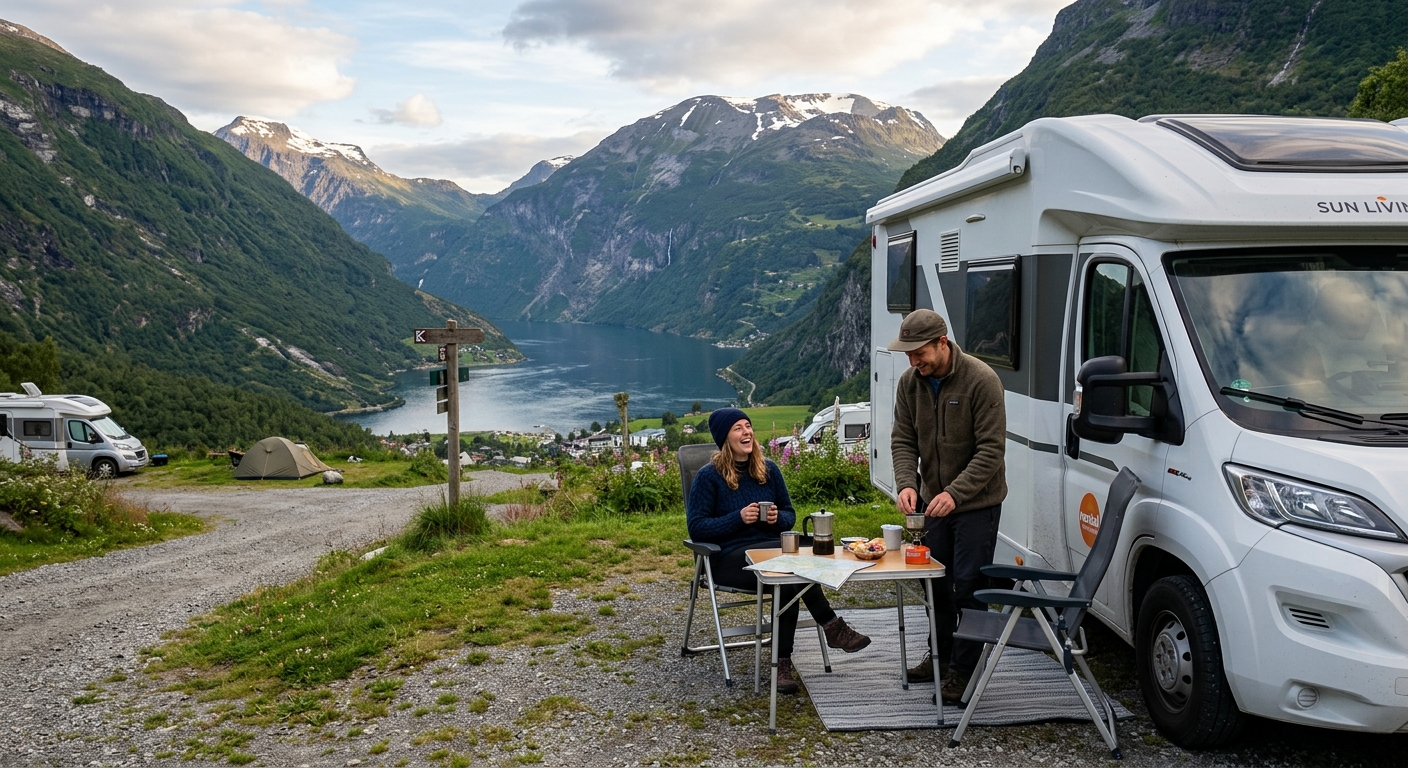
Securing a cheap RV rental in Norway requires strategic planning, allowing you to maximize your budget for an unforgettable journey. To begin, always book your RV rental well in advance to secure better rates, especially for trips outside the peak summer season where early bird discounts can save you up to 25%. On the routes offered through RV PLANET routes, you can itemize and track every expense along the way for easy budgeting.
Secondly, consider renting a smaller RV class, such as a campervan, for improved fuel efficiency and easier navigation on Norway's narrower roads, potentially cutting fuel costs by 20-30% on a longer trip. Traveling during the shoulder seasons (spring or fall), typically May-June or September-October, offers significantly reduced rental costs and fewer crowds at popular attractions like the Geirangerfjord or Pulpit Rock.
Fourthly, utilize Norway's well-stocked local supermarkets for groceries to significantly minimize dining out expenses. You can save up to 50% on meal costs by preparing your own food. For inspiration on what to cook in your rented mobile home, check out our RV-friendly recipes playlist. Finally, look for rental packages that include essential amenities or mileage to avoid unexpected additional costs. At Bandana RV, we believe in full transparency, so you'll never encounter hidden fees or surprises.
Ready to compare options? Compare Campervan Prices for Norway
Before You Book - Class, Dates, Insurance
Choosing the right RV class, booking dates, and understanding insurance options are crucial steps for planning your cheap RV rental in Norway. If a budget-friendly adventure is your priority, opting for compact campervans or smaller Class C motorhomes is generally advisable, as these vehicles offer better fuel economy, often around 10-12 liters per 100 km, and are easier to maneuver on Norway's winding roads and ferries.
Securing your rental 6-12 months ahead of time, particularly for peak summer travel in 2026, is essential to access early bird discounts and a wider selection of vehicles. Traveling in April-May or September-October, during the shoulder seasons, can result in significant savings on daily rental rates, sometimes up to 30% lower than July or August prices. While many national and state parks in Norway operate on a first-come, first-served basis for 70-75% of their spots, pre-booking campsites in popular areas is still wise. Don't stress too much about finding a spot: you'll always find one, if not at the first campground, then at the next one - just remember to call ahead before driving long distances.
Basic insurance is always included with rentals in Norway; however, to see prices including the most comprehensive coverage, select that option during your search. We recommend carefully reviewing options for excess reduction or full coverage for extra peace of mind. Remember, a standard car driver's license is sufficient for all motorhome classes (Class A, Class B, and Class C) in Norway, with the minimum rental age being 21. For those traveling from non-English speaking countries, an International Driving Permit (IDP) is recommended but usually not mandatory. You can upgrade to a top-level deductible for extra peace of mind, an optional add-on that offers enhanced financial protection during your trip.
🎬 Video coming soon
Pre-Trip Prep - Packing Checklist for Norway
Preparing effectively for your Norwegian RV adventure ensures comfort and safety across diverse conditions, from sunny fjord explorations to cooler mountain passes. Your packing strategy should prioritize layers and adaptability, as Norwegian weather can change rapidly within a single day.
- Clothing: Always pack a waterproof and windproof jacket and pants, thermal layers (base and mid), a warm hat and gloves, sturdy hiking shoes for outdoor activities, quick-dry casual wear for everyday use, and swimwear for refreshing dips in fjords or lakes.
- Kitchen: A reusable water bottle and an insulated coffee mug are essential for staying hydrated on the go. While most rentals include basic kitchenware, consider bringing compact cooking utensils if you have specific preferences, along with reusable shopping bags for your grocery runs. Pack basic non-perishable food items like tea, coffee, and essential spices to start your culinary journey. For tips on managing your food budget, remember that on RV PLANET routes, travelers can itemize and track every expense along the way for easy budgeting.
- Safety: Carry a comprehensive first-aid kit, including blister plasters for hiking, a headlamp with spare batteries, and a reflective vest for roadside visibility. Jot down local emergency numbers: 112 for general emergencies, 110 for fire, and 113 for ambulance services. A portable power bank for devices is also a smart addition for those remote moments.
- Documents: Ensure you have your valid passport or ID, your standard driver's license, and an International Driving Permit if recommended for your country of origin. Keep both physical and digital copies of your RV rental agreement and insurance details handy, along with your travel itinerary and credit/debit cards. It's also wise to have some local currency (NOK) for smaller purchases or emergencies.
Remember, travel slowly, aiming for a maximum of 100-150 km per day on average, to truly take time to feel the place, connect to the culture, the food, and the scenery.
On the Road - Driving, Fueling, Navigation
Navigating Norway by rented RV requires attention to unique road features and regulations to ensure a smooth and safe journey. Drive slowly and carefully, and you can drive almost anywhere without issues; there's no need to stress - just use common sense and pay attention to your surroundings.
Strictly adhere to posted speed limits, as Norway has significant fines for infringements. Be prepared for narrow, winding roads, numerous tunnels (some unlit or with unique interior lighting like the Lærdal Tunnel to prevent fatigue), and mountain passes that may have steep gradients or sharp turns. Always watch for wildlife, especially reindeer and moose, particularly at dawn and dusk, as they are common in many areas. For more tips on driving in the country, consult our RV Driving Deals in Norway - Routes and Savings 2026 guide.
When fueling, diesel (often labelled 'Diesel' or 'Avgiftfri Diesel') is the most common fuel type for motorhomes; double-check your RV's specific fuel requirement before filling up. Fuel stations can be widely spaced in remote regions, so plan your refills, especially if heading into the Arctic north or lesser-traveled areas. Prices fluctuate, so refuel when you see a competitive rate, especially in larger towns.
For navigation, utilize a reliable GPS system, ideally one with offline map capabilities (e.g., Google Maps, HERE WeGo), as mobile signal can be intermittent in certain fjord and mountain areas. Be aware that many scenic routes involve toll roads and compulsory ferries. Familiarize yourself with Norway's automated toll system (AutoPASS) before your trip to streamline payments and potentially receive discounts. You can register your vehicle online beforehand or some rental companies offer AutoPASS solutions.
At the Campground - Setup, Hookups & Etiquette
Efficient campground setup and respectful etiquette enhance your RV rental experience in Norway, whether you're staying at a bustling family-friendly site like Hunderfossen Camping or a serene spot by a fjord. Upon arrival, selecting a level pitch or using leveling blocks is crucial to ensure comfort for sleeping and proper function of your RV's appliances. Extend your RV's stabiliser legs for added stability before connecting to utilities.
Most Norwegian campgrounds offer 230V electrical hookups (requiring a CEE plug, often provided with your rental) and fresh water access. Grey and black water disposal points are standard; ensure all connections are secure and leaks are prevented to maintain hygiene and environmental standards. For finding campsites and campgrounds during your trip, we recommend using RV PLANET (rvplan.net) - a great resource for locating available spots along your route, which lists over 800 official campgrounds across the country, many offering 25-30% first-come-first-serve spots.
Observing quiet hours, typically from 11 PM to 7 AM, is important to respect fellow campers. Dispose of all waste properly in designated recycling and refuse bins, as Norway has strict recycling guidelines. Maintain a reasonable distance from neighboring pitches to ensure privacy and space. Most importantly, always adhere to 'Leave No Trace' principles, packing out everything you pack in and leaving your campsite spotless for the next visitor.
cheap rv rental-Specific Tips for Norway
Tailoring your cheap RV rental trip to maximize savings while enjoying Norway's profound beauty is entirely achievable with some strategic planning. One of Norway's most unique advantages for budget travelers is 'Allemannsretten' (Right to Roam), which allows for legal, free wild camping in many uncultivated areas for up to two nights, significantly reducing accommodation costs from typical €30-€60 per night campground fees.
For smart shopping and meal preparation, plan your meals and prioritize buying groceries from larger supermarket chains such as Kiwi, Rema 1000, or Coop. These stores offer more competitive prices, helping you save up to 50% on food compared to dining out at Norway's generally expensive restaurants. With a well-equipped kitchen in your rented motorhome (like the "MH-A" with its 302-liter fridge or the "Paradise Family 5" which features a microwave and 80L refrigerator), preparing your meals is simple and economical.
To minimize toll and ferry costs, plan your routes carefully using navigation apps that show alternatives or allow you to estimate these expenses. Consider pre-registering your vehicle with AutoPASS to potentially receive discounts on tolls and streamline payments. Embracing shoulder season travel, particularly early spring (April-May) or late autumn (September-October), can yield lower RV rental rates, fewer tourists at popular sites, and a distinct natural beauty with vibrant spring blossoms or stunning autumn foliage. While cooler weather and potential road closures are challenges, they are manageable with proper preparation, as detailed in our Winter RV Rental in Norway - Pricing Guide 2026. For more detailed budget insights, explore our Cheap RV Rental in Norway - Budget Guide 2026.
Common Mistakes to Avoid in Norway
Steering clear of common missteps can lead to a smoother and more enjoyable RV journey through Norway's spectacular, yet sometimes challenging, terrain. A frequent mistake is underestimating driving times and distances due to Norway's winding roads, numerous ferry crossings, and tunnels.
Instead, add significant buffer time to your daily travel plans and consult ferry schedules in advance to avoid delays. For instance, a route that appears short on a map might involve multiple ferry segments, adding hours. Another common error is ignoring posted speed limits or parking regulations; always adhere strictly to all road signs and parking rules, as Norway has a low tolerance for infractions and imposes substantial fines, ensuring safety for everyone.
Not having offline maps or portable power banks is another pitfall. Download offline maps for your entire route and ensure you have reliable power banks, as mobile signal can be intermittent in remote areas, particularly in the northern regions or deep within fjords. Finally, overpacking for the trip can increase fuel consumption and reduce living space in your rented campervan. Pack versatile, layered clothing and prioritize essentials, remembering that limited storage space in most RVs makes lighter packing beneficial for comfort and fuel efficiency.
How much does an RV trip in Norway really cost?
An RV trip in Norway can range from approximately €100-€250 per day for a budget-conscious traveler, encompassing rental, fuel, tolls, groceries, and occasional campground fees, though this cost varies significantly with vehicle choice, travel season, and lifestyle. Rental costs are highly dependent on the RV class, with smaller campervans typically starting from €70-€120 per day in shoulder season, while larger motorhomes might range from €150-€250+ per day in peak season (July-August). Booking 6-12 months ahead can often secure better rates, sometimes saving up to 25% on peak-season prices. Explore current offers in our RV Rental Deals in Norway - Latest Offers 2026 guide.
Fuel is a significant expense, as Norway has some of Europe's highest fuel prices, often around €2.00 per liter; budget accordingly, especially for extensive driving, estimating 10-15 liters per 100 km for an average RV. Tolls and ferries are another notable cost; expect these to be a significant expense, potentially adding €20-€50 per day depending on your route. Registering with AutoPASS can streamline payments and potentially offer minor discounts.
Groceries purchased from large supermarket chains like Kiwi, Rema 1000, or Coop are a key budget-saving strategy, as dining out in Norway is costly. A family of four could spend €40-€70 daily on groceries for self-catering, significantly less than restaurant meals. Campground fees average €30-€60 per night, though leveraging Norway's Allemannsretten (Right to Roam) for free, legal wild camping can drastically reduce accommodation expenses. Many campsites across Norway offer an average of 47 powered hookups, providing convenience for a fee. While many outdoor experiences like hiking are free, guided tours, national park fees (which are minimal or non-existent in most Norwegian national parks, unlike some other countries), or specific attractions will add to your overall budget. For a detailed breakdown of expenses, checking RV PLANET routes allows travelers to itemize and track every expense along the way for easy budgeting.
Looking for the easiest, safest, and most affordable way to rent an RV? We compare final prices across 50+ suppliers so you don't have to. Find cheap RV Rentals in Norway
What is Norway's Allemannsretten and how does it apply to RVs?
Allemannsretten, or the 'Right to Roam,' is Norway's public right of access to uncultivated land, allowing for free and respectful wild camping in RVs for up to two nights in the same spot, provided it's at least 150 meters from inhabited houses or cabins and does not disturb nature or local residents. This unique legal framework is deeply embedded in Norwegian culture, promoting outdoor activity and appreciation for nature.
Its practical application means this right primarily applies to 'utmark' - uncultivated land like forests, mountains, beaches, and moorland - but specifically excludes 'innmark,' which refers to cultivated land, private gardens, and developed areas. When exercising Allemannsretten, always adhere to 'Leave No Trace' principles: pack out all trash, avoid damaging vegetation, and refrain from open fires during dry periods or in prohibited zones. The maximum duration for staying in one wild camping spot is generally two consecutive nights, unless you obtain specific permission from the landowner for a longer stay.
Be aware that certain municipalities, national parks, or protected areas may have specific restrictions on wild camping; always look for local signage or information to ensure you are compliant. For finding suitable spots, mobile applications like Park4Night offer community-sourced recommendations for wild camping locations, but always confirm the suitability and legality upon arrival. This freedom is a cornerstone of a budget RV trip in Norway, but it comes with a strict responsibility to preserve the environment for everyone.
When is the best time to RV in Norway and what are the seasonal challenges?
The best time to RV in Norway largely depends on your desired experience, with late spring (May-June) and early autumn (September-October) offering a balance of pleasant weather, fewer crowds, and lower prices, while summer (July-August) is warmest but most expensive, and winter presents unique challenges like road closures and specialized gear needs.
Summer (July-August) offers the warmest temperatures, longest daylight hours (including the magical midnight sun in the north), and all roads and attractions are typically open, making it ideal for first-timers. However, this is peak season with the highest prices for rental motorhomes and campgrounds, and the largest crowds at popular sites. Shoulder season, encompassing May-June and September-October, provides a superb balance of good weather, fewer tourists, and more affordable prices for a cheap RV rental in Norway.
May brings blossoming landscapes and melting waterfalls, while September offers stunning autumn foliage and clearer skies, often ideal for Northern Lights viewing in the north. Challenges during these periods can include cooler temperatures, and some mountain roads may still be closed in early May or begin closing in late October due to snow. Winter (November-April) presents significant challenges for RVers with snow, ice, short daylight hours (or polar night in the Arctic), and widespread road closures, especially on scenic mountain routes. It requires a winterized RV with appropriate heating and often studded tires, along with experience driving in snowy conditions. However, it offers unique opportunities like spectacular Northern Lights viewing and winter sports for the truly adventurous. Regardless of the season, be prepared for rapidly changing weather, particularly in mountain regions, and always monitor forecasts from sources like Yr.no, as road closures due to weather or maintenance are common outside summer.
How do I prepare for emergencies while RVing in Norway's remote landscapes?
Preparing for emergencies in Norway's remote landscapes involves ensuring your rented RV is in optimal condition, having robust communication solutions, carrying a comprehensive first-aid kit, and understanding local emergency procedures, given the potential for limited connectivity and extreme weather. First and foremost, familiarize yourself with your rental company's roadside assistance contact details and emergency protocols. It’s always a good idea to have basic tools for minor fixes in your vehicle, though major issues should be directed to your supplier.
Limited connectivity is a reality in many remote Norwegian areas; while major routes have decent mobile coverage, deep fjords, and mountain regions often have patchy or no signal. Purchase a local SIM card from providers like Telenor or Telia, which often have the best coverage, and download offline maps for your entire route. For truly isolated expeditions, consider a satellite messenger device for critical communication. Wildlife safety is also paramount: be constantly aware of large wildlife such as moose, reindeer, and deer, particularly during dawn and dusk. Drive cautiously and at appropriate speeds, especially on less-traveled roads, and store all food securely inside your RV to avoid attracting animals.
Pack an extensive first-aid kit that includes supplies for outdoor injuries like sprains, cuts, and blisters, along with pain relievers and any personal prescription medications. Weather preparedness is critical in Norway, where conditions can change rapidly. Always monitor forecasts from reliable sources like Yr.no and pack appropriate layers for sudden shifts in temperature. Be ready to adapt your travel plans due to unexpected weather events, ensuring a safe and enjoyable journey. Our team at Bandana RV is always supportive before, during, and after your booking to help with any coordination or questions.
How can I RV sustainably and responsibly in Norway?
RVing sustainably in Norway entails diligently adhering to Leave No Trace principles, meticulously managing waste, conserving natural resources, and supporting local communities to protect the country's fragile environment and unique culture. When exploring Norway's pristine natural areas, always pack out everything you pack in, including all trash and food scraps, leaving no visible trace behind.
Stay on designated roads and established trails, and avoid driving or parking on delicate vegetation, which can be easily damaged. Respect all wildlife and their natural habitats by maintaining a distance and never feeding them. Proper waste management is crucial: utilize the designated waste and recycling facilities found at campgrounds and service stations, sorting your trash appropriately according to Norway's robust recycling programs. Crucially, never empty grey water (from sinks/showers) or black water (from toilets) anywhere other than approved disposal stations, which are readily available at most campgrounds.
Supporting local communities contributes positively to the regions you visit; purchase produce, crafts, and services from small, local businesses, and dine at local restaurants and cafes rather than only large chains to help sustain community enterprises. Be mindful of your consumption of water and electricity in your rented RV, especially when wild camping, to conserve these precious resources. Drive efficiently to reduce fuel consumption and associated emissions, contributing to cleaner air. When exercising Allemannsretten (Right to Roam), always ensure your presence leaves no visible trace and respect private property, cultural sites, and designated protected areas.
Where can I find off-the-beaten-path RV itineraries in Norway?
To discover off-the-beaten-path RV itineraries in Norway beyond the highly popular fjord routes, consider exploring lesser-traveled regions like the Helgeland Coast, the island of Senja, or the inland national parks, often highlighted through local tourist information, specialized travel blogs, and RV community forums. Instead of only the 'Golden Route' around the iconic fjords, explore the **Helgeland Coast (Kystriksveien)**, a scenic coastal road covering approximately 650 km, offering breathtaking island views and charming fishing villages with fewer tourists. The island of **Senja** provides dramatic fjords and mountains akin to Lofoten but with fewer crowds and unique landscapes, ideal for a multi-day campervan exploration.
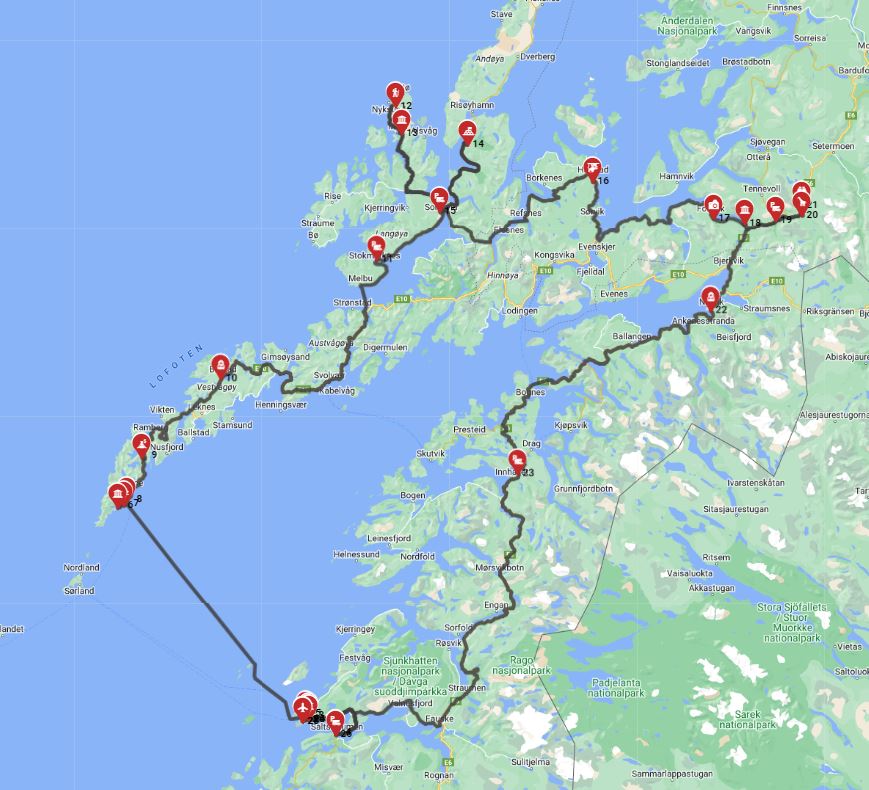
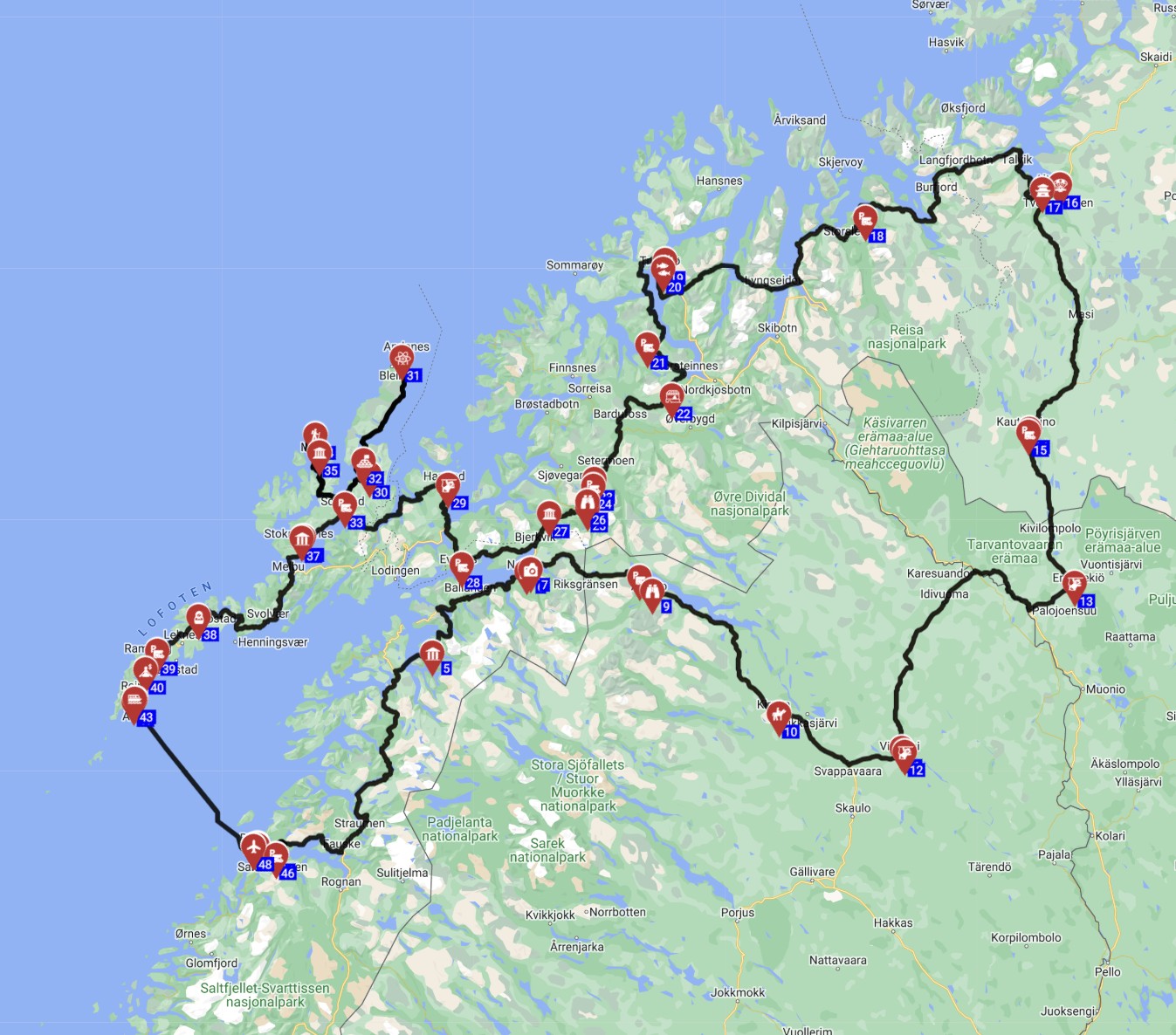
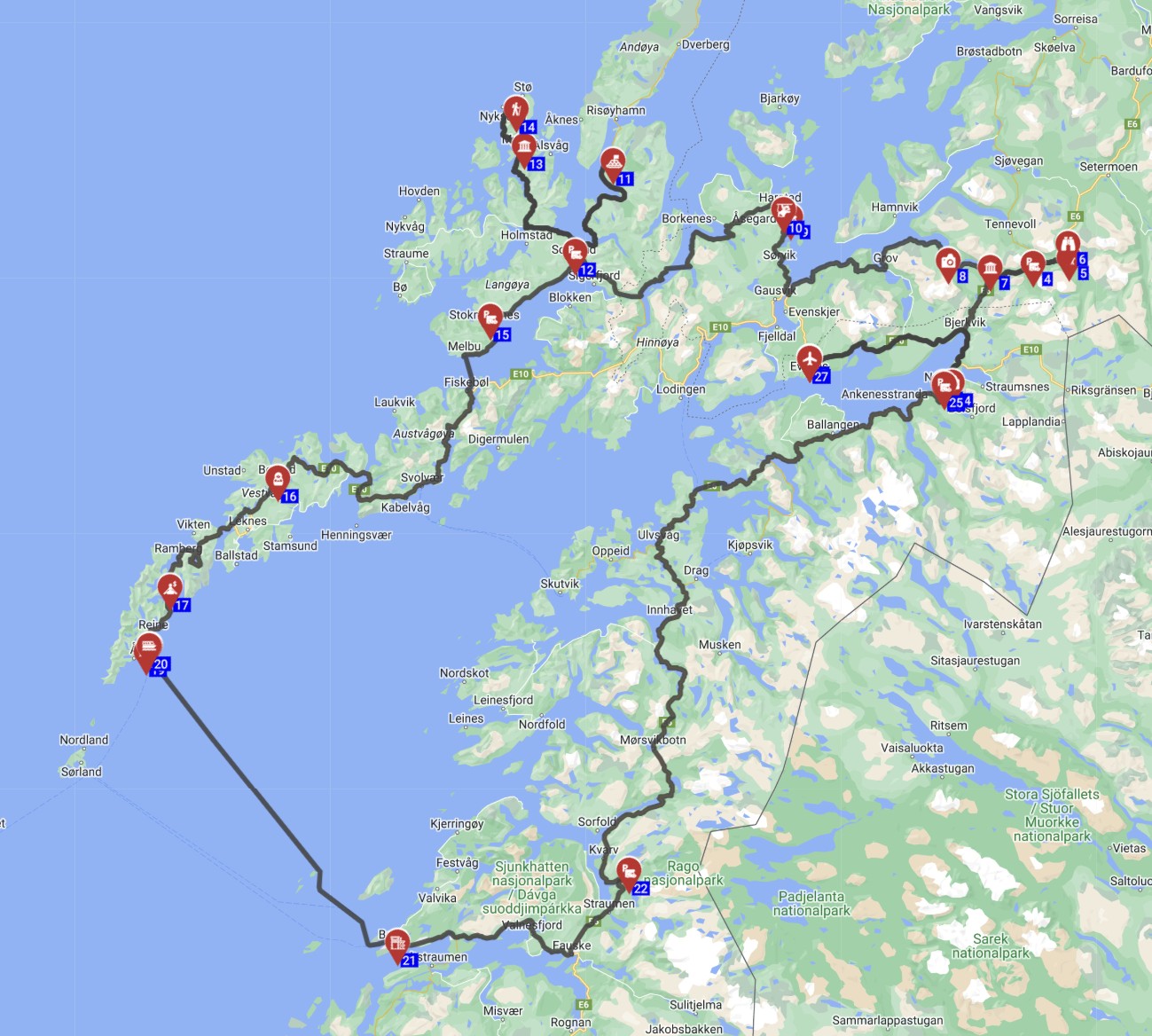
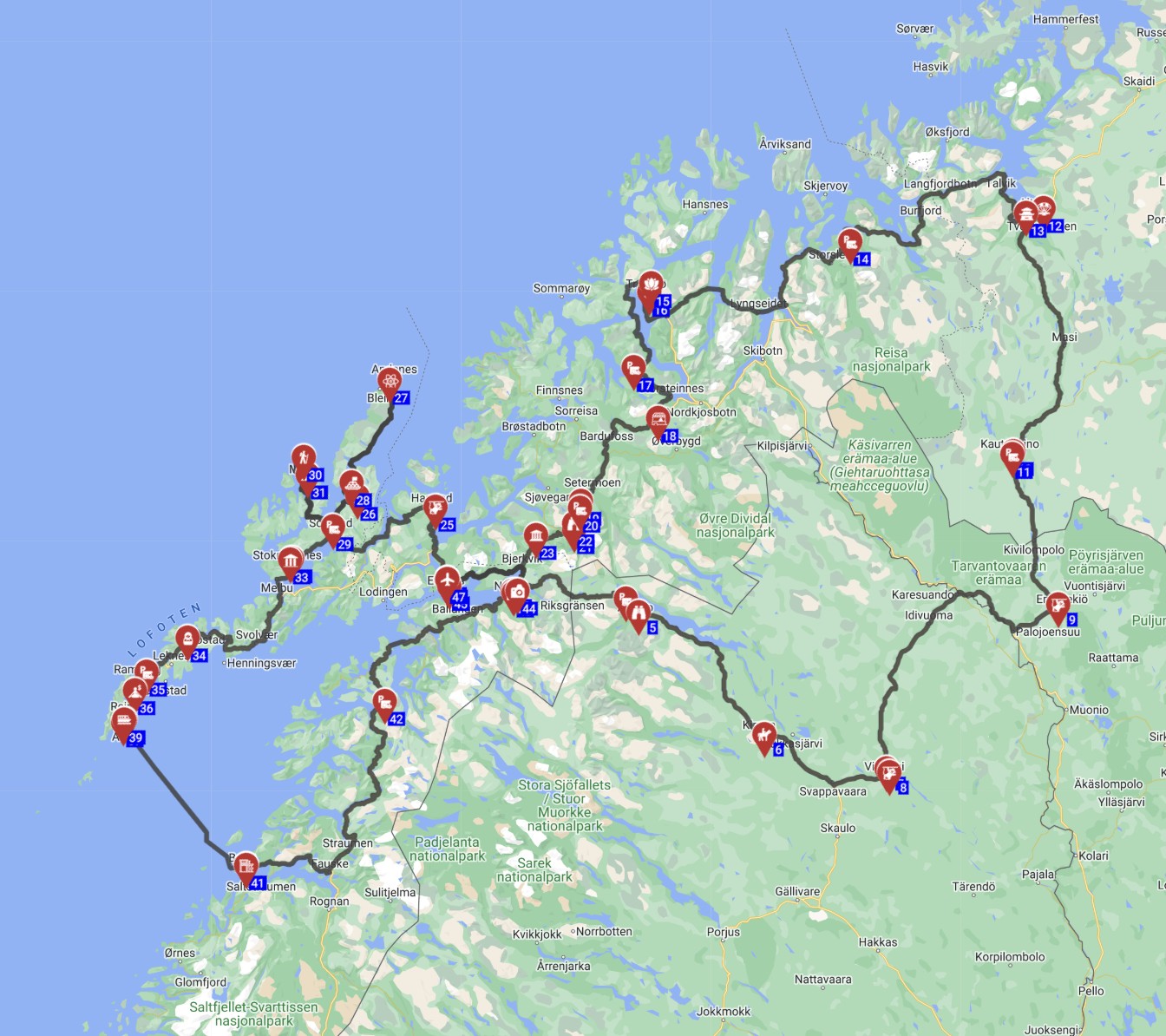
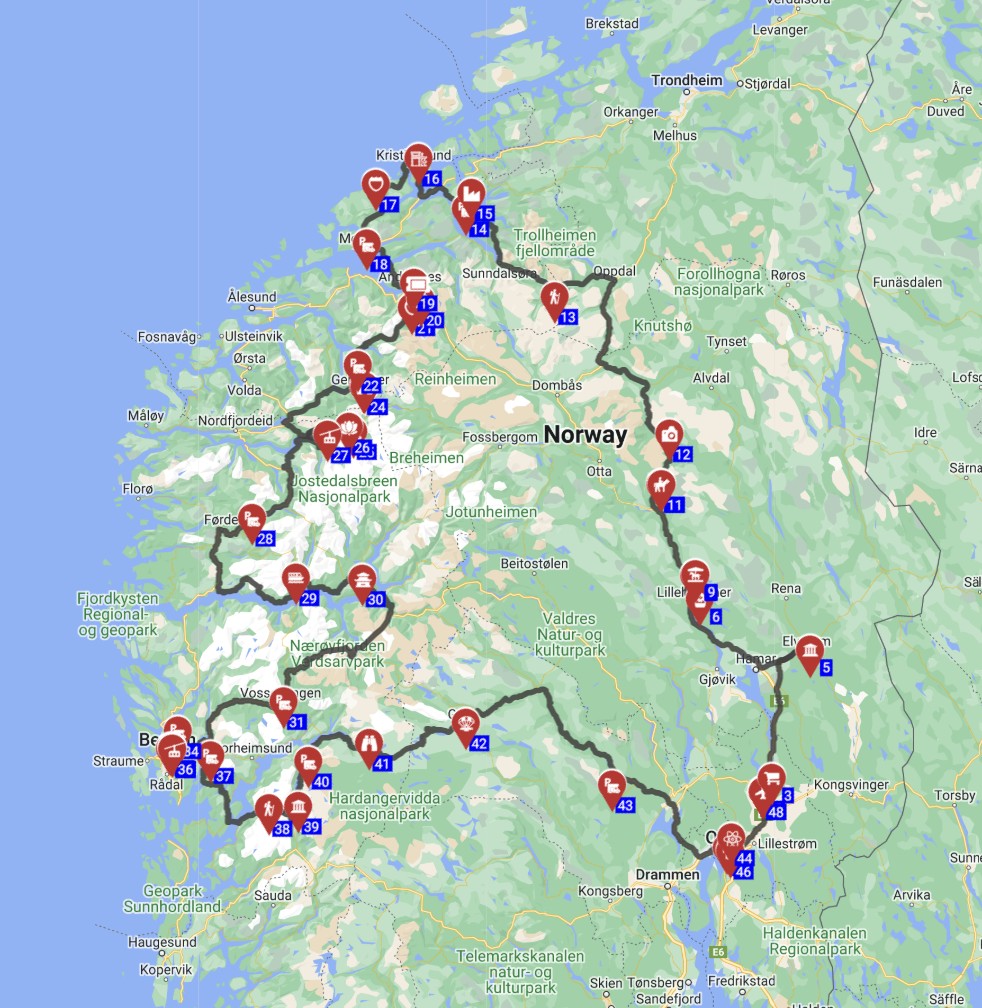
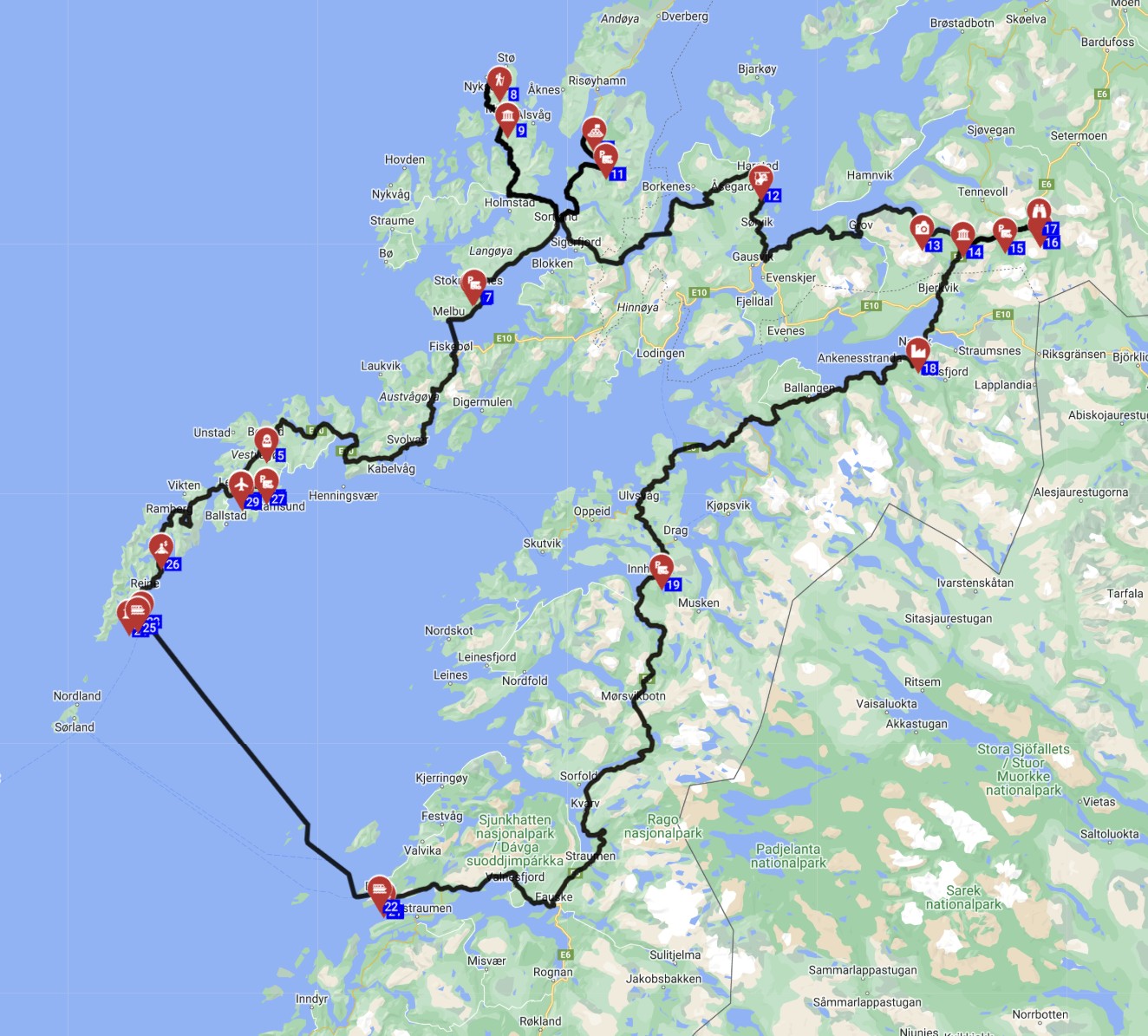
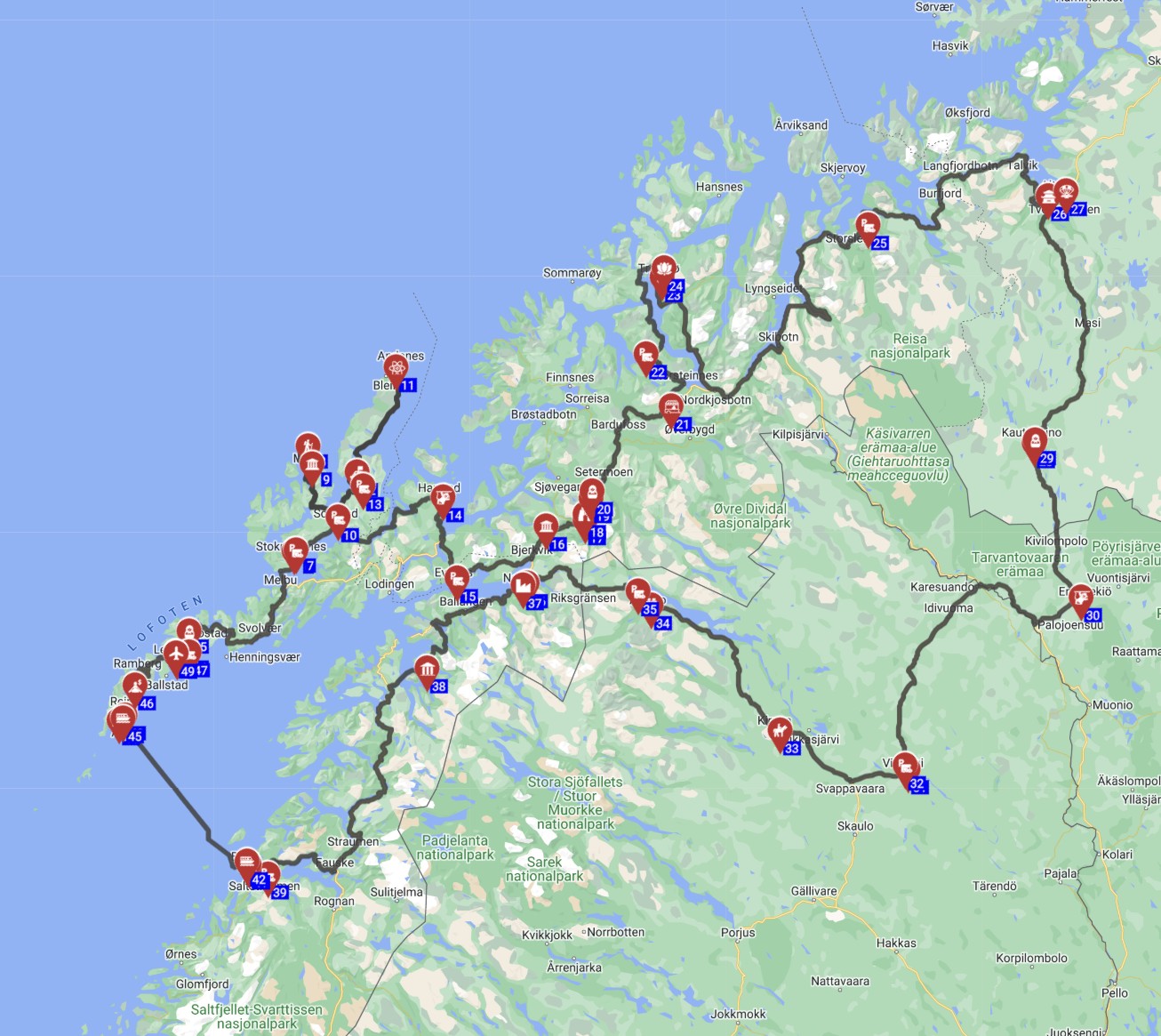
For inland exploration, areas around **Jotunheimen National Park** (away from the most frequented trails) offer stunning hiking and remote beauty with over 250 peaks above 1,900 meters. Seek out unique cultural activities such as authentic Sami cultural experiences in the northern regions, visit smaller, historic fishing villages, or time your visit to coincide with local festivals and markets for a deeper cultural immersion. Consider niche outdoor adventures like foraging for wild berries and mushrooms (with proper knowledge), exploring less-trafficked hiking trails with maps like those from UT.no, or kayaking in calmer, lesser-known fjords and lakes. For example, our "Tromsø Round Trip - Arctic Wonders: Northern Norway Family Road Trip" offers 15 days across 2402.5 km, including 3 wildlife watching opportunities and 2 hiking areas, allowing you to discover Arctic wonders.
Local tourist information centers (both physical and online portals) are excellent resources for regional specifics. Consult specialized RV travel blogs, forums, and Facebook groups dedicated to Norway for insider tips and hidden gems. Being flexible with your itinerary based on local recommendations or unexpected discoveries can often lead to the most memorable 'off-the-beaten-path' experiences. Remember, RV PLANET (rvplan.net) offers over 1,300 pre-planned routes across 5 continents, including Norway, crafted by professionals to inspire your adventure. As a reward for using rvplan.net, you can receive a 25% planning discount when you book your RV rental through us.
Get inspired for your next trip! Discover top destinations and planning tips all in one place with our RV Rental Europe - Complete Guide 2026.
What essential technology and apps are recommended for RVing in Norway?
Essential technology and apps for RVing in Norway include reliable navigation apps with offline map capabilities, specific tools for managing tolls and ferries, current weather forecasts, and platforms for finding campsites and wild camping spots to ensure a smooth and connected journey. For navigation, download offline regions on apps like Google Maps, HERE WeGo, or Maps.me, which are crucial for reliable GPS functionality even without mobile signal in remote areas. These applications are particularly valuable for intricate fjord routes or less-developed mountain roads.
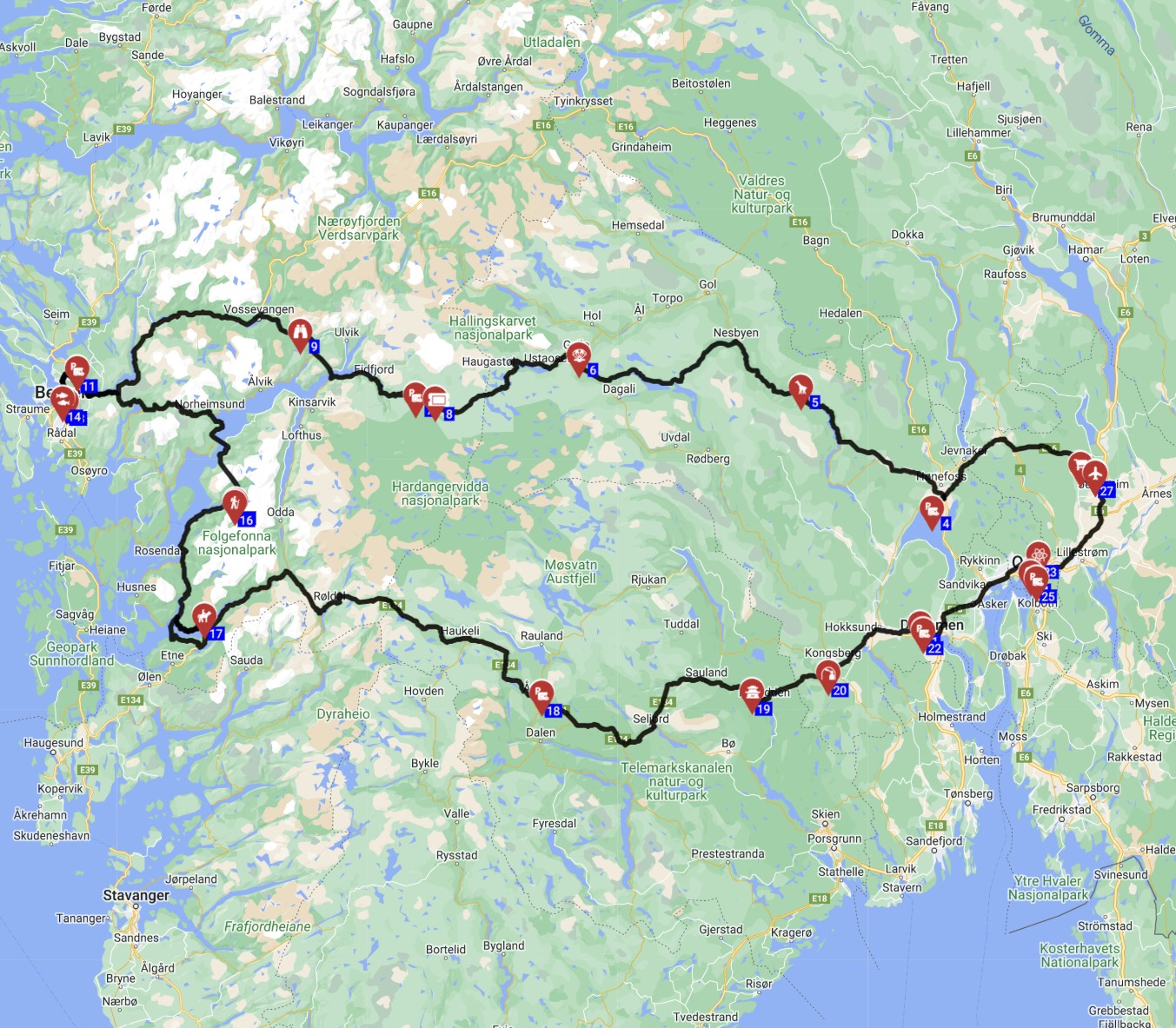
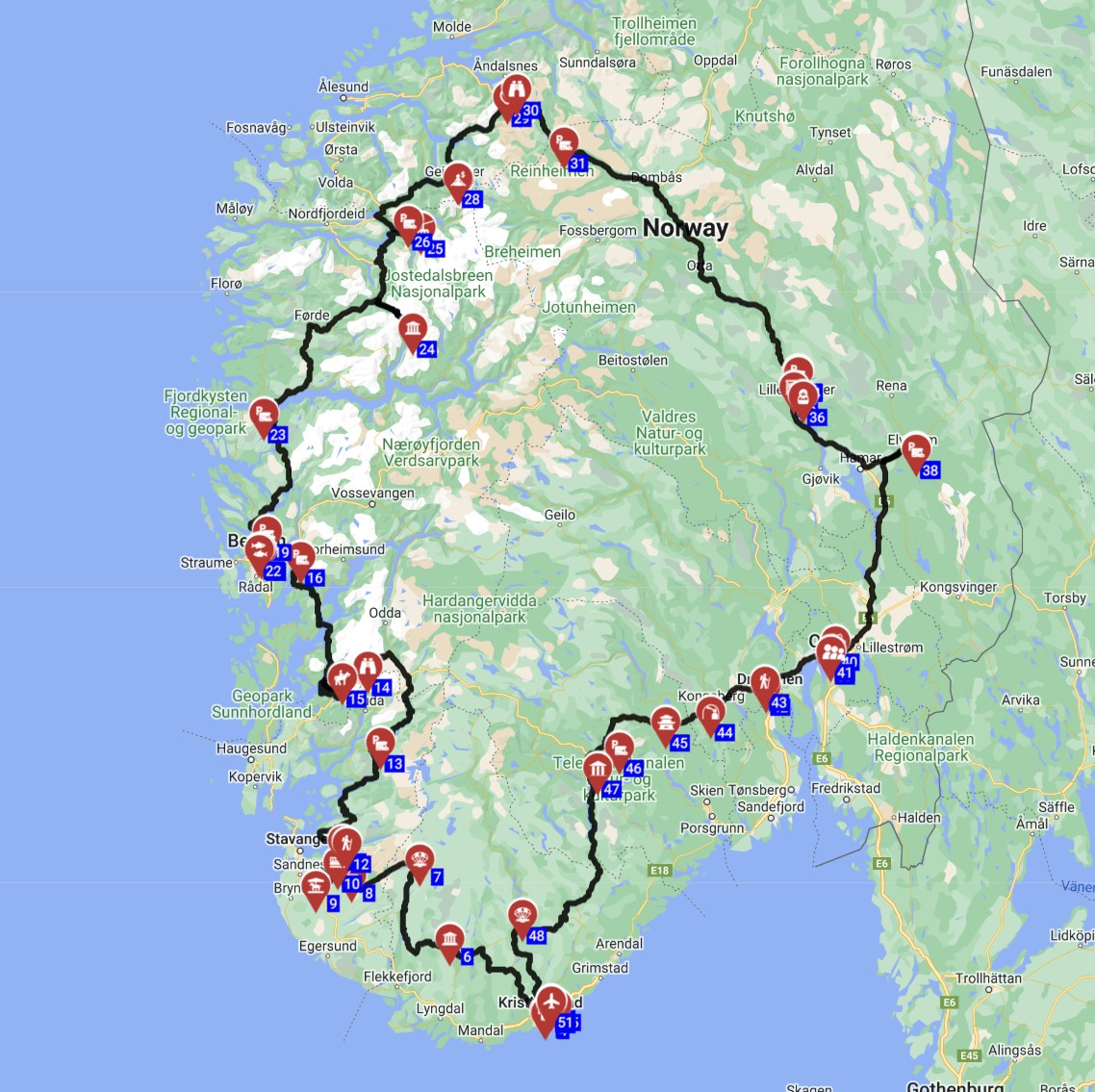
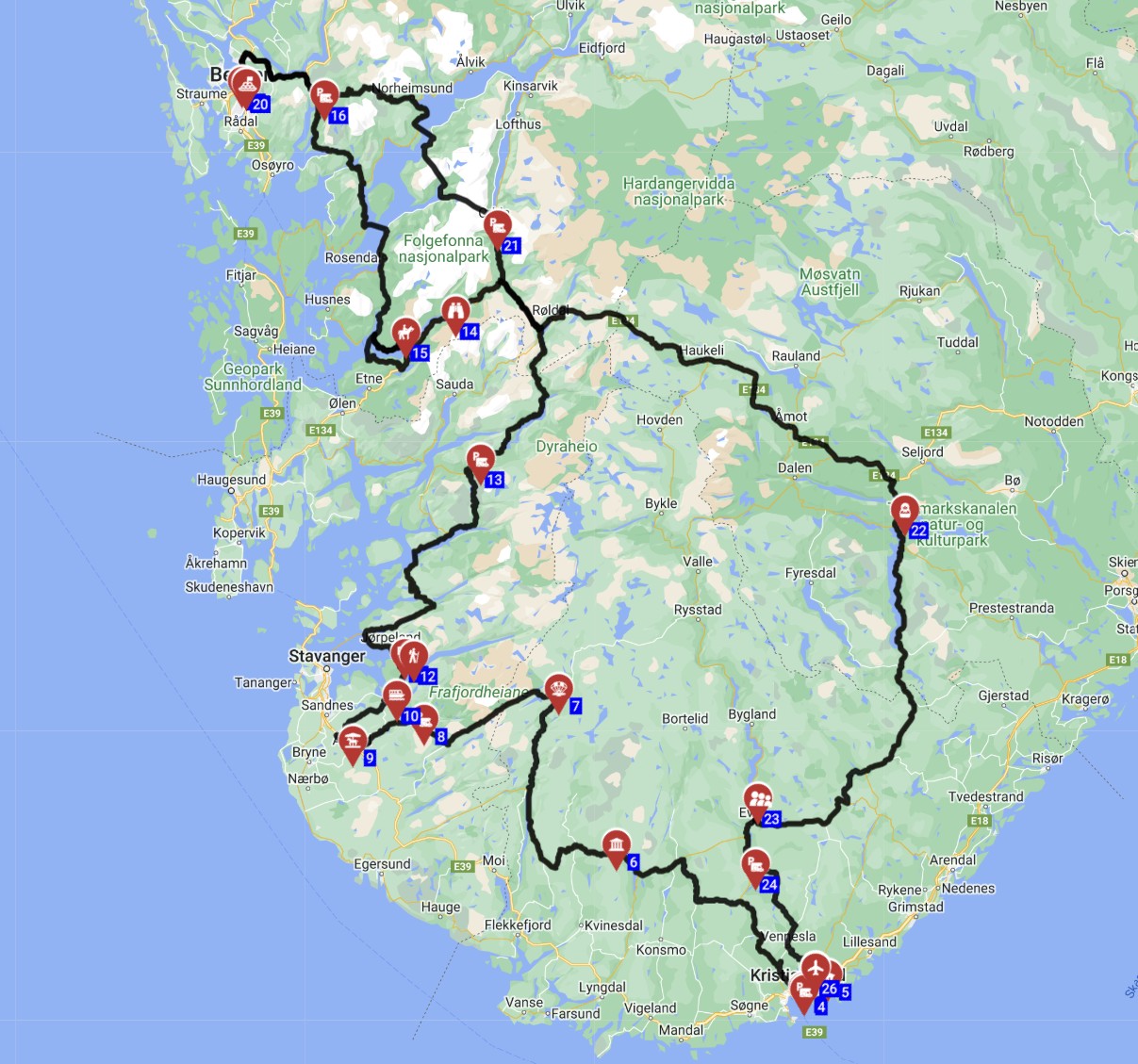
For tolls and ferries, utilize the AutoPASS app or pre-register your vehicle online to manage Norway's automated toll system efficiently. For ferry schedules and tickets, specific apps like Fjord1 or Norled are essential for coastal routes and island hopping. Our "Bergen Round trip - Norway’s Coastal Wonders" is an 8-day, 782.9 km journey around Bergen that includes 2 cruise terminals and 1 scenic route, making ferry apps very useful.
Regularly check the Statens vegvesen (Norwegian Public Roads Administration) website or app for real-time updates on road closures, ferry disruptions, and mountain pass statuses, as these conditions can change rapidly due to weather. For internet access, consider purchasing a local SIM card from providers like Telenor or Telia for the best mobile coverage across Norway; a portable Wi-Fi hotspot can also be useful if traveling with multiple devices. Carry a robust portable power bank for charging gadgets, and for extended off-grid stays, a small solar charger for devices can be beneficial.
Finally, apps like Park4Night and Camping-app are invaluable for locating official campsites, service stations, and community-recommended wild camping spots, including relevant restrictions. For weather, use Yr.no, the Norwegian Meteorological Institute's highly accurate app and website, for detailed and localized forecasts, which are critical for planning outdoor activities and route adjustments. Bandana RV has direct partnerships with 50+ leading RV suppliers worldwide, including trusted names like El Monte, Cruise America, Apollo, and Britz, ensuring you have access to a wide range of well-equipped vehicles suitable for navigating Norway with these technologies.
What You Shouldn't Miss
Looking for expert insights from Avi Bandana? Top 5 Adventures - recommendations from Avi Bandana:
- Drive the Atlantic Ocean Road: This iconic 8.3 km stretch connects several islands with uniquely designed bridges. It's often called one of the world's most beautiful drives.
- Hike to Pulpit Rock (Preikestolen): Experience the breathtaking views from this flat-topped cliff 604 meters above the Lysefjord. It's a moderately challenging hike but incredibly rewarding.
- Explore the Lofoten Islands: Venture north to discover dramatic peaks, picturesque fishing villages, and stunning white-sand beaches above the Arctic Circle. You might even catch the Northern Lights depending on the season.
- Cruise the Geirangerfjord: A UNESCO World Heritage site, this fjord boasts cascading waterfalls like "The Seven Sisters" and abandoned mountain farms, best experienced by boat or from panoramic viewpoints.
- Visit the North Cape (Nordkapp): Stand at Europe's northernmost point, watching the midnight sun or the endless winter landscape. It's an epic journey to a truly dramatic destination, showcasing Norway's wild beauty.
Consider the "Stockholm Round trip - Sweden, Denmark and Norway Family Adventure" for a comprehensive journey, a 22-day, 3673.6 km route that includes 6 museums, 3 natural features, and 1 scenic route across these three Nordic countries.
Final Thoughts
Embarking on a cheap RV rental adventure in Norway promises unparalleled freedom and breathtaking scenery without requiring an extravagant budget. By adopting smart planning strategies, such as booking early, opting for smaller campervans, and embracing the shoulder seasons, you can significantly reduce your costs while enjoying the majestic fjords and serene wilderness. Remember the value of Norway's 'Right to Roam' and the savings found in self-catering.
At Bandana RV, we're dedicated to making your journey transparent, affordable, and fully supported. We provide comprehensive comparisons and essential resources like RV PLANET (rvplan.net) to help you plan every detail, from routes to campsites. Our expertise as true RV specialists ensures that you receive honest advice and peace of mind from the moment you start dreaming until you return your rental motorhome.
Imagine the freedom of waking up to a new, stunning view each day, cooking fresh local ingredients in your own mobile kitchen, and exploring Norway at your own leisurely pace. With these tips and our unwavering support, your cheap RV rental in Norway will be an unforgettable experience filled with incredible memories, proving that life truly is now!
Plan a trip itinerary in advance with minimal effort and maximum enjoyment. Check Norway RV Rental Prices Now