In This Guide
- Best Australia RV Itinerary for rv rental - Overview
- 7-Day Classic Route in Australia
- 14-Day Extended Journey in Australia
- Recommended RVPlan Trip for Australia
- Must-See Stops Along the Way (Avi Bandana Picks)
- Daily Driving Distances & Drive Times in Australia
- Best RV Class for This Itinerary - Couple & Family Picks
- What is the most beautiful road trip in Australia?
- Can you park an RV anywhere in Australia?
- What is the best RV in Australia?
- How long does it take to travel around Australia in a campervan?
- What is the 333 rule for campervan?
- What not to do in Australia as an American?
- What are the top 3 tourist attractions in Australia?
- How many days are enough for an Australia trip?
- What is the best month to go to Australia?
Exploring Australia in winter with a rented RV opens up a world of unique experiences, particularly in the northern states where temperatures are mild and sunny. Forget about chilly weather; Australia's winter, from June to August, is actually the perfect time to discover the tropical warmth of Queensland, the rugged beauty of the Northern Territory, and the stunning coastlines of Western Australia. Imagine waking up to sunshine and a gentle breeze, ready to hit the road in your comfortable motorhome, with no need to stress about snow or ice. This guide will help you craft an unforgettable cold-weather route, offering practical tips and itinerary suggestions tailored for families, couples, and friends seeking adventure down under.
For live availability and current prices, start with our RV Rental Australia - Complete Guide 2026 guide. We are true RV specialists, founded in 2001, and have over two decades of experience helping tens of thousands of travelers explore the world by RV. We partner directly with 50+ leading RV suppliers worldwide, including trusted names like Apollo and Britz, ensuring you get the best selection and full transparency with no hidden fees or surprises.
Best Australia RV Itinerary for rv rental - Overview
The best Australia RV itinerary for a rental during the winter months (June-August) typically focuses on the northern half of the continent, where the climate is dry and warm. These routes offer a fantastic blend of coastal beauty, unique cultural experiences, and iconic outback adventures, avoiding the chill that settles in Australia's southern regions during this season.
Total distances for RV trips in Australia can vary significantly, ranging from 1,000 km for focused regional excursions, such as a week-long coastal drive in Queensland, to over 7,000 km for cross-country adventures. For a truly comprehensive journey covering multiple climates and landscapes, a minimum duration of 7 days for a regional focus, extending up to 30+ days for an epic continental exploration, is recommended. The optimal season for RV travel in Australia is highly regional; while southern states like Victoria and Tasmania are cooler in winter, northern territories and Queensland coasts offer ideal conditions, making shoulder seasons generally preferable for avoiding extreme weather and peak crowds across the entire continent.
7-Day Classic Route in Australia
A classic 7-day RV route in Australia, particularly suitable during the shoulder seasons or focusing on warmer regions, offers a taste of diverse landscapes and experiences. This itinerary can be a flexible framework, especially when considering the dynamic nature of travel. Remember to travel slowly, aiming for a maximum of 100-150 km per day on average, to truly connect with the culture, food, and scenery.
- Day 1: Sydney → Blue Mountains (Katoomba) - Approx. 100 km. Begin your adventure by picking up your rented motorhome in Sydney. Drive west to the stunning Blue Mountains, where you can explore the iconic Three Sisters rock formation and enjoy scenic railways. Spend the night at a local caravan park, like Katoomba Falls Caravan Park, which often offers powered sites for your campervan.
- Day 2: Blue Mountains → Hunter Valley (Pokolbin) - Approx. 120 km. Head north to Australia's oldest wine region, Hunter Valley. Indulge in wine tasting and gourmet food experiences. Numerous caravan parks in Pokolbin cater to motorhomes.
- Day 3: Hunter Valley → Port Macquarie - Approx. 200 km. While slightly over the recommended daily maximum, this drive is manageable with an early start. Discover the Koala Hospital and enjoy the beautiful beaches in Port Macquarie. Stay at a beachfront holiday park.
- Day 4: Port Macquarie → Coffs Harbour - Approx. 160 km. Continue north along the coast, stopping at the famous Big Banana and exploring Dorrigo National Park. Park your campervan at Park Beach Holiday Park for the night.
- Day 5: Coffs Harbour → Byron Bay - Approx. 150 km. Experience the vibrant, laid-back surfing culture of Byron Bay. Take a walk to the iconic lighthouse, Australia's most easterly point. Discovery Parks Byron Bay provides excellent RV facilities.
- Day 6: Byron Bay → Gold Coast (Burleigh Heads) - Approx. 100 km. Enjoy the stunning beaches and national parks of the Gold Coast, making Burleigh Heads your base. Burleigh Beach Tourist Park is a popular spot for rented RVs.
- Day 7: Gold Coast → Brisbane - Approx. 80 km. Conclude your journey in Brisbane, where you can explore the South Bank Parklands before returning your rented RV. This route offers a fantastic snapshot of Australia's east coast.
14-Day Extended Journey in Australia
For those with more time, a 14-day RV journey allows for deeper exploration, combining iconic coastal drives with a taste of the Australian outback. This itinerary suggests a fantastic route from Melbourne to Adelaide, with an optional extension into the Flinders Ranges, perfect for a comprehensive experience with your rented motorhome.
Southern Coastal Explorer (Melbourne to Adelaide)
- Day 1-2: Melbourne & Surrounds. Start your trip by exploring the vibrant city of Melbourne and its charming surroundings, like St Kilda. Settle into a Melbourne suburban caravan park.
- Day 3: Melbourne → Apollo Bay (Great Ocean Road) - Approx. 190 km. Begin the iconic Great Ocean Road drive, renowned for its stunning coastal views. Apollo Bay Holiday Park offers a perfect overnight stop for your camper.
- Day 4: Apollo Bay → Port Campbell (Great Ocean Road) - Approx. 90 km. Continue along the Great Ocean Road to witness the majestic Twelve Apostles and Loch Ard Gorge. Stay at Port Campbell Holiday Park.
- Day 5: Port Campbell → Coonawarra - Approx. 180 km. Head inland to the Coonawarra wine region, famous for its Cabernet Sauvignon. Coonawarra Bush Camp welcomes RVs.
- Day 6: Coonawarra → Robe - Approx. 120 km. Discover the coastal charm and historic buildings of Robe. Robe Lakeside Tourist Park is a great spot for your motorhome rental.
- Day 7: Robe → Victor Harbor - Approx. 160 km. Experience Granite Island and its unique horse-drawn tram. Victor Harbor Beachfront Holiday Park provides excellent facilities.
- Day 8-9: Victor Harbor → Adelaide & Adelaide Hills - Approx. 85 km. Explore the city of Adelaide and the picturesque German village of Hahndorf in the Adelaide Hills. Find a convenient Adelaide caravan park for your stay.
Outback & Flinders Ranges Extension (from Adelaide)
- Day 10: Adelaide → Clare Valley - Approx. 140 km. Drive north to another beautiful wine region, Clare Valley. Clare Caravan Park is a welcoming stop.
- Day 11: Clare Valley → Port Augusta - Approx. 180 km. This town serves as the gateway to the magnificent Flinders Ranges. Shoreline Caravan Park offers a comfortable night for your rented RV.
- Day 12: Port Augusta → Wilpena Pound (Flinders Ranges) - Approx. 160 km. Journey into the Flinders Ranges to experience Wilpena Pound, an iconic natural amphitheater. The Wilpena Pound Resort Campground is a prime location.
- Day 13: Explore Flinders Ranges. Dedicate a full day to hiking and scenic drives within the Flinders Ranges, staying another night at Wilpena Pound.
- Day 14: Wilpena Pound → Adelaide - Approx. 430 km. This is a longer driving day to return your motorhome rental in Adelaide, concluding a truly extended Australian journey.
Recommended RVPlan Trip for Australia
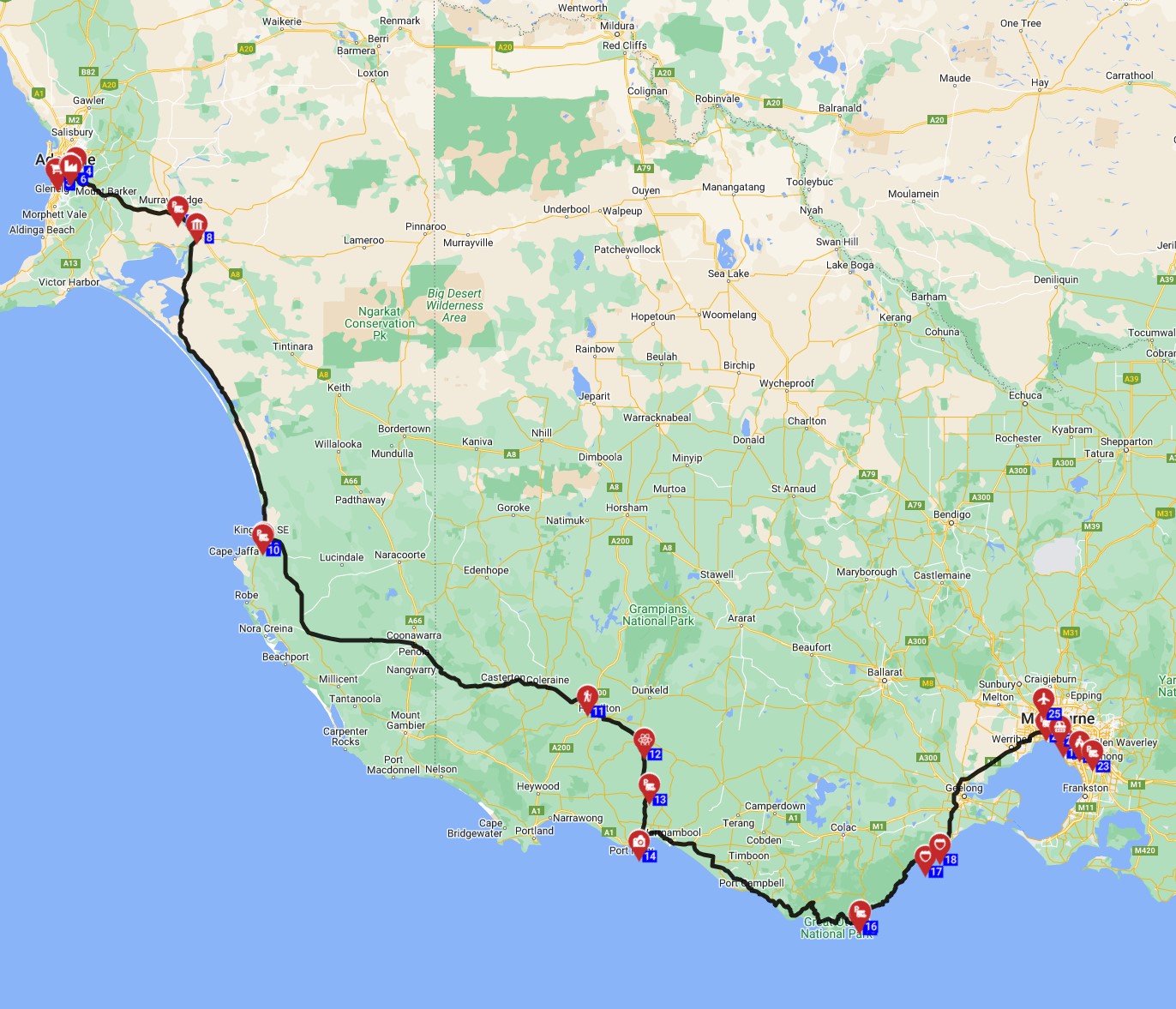
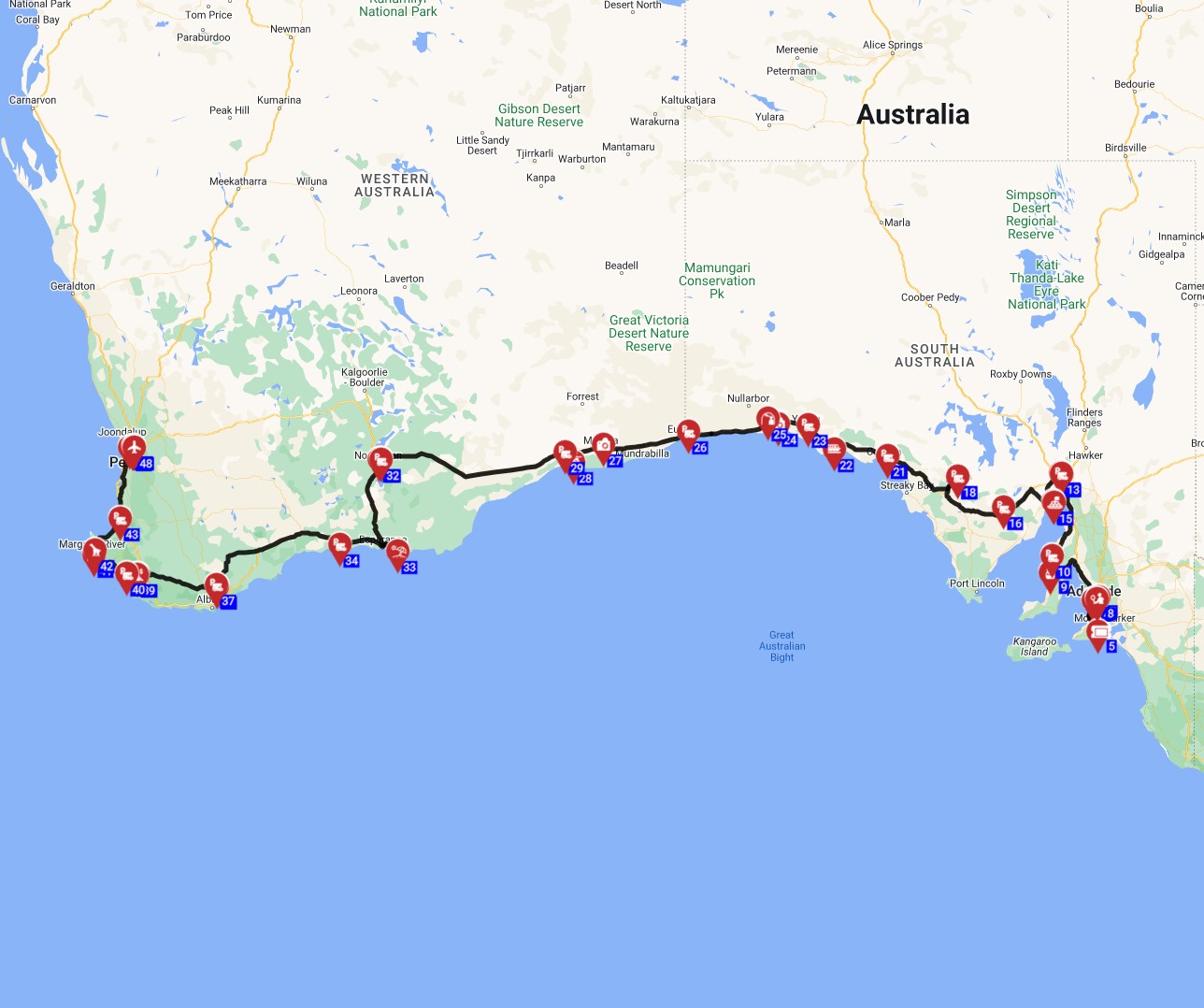
For an epic Australian adventure that truly covers vast distances and diverse landscapes, the RVPlan trip "

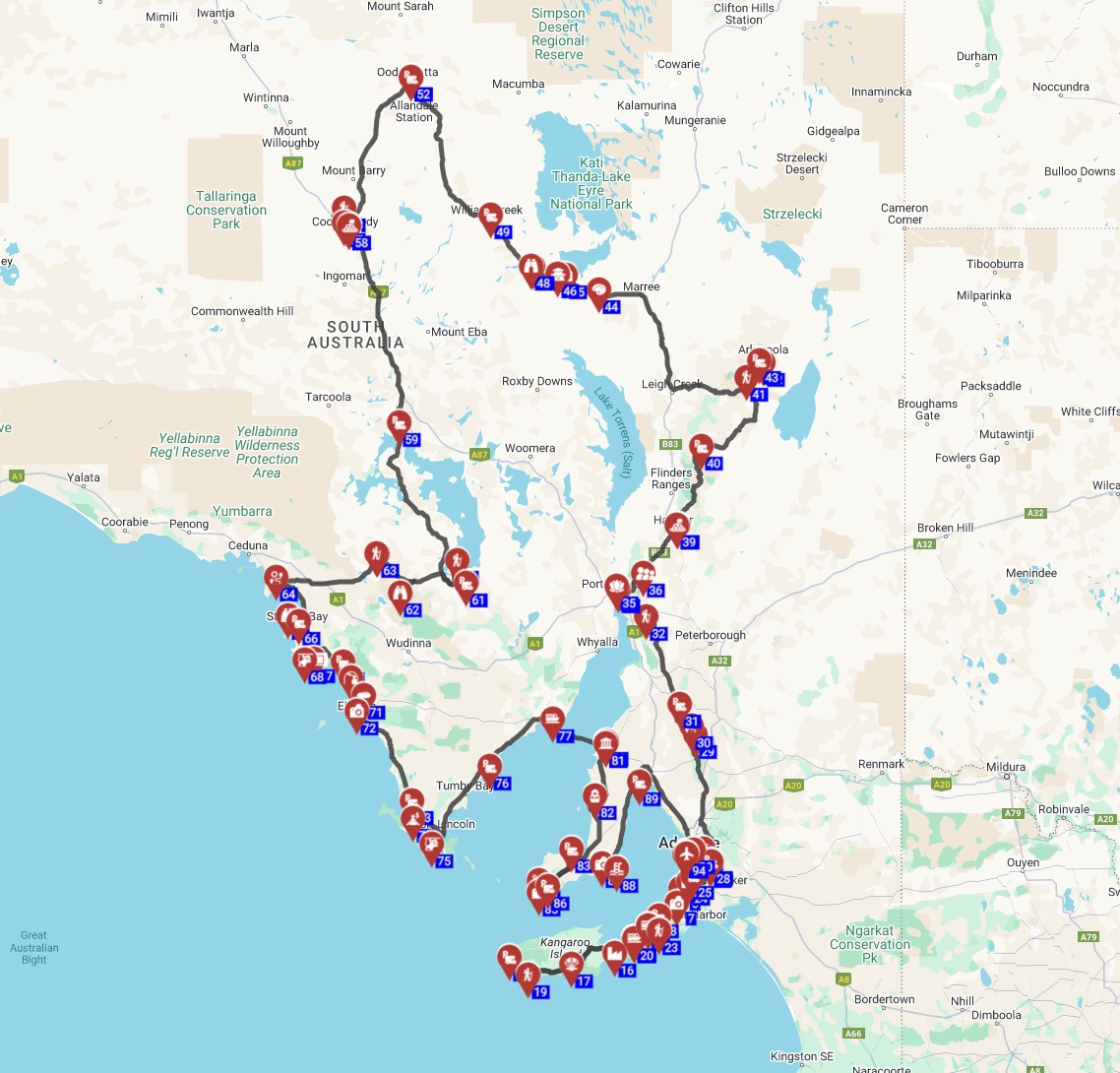
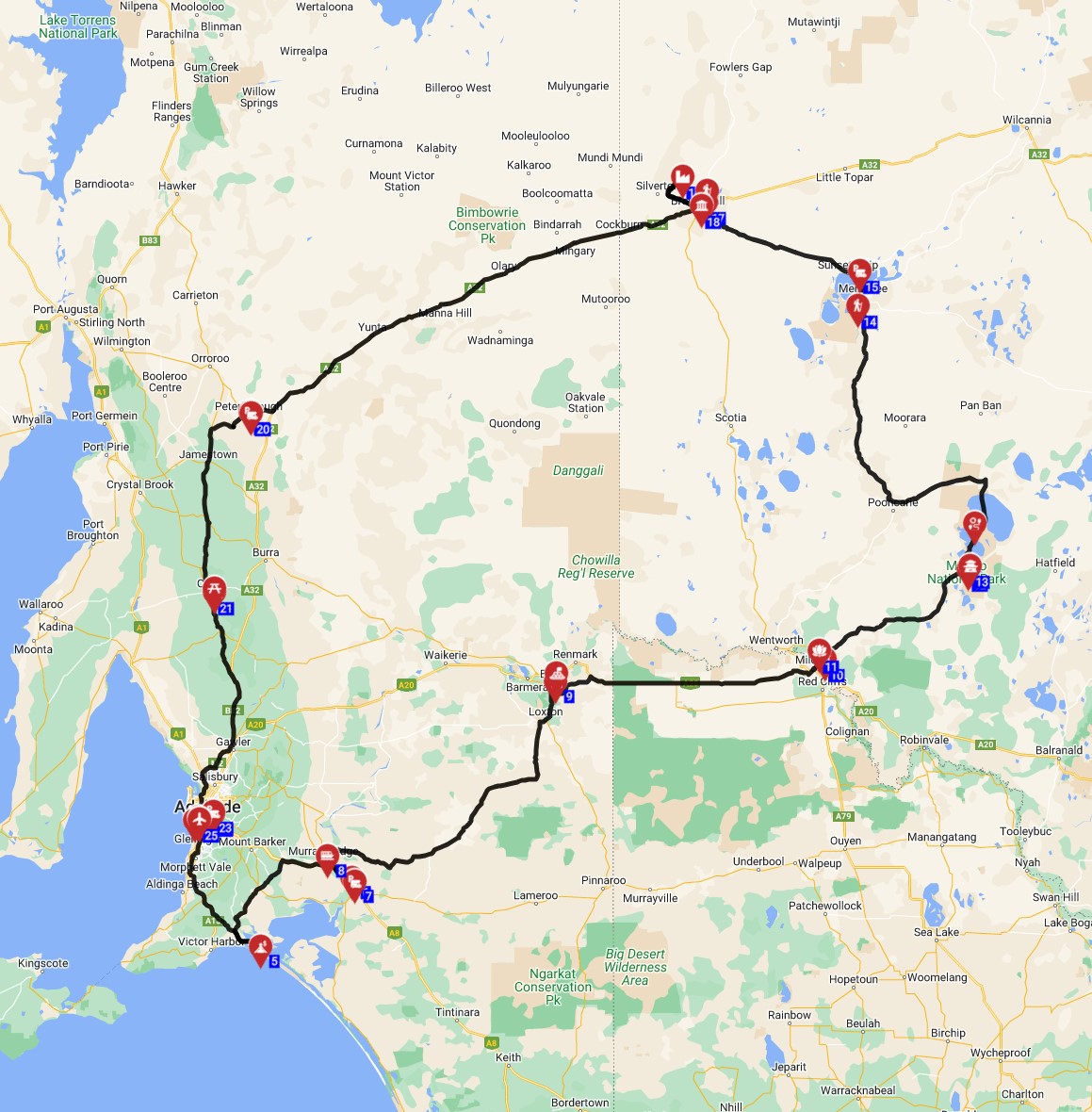
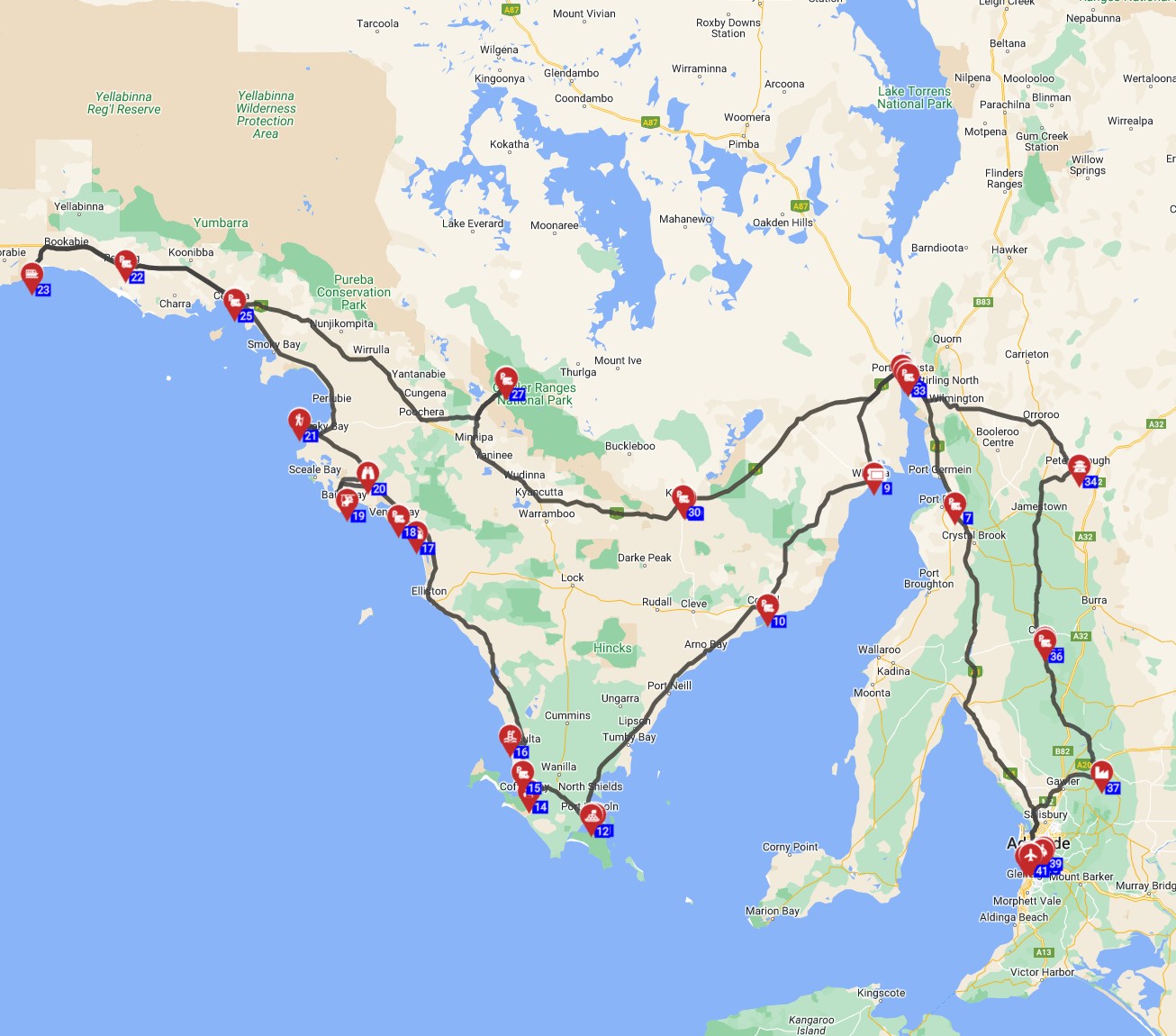
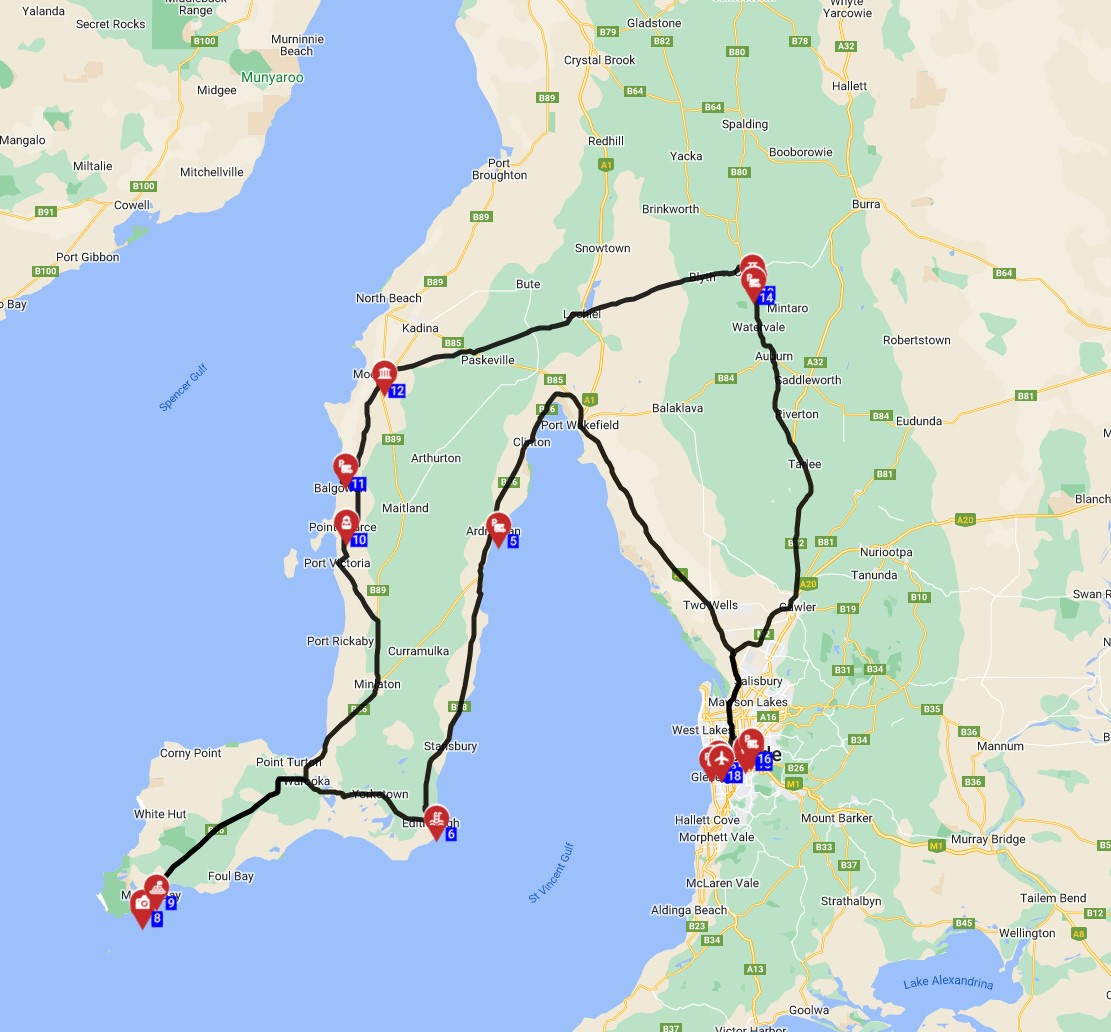
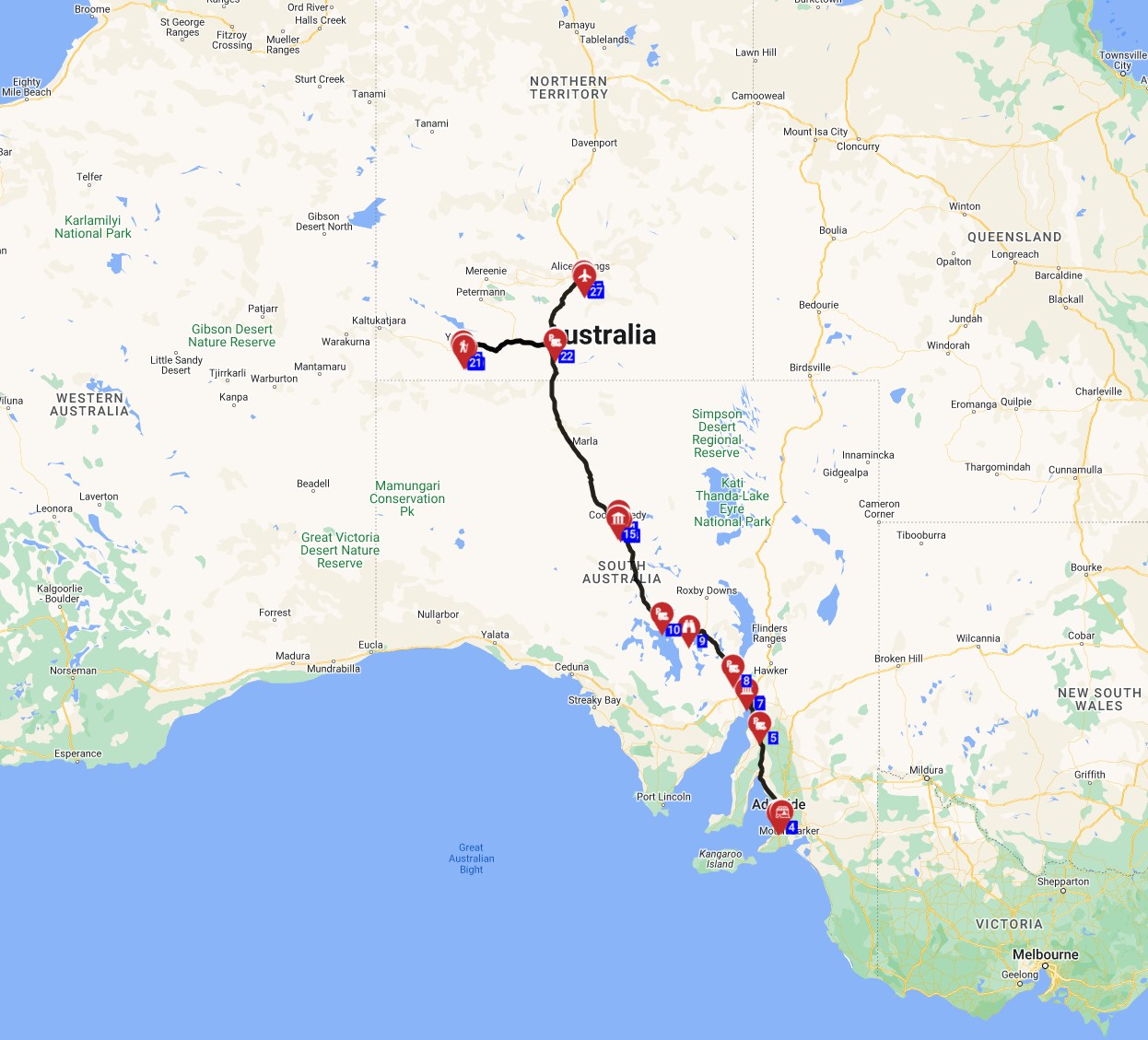
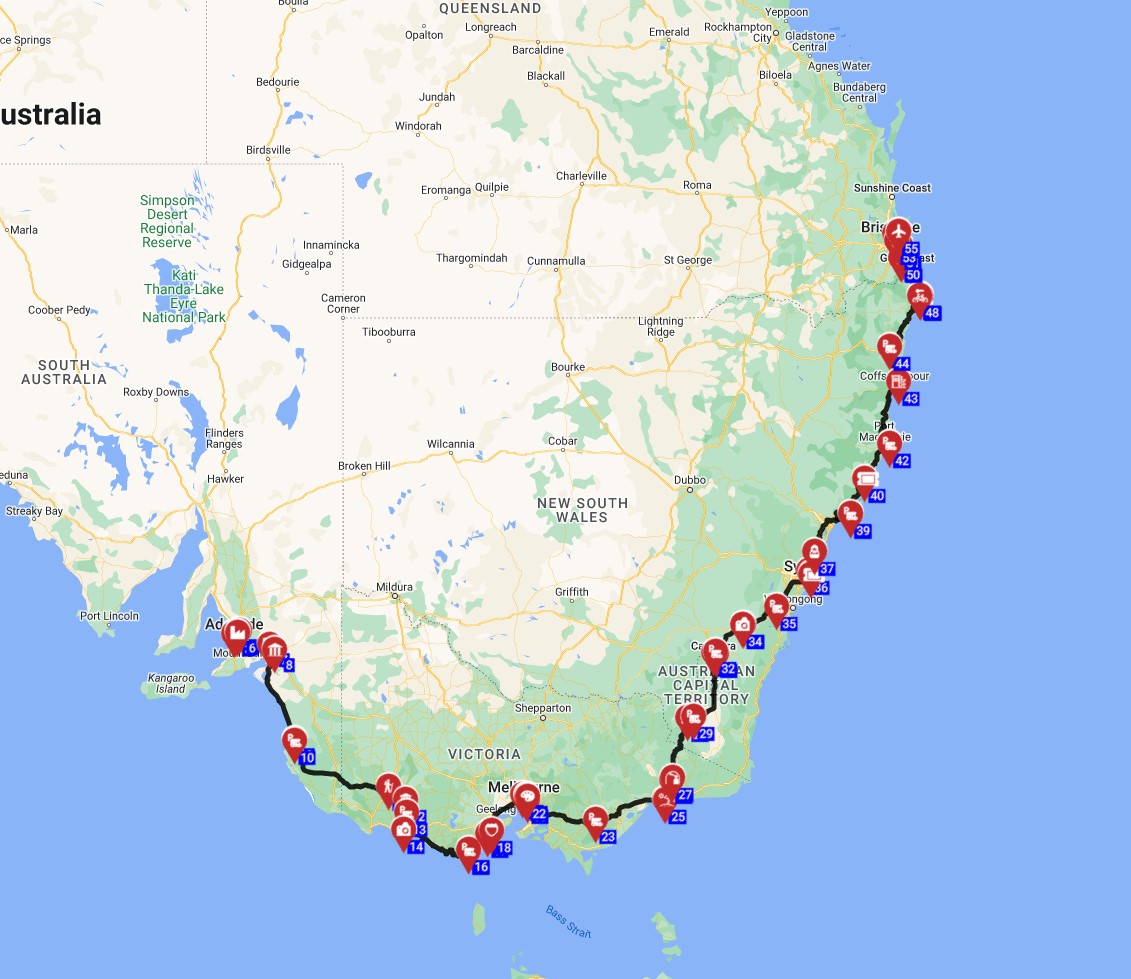
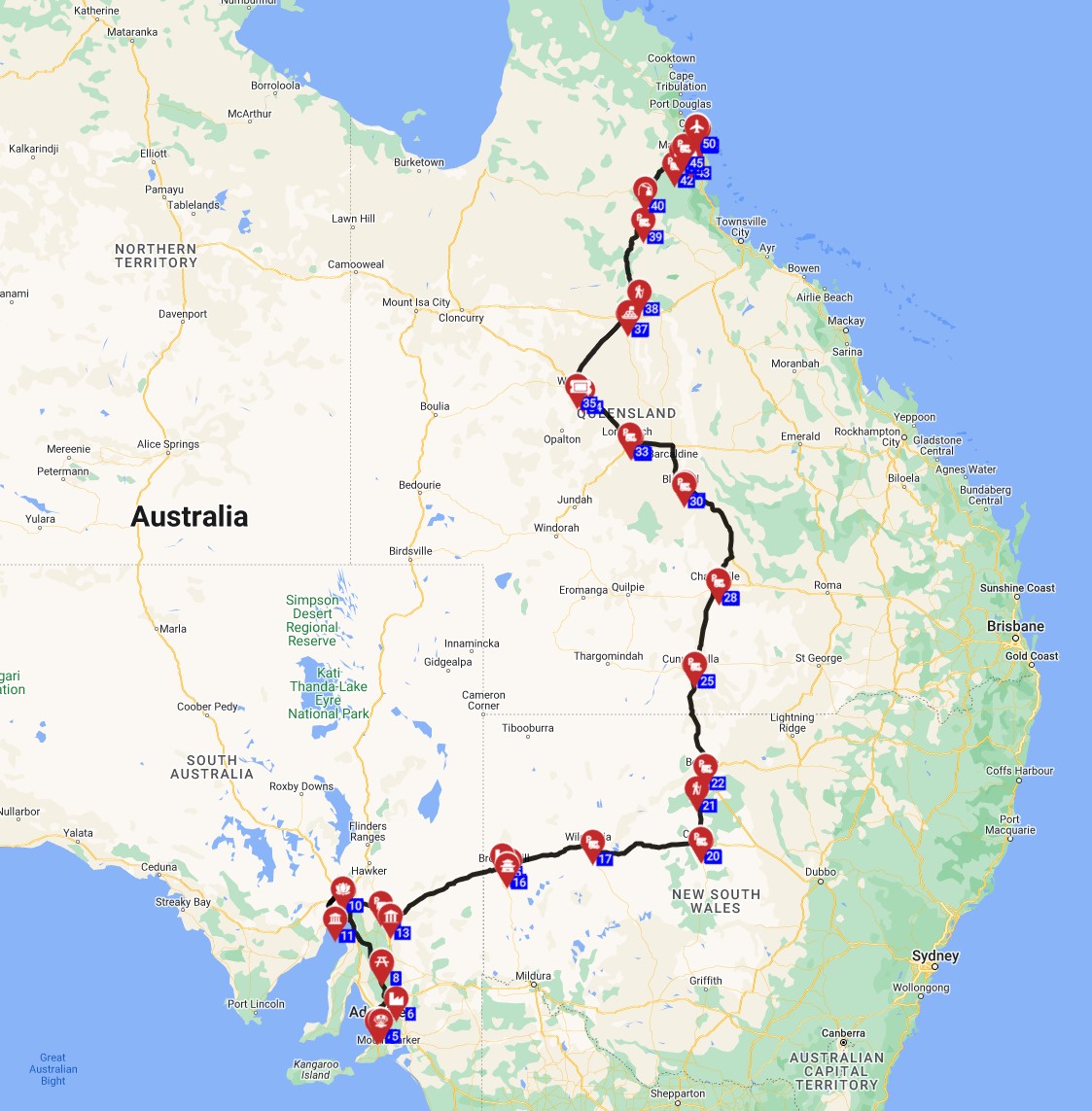
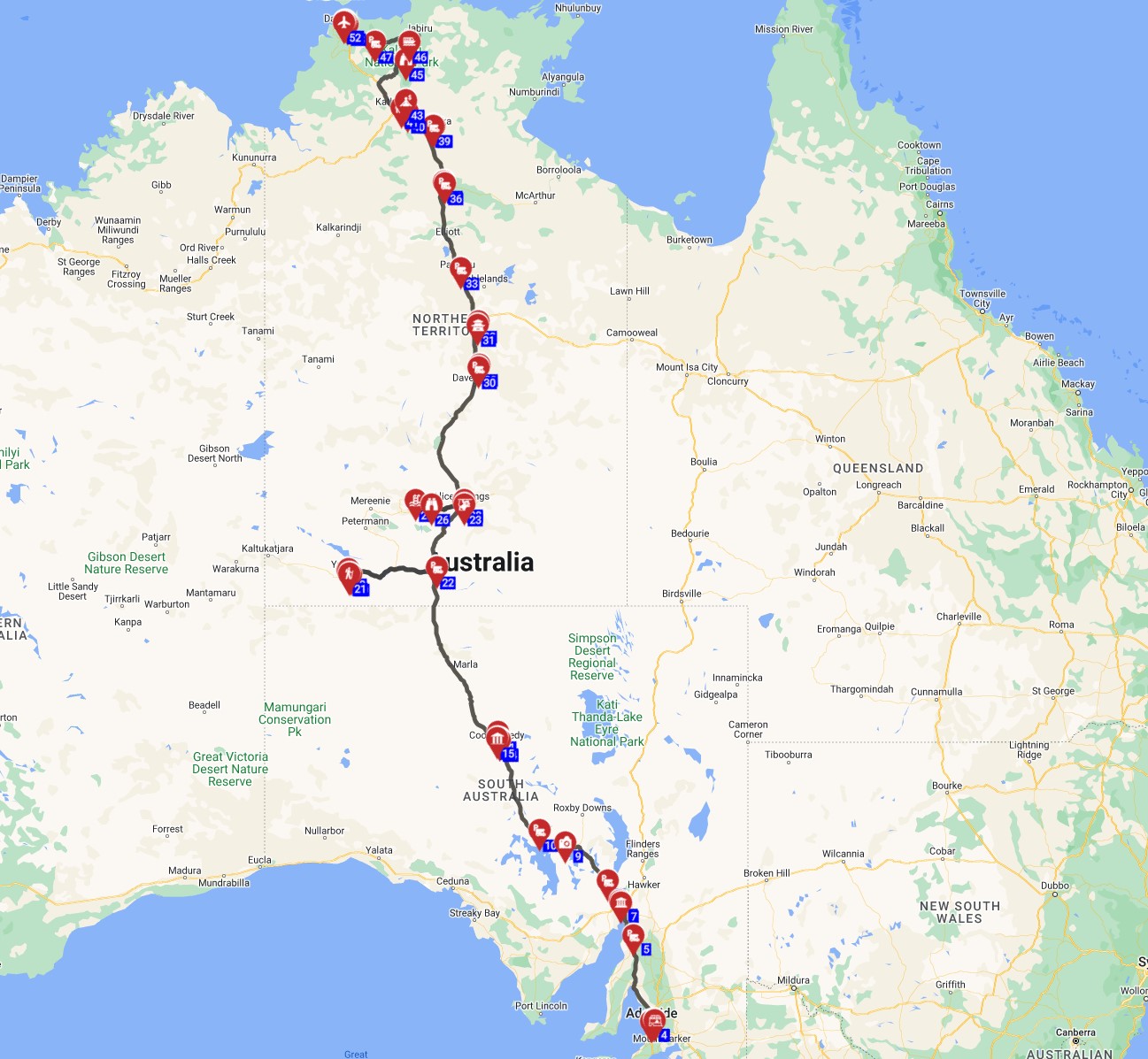
This particular itinerary spans 31 days and covers a total distance of 7393 kilometers, beginning in Broome, Western Australia, and concluding in Brisbane, Queensland. It's designed for comprehensive exploration, blending the rugged beauty of the outback with vibrant coastal cities and significant cultural sites. Along this route, you'll find opportunities for 2 Animals Show / Wildlife watch experiences, a visit to 1 Aquarium, 1 Art Gallery, a relaxing stop at 1 Beach, exploring 1 Botanical garden, enjoying 1 Canoe / Kayak / Rafting adventure, discovering 1 cave, taking 1 Day Tour, trying 1 Extreme Activity, participating in 2 Family Activities, delving into 2 Heritage sites, embarking on 5 hiking areas, visiting 2 Historical Sites, enjoying 1 Horseback Riding session, learning about 1 Local Industry, immersing yourself in 3 Museums, marveling at 4 Natural Features, finding tranquility in 1 Park and 1 Picnic Area, discovering 5 Points Of Interest, cruising along 2 Scenic Routes, relaxing at 1 Spa / Terme, taking a refreshing 1 Swimming break, visiting 1 Tourist Attraction, exploring 1 Traditional Market, dining at 2 Traditional Restaurant / Fine Dining establishments, engaging in 3 Traditional Visits, and encountering wildlife at 1 Zoo. This robust itinerary demonstrates how RV PLANET routes can itemize and track every expense along the way for easy budgeting, making financial planning simple for complex trips. On the routes offered through RV PLANET routes, you can itemize and track every expense along the way for easy budgeting.
You can explore the full details and customize this trip, or other fantastic itineraries, at rvplan.net for an Australian motorhome adventure.
Must-See Stops Along the Way (Avi Bandana Picks)
For an authentic Australian RV experience, Avi Bandana, founder of Bandana Caravan and an avid RV traveler himself, recommends integrating stops that offer a genuine taste of Australia's rich culture and unique industries. These aren't just roadside attractions; they're opportunities to connect with the heart of the country.
For a truly traditional visit, explore Aboriginal cultural centers and historical sites. The Warradjan Aboriginal Cultural Centre in Kakadu National Park, or the Australian Stockman's Hall of Fame & Outback Heritage Centre in Longreach, offer deep insights into local heritage and the stories of the land. Indulge in authentic Australian cuisine by seeking out traditional restaurants, whether it’s a waterfront dining experience in a coastal town or local eateries offering regional specialties like fresh seafood or bush tucker inspired dishes. Don't just drive through; stop at a traditional market if you encounter one. These markets are excellent places to find local crafts, fresh produce, and interact with the community, offering a real glimpse into local life. For those interested in local industry, visiting places like the Macadamia Castle near Byron Bay provides a fun and educational look into regional produce and farming, perfectly illustrating how unique local businesses contribute to the Australian experience.
Daily Driving Distances & Drive Times in Australia
Avi Bandana, drawing on years of RV travel experience, strongly recommends maintaining a leisurely pace of a maximum of 100 miles (approximately 150 km) per day on average to ensure a relaxed and truly enjoyable RV trip in Australia. This guideline is crucial for experiencing the vast and varied landscapes without feeling rushed, allowing ample time for unexpected stops, local exploration, and simply soaking in the beauty of each location.
Driving slowly in Australia is also essential for safety, especially on unfamiliar roads and in regions with unique wildlife hazards. For instance, the drive from Sydney to the Blue Mountains (Katoomba) is approximately 100 km, taking about 1.5-2 hours. A coastal stretch like Coffs Harbour to Byron Bay is around 150 km, requiring roughly 2 hours of driving. Further inland, navigating from Port Augusta to Wilpena Pound in the Flinders Ranges, a distance of 160 km, typically takes 2-2.5 hours. These moderate daily distances ensure that drivers remain alert and have plenty of daylight to set up camp and enjoy their surroundings. Always factor in extra time for fuel stops, rest breaks, and spontaneous detours, especially when planning your RV PLANET routes to account for all ancillary trip costs.
Best RV Class for This Itinerary - Couple & Family Picks
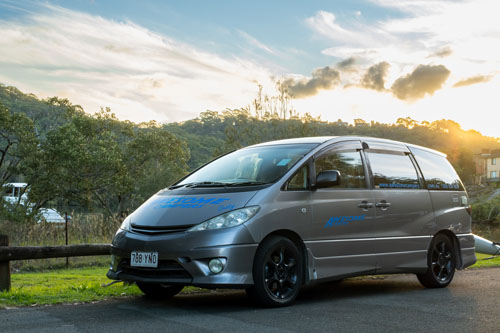
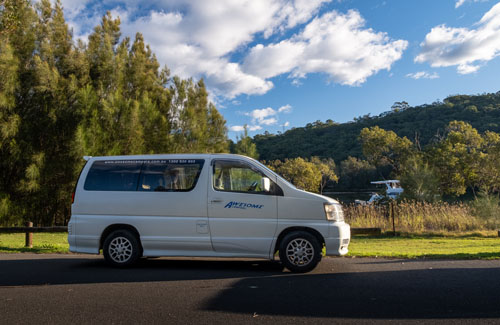
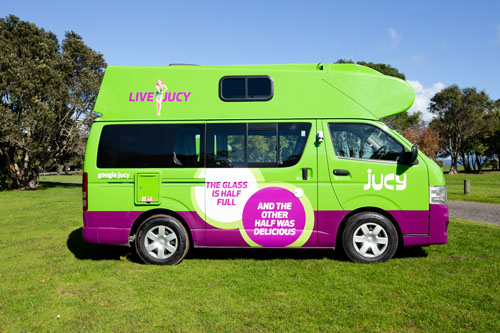
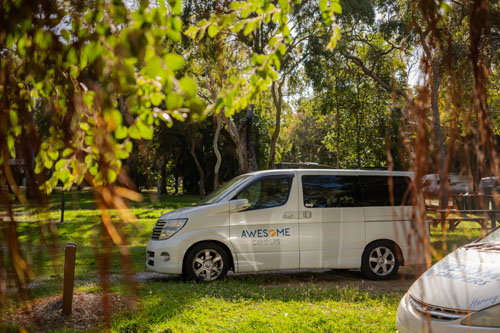
Choosing the right rented RV for your Australian adventure is key to maximizing comfort and enjoyment, depending on your group size and preferred travel style. Bandana Caravan, your true RV specialists, offers a wide range of motorhome and campervan options to suit every need.
- For Couples: A Class B - Camper Van is an excellent choice for navigating Australia's diverse roads. Bandana's global fleet typically features Camper Vans with an average length of 5.8 meters and sleeping places for 3.2, comfortably accommodating 2.7 adults. Their compact size makes them incredibly easy to maneuver, whether you're exploring city centers (drive slowly and carefully, and you can drive almost anywhere without issues) or coastal tracks, and they fit into smaller campground spots. A vehicle like the luxury rv rentals example Carthago Malibu 600, with a 158/195cm double bed and 80-liter refrigerator, is ideal for an intimate and flexible trip. These campervans still offer essential amenities for cooking and sleeping comfortably on the road.
- For Families: A Class C - Alcove motorhome is highly recommended for families or groups needing more space and amenities. Bandana's global fleet typically offers Alcove RVs with an average length of 7.5 meters, providing ample space with an average of 5.8 sleeping places and comfortably fitting 4.4 adults. A model like the 24' Class C Motorhome offers 152/203cm bed over cab, 114/208cm single bed, and 152/203cm rear double bed, along with a 283-liter refrigerator, perfect for larger groups. The distinct sleeping area over the cab is particularly appealing for children, and the larger interior allows for more comfort, storage, and a proper kitchen setup for preparing delicious meals on extended family journeys across Australia. For those planning to enjoy some RV cooking, check out our RV-friendly recipes playlist for inspiration!
Bandana also offers a unique "Rent&Plan" service. This provides not just the ideal RV rental but also a ready-made itinerary crafted by travel experts, complete with full access to trip-planning software, significantly reducing planning headaches and ensuring a smooth journey.
What is the most beautiful road trip in Australia?
While beauty is subjective and Australia offers an incredible array of stunning landscapes, the Great Ocean Road in Victoria is frequently cited as Australia's most iconic and breathtaking road trip, showcasing a dramatic coastal panorama. This roughly 243 km route offers unparalleled views of the Southern Ocean, iconic rock formations like the Twelve Apostles, and lush rainforests, making it a favorite for many travelers.
However, Australia is home to many other highly acclaimed and beautiful road trips. The Grand Pacific Drive, located just south of Sydney in New South Wales, offers spectacular cliff-hugging roads and vibrant seaside towns. In tropical Queensland, the scenic route from Cairns to Port Douglas takes you through lush Daintree Rainforest and along pristine beaches. For those seeking a rugged outback experience, the adventurous Gibb River Road through the Kimberley region in Western Australia provides a challenging but incredibly rewarding journey through ancient gorges and vast wilderness. For an epic cross-country adventure, the RVPlan trip from Broome to Brisbane (as detailed above) provides a comprehensive exploration of Australia's diverse beauty, from red deserts to bustling cities, often spanning over 7,000 km.
Can you park an RV anywhere in Australia?
No, you cannot park an RV anywhere in Australia; specific regulations govern where you can legally park and freedom camp, with rules varying significantly by state, territory, and even local council jurisdictions. It's crucial to understand these rules to avoid fines and ensure a respectful trip.
While wild camping is permitted in some designated areas, such as national parks (often requiring a permit or fee), state forests, and certain roadside rest areas, it is generally prohibited in urban areas, residential streets, and on private land without explicit permission. Many popular tourist areas have strict "No Camping" bylaws in place. Always look for official signage, check local council websites for specific regulations in the area you plan to visit, and proactively utilize dedicated apps like WikiCamps Australia to find legal campsites, caravan parks, and designated free overnight stops. This diligence ensures you comply with environmental regulations, respect local communities, and prevent any unpleasant surprises on your Australian RV rental adventure.
What is the best RV in Australia?
The "best" RV in Australia depends entirely on your specific travel style, budget, group size, and planned itinerary, as different motorhome and campervan types offer distinct advantages for various trips. Bandana Caravan specializes in helping you find the perfect rental to match your needs.
For solo travelers or couples who plan to explore cities, sealed roads, and desire easy maneuverability, a compact Camper Van (Class B) is often the ideal choice. These vehicles, like a Duo - Campervan or a similar model with a double bed around 140/190cm, are fuel-efficient (typically consuming 8-11 Liters/100 km) and easy to park. Families or larger groups embarking on longer journeys through Australia will appreciate the spaciousness and enhanced amenities of a larger Motorhome, such as a Class C - Alcove or even a Class A. These bigger rigs, like a MHC24 which can sleep up to 6 people with beds like 147/190cm over the cab and 132/188cm double bed, offer separate sleeping areas, more internal living space, and greater storage capacity for extended comfort. When selecting your rental RV, consider factors such as the vehicle's length (ranging from 5.5 to over 9 meters), fuel consumption, and whether your itinerary primarily involves sealed roads or well-maintained unsealed tracks, as most rental agreements specify road conditions.
How long does it take to travel around Australia in a campervan?
Traveling around the entire perimeter of Australia in a campervan or motorhome typically requires a significant time commitment, with a minimum of 3 to 6 months recommended to genuinely experience diverse regions without constant rushing. A rapid 'lap' of the continent can be accomplished in 6-8 weeks, but this often involves very long driving days and limited time for exploration at each stop.
For context, a single comprehensive cross-country RVPlan journey, like the "
What is the 333 rule for campervan?
The '333 rule' for campervans is a popular guideline designed to ensure safe and enjoyable RV travel, recommending a balanced approach to driving and relaxation. This rule suggests that travelers ideally drive no more than 300 kilometers (approximately 186 miles) in a single day, stop for at least 3 days at each significant location, and aim to arrive at their chosen campsite by 3 PM.
Adhering to the 333 rule promotes a slower travel pace, which is particularly beneficial in Australia given its vast distances and numerous attractions, allowing ample time for local exploration, sightseeing, and setting up camp before dusk. Arriving by 3 PM is especially useful in Australia to avoid driving during the late afternoon and early evening, which is when native wildlife, such as kangaroos and wombats, is most active and poses a higher collision risk. This approach also helps prevent driver fatigue, encourages deeper engagement with each destination, and increases your chances of securing a good spot at popular caravan parks or free camping sites, especially if you're not a pre-planner who books months in advance.
What not to do in Australia as an American?
As an American visiting Australia, several key cultural and practical considerations can enhance your RV rental experience and prevent common pitfalls. Firstly, never underestimate the vast distances and diverse driving conditions; always remember to drive on the left side of the road, interpret road signs in metric measurements (km/h, meters), and be highly aware of wildlife, especially at dawn and dusk, by driving slowly and carefully.
Avoid disregarding local wildlife safety advice, such as feeding wild animals or swimming in undesignated areas where dangerous marine life like crocodiles or venomous jellyfish may be present in tropical regions. It's also unwise to venture into remote outback areas without planning for limited mobile phone coverage; carry a satellite phone or UHF radio, extra water (at least 20 liters per person per day), and inform others of your detailed itinerary. Do not forget to obtain an International Driving Permit (IDP) if your US license is not clearly in English, although a standard car driver's license is sufficient for all motorhome classes in Australia. Finally, be mindful of local customs, avoid making exaggerated claims or being overtly boastful, and embrace the laid-back Australian demeanor to truly connect with the culture.
🎬 Video coming soon
What are the top 3 tourist attractions in Australia?
Australia is rich with world-class natural and cultural landmarks, but three iconic tourist attractions consistently rank at the top for international visitors: the Sydney Opera House, the Great Barrier Reef, and Uluru (Ayers Rock). These represent the diverse beauty and cultural significance of the continent.
- The Sydney Opera House in New South Wales is a globally recognized masterpiece of 20th-century architecture and a UNESCO World Heritage site. It serves as a bustling performing arts venue and is best explored with a guided tour, offering stunning views of Sydney Harbour.
- The Great Barrier Reef, stretching over 2,300 kilometers off the coast of Queensland, is the world's largest coral reef system. It provides unparalleled opportunities for snorkeling, diving, and observing incredibly diverse marine life, making it a bucket-list destination for nature lovers.
- Uluru (Ayers Rock), a massive sandstone monolith in the spiritual heart of Australia's Red Centre in the Northern Territory, is sacred to Indigenous Australians. It offers incredible sunrise and sunset viewing experiences, as well as cultural walks around its base, providing a deep connection to ancient Indigenous heritage.
How many days are enough for an Australia trip?
The ideal number of days for an Australia trip largely depends on how much of the vast continent you wish to explore and your preferred travel pace, ranging from a concentrated week to several months for a comprehensive journey. Remember that Bandana focuses on longer trips, typically one week or more, to truly savor the experience.
For a focused itinerary covering a single iconic region, such as the Great Ocean Road in Victoria or a significant portion of Queensland's East Coast, 7 to 10 days in a rented RV can provide a rich and enjoyable experience. If you aim to explore a broader area, like multiple states or a substantial section of the Australian coastline, a 14-day RV trip offers a good balance between travel and in-depth exploration time, as exemplified by our extended Southern Coastal Explorer itinerary. To truly 'do' Australia, especially a major cross-country route like the Broome to Brisbane RVPlan trip (which is 31 days and covers 7393 km), or to circumnavigate the entire continent, travelers should plan for at least 4-6 weeks, and ideally 3-6 months, to comfortably account for the vast distances and incredibly diverse attractions, allowing you to travel slowly and deeply experience each place.
What is the best month to go to Australia?
The best month to visit Australia depends heavily on which specific regions you plan to explore, as the continent experiences diverse climates and its seasons are opposite to those in the Northern Hemisphere. Planning your RV rental trip around regional weather patterns is crucial for an optimal experience.
For exploring the southern states, including Victoria, Tasmania, and South Australia, the ideal time is during the Australian summer and autumn, from December to May, for warm and pleasant weather. However, if your preference is to avoid extreme heat, shoulder months like March-April or November are often more comfortable. To visit the tropical northern regions, such as Queensland, the Northern Territory, and the Kimberley, the dry season (May to October) is unequivocally preferable. During this period, you'll experience lower humidity, minimal rainfall, and significantly reduced risk of cyclones, with average daily temperatures between 20-30°C, making it perfect for an RV adventure. Shoulder months like April-May or September-October generally offer a good balance, providing pleasant weather across many regions and helping you avoid peak crowds, making them excellent choices for extensive RV travel across various climates.
What You Shouldn't Miss
- **Drive the Great Ocean Road:** This iconic route in Victoria offers stunning coastal views, lush rainforests, and the famous Twelve Apostles. It's a manageable 243 km journey perfect for a few days in your rented motorhome.
- **Explore Uluru-Kata Tjuta National Park:** Venture into the spiritual heart of Australia to witness Uluru and Kata Tjuta, sacred Indigenous sites that are breathtaking at sunrise and sunset. Take guided tours to learn about their cultural significance.
- **Discover the Daintree Rainforest and Great Barrier Reef:** In Far North Queensland, experience the world's oldest tropical rainforest meeting the largest coral reef system. Book a boat tour to snorkel or dive the reef, and explore the rainforest with guided walks.
- **Experience Sydney's Icons:** Park your RV at a nearby campground and take public transport to see the Sydney Opera House and Sydney Harbour Bridge. Explore the vibrant city on foot.
- **Immerse in Indigenous Culture:** Seek out opportunities to engage with Aboriginal communities, attend cultural festivals, or visit interpretation centers to gain a deeper understanding of Australia's rich Indigenous heritage.
- **Spot Unique Wildlife:** Keep an eye out for kangaroos, koalas, emus, and other native animals. Always maintain a safe distance and never feed wild animals. National parks offer excellent chances for wildlife viewing.
Looking for expert insights from Avi Bandana? Top 5 Adventures - recommendations from Avi Bandana
Final Thoughts
Embarking on a winter RV itinerary in Australia is an incredible way to experience the country's diverse landscapes, especially its warm northern regions. From the stunning coastlines to the vast, star-filled outback, a rented motorhome or campervan provides the freedom and flexibility to create your perfect adventure. Remember our advice: drive slowly, embrace flexibility, and let the journey unfold.
At Bandana Caravan, we are here to support you every step of the way, from comparing prices and choosing the ideal vehicle to providing essential planning resources. With our commitment to transparency, expert knowledge, and comprehensive support, you can book your RV rental in Australia with confidence.
So, why wait? Imagine yourself behind the wheel of your dream RV, exploring Australia’s winter wonderland. Get inspired for your next trip and discover top destinations, planning tips, all in one place!