In This Guide
- Top 5 Tips for weekly rv rental RV Rental in Japan
- Before You Book - Class, Dates, Insurance
- Pre-Trip Prep - Packing Checklist for Japan
- On the Road - Driving, Fueling, Navigation
- At the Campground - Setup, Hookups & Etiquette
- weekly rv rental-Specific Tips for Japan
- Common Mistakes to Avoid in Japan
- Is Japan RV friendly?
- Can you drive an RV in Japan?
- Do I need an international driving permit to drive an RV in Japan?
- What kind of RV can you rent in Japan?
- How much does it cost to rent an RV for a week in Japan?
- Is it worth it to rent an RV in Japan?
- Where can I park my RV in Japan?
- What are the rules for camping in Japan?
Embarking on a weekly RV rental in Japan offers a unique blend of cultural immersion and scenic exploration, allowing you to discover the country's diverse landscapes at your own pace. With a rented motorhome or campervan, you gain the freedom to traverse from bustling cities to tranquil national parks, experiencing everything from ancient temples to modern marvels. For live availability and current prices, start with our RV Rental Japan - Complete Guide 2026 guide. We at Bandana RV are true RV specialists, dedicated to making your adventure seamless and enjoyable, providing full transparency with no hidden fees and 24/7 support from real people. Imagine yourself cruising along picturesque coastal roads, waking up to mountain views, and savoring local delicacies from your mobile home base.
Top 5 Tips for weekly rv rental RV Rental in Japan
To ensure a smooth weekly RV rental in Japan, several key considerations will enhance your journey. First, booking your preferred RV model and dates well in advance, especially for popular seasons like cherry blossom (spring) or autumn foliage, is crucial to secure your vehicle.
Second, an International Driving Permit (IDP) is a legal requirement for foreign drivers in Japan; ensure you obtain it in your home country before your arrival, as driving without one is illegal.
Third, familiarize yourself with Japan's extensive network of over 1,200 Michi-no-Eki (roadside stations), which offer excellent amenities including free overnight parking, clean restrooms, and local produce markets, providing convenient and cultural stops along your route. These stations are not just rest stops; they are community hubs that often feature unique regional foods and even hot springs, making them an integral part of the Japanese RV experience.
Fourth, plan your weekly itinerary with Japan's narrower roads in mind, particularly in rural areas and older cities. While Class A, B, and C motorhomes can navigate almost anywhere without issues, driving slowly and carefully, using common sense, and paying attention is key. There's no need to stress about vehicle size; simply adapt your driving style. When planning your routes, consider using RV PLANET (rvplan.net) to help you structure your daily travel for maximum enjoyment.
Finally, embrace and respect local etiquette, including proper waste disposal and observing quiet hours at campgrounds and parking areas. Traveling slowly, aiming for a maximum of 100-150 km per day on average, allows you ample time to immerse yourself in the local culture, food, and stunning scenery. This mindful approach truly lets you feel the place and connect with Japan's unique charm.
Before You Book - Class, Dates, Insurance
Choosing the right RV class for your weekly rental in Japan involves balancing comfort, maneuverability, and your travel group's size. Smaller campervans or Class B motorhomes, like the "rv rental denver example Category Van" or "hire campervan example Paradise S/T," which are ideal for a couple, are excellent for navigating Japan's more compact roads and finding parking in towns. For families or larger groups of 4-6 people, Class C motorhomes, such as the "rv rentals example Comfort Class" or a "campervan hire new zealand example Euro Deluxe," which feature amenities like up to three double beds and a refrigerator, offer more living space and comfort for an extended road trip.
Securing your rental dates, especially for a week-long trip during peak seasons like spring (March-May) or autumn (September-November), is crucial, with most travelers booking 3-6 months ahead to ensure availability. Prices for weekly RV rentals in Japan are dynamic, similar to flight tickets, changing daily based on demand, seasonality, and supplier decisions. While last-minute availability can sometimes be found, planning ahead often offers a wider selection of vehicles and potentially better deals, as highlighted in our "Cheap RV Rental in Japan - Budget Guide 2026".
Regarding insurance, basic coverage is always included with your RV rental in Japan, providing essential protection. However, for the most comprehensive peace of mind, you can upgrade to a top-level deductible reimbursement option during your booking process. This optional upgrade shields you from unexpected out-of-pocket expenses in case of an incident. We handle the details from day one until your booking is confirmed, ensuring you understand all the inclusions and optional features without hidden fees, a testament to our full transparency policy. Remember, a standard car driver's license is sufficient for all motorhome classes in Japan, and the minimum rental age is 21 with no young driver surcharges.
🎬 Video coming soon
Pre-Trip Prep - Packing Checklist for Japan
A well-prepared packing checklist for an RV trip in Japan ensures you have all necessary items for a comfortable and respectful journey. Given Japan's varying climates, from the sub-tropical south to the temperate north, pack versatile clothing suitable for layering, and always include rain gear regardless of the season. Japanese electrical outlets are Type A and B, 100V, so a universal travel adapter is essential for your electronics, along with a power bank for on-the-go charging. Don't forget your International Driving Permit (IDP) and home country driver's license, as they are mandatory.
While many rental motorhomes, like a "campervan hire new zealand example Chaser," will come equipped with basic kitchenware and bedding, it's wise to confirm what's included and bring personal items for added comfort. Consider local customs; for instance, carrying a small towel for onsen visits can be handy, and bringing reusable shopping bags helps with waste separation. For finding campsites and campgrounds during your trip, we recommend using RV PLANET (rvplan.net) - a great resource for locating available spots along your route and even for planning your budget, as on RV PLANET routes, travelers can itemize and track every expense along the way.
Here’s a comprehensive packing checklist for your weekly RV rental in Japan:
- International Driving Permit (IDP) and home country driver's license
- Passport and visa (if required)
- JR Pass or other transportation cards (if applicable)
- Copy of RV rental confirmation and insurance details
- Japanese Yen (cash for tolls, small shops)
- Credit/Debit Cards
- Smartphone with essential apps (Google Maps, translation apps, RV park finders)
- Portable Wi-Fi device or eSIM (e.g., Japan Rail Pass's mobile Wi-Fi, SoftBank Air)
- Power bank for electronics
- Universal travel adapter
- Comfortable walking shoes
- Layers of clothing (t-shirts, long-sleeved shirts, sweaters/fleeces)
- Waterproof jacket and umbrella
- Pajamas/comfortable sleepwear
- Light towel (quick-drying)
- Basic toiletries (toothbrush, toothpaste, shampoo, conditioner)
- First-aid kit (band-aids, antiseptic, pain relievers)
- Any personal medications
- Sunglasses and hat
- Small backpack for day trips
- Reusable water bottle
- Reusable shopping bag
- Chopsticks/cutlery (if not provided by rental)
- Small cutting board and knife
- Dish soap and sponge (if not provided)
- Trash bags (for proper waste separation)
- Travel pillow/blanket (optional, for extra comfort)
For tips tailored to your specific trip, talk to rent-motorhome.
On the Road - Driving, Fueling, Navigation
Driving an RV in Japan requires adherence to local traffic laws, including driving on the left side of the road and understanding Japanese road signs, which are generally well-marked. Japan's road network is superb, featuring excellent expressways and well-maintained regional routes. Drive slowly and carefully, and you can drive almost anywhere without issues. No need to stress - just use common sense and pay attention. Many motorhome rentals are automatic transmission, making driving even easier. Consider a Class B campervan for maximum maneuverability, like the "DVC" model, which is 6.7 meters long and designed for easy handling.
Fueling up an RV in Japan involves using specific fuel types, usually regular gasoline (▲▲▲▲▲), and understanding payment methods, which typically include cash or credit cards at service stations. It's wise to refuel when your tank is half-full, especially in more rural regions where stations can be sparse. For seamless passage through toll gates, which are common on expressways, consider renting an Electronic Toll Collection (ETC) card with your RV, as cash lanes can be slower and more complicated for non-Japanese speakers. For travelers on a budget, look into our "RV Rental Deals in Japan - Latest Offers 2026" to make your trip more affordable. On the routes offered through RV PLANET routes, you can itemize and track every expense along the way for easy budgeting.
Effective navigation is facilitated by reliable GPS systems, often integrated into rental vehicles, and local apps which can guide you through Japan's intricate road networks. Japan boasts robust mobile connectivity, so leveraging apps for finding campgrounds, Michi-no-Eki, onsen, or even real-time traffic updates is highly beneficial. For instance, an app could point you to a "Glamys 40" Class C motorhome parking spot with access to a hot spring. Remember that Bandana RV is a true RV specialist, offering unmatched personal experience and attention to the smallest details, ensuring you're well-prepared before you even hit the road. If you're considering extended travel, our "RV Rental Asia - Complete Guide 2026" provides a broader perspective on RV adventures across the continent.
At the Campground - Setup, Hookups & Etiquette
Setting up your rented RV at a Japanese campground typically involves parking, connecting utilities, and respecting local customs. The standard hookup order includes securing power (100V outlets), connecting freshwater hoses to tanks (many Class C motorhomes like "Category Family 5" have 100-120 liter fresh water tanks), and then attaching wastewater hoses, usually in that sequence. While some campgrounds offer full hookups, many Michi-no-Eki primarily provide parking, restrooms, and sometimes water refill stations. For detailed information on specific locations and amenities, refer to rvplan.net.
Observing quiet hours, which generally run from late evening (around 9 PM or 10 PM) to early morning (around 7 AM), and maintaining a tidy campsite are fundamental aspects of Japanese campground etiquette. Loud music or excessive noise is highly discouraged, reflecting the country's emphasis on harmony and respect for others. Waste disposal in Japan is notoriously stringent, often requiring meticulous sorting into multiple categories such as burnable, non-burnable, plastics, and PET bottles; ensure you understand and adhere to the local guidelines at each stop. Never dispose of trash outside designated areas.
Many campgrounds and Michi-no-Eki also offer access to shared facilities like spotless public baths (sento) or natural hot springs (onsen), which are a wonderful way to relax. Be sure to understand the bathing etiquette, such as showering thoroughly before entering the communal bath. Preparing meals in your RV is a great way to save money and enjoy local ingredients purchased from Michi-no-Eki. For inspiration, check out our RV-friendly recipes playlist for delicious and easy meal ideas on the road. Bandana is committed to supporting travelers before, during, and after their booking, ensuring you have the resources needed for a pleasant trip.
weekly rv rental-Specific Tips for Japan
For weekly RV renters with families exploring Japan, consider motorhome models like the "MHC28" or "MHC30" that offer dedicated sleeping areas with bunk beds (e.g., 81/188cm dimensions) and ample storage for entertainment and necessities, allowing for nap-friendly drives and comfortable evenings. These larger Class C motorhomes typically accommodate 6-7 people with features like a large refrigerator and microwave, perfect for family meals on the go. Seniors renting an RV for a week may prefer ergonomic Class B or C motorhome models with automatic transmissions and lower entry steps for ease of access and comfort, ensuring a relaxed pace through regions like Kyoto or Nagano.
Budget-conscious weekly renters in Japan can save significantly by seeking out free overnight parking spots at Michi-no-Eki and utilizing local supermarkets for groceries to prepare meals in their RV. This approach, outlined in our "Weekly RV Rental in Japan - Pricing 2026" guide, drastically reduces food expenses compared to dining out frequently. Luxury weekly renters, on the other hand, might opt for premium RV add-ons such as higher-end kitchen appliances, larger living spaces with slide-outs (e.g., as found in a "Nexus Triumph 29T"), or even concierge services offered by some rental providers, enhancing their travel experience through regions like Hokkaido's vastness. For a more detailed breakdown of premium options, check out "Luxury RV Rental in Japan - Premium Prices 2026".
Travelers with specific needs, such as those with mobility challenges, should inquire about accessible facilities at potential stops and campsites when planning their weekly itinerary using rvplan.net. Similarly, families traveling with pets should research pet-friendly campgrounds and local regulations for pet travel in Japan well in advance of their weekly rental, as restrictions can vary. Remember, Bandana RV offers 24/7 support from real people, ensuring you have assistance with your booking and any pre-trip coordination questions, making your journey as smooth as possible.
Common Mistakes to Avoid in Japan
A common mistake for RV renters in Japan is failing to obtain an International Driving Permit (IDP) before arriving in the country. Instead, ensure you acquire your IDP in your home country well in advance, as it is legally mandatory for foreign drivers and essential for your weekly RV rental. Another error is overlooking the importance of proper waste separation; Japan has rigorous recycling and trash disposal rules. Instead, meticulously sort your trash into burnable, non-burnable, plastics, and PET bottles according to local guidelines at every designated disposal point.
Attempting to wild camp indiscriminately can lead to issues and is generally prohibited in Japan. Instead, utilize the extensive network of designated RV parks, Michi-no-Eki, and paid campgrounds for overnight stays, ensuring you adhere to their specific rules and quiet hours. Many Michi-no-Eki offer free overnight parking but are not meant for full camping setups, so avoid deploying awnings or setting up outdoor furniture. Underestimating the narrowness of some Japanese roads and parking spaces is common, particularly in smaller towns and older city centers. While you can drive almost anywhere with common sense, choosing a smaller RV like a campervan (e.g., 5-6 meters long) or a compact Class C motorhome can significantly ease navigation and parking, as mentioned in "Last-Minute RV Rental in Japan - What to Expect 2026".
Ignoring Japan's natural disaster preparedness is a risk; instead, familiarize yourself with local emergency alerts, earthquake procedures, and typhoon warnings, keeping a close eye on weather forecasts, especially during typhoon season (late summer to early autumn). Neglecting to plan for tolls can lead to unexpected costs; consider renting an Electronic Toll Collection (ETC) card with your RV to streamline payments and potentially save money on expressways. Bandana RV offers full transparency, so you'll know all potential costs upfront, avoiding any surprises. We are true RV specialists, here to support you with expert advice and ensure your Japanese adventure is unforgettable.
Is Japan RV friendly?
Japan is generally RV friendly, offering a unique and increasingly popular way to explore the country with a well-developed network of Michi-no-Eki (roadside stations) and designated campgrounds. The country's excellent infrastructure, including well-maintained roads and numerous amenities tailored for travelers, supports a comfortable RV experience for vehicles such as a "cruise america rv rental example Explorer" or a "Jayco Conquest Royale 6". Many Class B and C motorhomes are readily available for rent, providing comfort and convenience for your weekly adventure.
However, understanding local customs, particularly stringent waste management protocols, and navigating narrower roads, especially in urban areas or specific rural regions like Hokkaido's vastness or Shikoku's pilgrimage routes across different seasons, is essential for a smooth trip. Drive slowly and carefully, and you can drive almost anywhere without issues. No need to stress - just use common sense and pay attention. Consider seasonal variations, such as heavy snow in winter in northern regions (e.g., Hokkaido), which can impact road conditions and accessibility, or typhoon season in late summer/early autumn, which might require flexible planning. Bandana RV provides transparent pricing and expert advice, ensuring you're well-informed for your Japanese RV journey.
Can you drive an RV in Japan?
Yes, you can absolutely drive an RV in Japan, provided you possess the necessary documentation, including an International Driving Permit (IDP) issued in your home country. This permit is legally required for most foreign visitors and must be presented alongside your valid national driver's license. Japan's road network is exceptionally well-maintained, offering a safe and enjoyable driving experience whether you're in a compact campervan like the "rv rental nj example Category Small" (6.75m length) or a larger Class C motorhome such as the "Denali Searcher 30 - Gold" (which can be up to 9.15m long).
Many rental companies cater to foreign drivers, offering RVs suitable for navigating both modern highways and charming regional roads. Familiarity with driving on the left side of the road and understanding Japanese road signs are key for a safe and enjoyable RV trip. Drive slowly and carefully, and you can drive almost anywhere without issues. No need to stress - just use common sense and pay attention. Cities like Tokyo or Osaka might feel daunting, but with a bit of patience and attention to signage, even larger motorhomes can be managed. For planning your route and finding suitable parking, resources like RV PLANET (rvplan.net) are invaluable. At Bandana RV, we pride ourselves on being true RV specialists, offering expert guidance to make your driving experience in Japan smooth and stress-free.
Do I need an international driving permit to drive an RV in Japan?
Yes, an International Driving Permit (IDP) is legally required to drive an RV, or any vehicle, in Japan for most foreign visitors. This permit serves as an official translation of your national driver's license and must be obtained in your home country prior to your departure. It is crucial to carry your valid national driver's license along with your IDP at all times while driving a rented motorhome, such as a "Category Urban Van AT" or a "Jayco Journey 6," in Japan. The IDP issued under the 1949 Geneva Convention is the most commonly accepted type.
Driving without an IDP in Japan is illegal and can lead to serious consequences, including fines, potential detention, and legal issues in the event of an accident. It is not possible to obtain an IDP once you are already in Japan, so thorough pre-trip preparation is essential. Our team of true RV specialists at Bandana RV can confirm the specific IDP requirements for your nationality during the booking process, ensuring you meet all legal obligations. For any questions regarding documentation or the booking process, our 24/7 support is available to assist you.
What kind of RV can you rent in Japan?
In Japan, you can typically rent a range of RV types, primarily motorhomes and campervans, catering to various travel preferences and group sizes. Popular choices often include smaller, more maneuverable vehicles like compact camper vans or 'light campers' (kei-camper conversions), which are exceptionally well-suited to Japan's narrower roads and city parking. Examples might include a "Duo - Campervan" for a couple, offering a comfortable sleeping area and small kitchenette, or a "Juliette 2-3" with a manual transmission, perfect for young drivers aged 21 and above.
Mid-sized Class C motorhomes, such as a "Caravan 4-5 berth - Automatic" with a 100-liter fresh water tank and a fully equipped kitchen, are also widely available and popular for families of 2+2. These offer a good balance of living space and relative ease of driving on Japanese roads. Larger Class C motorhomes (e.g., "MHC28" with a length of 7.3m, sleeping 7 people) are also available from some suppliers for bigger groups seeking more amenities. Many rental providers offer models equipped with basic amenities such as sleeping areas, small kitchenettes (with 2-3 burners), refrigerators (typically 50-150 liters), and air conditioning, ensuring comfort throughout your weekly adventure. Bandana RV partners with leading global suppliers, including brands like El Monte, Cruise America, Apollo, and Britz, to provide a wide array of choices for your Japanese journey.
How much does it cost to rent an RV for a week in Japan?
The cost to rent an RV for a week in Japan typically ranges from ¥80,000 to ¥200,000 (approximately $550-$1,350 USD), varying significantly based on RV size, rental season, and included amenities. For instance, a compact campervan like an "rv rental denver example Category Van" might fall on the lower end, especially during off-peak seasons (January-February, June-July), while a larger, well-equipped Class C motorhome like the "F3" or "Conquest" would command a higher price, particularly during peak seasons such as cherry blossom season (April) or autumn foliage (October-November). Prices are dynamic, similar to airline tickets, and can change daily.
Beyond the base rental fee, budgeting for additional expenses is crucial for an accurate total trip cost. Fuel costs can be substantial, as Japan's gasoline prices are comparable to Western countries, and average RV fuel consumption can range from 10-15 liters per 100 km. Tolls, especially on expressways, can add up quickly (e.g., a trip from Tokyo to Kyoto could incur over ¥10,000 in tolls), though an Electronic Toll Collection (ETC) card can offer some savings and convenience. Campground fees usually range from ¥2,000-¥5,000 per night for a powered site, but free overnight parking at Michi-no-Eki can help offset these. Propane and dump fees are generally minimal, perhaps ¥500-¥1,000 per refill/dump.
Food expenses can be managed by balancing supermarket purchases for cooking in your RV with occasional restaurant meals; a week of groceries might cost ¥10,000-¥20,000 for a couple. For a family of four, this could easily double. Remember that on RV PLANET routes, travelers can itemize and track every expense along the way for easy budgeting, ensuring full transparency in your total trip cost. We stand by our promise of no hidden fees, what you see is what you pay, from comparing motorhome prices for Japan to your final booking confirmation.
Is it worth it to rent an RV in Japan?
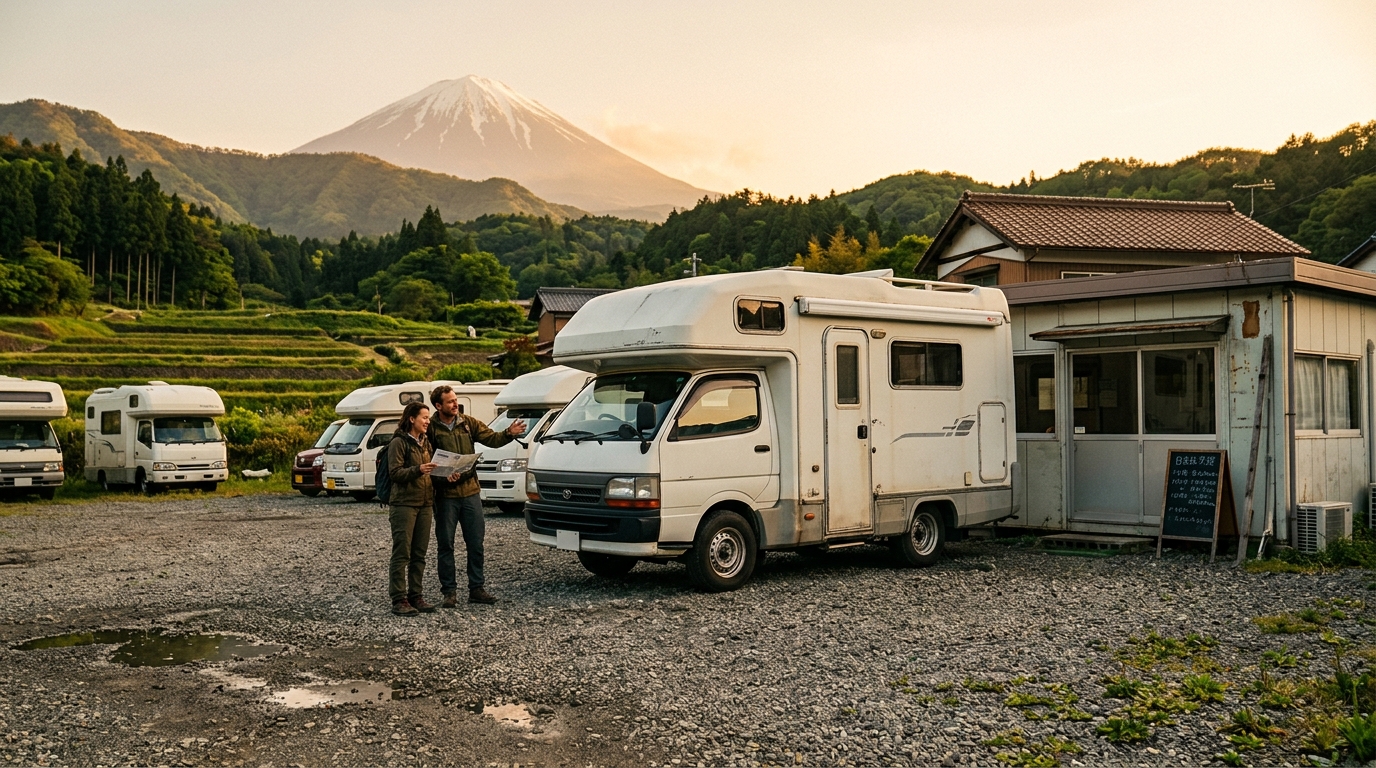
Renting an RV in Japan is often considered worthwhile for travelers seeking unparalleled flexibility, convenience, and a deeper immersion into local culture beyond traditional tourist routes. The freedom to explore remote areas, stay at scenic Michi-no-Eki, and visit numerous onsen (hot springs) on your own schedule provides a unique and memorable travel experience that public transport or hotel-hopping simply can't match. Imagine waking up to a view of Mount Fuji from your "MH23 Medium - Economy" motorhome, then heading off to a local market to prepare a fresh breakfast.
RV travel allows for unique opportunities to interact with locals at Michi-no-Eki, participate in regional festivals in less-visited towns, or discover traditional crafts that might be harder to access via conventional travel methods, enriching your cultural integration. It can also be particularly cost-effective for groups or families when compared to the cumulative expenses of hotels, multiple train tickets, and restaurant meals for an equivalent weekly itinerary. Furthermore, the ability to store luggage and souvenirs without constant packing and unpacking, as offered by models like "MH-A" with generous storage capacity, adds immense value. We are true RV specialists, and we sell the way we'd like to buy - with honesty, ensuring you have all the information to decide if an RV adventure in Japan is right for you. Our "RV Rental in Japan - Prices and Best Deals 2026" guide offers further insights.
Where can I park my RV in Japan?
In Japan, RVs can be parked overnight at designated campgrounds, Michi-no-Eki (roadside stations), and some large parking lots, each with specific rules and amenities. Michi-no-Eki are highly popular, with over 1,200 locations nationwide, offering free overnight parking, clean restrooms, and often local produce markets or restaurants. It is essential to observe cultural etiquette at Michi-no-Eki, such as not setting up camp, extending awnings, or creating excessive noise, as these are primarily rest areas, not campsites. Most offer facilities like an 80-liter fresh water fill and grey water disposal, but full hookups are rare.
For full hookups, more extensive facilities, and a traditional camping experience, commercial RV parks and dedicated campgrounds are available across Japan. These typically require a fee (ranging from ¥2,000 to ¥5,000 per night) and advance booking, especially during peak travel seasons like Golden Week or Obon. Many RV parks are located near national parks or scenic attractions, offering services like electricity (100V), water, and dump stations, suitable for larger motorhomes like the "Denali Searcher 28 - Bronze" (7.9m length). Additionally, some large retail parks or public parking areas might permit overnight parking for self-contained RVs, but always check local signage and rules or ask for permission. For finding campsites and campgrounds during your trip, we recommend using RV PLANET (rvplan.net) - a great resource for locating available spots along your route.
What are the rules for camping in Japan?
The rules for camping in Japan primarily involve using designated campgrounds or authorized parking areas like Michi-no-Eki, as wild camping (boondocking or dispersed camping) is generally prohibited and can lead to issues with local authorities or property owners. Campgrounds typically have specific hours for check-in/check-out, usually from 3 PM to 10 AM, quiet times (often from 9 PM to 7 AM), and regulations regarding fires, pets, and waste disposal. For example, open fires are often restricted to designated pits, and pet policies vary widely by campground.
Japan has stringent and complex rules for waste disposal, making environmental responsibility paramount for RVers. You must meticulously manage trash, separating it into various categories (e.g., burnable, non-burnable, plastics, glass, cans, PET bottles) and disposing of it at designated collection points, often found at Michi-no-Eki or campgrounds. Wastewater (grey and black water) must only be emptied at official dump stations. Respecting local communities, maintaining cleanliness, and minimizing noise are paramount, reflecting Japan's strong emphasis on order and communal harmony. Always call ahead to inquire about specific campground policies and availability before driving, especially for popular spots during busy periods. Many national and state parks reserve only 25-30% of spots for advance booking, with the rest available first-come, first-serve; so, you'll find a spot, and if not at the first campground, then the next one. Our 24/7 support is here to assist with any pre-trip questions about camping rules.
What You Shouldn't Miss
- Drive the Hokkaido Coastal Loop: Explore the vast, wild landscapes of Hokkaido in a "4x4 Camper B - TYR," covering over 1,500 km of stunning coastline, volcanic peaks, and national parks like Shiretoko, a UNESCO World Heritage site.
- Visit Historic Kyoto & Nara: Park your compact campervan at a nearby Michi-no-Eki and immerse yourself in the ancient capitals, exploring iconic temples, serene gardens, and friendly deer, then retreat to your peaceful mobile home.
- Experience the Japanese Alps: Navigate the scenic mountain roads around Nagano with a reliable "Class Comfort" motorhome, stopping at traditional onsen towns and hiking trails that offer breathtaking views.
- Fuji Five Lakes RV Tour: Circumnavigate Lake Kawaguchiko, one of the Fuji Five Lakes, parking at designated RV spots to capture iconic views of Mount Fuji and enjoy activities like boating or visiting traditional craft villages.
- Indulge in Kyushu's Onsen Trail: Take your RV on a week-long journey through Kyushu, hitting famous hot spring resorts like Beppu and Kurokawa Onsen, many of which have RV-friendly parking or adjacent facilities.
Final Thoughts
A weekly RV rental in Japan is more than just a vacation; it's an invitation to a deeply personal adventure, blending the tranquility of nature with the richness of Japanese culture. Imagine the freedom of waking up to a different scenic vista each morning, discovering hidden gems off the beaten path, and savoring local flavors from the comfort of your mobile home. With Bandana RV, you're not just renting a vehicle; you're gaining a partner dedicated to ensuring your trip is as seamless and memorable as possible.
Our commitment to full transparency, 24/7 support from real people, and expert planning resources like RV PLANET means you can embark on your Japanese journey with complete confidence. So, whether you dream of cherry blossoms in spring, vibrant autumn leaves, or serene winter landscapes, the open road in Japan awaits. Get inspired for your next trip, discover top destinations, and plan a trip itinerary in advance with minimal effort and maximum enjoyment!
Why wait? Check Japan RV Rental Prices Now and start planning your unforgettable week-long adventure today!