In This Guide
- Where to Camp in Tokyo - Airport — Top Options
- Campground Types in Tokyo - Airport (National, Private, Wild)
- Featured RV Park or Campground in Tokyo - Airport
- Hookups & Amenities — What to Expect
- Booking Windows & Reservations in Tokyo - Airport
- Nearby Supermarkets & Resupply Points
- Best RV Class for Camping in Tokyo - Airport
- How to Save on Campgrounds in Tokyo - Airport
- How to pick up and drop off an RV near Narita or Haneda
- What RV size is best for Japan
- How to navigate Tokyo with an RV
- What are the rules for RV parking and camping in Japan
- Cultural etiquette for RVers in Japan
- How much does RV travel cost in Japan
- How to deal with language barriers in Japan while RVing
- Emergency preparedness for RV travelers in Japan
Embarking on a weekly RV camping adventure in Tokyo - Airport offers a unique blend of urban excitement and serene natural escapes. Japan, with its blend of bustling cities and tranquil countryside, is an incredible destination for exploring by rented motorhome. Imagine yourself enjoying a delicious breakfast prepared in your cozy rented campervan, then heading out to explore ancient temples or vibrant city districts, knowing you have a comfortable home-on-wheels to return to each evening. For live availability and current prices, start with our RV Rental Tokyo - Airport - Complete Guide 2026 guide.
Where to Camp in Tokyo - Airport — Top Options
Camping directly within Tokyo's immediate airport vicinity is limited due to the dense urban landscape. Travelers typically find suitable RV campgrounds or "Michi-no-Eki" (roadside stations) just outside the direct metropolitan area, often within a 1-2 hour drive into neighboring prefectures. Locations in neighboring prefectures like Chiba or Kanagawa offer tranquil camping options, providing a peaceful base away from the city's hustle. For example, sites near Lake Kawaguchiko in Yamanashi Prefecture offer stunning views of Mount Fuji and are easily accessible for a weekly RV camping trip. Always confirm availability and specific RV parking rules before driving to any location, as policies can vary. Exploring the outskirts first is often a great strategy for a relaxing weekly rv camping experience in Tokyo - Airport.
Campground Types in Tokyo - Airport (National, Private, Wild)
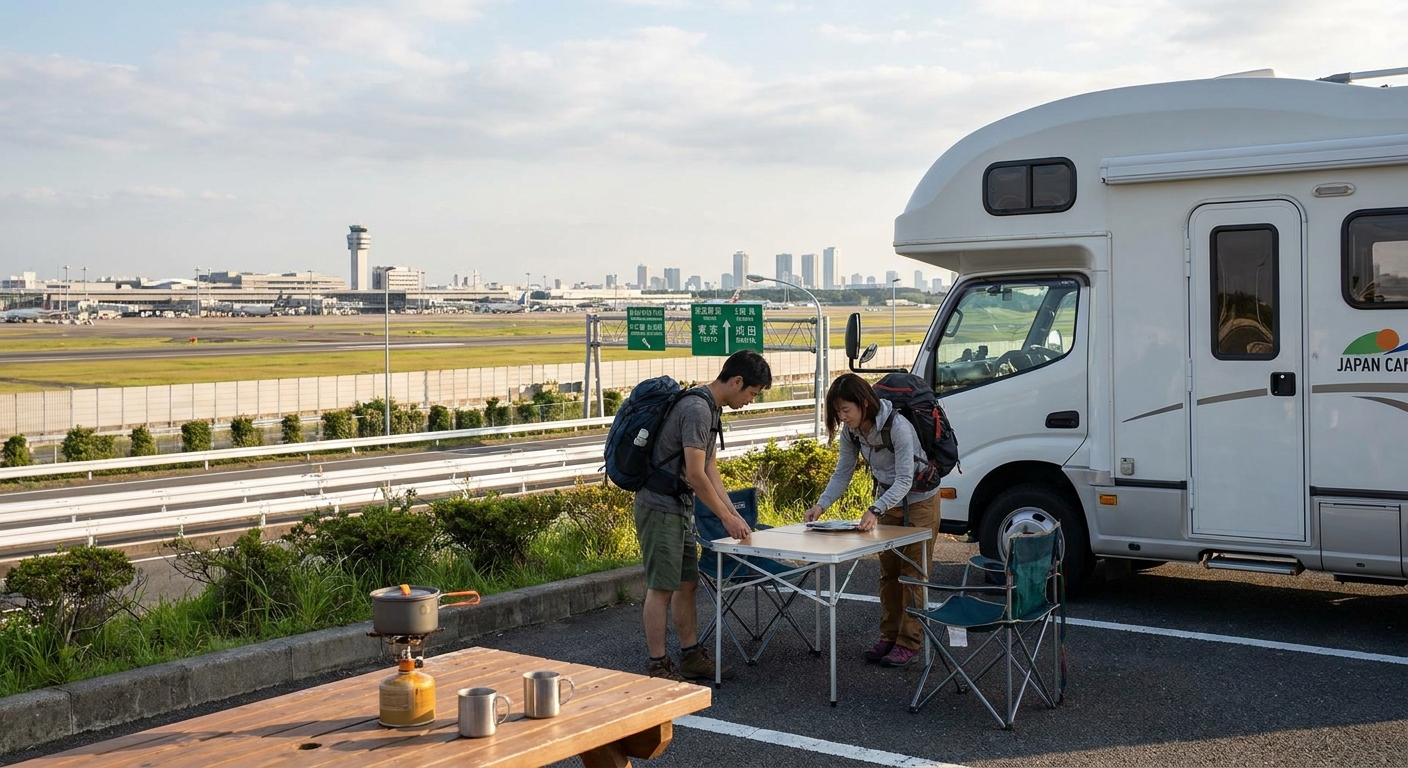
In Japan, camping options for a weekly RV rental primarily include private campgrounds and designated national or prefectural park sites. Private campgrounds generally offer full amenities, including electricity hookups, showers, and dedicated RV spots for a comfortable stay, often costing around ¥3,000-¥5,000 per night. National or prefectural park sites may be more rustic and require advance reservations, often with stricter rules on activities like campfires. Wild camping or "boondocking" is generally discouraged and often illegal outside of specific "Michi-no-Eki" (roadside stations) rules; these stations are for overnight parking to rest, not for full camping activities like setting up awnings or outdoor cooking. Respecting local regulations and choosing designated areas ensures a pleasant and legal weekly RV camping experience in Tokyo - Airport.
Featured RV Park or Campground in Tokyo - Airport
As specific real-time data for a featured RV park directly accessible from Tokyo airports is not readily available, travelers should prioritize looking for well-reviewed private campgrounds in surrounding prefectures. Locations like the Auto Camping Garden in Chiba, about an hour from Narita Airport, offer a good balance of amenities and accessibility. For those venturing a bit further, sites in Kanagawa or Yamanashi, such as the Fumotoppara Camp Ground near Mount Fuji, provide breathtaking scenery and robust facilities. Always search websites like 'Campfield' or Google Maps to identify suitable options with user reviews and facility listings before your weekly RV rental trip. Look for campgrounds that explicitly advertise RV accommodations and provide details on amenities and accessibility to make your long-stay camping near Tokyo - Airport enjoyable.
Hookups & Amenities — What to Expect
Most established RV campgrounds in Japan offer essential hookups for a comfortable weekly RV camping experience near Tokyo - Airport. Electricity is typically 100V with Type A/B outlets, necessitating that international travelers bring appropriate adapters for their devices. Fresh water and gray/black water dump stations are commonly available, ensuring convenience for longer stays. Communal facilities like showers (often coin-operated, costing around ¥100-¥200 for 5-10 minutes), laundry rooms, and Wi-Fi access are common amenities. Conversely, Michi-no-Eki usually provide clean restrooms and vending machines but rarely offer RV hookups or extensive camping amenities. Always check specific campground websites for detailed amenity lists before you arrive. On the routes offered through RV PLANET routes, you can itemize and track every expense along the way for easy budgeting.
Booking Windows & Reservations in Tokyo - Airport
For weekly RV rentals near Tokyo - Airport, pre-planners should book private campgrounds well in advance, especially during peak seasons like spring (cherry blossom season, typically late March to early April), autumn foliage (October-November), and national holidays (e.g., Golden Week in early May). Many popular sites can be fully booked 2-3 months ahead. Spontaneous travelers may find same-day or next-day availability at less popular sites, but it is always recommended to call ahead before driving there, especially if you're looking for specific amenities. Keep in mind that many national/state parks reserve only 25-30% of spots for advance bookings, with the remainder often available on a first-come, first-served basis. Reassure yourself: you will find a spot. If not at the first campground, then the next one, so call ahead. For those seeking RV Rental Deals in Tokyo - Airport - Latest Offers 2026, flexibility with dates can often lead to better availability and prices.
Nearby Supermarkets & Resupply Points
Upon RV pickup near Narita (NRT) or Haneda (HND) airports, travelers should plan to visit major supermarket chains for resupply before heading to their weekly RV camping site. Look for large stores like Aeon, Ito-Yokado, or Life Supermarket, which are commonly found in suburban areas surrounding the airports, such as around Narita City or Kawasaki. These stores offer a wide range of groceries, fresh produce, and essential supplies for your entire weekly RV trip. Plan your first shopping trip shortly after pickup to stock your RV for immediate needs and subsequent meals. Don't forget to grab some local Japanese ingredients to try cooking in your motorhome! For inspiration, check out our RV-friendly recipes playlist.
Best RV Class for Camping in Tokyo - Airport
For navigating Japan's often narrower roads and urban environments, a Class B Camper Van, averaging around 5.8 meters in length, is highly recommended for weekly RV camping in Tokyo - Airport. These agile vehicles, like the "rv rental denver example Category Van" or "hire campervan example Paradise S/T", are easy to maneuver and park. Class TC Truck Campers, with an average length of 5.5 meters, also offer excellent maneuverability and are suitable for Japanese infrastructure, providing a comfortable yet compact solution. While Class SI Semi-integrated RVs, such as the "Active Compact Select" (averaging 6.9 meters), offer more space for families, their larger size may be challenging for tight city streets and smaller parking lots. Larger RVs like Class C Alcove (avg. 7.5m) or Class A Integrated (avg. 7.5m) are generally less suited for urban Tokyo and better for highway travel in wider rural areas. If you're a couple looking for options, our RV Rental in Tokyo - Airport for Couples - Pricing 2026 guide can provide further insights.
How to Save on Campgrounds in Tokyo - Airport
To reduce weekly RV camping costs near Tokyo - Airport, inquire about potential campground discount cards, which can offer significant savings at participating sites. Consider booking during the shoulder seasons (e.g., late spring before Golden Week or late autumn after peak foliage) to avoid the highest peak pricing. Opt for municipal or regional campgrounds over private resorts, as they are typically more affordable while still offering necessary facilities. Many campgrounds offer discounted weekly rates, so staying 3 or more nights at a single location can lead to savings, especially for a planned long-stay. If traveling with a group, sharing hookup costs and pooling resources for groceries can further reduce individual expenses for your rented motorhome adventure. Our Family RV Rental in Tokyo - Airport - Pricing Guide 2026 has more budgeting insights.
How to pick up and drop off an RV near Narita or Haneda
RV rental companies near Tokyo's Narita (NRT) or Haneda (HND) airports typically offer shuttle services or are located a short taxi or train ride away, streamlining the pick-up and drop-off process. It is crucial to coordinate precise pick-up and drop-off times with the rental provider and allocate ample time, typically 1-2 hours, for vehicle orientation and paperwork. Confirm the exact location of the rental office and whether a shuttle service is provided or if public transport is the best option for reaching it from the airport. Plan your first night's camping spot and an initial grocery run (refer to Nearby Supermarkets & Resupply Points) immediately after pickup to ensure a smooth start to your weekly rental. Full transparency means no surprises, so ask about any potential extra fees for transfers if applicable.
What RV size is best for Japan
For navigating Japan's unique infrastructure, including often narrow streets and smaller parking spaces, RVs typically under 6 meters in length are highly recommended. A Class B Camper Van, averaging 5.8 meters in length, is an excellent choice due to its maneuverability and ease of parking in tighter spots, making it perfect for both urban fringes and scenic routes. Class TC Truck Campers, averaging 5.5 meters, are also very suitable for their compact size, making them easy to handle on rural roads and in smaller towns. Consider the height of the RV as well, as some urban parking garages and older tunnels may have height restrictions as low as 2.1 meters. While larger Class SI Semi-integrated RVs, like the "Active Long Select" (averaging 6.9m), can offer more comfort, their size may present challenges in congested areas. Drive slowly and carefully, and you can drive almost anywhere without issues. No need to stress - just use common sense and pay attention.
How to navigate Tokyo with an RV
Navigating Tokyo with a rented RV requires careful planning, focusing on utilizing advanced GPS systems equipped with height and width alerts to avoid problematic routes. It is generally advisable to avoid driving larger RVs directly into central urban areas where streets are exceptionally narrow, parking is scarce, and traffic can be intense. A practical approach for exploring Tokyo is to park your motorhome at a campground or Michi-no-Eki outside the city center and use Japan's efficient public transportation system (trains, subways) for city exploration. Be prepared for significant toll road expenses, as many major highways leading into and around Tokyo are tolled; an ETC card (Electronic Toll Collection) is highly recommended for efficiency and potential discounts. Always research and pre-plan your parking locations when venturing into more suburban parts of Tokyo to avoid unforeseen difficulties. Our Driving an RV in Tokyo - Airport - Complete Guide 2026 offers more specific tips.
What are the rules for RV parking and camping in Japan
RV parking and camping in Japan are governed by strict regulations, necessitating a clear understanding of what is permissible during your weekly RV camping trip in Tokyo - Airport. Overnight parking for rest is generally allowed at "Michi-no-Eki" (roadside stations), but full camping activities—such as deploying awnings, setting up chairs, or cooking outside—are typically restricted. Designated private or public campgrounds, which often require advance reservations and fees (e.g., ¥2,000-¥5,000 per night), are the only legal and expected locations for traditional camping activities and extended stays. Urban parking for RVs is often difficult due to limited space, high costs (up to ¥1,000 per hour in central areas), and prevalent height/size restrictions. Wild camping (boondocking) on public or private land is generally illegal and considered disrespectful to local communities and property owners.
Cultural etiquette for RVers in Japan
RV travelers in Japan must observe specific cultural etiquettes to ensure a respectful and harmonious travel experience. Adhere to diligent waste separation rules, which are very strict in Japan; improper disposal is highly frowned upon and could lead to fines. Maintain low noise levels at all times, especially in campgrounds and Michi-no-Eki, to respect fellow travelers and local residents, particularly after 9 PM. At Michi-no-Eki, use the facility for rest only and avoid overtly 'camping' activities like setting up tables, chairs, or awnings outside your rented campervan. Be mindful of local customs, such as bowing slightly, removing shoes indoors, and following etiquette at communal baths (onsen) where tattoos may be an issue. Being a polite and considerate traveler will enhance your weekly RV camping experience in Tokyo - Airport and positively represent the RV community.
How much does RV travel cost in Japan
The cost of weekly RV travel in Japan extends beyond just rental fees, encompassing significant additional expenses that require careful budgeting. Tolls are a major expense, particularly on highways leading to and around Tokyo, where a Narita Airport to central Tokyo journey can cost ¥3,000-¥4,000 ($20-$30 USD) one-way; consider renting an ETC card with your RV for electronic toll collection and potential discounts. Fuel costs can be substantial, with Bandana's fleet typically consuming 8-12 Liters/100 km; diesel is often cheaper than gasoline in Japan. Expect campground fees ranging from ¥2,000 to ¥5,000+ per night, varying by location, amenities, and season. Parking fees in urban areas can be expensive, ranging from ¥300-¥1,000 per hour. Always be aware of potential hidden charges such as excess mileage fees, cleaning charges, or insurance deductibles, which is why Bandana offers full transparency on pricing. For finding campsites and campgrounds during your trip, we recommend using RV PLANET routes to itemize and track every expense along the way for easy budgeting.
How to deal with language barriers in Japan while RVing
Overcoming language barriers while RVing in Japan can be effectively managed by utilizing various practical solutions. Download offline translation apps like Google Translate or DeepL before your trip, which can translate text, speech, and even images of signs or menus. Renting a pocket Wi-Fi device is highly recommended for constant internet access, essential for online translation, navigation, and urgent communication with your rental provider. Learning a few essential Japanese phrases—such as greetings (Konnichiwa), 'thank you' (Arigato gozaimasu), numbers, and basic questions about directions or prices—can significantly enhance interactions. Don't shy away from using gestures, pointing, and visual aids like maps or picture cards to convey your needs when verbal communication is difficult. The Japanese are generally very helpful and patient with foreign visitors, making your weekly RV camping trip in Tokyo - Airport an enriching experience. For further planning, explore our RV Travel Guide to Tokyo - Airport - Tips and Top Spots 2026.
Emergency preparedness for RV travelers in Japan
Emergency preparedness for RV travelers in Japan involves understanding natural disaster protocols, knowing breakdown procedures, and accessing medical assistance. Familiarize yourself with natural disaster alerts, particularly for earthquakes and typhoons (consider downloading the J-Alert app, available in English, to receive early warnings), and know how to find local emergency shelters. In case of an RV breakdown, immediately contact your rental company; ensure you understand their roadside assistance policy and contact numbers prior to departure. Bandana provides clear details and offers 24/7 support for pre-booking inquiries, booking support, and post-booking coordination. For medical emergencies, dial 119 for ambulance and fire services, and for police assistance, dial 110; carrying comprehensive travel insurance is strongly advised. Prepare an emergency kit with a first-aid kit, sufficient water (e.g., 5-10 liters), non-perishable food, a flashlight, and a portable power bank for communication.
🎬 Video coming soon
What You Shouldn't Miss
- **Mount Fuji Views:** Drive west from Tokyo - Airport to the Fuji Five Lakes region (around 2-3 hours) for iconic views of Mount Fuji, especially from Lake Kawaguchiko.
- **Hakone Open-Air Museum:** Explore this stunning outdoor art museum in Hakone, about 1.5 hours from Tokyo, known for its Rodin and Picasso collections amidst nature.
- **Nokogiriyama Nihonji Temple:** Discover this ancient temple in Chiba Prefecture, offering panoramic views of Tokyo Bay and a massive carved Buddha statue, accessible within 1.5-2 hours from Narita.
- **Enoshima Island:** Visit this charming island in Kanagawa Prefecture, just over an hour south of Tokyo, featuring caves, shrines, and scenic coastal drives perfect for a campervan.
- **Michi-no-Eki Exploration:** Spend a night at a well-regarded Michi-no-Eki, such as Michi-no-Eki Fuminosato in Saitama, to experience local markets and unique roadside amenities.
- **Onsen Experience:** Integrate a visit to a traditional hot spring (onsen) town like Hakone Yumoto, where you can park your rented motorhome nearby and relax in thermal baths.
Looking for expert insights from Avi Bandana? Top 5 Adventures — recommendations from Avi Bandana
Final Thoughts
A weekly RV camping trip near Tokyo - Airport offers an unforgettable way to experience Japan, blending the vibrancy of urban life with the tranquility of nature. With the right planning, choosing a compact rented motorhome like a Class B campervan, and understanding local customs and camping regulations, you're set for an incredible adventure. Remember to travel slowly, averaging a maximum of 100-150 km per day, to truly immerse yourself in the culture, savor the food, and appreciate the stunning scenery that Japan has to offer.
From navigating the unique challenges of Japanese roads to finding the perfect long-stay site, Bandana is here to support you every step of the way, providing full transparency and expert guidance. So why wait? It's time to discover the freedom and joy of RV travel in one of the world's most captivating destinations. Get inspired for your next trip and plan a journey itinerary in advance with minimal effort and maximum enjoyment!
Find Motorhome Rentals in Tokyo - Airport