In This Guide
- What rv rental for couples RV Rental Costs in Tokyo - Airport (2026)
- Seasonal Pricing - Peak vs. Shoulder vs. Off-Season in Tokyo - Airport
- What's Included vs. What's an Add-On
- Hidden Costs to Budget For in Tokyo - Airport
- How to Save on rv rental for couples RV Rental in Tokyo - Airport
- Where can I pick up an RV rental near Narita (NRT) or Haneda (HND) airports
- Is it easy to drive an RV in Japan
- How do I use ETC (Electronic Toll Collection) for RVs in Japan
- Where can I park an RV overnight near Tokyo airports
- What are popular RV routes from Tokyo airports
What rv rental for couples RV Rental Costs in Tokyo - Airport (2026)
RV rental prices in Tokyo - Airport are dynamic, much like flight tickets, varying daily based on factors such as seasonality, demand, and the specific supplier's marketing decisions. For couples planning a romantic getaway or an adventurous two-person trip, a compact campervan or a small Class C motorhome is often the ideal choice, offering comfort without unnecessary size. These smaller RVs, such as an "rv rental denver example Category Van" or a "rent rv example A1" are typically well-suited for Japanese roads and average daily costs can range from $100-$250 USD, depending on the rental duration and time of year. Bandana Caravan, founded in 2001, has over 20 years of experience helping tens of thousands of travelers, ensuring full transparency with no hidden fees, so what you see is what you pay. For live availability and current prices, start with our RV Rental Tokyo - Airport - Complete Guide 2026 guide.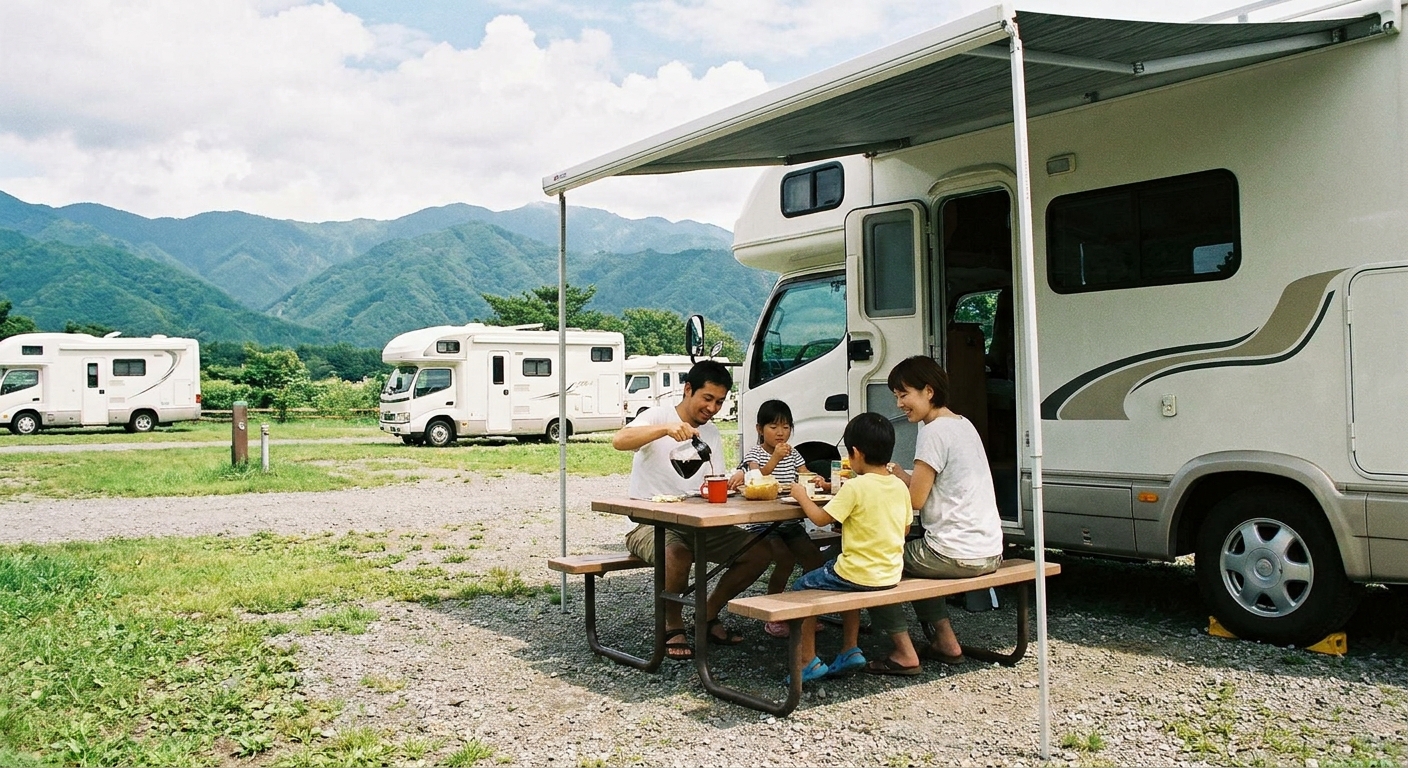 A typical one-week motorhome rental for couples in Tokyo - Airport during the shoulder season might cost between $700-$1,750 USD, or approximately $100-$250 per day. Extending your adventure to a two-week trip could see the average daily rate decrease slightly, often falling into the $90-$220 USD range, totaling $1,260-$3,080 USD, as many suppliers offer better value for longer durations. For a month-long excursion, the daily rate could be as low as $80-$200 USD, amounting to $2,400-$6,000 USD, providing significant savings for extended slow travel, allowing you to truly immerse yourself in Japan's culture and scenery. Remember, these are estimates, and the final price is set at the actual booking time. We pride ourselves on full transparency – no hidden fees, no surprises.
Seasonal Pricing - Peak vs. Shoulder vs. Off-Season in Tokyo - Airport
Peak season for RV rentals in Tokyo - Airport typically falls during July and August, when demand is highest due to summer holidays, leading to the highest rental prices, often 30-50% higher than off-peak. Shoulder seasons, spanning May-June and September-October, offer a more balanced experience with good weather and moderate pricing, which can be 10-25% lower than peak rates. For couples seeking the most budget-friendly options, the off-season, from November to March (excluding major holidays like New Year's), generally provides the lowest rental rates, with April being a low-season anchor month. During off-peak periods, especially April, couples might find compact campervans (like the "hire campervan example Paradise S/T") or smaller Class C motorhomes with amenities such as a front air condition, shower, and toilet, for around $100-$150 USD per day. In contrast, a similar rental during peak summer could easily climb to $200-$300+ USD per day. Pre-planners who like everything organized can take advantage of early booking discounts, while spontaneous travelers might find last-minute deals if flexibility allows. We recommend comparing prices across suppliers to find the best deals for your preferred travel dates and duration. For more specific driving insights, consider our "Driving an RV in Tokyo - Airport - Complete Guide 2026".What's Included vs. What's an Add-On
Basic insurance is always included with RV rentals in Tokyo - Airport, ensuring a foundational level of coverage for your trip. However, for enhanced peace of mind, comprehensive options and top-level deductible reimbursement can be purchased as an optional upgrade. Essential features like fresh water tanks (e.g., a "V2L" Class B motorhome with a 100-liter fresh water tank) and a compact gas stove for preparing meals (RV-friendly recipes playlist) are usually standard. Common add-ons for RV rentals in Tokyo - Airport include mileage packages, generator usage, kitchen kits (with cutlery, plates, and cooking utensils), and bedding/linen kits. Some providers may also offer navigation systems, outdoor tables and chairs, or even Wi-Fi hotspots for an additional fee. It's crucial for couples to carefully review each RV listing on our platform to understand precisely what’s included and what constitutes an extra, ensuring full transparency and no surprises at pickup. Our direct partnerships with over 50 leading RV suppliers worldwide, including trusted names like Apollo and Britz, ensure you get all the details upfront.Hidden Costs to Budget For in Tokyo - Airport
Toll road fees, campsite charges, and fuel are the primary additional expenses to budget for an RV rental trip in Tokyo - Airport, Japan. Japan's expressways are almost entirely tolled, and these can accumulate, particularly for longer trips; RVs may sometimes incur higher charges than standard cars. A week-long trip starting from Tokyo - Airport could easily involve $100-$300 USD in tolls, depending on your route and distance traveled. Campsite fees for designated auto-camps or RV parks typically range from $25-$50 USD per night, although many "Michi-no-Eki" (roadside stations) allow free overnight parking. Fuel costs will vary based on your rented RV's fuel efficiency, but expect an average of 10-15 liters per 100 km for a compact Class C or campervan. Other potential costs include dump station fees (often $5-$15 USD if not included with a campsite) and propane for cooking and heating. For budgeting and tracking every expense along your journey, exploring RV PLANET routes can be a great resource, helping you itemize and manage your ancillary trip costs. You can also save on ancillary costs by following our "Budget RV Driving in Tokyo - Airport - Save on Fuel 2026" guide.How to Save on rv rental for couples RV Rental in Tokyo - Airport
Booking your RV rental for couples in Tokyo - Airport during the shoulder or off-season, such as April, can provide significant savings of up to 25-40% compared to peak times like August. Opting for a smaller RV class, such as a Class B campervan like the "V3" or "Duo" models (both ideal for a couple and easy to maneuver), can reduce both the initial rental cost and ongoing fuel expenses. These vehicles often feature a shower, toilet, and a compact kitchen. Longer rental durations often result in a lower daily rate, making a two-week adventure or an extended road trip more cost-effective per day. For instance, a 14-day rental could save you 10-15% on the daily rate compared to a 7-day rental. Travelers with flexible dates can monitor dynamic flex-rate pricing fluctuations on our platform and book strategically when prices are lower. Additionally, consider taking advantage of our 25% planning discount when using rvplan.net to craft your pre-planned routes. This tool helps optimize your journey and budget.Where can I pick up an RV rental near Narita (NRT) or Haneda (HND) airports
Many RV rental companies near Tokyo - Airport offer convenient shuttle services directly from Narita (NRT) or Haneda (HND) airports to their depots, which are typically located in surrounding Chiba or Kanagawa prefectures. Upon booking confirmation, you will usually receive specific instructions detailing shuttle schedules and pickup points, often available hourly during business hours. For instance, some depots are located in areas like Narita City or Sakura City, a short ride from NRT. Alternatively, public transport, including Japan Rail (JR) trains and local buses, can connect travelers from both airports to rental offices situated in nearby towns. For example, from NRT, you can take a JR Narita Line train to a station like Narita Station, then a short taxi or bus to the rental office. From HND, the Keikyu Line or Tokyo Monorail can take you to central stations, from which further local connections are available. It is advisable to confirm transfer options, their availability, and any associated costs directly with your chosen rental provider well in advance of your arrival in Tokyo - Airport to ensure a smooth transition to your rented motorhome.Is it easy to drive an RV in Japan
Driving an RV in Japan is generally manageable and can be a delightful experience, especially when exploring scenic routes outside major urban centers, though it does require careful attention to local driving customs and road conditions. While Japan boasts well-maintained roads and clear signage (often bi-lingual in Japanese and English), central Tokyo and other dense urban areas can present challenges due to narrower streets, heavy traffic, and limited parking for larger vehicles. Drive slowly and carefully, and you can drive almost anywhere without issues. No need to stress - just use common sense and pay attention. For couples, choosing a smaller Class B campervan (like a "Category Van" or "Active Classic" with lengths typically under 6 meters) or a compact Class C motorhome is highly recommended. These smaller models are significantly easier to navigate on Japan's intricate road network, fit into tighter parking spaces at attractions, and are more fuel-efficient. An International Driving Permit (IDP) is recommended for visitors from non-English-speaking countries but is NOT mandatory in most cases if your license is recognized; however, always check local regulations. For a deeper dive into road conditions and customs, our "Driving an RV in Tokyo - Airport - Complete Guide 2026" offers comprehensive advice.How do I use ETC (Electronic Toll Collection) for RVs in Japan
Using an ETC (Electronic Toll Collection) card for RVs in Japan significantly streamlines toll payments, offering immense convenience on the country's extensive expressway network. Rental RVs often come equipped with an ETC device already installed, and you can usually rent an ETC card directly from your RV provider for a small daily or weekly fee, typically around $5-$10 USD. This eliminates the need to stop at every toll booth to pay cash. Once you have the ETC card, you simply insert it into the vehicle's dedicated reader, usually located near the dashboard or rearview mirror. As you approach an ETC-designated gate on the expressway, the system automatically detects the card and charges the appropriate toll, allowing you to pass through without stopping. Ensure your ETC card is correctly inserted and has sufficient credit or is properly linked to an account to avoid any delays or issues at toll booths. Planning your route in advance and understanding potential toll costs can be easily managed with RV PLANET routes.Where can I park an RV overnight near Tokyo airports
Overnight RV parking near Tokyo - Airport's Narita (NRT) and Haneda (HND) airports is primarily found at dedicated campgrounds or within Japan's unique "Michi-no-Eki" (roadside stations) system. Direct overnight parking for RVs at the airports themselves is typically restricted or entirely prohibited. For travelers arriving at Narita, several campgrounds in Chiba Prefecture, such as Narita Airport Campground, are popular options for a first or last night stay, offering basic amenities and proximity to NRT. If you're flying into Haneda (HND), options might require a slightly longer drive south into Kanagawa Prefecture, where various auto-camps or Michi-no-Eki stations are available. These roadside stations, of which there are over 1,200 nationwide, are much more than simple rest stops; many allow free overnight RV parking and offer restrooms, local produce markets, and sometimes even restaurants or hot springs. It is crucial for couples to research and book campsites in advance, especially during peak seasons, and to always call ahead to Michi-no-Eki locations to confirm overnight parking rules before driving. This proactive planning ensures you'll find a spot, even if it's not the very first campground you target.What are popular RV routes from Tokyo airports
Popular RV routes from Tokyo - Airport's Narita (NRT) and Haneda (HND) airports often strategically bypass central Tokyo to avoid urban traffic congestion and complex parking, leading directly to Japan's stunning natural and cultural regions. From Narita (NRT), many couples head north towards Ibaraki or Tochigi prefectures, offering serene nature parks and hot springs, or southwest towards the iconic Mount Fuji and Hakone via the Tokyo Gaikan Expressway (E46) and Tomei Expressway (E1). Starting from Haneda (HND), travelers frequently choose to head west towards the picturesque Fuji Five Lakes region, or south along the scenic coast to the Izu Peninsula, renowned for its volcanic landscapes, hot springs (onsen), and ocean views. These initial routes allow couples to quickly immerse themselves in Japan's natural beauty and rural charm, experiencing traditional towns and breathtaking vistas without the immediate complexities of navigating the sprawling metropolis. We always recommend slow travel, averaging max 100-150 km per day, to truly feel the place, connect to the culture, the food, and the scenery. For detailed route ideas, check out our "Week-Long RV Driving Tour in Tokyo - Airport 2026" or "RV Travel Guide to Tokyo - Airport - Tips and Top Spots 2026".What You Shouldn't Miss
- **Mount Fuji and Hakone Loop:** Drive your rented motorhome (perhaps a compact "luxury rv rentals example Carthago Malibu 600", ideal for two) from Tokyo - Airport towards the iconic Mount Fuji. Spend a day exploring the Fuji Five Lakes region, then continue to Hakone for stunning lake views, hot springs, and art museums.
- **Izu Peninsula Coastal Drive:** Discover the rugged beauty of the Izu Peninsula, easily accessible from Haneda (HND) airport. This route offers dramatic coastlines, charming fishing villages, and numerous onsen towns perfect for a relaxing soak.
- **Nikko National Park's Shrines & Nature:** Head north from Narita (NRT) to Nikko, home to UNESCO World Heritage shrines and temples, nestled in lush mountains. The autumn foliage here is particularly spectacular.
- **Camping at Michi-no-Eki:** Embrace Japan's unique roadside station culture by spending a night at a "Michi-no-Eki." Stock up on local produce, sample regional delicacies, and enjoy the convenience of free overnight parking.
- **Enjoying Onsen:** No trip to Japan is complete without experiencing an onsen (hot spring). Many RV-friendly campgrounds or Michi-no-Eki are located near public or private onsen, offering a perfect way to relax after a day of driving.
Final Thoughts
An RV rental for couples in Tokyo - Airport offers an unparalleled opportunity for a unique and intimate adventure through Japan's diverse landscapes. Imagine waking up to the serene views of Mount Fuji, cooking a delicious breakfast in your compact campervan, and setting off on a slow travel journey, averaging 100-150 km per day, to discover hidden gems. From the bustling energy near Narita and Haneda airports to the peaceful countryside, an RV provides the flexibility and comfort to create unforgettable memories together. With transparent pricing, dedicated support from true RV specialists, and helpful tools like RV PLANET, Bandana Caravan is here to ensure your Japanese road trip is seamless and joyful from start to finish. Embrace the freedom of the open road and embark on an incredible journey. Don't wait to start planning your perfect escape. Find Motorhome Rentals in Tokyo - AirportOn the routes offered through RV PLANET routes, you can itemize and track every expense along the way for easy budgeting.