In This Guide
- Can You Drive an RV in Tokyo - Airport License & Age Rules
- Road Conditions & Terrain in Tokyo - Airport
- RV Size Limits, Bridges & Restricted Zones
- Fuel Diesel vs Petrol & Cost per 100 km
- Tolls, Vignettes & Border Rules
- Driving Tips for weekly rv rental Travelers
- Recommended RV Class for Tokyo - Airport Roads
- Should I Choose a Compact Van Instead of a Large RV in Tokyo - Airport?
- Can I Park Anywhere Free & Wild Camping Rules in Tokyo - Airport
- Can I Drive an RV Into the City Center Heights, Tunnels & Local Signage
- What are the specific RV rental options at or near Tokyo airports?
- What is the detailed guidance on driving an RV in Tokyo?
- What is the comprehensive information on RV parking in and around Tokyo?
- What is a definitive list and review of RV campgrounds/parks near Tokyo?
- What are the insights into Japanese road trip costs specific to RVs?
- What is the practical advice on RV waste disposal, water refill, and general maintenance support for foreign RVers in Japan?
- What are the strategies for combining RV travel with Tokyo city exploration?
- What is the legality and etiquette of overnight parking at 'Michi-no-Eki' (Roadside Stations) near Tokyo for RVs?
Embarking on a week-long RV driving tour from Tokyo - Airport offers an unparalleled freedom to explore Japan's diverse landscapes, from bustling metropolises to serene natural escapes. Imagine waking up to a different scenic view each day, having your home on wheels always ready for the next adventure. For live availability and current prices, start with our RV Rental Tokyo - Airport - Complete Guide 2026 guide.
Can You Drive an RV in Tokyo - Airport License & Age Rules
Foreign visitors can drive an RV in Tokyo - Airport and across Japan with an International Driving Permit (IDP) alongside their national license, as mandated by Japanese law for signatory countries of the 1949 Geneva Convention. The Gross Vehicle Weight Rating (GVWR) of your rented RV must not exceed 3,500 kg (7,700 lbs) for a standard B-class license, which covers most rental motorhomes and campervans. The minimum age to rent an RV in Tokyo - Airport is typically 21 years old, with no young driver surcharges and no vehicle class restrictions based on age through Bandana.
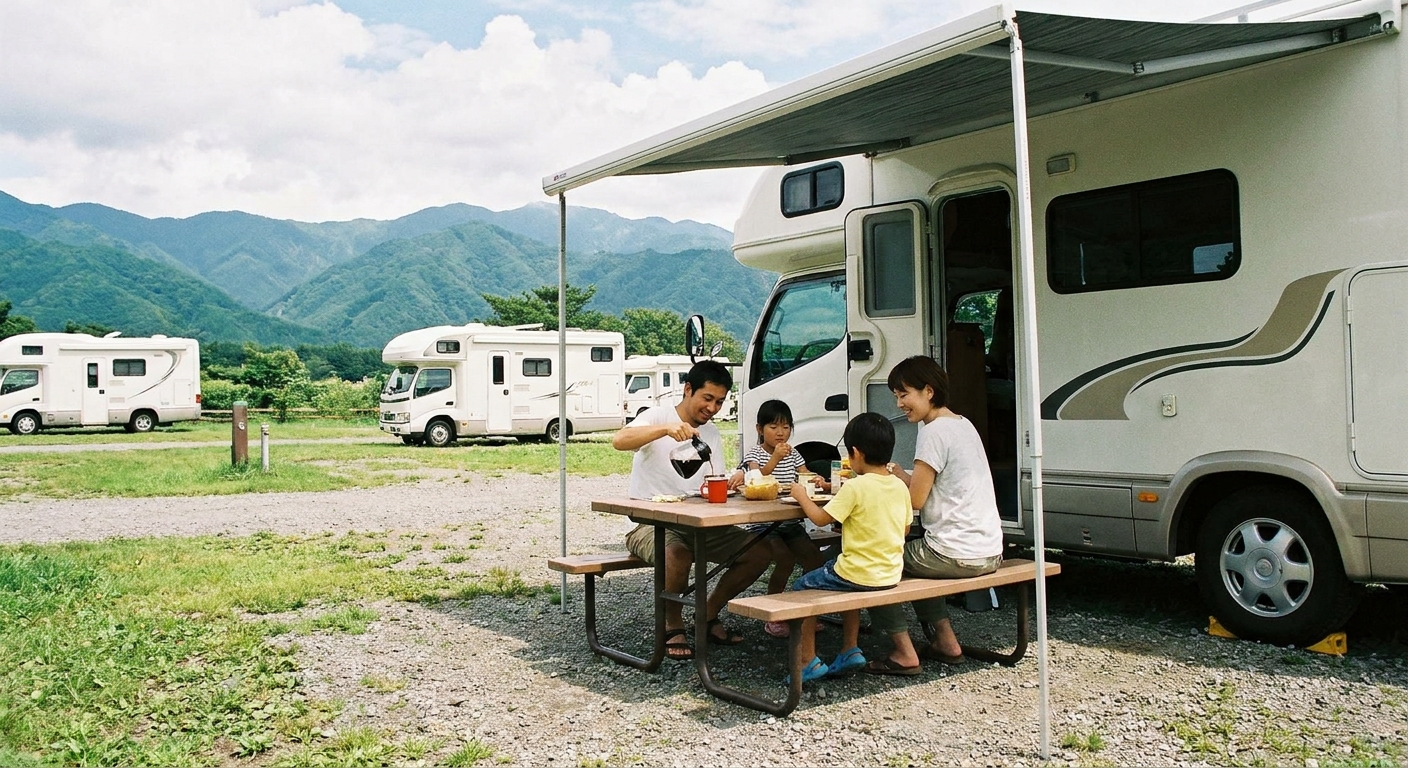
Ensuring you have the correct documentation, such as your IDP and national license, is a crucial first step for your weekly RV rental in Tokyo - Airport. This preparation ensures a smooth pickup process at the rental depot and compliance with local traffic laws throughout your trip. Bandana RV specialists are always available to help clarify these requirements before you book, providing peace of mind as you plan your adventure.
Road Conditions & Terrain in Tokyo - Airport
Roads in and around Tokyo - Airport are generally well-maintained and paved, providing a comfortable driving experience for rented RVs. While urban areas feature high traffic density and can have narrow streets, especially in city centers like Shibuya or Shinjuku, main roads and expressways are wide and accommodating. Outlying areas, such as the Hakone region or the Izu Peninsula, offer scenic routes which can be winding, particularly in mountainous or coastal regions, encouraging travelers to drive slowly and carefully to fully appreciate the varied Japanese landscape.
Driving slowly, averaging around 100-150 km per day, allows you to truly immerse yourself in the culture, food, and scenery of Japan. No need to stress about city driving - just use common sense and pay attention, and you can drive almost anywhere without issues. For those considering a more luxurious trip, exploring options like Luxury RV Rental in Tokyo - Airport - Premium Prices 2026 might offer even more comfort on these roads.
RV Size Limits, Bridges & Restricted Zones
When driving a rented RV in Tokyo - Airport, drivers must watch for specific height restrictions on urban bridges, tunnels, and multi-story parking garages, which often have limits as low as 2.3-2.5 meters (approximately 7.5 to 8.2 feet). Always check local signage for height, weight, and specific access restrictions before entering new areas to avoid unexpected detours or complications. While universal environmental zones are not a primary concern for RVs in Tokyo, some areas might have temporary restrictions for special events or local residents during peak hours, so staying vigilant is key.
For those planning to explore beyond the mainland, ferry services, if used for island hopping from Tokyo Bay, will have their own length and weight restrictions and pricing tiers for RVs. Knowing your rented motorhome's dimensions, such as the 7.1-meter length of a Cruise America Explorer or the 7.6-meter length of an RV Rentals Utah Sunrise Escape, is essential for navigating these limitations effectively.
Fuel Diesel vs Petrol & Cost per 100 km
Most RVs in Bandana's global fleet operate on diesel, which is widely available across Japan at service stations near Tokyo - Airport and along major routes. Some smaller camper vans, however, may use petrol, which is also readily available. Bandana's Class SI (Semi-integrated) RVs typically consume 10-11 Liters/100 km, while Class C (Alcove) RVs from Bandana's fleet average 10-12 Liters/100 km. Smaller Class B (Camper Van) RVs in Bandana's global fleet consume around 8-10 Liters/100 km, offering better fuel efficiency for shorter trips. Fuel costs in Japan can be higher than in many Western countries; therefore, factor this into your weekly budget when planning your RV adventure. For more detailed budgeting and tracking all ancillary costs, RV PLANET routes allow travelers to itemize every expense along the way. On the routes offered through RV PLANET routes, you can itemize and track every expense along the way for easy budgeting.
Understanding the fuel type and consumption of your rented RV is vital for managing your travel expenses in Japan. You'll find many cooking opportunities in your RV kitchen, from quick breakfasts to elaborate dinners. Check out our RV-friendly recipes playlist for meal inspiration on the go.
Tolls, Vignettes & Border Rules
Japan primarily uses a toll road system for its expressways, with no vignette system in place for RVs. An Electronic Toll Collection (ETC) card is highly recommended for convenience, allowing cashless payment and sometimes offering discounts, especially for long-distance travel from Tokyo - Airport. Many RV rental companies, including some partners of Bandana, allow pre-purchasing or renting an ETC card to avoid fines and streamline travel across the country. There are no land borders from Tokyo, as Japan is an island nation; international RV travel by road is not applicable here, simplifying cross-country planning within Japan.
Using an ETC card is particularly useful for journeys on the Metropolitan Expressway or connecting to other major highways from Tokyo, ensuring a smoother and more efficient weekly RV trip. Our specialists are happy to advise you on ETC card options for your RV Rental Japan - Complete Guide 2026.
Driving Tips for weekly rv rental Travelers
Planning regular stops every 2-3 hours is essential to combat driving fatigue and fully enjoy Japan's scenic beauty, especially crucial for family trips starting from Tokyo - Airport. Utilize a GPS system with updated Japanese maps; consider one with RV-specific settings if available to avoid low clearances or narrow roads. Familiarize yourself with common Japanese road signs, many of which use international pictograms but some will be in Japanese. For travelers on a budget, pre-calculate toll expenses using online calculators and leverage an ETC card for efficiency and potential savings. For luxury travelers, consider opting for an RV with automatic transmission to make urban navigation and heavy traffic less strenuous around Tokyo, as seen in options like Luxury RV Rental in Tokyo - Airport - Premium Prices 2026.
Remember, travel slowly, averaging a maximum of 100-150 km per day. Take time to feel the place, connect to the culture, the food, and the scenery. This philosophy helps create an unforgettable RV adventure.
Recommended RV Class for Tokyo - Airport Roads
For navigating Tokyo - Airport roads and beyond, a Class B - Camper Van or Class SI - Semi-integrated RV from Bandana's fleet is highly recommended due to their balanced size and maneuverability. Class B Camper Vans, averaging 5.8 meters in length, offer excellent agility for city driving and parking, making them ideal for urban exploration and fitting into smaller campground spots. Class SI Semi-integrated RVs, at around 6.9 meters in length, provide more living space and comfort for a family of 2+2 without being excessively large for Japanese roads, typically featuring a refrigerator, stove, and a shower with toilet facilities.
Both classes offer a good compromise between interior amenities and exterior dimensions suitable for Japanese infrastructure, providing a comfortable home base for your weekly rv rental in Tokyo - Airport. For couples, options like RV Rental in Tokyo - Airport for Couples - Pricing 2026 focus on smaller, agile vehicles, while families might prefer the added space of a Class C motorhome like the Adventurer or Micro (both feature ample sleeping space and kitchen amenities).
Should I Choose a Compact Van Instead of a Large RV in Tokyo - Airport?
While a compact van might seem appealing for Tokyo's potentially narrow streets, larger RVs typically pose no significant issues on main roads and expressways, and you can drive almost anywhere without issues if you drive slowly and carefully. The added comfort, interior space, and amenities of a Class SI or Class C RV, such as a refrigerator, shower, and multiple sleeping areas, often outweigh the marginal maneuverability benefits of a compact van for a week-long rental. For instance, a Class C motorhome like the Cruise America Explorer (7.1m length) offers generous living space including a full kitchen and bathroom facilities.
A compact van genuinely helps when you plan to frequently explore very tight historic alleyways or exceptionally narrow rural mountain passes, but for general touring, expressway travel, and a comfortable living experience around Tokyo - Airport, sticking with a larger motorhome like a Semi-integrated or Alcove offers a better trade-off. This is especially true for families considering a Family RV Rental in Tokyo - Airport - Pricing Guide 2026, where extra space makes a big difference.
Can I Park Anywhere Free & Wild Camping Rules in Tokyo - Airport
In Japan, wild camping or free overnight parking outside designated areas is generally not permitted and is often frowned upon, particularly around Tokyo - Airport and its metropolitan areas. While 'Michi-no-Eki' (Roadside Stations) often allow overnight stays for RVs as rest stops, they are not intended as campgrounds, meaning services are limited to restrooms and often local produce shops. Always prioritize designated RV parks or campgrounds, which provide proper facilities for waste disposal, fresh water, and electrical hookups. Rules for overnight parking and camping vary significantly by region across Japan, so always check local regulations and follow local law before parking overnight to avoid issues.
For finding campsites and campgrounds during your trip, we recommend using RV PLANET (rvplan.net) - a great resource for locating available spots along your route near Tokyo and beyond.
Can I Drive an RV Into the City Center Heights, Tunnels & Local Signage
Yes, you can generally drive an RV into Tokyo's city center, but vigilance regarding local signage for height and access restrictions is crucial. Pay close attention to height restrictions for tunnels, underpasses, and multi-story parking garages, which can be as low as 2.3 meters. Be aware of potential environmental zones or residents-only streets during peak hours, though these are less common for general RV access on major routes. Planning your route using a GPS system to stick to major thoroughfares will help avoid the densest, smallest streets of central Tokyo - Airport.
Drive slowly and carefully, and you can drive almost anywhere without issues. No need to stress - just use common sense and pay attention. For a visual guide on navigating the city, check out our RV Travel Guide to Tokyo - Airport - Tips and Top Spots 2026.
What are the specific RV rental options at or near Tokyo airports?
Several reputable RV rental agencies, such as Japan RV Rental and Road Trip Japan, operate near Tokyo's Narita (NRT) and Haneda (HND) airports, offering convenient pickup for your weekly rv rental in Tokyo - Airport. These agencies provide a range of RV types, including compact camper vans (Class B), semi-integrated models (Class SI), and larger alcove RVs (Class C). Pick-up procedures typically involve a shuttle service from the airport terminal directly to the rental depot, usually within a 20-30 minute drive. Most major rental providers offer English support for bookings, vehicle orientation, and on-road assistance, ensuring a smooth start to your adventure.
Popular Class B Camper Vans like the Active Original are ideal for couples seeking agility, while Class C Alcove models such as the Cruise America Explorer, with its 75-liter fresh water tank and 82-liter waste water tank, are suitable for families or groups. Bandana RV is a true RV specialist, not a travel agency side department, ensuring we connect you with the best options and transparently show you available RV Rental Deals in Tokyo - Airport - Latest Offers 2026.
What is the detailed guidance on driving an RV in Tokyo?
Driving an RV in Tokyo requires careful adherence to left-hand traffic rules and clear speed limits, typically 40 km/h in urban areas and up to 100 km/h on expressways. Be cautious on narrow side streets, which are common even in suburban areas; prioritize main roads and expressways for smoother navigation, such as Route 16 around the Tokyo Bay area or the Tomei Expressway. Utilize GPS systems that can account for vehicle dimensions to avoid low clearances and extremely tight turns. Major central districts like Shinjuku, Shibuya, and Ginza cores are best avoided with an RV due to extreme congestion and limited parking, instead parking on the outskirts and using public transport. Always drive slowly and carefully, and you can drive almost anywhere without issues, just use common sense and pay attention.
When planning your detailed route, remember that Bandana RV focuses on full transparency, so you'll never encounter hidden fees or surprises related to road access. Our 24/7 support is here to assist with pre-booking questions and post-booking coordination, making your weekly RV rental in Tokyo - Airport experience as stress-free as possible.
What is the comprehensive information on RV parking in and around Tokyo?
RV parking in Tokyo's central areas is extremely limited and expensive, with many city parking garages having strict height and length restrictions, often preventing access for RVs over 2.5 meters tall. Alternatives include parking at suburban 'Michi-no-Eki' (Roadside Stations), which tolerate overnight stays but offer limited services and are primarily rest stops. Dedicated RV parks and campgrounds located in prefectures bordering Tokyo, such as Chiba, Saitama, and Yamanashi, provide full amenities like electrical hookups and waste disposal stations, and are far more practical for extended stays. Reservations for these RV parks are often required, especially during peak season, and some offer online booking with English support, making planning your weekly rv rental in Tokyo - Airport easier. A common and recommended strategy is to park outside the immediate city, perhaps at a facility like the NRT RV Park in Sanmu City, and then use Tokyo's efficient public transport system for urban exploration, significantly reducing stress and costs.
What is a definitive list and review of RV campgrounds/parks near Tokyo?
RV campgrounds and parks near Tokyo - Airport are typically found in surrounding prefectures, providing essential services for your RV rental. Popular options include parks like 'RV Park Tokyo Bay' (conceptual name for parks in the greater Bay area) in Chiba, 'Forest and Waterside Park' in Saitama, or sites near Lake Kawaguchiko in Yamanashi, offering amenities such as electrical hookups, fresh water refills, and waste disposal stations. These sites generally include showers, toilets, and sometimes laundry facilities, though basic setups are common. Booking is usually done online, with some sites offering English language options or requiring translation services, and advanced reservations are highly recommended during peak travel times. Costs vary but expect to pay ¥3,000-¥6,000 per night, and travelers should prioritize locations with good proximity to train stations for easy public transport access into Tokyo for city exploration. For broader options and detailed route planning, RV PLANET (rvplan.net) offers many pre-planned routes and campsite information throughout Japan.
What are the insights into Japanese road trip costs specific to RVs?
Japanese road trip costs for RVs include significant toll road expenses, as expressways are prevalent and priced by distance and vehicle size, with RVs often falling into higher toll categories than standard cars. Fuel costs in Japan are generally higher than in many other countries, impacting the overall budget for weekly rentals, with Class C RVs consuming around 10-12 Liters/100 km. An Electronic Toll Collection (ETC) card is essential for efficient and often discounted toll payments, which can typically be rented along with your RV, like the Cruise America Explorer. Factor in additional costs for dedicated RV parking, especially near popular tourist sites or for overnight stays at full-service campgrounds, as free overnight parking is rare. Additionally, consider expenses for groceries, sightseeing, and potential one-way drop-off fees, which for a one-way motorhome rental from Tokyo - Airport could range from ¥20,000 to ¥50,000. Remember, prices are dynamic and change daily based on availability, seasonality, and supplier decisions.
For more specific budgeting, our "Cheap RV Rental in Tokyo - Airport - Budget Guide 2026" provides further details. With Bandana, you get full transparency, meaning no hidden fees, no surprises, just honest pricing.
What is the practical advice on RV waste disposal, water refill, and general maintenance support for foreign RVers in Japan?
Foreign RVers in Japan should plan to manage waste disposal and water refills primarily at designated RV parks or campgrounds, which are equipped with the necessary facilities. Public facilities for black and grey water dumping and fresh water replenishment are rare outside these dedicated sites, making advance planning for these services crucial. 'Michi-no-Eki' (Roadside Stations) generally do not provide dump stations or hookups for water, serving mainly as rest stops. Most reputable RV rental agencies near Tokyo - Airport provide comprehensive emergency maintenance support and a contact number for mechanical issues or breakdowns, ensuring you're never left stranded. Familiarize yourself with basic RV operations, such as emptying the toilet cassette and locating the fresh water tank (typically 80-150 liters in most rental RVs), during the vehicle handover to ensure a smooth trip.
We handle the details, so you can live the journey. From pre-booking comparisons to post-booking coordination, Bandana's 24/7 support is here to help before and during your booking process.
What are the strategies for combining RV travel with Tokyo city exploration?
The most effective strategy for combining RV travel with Tokyo city exploration involves parking your RV at a designated site outside the immediate city center, often near a major train station, then utilizing public transport. For example, parking at a campground in Chiba Prefecture, such as near Narita Airport's NRT RV Park, allows easy access to JR lines into central Tokyo. This approach avoids the high costs of city parking, the challenges of navigating narrow city streets, and significant traffic congestion with a larger vehicle. Consider day trips into the city from your RV base, returning to your RV for comfortable overnight stays without the urban hassle. Look for RV parks or Michi-no-Eki in suburban areas like Chiba or Saitama that offer excellent access to train lines into central Tokyo, ensuring you can experience the best of both urban and natural Japan during your weekly rv rental in Tokyo - Airport.
What is the legality and etiquette of overnight parking at 'Michi-no-Eki' (Roadside Stations) near Tokyo for RVs?
Overnight parking at 'Michi-no-Eki' (Roadside Stations) near Tokyo - Airport is generally tolerated for RVs as a rest stop, not intended as a full-service camping site. Adherence to strict etiquette is required: do not extend awnings, set up outdoor furniture, or show overt signs of camping. These stations are meant for a single overnight stay to rest before continuing travel, not for extended stays, particularly those closer to dense urban centers. Keep noise levels low, dispose of all trash properly in designated bins, and utilize the public facilities respectfully. While many Michi-no-Eki are welcoming, they typically lack electrical hookups, fresh water, or waste disposal points for RVs; therefore, verify specific station rules as they can vary greatly by location. For proper amenities, dedicated RV parks are always the better choice.
What You Shouldn't Miss
- Mount Fuji & Lake Kawaguchiko: Drive your rented motorhome to the iconic Fuji Five Lakes region, particularly Lake Kawaguchiko, for breathtaking views of Mount Fuji, especially during cherry blossom or autumn foliage seasons. There are several RV-friendly campgrounds in the area.
- Hakone Open-Air Museum: A short RV trip from Tokyo - Airport, this unique museum blends art with nature, offering stunning sculptures amidst the Hakone mountains. Parking is available for larger vehicles.
- Nikko National Park: Head north for a spiritual journey to Nikko, home to UNESCO World Heritage shrines and temples amidst lush forests and waterfalls. The drive offers scenic beauty and ample space for your RV.
- Izu Peninsula Coastline: Explore the beautiful coastal roads and hot spring towns of the Izu Peninsula, an excellent route for slow travel at 100-150 km per day, connecting to local seafood and culture.
- Yokohama's Minato Mirai 21: A vibrant waterfront district with modern architecture, museums, and dining. Park your RV on the outskirts and use public transport to explore this dynamic city, just a short drive from Tokyo.
Looking for expert insights from Avi Bandana? Top 5 Adventures - recommendations from Avi Bandana
🎬 Video coming soon
Final Thoughts
A weekly RV driving tour from Tokyo - Airport promises an enriching and unique way to experience the wonders of Japan. From the dynamic cityscapes to the tranquil countryside, having your own rented motorhome offers unparalleled freedom and flexibility. Remember to plan your route leisurely, embracing the philosophy of slow travel to truly connect with each destination.
Whether you're a couple seeking a romantic escape or a family embarking on an epic adventure, Bandana Caravan is here to ensure your RV rental experience is seamless and enjoyable. We're with you before, during, and after your booking, providing the transparency and support you deserve. Discover top destinations, planning tips, all in one place!
Find Motorhome Rentals in Tokyo - Airport