In This Guide
- Can You Drive an RV in Tokyo - Airport? License & Age Rules
- Road Conditions & Terrain in Tokyo - Airport
- RV Size Limits, Bridges & Restricted Zones
- Fuel: Diesel vs. Petrol & Cost per 100 km
- Tolls, Vignettes & Border Rules
- Driving Tips for cheap rv rental Travelers
- Recommended RV Class for Tokyo - Airport Roads
- Should I Choose a Compact Van Instead of a Large RV in Tokyo - Airport?
- Can I Park Anywhere? Free & Wild Camping Rules in Tokyo - Airport
- Can I Drive an RV Into the City Center? Heights, Tunnels & Local Signage
- How Much Does it Cost to Rent an RV in Tokyo - Airport, Including All Expenses?
- What are the Best RV Parking Strategies in Tokyo - Airport and Urban Areas?
- How Do I Dispose of RV Waste and Trash in Japan - Cultural Etiquette?
- Can I Combine RV Travel with Public Transport in Tokyo - Airport?
- What are the Rules for Overnight RV Parking and Michi-no-Eki in Japan?
- How Do I Navigate Japanese Roads with an RV - Signs and GPS?
- What Should I Do in Case of an RV Emergency or Breakdown in Japan?
- Is RV Travel in Japan Worth It Compared to Trains or Rental Cars?
- What is a Pre-Trip Checklist for RV Rental in Japan?
Can You Drive an RV in Tokyo - Airport? License & Age Rules
Yes, you can absolutely drive an RV in Tokyo - Airport! Driving an RV in Japan with a foreign license is possible, typically requiring an International Driving Permit (IDP) issued under the 1949 Geneva Convention on Road Traffic. The minimum driver age for most RV rentals in Tokyo - Airport is between 21 and 25 years old, though this can vary by rental company. Importantly, most rental RVs, which generally weigh under 3.5 tonnes, can be driven with a standard domestic car driver's license, or an IDP for foreign visitors.
Road Conditions & Terrain in Tokyo - Airport
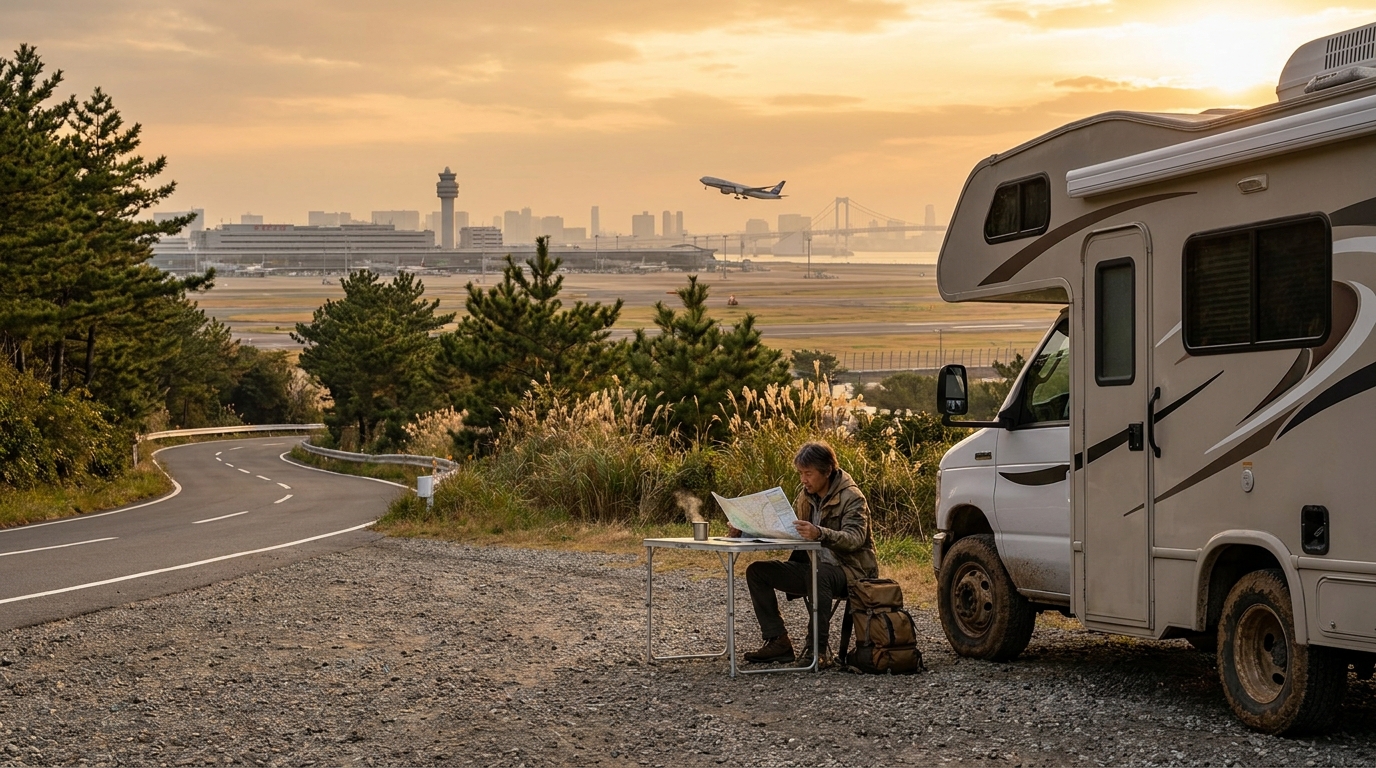
Navigating Tokyo - Airport and its surrounding areas with an RV is generally a pleasant experience due to well-maintained roads and an extensive highway network. However, urban areas, including the immediate vicinity of the airport and the city center, demand careful navigation due to dense traffic and narrower streets. Outside the main urban sprawl, you'll often encounter mountainous terrain, but the roads are typically well-paved, encouraging a slower, more scenic pace of travel. Remember that while most roads are excellent, always be prepared for narrower passages in older towns and residential areas.
RV Size Limits, Bridges & Restricted Zones
Most major roads and highways in the Tokyo - Airport area are well-equipped to handle standard RV sizes, with typical height limits generally around 3.5 meters to 4.0 meters. However, it's crucial for RV drivers to remain vigilant for clearly marked low-clearance bridges and tunnels, particularly in older or more residential districts. Japan generally does not have widespread environmental zones that restrict RV access based on emissions, which simplifies urban navigation compared to some European cities. Be aware that specific length and weight restrictions might apply if you plan to use ferries to access various islands.
Fuel: Diesel vs. Petrol & Cost per 100 km
Both diesel ('light oil') and petrol ('gasoline') are readily available across Japan, with diesel being a common choice for larger RVs. Based on Bandana's global fleet averages, expect fuel consumption to be around 8-10 Liters/100 km for Class B Camper Vans, 10-11 Liters/100 km for semi-integrated RVs, and 10-12 Liters/100 km for alcove RVs. Assuming an average fuel price of 170 JPY/liter, operating a Class B Camper Van could cost approximately 1360-1700 JPY per 100 km. Always inquire with your rental provider if they offer fuel discount cards or any perks to help manage these costs.
Tolls, Vignettes & Border Rules
Japan's extensive highway network utilizes an efficient electronic toll collection (ETC) system, meaning you won't need to purchase vignettes. For RV travel, an ETC card is highly recommended as it streamlines journeys by avoiding cash payments at toll booths and may offer discounts. Some rental providers allow you to pre-purchase toll passes, simplifying the process and helping you avoid potential fines. As Japan is an island nation, there are no land borders, so cross-border rules are not a concern for RV travel within the country. On the routes offered through RV PLANET routes, you can itemize and track every expense along the way for easy budgeting.
Driving Tips for cheap rv rental Travelers
When driving an RV in Japan, always remember to drive on the left side of the road and adhere to local speed limits, typically 80-100 km/h on expressways and 40-60 km/h in urban areas. Utilizing GPS systems with English voice guidance is highly beneficial for effective navigation, especially given that text on road signs will primarily be in Japanese. Be prepared for potentially narrower roads outside major highways and in older towns, requiring careful driving and constant awareness of your RV's dimensions. For budget-conscious travelers, planning routes to minimize toll road usage can significantly help manage expenses. Always yield to pedestrians and cyclists, and be particularly mindful of Japan's strict parking regulations in urban centers.
Recommended RV Class for Tokyo - Airport Roads
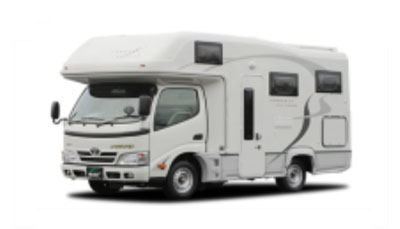
For optimal navigation on Tokyo - Airport roads and within the city, a Class B Camper Van or a Class SI Semi-integrated RV offers the best balance of maneuverability and interior comfort. For instance, Class B Camper Vans, averaging about 5.8 meters in length from Bandana's global fleet, are highly recommended due to their compact size, which makes urban driving and parking considerably more manageable. Alternatively, Class SI Semi-integrated RVs, averaging around 6.9 meters, provide more living space and amenities while remaining relatively easy to handle on Japanese roads compared to larger motorhome classes.
Should I Choose a Compact Van Instead of a Large RV in Tokyo - Airport?
While a compact van undoubtedly offers superior maneuverability and ease of parking in densely populated areas like Tokyo, it’s worth noting that most RV sizes can indeed be driven in Tokyo - Airport and the surrounding areas with careful planning. Larger RVs, such as Class C Alcoves (averaging 7.5 meters in length), provide significant comfort and amenity advantages, especially for families or extended trips where interior space is a priority. A compact van, like a Class B Camper Van, is genuinely helpful in tight historic centers and narrow mountain passes, whereas larger RVs offer more indoor living space and amenities for travelers prioritizing comfort.
Can I Park Anywhere? Free & Wild Camping Rules in Tokyo - Airport
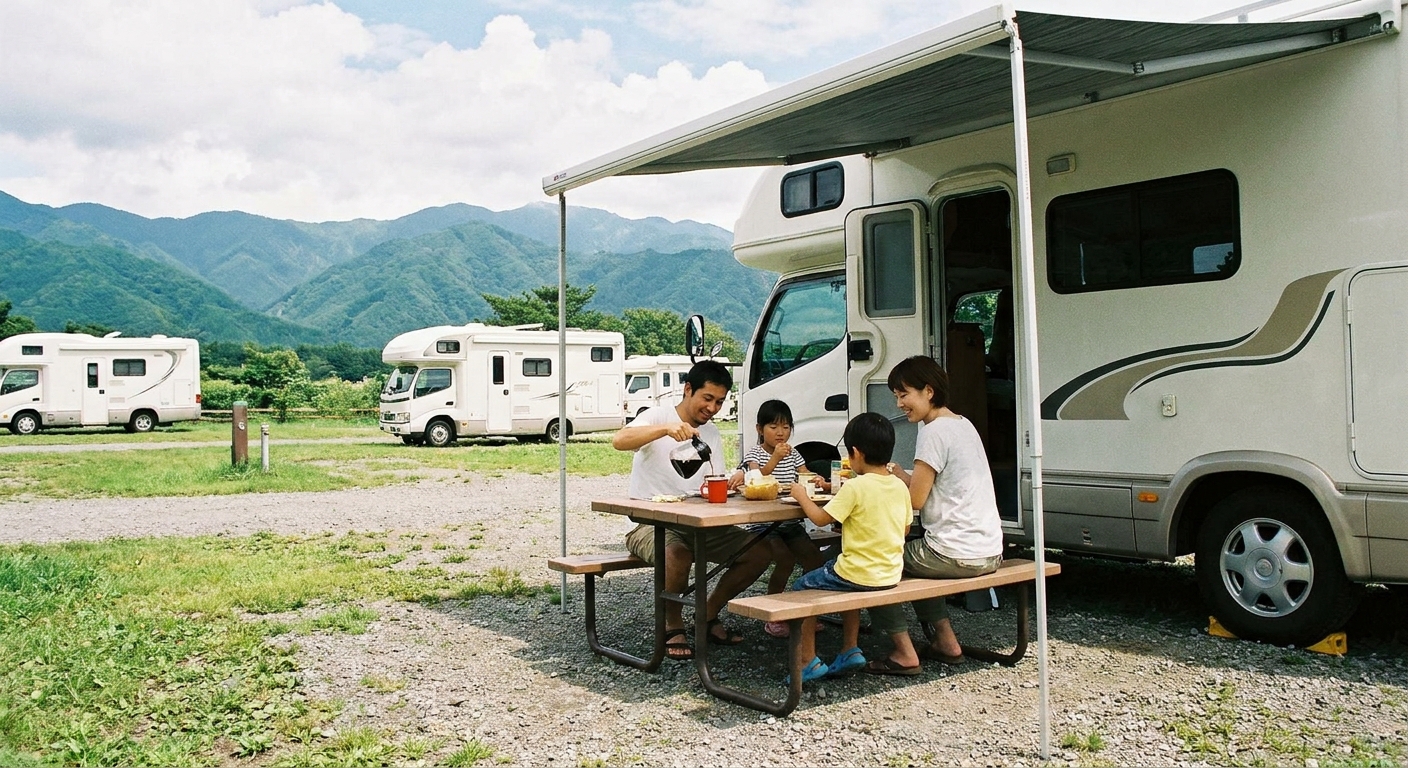
Free or 'wild' camping is generally not permitted or culturally accepted in Japan outside of designated campsites. Many 'Michi-no-Eki' (roadside stations) do allow overnight parking for rest purposes, but they do not permit full camping activities, such as setting up awnings or engaging in outdoor cooking. Designated campsites and RV parks are the primary and most recommended options for overnight stays, ensuring you comply with local regulations and customs. It's always wise to check local regulations and signage at each location before parking overnight to avoid fines or cultural misunderstandings. For ideas you can prep on the road, watch our RV-friendly recipes playlist on YouTube.
Can I Drive an RV Into the City Center? Heights, Tunnels & Local Signage
Yes, driving an RV into Tokyo's city center is generally possible, but it requires careful attention to specific local signage and an awareness of your vehicle's dimensions. Pay close attention to height limits on roads, in tunnels, and especially for low bridges or parking garage entrances. While environmental zones are typically not a concern in Tokyo as they might be in some European cities, always be aware of residents-only streets or temporary restrictions. Given the dense traffic and challenging parking, utilizing 'park and ride' options on the outskirts, combined with Tokyo's efficient public transport system, often proves to be a more practical solution for exploring the city center.
How Much Does it Cost to Rent an RV in Tokyo - Airport, Including All Expenses?
The total cost of RV travel in Tokyo - Airport encompasses more than just the rental fee, which varies by class, season, and duration; you must also budget for fuel, insurance, tolls, camping fees, and parking. Fuel costs can be estimated using Bandana's fleet averages (e.g., 1360-1700 JPY per 100 km for a Class B Camper Van at 170 JPY/liter). Budget for insurance (basic coverage is usually included, with additional options recommended), camping fees (typically 2,000-5,000 JPY per night), and potentially high urban parking fees (500-1000 JPY/hour). Consider the costs of public transport if you plan to combine RV travel with urban exploration via 'park and ride' strategies, and be mindful of potential fines for parking violations or speeding.
What are the Best RV Parking Strategies in Tokyo - Airport and Urban Areas?
Effective RV parking in Tokyo - Airport and surrounding urban areas involves prioritizing designated RV parks and official campsites for overnight stays. A highly recommended strategy is to utilize 'park and ride' facilities located near major train stations or on the city outskirts, then explore city centers using Japan's excellent public transport. It's essential to research and identify suitable paid parking lots in advance, as many urban parking garages have height restrictions. Michi-no-Eki (roadside stations) can also offer overnight parking for rest, particularly when entering or leaving the city. To be respectful and avoid potential fines, always avoid parking on residential streets overnight.
How Do I Dispose of RV Waste and Trash in Japan - Cultural Etiquette?
RV waste disposal in Japan requires strict adherence to local rules and cultural etiquette, primarily utilizing designated facilities at official campsites. Black and grey water dump stations are typically only found at registered campgrounds or specific RV parks; 'Michi-no-Eki' generally do not offer these facilities. General trash disposal in Japan involves meticulous sorting into categories (e.g., burnable, non-burnable, plastics, recyclables) and disposal on specific collection days or at designated points. Always carry your trash out if no appropriate disposal is available, and never leave waste in public areas or dispose of it inappropriately. Respecting local norms by minimizing waste generation and ensuring proper, discreet disposal is key.
Can I Combine RV Travel with Public Transport in Tokyo - Airport?
Yes, effectively combining RV travel with Japan's efficient public transportation system is a highly recommended strategy for exploring Tokyo's dense urban centers. Implement 'park and ride' strategies by parking your RV at a designated spot – perhaps a campsite, 'Michi-no-Eki', or a large parking facility on the city outskirts. From there, leverage Japan's extensive network of trains, subways, and buses to navigate cities and access specific attractions, thereby avoiding urban traffic and parking challenges. This approach offers the best of both worlds: the flexibility of RV travel for scenic routes and rural exploration, combined with the convenience of public transport for hassle-free city sightseeing.
What are the Rules for Overnight RV Parking and Michi-no-Eki in Japan?
Overnight RV parking in Japan is generally restricted to official campsites or designated areas, as wild camping or boondocking on public or private land without permission is largely prohibited and culturally frowned upon. 'Michi-no-Eki' (roadside stations) are public rest stops that often permit RVs to park overnight for resting, but they are not full-service campgrounds. At these stations, setting up outdoor amenities like awnings, tables, chairs, or engaging in outdoor cooking is typically not allowed. Always check specific signage at each 'Michi-no-Eki' or inquire with staff, as rules can vary slightly between locations.
How Do I Navigate Japanese Roads with an RV - Signs and GPS?
Navigating Japanese roads with an RV is quite manageable by utilizing English-friendly GPS systems, which are often available as part of your rental or via smartphone apps. It's advisable to familiarize yourself with common Japanese road signs, particularly visual symbols for speed limits, turns, and critical height/width restrictions, as most text will primarily be in Japanese. Be prepared for narrower routes outside major highways and in older towns, which necessitate cautious driving and a keen awareness of your RV's dimensions. Consider downloading offline maps for areas with limited mobile data coverage, especially in more remote or mountainous regions.
What Should I Do in Case of an RV Emergency or Breakdown in Japan?
In the event of an RV emergency or breakdown in Japan, your immediate first step should always be to contact your RV rental company for specific assistance and language support. Keep essential emergency numbers readily accessible: 110 for the police, 119 for ambulance/fire services, and your rental company's roadside assistance number. Ensure your travel and rental insurance policies clearly outline procedures for vehicle breakdowns and how to file claims in Japan. Translation apps or basic phrasebooks can be invaluable for communicating with local authorities or mechanics if a language barrier arises.
Is RV Travel in Japan Worth It Compared to Trains or Rental Cars?
RV travel in Japan offers unique benefits like unparalleled flexibility, direct access to nature, and self-contained accommodation, making it a highly rewarding experience for specific travel styles. Compared to Japan's highly efficient train system – which is fast, extensive, and ideal for city travel – RVs provide freedom from schedules and luggage constraints but are slower and face urban parking challenges. Versus traditional rental cars, which are smaller and easier to park, RVs offer significantly more space and amenities, but at a higher cost for fuel, tolls, and dedicated parking. Ultimately, the worth of RV travel depends on your priorities: convenience and speed (trains), basic flexibility (rental car), or a unique, immersive, self-sufficient adventure with greater access to nature (RV).
What is a Pre-Trip Checklist for RV Rental in Japan?
Before embarking on your RV adventure in Japan, ensure you have a solid pre-trip checklist: **Licenses:** Secure an International Driving Permit (IDP) based on the 1949 Geneva Convention, along with your valid home country driver's license, before arriving. **Insurance:** Confirm the extent of your rental company's insurance coverage and consider purchasing additional travel insurance that covers RV-specific incidents and medical emergencies. **Apps:** Download essential apps such as Google Maps (with offline map capabilities), a reliable translation app, and an RV park finder app (e.g., for 'Michi-no-Eki' and campsites). **Essentials:** Pack Japanese Yen (JPY) cash, a universal power adapter, a portable Wi-Fi device or local SIM card, compact luggage, and specific trash bags for Japan's meticulous local sorting requirements.
Final Thoughts
Renting an RV and exploring Japan offers an incredible blend of freedom, culture, and stunning landscapes. While navigating new roads and customs requires preparation, the rewards of an RV journey—from the flexibility to explore off-the-beaten-path locations to the comfort of your own mobile home—are truly unmatched. By choosing the right vehicle and planning thoughtfully, your Japanese RV adventure awaits!
Remember, Bandana Caravan is here to simplify your booking process, offering transparent pricing and dedicated support. We're committed to helping you find the perfect rental for an unforgettable trip.
Find Motorhome Rentals in Tokyo - Airport