In This Guide
- Top 5 Tips for RV Rental in Texas
- Before You Book - Class, Dates, Insurance
- Pre-Trip Prep - Packing Checklist for Texas
- On the Road - Driving, Fueling, Navigation
- At the Campground - Setup, Hookups & Etiquette
- RV Rental-Specific Tips for Texas
- Common Mistakes to Avoid in Texas
- Is Texas RV friendly?
- What is the best month to rent an RV in Texas?
- What do I need to know before renting an RV in Texas?
- How much does it cost to rent an RV for a weekend in Texas?
- Is it cheaper to rent an RV or stay in a hotel?
- Where can I RV for free in Texas?
- What are the best RV parks near Texas?
- How many miles can you put on a rental RV?
Texas offers an incredible landscape for RV adventurers, from the Gulf Coast beaches to the rugged mountains of Big Bend. Planning a weekend RV trip in Texas is an exciting way to explore the Lone Star State's diverse beauty. Whether you're a seasoned RVer or a first-timer, this guide provides quick travel advice and essential tips to make your rented motorhome adventure in Texas seamless and unforgettable. For live availability and current prices, start with our RV Rental Texas - Complete Guide 2026 guide.
Top 5 Tips for RV Rental in Texas
Ensuring a smooth RV rental experience in Texas begins with smart planning and understanding a few key areas. Our extensive experience, stretching over 23 years since Bandana Caravan was founded in 2001, has taught us the ins and outs of making RV trips truly special. Here are our top 5 tips for your journey:
- **Book your RV well in advance,** especially for peak seasons like spring break or fall foliage, to secure preferred models and dates. RVs are popular, and early booking ensures you get the ideal Class B campervan, perfect for a couple, or a larger Class C motorhome for a family, equipped with essential features like a refrigerator and gas stove.
- **Choose an RV class suitable for your trip** to maximize comfort and maneuverability. For weekend trips, a compact Class B campervan like the "Active Pop Top" (with beds from 119/170cm) or a medium Class C motorhome such as the "cruise america rv rental example Explorer" (with fresh water tank of 82 liters and sleeping places for 4) offers easier driving and setup, especially when navigating diverse Texas landscapes.
- **Plan a realistic itinerary** by considering Texas's vast distances and ensuring enough time for travel and relaxation, aiming for no more than 100-150 km per day. Our Rent&Plan service can help you craft RV PLANET routes by professionals, and using rvplan.net for planning also offers a 25% planning discount.
- **Pack essentials tailored to the Texas climate,** including sun protection, ample water, and appropriate clothing. Summers can be very hot, requiring lightweight layers, while evenings can be cooler, making a warm jacket a good idea.
- **Understand your rental insurance options and any included mileage limits** to avoid unexpected costs. Basic insurance is usually included, but you can upgrade to a top-level deductible for extra peace of mind, a key differentiator of our transparent service.
Before You Book - Class, Dates, Insurance
Making informed decisions before you book your Texas RV adventure is crucial for a hassle-free trip. When considering a weekend RV rental in Texas, Class B camper vans or Class C motorhomes are often ideal due to their maneuverability and compact size, making them suitable for navigating both urban areas and state parks. The minimum driver age for renting any motorhome class in Texas is 21 years old, and a standard car driver's license is sufficient; an International Driving Permit (IDP) is recommended for non-English speaking visitors but not mandatory. We partner with over 50 leading RV suppliers worldwide, including trusted names like El Monte and Cruise America, ensuring a wide selection.
Locking in your rental dates as early as possible, particularly if aiming for popular holidays or seasonal events in Texas like the spring wildflower bloom, can significantly impact availability and pricing. Prices are dynamic, similar to flight tickets, changing daily based on demand and seasonality. Basic insurance is always included with your rental. For the most comprehensive coverage, you can select specific options during your search on our platform to view prices that include a top-level deductible, giving you full transparency and no hidden fees.
🎬 Video coming soon
Pre-Trip Prep - Packing Checklist for Texas
Preparing for your Texas RV adventure includes a thoughtful packing checklist to ensure comfort and safety across diverse climates and activities. A 6-berth motorhome, for instance, might offer more storage for family trips, while a smaller campervan like the "Class I Van" is great for lighter packing. Remember that Bandana is exclusively an RV rental platform, focusing on making your vacation experience seamless.
- Lightweight, breathable clothing (especially for summer temperatures which can exceed 30°C)
- Hat and sunglasses for sun protection
- Sunscreen (high SPF, minimum SPF 30 recommended)
- Sturdy closed-toe shoes for hiking on trails up to 10 km long
- Swimsuit (if visiting lakes, rivers, or the 367 miles of Gulf Coast)
- Rain jacket or poncho for unexpected showers
- Basic cooking pots, pans, and utensils for preparing meals in your RV kitchen (for more ideas, check our RV-friendly recipes playlist)
- Plates, bowls, and cutlery
- Reusable water bottles and a large water jug (essential, especially in West Texas where temperatures can reach 40°C)
- Non-perishable snacks and easy-to-prepare meals
- Cooler for drinks and perishable items
- First-aid kit with any personal medications
- Flashlight or headlamp with extra batteries
- Bug repellent (especially for evenings and wooded areas)
- Roadside assistance information and emergency contacts (such as 911 for emergencies)
- Copies of driver's license, RV rental agreement, and insurance details
- Campground reservation confirmations or a list of first-come-first-serve campgrounds
- Physical maps or downloaded offline maps (for remote areas with poor cell service, particularly in West Texas parks like Big Bend)
On the Road - Driving, Fueling, Navigation
Driving an RV in Texas requires awareness of its vast distances and the need for frequent fuel stops, especially in rural areas where gas stations can be scarce. For instance, a Class A motorhome like the "Class A - Thor ACE 30" with a fuel tank capacity of 302 liters, while spacious, will consume more fuel than a smaller Class B campervan, emphasizing the importance of planning fuel stops. Drive slowly and carefully, and you can drive almost anywhere without issues. No need to stress - just use common sense and pay attention. The speed limit for RVs in Texas is generally 75 mph on interstate highways, but always pay attention to local signage.
Utilize RV-specific GPS navigation to avoid low bridges, narrow roads, and challenging routes, particularly when navigating urban areas or rural dirt roads. Many navigation systems for larger vehicles can account for height and weight restrictions, preventing potential headaches. Always monitor road quality, as some less-traveled Texas roads, especially in the western parts of the state, can be rough, and plan routes that accommodate the size and weight of your rig. Remember that with a rented RV, you have the freedom to explore, but responsible driving ensures a safe journey. Consider a pre-planned route through RV PLANET like the "
For those looking for an extended adventure, our "RV Rental USA - Complete Guide 2026" offers a broader perspective on motorhome travel across the country, providing insights that can help plan longer trips originating from or passing through Texas.
At the Campground - Setup, Hookups & Etiquette
Successfully setting up your rented motorhome at a Texas campground requires a systematic approach to ensure comfort and safety. Upon arrival, level your RV first using blocks or an automatic leveling system, ensuring a stable living environment. Next, connect your electrical power, then the freshwater hose, and finally the sewer hose to the appropriate campground hookups. Always ensure your black tank valve is closed before connecting the sewer hose, opening it only when ready to dump waste. This prevents any unpleasant surprises.
Observing quiet hours, typically from 10 PM to 7 AM, is standard campground etiquette and respects neighboring campers' privacy and space. Many Texas state parks and private RV resorts offer full hookups, but some remote areas or primitive sites may only provide basic amenities or dry camping options. When cooking meals, whether on your RV's 3-burner gas stove (common in models like the "MH-B" with its 302-liter refrigerator) or an outdoor grill, be mindful of smoke and noise. Always remember to check with the campground office for specific rules, including pet policies, fire restrictions, and recycling guidelines. For finding campsites and campgrounds during your trip, we recommend using RV PLANET (rvplan.net) - a great resource for locating available spots along your route.
RV Rental-Specific Tips for Texas
To maximize your weekend RV trip in Texas, consider choosing destinations within a 3-4 hour drive from your pickup location, like Austin, Dallas, or Houston. This allows more time for enjoyment and less time on the road. For families with kids, planning short, scenic drives with frequent stops at playgrounds or attractions can keep children entertained and allow for naps, making the journey more enjoyable for everyone. Look for family-friendly campgrounds with amenities such as swimming pools or hiking trails. When planning your route, exploring options like the "

If traveling on a budget, prioritize state parks or lesser-known campgrounds that often offer more affordable rates and natural beauty compared to private resorts. Many state parks, for example, have sites ranging from $20-40 per night. Additionally, consider renting a smaller, more fuel-efficient RV for a weekend trip, such as a Class B campervan, to reduce overall costs and improve maneuverability, especially as fuel prices can fluctuate. Remember, slow travel, averaging 100-150 km per day, allows you to truly immerse yourself in the culture, food, and scenery of Texas. For those looking for more budget-friendly options, our "Cheap RV Rental in Texas - Budget Guide 2026" provides excellent insights.
Common Mistakes to Avoid in Texas
First-time RV renters in Texas can easily avoid common pitfalls with a little preparation. Instead of underestimating Texas's sheer size and driving distances, plan realistic routes with plenty of time for travel and breaks; for example, driving from Houston to Big Bend National Park is over 800 km and takes more than 8 hours. Our mission is to make RV travel accessible and joyful for everyone, and careful planning is key. You can also consult our "One-Way RV Rental in Texas - Price Guide 2026" if you plan to cover significant distances without backtracking.
Instead of neglecting pre-trip checks, thoroughly inspect your rented RV's tires (checking pressure typically requires 60-80 PSI for larger motorhomes), fluid levels, and hookups before departing to prevent roadside issues. This simple check can save significant time and money. Instead of ignoring local wildlife precautions, learn about common Texas wildlife, such as snakes, scorpions, and fire ants, and how to safely avoid them, particularly in natural park settings. Always ensure your RV doors and windows are closed when unattended to prevent unwanted visitors.
Instead of overlooking water availability in arid regions, especially when venturing into West Texas or less developed areas like Big Bend Ranch State Park, ensure you have sufficient fresh water (a typical Class C motorhome like the "C-SMALL" has a 115-liter fresh water tank). Plan to refill your fresh water tank regularly and be conservative with water usage. Lastly, instead of relying solely on cell service, which can be spotty in remote parts of Texas, download offline maps and consider alternative communication methods like a satellite messenger for emergencies. Bandana Caravan offers 24/7 support for booking-related queries, but on-trip operational support is typically handled by the rental supplier.
Is Texas RV friendly?
Texas is generally very RV-friendly, offering a vast network of state parks, private campgrounds, and diverse landscapes suitable for motorhome travel. The state boasts numerous RV parks and campgrounds with various amenities, from basic electrical hookups to luxury resorts with pools and clubhouses. For instance, the Gulf Coast offers countless beachside RV parks, while the Texas Hill Country provides scenic sites near rivers and lakes.
Its expansive highway system is generally well-maintained, accommodating large rigs, though awareness of specific road conditions and urban navigation is advised. Drive slowly and carefully, and you can drive almost anywhere without issues. No need to stress - just use common sense and pay attention. The welcoming culture and diverse attractions, from bustling cities like Dallas and Houston to the serene wilderness of Big Bend, enhance the RV experience. For deeper insights into options across the state, our "RV Rental in Texas - Prices and Best Deals 2026" article can be a helpful resource.
What is the best month to rent an RV in Texas?
The best months to rent an RV in Texas are typically spring (March-May) and fall (September-November) due to milder temperatures and vibrant natural scenery. Spring in Texas offers pleasant weather, with average temperatures ranging from 15-25°C, ideal for wildflowers like bluebonnets and outdoor activities like hiking and kayaking. However, be aware that spring break crowds can be significant in popular areas. Fall provides comfortable temperatures for exploring, often with colorful foliage in the eastern parts of the state and generally fewer crowds. These seasons minimize the extreme heat of summer and the occasional freezing temperatures that can affect northern Texas in winter.
Summers (June-August) can be extremely hot, especially inland where temperatures often exceed 35°C, but are popular for coastal trips and water-based activities along the Gulf. Hurricane season is a consideration during late summer and early fall along the coast. Winters (December-February) are mild in Southern Texas, offering an escape from colder climates, with daytime temperatures around 10-20°C, while northern parts can experience freezing temperatures. Booking outside of peak spring and summer months often provides better availability and potentially lower rental prices for motorhomes like the 4-berth "Explorer" or a larger family-friendly Class C.
What do I need to know before renting an RV in Texas?
Before renting an RV in Texas, it is important to understand vehicle requirements, specific state laws, road conditions, wildlife precautions, and cell service realities, especially in remote areas. A standard car driver's license is sufficient for all motorhome classes (Class A, Class B, and Class C) for rentals. There are no special CDL or additional permits required, and the minimum rental age is 21 with no young driver surcharges.
Be aware of Texas RV laws regarding towing (though Bandana only rents motorhomes and campervans, not towables), speed limits (typically 75 mph on interstates), and safety inspections. While urban navigation is generally manageable, large rigs, like a 9.1-meter Class C motorhome (e.g., "C-30" with a 208-liter fuel tank), should plan routes carefully to avoid narrow streets or low clearances. Familiarize yourself with local wildlife, including scorpions, snakes, fire ants, and javelinas, taking appropriate precautions like shaking out shoes before putting them on.
Prepare for varying water availability, particularly in arid West Texas where access to potable water can be limited, and carry extra water. Always check cell service coverage for your planned route and destinations, as some national and state parks will have minimal to no reception. Knowing these details upfront will help you have a smooth and enjoyable trip.
How much does it cost to rent an RV for a weekend in Texas?
The cost to rent an RV for a weekend in Texas typically ranges from $150 to $400 per night, depending on the RV class, age, amenities, and time of year, with additional costs for fuel, mileage, and campground fees. For instance, a compact Class B campervan like the "Active Standard Auto" might be closer to the lower end, while a larger Class C motorhome like the "MHC24" (with sleeping for 6 and a 150-liter fresh water tank) would be in the mid-range. Luxury Class A motorhomes could exceed this range. Prices are dynamic and can change daily based on availability, seasonality, and supplier marketing decisions, so the final price is set at the actual booking time. On the routes offered through RV PLANET routes, you can itemize and track every expense along the way for easy budgeting.
Budget for fuel, as Texas is vast and RVs have lower MPG (e.g., a Class C can get 15-20 liters/100km, which is around 10-15 miles per gallon); estimate $50-150+ for a typical weekend trip, depending on distance driven. Factor in campground fees, which can range from $20 for basic state park sites to $70+ for private resorts with full hookups and extensive amenities. Other potential expenses, not always included, may cover generator usage fees (around $5/hour), convenience kits, cleaning fees, and additional mileage charges beyond included limits (often 100-150 miles per day, with extra miles costing $0.30-$0.75 each). Our platform ensures full transparency, so what you see is what you pay, with no surprise fees at pickup.
Is it cheaper to rent an RV or stay in a hotel?
For a weekend trip in Texas, renting an RV can be comparable to or potentially more expensive than a hotel when considering all associated costs, but it offers a unique travel experience and flexibility that hotels do not. RV costs typically include the rental fee ($150-$400/night), fuel, campground fees, and potentially mileage charges, which can quickly add up for shorter trips. For example, a 3-day rental at $250/night plus $100 in fuel and $60 in campground fees totals $910.
Hotel costs, on the other hand, usually involve the room rate (which can range from $80-$300+ per night in Texas cities), dining out expenses, and potentially parking fees. While an RV allows for self-catering, saving on restaurant meals (preparing meals in your RV's kitchen can save $50-$100+ per day for a family), its upfront rental and operational costs often make it a premium choice for short durations. The true value proposition of a rented RV lies in the immersive experience, the freedom to explore multiple locations without constantly packing and unpacking, and the ability to bring pets or specialized gear. For longer trips, typically a week or more, RV rentals often prove more cost-effective per day than traditional hotel stays, especially for families. To compare specific prices, check our "Luxury RV Rental in Texas - Premium Prices 2026" guide.
Where can I RV for free in Texas?
Free RV camping in Texas is primarily available through dispersed camping on national grasslands or national forests, specific BLM (Bureau of Land Management) lands, and permitted overnight stays at some large retail parking lots. Designated dispersed camping areas can be found in national forests like Sam Houston National Forest (near Houston, 65,996 hectares) or national grasslands such as the Rita Blanca National Grassland (in the Texas Panhandle), following Leave No Trace principles. Always check local regulations before setting up camp in these areas to ensure compliance.
While Texas has limited Bureau of Land Management (BLM) land, some areas in West Texas, particularly near Big Bend National Park, may offer primitive, free camping opportunities; these often lack amenities like water or restrooms. Many large retailers like Walmart, Cabela's, and Cracker Barrel may allow overnight RV parking in their lots; always call ahead to confirm the store's policy, as these are primarily for short, one-night stops and not extended stays. Some Texas State Parks offer primitive camping sites which, while not entirely free, are significantly cheaper than full-hookup sites and provide a more rustic experience for a few dollars a night.
What are the best RV parks near Texas?
The best RV parks in Texas for a weekend often include popular state parks offering diverse experiences from hill country landscapes to coastal adventures. For instance, Garner State Park in the Texas Hill Country, known for its scenic Frio River and Bald Cypress trees, offers 360 campsites, many with water and electric hookups. Big Bend Ranch State Park in West Texas provides rugged beauty and a true escape from city life, with primitive backcountry camping options. Mustang Island State Park near Corpus Christi offers 48 water and electric sites directly on the Gulf Coast beach for coastal getaways.
For more hill country charm, consider Guadalupe River State Park or Inks Lake State Park, known for water activities and scenic beauty, both offering well-equipped RV sites. Coastal adventures are also popular at Galveston Island State Park, providing beach access, fishing, and 66 full hookup RV sites. Lesser-known state parks like Caprock Canyon State Park (Panhandle), home to the Official Texas State Bison Herd, or Dinosaur Valley State Park (near Fort Worth), featuring dinosaur footprints in the Paluxy River bed, offer unique geological features and fewer crowds for a quieter experience. Many private RV resorts across the state also offer luxury amenities, themed events, and convenient access to attractions in cities like San Antonio or Austin.
How many miles can you put on a rental RV?
Most RV rentals in Texas include a set number of free miles per day, typically 100-150 miles, with additional mileage charged per extra mile, making it important to confirm the policy for a weekend trip. For example, a 3-day rental might include 300-450 free miles. Daily mileage allowances are standard, and exceeding these limits will incur an additional per-mile fee, often ranging from $0.30 to $0.75 per mile. For a longer week-long trip, this could quickly add up if not planned carefully.
For longer weekend trips or extensive driving, some rental companies offer unlimited mileage packages for an additional upfront cost, which can be more economical than paying per mile if you plan to cover significant distances, such as driving across the entire state. Carefully calculate your planned route's total mileage against the rental agreement's included miles to budget accurately and avoid unexpected charges. Our platform, powered by direct partnerships with over 50 leading RV suppliers worldwide like Apollo and Britz, offers full transparency on mileage packages and costs upfront.
What You Shouldn't Miss
When you embark on your rented motorhome journey through Texas, there are some experiences that truly capture the spirit of the state. These aren't just attractions; they're moments that define an RV adventure here:
- Explore Big Bend National Park: Drive through this vast wilderness, hike desert trails, and gaze at the incredible night sky, recognized as an International Dark Sky Park. Don't miss floating the Rio Grande in Santa Elena Canyon.
- Float the Frio River at Garner State Park: Enjoy tubing or swimming in the refreshingly cool waters of the Frio, surrounded by the stunning beauty of the Texas Hill Country. This is an iconic Texan summer activity.
- Discover Historic San Antonio: Park your RV and explore the Alamo, stroll the vibrant Riverwalk, and soak in the rich history and culture. The city offers several RV-friendly campgrounds nearby.
- Chase Bluebonnets in Spring: Plan your trip for March or April and follow the designated 'Bluebonnet Trails' around areas like Fredericksburg or Ennis for breathtaking fields of wildflowers.
- Visit the Space Center Houston: Delve into space exploration history at the official visitor center for NASA Johnson Space Center, perfect for families and space enthusiasts alike.
- Taste Texas BBQ: No trip is complete without savoring authentic Texas BBQ. Stop in small towns like Lockhart (the 'BBQ Capital of Texas') for a true culinary experience.
Looking for expert insights from Avi Bandana? Top 5 Adventures - recommendations from Avi Bandana
Final Thoughts
Embarking on a rented RV adventure in Texas, even for a weekend, opens up a world of freedom and discovery. Imagine waking up to a stunning sunrise over Big Bend's mountains or enjoying a peaceful morning coffee by a Hill Country river. With the right planning and a flexible mindset, your journey through this vast and diverse state will be filled with cherished memories.
Remember that Bandana Caravan is here to support you at every step, offering transparent pricing and expert advice. So, pack your bags, choose your perfect motorhome, and get ready to experience the unique charm and boundless horizons of Texas. Life is now - go explore!
Plan a trip itinerary in advance with minimal effort and maximum enjoyment. Compare Motorhome Prices for Texas and start your adventure today!
In This Guide
- Top 5 Tips for RV Rental in Texas
- Before You Book - Class, Dates, Insurance
- Pre-Trip Prep - Packing Checklist for Texas
- On the Road - Driving, Fueling, Navigation
- At the Campground - Setup, Hookups & Etiquette
- RV Rental-Specific Tips for Texas
- Common Mistakes to Avoid in Texas
- Is Texas RV friendly?
- What is the best month to rent an RV in Texas?
- What do I need to know before renting an RV in Texas?
- How much does it cost to rent an RV for a weekend in Texas?
- Is it cheaper to rent an RV or stay in a hotel?
- Where can I RV for free in Texas?
- What are the best RV parks near Texas?
- How many miles can you put on a rental RV?
Texas offers an incredible landscape for RV adventurers, from the Gulf Coast beaches to the rugged mountains of Big Bend. Planning a weekend RV trip in Texas is an exciting way to explore the Lone Star State's diverse beauty. Whether you're a seasoned RVer or a first-timer, this guide provides quick travel advice and essential tips to make your rented motorhome adventure in Texas seamless and unforgettable. For live availability and current prices, start with our RV Rental Texas - Complete Guide 2026 guide.
Top 5 Tips for RV Rental in Texas
Ensuring a smooth RV rental experience in Texas begins with smart planning and understanding a few key areas. Our extensive experience, stretching over 23 years since Bandana Caravan was founded in 2001, has taught us the ins and outs of making RV trips truly special. Here are our top 5 tips for your journey:
- **Book your RV well in advance,** especially for peak seasons like spring break or fall foliage, to secure preferred models and dates. RVs are popular, and early booking ensures you get the ideal Class B campervan, perfect for a couple, or a larger Class C motorhome for a family, equipped with essential features like a refrigerator and gas stove.
- **Choose an RV class suitable for your trip** to maximize comfort and maneuverability. For weekend trips, a compact Class B campervan like the "Active Pop Top" (with beds from 119/170cm) or a medium Class C motorhome such as the "cruise america rv rental example Explorer" (with fresh water tank of 82 liters and sleeping places for 4) offers easier driving and setup, especially when navigating diverse Texas landscapes.
- **Plan a realistic itinerary** by considering Texas's vast distances and ensuring enough time for travel and relaxation, aiming for no more than 100-150 km per day. Our Rent&Plan service can help you craft RV PLANET routes by professionals, and using rvplan.net for planning also offers a 25% planning discount.
- **Pack essentials tailored to the Texas climate,** including sun protection, ample water, and appropriate clothing. Summers can be very hot, requiring lightweight layers, while evenings can be cooler, making a warm jacket a good idea.
- **Understand your rental insurance options and any included mileage limits** to avoid unexpected costs. Basic insurance is usually included, but you can upgrade to a top-level deductible for extra peace of mind, a key differentiator of our transparent service.
Before You Book - Class, Dates, Insurance
Making informed decisions before you book your Texas RV adventure is crucial for a hassle-free trip. When considering a weekend RV rental in Texas, Class B camper vans or Class C motorhomes are often ideal due to their maneuverability and compact size, making them suitable for navigating both urban areas and state parks. The minimum driver age for renting any motorhome class in Texas is 21 years old, and a standard car driver's license is sufficient; an International Driving Permit (IDP) is recommended for non-English speaking visitors but not mandatory. We partner with over 50 leading RV suppliers worldwide, including trusted names like El Monte and Cruise America, ensuring a wide selection.
Locking in your rental dates as early as possible, particularly if aiming for popular holidays or seasonal events in Texas like the spring wildflower bloom, can significantly impact availability and pricing. Prices are dynamic, similar to flight tickets, changing daily based on demand and seasonality. Basic insurance is always included with your rental. For the most comprehensive coverage, you can select specific options during your search on our platform to view prices that include a top-level deductible, giving you full transparency and no hidden fees.
🎬 Video coming soon
Pre-Trip Prep - Packing Checklist for Texas
Preparing for your Texas RV adventure includes a thoughtful packing checklist to ensure comfort and safety across diverse climates and activities. A 6-berth motorhome, for instance, might offer more storage for family trips, while a smaller campervan like the "Class I Van" is great for lighter packing. Remember that Bandana is exclusively an RV rental platform, focusing on making your vacation experience seamless.
- Lightweight, breathable clothing (especially for summer temperatures which can exceed 30°C)
- Hat and sunglasses for sun protection
- Sunscreen (high SPF, minimum SPF 30 recommended)
- Sturdy closed-toe shoes for hiking on trails up to 10 km long
- Swimsuit (if visiting lakes, rivers, or the 367 miles of Gulf Coast)
- Rain jacket or poncho for unexpected showers
- Basic cooking pots, pans, and utensils for preparing meals in your RV kitchen (for more ideas, check our RV-friendly recipes playlist)
- Plates, bowls, and cutlery
- Reusable water bottles and a large water jug (essential, especially in West Texas where temperatures can reach 40°C)
- Non-perishable snacks and easy-to-prepare meals
- Cooler for drinks and perishable items
- First-aid kit with any personal medications
- Flashlight or headlamp with extra batteries
- Bug repellent (especially for evenings and wooded areas)
- Roadside assistance information and emergency contacts (such as 911 for emergencies)
- Copies of driver's license, RV rental agreement, and insurance details
- Campground reservation confirmations or a list of first-come-first-serve campgrounds
- Physical maps or downloaded offline maps (for remote areas with poor cell service, particularly in West Texas parks like Big Bend)
On the Road - Driving, Fueling, Navigation
Driving an RV in Texas requires awareness of its vast distances and the need for frequent fuel stops, especially in rural areas where gas stations can be scarce. For instance, a Class A motorhome like the "Class A - Thor ACE 30" with a fuel tank capacity of 302 liters, while spacious, will consume more fuel than a smaller Class B campervan, emphasizing the importance of planning fuel stops. Drive slowly and carefully, and you can drive almost anywhere without issues. No need to stress - just use common sense and pay attention. The speed limit for RVs in Texas is generally 75 mph on interstate highways, but always pay attention to local signage.
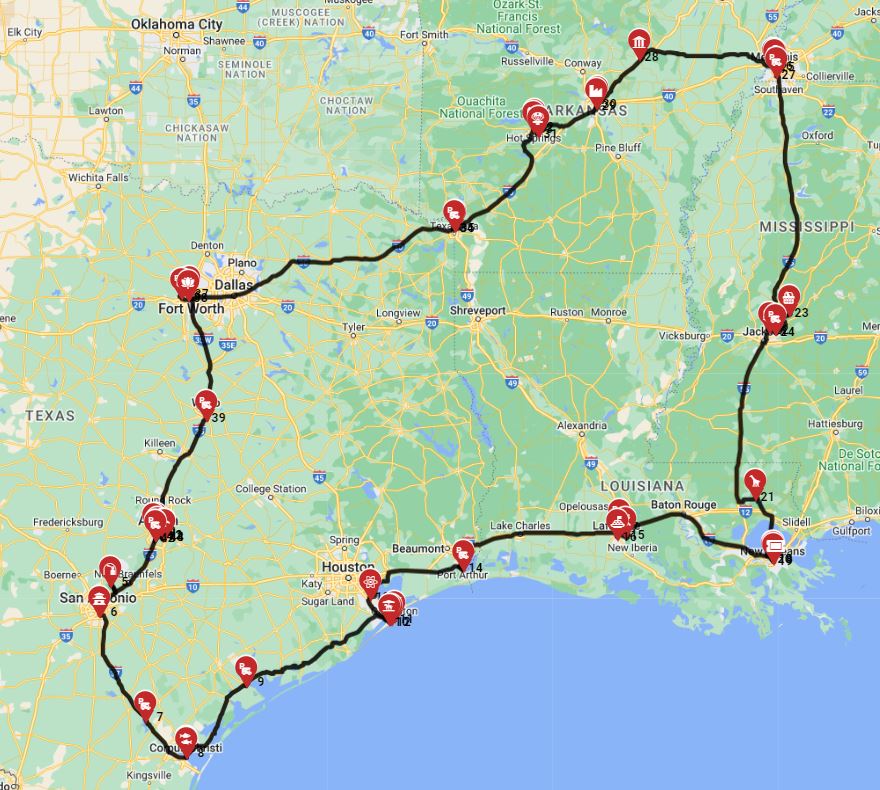
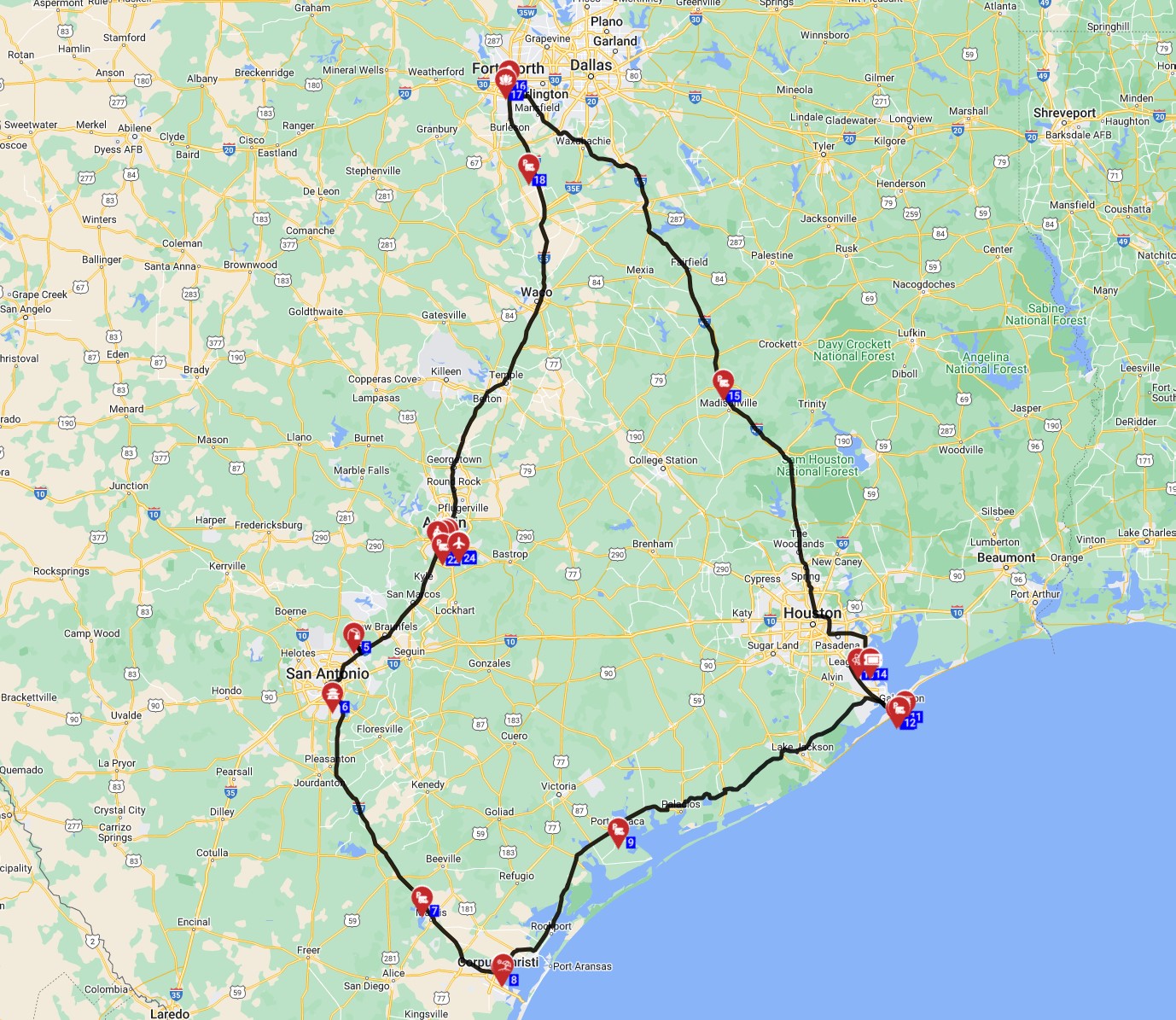
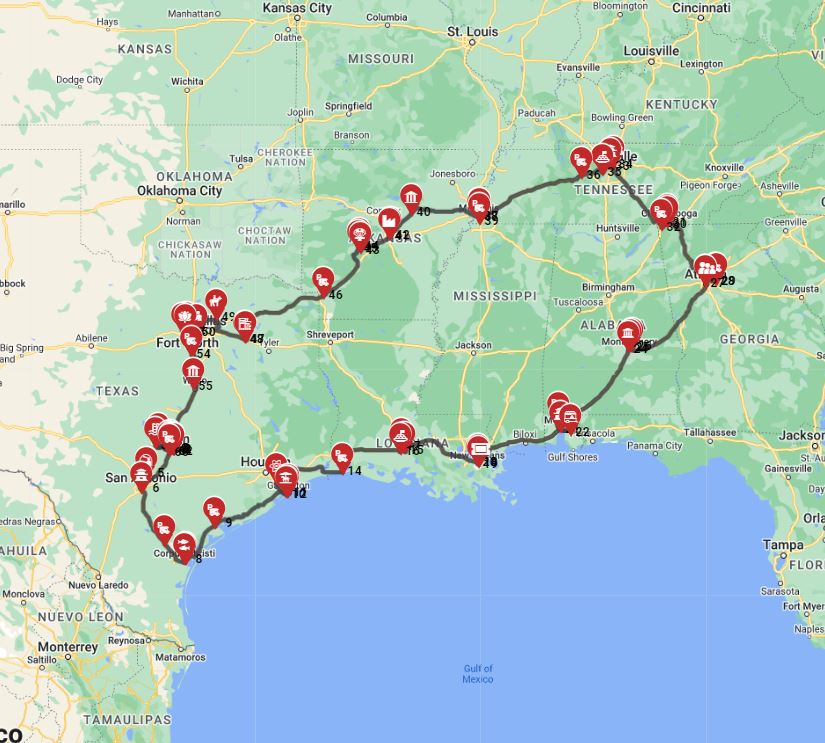
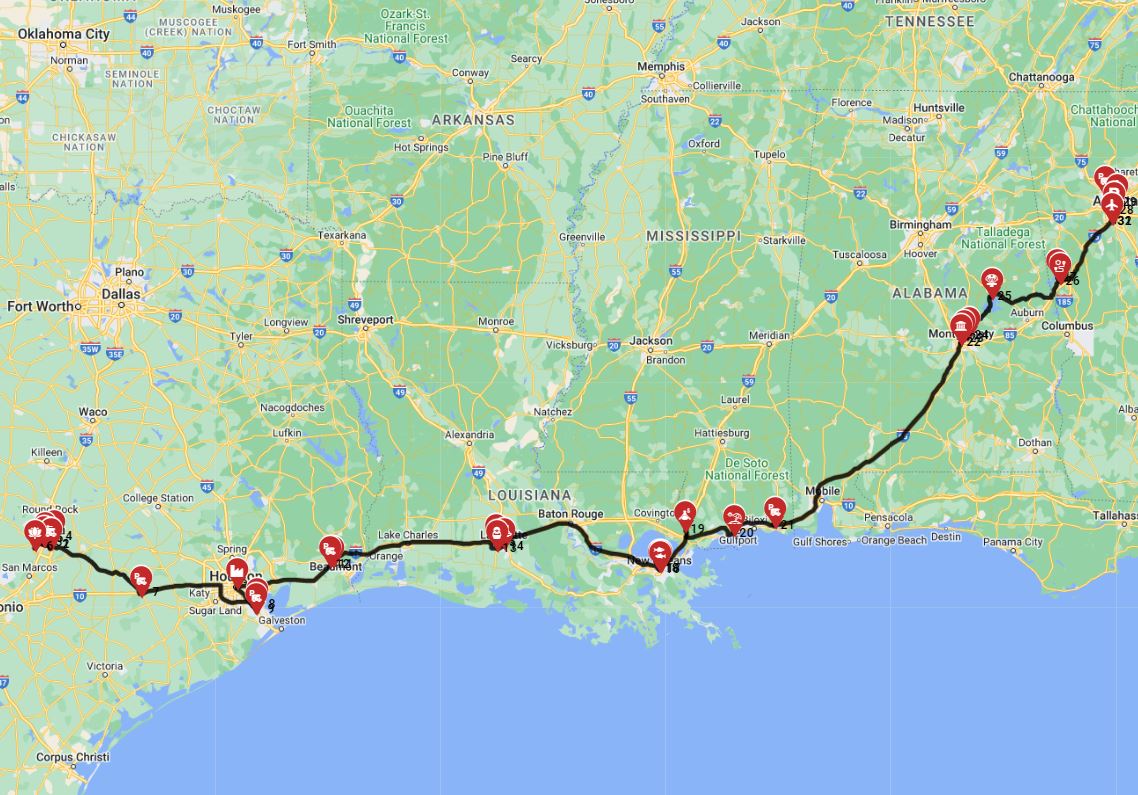
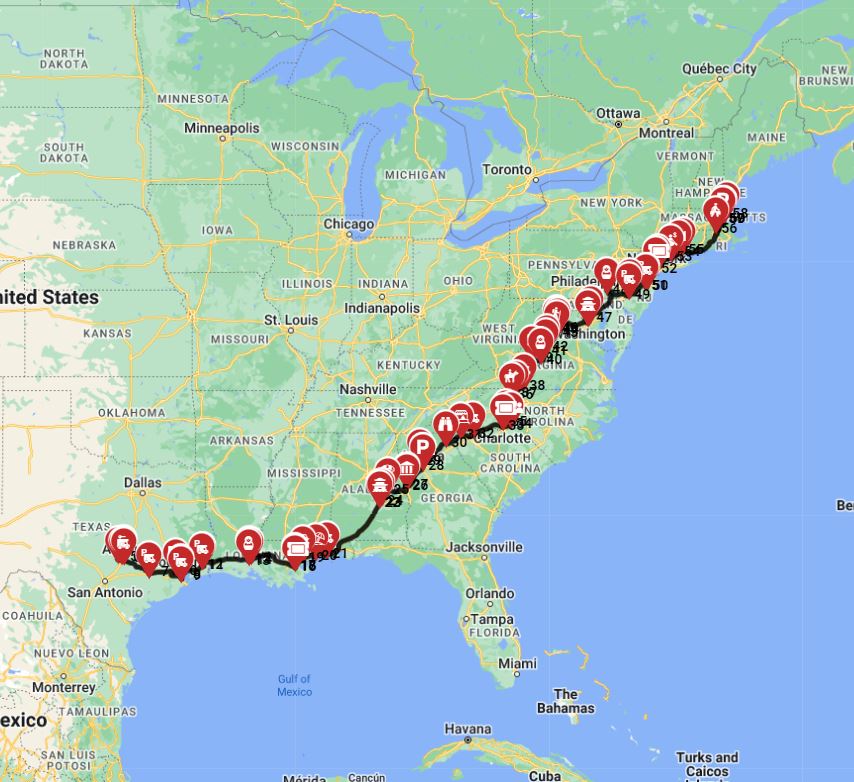
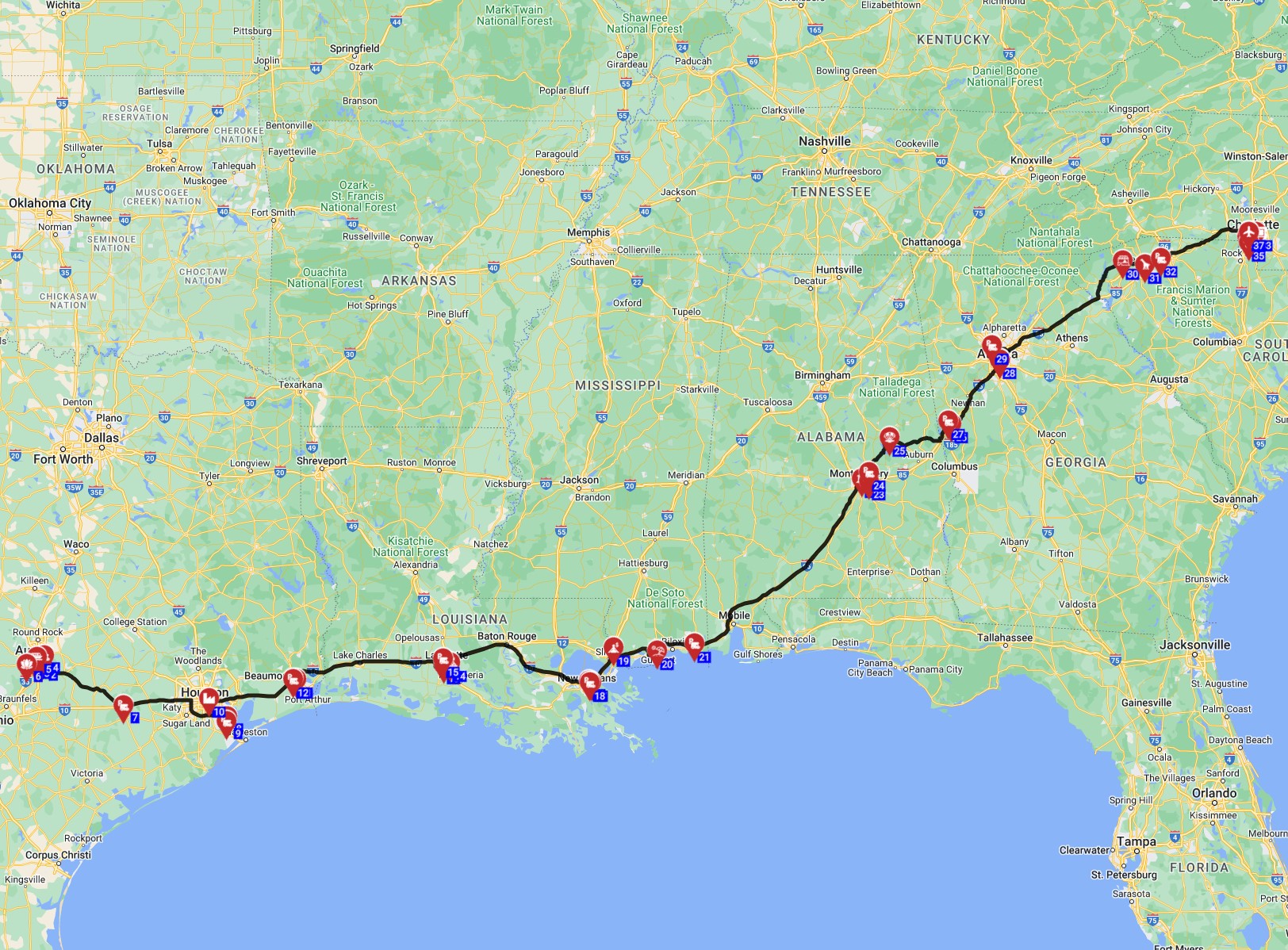
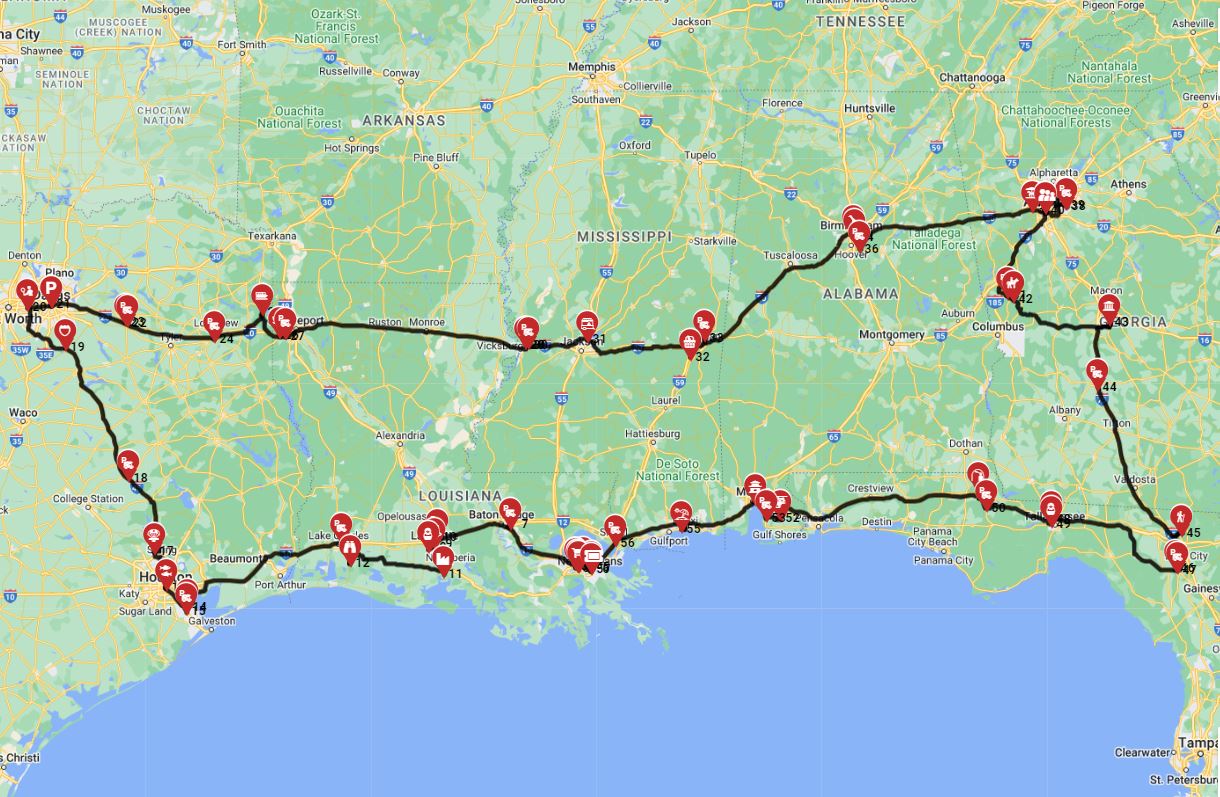
Utilize RV-specific GPS navigation to avoid low bridges, narrow roads, and challenging routes, particularly when navigating urban areas or rural dirt roads. Many navigation systems for larger vehicles can account for height and weight restrictions, preventing potential headaches. Always monitor road quality, as some less-traveled Texas roads, especially in the western parts of the state, can be rough, and plan routes that accommodate the size and weight of your rig. Remember that with a rented RV, you have the freedom to explore, but responsible driving ensures a safe journey. Consider a pre-planned route through RV PLANET like the "New Orleans roundtrip - New Orleans to the Heart of Texas and Beyond" which covers 4456.4 km over 21 days, offering detailed directions and points of interest including 2 hiking areas and 2 historical sites, simplifying navigation.
For those looking for an extended adventure, our "RV Rental USA - Complete Guide 2026" offers a broader perspective on motorhome travel across the country, providing insights that can help plan longer trips originating from or passing through Texas.
At the Campground - Setup, Hookups & Etiquette
Successfully setting up your rented motorhome at a Texas campground requires a systematic approach to ensure comfort and safety. Upon arrival, level your RV first using blocks or an automatic leveling system, ensuring a stable living environment. Next, connect your electrical power, then the freshwater hose, and finally the sewer hose to the appropriate campground hookups. Always ensure your black tank valve is closed before connecting the sewer hose, opening it only when ready to dump waste. This prevents any unpleasant surprises.
Observing quiet hours, typically from 10 PM to 7 AM, is standard campground etiquette and respects neighboring campers' privacy and space. Many Texas state parks and private RV resorts offer full hookups, but some remote areas or primitive sites may only provide basic amenities or dry camping options. When cooking meals, whether on your RV's 3-burner gas stove (common in models like the "MH-B" with its 302-liter refrigerator) or an outdoor grill, be mindful of smoke and noise. Always remember to check with the campground office for specific rules, including pet policies, fire restrictions, and recycling guidelines. For finding campsites and campgrounds during your trip, we recommend using RV PLANET (rvplan.net) - a great resource for locating available spots along your route.
RV Rental-Specific Tips for Texas
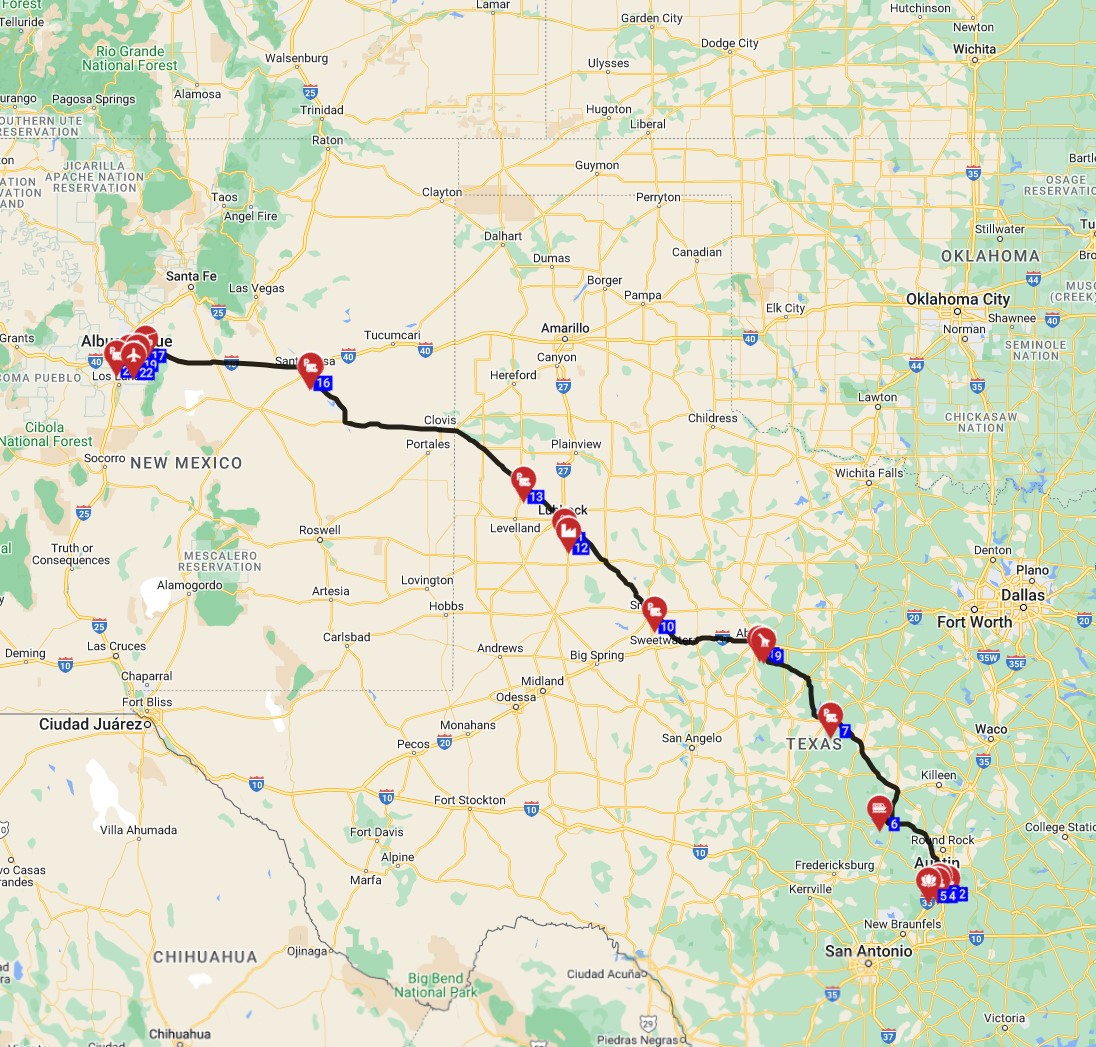
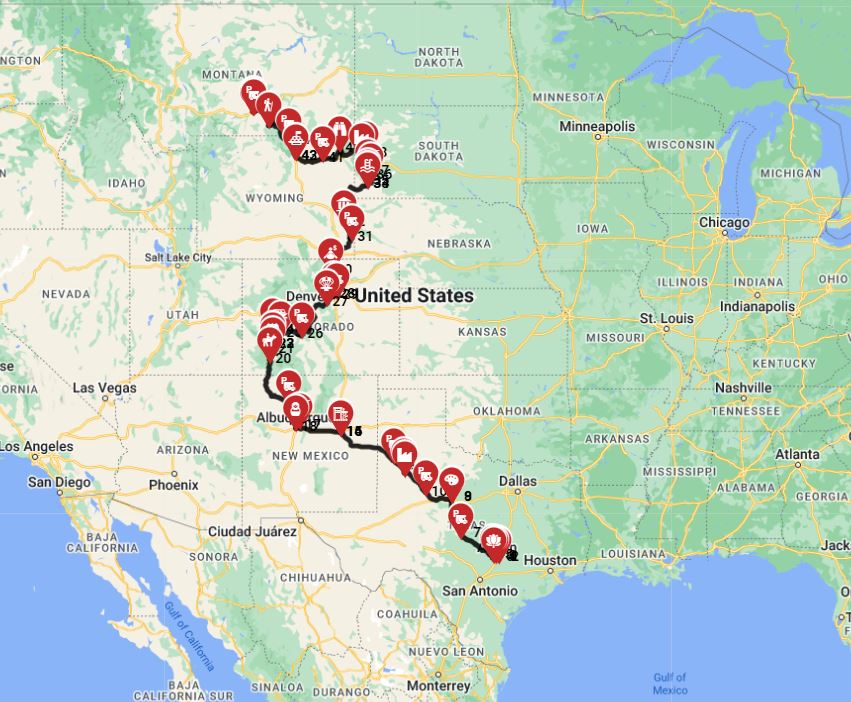
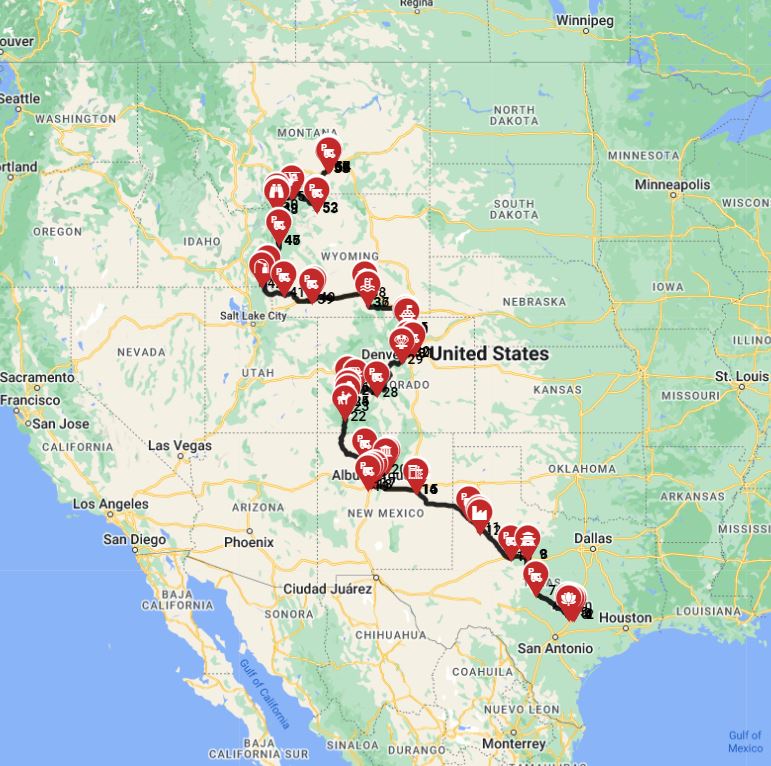
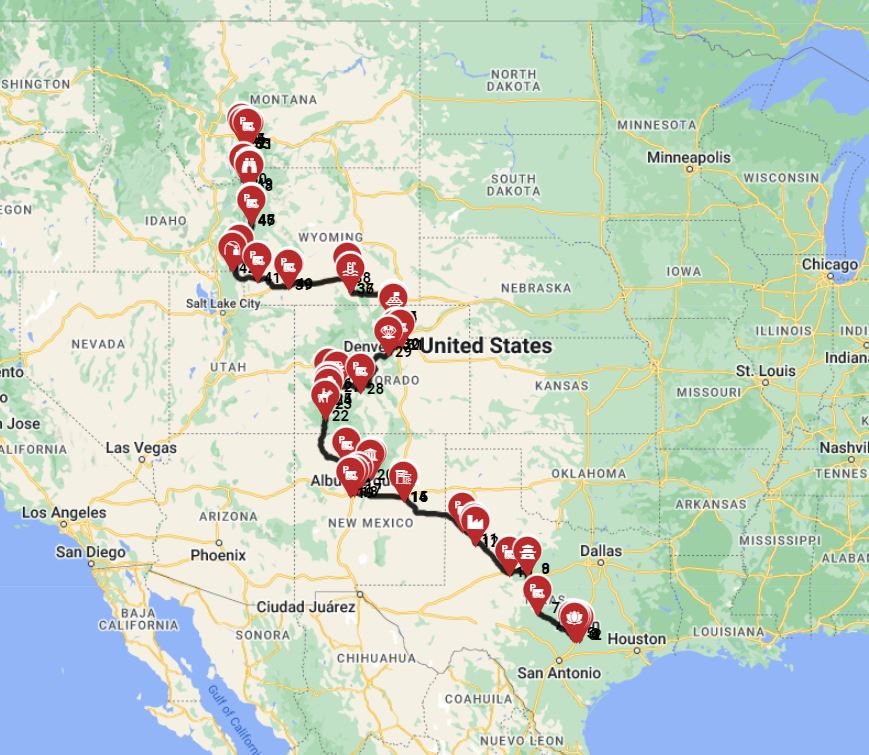
To maximize your weekend RV trip in Texas, consider choosing destinations within a 3-4 hour drive from your pickup location, like Austin, Dallas, or Houston. This allows more time for enjoyment and less time on the road. For families with kids, planning short, scenic drives with frequent stops at playgrounds or attractions can keep children entertained and allow for naps, making the journey more enjoyable for everyone. Look for family-friendly campgrounds with amenities such as swimming pools or hiking trails. When planning your route, exploring options like the "Albuquerque Roundtrip - Epic New Mexico and Texas Loop" can offer rich experiences, with this 17-day, 3372 km journey including 2 parks and 2 local industry visits.
If traveling on a budget, prioritize state parks or lesser-known campgrounds that often offer more affordable rates and natural beauty compared to private resorts. Many state parks, for example, have sites ranging from $20-40 per night. Additionally, consider renting a smaller, more fuel-efficient RV for a weekend trip, such as a Class B campervan, to reduce overall costs and improve maneuverability, especially as fuel prices can fluctuate. Remember, slow travel, averaging 100-150 km per day, allows you to truly immerse yourself in the culture, food, and scenery of Texas. For those looking for more budget-friendly options, our "Cheap RV Rental in Texas - Budget Guide 2026" provides excellent insights.
Common Mistakes to Avoid in Texas
First-time RV renters in Texas can easily avoid common pitfalls with a little preparation. Instead of underestimating Texas's sheer size and driving distances, plan realistic routes with plenty of time for travel and breaks; for example, driving from Houston to Big Bend National Park is over 800 km and takes more than 8 hours. Our mission is to make RV travel accessible and joyful for everyone, and careful planning is key. You can also consult our "One-Way RV Rental in Texas - Price Guide 2026" if you plan to cover significant distances without backtracking.
Instead of neglecting pre-trip checks, thoroughly inspect your rented RV's tires (checking pressure typically requires 60-80 PSI for larger motorhomes), fluid levels, and hookups before departing to prevent roadside issues. This simple check can save significant time and money. Instead of ignoring local wildlife precautions, learn about common Texas wildlife, such as snakes, scorpions, and fire ants, and how to safely avoid them, particularly in natural park settings. Always ensure your RV doors and windows are closed when unattended to prevent unwanted visitors.
Instead of overlooking water availability in arid regions, especially when venturing into West Texas or less developed areas like Big Bend Ranch State Park, ensure you have sufficient fresh water (a typical Class C motorhome like the "C-SMALL" has a 115-liter fresh water tank). Plan to refill your fresh water tank regularly and be conservative with water usage. Lastly, instead of relying solely on cell service, which can be spotty in remote parts of Texas, download offline maps and consider alternative communication methods like a satellite messenger for emergencies. Bandana Caravan offers 24/7 support for booking-related queries, but on-trip operational support is typically handled by the rental supplier.
Is Texas RV friendly?
Texas is generally very RV-friendly, offering a vast network of state parks, private campgrounds, and diverse landscapes suitable for motorhome travel. The state boasts numerous RV parks and campgrounds with various amenities, from basic electrical hookups to luxury resorts with pools and clubhouses. For instance, the Gulf Coast offers countless beachside RV parks, while the Texas Hill Country provides scenic sites near rivers and lakes.
Its expansive highway system is generally well-maintained, accommodating large rigs, though awareness of specific road conditions and urban navigation is advised. Drive slowly and carefully, and you can drive almost anywhere without issues. No need to stress - just use common sense and pay attention. The welcoming culture and diverse attractions, from bustling cities like Dallas and Houston to the serene wilderness of Big Bend, enhance the RV experience. For deeper insights into options across the state, our "RV Rental in Texas - Prices and Best Deals 2026" article can be a helpful resource.
What is the best month to rent an RV in Texas?
The best months to rent an RV in Texas are typically spring (March-May) and fall (September-November) due to milder temperatures and vibrant natural scenery. Spring in Texas offers pleasant weather, with average temperatures ranging from 15-25°C, ideal for wildflowers like bluebonnets and outdoor activities like hiking and kayaking. However, be aware that spring break crowds can be significant in popular areas. Fall provides comfortable temperatures for exploring, often with colorful foliage in the eastern parts of the state and generally fewer crowds. These seasons minimize the extreme heat of summer and the occasional freezing temperatures that can affect northern Texas in winter.
Summers (June-August) can be extremely hot, especially inland where temperatures often exceed 35°C, but are popular for coastal trips and water-based activities along the Gulf. Hurricane season is a consideration during late summer and early fall along the coast. Winters (December-February) are mild in Southern Texas, offering an escape from colder climates, with daytime temperatures around 10-20°C, while northern parts can experience freezing temperatures. Booking outside of peak spring and summer months often provides better availability and potentially lower rental prices for motorhomes like the 4-berth "Explorer" or a larger family-friendly Class C.
What do I need to know before renting an RV in Texas?
Before renting an RV in Texas, it is important to understand vehicle requirements, specific state laws, road conditions, wildlife precautions, and cell service realities, especially in remote areas. A standard car driver's license is sufficient for all motorhome classes (Class A, Class B, and Class C) for rentals. There are no special CDL or additional permits required, and the minimum rental age is 21 with no young driver surcharges.
Be aware of Texas RV laws regarding towing (though Bandana only rents motorhomes and campervans, not towables), speed limits (typically 75 mph on interstates), and safety inspections. While urban navigation is generally manageable, large rigs, like a 9.1-meter Class C motorhome (e.g., "C-30" with a 208-liter fuel tank), should plan routes carefully to avoid narrow streets or low clearances. Familiarize yourself with local wildlife, including scorpions, snakes, and fire ants, taking appropriate precautions like shaking out shoes before putting them on.
Prepare for varying water availability, particularly in arid West Texas where access to potable water can be limited, and carry extra water. Always check cell service coverage for your planned route and destinations, as some national and state parks will have minimal to no reception. Knowing these details upfront will help you have a smooth and enjoyable trip.
How much does it cost to rent an RV for a weekend in Texas?
The cost to rent an RV for a weekend in Texas typically ranges from $150 to $400 per night, depending on the RV class, age, amenities, and time of year, with additional costs for fuel, mileage, and campground fees. For instance, a compact Class B campervan like the "Active Standard Auto" might be closer to the lower end, while a larger Class C motorhome like the "MHC24" (with sleeping for 6 and a 150-liter fresh water tank) would be in the mid-range. Luxury Class A motorhomes could exceed this range. Prices are dynamic and can change daily based on availability, seasonality, and supplier marketing decisions, so the final price is set at the actual booking time.
Budget for fuel, as Texas is vast and RVs have lower MPG (e.g., a Class C can get 15-20 liters/100km, which is around 10-15 miles per gallon); estimate $50-150+ for a typical weekend trip, depending on distance driven. Factor in campground fees, which can range from $20 for basic state park sites to $70+ for private resorts with full hookups and extensive amenities. Other potential expenses, not always included, may cover generator usage fees (around $5/hour), convenience kits, cleaning fees, and additional mileage charges beyond included limits (often 100-150 miles per day, with extra miles costing $0.30-$0.75 each). Our platform ensures full transparency, so what you see is what you pay, with no surprise fees at pickup.
Is it cheaper to rent an RV or stay in a hotel?
For a weekend trip in Texas, renting an RV can be comparable to or potentially more expensive than a hotel when considering all associated costs, but it offers a unique travel experience and flexibility that hotels do not. RV costs typically include the rental fee ($150-$400/night), fuel, campground fees, and potentially mileage charges, which can quickly add up for shorter trips. For example, a 3-day rental at $250/night plus $100 in fuel and $60 in campground fees totals $910.
Hotel costs, on the other hand, usually involve the room rate (which can range from $80-$300+ per night in Texas cities), dining out expenses, and potentially parking fees. While an RV allows for self-catering, saving on restaurant meals (preparing meals in your RV's kitchen can save $50-$100+ per day for a family), its upfront rental and operational costs often make it a premium choice for short durations. The true value proposition of a rented RV lies in the immersive experience, the freedom to explore multiple locations without constantly packing and unpacking, and the ability to bring pets or specialized gear. For longer trips, typically a week or more, RV rentals often prove more cost-effective per day than traditional hotel stays, especially for families. To compare specific prices, check our "Luxury RV Rental in Texas - Premium Prices 2026" guide.
Where can I RV for free in Texas?
Free RV camping in Texas is primarily available through dispersed camping on national grasslands or national forests, specific BLM (Bureau of Land Management) lands, and permitted overnight stays at some large retail parking lots. Designated dispersed camping areas can be found in national forests like Sam Houston National Forest (near Houston, 65,996 hectares) or national grasslands such as the Rita Blanca National Grassland (in the Texas Panhandle), following Leave No Trace principles. Always check local regulations before setting up camp in these areas to ensure compliance.
While Texas has limited Bureau of Land Management (BLM) land, some areas in West Texas, particularly near Big Bend National Park, may offer primitive, free camping opportunities; these often lack amenities like water or restrooms. Many large retailers like Walmart, Cabela's, and Cracker Barrel may allow overnight RV parking in their lots; always call ahead to confirm the store's policy, as these are primarily for short, one-night stops and not extended stays. Some Texas State Parks offer primitive camping sites which, while not entirely free, are significantly cheaper than full-hookup sites and provide a more rustic experience for a few dollars a night.
What are the best RV parks near Texas?
The best RV parks in Texas for a weekend often include popular state parks offering diverse experiences from hill country landscapes to coastal adventures. For instance, Garner State Park in the Texas Hill Country, known for its scenic Frio River and Bald Cypress trees, offers 360 campsites, many with water and electric hookups. Big Bend Ranch State Park in West Texas provides rugged beauty and a true escape from city life, with primitive backcountry camping options. Mustang Island State Park near Corpus Christi offers 48 water and electric sites directly on the Gulf Coast beach for coastal getaways.
For more hill country charm, consider Guadalupe River State Park or Inks Lake State Park, known for water activities and scenic beauty, both offering well-equipped RV sites. Coastal adventures are also popular at Galveston Island State Park, providing beach access, fishing, and 66 full hookup RV sites. Lesser-known state parks like Caprock Canyon State Park (Panhandle), home to the Official Texas State Bison Herd, or Dinosaur Valley State Park (near Fort Worth), featuring dinosaur footprints in the Paluxy River bed, offer unique geological features and fewer crowds for a quieter experience. Many private RV resorts across the state also offer luxury amenities, themed events, and convenient access to attractions in cities like San Antonio or Austin.
How many miles can you put on a rental RV?
Most RV rentals in Texas include a set number of free miles per day, typically 100-150 miles, with additional mileage charged per extra mile, making it important to confirm the policy for a weekend trip. For example, a 3-day rental might include 300-450 free miles. Daily mileage allowances are standard, and exceeding these limits will incur an additional per-mile fee, often ranging from $0.30 to $0.75 per mile. For a longer week-long trip, this could quickly add up if not planned carefully.
For longer weekend trips or extensive driving, some rental companies offer unlimited mileage packages for an additional upfront cost, which can be more economical than paying per mile if you plan to cover significant distances, such as driving across the entire state. Carefully calculate your planned route's total mileage against the rental agreement's included miles to budget accurately and avoid unexpected charges. Our platform, powered by direct partnerships with over 50 leading RV suppliers worldwide like Apollo and Britz, offers full transparency on mileage packages and costs upfront.
What You Shouldn't Miss
When you embark on your rented motorhome journey through Texas, there are some experiences that truly capture the spirit of the state. These aren't just attractions; they're moments that define an RV adventure here:
- Explore Big Bend National Park: Drive through this vast wilderness, hike desert trails, and gaze at the incredible night sky, recognized as an International Dark Sky Park. Don't miss floating the Rio Grande in Santa Elena Canyon.
- Float the Frio River at Garner State Park: Enjoy tubing or swimming in the refreshingly cool waters of the Frio, surrounded by the stunning beauty of the Texas Hill Country. This is an iconic Texan summer activity.
- Discover Historic San Antonio: Park your RV and explore the Alamo, stroll the vibrant Riverwalk, and soak in the rich history and culture. The city offers several RV-friendly campgrounds nearby.
- Chase Bluebonnets in Spring: Plan your trip for March or April and follow the designated 'Bluebonnet Trails' around areas like Fredericksburg or Ennis for breathtaking fields of wildflowers.
- Visit the Space Center Houston: Delve into space exploration history at the official visitor center for NASA Johnson Space Center, perfect for families and space enthusiasts alike.
- Taste Texas BBQ: No trip is complete without savoring authentic Texas BBQ. Stop in small towns like Lockhart (the 'BBQ Capital of Texas') for a true culinary experience.
Looking for expert insights from Avi Bandana? Top 5 Adventures - recommendations from Avi Bandana
Final Thoughts
Embarking on a rented RV adventure in Texas, even for a weekend, opens up a world of freedom and discovery. Imagine waking up to a stunning sunrise over Big Bend's mountains or enjoying a peaceful morning coffee by a Hill Country river. With the right planning and a flexible mindset, your journey through this vast and diverse state will be filled with cherished memories.
Remember that Bandana Caravan is here to support you at every step, offering transparent pricing and expert advice. So, pack your bags, choose your perfect motorhome, and get ready to experience the unique charm and boundless horizons of Texas. Life is now - go explore!
Plan a trip itinerary in advance with minimal effort and maximum enjoyment. Compare Motorhome Prices for Texas and start your adventure today!