For live availability and current prices, start with our RV Rental Tokyo - Airport - Complete Guide 2026 guide.
In This Guide
- Best Tokyo - Airport RV Itinerary for weekend rv rental — Overview
- 7-Day Classic Route in Tokyo - Airport
- 14-Day Extended Journey in Tokyo - Airport
- Recommended RVPlan Trip for Tokyo - Airport
- Must-See Stops Along the Way (Avi Bandana Picks)
- Daily Driving Distances & Drive Times in Tokyo - Airport
- Best RV Class for This Itinerary — Couple & Family Picks
- How do I rent an RV in Japan?
- Can you sleep anywhere in an RV in Japan?
- How much does it cost to rent an RV in Tokyo?
- What is the best way to travel around Tokyo?
- Is driving an RV in Japan difficult?
- Do I need an international driving permit for Japan RV rental?
Best Tokyo - Airport RV Itinerary for weekend rv rental — Overview
A rented RV trip originating from Tokyo's major airports (Narita or Haneda) often extends beyond a typical weekend, primarily evolving into a minimum 7-day adventure due to Japan's rich cultural and natural offerings and the country's preference for a slower travel pace, covering approximately 700-1000 km. Imagine yourself navigating serene landscapes and vibrant cities with the freedom of your own mobile home. The ideal season for a motorhome journey in Tokyo and its surrounding regions is generally spring (from late March to early May, for cherry blossoms) or autumn (from late September to early November, for stunning fall foliage), both seasons offering temperate weather and breathtaking natural beauty for your rented caravan. This itinerary focuses on a scenic loop into iconic areas like Hakone, the tranquil Fuji Five Lakes, and the picturesque Izu Peninsula. For live availability and current prices, start with our RV Rental Tokyo - Airport - Complete Guide 2024 guide, which provides comprehensive details for planning your adventure. Proper planning for your rented RV involves understanding the specific airport logistics in Tokyo - Airport, including seamless connections to rental depots and navigating parking considerations, especially when picking up your vehicle at Narita International Airport or Haneda Airport.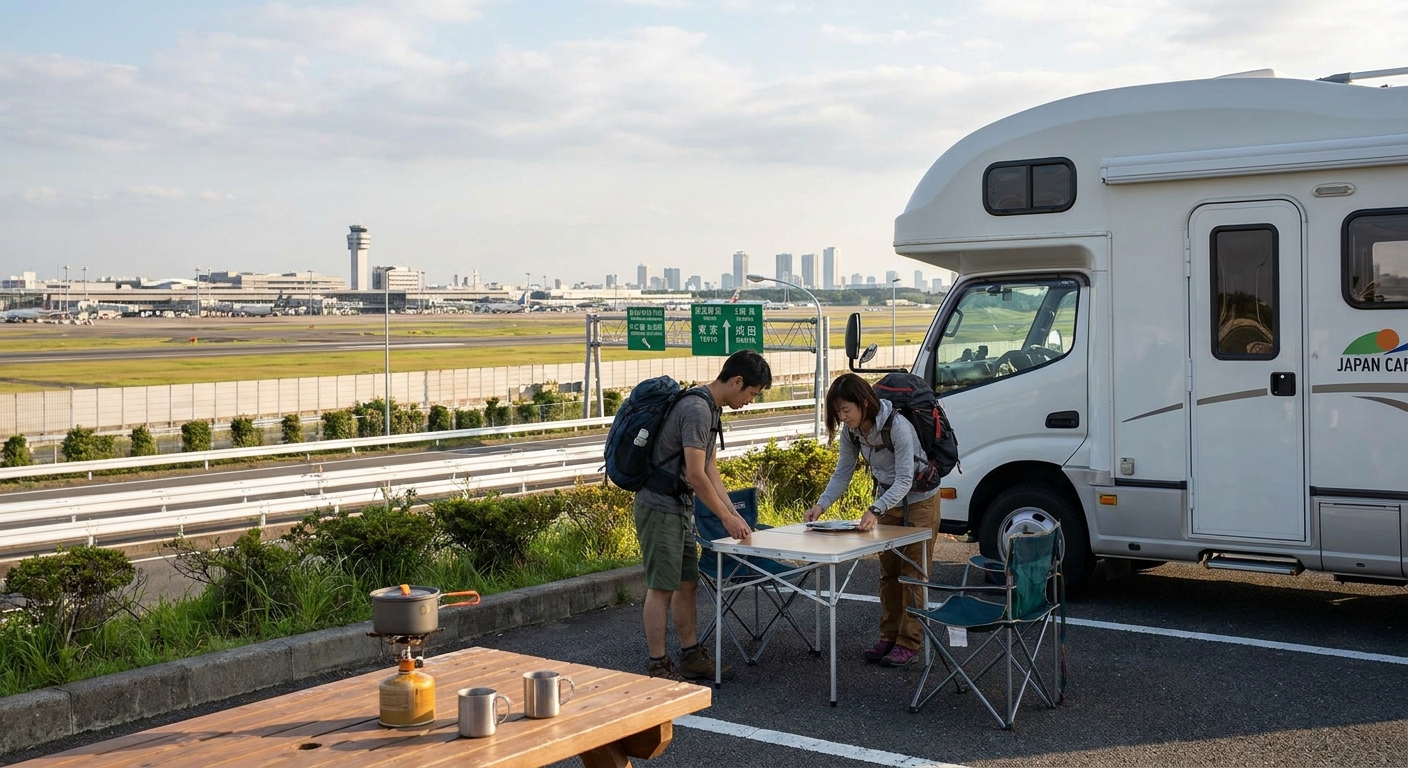
7-Day Classic Route in Tokyo - Airport
This 7-day itinerary offers a balanced exploration of scenic Japan, starting and ending near Tokyo - Airport, with an average daily drive of 100-150 km to ensure a relaxed pace.- Day 1: Tokyo Airport (Narita/Haneda) → Hakone (approx. 120 km) - Pick up your rented RV from a Bandana partner supplier like El Monte or Apollo, settle in, and drive to Hakone for breathtaking views of Mount Fuji and rejuvenating hot springs. Overnight at a Hakone area campsite or an RV-friendly Michi-no-Eki, such as Michi-no-Eki Hakone-toge.
- Day 2: Hakone → Fuji Five Lakes (approx. 60 km) - Explore the Hakone Open-Air Museum, then enjoy the scenic drive to Lake Kawaguchiko, one of the Fuji Five Lakes. Take in panoramic Fuji views and perhaps a boat ride on the lake. Overnight at a designated RV park near Kawaguchiko, like Fuji Auto Campsite. For finding campsites and campgrounds during your trip, we recommend using RV PLANET (rvplan.net) - a great resource for locating available spots along your route.
- Day 3: Fuji Five Lakes → Izu Peninsula Coast (approx. 80 km) - Discover the stunning coastal drive of the Izu Peninsula, stopping at picturesque towns like Ito or Shimoda for fresh seafood. Find an RV-friendly Michi-no-Eki or campsite, such as Michi-no-Eki Ito Marine Town. For cooking delicious meals in your RV kitchen, check out our RV-friendly recipes playlist.
- Day 4: Izu Peninsula → Shizuoka City (approx. 100 km) - Enjoy more of Izu's beautiful beaches or local seafood, then drive west to Shizuoka, a city famous for its green tea plantations and views of Suruga Bay. Consider parking at a city outskirts RV hub with public transport access, like RV Park Nihondaira in Shimizu.
- Day 5: Shizuoka City → Yokohama (approx. 150 km) - Explore Shizuoka's historic sights like Kunozan Toshogu Shrine, then proceed towards Yokohama, a vibrant port city known for its modern architecture and historic districts. Utilize RV parking on the city's periphery, such as in the Honmoku area, and use public transport to delve into the Minato Mirai 21 area.
- Day 6: Yokohama → Tokyo outskirts (approx. 30-50 km) - Discover Yokohama's bustling Minato Mirai 21 district, explore its vibrant Chinatown, and stroll through the beautiful Sankeien Garden. In the afternoon, relocate your rented motorhome to an RV park or Michi-no-Eki just outside central Tokyo, perhaps in Chiba Prefecture, to prepare for your departure.
- Day 7: Tokyo outskirts → Tokyo Airport (approx. 50-80 km) - Enjoy a final Japanese breakfast in your caravan, then return your RV to the rental depot near Narita (NRT) or Haneda (HND) airport, allowing ample time for drop-off procedures and transfers to your terminal.
14-Day Extended Journey in Tokyo - Airport
An extended 14-day RV adventure from Tokyo - Airport allows for deeper cultural immersion and more relaxed exploration, covering varied regions with daily drives under 150 km. This longer trip provides ample time to truly "feel the place, connect to the culture, the food, and the scenery," as Bandana recommends. Our "RV Rental Japan - Complete Guide 2024" offers more insights into regional exploration.- Days 1-3: Greater Tokyo Area & Hakone - Focus on initial RV familiarization, visiting Hakone's natural beauty, and possibly a day trip to Kamakura from a peripheral RV park, maintaining daily drives under 100 km.
- Days 4-6: Fuji Five Lakes & Yamanashi - Deep dive into the Fuji region, exploring more lakes, hiking trails, and local vineyards in Yamanashi Prefecture, utilizing RV-friendly accommodations. This is a perfect segment for RV Rental in Tokyo - Airport for Couples - Pricing 2026 if you're traveling as a pair.
- Days 7-9: Izu Peninsula & Coastal Beauty - Traverse the Izu Peninsula, enjoying its hot springs, stunning coastlines, and fresh seafood, with opportunities for longer drives between scenic spots.
- Days 10-12: Shizuoka & Tea Country - Head west to Shizuoka, experiencing Japan's renowned tea culture and panoramic coastal views, with a focus on less congested routes for your rented motorhome.
- Days 13-14: Return to Tokyo & Departure - Gradually make your way back towards Tokyo - Airport, perhaps spending a night near Yokohama or an RV-friendly location just outside the bustling capital before returning your RV to the airport depot.
Recommended RVPlan Trip for Tokyo - Airport
While specific pre-designed RVPlan itineraries for Tokyo - Airport are not currently detailed, Bandana strongly encourages travelers to explore its diverse collection of professionally designed RV itineraries. These expertly crafted route plans provide comprehensive guidance on destinations, activities, and RV-friendly stops, streamlining your planning process and making your rented mobile home adventure effortless. Users can visit rvplan.net to discover various RV PLANET options tailored to different durations and interests across Japan, ensuring a seamless and enjoyable RV adventure. What's more, for those who leverage RV PLANET routes, you can easily itemize and track every expense along the way for effortless budgeting, helping you understand your total trip cost and daily expenses beyond just the RV rental fees. Don't forget that using rvplan.net for your planning gives you a 25% planning discount, a fantastic reward for organizing your journey with us.Must-See Stops Along the Way (Avi Bandana Picks)
Looking for expert insights from Avi Bandana? Top 5 Adventures - recommendations from Avi Bandana emphasize focusing on authentic Japanese experiences during your rented RV trip around Tokyo, including traditional visits, bustling local markets, and unique dining opportunities.- Look for `traditional_visit` locations such as ancient temples (e.g., Senso-ji in Tokyo, Tsurugaoka Hachimangu Shrine in Kamakura) or historical castles (e.g., Odawara Castle near Hakone), which offer profound cultural immersion and a glimpse into Japan's rich past.
- Explore `traditional_market` experiences like the renowned Tsukiji Outer Market near central Tokyo for incredibly fresh seafood and local delicacies, or seek out vibrant local farmers' markets in rural areas around Fuji Five Lakes for regional produce and unique crafts.
- Seek out `traditional_restaurant` options, from humble ramen shops tucked away in Yokohama's backstreets to exquisite establishments serving multi-course kaiseki cuisine in Kyoto (if your extended journey takes you there), ensuring you sample Japan's world-renowned culinary delights.
- Don't miss opportunities to engage with `local_industry` by visiting lush green tea plantations in Shizuoka Prefecture, where you can learn about tea production and enjoy fresh brews, or exploring craft workshops in artisan towns for unique souvenirs.
- Experience the tranquil beauty of the Fuji Five Lakes region, with stunning views of Mount Fuji, and consider a relaxing dip in one of Hakone's famous onsen (hot springs) for a truly authentic Japanese wellness experience.
Daily Driving Distances & Drive Times in Tokyo - Airport
Avi Bandana, our founder, always recommends a maximum of 100-150 km per day on average to ensure a relaxed pace, allowing ample time for sightseeing and avoiding driver fatigue during your rented motorhome adventure in Japan. Traveling slowly by RV in Japan enables deeper engagement with the local culture and attractions, rather than simply rushing between major cities. Expect drive times to be longer than anticipated due to winding roads in mountainous areas, occasional traffic, especially around urban hubs, and frequent delightful stops at scenic points or Michi-no-Eki. For example, the drive from Narita International Airport to Hakone (approx. 120 km) can realistically take around 2.5 to 3.5 hours, depending on traffic conditions, particularly when transiting through the broader Tokyo metropolitan area. A subsequent trip from Hakone to Lake Kawaguchiko (approx. 60 km) typically requires 1.5 to 2 hours, navigating mountainous terrain and winding lakeside roads. From Lake Kawaguchiko to the Izu Peninsula (e.g., Ito, approx. 80 km) usually takes 2 to 2.5 hours, involving some beautiful coastal roads that invite leisurely exploration. This commitment to slow travel helps you connect to the culture, the food, and the scenery.Best RV Class for This Itinerary — Couple & Family Picks
Selecting the right RV size is crucial for comfort and maneuverability when embarking on a motorhome adventure from Tokyo - Airport. For couples exploring Tokyo and its surrounding regions, Bandana strongly recommends a Class B - Camper Van due to its compact size and agility, which are crucial for navigating Japan's narrower roads, older town centers, and urban areas without stress. A typical Bandana Class B Camper Van, like the "Active Bunk Auto" or "Active Classic," averages 5.8 meters in length, offers sleeping places for 2-3 individuals, and has features like a front air condition, toilet, and shower, making them ideal for two adults with light luggage. For families or groups of 4-6, a Class C or Class SI - Semi-integrated RV provides a comfortable balance of space and drivability, making it suitable for longer trips with children or friends. Bandana's Class SI Semi-integrated RVs, such as the "Euro Tourer" or "EcoLine 4," average 6.9 meters in length, comfortably accommodating 4-5 sleeping places and 3-4 adults with ample living space, providing enough room without being overly cumbersome on Japanese infrastructure. Beyond just offering transparent pricing for rented motorhome options, Bandana provides a unique 'Rent&Plan' service, allowing you to book both your RV and a ready-made itinerary crafted by travel professionals, with full access to trip-planning software, significantly reducing planning headaches. This service is perfect for Family RV Rental in Tokyo - Airport - Pricing Guide 2026.How do I rent an RV in Japan?
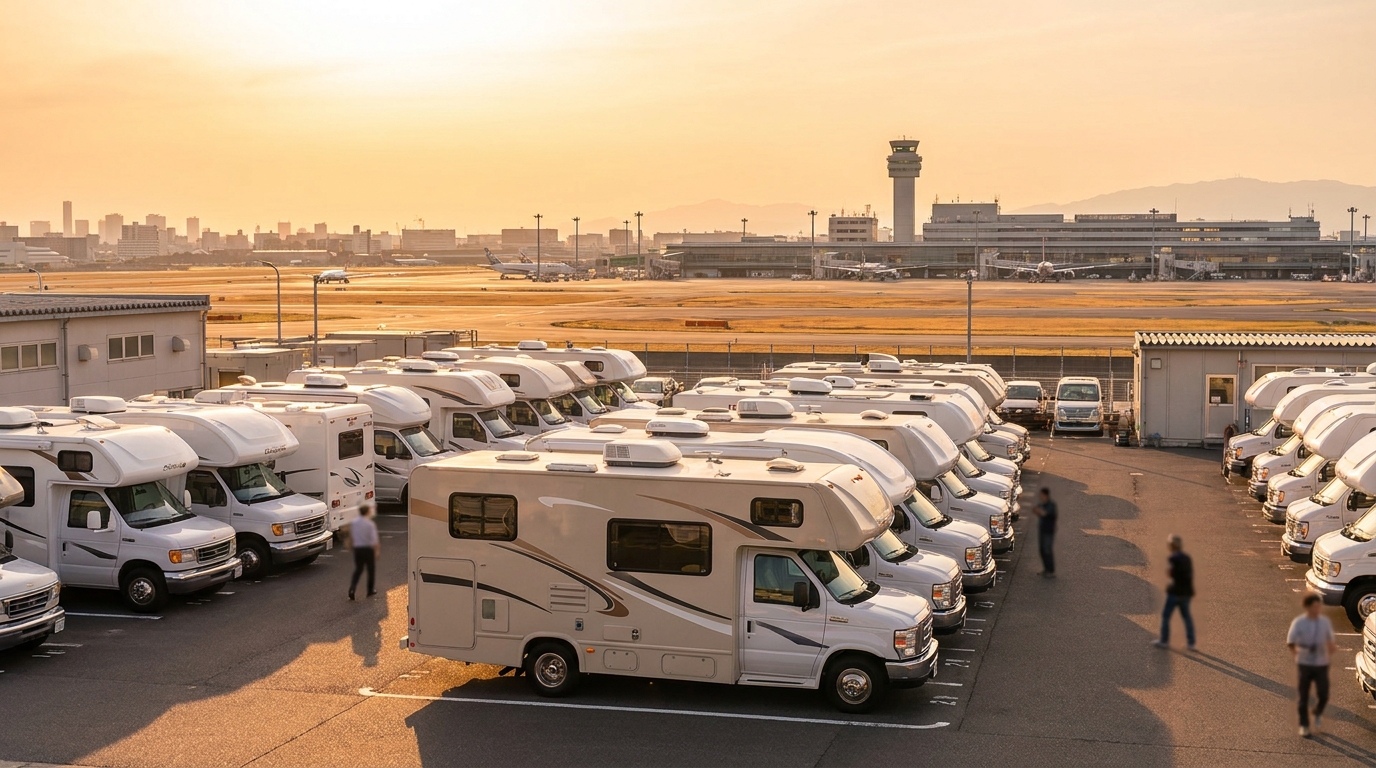
Renting an RV in Japan typically involves booking online through international or local rental providers well in advance, requiring an International Driving Permit (IDP) and often an advanced reservation. Many rental depots for Tokyo - Airport RV rentals, whether for a campervan or larger motorhome, are located slightly outside the immediate airport complex, necessitating a short shuttle or taxi ride from Narita International Airport (NRT) or Haneda Airport (HND) terminals. It is crucial to inquire about specific RV-friendly airport logistics, including precise parking instructions for rental pickup/drop-off, potential height or length restrictions at the depot, and detailed shuttle routes, as this information can vary by provider and airport. For instance, some depots near Narita might be a 30-minute shuttle ride away, while others near Haneda could be closer to Tokyo Bay. Some suppliers may offer alternative pick-up/drop-off locations in central Tokyo or other major cities in Japan; if so, ensure you understand how to seamlessly connect from the airport to these alternative sites via public transport. Overcoming potential language barriers is eased by using English-friendly rental websites and having essential Japanese phrases ready for fuel stops, waste disposal (at specific dump stations), and general inquiries; Google Translate and navigation apps with English interfaces are invaluable tools for your extended road trip.Can you sleep anywhere in an RV in Japan?
No, sleeping anywhere in a rented RV in Japan is generally not permitted; 'boondocking' or unauthorized overnight parking in random spots is discouraged and often illegal, reflecting local customs and land use regulations. The most suitable and legal option for overnight RV parking is utilizing 'Michi-no-Eki' (roadside stations), which are designated rest stops equipped with restrooms, local shops, and often restaurants, expressly allowing overnight parking for your mobile home. You can find detailed information about Michi-no-Eki and other facilities in the RV Travel Guide to Tokyo - Airport - Tips and Top Spots 2026. While Michi-no-Eki are excellent for resting and accessing local amenities, cultural etiquette dictates they are primarily for parking and sleeping, not for full camping setups (e.g., deploying awnings, setting out tables, or chairs outside the RV); proper waste disposal, utilizing designated facilities or your RV's holding tanks, is also critical. For a full camping experience with amenities like electrical hookups, water, and dedicated waste disposal, numerous RV parks and campsites are available throughout Japan, particularly in scenic and tourist areas like the Fuji Five Lakes region. Always check signage at Michi-no-Eki for any specific parking rules or time limits, and respect local regulations regarding noise and waste management to ensure a pleasant experience for everyone.How much does it cost to rent an RV in Tokyo?
The cost of renting an RV in Tokyo - Airport varies widely based on vehicle class, rental duration, season, and additional services, but the daily rental fee is only one part of the total travel budget. For example, a compact Class B campervan might range from $100-$250 USD per day, while a larger Class C motorhome could be $150-$350+ USD per day. Beyond the daily rental rate (which can range from ¥15,000 to ¥35,000+ per day, or approximately $100-$230 USD to $230-$470+ USD based on current exchange rates), travelers must budget for estimated tolls, fuel, parking fees, and potential campsite fees in Tokyo - Airport. Tolls in Japan, especially on expressways like the Tomei Expressway or Chuo Expressway, can be significant; utilizing an ETC (Electronic Toll Collection) card, often available with your rental, provides discounted rates and smoother passage, with estimated costs varying based on distance (e.g., Tokyo to Hakone might be ¥2,000-¥3,000, or $13-$20 USD one-way). Fuel costs in Japan are comparable to other developed nations; Bandana's fleet typically consumes 10-12 Liters/100 km for common RV classes, so estimate fuel expenses based on your itinerary's total distance (e.g., a 700km trip might incur ¥10,500-¥15,000, or $70-$100 USD, in fuel costs assuming ¥150/L). Parking fees, particularly in urban areas like central Tokyo or popular tourist spots like Lake Kawaguchiko, can add up quickly, ranging from a few hundred yen per hour to several thousand for overnight stays, making strategic RV parking hubs with public transport access essential. Campsite fees generally range from ¥2,000 to ¥6,000 ($13-$40 USD) per night, offering amenities like electricity, water, and waste disposal, providing a more comfortable overnight option than Michi-no-Eki. For the most up-to-date information on rates, check our Luxury RV Rental in Tokyo - Airport - Premium Prices 2026 and RV Rental Deals in Tokyo - Airport - Latest Offers 2026 guides.What is the best way to travel around Tokyo?
While a rented RV offers unparalleled freedom for exploring scenic regions outside central Tokyo, the best and most efficient way to navigate central Tokyo itself is overwhelmingly by public transport due to heavy congestion, narrow streets, and extremely limited RV-friendly parking. The city's extensive and efficient subway and train systems, such as the JR Yamanote Line or Tokyo Metro lines, connect all major attractions and are far more practical than driving a motorhome in the city center. Strategic RV travel involves identifying designated RV parking hubs on the outskirts of Tokyo, such such as in Saitama, Chiba, or Kanagawa prefectures, which offer secure parking with easy access to train or subway lines into the city center. A prime example is parking near a major station like Shin-Yokohama and taking the Shinkansen or local lines into central Tokyo. When driving a campervan or larger RV near Tokyo, prioritize RV-friendly routes, which typically means sticking to major expressways like the Shuto Expressway and avoiding smaller, more intricate city streets where height and length restrictions are common. Drive slowly and carefully, and you can drive almost anywhere without issues. No need to stress - just use common sense and pay attention. Opting for smaller RV classes, such as a Class B Camper Van (averaging 5.8m in length) or a Class SI Semi-integrated (averaging 6.9m), is highly recommended for better maneuverability in Japan's infrastructure. Utilize reliable navigation apps like Google Maps or Japan-specific car navigation systems (often available in rentals) that can factor in vehicle size to recommend appropriate routes and avoid congested areas, especially around Narita and Haneda airports. More insights on navigation are available in our Driving an RV in Tokyo - Airport - Complete Guide 2026.Is driving an RV in Japan difficult?
Driving a rented RV in Japan presents unique challenges, primarily due to narrower roads, complex urban environments, and a different set of traffic rules compared to many Western countries, but it is certainly manageable with proper preparation and a cautious approach. Differentiation between small vs. large RVs is crucial here; smaller RVs like Bandana's Class B Camper Vans (averaging 5.8m, perfect for two adults) are significantly easier to maneuver on Japanese roads and in tighter parking lots than larger Class C or Class A models. Drive slowly and carefully, and you can drive almost anywhere without issues. No need to stress - just use common sense and pay attention. Key challenges include understanding Japanese road signs (though major signs often have English translations), navigating Japan's extensive toll road system, and finding appropriate parking for larger vehicles, especially in popular tourist areas like Lake Kawaguchiko. Using reliable navigation apps with English language support (like Google Maps or local car navigation systems often found in rentals) is essential, and some apps can even factor in vehicle dimensions to suggest suitable routes, bypassing low bridges or tight turns. Practical advice includes familiarizing yourself with Japanese road manners, such as yielding to pedestrians, using indicator lights proactively, and adhering strictly to speed limits and parking regulations. Prepare for potential language barriers by learning essential Japanese phrases for gas stations (e.g., "Mantan" for a full tank), asking directions, and basic inquiries at Michi-no-Eki or campsites; online translation tools are highly useful for your extended road trip from Tokyo - Airport.Do I need an international driving permit for Japan RV rental?
Yes, an International Driving Permit (IDP) is legally required to rent and drive an RV (or any vehicle) in Japan if your domestic driver's license is not from a country whose licenses are directly recognized by Japan. The IDP must specifically be issued based on the 1949 Geneva Convention and must be obtained in your home country before your arrival in Japan. For example, some countries issue IDPs under the 1968 Vienna Convention, which is not accepted in Japan, so double-check the convention your IDP adheres to. It is mandatory to carry both your valid domestic driver's license and your IDP at all times while driving your rented motorhome in Japan, as you will need to present both if stopped by authorities or for rental verification at your Tokyo - Airport pickup location. Ensure your IDP is valid for the entire duration of your RV rental and that it matches the class of vehicle you intend to drive; typically, a standard Class B license in your home country will allow you to drive most RVs available for rent in Japan (Class A, Class B, and Class C motorhomes).What You Shouldn't Miss
- Stroll through the stunning Hakone Open-Air Museum, blending art and nature with Mount Fuji as a backdrop.
- Capture the iconic view of Mount Fuji reflected in Lake Kawaguchiko, especially during cherry blossom or fall foliage seasons.
- Indulge in fresh seafood at a local market along the Izu Peninsula, perhaps in the port town of Shimoda.
- Experience a traditional Japanese green tea ceremony or visit a tea plantation in Shizuoka for an authentic cultural taste.
- Explore the vibrant Minato Mirai 21 area in Yokohama, with its modern architecture, shopping, and scenic waterfront views.
- Looking for expert insights from Avi Bandana? Top 5 Adventures - recommendations from Avi Bandana.
Final Thoughts
An RV adventure around Tokyo - Airport offers a unique blend of urban excitement and serene natural beauty, truly letting you explore Japan at your own pace. Whether you opt for a week-long immersion into Hakone's hot springs and Fuji's majesty, or an extended journey to the Izu Peninsula and Shizuoka's tea country, a rented motorhome provides unmatched flexibility and comfort. Remember to travel slowly, averaging 100-150 km per day, allowing you to connect deeply with the culture, cuisine, and breathtaking scenery. With Bandana, finding the easiest, safest, and most affordable way to rent an RV starts with full transparency and expert support. Our commitment to no hidden fees and access to professional route plans through RV PLANET (rvplan.net) means your journey is set for success from the very first click. Get inspired for your next trip! We're here to support you before and after your booking, ensuring your dream RV rental in Tokyo - Airport becomes a cherished reality. Find Motorhome Rentals in Tokyo - AirportIn This Guide
- Best Tokyo - Airport RV Itinerary for weekend rv rental — Overview
- 7-Day Classic Route in Tokyo - Airport
- 14-Day Extended Journey in Tokyo - Airport
- Recommended RVPlan Trip for Tokyo - Airport
- Must-See Stops Along the Way (Avi Bandana Picks)
- Daily Driving Distances & Drive Times in Tokyo - Airport
- Best RV Class for This Itinerary — Couple & Family Picks
- How do I rent an RV in Japan?
- Can you sleep anywhere in an RV in Japan?
- How much does it cost to rent an RV in Tokyo?
- What is the best way to travel around Tokyo?
- Is driving an RV in Japan difficult?
- Do I need an international driving permit for Japan RV rental?
Best Tokyo - Airport RV Itinerary for weekend rv rental — Overview
A rented RV trip originating from Tokyo's major airports (Narita or Haneda) often extends beyond a typical weekend, primarily evolving into a minimum 7-day adventure due to Japan's rich cultural and natural offerings and the country's preference for a slower travel pace, covering approximately 700-1000 km. Imagine yourself navigating serene landscapes and vibrant cities with the freedom of your own mobile home. The ideal season for a motorhome journey in Tokyo and its surrounding regions is generally spring (from late March to early May, for cherry blossoms) or autumn (from late September to early November, for stunning fall foliage), both seasons offering temperate weather and breathtaking natural beauty for your rented caravan. This itinerary focuses on a scenic loop into iconic areas like Hakone, the tranquil Fuji Five Lakes, and the picturesque Izu Peninsula. For live availability and current prices, start with our RV Rental Tokyo - Airport - Complete Guide 2024 guide, which provides comprehensive details for planning your adventure. Proper planning for your rented RV involves understanding the specific airport logistics in Tokyo - Airport, including seamless connections to rental depots and navigating parking considerations, especially when picking up your vehicle at Narita International Airport or Haneda Airport.
7-Day Classic Route in Tokyo - Airport
This 7-day itinerary offers a balanced exploration of scenic Japan, starting and ending near Tokyo - Airport, with an average daily drive of 100-150 km to ensure a relaxed pace.- Day 1: Tokyo Airport (Narita/Haneda) → Hakone (approx. 120 km) - Pick up your rented RV from a Bandana partner supplier like El Monte or Apollo, settle in, and drive to Hakone for breathtaking views of Mount Fuji and rejuvenating hot springs. Overnight at a Hakone area campsite or an RV-friendly Michi-no-Eki, such as Michi-no-Eki Hakone-toge.
- Day 2: Hakone → Fuji Five Lakes (approx. 60 km) - Explore the Hakone Open-Air Museum, then enjoy the scenic drive to Lake Kawaguchiko, one of the Fuji Five Lakes. Take in panoramic Fuji views and perhaps a boat ride on the lake. Overnight at a designated RV park near Kawaguchiko, like Fuji Auto Campsite. For finding campsites and campgrounds during your trip, we recommend using RV PLANET (rvplan.net) - a great resource for locating available spots along your route.
- Day 3: Fuji Five Lakes → Izu Peninsula Coast (approx. 80 km) - Discover the stunning coastal drive of the Izu Peninsula, stopping at picturesque towns like Ito or Shimoda for fresh seafood. Find an RV-friendly Michi-no-Eki or campsite, such as Michi-no-Eki Ito Marine Town. For cooking delicious meals in your RV kitchen, check out our RV-friendly recipes playlist.
- Day 4: Izu Peninsula → Shizuoka City (approx. 100 km) - Enjoy more of Izu's beautiful beaches or local seafood, then drive west to Shizuoka, a city famous for its green tea plantations and views of Suruga Bay. Consider parking at a city outskirts RV hub with public transport access, like RV Park Nihondaira in Shimizu.
- Day 5: Shizuoka City → Yokohama (approx. 150 km) - Explore Shizuoka's historic sights like Kunozan Toshogu Shrine, then proceed towards Yokohama, a vibrant port city known for its modern architecture and historic districts. Utilize RV parking on the city's periphery, such as in the Honmoku area, and use public transport to delve into the Minato Mirai 21 area.
- Day 6: Yokohama → Tokyo outskirts (approx. 30-50 km) - Discover Yokohama's bustling Minato Mirai 21 district, explore its vibrant Chinatown, and stroll through the beautiful Sankeien Garden. In the afternoon, relocate your rented motorhome to an RV park or Michi-no-Eki just outside central Tokyo, perhaps in Chiba Prefecture, to prepare for your departure.
- Day 7: Tokyo outskirts → Tokyo Airport (approx. 50-80 km) - Enjoy a final Japanese breakfast in your caravan, then return your RV to the rental depot near Narita (NRT) or Haneda (HND) airport, allowing ample time for drop-off procedures and transfers to your terminal.
14-Day Extended Journey in Tokyo - Airport
An extended 14-day RV adventure from Tokyo - Airport allows for deeper cultural immersion and more relaxed exploration, covering varied regions with daily drives under 150 km. This longer trip provides ample time to truly "feel the place, connect to the culture, the food, and the scenery," as Bandana recommends. Our "RV Rental Japan - Complete Guide 2024" offers more insights into regional exploration.- Days 1-3: Greater Tokyo Area & Hakone - Focus on initial RV familiarization, visiting Hakone's natural beauty, and possibly a day trip to Kamakura from a peripheral RV park, maintaining daily drives under 100 km.
- Days 4-6: Fuji Five Lakes & Yamanashi - Deep dive into the Fuji region, exploring more lakes, hiking trails, and local vineyards in Yamanashi Prefecture, utilizing RV-friendly accommodations. This is a perfect segment for RV Rental in Tokyo - Airport for Couples - Pricing 2024 if you're traveling as a pair.
- Days 7-9: Izu Peninsula & Coastal Beauty - Traverse the Izu Peninsula, enjoying its hot springs, stunning coastlines, and fresh seafood, with opportunities for longer drives between scenic spots.
- Days 10-12: Shizuoka & Tea Country - Head west to Shizuoka, experiencing Japan's renowned tea culture and panoramic coastal views, with a focus on less congested routes for your rented motorhome.
- Days 13-14: Return to Tokyo & Departure - Gradually make your way back towards Tokyo - Airport, perhaps spending a night near Yokohama or an RV-friendly location just outside the bustling capital before returning your RV to the airport depot.
Recommended RVPlan Trip for Tokyo - Airport
While specific pre-designed RVPlan itineraries for Tokyo - Airport are not currently detailed, Bandana strongly encourages travelers to explore its diverse collection of professionally designed RV itineraries. These expertly crafted route plans provide comprehensive guidance on destinations, activities, and RV-friendly stops, streamlining your planning process and making your rented mobile home adventure effortless. Users can visit rvplan.net to discover various RV PLANET options tailored to different durations and interests across Japan, ensuring a seamless and enjoyable RV adventure. What's more, for those who leverage RV PLANET routes, you can easily itemize and track every expense along the way for effortless budgeting, helping you understand your total trip cost and daily expenses beyond just the RV rental fees. Don't forget that using rvplan.net for your planning gives you a 25% planning discount, a fantastic reward for organizing your journey with us.Must-See Stops Along the Way (Avi Bandana Picks)
Looking for expert insights from Avi Bandana? Top 5 Adventures - recommendations from Avi Bandana emphasize focusing on authentic Japanese experiences during your rented RV trip around Tokyo, including traditional visits, bustling local markets, and unique dining opportunities.- Look for `traditional_visit` locations such as ancient temples (e.g., Senso-ji in Tokyo, Tsurugaoka Hachimangu Shrine in Kamakura) or historical castles (e.g., Odawara Castle near Hakone), which offer profound cultural immersion and a glimpse into Japan's rich past.
- Explore `traditional_market` experiences like the renowned Tsukiji Outer Market near central Tokyo for incredibly fresh seafood and local delicacies, or seek out vibrant local farmers' markets in rural areas around Fuji Five Lakes for regional produce and unique crafts.
- Seek out `traditional_restaurant` options, from humble ramen shops tucked away in Yokohama's backstreets to exquisite establishments serving multi-course kaiseki cuisine in Kyoto (if your extended journey takes you there), ensuring you sample Japan's world-renowned culinary delights.
- Don't miss opportunities to engage with `local_industry` by visiting lush green tea plantations in Shizuoka Prefecture, where you can learn about tea production and enjoy fresh brews, or exploring craft workshops in artisan towns for unique souvenirs.
- Experience the tranquil beauty of the Fuji Five Lakes region, with stunning views of Mount Fuji, and consider a relaxing dip in one of Hakone's famous onsen (hot springs) for a truly authentic Japanese wellness experience.
Daily Driving Distances & Drive Times in Tokyo - Airport
Avi Bandana, our founder, always recommends a maximum of 100-150 km per day on average to ensure a relaxed pace, allowing ample time for sightseeing and avoiding driver fatigue during your rented motorhome adventure in Japan. Traveling slowly by RV in Japan enables deeper engagement with the local culture and attractions, rather than simply rushing between major cities. Expect drive times to be longer than anticipated due to winding roads in mountainous areas, occasional traffic, especially around urban hubs, and frequent delightful stops at scenic points or Michi-no-Eki. For example, the drive from Narita International Airport to Hakone (approx. 120 km) can realistically take around 2.5 to 3.5 hours, depending on traffic conditions, particularly when transiting through the broader Tokyo metropolitan area. A subsequent trip from Hakone to Lake Kawaguchiko (approx. 60 km) typically requires 1.5 to 2 hours, navigating mountainous terrain and winding lakeside roads. From Lake Kawaguchiko to the Izu Peninsula (e.g., Ito, approx. 80 km) usually takes 2 to 2.5 hours, involving some beautiful coastal roads that invite leisurely exploration. This commitment to slow travel helps you connect to the culture, the food, and the scenery.Best RV Class for This Itinerary — Couple & Family Picks
Selecting the right RV size is crucial for comfort and maneuverability when embarking on a motorhome adventure from Tokyo - Airport. For couples exploring Tokyo and its surrounding regions, Bandana strongly recommends a Class B - Camper Van due to its compact size and agility, which are crucial for navigating Japan's narrower roads, older town centers, and urban areas without stress. A typical Bandana Class B Camper Van, like the "Active Bunk Auto" or "Active Classic," averages 5.8 meters in length, offers sleeping places for 2-3 individuals, and has features like a front air condition, toilet, and shower, making them ideal for two adults with light luggage. For families or groups of 4-6, a Class C or Class SI - Semi-integrated RV provides a comfortable balance of space and drivability, making it suitable for longer trips with children or friends. Bandana's Class SI Semi-integrated RVs, such as the "Euro Tourer" or "EcoLine 4," average 6.9 meters in length, comfortably accommodating 4-5 sleeping places and 3-4 adults with ample living space, providing enough room without being overly cumbersome on Japanese infrastructure. Beyond just offering transparent pricing for rented motorhome options, Bandana provides a unique 'Rent&Plan' service, allowing you to book both your RV and a ready-made itinerary crafted by travel professionals, with full access to trip-planning software, significantly reducing planning headaches. This service is perfect for Family RV Rental in Tokyo - Airport - Pricing Guide 2024.How do I rent an RV in Japan?
Renting an RV in Japan typically involves booking online through international or local rental providers well in advance, requiring an International Driving Permit (IDP) and often an advanced reservation. Many rental depots for Tokyo - Airport RV rentals, whether for a campervan or larger motorhome, are located slightly outside the immediate airport complex, necessitating a short shuttle or taxi ride from Narita International Airport (NRT) or Haneda Airport (HND) terminals. It is crucial to inquire about specific RV-friendly airport logistics, including precise parking instructions for rental pickup/drop-off, potential height or length restrictions at the depot, and detailed shuttle routes, as this information can vary by provider and airport. For instance, some depots near Narita might be a 30-minute shuttle ride away, while others near Haneda could be closer to Tokyo Bay. Some suppliers may offer alternative pick-up/drop-off locations in central Tokyo or other major cities in Japan; if so, ensure you understand how to seamlessly connect from the airport to these alternative sites via public transport. Overcoming potential language barriers is eased by using English-friendly rental websites and having essential Japanese phrases ready for fuel stops (e.g., "Mantan" for a full tank), waste disposal (at specific dump stations), and general inquiries; Google Translate and navigation apps with English interfaces are invaluable tools for your extended road trip.Can you sleep anywhere in an RV in Japan?
No, sleeping anywhere in a rented RV in Japan is generally not permitted; 'boondocking' or unauthorized overnight parking in random spots is discouraged and often illegal, reflecting local customs and land use regulations. The most suitable and legal option for overnight RV parking is utilizing 'Michi-no-Eki' (roadside stations), which are designated rest stops equipped with restrooms, local shops, and often restaurants, expressly allowing overnight parking for your mobile home. You can find detailed information about Michi-no-Eki and other facilities in the RV Travel Guide to Tokyo - Airport - Tips and Top Spots 2024. While Michi-no-Eki are excellent for resting and accessing local amenities, cultural etiquette dictates they are primarily for parking and sleeping, not for full camping setups (e.g., deploying awnings, setting out tables, or chairs outside the RV); proper waste disposal, utilizing designated facilities or your RV's holding tanks, is also critical. For a full camping experience with amenities like electrical hookups, water, and dedicated waste disposal, numerous RV parks and campsites are available throughout Japan, particularly in scenic and tourist areas like the Fuji Five Lakes region. Always check signage at Michi-no-Eki for any specific parking rules or time limits, and respect local regulations regarding noise and waste management to ensure a pleasant experience for everyone.How much does it cost to rent an RV in Tokyo?
The cost of renting an RV in Tokyo - Airport varies widely based on vehicle class, rental duration, season, and additional services, but the daily rental fee is only one part of the total travel budget. For example, a compact Class B campervan might range from $100-$250 USD per day, while a larger Class C motorhome could be $150-$350+ USD per day. Beyond the daily rental rate (which can range from ¥15,000 to ¥35,000+ per day, or approximately $100-$230 USD to $230-$470+ USD based on current exchange rates), travelers must budget for estimated tolls, fuel, parking fees, and potential campsite fees in Tokyo - Airport. Tolls in Japan, especially on expressways like the Tomei Expressway or Chuo Expressway, can be significant; utilizing an ETC (Electronic Toll Collection) card, often available with your rental, provides discounted rates and smoother passage, with estimated costs varying based on distance (e.g., Tokyo to Hakone might be ¥2,000-¥3,000, or $13-$20 USD one-way). Fuel costs in Japan are comparable to other developed nations; Bandana's fleet typically consumes 10-12 Liters/100 km for common RV classes, so estimate fuel expenses based on your itinerary's total distance (e.g., a 700km trip might incur ¥10,500-¥15,000, or $70-$100 USD, in fuel costs assuming ¥150/L). Parking fees, particularly in urban areas like central Tokyo or popular tourist spots like Lake Kawaguchiko, can add up quickly, ranging from a few hundred yen per hour to several thousand for overnight stays, making strategic RV parking hubs with public transport access essential. Campsite fees generally range from ¥2,000 to ¥6,000 ($13-$40 USD) per night, offering amenities like electricity, water, and waste disposal, providing a more comfortable overnight option than Michi-no-Eki. For the most up-to-date information on rates, check our Luxury RV Rental in Tokyo - Airport - Premium Prices 2024 and RV Rental Deals in Tokyo - Airport - Latest Offers 2024 guides.What is the best way to travel around Tokyo?
While a rented RV offers unparalleled freedom for exploring scenic regions outside central Tokyo, the best and most efficient way to navigate central Tokyo itself is overwhelmingly by public transport due to heavy congestion, narrow streets, and extremely limited RV-friendly parking. The city's extensive and efficient subway and train systems, such as the JR Yamanote Line or Tokyo Metro lines, connect all major attractions and are far more practical than driving a motorhome in the city center. Strategic RV travel involves identifying designated RV parking hubs on the outskirts of Tokyo, such such as in Saitama, Chiba, or Kanagawa prefectures, which offer secure parking with easy access to train or subway lines into the city center. A prime example is parking near a major station like Shin-Yokohama and taking the Shinkansen or local lines into central Tokyo. When driving a campervan or larger RV near Tokyo, prioritize RV-friendly routes, which typically means sticking to major expressways like the Shuto Expressway and avoiding smaller, more intricate city streets where height and length restrictions are common. Drive slowly and carefully, and you can drive almost anywhere without issues. No need to stress - just use common sense and pay attention. Opting for smaller RV classes, such as a Class B Camper Van (averaging 5.8m in length) or a Class SI Semi-integrated (averaging 6.9m), is highly recommended for better maneuverability in Japan's infrastructure. Utilize reliable navigation apps with English language support (like Google Maps or Japan-specific car navigation systems often found in rentals) that can factor in vehicle size to recommend appropriate routes and avoid congested areas, especially around Narita and Haneda airports. More insights on navigation are available in our Driving an RV in Tokyo - Airport - Complete Guide 2024.Is driving an RV in Japan difficult?
Driving a rented RV in Japan presents unique challenges, primarily due to narrower roads, complex urban environments, and a different set of traffic rules compared to many Western countries, but it is certainly manageable with proper preparation and a cautious approach. Differentiation between small vs. large RVs is crucial here; smaller RVs like Bandana's Class B Camper Vans (averaging 5.8m, perfect for two adults) are significantly easier to maneuver on Japanese roads and in tighter parking lots than larger Class C or Class A models. Drive slowly and carefully, and you can drive almost anywhere without issues. No need to stress - just use common sense and pay attention. Key challenges include understanding Japanese road signs (though major signs often have English translations), navigating Japan's extensive toll road system, and finding appropriate parking for larger vehicles, especially in popular tourist areas like Lake Kawaguchiko. Using reliable navigation apps with English language support (like Google Maps or local car navigation systems often found in rentals) is essential, and some apps can even factor in vehicle dimensions to suggest suitable routes, bypassing low bridges or tight turns. Practical advice includes familiarizing yourself with Japanese road manners, such as yielding to pedestrians, using indicator lights proactively, and adhering strictly to speed limits and parking regulations. Prepare for potential language barriers by learning essential Japanese phrases for gas stations (e.g., "Mantan" for a full tank), asking directions, and basic inquiries at Michi-no-Eki or campsites; online translation tools are highly useful for your extended road trip from Tokyo - Airport.Do I need an international driving permit for Japan RV rental?
Yes, an International Driving Permit (IDP) is legally required to rent and drive an RV (or any vehicle) in Japan if your domestic driver's license is not from a country whose licenses are directly recognized by Japan. The IDP must specifically be issued based on the 1949 Geneva Convention and must be obtained in your home country before your arrival in Japan. For example, some countries issue IDPs under the 1968 Vienna Convention, which is not accepted in Japan, so double-check the convention your IDP adheres to. It is mandatory to carry both your valid domestic driver's license and your IDP at all times while driving your rented motorhome in Japan, as you will need to present both if stopped by authorities or for rental verification at your Tokyo - Airport pickup location. Ensure your IDP is valid for the entire duration of your RV rental and that it matches the class of vehicle you intend to drive; typically, a standard Class B license in your home country will allow you to drive most RVs available for rent in Japan (Class A, Class B, and Class C motorhomes).What You Shouldn't Miss
- Stroll through the stunning Hakone Open-Air Museum, blending art and nature with Mount Fuji as a backdrop.
- Capture the iconic view of Mount Fuji reflected in Lake Kawaguchiko, especially during cherry blossom or fall foliage seasons.
- Indulge in fresh seafood at a local market along the Izu Peninsula, perhaps in the port town of Shimoda.
- Experience a traditional Japanese green tea ceremony or visit a tea plantation in Shizuoka for an authentic cultural taste.
- Explore the vibrant Minato Mirai 21 area in Yokohama, with its modern architecture, shopping, and scenic waterfront views.
- Looking for expert insights from Avi Bandana? Top 5 Adventures - recommendations from Avi Bandana.
Final Thoughts
An RV adventure around Tokyo - Airport offers a unique blend of urban excitement and serene natural beauty, truly letting you explore Japan at your own pace. Whether you opt for a week-long immersion into Hakone's hot springs and Fuji's majesty, or an extended journey to the Izu Peninsula and Shizuoka's tea country, a rented motorhome provides unmatched flexibility and comfort. Remember to travel slowly, averaging 100-150 km per day, allowing you to connect deeply with the culture, cuisine, and breathtaking scenery. With Bandana, finding the easiest, safest, and most affordable way to rent an RV starts with full transparency and expert support. Our commitment to no hidden fees and access to professional route plans through RV PLANET (rvplan.net) means your journey is set for success from the very first click. Get inspired for your next trip! We're here to support you before and after your booking, ensuring your dream RV rental in Tokyo - Airport becomes a cherished reality. Find Motorhome Rentals in Tokyo - AirportOn the routes offered through RV PLANET routes, you can itemize and track every expense along the way for easy budgeting.