In This Guide
- Can You Drive an RV in North West US? License & Age Rules
- Road Conditions & Terrain in North West US
- RV Size Limits, Bridges & Restricted Zones
- Fuel: Diesel vs. Petrol & Cost per 100 km
- Tolls, Vignettes & Border Rules
- Driving Tips for weekly rv rental Travelers
- Recommended RV Class for North West US Roads
- Should I Choose a Compact Van Instead of a Large RV in North West US?
- Can I Park Anywhere? Free & Wild Camping Rules in North West US
- Can I Drive an RV Into the City Center? Heights, Tunnels & Local Signage
- What is the 3-3-3 rule for RV driving?
- Which states require CDL for RV?
- What is the longest RV you can drive without a CDL?
- Can you sleep in an RV while driving in the USA?
- Why are RV travelers being restricted in western cities?
- What is the new RV law in Washington state?
- Who has the least expensive RV insurance?
Can You Drive an RV in North West US? License & Age Rules
In the North West US, a standard Class D driver's license typically suffices for RVs under 26,000 pounds (11,794 kg) Gross Vehicle Weight Rating (GVWR). RVs exceeding this weight may require a specialized non-commercial license, but a Commercial Driver's License (CDL) is rarely necessary for personal use. The minimum driver age for most RV rentals is generally between 21 and 25 years, with specific supplier policies varying. For foreign drivers, it is recommended to carry an International Driving Permit (IDP) along with your valid home country license to ensure smooth rental processes and compliance with local regulations.
Road Conditions & Terrain in North West US
Driving an RV in the North West US involves navigating diverse terrain, including steep mountain passes like those found in the Cascades and Rockies, scenic coastal highways, and winding forest roads. Drivers should be prepared for varying road quality and sudden weather shifts. Mountain passes demand careful driving techniques such as downshifting and engine braking to maintain control. Coastal routes can experience strong crosswinds, requiring attentive steering. It's crucial to be prepared for rapidly changing weather, including rain, fog, and potential high-elevation snow outside of peak summer months. The wildfire season, typically spanning summer and fall, can also lead to road closures and smoky conditions, so always check local alerts before venturing out. We encourage slow, scenic driving to fully appreciate the region's natural beauty and ensure safety on these varied and sometimes challenging roads.
RV Size Limits, Bridges & Restricted Zones
While the North West US generally accommodates large RVs, drivers must be mindful of state-specific length, width, and height limits, particularly concerning low bridges, tunnels, and ferry systems. Typical maximum RV length is around 40-45 feet (12-13.7 meters) and width 8.5 feet (2.6 meters), but it’s essential to verify specific state Department of Transportation (DOT) regulations before your trip. Always heed signage for low bridges and tunnels, especially on older routes or within urban areas. Washington State Ferries have specific surcharges and often require advance reservations for RVs, particularly during peak travel periods. Environmental zones are not widely applied to RVs in the North West US, but some urban centers may have idling restrictions in place.
Fuel: Diesel vs. Petrol & Cost per 100 km
Most modern RVs, including Class SI and Class C models, primarily run on diesel, which is widely available across the North West US. Petrol (gasoline) options exist for some smaller RVs, and fuel costs fluctuate significantly by state and station. Bandana's Class SI (Semi-integrated) RVs typically consume 10-11 Liters/100 km, while Class C (Alcove) models generally use 10-12 Liters/100 km. Class B (Camper Van) models can be more efficient at 8-10 Liters/100 km, and Class A (Integrated) models consume around 8-12 Liters/100 km. Diesel fuel, while often pricier per gallon, generally offers better mileage for heavier RVs. The average cost per 100 km varies; it's advisable to use real-time fuel price apps and consider rental companies that offer fuel discount cards to manage your budgeting effectively. On the routes offered through RV PLANET routes, you can itemize and track every expense along the way for easy budgeting.
Tolls, Vignettes & Border Rules
The North West US has limited toll roads, primarily found in Washington State, such as SR 16, SR 520, and I-405 express lanes. There is no vignette system required, and no special permits are needed for crossing U.S. state borders. Oregon, Idaho, Montana, and Wyoming generally do not have toll roads for RVs. No vignettes, which are pre-paid road use stickers, are used for RV travel in this region. Crossing between U.S. states requires no special procedures; however, crossing into Canada (British Columbia, Alberta) necessitates passports, vehicle registration, rental agreements, and customs checks. Some RV rental companies may offer options to pre-purchase toll passes for easier payment and to avoid potential fines on cashless toll roads, particularly in Washington.
Driving Tips for weekly rv rental Travelers
For weekly RV renters in the North West US, adopting cautious driving habits, planning routes to accommodate the region's diverse terrain, and preparing for variable weather are crucial for a safe and enjoyable trip. Adhere to the 3-3-3 rule: drive no more than 300 miles a day, arrive by 3 PM, and stay at least 3 days at a location to avoid fatigue and maximize exploration. When driving in mountains, use lower gears for engine braking on descents to prevent brake overheating and maintain control. Be prepared for North West weather: pack layers, carry rain gear, and monitor forecasts, especially for sudden temperature changes or high-elevation snow. If utilizing Washington State Ferries, book reservations well in advance and arrive early to ensure smooth passage for your RV. Navigate busy tourist seasons by booking campgrounds ahead or seeking solitude in less-trafficked areas, leveraging opportunities for dispersed camping where permitted. Always practice 'Leave No Trace' principles, especially in the ecologically sensitive North West, by packing out all trash, properly disposing of human waste, and respecting wildlife and natural habitats. Cell service can be spotty in remote areas; download offline maps, inform others of your itinerary, and consider a satellite messenger for emergencies.
Recommended RV Class for North West US Roads
For navigating the diverse North West US roads and enjoying a week-long rental, Class SI (Semi-integrated) and Class C (Alcove) RVs offer an excellent balance of comfort, space, and maneuverability. Class SI RVs, with an average length of 6.9 meters, are agile for mountain roads and urban access while providing ample living space for 3-4 people, typically consuming 10-11 Liters/100 km. Class C models, averaging 7.5 meters, provide abundant room for families (4-6 people) and remain manageable on most highways and state roads, with a typical fuel consumption of 10-12 Liters/100 km. Class B (Camper Van) RVs (avg. 5.8 meters) are also a strong option for couples or solo travelers prioritizing maximum agility and access to very tight spots, offering better fuel efficiency (8-10 Liters/100 km). These classes generally provide adequate ground clearance for common unpaved campground access roads without being excessively large for mountain passes.
Should I Choose a Compact Van Instead of a Large RV in North West US?
For most weekly RV rental itineraries in the North West US, the enhanced comfort, space, and amenities of a larger RV often outweigh the minor maneuverability benefits of a compact van, as the region's primary routes are generally RV-friendly. Larger RVs (Class SI/C) provide full kitchens, bathrooms, and more living/storage space, significantly enhancing comfort for a week-long trip, especially when encountering varied weather or traveling with family. Compact vans (Class B) are more fuel-efficient and easier to park in small towns or at popular trailheads, making them ideal for solo travelers or couples prioritizing maximum agility and access to very tight spots. North West US major highways, scenic byways, and national park roads are typically well-suited for larger RVs; only very remote forest service roads or exceptionally dense city centers might genuinely challenge a bigger rig. The choice ultimately depends on your priorities: maximum flexibility and fuel savings with a compact van, or superior comfort and amenities for a more relaxed and self-contained experience with a larger RV.
Can I Park Anywhere? Free & Wild Camping Rules in North West US
While specific regulations vary by jurisdiction, free and wild camping (boondocking/dispersed camping) is generally permissible in many designated areas across the North West US, particularly on National Forest and Bureau of Land Management (BLM) lands, subject to strict rules and 'Leave No Trace' principles. National Forests and BLM lands offer extensive opportunities for dispersed camping, often free, typically with a 14-day stay limit in any single location within a 30-day period. Always adhere to 'Leave No Trace' principles: pack out all trash, properly dispose of human waste, minimize your impact, and respect wildlife to preserve the region's natural beauty. Most cities and towns prohibit overnight RV parking on streets or in public lots; always check specific local ordinances. Some businesses, like Walmart, may allow overnight parking, but always ask management for permission first. Utilize apps like iOverlander or Campendium to find verified boondocking spots and read recent reviews for location-specific information. Remember that rules vary significantly by region and land management agency—always check local regulations and follow local law before parking overnight.
Can I Drive an RV Into the City Center? Heights, Tunnels & Local Signage
Yes, you can generally drive an RV into most city centers in the North West US, but it requires careful attention to local signage regarding height restrictions, weight limits, and designated parking areas. Major cities like Seattle, Portland, Boise, and Spokane have main arterial roads designed to accommodate RVs. Always pay close attention to posted height limits for bridges, underpasses, and parking garages, as most urban garages are too low for RVs. While rare on primary routes, older parts of cities or specific bridge approaches might have unposted height or weight limitations. Finding suitable, legal parking for a large RV in a city center is often the biggest challenge; seek out oversized vehicle parking lots or peripheral park-and-ride options. Environmental zones are not a common restriction for RVs in North West US city centers, but traffic congestion can be significant during peak hours. Always check for specific local signage and use RV-specific GPS or maps that provide height and weight warnings when planning urban routes.
What is the 3-3-3 rule for RV driving?
The 3-3-3 rule for RV driving is a widely adopted guideline recommending that RV travelers drive no more than 300 miles (approximately 480 km) a day, arrive at their destination by 3 PM, and stay for a minimum of 3 days. The '300 miles' limit helps prevent driver fatigue, especially for new RVers or those navigating challenging North West US terrain, allowing for spontaneous stops and a relaxed pace. Arriving by '3 PM' provides ample daylight for setting up camp, familiarizing yourself with the area, and addressing any potential issues before dark. The '3-day stay' encourages deeper exploration of a single area, reduces the frequency of packing and unpacking, and fosters a more leisurely travel experience, which is ideal for a weekly rental.
Which states require CDL for RV?
While most U.S. states do not require a Commercial Driver's License (CDL) for personal RVs, a few states mandate a special non-commercial license if the RV exceeds a certain Gross Vehicle Weight Rating (GVWR), typically 26,000 pounds (11,794 kg). States such as California, Nevada, New York, North Carolina, Pennsylvania, and Texas are examples that require a specialized non-commercial license for heavier recreational vehicles, though this is not a full CDL for personal use. In the North West US states of Washington, Oregon, Idaho, Montana, and Wyoming, a standard Class D driver's license is generally sufficient for personal RVs under 26,000 lbs GVWR. For RVs exceeding this weight, it is always best to verify specific state Department of Motor Vehicles (DMV) requirements, as some may require a non-commercial Class A or B endorsement.
What is the longest RV you can drive without a CDL?
In most U.S. states, the length of an RV does not independently trigger a Commercial Driver's License (CDL) requirement; instead, a special non-commercial license, not a CDL, is primarily determined by the Gross Vehicle Weight Rating (GVWR) for vehicles over 26,000 pounds (11,794 kg). Even without a CDL, states impose maximum length limits for single RVs, typically around 40-45 feet (12-13.7 meters), or up to 65 feet (19.8 meters) for an RV towing another vehicle (a 'toad'). The majority of RVs, including large Class A and Class C motorhomes, fall below the 26,000-pound GVWR threshold and can be driven with a standard Class D driver's license. For example, Bandana's Class A (Integrated) RVs average 7.5 meters (24.6 feet) in length and typically do not require a CDL. Always consult the DMV of the state where the RV is registered and where you will be driving for specific weight and length regulations.
Can you sleep in an RV while driving in the USA?
No, it is illegal and highly dangerous for passengers to sleep or occupy the living quarters of an RV (motorhome) while it is in motion in the USA. All occupants must be buckled into designated seats with functioning seatbelts while the vehicle is moving to ensure safety. Unbuckled passengers face severe risk of injury or fatality during sudden stops, swerves, or collisions, and unsecured items in the living area can become dangerous projectiles. For weekly RV renters, ensure your chosen RV has enough belted seating positions for all travelers; for instance, a Bandana Class C (Alcove) averages 4.4 adult sleeping places but has a specific number of belted seats for driving. Passengers are never permitted to occupy a towed RV (like a travel trailer or fifth wheel) while it is being moved on public roads.
Why are RV travelers being restricted in western cities?
RV travelers are facing increasing restrictions in some Western US cities primarily due to concerns about homeless encampments, sanitation, public safety, and limited parking infrastructure, which has led to ordinances prohibiting or limiting overnight RV parking. Many Western cities, particularly on the West Coast, are dealing with significant homelessness challenges, and RVs are sometimes utilized as permanent residences by unhoused individuals, prompting public health and safety concerns. Urban infrastructure is often not designed for indefinite parking of large vehicles, leading to issues with street congestion, waste management, and strain on public services. Complaints from residents about noise, visual blight, and improper waste disposal have spurred city councils to implement 'no overnight parking' laws or other restrictions for oversized vehicles. While often aimed at long-term encampments, these ordinances can inadvertently impact legitimate RV tourists seeking safe overnight stops. To avoid such issues, RV travelers should seek out designated RV parks, private campgrounds, or permitted overnight parking options located outside congested city centers.
What is the new RV law in Washington state?
There isn't a single overarching 'new RV law' that broadly impacts all RV travel across Washington State. Instead, various local ordinances regarding overnight parking and state legislation on vehicle dimensions or ferry access are periodically updated, requiring RVers to stay informed about specific regulations. Many Washington cities, such as Seattle, Spokane, and Olympia, have updated or introduced local ordinances restricting or prohibiting overnight RV parking on city streets, often in response to homelessness or parking congestion. Washington State regularly reviews and updates laws concerning maximum RV length, width, and height, generally aligning with federal standards. Changes to Washington State Ferries (WSF) schedules, booking policies, or pricing for oversized vehicles, including RVs, are common and can impact access to islands and the Olympic Peninsula; it's always best to check the WSF website for the latest information. Regulations on state lands regarding boondocking or dispersed camping may also see minor adjustments concerning stay limits or permitted areas. Always consult the Washington State Department of Transportation (WSDOT) and specific city/county websites for the most current regulations impacting RV travel in Washington.
Who has the least expensive RV insurance?
The least expensive RV insurance varies significantly based on factors like the RV's type, age, and value, the driver's history, coverage needs, and location, making it crucial to compare quotes from multiple providers rather than assuming one company is universally cheapest. Key factors influencing RV insurance costs include the RV class (e.g., Class B camper vans are often cheaper to insure than larger Class A motorhomes), its market value, usage frequency (full-time vs. recreational), driver's age and record, and chosen deductibles and coverage limits. Top providers often cited for competitive RV insurance include Progressive, National General, Geico, Allstate, and Good Sam Insurance. Look for discounts such as safe driver incentives, multi-policy bundling, paid-in-full options, and RV club memberships to help reduce premiums. For weekly RV rentals, insurance is typically included in the rental cost, often with options for additional coverage or reduced deductibles; renters should thoroughly review the rental agreement's insurance terms. For personal RV owners, the most effective strategy to find the least expensive coverage is to obtain and compare personalized quotes from at least 3-5 different insurance companies.
What You Shouldn't Miss
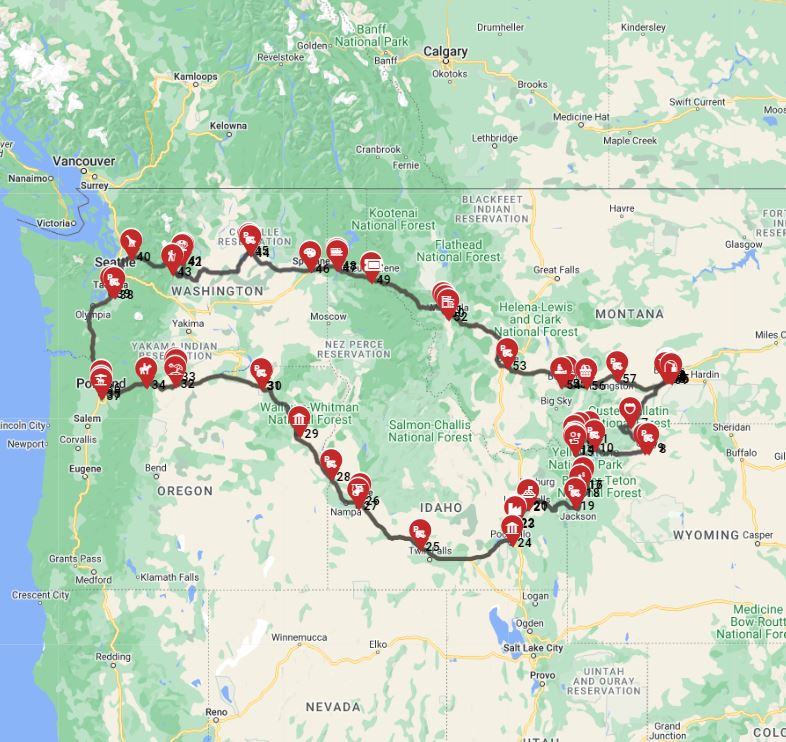
- Drive the scenic U.S. Route 101 along the Washington coast, offering stunning ocean vistas and access to charming coastal towns.
- Explore the diverse landscapes of Olympic National Park in Washington, from rainforests to rugged coastlines, accessible via RV in many areas.
- Experience the majestic Columbia River Gorge, straddling Oregon and Washington, with its numerous waterfalls and breathtaking scenic viewpoints suitable for RV travel.
- Discover Crater Lake National Park in Oregon, a caldera lake of unparalleled blue, with RV-friendly campgrounds and viewpoints accessible with careful driving.
- Journey through the dramatic landscapes of Glacier National Park in Montana, offering spectacular mountain drives and numerous opportunities for scenic RV stops.
- Explore the rugged beauty of Idaho's Sawtooth National Recreation Area, providing opportunities for dispersed camping and exploration on well-maintained forest roads suitable for larger rigs.
Final Thoughts
Embarking on a weekly RV rental in the North West US is an incredible way to experience the diverse natural beauty and unique culture of this captivating region. From the rugged coastlines of Washington to the volcanic landscapes of Oregon and the majestic mountains of Idaho and Montana, your rented RV will be your comfortable home base.
Remember to plan ahead, especially for popular national parks and ferry crossings, and embrace the freedom of the open road. With Bandana Caravan, you can compare options and book with confidence, knowing you're getting great value and transparent pricing. Get ready for an unforgettable adventure!