In This Guide
- Top 5 Tips for RV Rental in Tokyo - Airport
- Before You Book - Class, Dates, Insurance for Tokyo - Airport
- Pre-Trip Prep - Packing Checklist for Tokyo - Airport
- On the Road - Driving, Fueling, Navigation in Tokyo - Airport
- At the Campground - Setup, Hookups & Etiquette in Japan
- RV Rental Deals-Specific Tips for Tokyo - Airport
- Common Mistakes to Avoid When Renting an RV in Tokyo - Airport
- How much does it cost to rent an RV in Tokyo - Airport?
- What is the best time to rent an RV in Japan?
- Can you camp anywhere in Japan with an RV?
- What type of RV is best for Japan?
- How much does RV insurance cost in Japan?
- How do I transfer money in Japan for RV travel?
- Is it easy to drive an RV in Japan?
- Do Michi-no-Eki have showers?
- How do I deal with garbage in an RV in Japan?
- Can I pick up an RV at Narita Airport (Tokyo - Airport)?
Top 5 Tips for RV Rental in Tokyo - Airport
Finding the best RV rental deals for your adventure in Tokyo - Airport begins with smart planning and understanding local nuances. To truly maximize your experience and budget, consider these expert tips. For live availability and current prices, start with our RV Rental Tokyo - Airport - Complete Guide 2026 guide.
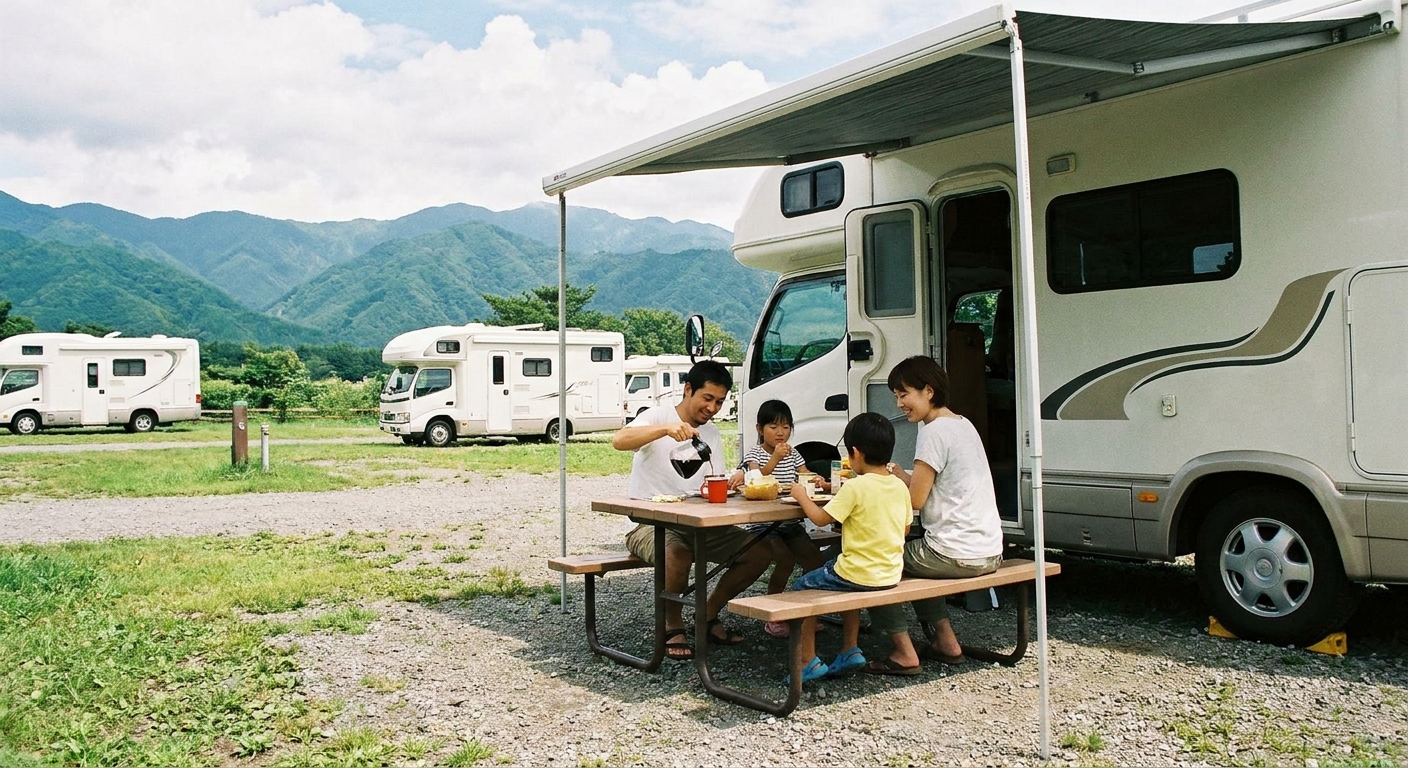
- Book your rented motorhome well in advance, especially for peak seasons like Golden Week (late April/early May) or the autumn leaf season (October-November), to secure better rates and a wider selection of vehicles, potentially saving 15-20% on daily rates.
- Consider smaller campervans or 'kei-camper' models for easier navigation on Japan's narrower roads, particularly within charming towns or compact cities, and for simpler parking at attractions or Michi-no-Eki. These models, like the "rv rental denver example Category Van" or "2 Berth Hi Top", are ideal for Japanese infrastructure.
- Factor in all potential trip costs beyond the base rental, including expressway tolls (an ETC card often provides discounts), campsite fees (typically ¥2,000-¥5,000 per night), and specific waste disposal fees at some facilities, to create a realistic budget. On RV PLANET routes, travelers can itemize and track every expense along the way for easy budgeting.
- Familiarize yourself with Japanese road signs, which often use pictograms and a mix of Japanese and English, and driving etiquette, such as giving way to pedestrians and being mindful of local speed limits (typically 40 km/h in cities, 80-100 km/h on expressways).
- Utilize Michi-no-Eki (roadside stations) not just for essential rest stops but also for discovering local produce, gathering tourist information, and safe, often free, overnight parking, enhancing your authentic Japanese travel experience.
We are true RV specialists, with over 20 years of experience, ensuring you get honest, transparent advice for your Tokyo - Airport RV adventure. We sell the way we'd like to buy - with honesty, no hidden fees, no surprises.
Before You Book - Class, Dates, Insurance for Tokyo - Airport
Choosing the right RV class for Tokyo - Airport travel involves balancing comfort with maneuverability on Japan's roads; smaller Class B campervans or Class C motorhomes are often recommended for navigating urban areas and narrower routes outside major cities. Larger Class A motorhomes are available, but consider their size for local roads and parking.
Locking in your rental dates as early as possible, ideally 3-6 months in advance, often secures more favorable prices and ensures vehicle availability, particularly during Japan's popular cherry blossom (spring, March-April) and autumn leaf (fall, October-November) seasons. Prices are dynamic like flight tickets, changing daily based on availability, seasonality, and supplier marketing decisions, so early booking can lead to significant savings. If you need a pre-planned route by professionals for Japan, this planning discount will save you 25% on the route.
Basic insurance is always included with your RV rental. To see prices including the most comprehensive coverage, select that option during your search; all relevant insurance options and their costs will then be clearly shown. Understand coverage limits and deductibles, considering an optional upgrade to a top-level deductible for extra peace of mind against unforeseen incidents on your journey.
Pre-Trip Prep - Packing Checklist for Tokyo - Airport
A tailored packing list for RV travel in Japan includes essentials for varying climates, practical items for small living spaces, and important documents for smooth travel. Consider packing layers of clothing suitable for both warm days and cooler evenings, especially during spring or autumn.
Essential practical items often include universal travel adapters (Japan uses Type A/B outlets, 100V), comfortable slip-on shoes for frequent indoor/outdoor transitions (especially when visiting temples or traditional homes), and a compact quick-dry towel. Most rented RVs will include basic kitchenware, bedding, and cleaning supplies, but confirm specifics with your supplier.
Crucial documents include your International Driving Permit (IDP), passport, any required Japanese visa, and copies of your RV rental agreement and insurance details. While Bandana provides 24/7 support for pre-booking inquiries and booking coordination, having copies of your documents readily accessible is always wise.
A small phrasebook or a translation app on your smartphone can be invaluable for navigating language barriers, particularly in rural areas or when interacting with locals at markets and Michi-no-Eki. Also, for finding campsites and planning your route, check out RV PLANET (rvplan.net) - a great resource for locating available spots along your route and creating detailed itineraries.
On the Road - Driving, Fueling, Navigation in Tokyo - Airport
Driving a rented RV in Japan requires careful adherence to local driving customs: Japan drives on the left side of the road, and the steering wheel is on the right, which may take some adjustment. Road signs are generally clear, often including English translations, but familiarizing yourself with common symbols before hitting the road is beneficial.
Drive slowly and carefully, and you can drive almost anywhere without issues in Tokyo - Airport and beyond. No need to stress - just use common sense and pay attention. When considering your journey, remember that traveling slowly, max 100-150 km per day on average, allows you to truly feel the place, connect to the culture, the food, and the scenery. For instance, a route from Narita into the Chiba countryside, perhaps towards Choshi for coastal views, should be taken at a leisurely pace.
Fueling a rented RV in Japan is straightforward, with most stations offering regular (レギュラー) gasoline. Credit cards are widely accepted at larger stations, but it is always wise to carry some Japanese Yen for smaller, rural stations or for purchases at Michi-no-Eki. Fuel prices can fluctuate and may be higher than in some Western countries, so factor this into your budget.
For navigation, a reliable GPS with English language options is essential; many rental RVs, including models like the "camper hire example Paradise S/T", come equipped with one. Understanding Japan's extensive toll road systems is also crucial, and an Electronic Toll Collection (ETC) card, often available for rent with your RV, is highly recommended to avoid delays and potentially access discounts. For real-time traffic updates and Michi-no-Eki locators, apps like Google Maps or specialized RV navigation apps are invaluable. On the routes offered through RV PLANET routes, you can itemize and track every expense along the way for easy budgeting.
🎬 Video coming soon
At the Campground - Setup, Hookups & Etiquette in Japan
Setting up at a Japanese campground typically involves parking your rented RV in a designated spot, followed by connecting to available utilities and adhering to site-specific rules. Japanese campgrounds are renowned for their cleanliness and order, so following guidelines is paramount.
The standard hookup order for an RV begins with securing your vehicle, then connecting the electrical power, followed by the fresh water hose, and finally the waste hose, ensuring all connections are tight and secure. While full hookups (water, sewer, electricity) are less common than in some other countries, many campsites offer electricity (often 100V) and water access.
Japanese campground etiquette emphasizes quiet hours, typically from 9 PM to 7 AM, strict cleanliness, and respectful waste disposal. You will often be required to separate your waste into categories such as burnable, non-burnable, and recyclables; detailed instructions are usually provided on-site. Be mindful of noise levels, particularly in the evenings, and treat communal facilities like restrooms and washing areas with utmost respect to maintain harmony with fellow campers and locals.
For those interested in cooking on board, Japanese supermarkets offer a fantastic array of fresh local produce and ingredients. Preparing meals in your RV can be a delightful cultural experience and a great way to save money. For inspiration, check out our RV-friendly recipes playlist.
RV Rental Deals-Specific Tips for Tokyo - Airport
When planning your Tokyo - Airport RV adventure, prioritize booking smaller, more fuel-efficient RV models to manage potential budget constraints and navigate Japan's roads easily. Vehicles like a Class B campervan, such as the "Active Original" or "Juliette 2-3", are often preferred for their maneuverability in tight spaces and urban environments like the areas surrounding Narita.
To maximize savings, look for rental deals during off-peak seasons, typically late autumn to early spring (November to February), excluding major holidays like New Year's or Golden Week. Longer rental periods, such as a week-long trip or a two-week adventure, often come with reduced daily rates compared to shorter bookings. Our RV Rental Deals in Tokyo - Airport - Latest Offers 2026 provides updated information on available discounts.
Utilize free or low-cost overnight parking options, such as designated Michi-no-Eki (roadside stations), which offer amenities like restrooms and local produce markets. These stations are excellent for saving on accommodation costs while still providing convenient facilities. Budget-conscious travelers should plan meals that can be cooked in the RV, taking advantage of local supermarkets and convenience stores for affordable groceries. This also lets you experiment with Japanese ingredients.
Carefully compare insurance options to find the most comprehensive coverage that fits your budget without compromising peace of mind. Bandana offers full transparency on pricing, ensuring no hidden fees or surprises at pickup. You can upgrade to a top-level deductible for extra peace of mind, an option that clearly shows the final price at booking time.
Common Mistakes to Avoid When Renting an RV in Tokyo - Airport
One common mistake RV renters make in Tokyo - Airport is underestimating Japan's narrow roads; instead, opt for a compact RV model like a camper van to ensure easier navigation and parking, especially in more rural areas and near popular tourist sites. A small motorhome like the "Active Standard" will be much easier to manage.
Rather than solely relying on credit cards, carry some Japanese Yen for smaller purchases or establishments that may not accept cards, particularly outside major cities and at local markets. While Tokyo is highly card-friendly, rural excursions might require cash.
Instead of overlooking the importance of an International Driving Permit (IDP), obtain one well in advance of your trip, as it's a legal requirement for driving in Japan for most international visitors. Without it, your rental agreement could be void.
Rather than ignoring local waste disposal rules, familiarize yourself with Japan's strict garbage sorting guidelines (burnable, non-burnable, recyclables) to dispose of trash correctly at designated sites. Improper disposal is highly frowned upon and can lead to fines. Many Michi-no-Eki do not have trash bins for vehicle waste, so be prepared to carry your sorted trash until you reach a proper disposal facility at a campground.
Instead of assuming all Michi-no-Eki offer full camping amenities, confirm their facilities beforehand. While many allow overnight parking, not all provide power hookups, water refill stations, or showers, which are more reliably found at dedicated campsites. Always call ahead before driving to confirm availability and amenities at any specific location.
How much does it cost to rent an RV in Tokyo - Airport?
The cost to rent an RV in Tokyo - Airport typically ranges from ¥15,000 to ¥35,000 per day (2026), varying significantly based on the RV size, rental duration, season, and specific amenities. Smaller camper vans or 'kei-campers,' often similar to our "Category Van" options, are generally more affordable, while larger, more luxurious models command higher prices.
Peak seasons like cherry blossom (March-April) and autumn leaves (October-November) see increased demand and higher rental rates, sometimes reaching up to ¥45,000-¥50,000 ($300-$330 USD) per day for a standard Class C motorhome. Beyond the daily rental fee, budget for additional costs such as fuel (which can be higher in Japan), expressway tolls (often paid via an ETC card, a rental extra), campsite fees (ranging from ¥2,000 to ¥5,000 per night), and potentially waste disposal fees at some facilities.
Insurance costs are usually included at a basic level, but additional comprehensive coverage can add ¥1,500 to ¥3,000 per day. Additional equipment rentals (e.g., portable WiFi, camping gear) and one-way fees (if applicable, typically ¥10,000-¥50,000 for a Tokyo-Kyoto route) also contribute to the total expense. Bandana ensures full transparency, so the price you see when you book is the final price, with no hidden fees at pickup. For detailed insights on costs, review our Luxury RV Rental in Tokyo - Airport - Premium Prices 2026 and Family RV Rental in Tokyo - Airport - Pricing Guide 2026 articles.
What is the best time to rent an RV in Japan?
The best time to rent an RV in Japan largely depends on your travel preferences, with spring (March-April) and autumn (October-November) being popular for their mild weather and scenic beauty, though they are also peak seasons. Spring offers stunning cherry blossoms, while autumn showcases vibrant fall foliage across the country.
Summer (July-August) can be hot and humid with potential for typhoon season, particularly from August to October, but it is ideal for exploring Hokkaido's cooler regions or mountainous areas around Mount Fuji. Winter (December-February) is excellent for skiing or visiting onsen (hot springs), but it requires a rented RV equipped for snow and ice, especially in northern regions and higher elevations.
For fewer crowds and potentially better RV rental deals in Tokyo - Airport, consider late spring (May-early June) or early autumn (September), avoiding major national holidays like Golden Week. Booking during these shoulder seasons can offer a balance of pleasant weather and more attractive prices, as highlighted in our Last-Minute RV Rental in Tokyo - Airport - What to Expect 2026 guide.
Can you camp anywhere in Japan with an RV?
No, you cannot camp anywhere in Japan with an RV; wild camping or roadside overnight parking is generally prohibited outside of designated areas due to strong cultural norms and local regulations. Respecting private property and local rules is crucial for a smooth RV trip in Japan.
The primary legal and culturally accepted options for overnight RV parking are dedicated campsites and Michi-no-Eki (roadside stations). Michi-no-Eki offer safe, often free overnight parking with restrooms and typically local shops, acting as vital hubs for RV travelers to rest and experience local culture, although full camping activities like setting up tables and awnings are usually disallowed. These stations are a unique Japanese feature that supports RV travel.
Campsites, on the other hand, provide more extensive amenities including power hookups, water, and waste disposal, along with communal facilities like showers and cooking areas, requiring a reservation and a fee. For finding campsites and campgrounds during your trip, we recommend using RV PLANET (rvplan.net) - a great resource for locating available spots along your route. Always adhere to local rules, respect private property, and understand Japanese etiquette regarding noise and cleanliness to ensure a harmonious RV trip.
What type of RV is best for Japan?
The best type of RV for Japan is generally a smaller, more compact model like a Class B camper van or a 'kei-camper' due to Japan's narrower roads, tighter parking spaces, and lower speed limits compared to many Western countries. These smaller vehicles, like the "Active Compact Select" with automatic transmission, offer superior maneuverability in cities, rural lanes, and at tourist attractions near Tokyo - Airport, making driving less stressful.
While larger Class C motorhomes are available, such as the "rv rentals example Comfort Class" (large, 3 double beds), they can be challenging to navigate and park, particularly in popular tourist areas or traditional towns. Drive slowly and carefully, and you can drive almost anywhere without issues, but a compact vehicle will make the experience much more relaxed. No need to stress - just use common sense and pay attention to your surroundings.
Consider the number of travelers and required amenities; for solo travelers or couples, a mini-camper provides efficiency and ease of parking. Small families might opt for a compact camper van with a pop-top roof for extra sleeping space or a small Class C with a shower and toilet. For more detailed advice, refer to our Driving an RV in Tokyo - Airport - Complete Guide 2026.
How much does RV insurance cost in Japan?
RV insurance costs in Japan are typically included in the base rental price to a basic level, providing essential coverage, but travelers often opt for additional comprehensive coverage for enhanced peace of mind. This supplementary insurance can add approximately ¥1,500 to ¥3,000 ($10-$20 USD) per day to the overall rental cost, depending on the chosen level of coverage.
This additional insurance usually reduces the deductible (excess) to zero or a very low amount for accidental damage, protecting you from significant out-of-pocket expenses in case of an incident. It is crucial to thoroughly review the rental agreement details for what is covered, collision damage waiver (CDW) specifics, and any exclusions, such as tire damage or loss of personal belongings. Bandana provides full transparency on all costs, including insurance options, so you know exactly what you're paying for.
Some credit cards offer rental car insurance benefits that may extend to RVs; check with your card provider for coverage details before purchasing additional insurance from the rental company. However, for a major investment like a week-long RV trip around Japan, upgrading to a top-level deductible is a smart choice for maximum protection.
How do I transfer money in Japan for RV travel?
For RV travel in Japan, payment for rentals, fuel, campsites, and daily expenses is best handled through a convenient combination of credit cards, prepaid IC cards, and a reasonable amount of cash. While "transferring money" might imply large sums, for daily use, these methods are most practical.
Major credit cards (Visa, Mastercard, American Express) are widely accepted at RV rental companies near Tokyo - Airport, larger fuel stations, supermarkets, and many campsites. However, it is always wise to carry some Japanese Yen, especially in rural areas or for smaller Michi-no-Eki vendors and local shops that may not accept cards. For cash withdrawals, look for ATMs at post offices and 7-Eleven convenience stores, which are generally international-friendly and offer English language options.
Prepaid IC cards like Suica or Pasmo, obtainable at major train stations, are incredibly convenient for small purchases, vending machines, and some public transport around Tokyo and other cities, although they may not be usable for large RV-related expenses. Mobile payment apps like Apple Pay or Google Pay are gaining traction, but their acceptance for RV-specific services may vary, making physical cards and cash more reliable during your RV Rental in Tokyo - Airport for Couples - Pricing 2026 adventure.
Is it easy to drive an RV in Japan?
Driving an RV in Japan can be a highly rewarding experience, offering unparalleled freedom to explore, but it requires careful attention to local driving customs, navigation, and vehicle size. Japan drives on the left, with the steering wheel on the right, which may require adjustment for drivers from countries with right-hand traffic.
Roads are generally well-maintained and clearly signposted, but many, especially outside major highways and in residential areas, can be quite narrow. This makes smaller RVs, like the "Category Small" campervan, highly advisable for ease of navigation. Drive slowly and carefully, and you can drive almost anywhere without issues; no need to stress – just use common sense and pay attention, especially in busier districts of Tokyo or near the airport.
Japanese GPS systems are highly efficient and usually include English language options; many rented RVs come equipped with one, or you can use smartphone apps with a local SIM or pocket WiFi for reliable connectivity. Understanding common road signs, often pictograms or kanji, and respecting speed limits are crucial for safe travel, while the extensive expressway network provides efficient inter-city travel but involves tolls, for which an ETC card is highly recommended. Our RV Travel Guide to Tokyo - Airport - Tips and Top Spots 2026 offers more practical insights for navigating.
Do Michi-no-Eki have showers?
While Michi-no-Eki (roadside stations) offer numerous amenities like clean restrooms, local food stalls, and tourist information, most do not have showers directly on-site. These facilities are primarily designed as rest areas and cultural hubs, not full-service campgrounds.
However, some larger or more modern Michi-no-Eki might feature dedicated shower facilities for a fee, or be conveniently located very close to public bathhouses (onsen or sento) which travelers can utilize for bathing. It is always recommended to check the specific Michi-no-Eki's official website or use dedicated apps that detail roadside station amenities in advance.
For guaranteed shower access during your RV rental trip from Tokyo - Airport, staying at traditional campsites that provide full-service facilities is a more reliable option. Many campgrounds, such as Tateyama Family Park Auto Camping Ground in Chiba, offer showers and laundry facilities, making them a comfortable choice for extended stays.
How do I deal with garbage in an RV in Japan?
Dealing with garbage in an RV in Japan requires strict adherence to local waste disposal rules, which emphasize proper sorting into distinct categories like burnable, non-burnable, and recyclables. Japan takes cleanliness and waste management very seriously, and visitors are expected to comply.
Most dedicated campsites provide designated garbage disposal areas for their guests, often with clear, sometimes multilingual, instructions on how to sort waste. It is advisable to utilize these facilities whenever possible. When parking overnight at Michi-no-Eki, you are generally expected to take your garbage with you, as these stations typically do not provide bins for general waste from vehicles, only for immediate consumption on-site.
It is highly recommended to carry several durable bags for different waste types within your rented RV throughout your trip. Plan to dispose of your sorted garbage at your next full-service campsite or a designated municipal waste facility, if you can locate one. Minimizing waste production by choosing products with less packaging and utilizing reusable items can significantly simplify waste management during your RV Rental Japan - Complete Guide 2026 adventure.
Can I pick up an RV at Narita Airport (Tokyo - Airport)?
Direct RV pickup at Narita Airport (NRT) is typically not possible, as most rental companies operate off-site offices or depots that require you to take a short shuttle service or public transport to reach them. These depots are usually located in nearby areas such as Chiba Prefecture, which is where Narita Airport itself is situated.
Upon arrival at Narita, you would usually clear customs and immigration, then proceed to a designated meeting point for a pre-arranged shuttle, or take a train (e.g., Narita Express or Keisei Skyliner) to a station near the rental office, followed by a short taxi ride. It's crucial to confirm the exact pickup location and transfer instructions with your chosen RV rental company well in advance of your arrival in Tokyo - Airport.
Consider reserving luggage storage at the airport or a major Tokyo station (like Tokyo Station or Ueno Station) if you plan to explore the city for a day or two before picking up your RV. Navigating Tokyo's public transport system with large luggage can be challenging, so having your RV as a mobile headquarters only after your initial city exploration can be more convenient. Check for any current deals at our RV Rental Deals in Tokyo - Airport - Latest Offers 2026 before finalizing your booking.
What You Shouldn't Miss
- Explore Chiba's Kujukuri Coast: Drive your rented campervan along the scenic Kujukuri Beach, a 60-kilometer stretch of sand perfect for ocean views and fresh seafood. The Michi-no-Eki Kujukuri offers local specialties and convenient parking.
- Visit Sawara Old Town: Journey roughly 40 km from Narita to this beautifully preserved Edo-period town, often called "Little Edo." Park your RV and enjoy a boat ride along the Ono River, soaking in the historical atmosphere.
- Discover Hakone's Natural Beauty: Head southwest for a 2-hour drive to Hakone, renowned for its views of Mount Fuji, hot springs (onsen), and the serene Lake Ashi. RV-friendly campgrounds like Hakone Campsite offer a perfect base.
- Experience Nikko's Shrines and Temples: Travel north for about 2.5 hours to Nikko, a UNESCO World Heritage site, home to opulent shrines and temples set amidst stunning natural landscapes. There are several Michi-no-Eki and private campgrounds in the surrounding Tochigi Prefecture for overnight stays.
- Indulge in Local Cuisine at Michi-no-Eki Tako Ajisaikan: Just a short drive from Narita Airport, this Michi-no-Eki is famous for its fresh agricultural products and local delicacies, providing an authentic taste of Chiba's bounty.
- Looking for expert insights from Avi Bandana? Top 5 Adventures - recommendations from Avi Bandana.
Final Thoughts
Embarking on an RV adventure from Tokyo - Airport offers an unparalleled way to explore Japan's rich tapestry of culture, stunning landscapes, and delicious cuisine at your own pace. With careful planning, a clear understanding of local customs, and the right vehicle choice, your journey will be filled with unforgettable moments. Remember, the key to a successful RV trip in Japan is often choosing a compact vehicle, embracing the convenience of Michi-no-Eki, and savoring the slow travel experience.
At Bandana, we're passionate about making your RV rental experience seamless and enjoyable from the moment you start planning until you return your motorhome. Our commitment to full transparency, dedicated support, and extensive range of vehicles ensures you have everything you need for a fantastic adventure. So, imagine yourself on the route, winding through ancient towns or coastal roads, with the freedom of your own rented RV.
Ready to discover the magic of Japan by motorhome? Start your journey with confidence, knowing you have a trusted partner every step of the way. Discover top destinations and planning tips, all in one place!
Find Motorhome Rentals in Tokyo - Airport