In This Guide
- Top 5 Tips for Rv rental deals RV Rental in Chile
- Before You Book - Class, Dates, Insurance
- Pre-Trip Prep - Packing Checklist for Chile
- On the Road - Driving, Fueling, Navigation
- At the Campground - Setup, Hookups and Etiquette
- Rv rental deals-Specific Tips for Chile
- Common Mistakes to Avoid in Chile
- How much does an RV trip to Chile really cost
- What type of RV is best for Chilean road conditions
- Is wild camping allowed in Chile
- What food can I bring into Chile in an RV
- How can I get internet and cell service in remote Chile
- How do I book ferries for RV travel in Chile
- How to experience local culture when RVing in Chile
- Top Cities for RV Rental in Chile
- Why Book with Bandana Caravan
- Final Thoughts
- Frequently Asked Questions
Top 5 Tips for Rv rental deals RV Rental in Chile
Finding the best RV rental deals in Chile involves strategic planning and understanding the local market dynamics. One key strategy is to book your motorhome rental well in advance, particularly if your trip falls during the peak summer season from December to February, where rates can be up to 30% higher and availability decreases significantly.
Secondly, always compare prices across multiple reputable suppliers and vehicle types through a dedicated platform, ensuring you see the full transparency of costs with no hidden fees, which Bandana Caravan guarantees. Thirdly, consider traveling during the shoulder seasons (spring: September-November, autumn: March-May) for potential off-peak discounts and fewer crowds, as these periods often yield better RV rental deals in Chile. Fourth, factor in all potential ancillary costs beyond the daily rental rate, including fuel, campground fees, and national park permits, to get a true picture of your trip budget. Finally, opting for a smaller, more fuel-efficient campervan, such as the rv rental denver example Category Van ideal for a couple with its compact design and front air conditioning, can significantly reduce overall expenses, especially on longer road trips across Chile. On the routes offered through RV PLANET routes, you can itemize and track every expense along the way for easy budgeting.
Before You Book - Class, Dates, Insurance
Choosing the right RV class for your Chilean adventure is crucial for a comfortable and enjoyable journey. For live availability and current prices, start with our RV Rental Chile - Complete Guide 2026 guide. If you're exploring the paved highways and major cities, a standard Class C motorhome like the rv rentals example Comfort Class, which is ideal for a family of 2+2, will provide ample space and amenities.
However, if your route includes more adventurous terrain, such as portions of the Carretera Austral or exploring national parks with gravel (ripio) roads, a 4x4 campervan like the Patagonia Camper 4x4 double cab, featuring 4 Wheel Drive, offers superior adaptability and clearance. Secure your desired rental dates well in advance, especially for popular routes and during peak travel months (December to February), to guarantee better rates and vehicle availability. Understanding your insurance coverage is also vital: while basic insurance is typically included with your RV rental in Chile, consider upgrading to a top-level deductible for enhanced peace of mind, as this optional addition limits your financial exposure in case of an incident. Our dedicated team is here to support you before, during, and after your booking, ensuring you have full transparency on all terms and no surprises.
Pre-Trip Prep - Packing Checklist for Chile
Packing efficiently for an RV rental trip in Chile requires adaptable layers due to the country's vast latitudinal stretch and diverse climate zones. Start with versatile clothing, including thermal layers for Patagonia's colder regions and lightweight, breathable items for the arid north or central valleys, preparing for temperatures ranging from 0°C to 30°C depending on the region and season. Ensure you include essential kitchen items beyond what's provided, such as your favorite spices, reusable bags, and a good knife, to make the most of your RV's cooking facilities; you can discover inspiration from our RV-friendly recipes playlist.
A comprehensive safety and first-aid kit is non-negotiable, containing basic medications, bandages, antiseptic, and any personal prescriptions, as pharmacies can be sparse in remote areas. Finally, gather all necessary travel documents, including your passport, driver's license (a standard car license is sufficient for all motorhome classes), and your RV rental agreement, translating key documents if necessary. For travelers from non-English speaking countries, an International Driving Permit (IDP) is highly recommended, although not always mandatory in Chile.
At the Campground - Setup, Hookups and Etiquette
Setting up your RV at a Chilean campground is straightforward, typically following international best practices. Begin by parking your rented motorhome on level ground, using leveling blocks if necessary, for optimal comfort and efficient operation of appliances like the refrigerator. Connect your hookups in the correct sequence: first the electrical cable, then the freshwater hose, and finally the sewer hose, ensuring proper hygiene and system functionality. When dry camping or 'boondocking' in permitted areas, always conserve water and electricity.
Observing campground quiet hours, generally between 10 PM and 8 AM, and practicing general etiquette are essential for a harmonious environment. This includes proper waste disposal, minimizing noise, and respecting fellow campers' privacy. While Bandana Caravan doesn't provide campsite finding services during your trip, we recommend using RV PLANET (rvplan.net) to locate available spots and amenities along your route in Chile, making your overnight stays stress-free.
Rv rental deals-Specific Tips for Chile
To maximize your RV rental deals in Chile, consider opting for smaller motorhome models, such as a compact campervan like the hire campervan example Paradise S/T. These smaller vehicles, often ideal for a couple, offer enhanced fuel efficiency, crucial when covering long distances in Chile, and greater maneuverability on winding mountain roads.
Leveraging shoulder or off-season travel, from September to November or March to May, can significantly reduce rental rates and lead to fewer crowds at popular attractions like Torres del Paine National Park. Another excellent way to save money is by maximizing home-cooked meals in your rented RV's kitchen using fresh, local ingredients purchased from municipal markets (ferias). You can also seek out designated free or low-cost municipal camping spots, often found in smaller towns, though always call ahead to confirm availability and facilities. Exploring our "Cheap RV Rental in Chile - Budget Guide 2026" can provide even more tips for cost-effective travel.
Common Mistakes to Avoid in Chile
First-time RV renters in Chile often make a few common mistakes that can easily be avoided with proper preparation. One significant oversight is failing to book essential ferry crossings, particularly for routes like the Carretera Austral, well in advance. These ferries, especially during peak season, can sell out, delaying your trip by days.
Another common error is underestimating driving times due to varied road conditions; Chile's diverse geography means a seemingly short distance can take much longer on unpaved or winding roads. Don't ignore the benefits and potential RV rental deals of off-season travel; while some amenities might be reduced, the cost savings and fewer crowds often outweigh these factors. Always carry sufficient local cash (Chilean Pesos) for small purchases, remote area transactions, and emergency fuel stops, as card facilities are not universally available outside major towns. For an in-depth look at managing your budget, our "RV Rental in Chile - Prices and Best Deals 2026" guide offers detailed insights.
How much does an RV trip to Chile really cost
The total cost of a rented RV trip in Chile typically ranges from $100 to $400 USD per day, depending on the vehicle class, season, and duration of your adventure. A 1-week RV rental trip for a couple in a compact campervan might start from $900-$1,500 USD, covering basic rental and fuel. For a two-week adventure with a family of four in a Class C motorhome, expect costs between $2,500-$4,000 USD, including rental, fuel, and campground fees. An extended month-long RV rental trip for a larger group or family might range from $5,000-$8,000+ USD, which can include higher fuel consumption for a larger vehicle like a rv rentals utah example Sunrise Escape.
Rental costs are dynamic, much like flight tickets, changing daily based on availability, seasonality, and supplier marketing decisions; the final price is set at the actual booking time. Fuel is a major variable expense, with diesel and gasoline prices fluctuating by region, sometimes reaching $1.20-$1.50 USD per liter in remote areas. Budget for additional costs such as tolls (prevalent around cities like Santiago), national park entrance fees (e.g., Torres del Paine can be $35-$50 USD per person), propane refills (typically $20-$40 USD), and dump fees (often $10-$20 USD). Groceries can add $50-$100 USD per day for a family, but cooking in your RV saves significantly on restaurant expenses. For easy budgeting and tracking of all these expenses, consider using RV PLANET routes, which allow travelers to itemize and track every expense along their pre-planned routes. When searching for flexibility to find cheaper options, look into "RV Rental Deals in Chile - Latest Offers 2026" and consider shoulder seasons for better rates. Last-minute RV rental deals in Chile are possible, especially for spontaneous travelers, but do not guarantee specific vehicle types or the lowest prices.
What type of RV is best for Chilean road conditions
For navigating Chile's varied terrain, particularly unpaved 'ripio' (gravel) roads like sections of the Carretera Austral, a robust 4x4 campervan or a higher-clearance Class B motorhome is highly recommended. These vehicles, such as the Patagonia Camper 4x4 double cab which features 4 Wheel Drive, offer improved traction and durability compared to standard two-wheel-drive motorhomes. While Class A, Class B, and Class C motorhomes are perfectly suitable for Chile's major paved highways and urban areas, their lower ground clearance can be a disadvantage on less maintained routes.
Smaller, more nimble campervans provide a good balance of essential amenities and adaptability, making them ideal for couples or small families aiming for a blend of comfort and off-the-beaten-path exploration. Regardless of the size, prioritizing a vehicle with good ground clearance and durable suspension will enhance your experience, especially if you plan any extended exploration off major routes. Always confirm with your supplier if your chosen rented RV is equipped for the specific road conditions you anticipate, and remember that a standard car driver's license is sufficient for all motorhome classes in Chile.
Is wild camping allowed in Chile
Wild camping, often referred to as boondocking or dry camping, is generally tolerated in non-private, undeveloped, and non-protected areas across Chile. This means you can often find stunning, secluded spots along public lands, particularly in vast regions like Patagonia or the Atacama Desert. However, it is absolutely essential to seek explicit permission from landowners if you plan to camp on private property to avoid any misunderstandings or legal issues.
Wild camping is strictly prohibited within all national parks, nature reserves, and urban zones in Chile, where designated campgrounds are the only legal option for overnight stays. When wild camping, always practice strict 'Leave No Trace' principles: pack out all trash, dispose of human waste properly, keep noise to a minimum, and leave your campsite cleaner than you found it. Responsible wild camping ensures these opportunities remain available for everyone. Remember, "You'll find a spot. If not at the first campground, then the next one. Call ahead before driving."
What food can I bring into Chile in an RV
Chile has stringent biosecurity regulations to protect its unique ecosystems, meaning certain food items are prohibited when entering the country with your rented RV. You are strictly forbidden from bringing fresh fruits, vegetables, raw meats, and most dairy products across the border, particularly from neighboring Argentina. This is a critical rule to remember to avoid significant fines and delays.
It is mandatory to declare *all* food items you are carrying when you enter Chile, even if they are permissible, to ensure a smooth customs process. Generally, packaged, sealed, and processed foods like canned goods, dried pasta, UHT milk, and commercially sealed snacks are allowed. The safest and most recommended approach is to purchase fresh produce, meats, and dairy locally after clearing customs, supporting Chilean farmers and ensuring compliance. This allows you to stock your RV kitchen with fresh, regional ingredients for your RV-friendly recipes playlist.
How can I get internet and cell service in remote Chile
Obtaining reliable internet and cell service in remote parts of Chile, especially in regions like Patagonia or the high Andes, requires proactive planning. For general cell coverage in towns and along major highways, purchasing a local prepaid SIM card from providers like Entel, Movistar, or Claro is the most effective solution. Entel typically offers the widest coverage, particularly in more rural areas, but none provide 100% nationwide reach.
While Wi-Fi is commonly available in most towns, larger campgrounds, and cafes, its speed and consistency can vary greatly. For truly remote areas where cell towers are non-existent, a satellite communication device, such as a Garmin inReach or a satellite phone, is not just recommended but often essential for emergencies and staying connected. Before venturing into areas with limited or no service, always download offline maps, important documents, and entertainment content to your devices.
How do I book ferries for RV travel in Chile
Booking ferry tickets for RV travel in Chile is often a mandatory step for routes like the Carretera Austral, and it requires advance planning to secure your spot. Major ferry operators in Chile include Tabsa and Navimag, which handle many of the key vehicle crossings, particularly in the southern regions.
It is crucial to book your ferry tickets well in advance, especially during peak season (December-February), as space for RVs can be limited and sell out quickly. When booking, accurately provide your rented RV's exact dimensions (length, width, and height), including any rooftop additions, as misdeclared measurements can lead to boarding issues or additional fees. Plan to arrive at the ferry terminal at least 2-3 hours before departure to ensure smooth check-in procedures and allow for any unforeseen delays. This careful preparation ensures your scenic ferry journeys seamlessly integrate into your Chilean RV itinerary.
How to experience local culture when RVing in Chile
RVing in Chile offers a unique opportunity for deep cultural immersion beyond typical tourist experiences. To truly connect with local life, seek out "agrocamping" sites, which are local farms or smallholdings that offer basic camping facilities, allowing for authentic interactions with Chilean families and rural traditions. Visiting municipal markets, known as "ferias," is another fantastic way to engage; here you can purchase fresh, local produce, artisan crafts, and regional delicacies directly from vendors, often at better prices than supermarkets.
Learning basic Spanish phrases, even just a few key greetings and questions, will greatly enhance your communication and show respect to locals, often opening doors to warmer interactions and helpful advice. Participate in local festivals or community events whenever you encounter them in the towns you visit, as these are vibrant expressions of Chilean culture and hospitality. Remember to travel slowly, averaging a maximum of 100-150 km per day, to truly feel the place, connect to the culture, the food, and the scenery, making your RV rental adventure in Chile truly unforgettable.
Top Cities for RV Rental in Chile
Chile offers several excellent hubs for picking up your rented motorhome or campervan, strategically located to launch diverse adventures across its vast landscapes. These cities provide access to reputable suppliers like El Monte, Cruise America, Apollo, and Britz, ensuring a wide range of vehicle options. For a comprehensive overview of prices and routes, consult our "One-Way RV Rental in Chile - Price Guide 2026".
- Santiago: As Chile's capital and largest city, Santiago is the primary international gateway, offering the widest selection of RV rental options, including Class C motorhomes and agile campervans. It's an ideal starting point for exploring Central Chile, wine regions, or heading north to the Atacama Desert.
- Santiago - Airport: For travelers flying into Chile, picking up your RV rental directly at Santiago Airport (SCL) provides maximum convenience, minimizing transfer logistics and allowing for a swift start to your road trip.
- Puerto Montt: Situated in the Lakes District, Puerto Montt is famously known as the gateway to Chilean Patagonia. It's the perfect launchpad for adventurous RVers embarking on the legendary Carretera Austral, offering access to stunning fjords and national parks.
- Punta Arenas: Located much further south, Punta Arenas serves as the base for exploring the southernmost reaches of Patagonia, including Tierra del Fuego and the Magallanes region. This is where you'll find specialized 4x4 campervans suitable for extreme conditions.
- Calama - Airport: For those dreaming of the stark beauty of the Atacama Desert, picking up your campervan rental at Calama Airport (CJC) offers direct access to this hyper-arid landscape, including San Pedro de Atacama and its otherworldly attractions.
- Arica: Chile's northernmost city, Arica, is an excellent choice for a rented RV adventure exploring the desert landscapes, ancient geoglyphs, and coastal areas near the Peruvian border. It provides a unique perspective on Chile's diverse geography.
Whether you begin in the bustling capital or closer to a specific natural wonder, Chile's rental locations are set up to kickstart your unforgettable RV journey.
What You Shouldn't Miss
- **Drive the Carretera Austral:** Embark on an epic 1,240 km journey along Route 7, a blend of paved and gravel roads, interspersed with mandatory ferry crossings, offering breathtaking views of glaciers, fjords, and lush forests in Chilean Patagonia.
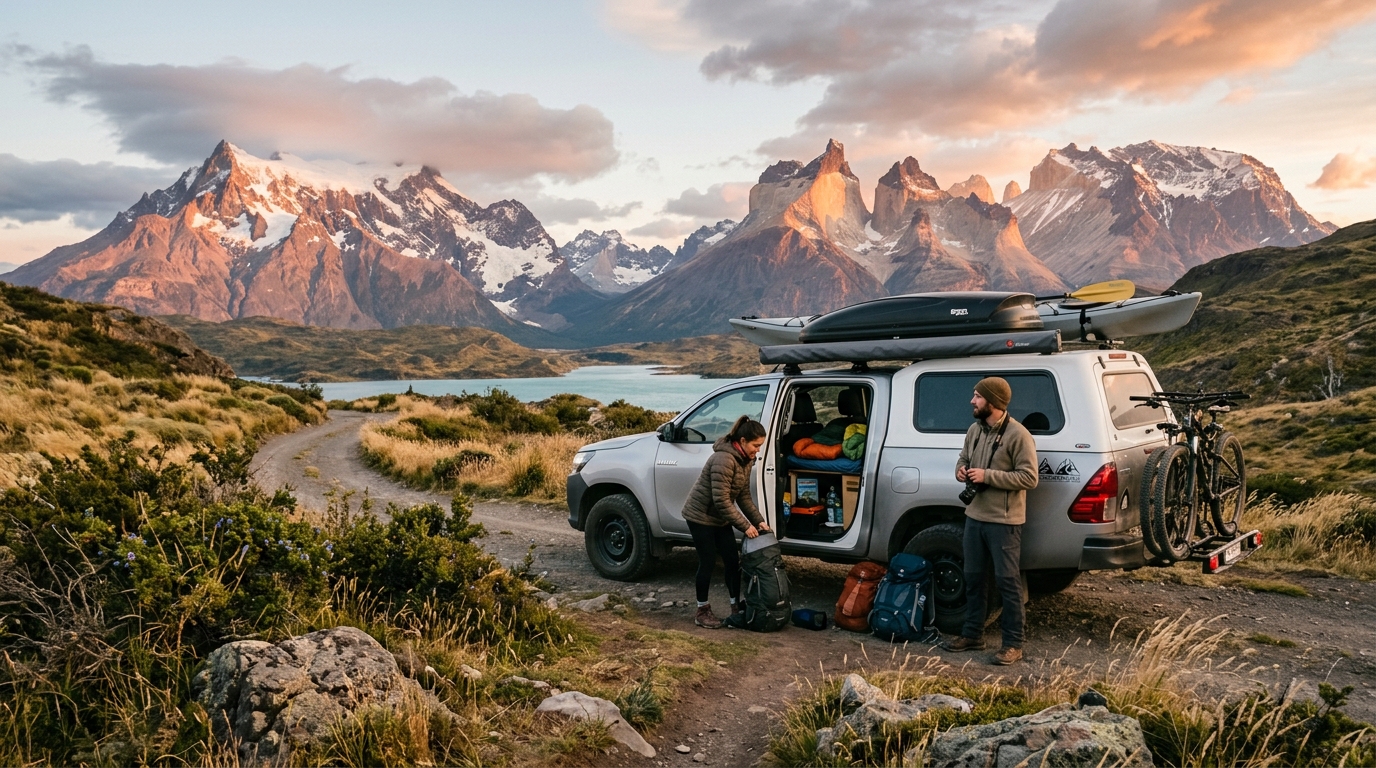
- **Explore Torres del Paine National Park:** Witness the iconic granite peaks, vast glaciers, and turquoise lakes of this world-renowned park. Plan at least 3-5 days to hike some of its famous trails, staying at designated campgrounds within or near the park.
- **Stargaze in the Atacama Desert:** Head to one of the world's driest places near San Pedro de Atacama for unparalleled stargazing opportunities, often including professional astronomy tours to observe the Southern Hemisphere's night sky.
- **Visit the Wine Valleys of Central Chile:** Spend a few days touring the renowned Colchagua or Maipo valleys by rented RV, sampling exquisite Chilean wines and enjoying gourmet local cuisine.
- **Discover the Lakes District:** Explore the pristine lakes, snow-capped volcanoes like Osorno, and charming towns such as Puerto Varas and Frutillar, offering a European-influenced natural escape.
- **Hike in Conguillío National Park:** Experience the ancient Araucaria forests and the dramatic Llaima volcano, providing stunning landscapes and unique hiking opportunities in a less-trafficked national park.
Looking for expert insights from Avi Bandana? Top 5 Adventures - recommendations from Avi Bandana
🎬 Video coming soon
Final Thoughts
Exploring Chile with a rented RV is an adventure unlike any other, offering the freedom to traverse diverse landscapes, from the lunar valleys of the Atacama Desert to the majestic glaciers of Patagonia. By planning ahead, understanding local regulations, and embracing slow travel, you unlock a journey filled with genuine connections to nature and culture. Remember, it's about the open road, the breathtaking views, and the unique experiences you'll collect along the way.
We are here to support your dream trip, providing transparent pricing and expert guidance every step of the booking process. So, pack your bags, choose your ideal motorhome, and prepare for an unforgettable Chilean odyssey. Your adventure awaits!
Discover top destinations, planning tips, all in one place! Find RV Rental Deals in Chile now.