In This Guide
- What rv rental RV Rental Costs in Chile (2026)
- Seasonal Pricing - Peak vs. Shoulder vs. Off-Season in Chile
- What's Included vs. What's an Add-On for RV Rentals in Chile
- Hidden Costs to Budget For an RV Trip in Chile
- How to Save on rv rental RV Rental in Chile
- Is it safe to RV in Chile?
- Can you wild camp in Chile?
- Do you need a 4x4 for Carretera Austral?
- Top Cities for RV Rental in Chile
- Essential Driving Rules and Local Tips for RVers in Chile
- Navigating Connectivity and Utilities for RV Travel in Chile
- Border Crossing with an RV in Chile
- What You Shouldn't Miss
What rv rental RV Rental Costs in Chile (2026)
RV rental costs in Chile are dynamic, fluctuating based on the vehicle class, duration of your trip, and the season you choose to travel. For live availability and current prices, start with our RV Rental Chile - Complete Guide 2026 guide. Expect daily rates for a compact campervan like the "rv rental denver example Category Van" with front AC and toilet, ideal for a couple, to start around $100-$150 in the shoulder season, while a larger, more modern Class C motorhome such as the "rv rentals example Comfort Class" (with 3 double beds, ideal for a big family, and up to 3 years on the road) can range from $200-$350 or more per day in peak season. Prices are constantly updated by suppliers like El Monte and Apollo, ensuring you see the latest deals. Bandana Caravan ensures full transparency, showing you exactly what you'll pay with no hidden fees or surprises, so you can compare final prices across suppliers with confidence.
A one-week RV trip in Chile for a couple in a small campervan could range from $700-$1050 (low season) up to $1400-$2100 (peak season), excluding additional costs. For a two-week adventure with a family of four in a Class C motorhome, plan for approximately $2800-$4900 during peak times. A month-long rental will often yield a lower average daily rate, making extended road trips more economical overall. We handle the details, you live the journey, providing personal service from day one until your booking is confirmed. On the routes offered through RV PLANET routes, you can itemize and track every expense along the way for easy budgeting.
Seasonal Pricing - Peak vs. Shoulder vs. Off-Season in Chile
Chile's peak season for RV rentals typically aligns with its summer months from December to February, and winter holidays in July-August, driving prices higher due to increased demand. During these times, the "Euro Deluxe" Class C motorhome, ideal for big families, will be at its premium rate. Shoulder seasons, spanning March to May and September to November, present an excellent balance of favorable weather conditions across many regions and more moderate rental prices, offering better availability for vehicles like the "rv rentals utah example Sunrise Escape" for families. Off-season travel, particularly from April to June (excluding Easter week), generally offers the lowest rental rates, which is ideal for budget-conscious travelers seeking an extended trip or flexible dates, though some campsites or services in highly seasonal areas might have limited operations. Always compare final prices across suppliers directly on Bandana Caravan to find the best deals for your chosen travel dates.
What's Included vs. What's an Add-On for RV Rentals in Chile
Most RV rentals in Chile include basic insurance coverage, however, travelers can opt to upgrade to a top-level deductible for extra peace of mind, protecting against unforeseen circumstances. Standard inclusions often feature essential vehicle equipment, a specified mileage allowance, and basic safety gear. However, many convenient items are typically available as add-ons, allowing you to customize your adventure.
Common add-ons include additional mileage packages, portable generators for extended off-grid stays, and convenience kits containing kitchen utensils and bedding. For instance, a Class B campervan like the "V3" for couples typically includes basic cooking facilities but may offer bedding and towel kits as an extra. Some suppliers, such as Apollo, might offer certain packages by default, while others, like El Monte, provide a more à la carte selection. You can easily compare these options and their costs using Bandana Caravan's detailed comparison toggles when viewing different RV models and suppliers, ensuring you understand exactly what you're getting and what might cost extra.
Hidden Costs to Budget For an RV Trip in Chile
Travelers planning an RV trip in Chile should meticulously budget for several ancillary expenses beyond the daily rental rate, which typically include fuel, road tolls, campsite fees, and potential dump station charges. Fuel is a significant cost, especially when covering Chile's vast distances, so reviewing prices along your planned route is wise. Chile has a mix of free and tolled roads, particularly around major cities like Santiago, and some rental providers offer options to pre-purchase toll-road usage to avoid unexpected fines.
Campsite fees vary widely, from basic municipal sites costing around $10-$20 per night to national park or private campgrounds with amenities that might cost $30-$50+ per night. Propane for cooking and heating, along with fresh water refill and waste dump station fees (if not included at your campground), are also important considerations. For finding campsites and campgrounds during your trip, we recommend using RV PLANET (rvplan.net) - a great resource for locating available spots along your route. On RV PLANET routes, travelers can itemize and track every expense along the way for easy budgeting, ensuring no surprises. Additionally, some remote areas, such as those along the Carretera Austral, may have fewer services, requiring careful planning for supplies.
How to Save on rv rental RV Rental in Chile
To significantly reduce the cost of an RV rental in Chile, booking during the shoulder seasons, specifically March-May or September-November, is highly effective, as rates can be up to 30% lower than peak times. Opting for a smaller RV class, such as a compact campervan like the "Category Van" which is ideal for a couple, can result in lower daily rental rates and better fuel efficiency, further cutting down on overall trip expenses. Additionally, consider extending your rental duration; many suppliers offer reduced average daily costs for week-long trips or longer.
Pre-paying for tolls or utilizing any available campground or fuel discount cards offered by your rental company can also lead to worthwhile savings. For example, some suppliers provide 10% discounts at affiliated campgrounds. Monitoring flex-rate drops, where prices are temporarily lowered due to excess inventory, and booking early, ideally 3-6 months in advance for peak travel periods, are excellent strategies to secure the best deals. Remember, Bandana Caravan, a true RV specialist, provides full transparency, ensuring you compare final prices across suppliers like El Monte and Apollo, showing exactly what you pay without hidden fees.
Is it safe to RV in Chile?
RVing in Chile is generally considered safe, but travelers should always adhere to standard travel precautions and be mindful of regional specifics to ensure a smooth journey. While major cities like Santiago and Valparaíso can experience petty crime, such as pickpocketing, these risks are minimal when RVs are parked securely in designated campgrounds or guarded parking areas. In remote regions, particularly along the Carretera Austral, road hazards like unpaved stretches, tight turns, and the potential for landslides (especially after heavy rain) require cautious driving. Drive slowly and carefully, and you can drive almost anywhere without issues. No need to stress - just use common sense and pay attention.
Emergency service availability can be sparser in very isolated areas, making it wise to carry a local SIM card (available from providers like Entel or Movistar) for reliable mobile connectivity. It is also recommended to understand basic emergency protocols and identify where to access assistance (e.g., local police, medical clinics) along your planned route. Bandana Caravan's partners ensure reliable vehicles, but it's always smart to have a travel insurance policy that covers roadside assistance and medical emergencies.
Can you wild camp in Chile?
Wild camping, often referred to as "free camping," is generally tolerated in many remote and unpopulated areas of Chile, particularly outside of national parks and private land, but always requires respect for local customs and regulations. When considering a spot for the night, prioritize safety by selecting visible, accessible locations and, whenever possible, politely asking for permission from local landowners. A simple "¿Puedo acampar aquí?" (Can I camp here?) can go a long way.
It is crucial to practice strict 'Leave No Trace' principles by packing out all waste, leaving your campsite cleaner than you found it, and only making campfires in designated, safe areas or avoiding them entirely, especially during dry seasons. Official campgrounds, ranging from basic sites to full-service options, and private 'estancias' (ranches) offering designated camping spots, are generally safer and more reliable alternatives that provide amenities like fresh water and waste disposal. Remember, in national parks and protected areas, camping is usually restricted to official sites requiring a permit, which can be booked in advance.
Do you need a 4x4 for Carretera Austral?
While a 4x4 RV is not strictly mandatory for driving the entire Carretera Austral (Ruta 7), especially since significant sections have been paved, it is highly recommended for enhanced comfort, safety, and the ability to access many of the region's stunning side roads and attractions. The Carretera Austral features substantial stretches of gravel and unpaved roads, particularly in its southern sections, where a 4x4 vehicle like the "Patagonia Camper 4x4 double cab" offers superior traction, ground clearance, and stability, reducing travel stress. For those without a 4x4 rental, choosing a robust RV with good suspension and higher ground clearance is advisable. Options like the "2 Person 4WD Camper" can provide a good balance for adventurous couples.
Expect slower travel speeds on unpaved roads, averaging 30-50 km/h, and be prepared for potential dust in dry conditions or mud after rain. General vehicle advice for RVing in Chile includes familiarizing yourself with common RV types available for rental, knowing where to find repair services in larger towns, and carrying basic roadside assistance tools. For remote routes like the Carretera Austral, ensure your rented motorhome is well-maintained and has robust tires. Our partners, true RV specialists like Apollo, offer a range of vehicles suited for diverse Chilean terrains.
Top Cities for RV Rental in Chile
Chile offers several key cities where you can pick up your rented RV, providing excellent starting points for your adventure, whether you're heading north to the Atacama or south to Patagonia. Santiago, the capital, is the primary gateway, with RV rental options available both within the city and conveniently at Santiago - Airport. From here, you can easily head north on Ruta 5 or south into the Central Valley. For exploring the dramatic landscapes of Patagonia, Puerto Montt serves as a crucial hub, especially as the northern start of the famous Carretera Austral.
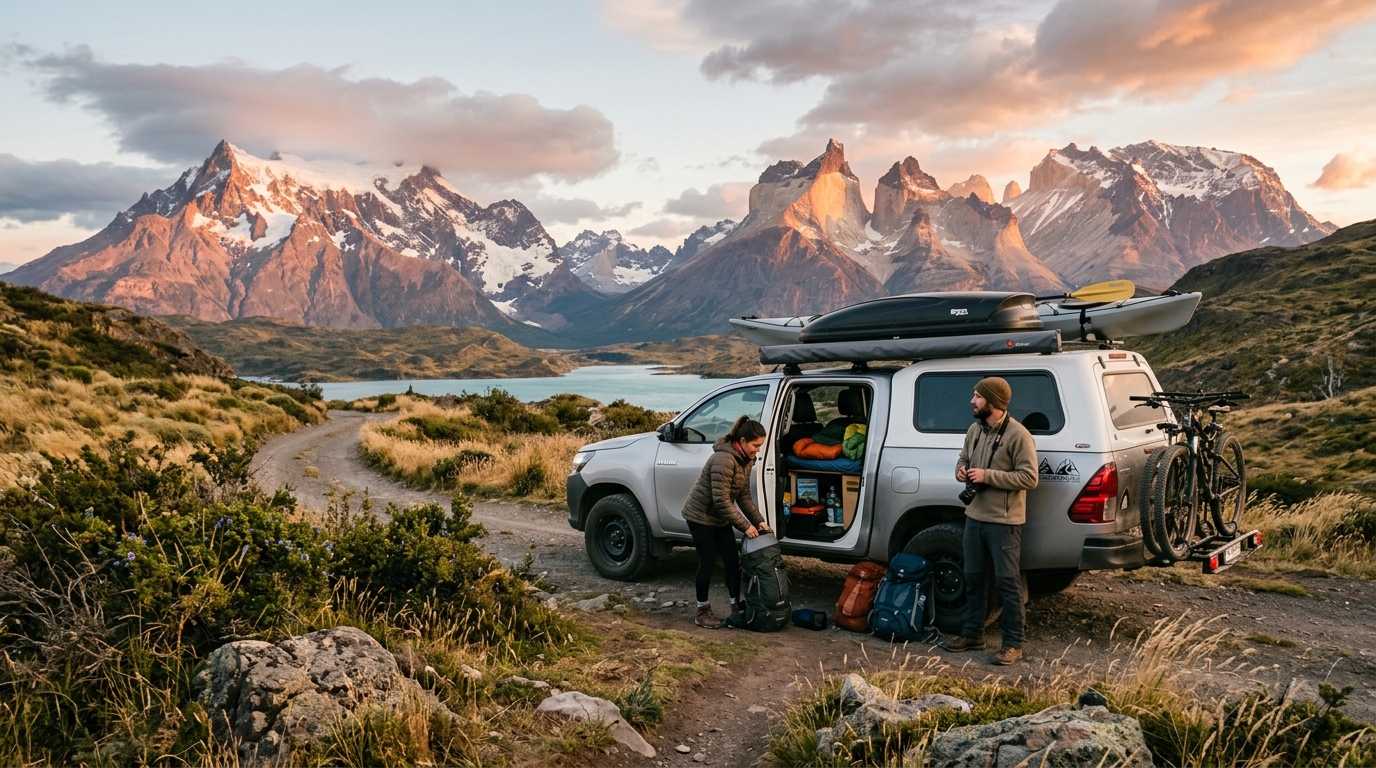
Further south in Patagonia, Punta Arenas is an ideal pick-up location for journeys into Tierra del Fuego or towards Torres del Paine National Park. In the far north, near the Atacama Desert, locations like Calama - Airport and Arica offer convenient access to the arid moonscapes and unique culture of the Andean altiplano. Renting a motorhome from any of these cities provides the flexibility to explore Chile at your own pace, ensuring you don't miss a single breathtaking vista.
🎬 Video coming soon
Essential Driving Rules and Local Tips for RVers in Chile
Understanding Chile's driving rules and local customs is key to a smooth RV adventure. In Chile, vehicles drive on the right side of the road, and road signs generally follow international standards. Speed limits are typically 50 km/h in urban areas, 100 km/h on rural roads, and 120 km/h on highways, but always pay attention to posted signs. Driving with headlights on is mandatory even during the day outside of urban areas. As mentioned in our fun facts, it's illegal to drive with a dirty license plate, so ensure yours is visible, especially after driving on gravel roads.
When Driving an RV in Chile - Complete Guide 2026 covers all regulations. Cities can be navigated by driving slowly and carefully, and you can drive almost anywhere without issues. No need to stress - just use common sense and pay attention. For fuel, Chile uses gasoline (bencina) and diesel (diésel), with diesel generally being cheaper. Gas stations are plentiful in towns but can be sparse on long stretches, especially in Patagonia, so plan refills strategically. Carrying a printed map alongside GPS is always a good idea for remote areas. In case of emergency, the general emergency number is 133 for police (Carabineros), 131 for ambulances, and 132 for firefighters.
Navigating Connectivity and Utilities for RV Travel in Chile
Staying connected and managing utilities are practical aspects of RV travel in Chile that require a bit of planning. For internet access, purchasing a local prepaid SIM card upon arrival from providers like Entel, Movistar, or Claro is highly recommended. These offer good coverage in populated areas and major routes, though connectivity can be spotty in very remote regions. Consider a portable Wi-Fi hotspot if consistent internet is crucial. Charging your devices in a rented RV is generally straightforward with onboard outlets, especially when connected to shore power at campgrounds or using a generator.
Water refill and dump stations are available at many established campgrounds and larger service stations. It’s always wise to fill your fresh water tank to capacity (e.g., a "cruise america rv rental example Explorer" has an 82-liter fresh water tank) and empty your grey and black water tanks whenever possible, especially before heading into remote areas. Chile uses 220V AC electricity, with Type C or L outlets, so international travelers may need adapters for their personal electronics. While our motorhomes are equipped for comfort, understanding these local utility specifics ensures a hassle-free trip. Imagine preparing a delightful breakfast in your RV's kitchen with a stunning Patagonian backdrop - check out our RV-friendly recipes playlist for inspiration!
Border Crossing with an RV in Chile
For international RVers, especially those planning to cross between Chile and Argentina, understanding border logistics is crucial. The process involves specific documentation, customs procedures, and vehicle insurance requirements. You will need your passport, a valid driver's license (an International Driving Permit is recommended), and the RV rental agreement. Critically, you'll need a special permit from the rental company, often called a "permiso de salida," which authorizes taking the rented motorhome across international borders. This permit must be arranged in advance, usually with several weeks' notice, and may incur an additional fee, typically ranging from $100-$300.
At the border, Chilean (PDI) and Argentine (Migraciones) immigration will stamp your passport, and customs officials (Aduana) will process the vehicle papers. You will receive a temporary import permit for the RV in Argentina, which must be returned upon re-entry to Chile or exiting Argentina. Vehicle insurance specific to Mercosur countries (Argentina, Brazil, Paraguay, Uruguay) is often mandatory and can be purchased through your rental supplier or a local insurer. Planning a "One-Way RV Driving in Chile - Route Planner 2026" that crosses borders requires meticulous preparation, but the reward is an unparalleled South American adventure.
What You Shouldn't Miss
- **Explore Torres del Paine National Park:** Hike iconic trails like the W Trek, marvel at the granite towers, and witness majestic glaciers in Patagonia.
- **Drive the Carretera Austral:** Embark on an epic 1,240 km road trip through pristine Patagonian wilderness, featuring fjords, forests, and charming villages.
- **Stargaze in the Atacama Desert:** Experience some of the clearest night skies on Earth at observatories or simply from your campground, an unforgettable celestial show.
- **Visit the Lake District:** Discover picturesque towns like Puerto Varas, surrounded by volcanoes and tranquil lakes, offering watersports and scenic drives.
- **Experience Valparaíso's Vibrant Hills:** Wander through the colorful, bohemian streets of this UNESCO World Heritage city, taking funiculars up its steep hills.
- **Savor Chilean Cuisine:** Indulge in empanadas, fresh seafood, and world-class wines from the Central Valley region.
Looking for expert insights from Avi Bandana? Top 5 Adventures - recommendations from Avi Bandana
Final Thoughts
Embarking on a rented RV adventure through Chile offers an unparalleled opportunity to discover its incredible diversity, from the stark beauty of the Atacama Desert to the majestic glaciers of Patagonia. With a rented campervan, you truly hold the keys to a flexible and unforgettable journey, creating memories at your own pace. Remember to travel slowly, aiming for a maximum of 100-150 km per day on average, to truly immerse yourself in the local culture, savor the delicious food, and soak in the breathtaking scenery.
Whether you're a meticulous pre-planner leveraging our Rent&Plan itineraries or a spontaneous traveler, Bandana Caravan is here to support you every step of the way. We’re committed to full transparency and providing the best comparison tools, ensuring your Chile RV rental experience is as smooth and joyful as possible. So, what are you waiting for? Your Chilean road trip of a lifetime awaits!
Discover top destinations, planning tips, all in one place! Plan a trip itinerary in advance with minimal effort and maximum enjoyment. Compare Motorhome Prices for Chile now and start your adventure!