In This Guide
- Can You Drive an RV in Chile? License & Age Rules
- Road Conditions & Terrain in Chile
- RV Size Limits, Bridges & Restricted Zones
- Fuel: Diesel vs. Petrol & Cost per 100 km
- Tolls, Vignettes & Border Rules
- Driving Tips for RV Rental Travelers
- Recommended RV Class for Chile Roads
- Should I Choose a Compact Van Instead of a Large RV in Chile?
- Can I Park Anywhere? Free & Wild Camping Rules in Chile
- Can I Drive an RV Into the City Center? Heights, Tunnels & Local Signage
- What are the border crossing procedures for an RV in Chile?
- How do I navigate remote road conditions and fuel availability in Chile?
- What are the rules for wild camping and overnight stays in Chile's national parks?
- What are the key safety tips for RV travel in Chile?
- How much does an RV trip in Chile cost: budget breakdown and tips?
- What are cultural etiquette tips for RVers in Chile?
- Where can I find RV maintenance and parts in remote Chile?
- How can I stay connected and navigate with an RV in Chile?
- How do RVers manage water and waste in Chile?
- What are the best RV itinerary suggestions for Chile?
- What vehicle preparation and modifications are recommended for RVing in Chile?
- Top Cities for RV Rental in Chile
- What You Shouldn't Miss
- Why Book with Bandana Caravan
- Final Thoughts
- Frequently Asked Questions
Can You Drive an RV in Chile? License & Age Rules
In Chile, most standard rental motorhomes up to 3,500 kg can be driven with a regular B-class driver's license from your home country, provided it is valid and accompanied by an International Driving Permit (IDP) for non-Spanish speakers. While an IDP is not legally mandatory in all cases, it is highly recommended as it provides a Spanish translation of your license, which greatly assists in interactions with local authorities or rental agencies. Drivers must generally be at least 21 years old to rent an RV in Chile, and Bandana Caravan offers transparent policies with no young driver surcharges across all vehicle classes, ensuring your adventure can begin smoothly. There are no special licenses, CDLs, or additional permits required for any rental motorhome, making it straightforward to hit the open road. For live availability and current prices, start with our RV Rental Chile - Complete Guide 2026 guide, where you'll find all the details you need to plan your trip with confidence and full transparency. This information helps avoid any hidden fees or surprises at pickup, which is a core part of the Bandana promise.Road Conditions & Terrain in Chile
Chile's roads vary significantly, from well-maintained paved highways like the Ruta 5 (Pan-American Highway) that spans over 3,000 kilometers, to challenging gravel (ripio) roads, particularly in Patagonia and mountainous regions. Travelers can expect to encounter diverse terrains, including the arid deserts of the north, the fertile valleys and wine regions in the central zone, and the rugged mountains, lakes, and glaciers in the south. Slow, scenic driving is highly encouraged, especially on unpaved roads where conditions can change rapidly due to weather or natural events. Taking your time, averaging a maximum of 100-150 km per day, allows you to truly feel the place, connect to the culture, the local food, and the breathtaking scenery. This slow travel philosophy aligns perfectly with discovering the hidden gems Chile has to offer in a rented RV or campervan.RV Size Limits, Bridges & Restricted Zones
While Chile generally accommodates various rental RV sizes, drivers should be aware of potential height restrictions for tunnels, some urban areas, and ferry crossings, particularly in southern Patagonia. Always observe posted height and weight limits, especially when approaching bridges or entering smaller towns to ensure safe passage. Ferries in regions like the Carretera Austral often have length and weight limitations, which should be confirmed when planning routes involving sea travel. Although you can drive almost anywhere in a rented motorhome, some very narrow city streets might require a bit more attention. Drive slowly and carefully, and you can drive almost anywhere without issues. No need to stress - just use common sense and pay attention. When considering a specific vehicle, our dedicated team of true RV specialists can offer tailored advice to help you select the ideal mobile home for your journey, ensuring no surprises along your route.Fuel: Diesel vs. Petrol & Cost per 100 km
Diesel is generally the most common fuel type for rental RVs in Chile, widely available across the country, while petrol (gasolina) is also readily accessible for smaller campervans and motorhomes. Bandana's global fleet averages suggest that Class SI - Semi-integrated RVs typically consume 10-11 Liters/100 km, Class C - Alcove RVs 10-12 Liters/100 km, and Class B - Camper Vans around 8-10 Liters/100 km. These consumption rates provide a solid basis for budgeting, though actual fuel costs per 100 km will fluctuate with current market prices. It's important to note that fuel availability can be sparse in very remote regions, so planning your stops is key. When planning your route and considering ancillary costs like fuel, tolls, and campground fees, remember that RV PLANET routes allow you to itemize and track every expense for easy budgeting, giving you full control over your trip finances with full transparency.Tolls, Vignettes & Border Rules
Chile primarily uses traditional toll booths (peajes) on its major highways, with electronic toll systems (TAG) prevalent around Santiago, and specific vignettes are not typically required for general road use by rented motorhomes. Travelers should anticipate tolls on most major routes and plan to pay in Chilean Pesos (CLP) or, in the case of Santiago's electronic tolls, arrange for a pre-paid electronic pass through your rental supplier. When planning to cross international borders from Chile into neighboring countries like Argentina, be prepared for thorough vehicle inspections, customs procedures, and specific documentation requirements. This includes having your passport, the RV rental contract, an International Driving Permit, and any necessary vehicle permits and insurance valid for the destination country. Always allow ample time for border crossings, as procedures can be time-consuming.Driving Tips for RV Rental Travelers
Prioritize safety by adhering to speed limits and driving cautiously on unfamiliar roads in Chile, especially on gravel (ripio) sections in Patagonia. Driving slowly, at a maximum average of 100-150 km per day, allows for better reaction time and more time to enjoy the scenery. It is advisable to avoid driving at night due to poor lighting, potential obstacles, and wildlife on rural roads. For families enjoying their rented campervan or motorhome, plan frequent stops every 2-3 hours to allow children to stretch, explore, and simply enjoy the journey. Budget-conscious travelers can significantly save by pre-paying tolls where possible and opting for self-catering with groceries from local markets and supermarkets. When descending steep mountain passes, always use lower gears to control speed and prevent brake overheating, ensuring a safe and relaxed descent. Remember, a Bandana adventure is about the journey as much as the destination, and we're always here to support you before and after your booking is confirmed.Recommended RV Class for Chile Roads
For navigating Chile's diverse landscapes, a Class SI - Semi-integrated RV or a Class B - Camper Van is often recommended, offering a good balance of comfort and maneuverability for your rental adventure. Class SI - Semi-integrated RVs, typically averaging around 6.9 meters in length, provide ample living space for 3-4 adults while remaining manageable on main roads and in smaller towns. These vehicles often feature amenities like a shower and toilet, enhancing comfort for longer trips. For those prioritizing agility on narrower roads or unpaved sections, a Class B - Camper Van, averaging around 5.8 meters in length, offers easier handling and parking, though with less interior space. Examples like the "Category Van" or the "Active Classic" are excellent choices for couples, with features like front air conditioning and a comfortable sleeping area. Choosing the right rental motorhome ensures your journey is as comfortable as it is adventurous.Should I Choose a Compact Van Instead of a Large RV in Chile?
While compact vans offer superior maneuverability for certain situations, most RV sizes are generally suitable for driving in Chile, with comfort and indoor space often outweighing slight advantages in agility. A compact campervan, such as a Class B - Camper Van, truly excels in very tight historic city centers, on extremely narrow mountain passes, or when seeking discreet parking for a rental. However, for extended trips across Chile's vast and varied landscapes, a larger rental RV provides significantly more comfort, storage, and amenities, which can greatly enhance the overall travel experience, especially for families or longer durations. Imagine the ease of preparing meals in a spacious kitchen, as detailed in our RV-friendly recipes playlist, or simply having more room to relax after a day of exploration. For families of 2+2, a Class C motorhome like the "24' Class C Motorhome" with its multiple sleeping places, generous fresh water tank (166 liters), and internal shower/toilet, offers an excellent balance of space and functionality, making it a popular choice. Remember, the goal is a comfortable and enjoyable rental experience, regardless of vehicle size.Can I Park Anywhere? Free & Wild Camping Rules in Chile
In Chile, while official campgrounds are abundant and generally well-equipped, specific rules for free and wild camping vary significantly by region and landowner, making it essential to research local regulations carefully. While specific regional data on free camping rules for Chile is not provided here, wild camping is generally tolerated in many remote, unpopulated areas, but always with utmost respect for private property and the environment. National parks and reserves, such as Torres del Paine, typically prohibit wild camping outside designated areas; always use official campgrounds within these protected zones. It's important to remember that many national and state parks reserve only 25-30% of their spots for advance booking, with the rest available on a first-come, first-served basis. This means you’ll find a spot; if not at the first campground, then the next one. Always call ahead before driving to confirm availability, especially during peak season. Rules vary by region-check local regulations and follow local law before parking overnight to ensure a smooth and respectful rental RV adventure.Can I Drive an RV Into the City Center? Heights, Tunnels & Local Signage
Yes, you can almost always drive a rented RV or motorhome into Chilean city centers, but paying close attention to local signage is crucial to avoid potential restrictions. Be mindful of specific height limits for parking garages, underpasses, and some older city sections; tunnels on major highways, like Ruta 5, are generally designed for standard vehicle clearance. Always look out for local signage indicating environmental zones, residents-only streets, or specific vehicle weight/length restrictions that might apply in very congested areas. Drive slowly and carefully, and you can drive almost anywhere without issues. No need to stress - just use common sense and pay attention. Your rental motorhome provides incredible flexibility for exploring both Chile's stunning natural landscapes and its vibrant urban centers. Many cities offer designated RV parking, and a little planning will help you navigate with ease.What are the border crossing procedures for an RV in Chile?
Border crossings from Chile to neighboring countries like Argentina involve specific documentation and vehicle inspection processes, which can be time-consuming and require preparation for your rented motorhome. You will need your passport, your RV rental contract, an International Driving Permit (if from a non-Spanish speaking country), and any specific vehicle permits and insurance that are valid for the destination country. Always be prepared for thorough agricultural inspections when crossing borders; declare all food items to avoid potential fines or confiscation. It is wise to allow ample time for border crossings, as procedures can sometimes take several hours, particularly during peak travel periods. One-way RV rentals across borders are often possible through our suppliers, but it's essential to plan this in advance as relocation fees, detailed in our "One-Way RV Rental in Chile - Price Guide 2026", will apply.What are the rules for wild camping and overnight stays in Chile's national parks?
Wild camping and overnight stays within Chile's national parks are generally restricted to designated campgrounds to protect the natural environments and ensure visitor safety during your RV rental trip. CONAF (Corporación Nacional Forestal), the entity which manages national parks, often strictly prohibits off-site camping or sleeping in vehicles outside of official campsites. For instance, in popular parks like Torres del Paine, all campsites must be booked months in advance, and failure to do so can result in significant fines or being turned away. Before arriving at any national park, travelers should always check park-specific regulations. It is crucial to respect local etiquette by staying on marked trails, properly disposing of all waste, and minimizing your environmental impact within these protected zones, helping preserve Chile's stunning wilderness for future generations.What are the key safety tips for RV travel in Chile?
Prioritizing safety during your RV rental travel in Chile involves being aware of local conditions, common risks, and emergency procedures. Be vigilant against petty theft, especially in crowded urban areas or popular tourist spots; always secure your rental motorhome and keep valuables out of sight. Familiarize yourself with local emergency service numbers: 131 for an ambulance, 132 for the fire department, and 133 for the police. Given Chile's geography, it's also wise to monitor local news for natural disaster preparedness, such as earthquakes, tsunamis along the coast, and volcanic activity, especially if traveling near active volcanoes like Villarrica. Always drive cautiously, respect local speed limits, and travel slowly-max 100-150 km per day-to ensure you have ample time to react to unexpected road conditions. Remember, Bandana is with you before and after your booking, offering support for a safe and confident journey.How much does an RV trip in Chile cost: budget breakdown and tips?
A comprehensive budget for a rented RV trip in Chile should account for several factors beyond the rental vehicle itself: rental fees, fuel, groceries, tolls, campsite fees, and activities, with daily costs varying widely based on your travel style. The daily rental rate for a Class C motorhome can typically range from $150-$280 USD, as detailed in our "RV Rental in Chile - Prices and Best Deals 2026" guide. Beyond this, fuel will be a significant expense, with Class SI - Semi-integrated RVs consuming around 10-11 Liters/100 km. Campsite fees in Chile range from free (in very remote, non-protected areas) to 20,000-40,000 CLP (approximately $20-$40 USD) per night for full-service campgrounds. Cost-saving tips include booking your RV in advance, which can lead to significant savings of up to 30% for early birds, as mentioned in our "Cheap RV Rental in Chile - Budget Guide 2026". Leverage local markets for fresh, affordable groceries, allowing you to prepare meals in your rental motorhome's kitchen and save on dining out. Utilizing free or low-cost campsites where permitted, and avoiding excessive driving to minimize fuel consumption, are also great strategies. For easy budgeting and tracking all these ancillary costs, RV PLANET routes allow you to itemize and monitor every expense along your journey.What are cultural etiquette tips for RVers in Chile?
Respecting Chilean cultural nuances and engaging politely with local communities will significantly enhance your RV rental travel experience. A basic grasp of Spanish is highly beneficial; even simple greetings like 'Hola' (hello) and 'Gracias' (thank you) are deeply appreciated and can open doors to friendly interactions. When visiting small towns or indigenous communities, always ask for permission before taking photos of people or private property. Be mindful of noise levels, especially when camping near residential areas, and strive to leave every place cleaner than you found it. Chileans are generally warm and hospitable, and showing respect for their customs and environment will be met with kindness. Embracing the local culture, trying traditional dishes, and connecting with the people are all part of the enriching slow travel experience we champion, encouraging you to travel slowly, max 100-150 km per day on average.Where can I find RV maintenance and parts in remote Chile?
Finding specialized RV maintenance and parts in remote regions of Chile can be challenging, necessitating a proactive approach to vehicle care and preparedness for your rented campervan or motorhome. While major cities like Santiago, Puerto Montt, and Punta Arenas will have general mechanics and auto parts stores, specialized RV shops or parts can be scarce outside these hubs. It is crucial to ensure your rental RV is in excellent mechanical condition before embarking on remote journeys, and consider carrying basic spare parts like belts, hoses, and a tire repair kit, if permitted by your rental agreement. Always check your fluid levels, tire pressure, and brakes before long drives. Most of Bandana's partner suppliers, including major names like El Monte and Apollo, provide well-maintained, recent-model vehicles to minimize such issues. However, being prepared for minor roadside repairs can save valuable time and stress during your extended road trip.How do RVers manage water and waste in Chile?
Proper water management and waste disposal are crucial for responsible RV travel in Chile, with facilities varying significantly by location. Water refilling stations are commonly available at official campgrounds, some gas stations, and occasionally in larger towns; always ensure the water source is potable before refilling your rental RV's tank. Grey water (from sinks and showers) and black water (from the toilet) disposal points, often called dump stations, are primarily found at established RV parks and larger campgrounds. It is vital to avoid disposing of wastewater in undesignated areas and to practice responsible waste management by carrying out all trash. Many modern rental motorhomes, such as the "cruise america rv rental example Explorer" (with an 82 Liter fresh and waste water tank), provide sufficient capacity for a few days, but regular stops at designated facilities are key to a sustainable and enjoyable trip.What are the best RV itinerary suggestions for Chile?
Chile offers diverse RV itineraries ranging from short coastal escapes to epic Patagonian expeditions, catering to various interests and durations for your rental motorhome. For a breathtaking adventure, consider traversing Southern Chile's Carretera Austral, exploring national parks like Torres del Paine and the Marble Caves over 2-3 weeks; this route requires careful planning due to remote conditions and gravel roads. Alternatively, a 7-10 day trip to Northern Chile's Atacama Desert offers unparalleled stargazing opportunities, lunar landscapes, and unique geothermal fields. Central Chile provides a delightful 5-7 day journey through its renowned wine region and along its picturesque coast. For those seeking even more detailed planning, RV PLANET (rvplan.net) offers over 1,300 pre-planned routes across 5 continents, including many professional itineraries for Chile, ensuring you have all the information to make your trip unforgettable. These pre-planned routes take the guesswork out of logistics, letting you focus on the sheer joy of discovery.What vehicle preparation and modifications are recommended for RVing in Chile?
Optimal vehicle preparation and considering minor modifications can significantly enhance safety and comfort for RVing in Chile's diverse landscapes. Ensure your rental motorhome has robust tires suitable for gravel roads (ripio), and always carry a full-size spare tire. Before any long journey, especially into remote areas, check all fluid levels (oil, coolant, brake fluid) and ensure brakes are in excellent condition. While most rental RVs are well-equipped, packing a comprehensive emergency kit is wise, including a first-aid kit, basic tools, a flashlight, and a fire extinguisher. If your rental permits and your route demands it, ensuring good ground clearance is beneficial for unpaved roads. Remember, Bandana Caravan partners with reputable suppliers like El Monte and Apollo, providing reliable, recent-model vehicles, ensuring your rental motorhome is ready for the Chilean adventure. You can upgrade to a top-level deductible for extra peace of mind during your trip.Top Cities for RV Rental in Chile
Chile offers several excellent starting points for your rental RV adventure, each providing unique access to different regions of this incredible country. These cities are key hubs where you can pick up your campervan or motorhome and begin exploring.- Santiago: As the capital, Santiago and its airport (Santiago - Airport) offer the widest selection of rental motorhomes and campervans, making it the most popular starting point. From here, you can easily head north to the Atacama Desert, south towards Patagonia, or explore the central wine regions.
- Arica: Located in the far north, Arica is perfect for exploring the stunning landscapes of the Atacama Desert, including Lauca National Park and its high-altitude lagoons.
- Calama - Airport: Another northern gateway, Calama Airport is ideal for direct access to San Pedro de Atacama, the heart of desert adventures like Valle de la Luna and geysers.
- Puerto Montt: Situated in the Lakes District, Puerto Montt serves as a fantastic starting point for exploring Chilean Patagonia, the Carretera Austral, and the region's lush national parks and volcanoes.
- Punta Arenas: In the extreme south, Punta Arenas is your gateway to the wild, windswept landscapes of Tierra del Fuego, the Strait of Magellan, and the iconic Torres del Paine National Park, perfect for a remote two-week adventure in a capable rental RV.
What You Shouldn't Miss
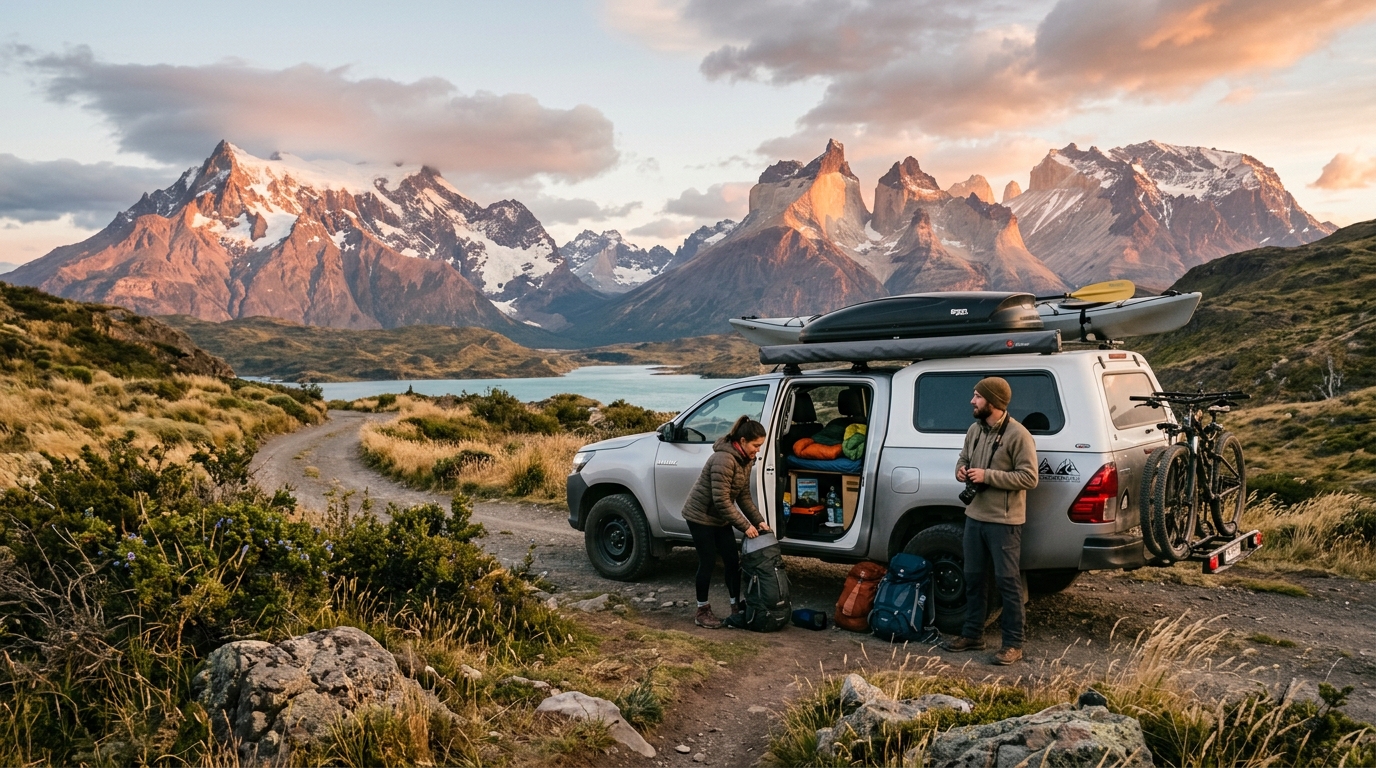
- Explore Torres del Paine National Park: Venture into the heart of Patagonia with your rented RV. While wild camping is restricted, numerous official campgrounds offer stunning views of the granite peaks and glacial lakes. Booking ahead is essential here.
- Drive the Carretera Austral: This epic 1,240-kilometer route offers an unparalleled road trip experience through remote forests, fjords, and mountains. Expect a mix of paved and gravel roads-true adventure for your rental campervan.
- Stargaze in the Atacama Desert: Head to the Elqui Valley or San Pedro de Atacama. The dry, clear skies provide some of the best stargazing conditions on Earth. Many observatories offer tours, and your mobile home allows you to stay close to the action.
- Discover Chile's Wine Regions: Spend a week-long trip in the central valleys, such as Maipo or Colchagua. Enjoy vineyard tours, wine tastings, and savor local cuisine, all accessible from your comfortable rental motorhome.
- Relax by the Pacific Coast: Drive along the scenic coastline, stopping at charming fishing villages and vibrant cities like Valparaíso. Enjoy fresh seafood and the refreshing ocean breeze.
- Visit the Marble Caves (Capillas de Mármol): On General Carrera Lake in Patagonia, these stunning geological formations can be explored by boat, a truly unique natural wonder accessible after a scenic drive.
🎬 Video coming soon
Looking for expert insights from Avi Bandana? Top 5 Adventures - recommendations from Avi Bandana
Final Thoughts
Chile truly is a land of incredible contrasts, from the stark beauty of the Atacama Desert to the dramatic glaciers of Patagonia, all waiting to be discovered from the comfort and flexibility of a rented RV or campervan. Imagine waking up to a new, breathtaking vista every morning, with your mobile home providing everything you need for a memorable journey. With Bandana Caravan, you're not just booking a vehicle; you're gaining a partner dedicated to making your travel dreams a reality. Our commitment to full transparency, expert guidance, and supportive service means you can embark on your Chilean adventure with complete peace of mind. We're here to help you navigate the choices, secure the best deals, and prepare for an unforgettable trip. So, are you ready to embrace the open road and experience the magic of Chile? Take your time, soak it all in, and let your rental RV be your key to unlocking the diverse landscapes and rich culture of this extraordinary country. Compare Motorhome Prices for Chile and start planning your escape today!On the routes offered through RV PLANET routes, you can itemize and track every expense along the way for easy budgeting.