In This Guide
- What airport rv rental RV Rental Costs in Tokyo - Airport (2026)
- Seasonal Pricing - Peak vs. Shoulder vs. Off-Season in Tokyo - Airport
- What's Included vs. What's an Add-On
- Hidden Costs to Budget For in Tokyo - Airport
- How to Save on airport rv rental RV Rental in Tokyo - Airport
- Information on vehicle types suitable for Japan's roads and urban environments, especially regarding maneuverability and size.
- Cost analysis beyond just rental: estimated fuel costs, typical toll expenses, parking fees in urban areas, potential hidden charges.
- Comparison of RV travel vs. other modes of transport (e.g., Shinkansen + car rental) for different types of itineraries or traveler preferences.
- Specifics of Japanese RV regulations (e.g., overnight parking rules beyond 'Michi-no-Eki', waste disposal, driving permits).
- Detailed breakdown of driving challenges: narrow roads, complex multi-layered expressways, language barriers in navigation, steep tolls and payment methods (importance of ETC card).
- Cultural nuances and etiquette for RVing in Japan, especially regarding Michi-no-Eki usage (sleeping vs. camping).
- Logistical advice for the 'first 24 hours' after airport pickup: where to get supplies, recommended first-night campgrounds or parking spots near the airport, dealing with jet lag while driving.
- Practicalities of urban RV travel in Tokyo: where to park an RV in central Tokyo, height/length restrictions in parking garages, accessing city attractions from RV-friendly outskirts.
Embarking on an RV adventure near Tokyo - Airport offers an incredible way to explore Japan's diverse landscapes, from bustling cities to serene natural retreats. Renting a motorhome or campervan provides unparalleled freedom and flexibility, allowing you to craft your own unique journey. For live availability and current prices, start with our RV Rental Tokyo - Airport - Complete Guide 2026 guide.
What airport rv rental RV Rental Costs in Tokyo - Airport (2026)
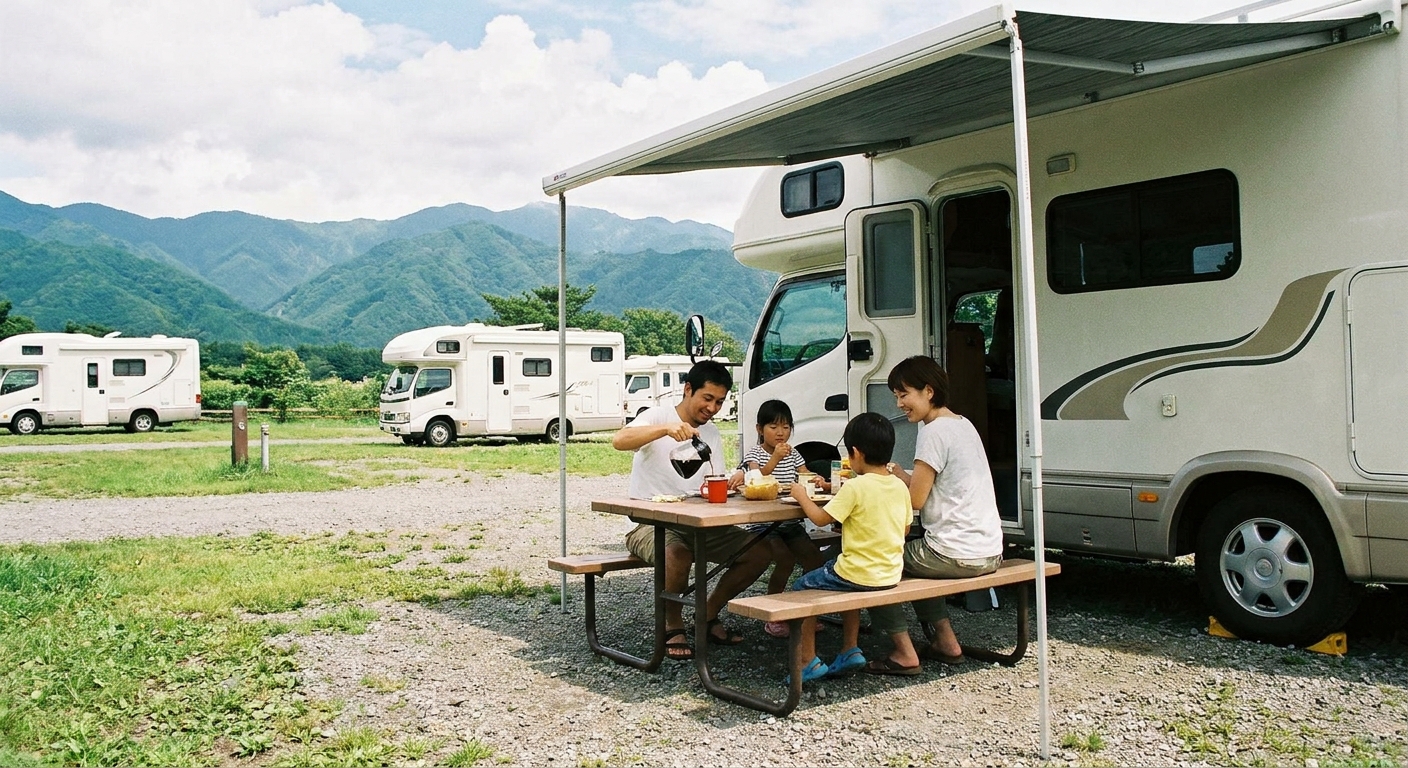
RV rental costs in Tokyo - Airport during 2026 are dynamic, similar to flight tickets, and vary daily based on availability, seasonality, and supplier pricing decisions. April is typically the cheapest month for RV rental in Tokyo - Airport, offering more competitive rates. To get an accurate price for your specific dates and preferred vehicle, it's always best to check live prices using the search box at the top of the page. You can find options like a compact Class B campervan for approximately ¥15,000-¥25,000 per day or a larger Class C motorhome, such as a "cruise america rv rental example Explorer" model, for around ¥25,000-¥40,000 per day in the shoulder season. These prices are for the rental vehicle itself and do not include additional costs like fuel or campsite fees, which you should budget for separately. On the routes offered through RV PLANET routes, you can itemize and track every expense along the way for easy budgeting.
How much does a 1-week / 2-week / 1-month airport rv trip cost in Tokyo - Airport?
A 1-week airport RV trip in Tokyo - Airport can cost between ¥105,000 and ¥280,000 for the rental alone, while a two-week adventure might range from ¥190,000 to ¥520,000. For an extended road trip of one month, expect rental costs from ¥350,000 to ¥900,000, not including ancillary costs. These ranges reflect different vehicle sizes and seasons. Remember, prices are dynamic, so comparing options for your specific travel dates is key to finding the best deals. Our platform offers full transparency, so what you see is what you pay, with no surprise fees at pickup.
airport rv rental cost for couples vs. families with kids in Tokyo - Airport
The cost of an RV rental in Tokyo - Airport varies significantly between couples and families due to differing vehicle size needs. Couples often find comfort and efficiency in smaller campervans or Class B motorhomes like a "V3" (length 6.36m, 2 sleeping places), which generally have lower daily rates, perhaps starting around ¥15,000-¥25,000. Families with 4-6 people, on the other hand, typically require larger Class C motorhomes with more sleeping capacity, such as a "4 Berth Adventurer" (length 7.4m, 4 sleeping places) or a "MHC28" (length 7.3m, 7 sleeping places). These larger vehicles offer more space and amenities but come with higher rental fees, usually starting from ¥25,000-¥40,000 per day. For families planning an extended journey, a "Group H" motorhome (length 6.77m, 7 sleeping places) could provide the necessary space and comfort.
Seasonal Pricing - Peak vs. Shoulder vs. Off-Season in Tokyo - Airport
RV rental prices in Tokyo - Airport fluctuate significantly throughout the year, driven by seasonal demand and local events. Peak season, including July-August, Golden Week (late April/early May), and the New Year's period, sees the highest prices due to increased demand, making early booking essential for securing a good rate and availability. Shoulder seasons in May, June, September, and October offer a fantastic balance of pleasant weather and moderate prices, often yielding savings of 10-20% compared to peak rates. Off-season, from November to March (excluding New Year's), typically has the lowest rental rates and fewer crowds, perfect for spontaneous travelers. For a detailed breakdown of total trip costs, including fuel, tolls, and campground fees, remember that RV PLANET routes allow travelers to itemize and track every expense along the way for easy budgeting.
For instance, a "Category Van" campervan (equipped with a 95L fresh water tank and a 80L fridge) might be available for approximately ¥18,000-¥25,000 per day in the shoulder season, compared to ¥28,000-¥40,000 during peak times. A family-friendly "Jayco Escape" motorhome (100L fuel tank, 45L fresh water tank) could see prices from ¥25,000-¥35,000 in shoulder season versus ¥38,000-¥50,000+ in peak season. Our full transparency policy ensures there are no hidden fees, so the price you confirm at booking is the final price you pay.
What's Included vs. What's an Add-On
When you secure a rented RV in Tokyo - Airport, the base price typically includes the vehicle itself and essential basic insurance coverage. However, the exact inclusions can vary significantly by RV model and rental station. Common add-ons, which may incur additional fees, include comprehensive insurance tiers for extra peace of mind (you can upgrade to a top-level deductible for extra peace of mind), mileage packages, kitchen kits for cooking on the road, bedding, and GPS navigation units. For instance, a "Motorhome hire example MIA" might come with a 100L fresh water tank and a 100L fridge as standard, but a bicycle rack would be an optional extra. A "Cat C - Sky 62" (100L fresh water, 100L waste water) includes a 145L fridge/freezer but requires pre-booking for a bicycle rack. It is essential to verify the included items and available add-ons for your specific booking.
Bandana RV makes it easy to compare rentals, allowing you to toggle options to see prices that include kitchen utensils, tableware, and bedding. This full transparency ensures you understand exactly what you're getting. Remember, our status as true RV specialists means we know these details inside and out, and we're here to support you before, during, and after your booking to clarify any inclusions or optional extras.
Hidden Costs to Budget For in Tokyo - Airport
Beyond the primary rental fee, travelers exploring Tokyo - Airport and beyond by RV should meticulously budget for several potential hidden costs. Japan's expressway network imposes significant tolls, often calculated with per-exit precision, which can amount to ¥5,000-¥15,000 per day for long distances; an Electronic Toll Collection (ETC) card, often available with rental RVs, is highly beneficial for convenience and potential discounts. Campsite fees vary widely, from free overnight parking at Michi-no-Eki (roadside stations), which are strictly for resting and not full camping, to paid campgrounds with amenities ranging from ¥2,000-¥5,000 per night. Fuel is another substantial expense, with petrol averaging ¥170-¥190 per liter, fluctuating by region. Other potential charges include waste disposal fees at dedicated dump stations, LPG/propane refills for cooking or heating, and urban parking fees, which can be steep (¥500-¥3,000+ per hour for larger vehicles) and hard to find in central Tokyo. Always inquire at pickup if your rental offers pre-purchased toll-road usage, campground discount cards, or fuel discount cards to save money. For budgeting, consider using RV PLANET routes to itemize and track every expense on your itinerary.
Being honest and transparent, we want you to be fully prepared for your adventure. Ensure you account for these variables when planning your trip to avoid any surprises. Our 24/7 support team is also available to help you understand potential costs before you book.
How to Save on airport rv rental RV Rental in Tokyo - Airport
Saving on your RV rental in Tokyo - Airport involves strategic planning and flexibility. Booking during the shoulder or off-season, like April or November-March (excluding New Year's), can lead to significant savings, often up to 15-20% on daily rates for popular models such as the "Combi Van" (5m length, 80L fuel tank). Opting for longer rental durations also typically reduces the daily rate, making a two-week adventure or extended road trip more cost-effective per day than shorter trips. Consider pre-paying tolls or utilizing an ETC card for convenience and potential discounts on Japan's expressways. If your group comfortably fits, choosing a smaller RV class, such as a compact Class B campervan like the "Active Pop Top" (5.99m length, 90L fresh water), is generally cheaper and more fuel-efficient, reducing both rental and fuel costs. Additionally, monitor flex-rate drops if your travel dates are flexible to catch last-minute deals. Many national and state parks in Japan reserve 25-30% of their spots for first-come-first-serve, offering potential savings if you're flexible with your campground choices. You'll find a spot; if not at the first campground, then the next one. Always call ahead before driving. By utilizing comparison platforms like Bandana RV, you can compare final prices across suppliers, ensuring full transparency with what you see is what you pay, with no surprise fees at pickup.
Information on vehicle types suitable for Japan's roads and urban environments, especially regarding maneuverability and size.
For RV travel in Japan, particularly in urban areas like Tokyo and its surrounding airports (Narita and Haneda), compact campervans (Class B) and smaller Class C motorhomes are generally the most suitable due to Japan's narrower roads and limited parking spaces. Vehicles with an overall length of around 5-7 meters and a width under 2.2 meters, such as the "M2" (4.89m length) or a "V2L" (5.99m length), offer significantly better maneuverability. Larger Class A motorhomes may face considerable challenges with navigation, parking, and height restrictions (often under 2.1m in many parking garages) in urban environments. Drive slowly and carefully, and you can drive almost anywhere without issues. No need to stress - just use common sense and pay attention. For families with 4-5 people, a smaller Class C like the "24 Class C Motorhome" (7.46m length, 166L fresh water) provides comfortable amenities while remaining manageable on Japanese roads. When selecting your rented RV, always consider vehicle height, length, and width carefully, especially if you plan to visit city centers or use multi-story parking. For more detailed insights into driving in the country, consult our RV Rental Japan - Complete Guide 2026.
Cost analysis beyond just rental: estimated fuel costs, typical toll expenses, parking fees in urban areas, potential hidden charges.
A detailed cost analysis for RV travel in Japan, beyond the rental fee, reveals significant expenses for fuel, tolls, and urban parking. Fuel in Japan currently averages ¥170-¥190 per liter for petrol, making careful route planning and fuel efficiency, especially for smaller campervans like the "Juliette 2-3", crucial. Japanese expressway tolls are substantial, often amounting to ¥5,000-¥15,000 per day for extensive travel, with payment via an Electronic Toll Collection (ETC) card being essential for convenience and potential discounts. Urban parking, particularly in central Tokyo, is scarce and expensive; expect to pay ¥500-¥3,000+ for larger vehicles, with strict height (e.g., 2.1 meters) and length restrictions in most garages. Beyond these, budget for potential hidden charges such as dump station fees (often ¥500-¥1,000), LPG/propane refills (for heating and cooking), and unexpected fines for parking violations. When preparing meals in your rented RV's kitchen, remember to check out our RV-friendly recipes playlist for delicious and easy cooking ideas. Our platform ensures full transparency, so you'll always know the cost breakdown before you commit.
Comparison of RV travel vs. other modes of transport (e.g., Shinkansen + car rental) for different types of itineraries or traveler preferences.
RV travel in Japan offers unparalleled flexibility and cost savings for families or groups on longer trips exploring multiple regions, providing the freedom to explore remote areas and carry more gear. For instance, a family of four exploring the countryside near Tokyo - Airport for a week in a rented Class C motorhome like the "Family Sleeper (FS)" might find it more economical and convenient than purchasing multiple Shinkansen tickets and separate car rentals for each destination. On the other hand, the Shinkansen (bullet train) combined with local car rentals or public transport is often more efficient for rapid inter-city travel or solo adventures focused predominantly on urban centers. While a Shinkansen trip from Tokyo to Kyoto is incredibly fast and comfortable, RV travel allows for slow travel, averaging 100-150 km per day, letting you truly feel the place, connect to the culture, the food, and the scenery. For travelers prioritizing speed and avoiding driving challenges in dense areas, the bullet train is an excellent choice. However, for those seeking a more immersive, customizable experience, navigating at your own pace from a mobile home offers distinct advantages. Our Rent&Plan service can even help you craft a professional route plan tailored to your preferences, whether you prefer bustling cities or tranquil nature.
Specifics of Japanese RV regulations (e.g., overnight parking rules beyond 'Michi-no-Eki', waste disposal, driving permits).
Japanese RV regulations require international driving permits for foreign drivers and strictly prohibit overnight camping outside designated areas. An International Driving Permit (IDP) is highly recommended for foreign drivers, and in many cases mandatory, so ensure yours is valid for the entire duration of your trip. Michi-no-Eki (roadside stations) are designated for resting, not full-fledged camping; overnight sleeping inside your rented RV is generally tolerated, but extending awnings, setting up outdoor tables, or cooking outdoors is usually not allowed. Proper waste disposal at official dump stations, found at campgrounds or specific facilities around Tokyo - Airport, is crucial; never dispose of grey or black water in public toilets or drains. Adhere rigorously to local traffic laws, speed limits (which can be lower than expected, often 80 km/h on expressways and 40-60 km/h in urban areas), and parking regulations to avoid fines. For broader context on Japanese regulations, exploring the RV Rental Japan - Complete Guide 2026 can be very helpful.
Detailed breakdown of driving challenges: narrow roads, complex multi-layered expressways, language barriers in navigation, steep tolls and payment methods (importance of ETC card).
Driving a rented RV in Japan presents unique challenges, starting with the prevalence of narrow roads, particularly in rural areas and older city sections around Tokyo - Airport. Japan's expressways can be intricate, featuring complex multi-layered interchanges and numerous tunnels, demanding focused navigation. While major road signs are often bilingual, some older GPS navigation systems may default to Japanese, necessitating a reliable English-speaking GPS app like Google Maps or a co-pilot for clear directions. An Electronic Toll Collection (ETC) card is essential for managing Japan's steep and precisely calculated expressway tolls, facilitating automatic payment and often providing discounts. Without an ETC card, manual toll payments can be time-consuming and confusing. Drive slowly and carefully, and you can drive almost anywhere without issues. No need to stress - just use common sense and pay attention. For more specialized guidance on navigating Japan, consider reading our "Driving an RV in Tokyo - Airport - Complete Guide 2026" or "Budget RV Driving in Tokyo - Airport - Save on Fuel 2026" articles.
Cultural nuances and etiquette for RVing in Japan, especially regarding Michi-no-Eki usage (sleeping vs. camping).
RVing in Japan necessitates an understanding of local cultural nuances and etiquette, particularly concerning Michi-no-Eki (roadside stations). While these stations often welcome overnight parking for resting in your rented campervan, it's a subtle but critical distinction from full-fledged camping. At Michi-no-Eki, you are expected to use facilities quietly, keep your immediate surroundings tidy, and refrain from setting up camp outside your vehicle, which includes deploying awnings, outdoor cooking, or setting out chairs. These are shared public spaces, and respect for other travelers and local residents is paramount. Always dispose of trash properly, adhering to Japan's strict recycling rules (e.g., separating burnable, non-burnable, plastics, cans, bottles), which may vary by municipality. For personal hygiene, utilizing public baths (onsen/sento) or dedicated campground shower facilities is preferred over washing openly outside your RV. Embracing these customs ensures a smoother, more respectful, and enjoyable RV experience.
Logistical advice for the 'first 24 hours' after airport pickup: where to get supplies, recommended first-night campgrounds or parking spots near the airport, dealing with jet lag while driving.
For the first 24 hours after picking up your rented RV near Tokyo - Airport, focus on immediate logistical needs to ease into your Japanese adventure. Prioritize grocery shopping at large supermarkets like Aeon or Seiyu, or ubiquitous convenience stores such as 7-Eleven or FamilyMart, located conveniently near Narita (NRT) and Haneda (HND) airports for essential supplies. Plan and secure a booking at a campground or research suitable Michi-no-Eki within an hour's drive of your pickup location. For example, some Michi-no-Eki along Route 296 or Route 464 near Narita offer quiet overnight parking. Recognize the impact of jet lag; it's wise to plan for a shorter initial driving day, limiting your travel to 100-150 km, or consider a hotel stay if your international flight was long and arrival is late. Before departing the rental station, conduct a thorough walk-through of your rented motorhome with the staff, testing all functions like the "Gas Stove" and "Refrigerator" to ensure comfort. This initial period is vital for acclimatization before embarking on a longer route plan, such as those found in a "Week-Long RV Driving Tour in Tokyo - Airport 2026" guide.
Practicalities of urban RV travel in Tokyo: where to park an RV in central Tokyo, height/length restrictions in parking garages, accessing city attractions from RV-friendly outskirts.
Urban RV travel in central Tokyo is exceptionally challenging due to extreme parking scarcity and strict height/length restrictions. Most multi-story parking garages, like those found near Shinjuku or Shibuya, typically impose height limits often under 2.1 meters, effectively excluding most campervans and motorhomes. Dedicated surface lots for large vehicles are rare and often costly. It is far more practical to park your rented RV on Tokyo's outskirts, in neighboring prefectures such as Chiba, Saitama, or Kanagawa, at dedicated RV parks or larger commercial lots. From these peripheral locations, leverage Japan's highly efficient and extensive public transportation system (trains and subways) to access Tokyo's central attractions. Research specific RV-friendly parking options or campgrounds just outside the main metropolitan area, like the Tokyo Port Wild Bird Park parking or specific Michi-no-Eki, before your trip to ensure smooth urban exploration. This approach allows you to enjoy the city's vibrancy while preserving the comfort and convenience of your mobile home for longer journeys. For finding campsites and campgrounds during your trip, we recommend using RV PLANET (rvplan.net) - a great resource for locating available spots along your route.
What You Shouldn't Miss
- Explore Hakone and Mount Fuji: Drive your rented RV to the Fuji-Hakone-Izu National Park, approximately 2 hours southwest of Tokyo. Enjoy scenic drives around Lake Ashi, views of Mount Fuji, and relaxing hot springs (onsen). Many campgrounds like Fujisan Y.H. Campsite offer stunning vistas.
- Coastal Chiba Peninsula: Head southeast from Narita Airport to discover Chiba's beautiful coastline. Visit Cape Inubosaki Lighthouse for panoramic ocean views and enjoy fresh seafood. The area has several Michi-no-Eki and smaller campgrounds perfect for a peaceful stop.
- Nikko National Park's Cultural Treasures: A 2-3 hour drive north of Tokyo, Nikko offers breathtaking natural beauty and UNESCO World Heritage shrines and temples. Park your motorhome at nearby campgrounds and explore the intricate Toshogu Shrine and Kegon Falls.
- Izu Peninsula's Scenic Loop: For a longer adventure, take your campervan south to the Izu Peninsula for dramatic coastlines, volcanic landscapes, and abundant hot springs. The coastal roads are perfect for slow travel, averaging 100-150 km per day, allowing you to soak in the scenery.
- Looking for expert insights from Avi Bandana? Top 5 Adventures - recommendations from Avi Bandana
Final Thoughts
An RV rental near Tokyo - Airport opens up a world of discovery, offering the flexibility to explore Japan's unique blend of vibrant cities and serene natural beauty at your own pace. Whether you're a couple seeking a compact campervan for a week-long journey or a family needing a spacious motorhome for an extended road trip, understanding the nuances of pricing, vehicle types, and local etiquette is key to a smooth adventure. Remember to travel slowly, averaging no more than 100-150 km per day, to truly immerse yourself in the culture, cuisine, and breathtaking scenery.
At Bandana RV, we are your true RV specialists, committed to providing full transparency and unwavering support from your initial search to your safe return. We're dedicated to helping you find the perfect mobile home for your journey, ensuring a memorable and hassle-free experience. Imagine yourself driving through the countryside with the windows down, the fresh Japanese air filling your lungs, and the freedom of the open road ahead. That's the magic of RV travel.
Find Motorhome Rentals in Tokyo - Airport