For live availability and current prices, start with our RV Rental Canada - Complete Guide 2026 guide.
In This Guide
- What rv rental RV Rental Costs in Canada (2024)
- Seasonal Pricing - Peak vs. Shoulder vs. Off-Season in Canada
- What's Included vs. What's an Add-On
- Hidden Costs to Budget For in Canada
- How to Save on rv rental RV Rental in Canada
- How much does it cost to rent an RV in Canada?
- Is RV rental cheaper than hotel?
- Can you sleep anywhere in a campervan in Canada?
- Is renting an RV cheaper than flying?
- How much do RVs cost in Canada?
- Can Americans RV in Canada?
- What is the 3-3-3 rule for RV camping?
- Top Cities for RV Rental in Canada
- Essential Road Rules and Local Tips for RVers in Canada
- Connectivity and Utilities: Staying Connected and Stocked in Canada
- Safety and Preparedness for Wilderness RVing in Canada
- What You Shouldn't Miss
What rv rental RV Rental Costs in Canada (2024)
RV rental prices in Canada vary significantly by season, RV class, and rental duration, typically ranging from CAD 100 per night for a compact campervan to over CAD 500 for a larger Class A motorhome. April is consistently the cheapest month for RV rental in Canada, offering the lowest daily rates due to lower demand before the summer peak. The base rental price usually includes the vehicle and basic insurance, but additional coverage, unlimited mileage packages, and convenience kits are common add-ons that can affect the total cost. When planning your budget for a rented motorhome, expect average weekly costs to range from CAD 1,500 to CAD 2,500 for a Class C motorhome during shoulder season, excluding these additional fees. For live availability and current prices, start with our RV Rental Canada - Complete Guide 2024 guide, which offers comprehensive information and comparison tools. For instance, a compact campervan suitable for a couple, like an "rv rental denver example Category Van" with front air conditioning and a shower, might start closer to CAD 100-150 per night in the off-season. Families looking for more space might opt for a Class C motorhome like the "MHC24" (sleeping up to 6 with a 147/190cm bed over cub, a 132/188cm double bed, and a 112/188cm double bed), which could cost CAD 170-300 per night depending on the season and location. These dynamic prices reflect daily availability and supplier decisions, similar to flight tickets, so the final price is always set at the actual booking time. When considering your total trip expenses for an RV rental in Canada, remember that fuel, campground fees, and groceries will add to your budget, and you can itemize and track every expense along the way with RV PLANET routes.Seasonal Pricing - Peak vs. Shoulder vs. Off-Season in Canada
RV rental prices in Canada fluctuate dramatically across peak, shoulder, and off-seasons, driven significantly by demand and weather conditions. Peak season, typically encompassing July and August, sees the highest prices and lowest availability due to school holidays and optimal summer weather across most of the country. During this period, popular destinations like Banff National Park can have campsites booked months in advance, and daily rental rates can be 30-50% higher than in other seasons. Shoulder seasons, spanning May-June and September-October, offer a fantastic balance of good weather, vibrant scenery, and more moderate prices, making them ideal for budget-conscious travelers seeking a week-long trip or a two-week adventure without the crowds. For example, a "Saver 4" motorhome, ideal for a family, might see daily rates drop by 20% from peak season to the shoulder months. Off-season, from November to April, generally provides the lowest rates and best availability, though some parks and services may be closed due to winter conditions. However, winter RVing can be a unique experience, with many RVs featuring good heating systems, perfect for exploring snow-covered landscapes for those prepared for cold weather. Regardless of when you book, Bandana ensures full transparency, so what you see is what you pay, with no surprise fees at pickup.What's Included vs. What's an Add-On
RV rental base prices in Canada generally include the vehicle and basic liability insurance, while other essential amenities are typically offered as optional add-ons. Basic insurance is always part of the rental agreement; however, for truly comprehensive coverage and additional peace of mind, you can upgrade to a top-level deductible for extra protection. When comparing options on Bandana, you can easily toggle to see prices including the most comprehensive coverage, ensuring all relevant insurance options are displayed upfront. Common add-ons include mileage packages, generator usage fees (often around CAD 5 per hour), kitchen kits stocked with utensils and cookware, bedding and linen kits, satellite navigation systems, and roadside assistance upgrades. For example, a compact Class B campervan like the "EcoLine 2" which features a 2-burner gas stove and a 78-liter refrigerator, might require separate rental of a kitchen kit and bedding. The availability of amenities like kitchen utensils, tableware, and bedding varies significantly by RV model and rental station across our 50+ leading RV suppliers worldwide, including trusted partners like El Monte, Cruise America, Apollo, and Britz. Our platform allows for clear comparison via a dedicated toggle, so you always know what to expect and can tailor your rental to your exact needs without hidden fees or surprises.Hidden Costs to Budget For in Canada
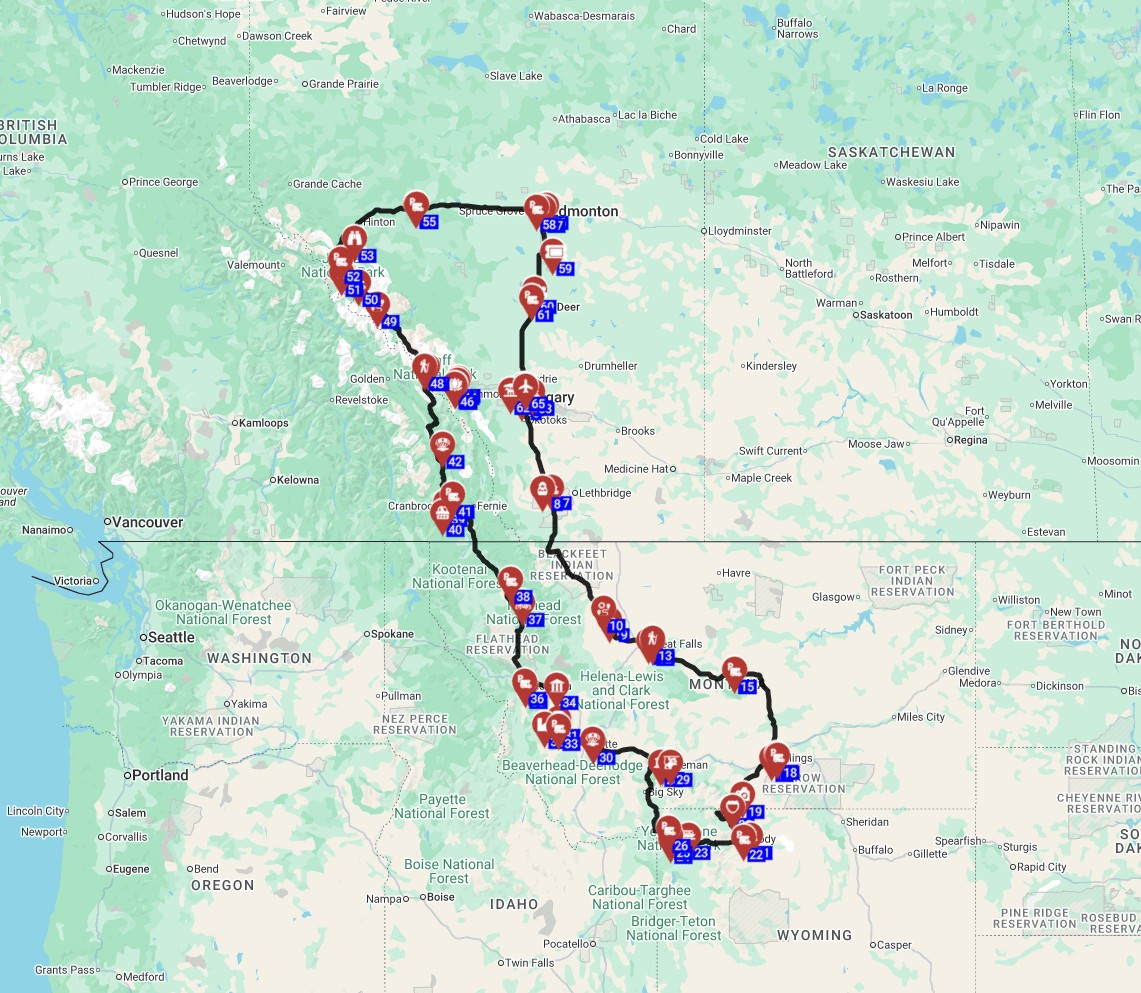
When renting a mobile home in Canada, several hidden costs beyond the base rental fee require careful budgeting to ensure a smooth trip. First and foremost, fuel is a substantial expense given the vast distances involved in Canadian road trips; planning for 15-25 liters per 100 km for larger motorhomes (like the "MH-A" with its 6.8 Liter Gas engine) is essential, especially when traversing routes like the 9,199.1 km journey from Halifax to Whitehorse. Tolls on certain highways, particularly in Eastern Canada, also need to be factored in, though they are less prevalent than in the USA. Campsite fees vary widely, ranging from CAD 20-30 per night for basic unserviced sites in provincial parks to CAD 50-80+ for full-hookup sites at private campgrounds near popular attractions like Banff. Additional expenses may include propane refills for cooking and heating, dump station charges (if not included with your campsite), and fees for extra drivers or specific equipment rentals (e.g., bicycle racks, portable generators). We strongly recommend tracking these ancillary trip costs closely. For easy budgeting and transparent expense tracking, you can itemize every anticipated expense on RV PLANET routes, helping you stay on track throughout your adventure.How to Save on rv rental RV Rental in Canada
To significantly reduce RV rental costs in Canada, strategic planning and booking during off-peak or shoulder seasons are your best allies. Traveling in May-June or September-October can offer savings of 15-30% compared to peak summer rates, while still providing excellent weather for exploration. Booking longer durations often results in a lower daily rental rate; for example, a two-week adventure typically offers better value per day than a week-long trip. Bandana, founded in 2001, has been helping tens of thousands of travelers discover these savings for over 20 years. Consider choosing a smaller RV class that comfortably fits your group, as this can lead to considerable savings on both the initial rental price and fuel consumption. A compact campervan, for instance, consumes significantly less fuel than a large Class A motorhome like the "Class A - Thor ACE 30" (with a 7.3L V8 engine and a 302-liter fuel tank). Furthermore, taking advantage of pre-paid options for tolls or utilizing campground and fuel discount cards, when offered by rental companies, can help mitigate unexpected charges. Our full transparency policy ensures no hidden fees, so you always know what you're paying for. If you're looking for pre-planned routes that optimize for both experience and budget, our Rent&Plan service offers over 1,300 professional routes across 5 continents, including many in Canada, and you get a 25% planning discount when using rvplan.net.How much does it cost to rent an RV in Canada?
Renting an RV in Canada typically costs between CAD 100 to CAD 500 per night, with significant variations based on RV class, rental duration, and the time of year you travel. For instance, a small, nimble campervan, ideal for a couple, might range from CAD 100-200 per night in the shoulder season. A popular Class C motorhome, perfect for a family of 2+2, such as an "MHC24" (with a 150-liter fresh water tank and microwave), could cost around CAD 170-300 per night. For a week-long trip in a Class C motorhome during the shoulder season, you might expect to pay approximately CAD 1,500-2,500 for the rental itself, excluding fuel and other extras. Peak season rates for larger Class A RVs, which offer maximum space and amenities for larger groups or luxury experiences, can easily exceed CAD 3,500 for a week. Conversely, smaller campervans in the quiet off-season could be as low as CAD 700-1,200 for a week. These figures are solely for the rental; remember to allocate additional funds for fuel (which can be 20-30% of your budget for long trips), campground fees, insurance upgrades, and groceries. When searching on Bandana, you'll see final prices across suppliers, ensuring transparency.Is RV rental cheaper than hotel?
RV rental in Canada can be significantly cheaper than staying in hotels for families or groups, especially for longer trips or when factoring in the ability to prepare your own meals. While an RV incurs rental fees, fuel costs, and campsite charges, it often eliminates expenses such as multiple restaurant meals, separate car rentals, and booking several hotel rooms for larger families. For example, a family of four staying in hotels and eating out for two weeks could easily spend CAD 4,000-6,000+ on accommodation and dining alone. In contrast, renting a Class C motorhome for two weeks might cost CAD 2,500-4,000 (rental fee), plus CAD 800-1,500 for fuel (depending on mileage, e.g., 2000-4000 km at 15-25L/100km fuel consumption), and CAD 400-800 for 14 nights of camping, totaling CAD 3,700-6,300. Crucially, the ability to cook your own meals in a fully equipped kitchen (like those found in an "MHC28" motorhome, which includes a 3-4 burner gas stove and 4 cubic ft. refrigerator) can dramatically reduce food costs, often saving hundreds of dollars per week compared to dining out. If you're looking for inspiration, check out our RV-friendly recipes playlist to get ideas for delicious and budget-conscious meals on the road. For solo travelers or short stays exclusively in urban centers, hotels might offer more convenience and potentially a lower overall cost.Can you sleep anywhere in a campervan in Canada?
No, you cannot legally sleep just anywhere in a campervan, motorhome, or RV in Canada, as regulations regarding overnight parking and camping vary significantly by province, municipality, and land type. Designated campgrounds, whether provincial, national, or private, are the safest and most legal places to stay overnight, offering amenities like water, electrical hookups, and dump stations. These facilities provide comfort and security for travelers in rented motorhomes. Boondocking, or dispersed camping, is permitted in some remote areas on Crown land in certain provinces, particularly in Western Canada. However, this requires careful research into local regulations, adherence to 'Leave No Trace' principles, and an understanding of any local fire bans or access restrictions. Relying solely on boondocking requires self-sufficiency in terms of water, waste, and power. Parking overnight in urban areas or retail parking lots (like Walmart) is generally discouraged or prohibited unless specific permission is granted, and travelers should always check local bylaws. Planning your overnight stops is crucial for a stress-free trip. For finding campsites and campgrounds during your trip, we recommend using RV PLANET (rvplan.net) - a great resource for locating available spots along your route.Is renting an RV cheaper than flying?
Renting an RV can be significantly cheaper than flying for families or groups traveling across Canada, especially when considering the combined costs of flights, car rental, and accommodation for multiple people. The cost savings are most pronounced for longer distances and when flying involves multiple tickets, baggage fees (often CAD 30-50 per bag), and subsequent car rentals at your destination. For instance, a family of four flying from Vancouver to Toronto might spend CAD 1,500-3,000+ on airfare alone, plus additional costs for car rental and hotels. An extended road trip in a rented motorhome, such as the "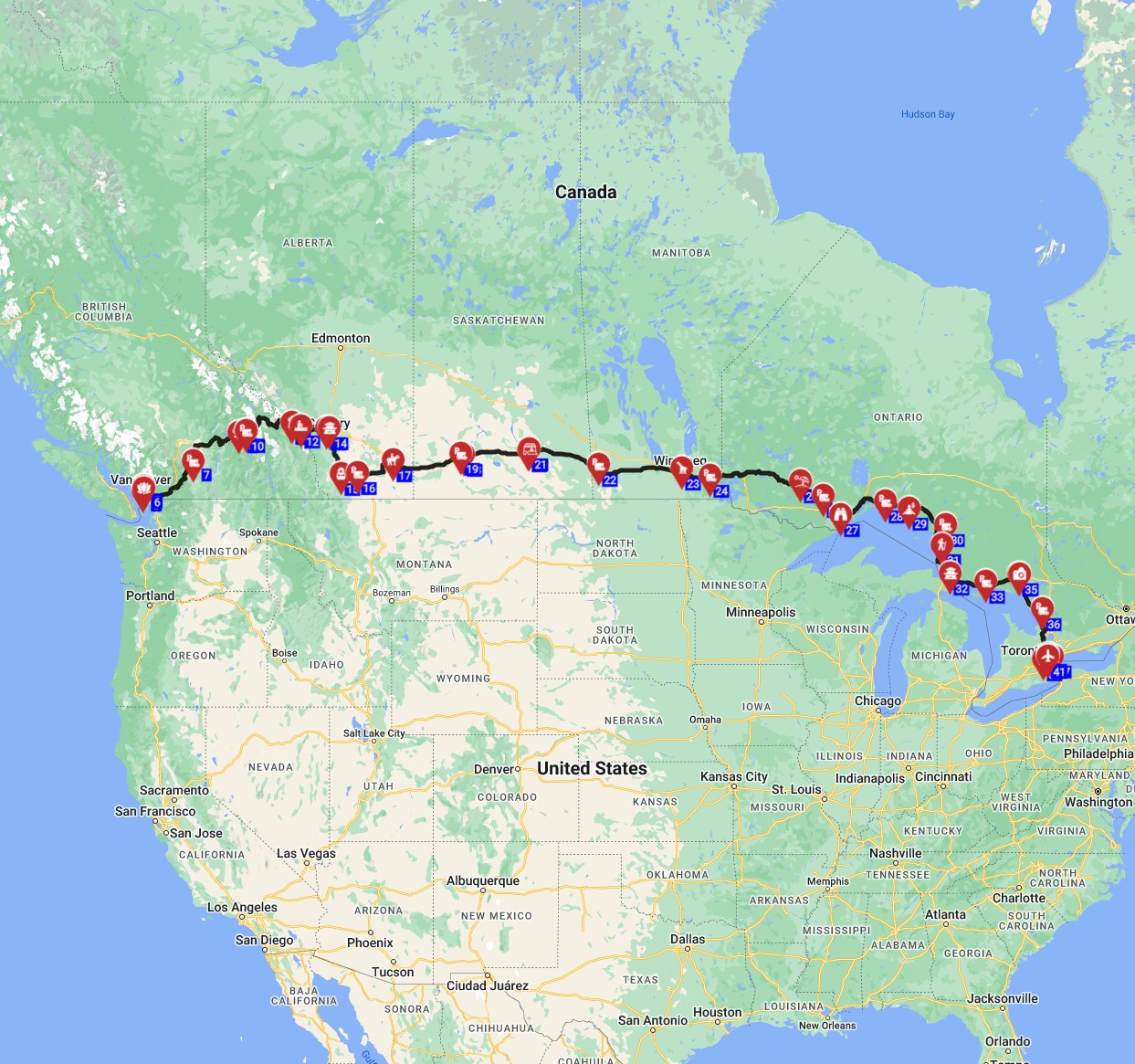
Vancouver to Toronto - Trans Canada West to East
How much do RVs cost in Canada?
The cost of RV rentals in Canada is highly variable, influenced by the vehicle's class, age, amenities, the rental duration, and the time of year. Smaller campervans (Class B), such as a "Category Van" (features a 95-liter fresh water tank and 80-liter refrigerator), are typically the most budget-friendly option, ranging from CAD 100-250 per night in shoulder seasons. These are ideal for couples or solo adventurers. Mid-sized Class C motorhomes, which are popular for families, generally fall into the CAD 150-350 per night range. An "MHC28" for example, offers sleeping for up to 7 people with a 147/190cm bed over cab and a 160-liter fresh water tank, making it a comfortable choice. Luxury Class A motorhomes, offering maximum space and premium amenities (like a full oven and large refrigerators), can command prices from CAD 250-500+ per night, especially during peak summer months. These larger motorhomes provide a home-away-from-home experience, suitable for larger groups or those seeking extensive comforts. Bandana RV offers direct partnerships with 50+ leading RV suppliers worldwide, including popular names like Cruise America and El Monte, ensuring you have a wide selection of vehicles and transparent pricing for your Canada adventure.Can Americans RV in Canada?
Yes, Americans can absolutely RV in Canada, either by renting an RV locally or by bringing their own, provided they meet specific entry and vehicle requirements. For those bringing their own RV, ensure all vehicle registration, insurance, and driver's license documents are current and valid for international travel. A standard car driver's license is sufficient for driving all motorhome classes (Class A, Class B, and Class C) in Canada, as no special license or CDL is required. Renting an RV in Canada through Bandana often simplifies logistics, as the rented vehicle will already meet Canadian standards and insurance requirements. This removes the hassle of specific vehicle import rules, such as the "10-year rule" for vehicle admissibility that can affect older RVs brought across the border. Always check the latest Canadian border entry requirements, including passport validity, and be aware of restrictions on items like firearms, excessive alcohol, or untreated firewood (which can carry invasive species). For a seamless cross-border experience, it's wise to plan ahead and ensure all documentation is in order. You might also want to consult our "RV Rental USA - Complete Guide 2026" if your trip involves multiple countries.What is the 3-3-3 rule for RV camping?
The '3-3-3 rule' for RV camping is a popular guideline designed to promote safe and enjoyable travel, advising RVers to drive no more than 300 miles (approximately 480 km), arrive by 3 PM, and stay for at least 3 nights at each location. Driving no more than 300 miles per day helps prevent driver fatigue, especially when navigating Canada's vast distances and varying road conditions, from wide-open prairies to winding mountain passes. This pace encourages slow travel, allowing you to truly take time to feel the place, connect to the culture, the food, and the scenery, rather than rushing through. Arriving by 3 PM allows ample time to comfortably set up your rented motorhome or campervan, familiarize yourself with the campground amenities, and explore the immediate surroundings before dusk. This is particularly useful in unfamiliar areas or national parks where daylight hours can vary significantly by season. Staying for at least 3 nights at each location minimizes the constant packing and unpacking, providing a more leisurely pace for deeper exploration of an area, whether it's hiking a trail, enjoying a local festival, or simply relaxing by your campsite. This rule is a great way to balance travel with genuine experience and avoids the stress of constant movement.Top Cities for RV Rental in Canada
Canada offers numerous fantastic starting points for your RV adventure, with major cities providing excellent access to a wide range of rental motorhomes and campervans. These hubs are equipped with multiple suppliers, making it easy to find the perfect vehicle for your trip. * Vancouver: As a gateway to the Pacific Rim and the Canadian Rockies, Vancouver in British Columbia offers immediate access to stunning coastal drives and mountainous landscapes. It's an ideal starting point for a "
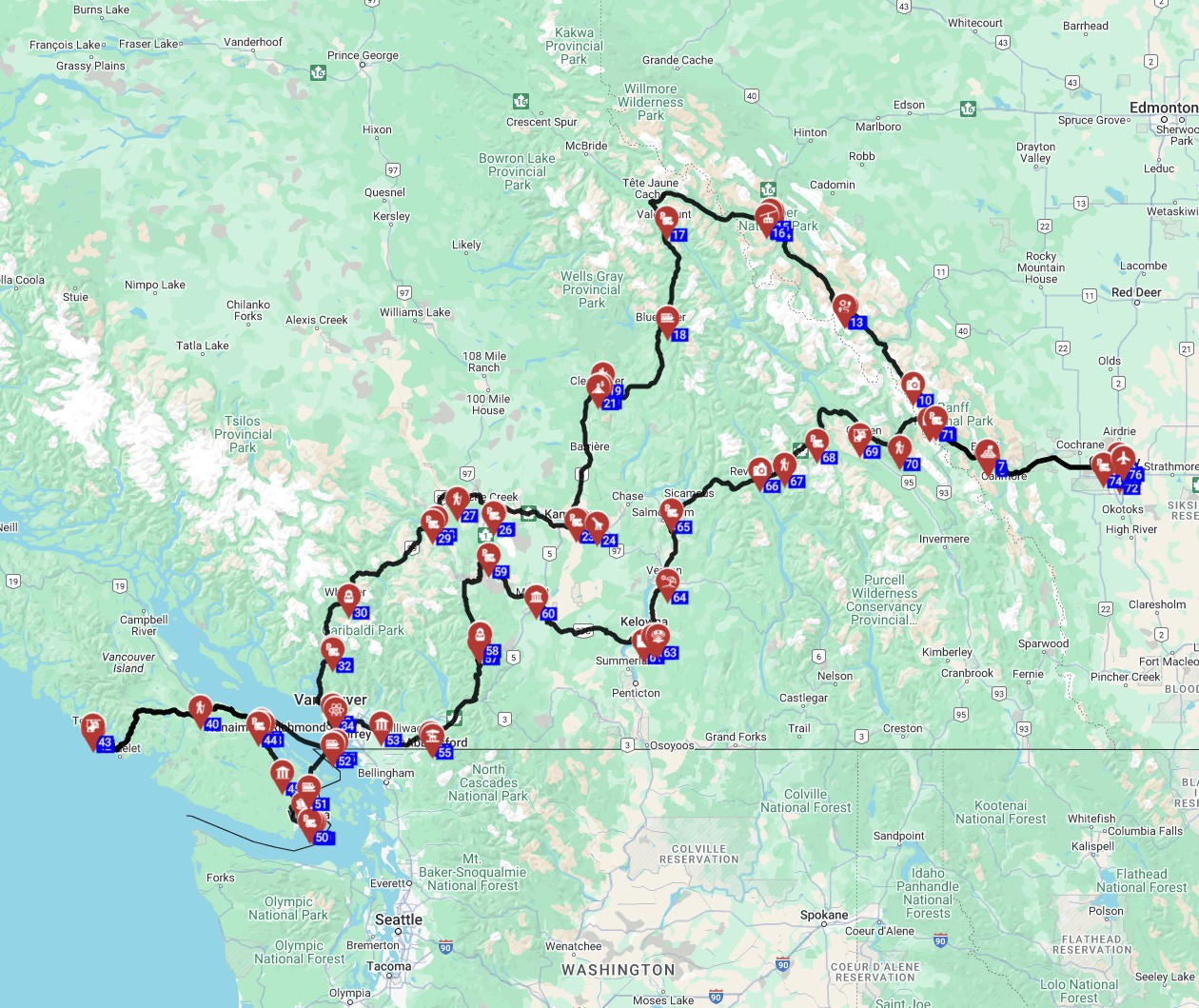
Vancouver Round Trip - West Canada Cycling Adventure
Essential Road Rules and Local Tips for RVers in Canada
Driving a rented motorhome or campervan in Canada is a fantastic experience, but it’s essential to be familiar with local road rules and customs. Canadians drive on the right-hand side of the road, similar to the USA, and use kilometers per hour (km/h) for speed limits, typically ranging from 50 km/h in urban areas to 100-110 km/h on major highways. While driving large RVs in cities, remember to drive slowly and carefully, and you can drive almost anywhere without issues. No need to stress - just use common sense and pay attention to signage, especially for height and weight restrictions on certain bridges or tunnels. For more detailed insights, consider consulting our "Driving an RV in Canada - Complete Guide 2026". Fuel types in Canada are generally unleaded gasoline and diesel. RVs often require specific fuel types, so always double-check your rental vehicle's requirements before fueling. Gas stations are plentiful in populated areas but can be sparse in remote regions, so plan your fuel stops accordingly, especially on long stretches of the Trans-Canada Highway. Emergency services can be reached by dialing 911 nationwide for police, fire, or ambulance. For budgeting fuel specifically, you may find our "Budget RV Driving in Canada - Save on Fuel 2026" guide helpful. Local driving etiquette is generally courteous; be mindful of wildlife, particularly in forested or mountainous areas, and always give larger vehicles ample space.Connectivity and Utilities: Staying Connected and Stocked in Canada
Staying connected and properly stocked with utilities is crucial for a comfortable RV rental trip across Canada's diverse landscapes. Cell service coverage is generally excellent in and around urban centers and along major highways, but can become spotty or non-existent in very remote or mountainous regions like parts of the Canadian Rockies or northern territories. Consider purchasing a local SIM card from providers like Rogers, Bell, or Telus upon arrival for reliable data and calls, or research international roaming plans if using your home provider. Many campgrounds, especially private ones, offer Wi-Fi, though it may be limited or come with a fee. For essential utilities in your motorhome or campervan, water filling stations are readily available at most campgrounds and designated RV service centers. Similarly, dump stations for grey and black water tanks are common at campgrounds, rest stops, and some gas stations. Propane refills, necessary for heating and cooking on a gas stove (like in an "Active Pop Top" campervan), can be found at gas stations, hardware stores, and RV supply shops. It's always a good idea to top up your tanks whenever possible, especially before heading into remote areas where services are scarce. With over 25 years of experience, Bandana knows the importance of being prepared, which is why we emphasize transparent details about your rental, ensuring you have a smooth journey.Safety and Preparedness for Wilderness RVing in Canada
Venturing into Canada's vast wilderness with a rented RV requires a strong emphasis on safety and preparedness. Wildlife encounters are a distinct possibility, especially in national parks and forested areas. Always store food securely inside your vehicle, never leave food or scented items unattended outside, and know what to do if you encounter bears, moose, or other large animals (typically, make noise and carry bear spray in bear country). For more advanced routes, our "Luxury RV Driving in Canada - Scenic Routes 2026" might provide inspiration for remote areas. Emergency services are robust but can take time to reach remote locations; having a satellite communication device or a personal locator beacon (PLB) is highly recommended for extended trips off the beaten path. Driving hazards can include unpaved gravel roads, particularly in national and provincial parks, and mountain passes that require careful driving, especially for larger Class A or C motorhomes. Always check local road conditions and weather forecasts before driving, particularly in spring and fall when conditions can change rapidly. Carrying an emergency kit with extra food, water, a first-aid kit, and warm blankets is a wise precaution. Remember, you'll find a spot to camp; if not at the first campground, then the next one, so call ahead before driving.What You Shouldn't Miss
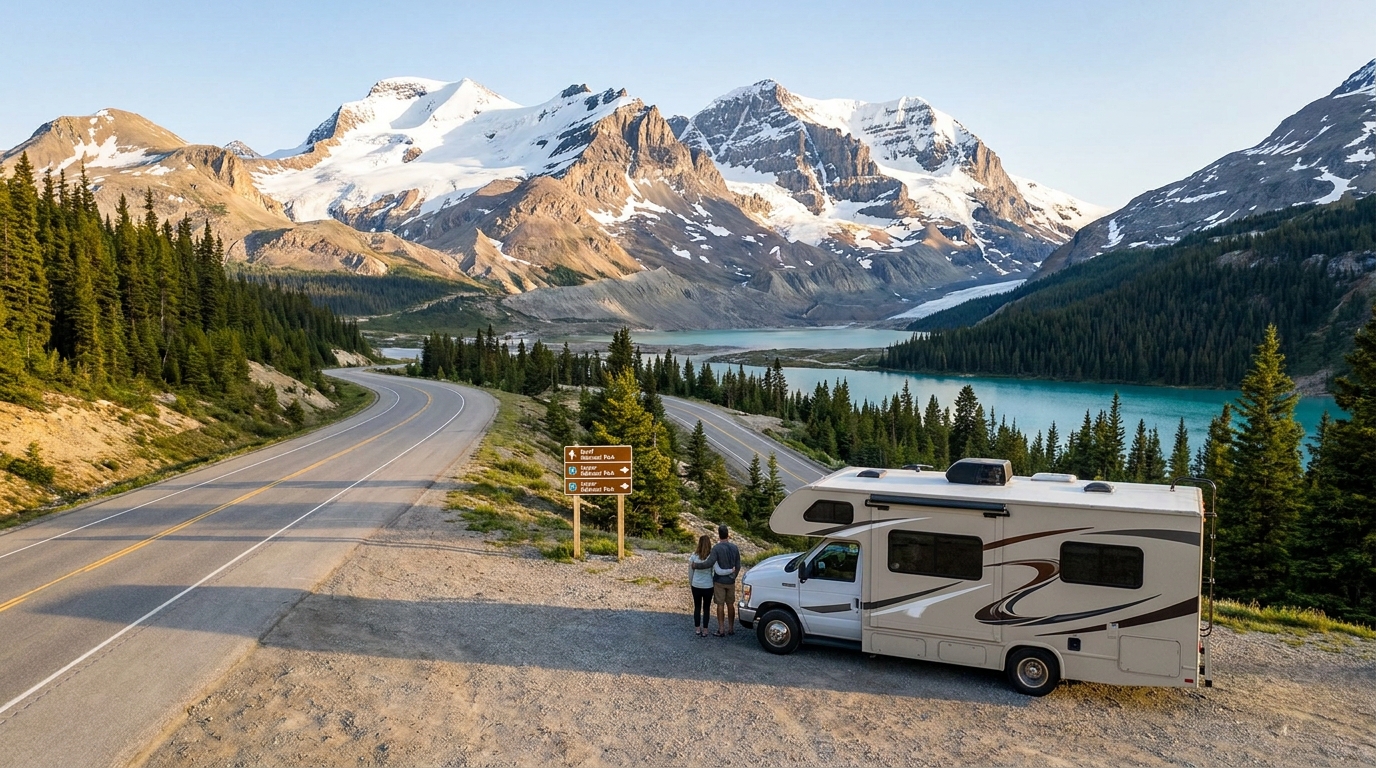
Canada is a mosaic of stunning landscapes and cultural experiences, and an RV rental offers the freedom to discover its many treasures. Here are some highlights you absolutely shouldn't miss:- Explore the Canadian Rockies: Drive the Icefields Parkway between Banff and Jasper National Parks. Witness majestic glaciers, turquoise lakes like Lake Louise and Moraine Lake, and abundant wildlife.
- Discover Maritime Charm: Journey through the Atlantic provinces, from the dramatic coastlines of Nova Scotia to the picturesque fishing villages of Prince Edward Island. The "Halifax to Whitehorse - Exploring Canada’s Heartland in a Motorhome" itinerary is a fantastic route, featuring 6 museums and 4 natural features across 9,199.1 km over 37 days.
- Experience French-Canadian Culture: Explore Quebec City's historic Old Town, a UNESCO World Heritage site, and Montreal's vibrant culinary scene.
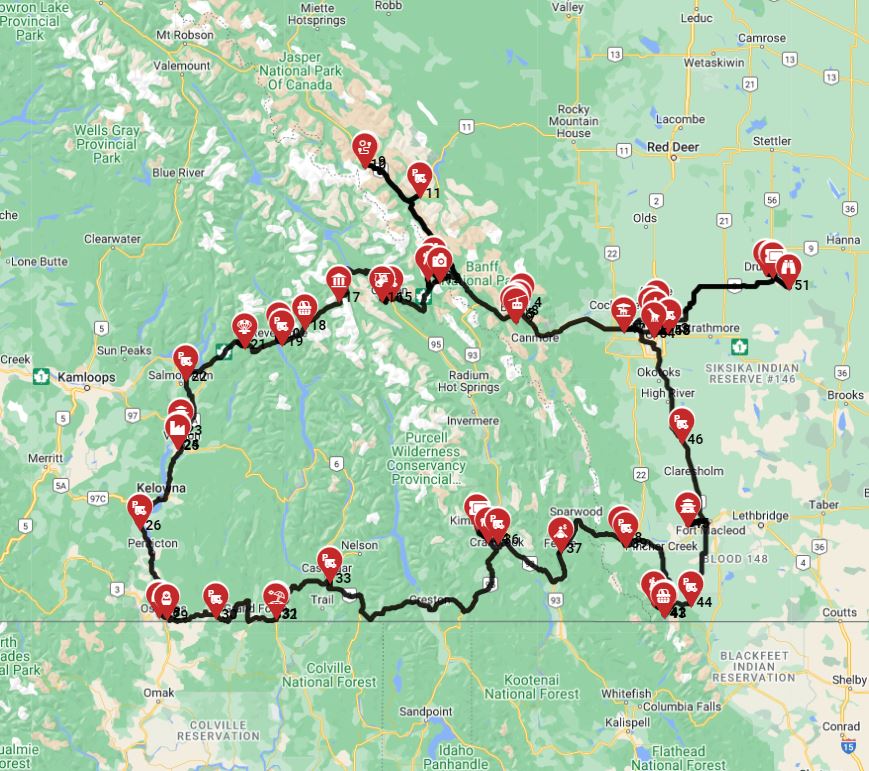
- Adventure in British Columbia's Wilderness: Take your campervan rental to Vancouver Island, explore the Pacific Rim National Park Reserve, or embark on a "Vancouver Round Trip - West Canada Cycling Adventure," a 19-day, 2,659.4 km route with 3 designated bike rental locations and 3 hiking areas.
- Chase the Northern Lights: For a truly unique experience, head north to the Yukon or Northwest Territories during autumn or winter for a chance to witness the spectacular aurora borealis from your cozy mobile home.
- Enjoy Great Lakes Grandeur: Drive along the shores of Lake Superior in Ontario, exploring provincial parks and pristine freshwater beaches, including Wasaga Beach, the world's longest freshwater beach.
Final Thoughts
An RV rental in Canada truly unlocks a world of unparalleled beauty and adventure, offering the flexibility to explore at your own pace, from the majestic Rockies to the charming Maritimes. Imagine waking up to a new, breathtaking view each morning, with the freedom to follow spontaneous detours or stick to a carefully planned route. Whether you're planning a week-long trip for two in a cozy campervan or an extended road trip for the whole family in a spacious motorhome, Canada's vast landscapes are waiting. With Bandana Caravan, your journey begins with confidence, knowing you have full price transparency, access to a wide range of vehicles from trusted suppliers, and supportive assistance throughout your booking process. Don't just dream of your Canadian RV adventure - make it a reality. Discover top destinations, planning tips, all in one place! Plan a trip itinerary in advance with minimal effort and maximum enjoyment. Get inspired for your next trip! Compare Motorhome Prices for Canada and start mapping out your unforgettable journey across this incredible country today.On the routes offered through RV PLANET routes, you can itemize and track every expense along the way for easy budgeting.