In This Guide
- The 5 RV Families Compared for Tokyo - Airport
- Class A (Integrated) - Best For
- Price Comparison by RV Class in Tokyo - Airport
- Class SI (Semi-Integrated) - Best For
- Class C (Alcove) - Best For
- Class B (Campervan) - Best For
- Class TC (Truck Camper) - Best For
- Side-by-Side Comparison Table
- Our Recommendation for RV Rental for Seniors Travelers in Tokyo - Airport
- How to pick up a rented RV from or near Narita or Haneda airports
- What are the navigation and driving considerations for RVs from Tokyo airports to initial destinations
- What RV parking solutions are available at or near Tokyo airports and in Tokyo
- How does RV travel cost compare to public transport and hotels from Tokyo airports
- What are the requirements for International Driving Permits for RVs in Japan
- How can I handle luggage in an RV directly from airport arrival
- What essential RV travel accessories and services are available near Tokyo airports
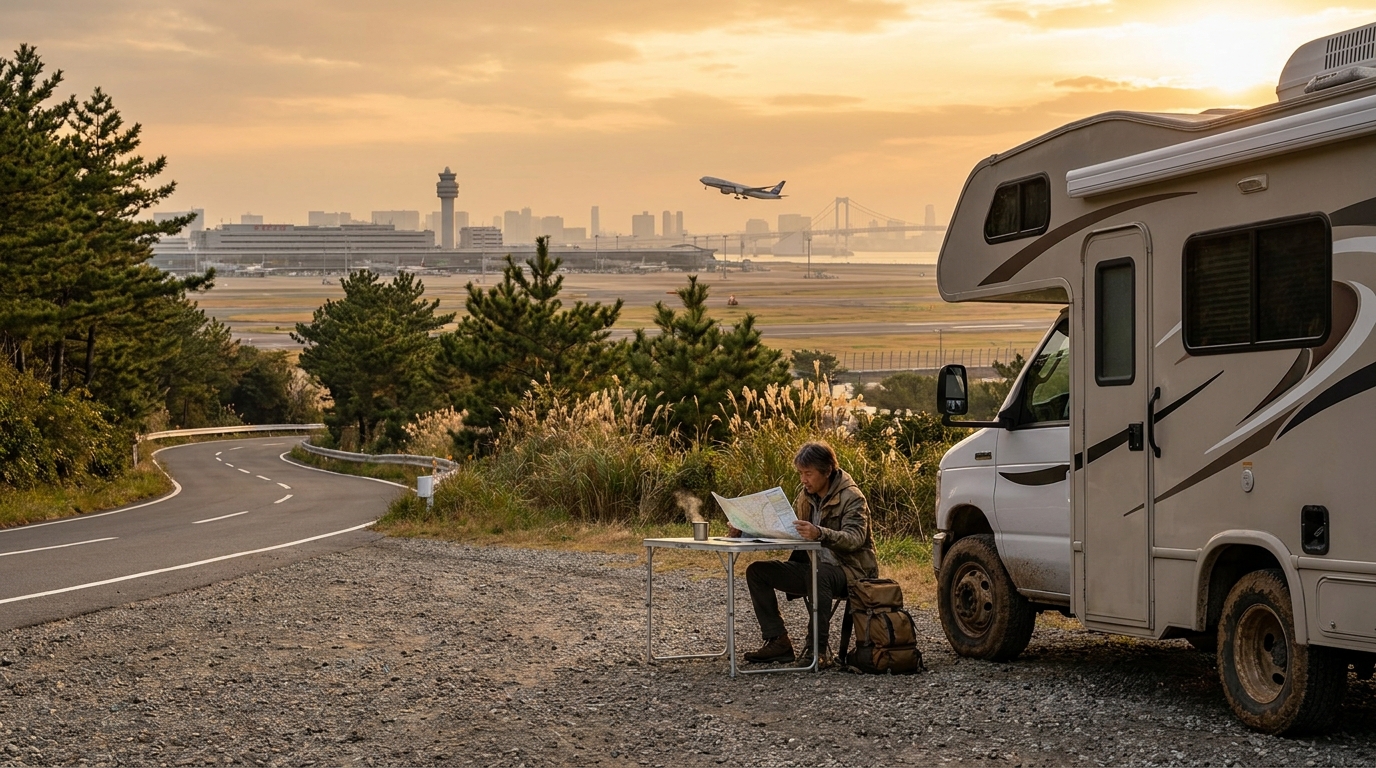
Embarking on a motorhome adventure in Japan from Tokyo - Airport offers seniors an unparalleled sense of freedom and comfort. Imagine yourself waking up to the gentle sounds of nature, brewing a cup of coffee in your rented RV, and then setting off to explore ancient temples, serene gardens, or vibrant cityscapes at your own pace. With Bandana Caravan, your journey is supported every step of the way, providing transparency and expertise so you can focus on the joy of discovery.
For live availability and current prices, start with our RV Rental Tokyo - Airport - Complete Guide 2026 guide. We've been helping tens of thousands of travelers explore the world by RV since 2001, offering direct partnerships with over 50 leading RV suppliers worldwide, including trusted names like El Monte and Apollo. Our specialized focus on RV travel means we genuinely know the ins and outs of road trips, ensuring you get honest advice and a seamless booking experience with no hidden fees or surprises.
The 5 RV Families Compared for Tokyo - Airport
Choosing the right RV family is critical for seniors renting near Tokyo airports, influencing ease of navigation, parking, and overall comfort due to Japan's unique road infrastructure and climate. For senior travelers, the right motorhome size and features can make all the difference for a relaxed and enjoyable trip. Considerations include vehicle length and width for navigating Japan's often narrower roads and city streets, especially when departing from major hubs like Narita or Haneda.
Assessing sleeping capacity, required amenities, and accessibility features based on your group size and physical needs is vital for an optimal senior travel experience. Factors such as the terrain you plan to cover, the desired trip length, and whether you prefer urban exploration or rural tranquility also play a significant role in determining the ideal RV class. We prioritize finding you the perfect balance of comfort and practicality for your RV rental in Tokyo - Airport.
Class A (Integrated) - Best For
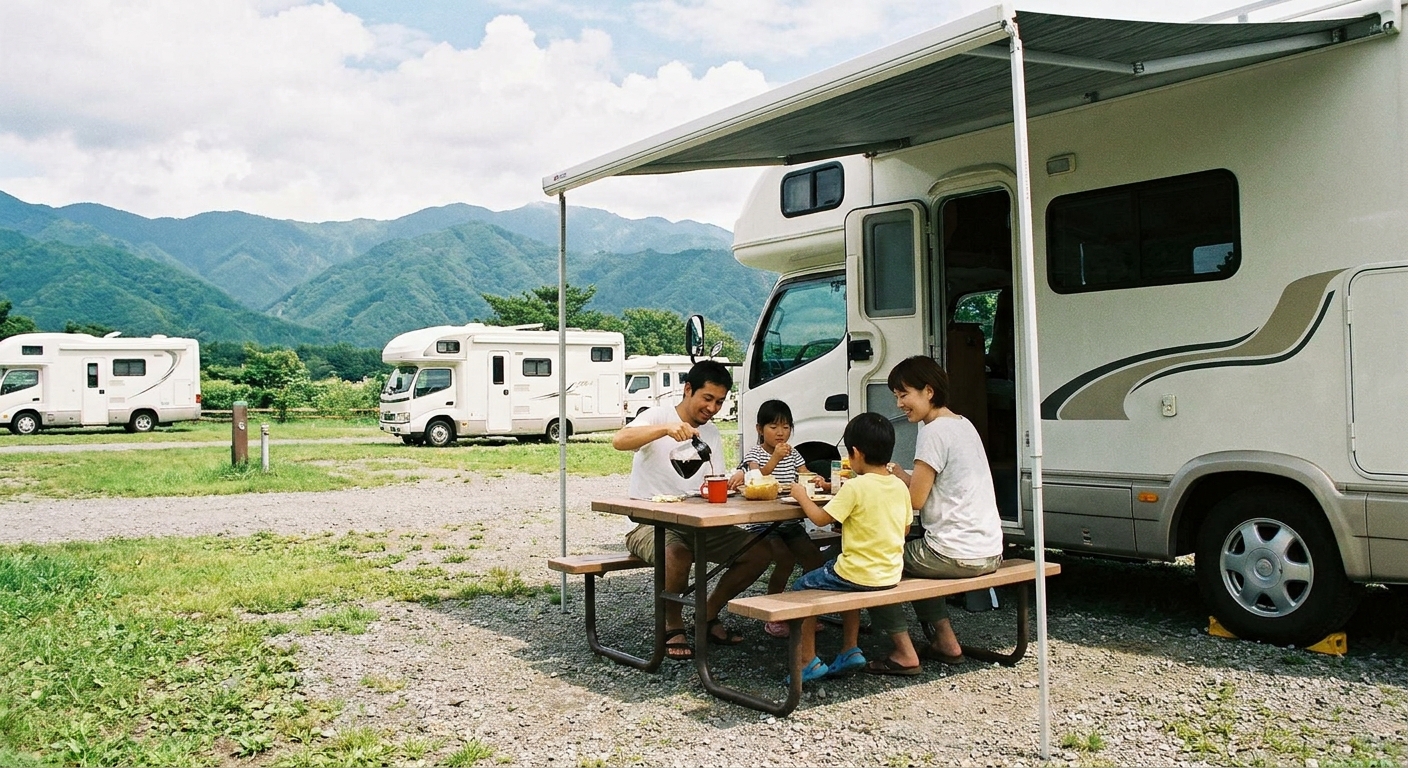
Class A integrated motorhomes offer the most spacious and luxurious RV experience, making them suitable for seniors prioritizing extensive amenities and comfort on longer journeys from Tokyo - Airport. Bandana's global fleet of Class A motorhomes typically averages 7.5 meters in length, sleeps around 4.4 people, and boasts a significant average load capacity of 209.5 kg, allowing for ample personal belongings.
This class is best suited for seniors who plan to primarily use major highways and designated RV parks outside dense urban areas around Tokyo, where parking and maneuvering larger vehicles is less challenging. Trade-offs include potentially higher fuel consumption, averaging around 11-12 Liter/100 km, and greater difficulty navigating Japan's narrower secondary roads and tighter parking spaces. For a luxurious experience, these provide top-tier comfort.
Price Comparison by RV Class in Tokyo - Airport
RV rental prices in Tokyo - Airport, like flight tickets, are dynamic and change daily based on availability, seasonality, and supplier marketing decisions. The table below presents real example prices from Bandana's live search, demonstrating how rental costs for RVs in Tokyo - Airport vary by class and duration. Generally, smaller RV classes like Campervans (Class B) tend to be more budget-friendly than larger Integrated (Class A) or Alcove (Class C) models.
These prices are dynamic estimates, subject to change based on factors such as seasonality, booking lead time, and specific vehicle availability. For example, a 1-week Class B campervan rental might start from $115 per day in the low season, while a Class C could begin at $150 per day. For the most current and accurate pricing, always use the live search box at the top of the page, which updates daily. When considering ancillary trip costs beyond the RV rental itself, such as fuel, campground fees, propane, dump fees, and tolls, remember that RV PLANET routes allow travelers to itemize and track every expense along the way for easy budgeting. On the routes offered through RV PLANET routes, you can itemize and track every expense along the way for easy budgeting.
| RV Class | Average Daily Price (Low Season) | Average Daily Price (High Season) | Typical Sleeping Capacity |
|---|---|---|---|
| Class A (Integrated) | $250 - $400 | $350 - $600 | 4-6 people |
| Class SI (Semi-Integrated) | $180 - $300 | $280 - $450 | 3-5 people |
| Class C (Alcove) | $150 - $280 | $250 - $400 | 4-7 people |
| Class B (Campervan) | $115 - $215 | $180 - $320 | 2-3 people |
| Class TC (Truck Camper) | $130 - $250 | $200 - $380 | 2-3 people |
Class SI (Semi-Integrated) - Best For
Class SI (Semi-integrated) motorhomes represent a balanced choice, offering a good blend of living space and manageable driving, which often makes them ideal for senior travelers departing from Tokyo airports. Bandana's global fleet of Class SI RVs typically averages 6.9 meters in length, sleeps about 3.8 people, and has an average load capacity of 72.2 kg, providing comfortable space for a couple or small group.
These vehicles generally outperform larger Class A models for ease of navigation and parking on Japanese roads while offering more comfort and amenities than a standard Campervan. With common fuel consumption around 10–11 Liter/100 km, Class SI RVs suit seniors seeking a comfortable touring experience that is less daunting to drive than a larger integrated model. They are a popular choice for those wanting a bit more room without the bulk.
Class C (Alcove) - Best For
Class C (Alcove) motorhomes are characterized by their distinctive sleeping area above the cab, making them an excellent choice for seniors traveling with family or needing extra sleeping capacity when renting in Tokyo - Airport. Bandana's fleet of Class C motorhomes averages 7.5 meters in length, typically sleeps around 5.8 people, and offers an average load capacity of 42.4 kg, providing ample room for larger groups, such as a family with grandchildren.
These vehicles are often a cost-efficient option that balances generous living space and amenities with a familiar driving feel, similar to a large van or truck, which can be reassuring for some senior drivers. Despite their length, Class C vehicles can be more maneuverable than Class A models for certain Japanese road conditions, with common fuel consumption ranging from 10–12 Liter/100 km, suiting seniors who prioritize space and sleeping arrangements. For a comprehensive comparison of vehicle types, our "Family RV Rental in Tokyo - Airport - Pricing Guide 2026" offers more details.
Class B (Campervan) - Best For
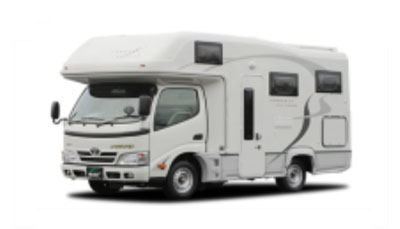
Class B (Campervan) models are highly recommended for seniors seeking maximum maneuverability, fuel efficiency, and ease of parking, particularly when exploring areas around Tokyo or smaller Japanese towns. Bandana's global fleet of campervans averages 5.8 meters in length, sleeps approximately 3.2 people, and has an average load capacity of 37 kg, making it ideal for one or two travelers seeking to rent an RV in Tokyo - Airport.
These compact RVs excel in navigating Japan's often narrow city streets and fitting into standard parking spaces, offering a driving experience similar to a large passenger van. For seniors prioritizing flexibility, accessibility to diverse locations, and lower operational costs (with typical fuel consumption around 10 Liter/100 km), a Campervan provides an agile and less stressful travel solution. Our "RV Rental in Tokyo - Airport for Couples - Pricing 2026" guide provides further insights into these efficient models.
Class TC (Truck Camper) - Best For
Class TC (Truck Camper) offers unique flexibility, as the living unit is typically mounted onto a pickup truck chassis, making it suitable for adventurous seniors or couples who value versatility when renting an RV in Tokyo - Airport. Bandana's fleet of truck campers averages 5.5 meters in length and sleeps approximately 2.4 people, making them a compact yet capable option.
This type of RV is best positioned for travelers looking to explore off-grid locations, national parks, or areas with more rugged terrain where the truck's capabilities can be utilized. While the average load capacity is reported as 0 kg (which may reflect specific data configurations rather than actual capability), their appeal lies in their adaptability and a fuel consumption typically ranging from 12–17 Liter/100 km, catering to a specific adventurous senior profile. These vehicles offer a robust alternative for those wanting to venture beyond paved roads.
Side-by-Side Comparison Table
This comparison table provides a quick reference for seniors to evaluate RV classes based on key specifications relevant to travel from Tokyo airports and within Japan. It outlines average lengths, sleeping capacities, and typical fuel consumption to help match vehicle characteristics with personal travel needs and budget. The 'Best Use Case in Tokyo - Airport' column offers tailored advice on how each RV family performs in the context of Japanese roads, parking, and senior-specific priorities.
Use this table to make an informed decision on which RV class aligns best with your comfort, maneuverability, and adventure preferences. We also offer more detailed comparisons in our "RV Rental Deals in Tokyo - Airport - Latest Offers 2026" guide.
| RV Class | Avg. Length (meters) | Avg. Sleeping Capacity | Typical Fuel Consumption (L/100 km) | Best Use Case in Tokyo - Airport |
|---|---|---|---|---|
| Class A (Integrated) | 7.5 | 4-6 | 11-12 | Luxury and comfort on major highways, outside dense cities. |
| Class SI (Semi-Integrated) | 6.9 | 3-5 | 10-11 | Balanced comfort and maneuverability for varied routes. |
| Class C (Alcove) | 7.5 | 4-7 | 10-12 | Family travel, more sleeping space, familiar driving feel. |
| Class B (Campervan) | 5.8 | 2-3 | ~10 | Maximum maneuverability, city-friendly, fuel-efficient. |
| Class TC (Truck Camper) | 5.5 | 2-3 | 12-17 | Adventurous, off-grid exploration, rugged terrain. |
Our Recommendation for RV Rental for Seniors Travelers in Tokyo - Airport
For most seniors renting an RV in Tokyo - Airport, the Class B (Campervan) is the primary recommendation due to its exceptional maneuverability and suitability for Japanese travel conditions. Its compact average length of 5.8 meters makes it significantly easier to drive on Japan's often narrow roads, navigate urban areas, and find suitable parking compared to larger RVs. The Campervan offers sufficient comfort and essential amenities for 1-2 travelers, reducing driving stress and enhancing accessibility to various destinations, all while offering good fuel economy (around 10 Liter/100 Km).
A strong runner-up for seniors seeking a balance of increased space and manageable driving is the Class SI (Semi-Integrated), which averages 6.9 meters in length and sleeps 3.8 people, providing more comfort for slightly longer trips or small groups without the bulk of a Class A or C. Remember, when driving an RV in Tokyo - Airport, drive slowly and carefully, and you can drive almost anywhere without issues. No need to stress - just use common sense and pay attention.
How to pick up a rented RV from or near Narita or Haneda airports
RV rental companies near Tokyo's Narita (NRT) and Haneda (HND) airports typically facilitate pickups from off-site depots rather than directly at the terminal due to vehicle size and airport regulations. Seniors should anticipate using a complimentary shuttle service provided by the rental company, which will transport them from a designated airport meeting point to the main rental facility. For example, many depots are located in Chiba prefecture, about an hour from Narita Airport.
It is crucial to confirm specific pickup instructions, including shuttle schedules and meeting locations, directly with your chosen RV provider well in advance of your arrival. Some rental agencies may offer a premium delivery service directly to a nearby airport hotel or a pre-arranged location for an additional fee, potentially reducing immediate post-flight travel logistics. Bandana Caravan ensures full transparency throughout the booking process, detailing any such pickup arrangements and associated costs, so there are no surprises.
What are the navigation and driving considerations for RVs from Tokyo airports to initial destinations
Navigating an RV from Narita (NRT) or Haneda (HND) to your first destination in Japan requires careful consideration of Japanese road sizes, comprehensive toll road systems, and urban traffic patterns. Seniors should plan routes using a GPS system (either built-in or via a smartphone app with RV-specific settings) to avoid extremely narrow roads, low bridges (some urban underpasses might be lower than expected), or restricted areas not suitable for larger vehicles, especially in areas like Shinjuku or Shibuya.
Japanese expressways involve significant tolls; acquiring an ETC (Electronic Toll Collection) card from your rental company is highly recommended for seamless passage and often discounted rates. You can usually rent these cards for approximately ¥300-¥500 per rental, plus actual toll charges. Remember that Japan drives on the left, and traffic around Tokyo can be dense; familiarity with international road signs and potentially practicing with a smaller RV class like a Campervan can ease the transition for seniors. Our "Driving an RV in Tokyo - Airport - Complete Guide 2026" provides more specific tips.
What RV parking solutions are available at or near Tokyo airports and in Tokyo
Direct RV parking at Narita (NRT) or Haneda (HND) airports, especially for overnight stays, is extremely limited or generally unavailable, necessitating immediate onward travel to a dedicated RV-friendly location. For a convenient first night after landing, seniors should research and pre-book spots at Michi-no-Eki (Roadside Stations) or private RV parks located a manageable distance from the airports, many of which accommodate larger vehicles. For instance, Michi-no-Eki Tako-Ajisai-kan near Narita offers free overnight parking and local produce, while others further out may have full hookups for around ¥2,000-¥5,000 per night.
Within Tokyo itself, parking for RVs is challenging; seek out larger shopping center parking lots (like those near Odaiba or outside the Yamanote Line circle), specialized RV parks on the city's outskirts, or pre-arranged parking at facilities explicitly designed for oversized vehicles. Always confirm parking availability and restrictions in advance by calling ahead, as street parking is rarely an option, and strict regulations are enforced throughout Japan. For finding campsites and campgrounds during your trip, we recommend using RV PLANET (rvplan.net) - a great resource for locating available spots along your route.
How does RV travel cost compare to public transport and hotels from Tokyo airports
RV travel from Tokyo airports presents a unique cost proposition compared to traditional public transport and hotel stays, often offering better value for groups or extended trips. While the upfront RV rental fee can be higher than individual train tickets, it combines accommodation and transportation costs, potentially leading to overall savings, especially for couples or families on a two-week adventure. For example, a 7-day RV rental might average $1000-$2000, while 7 nights in hotels for two could easily exceed this, plus the cost of transport.
When budgeting, factor in additional expenses for RV travel, including airport transfers to the depot (typically $30-$50 if not complimentary), fuel (a campervan consuming 10L/100km on a 1500km trip would need 150L of fuel, costing roughly $200-$250 at current prices), expressway tolls (potentially $50-$150 depending on route), and campsite or overnight parking fees (free at Michi-no-Eki or $20-$50 at private parks). For seniors valuing flexibility, the ability to cook meals (saving on restaurant costs - check our RV-friendly recipes playlist), and avoiding frequent hotel check-ins and luggage transfers, RV travel often proves to be a more economical and convenient option than relying solely on hotels and public transport, particularly for multi-day itineraries.
What are the requirements for International Driving Permits for RVs in Japan
To legally operate an RV in Japan, foreign visitors, including seniors, are required to possess an International Driving Permit (IDP) issued under the 1949 Geneva Convention, in conjunction with their valid domestic driver's license. It is imperative to obtain your IDP from the authorized issuing body in your home country (e.g., AAA or AATA in the US, AA in the UK) before departing for Japan, as these permits cannot be acquired upon arrival. A standard car driver's license is sufficient for all motorhome classes (Class A, Class B, and Class C), and no special license or additional permits are required for any rental motorhome.
The IDP, along with your original national driver's license, must be carried and presented at all times while driving an RV in Japan to comply with local laws and avoid legal complications or fines. Beyond the IDP, seniors should familiarize themselves with specific Japanese local driving laws relevant to RVs, including speed limits (typically 100 km/h on expressways, 60 km/h on ordinary roads), parking regulations, and vehicle height/width restrictions, especially when planning routes through cities or tunnels near Tokyo - Airport.
How can I handle luggage in an RV directly from airport arrival
Effectively managing luggage upon RV pickup directly from Tokyo airports is essential for a comfortable start, especially for senior travelers. Be aware that many RV classes, particularly smaller ones like Class B Campervans or Class SI Semi-integrated models, have more limited dedicated storage space compared to traditional vehicles, so packing efficiently with soft-sided bags is advisable. For instance, a typical campervan might have 1-2 cubic meters of storage space.
Before leaving the rental depot, take time to organize and secure all belongings into the RV's designated storage compartments to ensure they are stable during transit and easily accessible when needed. For any excess luggage that won't comfortably fit, consider utilizing Japan's excellent luggage delivery services, such as Yamato Transport (Takkyubin), which can forward bags directly to a future accommodation or a specific destination, usually for ¥1,500-¥3,000 per bag. Inquire with the rental company about temporary storage solutions or local coin lockers near Narita City or Haneda's surrounding areas.
What essential RV travel accessories and services are available near Tokyo airports
Essential RV travel accessories and services for a comfortable journey from Tokyo airports often include Electronic Toll Collection (ETC) cards, portable Wi-Fi devices, and cooking equipment. Most RV rental companies operating near Narita (NRT) or Haneda (HND) offer these items as optional rentals, allowing seniors to pick them up conveniently with their vehicle. An ETC card is highly recommended to simplify highway toll payments and potentially access discounts, with rental costs typically around ¥300-¥500 per week.
A portable Wi-Fi device ensures consistent navigation, communication, and connectivity for travelers, often available for rent at ¥500-¥1,000 per day. Additionally, items such as bedding, cooking utensils, and outdoor camping furniture are frequently available for rent, enhancing the self-sufficiency and comfort of your RV experience without the need to pack bulky personal items. Bandana Caravan's transparent pricing ensures all these add-on costs are clear upfront, so you can plan your budget effectively. For more planning resources, consider our "RV Travel Guide to Tokyo - Airport - Tips and Top Spots 2026" video guide.
🎬 Video coming soon
What You Shouldn't Miss
- Explore Hakone and Mount Fuji: Drive your rented motorhome to the scenic Hakone region, offering stunning views of Mount Fuji, serene lakes (like Lake Ashi), and relaxing hot springs. Park at a local campground and take public transport to explore the Hakone Open-Air Museum or the Hakone Ropeway.
- Visit Nikko's Sacred Shrines: Head north from Tokyo - Airport to Nikko, home to UNESCO World Heritage shrines and temples amidst beautiful natural surroundings. The drive is manageable, and local parking is available for RVs, allowing you to immerse yourself in Japan's rich history and natural beauty.
- Discover Chiba's Coastal Beauty: Right near Narita Airport, Chiba Prefecture offers coastal drives and tranquil spots. Head to the Pacific Ocean side for fresh seafood, picturesque lighthouses, and relaxed beachside camping, a perfect contrast to Tokyo's bustling city.
- Experience Rural Charm in Yamanashi: Journey west into Yamanashi Prefecture, known for its vineyards and fruit orchards. Enjoy slow travel, averaging 100-150 km per day, allowing time to connect with local culture, sample seasonal produce, and appreciate the scenery from your mobile home.
- Indulge in Onsen Culture: Seek out RV-friendly onsen (hot spring) facilities, often found at Michi-no-Eki or dedicated campgrounds, for a truly Japanese relaxation experience after a day of driving. Many are accessible and offer overnight parking.
- Looking for expert insights from Avi Bandana? Top 5 Adventures - recommendations from Avi Bandana
Final Thoughts
Renting an RV in Tokyo - Airport as a senior traveler opens up a world of comfortable, flexible exploration across Japan. Whether you prioritize maneuverability with a compact campervan or expansive amenities with a larger motorhome, there's a perfect vehicle waiting for your adventure. Remember to travel slowly, averaging a maximum of 100-150 km per day, allowing ample time to immerse yourself in the unique culture, savor the delicious food, and appreciate the breathtaking scenery that Japan has to offer.
At Bandana Caravan, we are dedicated to providing you with the easiest, safest, and most affordable way to rent an RV. Our commitment to full transparency and personalized support ensures that your journey begins and continues smoothly. So, take the leap, embrace the open road, and create unforgettable memories with a rented motorhome in Japan.
Find Motorhome Rentals in Tokyo - Airport