In This Guide
- The 5 RV Families Compared for Germany
- Class A (Integrated) - Best For
- Price Comparison by RV Class in Germany
- Class SI (Semi-Integrated) - Best For
- Class C (Alcove) - Best For
- Class B (Campervan) - Best For
- Side-by-Side Comparison Table
- Our Recommendation for RV Rental for Seniors Travelers in Germany
- What is the best RV rental for seniors in Germany?
- Is Germany good for RV travel?
- Is it easy to drive an RV in Germany?
- How much does it cost to rent an RV in Germany for a week?
- What is the cheapest way to rent an RV in Germany?
- What is a good alternative to RVing in Germany?
- Can I rent an RV in Germany and drive to other countries?
- What do I need to rent an RV in Germany?
- What is the average gas mileage for an RV in Germany?
- Is it safe to wild camp in Germany?
- What are Stellplätze in Germany?
- How much is it to stay overnight at a Stellplatz?
- Can you RV camp anywhere in Germany?
- What are the best places to RV in Germany?
- What is the best month to RV in Germany?
- Is it worth buying an RV in Germany?
- Are RVs expensive in Germany?
- What You Shouldn't Miss
- Why Book with Bandana Caravan
- Final Thoughts
- Frequently Asked Questions
Exploring Germany in a rented motorhome offers unparalleled freedom and comfort, especially for senior travelers seeking a relaxed yet enriching adventure. Imagine yourself winding through charming Black Forest villages, cruising along the historic Romantic Road, or discovering the vibrant culture of Bavaria, all from the comfort of your mobile home. At Bandana Caravan, we genuinely understand the unique needs of senior RV travelers. For live availability and current prices, start with our RV Rental Germany - Complete Guide 2026 guide.
The 5 RV Families Compared for Germany
Choosing the right RV family is crucial for a comfortable and enjoyable senior travel experience in Germany, influencing everything from ease of navigation on scenic routes to the practicalities of a longer trip. Factors like Germany's diverse terrain, varied climate, preferred trip length, and group size have significant implications for which RV type will best suit your adventure. Smaller, more agile RVs excel on quaint village roads and in bustling city centers, while larger models offer more living space and amenities for extended stays. Considerations for senior travelers include driving comfort, accessibility features, ample storage capacity for personal items, and fuel efficiency.
As true RV specialists, not a side department of a generic travel agency, we pride ourselves on offering full transparency in our comparisons. You’ll find no hidden fees or unwelcome surprises when booking with us. We partner directly with over 50 leading RV suppliers worldwide, including trusted names like El Monte, Cruise America, Apollo, and Britz, ensuring a diverse and reliable fleet for your German excursion.
Class A (Integrated) - Best For
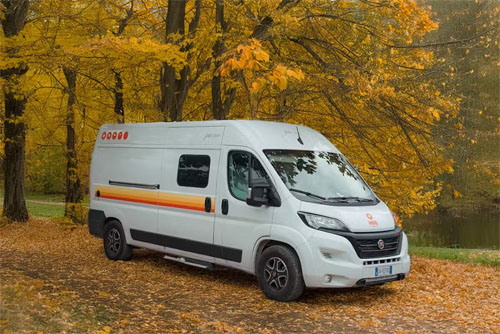
Class A integrated motorhomes are best suited for seniors prioritizing luxury, spacious living areas, and maximum comfort during their German RV adventure. With an average length of 7.5 meters and sleeping capacity for around 4.4 people (based on Bandana's global fleet average), these vehicles offer expansive interiors resembling a small apartment, often featuring full kitchens, private bathrooms, and ample storage. They are ideal for longer trips, couples or small groups seeking a premium experience, and those who plan to spend considerable time relaxing inside their RV. The large panoramic windshields offer excellent visibility for enjoying Germany's scenic routes, though their size requires careful attention when navigating narrow village streets or finding parking spots. Drive slowly and carefully, and you can drive almost anywhere without issues. No need to stress - just use common sense and pay attention. Fuel consumption for Class A motorhomes typically ranges from 11-12 Liters/100 km, and they boast a significant average load capacity of 209.5 kg, accommodating plenty of gear.
For instance, a "Class A - Thor ACE 30" model offers sleeping places for 6 and seat belts for 7, within a length of 9.37m and width of 2.51m. It includes a 189 Liter fresh water tank, 151 Liter waste water tank, and a 302 Liter fuel tank, ensuring self-sufficiency for extended stays. This type of motorhome provides amenities like a 3-burner gas stove, a refrigerator, microwave, and separate shower and toilet facilities.
Price Comparison by RV Class in Germany
RV rental prices in Germany vary significantly based on the class of vehicle, duration of the rental, season, and booking lead time, making early reservations advantageous for seniors planning their trips. Because pricing is dynamic and flex-rate, the table below pulls real example prices from Bandana's live search, offering a current snapshot of typical costs across different RV classes and rental periods. Generally, smaller Class B campervans offer the most budget-friendly options, while larger Class A motorhomes command premium rates due to their size and amenities. Keep in mind that these prices are estimates, and actual costs will depend on specific dates and availability; check the search box at the top of the page for live, real-time numbers. If you're wondering how much it costs to rent an RV in Germany for a week, expect a range from approximately €500 to over €1500, depending on your choices.
For more detailed cost breakdowns, you can always refer to our "RV Rental in Germany - Prices and Best Deals 2026" and "Cheap RV Rental in Germany - Budget Guide 2026" comprehensive pricing guides. We compare final prices across 50+ suppliers, so you don't have to, ensuring full price transparency with no hidden fees, no surprises, and no tricks or gimmicks. On the routes offered through RV PLANET routes, you can itemize and track every expense along the way for easy budgeting.
Class SI (Semi-Integrated) - Best For
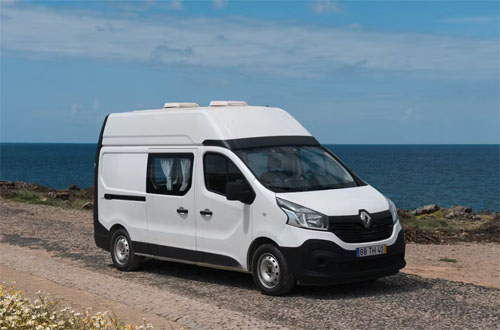
Class SI semi-integrated motorhomes are the balanced choice for senior travelers in Germany, offering a comfortable blend of living space, maneuverability, and fuel efficiency. Averaging 6.9 meters in length and accommodating about 3.8 sleepers (Bandana's global fleet average), these RVs provide sufficient room for couples or small families without the bulk of a Class A. They are particularly well-suited for navigating Germany's diverse landscapes, from Autobahns to smaller country roads, providing easier handling and parking than fully integrated models. Class SI models typically offer comfortable beds, a functional kitchen, and a compact bathroom, making them ideal for those seeking a home-away-from-home experience without excessive size. For instance, the "K125" is a type of Class SI motorhome that offers sleeping places for 3 and seat belts for 4, with a length of 6.99m and a fuel consumption of 12–14 Liters/100 km, featuring a 115 Liter fresh water tank and a 100 Liter waste water tank. Its design offers a perfect balance for extended stays, and its kitchen is well-equipped for preparing RV-friendly recipes playlist on the go. Fuel consumption is generally efficient, at 10-11 Liters/100 km, with an average load capacity of 72.2 kg, making them a practical choice for most senior RVers.
We handle the details, you live the journey - offering personal service from day one until your booking is confirmed, making your planning stress-free. Our expertise as true RV specialists means we understand these nuances to help you choose perfectly.
Class C (Alcove) - Best For
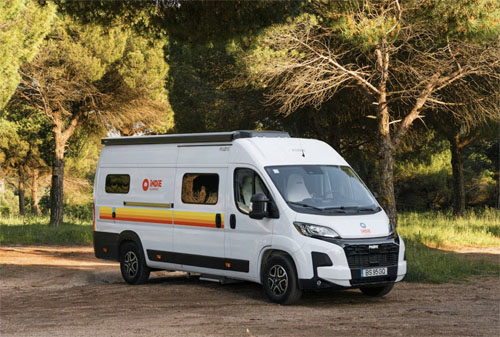
Class C alcove motorhomes are best for senior travelers who prioritize extra sleeping capacity, particularly for grandchildren or guests, and seek a cost-efficient yet spacious option for their German travels. These RVs are characterized by the distinctive sleeping area over the driver's cab, providing an average of 5.8 sleeping places and 4.4 adult capacity within an average length of 7.5 meters (Bandana's global fleet average). They offer ample interior space for comfortable living, making them excellent for families or groups who desire separate sleeping zones and a generous social area. While similar in length to Class A, their construction makes them generally more affordable to rent and operate, with fuel consumption typically around 10-12 Liters/100 km. Their robust build is well-suited for German road conditions, and an average load capacity of 42.4 kg allows for essential luggage, though their taller profile requires attention to low bridges and overhead clearances.
For example, a "24' Class C Motorhome" has sleeping places for 5 and seat belts for 6, with a length of 7.46m. It typically includes a 166 Liter fresh water tank, 147 Liter waste water tank, and a 208 Liter fuel tank, along with a 3-burner gas stove and microwave. This makes it an excellent option for a family RV rental in Germany - pricing will vary by season.
Class B (Campervan) - Best For
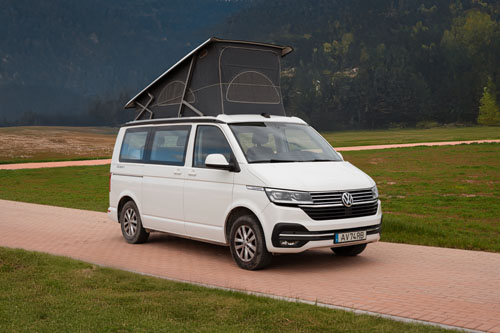
Class B campervans are ideal for senior travelers in Germany prioritizing ultimate maneuverability, fuel economy, and a minimalist travel style, perfect for navigating narrow streets and frequent city stops. These compact RVs, averaging 5.8 meters in length and designed for about 3.2 sleepers (Bandana's global fleet average), offer the driving experience of a large van while providing essential amenities like a small kitchen, bed, and often a compact bathroom. Campervans excel in Germany's urban environments and on its extensive network of scenic, smaller roads, making them perfect for couples or solo adventurers who value flexibility and ease of parking. Their excellent fuel efficiency, typically around 10 Liters/100 km, helps reduce travel costs, and their nimble size allows access to places larger RVs cannot reach, fostering authentic, off-the-beaten-path experiences. With an average load capacity of 37 kg, they are best for light packers planning active trips involving hiking, cycling, or visiting artisan villages. A popular model like the "Active Bunk Auto" typically features automatic transmission and is approximately 5.99 meters long, offering both a shower and toilet.
Side-by-Side Comparison Table
This table provides a concise side-by-side comparison of the key features and ideal use cases for each motorhome family available for rent in Germany, aiding senior travelers in making an informed decision. Consider factors like average length, sleeping capacity, fuel efficiency, and suitability for different German travel scenarios when reviewing these options. The data presented reflects Bandana's global fleet averages, offering a reliable benchmark for expected vehicle specifications. This comparison will help you quickly identify the RV class that best aligns with your comfort needs, travel style, and budget for your German adventure. Remember, you can upgrade to a top-level deductible for extra peace of mind, a key differentiator for Bandana Caravan.
| RV Class | Average Length | Average Sleepers | Typical Fuel Consumption (L/100 km) | Ideal For |
|---|---|---|---|---|
| Class A (Integrated) | 7.5 meters | 4.4 people | 11-12 | Luxury, spacious living, long trips, premium amenities |
| Class SI (Semi-Integrated) | 6.9 meters | 3.8 people | 10-11 | Balanced comfort & maneuverability, couples/small families |
| Class C (Alcove) | 7.5 meters | 5.8 people | 10-12 | Families/groups, extra sleeping capacity, cost-efficient space |
| Class B (Campervan) | 5.8 meters | 3.2 people | 10 | Ultimate maneuverability, fuel economy, minimalist travel, city stops |
Our Recommendation for RV Rental for Seniors Travelers in Germany
For most senior travelers exploring Germany, the Class SI (Semi-integrated) motorhome is our primary recommendation due to its optimal balance of comfort, maneuverability, and amenities. With an average length of 6.9 meters and sleeping 3.8 people, it offers ample living space for couples or small groups, including a comfortable kitchen and bathroom, without being overly cumbersome to drive on Germany's varied roads, including charming village streets. Drive slowly and carefully, and you can drive almost anywhere without issues. No need to stress - just use common sense and pay attention. Its reasonable fuel efficiency (10-11 Liters/100 km) and significant load capacity (72.2 kg) also contribute to a practical and enjoyable experience, allowing for both scenic drives and relaxing stays. As a runner-up, the Class B (Campervan) is highly recommended for more adventurous or minimalist senior couples or solo travelers who prioritize extreme maneuverability and access to authentic, off-the-beaten-path experiences. Its compact 5.8-meter length and excellent fuel economy (10 Liters/100 km) make it perfect for navigating bustling cities, parking easily, and exploring niche routes like wine tours or artisan villages, although with less interior space than an SI.
Bandana Caravan is exclusively focused on RV rentals, making us true RV specialists who understand the needs of every traveler. We offer over 1,300 pre-planned routes across 5 continents via our sister company, RV PLANET (rvplan.net), which can help you plan an itinerary in advance with minimal effort and maximum enjoyment.
What is the best RV rental for seniors in Germany?
The best RV rental for seniors in Germany typically depends on desired comfort, maneuverability, and group size, with Class SI (Semi-integrated) motorhomes being highly recommended for their balance of space and ease of driving. For couples, a Semi-integrated RV (average 6.9m length, sleeps 3.8) offers comfortable living quarters, a proper kitchen, and bathroom facilities, making it ideal for longer trips and ensuring a relaxing journey. Seniors prioritizing ultimate maneuverability and exploring quaint villages or specific niche routes, such as cycling paths or castle loops, might prefer a Class B (Campervan), which is easier to park and navigate (average 5.8m length, sleeps 3.2). Those traveling with grandchildren or seeking more luxury and living space could consider a Class C (Alcove) or Class A (Integrated), both offering more beds (5.8 and 4.4 sleepers respectively) and amenities, though at the trade-off of larger vehicle size for German roads.
🎬 Video coming soon
Is Germany good for RV travel?
Germany is exceptionally good for RV travel, offering a superb infrastructure of high-quality roads, an extensive network of Stellplätze (dedicated motorhome parking spots), and diverse landscapes from the Alps to the Baltic Sea. The country boasts well-maintained Autobahns and scenic routes like the Romantic Road, Castle Road, or specialized Wine Routes, making navigation straightforward and enjoyable for senior travelers. RVing allows for deep cultural immersion, enabling travelers to explore unique local festivals, regional traditions, and off-the-beaten-path experiences that might be missed on conventional tours. Access to fresh local produce at markets and opportunities to support artisan villages are easily integrated into a rented RV itinerary. Germany also provides good emergency support services, and English is widely spoken in tourist areas, enhancing peace of mind for international visitors.
For finding campsites and campgrounds during your trip, we recommend using RV PLANET (rvplan.net) - a great resource for locating available spots along your route.
Is it easy to drive an RV in Germany?
Driving an RV in Germany is generally easy due to excellent road conditions and clear signage, though familiarity with German road rules and adapting to vehicle size are key considerations for senior drivers. The Autobahns are well-maintained and efficient, while smaller B-roads offer scenic alternatives, though they can be narrower, especially in historic towns or mountain regions. Drive slowly and carefully, and you can drive almost anywhere without issues. No need to stress - just use common sense and pay attention. For larger RVs like Class A (avg 7.5m) or C (avg 7.5m), particular attention is needed for parking in cities and navigating tight turns, whereas Class B campervans (avg 5.8m) and SI (avg 6.9m) offer greater maneuverability. Speed limits are clearly posted, and German drivers are typically disciplined, contributing to a safe driving environment. It's advisable for first-time RVers to start with a smaller Class B or SI to build confidence, especially when planning to visit genuinely local spots away from mass tourism that might have less accessible infrastructure.
For specific guidance on navigating German roads, check out our "Family RV Driving in Germany - Safe Routes 2026" guide.
How much does it cost to rent an RV in Germany for a week?
The cost to rent an RV in Germany for a week varies widely, typically ranging from €500 for a compact campervan (Class B) to over €1500 for a luxury integrated motorhome (Class A), depending on the season, booking lead time, and specific vehicle features. Spring and fall rentals tend to be more affordable than peak summer, with specialized seasonal RVing specifics like Christmas market trips potentially having their own pricing tiers. Class SI (Semi-integrated) and Class C (Alcove) models usually fall in the mid-range, offering a balance of space and cost, making them popular choices for seniors. Beyond the base rental fee, factor in additional costs such as insurance, mileage limits (if any), cleaning fees, and potential add-ons like bedding or kitchen kits. For real-time pricing and best deals, always use Bandana's live search, as prices are dynamic and update daily based on demand and availability. Our full transparency means no hidden fees, no surprises when you book.
To help with your budget planning, remember that on RV PLANET routes, travelers can itemize and track every expense along the way for easy budgeting. For a detailed breakdown of weekly costs, refer to our "Weekly RV Rental in Germany - Pricing 2026" itinerary.
What is the cheapest way to rent an RV in Germany?
The cheapest way to rent an RV in Germany involves booking well in advance, opting for off-peak seasons, choosing smaller vehicle classes, and being flexible with pickup locations. Class B campervans (avg 5.8m length) are consistently the most budget-friendly option, offering the lowest daily rental rates and better fuel economy (avg 10 Liters/100 km). Renting during the shoulder seasons (April-May or September-October) typically offers significantly lower prices than peak summer and can also provide unique seasonal experiences like spring blooms or fall foliage. Look for special promotions, long-term rental discounts, or packages that include basic amenities to save on costs. Detailed budgeting nuances also include saving on groceries by cooking in your RV and choosing Stellplätze or basic campsites over resort-style parks to minimize overnight fees, with Stellplätze often costing less or even being free for short stays. Our 25% planning discount for using rvplan.net can further enhance your savings for planning flexible itineraries.
What is a good alternative to RVing in Germany?
While RVing offers unparalleled flexibility, good alternatives for exploring Germany include a combination of train travel with car rentals for specific regional exploration, or guided bus tours for a hands-off approach. Germany's extensive and efficient rail network (Deutsche Bahn) connects major cities and many smaller towns, making inter-city travel convenient, especially for seniors who prefer not to drive. Pairing train travel with short-term car rentals allows for exploring specific niche interest routes, like Bavaria's castle loops or the Black Forest, providing flexibility without the commitment of an RV. Guided bus tours offer a completely stress-free experience, handling all logistics, accommodation, and often providing deeper cultural immersion with expert guides, though at the expense of spontaneity. For those seeking a more authentic experience without a rented RV, consider renting an apartment or guesthouse in one region and using local transport or e-bikes to explore, supporting local businesses directly.
Can I rent an RV in Germany and drive to other countries?
Yes, you can typically rent an RV in Germany and drive to other countries within the European Union and some non-EU countries, but it is crucial to confirm cross-border travel policies with your specific rental company beforehand. Most German rental agreements permit travel to neighboring EU countries like France, Austria, Switzerland, and the Netherlands without significant issues, as long as you inform the rental provider. Some countries, particularly in Eastern Europe, or non-EU nations, may require additional insurance coverage or specific permissions, so always check the terms and conditions. Ensure your rental contract includes comprehensive insurance coverage for all intended travel destinations to avoid unexpected issues. This flexibility allows for multi-country trips, seamlessly combining Germany's attractions with the cultural offerings of nearby nations, adding another layer to your travel experience. To explore the broader possibilities, refer to our "RV Rental Europe - Complete Guide 2026" for an overview.
What do I need to rent an RV in Germany?
To rent an RV in Germany, you will typically need a valid driver's license (from your home country), an International Driving Permit (IDP) if your license is not in English, a credit card for payment and security deposit, and proof of age. The minimum rental age for motorhomes in Germany is 21 years old. A standard car driver's license (Class B or equivalent, like a US Class D or Canadian Class 5) is sufficient for all motorhome classes up to 3.5 tons, which covers the majority of rental campervans and most Class SI and Class C models. No special license or additional permits are required for these. A valid passport is also necessary for international travelers, and it's advisable to have travel insurance that covers RV rental. It is important to understand the rental agreement terms, including insurance coverage, mileage limits, and breakdown assistance, which are critical for support during your trip. We're with travelers before, during, and after their booking to ensure a smooth process.
What is the average gas mileage for an RV in Germany?
The average gas mileage for an RV in Germany varies significantly by class, typically ranging from 8-10 Liters/100 km for smaller campervans (Class B) to 11-17 Liters/100 km for larger integrated or truck campers (Class A). Class B campervans are the most fuel-efficient, averaging around 10 Liters/100 km, making them a cost-effective choice for budget-conscious seniors. Semi-integrated (Class SI) motorhomes offer a good balance, typically consuming 10-11 Liters/100 km, while Alcove (Class C) models are slightly higher at 10-12 Liters/100 km due to their larger frontal area. Class A integrated motorhomes average 11-12 Liters/100 km. These figures are averages and can be influenced by driving style, terrain (e.g., mountainous regions), load capacity, and road conditions (e.g., Autobahn vs. city driving). Careful route planning can help optimize fuel consumption.
Is it safe to wild camp in Germany?
No, wild camping or 'free camping' is generally not legally permitted in Germany for RVs, with strict regulations in place to protect natural areas and maintain public order. While it is generally tolerated to spend one night in a designated parking lot or rest area (Autobahnraststätte) to 'restore driving ability' if you arrive late, this is not considered wild camping and usually doesn't involve setting up camp (e.g., chairs, awning). Fines can be substantial for illegal wild camping, particularly in national parks, nature reserves, or private land without permission. Instead, Germany offers an excellent network of designated Stellplätze and campsites, which are safe, well-equipped, and affordable alternatives for overnight stays. For seniors, using official sites ensures access to facilities, security, and aligns with sustainable/eco-friendly travel tips by properly managing waste disposal and supporting local tourism infrastructure.
What are Stellplätze in Germany?
Stellplätze in Germany are dedicated, designated parking areas specifically for motorhomes and RVs, offering a convenient and often more affordable alternative to traditional campsites. These sites range from basic parking spots with no amenities to well-equipped areas providing electricity hook-ups, fresh water, waste disposal, and sometimes even showers and restrooms. Stellplätze are commonly found in or near towns, tourist attractions, vineyards, and alongside rivers, making them ideal for authentic, off-the-beaten-path experiences and exploring local culture. Many are operated by municipalities or private businesses, with fees often much lower than full-service campsites, and some even offer free overnight stays. They are a key part of Germany's RV-friendly infrastructure, providing legal and safe places to stay, and contributing to a stress-free travel experience for seniors.
How much is it to stay overnight at a Stellplatz?
Staying overnight at a Stellplatz in Germany is generally very affordable, with prices typically ranging from €0 (free) to €20 per night, making them a budget-friendly option for RVers compared to traditional campsites. Basic Stellplätze, especially in smaller towns or at vineyards, may be free or cost just a few euros, often without amenities beyond a parking space. More equipped Stellplätze, offering electricity hook-ups, fresh water, and waste disposal, usually charge between €10 and €20, with some premium spots potentially higher. Detailed budgeting nuances include understanding that water and electricity might be coin-operated extras at some sites, so factor these into your overall cost. Many Stellplätze operate on an honesty system or have automated payment terminals, and are an excellent way to experience authentic, off-the-beaten-path locations while keeping costs down.
Can you RV camp anywhere in Germany?
No, you cannot RV camp anywhere in Germany; comprehensive regulations prohibit wild camping outside of designated areas to protect the environment and respect private property. Legally, RV camping is restricted to official campsites and dedicated motorhome parking areas known as Stellplätze, which are widely available across the country. Attempting to camp in non-designated areas, particularly in nature reserves, forests, or private land without explicit permission, can lead to fines. For seniors, relying on the extensive network of official camping options ensures safety, access to facilities, and adheres to local laws, avoiding potential legal complications. Planning your itinerary to include stops at these recognized sites is crucial for a compliant and enjoyable RV trip through Germany, integrating with local infrastructure and fostering sustainable travel.
What are the best places to RV in Germany?
The best places to RV in Germany offer a diverse range of experiences, from historic cities and picturesque castles to stunning natural landscapes and charming cultural regions, catering to various senior traveler interests. The Romantic Road is a classic, leading through medieval towns like Rothenburg ob der Tauber and past fairytale castles like Neuschwanstein, ideal for cultural immersion and photography. For niche interest routes, consider the German Wine Route in Pfalz for wine tours, or the Black Forest for cycling, hiking trails, and artisan village visits, offering stunning fall foliage in autumn. The Bavarian Alps provide breathtaking mountain scenery and outdoor adventures, while the Rhine Valley is perfect for castle loops and riverside views. Don't miss visiting authentic, off-the-beaten-path regions like the Saxon Switzerland National Park for unique rock formations or the Mosel Valley for its steep vineyards and charming riverside towns, especially beautiful during seasonal RVing specifics like harvest time. Remember to travel slowly, max 100-150 km per day on average, to fully immerse yourself in the culture, food, and scenery.
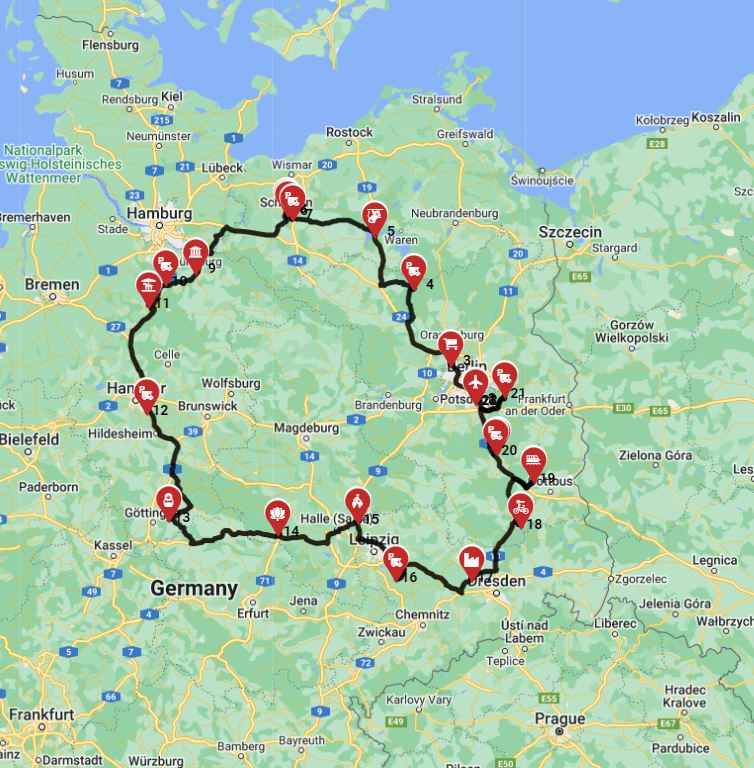
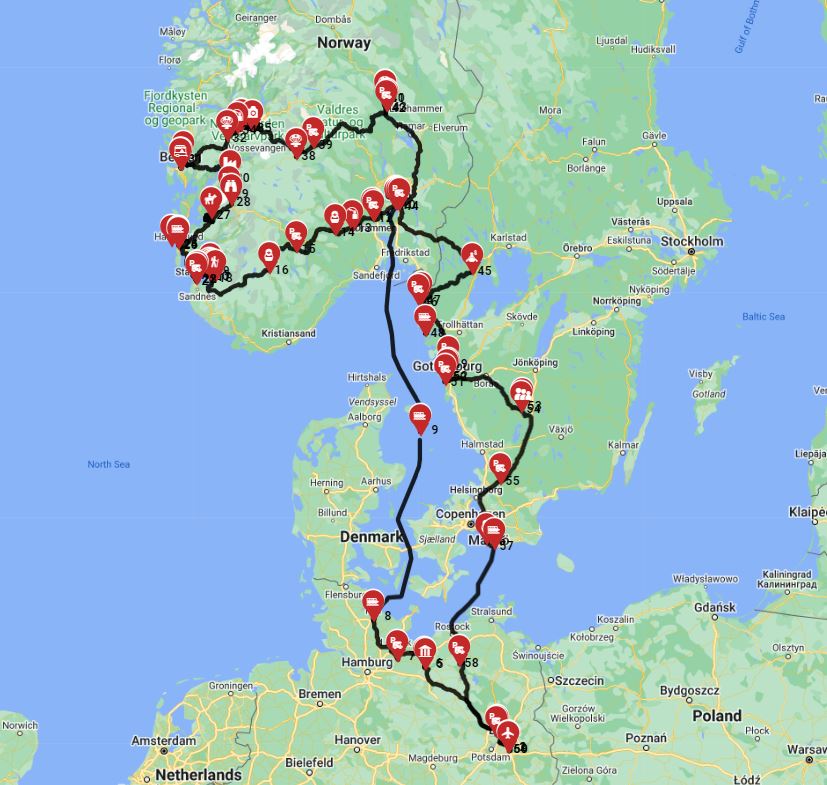
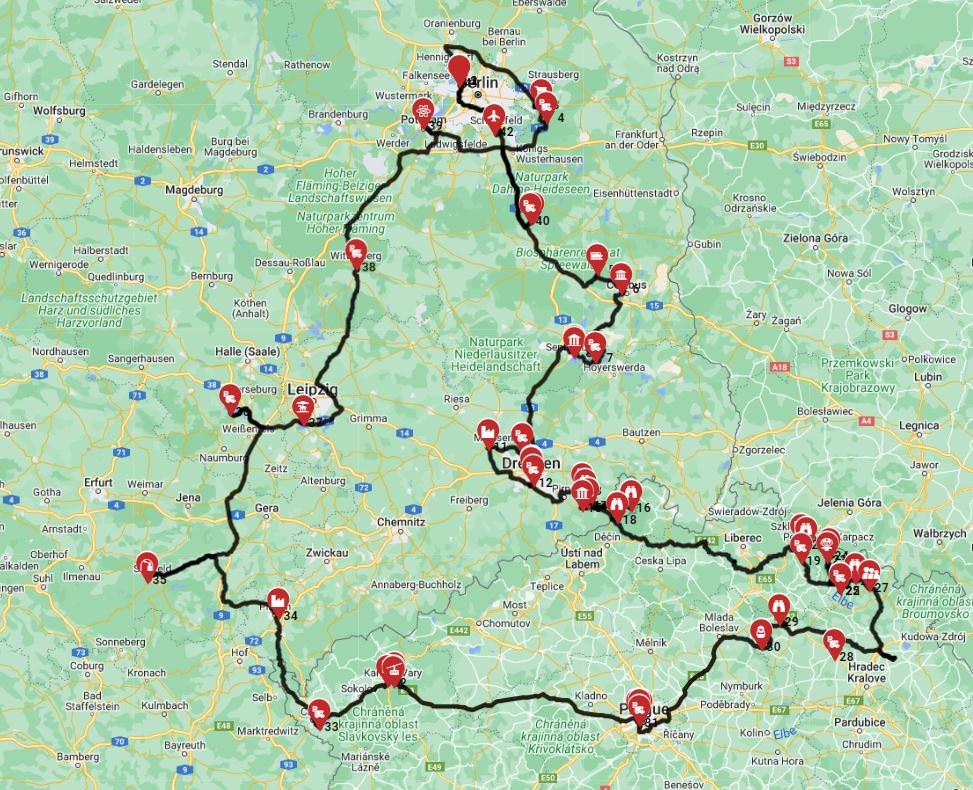
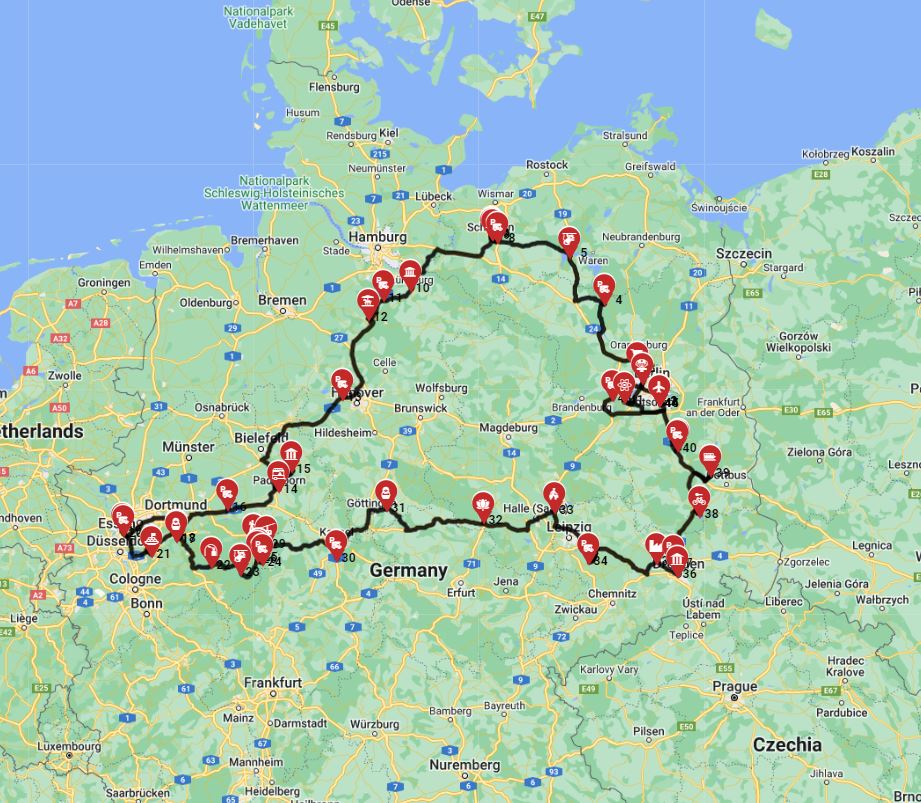
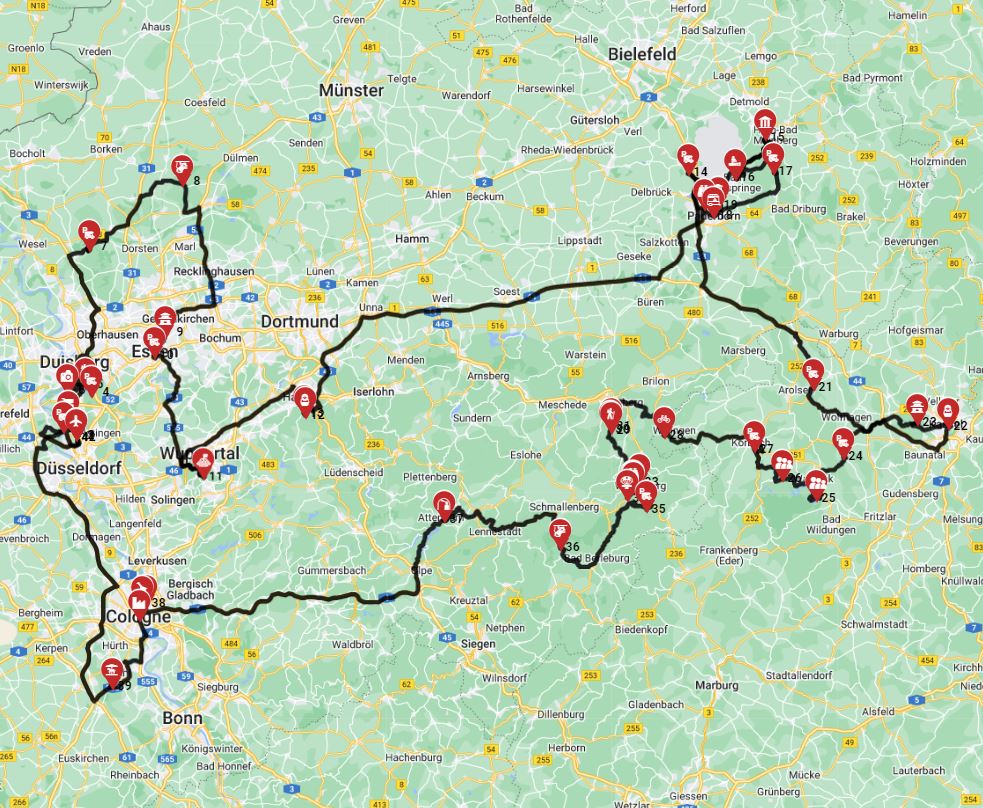
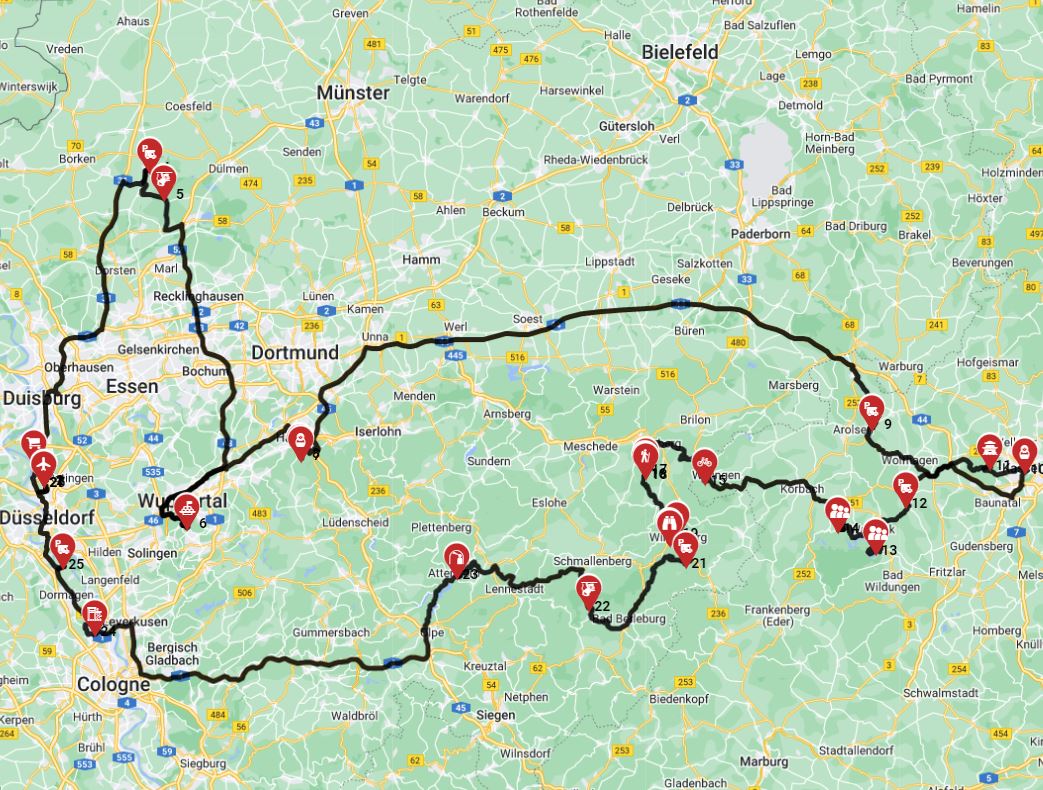
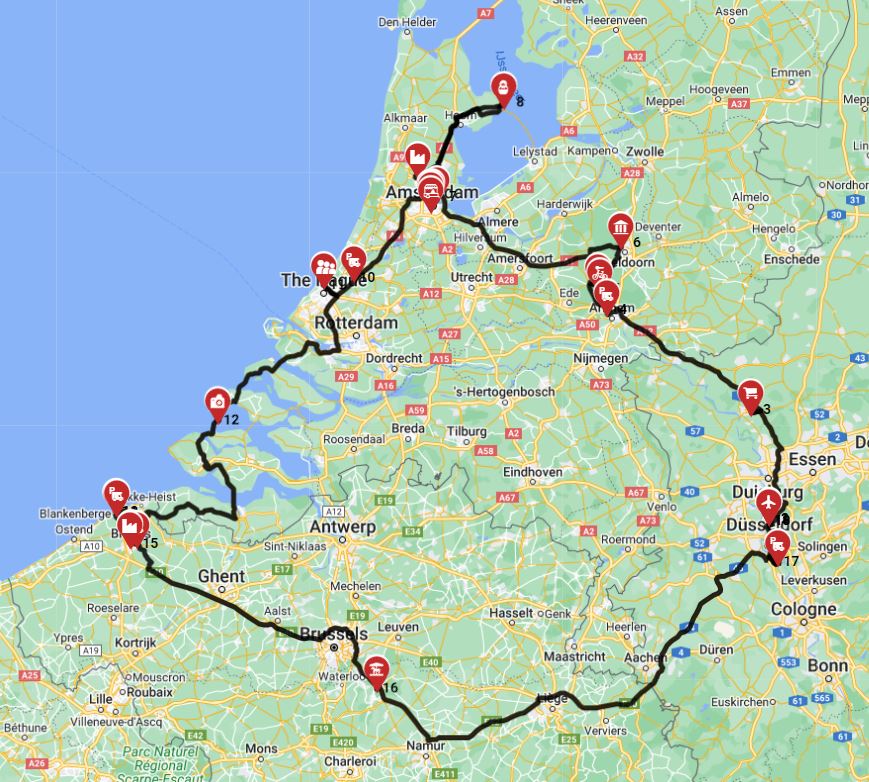
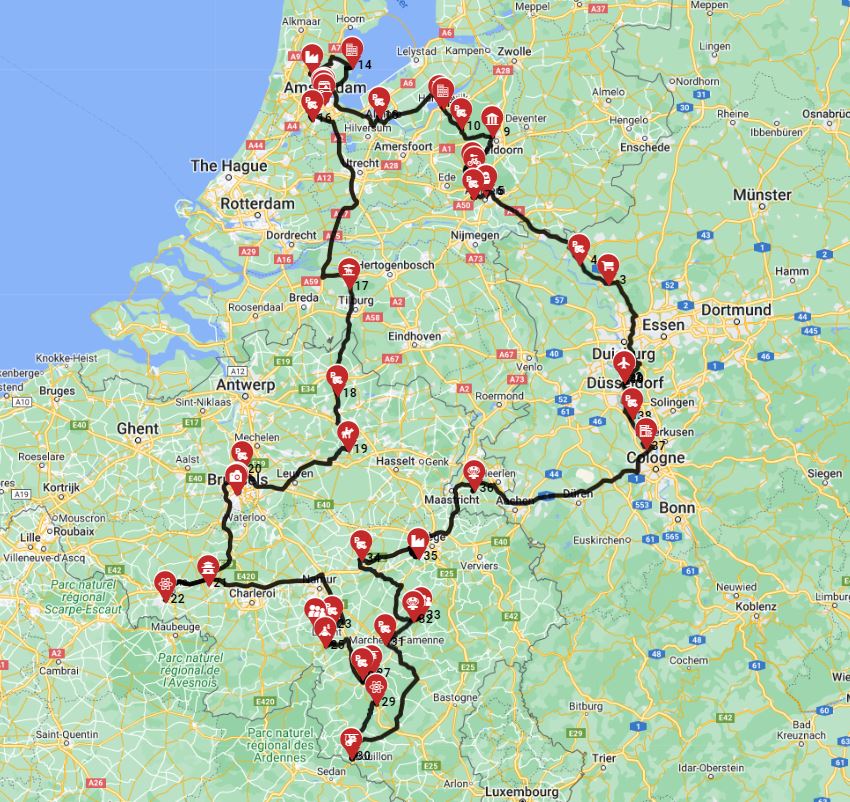
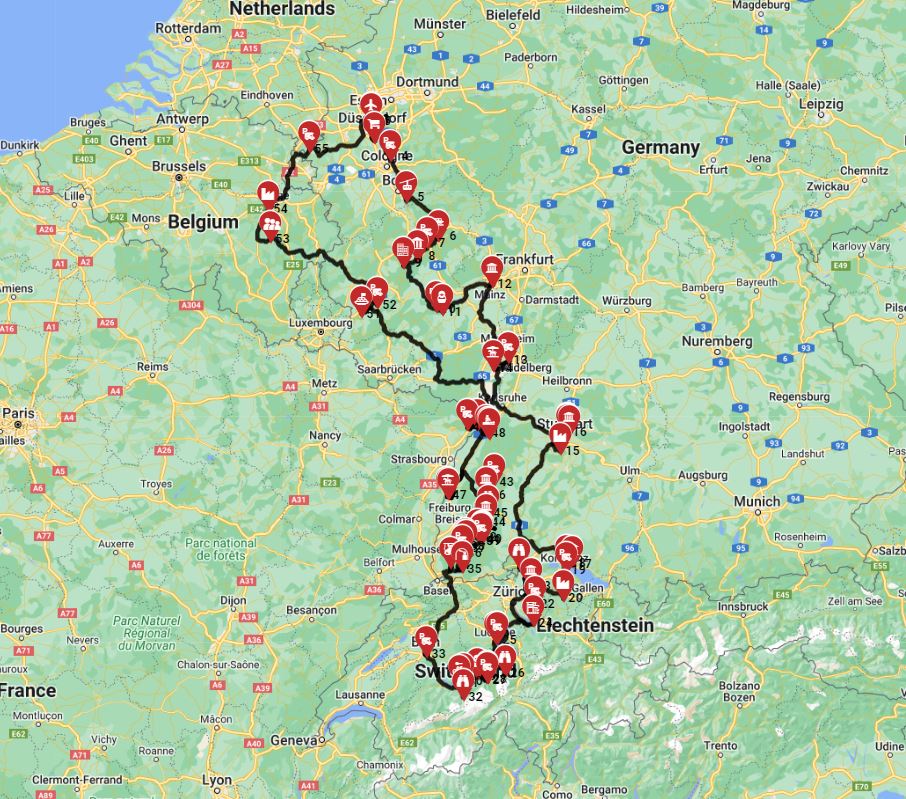
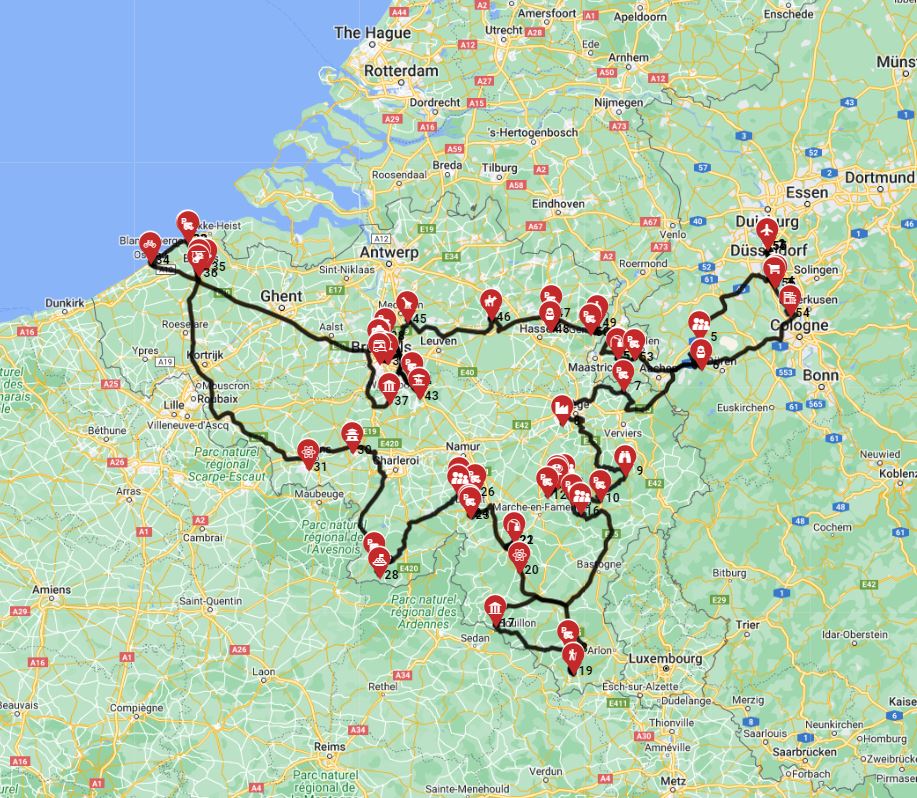
Our pre-planned routes can help you discover these hidden gems. For example, the "Dusseldorf Roundtrip - Germany / Netherlands / Belgium" is an 8-day itinerary covering 1076.2 km, including an amusement park, aquarium, bike rental, two cruise terminals, two family activities, a historical site, three local industries, a museum, a point of interest, a traditional market, and two traditional restaurants. It’s perfect for exploring diverse cultural experiences with ease.
Another excellent option is the "Frankfurt Roundtrip - North Germany - Including Hamburg & Berlin", a 15-day journey spanning 2230.1 km. This itinerary takes you through diverse attractions like an amusement park, wildlife show, botanical garden, cave, cruise terminal, extreme activity, two family activities, two hiking areas, a historical site, horseback riding, two local industries, two museums, a science site, a water park, and a zoo.
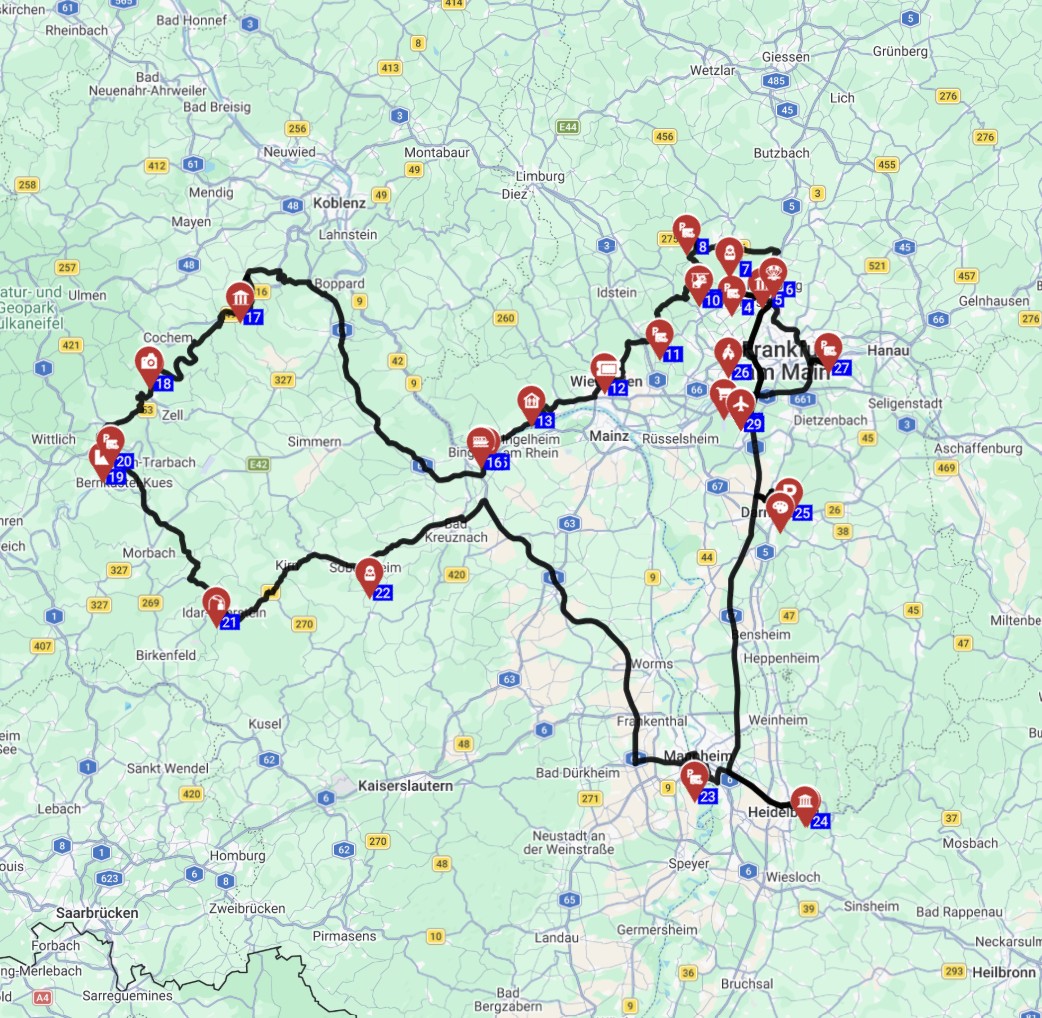
For a taste of Germany's heartland, consider the "
Don't forget to explore top cities for RV rental like Aachen, Aalen, Affing Mühlhausen, Am Mellensee, Ammern, Anzing, Aschersleben, Augsburg, Bad Duben, and Bad Kreuznach for unique regional experiences.
What is the best month to RV in Germany?
The best months to RV in Germany for seniors are generally May, June, and September, offering pleasant weather, fewer crowds than peak summer, and ideal conditions for sightseeing and outdoor activities. May and June bring vibrant spring blooms, longer daylight hours, and comfortable temperatures, perfect for exploring castles, hiking, and cycling before the intense heat of summer. September offers mild weather, stunning fall foliage in regions like the Black Forest and Bavarian Alps, and wine festivals along the Mosel and Rhine Valleys, providing unique cultural experiences. While July and August are popular, they are also peak season, meaning higher prices and more crowded attractions; however, these months are great for lake swimming and longer days. For a truly unique seasonal RVing specific experience, consider late November and December to visit Germany's enchanting Christmas markets, though be prepared for colder temperatures and potentially snowy conditions.
Is it worth buying an RV in Germany?
Whether it's worth buying an RV in Germany depends on the length and frequency of your planned trips, as buying involves significant upfront costs, maintenance, and registration complexities. For short-term or infrequent visits, renting an RV is almost always more cost-effective, avoiding depreciation, insurance, storage, and servicing expenses. However, for seniors planning extended stays (several months) or very frequent trips to Germany and across Europe over multiple years, purchasing an RV could offer long-term savings and personalized comfort. Detailed budgeting nuances are crucial here, considering factors like import duties, value-added tax (VAT), German registration, and ongoing costs. The German market offers a wide range of new and used RVs, but navigating the purchase process as a non-resident can be challenging, often requiring a permanent address and significant paperwork. Bandana Caravan specializes exclusively in RV rentals, focusing on making your vacation travel experience seamless.
Are RVs expensive in Germany?
Yes, RVs can be quite expensive in Germany, similar to other Western European countries, with new models ranging from €50,000 for a basic campervan to over €150,000 for a luxury integrated motorhome. Used RVs offer a more affordable entry point, with prices varying significantly based on age, mileage, condition, and brand. Beyond the purchase price, ownership involves ongoing expenses such as insurance (which can be substantial), annual taxes, maintenance, storage fees, and fuel costs (which are higher in Germany than in some other countries). For seniors, it's essential to compare the long-term costs of ownership versus the flexibility and lower upfront commitment of renting, especially if only visiting for a few weeks or months each year. When considering 'expensive,' it's important to look at the total cost of ownership or rental versus the value provided, which for many, RV travel delivers unparalleled freedom and experiences.
What You Shouldn't Miss
- Explore the Mosel Valley: Drive slowly along the winding Mosel River, stopping at charming wine villages like Cochem and Bernkastel-Kues. Enjoy a leisurely wine tasting at a local vineyard, experiencing authentic cultural immersion.
- Visit Neuschwanstein Castle: Park your motorhome nearby and take a scenic bus or horse-drawn carriage up to Bavaria's iconic fairytale castle. This historical site offers breathtaking views and a journey back in time.
- Cycle in the Black Forest: Rent bikes and explore the extensive network of cycling trails through dense forests and picturesque valleys. Many campsites offer direct access to these trails, perfect for an active senior adventure.
- Experience a German Christmas Market: If traveling in winter, immerse yourself in the festive atmosphere of cities like Nuremberg or Dresden. Enjoy warm Glühwein and traditional crafts, a unique seasonal RVing specific experience.
- Discover the Saxon Switzerland National Park: Hike among unique sandstone rock formations and dramatic gorges. This off-the-beaten-path region offers stunning natural beauty and photography opportunities.
Looking for expert insights from Avi Bandana? Top 5 Adventures - recommendations from Avi Bandana
Final Thoughts
Germany by rented RV is an extraordinary experience, offering senior travelers the perfect blend of freedom, comfort, and cultural richness. From the convenience of finding a Stellplatz in a quaint town to the thrill of exploring historic castles and vibrant cities at your own pace, a motorhome adventure allows you to savor every moment. Remember, slow travel is key - allowing you to truly connect with the local culture, cuisine, and breathtaking scenery.
With Bandana Caravan, you're not just renting a vehicle; you're gaining a supportive partner dedicated to making your journey seamless. Our commitment to full transparency, expert guidance, and comprehensive support means you can embark on your German road trip with complete peace of mind, knowing every detail is handled.
So, gather your travel companions, choose the perfect motorhome from our extensive fleet, and get ready to create unforgettable memories on the open roads of Germany. Discover top destinations, planning tips, all in one place! Your next great adventure awaits!
Compare Motorhome Prices for Germany