In This Guide
- Best Norway RV Itinerary for RV Rental Deals — Overview
- 7-Day Classic Route in Norway
- 14-Day Extended Journey in Norway
- Recommended RVPlan Trip for Norway
- Must-See Stops Along the Way (Avi Bandana Picks)
- Daily Driving Distances & Drive Times in Norway
- Best RV Class for This Itinerary — Couple & Family Picks
- How much does it cost to rent an RV in Norway
- What is the best month to RV in Norway
- Is it legal to sleep anywhere in an RV in Norway
- Is driving an RV in Norway difficult
- How to deal with tolls and ferries in Norway with an RV
- What is the etiquette for wild camping in Norway
- Where can I find RV services in Norway
- What are sustainable travel tips for RVing in Norway
- How to experience local culture in Norway with an RV
Best Norway RV Itinerary for RV rental deals — Overview
Embarking on an RV adventure in Norway offers unparalleled access to its dramatic landscapes, from the majestic fjords to the rugged coastlines. For those seeking the best value and a truly immersive experience, a well-planned itinerary is key. Bandana Caravan, with its extensive network and expertise, recommends considering a minimum of 7 days for a taste of Norway's highlights, though a 14-day or longer trip allows for a more comprehensive exploration of its diverse regions. The prime season for RV travel in Norway is from late spring to early autumn, specifically May through September. This period offers the most favorable weather conditions and ensures that most roads, including scenic mountain passes, are fully accessible. A classic route often begins in major cities like Oslo or Bergen, focusing on the iconic fjords and the breathtaking coastal roads. When planning your route, aim to cover between 700-1500 km for a 7-day trip, embracing slow travel to truly connect with the stunning scenery and local culture.
7-Day Classic Route in Norway
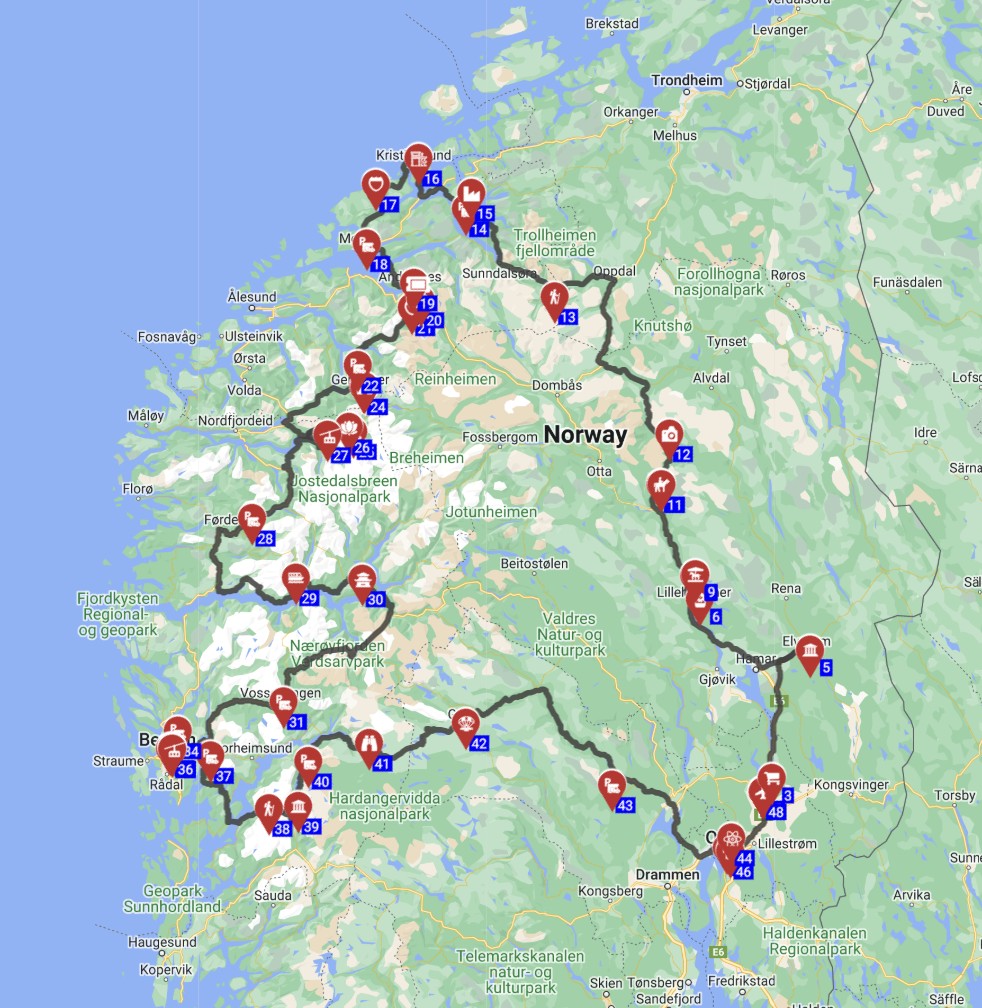
For an unforgettable 7-day RV journey through Norway, focusing on its most spectacular natural wonders, consider this classic itinerary. This route balances iconic sights with manageable daily drives, allowing for both exploration and relaxation. It’s a perfect introduction to Norway’s fjords and mountains, showcasing the beauty of slow travel.
- Day 1: Oslo to Lillehammer (approx. 180 km / 112 miles) - Begin your adventure by heading north from Oslo to Lillehammer, a charming city famous for hosting the 1994 Winter Olympics. Explore the Maihaugen Open-Air Museum, which offers a fascinating glimpse into Norwegian life through the ages. A great first night's stay for your rented RV would be at Lillehammer Camping.
- Day 2: Lillehammer to Geiranger (approx. 250 km / 155 miles) - Today's drive takes you through progressively stunning landscapes towards the world-renowned Geirangerfjord. Be prepared for breathtaking mountain passes and dramatic scenery. A must-see, if the road is open seasonally, is the Dalsnibba viewpoint. Settle in for the night at Geiranger Camping.
- Day 3: Geiranger exploration (0 km) - Dedicate this day to fully immersing yourself in the magic of Geirangerfjord. Enjoy a leisurely fjord cruise to truly appreciate the scale of the waterfalls and cliffs, or embark on a hike to one of the many viewpoints offering panoramic vistas. Geiranger Camping is an ideal spot to rest your RV again.
- Day 4: Geiranger to Loen/Olden (approx. 100 km / 62 miles) - A shorter, incredibly scenic drive awaits as you journey through mountain roads and valleys towards the Loen or Olden region. Highlights include a ride on the Loen Skylift for spectacular views, and an optional hike to the Briksdal Glacier. Consider Loen Camping or Olden Camping Gytri for your overnight stay.
- Day 5: Loen/Olden to Flåm (approx. 160 km / 99 miles) - Head deeper into the Sognefjord region, home to Norway's longest and deepest fjord. The drive itself is a spectacle, leading you to the picturesque village of Flåm. Don't miss the iconic Flåmsbana railway, a stunningly steep train journey, and the Stegastein viewpoint. Flåm Camping & Youth Hostel is a convenient place to park your RV.
- Day 6: Flåm to Bergen (approx. 170 km / 106 miles) - Continue your journey along the magnificent Sognefjord before heading south towards Bergen, the 'Gateway to the Fjords'. Explore Bergen's historic Bryggen Wharf, a UNESCO World Heritage site, and its vibrant Fish Market. Bergen Camping Park, located outside the city center, offers good facilities for RVs.
- Day 7: Bergen departure - Enjoy your final morning in Bergen, perhaps with a visit to the Hanseatic Museum or a stroll through the colourful streets, before preparing for your onward journey or RV drop-off.
14-Day Extended Journey in Norway
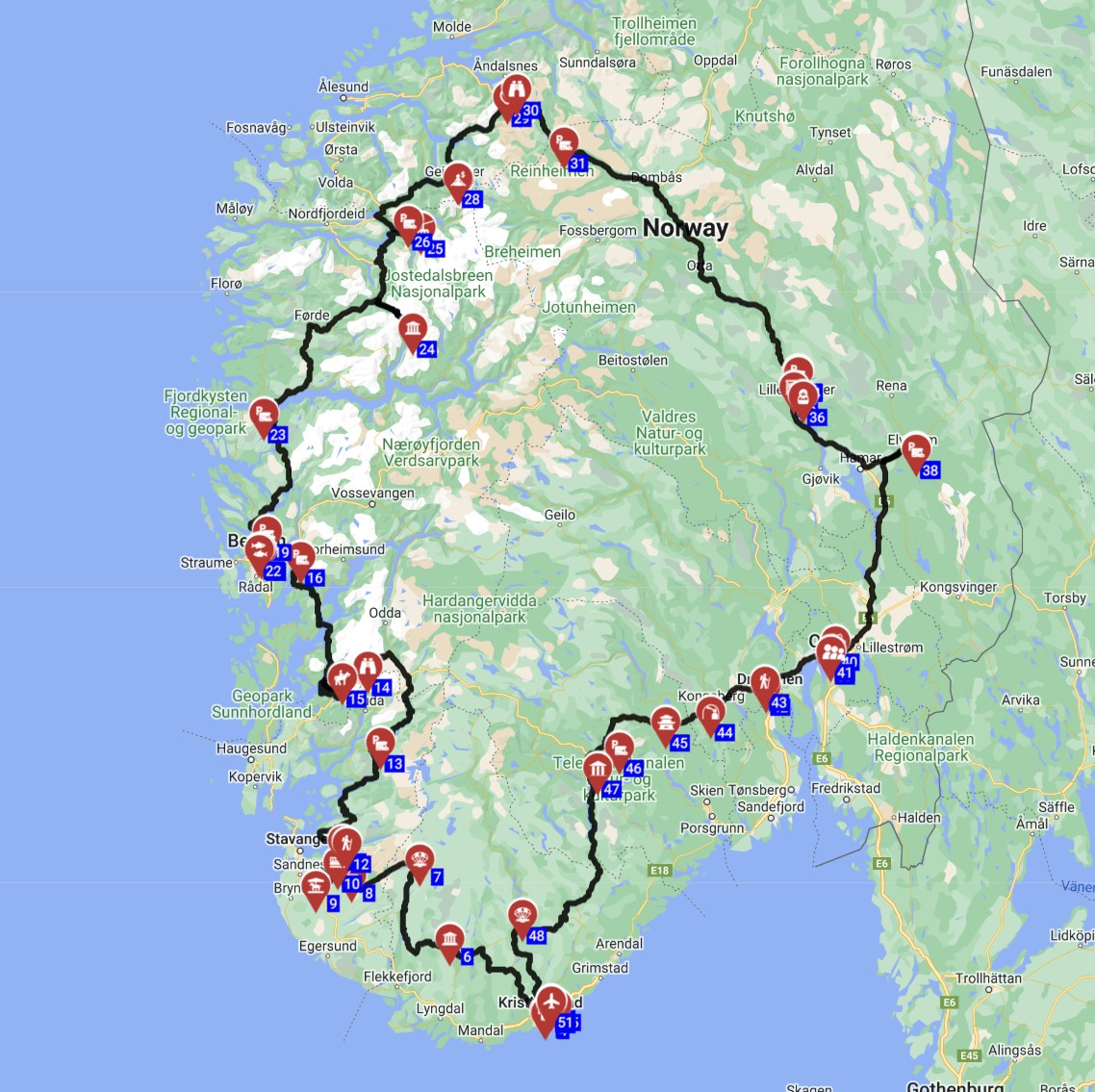
For travelers with more time, a 14-day itinerary allows for a more in-depth experience of Norway's diverse landscapes, from the Arctic Circle's potential to the southern coast's charm. This extended journey offers a richer cultural immersion and more opportunities for spontaneous discoveries. Remember Bandana's advice to travel slowly, averaging no more than 150 km per day.
- Days 1-3: Oslo & Eastern Valleys (Oslo → Lillehammer → Rondane National Park) - Begin in the capital, Oslo, soaking in its cultural offerings. Then, head north to Lillehammer for a dose of Olympic history and museums. Continue to Rondane National Park, Norway's first national park, perfect for hiking and appreciating untouched nature. Aim for an average daily drive of around 150 km.
- Days 4-7: Fjordland Immersion (Rondane → Geiranger → Loen/Olden → Fjærland) - Experience the dramatic beauty of Geirangerfjord, then explore the glacial landscapes around Loen and Olden, perhaps taking a hike to the Briksdal Glacier. Continue to Fjærland, known as Norway's 'Book Village,' and visit the Norwegian Glacier Museum. This segment is ideal for shorter daily drives, around 120 km, to truly absorb the scenery.
- Days 8-10: Sognefjord & Voss Adventures (Fjærland → Flåm → Voss) - Discover the inner reaches of the mighty Sognefjord, taking the scenic Flåmsbana railway from Flåm. Continue to Voss, an adventure sports hub, or simply relax by the lake. Keep your daily drives modest, around 100 km, to maximize enjoyment.
- Days 11-12: Bergen & Coastal Charm (Voss → Bergen) - Arrive in Bergen and explore its UNESCO-listed Bryggen wharf and bustling Fish Market. Enjoy scenic drives along the coast, sampling fresh seafood. Average daily drives in this area can be shorter, around 70 km.
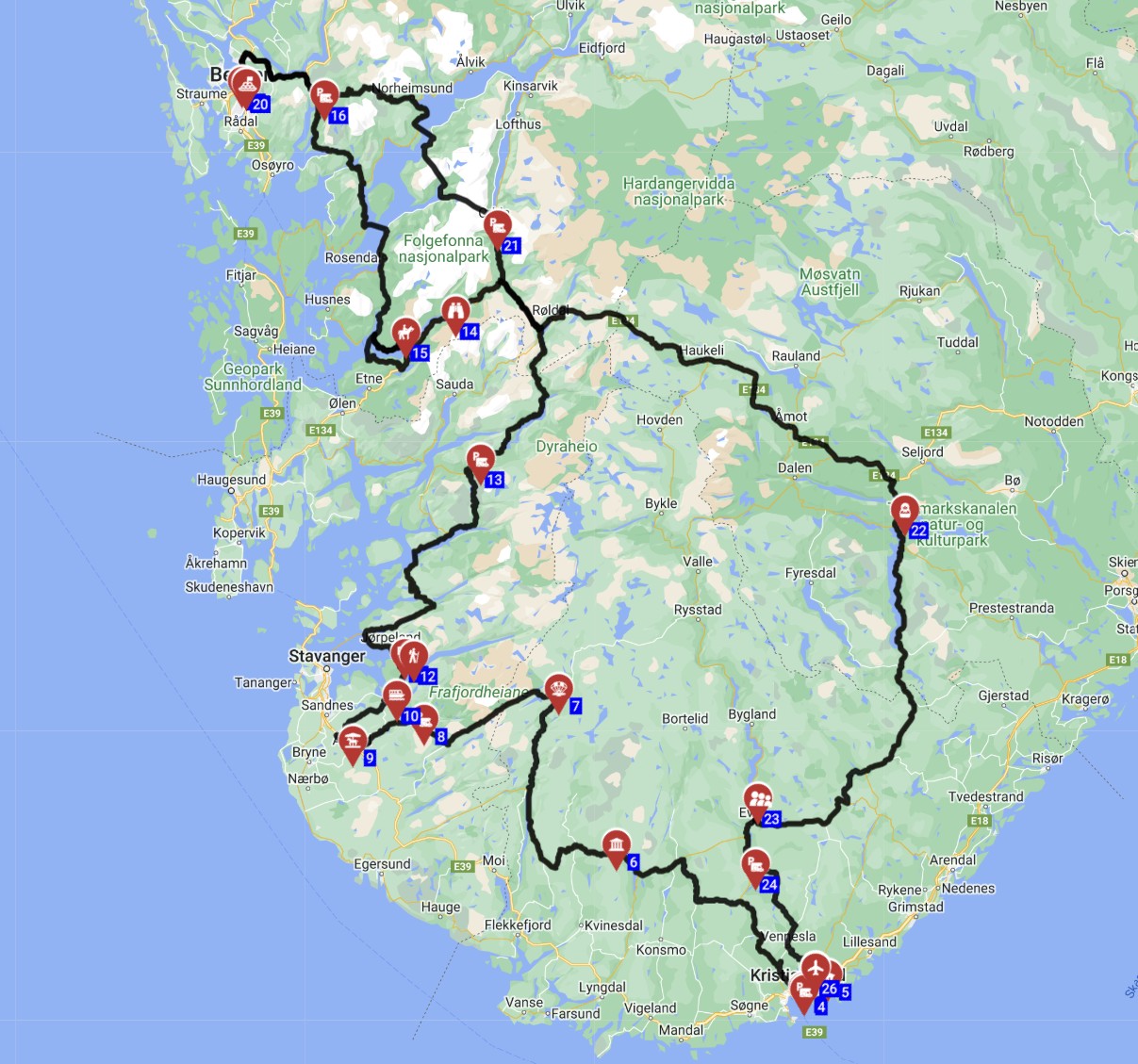
- Days 13-14: Southern Norway Highlights (Bergen → Stavanger → Oslo return) - For those wanting to push further south, a drive to Stavanger is an option, offering the chance to hike to Pulpit Rock (Preikestolen). This segment involves longer drives, potentially requiring an extra day or longer driving days to return to Oslo, averaging over 250 km for the direct return. Alternatively, a more relaxed pace would involve returning directly to Oslo from Bergen, perhaps with an overnight stop.
Recommended RVPlan Trip for Norway
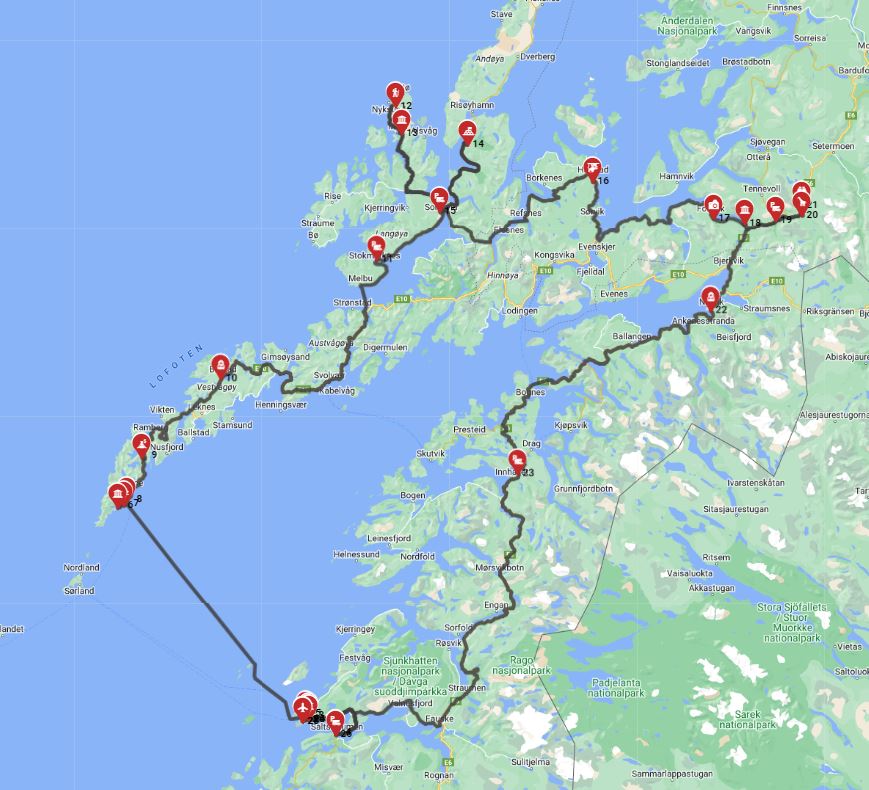
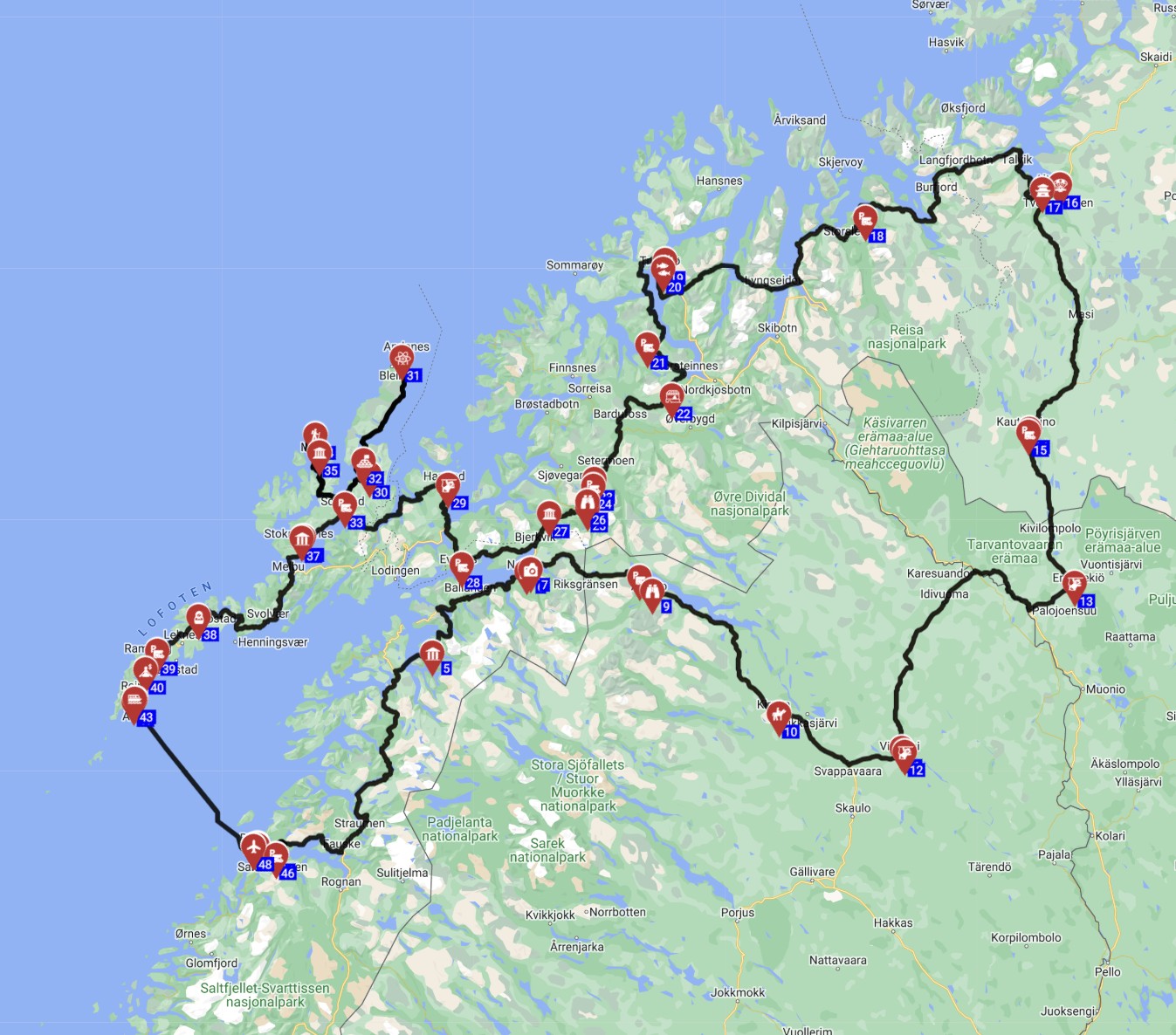
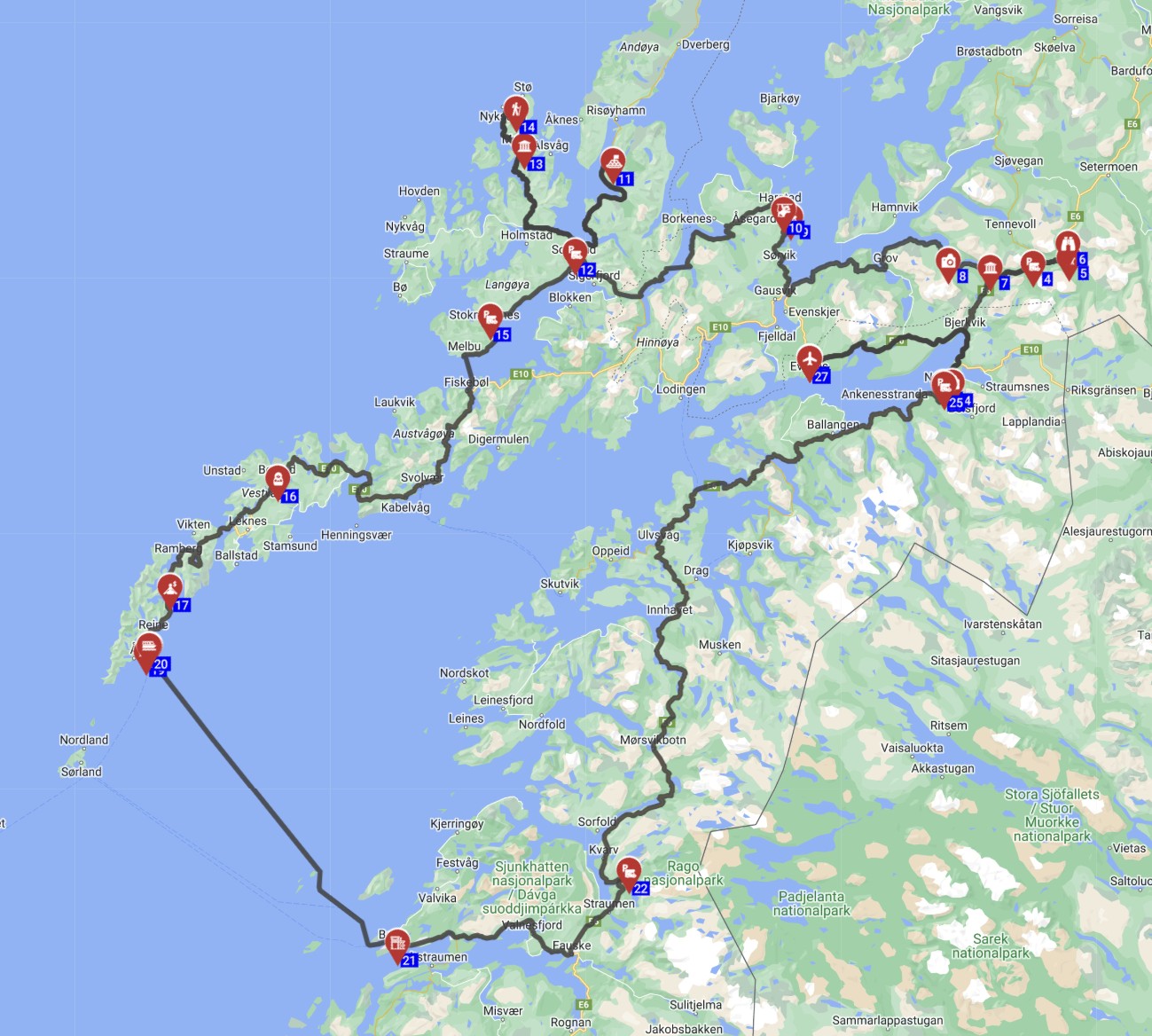
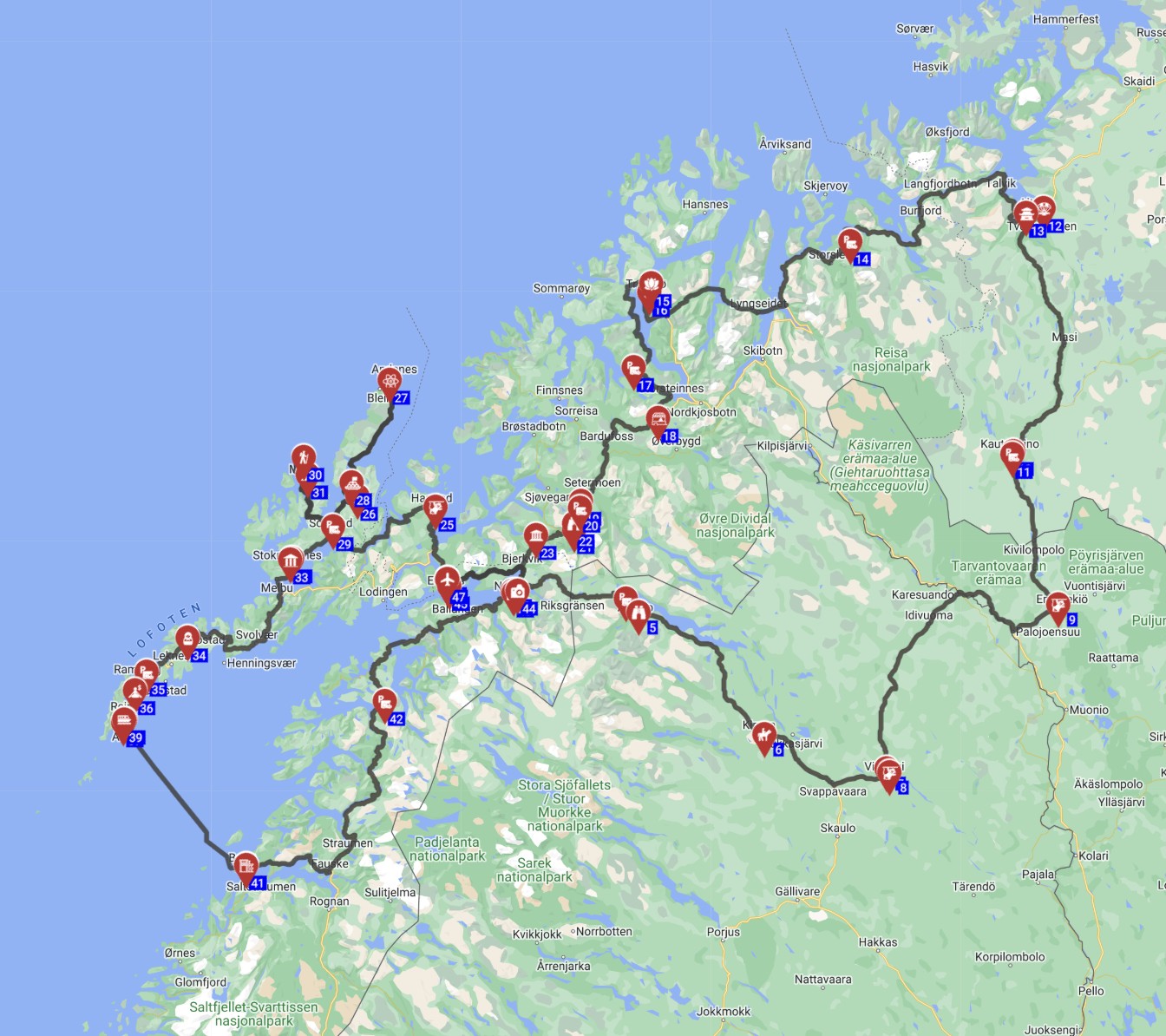
To simplify your travel planning and ensure a seamless experience, Bandana highly recommends utilizing the expertly crafted itineraries available through our sister company, RV PLANET. For those considering a broader European adventure that includes Norway, the "Hamburg Roundtrip - To Denmark & Norway" trip is an excellent choice.
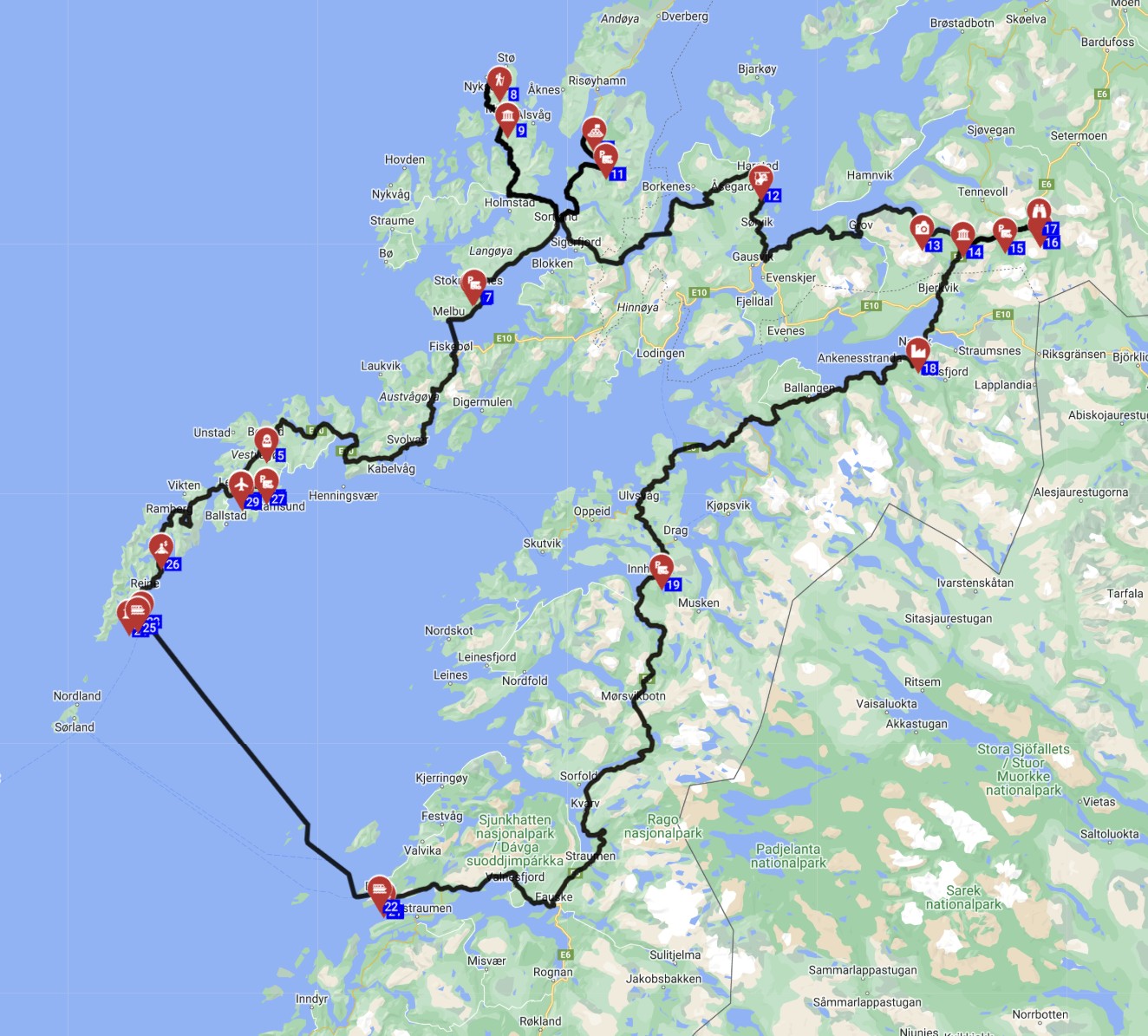
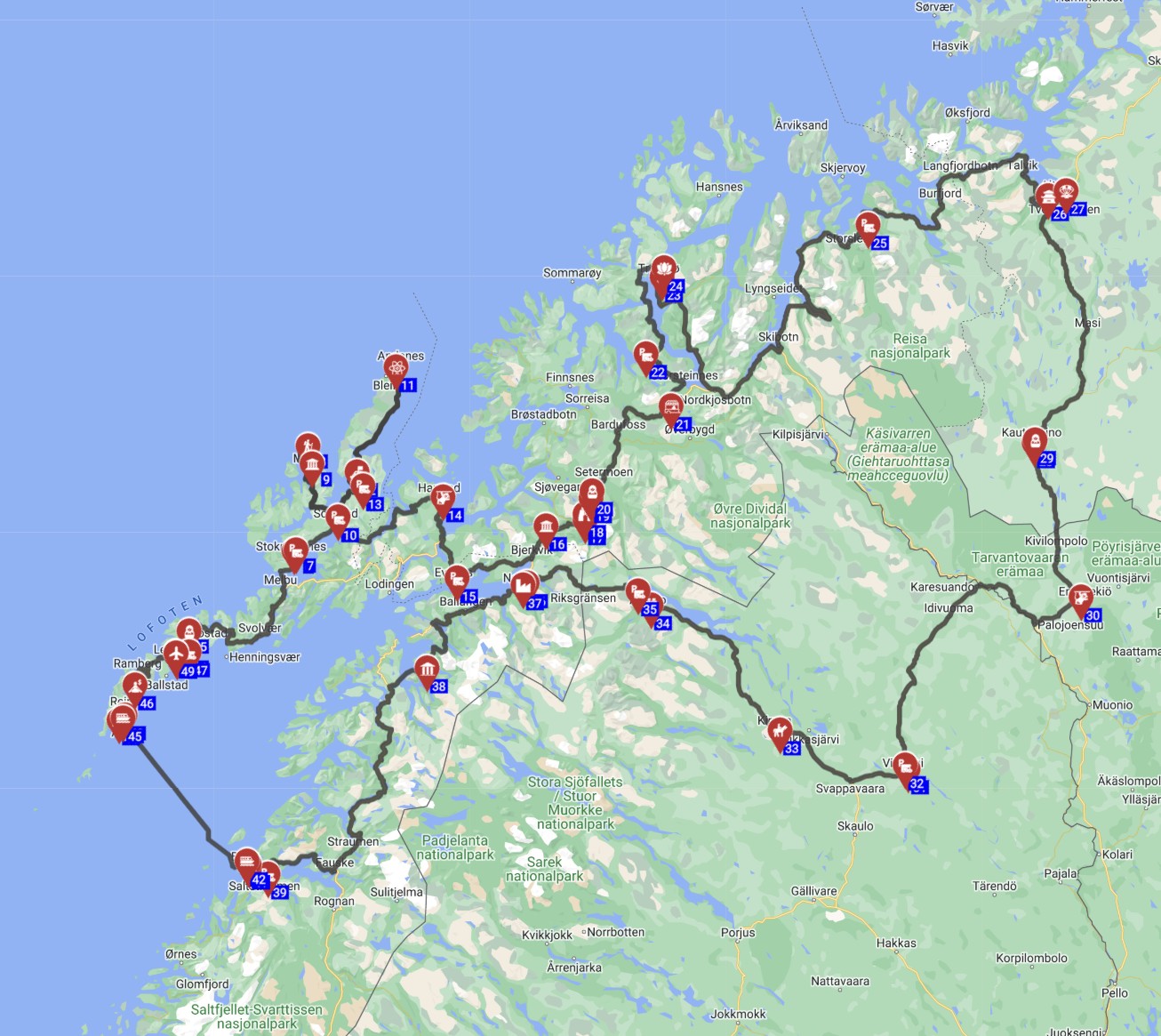
This comprehensive 25-day journey, spanning 3,427 kilometers and designed to start and end in Hamburg, Germany, provides a fantastic framework for exploring Norway and its surrounding countries. It’s meticulously planned for efficient navigation and rich cultural experiences, offering a stress-free way to discover multiple destinations.
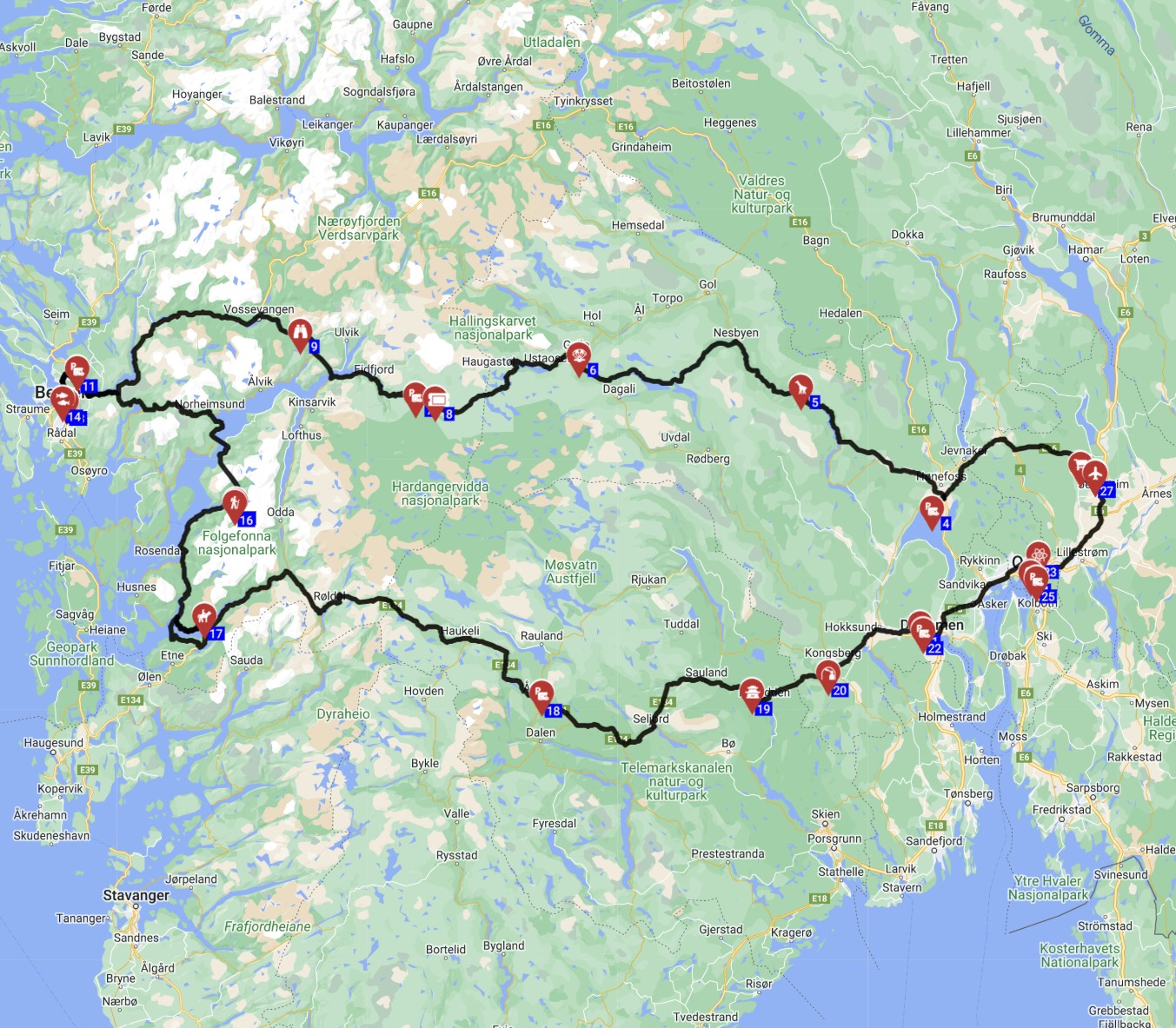
In a similar vein, for those focusing solely on Norway's captivating west coast, consider the "Bergen Round trip - Norway’s Coastal Wonders" itinerary. This 8-day, 783 km route is perfect for a focused exploration of the fjords and coastal beauty, featuring 2 traditional visits and 1 natural feature.Must-See Stops Along the Way (Avi Bandana Picks)
Drawing from firsthand experience and the detailed planning within RV PLAN, Avi Bandana often highlights stops that offer a genuine connection to local culture and history. These selections are integrated into broader Scandinavian journeys, like the RVPlan Hamburg Roundtrip, offering a rich tapestry of experiences:
- Njardarheimr (Viking Valley), Gudvangen: A truly immersive 'Traditional Visit,' this living Viking village offers a profound and educational dive into Norse history and culture. It’s a captivating stop that brings the past to life.
- Fish Market in Bergen: An iconic 'Traditional Market' experience, the Bergen Fish Market is a vibrant hub where you can sample incredibly fresh seafood and soak in the local atmosphere. It’s a must for any culinary exploration of the region.
- Maihaugen Open-Air Museum, Lillehammer: As one of Norway's largest open-air museums, Maihaugen showcases Norwegian cultural history through its impressive collection of historic buildings, spanning from the Middle Ages to the present day. It's a truly authentic 'Traditional Visit'.
- Thorup Strand, Denmark: While not in Norway, this coastal fishing village, often part of a broader Scandinavian trip, exemplifies a quintessential 'Local Industry' experience. Watching local fishermen haul their traditional wooden boats onto the sand provides a unique glimpse into a time-honored way of life, connecting you to the region's heritage.
Daily Driving Distances & Drive Times in Norway
When planning your RV itinerary in Norway, Avi Bandana strongly recommends embracing slow travel, aiming for an average of no more than 100 miles or 150 km per day. This approach allows ample time to truly savor the landscape, account for the frequent ferry crossings that are integral to navigating the fjords, and enjoy the numerous scenic pull-offs.
Norwegian roads, particularly in the fjord regions, are not designed for speed. Instead, they encourage a slower pace due to narrow passages, steep inclines, and an abundance of photo opportunities that you won't want to miss. For example, a drive from Stavanger to Odda, approximately 150 km and a gateway to the famous Trolltunga hike, can easily take 3-4 hours. This extended time is due to necessary ferry transfers and the winding mountain passes, significantly more than a simple distance calculation might suggest.
Similarly, the route from Bergen to Flåm, roughly 170 km, might require 3.5 to 4.5 hours of dedicated driving time, not including any stops. Understanding these real-world driving conditions is crucial for building a realistic and enjoyable RV itinerary.
Best RV Class for This Itinerary — Couple & Family Picks
Choosing the right RV class significantly enhances your Norwegian adventure. Bandana offers a fleet tailored to different traveler needs, ensuring comfort and practicality on Norway’s diverse terrains. For couples or smaller groups, a more nimble vehicle is often preferred.
For Couples: Class B - Camper Van – Our Class B Camper Vans are the ideal choice for couples, offering excellent agility and ease of navigation on Norway's often narrow and winding roads. These compact yet comfortable units typically measure around 5.8 meters in length, providing suitable sleeping and living space for two. Their fuel efficiency, generally around 8-10 Liters/100 km, makes them an economical option for exploring the country.
For Families: Class C - Alcove – For families traveling with children, Bandana's Class C Alcove motorhomes provide the necessary extra space and dedicated sleeping areas for a comfortable journey. These larger RVs, averaging 7.5 meters in length, often feature an over-cab bed, offering ample sleeping places for up to 5-6 people. While slightly more fuel-intensive (10-12 Liters/100 km), the enhanced living space and amenities are invaluable for family comfort on longer trips. To further streamline your planning, consider Bandana's "Rent & Plan" service, which combines your chosen RV rental with a curated itinerary, offering expert-crafted route suggestions.
How much does it cost to rent an RV in Norway
Renting an RV in Norway typically ranges from €100 to €300 per day during the shoulder seasons (May, September) and can increase to €150 to €400+ per day during the peak summer months (June-August). These costs vary significantly based on the RV class, rental duration, and the specific rental company you choose. Remember to factor in that the final price is set at the time of booking due to dynamic pricing.
A comprehensive cost breakdown for an RV trip in Norway must include more than just the rental fee. Essential additional expenses include fuel, as Norway has high fuel prices; tolls, which are common on major routes and through tunnels; ferry tickets, which are frequently required in the fjord regions; campsite fees, unless you plan to utilize Norway's 'Everyman's Right' for wild camping; groceries; and costs for activities and attractions.
Budgeting Strategies: To manage your trip costs effectively, consider renting during the shoulder seasons to take advantage of lower rental rates. Cooking most of your meals onboard your rented RV can significantly reduce food expenses. Furthermore, understanding and utilizing Norway's 'Allemannsretten' for free wild camping, where appropriate and respectfully, can offer substantial savings on accommodation. Always allocate a generous portion of your budget for tolls and ferries, as these can accumulate rapidly, especially in the fjord regions. Utilizing the AutoPASS system for tolls is essential for convenience and potential savings. For ideas you can prep on the road, watch our RV-friendly recipes playlist on YouTube.
What is the best month to RV in Norway
The ideal months for RV travel in Norway, ensuring access to most attractions and favorable weather, are June, July, and August. During these peak summer months, you’ll experience the longest daylight hours, enjoy milder temperatures, especially in the stunning fjord regions, and find that most scenic routes are fully open.
However, the shoulder seasons of May and September offer unique advantages. You'll encounter fewer crowds, potentially find lower rental prices, and witness landscapes transformed by either blooming spring flowers or vibrant autumn foliage. May and early June are particularly beautiful with fresh, green landscapes and powerful waterfalls, though some higher mountain passes might still have snow.
September and early October are excellent for experiencing vivid autumn colors and, in the northern parts of Norway, offer early chances to witness the Northern Lights. Be prepared for cooler weather and the possibility of road closures due to snow at higher elevations during this time. Winter RV travel (November-April) is possible but considerably more challenging, requiring specialized, fully winterized RVs and extensive preparation for icy roads and limited daylight, though it can be rewarding for Northern Lights or winter sports enthusiasts.
Is it legal to sleep anywhere in an RV in Norway
Norway's 'Allemannsretten' (Everyman's Right) is a cornerstone of its outdoor culture, generally allowing you to park and sleep in your RV almost anywhere on uncultivated land. This freedom, however, comes with important limitations and responsibilities designed to preserve the country's natural beauty and respect private property.
Typically, you can park and sleep for up to two consecutive nights in the same spot on uncultivated land. Crucially, you must maintain a distance of at least 150 meters (about 490 feet) from the nearest inhabited house or cabin to respect residents' privacy. Wild camping is strictly prohibited in cultivated areas, such as farmland or gardens, and within designated national parks or protected areas where specific camping rules usually apply.
The guiding principle is to always 'leave no trace.' This means packing out all trash, disposing of human waste properly and far from water sources and trails, and leaving your campsite exactly as you found it, or even better. Respecting these principles ensures that this cherished right can be enjoyed by all.
Is driving an RV in Norway difficult
Driving an RV in Norway presents a unique set of challenges and rewards due to its dramatic geography. Expect narrow, winding mountain roads, steep inclines, numerous tunnels (some of which are exceptionally long), and frequent ferry crossings. While these conditions can be demanding, they also contribute to an incredibly scenic and immersive experience when navigated with care and planning.
You'll commonly encounter single-lane roads with designated passing points, particularly in rural and fjord areas. Drivers need to be comfortable with reversing and yielding to oncoming traffic, especially larger vehicles. Becoming familiar with the AutoPASS toll system and understanding ferry logistics, including queuing and payment methods, are essential for a smooth journey. Depending on the season, vehicles might require specific equipment like winter tires and snow chains, and carrying emergency triangles is always recommended to align with local vehicle requirements.
Despite the potential difficulties, the slower pace dictated by these road conditions is precisely what allows RV travelers to truly appreciate Norway's unparalleled natural beauty. It transforms driving into an integral and enjoyable part of the adventure.
How to deal with tolls and ferries in Norway with an RV
Effectively managing tolls and ferries in Norway with an RV primarily involves understanding the automatic AutoPASS system for tolls and becoming familiar with ferry booking and payment procedures, which are generally straightforward for rental vehicles.
Tolls (AutoPASS): Most rental RVs are equipped with an AutoPASS chip, allowing for automatic toll registration. Your rental company will typically handle the payment post-rental, sometimes applying an administration fee. If your RV lacks a chip, foreign vehicles can register their license plate with AutoPASS for convenient payment or pay manually at designated stations. Be aware that toll rates can vary for different vehicle types, so ensure your RV's classification is correctly registered.
Ferries: Ferries are an essential and often scenic part of traveling through Norway's fjord regions. Many operate on a first-come, first-served basis, with payment often collected onboard via card or cash. For popular routes, especially during peak season, checking ferry schedules and considering pre-booking through apps or websites of operators like Fjord1 or Norled can save valuable time. Always factor potential wait times into your daily driving plan. RV size significantly impacts ferry pricing, so be accurate with your vehicle dimensions when paying or booking to avoid issues.
What is the etiquette for wild camping in Norway
Beyond the legal framework of 'Allemannsretten,' the etiquette for wild camping in Norway centers on a deep respect for nature, private property, and local communities. This mindful approach is crucial for preserving Norway's pristine environments and ensuring the harmonious co-existence that the right embodies.
Always adhere to 'Leave No Trace' principles. This means packing out everything you pack in, including all waste, and sorting recyclables into designated bins, which are readily available in Norway. Dispose of human waste properly, well away from water sources and trails, and always strive to leave your campsite in a better condition than you found it.
Respect privacy by avoiding camping too close to private homes or cabins, even when legally permitted. A friendly wave and maintaining a respectful distance are simple yet effective ways to show courtesy. Minimize environmental impact by avoiding driving off-road, staying on established tracks, and being considerate of noise levels, especially in quiet natural areas.
Where possible, utilize designated dump stations and water refill points, often found at campgrounds, for greywater, blackwater, and fresh water needs, rather than improvising in nature.
Where can I find RV services in Norway
Finding essential RV services in Norway, including reliable Wi-Fi, dump stations, fresh water refills, and propane/LPG exchanges, is primarily facilitated by designated campgrounds ('campingplass') and facilities available in larger towns and service centers.
Campgrounds (Campingplass) are the most comprehensive service points. They typically offer facilities for blackwater and greywater disposal, fresh water access, electricity hook-ups, showers, laundry services, and often complimentary Wi-Fi. For locating these, resources like RV PLANET (rvplan.net) can be invaluable.
Dump Stations & Water Refills: Many larger petrol stations and public rest stops, particularly along major routes, provide free or low-cost dump stations and fresh water taps. Look for signs indicating a 'WC' symbol or a water tap. Propane/LPG refills are available at specialized gas stations and some larger hardware stores, though LPG for vehicle engines is less common. Ensure your RV's fittings are compatible with European standards.
Connectivity: Wi-Fi is widely available at campgrounds, many cafes, and public libraries. For consistent internet access while on the go, consider purchasing a local SIM card for mobile data.
What are sustainable travel tips for RVing in Norway
Sustainable travel in Norway, especially by RV, emphasizes minimizing your environmental footprint and contributing positively to local communities. This is paramount for preserving Norway's breathtaking natural landscapes and rich cultural heritage.
Always practice the 'Leave No Trace' philosophy: pack out everything you pack in, including all waste, and properly sort your recyclables. Avoid disturbing wildlife or natural habitats. Conserve resources by being mindful of your water and electricity consumption within your RV. Opt for energy-efficient appliances if possible and choose cold washes when doing laundry.
Support local economies by purchasing groceries from local markets, dining at small, family-run restaurants, and buying souvenirs directly from artisans. This ensures your travel spending directly benefits the communities you visit. When hiking or exploring natural areas, always stay on marked paths to prevent erosion and protect fragile ecosystems. Respect private property and avoid parking or driving on sensitive land.
How to experience local culture in Norway with an RV
To truly experience Norway's local culture with your rented RV, venture beyond the well-trodden tourist paths. Engage with smaller communities, participate in local events, and make an effort to understand Norwegian customs and etiquette for a more authentic journey.
Seek out local markets (Bondens Marked) and festivals, which offer genuine insights into regional produce and traditions. Beyond the famous salmon, explore local delicacies like 'fårikål' (lamb and cabbage stew), 'brunost' (brown cheese), or 'lefse' (traditional flatbread), often found in small bakeries or rural eateries.
Understand the concept of 'Janteloven' (The Law of Jante), an unwritten social code that emphasizes modesty and collective welfare over individual achievement. Norwegians generally appreciate understated behavior and respect for personal space. Learning a few basic Norwegian phrases like 'Takk' (thank you) and 'Hei' (hello) goes a long way. Be quiet and respectful, particularly in natural settings and residential areas, reinforcing the ethos of responsible enjoyment inherent in 'Allemannsretten.' While the fjords are iconic, exploring inland valleys and quieter coastal towns will unveil Norway's diverse landscapes and its more authentic, less-visited experiences.
What You Shouldn't Miss
- Drive the iconic Trollstigen (Troll's Path), a spectacular road with 11 hairpin bends, but only during the summer months (typically late May to October) when it's open to RVs.
- Take a fjord cruise on Geirangerfjord or Sognefjord to fully appreciate their immense scale and natural beauty from the water.
- Experience the living history at Njardarheimr (Viking Valley) in Gudvangen for an immersive look into Norse culture.
- Ride the scenic Flåmsbana railway, one of the steepest train lines in the world, for unforgettable fjord views.
- Explore the historic Bryggen Wharf in Bergen, a UNESCO World Heritage site that tells the story of Hanseatic trade.
- Hike to Preikestolen (Pulpit Rock) near Stavanger for breathtaking views of Lysefjord, weather and fitness permitting.
Final Thoughts
Renting an RV for your Norwegian adventure is an exceptional way to experience the country's breathtaking beauty at your own pace. From the majestic fjords to the charming coastal towns, each day promises new discoveries and unforgettable memories. By embracing slow travel, planning strategically, and respecting local customs and nature, your RV journey through Norway will undoubtedly be an enriching and rewarding experience.
Whether you opt for a compact campervan for two or a spacious motorhome for the family, Bandana Caravan is here to help you find the perfect vehicle. We handle the complexities of booking so you can focus on the excitement of the open road and the incredible landscapes that await you in Norway. Get inspired for your next trip!