In This Guide
- Where to Camp in Australia - Top Options
- Campground Types in Australia (National, Private, Wild)
- Featured RV Park or Campground in Australia
- Hookups & Amenities - What to Expect
- Booking Windows & Reservations in Australia
- Nearby Supermarkets & Resupply Points
- Best RV Class for Camping in Australia
- How to Save on Campgrounds in Australia
- Can you park an RV anywhere in Australia?
- What are RV parks called in Australia?
- Where can you park overnight for free in Australia?
- What is the average caravan park fee in Australia?
- How much do campsites cost in Australia?
- Are RVs allowed in Australia?
- How can I book campsites in Australia?
- Do you need to pre-book campsites in Australia?
- What is ghost camping in Australia?
Australia, a land of breathtaking contrasts and endless horizons, offers an unparalleled experience for those exploring with a rented motorhome or campervan. Imagine waking up to the sound of crashing waves on a pristine beach, or the calls of exotic birds in a lush rainforest, all from the comfort of your mobile home. From the red dust of the outback to the vibrant coastal cities, Australia is truly designed for RV adventures. For live availability and current prices for your Australian journey, start with our RV Rental Australia - Complete Guide 2026 guide.
Where to Camp in Australia - Top Options
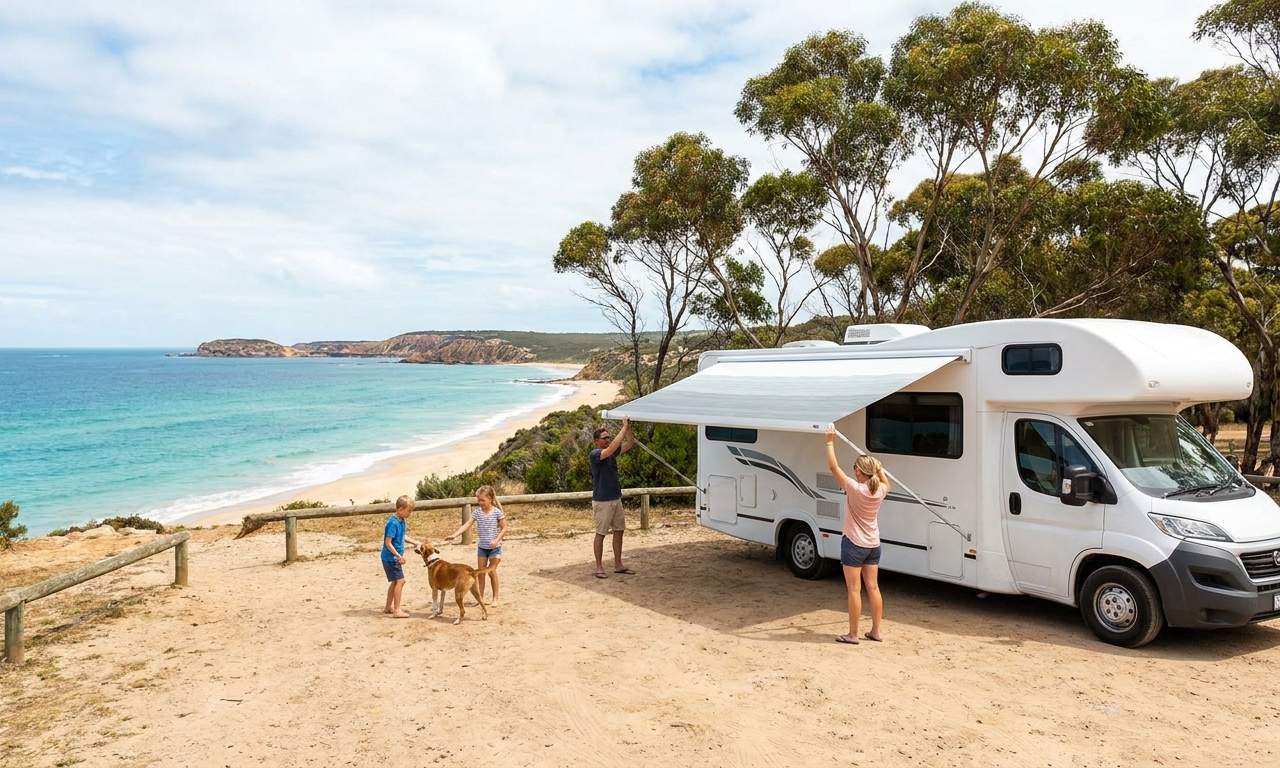
Australia offers diverse camping experiences, ranging from bustling coastal holiday parks with extensive amenities to remote outback sites and immersive national park campgrounds. Popular destinations include the iconic coastal regions like Byron Bay, where you can find holiday parks offering picturesque beach views and a range of facilities for your rented campervan, and the stunning Great Ocean Road, which features over 20 campgrounds along its 243 km length. National Parks such as Uluru-Kata Tjuta and Grampians provide incredible immersive nature experiences with designated campgrounds, though these often require advance booking and specific permits, with some popular sites like the Uluru campground booking out months ahead during peak seasons. For a deeper dive into local life, consider station stays or regional showgrounds, which offer unique insights into Australian culture, particularly in Queensland and New South Wales. Travelers should always consider regional and seasonal specificities; coastal areas are most popular in the warm summer months (December-February), while the arid Red Centre is best visited in cooler periods (April-September) to avoid extreme heat, influencing what type of vehicle and preparations are needed for your trip.
Campground Types in Australia (National, Private, Wild)
Australia features three primary types of RV camping options: National Parks, private caravan/holiday parks, and designated 'free' or wild camping areas, each with distinct rules and available amenities. National Park campgrounds typically provide basic amenities, often including unpowered sites, composting or drop toilets, and limited access to potable water, making them ideal for those seeking a natural setting and a more rustic experience with their rented motorhome. Bookings for national park sites usually need to be made in advance through the relevant state park services, such as Parks Australia or the NSW National Parks and Wildlife Service, especially during school holidays when demand can see sites fully booked up to 3 months ahead. Private caravan parks, frequently part of large networks like Big4 or G'day Parks, offer extensive amenities including powered sites (240V AC), hot showers, laundry facilities, swimming pools, and often family-friendly activities, with daily fees generally ranging from AUD 30-70. Freedom camping, or wild camping, is permitted only in explicitly designated areas, often found along highways, in state forests, or at specific council-managed rest stops; these sites usually offer minimal to no facilities and are subject to strict local regulations to prevent illegal dumping and environmental damage, with fines for illegal camping starting at AUD 200. Always check local council rules and signage to ensure a legal and enjoyable RV trip.
Featured RV Park or Campground in Australia
When choosing an RV park or campground in Australia, key considerations include its proximity to attractions, available amenities, and suitability for your specific rented motorhome or campervan. Many highly-rated parks, such as those belonging to the Big4 or G'day Parks networks, offer a comprehensive suite of facilities, including full 240V powered sites, modern ablution blocks with hot showers, communal kitchens, swimming pools, and sometimes even organized activities for families, like the Big4 Gold Coast Holiday Park, which boasts water slides and a 10-meter jumping pillow. It is advisable to look for parks that provide easy access to local points of interest, a reliable mobile phone signal, and appropriately sized sites for larger vehicles, such as a Class C Alcove motorhome that might average 7.5 meters in length. Some unique RV parks also offer direct access to natural features, such as beachfront camping at Burleigh Beach Tourist Park in Queensland, or close proximity to hiking trails in the Flinders Ranges National Park, enhancing your Australian RV adventure. Always confirm specific site dimensions if you're traveling with a larger rented RV.
Hookups & Amenities - What to Expect
In Australian RV parks and caravan sites, you should generally expect a good range of hookups and amenities designed for comfortable travel, though offerings can vary significantly between a basic state park campground and a premium holiday park. Powered sites are standard in most private parks, providing 240V AC electricity via a three-pin plug, which ensures all your RV appliances, from air conditioning to cooking equipment, can run efficiently. Fresh potable water hookups are also widely available, allowing you to easily refill your RV’s water tank. Designated dump points for grey and black water disposal are a universal feature at almost all caravan parks and many national park campgrounds, essential for maintaining hygiene during your trip. Common amenities found across a majority of parks include clean hot showers, flushing toilets, communal laundries with washing machines and dryers, and often BBQ facilities for outdoor cooking. Many modern holiday parks also provide Wi-Fi access, sometimes for an additional fee or with limited bandwidth, swimming pools, playgrounds for children, and small general stores for basic supplies, allowing you to easily resupply your mobile home.
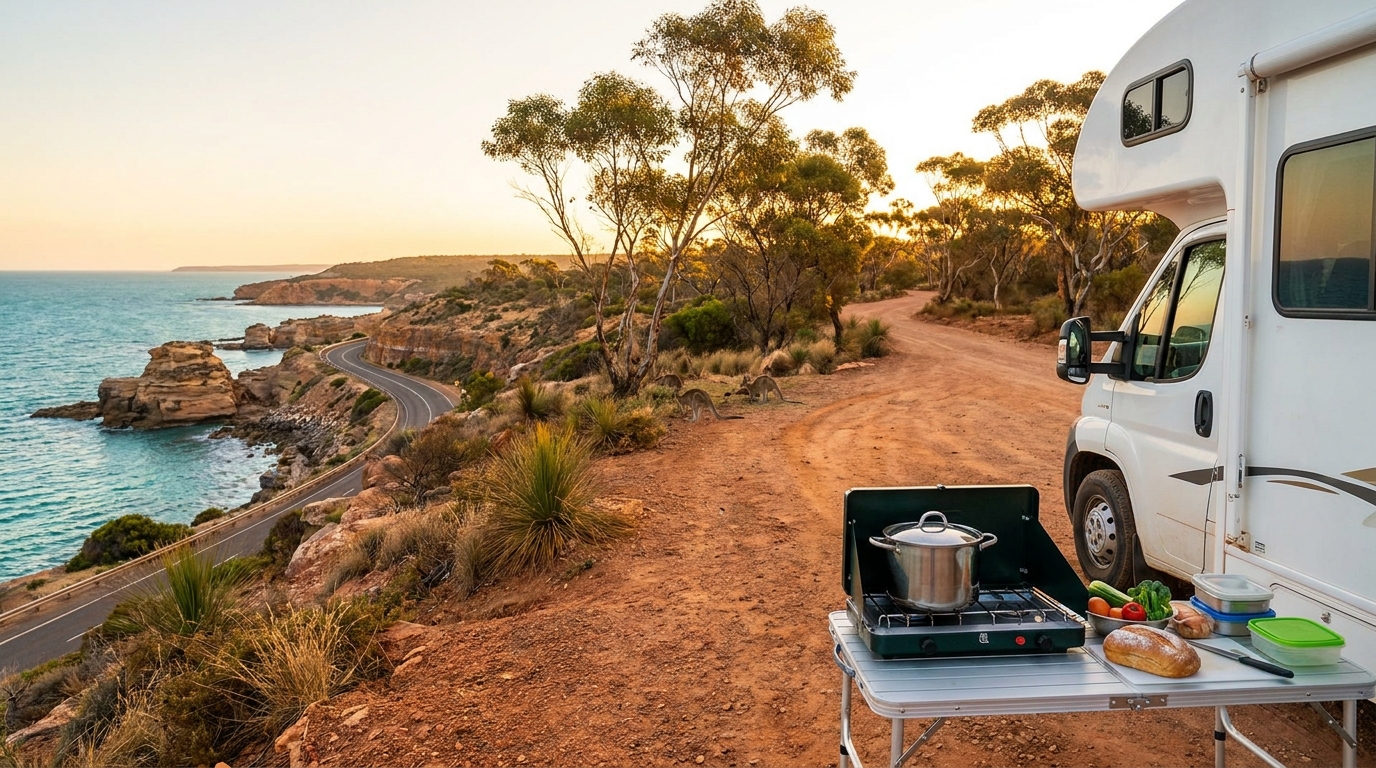
For ideas on what to cook with your RV's kitchen amenities, check out our RV-friendly recipes playlist.
Booking Windows & Reservations in Australia
For RV travelers planning a trip in Australia, making reservations ahead of time is generally recommended, especially for popular destinations and during peak travel periods, although spontaneous day-to-day bookings are often feasible in less busy areas. Peak seasons, which include Australian school holidays, long weekends, and major events, can see popular coastal caravan parks and national park campgrounds, like those in the Whitsundays or around Sydney, fully booked 3-6 months in advance. National park campgrounds frequently release only a portion (typically 25%-30%) of their sites for advance reservations, leaving the remainder available on a first-come, first-served basis; always check the specific rules for each park via their state's park service website. While you will almost certainly find a spot somewhere, even if not at your first choice campground, calling ahead before driving long distances is highly advisable, particularly when traveling with a rented motorhome to avoid unnecessary stress upon arrival. Flexible travelers can often find success by arriving earlier in the day or by exploring less-publicized regional parks, potentially saving up to 20% on off-peak season rates.
Nearby Supermarkets & Resupply Points
Resupplying your rented RV with groceries, water, and other essentials across Australia is typically straightforward, with major supermarket chains readily available in most towns and cities. You'll find prominent Australian supermarket chains such as Woolworths, Coles, and Aldi in regional centers and larger towns, offering a comprehensive selection for your meal planning and pantry needs. In more remote areas, smaller, independent grocers and IGA stores are common, though their selection may be limited and prices potentially higher due to transport costs. Before embarking on lengthy journeys into extremely remote regions or national parks, such as the vast Nullarbor Plain or the expansive Kimberley, it is crucial to fully stock up on all provisions, including sufficient drinking water (at least 5 liters per person per day) and ensure your fuel tank is full, as services can be sparse or non-existent for hundreds of kilometers. Always factor in these ancillary trip costs when planning your budget. For routes offered through RV PLANET, travelers can itemize and track every expense along the way for easy budgeting through RV PLANET routes. On the routes offered through RV PLANET routes, you can itemize and track every expense along the way for easy budgeting.
Best RV Class for Camping in Australia
The optimal RV class for camping in Australia largely depends on your specific travel style, the size of your group, and your desired level of comfort and off-grid capability, considering Australia's varied terrains and climate. For couples or small families seeking agile maneuverability and good fuel efficiency, Bandana offers Class B Campervans, like the '2 Berth Hi Top', which average 5.8m in length, typically sleep 2-3 people, and boast an average fuel consumption of 8-10 Liters/100 km. These are excellent for accessing both powered sites and some designated free-camping spots, including the many coastal campgrounds. Larger families (e.g., 4-6 people) or those desiring more living space and amenities for an extended road trip might prefer a Class C Alcove motorhome or a Class SI Semi-integrated from Bandana’s fleet. A '4 Berth Deluxe' Class C Alcove, averaging 7.5m, sleeps 4 people comfortably and typically consumes 10-12 Liters/100 km, offering ample room for cooking and relaxation. Bandana’s Class A Integrated RVs, like the 'Euro Deluxe', averaging 7.5m, offer a luxurious experience and sleep up to 6 people, but their larger size might restrict access to some smaller national park campgrounds or remote tracks, with fuel consumption typically around 8-12 Liters/100 km. Even with larger vehicles, drive slowly and carefully, and you can drive almost anywhere without issues. No need to stress - just use common sense and pay attention.
How to Save on Campgrounds in Australia
Saving money on campgrounds in Australia is entirely achievable through several smart strategies, including leveraging discount programs and being flexible with your travel plans. Consider purchasing a membership with organizations like Big4 Holiday Parks or G'day Parks (formerly Discovery Parks) if you plan extensive travel, as these often provide 10%-20% discounts on nightly rates at their participating parks across the country. Traveling during the shoulder seasons (spring: September-November or autumn: March-May) instead of the peak summer (December-February) or winter (June-August in northern regions) can lead to significantly lower nightly rates and fewer crowds. Opting for municipal or regional council-run campgrounds, which can be found in many smaller towns, often provides a more budget-friendly alternative to the more resort-style private parks, though amenities might be more basic. Many caravan parks also offer discounted weekly rates, so planning longer stays of three or more nights at a single location can significantly reduce your overall per-night cost. If traveling with another RV, sharing a single hookup site (if permitted and feasible for your RV setup) can split costs and provide further savings, contributing to a comprehensive cost breakdown for your trip.
Can you park an RV anywhere in Australia?
No, you cannot legally park a rented RV anywhere in Australia; overnight parking is generally restricted to designated campgrounds, private caravan parks, or specified free camping areas. Australian regulations regarding RV parking vary considerably by state, territory, and even local council, making it absolutely crucial to always observe local signage and check specific rules for regulatory clarity wherever you stop. Parking a rented motorhome on private land is permissible only with the explicit consent of the property owner. Conversely, public roadsides, residential streets, and undesignated public spaces are typically off-limits for overnight stays, particularly in urban and popular tourist areas. Illegal parking can result in significant fines, starting from AUD 200, and in some cases, the vehicle may even be towed, so always confirm the legality of your chosen overnight spot before settling in for the night to avoid any unpleasant surprises.
What are RV parks called in Australia?
In Australia, what are commonly referred to as 'RV parks' in other parts of the world are primarily known as 'caravan parks' or 'holiday parks.' These terms collectively describe a broad spectrum of facilities, ranging from fundamental campgrounds with minimal amenities to full-service resorts offering extensive features like swimming pools, playgrounds, and organized activities for families traveling in a rented motorhome. National Parks and state reserves also provide designated 'campgrounds' which are often more rustic, focusing on providing a natural setting with basic facilities like drop toilets and water access. Less formal overnight parking spots, typically found along highways or in state forests, are often referred to as 'rest areas' or 'free camps,' which usually have very minimal to no facilities and are subject to strict local regulations regarding overnight stays, emphasizing the need for regulatory clarity.
Where can you park overnight for free in Australia?
Free overnight parking, often termed 'free camping' or 'freedom camping,' is available in specific designated areas across Australia, rather than being universally permitted anywhere. These legal locations typically include numerous public rest areas found along major highways, designated zones within state forests, specific roadside stops managed by local councils, and some community-run sites. Resources such as the Wikicamps Australia app are invaluable for locating verified free camping spots and checking current conditions or user reviews, offering practical guidance for identifying suitable overnight stops. Always look for explicit signage indicating that overnight stays are allowed, as many popular tourist areas or national parks strictly prohibit free camping to protect the environment and manage visitor numbers, with fines for non-compliance starting at AUD 200. Facilities at free camps are often basic, ranging from none at all to simple composting toilets or picnic tables, requiring renters of motorhomes or campervans to be entirely self-sufficient with water, power, and waste management, which also impacts the overall cost breakdown of an RV trip.
What is the average caravan park fee in Australia?
The average caravan park fee in Australia typically ranges from AUD 30 to AUD 60 per night for a powered site, though these prices can fluctuate considerably based on various influencing factors. Key determinants of cost include the park's location, for example, a beachfront park in a prime tourist area might be AUD 70-100+, versus an inland park further from major attractions. The time of year also plays a significant role, with peak seasons like school holidays and long weekends seeing higher rates. Furthermore, the level of amenities offered, from basic facilities to resort-style features like pools and entertainment, directly impacts the fee. Unpowered sites are generally more affordable, often ranging from AUD 20-40 per night, providing a more budget-friendly option for self-sufficient rented RVs like Bandana's smaller campervans. These prices are dynamic, much like flight tickets, and are set at the actual booking time based on availability and supplier decisions.
How much do campsites cost in Australia?
Campsite costs in Australia vary widely, from completely free at designated freedom camping spots to over AUD 100 per night for premium sites, depending on the type and location of the campground. National park campgrounds typically cost between AUD 8 to AUD 30 per night for basic unpowered sites, though some popular parks may require an additional park entry fee. Private caravan and holiday parks offer a broader pricing spectrum, with unpowered sites starting around AUD 20-40, and powered sites generally falling between AUD 30-70 per night. Luxury glamping or resort-style RV sites in prime locations, especially during high demand periods and peak seasons (December-February), can exceed AUD 100 per night. While free camping incurs no direct cost, it usually means sacrificing amenities and necessitates greater self-sufficiency in terms of water, power, and waste management for your rented motorhome, significantly influencing the overall cost breakdown of an RV trip. Always confirm prices directly with the campground or through booking platforms, as they are dynamic.
Are RVs allowed in Australia?
Yes, RVs are not only allowed but are also an incredibly popular mode of travel and accommodation throughout Australia, supported by a comprehensive infrastructure. Australia’s immense landscapes and extensive road networks make it an ideal country for extended RV road trips, offering travelers with rented motorhomes access to diverse environments, from the stunning coastal routes like the Pacific Coast Way to the rugged heart of the outback. There are specific regulations concerning vehicle registration, driver licensing (a standard car driver's license is sufficient for all motorhome classes, but an International Driving Permit is recommended for non-English speakers), and road rules that all RV drivers must adhere to, which generally align with standard Australian road laws, including driving on the left side of the road. When planning your journey, consider the type of rented RV most suitable for your chosen routes; for instance, a 4WD Truck Camper from Bandana, averaging 5.5m in length, might be necessary for more remote, unsealed tracks not accessible by larger Class A or C motorhomes, addressing regional specificities.
How can I book campsites in Australia?
Campsites in Australia can be efficiently booked through several channels: direct online bookings, dedicated booking platforms, and occasionally by phone or in person, streamlining your travel logistics. For national and state park campgrounds, reservations are typically made via the relevant state's park service website; for example, Parks Victoria, NSW National Parks and Wildlife Service, or Queensland Parks and Wildlife Service. Many private caravan and holiday parks maintain their own websites for direct booking or are listed on popular aggregator sites such as Big4 Holiday Parks, G'day Parks, or general accommodation booking platforms like Booking.com. Mobile applications like Wikicamps Australia are also invaluable resources, providing booking links, contact details, and user reviews for a wide array of campsites, including many free and low-cost options. For spontaneous travelers, calling ahead to a specific park on the day of your arrival is often effective for checking last-minute availability, especially outside of peak seasons, ensuring you secure a spot for your rented campervan.
Do you need to pre-book campsites in Australia?
While not always strictly mandatory, pre-booking campsites in Australia is highly recommended, particularly if you are traveling during peak periods like school holidays, public holidays, or to highly popular tourist destinations. Failing to secure a booking during busy times can easily result in fully booked parks, forcing travelers in a rented motorhome to search for alternative accommodations, potentially far from their desired location, or risk illegal camping. For iconic locations or national parks with limited capacity, booking several months in advance might be essential to guarantee your spot and ensure seamless travel logistics. However, if your travel plans are flexible and you're visiting during off-peak seasons or exploring less popular regional areas, you may find ample availability for same-day or next-day bookings, particularly in smaller, independently run parks. Always check the specific booking policies, cancellation terms, and current availability status of your desired campgrounds well in advance to ensure a smooth RV trip and avoid disappointment.
What is ghost camping in Australia?
In Australia, 'ghost camping' refers to the practice of setting up a campsite, often with a rented RV or just equipment, and then leaving it unattended for extended periods, typically to illegally 'reserve' a spot or to avoid paying ongoing fees. This practice is generally prohibited in the majority of regulated campgrounds and national parks due to valid safety concerns, the unfair occupation of sites that other campers might need, and administrative issues for park management, reflecting important cultural nuances and etiquette. Campground managers are authorized to remove unattended equipment or charge additional fees for sites that appear abandoned, and it often causes significant frustration among other campers who are actively seeking available spots. Ghost camping is distinct from simply leaving your rented motorhome or campervan for a day trip; it specifically implies an extended, often overnight, absence that violates park rules or local etiquette. Adhering to local rules and showing respect for fellow campers and park regulations is an important part of the Australian RV camping culture and ensures a positive experience for all.
What You Shouldn't Miss
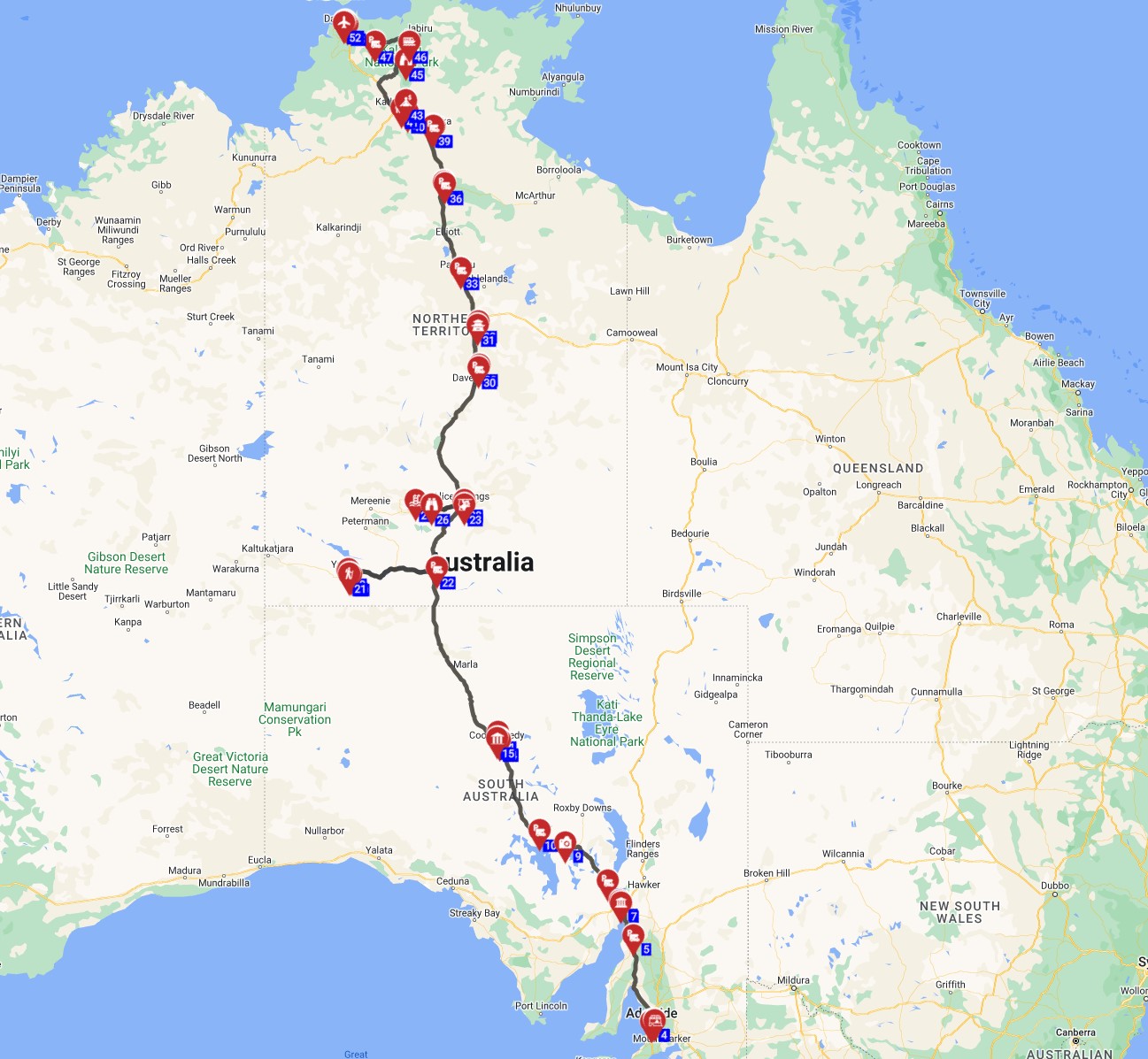
- **Melbourne to Darwin - Australia’s Heartline Road Trip:** This 26-day, 5622.8 km route takes you from vibrant Melbourne to tropical Darwin, hitting 2 wildlife shows, 1 aquarium, 3 museums, 5 hiking areas, and 2 scenic routes. It's an epic journey through Australia’s diverse heart.
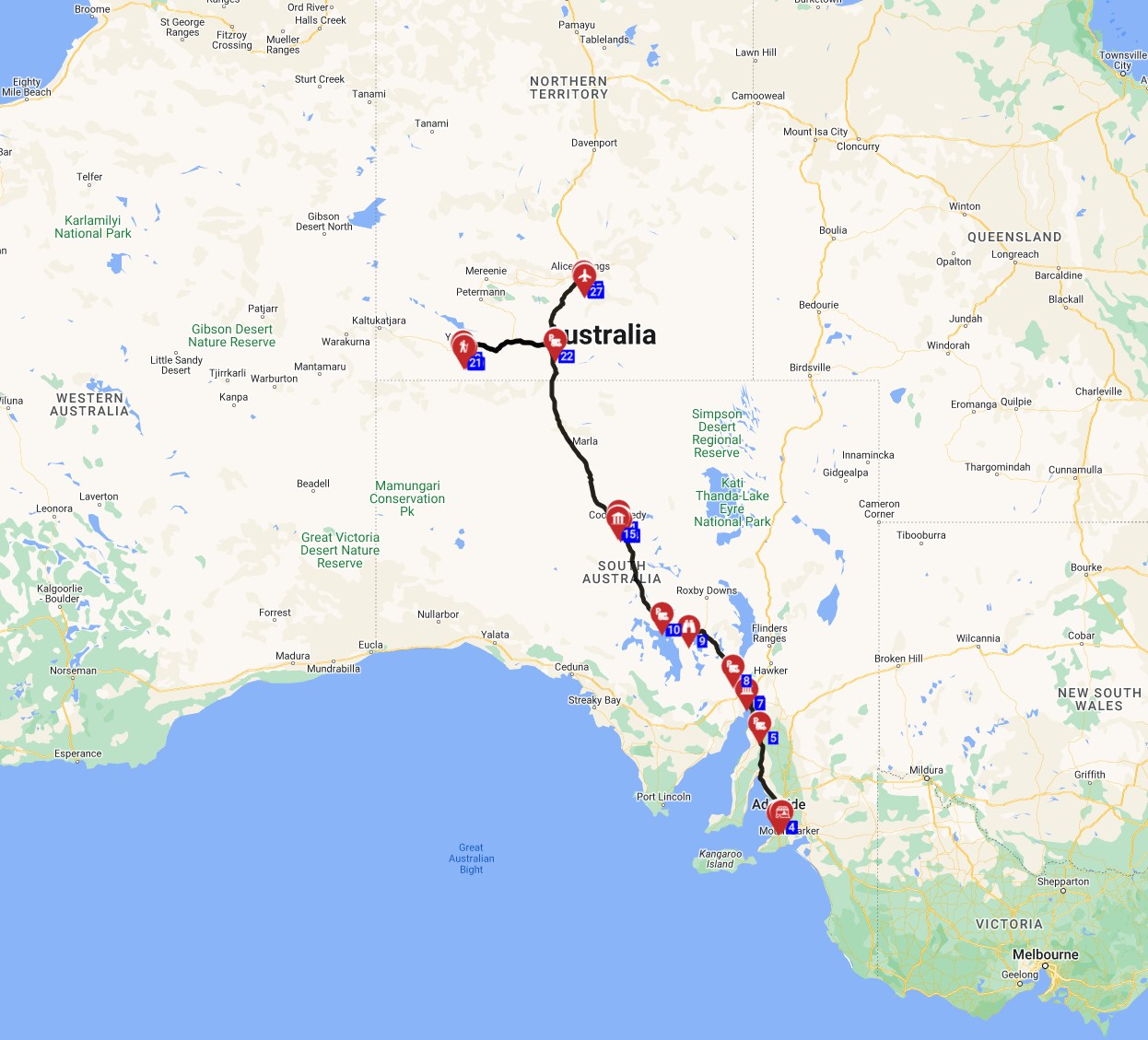
- **Perth to Alice Springs - The Dreamtime Highway: A Journey Through Australia's Heart:** Embark on a 21-day, 5447.3 km adventure from Perth to Alice Springs, featuring 2 wildlife encounters, 1 beach, 3 museums, 4 natural features, and 5 points of interest. This route offers a profound connection to Indigenous culture and stunning landscapes.
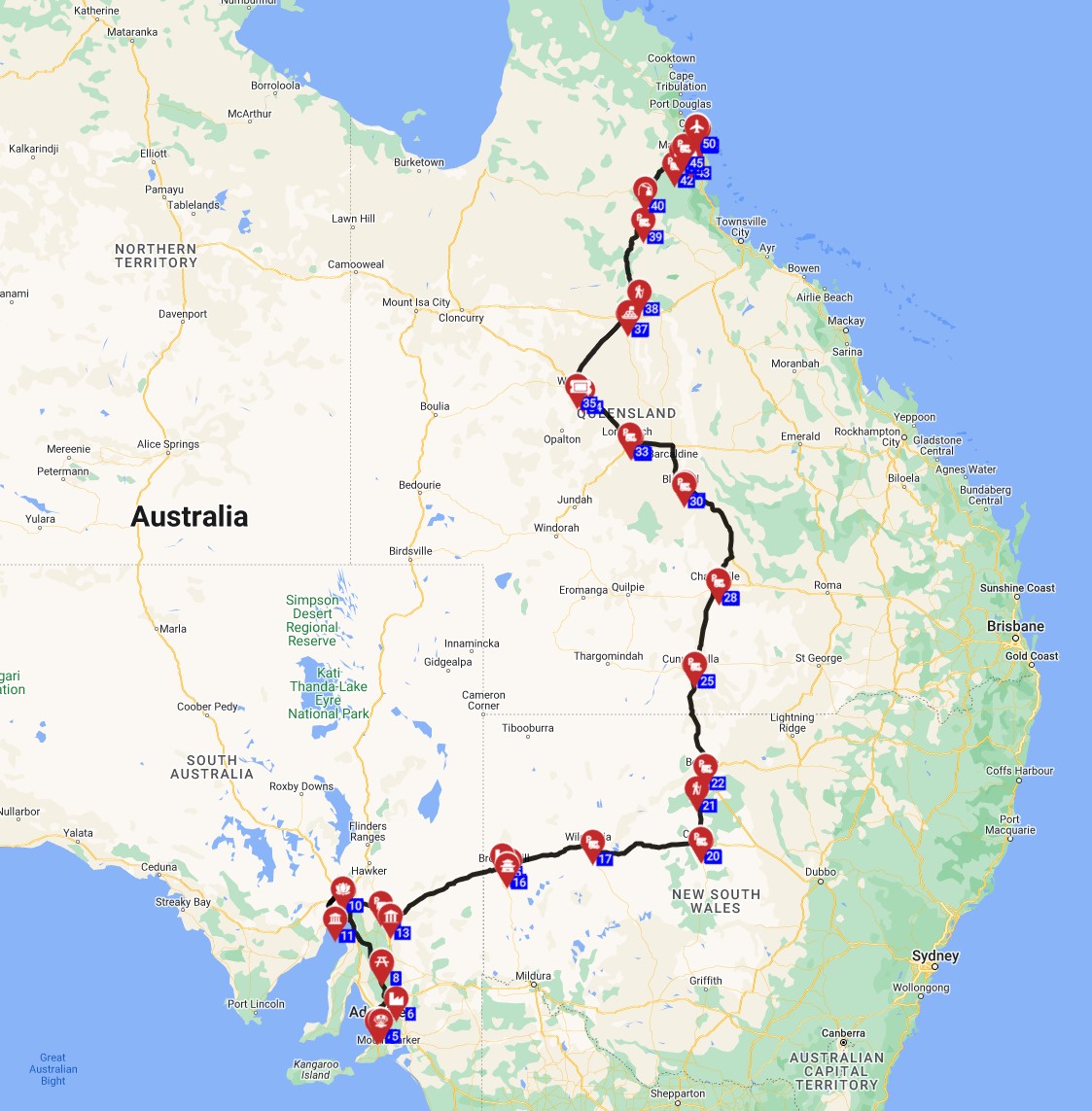
- **Cairns to Alice Springs - Northern Horizons: A Journey Through Australia's Heartland:** This 17-day, 4003.6 km route from Cairns to Alice Springs includes 1 wildlife show, 2 caves, 3 hiking areas, 2 natural features, and 2 tourist attractions. Discover the vibrant tropics transitioning to the iconic Red Centre.
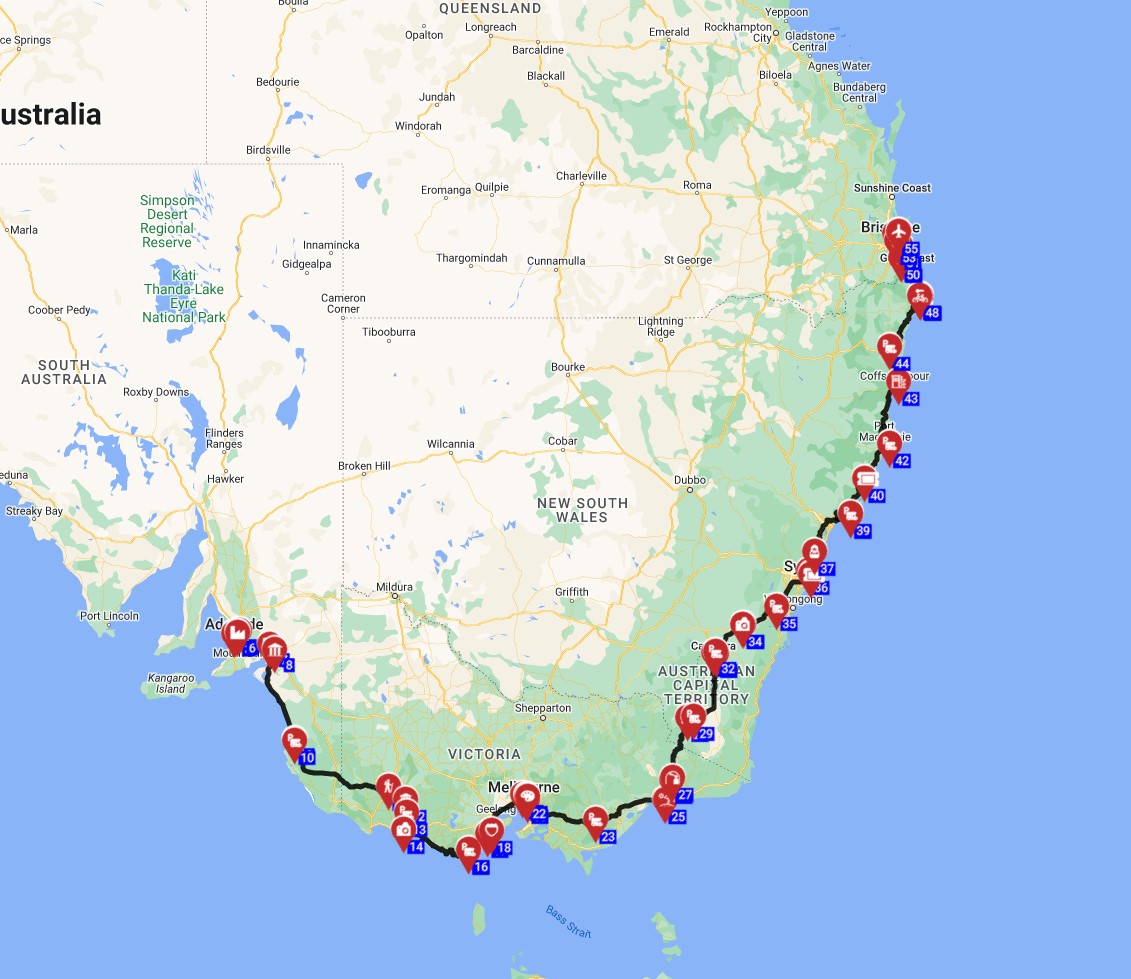
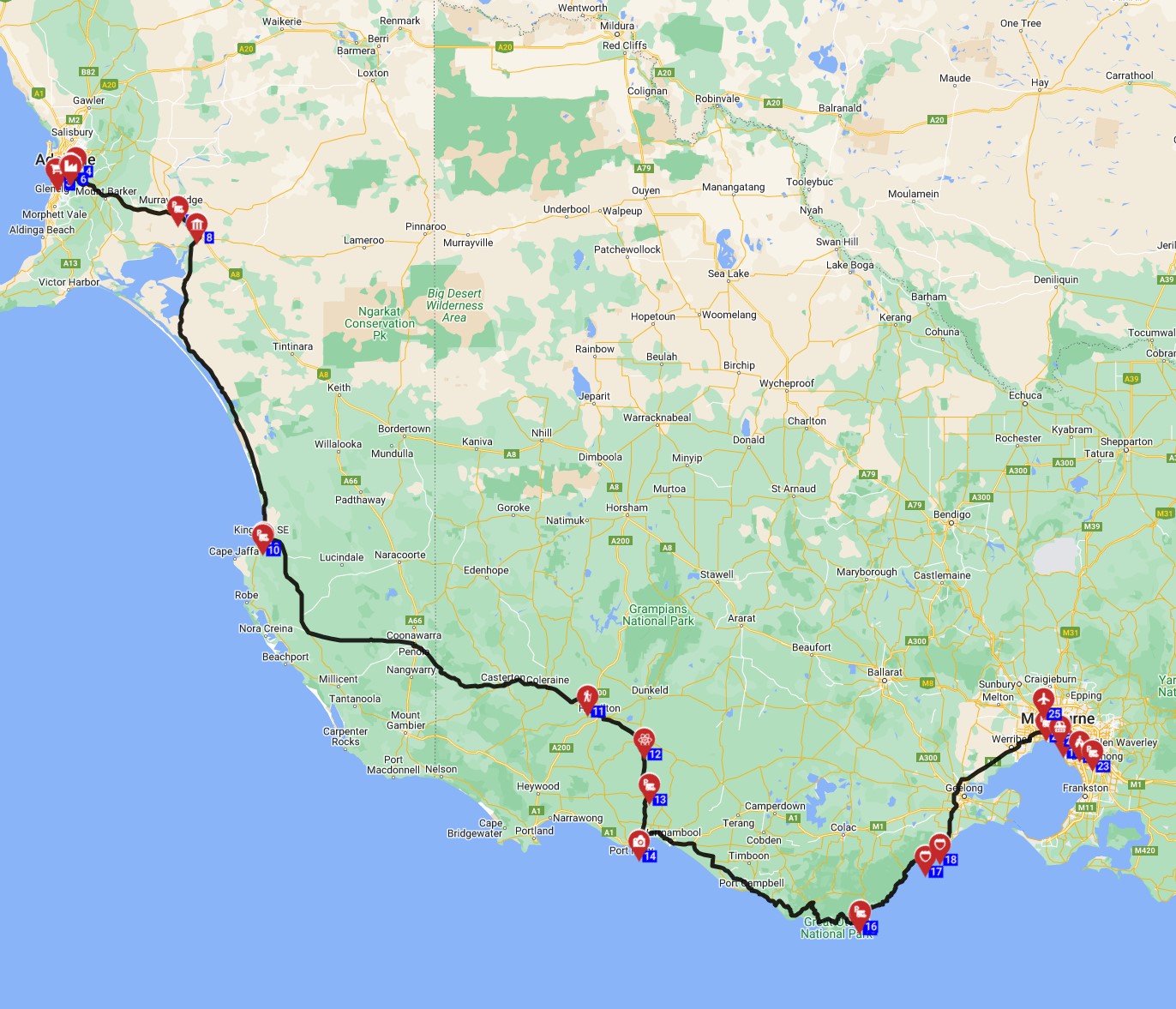
- **The Great Ocean Road:** Drive one of the world's most scenic coastal routes, stretching over 243 km from Torquay to Allansford in Victoria. Rent a motorhome and find numerous caravan parks and campgrounds along the way, offering spectacular views of the Twelve Apostles.
- **Uluru-Kata Tjuta National Park:** A sacred site in Australia's Red Centre. Experience the sunrise and sunset over Uluru from designated viewing areas, and explore the ancient Kata Tjuta domes. Camping is available at Ayers Rock Campground, often requiring advance booking.
- **Blue Mountains National Park:** Just a 2-hour drive from Sydney, this UNESCO World Heritage site offers stunning escarpments, eucalyptus forests, and waterfalls. Campgrounds like Blackheath Glen Reserve provide a serene base for hiking and exploring the Three Sisters rock formation.
🎬 Video coming soon
Final Thoughts
Exploring Australia in a rented RV or campervan is an adventure unlike any other, offering the freedom to discover vast landscapes and vibrant cultures at your own pace. With excellent infrastructure, diverse camping options, and the support of experienced specialists like Bandana Caravan, your journey will be filled with incredible memories. Remember to embrace slow travel, averaging no more than 100-150 km per day, to truly connect with the country’s stunning scenery and unique local experiences.
Whether you dream of coastal drives, outback expeditions, or national park explorations, Australia has a perfect spot waiting for your mobile home. We’re here to help you navigate every detail, from choosing the right vehicle to understanding local camping etiquette. Get ready to embark on an unforgettable Australian RV adventure!
Compare Motorhome Prices for Australia today and start planning your ultimate road trip!