In This Guide
- Can You Drive an RV in Miami? License & Age Rules
- Road Conditions & Terrain in Miami
- RV Size Limits, Bridges & Restricted Zones
- Fuel: Diesel vs. Petrol & Cost per 100 km
- Tolls, Vignettes & Border Rules
- Driving Tips for one way rv rental Travelers
- Recommended RV Class for Miami Roads
- Should I Choose a Compact Van Instead of a Large RV in Miami?
- Can I Park Anywhere? Free & Wild Camping Rules in Miami
- Can I Drive an RV Into the City Center? Heights, Tunnels & Local Signage
- What is the 3-3-3 rule for RVs?
- Can you drive an RV one-way?
- How big of an RV can you drive without a special license?
- What states require a CDL license to drive an RV?
- What is the new RV law in Florida?
- What is the 4-4-4 rule for RVing?
- Is it worth lowering the insurance on my RV when not traveling?
- What You Shouldn't Miss
Embarking on a one-way RV adventure from Miami opens up a world of possibilities, from sun-drenched beaches to vibrant cityscapes and beyond. Miami, with its unique blend of urban charm and tropical allure, serves as an excellent starting point for an unforgettable road trip. For live availability and current prices, start with our RV Rental Miami - Complete Guide 2026 guide. Imagine yourself cruising the iconic coastal roads, the salty air filling your motorhome, knowing that you have the flexibility to explore at your own pace without the need to circle back. At Bandana Caravan, we believe in full transparency: no hidden fees, no surprises, ensuring your travel planning is as smooth as your journey on the open road. Our extensive network of partners, including leading suppliers like El Monte and Cruise America, means you’ll find the perfect rental motorhome or campervan for your personalized one-way route.
🎬 Video coming soon
Can You Drive an RV in Miami? License & Age Rules
Yes, you can confidently drive most rented RVs in Miami with a standard driver's license. Florida's Class E driver's license covers motorhomes and campervans up to a Gross Vehicle Weight Rating (GVWR) of 26,000 pounds, encompassing nearly all rental Class A, Class B, and Class C motorhomes. Rental companies typically require drivers to be at least 21 years old, and Bandana Caravan proudly offers options without additional young driver surcharges or vehicle class restrictions for eligible renters. Visitors from non-English speaking countries are recommended to carry an International Driving Permit (IDP) alongside their valid home country license, though it's not universally mandatory in most situations. We're here to provide 24/7 support before your trip, guiding you through all the necessary documentation for a worry-free start to your one-way RV rental in Miami.
Road Conditions & Terrain in Miami
Miami features generally flat terrain, making it straightforward to drive an RV without encountering mountainous challenges. The road quality is typically good on major highways like I-95 and the Florida Turnpike, as well as on main urban arteries. While local streets can have varying conditions, requiring attentive driving, you can drive almost anywhere without issues; just use common sense and pay attention. Urban density and heavy traffic, particularly during peak hours around Brickell and South Beach, require careful navigation and patience for motorhome drivers. Scenic coastal roads, such as US-1 South towards the Florida Keys, offer breathtaking views but also necessitate awareness of potential crosswinds and increased pedestrian and cyclist activity.
RV Size Limits, Bridges & Restricted Zones
Miami does not generally impose specific overall length or width limits for RVs on its public road network. However, drivers of rented motorhomes and campervans must be acutely aware of posted height restrictions, especially when navigating under bridges, overpasses, and near parking garages. Low bridges and parking garage clearances are the primary size-related concern for RVs in urban Miami. Most parking garages, including those in downtown Miami and South Beach, are unsuitable for RVs due to their height limits, necessitating careful planning for street parking or designated oversized vehicle lots. Unlike some European cities, Miami does not have environmental zones that restrict RV access based on emissions.
Fuel: Diesel vs. Petrol & Cost per 100 km
Both diesel and petrol (gasoline) are widely available across Miami and throughout Florida, catering to different RV types. Many Class C - Alcove RVs, which average 8 meters in length (like the "MH-B" from CanaDream), typically consume between 23-30 liters per 100 km (7-10 Miles/Gallon). Based on current fuel prices, a Class C - Alcove RV could cost approximately $25-35 USD per 100 km, but these costs fluctuate daily. To help manage your budget, some Bandana RV rental suppliers may offer fuel discount cards, and for detailed trip cost estimation and expense tracking, you can plan your route using RV PLANET routes to itemize every expense along the way.
Tolls, Vignettes & Border Rules
Florida primarily uses a cashless toll system, notably SunPass, on many highways and express lanes around Miami, such as the Florida Turnpike and the Dolphin Expressway (SR 836). Visitors renting an RV should verify if their vehicle is equipped with a SunPass transponder or plan for toll-by-plate charges, which can be higher. Many Bandana RV rental suppliers, including Cruise America and El Monte, offer pre-purchased toll passes, which can prevent fines and simplify your journey through Florida's extensive toll network. Importantly, vignettes (road tax stickers common in Europe) and international border rules are not applicable for RV travel within Miami or the contiguous U.S. states, simplifying your one-way RV driving plans. On the routes offered through RV PLANET routes, you can itemize and track every expense along the way for easy budgeting.
Driving Tips for one way rv rental Travelers
Driving a rented RV in Miami requires a thoughtful approach to ensure a smooth and enjoyable experience. Utilize RV-specific GPS navigation to avoid low bridges, tight turns, and roads unsuitable for larger vehicles, especially in dense Miami areas like the narrow streets of South Beach or Coconut Grove. Allow ample time for travel, particularly during Miami's peak traffic hours (typically 7-9 AM and 4-6 PM), to reduce stress and ensure safety on busy routes like I-95. Pre-plan your RV parking for attractions and overnight stays, as finding suitable spots in urban Miami can be challenging; consider designated oversized vehicle parking near the PortMiami cruise terminal if exploring downtown. Practice wide turns and remember your RV's average length (e.g., a Class C Alcove is about 8 meters or 26 feet) to avoid collisions with other vehicles or obstacles. Be mindful of strong crosswinds when driving along coastal routes and bridges, such as the Rickenbacker Causeway to Key Biscayne, as they can significantly impact RV stability. For more insights on navigating your trip, you might find our RV Travel Guide to Miami - Tips and Top Spots 2026 helpful.
Recommended RV Class for Miami Roads
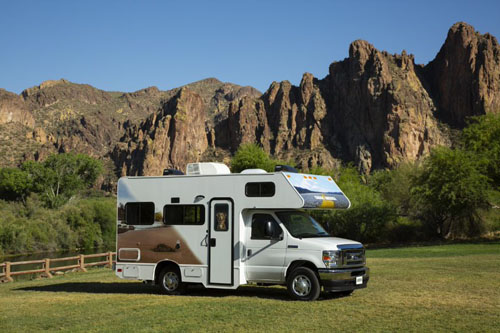
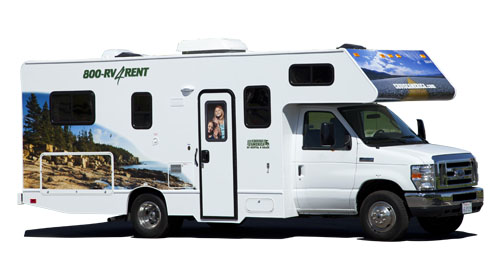
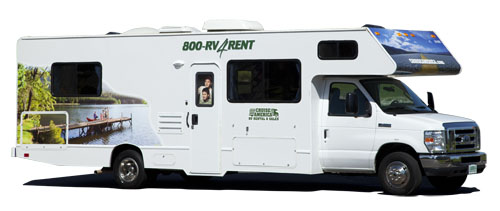
For navigating Miami’s vibrant and sometimes bustling roads, certain RV classes offer distinct advantages. The Class B - Camper Van (averaging 6.1 meters in length) is highly recommended for Miami due to its superior maneuverability and ease of parking in urban settings, allowing access to tighter spots on South Beach or in Wynwood. Class C - Alcove RVs, like the "CA-25" model from Cruise America (averaging 7.6 meters with 5 sleeping places), also provide a good balance, offering more interior space for families while remaining manageable on Miami's main highways and for finding suitable parking in peripheral areas. While larger Class A - Integrated RVs (averaging 8.9 meters or more) offer luxury and extensive amenities, their size can make urban parking and navigation more challenging; however, they have no issue on the main roads. Ultimately, the best choice depends on your group size and how much time you plan to spend exploring the dense city center versus traveling to surrounding natural attractions.
Should I Choose a Compact Van Instead of a Large RV in Miami?
For navigating Miami's urban core and parking at city attractions, a compact van (like a Class B Camper Van, averaging 6.1 meters or 20 feet) offers significant advantages in maneuverability and ease. These smaller rented motorhomes can fit into many standard parking spaces, making quick stops in areas like Little Havana or Coconut Grove much simpler. Larger RVs, such as Class C Alcoves (averaging 8 meters or 26 feet), provide substantially more interior comfort, amenities like larger kitchens and separate showers, and sleeping capacity (avg. 5.9 places) for families or longer trips. While a compact van is easier for tight spaces, larger RVs generally have no issue on Miami's main roads and highways; challenges are primarily confined to finding suitable parking closer to popular attractions. The decision often comes down to prioritizing urban exploration and flexible parking versus onboard comfort and space for extended stays, perhaps detailed further in our "RV Rental in Miami for Couples - Pricing 2026" or "Luxury RV Rental in Miami - Premium Prices 2026" guides.
Can I Park Anywhere? Free & Wild Camping Rules in Miami
Free or "wild camping" is generally prohibited within Miami city limits and most developed areas of Florida, with local ordinances actively enforced to deter unauthorized overnight stays. Legal overnight RV parking options include private RV parks, state parks (often requiring reservations well in advance), and designated campgrounds in surrounding areas like Homestead or near Everglades National Park. Researching specific RV parks near Miami, such as Miami Everglades RV Resort, Larry and Penny Thompson Memorial Park & Campground (which boasts 270 RV sites), or John Pennekamp Coral Reef State Park in Key Largo, is essential for planned overnight stays. Many local regulations restrict or prohibit overnight street parking for RVs in Miami-Dade County, and fines can be substantial. Always check local regulations and follow local law before parking overnight to ensure a hassle-free one-way RV adventure.
Can I Drive an RV Into the City Center? Heights, Tunnels & Local Signage
Yes, you can generally drive a rented RV into Miami's city center, but constant attention to local signage regarding height limits and parking restrictions is crucial. Parking garages, including those around Bayfront Park and the Downtown area, are almost universally too low for RVs, so plan for street parking, open-air lots, or designated oversized vehicle areas, such as those available near American Airlines Arena (now Kaseya Center). While most main city roads and boulevards like Biscayne Boulevard can accommodate RVs, specific tunnels like the PortMiami Tunnel (with an 8-foot, 2-inch height restriction for trucks) may have limitations that drivers must observe. Environmental zones are not a concern in Miami, but always be aware of residential parking permits and "no parking" signs that frequently apply to larger vehicles like RVs. Drive slowly and carefully, and you can drive almost anywhere without issues. No need to stress - just use common sense and pay attention.
What is the 3-3-3 rule for RVs?
The 3-3-3 rule for RVs is a popular guideline recommending drivers limit their daily travel to no more than 300 miles (approximately 480 km) to prevent fatigue and maximize enjoyment. Another aspect of the rule advises arriving at your chosen destination by 3 PM, allowing ample time for setup at your campsite before sunset. The final "3" suggests staying for a minimum of 3 nights to fully experience the location, connect to the culture, the food, and the scenery, and avoid the rush of constant movement. This rule promotes safer driving by preventing exhaustion and enhances the enjoyment of an RV trip by encouraging exploration rather than constant movement, perfectly aligning with our recommendation to travel slowly, averaging max 100-150 km per day.
Can you drive an RV one-way?
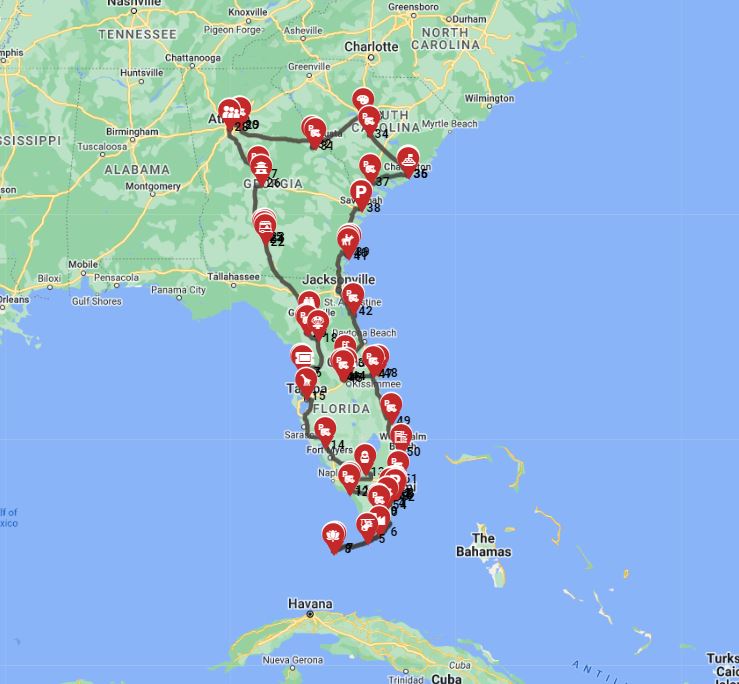
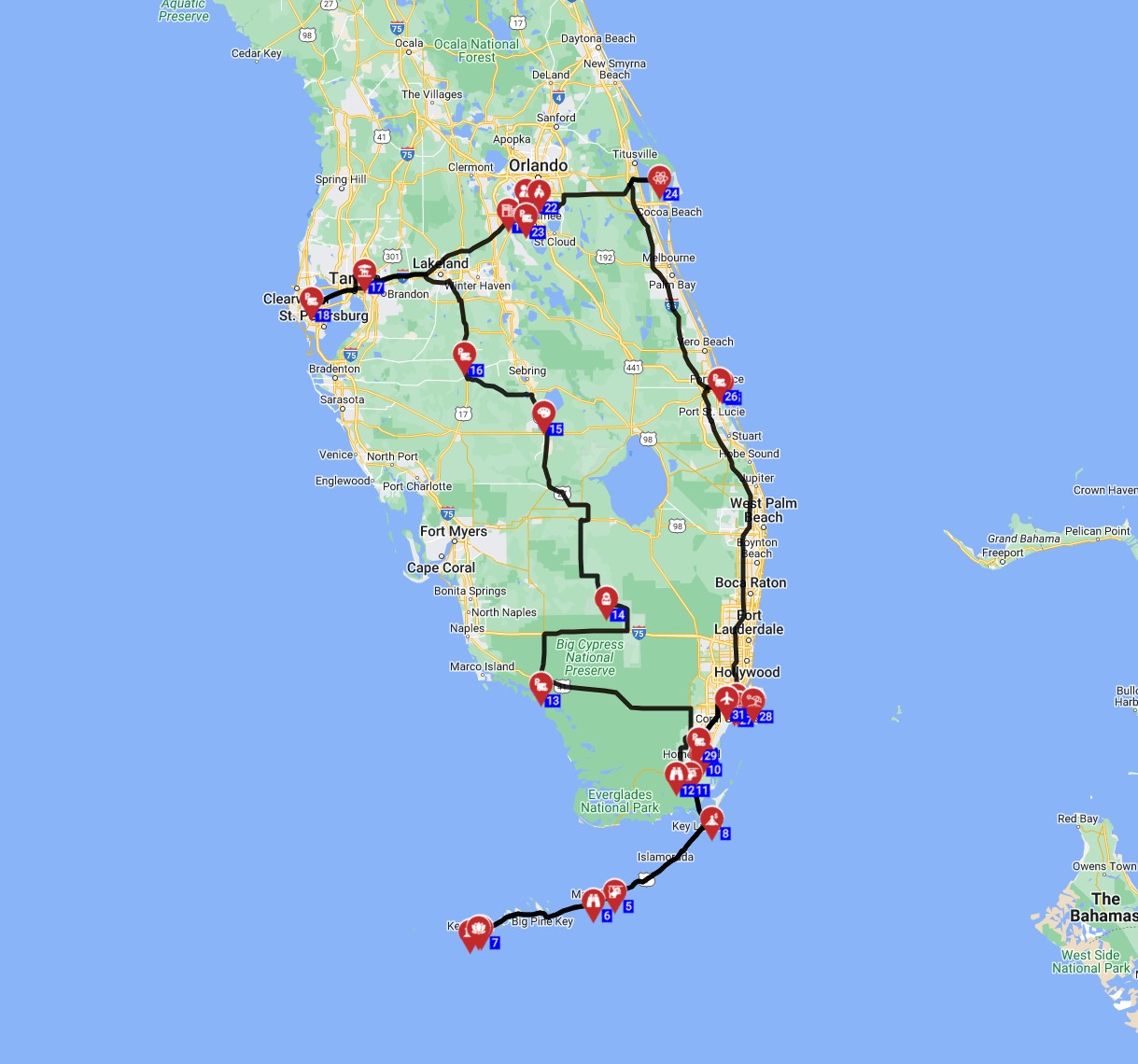
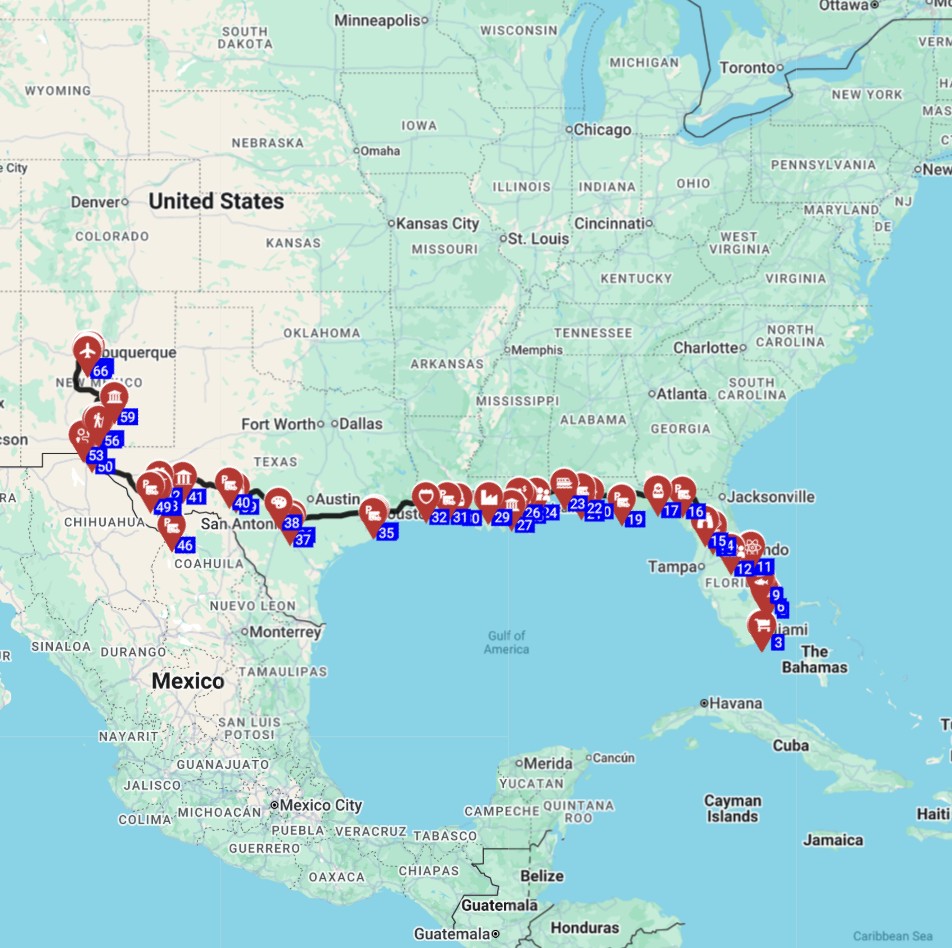
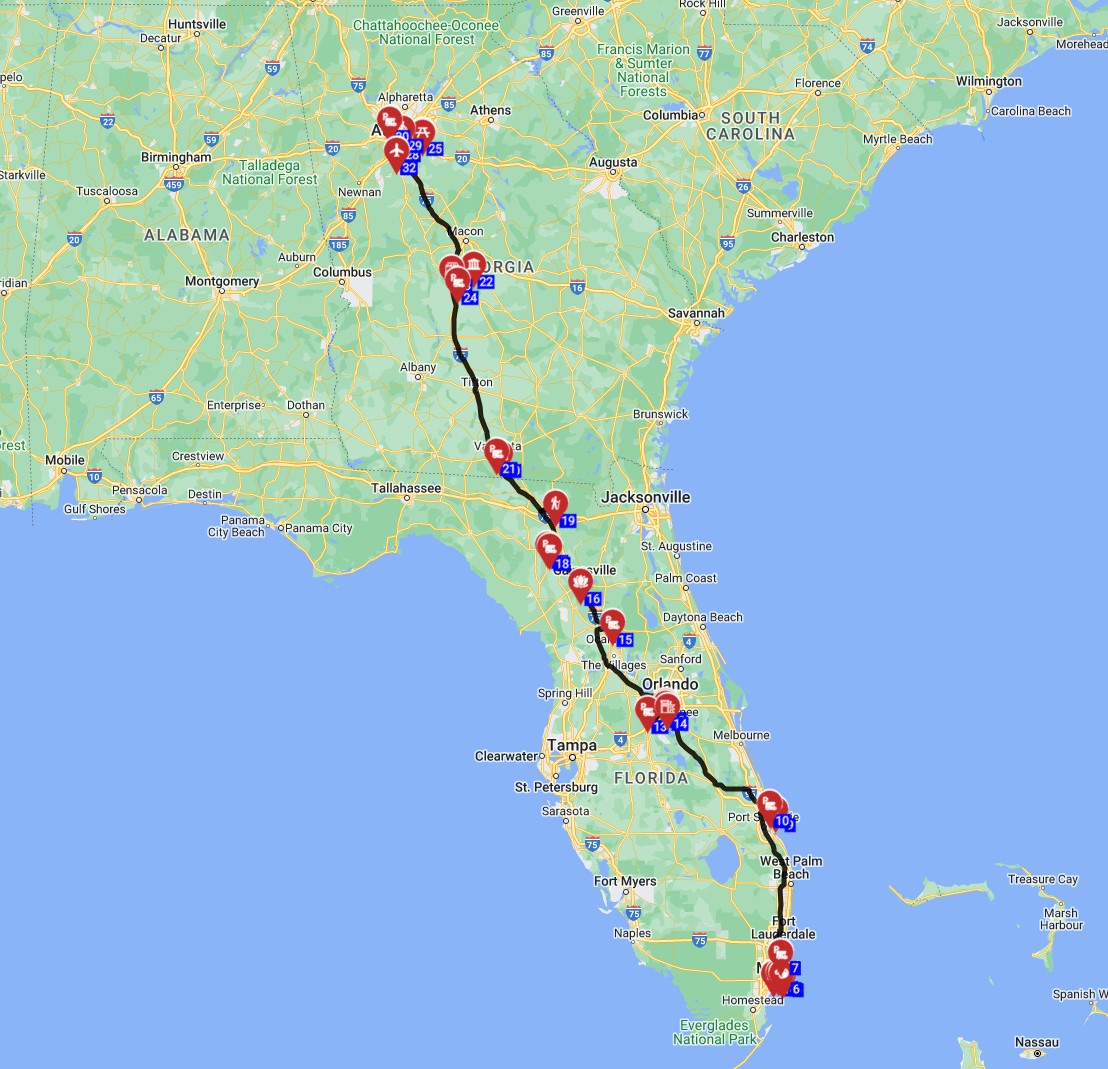
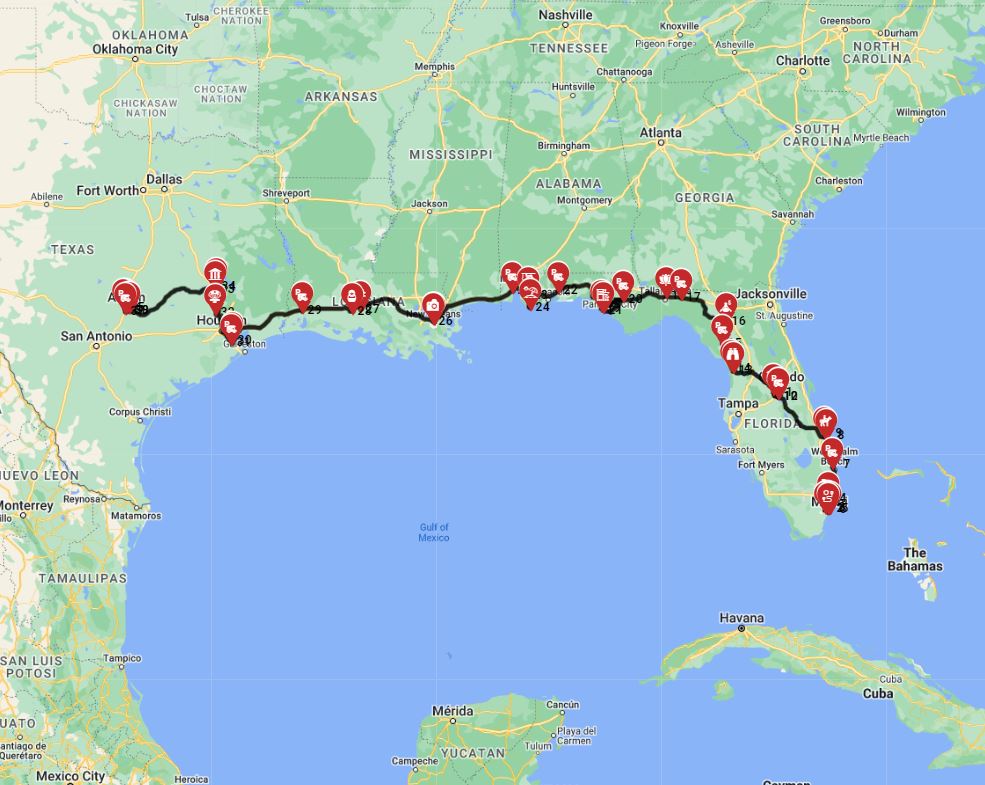
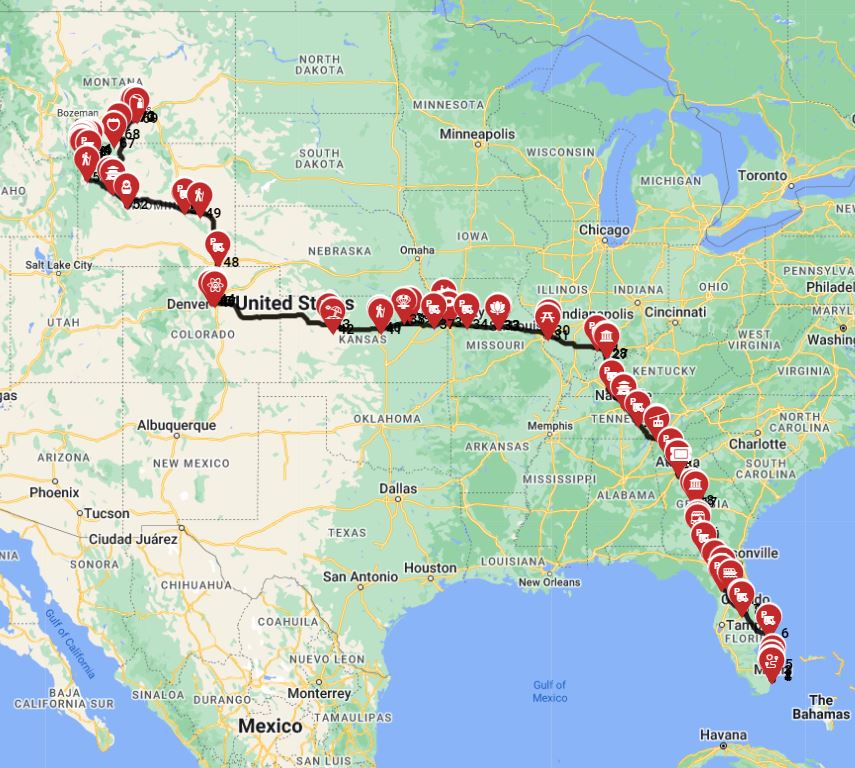
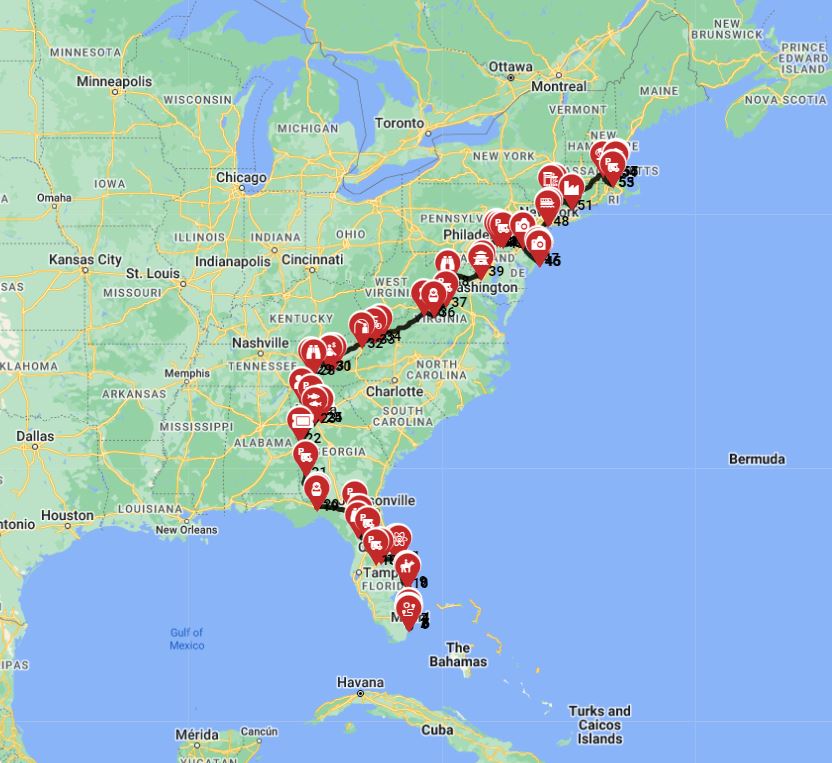
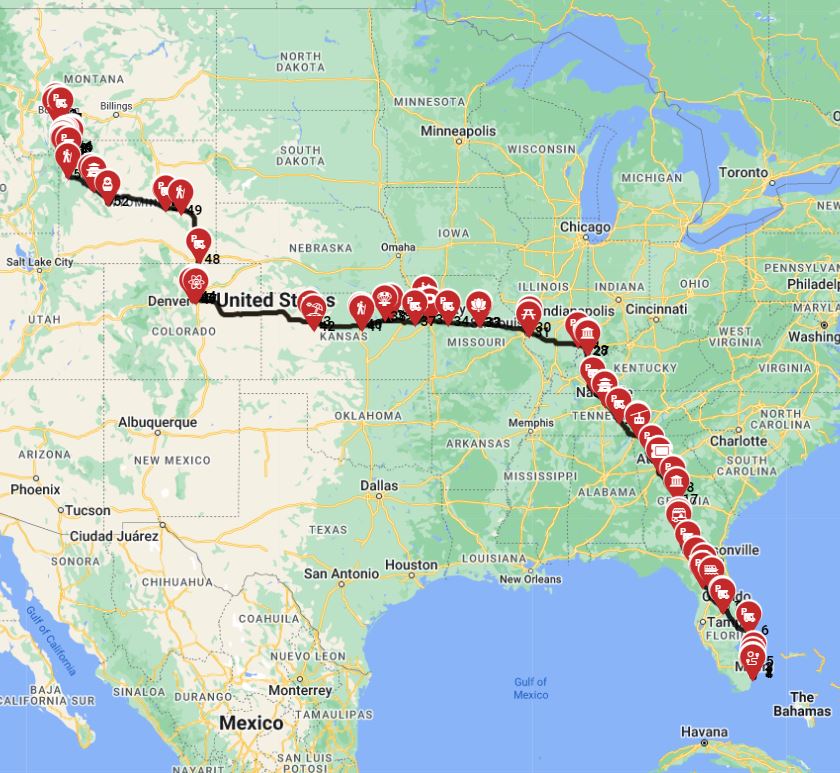
Yes, one-way RV rentals are a very common and popular option, allowing travelers to pick up a motorhome in Miami and drop it off at a different location. This type of rental offers significant flexibility, enabling renters to cover more ground and experience different regions without backtracking. One-way rentals often incur a drop-off fee to cover the cost of returning the RV to its home base or transferring it to the next renter, as detailed in our One-Way RV Rental in Miami - Price Guide 2026. Many rental companies partnered with Bandana Caravan, including El Monte and Apollo, facilitate one-way trips, making it an ideal choice for specific travel itineraries like exploring the length of Florida or heading north up the East Coast. For instance, consider these popular one-way routes:
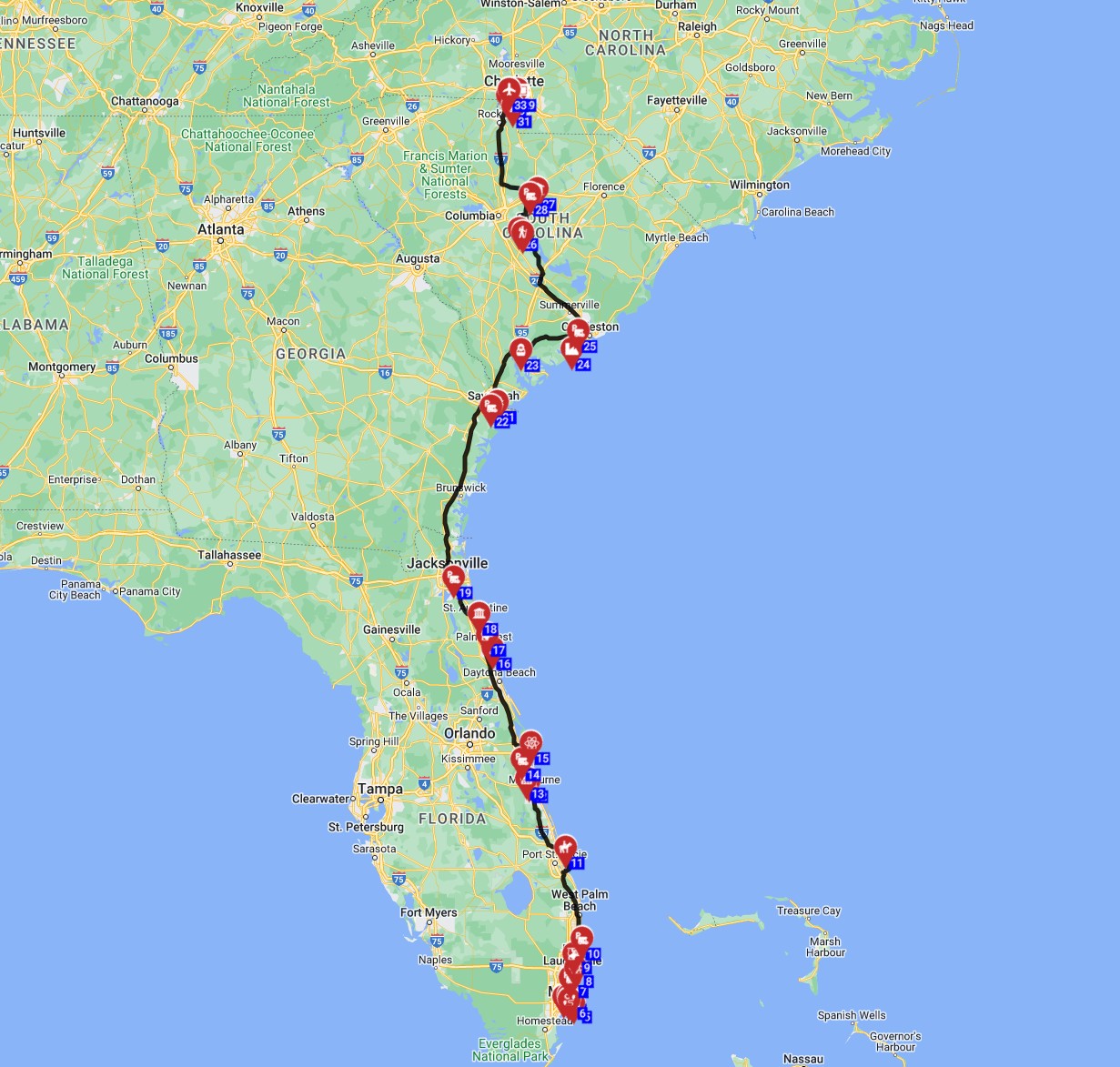
This 28-day itinerary covers 5650.8 km and includes 1 amusement park, 2 animal shows, 1 aquarium, 6 hiking areas, and 3 historical sites.
This longer 31-day journey covers 5700.8 km and includes 1 beach, 2 caves, 2 extreme activities, and 5 local industry visits.
How big of an RV can you drive without a special license?
In the United States, most recreational vehicles with a Gross Vehicle Weight Rating (GVWR) of up to 26,000 pounds (approximately 11,793 kg) can be driven with a standard car driver's license. This includes the vast majority of rental Class B campervans, Class C motorhomes (e.g., Bandana's Class C - Alcove averaging 8m or 26 ft, like the "MH-C" from Cruise America, with up to 7 sleeping places), and many Class A RVs, which are designed for personal use. A special commercial driver's license (CDL) is typically only required for vehicles used for commercial purposes or those exceeding these weight thresholds in specific states. Always verify the GVWR of your specific rented RV and check your home state's licensing requirements to ensure compliance, though for all Bandana rentals, a standard license is sufficient.
What states require a CDL license to drive an RV?
No U.S. state requires a Commercial Driver's License (CDL) specifically for operating a personal recreational vehicle (RV) solely for non-commercial purposes. A CDL is strictly for commercial transport. However, some states, such as California, New York, Pennsylvania, and Texas, may require a non-commercial Class A or Class B driver's license endorsement for RVs exceeding 26,000 pounds GVWR or those towing heavy trailers. These non-commercial endorsements are distinct from a CDL, but still require a separate test. It is crucial for RV drivers to check the licensing requirements of their state of residence and any states they plan to travel through if their RV's weight approaches or exceeds the standard license limit, but for all Bandana motorhome rentals, a standard driver's license is all you need.
What is the new RV law in Florida?
There isn't a single broad "new RV law" in Florida that significantly impacts personal RV operation statewide; instead, local ordinances, particularly within areas like Miami-Dade County, are subject to continuous updates and specific enforcement. Many changes relate to residential RV parking restrictions, duration of stay in public or private lots, and anti-squatting measures aimed at ensuring public safety and property values. RV travelers to Miami should consult the official websites of Miami-Dade County and specific municipalities such as Miami Beach or Homestead for the most current local regulations concerning RV parking and overnight stays. Being aware of and adhering to these local rules is essential to avoid fines and ensure a smooth one-way RV rental experience in the Miami area.
What is the 4-4-4 rule for RVing?
The 4-4-4 rule for RVing is a less common travel guideline, similar in principle to the 3-3-3 rule, aimed at balancing travel and relaxation on your rental motorhome trip. This rule typically suggests limiting daily driving to approximately 400 miles (about 640 km), allowing for slightly longer stretches of travel compared to the 3-3-3 rule. It also recommends stopping and setting up camp by 4 PM, providing ample daylight for site setup and initial exploration of your surroundings, whether you're at Larry and Penny Thompson Memorial Park or further north. Finally, the 4-4-4 rule suggests staying for at least 4 nights at each location, promoting deeper engagement with the destination and more restful travel, encouraging you to truly feel the place, connect to the culture, the food, and the scenery.
Is it worth lowering the insurance on my RV when not traveling?
For RV owners, it can often be financially beneficial to adjust insurance coverage to a 'storage-only' or 'comprehensive-only' policy when their personal vehicle is not actively traveling, such as during the off-season. Storage-only insurance typically removes liability and collision coverage, which are unnecessary if the RV is parked and not being driven, significantly reducing premiums. This type of policy still protects against non-driving incidents such as theft, fire, vandalism, and natural disasters. As Bandana Caravan specializes exclusively in RV rentals, our travelers benefit from the top-level deductible reimbursement option available, ensuring peace of mind throughout their journey without needing to worry about long-term insurance adjustments for vehicle ownership.
What You Shouldn't Miss
- **Explore South Beach**: Drive your campervan slowly along Ocean Drive, soaking in the Art Deco architecture. Park your rented RV at one of the larger parking lots slightly off the main strip (like the 13th Street garage if your RV fits, or nearby street parking for smaller Class B vans) and then walk or bike to experience the vibrant atmosphere, sandy beaches, and delicious local cuisine.
- **Everglades National Park Adventure**: Just a short drive west from Miami, this unique ecosystem offers airboat tours, walking trails (like the Anhinga Trail, famous for wildlife), and RV-friendly campgrounds. Stay at the Flamingo Campground for stunning sunsets over Florida Bay.
- **Little Havana's Cultural Immersion**: Park your motorhome on a wider street just outside the Calle Ocho pedestrian zone and take a stroll. Enjoy Cuban coffee, watch cigars being hand-rolled, and soak in the Latin rhythms. This is a perfect opportunity to sample authentic Cuban dishes; if you plan to cook some yourself later in your RV, check out our RV-friendly recipes playlist.
- **Key Biscayne's Nature & Views**: Drive your rented RV over the Rickenbacker Causeway (toll applies) to Key Biscayne. Enjoy stunning panoramic views of the Miami skyline from Bill Baggs Cape Florida State Park, which also offers a beautiful beach and lighthouse. Consider parking your Class C motorhome at the park's ample day-use lots.
- **Biscayne National Park Exploration**: While 95% underwater, Miami is your gateway to exploring Biscayne National Park. Head to the Dante Fascell Visitor Center just south of Miami for information, then book a boat tour to discover coral reefs, mangrove forests, and historic Stiltsville.
Looking for expert insights from Avi Bandana? Top 5 Adventures - recommendations from Avi Bandana
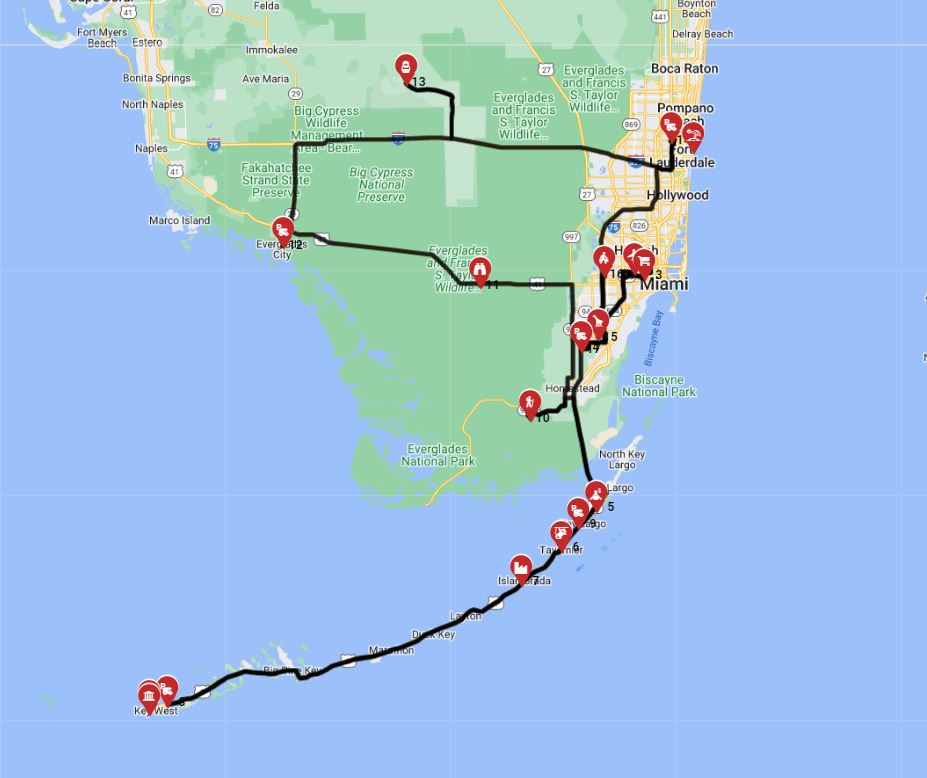
This 7-day, 1043.2 km roundtrip from Miami offers 2 animal shows, 1 beach, 1 hiking area, and 1 natural feature, ideal for couples or families seeking a vibrant South Florida experience.
Final Thoughts
A one-way RV rental from Miami offers unparalleled freedom to explore Florida and beyond, combining the vibrant energy of the city with the serene beauty of the open road. With Bandana Caravan, you're not just booking a vehicle; you're gaining a partner dedicated to making your adventure seamless, transparent, and truly unforgettable. Whether you envision a week-long trip down to Key West or an extended road trip up the East Coast, our comprehensive planning tools and expert support ensure you're ready for every mile.
Don't let the details overwhelm you. With our commitment to no hidden fees, personalized assistance, and the option for top-level deductible reimbursement, your focus can remain squarely on the excitement of your journey. Compare one way rv Rentals in Miami today and start planning the ultimate mobile home vacation. Your next great adventure awaits!
Find Motorhome Rentals in Miami