In This Guide
- Best Tokyo - Airport RV Itinerary for luxury rv rental - Overview
- 7-Day Classic Route in Tokyo - Airport
- 14-Day Extended Journey in Tokyo - Airport
- Recommended RVPlan Trip for Tokyo - Airport
- Must-See Stops Along the Way (Avi Bandana Picks)
- Daily Driving Distances & Drive Times in Tokyo - Airport
- Best RV Class for This Itinerary - Couple & Family Picks
- How do I pick up and drop off an RV at Narita (NRT) or Haneda (HND) Airport?
- What are the driving differences in Japan for international RVers?
- How do I manage waste disposal and fresh water refills for an RV in Japan?
- What are Michi-no-Eki (Roadside Stations) and how can RVers use them?
- What is the realistic budget for a luxury RV rental trip in Japan?
- Are there RV-friendly itineraries starting directly from Tokyo Airport?
- How can I park an RV when visiting major cities like Tokyo?
- What RV vehicle layouts and amenities are typical in Japan?
- What documents do I need to drive an RV in Japan?
Best Tokyo - Airport RV Itinerary for luxury rv rental - Overview
Exploring Japan's scenic prefectures like Hakone, Mount Fuji, and the Izu Peninsula by luxury rented RV offers a unique blend of nature and culture, ideal for an extended road trip. A recommended minimum duration of 7 days allows for leisurely travel, with many travelers finding 10-14 days perfect for deeper immersion. The best seasons for this adventure are spring (April-May) for cherry blossoms and autumn (October-November) for stunning fall foliage, providing optimal weather and scenery. Your trip will typically involve covering around 700-1500 km depending on your chosen duration and pace, with a focus on natural and cultural sites just outside the bustling Tokyo city center. For live availability and current prices, start with our RV Rental Tokyo - Airport - Complete Guide 2026 guide. This type of journey promises full transparency, as you can plan your route and budget with no hidden fees or surprises.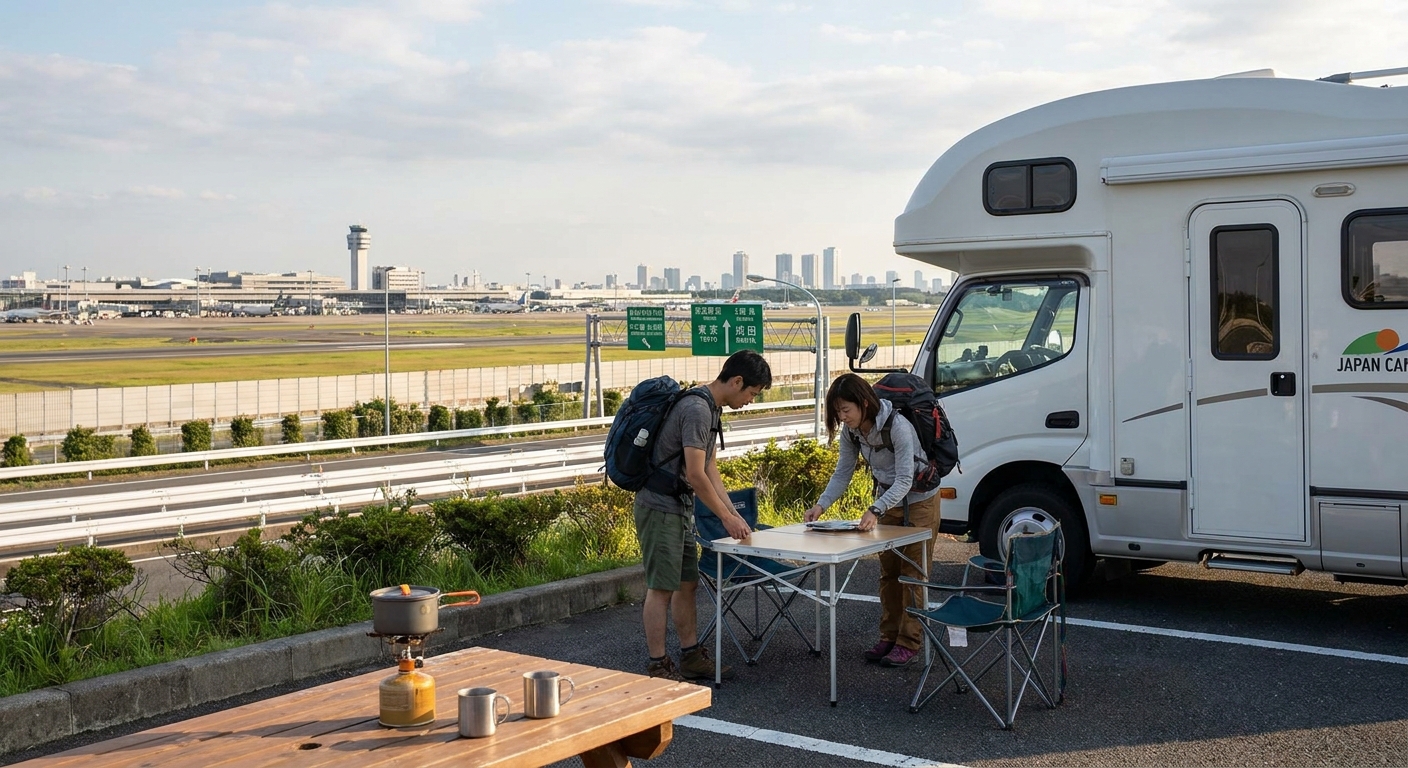
7-Day Classic Route in Tokyo - Airport
A classic 7-day RV route from Tokyo - Airport provides an excellent introduction to Japan's natural beauty and cultural highlights, covering approximately 430 km of driving. Day 1 begins with your RV pickup near Narita (NRT) or Haneda (HND) Airport, followed by a scenic 120 km drive to Hakone, where you can explore Lake Ashi and the Open-Air Museum, with overnight parking at a Hakone Michi-no-Eki or campground. On Day 2, you'll immerse yourself in Hakone's hot springs and stunning views with short, relaxed drives. Day 3 involves a pleasant 60 km journey to the Fuji Five Lakes region, specifically Kawaguchiko, offering iconic views of Mount Fuji, and a stay at a local campground. Day 4 is dedicated to exploring Fuji Five Lakes, visiting landmarks like Chureito Pagoda. Day 5 takes you on a 100 km coastal drive to the Izu Peninsula (Atami/Shimoda) for breathtaking coastal scenery and fresh seafood. Day 6 allows for exploration of Izu's hidden beaches and volcanic landscapes. Finally, Day 7 is a comfortable 150 km return journey to the airport for RV drop-off, allowing ample time for a smooth finish. For more detailed plans, consider consulting our RV Travel Guide to Tokyo - Airport - Tips and Top Spots 2026.14-Day Extended Journey in Tokyo - Airport
An extended 14-day RV adventure from Tokyo - Airport deepens your exploration of Japan, combining the classic route with additional cultural and natural destinations over approximately 800 km. Days 1-7 follow the "7-Day Classic Route," leading you from the airport through Hakone to the Izu Peninsula, ensuring you don't miss key highlights. On Day 8, you'll drive approximately 100 km from the Izu Peninsula to Kofu in Yamanashi Prefecture, known as Japan's wine country, staying overnight at a Kofu area Michi-no-Eki. Day 9 is for Kofu exploration, allowing you to enjoy fruit picking (seasonal) and visit local wineries. Day 10 involves an 80 km journey to Chichibu-Tama-Kai National Park (Okutama), offering nature immersion with hiking and pristine lakes, and an overnight stay at an Okutama campground. Day 11 is dedicated to exploring Okutama's outdoor activities like kayaking or hiking. Day 12 takes you on a 130 km drive to Nikko, a UNESCO World Heritage site renowned for its stunning waterfalls and Toshogu Shrine. Day 13 is for discovering Nikko's historical and natural wonders. Finally, Day 14 concludes your journey with a scenic 150 km drive back to the airport for your RV drop-off.Recommended RVPlan Trip for Tokyo - Airport
For a truly seamless and luxurious RV adventure in Tokyo - Airport, exploring curated RV trips designed by travel professionals is highly recommended. RV PLANET (rvplan.net), a sister company of Bandana Caravan, offers over 1,300 pre-planned routes across 5 continents, including detailed itineraries for Japan. These route plans remove the planning headache by providing access to detailed routes, points of interest, and suggested overnight stops. You can easily customize itineraries to match your luxury preferences and ensure a seamless adventure without stress or surprises. Utilizing RV PLANET routes also allows travelers to itemize and track every expense along the way for easy budgeting of ancillary costs like fuel, campground fees, and tolls. Plus, Bandana customers enjoy a 25% planning discount when using rvplan.net for their trip.Must-See Stops Along the Way (Avi Bandana Picks)
When you embark on a luxury RV rental journey from Tokyo - Airport, certain experiences elevate your trip from memorable to extraordinary. Looking for expert insights from Avi Bandana? Top 5 Adventures - recommendations from Avi Bandana:- Seek out traditional *ryokan* (Japanese inns) that offer day-use *onsen* (hot springs) for cultural relaxation; this is an excellent way to unwind after a day of driving.
- Explore local *Michi-no-Eki* (Roadside Stations) for fresh produce, regional delicacies, and unique souvenirs; many offer fantastic local food options.
- Visit artisan workshops or craft markets to experience local industry firsthand, especially in areas like Hakone or the Izu Peninsula, where traditional arts thrive.
- Prioritize serene landscapes around Mount Fuji, such as those at the Fuji Five Lakes (Kawaguchiko) area, to capture truly iconic Japanese views.
- Immerse yourself in the historical charm of Hakone, visiting its shrines, museums, and cruising on Lake Ashi.
- Discover the picturesque coastal towns of the Izu Peninsula, which boast hidden beaches and volcanic rock formations perfect for leisurely exploration.
Daily Driving Distances & Drive Times in Tokyo - Airport
To truly savor your RV rental experience in Japan and connect with the culture, food, and scenery, Avi Bandana recommends a maximum of 100-150 km per day on average. Traveling slowly allows for spontaneous stops at interesting local spots and deeper exploration of the unique destinations outside of Tokyo - Airport. For instance, the drive from Narita Airport to Hakone is approximately 120 km, which typically takes about 2 to 2.5 hours of relaxed driving, allowing for comfort breaks. The journey from Hakone to Kawaguchiko (Fuji Five Lakes) is around 60 km, with an estimated drive time of just 1 to 1.5 hours, leaving plenty of daylight for sightseeing. Further along, the route from Kawaguchiko to the Izu Peninsula (Shimoda) covers about 100 km, generally taking 2 to 2.5 hours, providing a leisurely pace for your two-week adventure. This slow travel philosophy enhances your luxury RV trip, allowing you to discover hidden gems and avoid rushing.Best RV Class for This Itinerary - Couple & Family Picks
Selecting the right RV class for your luxury rental in Tokyo - Airport depends on your travel group and comfort preferences, ranging from compact campervans to spacious motorhomes. For couples seeking maneuverability on Japan's often narrower roads, the Class B - Camper Van is ideal; these vehicles, like the `rv rental denver example Category Van`, typically average 5.8m in length and comfortably sleep 2.7 adults, balancing amenities with ease of driving. Families, or groups of 4-6 people, will appreciate the ample space and comfort of a Class C - Alcove RV; models like `rv rentals example Comfort Class` average 7.5m in length, provide sleeping capacity for 5.8 people, and typically cater to 4.4 adults, offering more beds and living space while remaining manageable for extended journeys. Bandana's "Rent&Plan" service combines RV rental with expert-designed itineraries and full access to trip-planning software, simplifying your luxury RV adventure in Japan and ensuring you select the perfect vehicle for your needs.How do I pick up and drop off an RV at Narita (NRT) or Haneda (HND) Airport?
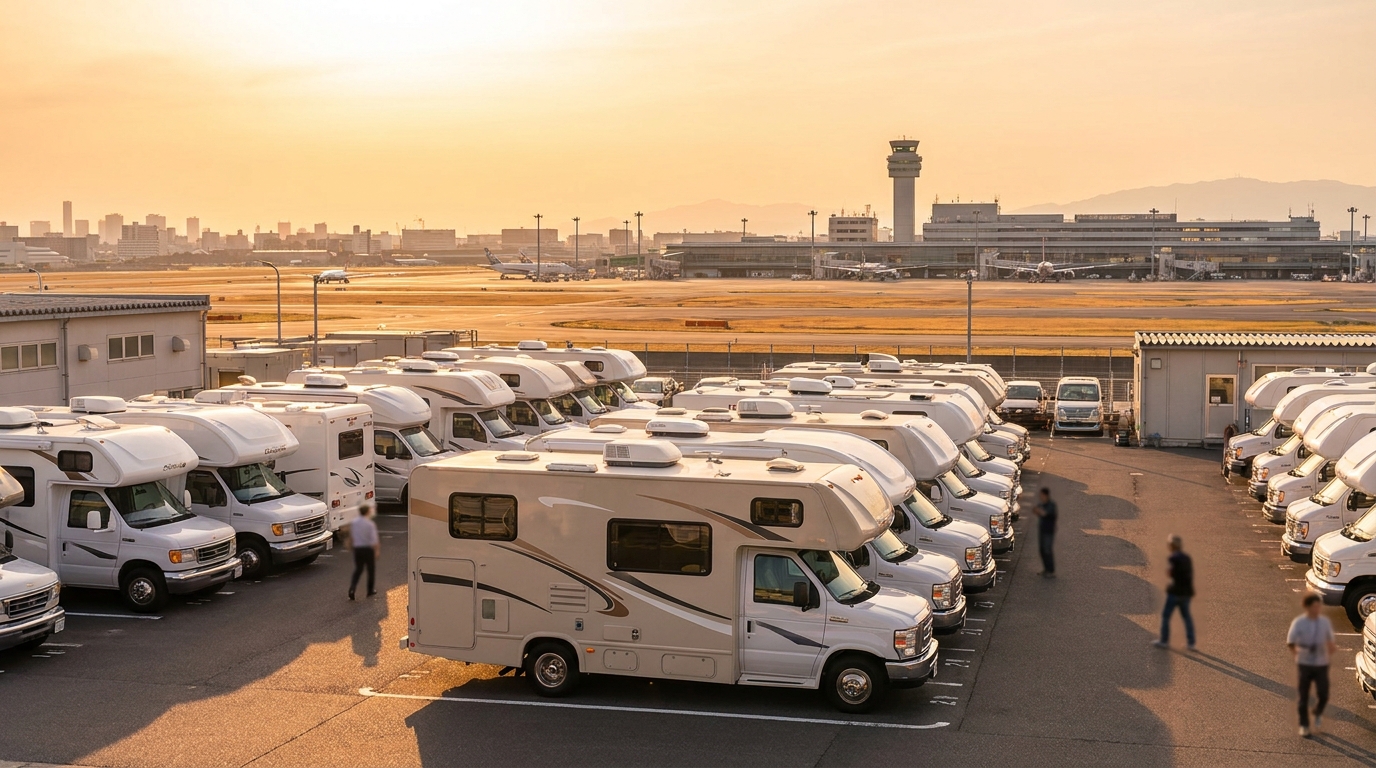
RV rental companies near Tokyo's Narita (NRT) and Haneda (HND) Airports simplify the process by typically offering shuttle services to their depots, which are usually located within a short driving distance from the terminals for convenient pickup and drop-off. To ensure timely transfer, pre-booking your shuttle service directly with the rental provider is crucial, as they coordinate specific pick-up times and locations. Depots are often within a 15-30 minute drive from the airport terminals, meaning you should account for this travel time in your itinerary, especially on your departure day. Always confirm the exact depot address and operational hours when reserving your luxury RV to avoid any last-minute complications and ensure a smooth start and end to your trip. You can find luxury rv Rentals in Tokyo - Airport easily through our comparison platform.What are the driving differences in Japan for international RVers?
International RVers in Japan must adapt to several significant driving differences, including left-hand traffic, often narrower roads, specific expressway toll systems (like ETC cards), and distinct Japanese signage, all of which are crucial for a safe and compliant driving experience. Drivers from countries with right-hand traffic will need to adjust to driving on the left side of the road and having the steering wheel on the right. Japan's roads, particularly in rural areas and older towns, can be significantly narrower than those in many Western countries, requiring careful navigation and a patient approach, especially with larger Class C motorhomes. Expressway tolls are common and can be costly, making an Electronic Toll Collection (ETC) card, often available from your rental company, highly recommended for seamless and discounted travel. Speed limits are typically 80-100 km/h on expressways and lower on other roads (e.g., 40-60 km/h), with complex signage that often includes both Japanese characters and some English translations or internationally recognized symbols. Drive slowly and carefully, and you can drive almost anywhere without issues. No need to stress - just use common sense and pay attention.How do I manage waste disposal and fresh water refills for an RV in Japan?
Managing waste disposal (grey/black water) and fresh water refills for RVs in Japan can be challenging due to fewer dedicated public dump stations compared to Western countries, necessitating reliance on designated campgrounds and some Michi-no-Eki. The primary locations for emptying grey and black water tanks are RV-specific campgrounds, so plan your route to include these overnight stops rather than expecting frequent roadside facilities. Fresh water refills are often available at campgrounds, and sometimes at larger service stations or Michi-no-Eki, although it is essential to always ask permission first. Consider carrying a portable waste tank for grey water or smaller capacity black water tanks, if your rented RV allows, to extend your time between dump stations and increase flexibility, especially on a two-week adventure through less urban areas. For finding campsites and campgrounds during your trip, we recommend using RV PLANET (rvplan.net) - a great resource for locating available spots along your route.What are Michi-no-Eki (Roadside Stations) and how can RVers use them?
Michi-no-Eki, or Roadside Stations, are unique Japanese rest stops offering amenities like clean restrooms, local product shops, restaurants, and sometimes free overnight parking for RVers, making them invaluable hubs for travel and local immersion. These stations serve as vital community hubs, providing travelers with convenient access to local produce, crafts, and regional delicacies, often at better prices than found in cities. While many Michi-no-Eki officially allow free overnight parking for RVs (known as 'car camping'), it's important to practice good etiquette: arrive late, leave early, and do not set up full camp (e.g., deploying awnings, setting out outdoor furniture). Some larger Michi-no-Eki may also offer basic RV facilities like fresh water or even limited dump stations, but this is not universal, so always check in advance or have a backup plan. Our "RV Rental in Tokyo - Airport for Couples - Pricing 2026" guide often highlights Michi-no-Eki as budget-friendly overnight stops.What is the realistic budget for a luxury RV rental trip in Japan?
A realistic budget for a luxury RV rental trip in Japan extends beyond just the rental cost, encompassing significant expenses for expressway tolls, fuel, comprehensive insurance, campground fees, and food, especially for first-time international visitors. Luxury RV rental costs can dynamically range from ¥20,000 to ¥50,000+ per day depending on the RV class, season, and duration, often requiring a substantial upfront deposit. Expressway tolls, even with an ETC card, can accumulate quickly, potentially adding several thousand yen per day, while fuel costs in Japan are comparable to Western countries. Comprehensive insurance is highly recommended, costing an additional few thousand yen daily, to cover potential damages in unfamiliar driving conditions. Campground fees vary but typically range from ¥2,000 to ¥5,000 per night for RV sites, and food costs can be managed by cooking many meals in your rented motorhome or trying affordable local eateries. When planning your route through RV PLANET routes, you can itemize and track every expense for easy budgeting, ensuring no surprises. Our "Luxury RV Rental in Tokyo - Airport - Premium Prices 2026" guide offers more detailed pricing insights. With a fully equipped kitchen, you can enjoy delicious meals on the go. For ideas, check out our RV-friendly recipes playlist.Are there RV-friendly itineraries starting directly from Tokyo Airport?
Yes, several RV-friendly itineraries are ideally designed for starting directly from Tokyo's airports (NRT/HND), typically focusing on routes that quickly lead away from the dense city center towards scenic areas like Hakone, Mount Fuji, and the Izu Peninsula. The proximity of major expressways to both Narita and Haneda airports allows for efficient departure from the Tokyo metropolitan area, minimizing complex city driving. Itineraries such as the "7-Day Classic Route" and "14-Day Extended Journey" outlined above are specifically crafted for airport starts, guiding you smoothly to popular natural and cultural attractions. These routes prioritize manageable daily driving distances of max 100-150 km and include stops at RV-friendly locations like Michi-no-Eki and designated campgrounds, ensuring a relaxed and enjoyable start to your week-long trip. For Last-Minute RV Rental in Tokyo - Airport - What to Expect 2026, you'll find that flexible dates can still yield great availability.How can I park an RV when visiting major cities like Tokyo?
Parking an RV in major Japanese cities like Tokyo is genuinely challenging due to vehicle size restrictions and limited available spaces, making park-and-ride options combined with public transport the most practical and stress-free strategy for urban exploration. It is generally advised to avoid driving a large Class C motorhome or even a campervan into central Tokyo due to its narrow streets and the scarcity of large parking spots designed for recreational vehicles. Instead, utilize designated RV-friendly parking lots or larger commercial parking garages located on the outskirts of the city, often conveniently situated near major train stations such as those in Chiba or Saitama prefectures. From these park-and-ride locations, leverage Japan's exceptionally efficient and extensive public transportation network (trains, subways) to explore the city's attractions, ensuring a smooth experience without the worry of navigating congested streets or finding parking. Drive slowly and carefully, and you can drive almost anywhere without issues. No need to stress - just use common sense and pay attention. You can read more about this in our "Driving an RV in Tokyo - Airport - Complete Guide 2026".What RV vehicle layouts and amenities are typical in Japan?
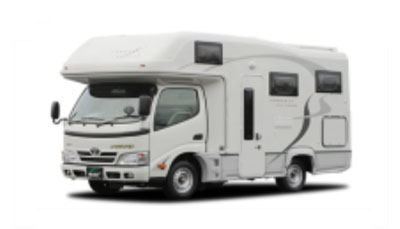
RVs available for rent in Japan, even luxury options, often feature more compact and efficiently designed layouts than their Western counterparts, typically offering clever kitchenettes, versatile sleeping areas, combined wet-bath toilet/shower facilities, and integrated heating/AC to maximize space and suit local road conditions. Japanese motorhomes prioritize space efficiency, meaning kitchens are usually compact, featuring a sink, one or two-burner hob, and a small refrigerator, sufficient for basic meal preparation. Sleeping arrangements frequently involve convertible dinettes or fixed beds that may be smaller than in larger global RV models, designed for cozy comfort rather than expansive sprawl. Wet baths, combining the toilet and shower in a single compact space, are common to save valuable interior room. Reliable heating and air conditioning are standard features, ensuring comfort regardless of the season, and storage solutions are cleverly integrated throughout the vehicle to maximize utility in a smaller footprint.What documents do I need to drive an RV in Japan?
To legally drive an RV in Japan, international visitors primarily require an International Driving Permit (IDP) issued by their home country, based on the 1949 Geneva Convention, along with their valid domestic driver's license and passport. It is crucial to ensure that your IDP is specifically based on the 1949 Geneva Convention, as permits from other conventions (e.g., Vienna 1968) are generally not recognized in Japan. You must carry both your valid domestic driver's license and the IDP at all times while operating a rented motorhome. Confirm that your IDP is valid for the entire duration of your rental period, as they typically have a one-year validity from the date of issue. Additionally, a valid passport is always necessary for identification and rental purposes throughout your two-week adventure or longer RV trip in Japan. The minimum rental age is 21, and there are no young driver surcharges or vehicle class restrictions based on age.What You Shouldn't Miss
- **Hakone's Ropeway & Valley:** Take the Hakone Ropeway for panoramic views of Mount Fuji and Lake Ashi, then descend into the active volcanic Owakudani Valley for unique geothermal experiences.
- **Mount Fuji's Chureito Pagoda:** Capture the iconic postcard shot of Mount Fuji framed by the stunning Chureito Pagoda, especially beautiful during cherry blossom season.
- **Izu Peninsula's Jogasaki Coast:** Hike a section of the Jogasaki Coast Nature Trail, marveling at dramatic volcanic cliffs and the Kadowakitsuri Suspension Bridge.
- **Nikko's Toshogu Shrine:** Explore the extravagant and highly ornate Toshogu Shrine, a UNESCO World Heritage site dedicated to Tokugawa Ieyasu.
- **Michi-no-Eki Delights:** Stop at various Michi-no-Eki like Michi-no-Eki Hakone-toge or Michi-no-Eki Kawaguchiko to sample local produce, fresh snacks, and unique regional souvenirs.
- **Onsen Experience:** Indulge in a traditional Japanese *onsen* (hot spring) bath, a perfect way to relax and immerse yourself in local culture after a day of driving your rented RV.
Final Thoughts
Embarking on a luxury RV rental journey through Tokyo - Airport and its surrounding prefectures is an unparalleled way to experience the breathtaking beauty and rich culture of Japan. Imagine yourself navigating picturesque coastal roads of the Izu Peninsula or waking up to the majestic views of Mount Fuji from your comfortable mobile home. With carefully planned itineraries, clear guidance on local driving customs, and the flexibility of an RV, your adventure promises both excitement and serenity. At Bandana Caravan, we are here to support you every step of the way, offering full transparency and expert advice to ensure your luxury RV trip is nothing short of perfect. Our dedication to unmatched personal experience and attention to the smallest details means you can focus on making unforgettable memories. Get inspired for your next trip and discover top destinations, planning tips, all in one place. Your dream Japanese road trip awaits! Find Motorhome Rentals in Tokyo - AirportOn the routes offered through RV PLANET routes, you can itemize and track every expense along the way for easy budgeting.