In This Guide
- Can You Drive an RV in New Zealand? License & Age Rules
- Road Conditions & Terrain in New Zealand
- RV Size Limits, Bridges & Restricted Zones
- Fuel: Diesel vs. Petrol & Cost per 100 km
- Tolls, Vignettes & Border Rules
- Driving Tips for RV Rental Travelers
- Recommended RV Class for New Zealand Roads
- Should I Choose a Compact Van Instead of a Large RV in New Zealand?
- Can I Park Anywhere? Free & Wild Camping Rules in New Zealand
- Can I Drive an RV Into the City Center? Heights, Tunnels & Local Signage
- What is the 4 second rule in New Zealand?
- Is it difficult for Americans to drive in New Zealand?
- How Easy or Difficult is it to Drive an RV in New Zealand?
- What is the 333 rule for campervan?
- RV and Motorhome Insurance in New Zealand: Providers and Costs
- Top Cities for RV Rental in New Zealand
- Practical Info for Your New Zealand RV Trip
- What You Shouldn't Miss
- Why Book with Bandana Caravan
- Final Thoughts
- Frequently Asked Questions
Imagine yourself cruising along New Zealand's dramatic coastlines, towering mountains, and lush national parks in your own private mobile home. RV rental in New Zealand offers an unparalleled sense of freedom and adventure, allowing you to explore at your own pace and truly immerse yourself in the stunning landscapes. Whether you're planning a week-long trip through the North Island's geothermal wonders or an extended road trip across the South Island's glacial fjords, a rented motorhome transforms your journey into an unforgettable experience. For live availability and current prices, start with our RV Rental New Zealand - Complete Guide 2026 guide.
Can You Drive an RV in New Zealand? License & Age Rules
Yes, most international visitors with a valid overseas driver's license and often an International Driving Permit (IDP) can comfortably drive a rented RV in New Zealand, provided their vehicle's Gross Laden Weight (GLW) does not exceed 6,000 kg. A standard car license, known as a Class 1 license in New Zealand, covers vehicles up to 6,000 kg GLW, which encompasses virtually all rental motorhomes and campervans available through Bandana RV, eliminating the need for any special permits or Commercial Driver's Licenses (CDL).
International drivers are required to carry their home country's license along with an official English translation or an International Driving Permit (IDP), which should be obtained before your arrival. While an IDP is recommended for visitors from non-English speaking countries, it's a helpful complement for all foreign drivers. The minimum driver age for most RV rentals in New Zealand is 21, and thankfully, you won't typically find young driver surcharges or vehicle class restrictions based on age with our trusted suppliers like Apollo and Britz.
It's crucial to ensure your driver's license remains valid for the entire duration of your rental period in New Zealand. Our true RV specialists at Bandana RV can help clarify any licensing requirements during the pre-booking comparison phase, offering full transparency with no hidden fees or surprises.
Road Conditions & Terrain in New Zealand
New Zealand offers incredibly diverse road conditions, ranging from smooth, well-maintained highways to winding mountain passes, occasional gravel roads, and stunning scenic coastal routes, all of which require cautious and attentive driving. Roads are generally in excellent condition, but travelers, especially those from countries with wider, straighter roads, may find them narrower, windier, and hillier than expected. Expect frequent changes in speed limits, particularly when entering or leaving towns or approaching potential hazards, so always keep an eye on the signage.
The mountainous regions, especially the Southern Alps, feature steep gradients, sharp bends, and sometimes unsealed (gravel) sections, which demand slower speeds and careful handling of a larger rented motorhome. One-lane bridges are a common feature in rural areas across both the North and South Islands; always give way to oncoming traffic or vehicles already on the bridge, indicated by clear signage. Embracing slow, scenic driving, aiming for around 100-150 km per day on average, is the best way to fully appreciate the stunning landscapes and safely navigate the varying road conditions, allowing you to truly connect to the culture, the food, and the scenery.
We believe in supporting your journey, and our 24/7 pre-booking support can help answer any questions you have about specific routes and their conditions. For finding campsites and campgrounds during your trip, we recommend using RV PLANET (rvplan.net) - a great resource for locating available spots along your route.
RV Size Limits, Bridges & Restricted Zones
While most rental RVs are perfectly suited for New Zealand roads, drivers must be aware of vehicle dimensions for easy navigation, especially concerning low bridges, ferry crossings, and certain scenic routes. Always check your rented motorhome's height and length, as some older tunnels or urban underpasses may have height restrictions, which are always clearly signposted. For example, some city parking garages might have height limits around 2.2 meters, whereas larger Class C motorhomes, like the "24' Class C Motorhome" with its spacious interior, can be around 3.2 meters tall.
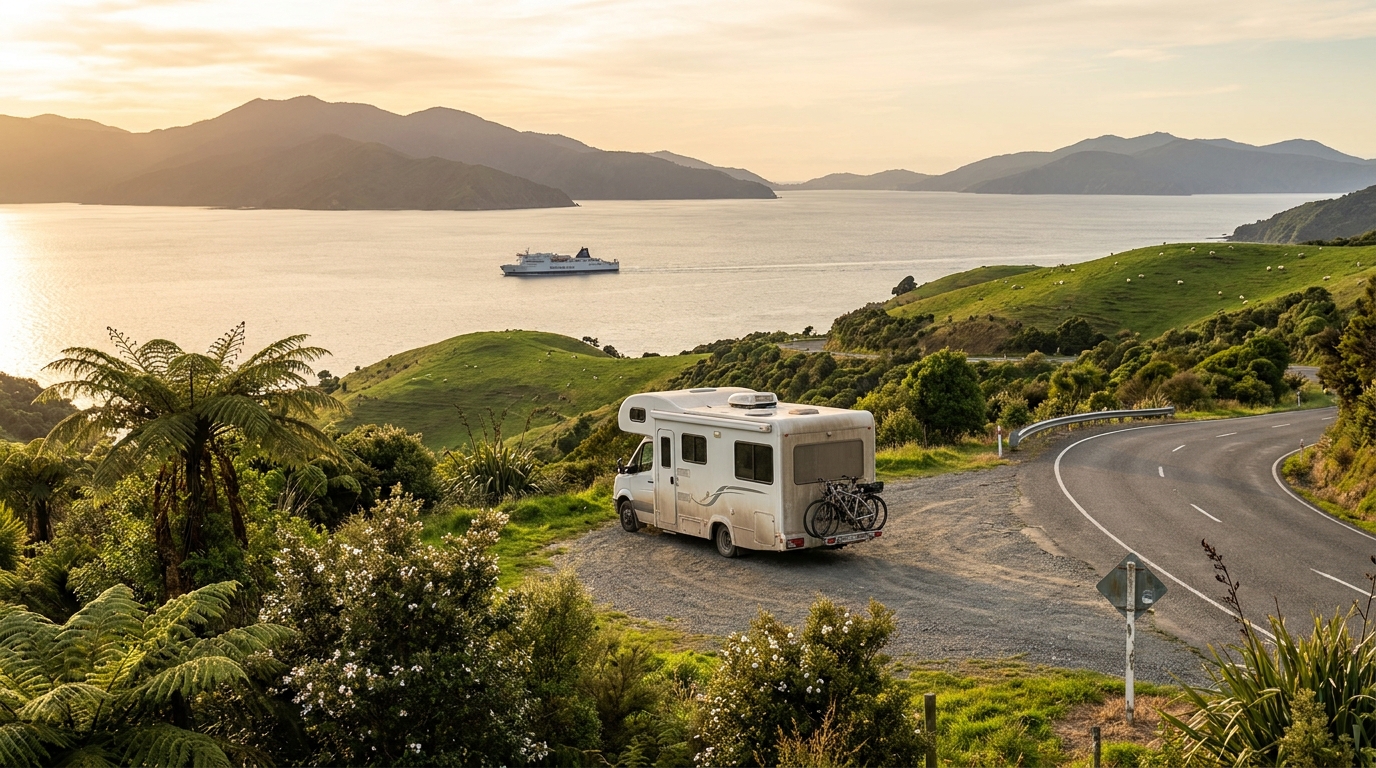
Inter-island ferries (Interislander and Bluebridge) between the North and South Islands require advance booking, with pricing determined by vehicle length and height, making accurate dimensions crucial for your reservation. You'll want to ensure your chosen Class SI Semi-integrated like the "2 Berth Tamar" or Class C Alcove models like the "4 Berth Henty" fit your ferry slot. Some extremely scenic or fragile national park roads might have restrictions on larger vehicles, though this is uncommon for standard tourist routes, and any such limits would be well-marked on local road signs. Always be particularly mindful of your RV's rear overhang when making turns, as these vehicles are considerably longer than typical passenger cars.
Fuel: Diesel vs. Petrol & Cost per 100 km
Most rental RVs in New Zealand operate on diesel, which is generally more fuel-efficient than petrol, though diesel vehicle drivers are also subject to a Road User Charge (RUC) based on kilometers traveled. This RUC is essentially a fee for using the roads, as diesel is taxed differently at the pump. Bandana's global fleet averages suggest common fuel consumption for Class SI (Semi-integrated) RVs is 10-11 Liters/100 km, while Class C (Alcove) models are typically 10-12 Liters/100 km. Smaller campervans (Class B) are more economical at 8-10 Liters/100 km. For example, a "cruise america rv rental example Explorer" has a fuel consumption of 11 Liters / 100 Km.
Both petrol (unleaded) and diesel are widely available at service stations across New Zealand, but it is always advisable to plan your refills in more populated areas, as stations can be sparse in remote regions like the Catlins or parts of the West Coast. Budgeting for fuel, including the RUC for diesel vehicles, is a significant component of your overall RV travel costs, as prices can fluctuate daily. Some rental companies may offer fuel discount cards with certain RVs, providing savings at participating service stations. Remember that on our RV PLANET routes, travelers can itemize and track every expense along the way for easy budgeting. On the routes offered through RV PLANET routes, you can itemize and track every expense along the way for easy budgeting.
Tolls, Vignettes & Border Rules
New Zealand features a limited number of electronic toll roads, primarily located in the North Island, which RV drivers can pay online, by phone, or through convenient arrangements with their rental company, as there are no border rules or vignettes to worry about in this island nation. The main toll roads include the Northern Gateway Toll Road (north of Auckland), the Tauranga Eastern Link, and the Takitimu Drive Toll Road (near Tauranga). These tolls are electronic, meaning there are no physical toll booths; your vehicle's license plate is automatically read upon passage.
Payment for these tolls can be made online up to five days after using a toll road. Alternatively, many Bandana RVs from our partner suppliers allow for pre-purchasing toll passes or have systems where tolls are automatically charged to avoid any unexpected fines. Since New Zealand is an island nation, there are no land borders, meaning you won't encounter any international crossing requirements or associated 'vignettes' or permits to consider during your adventure. This simplifies planning, letting you focus on the stunning scenery rather than customs paperwork.
Driving Tips for RV Rental Travelers
Adopting a patient, defensive driving style and being acutely aware of New Zealand's unique road characteristics are paramount for a safe and enjoyable RV adventure. For drivers from right-hand traffic countries like the US, allow ample time to adjust to driving on the left side of the road and navigating roundabouts, which can feel counter-intuitive initially. Practice in less busy areas before tackling city traffic or complex routes. Drive slowly and carefully, and you can drive almost anywhere without issues. No need to stress - just use common sense and pay attention.
Rented RVs are larger and heavier than typical passenger cars, requiring longer braking distances and slower speeds, especially on winding roads. Plan frequent stops every 2 hours, particularly when traveling with family, to stay refreshed. If you notice a queue of vehicles forming behind your motorhome, utilize designated passing lanes or safe pull-off areas to let them pass, enhancing overall road safety and courtesy – it's part of the local driving etiquette. Be vigilant for wildlife and livestock, such as sheep, cows, and native birds on rural roads, particularly during dawn, dusk, or nighttime hours. Always consult weather forecasts and road reports before setting out, especially when planning to traverse mountain passes, which can be affected by snow and ice in winter. Many rental RVs are equipped with automatic transmissions, which can significantly simplify the driving experience for those less accustomed to manual gear changes in a large vehicle, allowing you to focus more on the incredible views. Consider looking for an automatic option, such as a "Paradise Family 5" or "4 Berth Adventurer", during your comparison on Bandana RV.
Recommended RV Class for New Zealand Roads
For navigating New Zealand's diverse road network, Class SI (Semi-integrated) and Class C (Alcove) RVs are generally recommended, offering a practical balance of comfort, amenities, and manageable size. Class SI - Semi-integrated models, like the "2 Berth Rover" or "Active Standard Auto", are popular choices, providing comfortable travel with Bandana's global fleet averaging around 6.9 meters in length. These are typically easier to maneuver than larger Class A motorhomes while still offering good living space and essential amenities like a shower and toilet.
Class C - Alcove RVs, with an average length of 7.5 meters (global fleet avg) and often accommodating more people (e.g., the "6 Berth Discovery" has 6 sleeping places), are excellent for families or larger groups. Their elevated driving position offers good visibility, and they are suitable for most main roads and highways across New Zealand. Crucially, selecting a rented RV certified as self-contained is essential for legal 'freedom camping,' as it indicates the vehicle has onboard facilities for waste and water, meeting environmental regulations. While standard 2WD RVs are sufficient for the vast majority of New Zealand's tourist routes, a 4WD option might be considered if planning to extensively explore unsealed roads or remote, rugged backcountry areas, though these are less common in larger RV classes.
Should I Choose a Compact Van Instead of a Large RV in New Zealand?
While compact campervans offer enhanced maneuverability, a larger RV often provides superior comfort and living space without presenting significant driving drawbacks on most New Zealand roads, making the choice largely dependent on individual travel priorities. Compact vans, such as Class B Camper Vans like the "Condo" or "Chaser" (averaging 4.7-5.8 meters in length), are notably easier to park and navigate through tight urban areas or very narrow roads. These are excellent for couples or solo travelers seeking maximum flexibility.
However, larger RVs, such as Class SI or Class C models, offer substantially more interior room, better-equipped kitchens for preparing meals (check out our RV-friendly recipes playlist!), full bathrooms, and dedicated sleeping areas, greatly enhancing the overall travel experience, particularly for extended trips or groups of 4-6 people. New Zealand's primary highways and established tourist routes are designed to accommodate larger RVs, making vehicle size less of a concern for the majority of travel itineraries. Consider your balance between the ease of driving and parking versus the desire for more amenities and living space. For many travelers, the added comfort of a larger rented motorhome outweighs the minimal challenges associated with its size in New Zealand. Both compact vans and larger RVs can be self-contained, but the facilities in larger models are typically more extensive and comfortable.
Can I Park Anywhere? Free & Wild Camping Rules in New Zealand
No, you cannot park a rented motorhome or campervan just anywhere in New Zealand for overnight stays; 'freedom camping' is strictly regulated and generally permitted only for certified self-contained vehicles in designated areas. The Freedom Camping Act 2026 governs where you can camp for free, requiring vehicles to be certified as self-contained. This certification means the vehicle has onboard fresh water, grey water, and black water tanks, plus rubbish disposal, allowing occupants to live off-grid for at least three days without impacting the environment.
Local councils manage specific freedom camping sites, which can range from basic roadside stops to scenic spots with minimal facilities. Utilize trusted apps like CamperMate or local council websites to find approved locations. Camping is explicitly prohibited in areas clearly marked with 'No Overnight Parking' or 'No Freedom Camping' signs, and these regulations are strictly enforced. Penalties for illegal freedom camping can include substantial fines, often between NZD 200-400, so always verify local regulations and ensure your rented vehicle meets the self-containment standard before parking overnight. Rules vary by region-always check local regulations and follow local law before parking overnight to avoid surprises.
We are true RV specialists, founded in 2001 and helping tens of thousands of travelers explore the world by RV, and we emphasize honesty and transparency. This includes clear guidance on local camping laws so you can travel with peace of mind. For your planning, remember that RV PLANET (rvplan.net) offers over 1,300 pre-planned routes across 5 continents, often including designated camping spots to take the guesswork out of your journey.
Can I Drive an RV Into the City Center? Heights, Tunnels & Local Signage
Yes, you can generally drive a rented RV into most New Zealand city centers, but it is crucial to pay close attention to local signage regarding height restrictions, tunnels, narrow streets, and parking limitations. Most city centers have main arterial routes capable of accommodating RVs; however, be mindful that smaller side streets or historic districts might be too tight for larger vehicles. Drive slowly and carefully, and you can drive almost anywhere without issues. No need to stress - just use common sense and pay attention.
Always check for height restriction signs before attempting to enter parking garages, multi-story car parks, or specific tunnels, though most main tunnels in New Zealand are accommodating for standard RVs. For instance, the Lyttelton Tunnel near Christchurch can handle most RVs. Finding suitable parking for a larger RV in city centers can be challenging due to limited large spaces. Consider parking on the outskirts and utilizing efficient public transport networks, like those in major cities like Auckland, Wellington, and Christchurch, which provide a convenient alternative to navigating an RV directly into the busiest areas. While less common than in some international cities, be aware of any environmental zones or residents-only street restrictions that might be in place.
What is the 4 second rule in New Zealand?
The 4-second rule in New Zealand is a crucial driving safety guideline that advises drivers to maintain a minimum of four seconds following distance from the vehicle in front, allowing adequate time to react and stop safely. This rule is particularly vital when driving a rented RV, as these larger, heavier vehicles require significantly longer braking distances compared to standard passenger cars. This is especially true for models like the "Discovery - 5 berth motorhome with rear U-lounge" which measures around 7.4 meters in length.
To apply the rule, choose a fixed object on the road ahead (e.g., a sign or tree) after the vehicle in front passes it, then count 'one thousand and one, one thousand and two, one thousand and three, one thousand and four.' If your vehicle reaches the chosen fixed object before you finish counting to four, you are following too closely and should increase your following distance. Extend this following distance even further in adverse conditions such as rain, gravel roads, or when navigating unfamiliar winding routes prevalent in New Zealand, such as those leading to Milford Sound or through the West Coast Glaciers.
Is it difficult for Americans to drive in New Zealand?
For Americans, driving a rented RV in New Zealand requires a period of adjustment primarily due to driving on the left-hand side of the road, along with navigating narrower roads, frequent winding sections, and unique features like one-lane bridges. The most significant adjustment for Americans will be driving on the left, which reverses steering wheel placement and the flow of traffic at intersections and roundabouts; extra vigilance is needed, especially during the first few days of your journey. Many of our motorhomes, like the "Jayco Conquest Royale 6", come with automatic transmission to help ease this transition.
New Zealand's roads are often narrower, more winding, and generally less straight than many American highways, especially prevalent in rural and mountainous regions like the Southern Alps. One-lane bridges are common outside urban areas; drivers must look for 'Give Way' or 'Stop' signs and yield to oncoming traffic or vehicles already on the bridge. Speed limits are measured in kilometers per hour (km/h) and are generally lower than in the US, with a maximum open road speed of 100 km/h. Adapting successfully requires patience, focused attention on the road, avoiding rushing, taking frequent breaks, and allocating extra travel time for journeys. Our 24/7 pre-booking support is always here to offer advice and reassurance before you even pick up your campervan.
How Easy or Difficult is it to Drive an RV in New Zealand?
🎬 Video coming soon
Driving a rented RV in New Zealand is generally manageable with proper preparation and a cautious approach, though it can present initial challenges for those unfamiliar with driving larger vehicles on winding, often narrower, left-hand drive roads. Modern RVs typically come equipped with power steering and often automatic transmissions, making them relatively easy to control, akin to driving a large van or small truck. For example, a "2 Berth Hi Top" campervan, though smaller, offers automatic transmission for easier handling.
The primary difficulty often lies in managing the vehicle's size (length, height, width) when navigating tight turns, attempting city parking, or backing up. Drivers must adapt to New Zealand's unique road conditions, which frequently include single-lane bridges, narrow mountain passes, and a general absence of wide road shoulders. Outside major urban centers like Auckland and Christchurch, traffic is usually light, contributing to a more relaxed driving experience, though city driving always demands heightened attention. While the initial adjustment period might feel challenging, with practice and a strong awareness of road signs and fellow drivers, most visitors find RVing in New Zealand an enjoyable and rewarding way to explore. Remember, travel slowly, max 100-150 km per day on average, to fully savor the experience.
What is the 333 rule for campervan?
The '333 rule' for campervans, while not an official New Zealand Road Code regulation, is a widely recommended, unofficial guideline for responsible freedom camping: 'Stay a maximum of **3** nights in one location, move at least **3** kilometers, and take **3** photos of your campsite to prove you left no trace.' This guideline promotes sustainable tourism practices, prevents over-reliance on popular spots, and strongly encourages adherence to the 'leave no trace' principle, which is crucial for preserving New Zealand's pristine natural environment.
Limiting stays to three nights helps ensure fair access to popular freedom camping locations for all travelers and minimizes the environmental impact on any single site. Moving at least three kilometers to your next stop helps distribute the impact of tourism and reduces congestion in specific areas. Taking three photos before and after your stay encourages campers to personally commit to leaving their campsite spotless, serving as a visual testament to good environmental stewardship. It's important to remember that this is a best practice recommendation, not a legal requirement like the mandatory self-containment for freedom camping; always prioritize official signage and local council regulations. For travelers utilizing RV PLANET routes, many itineraries incorporate designated campgrounds that adhere to these principles.
RV and Motorhome Insurance in New Zealand: Providers and Costs
RV and motorhome insurance in New Zealand for rentals is typically arranged through your rental company, offering various levels of coverage to protect against damages, theft, and third-party liability, with costs varying based on factors like vehicle value, coverage limits, and your chosen deductible. Rental companies usually include a basic level of insurance, often with a higher excess or deductible, as part of the rental agreement. This means you're liable for the first portion of any damage cost.
Standard rental insurance generally covers accidental damage to the rental vehicle, third-party property damage, and theft, though common exclusions apply, such as damage incurred from reckless driving or on prohibited unsealed roads. The primary cost consideration for renters is often reducing this 'excess' (deductible) amount, which typically involves paying an additional daily fee that can range from NZD 20-60+. Opting for excess reduction is highly recommended for extra peace of mind, as it significantly lowers your financial liability in the event of an incident. At Bandana RV, we offer top-level deductible reimbursement as an optional upgrade, allowing you to travel with greater confidence. Foreign travelers should also secure comprehensive travel insurance that covers personal liability, medical emergencies, and trip cancellations, as rental vehicle insurance is specific to the RV itself.
Top Cities for RV Rental in New Zealand
New Zealand offers several excellent starting points for your rented motorhome adventure, each providing access to unique scenic routes and experiences. Our network of 50+ leading RV suppliers worldwide, including Apollo and Britz, ensures you have plenty of pickup and drop-off options across the country.
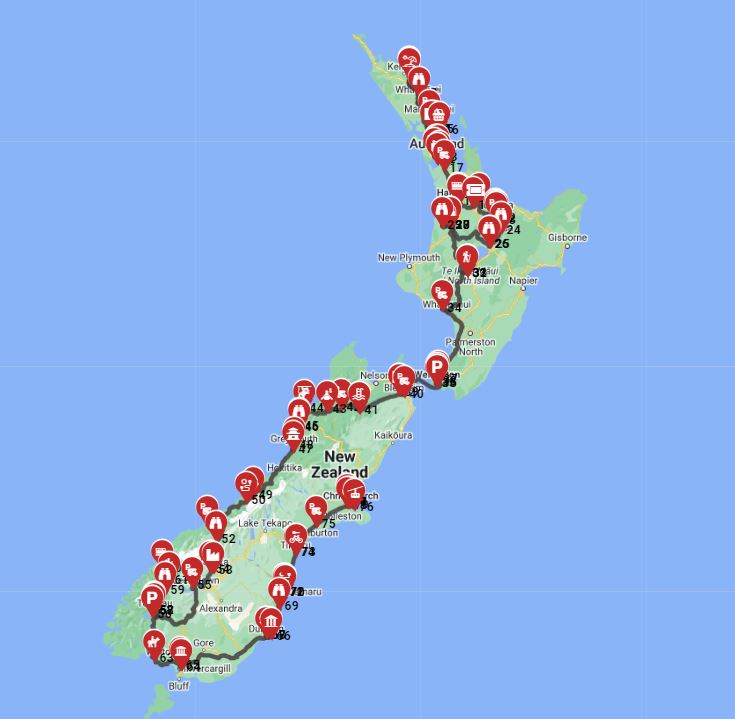
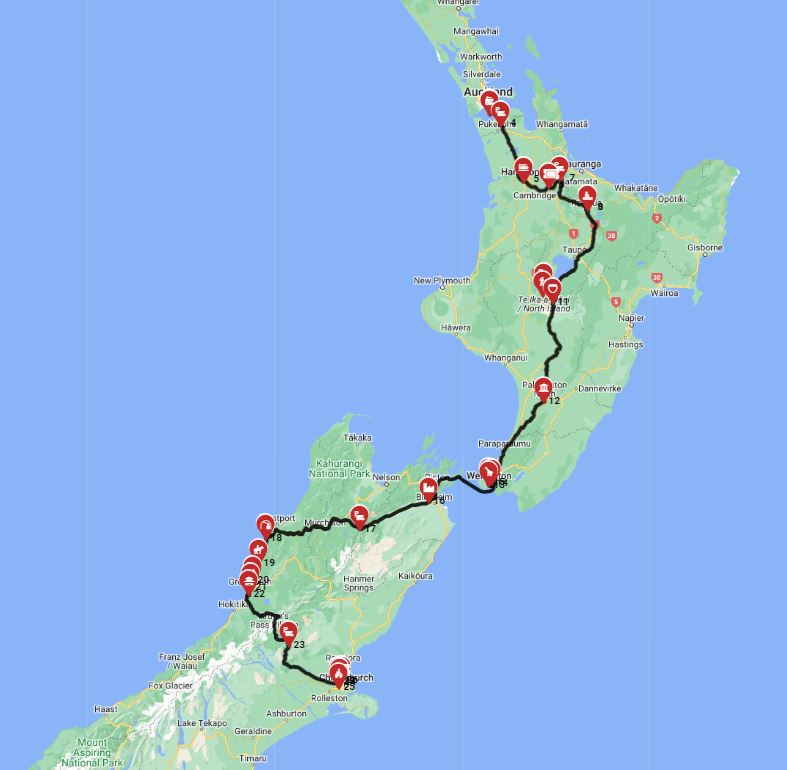
- Auckland: As New Zealand's largest city, Auckland provides the widest selection of campervan and motorhome rentals. It's a fantastic base for exploring the North Island's thermal regions, beautiful beaches, and the Bay of Islands. A popular route, "
" (25 days, 4060.2 km), starts here, offering a comprehensive tour of both islands.
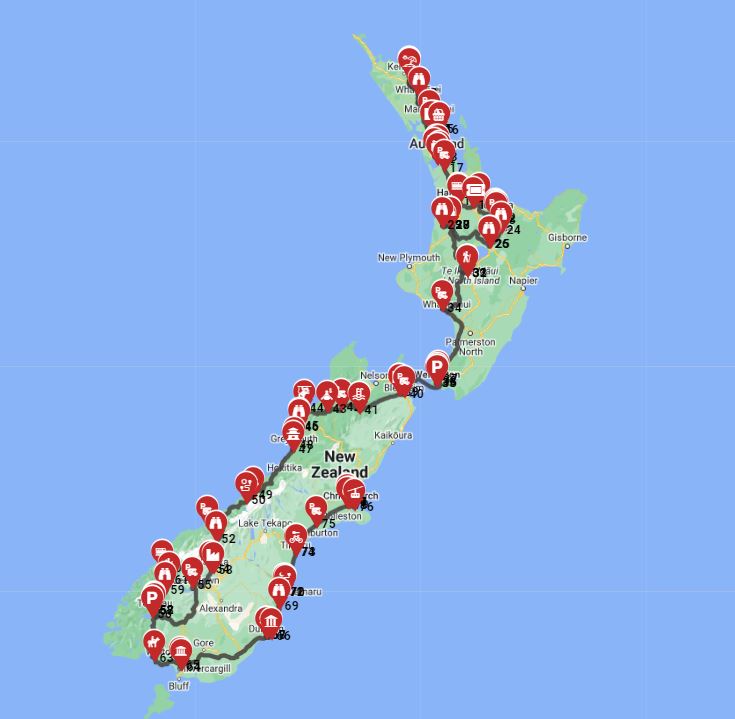 Auckland to Christchurch - Comprehensive New Zealand
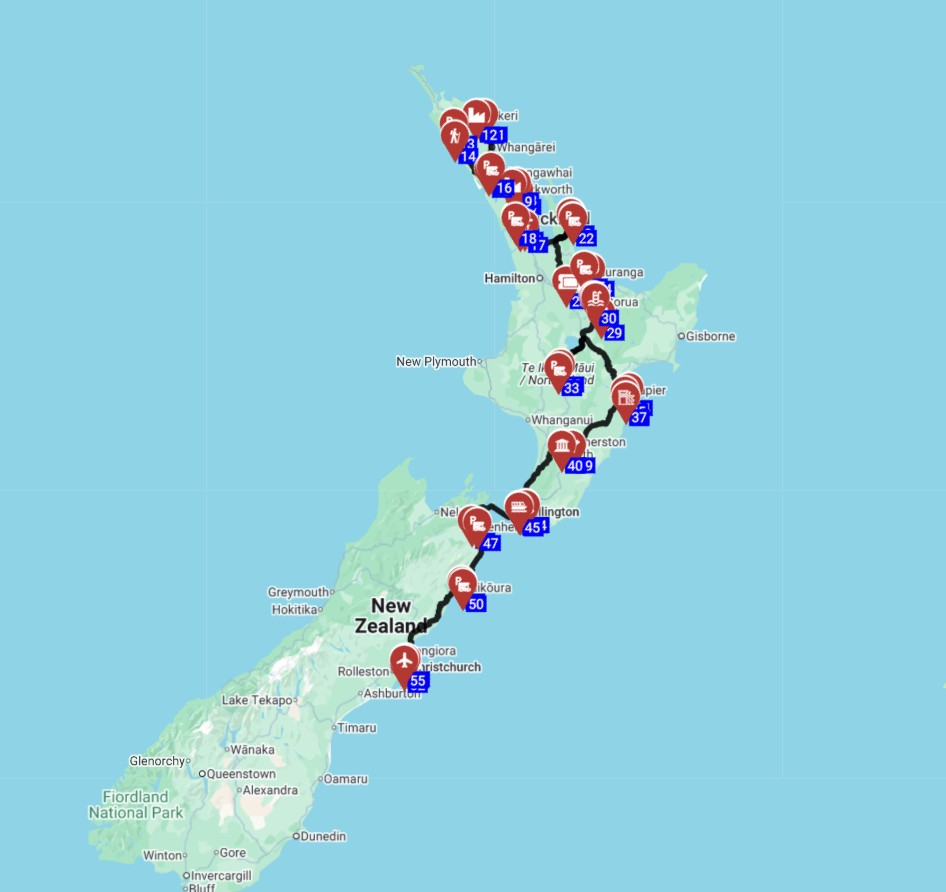
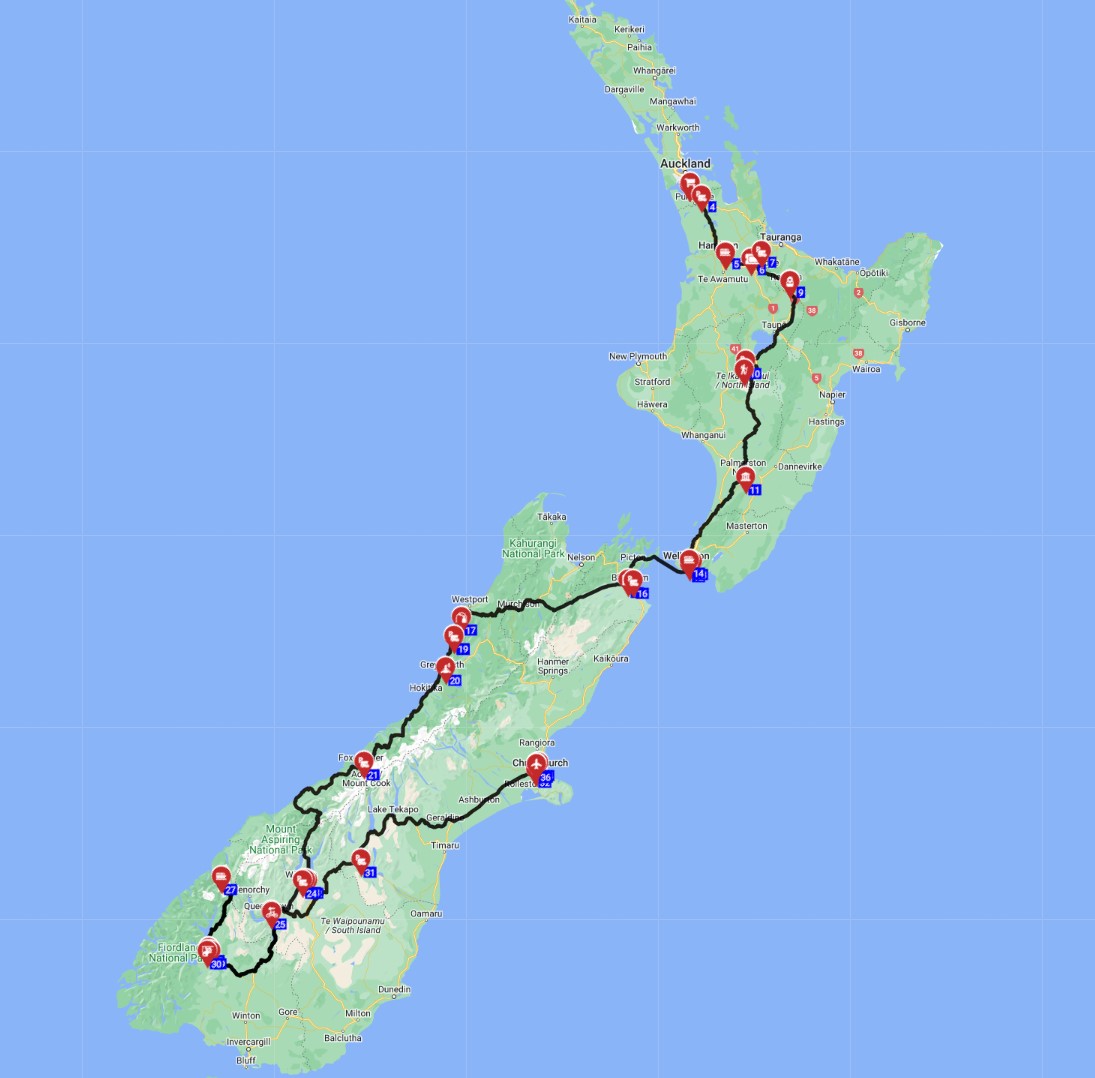
 - Christchurch: The gateway to the South Island, Christchurch is ideal for those focusing on the stunning Southern Alps, West Coast glaciers, and Fjordland National Park. You can find excellent rental options for exploring this majestic region, with routes like "
" (18 days, 2647.2999999999997 km) providing ample exploration.
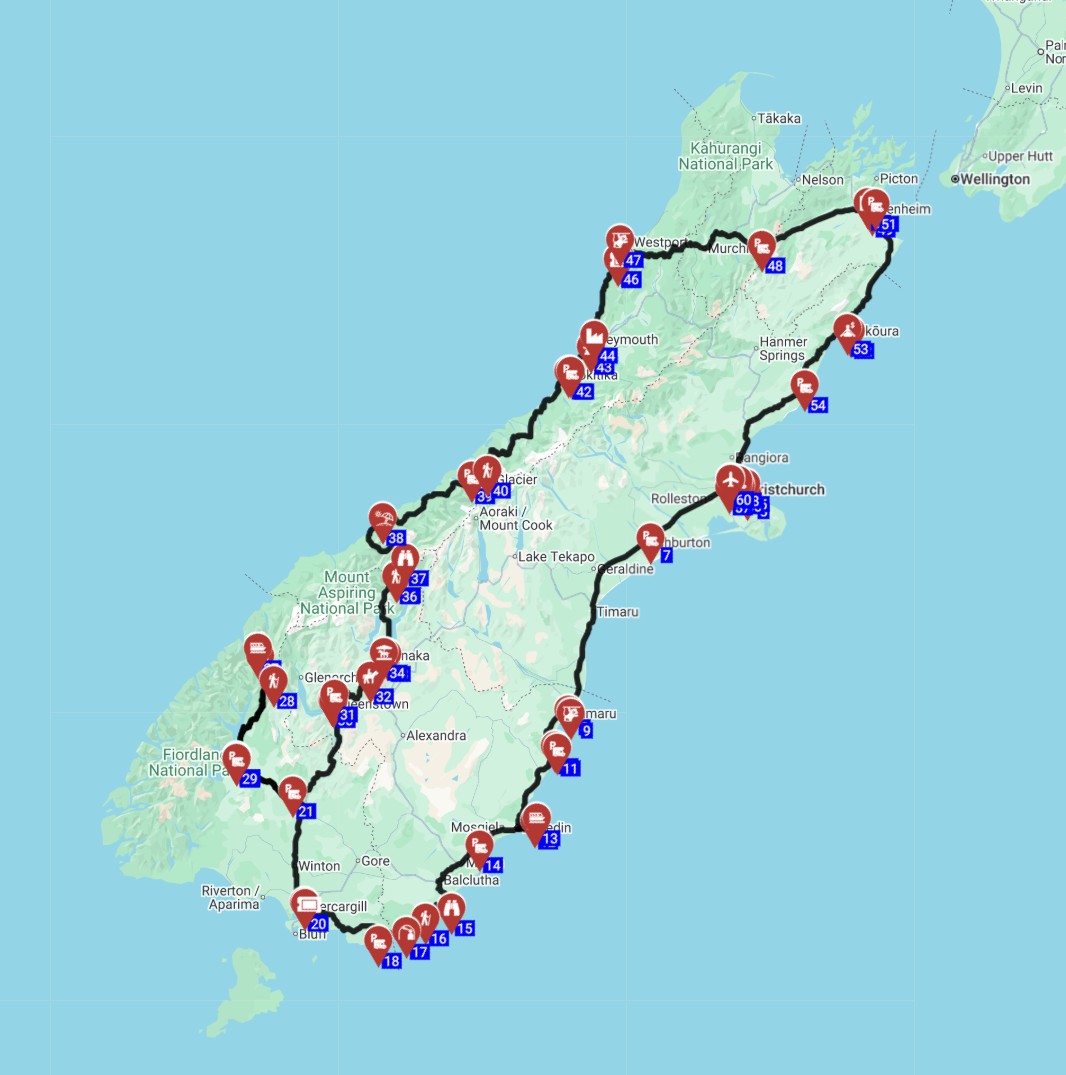 Christchurch Roundtrip - Around the South Island
 - Queenstown: Known as the adventure capital of the world, Queenstown offers convenient pickup for exploring the dramatic landscapes of Otago and Southland. It's perfect for a Luxury RV Rental in New Zealand - Premium Prices 2026 experience or for those looking for adrenaline-pumping activities alongside serene drives.
- Wellington: The capital city on the southern tip of the North Island, Wellington is a vibrant cultural hub. Renting an RV here gives you easy access to the Interislander ferry to the South Island and the Wairarapa wine region.
- Dunedin: On the South Island's southeast coast, Dunedin is a charming city with a Scottish heritage, close to the unique wildlife of the Otago Peninsula and the beginning of the Catlins Coast.
Considering a One-Way RV Rental in New Zealand - Price Guide 2026 can open up even more possibilities, allowing you to pick up in one city and drop off in another, maximizing your exploration without backtracking.
Practical Info for Your New Zealand RV Trip
Beyond driving rules, a few key pieces of practical information can significantly enhance your RV rental in New Zealand experience. New Zealand drives on the **left-hand side of the road**, and vehicles are right-hand drive. Speed limits are generally 100 km/h on open roads and 50 km/h in urban areas. Always observe road signs carefully. In case of emergency, dial **111** for police, fire, or ambulance services. For finding campsites and campgrounds during your trip, don't forget RV PLANET (rvplan.net) is your reliable tool.
Staying connected is easy with local SIM cards from providers like Spark, Vodafone, or 2degrees, readily available at airports and supermarkets. These offer data packages suitable for navigating and staying in touch. It's advisable to carry a physical map as well, especially when venturing into remote areas with patchy signal. Regarding national park permits, access to most Department of Conservation (DOC) administered national parks is free for day visitors. However, for overnight camping in DOC campsites, fees apply, and some popular Great Walks require booking months in advance. Always check the DOC website for the latest information.
When planning your budget for an extended road trip, consider not just the RV rental cost for couples vs. families with kids in New Zealand, but also ancillary expenses. These include fuel (diesel with its RUC, or petrol), campground fees (paid sites vary from NZD 10-50 per night), propane refills, dump station fees, and potential tolls. Our RV PLANET routes offer the ability to itemize and track every expense, making budgeting effortless. Bandana RV was founded in 2001 and has over 20 years helping tens of thousands of travelers explore the world by RV, providing comprehensive advice like this. We pride ourselves on full transparency, ensuring no hidden fees or surprises throughout your booking process and during your rental.
What You Shouldn't Miss
- **Milford Sound Cruise:** Journey through one of New Zealand's most breathtaking fiords, often called the "Eighth Wonder of the World," with sheer cliffs and waterfalls. The drive along Milford Road (State Highway 94) is an iconic scenic route, although drivers should be prepared for winding roads and potential weather changes.
- **Tongariro Alpine Crossing:** One of the world's greatest one-day hikes, traversing a volcanic landscape in Tongariro National Park (North Island). Booking is essential, and shuttle services from nearby towns like Taupo or National Park Village are highly recommended, as RV parking at the trailheads can be limited.
- **Franz Josef and Fox Glaciers:** Experience the rare phenomenon of glaciers descending into temperate rainforest. Hike to the terminal face or take a scenic helicopter flight for incredible views. Finding a spot will be easy if not at the first campground then at the next one - just call ahead before driving.
- **Hobbiton Movie Set Tour:** Immerse yourself in the Shire from The Lord of the Rings and The Hobbit trilogies in Matamata (North Island). This is a must-do for fans, offering a magical insight into movie-making.
- **Explore the Catlins Coast:** This rugged southeastern corner of the South Island offers stunning coastal scenery, wildlife (penguins, sea lions), and waterfalls. It’s perfect for slow travel, allowing 100-150 km per day to truly appreciate its raw beauty.
Looking for expert insights from Avi Bandana? Top 5 Adventures - recommendations from Avi Bandana
- "The thrill of driving a campervan through the winding roads of Queenstown's Crown Range is unmatched; the views from the top are simply spectacular."
- "I always recommend taking the ferry between the North and South Islands with your rented motorhome. It's a mini-cruise through the Marlborough Sounds that breaks up the drive beautifully."
- "Don't rush your trip. Dedicate at least two days to explore Fjordland National Park, not just Milford Sound. There are hidden gems on the smaller roads that are worth the detour."
- "For a truly unique experience, park your RV under the stars in the Aoraki Mackenzie International Dark Sky Reserve. The celestial show there is truly humbling."
- "Try cooking a fresh seafood dinner right on board your campervan using local produce. New Zealand's green-lipped mussels are a personal favorite to prepare."
Final Thoughts
Exploring New Zealand by rented RV or campervan is more than just a vacation-it's an immersive journey into a land of unparalleled natural beauty and adventure. From the moment you pick up your motorhome in Auckland or Christchurch, you're embarking on a flexible, personal exploration, guided by the open road. With its diverse landscapes, friendly locals, and a well-developed infrastructure for RV travelers, New Zealand truly shines as a top destination for a mobile home rental adventure.
Remember that careful planning and a spirit of adventure are your best companions on New Zealand's unique roads. With Bandana RV's transparent pricing, expert support, and access to fantastic route planning tools like RV PLANET, you're well-equipped to navigate the country's driving nuances and unlock unforgettable experiences. So, get ready to embrace the journey, take it slow, and let the magic of New Zealand unfold around you.
Discover top destinations, planning tips, all in one place! Compare Motorhome Prices for New Zealand now and start planning your epic New Zealand RV rental adventure!