In This Guide
- What Long Term RV Rental Costs in North Canada (2026)
- Seasonal Pricing - Peak vs. Shoulder vs. Off-Season in North Canada
- What's Included vs. What's an Add-On
- Hidden Costs to Budget For in North Canada
- How to Save on Long Term RV Rental in North Canada
- How much does an RV cost to rent in Canada?
- How much does it cost to rent an RV every month?
- Is RV rental cheaper than hotel?
- How much does it cost to live in a camper van in Canada?
- How much do RVs cost in Canada?
- How much is RV rental in Canada?
- How much to rent an RV for a couple months?
- Does Canada allow RV living?
- Top Cities for RV Rental in North Canada
- Country-Wide Practical Info for North Canada RV Travel
- What You Shouldn't Miss
- Why Book with Bandana Caravan
- Final Thoughts
- Frequently Asked Questions
Imagine yourself on an extended road trip through the vast, awe-inspiring landscapes of North Canada, where every turn reveals a new vista, from towering mountain ranges to pristine wilderness. Long-term RV rental in North Canada opens up a world of adventure, offering unparalleled flexibility to explore at your own pace, connect deeply with nature, and discover remote communities. Whether you dream of chasing the midnight sun or witnessing the northern lights, a rented motorhome, campervan, or mobile home provides your perfect basecamp for an unforgettable journey. For live availability and current prices, start with our RV Rental North Canada - Complete Guide 2026 guide.
What Long Term RV Rental Costs in North Canada (2026)
RV rental costs in North Canada vary significantly based on the RV class, rental duration, and seasonal demand, especially given the remote nature of the region. April is typically the cheapest month for RV rental in North Canada, offering considerably lower rates than the popular peak season. For instance, a compact campervan like the 'Active Classic' might start from $100 CAD per day in the off-season, while a spacious Class C motorhome like the '6 Berth Discovery' could be $300-$500+ CAD per day during summer. Long-term rentals, usually a month or more, benefit from a reduced average daily rate, making extended trips more budget-friendly overall.
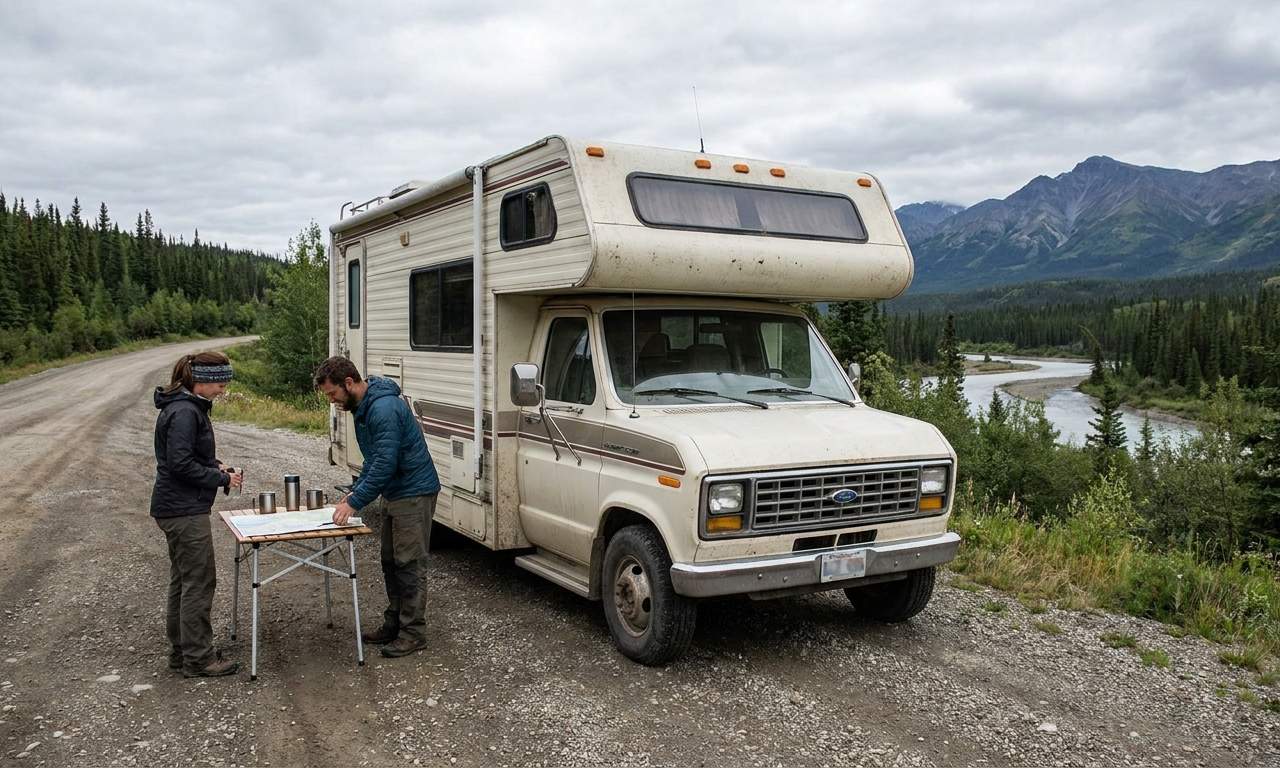
The final price for a long term RV rental in North Canada is dynamic, much like flight tickets, changing daily based on availability, seasonality, and supplier marketing decisions. This means that prices quoted are estimates and are set at the actual booking time. To get the most accurate and up-to-date costs for your specific travel dates and preferred vehicle type, always check live prices using our comparison tool. We partner directly with over 50 leading RV suppliers worldwide, including popular options like El Monte and Cruise America, to bring you comprehensive pricing comparisons with full transparency. No hidden fees, no surprises, just clear pricing so you can plan your budget effectively.
Check live pricesPlanning a trip to North Canada? Compare Motorhome Prices for North Canada to find the best deals for your adventure!
Seasonal Pricing - Peak vs. Shoulder vs. Off-Season in North Canada
RV rental prices in North Canada are highly seasonal, reflecting demand, weather conditions, and accessibility to northern routes and attractions. Understanding these seasons is key to planning your long-term RV trip, whether you're looking for savings or optimal travel conditions.
Off-Season (April-May, late September-October)
This period generally offers the lowest rental rates and fewer crowds, with April often being the most affordable. While weather can be colder and some services limited, it provides unique opportunities for quiet exploration and stunning fall colors. Be prepared for potential road closures or reduced operating hours for some facilities, particularly on more remote routes. Traveling during these months allows you to stretch your budget further, perhaps allowing for a longer rental duration, such as a multi-month journey, for a Class B campervan like the 'Combi Van' or a larger Class C motorhome.
Shoulder Season (June, early September)
Characterized by moderate pricing and pleasant weather, the shoulder season balances cost-effectiveness with generally good conditions for travel. Most services are fully operational, and popular sites are less congested than in peak summer. This is an excellent time for families or couples seeking a balance between good weather and more affordable rates for a Week-Long RV Driving Tour in North Canada. For example, a 4-berth 'EcoLine 2' could be a perfect choice for couples or small families.
Peak Season (July-August)
Commands the highest rental rates and demand, driven by warmer temperatures, school holidays, and optimal conditions for exploring Northern Canada's unique landscapes. In peak season, prices change significantly day-to-day, so booking far in advance is crucial to secure your desired rental motorhome or campervan. For comprehensive planning, considering routes found on RV PLANET routes can help you estimate all ancillary costs, making your peak season adventure more manageable. On the routes offered through RV PLANET routes, you can itemize and track every expense along the way for easy budgeting.
Navigating Northern Canada outside of peak season can present challenges like road closures due to snow or ice and limited operational hours for some facilities, which should be factored into planning. Always check local road conditions and weather forecasts, especially if venturing into very remote areas.
What's Included vs. What's an Add-On
What is included in a long term RV rental in North Canada can vary significantly by vehicle model, rental company, and specific pickup location; always confirm the details for your booking. Standard inclusions generally consist of basic liability insurance, providing essential coverage for third-party damages up to a certain limit. This foundational coverage ensures you're protected for the essentials while exploring.
Common add-ons frequently include additional mileage packages beyond the standard allowance, which is vital for extended trips through North Canada's vast distances. Upgraded insurance tiers, such as zero-deductible options like our top-level deductible reimbursement, offer extra peace of mind, protecting you from unexpected out-of-pocket expenses. Fees for generator usage, kitchen kits (with utensils and cookware for preparing RV-friendly recipes playlist meals), bedding packages, and convenience items like GPS or outdoor furniture are also common. At Bandana RV, we believe in full transparency: what you see is what you pay, with no surprise fees at pickup. Our comparison toggle conveniently allows users to identify which RVs, such as a spacious 'MH-A' with 302 Liter refrigerator and 208 Liter fuel tank, include essential items like kitchen utensils, tableware, and bedding in their base rental. Want to check exactly what's included? Click on the specific vehicle details when browsing our selection. For example, a 'Cruise America RV rental example Explorer' has a 75 Liter fuel tank and a 90 liter refrigerator. If you're keen on cooking your own meals on the road, check out our RV-friendly recipes playlist for inspiration.
How to Save on Long Term RV Rental in North Canada
Several strategies can help reduce the overall cost of a long term RV rental in North Canada, making extended exploration more accessible. Booking in the shoulder or off-season is a prime way to save money, as traveling during April, May, or September often yields significantly lower daily rental rates compared to the peak summer months. This can translate to savings of 20-30% on your total rental cost, though preparedness for cooler weather is necessary. You can also opt for longer rental durations, as many rental companies offer progressively better daily or weekly rates for rentals extending beyond one or two weeks; monthly rates are typically the most economical per day. This makes an extended road trip more budget-friendly.
Choosing a smaller RV class, such as a Class B campervan like the 'Duo - Campervan' (length 5.99m) or a compact Class C motorhome like the 'C-Small' (length 6.2m), generally results in lower rental costs and improved fuel efficiency, a critical saving in fuel-expensive Northern Canada. Pre-purchase tolls and utilize discounts whenever possible by asking your rental agency about options to pre-pay for tolls or if they offer campground discount cards or fuel discount cards that can lead to savings. If your travel dates offer some flexibility, actively monitoring for flex-rate drops can secure a more favorable deal. Finally, plan fuel stops strategically: research fuel prices along your planned route in North Canada and aim to refuel in larger towns or less remote locations where prices may be lower, avoiding emergency fill-ups in isolated, expensive areas.
How much does an RV cost to rent in Canada?
The cost to rent an RV in Canada typically ranges from $100 to $500+ CAD per night, depending heavily on the RV class, rental duration, season, and specific pick-up location, with prices potentially higher in North Canada due to logistics and remote operations. Smaller campervans (Class B) might start around $100-$200 CAD per night, such as a 'Paradise Family 5' which sleeps up to 5 people, while larger, luxury Class A motorhomes can exceed $400-$500 CAD per night during peak summer season. Long-term rentals, particularly those exceeding a month, generally offer a more economical average daily rate compared to shorter trips, providing better value for extended explorations of North Canada. Factors like mileage allowances, insurance upgrades (like our top-level deductible reimbursement), and additional equipment rentals (e.g., kitchen kits, bedding) can also influence the total rental cost. For specific pricing relevant to your travel dates and desired RV type, consult the live pricing table provided earlier in this article. Remember to compare Motorhome Prices for North Canada to get the best deal.
How much does it cost to rent an RV every month?
Renting an RV for a full month in Canada typically ranges from $3,000 to $10,000+ CAD, offering a significantly more cost-effective daily rate compared to shorter rental periods. Monthly rental costs are highly influenced by the RV's class, the time of year (e.g., peak summer rates are substantially higher), and whether unlimited mileage or comprehensive insurance packages are included. For a long-term rental specifically in North Canada, expect prices to be towards the higher end of this range due to increased demand for robust vehicles and the logistical challenges of supporting rentals in remote areas. Beyond the base rental, a monthly budget must also factor in recurring expenses such as fuel (which will be substantial for extended northern travel), campground fees, and food. Many rental companies provide specific long-term discounts, making a month-long or multi-month RV adventure a more financially viable option for deep exploration. Discover top destinations and plan a trip itinerary in advance with minimal effort and maximum enjoyment using RVPLAN.NET.
Is RV rental cheaper than hotel?
RV rental can be significantly cheaper than hotel stays, especially for longer trips, families, or groups, or when traveling through remote areas of North Canada where hotel options are limited and often expensive. While the initial RV rental cost might be comparable to some hotel rates, an RV allows for substantial savings on food by enabling self-catering with a fully equipped kitchen, drastically reducing restaurant expenses over an extended trip. For families or multiple travelers, a rented motorhome or campervan often provides more space and flexibility than booking multiple hotel rooms, offering better value for money. However, a fair comparison requires factoring in all RV-related expenses, including fuel (a significant cost in North Canada), campground fees, insurance, and any add-ons. In many remote Northern Canadian locations, RVs provide the only practical or available accommodation, rendering a direct hotel comparison less relevant in terms of accessibility and experience. For specific pricing and available RVs, find long term rv Rentals in North Canada.
How much does it cost to live in a camper van in Canada?
The cost of living in a camper van for an extended period in North Canada can range from $1,500 to $4,000+ CAD per month, highly dependent on lifestyle, travel intensity, and self-sufficiency. This budget encompasses more than just the rental; key recurring expenses include fuel (a primary and often higher cost in the vast, remote North), food, campground fees, and potential vehicle maintenance. Additional costs to factor in are propane, water refills, dump station charges, laundry, internet access, and personal care supplies. Bandana RV focuses on short-term and long-term rentals for vacation travel, offering a flexible and stress-free way to explore. For those considering an extended rental, successful RV travel in Northern Canada demands a high degree of self-sufficiency between far-flung services, necessitating careful planning for water, waste, propane, communication strategies (given cell service dead zones), and wildlife safety protocols. Purchasing a Parks Canada Discovery Pass can reduce daily entry fees for national parks, which accumulates savings over an extended period of exploring.
How much do RVs cost in Canada?
The cost of purchasing an RV in Canada varies drastically, from approximately $10,000 CAD for older, used campervans to over $300,000 CAD for new, luxury Class A motorhomes. This question pertains to ownership, which is distinct from renting; rental costs represent only a fraction of the purchase price and associated long-term expenses such as maintenance, storage, depreciation, and insurance. Renting a motorhome is an excellent option for exploring North Canada without the significant upfront investment and ongoing burdens of ownership. Rental fees typically include basic insurance and road assistance, alleviating many of the responsibilities of ownership, which is particularly beneficial when navigating the unique challenges of remote Northern Canadian routes. For your next adventure, check North Canada RV Rental Prices Now.
How much is RV rental in Canada?
RV rental prices in Canada are highly variable, with daily rates generally starting from $100 CAD for smaller units like a 2-berth 'Hi Top' in the off-season and potentially exceeding $500 CAD for larger, premium RVs during peak summer months. Key factors influencing the total price include the RV class (e.g., Class B, C, A), the specific length of the rental period (longer rentals typically offer better daily rates), the travel season, and the chosen rental location. Renting from a major urban hub generally offers more competitive pricing and availability than more remote locations, though specific deals can vary. For the most current and specific pricing tailored to your desired dates and vehicle type, it is recommended to utilize the search functionality on our platform, where live, flex-rate prices are displayed with full transparency. Remember, our RV specialists are here to help you compare final prices across 50+ suppliers so you don't have to.
How much to rent an RV for a couple months?
Renting an RV for two months in Canada offers substantial savings on a per-day basis compared to shorter trips, with total costs typically ranging from $5,000 to $18,000+ CAD, depending on the RV type, season, and inclusions. This extended duration is ideal for comprehensive exploration of North Canada, providing ample time to traverse remote routes like the Dempster Highway or visit multiple national parks without feeling rushed. Most rental agencies offer specific long-term rental rates that are significantly discounted from their weekly or daily equivalents, especially when booking outside the peak July-August period. Budgeting for a multi-month trip must allocate considerable funds for fuel, which will be a major expense over such vast northern distances, along with campground fees, provisions, and any desired mileage packages. Securing your booking well in advance is highly recommended, particularly if planning a summer trip to North Canada, as availability for extended rentals can be limited. Our team at Bandana RV, true RV specialists, is here to support you in planning these longer adventures, from pre-booking comparisons to post-booking coordination.
Does Canada allow RV living?
Canada generally permits RV living, but the legality and practicality depend significantly on adherence to provincial and municipal bylaws, as well as specific campground regulations, particularly in the northern territories. While there are no overarching federal laws prohibiting full-time RV living, it is illegal to 'boondock' or wild camp on private land without explicit permission, or on municipal streets where signs prohibit overnight parking. Bandana RV specializes in RV rentals for vacation travel, ensuring you have a comfortable and compliant experience during your trip. Many national and provincial parks offer designated campgrounds for RVs, but prolonged stays are typically limited, and reservations are often required months in advance during peak season. Travelers should be aware of specific regulations such as the '10-year rule,' which some insurance companies or campgrounds might apply to refuse older RVs, impacting options for long-term rental travel.
In remote Northern Canada, successful 'RVing' demands a high degree of self-sufficiency between far-flung services, necessitating careful planning for water, waste, propane, communication strategies (given cell service dead zones), and wildlife safety protocols. For travelers from non-English-speaking countries, an International Driving Permit (IDP) is recommended, though not mandatory, to help with any potential interactions with local authorities or service providers. Our Rent&Plan service can also provide pre-planned routes for North Canada, ensuring you're well-prepared for these unique challenges.
Top Cities for RV Rental in North Canada
While "North Canada" itself encompasses vast territories, key gateway cities offer excellent starting points for your long-term RV adventure. These cities provide crucial services, RV rental pickups, and access to the region's incredible wilderness. Drive slowly and carefully, and you can drive almost anywhere without issues. No need to stress - just use common sense and pay attention.
- Whitehorse, Yukon: As the capital of Yukon, Whitehorse is a popular hub for accessing the Alaska Highway and wilderness routes like the Dempster Highway. You'll find a good selection of RV rental companies here, offering everything from compact campervans to larger Class C motorhomes, ideal for long-term exploration.
- Yellowknife, Northwest Territories: The capital of the Northwest Territories, Yellowknife is a vibrant northern city and a perfect base for exploring the unique landscapes and indigenous cultures of the NWT. It's also an excellent spot for viewing the Northern Lights during the right seasons.
- Dawson City, Yukon: Famous for its Gold Rush history, Dawson City offers a blend of historical charm and wilderness access. Renting an RV from here gives you a fantastic starting point for exploring the Klondike region and nearby national parks.
- Iqaluit, Nunavut: While not typically an RV pick-up location in the traditional sense due to its remote island location (accessible primarily by air), Iqaluit represents the heart of Nunavut's Inuit culture. RVers exploring other parts of North Canada might consider a fly-in component to experience this unique territory, then continue their RV journey elsewhere.
- Fort Nelson, British Columbia (Gateway to the North): Although technically in Northern British Columbia, Fort Nelson is often considered a gateway to the true North for RV travelers. It's a key stop on the Alaska Highway for supplies and is a good base for starting long-term trips deeper into Yukon and the NWT.
- Inuvik, Northwest Territories: The final major community on the Dempster Highway before Tuktoyaktuk, Inuvik offers a unique Arctic experience. While RV pickups might be more challenging here, it serves as a destination for those undertaking the iconic Arctic Ocean road trip.
Each of these locations offers a distinctive experience, allowing you to tailor your long term RV adventure to your interests. For more detailed insights, consider our RV Travel Guide to North Canada - Tips and Top Spots 2026.
Country-Wide Practical Info for North Canada RV Travel
RV travel in North Canada requires careful planning due to its remote nature and unique conditions. Drivers operate on the right-hand side of the road, and standard Canadian road rules apply. A regular car driver's license is sufficient for driving all motorhome classes (Class A, Class B, and Class C) in Canada. For international visitors, an International Driving Permit (IDP) is recommended for ease of communication, although it is not legally mandatory in most cases if your home country's license is in English or French. For more detailed information on driving, refer to our Driving an RV in North Canada - Complete Guide 2026.
Road Rules and Speed Limits
Speed limits are generally lower in northern territories compared to southern Canada, typically around 90-100 km/h on major highways and 50 km/h in urban areas. Always adhere to posted signage, and be particularly vigilant for wildlife on the roads, which is a common occurrence. Drive slowly and carefully, and you can drive almost anywhere without issues. No need to stress - just use common sense and pay attention.
Fuel Stations and Types
Fuel stations can be sparse on northern routes, with significant distances between towns. Always keep your fuel tank topped up, and carry extra fuel if venturing onto very remote stretches like the Dempster Highway. Gasoline (petrol) is widely available, with diesel also common for larger RVs. Prices will be higher in remote areas, so budget accordingly.
Emergency Numbers
The universal emergency number in Canada for police, fire, and ambulance services is 911. However, outside of major communities, cell service can be non-existent. Consider renting a satellite phone or carrying a personal locator beacon (PLB) for emergencies in remote areas.
SIM Cards and Connectivity
Major Canadian cellular providers offer coverage in urban areas, but connectivity quickly diminishes outside of towns. For reliable internet access on your long term RV trip, consider purchasing a local SIM card with a data plan in a major city like Whitehorse or Yellowknife, but understand that coverage will be spotty in the vast wilderness. Satellite internet options or Wi-Fi hotspots at campgrounds might be available but should not be relied upon as primary connectivity.
Camping Laws and Wilderness Etiquette
Designated campgrounds are the safest and most convenient option, especially in national and territorial parks. Many national and provincial parks in North Canada allow reservations, but a significant portion operate on a first-come, first-served basis. Reassure yourself: you'll find a spot. If not at the first campground, then the next one. It's always a good idea to call ahead before driving long distances. Random camping (boondocking) is generally permitted on Crown land (public land) in many areas, but specific rules and restrictions may apply, particularly near communities or protected areas. Always practice Leave No Trace principles, and be extremely vigilant about wildlife, especially bears. Secure all food and scented items, carry bear spray, and know how to use it. Respect local indigenous communities and their traditions.
🎬 Video coming soon
What You Shouldn't Miss
- Driving the Dempster Highway: An iconic Canadian road trip, this mostly gravel highway is Canada's only public road crossing the Arctic Circle, leading to Inuvik and Tuktoyaktuk on the Arctic Ocean. It's a challenging but incredibly rewarding route for an adventurous long term RV trip.
- Exploring Kluane National Park and Reserve: Home to Canada's highest peak, Mount Logan, and vast icefields. Hike among glaciers, witness abundant wildlife, and experience true wilderness in Yukon.
- Witnessing the Northern Lights: From late August to April, North Canada offers some of the best opportunities globally to see the spectacular Aurora Borealis, especially around Yellowknife, NWT, or Whitehorse, Yukon.
- Visiting Indigenous Cultural Sites: Learn about the rich history and vibrant cultures of the First Nations, Inuit, and Métis peoples throughout the territories. Many communities offer cultural tours, artisan markets, and traditional experiences.
- Experiencing the Midnight Sun: During the summer months, particularly north of the Arctic Circle, enjoy 24 hours of daylight, allowing for endless exploration and unique nocturnal activities.
- Canoeing or Kayaking on a Northern Lake: Immerse yourself in the tranquility of the boreal forest or tundra by paddling on one of the countless pristine lakes or rivers, offering unmatched serene beauty.
Looking for expert insights from Avi Bandana?
Top 5 Adventures - recommendations from Avi Bandana - For truly unique and off-the-beaten-path experiences in North Canada, Avi recommends focusing on slow travel. "Travel slowly, max 100-150 km per day on average. Take time to feel the place, connect to the culture, the food, and the scenery," he advises. Consider spending several days exploring a single region, allowing for spontaneous discoveries and deeper immersion into the northern wilderness.
Final Thoughts
Embarking on a long-term RV rental in North Canada is more than just a trip; it's an immersive experience into one of the world's last great wildernesses. From the raw beauty of its national parks to the unique charm of its northern communities, a rented motorhome or campervan provides the freedom to explore deeply and connect with the land in an unparalleled way. Remember to plan carefully, embracing the spirit of slow travel, averaging no more than 100-150 km per day to truly soak in the magnificent scenery and culture.
With Bandana RV, you're not just renting a vehicle; you're gaining a partner dedicated to making your adventure seamless and transparent. We're true RV specialists, here to compare final prices across 50+ suppliers for you, ensuring no hidden fees and providing support every step of the way. So, pack your sense of adventure, choose your ideal mobile home, and get ready for the journey of a lifetime through North Canada.
Ready to discover the magic of North Canada? Compare Motorhome Prices for North Canada today and start planning your extended RV adventure!
In This Guide
- What Long Term RV Rental Costs in North Canada (2026)
- Seasonal Pricing - Peak vs. Shoulder vs. Off-Season in North Canada
- What's Included vs. What's an Add-On
- Hidden Costs to Budget For in North Canada
- How to Save on Long Term RV Rental in North Canada
- How much does an RV cost to rent in Canada?
- How much does it cost to rent an RV every month?
- Is RV rental cheaper than hotel?
- How much does it cost to live in a camper van in Canada?
- How much do RVs cost in Canada?
- How much is RV rental in Canada?
- How much to rent an RV for a couple months?
- Does Canada allow RV living?
- Top Cities for RV Rental in North Canada
- Country-Wide Practical Info for North Canada RV Travel
- What You Shouldn't Miss
- Why Book with Bandana Caravan
- Final Thoughts
- Frequently Asked Questions
Imagine yourself on an extended road trip through the vast, awe-inspiring landscapes of North Canada, where every turn reveals a new vista, from towering mountain ranges to pristine wilderness. Long-term RV rental in North Canada opens up a world of adventure, offering unparalleled flexibility to explore at your own pace, connect deeply with nature, and discover remote communities. Whether you dream of chasing the midnight sun or witnessing the northern lights, a rented motorhome, campervan, or mobile home provides your perfect basecamp for an unforgettable journey. For live availability and current prices, start with our RV Rental North Canada - Complete Guide 2026 guide.
What Long Term RV Rental Costs in North Canada (2026)
RV rental costs in North Canada vary significantly based on the RV class, rental duration, and seasonal demand, especially given the remote nature of the region. April is typically the cheapest month for RV rental in North Canada, offering considerably lower rates than the popular peak season. For instance, a compact campervan like the 'Active Classic' might start from $100 CAD per day in the off-season, while a spacious Class C motorhome like the '6 Berth Discovery' could be $300-$500+ CAD per day during summer. Long-term rentals, usually a month or more, benefit from a reduced average daily rate, making extended trips more budget-friendly overall.
The final price for a long term RV rental in North Canada is dynamic, much like flight tickets, changing daily based on availability, seasonality, and supplier marketing decisions. This means that prices quoted are estimates and are set at the actual booking time. To get the most accurate and up-to-date costs for your specific travel dates and preferred vehicle type, always check live prices using our comparison tool. We partner directly with over 50 leading RV suppliers worldwide, including popular options like El Monte and Cruise America, to bring you comprehensive pricing comparisons with full transparency.
Check live pricesPlanning a trip to North Canada? Compare Motorhome Prices for North Canada to find the best deals for your adventure!
Seasonal Pricing - Peak vs. Shoulder vs. Off-Season in North Canada
RV rental prices in North Canada are highly seasonal, reflecting demand, weather conditions, and accessibility to northern routes and attractions. Understanding these seasons is key to planning your long-term RV trip, whether you're looking for savings or optimal travel conditions.
Off-Season (April-May, late September-October)
This period generally offers the lowest rental rates and fewer crowds, with April often being the most affordable. While weather can be colder and some services limited, it provides unique opportunities for quiet exploration and stunning fall colors. Be prepared for potential road closures or reduced operating hours for some facilities, particularly on more remote routes. Traveling during these months allows you to stretch your budget further, perhaps allowing for a longer rental duration, such as a multi-month journey, for a Class B campervan like the 'Combi Van' or a larger Class C motorhome.
Shoulder Season (June, early September)
Characterized by moderate pricing and pleasant weather, the shoulder season balances cost-effectiveness with generally good conditions for travel. Most services are fully operational, and popular sites are less congested than in peak summer. This is an excellent time for families or couples seeking a balance between good weather and more affordable rates for a Week-Long RV Driving Tour in North Canada. For example, a 4-berth 'EcoLine 2' could be a perfect choice for couples or small families.
Peak Season (July-August)
Commands the highest rental rates and demand, driven by warmer temperatures, school holidays, and optimal conditions for exploring Northern Canada's unique landscapes. In peak season, prices change significantly day-to-day, so booking far in advance is crucial to secure your desired rental motorhome or campervan. For comprehensive planning, considering routes found on RV PLANET routes can help you estimate all ancillary costs, making your peak season adventure more manageable.
Navigating Northern Canada outside of peak season can present challenges like road closures due to snow or ice and limited operational hours for some facilities, which should be factored into planning. Always check local road conditions and weather forecasts, especially if venturing into very remote areas.
What's Included vs. What's an Add-On
What is included in a long term RV rental in North Canada can vary significantly by vehicle model, rental company, and specific pickup location; always confirm the details for your booking. Standard inclusions generally consist of basic liability insurance, providing essential coverage for third-party damages up to a certain limit. This foundational coverage ensures you're protected for the essentials while exploring.
Common add-ons frequently include additional mileage packages beyond the standard allowance, which is vital for extended trips through North Canada's vast distances. Upgraded insurance tiers, such as zero-deductible options like our top-level deductible reimbursement, offer extra peace of mind, protecting you from unexpected out-of-pocket expenses. Fees for generator usage, kitchen kits (with utensils and cookware for preparing RV-friendly recipes playlist meals), bedding packages, and convenience items like GPS or outdoor furniture are also common. At Bandana RV, we believe in full transparency: what you see is what you pay, with no surprise fees at pickup. Our comparison toggle conveniently allows users to identify which RVs, such as a spacious 'MH-A' with 302 Liter refrigerator and 208 Liter fuel tank, include essential items like kitchen utensils, tableware, and bedding in their base rental. Want to check exactly what's included? Click on the specific vehicle details when browsing our selection. For example, a 'Cruise America rv rental example Explorer' has a 75 Liter fuel tank and a 90 liter refrigerator. If you're keen on cooking your own meals on the road, check out our RV-friendly recipes playlist for inspiration.
How to Save on Long Term RV Rental in North Canada
Several strategies can help reduce the overall cost of a long term RV rental in North Canada, making extended exploration more accessible. Booking in the shoulder or off-season is a prime way to save money, as traveling during April, May, or September often yields significantly lower daily rental rates compared to the peak summer months. This can translate to savings of 20-30% on your total rental cost, though preparedness for cooler weather is necessary. You can also opt for longer rental durations, as many rental companies offer progressively better daily or weekly rates for rentals extending beyond one or two weeks; monthly rates are typically the most economical per day. This makes an extended road trip more budget-friendly.
Choosing a smaller RV class, such as a Class B campervan like the 'Duo - Campervan' (length 5.99m) or a compact Class C motorhome like the 'C-Small' (length 6.2m), generally results in lower rental costs and improved fuel efficiency, a critical saving in fuel-expensive Northern Canada. Pre-purchase tolls and utilize discounts whenever possible by asking your rental agency about options to pre-pay for tolls or if they offer campground discount cards or fuel discount cards that can lead to savings. If your travel dates offer some flexibility, actively monitoring for flex-rate drops can secure a more favorable deal. Finally, plan fuel stops strategically: research fuel prices along your planned route in North Canada and aim to refuel in larger towns or less remote locations where prices may be lower, avoiding emergency fill-ups in isolated, expensive areas.
How much does an RV cost to rent in Canada?
The cost to rent an RV in Canada typically ranges from $100 to $500+ CAD per night, depending heavily on the RV class, rental duration, season, and specific pick-up location, with prices potentially higher in North Canada due to logistics and remote operations. Smaller campervans (Class B) might start around $100-$200 CAD per night, such as a 'Paradise Family 5' which sleeps up to 5 people, while larger, luxury Class A motorhomes can exceed $400-$500 CAD per night during peak summer season. Long-term rentals, particularly those exceeding a month, generally offer a more economical average daily rate compared to shorter trips, providing better value for extended explorations of North Canada. Factors like mileage allowances, insurance upgrades (like our top-level deductible reimbursement), and additional equipment rentals (e.g., kitchen kits, bedding) can also influence the total rental cost. For specific pricing relevant to your travel dates and desired RV type, consult the live pricing table provided earlier in this article. Remember to compare Motorhome Prices for North Canada to get the best deal.
How much does it cost to rent an RV every month?
Renting an RV for a full month in Canada typically ranges from $3,000 to $10,000+ CAD, offering a significantly more cost-effective daily rate compared to shorter rental periods. Monthly rental costs are highly influenced by the RV's class, the time of year (e.g., peak summer rates are substantially higher), and whether unlimited mileage or comprehensive insurance packages are included. For a long-term rental specifically in North Canada, expect prices to be towards the higher end of this range due to increased demand for robust vehicles and the logistical challenges of supporting rentals in remote areas. Beyond the base rental, a monthly budget must also factor in recurring expenses such as fuel (which will be substantial for extended northern travel), campground fees, and food. Many rental companies provide specific long-term discounts, making a month-long or multi-month RV adventure a more financially viable option for deep exploration. Discover top destinations and plan a trip itinerary in advance with minimal effort and maximum enjoyment using RVPLAN.NET.
Is RV rental cheaper than hotel?
RV rental can be significantly cheaper than hotel stays, especially for longer trips, families, or groups, or when traveling through remote areas of North Canada where hotel options are limited and often expensive. While the initial RV rental cost might be comparable to some hotel rates, an RV allows for substantial savings on food by enabling self-catering with a fully equipped kitchen, drastically reducing restaurant expenses over an extended trip. For families or multiple travelers, a rented motorhome or campervan often provides more space and flexibility than booking multiple hotel rooms, offering better value for money. However, a fair comparison requires factoring in all RV-related expenses, including fuel (a significant cost in North Canada), campground fees, insurance, and any add-ons. In many remote Northern Canadian locations, RVs provide the only practical or available accommodation, rendering a direct hotel comparison less relevant in terms of accessibility and experience. For specific pricing and available RVs, find long term rv Rentals in North Canada.
How much does it cost to live in a camper van in Canada?
The cost of living in a camper van for an extended period in North Canada can range from $1,500 to $4,000+ CAD per month, highly dependent on lifestyle, travel intensity, and self-sufficiency. This budget encompasses more than just the rental; key recurring expenses include fuel (a primary and often higher cost in the vast, remote North), food, campground fees, and potential vehicle maintenance. Additional costs to factor in are propane, water refills, dump station charges, laundry, internet access, and personal care supplies. Bandana RV focuses on short-term and long-term rentals for vacation travel, ensuring you have a comfortable and compliant experience during your trip. For those considering an extended rental, successful RV travel in Northern Canada demands a high degree of self-sufficiency between far-flung services, necessitating careful planning for water, waste, propane, communication strategies (given cell service dead zones), and wildlife safety protocols. Purchasing a Parks Canada Discovery Pass can reduce daily entry fees for national parks, which accumulates savings over an extended period of exploring.
How much do RVs cost in Canada?
The cost of purchasing an RV in Canada varies drastically, from approximately $10,000 CAD for older, used campervans to over $300,000 CAD for new, luxury Class A motorhomes. This question pertains to ownership, which is distinct from renting; rental costs represent only a fraction of the purchase price and associated long-term expenses such as maintenance, storage, depreciation, and insurance. Renting a motorhome is an excellent option for exploring North Canada without the significant upfront investment and ongoing burdens of ownership. Rental fees typically include basic insurance and road assistance, alleviating many of the responsibilities of ownership, which is particularly beneficial when navigating the unique challenges of remote Northern Canadian routes. For your next adventure, check North Canada RV Rental Prices Now.
How much is RV rental in Canada?
RV rental prices in Canada are highly variable, with daily rates generally starting from $100 CAD for smaller units like a 2-berth 'Hi Top' in the off-season and potentially exceeding $500 CAD for larger, premium RVs during peak summer months. Key factors influencing the total price include the RV class (e.g., Class B, C, A), the specific length of the rental period (longer rentals typically offer better daily rates), the travel season, and the chosen rental location. Renting from a major urban hub generally offers more competitive pricing and availability than more remote locations, though specific deals can vary. For the most current and specific pricing tailored to your desired dates and vehicle type, it is recommended to utilize the search functionality on our platform, where live, flex-rate prices are displayed with full transparency. Remember, our RV specialists are here to help you compare final prices across 50+ suppliers so you don't have to.
How much to rent an RV for a couple months?
Renting an RV for two months in Canada offers substantial savings on a per-day basis compared to shorter trips, with total costs typically ranging from $5,000 to $18,000+ CAD, depending on the RV type, season, and inclusions. This extended duration is ideal for comprehensive exploration of North Canada, providing ample time to traverse remote routes like the Dempster Highway or visit multiple national parks without feeling rushed. Most rental agencies offer specific long-term rental rates that are significantly discounted from their weekly or daily equivalents, especially when booking outside the peak July-August period. Budgeting for a multi-month trip must allocate considerable funds for fuel, which will be a major expense over such vast northern distances, along with campground fees, provisions, and any desired mileage packages. Securing your booking well in advance is highly recommended, particularly if planning a summer trip to North Canada, as availability for extended rentals can be limited. Our team at Bandana RV, true RV specialists, is here to support you in planning these longer adventures, from pre-booking comparisons to post-booking coordination.
Does Canada allow RV living?
Canada generally permits RV living, but the legality and practicality depend significantly on adherence to provincial and municipal bylaws, as well as specific campground regulations, particularly in the northern territories. While there are no overarching federal laws prohibiting full-time RV living, it is illegal to 'boondock' or wild camp on private land without explicit permission, or on municipal streets where signs prohibit overnight parking. Bandana RV specializes in RV rentals for vacation travel, ensuring you have a comfortable and compliant experience during your trip. Many national and provincial parks offer designated campgrounds for RVs, but prolonged stays are typically limited, and reservations are often required months in advance during peak season. Travelers should be aware of specific regulations such as the '10-year rule,' which some insurance companies or campgrounds might apply to refuse older RVs, impacting options for long-term rental travel.
In remote Northern Canada, successful 'RVing' demands a high degree of self-sufficiency between far-flung services, necessitating careful planning for water, waste, propane, communication strategies (given cell service dead zones), and wildlife safety protocols. For travelers from non-English-speaking countries, an International Driving Permit (IDP) is recommended, though not mandatory, to help with any potential interactions with local authorities or service providers. Our Rent&Plan service can also provide pre-planned routes for North Canada, ensuring you're well-prepared for these unique challenges.
Top Cities for RV Rental in North Canada
While "North Canada" itself encompasses vast territories, key gateway cities offer excellent starting points for your long-term RV adventure. These cities provide crucial services, RV rental pickups, and access to the region's incredible wilderness. Drive slowly and carefully, and you can drive almost anywhere without issues. No need to stress - just use common sense and pay attention.
- Whitehorse, Yukon: As the capital of Yukon, Whitehorse is a popular hub for accessing the Alaska Highway and wilderness routes like the Dempster Highway. You'll find a good selection of RV rental companies here, offering everything from compact campervans to larger Class C motorhomes, ideal for long-term exploration.
- Yellowknife, Northwest Territories: The capital of the Northwest Territories, Yellowknife is a vibrant northern city and a perfect base for exploring the unique landscapes and indigenous cultures of the NWT. It's also an excellent spot for viewing the Northern Lights during the right seasons.
- Dawson City, Yukon: Famous for its Gold Rush history, Dawson City offers a blend of historical charm and wilderness access. Renting an RV from here gives you a fantastic starting point for exploring the Klondike region and nearby national parks.
- Iqaluit, Nunavut: While not typically an RV pick-up location in the traditional sense due to its remote island location (accessible primarily by air), Iqaluit represents the heart of Nunavut's Inuit culture. RVers exploring other parts of North Canada might consider a fly-in component to experience this unique territory, then continue their RV journey elsewhere.
- Fort Nelson, British Columbia (Gateway to the North): Although technically in Northern British Columbia, Fort Nelson is often considered a gateway to the true North for RV travelers. It's a key stop on the Alaska Highway for supplies and is a good base for starting long-term trips deeper into Yukon and the NWT.
- Inuvik, Northwest Territories: The final major community on the Dempster Highway before Tuktoyaktuk, Inuvik offers a unique Arctic experience. While RV pickups might be more challenging here, it serves as a destination for those undertaking the iconic Arctic Ocean road trip.
Each of these locations offers a distinctive experience, allowing you to tailor your long term RV adventure to your interests. For more detailed insights, consider our RV Travel Guide to North Canada - Tips and Top Spots 2026.
🎬 Video coming soon
Country-Wide Practical Info for North Canada RV Travel
RV travel in North Canada requires careful planning due to its remote nature and unique conditions. Drivers operate on the right-hand side of the road, and standard Canadian road rules apply. A regular car driver's license is sufficient for driving all motorhome classes (Class A, Class B, and Class C) in Canada. For international visitors, an International Driving Permit (IDP) is recommended for ease of communication, although it is not legally mandatory in most cases if your home country's license is in English or French. For more detailed information on driving, refer to our Driving an RV in North Canada - Complete Guide 2026.
Road Rules and Speed Limits
Speed limits are generally lower in northern territories compared to southern Canada, typically around 90-100 km/h on major highways and 50 km/h in urban areas. Always adhere to posted signage, and be particularly vigilant for wildlife on the roads, which is a common occurrence. Drive slowly and carefully, and you can drive almost anywhere without issues. No need to stress - just use common sense and pay attention.
Fuel Stations and Types
Fuel stations can be sparse on northern routes, with significant distances between towns. Always keep your fuel tank topped up, and carry extra fuel if venturing onto very remote stretches like the Dempster Highway. Gasoline (petrol) is widely available, with diesel also common for larger RVs. Prices will be higher in remote areas, so budget accordingly.
Emergency Numbers
The universal emergency number in Canada for police, fire, and ambulance services is 911. However, outside of major communities, cell service can be non-existent. Consider renting a satellite phone or carrying a personal locator beacon (PLB) for emergencies in remote areas.
SIM Cards and Connectivity
Major Canadian cellular providers offer coverage in urban areas, but connectivity quickly diminishes outside of towns. For reliable internet access on your long term RV trip, consider purchasing a local SIM card with a data plan in a major city like Whitehorse or Yellowknife, but understand that coverage will be spotty in the vast wilderness. Satellite internet options or Wi-Fi hotspots at campgrounds might be available but should not be relied upon as primary connectivity.
Camping Laws and Wilderness Etiquette
Designated campgrounds are the safest and most convenient option, especially in national and territorial parks. Many national and provincial parks in North Canada allow reservations, but a significant portion operate on a first-come, first-served basis. Reassure yourself: you'll find a spot. If not at the first campground, then the next one. It's always a good idea to call ahead before driving long distances. Random camping (boondocking) is generally permitted on Crown land (public land) in many areas, but specific rules and restrictions may apply, particularly near communities or protected areas. Always practice Leave No Trace principles, and be extremely vigilant about wildlife, especially bears. Secure all food and scented items, carry bear spray, and know how to use it. Respect local indigenous communities and their traditions.
What You Shouldn't Miss
- Driving the Dempster Highway: An iconic Canadian road trip, this mostly gravel highway is Canada's only public road crossing the Arctic Circle, leading to Inuvik and Tuktoyaktuk on the Arctic Ocean. It's a challenging but incredibly rewarding route for an adventurous long term RV trip.
- Exploring Kluane National Park and Reserve: Home to Canada's highest peak, Mount Logan, and vast icefields. Hike among glaciers, witness abundant wildlife, and experience true wilderness in Yukon.
- Witnessing the Northern Lights: From late August to April, North Canada offers some of the best opportunities globally to see the spectacular Aurora Borealis, especially around Yellowknife, NWT, or Whitehorse, Yukon.
- Visiting Indigenous Cultural Sites: Learn about the rich history and vibrant cultures of the First Nations, Inuit, and Métis peoples throughout the territories. Many communities offer cultural tours, artisan markets, and traditional experiences.
- Experiencing the Midnight Sun: During the summer months, particularly north of the Arctic Circle, enjoy 24 hours of daylight, allowing for endless exploration and unique nocturnal activities.
- Canoeing or Kayaking on a Northern Lake: Immerse yourself in the tranquility of the boreal forest or tundra by paddling on one of the countless pristine lakes or rivers, offering unmatched serene beauty.
Looking for expert insights from Avi Bandana?
Top 5 Adventures - recommendations from Avi Bandana - For truly unique and off-the-beaten-path experiences in North Canada, Avi recommends focusing on slow travel. "Travel slowly, max 100-150 km per day on average. Take time to feel the place, connect to the culture, the food, and the scenery," he advises.
Final Thoughts
Embarking on a long-term RV rental in North Canada is more than just a trip; it's an immersive experience into one of the world's last great wildernesses. From the raw beauty of its national parks to the unique charm of its northern communities, a rented motorhome or campervan provides the freedom to explore deeply and connect with the land in an unparalleled way. Remember to plan carefully, embracing the spirit of slow travel, averaging no more than 100-150 km per day to truly soak in the magnificent scenery and culture.
With Bandana RV, you're not just renting a vehicle; you're gaining a partner dedicated to making your adventure seamless and transparent. We're true RV specialists, here to compare final prices across 50+ suppliers for you, ensuring no hidden fees and providing support every step of the way. So, pack your sense of adventure, choose your ideal mobile home, and get ready for the journey of a lifetime through North Canada.
Ready to discover the magic of North Canada? Compare Motorhome Prices for North Canada today and start planning your extended RV adventure!