In This Guide
- Can You Drive an RV in North Canada? License & Age Rules
- Road Conditions & Terrain in North Canada
- RV Size Limits, Bridges & Restricted Zones
- Fuel: Diesel vs. Petrol & Cost per 100 km
- Tolls, Vignettes & Border Rules
- Driving Tips for Rv rental Travelers
- Recommended RV Class for North Canada Roads
- Should I Choose a Compact Van Instead of a Large RV in North Canada?
- Can I Park Anywhere? Free & Wild Camping Rules in North Canada
- Can I Drive an RV Into the City Center? Heights, Tunnels & Local Signage
- Do you need a different license to drive an RV in Canada?
- What is the 3-3-3 rule for RV travel?
- Can Americans RV in Canada?
- Can you walk around in a motorhome while driving in Canada?
- Do they search your RV at the Canadian border?
- Can you park an RV anywhere in Canada?
- Can I bring my RV into Canada?
- How much is RV insurance in Canada?
- What You Shouldn't Miss
- Why Book with Bandana Caravan
- Final Thoughts
- Frequently Asked Questions
Exploring North Canada with a rented RV is an unparalleled adventure, offering vast wilderness, stunning landscapes, and a true sense of freedom. Imagine yourself navigating the legendary Alaska Highway, waking up to panoramic views of pristine lakes, and spotting incredible wildlife right from your mobile home base. This guide provides comprehensive information on driving an RV in North Canada, covering everything from licensing to road conditions, ensuring your trip is as smooth and memorable as possible. For live availability and current prices, start with our RV Rental North Canada - Complete Guide 2026 guide.
Can You Drive an RV in North Canada? License & Age Rules
Yes, you can absolutely drive a rental RV in North Canada with a standard driver's license, as most motorhomes available for rent in the Yukon and Northwest Territories fall within the regular Class 5 (or equivalent) license category. These vehicles typically do not exceed 11,000 kg (24,250 lbs) in gross vehicle weight and do not require air brakes, meaning a commercial license is not necessary for your vacation. For foreign drivers, a valid driver's license from your home country is required; an International Driving Permit (IDP) is strongly recommended if your license is not issued in English or French, though not mandatory in all cases.
The minimum driver age for RV rental in North Canada is typically 21 years old, although some specific rental companies might set it at 25 for certain larger Class A motorhomes. Bandana RV does not impose young driver surcharges or vehicle class restrictions based on age, making RV adventures accessible for younger adults too. Always ensure your license is current and in good standing before embarking on your Northern journey.
Road Conditions & Terrain in North Canada
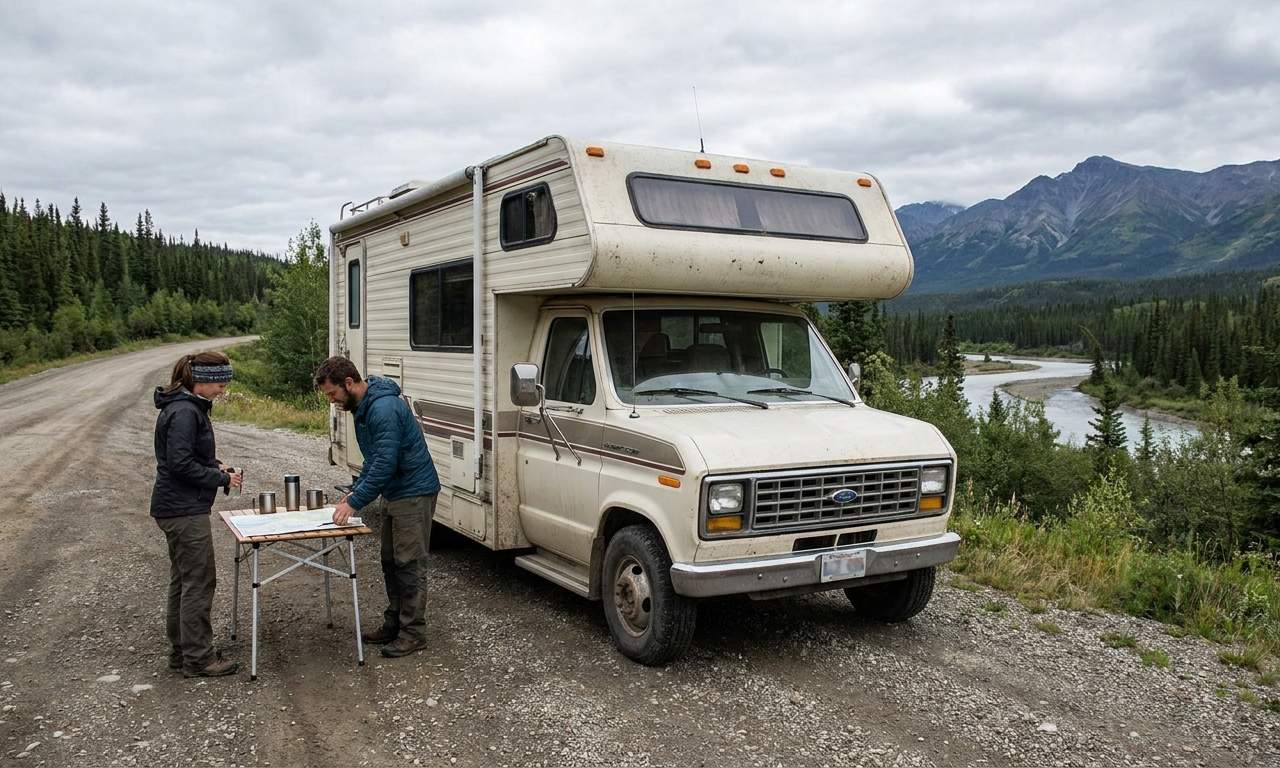
Road conditions in North Canada, encompassing the Yukon and Northwest Territories, present a unique blend of challenges and breathtaking scenery, ranging from well-maintained paved highways to extensive gravel sections like the iconic Dempster Highway. Drivers should be prepared for varying road quality, including common permafrost-induced heaves and frost cracks, which necessitate reduced speeds and attentive driving. The terrain is often mountainous with winding roads, especially prevalent in the Yukon, interspersed with vast stretches of wilderness where cell service is sparse outside major hubs such as Whitehorse and Yellowknife.
Extensive gravel sections are a hallmark of Northern travel, requiring appropriate tire types, slower speeds, and a keen awareness of potential dust and rock chips. Planning for remoteness is crucial, as services like fuel, repairs, and amenities are significantly sparser compared to more populated areas. Embracing slow travel, aiming for a maximum of 100-150 km per day on average, allows you to truly feel the place, connect to the culture, the local food, and the awe-inspiring scenery, rather than rushing through it.
RV Size Limits, Bridges & Restricted Zones
North Canada generally accommodates rental RVs of all sizes without significant explicit restrictions, but drivers should remain mindful of vehicle dimensions for potential low bridges, ferry limits, and localized road restrictions, especially on more remote routes. Major highways typically have no explicit height or weight limitations, however, older or unpaved routes might have informal limits or tight turns that require careful navigation. Ferries, such as those that service sections of the Dempster Highway, have specific length and weight capacities that travelers should confirm well in advance to avoid any unexpected delays.
Environmental zones are not typically a concern for motorhomes in North Canada; nonetheless, always observe local signage in protected areas or smaller communities for any specific regulations. Some secondary roads might feature older, smaller bridges with posted weight limits, although most major RV routes are designed to clear standard vehicle dimensions comfortably. Drive slowly and carefully, and you can drive almost anywhere without issues; no need to stress, just use common sense and pay attention to posted signs.
Fuel: Diesel vs. Petrol & Cost per 100 km
Fuel availability in North Canada leans heavily on petrol (gasoline), with diesel also accessible, but both can be significantly more expensive and less frequent than in southern regions. Bandana's global fleet averages for fuel consumption include Class B Camper Vans at 8-10 Liters/100 km, Class SI Semi-integrated RVs at 10-11 Liters/100 km, and Class C Alcove RVs at 10-12 Liters/100 km. Anticipate higher fuel costs, often doubling or tripling per liter compared to major Canadian cities, particularly on remote routes like the Dempster Highway where stations are few and far between. On the routes offered through RV PLANET routes, you can itemize and track every expense along the way for easy budgeting.
Drivers should always carry extra fuel in approved containers for extended travel, especially between gas stations on the most remote Northern routes, as distances can be vast. While Bandana does not offer fuel discount cards specific to North Canada, meticulous planning of fuel stops and budgeting for higher costs is essential due to the region's remoteness. For comprehensive trip planning that includes managing all ancillary trip costs like fuel, campground fees, and groceries, remember that RV PLANET routes allow you to itemize and track every expense for easy budgeting.
Tolls, Vignettes & Border Rules
North Canada, specifically the Yukon and Northwest Territories, generally does not impose tolls or require vignettes for road usage, making RV travel through this region straightforward and free from these additional fees. Travelers crossing into North Canada from neighboring provinces like British Columbia or Alberta will encounter no tolls. Similarly, for those venturing across the border into Alaska from the Yukon, no tolls exist on the Canadian side, though be prepared for US border rules and identification checks upon entry.
Always have proper identification, such as a valid passport for non-Canadians, and your vehicle registration readily available at any international border crossings. Although Bandana RVs do not come with pre-purchased toll passes for North Canada, this is largely irrelevant given the absence of such tolls in the area. This transparency in road usage costs is part of the full transparency you can expect when booking your motorhome rental with Bandana RV, ensuring no hidden fees or surprises.
Driving Tips for Rv rental Travelers
For an unforgettable week-long trip or extended road trip in North Canada, practice defensive driving at all times, as wildlife encounters with bears, moose, and caribou are common on Northern roads. Prioritize emergency preparedness for remote Northern travel by carrying satellite communication devices, extra spare tires, a comprehensive first-aid kit, and additional fuel and water, as services are sparse. Always secure food appropriately to deter wildlife, especially bears, and know how to react safely in an encounter.
Plan your itinerary with significant flexibility, allowing for slower travel speeds on extensive unpaved roads and frequent stops every 2-3 hours to fully appreciate the unique scenic overlooks and rest. Be culturally sensitive and respectful when traveling through Indigenous communities and lands, adhering to local customs and regulations. Prepare for extreme weather and seasonality by aiming to travel in the short, vibrant summer window of June-August, and always equip yourself with ample bug spray for abundant mosquitoes and blackflies. Don't forget layers of clothing for fluctuating temperatures, even in summer.
Recommended RV Class for North Canada Roads
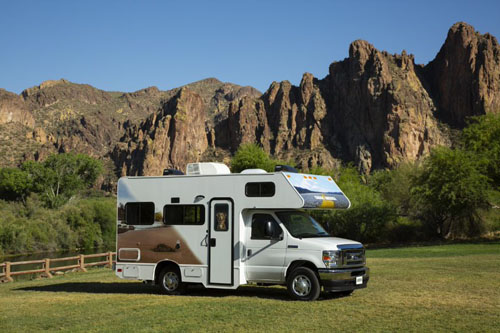
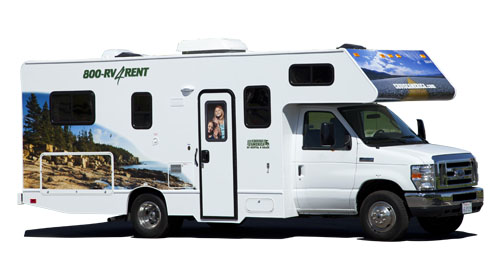
For navigating North Canada's diverse roads, a Class C - Alcove or Class SI - Semi-integrated RV offers an excellent balance of comfort and capability for the varied terrain. Class C Alcove RVs, like a "24' Class C Motorhome" with sleeping for 5, average around 7.46 meters in length and provide ample indoor space for families of 4-6 people, along with generous load capacity for all your supplies. These vehicles often feature a bed over the cab (e.g., 152/203cm) and a rear double bed (e.g., 152/203cm), perfect for extended adventures.
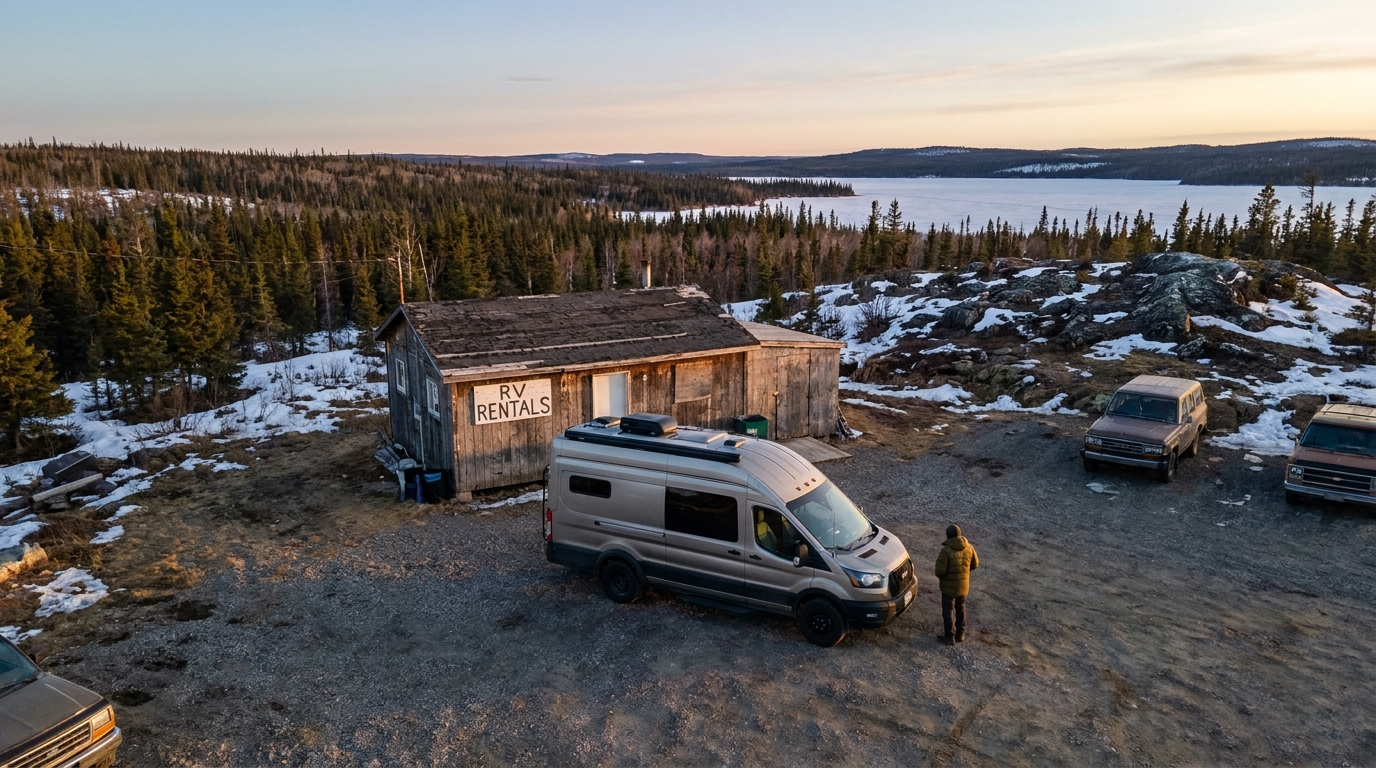
Alternatively, Class SI Semi-integrated RVs, typically around 6.5 meters in length, offer a more streamlined option such as a "2 Berth Sandpiper" perfect for a couple, which is easier to maneuver on winding roads while still providing comfortable living space and amenities like a stove, refrigerator, and shower. Both classes generally boast sufficient ground clearance for most well-maintained Northern routes, including gravel sections, though extreme off-roading is not recommended for rental RVs. The added comfort, capacity, and self-sufficiency of these larger rental motorhomes are particularly beneficial for longer trips into remote areas where amenities are scarce and every meal can be a home-cooked delight. For ideas on what to prepare, check out our RV-friendly recipes playlist.
Should I Choose a Compact Van Instead of a Large RV in North Canada?
While compact campervans offer nimble handling and fuel efficiency, for most of North Canada's expansive and often remote routes, a larger Class C or Class SI rental motorhome frequently provides superior comfort and necessary amenities, outweighing marginal maneuverability benefits. The general lack of congested city centers or extremely narrow mountain passes in North Canada means larger RVs typically face no major driving obstacles, and their increased size allows for more living space, storage for essential supplies, and larger fresh water tanks, which are crucial for extended trips in remote Northern regions.
A compact van, such as a Class B Camper Van like a "Van - Economy" (approximately 6.5 meters long) might be genuinely helpful if your primary goal is to access very tight, primitive campsites, or if you prioritize maximum fuel efficiency on shorter, well-paved segments. However, for the full Northern experience, which often includes extended boondocking and managing varying weather conditions, the enhanced comfort, capacity, and self-sufficiency of a larger RV usually make it the better choice, providing a more robust base for your adventure.
Can I Park Anywhere? Free & Wild Camping Rules in North Canada
Free and wild camping (boondocking) in North Canada is generally more permissible than in densely populated areas further south, often allowed on extensive Crown Land, but specific rules vary significantly by territory and within protected areas. In both the Yukon and Northwest Territories, boondocking is frequently permitted on undeveloped public land unless explicitly signed otherwise or within municipal limits, where local bylaws apply. Specific territorial parks, national parks (like Kluane National Park), and designated recreational sites have their own regulations regarding overnight parking and typically require permits or payment for designated spots.
Always look for 'No Overnight Parking' or 'No Camping' signs, especially near popular attractions, community centers, or on private property. Respecting posted signage and checking local regulations before parking overnight is crucial, with designated campgrounds often providing the safest and most convenient options for waste disposal and access to facilities. Remember that while you may find a spot at one campground, many national/state parks reserve only 25-30% of their spots in advance, leaving the majority available on a first-come, first-served basis, so you'll find a spot- if not at the first campground, then the next one. Just call ahead before driving.
Can I Drive an RV Into the City Center? Heights, Tunnels & Local Signage
Yes, you can almost always drive a rental RV into the city centers of North Canada's main hubs like Whitehorse or Yellowknife without issue, as these cities are generally RV-friendly and designed to accommodate larger vehicles. Northern cities typically lack the low bridges, narrow streets, or restrictive environmental zones often found in older, more congested urban areas elsewhere, making navigation straightforward. Always pay close attention to local signage, particularly for specific parking restrictions, weight limits on older bridges, or any rare height limits in certain areas, though underground parking is uncommon for RVs anyway.
Most shopping centers, attractions, and service stations in Northern cities offer ample parking for RVs, allowing easy access to amenities and sights. While specific regional data on city center restrictions is not extensively available, the general spaciousness of Northern communities makes RV access convenient, but vigilance for local signs is always recommended. Drive slowly and carefully, and you can drive almost anywhere without issues; there's no need to stress, just use common sense and pay attention to your surroundings.
Do you need a different license to drive an RV in North Canada?
No, for most standard rental RVs in North Canada, you do not need a different license beyond a regular Class 5 (or equivalent) driver's license from your home province, state, or country. A standard driver's license is sufficient for motorhomes that do not exceed 11,000 kg (24,250 lbs) gross vehicle weight and do not require air brakes, which covers the vast majority of recreational rental motorhomes and campervans. If you are from outside Canada or the US, an International Driving Permit (IDP) alongside your valid home country license is highly recommended, especially if your license is not in English or French, though it is not mandatory in all cases.
Specific commercial licenses, such as Class 1, 2, or 3, are only required for very large, heavy RVs (over 11,000 kg or requiring air brakes) or those used for commercial transport, which are typically not relevant for recreational rentals. The minimum age for driving a rental RV in North Canada is generally 21, as determined by the rental company's policy, and Bandana RV does not apply young driver surcharges or vehicle class restrictions based on age.
What is the 3-3-3 rule for RV travel?
🎬 Video coming soon
The "3-3-3 rule" for RV travel is a widely recommended guideline designed to ensure safe, relaxed, and enjoyable trips, particularly valuable in vast, remote regions like North Canada. This rule advises traveling no more than 300 miles (approximately 500 km) in a day, preventing driver fatigue and allowing ample time to appreciate the unique Northern scenery and attractions along your route. Secondly, it suggests arriving at your chosen destination or campsite by 3 PM, which provides sufficient daylight to comfortably find and set up your campsite, a crucial aspect in areas with potentially limited services or shorter daylight hours during shoulder seasons.
Finally, the rule recommends staying at least 3 nights in one location, fostering deeper exploration of the area, allowing for spontaneous discoveries, and a more leisurely pace. Following this guideline helps reduce stress, encourages slow travel to truly connect with the local culture and environment, and ensures you're well-rested for the unique challenges and rewards of a North Canada RV adventure.
Can Americans RV in Canada?
Yes, Americans can absolutely RV in Canada, including the remote Northern territories of Yukon and Northwest Territories, provided they have the necessary documentation and their vehicle meets Canadian import requirements. US citizens need a valid passport for entry into Canada, along with their valid driver's license from their home state. If you are bringing your own RV, it's essential to ensure it meets Canadian import regulations, especially regarding the '15-year rule' where vehicles older than 15 years are generally exempt from certain RIV (Registrar of Imported Vehicles) compliance requirements, simplifying temporary import for tourism.
It's crucial to declare all items at the border, including any firearms, alcohol, and tobacco, and be aware of restrictions on certain agricultural products or firewood to avoid complications. For those renting a motorhome or campervan, ensure you have your rental agreement and vehicle registration readily available at the border crossing, and remember that our true RV specialists at Bandana RV can help clarify any pre-booking questions about cross-border travel.
Can you walk around in a motorhome while driving in Canada?
No, in Canada, it is generally both illegal and unsafe for passengers to walk around in a rented motorhome while it is in motion, as all occupants must be properly seated and restrained with seatbelts. Canadian seatbelt laws are strict, requiring every person in a motor vehicle to have their own functioning seatbelt and to use it correctly whenever the vehicle is being driven. Passengers found unrestrained while the RV is in motion can lead to fines for both the passenger and the driver, emphasizing the importance of safety regulations.
This critical rule applies across all Canadian provinces and territories, including the Yukon and Northwest Territories, prioritizing passenger safety above convenience. While it might seem tempting to access the kitchen or bathroom facilities, always pull over and park safely before any passenger attempts to move about the RV cabin. Safety is paramount, especially when navigating the diverse and sometimes challenging roads of North Canada.
Do they search your RV at the Canadian border?
Yes, Canadian Border Services Agency (CBSA) officers have the legal authority to search your rental RV at the Canadian border as part of their routine inspection process, ensuring compliance with import and customs regulations. While not every RV is subjected to a full, intrusive search, officers may ask detailed questions about your travel plans, the duration of your stay, and the contents of your vehicle, and they may request to visually inspect or conduct a more thorough search. Common reasons for a more extensive search include undeclared items, suspicion of restricted goods (e.g., firearms, large quantities of alcohol or tobacco), or agricultural products that could potentially carry pests or diseases.
To facilitate a smooth crossing, ensure all your documentation is ready, be honest and transparent with the officers, and avoid bringing prohibited items like certain firearms or pepper spray. It's particularly important to declare any firewood you are carrying, as transporting it across borders can lead to fines due to concerns about invasive pests; consider purchasing local firewood upon arrival instead. Full transparency is key to a hassle-free border experience.
Can you park an RV anywhere in North Canada?
No, you cannot park a rented RV just anywhere in North Canada for an overnight stay; parking regulations vary significantly by municipality, within provincial/territorial parks, and depending on land ownership. While the vast expanses of North Canada do offer more opportunities for wild camping on Crown Land compared to more densely populated areas, designated parking spots and formal campgrounds are generally the only legal and recommended places for overnight RV parking in most inhabited areas. Always observe 'No Overnight Parking' or 'No Camping' signs, especially in city centers like Whitehorse or Yellowknife, retail parking lots, or on private properties where unauthorized overnight parking can result in fines or even towing.
In National Parks or Provincial/Territorial Parks, overnight stays are strictly limited to designated campgrounds, which often require advance reservations and fees. For more spontaneous stops, look for marked rest areas or truck stops that may permit short-term overnight parking, but always confirm local regulations first. Remember that planning is part of the adventure, and resources like RV PLANET (rvplan.net) can help you locate available spots along your route, ensuring a stress-free experience.
Can I bring my RV into North Canada?
Yes, you can bring your personal RV into North Canada, but it must comply with specific import requirements set by the Canadian Border Services Agency (CBSA) and potentially Transport Canada, especially for newer vehicles. For RVs manufactured less than 15 years prior to the current year, they typically must appear on the Registrar of Imported Vehicles (RIV) list of admissible vehicles and undergo an RIV inspection. A critical detail for those bringing their own RV: vehicles older than 15 years are generally exempt from RIV compliance requirements, making their temporary import for tourism simpler and less bureaucratic.
Ensure you have proof of ownership, valid registration, and comprehensive insurance for your RV, as well as a valid passport for entry. Always declare all goods within your RV at the border, including any firearms, alcohol, or specific food items, to avoid complications during inspection. This careful preparation ensures a smooth entry and hassle-free exploration of North Canada.
How much is RV insurance in North Canada?
The cost of RV insurance in Canada, including for travel to North Canada, varies significantly based on factors such as the RV's value, type, age, driver's history, chosen coverage, and the insurance provider. For rental RVs, basic insurance coverage is typically included in the rental cost, but it is crucial to thoroughly understand what this covers, especially regarding the deductible for collision damage waiver. Many travelers opt for additional rental RV insurance, either purchased directly through the rental company, a third-party provider, or sometimes via benefits from their personal auto insurance or credit card, to reduce their financial exposure by lowering the deductible.
For example, you can upgrade to a top-level deductible for extra peace of mind, which can be particularly reassuring when exploring remote Northern regions. Given the unique and sometimes challenging driving conditions in North Canada, robust insurance coverage with reliable roadside assistance is highly recommended to mitigate potential costs associated with breakdowns or incidents, ensuring a truly worry-free vacation.
What You Shouldn't Miss
- **Drive the Dempster Highway:** Experience the only public highway in North Canada to cross the Arctic Circle, leading to the remote community of Tuktoyaktuk and the Arctic Ocean.
- **Explore Kluane National Park and Reserve:** Hike among towering peaks and vast glaciers, home to Canada's highest mountain, Mount Logan. Look for Dall sheep and grizzly bears.
- **Visit Whitehorse, Yukon:** The vibrant capital offers a blend of history and modern amenities. Explore the SS Klondike National Historic Site and the Yukon Wildlife Preserve.
- **Discover Yellowknife, Northwest Territories:** Witness the spectacular Northern Lights (Aurora Borealis) during late summer and fall, explore the unique houseboats, and learn about diamond mining history.
- **Soak in Takhini Hot Springs:** Relax in natural mineral waters just outside Whitehorse, a perfect way to unwind after a day of driving and exploring the wilderness.
- **Looking for expert insights from Avi Bandana? Top 5 Adventures - recommendations from Avi Bandana**
Final Thoughts
Driving a rented RV through North Canada is an experience like no other, offering unparalleled freedom and access to some of the world's most pristine and majestic landscapes. From the rugged beauty of the Yukon to the unique charm of the Northwest Territories, every kilometer reveals a new wonder. By understanding the road conditions, preparing for the remoteness, and choosing the right motorhome or campervan, you're set for an unforgettable journey.
Remember, we're here to support you every step of the way, providing transparent pricing and expert advice for your North Canada RV adventure. Embrace the spirit of slow travel, immerse yourself in the local culture, and let the vast, untamed beauty of the North inspire your soul. The open road is calling, and your mobile home awaits!
Get inspired for your next trip! Discover top destinations, planning tips, all in one place!