In This Guide
- Can You Drive an RV in North West US? License & Age Rules
- Road Conditions & Terrain in North West US
- RV Size Limits, Bridges & Restricted Zones
- Fuel: Diesel vs. Petrol & Cost per 100 km
- Tolls, Vignettes & Border Rules
- Driving Tips for long term rv rental Travelers
- Recommended RV Class for North West US Roads
- Should I Choose a Compact Van Instead of a Large RV in North West US?
- Can I Park Anywhere? Free & Wild Camping Rules in North West US
- Can I Drive an RV Into the City Center? Heights, Tunnels & Local Signage
- What is the 3 3 3 rule for RV driving?
- What is the longest RV you can drive without a CDL?
- What is the 3-3-3 rule for RV living?
- What states require a special RV license?
- What is the best RV insurance for full timers?
- How much is insurance on a $200,000 RV?
- What states require RV insurance?
- Who has the cheapest RV insurance?
Can You Drive an RV in North West US? License & Age Rules
Driving an RV in the North West US is accessible with a standard driver's license. For most rental RVs, particularly those with a Gross Vehicle Weight Rating (GVWR) under 26,001 pounds, your regular car license is sufficient. Rental companies typically set a minimum age of 21 to rent an RV, though some may require drivers to be 25 for larger Class A motorhomes. International visitors should ensure they have a valid driver's license from their home country, and an International Driving Permit (IDP) is highly recommended for clarity and legality in all states. While rare for typical recreational RVs, if a vehicle's GVWR exceeds 26,001 pounds, some states might require a non-commercial Class A or B license, though this is generally not the case for personal RV use in Washington, Oregon, or Idaho.
Road Conditions & Terrain in North West US
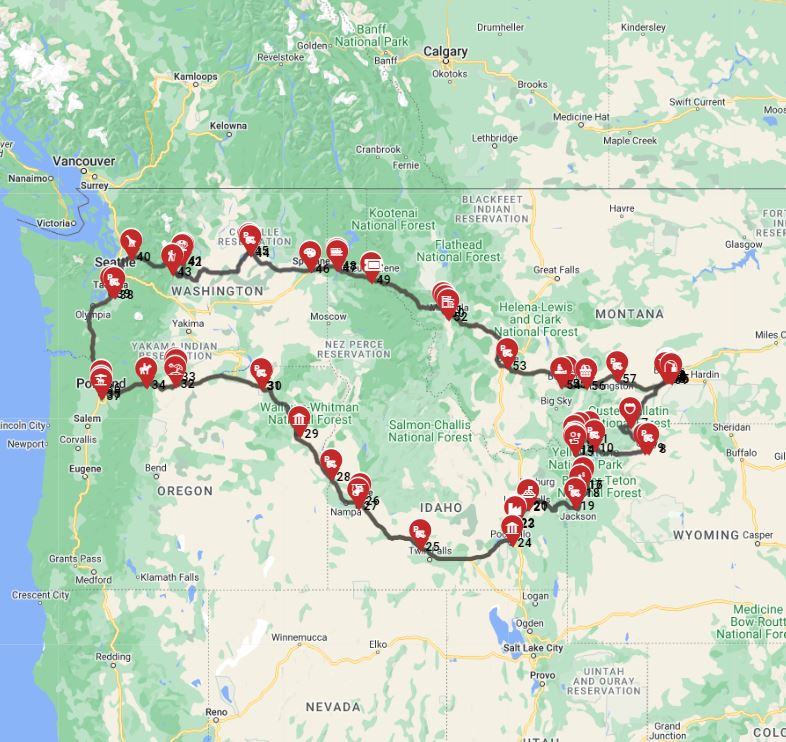
The North West US offers a breathtakingly diverse landscape, presenting varied road conditions and terrain that are well-suited for long-term RV rentals. You'll navigate from the majestic, winding mountain passes of the Cascades and Rockies to smooth coastal routes and expansive high desert plains. While primary interstate highways and major state routes are generally well-maintained, be prepared for narrower, less predictable surfaces on secondary roads, especially those leading to remote national park entrances or dispersed camping areas. Expect to encounter dense forests, dramatic coastlines, and rolling hills, all of which add to the scenic adventure. Motorhome drivers should always be mindful of weather changes; heavy rain, fog, and seasonal snow at higher elevations can impact driving, emphasizing the need for a cautious and deliberate pace.
RV Size Limits, Bridges & Restricted Zones
When planning your long-term RV adventure in the North West US, understanding vehicle size limitations is key. Federal regulations generally permit RV lengths up to 45 feet, though individual states like Oregon may have a lower limit of 40 feet for a single vehicle. Fortunately, most rental RVs, including Bandana's Class A Integrated models which average around 24.6 feet (7.5 meters), comfortably fall within these general travel length allowances. Always pay close attention to road signage, especially for low bridges and underpasses, as RVs have significant height. While weight restrictions on bridges are seldom an issue for typical recreational vehicles, remaining aware of signage is prudent. You might encounter specific vehicle restrictions or designated parking areas in some urban centers or national parks, so always check local advisories. Ferry services, particularly Washington State Ferries, have length and weight-based pricing and capacity limits that often necessitate advance reservations for RVs.
Fuel: Diesel vs. Petrol & Cost per 100 km
The choice between diesel and petrol for your long-term RV rental in the North West US largely depends on the vehicle class. Larger motorhomes, such as Bandana's Class SI - Semi-integrated and Class C - Alcove models, typically run on diesel. Smaller Class B - Camper Vans often utilize petrol. Both fuel types are widely available, though it's wise to plan fuel stops in sparser rural or mountainous areas. Fuel consumption varies by RV class; Bandana's Class B Camper Vans average between 8-10 Liters/100 km, while the larger Class SI and C models typically consume 10-12 Liters/100 km. The exact cost per 100 km will fluctuate with current fuel prices, which can be higher in the Pacific Northwest compared to the national average. It's always a good idea to ask your rental provider if they offer any fuel discount cards or programs to help manage expenses over an extended trip.
Tolls, Vignettes & Border Rules
Tolls are not as pervasive in the North West US as in some other regions, but certain key infrastructures, like the Tacoma Narrows Bridge in Washington, may incur charges. Many tolls are electronic, requiring payment online post-passage or the use of a transponder to avoid fines; no universal "vignettes" (pre-paid road use stickers) are needed for general travel. If your long-term rental plans include crossing the border into Canada, ensure all occupants have valid passports, the RV has its proper registration, and proof of insurance is readily accessible. Some rental providers may offer the convenience of pre-purchasing toll passes or providing transponders to streamline your journey and prevent unexpected charges. On the routes offered through RV PLANET routes, you can itemize and track every expense along the way for easy budgeting.
Driving Tips for long term rv rental Travelers
Embrace a slower travel pace to truly savor your long-term RV rental experience in the North West US. Aim for shorter driving days, perhaps no more than 300 miles (around 500 km), to prevent fatigue and allow ample time for sightseeing and relaxation. When navigating the region's numerous mountain passes, master mountain driving techniques by utilizing lower gears for both ascents and descents, which helps maintain control and prevent brake overheating. Be prepared for rapid weather shifts, a common occurrence in the Pacific Northwest; always carry emergency supplies, check forecasts diligently, and be ready for rain, potential snow at higher elevations, and strong winds. Strategic fuel stops are crucial, especially when traveling through remote areas or national forests where services can be sparse. Before you depart and regularly throughout your journey, perform essential checks on tire pressure, fluid levels, lights, and brakes to ensure your RV is road-ready and safe.
Recommended RV Class for North West US Roads
For a balanced combination of comfort and maneuverability on the diverse roads of the North West US, a **Class SI - Semi-integrated** RV is highly recommended. Bandana's fleet of these models averages around 6.9 meters (22.6 feet) in length, offering ample living space without being overly cumbersome. Alternatively, consider a **Class C - Alcove** RV, averaging about 7.5 meters (24.6 feet) in length. These often provide greater sleeping capacity (an average of 5.8 sleeping places) and more interior space, making them excellent for families or groups on longer trips while still being manageable on highways and within national parks. Both classes generally handle varied terrain well and offer sufficient power for tackling mountain passes, ensuring a comfortable long-term travel experience. For those prioritizing agility and fuel efficiency, especially for exploring tighter spots or more remote byways, a **Class B - Camper Van**, averaging around 5.8 meters (19 feet), is an excellent choice.
Should I Choose a Compact Van Instead of a Large RV in North West US?
While the North West US generally accommodates all RV sizes on main roads, the decision between a compact van and a larger RV hinges on your priorities for comfort versus maneuverability. A **Class B - Camper Van** (averaging 5.8 meters or 19 feet in length and 8-10 Liters/100 km fuel consumption) offers superior agility, easier parking in urban centers and at popular attractions, and better fuel economy. However, larger RVs, such as **Class SI - Semi-integrated** (6.9 meters or 22.6 feet average length) or **Class C - Alcove** (7.5 meters or 24.6 feet average length) models, provide significantly more interior living space, amenities, storage, and overall comfort, which are crucial for extended or long-term rentals. If urban exploration, accessing very narrow scenic byways, or minimizing fuel costs are your top concerns, a compact van might be ideal. Conversely, opt for a larger RV if ample indoor space, a full kitchen and bathroom, and maximum comfort are preferred for your extended stay, as most North West roads are well-suited for these larger vehicles. For ideas you can prep on the road, watch our RV-friendly recipes playlist on YouTube.
Can I Park Anywhere? Free & Wild Camping Rules in North West US
The North West US offers abundant opportunities for free or 'wild' camping, often referred to as boondocking, particularly on designated federal lands. Areas like National Forests and Bureau of Land Management (BLM) territories frequently permit legal dispersed camping. However, specific regulations regarding stay limits (often 14 days in one spot), fire restrictions, and mandatory 'Leave No Trace' principles must always be adhered to. Unauthorized overnight parking or camping is generally prohibited in state parks, national park campgrounds outside of designated sites, and most private properties. Some businesses, such as certain Walmart locations or truck stops, may allow overnight RV parking; it’s always best practice to ask management for permission first. Membership services like Harvest Hosts can also provide unique, legal overnight parking options at wineries, farms, and other attractions. Crucially, rules can vary significantly by region and even by specific forest or BLM district, so always check local regulations and follow local law before parking overnight.
Can I Drive an RV Into the City Center? Heights, Tunnels & Local Signage
Generally, yes, you can drive an RV into most city centers across the North West US. However, this requires careful attention to specific local signage regarding vehicle dimensions and parking regulations. Drivers must remain vigilant for posted height restrictions on tunnels, underpasses, and bridges, as well as potential weight limits on certain historic or urban bridges. Parking is often the primary challenge for larger RVs in bustling city centers; look for designated oversized vehicle parking areas or consider parking on the outskirts and utilizing public transportation for inner-city exploration. Environmental zones that restrict vehicle access are not typically a concern for standard RVs in most North West US cities, but be aware of 'residents-only' parking or specific vehicle route restrictions. Always observe local traffic laws and signage; navigation apps designed specifically for RVs can be invaluable in identifying potential hazards like low clearances.
What is the 3 3 3 rule for RV driving?
The "3-3-3 rule" is a widely adopted guideline for safe and comfortable RV travel, recommending drivers aim to cover no more than 300 miles (approximately 500 km) per day. This principle helps prevent driver fatigue and allows for spontaneous stops, making the journey less stressful, especially when navigating larger vehicles through varied North West terrain. Adhering to the "arrive by 3 PM" suggestion provides ample daylight for setting up camp, familiarizing yourself with the surroundings, and avoiding the challenges and potential hazards of nighttime driving. The final "stay at least 3 nights" component encourages a deeper exploration of each location, allowing for relaxation and minimizing the constant packing and unpacking associated with daily moves, which greatly enhances the long-term rental experience.
What is the longest RV you can drive without a CDL?
In most U.S. states, including those in the North West, you can typically drive an RV up to 45 feet in length without a Commercial Driver's License (CDL), provided its Gross Vehicle Weight Rating (GVWR) remains under 26,001 pounds. The federal standard for CDL requirements applies to vehicles with a GVWR exceeding 26,000 lbs or those designed to carry 16 or more passengers; the majority of recreational RVs, even larger Class A Integrated models like those found in Bandana's fleet (averaging 7.5 meters or 24.6 feet), fall below this threshold. Some states may have specific non-commercial license requirements for very heavy RVs (over 26,000 lbs GVWR) or when towing heavy trailers (over 10,000 lbs GVWR), but Washington, Oregon, and Idaho generally do not require special licenses for personal recreational use. It's always advisable to verify the specific Department of Motor Vehicles (DMV) requirements for your state of domicile and any states you plan to travel through to ensure full compliance.
What is the 3-3-3 rule for RV living?
While the "3-3-3 rule" is primarily associated with RV driving habits, its principles can be adapted for RV living to encourage a more immersive and sustainable travel experience. If applied to living, it might loosely translate to principles like staying in a location for at least 3 days to genuinely explore, interacting with at least 3 local businesses to support the community, and ensuring access to 3 essential services (water, waste disposal, and power). There isn't a universally recognized "3-3-3 rule" specifically for full-time RV living, but embracing a slower pace aids in managing the logistical aspects of life on the road in the Pacific Northwest, from establishing domicile and mail services to understanding local tax implications.
What states require a special RV license?
While most U.S. states do not mandate a special license for recreational vehicles (RVs) under 26,001 lbs Gross Vehicle Weight Rating (GVWR), a few states, including California, Nevada, New York, Pennsylvania, Maryland, and Texas, have specific non-commercial license requirements for heavier or longer RVs. The core states of the North West US—Washington, Oregon, and Idaho—typically do not require a special non-commercial license for standard recreational vehicles used for personal enjoyment and falling within federal CDL weight thresholds. The need for a special license usually arises when an RV's GVWR exceeds 26,000 lbs or when towing a trailer weighing over 10,000 lbs, potentially necessitating a non-commercial Class A or B license in those specific states mentioned. It is imperative for all RVers to confirm the licensing requirements of their domicile state and any states they plan to traverse to ensure legal compliance.
What is the best RV insurance for full timers?
The ideal RV insurance for full-time RVers typically involves a specialized policy that merges auto and homeowner's insurance aspects, offering comprehensive coverage for both the vehicle and personal liability while it serves as a primary residence. Unlike standard RV policies, a full-timer's policy specifically covers the RV as a domicile, including personal liability for incidents and coverage for personal effects. Key features to prioritize are total loss replacement, robust comprehensive and collision coverage, medical payments, and specialized roadside assistance tailored for RVs. Reputable providers often recommended for full-timer RV insurance include National General, Progressive, Geico, Foremost, and Safeco. For long-term RV rentals, it’s essential to confirm if your rental agreement includes sufficient full-timer-equivalent coverage or if you need to secure a supplementary policy to ensure you’re adequately protected.
How much is insurance on a $200,000 RV?
The annual insurance cost for a $200,000 RV can vary significantly, generally ranging from $1,500 to $4,000. This estimate depends on factors like the RV's class (e.g., a high-value Class A Integrated model like those Bandana offers, averaging 7.5 meters or 24.6 feet, will incur higher premiums), your driving record, chosen deductibles, coverage limits, and the states you intend to travel through. Your driving history, age, credit score, the RV's safety features, and whether it's used full-time or part-time all play a role in the final premium. Opting for higher deductibles can lower your annual payments, but means you'll pay more out-of-pocket in the event of a claim. Comprehensive and collision coverage are essential for protecting such a valuable asset, and specific state-mandated coverages also contribute to the overall cost.
What states require RV insurance?
All U.S. states legally mandate minimum liability insurance for any motor vehicle operated on public roads, and this includes recreational vehicles (RVs). This requirement ensures that if you are found at fault in an accident, there is coverage for damages to other vehicles, property, and injuries to other individuals. The specific minimum liability coverage amounts differ by state; for instance, Washington, Oregon, and Idaho each enforce their own liability insurance requirements for vehicles registered within their borders. For long-term RV rentals, the rental company typically includes basic liability coverage, but it's crucial to review the policy details and consider purchasing additional insurance for enhanced protection. If your RV is financed, lenders will almost universally require comprehensive and collision coverage to safeguard their investment against physical damage.
Who has the cheapest RV insurance?
Identifying the absolute cheapest RV insurance provider is challenging due to highly individualized rates, but comparing quotes from multiple specialized RV insurance companies is the most effective way to find affordable coverage tailored to your needs. No single company consistently offers the lowest rates for everyone, as prices are influenced by your driver profile, the RV type, its usage (full-time vs. part-time), and the coverage levels selected. Leading providers frequently cited for competitive rates include National General, Progressive, Geico, Foremost, and Safeco, while independent insurance brokers can also help find customized deals. Strategies to potentially lower premiums include bundling policies (like auto and RV), maintaining a clean driving record, choosing higher deductibles, and inquiring about discounts for RV safety features or annual payments. Always ensure that a seemingly "cheap" policy still provides adequate coverage, especially for a long-term rental where potential risks and liabilities can be substantial.
What You Shouldn't Miss
- Drive the Pacific Coast Scenic Byway (US-101) in Oregon and Washington for iconic coastal views, charming seaside towns, and access to stunning beaches and state parks.
- Explore Olympic National Park in Washington, offering diverse ecosystems from temperate rainforests to rugged coastlines, with accessible RV sites and scenic drives.
- Hike among volcanoes in Mount Rainier National Park, Washington, for breathtaking alpine scenery and well-maintained roads suitable for many RV sizes.
- Visit the Columbia River Gorge National Scenic Area, straddling Oregon and Washington, to witness dramatic waterfalls like Multnomah Falls and enjoy scenic RV routes.
- Experience the dramatic landscapes of Crater Lake National Park in Oregon, the deepest lake in the U.S., with accessible rim drives suitable for RVs.
- Discover the high desert beauty of Eastern Oregon with stops in John Day Fossil Beds National Monument, showcasing ancient petrified forests and colorful badlands, accessible via RV-friendly routes.
- Drive the scenic byways of Idaho's Sawtooth National Recreation Area, offering access to stunning mountain vistas, pristine lakes, and numerous campgrounds suitable for RVs.
Final Thoughts
Embarking on a long-term RV adventure in the North West US is an unparalleled way to experience its majestic landscapes and diverse cultures. The freedom of the open road, combined with the comfort of your mobile home, offers a unique perspective on travel. Remember to plan ahead for popular national parks and consider the "3-3-3 rule" to make your journey smooth and enjoyable.
Whether you're drawn to the rugged coastlines, towering mountains, or high desert plains, a rented RV provides the perfect basecamp for exploration. Embrace the slow travel ethos, take your time to connect with the incredible scenery, and create lasting memories on your North West US road trip. Get inspired for your next adventure!
Discover top destinations, planning tips, and create your perfect itinerary with ease. We compare final prices across 50+ suppliers so you don't have to. Looking for the easiest, safest, and most affordable way to rent an RV? Compare final prices across suppliers – what you see is what you pay, with no surprise fees at pickup.